
David Macinnis Gill's Blog: Thunderchikin Reads, page 13
August 1, 2016
2016 Amelia Elizabeth Walden Book Award Finalists Announced
ALAN (The Assembly on Literature for Adolescents of NCTE) announces the finalists for the 2016 Amelia Elizabeth Walden Book Award for Young Adult Fiction. Established in 2008 to honor the wishes of young adult author Amelia Elizabeth Walden, the award allows for the sum of $5,000 to be presented annually to the author of a young adult title selected by the ALAN Amelia Elizabeth Walden Book Award Committee as demonstrating a positive approach to life, widespread teen appeal, and literary merit.
The 2016 Amelia Elizabeth Walden Award finalists are:
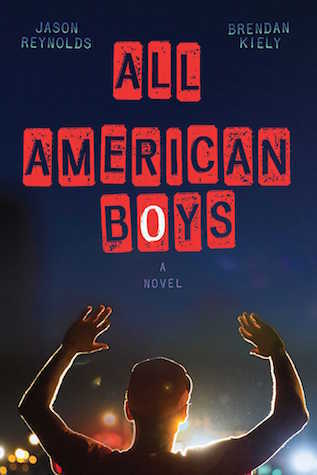
All American Boys by Jason Reynolds and Brendan Kiely
(Atheneum Books for Young Readers / Caitlyn Dlouhy Books)
All the Bright Places by Jennifer Niven
(Penguin Random House / Knopf Books for Young Readers)

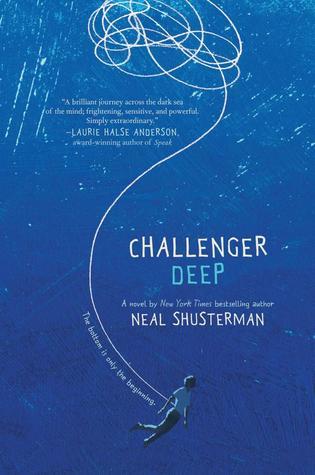
Challenger Deep by Neal Shusterman
(HarperCollins / HarperTeen)
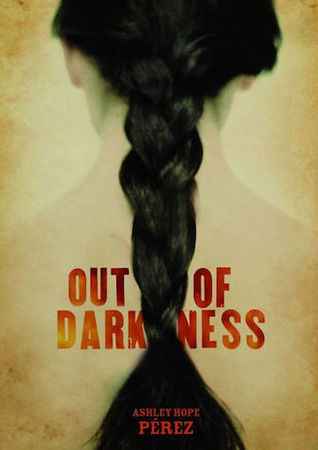
Out of Darkness by Ashley Hope Pérez
(Lerner / Carolrhoda Lab)
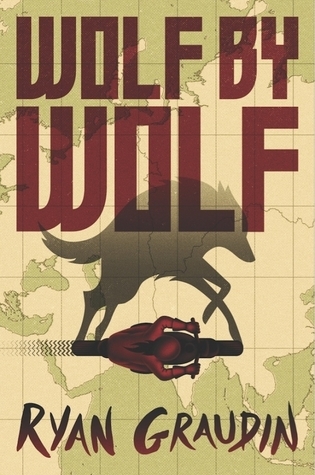
Wolf by Wolf by Ryan Graudin
(Little, Brown Books for Young Readers)
All Walden Award titles will be identified by an award sticker—gold for the winner and silver for the four finalists. The winner will be announced on Monday, August 8th. The winning title and finalists will be honored at the 2016 ALAN Workshop on Monday, November 21st at 4:30pm in Atlanta, GA, and the authors will be invited to participate in a panel discussion.
The 2016 Amelia Elizabeth Walden Award Committee would like to thank: the Amelia Elizabeth Walden Award Foundation, the ALAN Executive Council, the ALAN Board of Directors, NCTE, and the many publishers who submitted titles for consideration.
The 2016 Amelia Elizabeth Walden Award Committee considered over 350 young adult titles throughout the process. The committee was comprised of eleven members representing the university, K-12 school, and library communities. They are:
Mark Letcher, Committee Chair
Assistant Professor of English Education
Lewis University, Romeoville, IL
Lois Stover, Past Committee Chair
Dean – School of Education and Human Services
Marymount University, Arlington, VA
Cathy Blackler
ELA Teacher
Santana Alternative High School, La Puente, CA
Nancy Johnson
Professor of Children’s/YA Literature and English/Language Arts Education
Western Washington University, Bellingham, WA
Sara Kajder
Assistant Professor of English Education
University of Georgia, Athens, GA
Joellen Maples
Associate Professor, Graduate Literacy Program
St. John Fisher College, Rochester, NY
Lisa Morris-Wilkey
Librarian
Casa Grande Union High School, Casa Grande, AZ
Beth Scanlon
ELA Teacher, Literacy Coach
Cypress Creek High School, Orlando, FL
Lisa Scherff
ELA Teacher
Estero High School, Fort Myers, FL
Jessica Lorentz Smith
Teacher-Librarian
Bend Senior High School, Bend, OR
Wendy Stephens
Library Media Specialist
Cullman High School, Cullman, AL
For more information on the award, please visit ALAN Online: The Official Site of the Assembly on Literature for Adolescents http://www.alan-ya.org/awards/walden-award/








July 27, 2016
Herstory
In 1910 in rural Irwin County, Georgia, an abusive farmer had a fight with his wife, and he held them at gunpoint when she tried to leave their threadbare clapboard house with the children. One of the children escaped and was able to get help from neighbors. The sheriff was called, but by the time he arrived, the farmer—later termed a desperado by the local newspaper—had barricaded himself inside the house. When the sheriff demanded the man come out, he shot and killed the sheriff. A posse was called, and my great grandfather was part of the group. At some point, he was wounded and a month later, died of pneumonia due to complications from the wound. The stand off ended when the state militia was brought in and shot the house—and the desperado—to pieces. A collection was taken to rebuild the house for the widow.
I grew up with stories of how my great-grandfather was a hero for his role in this tragedy, told to us kids as if he had faced down the desperado in a gun battle, but years later, when curiosity led me to investigate the primary sources, I learned that the hero in this story was not the sheriff, or the state militia, or my great-grandfather. It was my great-grandmother. She was thirty years old when her husband was killed, and she was left with five children to raise on her own, with no income and no means of support. Women then had no right to own property, no right to an education, and no ability to earn a living wage without remarrying. Unlike the family of the desperado, no one rebuilt the home that her husband’s death had cost her. And yet, with all that stacked against her, she raised all of her children on her own for three years, until she remarried a second time, and the marriage stuck. By all accounts, including my father’s (a man who never used hyperbole in his life) Grandma S was a force to be reckoned with, even into her eighties, when she passed away, having seen two world wars, the deaths of two husbands, and very little progress in the plight of women like her, who had entered this world with next to nothing and left it the same way. Sure, she was a recipient of social security when she retired, but it did little at that point to help her situation. How different her life would’ve been if this intelligent, resourceful woman had been given access to even basic schooling, the ability to make a living, and the support she needed when she was widowed. What did her children lose? What did the community lose when this mind was wasted on poverty and misogyny?
I wonder the same thing when I think of my grandmother, who was the daughter-in-law of Grandma S. My grandmother was also born into poverty, under-educated, and denied access to services we take for granted. She lost her husband, too, but to abandonment, when he left her with six children to raise on her own. She, too, was a farmer’s wife, but she took a job as a cook in the local bus station, and she eventually moved with her youngest children into public housing, and she remained in assisted housing for the rest of her life. She, too, was as tough as nails. She raised her children the best she could, working well past retirement age. Well into her nineties, she walked miles to the grocery and back, carrying her her own groceries as she carried her own burden through life. She had very little, and what she had, she shared with her children and grandchildren, never forgetting a birthday and giving gifts that proportionate to her income, were worth thousands. Yet I have the same questions: Where would she and her children have been without public housing when they needed it? How different would her life had been if she had not been systematically denied the same opportunities her father, husband, and male children had?
I wonder the same about my own mother, who was raised in the 50’s in the mountains of Tennessee with no electricity and no plumbing. She dropped out high school to work to help support her family. She married my father—also a high school dropout–when she was still a teenager, and by the time she was 24, she had four small children with no family or community support. To make a bad situation tragic, the last of her children, my younger sister, was born with birth defects caused by a case of German measles. Rubella is a mild disease for the mother, but for the child, it can be lethal. My sister was never expected to live for more than a couple of months, but she survived nine years, thanks for the love and constant care she received from my mother, and then us as children. Her birth defects were catastrophic: she never developed mentally or physically beyond the age of a six-month old—she never walked, never spoke, and was an infant all her life. This was in the days before PL 94-142, which required states to provide services for the handicapped and their families. No agency, no charity, and no church would help my family. They had no idea of how to deal with a six-year-old infant. So in order to take care of my sister, my mother worked third shift in a yarn mill. She would come home as we left for school, and she had would sleep whenever my sister would. I still remember her pulling strands of yarn out of her eyes at the end of each shift, like colored cotton cobwebs. Because she had little education, my mother never accepted that the birth defects could be caused by rubella, such a mild disease. Instead, she believed that there was something she had done, some sin she had committed, that caused the birth defects. This belief filled the rest of her life with guilt and grief, and I believe, shortened it. So I ask the same questions again: How could her life been better if she had access to the help that we have now? If poverty hadn’t robbed her of an education, of health care for her children, of counseling for the grief and guilt that crippled her? What if someone had been able to speak for her? What if someone had listened?
I think of these heroic woman, and I think of all the dishonorable names women like them have been called lately. I think of the access education, housing, nutrition, clothing, and health care—basic needs that no American in our grotesquely wealthy country should ever want for—that my heroes were denied. I will think of the worlds they were born into and wonder how better life could have been. I will consider the chant to make America great again, and I will wonder how anyone could think that the America they lived in was anything close to great. I will think of the voices they were never allowed to raise, either by law or by custom, and how they were silenced—and how women could be silenced again. That’s why when I go to the polls in November, I will think of these women again, and I’ll remember their silenced voices, and when I vote, it will not be for a candidate, but for them.







July 20, 2016
Setting Up Crossfire Dialogue in Laurie Halse Anderson’s The Impossible Knife of Memory
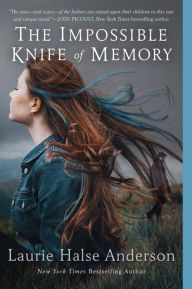 This is how Laurie Halse Anderson handles multiple speakers on in scene. The word dialogue comes from the Greek dialogos, with the prefix dia- meaning through or across, with the same root as di-, the word for two. It’s usually easier to keep fictional conversations between two characters, rather than trying to allow three, four or five characters to carry the conversation. Sometimes, though, you want side characters to get involved. One way to do that is to create a primary conversation and one or two side conversations, which is what Anderson does in “Impossible Knife.”
This is one of my favorite scenes from the novel. In it, the main character, Hayley, is in the school cafeteria with her sole friend, Gracie.
Across the table sat Gracie Rappaport, the casserole-and-muffin-girl. Draped over her was her boyfriend, Topher, Christopher Barnes. (You might have heard of him. When he dumped some girl named Zoe on Labor Day weekend she blasted a disrespectful description of his man-parts all over the Internet. Topher responded with photographic evidence that Zoe was lying. When I asked Gracie about it, all she did was giggle, which was way more information than I wanted.)
With this short intro, Anderson does three things at once.
We meet both Gracie and Topher, the novels two teen secondary characters, as they enter the scene. This adds implied action to their movements and by coupling them, Anderson establishes the, as a couple, which is useful later.
We learn that Topher is a player and both proud of and not shy about his equipment. We also learn that Gracie knows about it and implies approval.
We also see Anderson break the fourth wall so that Hayley addresses the reader directly. It’s always dangerous to break the wall in YA. If the reader is drawn out of the story by the direct address, they may not return. In this book, which is part confessional, Anderson handles the breaking adroitly, burying the “you” behind the parenthesis.
When we return to the dialogue, it’s Topher who speaks first, which establishes him as the more dominate partner:
“What is ‘denotation’?” Topher asked.
“Denotation is when a plot blows up,” I said. “And yes, a pesadilla is a quesadilla stuffed with fish. You are a genius, Gracie.
We get instant characterization from Hayley’s reply. She twists the meaning of the word, showing that she is intelligent, quick witted, and a smartass. Then she bounces easily to respond to Gracie, again showing her wit. We also see Topher’s desire line for the scene: he’s trying to get his vocab homework done the lazy way by asking the smart. Notice that Anderson doesn’t say this: she allows the reader to connect the dots. This important because there isn’t enough room with multiple characters speaking to explain motivations—and why would you if you can show them? Then the fourth character, Finn, appears on stage. If he had been in the scene from the beginning, the number of characters would be confusing. Anderson would also lose the chance to describe him so clearly:
“Don’t write that down.” A shaggy-haired guy with expensive teeth and dark-framed glasses sat down next to me. “She’s messing with you.”
Topher looked at the newcomer. “Where you been?”
Even before we meet Finn, we know that his is a smart as Hayley and that he had Topher are friends. He is self-assured and has money, as indicated by the “expensive teeth.” Notice that even though he knows Hayley is messing around, he doesn’t interrupt her.
“Why don’t I get paid for doing your homework?” I asked.
Topher handed me a quarter. “Denotation. For real.”
“Denotation: a noun that describes the action of a student refusing to take notes during class,” I said.
“Denotation,” said the new guy. “The precise meaning of a word, without any pesky implications attached to it.”
Topher took the quarter back and tossed it to his friend. “Butter, not cream cheese.”
“That’s it,” I said, laying my head back down. “I’m done.”
Gracie lobbed a crumpled napkin at my nose. “Just my Spanish, Hayley, puleeeeeze.”
“Why, exactly, should I do that?”
She pushed her books across the table to me. “Because you’re awesome.”
Notice the quarter and the napkin? Anderson uses these objects to transfer the conversation from one character to another. Our eyes subconcously follow the quarter from Topher to Hayley, then from Topher again to Finn. Gracie lobs the napkin, opening the line of sight from one girl to another, screening them from the boys, and setting up the crossfire that will follow later. In this section, all four characters are speaking. They are not, though, speaking to each other. Topher is actually the linchpin, because he talks to both Hayley and Finn. He transfers the conversation back and forth until Gracie takes it and then adds the sliding of the books to lock the narrative camera on Hayley.
Once we are on Hayley, Anderson takes us into her thoughts, using a mix of monologue and memory to add backstory and deepen the connection between Hayley and Gracie:
Along with tuna noodle casserole and the muffin basket, Gracie had been carrying a photo album that day she came to our door with muffins. In it were pictures of her kindergarten class—our kindergarten class, because I had been in it, too. Looking at mini-me in a hand-knit sweater and braids gave me goose bumps, but I couldn’t pin down exactly why. The only memory I had of kindergarten was peeing my pants during nap time, but Gracie said that never happened. Then she’d asked if I still liked peanut butter and banana sandwiches.
Backstory is a necessary part of storytelling. It gives context for a character’s behavior and deeps the significance of that behavior. Like salt, it’s better when sprinkled in small amounts, just enough to add flavor to the narrative and just when it’s needed. Anderson handles this perfectly, so that with the second next sentence, the conversation is passed back to the group:
I did her vocab and handed it back to her as Topher’s friend returned to the table carrying a tray loaded down with bagels and cups of coffee.
The rest of the conversation is the mark of Anderson’s expert craft, as Finn quickly establishes his own desire line, which forces Hayley to respond, creating a dramatic question for the scene. Anderson alternates all of these techniques throughout the rest of the chapter, allowing for three different desire lines and creating the meet-cute between Hayley and Finn, all while not getting tripped up in the various narrative strands.
Take a look at Impossible Knife and see the crossfire for yourself.







July 5, 2014
June Monthly Word Count Update and More
Time for the monthly tally of my #yearofwriting. It’s past time, since we’re already to the fifth day of July. After a robust May, I was disappointed in June’s number, which was 66,091 words. There’s no reason that I should be disappointed in writing a little over sixty-six thousand words in one month, except that I had hoped to reach a half million words in June. That goal was reached on July 3, which means I wrote half a million words in exactly seven months. When I look back on the daily word counts, it’s still hard to wrap my mind around the fact that I’m on pace to write one million, eight hundred thousand words in a year. Even more mind-boggling is that I have edited over half a million words in the last seven months.
It’s the editing that is taking most of the time, as I have continued traditional young adult publishing and launched a career in independently publishing adult fiction. It’s much more difficult to indie publish than it is to publish traditionally. There is more control, but there is also a penalty for letting go of that control. Here’s a prime example: I set up a promotion to give away copies of Tin City Tinder to promote the publication of Steel City Smithereens and Bronzeville Blowback. To get ready for it, I made some tweaks to the Kindle file and asked a formatter to upload the file for me because I was so busy with my day job and also nursing a back injury.
Six hours into the giveaway, which eventually put 52k free copies of TCT into readers’ hands, the first reviews came up, and they complained about all the typographical errors. I’ had the book proofread twice, so I was confident there were very few errors in the text. When I looked at the online version, my jaw dropped. The formatter had uploaded an old version of the book. That meant 52k people were reading a rough draft. There is simply no way to damage control for that, except to grin and bear it and make sure that the correct file was uploaded.
Ultimately, my name is on the book, so it’s my fault the wrong version was given to readers. Over time, the readers of the correct version may swing the reviews upward. If not, you live and you learn and no matter what, you write every day because whether you’re a traditional, indie, or hybrid author, writing is the one thing you can absolutely control.
June 20, 2014
Big Summer Blowout

 To celebrate the release of the latest novel in my Boone Childress Mysteries series, the first book, Tin City Tinder, is on sale for FREE June 20 and 21. The third book in the series, Ironville Inferno, is as Kindle Countdown Deal for .99 until 6/24. Come and get ‘em!
June 11, 2014
Free Fridays
Todays Free Fridays selection, First, There Is a River by Kathy Steffen, is a complex novel that evokes the simple pleasure and frequent pain of early 1900s riverboat life.
From the outside, Emma Perkins seems to have it all a hardworking farmer for a husband and a beautiful family. Yet, like many women in her day, Perkins is the virtual captive of a mean spirited and controlling man who haunts her every waking moment.
Each week, we ask our featured author to recommend a book or author that you may want to check out. Since authors are such passionate readers themselves, we thought you might like to find out what they love to read, too. Here is what Kathy Steffen recommends.
Ordered List Looks Like This
Brush: The Chinese brush is a mandatory tool for Chinese painting. The brush should be sturdy and pliable. Two types of brushes are used. The more delicate brush is created from white sheep hair. This brush should be soaked first, and then dried to prevent curling. The second one is made from fox or deer sable fibers, which are very durable, and is inclined to paint better. The procedure the brush is used depends on the varied features of brush strokes one wants to obtain, such as weight, lightness, gracefulness, ruggedness, firmness, and fullness. Various forms of shades are applied to impart space, texture, or depth.
Ink Stick: There are three types of Ink Stick: resin soot, lacquer soot, and tung-oil soot. Of the three, tung-oil soot is the most commonly used. Otherwise, Chinese ink is best if ink stick or ink stone are ineffectual.
Paper: The most generally used paper is Xuan paper, which is fabricated of sandalwood bark. This is exceptionally water retentive, so the color or ink disperses the moment the brush stroke is put down. The second most well-known is Mian paper.
Color: The most former Chinese paintings used Mo, a type of natural ink, to produce monochromatic representations of nature or day-to-day life. Made of pine soot, mo is combined with water to get unique shades for conveying appropriate layers or color in a painting.
Shui mo is the combination of shui (water) and mo. There are two styles of Chinese painting. They are gong bi or detailed style, and xie yi or freehand style. The second is the most common, not only since the objects are depicted with just a few strokes, but likewise because shapes and sprites are drawn by uncomplicated curves and natural ink. Many ancient poets and students used xie-yi paintings to give tongue to their religious anguish.
NOOK Book Offers
With countless downloads of our recent Free Fridays title, Footsteps in the Dark, it is clear that Georgette Heyer is a huge hit with NOOK readers.
For a great introduction to why the Queen of Regency Romances work is so often referred to as sparkling, you can not go wrong with these reader favorites.
Venetia (1958) Beguiling, intelligent, and beautiful, she and the rakish Lord Damerel are clearly soulmates, and Venetia is both daring and brilliant in her solution to overcoming not only the barriers society puts in their path, but his doubts as well. As gorgeous and right a love match as any Darcy and Elizabeth.
An Infamous Army On the eve of the Battle of Waterloo, passions are running high in the dazzling society of Brussels. Not only a great love story, but Heyers telling of the Duke of Wellingtons campaign and the battle itself are so vivid and accurate, its been used at West Point to teach military history.
Famous artists paintings have earned world wide recognition in different periods of times. Famous painters paintings truly an asset for fine arts. There have been a great number of famous painters in different parts of the world in different periods of times. These include Marc Chagall, Salvador Dali, Leonardo Da Vinci, Paul Klee, Henri Matisse,Claude Monet, Pablo Picasso,Pierre Auguste Renoir,Henri Rousseau,Henri de Toulouse-Lautrec,Vincent Van Gogh,Andy Warhol.
Ordered List
Famous abstract paintings present the fine art at the highest level.
Famous abstract artists have been gratly greatly appreciated for their famous abstract oil paintings.
Picasso is one of the most famous abstract painter. Picasso became very famous because he work in multiple styles.
Famous paintings of Picasso are Guernica ,Three Musicians,The Three Dancers and Self Portrait: Yo Picasso.
Picasso famous paintings have earned him worldwide recognition.
Many famous flower paintings have been created by the outstanding flower painters. Famous Floral Oil Paintings are in wide range of styles. Famous floral fine art paintings are exquisite. Famous landscape paintings are the master pieces of fine art. Famous Landscape painters have created a great number of famous landscape paintings. Famous Landscape art has greatly been admired in all the periods of times. Famous contemporary landscape painters have successfully attained the mastery in the landscape art.
Still life fruit paintings and fruit bowl paintings make the famous fruit paintings. The highly skilled artists have also created the most famous paintings of rotting fruit. The modern famous artists are successful creating the masterpieces of still fruit oil paintings and oil pastel fruit paintings.
Famous still Life art depicts drinking glasses, foodstuffs, pipes, books and so on. Famous Still life paintings are indeed the master pieces of fine art. Woman portrait paintings make the famous portrait paintings. There are also famous portrait paintings of men. Famous portrait paintings of Oscar dela hova have been greatly appreciated. Japanese women portrait paintings are very popular in Japanese culture. In addition to women portrait paintings and portrait paintings of men, there are many famous pet portrait paintings and famous portrait paintings of houses and famous paintings of sports cars.
Famous modern galleries have produced the famous contemporary artists who have created many famous contemporary paintings. Famous oil paintings reproduction are also created in these famous galleries.
In addition to above styles, there are many famous paintings of other subjects. These include famous war paintings, famous paintings of jesus, famous figure paintings, religious famous paintings, famous paintings romantic, famous battle paintings, famous military paintings, famous sunset paintings, famous paintings of women, famous paintings of love, famous water paintings, famous acrylic paintings, famous paintings of buildings, famous dance paintings, famous dragon paintings, famous black paintings, famous paintings in the fall, famous paintings of cats, famous paintings of children, famous paintings of friends, famous paintings of christinaity, famous paintings of jesus and famous paintings of humanity. There are also famous native American paintings and famous Spanish paintings.
June 7, 2014
I made this. A Boone Childress short story

I made this.
A Boone Childress short story:
TV Show The House That Kills visits Charles House, a haunted B&B in a posh Boston neighborhood, and locks an innocent contestant in a room to spend the night. If he makes it, he gets a thousand bucks. If he doesn’t—
When the room is opened, a dead body greets the TV audience, and former firefighter turned forensic investigator Boone Childress joins forces with Boston detective Val Stebbins to see if The House That Kills has done it again.
Available FREE on BN, iBooks, and Kobo. .99 at Amazon.
I made this.
A Boone Childress short story:
TV Show Th...
I made this.
A Boone Childress short story:
TV Show The House That Kills visits Charles House, a haunted B&B in a posh Boston neighborhood, and locks an innocent contestant in a room to spend the night. If he makes it, he gets a thousand bucks. If he doesn’t—
When the room is opened, a dead body greets the TV audience, and former firefighter turned forensic investigator Boone Childress joins forces with Boston detective Val Stebbins to see if The House That Kills has done it again.
Available FREE on BN, iBooks, and Kobo. .99 at Amazon.
June 6, 2014
I made this. Key Lime Die, a Boone Childress Novella.
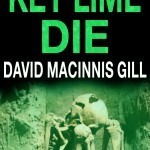
Key Lime Die, a Boone Childress Novella.
Two ATV riders make the find of their lives when an accident leads to a gruesome discovery—the death mask of a teenage girl.
Boone Childress returns in this novella as he strives to work under the constraints of protocol in order to discover the identity of the victim—and to find her killer before it’s too late.
From Amazon, BN, iBooks, and Kobo
Thunderchikin Reads

- David Macinnis Gill's profile
- 134 followers

