
David Macinnis Gill's Blog: Thunderchikin Reads, page 12
August 22, 2016
Speakers for the 2016 ALAN workshop

At long last, the speakers for the ALAN Workshop have been announced. The Workshop will take place in Atlanta, Monday & Tuesday, November 21-22, following the NCTE annual convention. You do not have to register for NCTE in order to register for the workshop.
Laurie Halse Anderson (Penguin Young Readers Group)
M.T. Anderson (Candlewick Press)
David Arnold (Penguin Young Readers Group)
Leigh Bardugo (Macmillan Children’s Publishing Group)
Ali Benjamin (Little Brown Books for Young Readers)
Lee Byrd (Cinco Puntos Press)
Kayla Cagan (Chronicle Books)
Patty Campbell (Scarecrow Studies in Young Adult Literature)
Michael Cart (Booklist)
Kristin Clark (Macmillan Children’s Publishing Group)
Brian Conaghan (Bloomsbury)
Zoraida Cordova (Sourcebooks)
Matt de la Pena (Random House)
Christa Desir (Simon & Schuster)
Phillippe Diederich (Cinco Puntos Press)
Tim Federle (Simon & Schuster)
David Fickling (Scholastic)
Candace Fleming (Random House)
Kami Garcia (Macmillan Children’s Publishing Group)
Get Lit Players (Simon & Schuster) (teen performance poets!)
Ryan Graudin (Little, Brown Books for Young Readers)
Mary Lou Hall (Penguin Young Readers Group)
Frances Hardinge (Abrams Books)
Deborah Heiligman (Macmillan Children’s Publishing Group)
Bonnie Sue Hitchcock (Random House)
Patricia Hruby Powell (Chronicle Books)
K. Johnston (Penguin Young Readers Group)
Rahul Kanakia (Disney-Hyperion)
Christine Kendall (Scholastic)
Brendan Kiely (Simon & Schuster)
S. King (Penguin Young Readers Group)
Bill Konigsberg (Scholastic)
Justine Larbalestier (Soho Teen)
Jennifer Latham (Little, Brown Books for Young Readers)
Kristin Lenz (Elephant Rock Books)
Jennifer Mason-Black (Abrams Books)
Patricia McCormick (Macmillan Children’s Publishing Group)
Mindy McGinnis (HarperCollins Children’s Books)
Carrie Mesrobian (HarperCollins)
Sy Montgomery (Houghton Mifflin Harcourt)
Lisa Moore (Groundwood Books)
Peader O’Guilen (Scholastic)
Kenneth Oppel (Simon & Schuster)
Ashley Hope Perez (Carolrhoda Lab)
Randi Pink (Macmillan Children’s Publishing Group)
Andrea Davis Pinkney (Scholastic)
Sarah Porter (Tor Books)
Jessica Powers (Cinco Puntos Press)
Jason Reynolds (Simon & Schuster)
Robin Roe (Disney-Hyperion)
Veronica Rossi (Tor Books)
Benjamin Alire Saenz (Houghton Mifflin Harcourt)
Jon Scieszka (Abrams Books & HarperCollins Children’s Books)
Neal Shusterman (HarperCollins)
Adam Silvera (Soho Teen)
Amber Smith (Simon & Schuster)
Sonya Sones (HarperCollins Children’s Books)
Maggie Stiefvater (Scholastic)
Margaret Stohl (Disney-Hyperion)
Kara Thomas (Random House)
Len Valhos (Bloomsbury)
Sara Zarr (HarperCollins Children’s Books)
Jeff Zentner (Random House)
Ibi Zoboi (HarperCollins)








August 21, 2016
ALAN Grants for Young Adult Literature
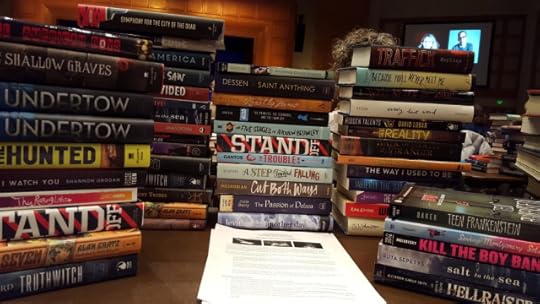 Teachers, librarians, academics, and others interested in young adult literature, take a look at the ALAN grants below.
(1) The Cart/Campbell Grant for librarians offers $500 funding plus complimentary registration toward attendance at the annual two-day ALAN Workshop which is held at the annual convention of the National Council of Teachers of English on the Monday and Tuesday prior to Thanksgiving Day. Eligible applicants are practicing librarians working with teens in high school, junior high school, middle school, or public libraries. Membership in ALAN is required for consideration. One Campbell/Cart Grant will be awarded annually, and each recipient may only receive the grant once. For more information and the grant application form, go to http://www.alan-ya.org/awards/the-cartcampbell-grant/ Application due September 1.
(2) The Smith/Carlsen Grant for graduate students offers $500 funding plus complimentary registration toward attendance at the annual 2-day ALAN Workshop. Eligible applicants must be enrolled as full-time graduate students in a program focused on English Education, Literacy Education, and/or Young Adult Literature and must not have attended an ALAN Workshop previously. Membership in ALAN is required for consideration. One Smith/Carlsen Grant will be awarded annually, and each recipient may only receive the grant once. For more information and the grant application form, go to http://www.alan-ya.org/awards/the-smithcarlsen-grant/Application due September 1.
(3) The Gallo Grants were established in 2003 by former ALAN Award and Hipple Award recipient Don Gallo to encourage educators in their early years of teaching to attend the ALAN Workshop for the first time. The grants provide funding—up to $750 each—for two classroom teachers in middle school or high school each year to attend the ALAN Workshop. (The amount of a grant may be less than $750 if the applicant lives within commuting distance of the convention location where airfare and housing would not be necessary or has access to other funding). In addition to the $750 grant, the registration fee for the workshop will also be covered. Recipients will receive half of the grant ($375) before the workshop. The remaining half of the grant will be disbursed at the end of the ALAN Workshop. The ALAN Workshop is held at the annual convention of the National Council of Teachers of English on the Monday and Tuesday prior to Thanksgiving Day. Applicants must be teaching full-time; must have been classroom teachers for less than five years prior to the year in which they are applying; and must not have attended an ALAN Workshop previously. Membership in ALAN is not required for consideration, though applicants are expected to become ALAN members if they receive this grant. For more information and the grant application form, go to http://www.alan-ya.org/awards/gallo-grants/Application due September 1.
(4) Members of ALAN may apply for the ALAN Foundation Grant for funding (up to $1,500) for research in young adult literature. Proposals are reviewed by the five most recent presidents of ALAN. Awards are made annually in the fall and are announced at the ALAN breakfast during the NCTE convention in November. The application deadline each year is September 15th. For more information and the grant application form, go tohttp://www.alan-ya.org/awards/alan-foundation-grant/ Application due September 15.







August 20, 2016
8-Minute Memoir Day 2
I’m doing Ann Dee Ellis’s 8-Minute Memoir Challenge (read more about it here). This is a real challenge because I don’t write memoir or personal narrative. All of the posts are written in 8-10 minutes, and except for cleaning up a bit for typos and odd phrasing, they are unedited.
Day 2
I don’t remember the name of my first elementary school teacher. I didn’t stay at the school very long, and she name is lost in my memory. The name of the school was Cloud Springs Elementary. We just moved from Florida back to North Georgia to be near my mother’s family. We had stayed with my aunt and uncle, until we found a house in late September, and we changed schools.
I will always remember the name of my second first grade teacher, Mrs. Wilhoite.
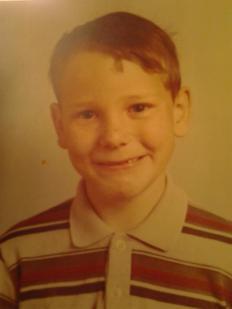 It was the first day of October, and I arrived quiet and shy but already reading at a much higher level than my classmates, even though I hadn’t gone to kindergarten. Words and letters spoke to me in a dream language mind like a best friend’s whispers. I remember Mrs. Wilhoite meeting me at the office. She smiled, took my hand, and said, “I’m so glad to meet you. Welcome to our school.” I followed her like the Pied Piper to the classroom, where she asked which book we’d been reading in the other school. I scanned the Dick and Jane readers but didn’t see it. I had been allowed to read ahead and although I didn’t know it, I was already in the second grade series. I shook my head and pointed to the last Dick and Jane that I remembered. She gave me a funny look, handed it to me, and I read it straight through. After the first few pages, she smiled again and said, “You must be very smart.”
I remember sitting in the corner of the classroom, looking out windows onto the playground, which had just been covered with asphalt, an oil and tar stink that mingled with the boiled cabbage from the cafeteria. Our names were on the chalkboard. Next to the names were checkmarks. When Mrs. Wilhoite saw us being quiet, she could give us a check. My name had no checkmarks the first day, but I was very good at being quiet. By the time Halloween came, my name had twice as many checkmarks as anybody else. My prize was a Halloween mask that I proudly wore trick or treating.
The names of the teachers after Mrs. Wilhoite are forgotten, like my second grade teacher, who would bark at me when I put my fingers in my ears so I could daydream. She cracked my fingers with a ruler when I scrubbed holes in my math papers when I didn’t like the faces the twos and sixes were making. I’ve also forgotten the third-grade teacher who sniffed at my wrinkled clothes, my rat’s nest of hair, my paint-stained fingernails. Then she’d scoff, “Your mother let you leave the house like that?” Since I always dressed and fed myself and gathered my homework before my mother got home from third shift, I told the truth, “No ma’am.”
For fifth grade, I had the same teacher my brother’d had two years before. She told me that he was a “hellion” and expected me to be one, as well. But I had perfected the art of disappearing. If I was quiet enough, no one would see the fingernails clogged with paint, the rat’s nest of hair that grew and wild curly now, the hand-me-down clothes, or the scuffed sneakers I’d outgrown.
I don’t remember the name of my seventh grade social studies teacher, either, but she was the one who taught me to lie. One day, she left the room to use the phone, warning us to be quiet while she was gone. Lots of kids talked, and I asked to borrow an eraser to fix a spelling mistake. When the teacher returned, the classroom fell silent. She sat at her desk and called roll, asking each kid if they had talked while she was gone. Very few kids admitted it. Maybe one or two, but none of the ones who had made the most noise. Not the kids who’d been out of their seats and sprinted back when they heard her coming. None of the boys who’d shot spitballs at the chalkboard. When my name was called, I admitted that I had spoken. I had been taught to always tell the truth.
When the roll was finished, she called us all into the hallway one by one and paddled us. She gave me six licks on the butt and two on the lower thigh that left bruises. She taught me a lot that day–that honest people got punished and liars got away with their lies; that an adult can abandon her job with no punishment; and that it was better to hide the truth than trust others, and I have never forgotten those lessons, though I wish I could daydream them away.
Sometimes when I think back on those times, I wonder what became of Mrs. Wilhoite, who has long since retired by now. She left Lakeview Elementary school after my first year, and I never saw her again. I hope that she had the life she wanted, that her career was long and fruitful, and that there was a long succession of little boys and girls, too quiet to speak, who found their voices in her classroom.







Mining the Setting: “In the Canyon: How Setting Became Story” by Liz Garton Scanlon
Fellow VCFA member Liz Garton Scanlon on the power of setting in the story creation process.
 Beth Anderson, Children's Writer
With the “Paging Through the Parks” celebration of the 100th anniversary of U.S. National Parks during August, it’s the perfect time to examine setting. Liz Garton Scanlon shares her experience mining the setting for story. What she found sprang from her own experience and memories, and how the setting had touched her.
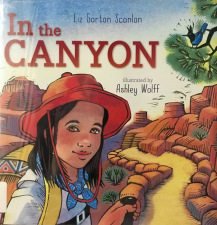 In the Canyon: How Setting Became Story
As writers, we seem to be growing increasingly aware of the importance of setting – not just as backdrop, but as an essential component of every story. Setting can establish tone, help explain or elucidate characters, and make a piece more authentic overall. But is setting enough to serve as story on its own? Not usually. Stories need conflict, drama, challenge, satisfaction, right?
Enter the Grand Canyon. Several years ago, when my agent suggested I write a picture book about the Grand Canyon, I didn’t ask for clarification or direction. I should have…
View original post 482 more words







August 18, 2016
Mail Call
Mail call #3: Goodies from our friends at Pengiun Random House. #FallSemester. 







August 17, 2016
8-Minute Memoir Challenge Day 1
Inspired by Ally Condie, I’m doing Ann Dee Ellis’s 8-Minute Memoir Challenge (read more about it here). This is a real challenge because I don’t write memoir or personal narrative. All of the posts are written in 8-10 minutes, and except for cleaning up a bit for typos and odd phrasing, they are unedited.
Day 1
My father was a painter. Not an artist who had a studio and smeared small lumps of expensive oil paint onto a stretched canvas. His canvas was clapboard siding, and his brush was a large, clunky, paint scarred piece of wood and boar bristles that he used to pound latex paint into the old, dried up, and peeling houses we painted when I was a boy.
I was six years old when my father started me working, two months into first grade, on an apple crisp October afternoon when my mother needed to take my sister to the doctor. He taught me to paint using the same kind of heavy, paint loaded brush that he used, but there are no ladders for me to climb and no old siding for me to paint. He steered me to the back of the house to the basement, hidden in the late day shadows, to a door that no one cared about, where no one would bother to watch me.
He gave me two bits of advice on how to paint: always start at the top because paint runs and get more paint on the wood than you get on yourself. That was it. I learned how to paint, but not that day, nor the day after it, and it was a long time before any surface was better covered than I was. The other techniques for painting I learned myself: how to dab the corners with the tips of the bristles so that the paint doesn’t beat you to the bottom; how to paint the panels of the door first, then the rails, and finally the stiles and saving the edges till last, because they were the easiest parts to reach. I learned that painting over your head is the fast track to a neck crick, so even on a surface within reach, always use a step stool. If you don’t have one handy, a paint can or two will do, as long as the can is full and unopened because it’s very easy to lose your balance, trip as the can flips over, and land butt-first in the paint. I painted my butt many times over the years.
I worked with my father for over two decades years but clocked the most hours as a teenager– long summer days spent waking before dawn and painting until noon, eating a little lunch and sleeping till evening crept in, and finishing way past dark thirty. Each day felt like two, and a month felt like an entire summer, the heat and humidity mixing with my sweat as the paint rolled off the edge of whatever paint brushes we used (polyester bristles had replaced the boar’s hair, and the handle was plastic instead of wood: disposable paintbrushes that didn’t need washing because they were useless after one job), me and my brother growing so good with paint rollers that we could knock off a job in two days, or if the siding didn’t need much prep, in one single day, changing a house from gray to yellow before the neighbors could notice.
By then, my brother and I out-painted our father in terms of sheer yardage. I was a savant on the roller, fueled by my inherent laziness, sometimes painting 80% of the house myself, then falling back into the truck in the late evening hours to listen to the cicadas and sweat into the seats, catching a second nap of the day, lost in thought, forever daydreaming. It was god awful work, but painting houses was the best training for an imagination. As my shoulders ached, as my arms slogged the roller up-and-down in a V-pattern that covered the wall with thick layers, as I turned the roller sideways to paint underneath the siding, my mind wandered, free, untethered by my physical movement, making up stories, drawing mental pictures, and having conversations with people who existed only in my mind.
My father would go on to paint many more things in his life–houses, cars, his old pickup truck which he shamed by painting it both candy-apple red and green-apple green. He painted long after he was really able to. His two sons were grown and gone, doing other work that didn’t include sunburnt necks, swatted yellow jackets and wasps, and hellfire days that doubled in size. But my father continued to paint, climbing ladders far too high, looping a piece of wire into the shape of an S to hold his buckets, grabbing the eaves and hooking his feet over the rungs to swing the ladder six feet further on. Then shifting his weight to push the ladder into the ground, letting go of the eaves only when he was sure that the ground would hold his weight. For the six months preceding the diagnosis of cancer that ended his life, he worked, brush in hand, standing at the top of a ladder. He painted a dozen houses alone and dying. He only quit when he couldn’t tell if was him or the ground that was too weak to hold.
I wrote my first novel when I was 16, sitting in Econ class, baking in the heat of an unairconditioned classroom. Fifth period, after lunch, with everyone already half catatonic and a teacher so boring that her words were like paint drying on a moist summer day. I did the assignments while she spent 15 minutes explaining them, then I pulled out my notebook, revising words written in my long, flowing script, handwriting that everybody said looked like calligraphy, but I cared more about the words than their shapes because those letters contained my dreams.
When I tell the story of my Econ class novel, I say that’s where I learned to write economically, but my real education began the day with my father handed me a brush and left me to my own. I think of those days now and again, the hot, scorching summers, the three of us painting houses new in eight hours time. I think of the two simple rules–start at the top and put more paint on the wood than you put on yourself –and I realize what a gift my father gave me when he left me alone to figure things out for myself.







Mail Call
Mail call #2: Goodies from our friends at Candelwick. #FallSemester 







August 8, 2016
Nova, Kekla, Will and Me at AWP
 My VCFA colleagues just got word that we’ll be doing a panel next February at the annual AWP Conference. This will be my first AWP, and I’m really looking forward to it. Here’s the description of the panel. Thanks to Nova, Kekla, and Will for letting me tag along.
Mystery in the Writing Process: Discovery, Revelation and Withholding for Writers and Their Readers. (Kekla Magoon, William Alexander, Nova Ren Suma, David Macinnis Gill)
Cultivating a sense of mystery is at the core of what writers do. In the drafting process, we work to solve the mysteries of our story, while striving to keep the same sense of mystery alive for our readers in the final piece. The result is a compelling creative puzzle, in which we strive to know all but share only what is relevant. How much to reveal, and how much to withhold? Four middle grade and YA novelists explore this balance of suspense, discovery, and the careful reveal of information.







Winner of the 2016 Amelia Elizabeth Walden Book Award
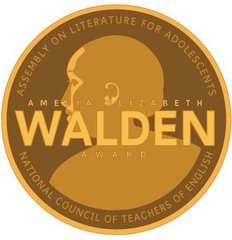 ALAN, the Assembly on Literature for Adolescents, is pleased and proud to announce the 2016 Amelia Elizabeth Walden Book Award for Young Adult Fiction finalists and winning title. Established in 2008 to honor the wishes of young adult author Amelia Elizabeth Walden, the award of $5,000 is presented annually to the author of a young adult title selected by the ALAN Amelia Elizabeth Walden Book Award Committee as demonstrating a positive approach to life, widespread teen appeal, and literary merit.
The 2016 Amelia Elizabeth Walden Award Winner is:
All American Boys by Jason Reynolds and Brendan Kiely. Atheneum Books for Young Readers / Caitlyn Dlouhy Books.
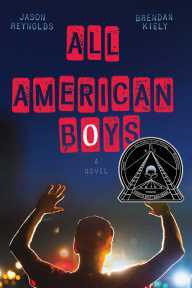 From the description: In an unforgettable new novel from award-winning authors Jason Reynolds and Brendan Kiely, two teens—one black, one white—grapple with the repercussions of a single violent act that leaves their school, their community, and, ultimately, the country bitterly divided by racial tension.
A bag of chips. That’s all sixteen-year-old Rashad is looking for at the corner bodega. What he finds instead is a fist-happy cop, Paul Galluzzo, who mistakes Rashad for a shoplifter, mistakes Rashad’s pleadings that he’s stolen nothing for belligerence, mistakes Rashad’s resistance to leave the bodega as resisting arrest, mistakes Rashad’s every flinch at every punch the cop throws as further resistance and refusal to STAY STILL as ordered. But how can you stay still when someone is pounding your face into the concrete pavement?
But there were witnesses: Quinn Collins—a varsity basketball player and Rashad’s classmate who has been raised by Paul since his own father died in Afghanistan—and a video camera. Soon the beating is all over the news and Paul is getting threatened with accusations of prejudice and racial brutality. Quinn refuses to believe that the man who has basically been his savior could possibly be guilty. But then Rashad is absent. And absent again. And again. And the basketball team—half of whom are Rashad’s best friends—start to take sides. As does the school. And the town. Simmering tensions threaten to explode as Rashad and Quinn are forced to face decisions and consequences they had never considered before.
Written in tandem by two award-winning authors, this tour de force shares the alternating perspectives of Rashad and Quinn as the complications from that single violent moment, the type taken from the headlines, unfold and reverberate to highlight an unwelcome truth.







August 7, 2016
GRRM’s Wild Cards Universe Coming to TV
This from George RR Martin’s “Not a Blog”:
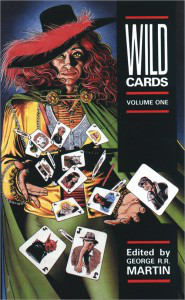 “Universal Cable Productions (UCP) has acquired the rights to adapt our long-running Wild Cards series of anthologies and mosaic novels for television. Development will begin immediately on what we hope will be the first of several interlocking series. Melinda M. Snodgrass, my assistant editor and right-hand man on Wild Cards since its inception, the creator of Dr. Tachyon, Double Helix, and Franny Black, and a seasoned television writer/ producer whose credits include STAR TREK: THE NEXT GENERATION (“Measure of a Man”), REASONABLE DOUBTS, THE PROFILER, and STAR COMMAND, is attached as an executive producer on the project, together with Gregory Noveck of RED, Slow Learner, and SyFy Films.”
Immediate development means the new series will be airing in 1-2 year time frame, probably more toward the latter part of the time, unless development is on a super fast track. Fans of GoT not familiar with the universe will notice a huge difference–the Wild Cards universe is expansive and includes multiple places to enter the story. It is intentionally open-ended and includes the work of several authors, not just GRRM. The good news is that viewers won/t have to wait around for the novels to come out to end the series. The bad news? There is no ending.







Thunderchikin Reads

- David Macinnis Gill's profile
- 134 followers

