Summer Kinard's Blog, page 21
March 10, 2015
I’d Rather Be a Doorkeeper
Back in 2007, my husband and I went on pilgrimage to Scotland. We planned our day trips and stays around the former and current locations of the relics of St. Andrew. Many of the places we visited were in ruins. Iona Abbey is partly restored. We spent a few days on the island of Iona exploring its rich history of saints and holy living. The place feels enchanted and probably is. It’s one of the oldest places on earth. While we were touring the Abbey one day, I noticed the little room where the porter used to keep watch. It wasn’t a tall or wide room. Just a little stone enclosed place with room for a chair and a candle. It was probably beautiful once, with some sort of sacred art for the contemplation and prayers of the porter while he waited.

The author in the porter’s nook at Iona Abbey.
I was taken by the porter’s room. The view overlooked the approach to the West Doors of the church from the medieval road. Any pilgrims or unwanted guests (invaders) could be seen from afar so the porter could pop down the stairs to open the doors (or maybe could warn the brothers about invaders). I had romantic visions of kindly old monks welcoming pilgrims in the night with light and warm food.

Thinking about the doorkeepers of old.
But the main reason I was fascinated by the little room was due to a line from one of my favorite Psalms (Psalm 84:10, RSV):
For a day in thy courts is better than a thousand elsewhere. I would rather be a doorkeeper in the house of my God than dwell in the tents of wickedness.
Growing up, I found refuge in the church. It was an orderly place in times of chaos for me. I loved the music and the beautiful words I found there, and through the beauty, God drew me close, in time, by joy. Psalm 84 was a favorite because of its sense of homecoming. Sacred space opened to me when I read those early lines:
Even the sparrow finds a home, and the swallow a nest for herself, where she may lay her young, at thy altars, O Lord of hosts, my King and my God. Blessed are those who dwell in thy house, ever singing thy praise!
I grew up in the company of Baptists and Pentecostals who often sang the gospel hymn, “His Eye is on the Sparrow,” echoing Jesus’ words about God’s providence, which in turn echoed the Psalm. I didn’t always feel small except in importance. The universal and humble welcome God extended to me in those words – even the sparrow! – overcame my fear of rejection. I sat in that tiny room in Iona and listened deeply, remembering the monks who sang the Psalter every day. The porters would have sat there sometimes, his mind tucked around the quiet smile of memory at those words. “I’d rather be a doorkeeper in the house of the Lord…”

Taking in the peace of old prayers.
For many years, I tried to extend that deep sense of welcome and belonging to others in the parishes to which I belonged. While I was Methodist, I led Vacation Bible School and Saturday Bible studies and sang in the choir. While we were Episcopalian, I served for many years among the leadership for the catechumen program and led or helped lead special events. But my heart was restless. I loved (and still love) the people, but I kept longing for greater depth of the Christian tradition. For over a decade, my feet and face had turned East. My graduate degrees focused on early Christian history and theology, and I wanted to find in the present the richness I found in the texts. We prayed with icons in our home for some twelve years, and we grew to miss them when they weren’t a focal point in church. I’ve written before about our long journey to the Orthodox Church. Now that we’ve been members for a year, the journey comes to mind again. In coming to Orthodoxy, I was following the voice of the One who welcomes sparrows at His altars. This past summer, I had the privilege of helping to introduce others to that welcome. Our kind priest asked me to help lead the church tours at our parish’s Greek Festival.

Plenty good room for sparrows here.
When we came to Orthodoxy, we came as paupers, knowing that we were coming into a faith filled with riches. I was vastly pregnant with twins, and we were nervous about converting at such an intersection of big life changes. Nonetheless, we felt compelled by love to come. The kindness we met was overwhelming. I dedicated my most recent novel (The Salvation of Jeffrey Lapin), to “those that welcome strangers” with our parish and godfamily in mind. What was amazing to me, besides the welcome, was the way I recognized so much in the strangeness. There was a familiar grace, a grace that makes one family, at work in the prayers, the building, and the people. It was easy to tell visitors some of the stories hidden in plain sight in the building, when each story echoed welcome. Even a sparrow can sing a good song about its home.

Flocking in.
The festival tours aren’t attempts to convert people. They are meant to help others understand the meaning behind the building and customs of the church. Guiding the curious around the church building, I was walking again in the shoes of the porters from long ago. I looked out for them, offered them light.

Many of those who came lit candles and offered prayers.
Any good porter knows that the pilgrims bring the light with them; making welcome allows people to shine. I don’t know if I’ll be invited to give church tours again, but I’m grateful for the experience last year. We have so many choices in how we treat others each day. To close doors to faithful seeking or to slam them shut, to welcome or forbid, to take the chance to show someone how they might shine or to turn away and hide their light. It’s a new year for me. I’m one year and a couple of weeks old in the Orthodox faith. We have a new baby, and we are about to celebrate the first year birthday of our twins. I hope this year to be a doorkeeper. Not a gatekeeper or goalkeeper or score keeper, but a doorkeeper. I want to open doors to good things for my family, friends, parish, and readers. It’s the least I can do, having such a place to sing from.
How lovely is thy dwelling place, O Lord of hosts! My soul longs, yea, faints for the courts of the Lord; my heart and flesh sing for joy to the living God.
Even the sparrow finds a home, and the swallow a nest for herself, where she may lay her young, at thy altars, O Lord of hosts, my King and my God. Blessed are those who dwell in thy house, ever singing thy praise!


March 6, 2015
To have a new daughter

My first daughter
When I had my first daughter, I was astonished at the turn of my thoughts while we kept company in the wee hours. I had loved my son as well, instantly, and fallen in love with his fierce beauty. But with my daughter, I became a doorway for a supernal protectiveness that spanned across lifetimes. I recall looking into her wrinkly turtle face, kissing her soft head, and dropping prayers with tears over her hair. Only good for you, daughter, only good.
Daughters face a different world than sons. I kissed and stroked that tiny person, hoping and praying that if all goes well, she will live far beyond my years. When she is grizzled and old, her skin once again fragile and braced for a great transition, I hoped with all my being that someone filled with love and kindness would be there with her in her last bed, as I was at her first, to stroke her hair and kiss her soft face and love her.

My last daughter
Now I am here again in the throes of ferocious, tender mother love for our new daughter. I’m not as weepy as I was with her big sister, but I find my thoughts once more pacing imagined timelines. Whether she be mother or monk, I hope this child will find grace at every turn and at her departing. I hope to give her wisdom to make her way easier in life. I hope to protect her from the worser violence of this world.
But mostly, I hold those long, gracious fingers, wrinkled and dry from her life in the womb. They are the palindrome to old age. If all goes well, she will flex them in good works long after I am gone. If all goes well, I will not be there to kiss her hands when she is leaving. But I hope in these flying years to make a good beginning.
“O Lord, even if I have not done anything good before thee, do thou help me in thy grace to make a good beginning.”
-St. John Chrysostom Litany (11th hour)


January 28, 2015
Bible Games and Chocolate Cake
Whew. Talk about writing like a mother! I’m officially 9 months pregnant, and I’ve been busy wrapping up writing projects before baby girl makes her arrival. There’s lots of good news to go around, even during this time of waiting. Baby’s little clothes are all washed and folded and set aside (so much pink, right where it can do its best), and my hospital bag is packed. I have *some* of the edits done on my forthcoming tea shop novel, Tea and Crumples (due in October with Light Messages Publishers). And then the big news!
The first volume of Hands-On Sunday School Lessons is out now!
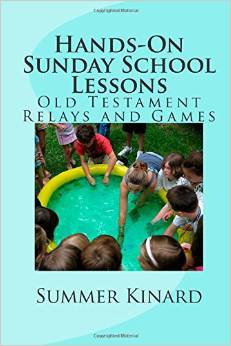
25 Active Games to Enhance Any Sunday School or Bible School Curriculum!
Because I want the book to be affordable for small churches, I’ve set the price on the paperback low AND made the Kindle version free if you purchase the print version on Amazon. (Print Version Here)
The next great piece of news is for those of you who love recipes. And romance.
That’s right. Today, I’m a guest on the Romance Recipes blog! Pop over {here} to read an excerpt from The Salvation of Jeffrey Lapin, read the recipe for Chocolate Cream Cheese Frosting, and enter to win the frosting’s secret ingredient!
What have you all been up to?


January 3, 2015
Maybe We Need a Better Phrase?
One of the feminist movement’s biggest contributions to public discourse is the phrase, “The personal is political.” Recently, I’ve started to doubt the utility of the idea. Why? Because most people are acting as though the reverse is true. In our current political climate, friendships and families are torn apart by the mistaken belief that the political is personal.
I was reminded of this sad state of things today when I came across a beautiful tea magazine gifted to me by a former friend. She decided not to talk with me any longer when I threw my support behind the Moral Mondays movement here in North Carolina. I post to my personal social media accounts fairly often on subjects of racial and class injustices. I strongly support Medicaid expansion; I strongly support sensible gun control laws (actually, my favorite idea is to employ the more sensible idea of controlling, taxing, and registering ammo, especially for assault weapons); I support programs that seek to end poverty. Somehow my friend took this support to be opposition to her life of comfort and prosperity and privilege, which it was not.
The problem with the idea that the political is personal is that it does not scale. While it’s true that our household choices can reflect our political values (the personal is political), it’s not a good idea to take someone else’s politics personally.
Perhaps the most salient reason is that politics work on a macro level. Policies have practical outcomes that don’t necessarily correlate with the lingo of causeheads or media soundbytes. For instance, I am against most abortions, but I’m not part of the Pro-Life movement. Why? Because research shows that the policies that drastically reduce the number of abortions have nothing to do with regulating abortions, and because setting a legal precedent of medical interference seems dangerous to me. What lowers abortion rates? Comprehensive sex education and access to birth control (such as condoms and other methods), stay in school programs that help disadvantaged young women get educations, educational and job opportunities for the poor. Besides, I get nervous when non-medical persons try to legislate women’s health. For instance, already, because of the work of abortion regulators, women whose babies die in the second or third trimesters have very few options open to them to remove their dead fetuses; it is extremely traumatic for some mothers to undergo stillbirth, especially of babies that were severely malformed. I don’t like anonymous policies telling doctors they can’t provide families with other options in those circumstances, regardless of what my personal preference might be if I had to experience such trauma.
The other problem with taking politics personally is that the focus on one’s personal life and past as the standard for common good blinds us to the actual needs of others. Here are some common misconceptions that play out in the political shouting (I won’t dignify it by calling it a debate):
1) Mistaking cash flow issues for systemic poverty.
No, you might have never been poor. Just because your family has sometimes had a modest budget does not mean that they were poor. Poverty is inherited, and one of its hallmarks is lack of status, lack of access to financial, job, and educational resources, lack of network to advancement, lack of durable goods such as houses, appliances, and vehicles. Some rare people escape poverty (usually through schooling), but they are exceptions that prove the rule. (I’m one of those. One shouldn’t have to be a genius in order to make a living wage. How many people making middle class incomes are geniuses? Very, very few.)
2) Mistaking modified standards for discrimination.
Here’s the deal. If your Hispanic classmate whose parents legally immigrated when he was a baby, who only began learning English when he was 6, who worked his tail off to become top of his class, gets into Harvard with only a 1200 on the SAT, and you don’t get in with your 1300, that’s not discrimination. That’s recognition on the part of the admissions office that your classmate worked very, very hard to overcome a language and cultural barrier.
3) Class privilege and race privilege are not the same thing.
Now I’m talking to the majority of white people, nearly a third of whom are poor. When you see white people on TV acting offended at the thought that poor people might not have to pay a higher tax rate than the most extremely wealthy persons in the nation (making hundreds of times more than you per year), please know that they are talking about you. They want to steal the little you have in order to add to the unspendably vast fortunes of the mega-rich. Just because the mega-rich faces they show on TV are white, does not mean they are coddling your interest. They are playing on your inherited assumption of racial privilege to blind you to the fact that they don’t care about you.
3a) At the same time, even wealthy persons of color in this nation face racial prejudices on a daily basis. You may think being wealthy would make up for it, but imagine if every time you pulled up to a gas station to fill up your car, you were questioned or eyed suspiciously. What if people talked to you as though you were the caterer when you were dressed in finery at your own party? What if you got stopped by police often, for no reason, for bogus reasons, just so they could check that you belonged there?
4) Mistaking asking different questions with mindless stupidity.
Here’s the deal. Yes, I know a few mindless persons who uncritically spout whatever [stupid] thing they heard on a cable news show or internet video as fact and research and evidence. But most of my friends are deeply thoughtful, whether I agree with them or not. Many of them are asking different questions; a lot of them are reading different things. Some of them are concerned, as I am, about the issues of legal precedence in matters of personal liberties, only they apply the idea to different subjects. If I find myself dismissing these thoughtful and informed persons out of hand, I take a step back and try to see how our differing views could work towards a common good.
I’m excluding people who just like to argue for no reason. When I come across a friend who won’t pick an opinion, but who just wants to grouse, I don’t talk with them; I’m not interested in sophistry, even if I could “win” an argument for arguments sake. Nothing is less genuine than the person who, when pressed as to why they support a controversial idea, says, “I hate/distrust/dismiss ALL politicians and politics.” Either that person is cowardly or ignorant; we all benefit or suffer together for our common life; pointing at the foibles of leaders does nothing to improve things.
5) Mistaking local or anecdotal trends for overarching statistics.
This applies on so many levels. For instance, there are public figures who say “all vaccines cause SIDS or (fill in horrible outcome),” because they heard about someone who had a miscarriage/lost an infant/whose child got very sick within a week of the mother or child getting a vaccine. Regardless of the fact that correlation is not causation, elevating an anecdote to the level of scientific evidence of hundreds of millions of persons vaccinated with no serious side effects is just plain faulty logic. Another place this comes up is in race relations. Working class whites often complain about how a black or Hispanic worker they heard about got a construction or trade job (that the teller or his/her friend wanted) and proceeded to be incompetent or lazy. This profoundly subjective and biased account is used to justify the idea that all persons with brown skin are stealing jobs from more worthy whites. But! EVERYONE tells me similar stories; how could it not be a secret conspiracy trend not picked up by the powers that be, when I am told similar stories wherever I go? Read on.
Here’s a non-political trend that shows you why it’s misleading to mistake anecdotes for overarching reality. I’m gearing up to have my 5th child. Guess what happens when you’re pregnant? People come out of the woodwork to tell you their pregnancy stories or baby stories. It’s especially rampant when you’re not so experienced. During my first pregnancy and early new motherhood, I had people tell me about babies born with no brains, babies who died young after having vaccines (maybe), women whose lady bits were torn asunder, traumatic C sections, traumatic natural births, traumatic medicated births, babies who failed to thrive, babies who were giant, babies who got stuck, the horrors of transition, the horrors of pushing, the horrors of colic. For real. The anecdotal evidence, if I had counted it as the revelation of overarching standards, would have left me surprised that even a minute fraction of women would ever consent to childbearing, and even more surprised when even the smallest number of offspring made it through the newborn stage. But, you know, there’s actually a huge population of humans in the world, so I could take the cray-cray stories in stride.
What I’m getting at, is that people will tell you what they think you want to know or that you’re open to. There are doubtless lots of people who never talk about religion with anyone. Then there are some of us to whom strangers will speak on that intimate subject. If I’m with a progressive friend, I’m likely to mention a politically progressive idea. If you’re around someone who agrees with you, remember that their anecdote may be more about you than a wider trend.
6) We are all prone to self-delusion and denial.
It’s popular to tell people to trust themselves, but that’s not always a great idea. We have a profound ability to deny facts and statistics even when the evidence is in front of us. If we decide to believe a particular idea – often because it gets us off the hook or meets a purely emotional need – we will grab at any scrap of argument or evidence, no matter how insincere, irrelevant, or false it is.
Now that I’ve made it plain that anecdotes don’t fly as evidence, I’m going to mention, anecdotally, the many times I’ve heard otherwise reasonable people say, “I just don’t want to believe ____ is true.” Well, there you go. Truths are not very comfortable. The famous truth tellers are those whose pillows were made of stone, not those who lived comfortably. We may not like truth, but we need it in order to make good decisions and love one another.
7) It’s big business to sell you things by exploiting the above tendencies.
Self-justification is big business on the internet and in consumer culture generally. I know someone who adamantly supports illegal drug use by mentally ill persons, even though evidence points to the dangers in such behavior. But she thinks that she has researched the subject because she was fed slightly related news stories by a social media algorithm that made her feel justified in her idea. She doesn’t see the money exchanging hands behind the scenes to make her feel comfortable in her denial of evidence.
No matter what you want to do or how distorted your reasoning for doing it, someone will encourage you to do it. They will also sell you the means to do it, or the accoutrement to do it in style.
Those are some of the biggest roadblocks I see to talking about politics on a personal level. They make me wonder if we should try to find another way to talk about political engagement and our personal lives.
But there are places where politics have huge personal costs-- When someone is shot by an unregulated gun, when someone dies because there is no hospital in the county due to lack of Medicaid expansion, when someone graduates without being able to read, when someone cannot find mental health care in the whole state. What do we say then? Can we avoid the pitfalls of taking things personally and work for change, without falling into bickering? Maybe we need a better guiding phrase. I’d love to hear your thoughts.


December 10, 2014
Hallmarks of Girlhood I’m Glad My Daughters Don’t Share
Growing up in the 1980s, my little girl cousins and friends and I had habits that would horrify me if my own kids had them.
Walking on tiptoes because grown up women always wore high heels to be sexy.
Playing with candy cigarettes so we could smoke like the grown ups.
Talking to strange men who thought we were pretty because our moms told us not to be rude.
Reading in teen magazines that we should pretend to be dumb because boys don’t like girls smarter than they are.
Mimicking commercials where women talk about having not so fresh feelings.
Breathing lots of Aqua Net to get the proper loft for 3rd Grade picture day hair.
Having to play the sexy but basically useless female sidekick when we played Buck Rogers.
Wearing pantyhose with shorts to be sexy.
Aspiring to wear a leather bustier and singing, “Like a Virgin” at slumber parties.
Not knowing anything about female anatomy so that we were terrified when we heard that girls start bleeding from down there.
Judging each other based on where we shopped for clothes.
How about you? What did you grow up with that you’re glad isn’t part of your life anymore?


December 2, 2014
FAQ: How do you have energy to write with infant twins?

For real. So much tea is involved. This post isn’t about tea, but tea was involved in its production.
At first I thought they were asking out of politeness, like the way people who don’t like babies will still politely ask a pregnant woman if it’s a boy or a girl to make conversation. Then I thought they wanted to know about my makeup routine, because I can look seriously awake if I employ my highlighting well. Then other mothers cornered me and asked in earnest. After false starts explaining that I had finally started to overcome my lifelong anemia, I heard the question as sincere.
How do you have so much energy while the kids are little?
Once it hit me that people really wanted to know, I laughed. Had I been giving off the impression that I have lots of energy? These women thought I wasn’t tired! And that was what let me finally hear what they were asking.
Not only do I struggle with iron deficiency anemia almost always but especially in pregnancy, but I haven’t gotten quite enough sleep in ever. Whether it was my pre-motherhood habit of keeping vigils or night owlishness, or my motherly on call hours, my sleep has been interrupted pretty much my entire life. Even as a child, I woke up for about an hour in the middle of the night, just to think. Then I would go back to sleep quietly and be very annoyed at having to wake up before 8:30 or 9 the next day. But I’m used to this pattern, and as I said, my anemia has been much less this pregnancy. I’m feeling really well. My husband gives me early morning naps between 7 and 8:30 or so, which makes me feel well rested.
So, first of all, if you are a mom who’s really, really tired, my advice is two-fold: See your physician and check for anemia, and find a way to get some type of nap sometime, even once a week.
But that’s not the impetus behind the question. What you really want to know is, how do I write even though I’m tired? Because with two small children, two infants, and a new baby on the way, I will be tired for the foreseeable future. Even with short-term help from friends or trusted babysitters or family, which always helps immensely, the exhaustion is real and can be unrelenting for short spaces. My dear husband is incredibly awesome with our kids and perfectly willing to solo the evening (pre-bedtime) routine sometimes when I’m on a deadline, but it’s not like I’m trading out family time for luxury spa massage naps while I’m writing. Which brings me to the heart of the question:
How do you deal with tiredness?
I’ll answer first from a musician’s standpoint. From time to time I commit to a concert. That means I have to have my music learned and memorized and in my muscle memory before X date. Leading up to a concert, I may be mind numbingly exhausted. But my exhaustion has no effect on the concert date or the need for me to show up prepared. If I’m lying in bed, moaning about being tired and it’s 11pm and the babies will need to be fed in an hour, I get myself out of bed and march down to the basement and practice my music anyway. Why? Because it must be done. I can be tired and mopey or tired and practicing.
With writing, it’s the same. I don’t write when I’m “in the mood” to write. If I am going to write a book, I write the outline and plot arc and get an idea of the length. Then I set an appropriate goal for how long it will take me to write. Because I have children, I’m not disappointed if the time frame has to be adjusted a little. So, let’s say I want to write a 60k book in 6 weeks. For me, that’s very doable. I know my pace and that I can usually write for an hour and a half after the children are in bed. (Except for Doctor Who or Outlander nights, but those are off days.) I will most certainly be tired during those 6 weeks. But I will write anyway. At the end of the 6-8 weeks, I will have a real book to go along with my tiredness.
The trick to dealing with tiredness is not to let the idea of being tired dominate your choices. You can be tired and productive or just tired.
When I choose to be productive even though I’m tired, guess what? The soul-building activities of writing or musical performance energize me.
Now, mind you, I’m still a total dingbat at certain stages of book writing. But I’ve learned that about myself. Rather than losing touch with the world around me to the extent that my kids have to ask me four times for their PB&J already, I set aside thirty minutes to prepare lunches and ten minutes for snacks and make sure they are done, even if the children aren’t ready for them. The zipper plastic baggie is your friend, oh creative types! Use it well. Same with sippy cup refills. If I’m writing a novel, I’ll get a bit of dialog in my head and stare out the window. So I make sure to fill a few cups with ice water and a few with milk for the littles to self serve from the fridge if Mom is ditzy that day. I *try* not to be ditzy when in book mode, but if you’ve seen me on a deadline, you know I fail. I literally say things backwards sometimes when there are too many words in my head. My last piece of advice on this subject is one that I think we can too easily overlook:
Prepare for the people around you so they can go with you on the creative journey.
No matter how much I may want to finish a chapter, my family has to come first. That includes my husband. He gets a date night even in the middle of writing sprees. My house is never in what you might call a pristine condition, and it can get a little shabby when I’m busy. But I do the best I can not to call in the important stuff – eye level talks with the older kids, reading books and playing hand games with the littles, cuddles for all, naptime snuggles for the babies. I also take a few weeks off between projects so my family can hear me complete whole sentences.
That’s my take. How about you? What helps you function when you’re tired?


November 26, 2014
Interview with Author and Mother Franky A. Brown
It’s no secret that my most recent book, The Salvation of Jeffrey Lapin, is filled with cake. With the holidays coming up, I started asking around my author friends to see if anyone else had a book loaded with calories cake. That’s how I found Franky A. Brown, fellow writer whose book Julia the Secret Keeper will get you in a feasting mood. Read on to hear a little about Franky’s writing process and the role of cake in her novel.

Author Franky Brown is on Writing Like a Mother to talk about her writing process and the role of cake in her book, Julia the Secret Keeper.
What problems do your main characters overcome?
My main character, Julia Fairfield, is dealing with major changes in her life on many levels. When the story begins, she is learning how to live with a major diet change. However, by far, her biggest problem is being the unofficial secret keeper of her family. She is bombarded with secrets from everyone she knows and she doesn’t like it. Her mother’s secret is the most surprising.
How do sweets and cake advance your story?
Julia has just learned she is gluten intolerant. She has a crazy sweet tooth and all throughout the story she is craving the sweets around her. Cupcakes make several appearances. Her mother is a master at cupcake art and later cupcakes become a weapon at her sister’s wedding. All the sweets in the book (cupcakes, brownies, cookies, cheesecake, etc) are tied to certain memories she has and with this experience she realizes how large a role food plays in our social and personal lives. Holidays, special events and family gatherings almost always involve sweets.
Share a little about your writing routine.
My writing routine is sporadic. With a one-year-old, I normally write during nap times. The amount of writing I do depends on how awake I feel that day. Bursts of creativity come and go. I like to write my ideas out with pen and paper first and type them later.
Thank you, Franky! I just purchased my copy of Julia the Secret Keeper to read while recovering from the big feast tomorrow. Readers, please check out Franky’s book and follow her online.

Pick up this clean, food filled read for your Thanksgiving weekend! Author Franky Brown interview on Writing Like a Mother blog.
Julia the Secret Keeper by Franky A. Brown
Everyone has a secret…and college junior Julia Fairfield knows them all. She is the only one her family and friends tell all their secrets to. She never expected the shocking secret her mother asks her to keep and she isn’t sure if she can keep it a secret for long. While dealing with major changes in her life, the only one who understands her is Nick…the guy her best friend is in love with. She soon finds that on a rollercoaster ride through a world of ridiculous secrets, love can take you by surprise.
Find Franky Brown online:
Twitter: @frankyabrown
And don’t miss the sequel!

If you loved Julia the Secret Keeper, don’t miss Julia the Secret Blogger by featured author Franky Brown. Writing Like a Mother blog.


November 22, 2014
Stocking Stuffers for Writers

You’re a writer. Maybe a parent. You’re busy. This gift guide will help.
If you’ve a writer in your life, you are already used to being around people who scribble at inappropriate times and narrate their morning tea and coffee routines. But you love your writer anyway and want to do well by her/him this Christmas. This Writing Mother is here to help! Just in time for you to make your lists for holiday sales, I give you this gift guide! (Links for many ideas are included, but I kept the graphics to a minimum for my mobile readers.)
Stocking Stuffers for Writers
12 pack of roller ball pens - Seriously the best disposable pens ever for writing.
Moleskine pocket notebooks - I mean actual pocket sized, that go anywhere with you for jotting ideas.
Blue
Green
Red
Purple
Local Coffee Shop Gift Certificate - I wrote two of my books at my local shop!
Cozy Sweater for a Tea Mug – like these on Etsy.
Lidded tea mug - And make it a large one!
TARDIS lidded mug
Corningware 20oz. lidded mug
Holiday tea sachets
Beeswax candles - like this one.
Unlined Moleskine notebook for plotting and sketching - Link is to a pretty red one. Great for plot lines, diagrams, and drawings.
Nice pushpins – or Silly ones - for plotting and research
Googly Eyes Pushpins
Light up Push Pins
Archery Push Pins
Address Labels or Stamp – Link is to my favorite custom stationery site, TinyPrints. Click on “Stationery” section.
Book of postage stamps
Customized photo postage stamps – click Stationery
US Postal Service Stamps online
Good hand cream - my favorite type is linked (hint: check your local Whole Foods, which sometimes has a lower price)
Chocolates - Give them their favorite type or shake it up and give them your favorite type!
Cozy wool socks - because we can lose circulation a bit on writing sprees
Men’s wool socks
Women’s wool socks
Book Cover on Front; Name, ISBNs, blog, and professional email on back
Author photo or logo on front
A Monocle - To set the proper mood for writing on long winter nights.

And if you want something bigger to put under the tree, here are a few more ideas!
BONUS! Big Gifts:
Toner cartridges
Reams of white paper
Cozy sweaters
Membership to their regional writers network
Membership to their genre professional organization
RWA Romance Writers of America
SFWA Science Fiction and Fantasy Writers of America
MWA Mystery Writers of America
WFWA Women’s Fiction Writers Association
SCBWI Society of Children’s Book Writers and Illustrators
This post contains some affiliate links. Shopping through affiliate links adds to the Writing Like a Mother twin baby diaper fund. Thank you!


November 5, 2014
Tall Women Drink Perrier
With four children and a fifth on the way, I have had to deal with a strange phenomenon a fair few times these past seven years. At some point in pregnancy, the back changes shape, and I lose about an inch in height for a few months. When I was a child, I was afraid of growing older when I aged. One of my relatives made a passing remark once that people shrink when they get old. This fear manifested in late childhood when my cousins and I sprouted right past our 5’2” aunties. Oh no! I thought. My tall aunts have all shrunk already (you know, in their late 20s). Even though I knew better, the old silly idea popped back up again when we converted to Greek Orthodoxy and I again found myself towering over my beloved elders.
This time, though, I noticed my latent fear of shrinking when I went to the grocery store. Any trip around the Super Target will tell you in no uncertain terms that some foods are made for shorter people and some for the tall. The same goes for lightbulbs. Short people like incandescents, tall people favor LEDs. It’s science.
Toilet paper is equal opportunity, but fizzy water favors the vertically endowed. If you want good champagne, go someplace with a wine attendant or resign yourself to plain old sparkling wine. Silverware is not for the short, but the vertically challenged can eat off plastic forks, no problem. Premium crackers are at or below waist height, but premium cheese might require very long arms. Almond butter and fancy jellies belong to the tall, but just about anyone can have basic pb&j. Don’t even get me started on the vagaries of organic soups.
Maybe you’ve never thought about shrinking. Maybe you weren’t an 80s kid convinced that poor Lily Tomlin’s fate in The Incredible Shrinking Woman was a real possibility. But take a few moments on your next grocery run to find out what your local stores think tall people should eat or drink. Why do you suppose that is? Is it the psychological boost to buying “top shelf” products? Ethnic stereotyping? Mistrust of children?
When you’re writing, small details have to carry meaning about character or life station. Noticing what a person has to go through to acquire their preferred foods and beverages can add authenticity and depth to your narrative. A short lady climbing on a step stool to get to the imported fizzy water tells you something about her character. Why didn’t she ask for help? Did she go to the step stool department to bring a step back for the purpose? Swipe it from store staff? What does that fancy water mean to her?
If you’re participating in NaNoWriMo, think about the ways our public spaces treat people’s physical realities when you write. Then come back here and tell me if this advice helped!
Posts may contain affiliate links.


October 29, 2014
The Inside Story: How to Make Cake into Holy Cake
If you’ve read The Salvation of Jeffrey Lapin – or even the Jeff and Maddy Books page here on my blog – you’ll notice that there’s a fair amount of talk about cake. Today’s post gives you a glimpse into the world of holy cake into which Jeff is initiated.
I’m working on a longer post to show you some of the amazing cool traditional holy cakes in Orthodoxy, but I wanted to show you a quick version of how regular cake gets turned to holy cake. First, if you’re at church, the priest will do the blessing:

Here, the priest carves the sign of the cross into the surface of the cake.
If you are celebrating at home, the head of the household will usually do the blessing.

Here’s a cake about to be cut. You can see the cross marked into the top.Ca
For certain festive occasions, there is an order to how the cake is distributed. If it’s a special seasonal cake, for instance, like Vasilopita (St. Basil Cake), you set aside a piece for the Lord, a piece for the Theotokos (Mother of God), and a piece for the saint (St. Basil, aka Father Christmas). The next piece goes to the guest of honor if there is one. One of the first three pieces may be saved wrapped in foil in the iconostasis for the year. The other two can be shared with those present or given to the poor in honor of God’s love and kindness. When it’s a regular cake made holy by blessing and fellowship, as the one above is, you might offer the first piece(s) to the person or persons honored. But it doesn’t have to be so formal. In reality, birthday and nameday celebrants usually get the first piece as a mark of honor, but the eager little children usually get the first piece otherwise!
You’ll see a lot of cake and mealtimes in The Salvation of Jeffrey Lapin, because people who come back from the dead are always hungry! Now you can put an image with the descriptions in the book.
Do you have a special tradition for sharing cake? Please share in the comments!
This post contains an affiliate link.