Becky Robinson's Blog, page 20
August 17, 2020
Episode 24: Narrowing in on your audience

Click here to listen on your device and subscribe!
Welcome to The Book Marketing Action Podcast with Becky Robinson and Christy Kirk. Our loose theme for our recent couple of episodes has been on the overarching topic of strategy. In addition to the podcast, Becky hosted a webinar about Crafting a Sustainable Marketing Strategy. One of the key ideas around crafting a marketing strategy is identifying your target audience. In this episode, Becky and Christy share how to identify your audience for your book.
When we ask clients who their book was written for, many times we get the same answer: everyone. We’re here to tell you your book is not for everyone, but there are some interested audiences who will LOVE your book—you just have to connect with them! So, how can you identify a target audience for your book?
The first thing you have to do is realize your book is not for everyone. Marketing is more successful if you can go after a very specific audience. Think back to when you were writing your book. Who were you envisioning reading your book? Who could benefit from your book on a granular level? If you having trouble identifying a target audience, you can get input from early readers if you share advanced copies of your book. You can also research your competitors to get an idea of their audience and who they’re targeting. The more granular you can be, the more successful you will be with your marketing.
Once you’ve done the hard work of identifying your target audience, it’s important to find out where they are on social media, so you can connect with them. Let’s talk about social media and where we might find target audiences:
Facebook is primarily Gen X and Boomers. Millennials tend to use it as a professional outlet and to stay in touch with family and friends. Gen Z tends to only use Facebook if they have a specific purpose or for community. There really is an emphasis on community for Facebook. Men and women show up pretty equally on Facebook, but women tend to be more active.
Twitter has become a fast and furious newsfeed. You’ll find Gen X and Boomers here, and Millennials and Gen Z. It’s about sharing information–not really a community builder as it was in the beginning. Men and women also show up equally here, but men tend to be more active. If you have a lot of information to share with the world, Twitter is great for that.
LinkedIn is business-centric and a great place to be if you are a business or leadership thought leader. LinkedIn is a ideal place to share articles, blog posts, and commentary on other articles. It’s all about sharing information people use in a professional setting. The more you can do that, the more valuable your content will be. We’ve also seen from our clients that LinkedIn is the top social driver to their websites.
Instagram skews younger. Many of our clients think business leaders aren’t here, but that’s not true, and it can be the most powerful platform for reaching younger people. We encourage authors to show up creatively here.
TikTok and Snapchat— skew from Millennials to Gen Z. If you have brands that speak to very young people, these may be options, but we rarely recommend them to our clients.
You don’t have to show up on every social channel. Just like your book isn’t for everyone, you don’t have to be on every social platform. Be on the social platforms where your audience shows up and show up in a way you’re comfortable with. Pick one or two social channels you can show up strongly on, and go for it!
Now let’s talk a little about language, because it’s important to observe the language your audience uses so you can connect across generations, and really link your work with them. For example, we had a client who referred to her work as ‘savvy,’ but her audience keyed in on the word ‘confidence.’ They didn’t feel they were lacking savvy, they felt they were lacking confidence. She would have missed people if we hadn’t recognized what the pain point was for her audience and helped revise her language. This example shows the importance of knowing what your audience is talking about and how they talk about the subjects that you cover.
Action steps for today’s episode:
Do research on your competitors. Check out your competitors, get input from others, and do some soul-searching to figure out who you are trying to reach.
Find out where your audience is connecting on social media. Research where your audience ‘lives’ on social media, and dedicate time to showing up well on that platform. Pay careful attention to how your audience describes their pain points and aspirations, so you’re using the language they related to.
Click here to tweet about this episode!
The post Episode 24: Narrowing in on your audience appeared first on Weaving Influence.


August 11, 2020
Episode 23: Setting goals and measuring success with Lynne Golodner

Click here to listen on your device and subscribe!
Welcome to The Book Marketing Action Podcast with Becky Robinson and Christy Kirk. In this episode, we are joined with special guest Lynne Golodner. Lynne was a journalist for 15 years and now works in marketing and public relations. She is an author of eight published books with a ninth book coming out in February 2021.
Becky: I’m thrilled you are going to take the time to share with us what you’ve learned along your journey. The first question I’d love you to share with our audience is, what has worked well for you in marketing your books?
Lynne: That’s a great question. With every book, they each had a specific topic or focus and I knew the audience pretty well and what I was trying to put out into the world. That helped to build a strategy for marketing that was successful.
For example, my last book that came out in 2013 was about bread and how it’s important in religious and ethnic communities. We had specific communities we featured, but we definitely looked for different communities where interfaith relations were really important, because we did cover a lot of different faiths in the book. That way, they were communities that were interested in learning from each other, sharing recipes, and coming together. So, those were the communities we targeted with the book because they already had a disposition to come together and learn about one another.
Understanding who your audience is, who’s going to be interested in what you have to say, and then speaking directly to them and building those relationships, has worked pretty well in getting my book into the right hands.
Becky: That’s very important. So one of the things I’m hearing you say is that it’s important to be strategic. Can you talk a little bit more about how you approach a book launch or book marketing and how you make sure it’s strategic?
Lynne: Yeah, absolutely. I coach a lot of authors writing their book, so I start from the beginning. What is your goal? Why do you want to write this book? Why do you want to get this out there? And then we outline the book with that in mind. So there is a goal for the audience, and not just storytelling, but there is a purpose and you want to educate people and inform and inspire them in some way. That should guide the writing of the book, which then makes it easier to market.
If it starts at the beginning with strategic outlining or structure as you’re writing, then you’re speaking with your audience in mind. Then hopefully it resonates with them when they grab that cover and then it can help with the marketing later on. I think it starts with the writing in the beginning.
Becky: Can you tell me more about why knowing your audience is so critical?
Lynne: Yes, so this is true with any marketing endeavor that you’re going to do. If you think everyone is your customer then really nobody is. The more narrow you can define an audience and build a relationship with them, the more likely they are to do business with you.
When you have a narrow topic that is going to appeal to a specific niche audience, you’re likely to be able to reach out to them one on one, build up authentic relationships, and create mutually beneficial relationships. That way, it’s a win-win for everyone.
When you have too broad of an audience, it’s really hard to be anywhere. For example, with my bread book, I knew there were churches, synagogues, and mosques that were interested in having these conversations and there were only certain denominations interested. They were the more interfaith minded or congregations that already had relationships, and so those were the ones we would target. We didn’t target communities that were homogeneous or weren’t interested in learning about one another. When you have that niche, then you can market to them, and it doesn’t take as much work as pulling a needle out of a haystack.
Becky: That’s helpful. Let’s shift a little bit, Lynne. I know that you’ve written eight books with a ninth one in the works; obviously what you’re doing is working for you in your life and business. Can you tell us what you think has contributed the most to your book marketing success?
Lynne: Yes, I think the key is really that the author needs to be willing to interact and show up. When I’ve had the ability to do speaking engagements, events, seminars, and to show up, that has really helped with book marketing and book sales. I think it’s hard to do from afar when it’s not person-to-person, but there needs to be that interaction, so whenever I’ve had an opportunity to speak, I’ve sold tons of books.
Whenever someone takes a course I offer, or in some way I show up with them and there is that connection, I see a spike in book sales. You have to be willing to do the work and offer opportunities, whether that’s creating a class or finding opportunities to speak in your niche so you’re expanding your reach, which can help your business as well. When the book becomes the first interaction they have with you, that can lead to a deeper relationship, which then can lead to bigger transactions later on.
Becky: That’s really helpful. It’s always interesting for me to hear the many different metrics for success that authors use and it seems like almost every author I meet has a different way of deciding whether their book was successful or not. So could you share with us how you personally measure book marketing success?
Lynne: Yes, that’s an interesting question. So, I started out as a journalist, and when I was in my twenties, I set a goal of publishing a book by the time I was 30. I was very lucky, because my master’s thesis, which was a collection of poems, was published when I was 25. So I got to come to graduation with a box of books, which was really cool. My goal was putting the book into the world at that time; it wasn’t necessarily building business from it. That has changed over the years, but I have found that book sales are not my measure of success, it’s more building brand awareness and leading to a deeper relationship.
When I write a book now, like my ninth book that is coming out next year is about the make meaning matrix, which comes out of my podcast, The Make Meaning podcast, and it’s really how people can figure out their personal meaning and use it to make career choices, so they are living and working purposefully. For me, to sell that book is more about building the brand of the podcast and building a pipeline for the courses that I teach. I want book sales to happen, but I want the bigger relationships to happen. My hope is that success will come from first having that initial connection and then leading to a deeper relationship.
Again it comes back to the planning: why are you writing this book? Is it just to sell copies? Or do you want this book to be a launching pad for something bigger? Most times you want it to be a launching pad.
Becky: That’s very helpful. You’re echoing a lot of ideas that we’ve shared before. It’s great to have some reinforcement! As we wrap up this episode, do you have any action steps to challenge our authors to implement?
Lynne: I do!
Think about your brand. Your brand as an author may be different from your brand in business or your personal brand. I want you to think very clearly about how you can brand yourself as an author and build some traction with it. Take a look at your social media platforms: how are you putting yourself out there? Is the word author part of it? Is your writing process part of it? I think the whole process of getting your book to fruition and then putting the marketing behind it needs to be documented step-by-step in little snippets in your social media. Start this as early as you can in the process.
Align yourself with partners. You can’t do this by yourself. You need someone to help you book media interviews, events, and help you curate your brand in a way that is going to position you to meet your goals and to be successful with your book.
Becky: Lynne, thank you so much for those action steps! If you’re listening, I hope you take some time today to implement these action steps.
You can learn more about Lynne Golodner on her website and learn more about her company here . You can also connect with Lynne on Instagram , Facebook , and LinkedIn .
Click here to tweet about this episode!
The post Episode 23: Setting goals and measuring success with Lynne Golodner appeared first on Weaving Influence.
August 4, 2020
Do Discount Book Promotions Deliver Sales?

We are always looking for new ideas to deliver even greater results for our clients and to sell more books. One idea that we’ve explored is discount promotions. Through Amazon, authors and publishers can reduce the price of the Kindle edition to 99-cents for a short period of time.
There are other options, too. BookBub runs price reduction promotions for books it accepts, and then sends an email blast to its extensive list to promote the sale.
These promotions are relatively easy to pull off, but they don’t always make the most sense for a title.
If a book has the potential to make any of the national bestsellers lists such as the New York Times, Publisher’s Weekly, or the Wall Street Journal, a price reduction won’t have much of an impact. Discount sales are not counted in the overall sales needed to make any of these lists.
We also don’t recommend these discounts during launch week. During a launch, we want all attention focused on the quality and value of the book we’re promoting. A discount during this time can often give the impression that the author or publisher don’t stand behind the book or there is some reason it needs to be discounted on release. Neither are positive reflections on the book.
During a launch, we prefer to drive interest and sales through tried and true methods: creating a launch team, media outreach, social media and email marketing, webinars, and Amazon ads.
We do think price-reductions can be a great way to revive interest in a book. At the 6-month, or one-year, mark after release, reducing the price for a week and launching a marketing and ad campaign can get stalled sales moving again.
Like all the book launch marketing tools, a discount can do wonders for sales when used strategically and with full marketing support.
With that said, we lean towards BookBub promotions when possible because their promotional emails are very powerful and expose books to a much wider audience. There is one caveat- BookBub accepts very few leadership titles, so it can be difficult to get a discount promotion through this company. It’s still worth a try.
Another consideration- these promotions do not come cheap. An Amazon price reduction will impact an author’s revenue from the book. If the book only sells on Amazon for 99-cents, the author is getting a percentage of that 99-cents- not the full list price.
Bookbub charges a fee for its various promotions that authors will have to pay in order to participate.
In conclusion, we support discount promotions when they make strategic sense for a book title and an author. These are not a one-size-fits-all option to sell books.
The post Do Discount Book Promotions Deliver Sales? appeared first on Weaving Influence.
July 28, 2020
Episode 22: 11 Ways to Help Authors

Click here to listen on your device and subscribe!
Welcome to The Book Marketing Action Podcast with Becky Robinson and Christy Kirk. During this episode, Becky and Christy talk all about action. Rather than sharing a few action steps at the end of this episode, they share 11 ways you can help authors spread the word about their books.
We realize that many of you listening to our podcast are authors, but you are also readers. We all need to support each other, especially as the Coronavirus crisis continues. As our world is disrupted, many of the things you may have done in the past to grow awareness for your book might not work as well as before. Here are 11 ways you can help support authors below:
Buy books! Buy a book for yourself, a family member, or a friend. Everyone loves receiving a surprise in the mail, and a book is a great surprise that also supports authors and local bookstores. You can find local bookstores online at Bookshop.org.
Support your libraries. You can also use apps like Hoopla and Libby to download ebooks and audiobooks which, in return, supports authors.
Leave reviews. If you love a book, don’t forget to review it. You can put a review on Amazon, Goodreads, and many other places. Your review helps an author more than you think!
Use Goodreads. If you use Goodreads, put the books you’re reading on your shelf so others can find them.
Rate or review on Goodreads. Once you’ve read a book on Goodreads, make sure you rate and review it.
Gift a book. We kind of mentioned this earlier but if you love a book, give that book as a gift to someone. A book that Becky often gifts is the book, Today We Are Rich by Tim Sanders.
Share books on social media. Talk about what you’re reading or books you love on your social media channels, and maybe even post a picture.
Contact an author directly. After reading the book, contact the author directly via social media or email to give them concrete feedback. If you loved something about their story, character, or if the advice they gave you is helping in some way, don’t be afraid to tell them! Receiving feedback (positive or negative) is so important to authors.
Spread the word. There are many different ways you can spread the word about an author’s book. Share the books you love in a blog post, a podcast episode, a newsletter, or on social media. People appreciate hearing what you are currently reading.
Start a (virtual) book club. Invest time to discuss a book with others and share feedback with the author.
Discover authors from your hometown. Visit and tell your favorite authors about Hometown Reads so they can list their books for free and gain awareness. This is a great way to find local authors in your area and for authors to gain local awareness for their books. Your next favorite author could be your next-door neighbor!
We hope you take some time today to do at least one of these 11 ideas to help authors. We would also appreciate it if you did one or both of the ideas below to help support our podcast. Here are the two ways you can help us get this podcast to more listeners who can benefit from the content:
Share the podcast. Share the podcast on social media and with family, friends, colleagues, anyone you think will benefit from the content.
Rate and review the podcast. Wherever you listen to your podcasts, rate, and leave a review. This is extremely helpful and we appreciate your support!
Let us know below if you will take any of today’s action steps. If you have any questions or topics you’d like us to cover, please email Becky Robinson here and Christy Kirk here.
Click here to tweet about this episode!
The post Episode 22: 11 Ways to Help Authors appeared first on Weaving Influence.
July 14, 2020
Episode 21: Virtual Book Launch Party

Click here to listen on your device and subscribe!
Welcome to The Book Marketing Action Podcast with Becky Robinson and Christy Kirk. Your book deserves a celebration! A virtual book launch party is an exciting opportunity to connect and engage with the supporters of your work. During this episode, Christy and Becky share logistics you want to consider as you plan your party.
Before we get into the logistics of a book launch party, you might be wondering the purpose behind having one. A launch party builds loyalty, connection, and keeps the momentum going for your book. It’s a great way to get your launch team and supporters connected, excited, and energized to go out in the world and support your book.
Here are some of the logistics you might want to consider as you start to plan your party:
How many attendees should you invite? It all depends on your goals. There are two routes you can go when planning who to invite to your launch party. The first is keeping it intimate and only inviting your launch team. The second route is making it a public event or live event on Facebook. Requiring registration may increase participation and commitment in both cases.
What time of day should the party be? It’s really important to consider what time of day will be best for your guests to attend. For example, if you have a business book that people are reading during their workday, consider having it during business hours.
Should I be the host or have a co-host lead the celebration? If you’re not comfortable making the ask for guests to buy your book, sometimes it’s helpful to have a co-host lead the party to make those call to actions for you.
How can you make it fun? With so many people being on Zoom calls all the time, it’s important your guests know it will be fun. Try having a fun virtual Zoom background, request people to show up with their favorite beverage for a toast at the end, or if you require registration, you can send a small gift like bubbles or a t-shirt to them before the celebration. A giveaway during the party is also a great way to get your guests excited and keep them engaged throughout the entire event.
Will you record or share/broadcast via Facebook? Some clients are experimenting with a new tool called Streamyard, but this is a stream-only service. We prefer using Zoom meetings to broadcast to Facebook.
What are the final closing remarks/calls to action? In advance, think about the flow of how you want your party to go from start to middle to end. It’s important to have closing remarks, a final call to action, or toast at the end, so your guests know the celebration is over.
If you take away anything from this episode, remember to have fun, be present, show up authentically during your launch party, and make the ask. When people have the opportunity to connect with you as a person, that’s going to drive so much loyalty to your work. And if you’re not comfortable making a call to action, have a co-host do it for you so you don’t miss an opportunity to mobilize your network.
Today’s action steps you can take:
Attend a virtual launch party. Look for other authors who might be having a virtual launch party, see if you can attend to gain ideas, and observe what you like and don’t like.
Test out different technology. If you’ve never used Streamyard, Zoom, or Facebook, try them all and decide what kind of format you want. Test different technologies to see what will work best for you.
Schedule a launch party. Put a date on the calendar and begin to plan your own party!
Let us know below if you will take any of today’s action steps. If you have any questions or topics you’d like us to cover, please email Becky Robinson here and Christy Kirk here.
In this episode, we talked about, Maya Hu-Chan, author of Saving Face. We also talked about Jennifer Kahnweiler, author of Creating Introvert-Friendly Workplaces. You can watch her book launch Livestream recording here.
Click here to tweet about this episode!
The post Episode 21: Virtual Book Launch Party appeared first on Weaving Influence.
July 7, 2020
Episode 20: Creative Ideas to Stand Out

Click here to listen on your device and subscribe!
Welcome to The Book Marketing Action Podcast with Becky Robinson and Christy Kirk! In this episode, Becky and Christy share unique approaches past and current clients have used to help their books stand out in this world of noise.
Today’s episode was inspired by a conversation with author Jake Jacobs. During the conversation, we explored different creative ways he could build excitement leading up to his book launch. If you’re a Jake Jacobs fan, make a note that his new book is coming out May 2021!
If you’re not familiar with us, we work with authors to mobilize launch teams, which are people who will help promote the book when it comes out. When it comes time to send your book to your launch team, you can, of course, put your book in a package with only a letter, but some authors choose to include other items in the package to help their book stand out.
Why do we encourage authors to include a creative item? It’s really to encourage people to make a connection with your book. Often times people in launch teams receive many books to review. Including a fun item creates curiosity and interest in your book. It’s an easy way to drive awareness to your book which will result in more reviews during launch week.
Here are examples of unique objects authors have created recently to use in their book launch efforts:
Brad Chase, author of Strategy First , designed poker chips to be sent out with his book because he uses the language “making bets.” The poker chips say Strategy First and are branded with the colors from his book.
Author Chip Bell has a focus on customer service and innovating in a world of delight. For his book, Sprinkles: Creating Awesome Experiences Through Innovative , he included ice cream sprinkles for his launch team. For his book, Kaleidoscope: Delivering Innovative Service That Sparkles , can you guess what we sent? If you guessed a kaleidoscope, you’re correct!
Cheryl Bachelder author of Dare to Serve: How to Drive Superior Results by Serving Others , created beautiful coasters to be sent to her launch team.
Author Susan Fowler, who talks about motivation, created essential oils. It was so unique and unexpected that it really makes you remember the book.
We’ve had multiple clients create branded t-shirts to be sent with their book. One author that comes to mind who has done this is Karin Hurt.
Another item we often see clients send is coffee mugs or water bottles.
In addition to objects, we’ve also had clients take creative approaches by creating extra, value-added content related to their book. This content is released at the time of launch or as an incentive leading up to launch. Here are a few examples:
Author Mark Miller created an animated video to support his book, Chess Not Checkers: Elevate Your Leadership Game . This idea brought the ideas from his book to life in an interesting, visual way. It was also great content to use on social media and his book page.
Mark Miller also creates quick start guides for each of his books. The guides distill all of the actions steps from his books into a great resource.
Cheri Torres and Jackie Stavros created a free conversation toolkit. Although their book has been out for a while, this free toolkit is still available on their website for people who are interested in implementing ideas from their book.
We have a lot of other ideas about creative initiatives that we’ll address in upcoming episodes. Here are today’s action steps you can take:
Brainstorm a list of unique approaches. See what might fit in your budget or what seems fun and exciting to your audience.
Sign up for a launch team. If you’re a new author or never been part of a book launch, we encourage you to sign up to participate in someone else’s launch to see what creative approaches they use.
Follow other authors on social media. If you don’t have the time to invest in a launch, follow authors on social platforms to observe how they market their books.
Let us know below if you will take any of today’s action steps. If you have any questions or topics you’d like us to cover, please email Becky Robinson here and Christy Kirk here.
Click here to tweet about this episode!
The post Episode 20: Creative Ideas to Stand Out appeared first on Weaving Influence.
June 30, 2020
Episode 19: Overcoming Resistance to Network Mobilization

Click here to listen on your device and subscribe!
Welcome to The Book Marketing Action Podcast with Becky Robinson and Christy Kirk! In this episode, Becky and Christy guide you through overcoming resistance with network mobilization, where to start, and what to do once you’ve captured your network.
We’ve jokingly called network mobilization the scariest topic when launching a book. That’s because clients are often afraid of reaching out to their networks. Why do we think this is? In general, we are reluctant to ask people for help and no one wants to feel like they are selling to their close contacts. However, we consider network mobilization to be one of the most important elements for a successful book launch.
Why is network mobilization so vital for a successful book launch? In our culture, there is an extreme amount of noise. In order to cut above the noise, you really need something special. To create early momentum for your book, the easiest place to start is with the people who already know and value the work you put into the world. Mobilizing those people to become ambassadors for your book is critically important.
One of the ways we try to help authors overcome their resistance to network mobilization is to use an analogy. The analogy we often use is comparing a book launch to a wedding. The reason we use the wedding analogy is because in the same way people want to come alongside you at such an important milestone in your life (your wedding), people also want to be alongside you as you launch a book into the world.
Most people are honored to be included in helping you with that important milestone. Not everyone knows an author, so if you’re the first among your circle to write a book, those people around you are going to be so thrilled to watch and learn from you. Now if you’re an author surrounded by other authors, those other authors know how important it is to have support. So you don’t need to be afraid to ask them either!
When people can see you have passion and excitement about your message, they will want to support you.
The place you want to start with network mobilization is with brainstorming and capturing a list of the people who may be able to help you. In the same way you make a list of people you want to invite to your wedding, you can make a list of all the people who may be able to contribute to your book launch.
If you have trouble thinking of names, think of all the different connections you have in the world. Think about what clubs you’re involved in, whether locally or nationally. Who are your neighbors? Who is your family? What friends do you have who may be able to contribute? Who are your current clients or past clients? Who are the people you’ve interacted with and received value from the work you have done?
We recommend starting with a blank spreadsheet. To download the template spreadsheet we give to our clients, click here. When you’re brainstorming, collect information like the name of the person (first and last), type of contact (media person, influencer, business leader, friend), and up to date email and mailing address. Then you want to think about two columns on that spreadsheet: asks and offers.
When it comes to “asks,” you want to think about: what are the ways that person could uniquely contribute to your book launch?
When it comes to “offers”, you want to think about: is there something you could offer to that person as a way of thanking them for participating in your book launch?
Here are 6 example “asks” you can make to your network:
Buying your book during your launch week/day
Leaving an Amazon Review
Bulk purchasing your book
Sharing your book in a personal or corporate newsletter
Sharing your book on their social media
Being a guest on their podcast or webinar
You want to ask for the most influential action they are able to take on your behalf.
After outlining your asks and offers, the next step is personal outreach to every person on your list. Don’t take the shortcut of bulk emailing your list. The more personal the request, the more likely people are to follow through. You can use a template when emailing, but make sure you personalize each one specifically for the person you are emailing, including their ask. Check-in with them and acknowledge that person personally, especially if you haven’t been in touch with them in awhile.
It doesn’t matter how many people you end up putting on your list, but it does matter how many people you follow through to contact. We would rather see a list of 10 people, where you follow through with those 10 people in a personalized way than a list of 500 and you didn’t contact anyone. Be realistic with the number of people you can follow through with in a personalized way.
The more personal the outreach and email, the higher likelihood someone will participate.
If you are in the process of preparing to launch a book, here are this week’s action steps:
Think about your own network. Set a goal of a number of people you are willing to reach out to as you launch your book. Remember, it doesn’t matter how many people are on your list, but be sure you can follow through with contacting them.
Access our free template. Access our free spreadsheet template for your network mobilization outreach and start to fill it in with names and contact information.
Draft an email. Create a sample email so you can begin to feel and see how you can express your passion for your book in those messages to your network.
Let us know below if you will take any of this week’s action steps. If you have any questions or topics you’d like us to cover, please email Becky Robinson here and Christy Kirk here.
Click here to tweet about this episode!
The post Episode 19: Overcoming Resistance to Network Mobilization appeared first on Weaving Influence.
June 26, 2020
Coach the Person, Not the Problem
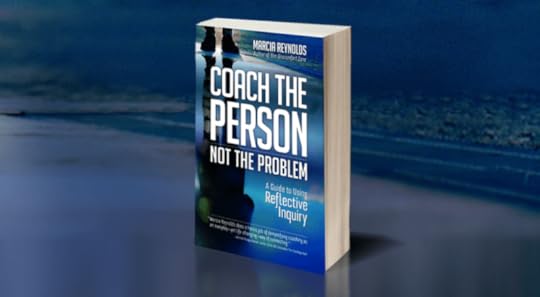
This week’s featured book is a detailed guide to mastering one of a coach’s toughest skills: thoughtfully reflecting clients’ words and expressions back to them so they see themselves and their world through new eyes.
Coach the Person, Not the Problem
“Coaches rely far too much on asking open-ended questions,” says Marcia Reynolds. But questions only seek answers—inquiry provides insight. When, instead of just questions, clients hear their thoughts, opinions, and beliefs spoken by someone else, it prompts them to critically consider how their thinking affects their goals. Reynolds cites the latest brain science to show why reflective inquiry works and provides techniques, tips, and structures for creating breakthrough conversations.
This book will free coaches from the cult of asking the magical question by offering five essential practices of reflective inquiry: focus on the person, not the problem; summarize what is heard and expressed; identify underlying beliefs and assumptions; unwrap the desired outcome; and articulate insights and commitments. Using these practices, combined with a respectful and caring presence, helps create a space where clients feel safe, seen, and valued for who they are. Coaches become change agents who actively recharge the human spirit. And clients naturally dive deeper and develop personalized solutions that may surprise even the coach.
Meet the Author

Dr. Marcia Reynolds is a world-renowned expert on how to evoke transformation through conversations. She is the Training Director for the Healthcare Coaching Institute in North Carolina and on faculty for coaching schools in China, Russia, and the Philippines. She has spoken at conferences and taught workshops in 41 countries on leadership topics and mastery in coaching. Global Gurus has recognized as one of the top 5 coaches in the world for four years. Her books include Wander Woman; Outsmart Your Brain; The Discomfort Zone; and her latest, Coach the Person, Not the Problem. Read more at www.Covisioning.com.
Praise from Readers Like You
I expected a great book from such a veteran coach and was a little surprised to find so much new and thought-provoking material—this is not a book full of reorganized coaching practices we’ve read about for years. While the methods explained are highly effective for coaching clients, I think the book has much wider applications. I am getting a copy for my newly married daughter as it has tools she’ll appreciate as she builds her family. I also found that I can use this process with myself. After reading half the book, I discovered a limiting belief I had held for decades, and I know that this book inspired my new awareness. And I guess it inspired courage, too, because I conquered it. I recommend this book, whether you are a coach or not. — Barbara Dee, 5-star Amazon Review
Marcia takes what can seem daunting to both developing and experienced coaches and distills it to specific tools and frameworks that can lift a coaching relationship to transformation. Using three mental habits and five essential practices for reflective inquiry, coaches can experience how the power of our presence and our emotional connection is more powerful than any questions we can conjure.— Cory S. Colton, 5-star Amazon Review
Professional coach training emphasizes the importance of coaching the person, not just the problem. Or, in other words, coaching the “who,” not just the “what.” Doing so is the key to a more lasting, transformational impact through coaching. In this book, Marcia Reynolds provides sound, practical ways to do just what the title says, “Coach the Person, Not the Problem.” She offers five essential tools for reflective inquiry, an essential competency for transformational coaching. Reynolds also shares three mental habits that enable coaches to develop a stronger coaching presence and provide an environment of psychological safety for their clients. This book is a must-read for all professional coaches who want to take their coaching effectiveness to the next level. It’s also a valuable resource for leaders who want to develop a coach approach to their leadership. – Jon Lokhorst, 5-star Amazon Review
You hear a lot about the importance of coaching, but the focus is often on asking questions and following formulas. Ultimately, most of the coaching you see is actually consulting, mentoring, or advising. This book changed that for me. By using “reflective inquiry”, the coach becomes a “thinking partner” to help the person work through their own thought processes, biases, perceptions, and blocks. It turns out we all are masters at rationalizing our set thinking patterns, so a good coach doesn’t offer advice or solve problems, but instead holds up a mirror to the person to help them work through their own thinking. Using five essential practices and three mental habits, even a beginner can start down a path to become a better coach in helping others explore their own thinking and resolve the issues holding them back. Give up being the “expert”, hold up the mirror as a thinking partner, and move into transformational coaching with reflective inquiry. This book will give you the road map. — Rob S., 5-star Amazon Review
Learn More
Buy the book on Amazon for yourself or a friend, or leave a short review of it.
Visit the book page to learn more about the book and download free resources.
Stop by the website to learn more about Marcia’s work.
The post Coach the Person, Not the Problem appeared first on Weaving Influence.
June 23, 2020
Episode 18: Amazon Ads for Authors

Click here to listen on your device and subscribe!
Welcome to The Book Marketing Action Podcast with Becky Robinson and Christy Kirk! In this episode, Becky and Christy talk about the importance of Amazon Ads during and after your book launch, how to effectively use Amazon Ads, and myths related to Amazon advertising.
Here are answers to frequently asked questions about Amazon Ads:
What are Amazon Ads? Amazon Ads are search-based ads. That means when people go to Amazon to search for an author, title of a book, subject, or category, ads are pinned to those search terms and show up around specific terms chosen by you. Amazon Ads help you reach a wider audience at the point of sale.
Why would I want to give Amazon more money? The #1 reason to use Amazon if you are trying to sell a book, is because it is the #1 place where people buy books. If you want to sell books, you go to the place where people are buying books and that’s Amazon.
Are Amazon Ads only appropriate during a book launch? No! Selling a book is a marathon, not a sprint. The same goes for Amazon Ads. Using Amazon Ads can be successful at any stage your book is in, from launch week to over 5 years old.
How and why do Amazon Ads work? They work because you are getting your product in front of people who are at the point of sale. They are looking to buy something specifically and your product comes up.
What keywords should I select in order to make my ads the most effective? There are two options: you can use an automatic ad which means Amazon uses their algorithm to decide how the ad will be shown, or you can do a manual ad which means you add your own keywords. We typically do a combination of both.
Using Brad Chase’s new book, Strategy First, as an example to pick keywords: we would use his title, name, different iterations of the word strategy, and all of the things that really talk about the subject matter of his book. We would also look at book titles that are similar or in the same category as Brad’s, and we would include those book titles as well. You really want to think of all of the ways people might stumble upon your book.
Do I have to pay for every keyword I use? Don’t worry! You only pay per click. If you have over 300 keywords, you only pay if someone clicks on a specific keyword. You get knowledge over time about which keywords work and which ones don’t and you can make changes.
Amazon advertisements can sometimes promise things that seem way too good to be true. Here are two myths about Amazon Ads we often hear:
An Amazon Ad will turn my book into an NYT bestseller. Unfortunately, this is just not the reality of what an Amazon Ad can do.
An Amazon Ad will make you a millionaire. Amazon Ads will not make you a millionaire. However, Amazon Ads will increase the sales of your book. On average it can increase your sales by 20% – 30%. Although it won’t make you a millionaire, it will put your book in front of more people.
Today’s action steps:
Sign up for our free webinar about Amazon Ads. We save all of our webinars, so if you listened to this episode after the webinar, you can still watch the recording. This is an easy way to learn more about how to set up your own Amazon Ads in order to increase sales and visibility of your book.
Reach out to your publisher about ads. If you are traditionally published, reach out to your publisher to see if they can help you set up ads.
Experiment with ads. If you are self-published through KDP, login, and explore the system and experiment with ads. You can spend as low as $50-$100 or $300-$500 for ads. It all depends on your budget and how much you want to spend.
Let us know below if you will take any of today’s action steps. If you have any questions or topics you’d like us to cover, please email Becky Robinson here and Christy Kirk here.
Click here to tweet about this episode!
The post Episode 18: Amazon Ads for Authors appeared first on Weaving Influence.
June 16, 2020
Episode 17: Marketing Advice with Dr. Bob Nelson

Click here to listen on your device and subscribe!
Welcome to The Book Marketing Action Podcast with Becky Robinson, Christy Kirk, and guest Dr. Bob Nelson, an established author from San Diego, California. In this episode, Dr. Bob talks about what has worked best for him when marketing his books and how he’s sold over 5 million copies.
Dr. Bob Nelson has published over 30 books and is considered the leading advocate for employee recognition and engagement worldwide. He has worked with 80 percent of the Fortune 500 and presented on six continents. He has been featured extensively in the national and international media including The New York Times, The Wall Street Journal, CNN, CBS 60 Minutes, MSNBC, ABC, PBS, and NPR about how best to motivate today’s employees.
Below is a condensed and slightly edited version of our conversation.
Becky: I’ve heard a lot of great things about you from your publisher, Berrett-Koehler, about how skilled you are in marketing. What has worked the best for you when marketing your books?
Dr. Bob: You’ve got to be the book. The book has to be a part of you. I view the book as extensions of myself, beliefs, thoughts, energies, and that’s important to be able to have the wherewithal to keep at promoting the book over an extended period of time, which is necessary if you’re interested in having a bestselling book.
Becky: So, what are the key activities you’ve invested in over time to bring the book into the world?
Dr. Bob: It’s not any one thing. Sometimes people think I have a Midas touch, but I don’t, I just have a tenacity, energy, drive, and determination which serves me, and the books I promote, well. I read a fun article early in my career, written by someone in publishing. This person said from his perspective that authors want to be published, and when they get a publisher interested in them they feel that they’ve gotten the golden ring and expect the publisher to do everything and make them rich and famous. While publishers are doing a similar version of that, they pick topics and authors who are well-known and have connections and expect the author to carry the weight of the success of the book. Because of this, most books die in the middle.
There is a lot of truth to that, so early on I chose to ask myself, “what can I do to own it and not be an author who blames the publisher?” With one of my first books 25 years ago, 1,001 Ways to Reward Employees, when I was working with a small publishing company from New York, their marketing director said they don’t do a formal plan. I knew they were a strong marketer, but they weren’t going to put it down on paper. So I told them I had a few ideas and asked if it was okay to send to them. They said that would be cute, so I sent them a 60-page document saying this is what I am going to do, how are you going to meet me halfway? I ended up doing everything on that list. When you create a plan and follow through with your plan, it makes it easier for the publisher to get on board.
Tenacity is very important and a part of who I am. The books are extensions of who I am, my values and beliefs. Because of that, I feel very strongly about my book and so when I speak, for example, the first question I always ask myself is, “How can everybody who hears me speak get a copy of my book?” I am not going to speak and then hope at the end a couple of people buy my book. I want to make sure everyone there is going to have a copy. I often ask the conference I’m speaking at to buy the book as a gift for attendees. If they respond with “we don’t have the budget for that”, I often ask if someone else or a company can purchase my book for the attendees. They always respond with, “If we can find someone, yes!” I give the person or company that purchased my book for the attendees a table at the conference, let them introduce me, or give the person/company a shoutout when speaking. I will often sit at their table and sign copies of my book and it benefits both of us because when people are in line they can talk about their company. It’s a no-brainer to find someone to sponsor you. Don’t take no as an answer, but also don’t criticize someone if they say no. You have to roll with it and create a new strategy.
Becky: Wow! That’s amazing. I think a few things stand out to me. You didn’t use these words but when you were talking about your success with media, it seems to me that generosity and adding value is the key to that.
Dr. Bob: I’d have to agree with you. You have to be a giver and not a taker. Talk about what you can do for them and not what they can do for you.
Becky: That’s very powerful. Dr. Bob, I’m going to throw a curveball at you. We always end this podcast by giving people actions that they can take. So, can you give us one or two actions that authors can take after listening to this podcast?
Dr. Bob: Sure! Whatever your book topic is, think who most needs to hear your message. Who needs your book the most? And then, how and where do you find them? Then do that. I do this almost every day. I often take my older books and make them relevant to current topics and issues.
Becky: That’s really good advice. The action is to think about who can benefit from the message of your book and then figure out how to get it to them.
Dr. Bob: Yes, how to reach them. How to reach those people. For any topic, it’s typically going to be finding people that have an interest in this certain topic. How can you do this? Well, there is either a publication or association around it, and both of those track and have a list of names. Sometimes you can call them and buy their list of names to make it easy. I often will hire someone to create that list for me. Once you have that list, you email, call and work your way through the spreadsheet.
Becky: Wow, that’s powerful! I’m taking away a couple of things from this conversation. The first is something you said before we started recording. You said you have to have a plan and work the plan. So, what I’m hearing is that you have a plan and work the plan over and over again, over time.
Dr. Bob: Yes, if the plan is working. For example, if I notice I am speaking at a lot of hospitals, I will start reaching out to more hospitals because there are over 6,000 in America. I have testimonials from the previous hospitals, and not all say yes, but a lot of them do.
To learn more about Dr. Bob and the work he does, visit his website here and follow him on LinkedIn here. Keep a lookout for his upcoming book, releasing in 2021, Work Made Fun, Gets Done. Let us know below if you will take today’s action step. If you have any questions or topics you’d like us to cover, please email Becky Robinson here and Christy Kirk here.
Click here to tweet about this episode!
The post Episode 17: Marketing Advice with Dr. Bob Nelson appeared first on Weaving Influence.