Amanda Meuwissen's Blog, page 15
April 6, 2016
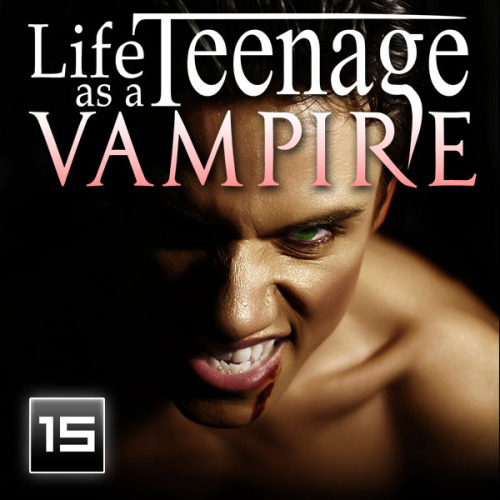
Life as a Teenage Vampire - Cover Art!
I wanted something truly special for the cover to this story, and while I have a great cover at BWN right now for the series run, the BWN Creative Director helped get me in contact with one of my favorite artists at DeviantArt, Saga. And what a joy to work with. So talented and easy to coordinate with to get just what I wanted, and the final product is just remarkable.

The serialized version of this story is on chapter 10 this week, updated Thursdays, and I am so excited for it to get into season 2 in May, and eventually 3, which is the final season, and then to share the finished book with you. Thank you all who are following this story!
The serialized version of this story is on chapter 10 this week, updated Thursdays, and I am so excited for it to get into season 2 in May, and eventually 3, which is the final season, and then to share the finished book with you. Thank you all who are following this story!


March 17, 2016
"You can kill a vampire however you want, because vampires don't exist" - an important lesson really
Interesting story to go with today’s episode of Life as a Teenage Vampire. I had a rather intense fan of my writing not too long ago who I discussed this story with when it was still in its infancy. You all know how I love to talk writing, and headcanon with people. It brings out the best ideas! But when things started getting deep into vampire lore, this person refused to accept that I could do things my own way, that I wouldn’t follow what to them was unequivocal fact.
First of all, if you’ve never watched The Death and Return of Superman, everyone should in general, but also, there’s a particular spot in this amazing little 16 minute film (around 15:19) where they bring up vampires, and I take the advice given there to heart, as it is spectacular. Seriously, watch the whole thing, but especially that part if you're a writer.
Anyway, the idea of tan vampires came up, addressed in part in this little excerpt:
This section in chapter 7 and the following interlude is my response to this reader who honestly made me sad when they railed against me for having a different opinion than them, because there is never only one way to do something, and as a writer, you should never, ever feel like there is.
Be creative. Make something your own. And always stay true to what your story means to you.
I never want the experience I had, which goes so much deeper than a disagreement on vampire lore, to discourage me from interacting with readers. I love you guys, whether you read my fanfiction, my original works, or both. Just keep in mind that sharing fiction stops being the beautiful thing that it is when we assume that our way is the only way.
First of all, if you’ve never watched The Death and Return of Superman, everyone should in general, but also, there’s a particular spot in this amazing little 16 minute film (around 15:19) where they bring up vampires, and I take the advice given there to heart, as it is spectacular. Seriously, watch the whole thing, but especially that part if you're a writer.
Anyway, the idea of tan vampires came up, addressed in part in this little excerpt:
Tan. Emery was naturally darker skinned, though he’d looked sickly pale up until he fed from Connor the other night. This thought successfully distracted Connor from his dreamy musings and launched him into a diatribe on vampires and white skin that lasted all the way to school.
This section in chapter 7 and the following interlude is my response to this reader who honestly made me sad when they railed against me for having a different opinion than them, because there is never only one way to do something, and as a writer, you should never, ever feel like there is.
Be creative. Make something your own. And always stay true to what your story means to you.
I never want the experience I had, which goes so much deeper than a disagreement on vampire lore, to discourage me from interacting with readers. I love you guys, whether you read my fanfiction, my original works, or both. Just keep in mind that sharing fiction stops being the beautiful thing that it is when we assume that our way is the only way.
February 8, 2016
Critical thinking is needed for all forms of writing
Every spring I participate as a judge for local Speech competitions in Minnesota. Sometimes I forget how seriously Minnesota takes its Speech season, as we have an entirely different organization than the National Forensics League, doing our own thing on the side with some of our own categories, while also having kids participate in the NFL version when we compete at Regional, State, and National competitions.
Minnesota High School Speech is composed of thirteen categories across interpretive and public speaking styles, some of which have the students write the content themselves. The categories offered include things like Creative Expression, Discussion, Extemporaneous Speaking, Informative Speaking, and Original Oratory.
While I’d love to go into detail on all of these categories, I’m going to stick with one today, which despite not being one I participated in during my high school career, is my favorite.
In Original Oratory, or OO, the speaker presents an originally written speech with the purpose of persuading the audience. As a writer, I am most critical when judging categories like this that involve writing because I think there is a distinct lack of good writers in today’s youth. This belief stems from real life examples of people constantly telling me how ‘good writers’ are hard to find in the work force, and experiences I’ve had as an editor.
I had the pleasure of hearing a speech in the OO category this past weekend about critical thinking and how we need to work toward building up this ability in people now more than ever. Considering how important this skill is for writing a persuasive argument as much as an informative speech or essay, the topic resonated particularly strong with me. Too many times I see people picking sides on an argument without presenting facts, or being willing to listen to rebuttals.
Critical thinking is described as “the objective analysis and evaluation of an issue in order to form a judgment.” Being objective may be one of the more difficult things for us humans, especially when an issue is important to us, or something we feel very strongly about. But all the more reason that we need to step back, weigh both sides, consider facts, and try to think objectively before forming opinions—or maybe even changing our opinions.
It was a relief to hear a maybe not even sixteen year old young man present a speech on this argument, and do so with critical thinking applied to how he wrote his speech and attempted to persuade me. The kids who ranked lower in that round failed to apply what this boy’s speech was about—the need for evidence and objective reasoning.
Human beings are emotional creatures. As a fiction writer I embrace and accept that emotion is often what drives whether or not someone enjoys my stories, but critical thinking has a place in fiction too. Whether we’re writing to inform or persuade someone, we still always present a thesis, back it up, and then form a conclusion.
In fiction, your readers will ask themselves, maybe subconsciously, maybe directly, whether or not they care about your thesis (what the story is about), whether or not you gave adequate reasons for them to agree (enjoyed the plot and building climax), and whether or not your conclusion (the story’s ending) was satisfying. It’s only if they can answer ‘yes’ that they will leave your work having truly enjoyed it.
Consider critical thinking when writing anything, when commenting on others’ work, when engaging in conversation, no matter the topic. We might be emotional beings, but we’re also intelligent, so the next time you present writing to the world, hand-written or typed, to any audience, ask yourself whether or not you did so objectively and applied critical thinking to what you said. Chances are you’ll be more persuasive, more informative, and more engaging if you did.
Minnesota High School Speech is composed of thirteen categories across interpretive and public speaking styles, some of which have the students write the content themselves. The categories offered include things like Creative Expression, Discussion, Extemporaneous Speaking, Informative Speaking, and Original Oratory.
While I’d love to go into detail on all of these categories, I’m going to stick with one today, which despite not being one I participated in during my high school career, is my favorite.
In Original Oratory, or OO, the speaker presents an originally written speech with the purpose of persuading the audience. As a writer, I am most critical when judging categories like this that involve writing because I think there is a distinct lack of good writers in today’s youth. This belief stems from real life examples of people constantly telling me how ‘good writers’ are hard to find in the work force, and experiences I’ve had as an editor.
I had the pleasure of hearing a speech in the OO category this past weekend about critical thinking and how we need to work toward building up this ability in people now more than ever. Considering how important this skill is for writing a persuasive argument as much as an informative speech or essay, the topic resonated particularly strong with me. Too many times I see people picking sides on an argument without presenting facts, or being willing to listen to rebuttals.
Critical thinking is described as “the objective analysis and evaluation of an issue in order to form a judgment.” Being objective may be one of the more difficult things for us humans, especially when an issue is important to us, or something we feel very strongly about. But all the more reason that we need to step back, weigh both sides, consider facts, and try to think objectively before forming opinions—or maybe even changing our opinions.
It was a relief to hear a maybe not even sixteen year old young man present a speech on this argument, and do so with critical thinking applied to how he wrote his speech and attempted to persuade me. The kids who ranked lower in that round failed to apply what this boy’s speech was about—the need for evidence and objective reasoning.
Human beings are emotional creatures. As a fiction writer I embrace and accept that emotion is often what drives whether or not someone enjoys my stories, but critical thinking has a place in fiction too. Whether we’re writing to inform or persuade someone, we still always present a thesis, back it up, and then form a conclusion.
In fiction, your readers will ask themselves, maybe subconsciously, maybe directly, whether or not they care about your thesis (what the story is about), whether or not you gave adequate reasons for them to agree (enjoyed the plot and building climax), and whether or not your conclusion (the story’s ending) was satisfying. It’s only if they can answer ‘yes’ that they will leave your work having truly enjoyed it.
Consider critical thinking when writing anything, when commenting on others’ work, when engaging in conversation, no matter the topic. We might be emotional beings, but we’re also intelligent, so the next time you present writing to the world, hand-written or typed, to any audience, ask yourself whether or not you did so objectively and applied critical thinking to what you said. Chances are you’ll be more persuasive, more informative, and more engaging if you did.
February 5, 2016
Life as a Teenage Vampire - Chapter 1 is UP!
Emery Mavus just wants to survive his senior year of high school. Becoming a vampire complicates things. So does a bizarre mentor, a group of vampire hunters, and an unexpected, new attraction for his openly gay best friend, Connor. An occasional uncontrollable hunger for blood might be the least of his worries.
READ THE FIRST CHAPTER HERE!
And each week there will be a new chapter available at BWN, every Thursday, that you can either read or listen to the audio of with me narrating.
READ THE FIRST CHAPTER HERE!
And each week there will be a new chapter available at BWN, every Thursday, that you can either read or listen to the audio of with me narrating.
January 25, 2016
A Hero with the Best of Intentions
The following is a teaser, the opening for my current WIP, The Royal Spark.
I'm very excited to work on this next endeavor, as a superhero fan, to delve into a world where some though few people have powers, or magic, some merely amazing tech, and to explore the dynamic between what makes someone a hero or a villain. Like all my stories, there is also a M/M romance element to be found. So enjoy! And stay tuned for more as this story takes shape.
-----

Knight filled the syringe to the brim. Every last ounce needed to be injected into the subject in order for his plan to work. He had synthesized the formula to match the one he had given himself exactly, with one variation. Undetectable unless someone knew what they were looking for, the miniscule nanomachines he’d added produced a substance that would react like a time release drug over several months, manipulating the subject’s personality to such a small degree the change would seem natural. A man slowly losing his mind, growing colder, harder, and more twisted to his base desires.
Satisfied, Knight replaced the cap on the syringe, and slipped it carefully inside his jacket pocket, where it would wait, as he watched the subject throughout the day, until the ideal opportunity presented itself.
Knight had chosen the subject after years of careful planning and insinuating himself into the man’s life. The subject wasn’t the hero type upon first glance. Tall but altogether too thin rather than well-muscled. Not a natural Power or a Mage. Merely a man, a high school teacher, pushing thirty. He had few close friends. Minimal family. No romantic attachments. He lived alone, and kept his schedule clear most nights save the time he spent on classwork. Yet despite this, anyone who knew him loved him deeply.
His charm wasn’t in being the strongest, or the smartest, or best looking. His body was weak, often sickly. His talent for biochemistry reached no further than the classroom; not the type to make new discoveries or affect drastic change in the field. And while some might consider him handsome, he hid behind thick black-framed glasses, tousled hair, and cardigan sweaters that made him look more like a twenty-something grandfather than a lonely young man.
It was his sincerity that swayed people who got to know him. His stalwart belief in others. His ability to triumph over obstacles and tragedy in his life with an unwavering smile. He also desperately, his entire life, had always wanted to be a Power. An unassuming good person who would never squander any abilities he was granted. And that was the most important detail of all.
Because who would ever suspect a hero with the best of intentions?
I'm very excited to work on this next endeavor, as a superhero fan, to delve into a world where some though few people have powers, or magic, some merely amazing tech, and to explore the dynamic between what makes someone a hero or a villain. Like all my stories, there is also a M/M romance element to be found. So enjoy! And stay tuned for more as this story takes shape.
-----
Knight filled the syringe to the brim. Every last ounce needed to be injected into the subject in order for his plan to work. He had synthesized the formula to match the one he had given himself exactly, with one variation. Undetectable unless someone knew what they were looking for, the miniscule nanomachines he’d added produced a substance that would react like a time release drug over several months, manipulating the subject’s personality to such a small degree the change would seem natural. A man slowly losing his mind, growing colder, harder, and more twisted to his base desires.
Satisfied, Knight replaced the cap on the syringe, and slipped it carefully inside his jacket pocket, where it would wait, as he watched the subject throughout the day, until the ideal opportunity presented itself.
Knight had chosen the subject after years of careful planning and insinuating himself into the man’s life. The subject wasn’t the hero type upon first glance. Tall but altogether too thin rather than well-muscled. Not a natural Power or a Mage. Merely a man, a high school teacher, pushing thirty. He had few close friends. Minimal family. No romantic attachments. He lived alone, and kept his schedule clear most nights save the time he spent on classwork. Yet despite this, anyone who knew him loved him deeply.
His charm wasn’t in being the strongest, or the smartest, or best looking. His body was weak, often sickly. His talent for biochemistry reached no further than the classroom; not the type to make new discoveries or affect drastic change in the field. And while some might consider him handsome, he hid behind thick black-framed glasses, tousled hair, and cardigan sweaters that made him look more like a twenty-something grandfather than a lonely young man.
It was his sincerity that swayed people who got to know him. His stalwart belief in others. His ability to triumph over obstacles and tragedy in his life with an unwavering smile. He also desperately, his entire life, had always wanted to be a Power. An unassuming good person who would never squander any abilities he was granted. And that was the most important detail of all.
Because who would ever suspect a hero with the best of intentions?
January 18, 2016
How Non-Fiction Inspires Fiction
Everyone deals with writer’s block. Sometimes the answer is to take a break. But since we all know that writing a little every day is best to facilitate a healthy writing relationship, how do you take a break, or step back from your fiction writing, while still keeping your juices flowing? Non-fiction.
Non-fiction doesn’t mean you suddenly change the genre you write in. It can mean blogging, like I am now, keeping a journal, writing articles for other publications (or your day job), or simple commentary on sites like Twitter, Facebook, and Tumblr to get your ideas, even if non-fictional, out of you.
Personally, I find that spending some time getting my everyday thoughts on paper (or in a Word doc) makes me itch to get back to my fiction, especially if I had otherwise recently burnt out on fiction writing.
Write every day. Yes. But don’t feel you need to only work on you current big fiction project just because you are or want to be a fiction writer. Take a break, writer something else, write something in a genre or style unlike your big project, and you might be surprised how quickly you’re inspired to return to the writing you really want to delve into.
Non-fiction doesn’t mean you suddenly change the genre you write in. It can mean blogging, like I am now, keeping a journal, writing articles for other publications (or your day job), or simple commentary on sites like Twitter, Facebook, and Tumblr to get your ideas, even if non-fictional, out of you.
Personally, I find that spending some time getting my everyday thoughts on paper (or in a Word doc) makes me itch to get back to my fiction, especially if I had otherwise recently burnt out on fiction writing.
Write every day. Yes. But don’t feel you need to only work on you current big fiction project just because you are or want to be a fiction writer. Take a break, writer something else, write something in a genre or style unlike your big project, and you might be surprised how quickly you’re inspired to return to the writing you really want to delve into.
January 11, 2016
Gardeners Versus Architects – The Importance of a Writer Keeping Notes
There are two types of writers (and those of us who fall into a third category somewhere in between)—those who plan out everything to the letter before they write, and those who write by the seat of their pants, allowing the characters and writing process to dictate where the story goes.
Or, as George R.R. Martin puts it:
Even those of us who would staunchly consider ourselves architects will often change things when our characters surprise us and a little gardening is needed. But I think it’s also important for gardeners to at the very least retroactively do some heavy planning, namely by taking notes as they write and brainstorm ideas that they can easily reference later when editing.
I am a middle of the road writer. I plan, more so with every new book idea, but those plans change, often greatly as a story moves forward, and I’ll find myself altering even the biggest plot points. This is made so much easier by taking excessive notes from the start of the writing process through completion.
Title ideas? Written down. Character bios and physical descriptions? All down. Snippets of dialogue. An outline. And, eventually, notes about plot points, reveals, really any pertinent details marked as connected to the chapter they appear in so that later I can easily see any plot holes or things I missed that need to be brought up again, or maybe even removed.
I cannot tell you how helpful this practice was as I edited what will be my new series, Life as a Teenager Vampire, starting with BWN in February! Even with a few ‘kill your darlings’ moments. I had the notes, but darn it, the scene or detail no longer worked with the overall story. (Of course I still saved those notes, and any scenes I cut, because you should never, ever delete something you could potentially use later or change your mind about).
So I implore you, fellow writers, whether you’re a gardener like Martin, a planner, or a mixed bag like me, take notes throughout your entire writing process. You and your readers will be thankful for the attention to detail and (hopefully) flawless plot that comes out of it.
Or, as George R.R. Martin puts it:
“I think there are two types of writers, the architects and the gardeners. The architects plan everything ahead of time, like an architect building a house. They know how many rooms are going to be in the house, what kind of roof they're going to have, where the wires are going to run, what kind of plumbing there's going to be. They have the whole thing designed and blueprinted out before they even nail the first board up. The gardeners dig a hole, drop in a seed and water it. They kind of know what seed it is, they know if planted a fantasy seed or mystery seed or whatever. But as the plant comes up and they water it, they don't know how many branches it's going to have, they find out as it grows. And I'm much more a gardener than an architect.”
Even those of us who would staunchly consider ourselves architects will often change things when our characters surprise us and a little gardening is needed. But I think it’s also important for gardeners to at the very least retroactively do some heavy planning, namely by taking notes as they write and brainstorm ideas that they can easily reference later when editing.
I am a middle of the road writer. I plan, more so with every new book idea, but those plans change, often greatly as a story moves forward, and I’ll find myself altering even the biggest plot points. This is made so much easier by taking excessive notes from the start of the writing process through completion.
Title ideas? Written down. Character bios and physical descriptions? All down. Snippets of dialogue. An outline. And, eventually, notes about plot points, reveals, really any pertinent details marked as connected to the chapter they appear in so that later I can easily see any plot holes or things I missed that need to be brought up again, or maybe even removed.
I cannot tell you how helpful this practice was as I edited what will be my new series, Life as a Teenager Vampire, starting with BWN in February! Even with a few ‘kill your darlings’ moments. I had the notes, but darn it, the scene or detail no longer worked with the overall story. (Of course I still saved those notes, and any scenes I cut, because you should never, ever delete something you could potentially use later or change your mind about).
So I implore you, fellow writers, whether you’re a gardener like Martin, a planner, or a mixed bag like me, take notes throughout your entire writing process. You and your readers will be thankful for the attention to detail and (hopefully) flawless plot that comes out of it.
November 3, 2015
NaNoWriMo with Amanda Meuwissen
Considering I have 4 published books, and more fanfiction written than I think I could ever catalog or properly document for insane word count, it may come as a surprise that I have never participated in NaNoWriMo before (National Novel Writing Month).
On November 1 every year, participants begin working towards the goal of writing a 50,000-word novel by 11:59 PM on November 30. I already have around 40k words for my current work in progress, but I know I have close to 50k more to go before it’ll be complete, so I decided that participating in NaNo was the perfect vehicle to ensure I finish the rough draft of my next novel before the end of the year.
50k words is not as daunting as it may appear at first glance. This equals about 1200 words a day—not too difficult, and helps instill that age old ‘write everyday’ habit I’ve gone on about before. My goal is to at least do 1200 each day, so that if I do encounter a day where it just doesn’t happen, or I fall short, I’ll have enough words in the bank that it won’t derail my overall progress.
Today is day 3 (and I haven’t written anything yet, aside from this blog post) but so far I already have 3679 words written for my novel Life as a Teenage Vampire.
Here’s a small snippet of my work, which I’m also posting little paragraphs of each day on my tumblr page to help keep me motivated. Participating in NaNo this year? Tell me about it! Any advice to share? Any questions for me as a rookie taking on this awesome annual activity? Let me know! And by December 1st, here’s hoping I have the beginnings of my next serialized work for BigWorldNetwork.com, and my next novel on its way!
Life as a Teenage Vampire by Amanda Meuwissen
It was a trick. Emery had made it all up, knowing that the details would lead Connor to vampires. These were just Halloween fangs. Connor wasn’t really hypnotized into submission; he was just stunned, believing his own crazy imagination. He’d longed for years to have Emery this close, after all, crowding him into a corner, lips descending. He’d just imagined them descending a little closer to his mouth, though his neck wouldn’t be so bad…
…if not for the sharp sting, the breaking of the skin and rush of blood sucked out of him so fast he felt dizzy, and then—wow.
It didn’t hurt at all. It felt like Emery was tucked into his shoulder intimately, fully aware of the pleasant buzzing he caused in Connor’s gut every time they touched. Connor had dreamed of this, imagined it just like this, and felt lulled by Emery’s body being so close, and the way he shivered feeling those lips on his skin. He almost thought he heard Emery’s soothing voice whispering affirmations he’d always wanted to hear.
“Em…” Connor breathed out, barely audible.
The room was dimming, but he felt cozy where he was. His arms were limp and heavy as he lifted them to pull Emery closer, feeling the soft fabric of the sweater against his somewhat numb right palm. He pulled tighter, twisting flesh and plastic fingers alike in the fabric, pulling…with the faint sense that he should be pushing instead.
“Em…” he choked out like a whimper, like he was crying. Why was he crying? This was everything he’d ever wanted…
Reality snapped back into painful, terrible focus when Emery released him, his fangs pulling from the tender skin of Connor’s neck, the brief feeling of a tongue licking over the wound, and then Emery jerked away from Connor with a harsh intake of breath.
Emery’s hands had moved at some point from the wall to Connor’s shoulders, and the second he removed them, Connor dropped straight to the carpet.
“Connor!”
On November 1 every year, participants begin working towards the goal of writing a 50,000-word novel by 11:59 PM on November 30. I already have around 40k words for my current work in progress, but I know I have close to 50k more to go before it’ll be complete, so I decided that participating in NaNo was the perfect vehicle to ensure I finish the rough draft of my next novel before the end of the year.
50k words is not as daunting as it may appear at first glance. This equals about 1200 words a day—not too difficult, and helps instill that age old ‘write everyday’ habit I’ve gone on about before. My goal is to at least do 1200 each day, so that if I do encounter a day where it just doesn’t happen, or I fall short, I’ll have enough words in the bank that it won’t derail my overall progress.
Today is day 3 (and I haven’t written anything yet, aside from this blog post) but so far I already have 3679 words written for my novel Life as a Teenage Vampire.
Here’s a small snippet of my work, which I’m also posting little paragraphs of each day on my tumblr page to help keep me motivated. Participating in NaNo this year? Tell me about it! Any advice to share? Any questions for me as a rookie taking on this awesome annual activity? Let me know! And by December 1st, here’s hoping I have the beginnings of my next serialized work for BigWorldNetwork.com, and my next novel on its way!
Life as a Teenage Vampire by Amanda Meuwissen
It was a trick. Emery had made it all up, knowing that the details would lead Connor to vampires. These were just Halloween fangs. Connor wasn’t really hypnotized into submission; he was just stunned, believing his own crazy imagination. He’d longed for years to have Emery this close, after all, crowding him into a corner, lips descending. He’d just imagined them descending a little closer to his mouth, though his neck wouldn’t be so bad…
…if not for the sharp sting, the breaking of the skin and rush of blood sucked out of him so fast he felt dizzy, and then—wow.
It didn’t hurt at all. It felt like Emery was tucked into his shoulder intimately, fully aware of the pleasant buzzing he caused in Connor’s gut every time they touched. Connor had dreamed of this, imagined it just like this, and felt lulled by Emery’s body being so close, and the way he shivered feeling those lips on his skin. He almost thought he heard Emery’s soothing voice whispering affirmations he’d always wanted to hear.
“Em…” Connor breathed out, barely audible.
The room was dimming, but he felt cozy where he was. His arms were limp and heavy as he lifted them to pull Emery closer, feeling the soft fabric of the sweater against his somewhat numb right palm. He pulled tighter, twisting flesh and plastic fingers alike in the fabric, pulling…with the faint sense that he should be pushing instead.
“Em…” he choked out like a whimper, like he was crying. Why was he crying? This was everything he’d ever wanted…
Reality snapped back into painful, terrible focus when Emery released him, his fangs pulling from the tender skin of Connor’s neck, the brief feeling of a tongue licking over the wound, and then Emery jerked away from Connor with a harsh intake of breath.
Emery’s hands had moved at some point from the wall to Connor’s shoulders, and the second he removed them, Connor dropped straight to the carpet.
“Connor!”
October 12, 2015
Let Your Characters Tell YOU Their Story
Not every character is created the same way, even if you’re an author who has a certain method you follow when taking on a new story. While Sasha Kelly, the incubus character in my recently completed trilogy The Incubus Saga, isn’t the protagonist, there wouldn’t be a story without him.

I had a vague idea many years ago of an incubus story I wanted to tell. I knew generally what Sasha looked like, his name, what he was, but not a real feel for his personality. The story was actually going to be about Sasha and a teenage character, who in the end I did still add to The Incubus Saga though in no way romantically involved with Sasha—a fan favorite actually, Evelyn (Leven) Taylor.
Whenever I tried to write the initial story I had in mind for them, nothing would come out. The bare bones was there, but the heart of the story eluded me. I knew then that I couldn’t write the story yet as it was in my head and held off.
Cut to nearly a year later when at last the muse was inspired and told me what Sasha’s story really was. It wasn’t about Leven, though he played a role, and Sasha’s character was vastly different than I’d initially imagined. It was while watching an episode of the TV show Supernatural—and anyone who’s read The Incubus Saga can understand the inspiration drawn from the show in general—and something just clicked, suddenly I had an epiphany and I knew exactly who Sasha was, his personality, his likes and dislikes, his backstory, everything.
Never before in my time as a writer have I ever had a character just appear before me fully formed like that and say there you go, this, this is my story. Well, I spent the next several years writing it, editing it, tweaking it, and again, Sasha isn’t even the main character, but it was the epiphany that night that started it all.
I doubt I’ll ever have another character experience like it. But it does help hammer home something I’ve discovered as a writer. My characters are always the most fleshed out, the most real and relatable when at least some part of them feels like divine intervention. Not to the extent of Sasha usually, but small things I haven’t yet realized about my characters just suddenly making sense, almost like magic.
I tell people all the time, I don’t create characters; I discover them. I don’t choose things about them; they reveal the truth to me over time.
A more common example of this is for my current work in progress, Life as a Teenage Vampire. As I was working out the details of the protagonist for this story, I knew certain things about him right away. Age, generally how he looked, vague personality, where his story would go, what he was, and what he wanted. But there were still enough things missing that I didn’t feel I was ready to write his story just yet.
Part of how I try to get the muse working to reveal to me those missing elements when starting a new story is simply jotting down notes. With what I do know, what might happen for this scene, that scene, why would a character react this way or that? And maybe it’s part of being a writer, something I can’t explain to someone who isn’t one, but the ideas almost always come naturally if I’m on the right track.
I knew, for example, that this new character, Emery, had a non-American grandmother, but I couldn’t pin down the heritage, and that’s what was tripping me up, this ethnic background that could have an impact on the character and his story in some way, if only I could realize what it was. Greek? No. Romanian? Not quite. And then I felt quite silly, because I knew his surname was Mavus, and that this grandmother would be on his paternal side, so I did a simple name search: what countries is that surname most prevalent? The answer: Turkey.
It might seem like a simple thing, but in that moment several things clicked; his father is Turkish, born there, raised in the US, so very much an American in most ways if no one knew his parents, though his mother moved back to Turkey after her husband passed away, and my main character only rarely gets to see his paternal grandmother now, though she is very warm and doting when she visits.
Even if this doesn’t end up having a huge significance on the story, it’s part of who the character is, how he looks, how people think of and react to him. Even if the detail in question was something as benign as his favorite color instead (gold, by the way), those types of facts are something you need to know about your characters, because understanding their inner workings is how you tell their tale with legitimacy and heart.
How you get to that part can vary, maybe through very technical means most of the way, with sparks of inspiration from unlikely places, but it is my firm belief that the writing comes the most easily if you’re on the right track, telling the story you are meant to tell.
So if you can’t quite get a story out of you, maybe you haven’t discovered everything you need to know about your characters yet. Don’t worry, don’t rush, just wait, give them time, and when they’re ready for their story to be told, they’ll tell it to you.
I had a vague idea many years ago of an incubus story I wanted to tell. I knew generally what Sasha looked like, his name, what he was, but not a real feel for his personality. The story was actually going to be about Sasha and a teenage character, who in the end I did still add to The Incubus Saga though in no way romantically involved with Sasha—a fan favorite actually, Evelyn (Leven) Taylor.
Whenever I tried to write the initial story I had in mind for them, nothing would come out. The bare bones was there, but the heart of the story eluded me. I knew then that I couldn’t write the story yet as it was in my head and held off.
Cut to nearly a year later when at last the muse was inspired and told me what Sasha’s story really was. It wasn’t about Leven, though he played a role, and Sasha’s character was vastly different than I’d initially imagined. It was while watching an episode of the TV show Supernatural—and anyone who’s read The Incubus Saga can understand the inspiration drawn from the show in general—and something just clicked, suddenly I had an epiphany and I knew exactly who Sasha was, his personality, his likes and dislikes, his backstory, everything.
Never before in my time as a writer have I ever had a character just appear before me fully formed like that and say there you go, this, this is my story. Well, I spent the next several years writing it, editing it, tweaking it, and again, Sasha isn’t even the main character, but it was the epiphany that night that started it all.
I doubt I’ll ever have another character experience like it. But it does help hammer home something I’ve discovered as a writer. My characters are always the most fleshed out, the most real and relatable when at least some part of them feels like divine intervention. Not to the extent of Sasha usually, but small things I haven’t yet realized about my characters just suddenly making sense, almost like magic.
I tell people all the time, I don’t create characters; I discover them. I don’t choose things about them; they reveal the truth to me over time.
A more common example of this is for my current work in progress, Life as a Teenage Vampire. As I was working out the details of the protagonist for this story, I knew certain things about him right away. Age, generally how he looked, vague personality, where his story would go, what he was, and what he wanted. But there were still enough things missing that I didn’t feel I was ready to write his story just yet.
Part of how I try to get the muse working to reveal to me those missing elements when starting a new story is simply jotting down notes. With what I do know, what might happen for this scene, that scene, why would a character react this way or that? And maybe it’s part of being a writer, something I can’t explain to someone who isn’t one, but the ideas almost always come naturally if I’m on the right track.
I knew, for example, that this new character, Emery, had a non-American grandmother, but I couldn’t pin down the heritage, and that’s what was tripping me up, this ethnic background that could have an impact on the character and his story in some way, if only I could realize what it was. Greek? No. Romanian? Not quite. And then I felt quite silly, because I knew his surname was Mavus, and that this grandmother would be on his paternal side, so I did a simple name search: what countries is that surname most prevalent? The answer: Turkey.
It might seem like a simple thing, but in that moment several things clicked; his father is Turkish, born there, raised in the US, so very much an American in most ways if no one knew his parents, though his mother moved back to Turkey after her husband passed away, and my main character only rarely gets to see his paternal grandmother now, though she is very warm and doting when she visits.
Even if this doesn’t end up having a huge significance on the story, it’s part of who the character is, how he looks, how people think of and react to him. Even if the detail in question was something as benign as his favorite color instead (gold, by the way), those types of facts are something you need to know about your characters, because understanding their inner workings is how you tell their tale with legitimacy and heart.
How you get to that part can vary, maybe through very technical means most of the way, with sparks of inspiration from unlikely places, but it is my firm belief that the writing comes the most easily if you’re on the right track, telling the story you are meant to tell.
So if you can’t quite get a story out of you, maybe you haven’t discovered everything you need to know about your characters yet. Don’t worry, don’t rush, just wait, give them time, and when they’re ready for their story to be told, they’ll tell it to you.
September 11, 2015
Author Voice – Mentoring the Next Generation
I wear several hats in my professional life, one being writer and another editor. And I don’t just mean editing my own work; I am Managing Editor for BigWorldNetwork.com, and read chapters from around 20 stories each week. It’s a dream job really, though it isn’t the one that pays the bills, because I get to experience all of these different novels before they’re even finished and have a bit of my own hand in them as well.
For me there is an automatic sense of mentoring that goes into editing another person’s work, and it doesn’t matter if I’m older or younger, more or less experiences, or have more or less published novels under my belt than the person I’m editing for, because everyone needs an editor. More than anything it’s about expressing the reader experience to the author so they know how to tweak or react accordingly. Is what they’re writing evoking the reactions they wanted? Awesome!
So while copyediting is helpful, as well as comments about plot structure and pacing, the most important thing I can offer other writers is my honest opinion, so they can ask themselves if my reactions are in line with what they want readers to experience.
When I read and edit someone’s work, I always want to err on the side of the author so as not to impose too much of my own voice, or risk changing theirs. It doesn’t matter what POV they write in, whether they overuse passive voice, or over simplify descriptions; it’s about whether or not they are telling an engaging story the way they want. That is always the lesson I want to pass on to writers who give me their work to read.
Besides having to edit many stories for my publisher, I also beta friends’ work, and approach it the same way. I may not always have time to read, but I am always open for queries into how to approach writing and publishing, and adore people who recognize the value of a good critique. One thing I would never do, however, is tell someone how their last book could have been better, but would rather tell them how the current one they’re working on could improve, because that’s something they can still change, while an already published book is set in stone. Besides, no matter how good the book, there will always be enough bad reviews out there to cover that part for me.
Working with BWN gives me opportunity to mentor so many new authors along with making relationships with already successful ones, and over time it has grown out of straight up mentorship into community. The authors, editors, and narrators at BWN have a closed Facebook group where we share ideas, help promote each other’s work, and ask advice all the time. I also point aspiring authors toward valuable Goodreads Groups like Support for Indie Authors.
The most important aspect of mentoring is to listen. Hearing someone talk passionately about their story ideas and then want to share with me their actual writing is half the fun of being an editor (and author). None of us would be in this business if we didn’t love stories. People are always welcome to contact me, and I hope other writers approach mentoring this same way.
For me there is an automatic sense of mentoring that goes into editing another person’s work, and it doesn’t matter if I’m older or younger, more or less experiences, or have more or less published novels under my belt than the person I’m editing for, because everyone needs an editor. More than anything it’s about expressing the reader experience to the author so they know how to tweak or react accordingly. Is what they’re writing evoking the reactions they wanted? Awesome!
So while copyediting is helpful, as well as comments about plot structure and pacing, the most important thing I can offer other writers is my honest opinion, so they can ask themselves if my reactions are in line with what they want readers to experience.
When I read and edit someone’s work, I always want to err on the side of the author so as not to impose too much of my own voice, or risk changing theirs. It doesn’t matter what POV they write in, whether they overuse passive voice, or over simplify descriptions; it’s about whether or not they are telling an engaging story the way they want. That is always the lesson I want to pass on to writers who give me their work to read.
Besides having to edit many stories for my publisher, I also beta friends’ work, and approach it the same way. I may not always have time to read, but I am always open for queries into how to approach writing and publishing, and adore people who recognize the value of a good critique. One thing I would never do, however, is tell someone how their last book could have been better, but would rather tell them how the current one they’re working on could improve, because that’s something they can still change, while an already published book is set in stone. Besides, no matter how good the book, there will always be enough bad reviews out there to cover that part for me.
Working with BWN gives me opportunity to mentor so many new authors along with making relationships with already successful ones, and over time it has grown out of straight up mentorship into community. The authors, editors, and narrators at BWN have a closed Facebook group where we share ideas, help promote each other’s work, and ask advice all the time. I also point aspiring authors toward valuable Goodreads Groups like Support for Indie Authors.
The most important aspect of mentoring is to listen. Hearing someone talk passionately about their story ideas and then want to share with me their actual writing is half the fun of being an editor (and author). None of us would be in this business if we didn’t love stories. People are always welcome to contact me, and I hope other writers approach mentoring this same way.