
Eva Márquez's Blog, page 4
September 25, 2012
Extreme Ends of the ‘Rating’ Spectrum
 Every few days or so I log into my Amazon or GoodReads account to read reviews of books I intend to read, and of course, I read reviews of Sweetest Taboo that have been newly posted. As I read reviews for the types of controversial books I enjoy reading and reviews of Sweetest Taboo (a book about a controversial subject), I often wonder how ratings and review comments can inhabit such extreme ends of the spectrum. Sure, controversial topics often elicit strong emotions and positions pitting people’s views against each other (that’s the nature of controversy, isn’t it?), but when it comes to rating and reviewing a book, my assumption is that a reader rates/reviews the literary characteristics of the book, the plot development, the sincerity of the characters, the engagement of the story vis a vis the reader, and the like. It wasn’t until recently, when I took the time to read reviews carefully, that I realized readers are judging books based on their opinions about the subject matter, and not the actual literary quality of the book. As an author, this is somewhat disappointing for obvious reasons. The first being that our work is judged not by its quality but rather, our work is judged by the emotional positioning of the reader regarding the author’s chosen subject matter.
The ratings/reviews for Sweetest Taboo are a great example of such polarity. On one hand, I have read that Sweetest Taboo is ‘a great read, a page turner, an engaging story, well written’, and readers even say that they would read anything else I ever write and yet, some of these same reviewers give the book a 3-star rating, a rating that does not reflect the praise included in their narrative reviews. This inconsistency reveals that some reviewers are not rating the book solely on its literary merit, but instead are rating it based on their own personal opinion of the edgy subject matter. Although all reviewers have agreed that Sweetest Taboo is well written, is extremely engaging and a ‘page turner’, the story seems to creep out some readers, while fulfilling fantasies for others.
Those reviewers that cannot accept student/teacher relationships and see them as inherently ‘disgusting’ perceive Isabel, the main character in Sweetest Taboo, as being taken advantage of by her much older teacher. Other readers believe that because she was well above her years in maturity, she wasn’t taken advantage of and actually, she was the one responsible for relentlessly pursuing Mr. Stevens. Some readers refer to Mr. Stevens as a ‘pedophile’ while others warm up to him and actually respect the sincere love he harbored for Isabel. It’s interesting to see the number of readers labeling Mr. Stevens as a predator or pedophile, while others label him as a normal man trying to deal with issues that men often face at that age and in that same position (i.e. a high school teacher and a coach). Perhaps the most polarizing element for raters/reviewers is their perception about Mr. Stevens and what raters/readers perceive to be his motives or intentions with Isabel. However, just because a reader does not particularly agree with Mr. Stevens’ approach or actions, does that mean that his/her rating should reflect that dislike? Or should the reader focus their rating/review on the quality, engagement and fluidity of the story?
In my travels throughout the world and in my professional capacity, I have seen a great deal of diverse relationships. I have seen happily married couples many years apart in age, and I have listened to and heard their stories. Love stories aren’t always neat and tidy, and do not always fit nicely into society’s molds. True love comes in many forms, sizes and shapes and those forms, sizes and shapes are often dictated by culture and communities. When I read books about child brides, repressed women, or even sexual abuse I ensure that my rating/review of those books represents how I felt about the literary work, the story, the characters, the climax of the story, etc., but I certainly do not gauge books on whether or not I agree with such events/relationships/abuse. If that were the case, ‘The Color Purple’ would have had a rating of 1.5 and it would have never won so many awards.
As far as judgment is concerned, I can certainly understand why some readers have difficulty with the story line, but I also remind readers to temper any pre-existing notions with a dose of reality. We don’t always chose who we fall in love with; Tom and Isabel are perfect examples of this truth. In spite of controversial or less-than-ideal contexts, love finds a way to flourish throughout the world across continents, cultures and distance.


September 23, 2012
Gaston’s Secret: The Lottery Child – A Review by Eva Márquez
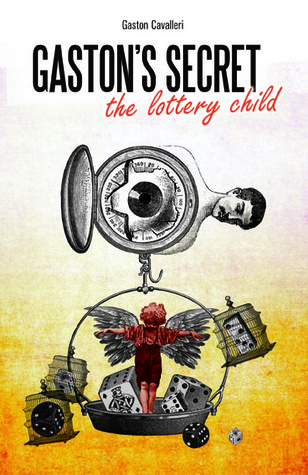 Title: Gaston’s Secret: The Lottery Child
Author: Gaston Cavalleri
Publication: 2012
Pages: 204
Genre: Adult Fiction
Publisher: Caviar Literature
ISBN: 978-0-646-56417-3
Price: $ 0.99 (eBook)
Synopsis
My story is a wacky tragi-comedy set in 21st-century inner-city benefit-funded housing in London, but also the city’s most exclusive neighbourhoods and then on to Brazil, Argentina, Colombia, Spain and Italy, and wherever I wanted, really.
I was lucky enough to be born into a poor family and dragged through the poo to know exactly how lucky I am now. It’s rare I meet anybody luckier than me, and I don’t believe I ever have met that person. I can safely say I’m the luckiest person I know.
People and views about society change when your family win multiple millions in the lottery, especially when you and they had little. I can’t comment on people who win the lottery and were already rich; I can only comment on the situation I know. It’s an event that people spend their entire lives wishing for but never actually fully prepare for in case it does happen. For most it never does. It’s an interesting affair, and due to human nature’s harsher side and the vultures in this world, it’s one I’ve learned is best kept my secret.
Gaston’s Secret is an action-packed story with an accidentally evolving consciousness and development of spiritual values as a result of things that have happened, to the point I’ve had no option but to believe you can only do bad in this world if you wish to lead a life of paying for bad karma.
My thoughts
This book was provided to me by the author for an honest review. Although I signed up to review this book on a YA fiction forum, I can confidently say that the nature, language, and voice of this novel does not fit the YA genre, and would more appropriately be classified as adult fiction. The book contains strong language as well as mature content not suited for young adults.
Gaston’s Secret is a work of fiction, as we discover in the preface of the book, but the story itself reads very much like an autobiography and/or memoir of an important event in Gaston’s life that has triggered significant changes in his life. The title gives away that event, obviously. Gaston comes from a humble family living in the rougher neighborhoods of London and he tells his story, in flash back style. The main character is reflecting upon his childhood, his adolescence, his college years and finally reflects upon his mother’s luck with a multi-million dollar winning lottery ticket that changed the family’s life forever. Gaston alludes to the event in the entire book, but does not actually unpack the event and explain to the reader how that event impact the family’s life until the middle of the book, which for me, seemed far too late. Unfortunately, the event was unpacked in a way that left me with lots of unanswered questions, and the event and its aftermath was described in a way that frustrated me because so many fine details were omitted. In addition, once the event was described and the changes in Gaston’s life were identified, the story became more of a repetitive monologue about one main issue – the uncle who took his mother to court to sue for some of her lottery winnings. What was most disappointing about the second half of the book was that it had lots of potential, but instead, the repetitive monologue focused on this uncle, the vague court case (we learn no details about what exactly the uncle is suing for and what his argument is in court), and how despicable this uncle is. The second part of the book read more like an internal therapy session the author (or main character) needed to put on paper.
This story had a great deal of potential, and the first half of the book had me hooked and wanting to know how the lottery win changed everyone’s life. Perhaps the author lost sight toward the latter part of the book and the narrative became a reflection of the main character’s frustrations and disappointments. The repetitive monologue was not fun to read, and I could have done without all of the repetition about how Gaston felt about his uncle and the incessant talk about the court case, which we never find out too much about. Overall, I think that the author certainly had a good story to tell, but his informal voice and the monologue style he employed was not effective in delivering a compelling story. This book is definitely not for people who are easily affected and/or offended by strong language.
My favorite passage
“Part of screwing up is recognizing how to avoid it the next time. I think it’s not so much how you screw up in life as how you recover.” - Kindle Book Location 499-500
My rating

September 17, 2012
On the verge: when YA lit crosses over
 According to Susan Carpenter from the L.A. Times, adults are increasingly reading YA books with no ulterior motives. Adults are attracted by well-written, fast-paced and engaging stories that span the gamut of genres and subjects, such readers have mainstreamed a niche long derided as just for kids.
But is all YA lit truly YA or does much of it, or any of it, cross over into adult fiction and if so, when does that happen?
According to writer Susan Dennard, there are four key aspects that differentiate YA lit from adult fiction:
The voice of the main character
The length of the book
How the main character views him/herself in the world and reacts to his/her surroundings
The depth of the point of view
Keeping those main points in mind, I will argue that my debut novel, ‘Sweetest Taboo’ is not a YA lit cum adult fiction piece of literature, but rather a YA novel for older YA readers. My logic for this argument is based on the 4 key ‘tenets’ of YA lit that were set forth above.
First, the voice of Isbael, the main character, is the voice of a, although a-typical and mature, high school student. The story takes off when she’s only 15, but follows her through until the age of 19. Now, having a teen MC is not, in itself, sufficient to qualify a book into the YA genre, BUT, the voice of the MC and its sincerity and authenticity is. Isabel is telling her story as she perceives it, from the eyes, perspective and voice of a teenage girl. ‘Sweetest Taboo’ is narrated by Isabel and not a 3rd person ‘all knowing’ narrator, thereby giving this story and novel the authentic ‘young’ feel.
Second, ‘Sweetest Taboo’ falls neatly into the length and complexity category for YA lit. According to Dennard, the standard rule for word count/length for a YA debut novel is between 50 – 90K. The complexity of the story needs to be appropriate for the shorter length. ‘Sweetest Taboo’ in first draft form exceeded this standard by approximately 10K words and included too many competing and complex plots that took away from the main story I wanted to tell, and that was the story about the romance between a student and her teacher. After many revisions and final edits, my debut novel was only 67K words in length and included one main plot, with a handful of complimentary plots closely associated to the main story.
Third, the MC in ‘Sweetest Taboo’ undergoes a transformation, or a coming of age, in this epic love story. According to Dennard, “YA often moves from a point of self-doubt to surety/autonomy, a point of selfish emotional concern to more selfless,” and we certainly experience that as we follow Isabel on her unique and controversial coming of age story. Dennard says that an MC should be “someone who questions if he/she made the right choice and who sometimes hesitates before decisions.” In addition, Dennard emphasizes “how a single line of self-doubt can really hype up the YA feel to your novel.” There is no escaping this truth about YA lit, which undeniably focuses on the emotional aspect of being young, of experiencing emotions for the first time, of learning how to deal with new emotions and making (sometimes good, sometimes very bad) choices based on those new emotions, and the consequences thereof. If ‘Sweetest Taboo’ is about anything at all, it is about this very aspect of moving from adolescence into young adulthood, about being overwhelmed with emotions, with choices, making choices from the heart and then having to suffer the consequences.
Lastly, Dennard says “the average modern YA novel will have a very close first or third person.” In essence, Dennard believes that a YA novel is characterized by the reader’s ability to live the story as if he/she were in the main character’s head…and that introspection is tightly woven into the action of the story. This essence of YA lit could not characterize ‘Sweetest Taboo’ any more accurately! The first moment you enter into the ‘Sweetest Taboo’ world, you enter it through Isabel’s eyes and her point of view, and no one else’s. The reader lives and experiences the story as it unfolds, but experiences it alongside with her, as if the reader were residing in her head and in her life, taking those chaotic and dangerous steps with her, warning her with each step, foreshadowing what is to come.
What’s missing? Dennard does not address ‘content’ in detail in her classification of YA lit vs. adult fiction, but she does say that “lots of graphic sex might fly in an adult book, but will usually be considered too much for YA. However, you can include a lot of mature situations in YA as long as you handle it well.” How does ‘Sweetest Taboo’ fare on the ‘content’ test? It depends who you ask! Some YA enthusiasts prefer very clean and graphic-free stories that are geared toward younger YA audiences. Others enjoy mature, but tastefully written mature content in their YA reads. This is where the readers makes their own judgment and decides for him/herself as to the classification of ‘Sweetest Taboo’. Yes, Isabel does have a sexual relationship with Mr. Stevens and although it is described tastefully, it still may be too graphic for some younger YA readers. Yes, the content is of a mature nature, since Isabel tests the waters and finds herself in a much-too-serious physical and romantic relationship with a man that should be completely off-limits to her. However, these are not issues, nor situations that do not creep up in our society, in our lives, in our communities and in our worlds. Isabel’s story could be anyone’s story, and that’s what I, as the author, believe is the most important take-away message from this debut novel.
Decide for yourself…is ‘Sweetest Taboo’ truly YA lit or does it cross-over to adult fiction? If so, why?
For Dennard’s excellent full blog article on YA vs. adult fiction, please follow this link: http://letthewordsflow.wordpress.com/2011/06/01/writing-ya-versus-adult-fiction-whats-the-difference/
Autumn’s Harvest Blog Hop!
Join me and a plethora of authors, bloggers and readers at Carrie Anne’s Autumn Harvest Blog Hop to talk about what we love about Autumn and Fall, what it reminds us of, what we like to read, and our favorite autumn stories. As always, there will be amazing GIVEAWAYS as part of this blow-out blog hop. Don’t miss it!
September 15, 2012
Slammed: A Review by Eva Márquez
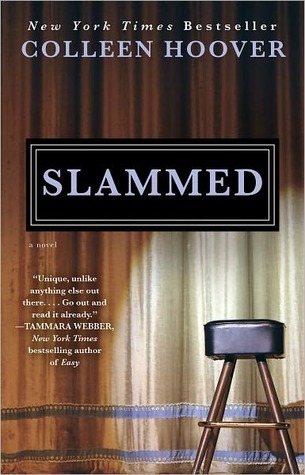 Title: Slammed
Author: Colleen Hoover
Publication: January 5, 2012
Pages: 315
Genre: Young Adult
Publisher: Atria Books
ISBN: 2940014187602
Price: $7.99 (eBook)
Synopsis
Following the unexpected death of her father, 18-year-old Layken is forced to be the rock for both her mother and younger brother. Outwardly, she appears resilient and tenacious, but inwardly, she’s losing hope. Enter Will Cooper: The attractive, 21-year-old new neighbor with an intriguing passion for slam poetry and a unique sense of humor. Within days of their introduction, Will and Layken form an intense emotional connection, leaving Layken with a renewed sense of hope.
Not long after an intense, heart-stopping first date, they are slammed to the core when a shocking revelation forces their new relationship to a sudden halt. Daily interactions become impossibly painful as they struggle to find a balance between the feelings that pull them together, and the secret that keeps them apart.
My thoughts
This is a multi-layered story about many of life’s trials and tribulations. The main plot revolves around Layken and Will’s pull-pull relationship or the intense love they feel for each other and their inability to actually be together because Will turns out to be Layken’s poetry teacher during her senior year in high school. In essence, this is the story of a forbidden romance, but only a time-bound forbidden romance because Layken is already 18 and Will is only 21 years old, so as soon as Layken graduates from high school, the two are free to be together…they need to wait out eight months, basically. Outside of the main plot, there are sub-plots and/or themes that I enjoyed, such as the one about children/teens in foster care, death of family members, and a teen’s ability to deal with the terminal illness of a parent and the subsequent care of a much younger sibling. I must admit, I was much more affected by the sub-plots than I was to the main plot, and even shed a tear or two during sub-plot climaxes.
As far as the Layken/Will dynamic, I didn’t care for it so much for two main reasons: 1) it was developed far too quickly in the story line and read a bit unbelievable (for example, Layken was head over heals in love with Will just after 3 days of meeting him); and 2) the internal conflict that Hoover tried to demonstrate throughout the book, mainly Will’s internal conflict of being in love with one of his students, was overkill and by the time Layken and Will do get together, I was tired of his warm-cold attitude toward Layken. There were some inconsistencies in the story, such as Will enjoying an ‘In-N-Out’ burger in Michigan. Maybe I’m missing something, but I don’t believe the Southern California family chain has actually extended that far East. I was not a big fan of the Avett Brothers lyrics at the beginning of each chapter, as it seemed more of an obsession than a foreshadowing of things to come in the chapter. Finally, I felt as though the word “y’all” was littered here and there in the book, haphazardly in dialogue, without a consistent effort to actually make the characters sound realistically Texan.
With that said, I still enjoyed the story and found it to be very well written. My favorite character, by far, was Eddie. I really enjoyed her story the most, I must admit. I loved the scene where Eddie’s stepfather steps out of the pizzeria with 29 pink balloons at her birthday…it was incredibly touching.
I recommend this book to those that enjoy love stories, but also to those that like very emotional rides! I look forward to reading Point of Retreat, Book 2 of the Slammed series. It promises to be as good or even better than Slammed.
My favorite passage
“You can’t run to another town, another place, another state. Whatever it is you’re running from – it goes with you. It stays with you until you find out how to confront it.” – Page 253
My rating

September 11, 2012
Tell Me a Secret: A Review by Eva Márquez
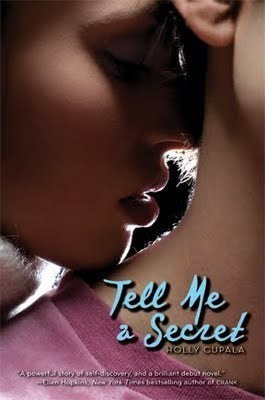
Title: Tell Me a Secret
Author: Holly Cupala
Publication: April 2010
Pages: 304
Genre: Young Adult
Publisher: HarperCollins
ISBN: 0061766666
Price: $8.99 (eBook)
Synopsis
It’s tough living in the shadow of a dead girl. . . .
In the five years since her bad-girl sister Xanda’s death, Miranda Mathison has wondered about the secret her sister took to the grave, and what really happened the night she died. Now, just as Miranda is on the cusp of her dreams–a best friend to unlock her sister’s world, a ticket to art school, and a boyfriend to fly her away from it all–Miranda has a secret all her own.
When two lines on a pregnancy test confirm her worst fears, Miranda is stripped of her former life. She must make a choice with tremendous consequences and finally face her sister’s demons and her own.
My thoughts
I absolutely love when I pick up a book and am intrigued and absorbed by its content. Tell Me a Secret certainly had that engaging element, although I felt that the secret revealed was not as significant as I was expecting. No need to spoil plots here, but I will say that since the main character is a teen, I can see how she could let the perception of some hidden secret snowball into something huge and then, of course, when that secret is revealed still think it’s huge. As an adult woman reading this, I did not find the secret that incredibly significant, although it was a surprise and certainly a bit jarring. The story line that Cupala develops is an honest one, and one that I believe many, many teens face today. I’m glad to see that Cupala did not shy away from the topic of unexpected teenage pregnancy, especially since I somewhat expected Miranda not to be pregnant, and for the plot to be driven by her fear/worry of pregnancy. The story is 100% believable and narrated in the perspective of a confused teen. Tell Me a Secret is not a neat and tidy story, by any means, but for those who love contemporary YA romance (me, me me!), this is an enjoyable read.
Regarding my rating, I must say that I save the 5 stars (or abstract flower icons) for those books that leave a lasting impact. Although I very much enjoyed Tell Me a Secret and would highly recommend it to folks who like to read in this genre, it was not a book that left a lasting impact, nor was it a book that I myself felt involved in (as in, experiencing the moment-to-moment emotions of the main character and having crystal clear imagery of the story lines and characters). I believe this key element in a story, experiencing the story as it is narrated, is what sets great books apart from good ones.
My favorite passage
“I could only go forward. The threads of time weren’t unraveling but weaving into a tapestry – a future, and a hope. The only way to discover was to step into it.” - Page 294
My Rating

September 8, 2012
All Romances Are Not Equal
Last week I wrote about the top three topics that seemed most taboo in YA literature. By the way, those three topics are not ones I agree should be taboo; rather, they appear to the topics that erupt in controversy from time to time. For example, Lauren Myracle’s Shine is one of those books that includes several serious subjects, such as homosexual attraction and violence. Some have called for her books to be banned, while several YA enthusiasts feel that her work should not be included in the YA genre. I suspect that because of the nature of my debut novel, Sweetest Taboo, many may say the same. In fact, one recent reviewer plainly stated, that my debut novel is not YA at all, but adult fiction (primarily because the romance in the story-line is controversial and because there are a few intimate moments in the book). Whatever the case may be, Sweetest Taboo seems to already be stirring some interesting pots!

In an attempt to gain the most exposure possible for Sweetest Taboo, I purchased a half page advertising spot in the Romance Writers of America (RWA) monthly magazine, Romance Writers Review (RWR). With plenty of lead time, I confirmed the ad’s placement in October’s RWR issue with the RWA ad department. All was fine, my payment was accepted and processed, as was my book’s ad. Two weeks prior to the October issue’s release, I received a hard copy letter in the mail from RWA. I was rather surprised to read that ‘…the RWR editor felt that the ad for Sweetest Taboo was not appropriate for the magazine.’ I’m not clear on exactly what aspect of my ad was deemed inappropriate by the editor. However, I have enough sense to conclude that the Sweetest Taboo synopsis was a bit too controversial for the neat and tidy romances RWA prefers to promote. Clearly not all romances are equal in RWA’s view, since a romance between a student and teacher is something that the editor is not willing to include in the RWR monthly magazine.
Neat, tidy and clean romances, like those that make up the bulk of ‘chick lit’ stories, are fun to read about and obviously socially acceptable. However, shouldn’t readers also be exposed to accounts of un-traditional romances, affairs that occur in our modern and more complex world, or forbidden liaisons? Don’t romance readers want to read about those relationships as well? More importantly, because an author provides an account of such romances, does that necessarily translate into the promotion and/or approval of such relationships? Kathryn Harris wrote an extraordinary book, The Kiss, about a father-daughter affair, but it was simply an account of that relationship. It was not glorified by any means and the subject matter in The Kiss was not the author’s admission of approval or promotion of such a relationship. Not all romances fit into conventional and tidy boxes, and as an avid reader of all literary genres (especially fiction!) I enjoy some controversy, some originality, and definitely some edginess in what I read. We’re not all the same, I get that, but in spite of our different tastes and opinions, we should have the opportunity to be exposed to all literature and make our own choices about what we decide to read. Maybe I’m completely wrong, but I happen to think that a number of RWA members would enjoy my book…the editor clearly thinks otherwise!
What do you think? Are some romances too taboo or controversial to be promoted in the romance genre?
September 3, 2012
Girlchild: A Review by Eva Márquez
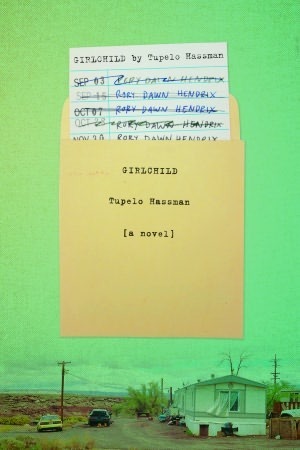 Title: Girlchild: A Novel
Author: Tupelo Hassman
Publication: February 14, 2012
Pages: 288
Genre: Young Adult
Publisher: Farrar, Straus and Giroux
ISBN: 0374162573
Price: $12.90
Synopsis
Rory Hendrix is the least likely of Girl Scouts. She hasn’t got a troop or even a badge to call her own. But she’s checked the Handbook out from the elementary school library so many times that her name fills all the lines on the card, and she pores over its surreal advice (Uniforms, disposing of outgrown; The Right Use of Your Body; Finding Your Way When Lost) for tips to get off the Calle: that is, the Calle de las Flores, the Reno trailer park where she lives with her mother, Jo, the sweet-faced, hard-luck bartender at the Truck Stop.
Rory’s been told that she is one of the “third-generation bastards surely on the road to whoredom.” But she’s determined to prove the county and her own family wrong. Brash, sassy, vulnerable, wise, and terrified, she struggles with her mother’s habit of trusting the wrong men, and the mixed blessing of being too smart for her own good. From diary entries, social workers’ reports, half-recalled memories, arrest records, family lore, Supreme Court opinions, and her grandmother’s letters, Rory crafts a devastating collage that shows us her world even as she searches for the way out of it.
My thoughts
Hassman succeeded in creating an impeccably written story, in the sense that Girlchild is very well written and truly captures the voice of Rory, the child-cum-teen who serves as the main character of this semi-depressing tale of lower-class, trailer-park America. I can’t say I enjoyed this book, mainly because the content is disturbing (realistic, though) and depressing. I have real issues with the sexual molestation of children, and although it does happen every day and is an occurrence that is far too common, reading about it in such a detailed manner and from the perspective of this vulnerable child was too much for me. That’s not to say that other readers will be as disturbed or bothered by such detailed descriptions of Rory being sexually molested by several individuals that she comes to contact with in her life. My intention is not to spoil the ending, but what I can say is that I was very disappointed. I was hoping for a silver lining, an escape from the vulnerabilities of trailer-living, a rescue of some sort and instead there is nothing…truly nothing.
I agree with many reviewers of Girldchild, the publisher’s synopsis of this tale does not adequately describe this sordid and depressing story. Rory is by no means a girl scout, rather, she’s a schoolgirl left to fend for herself. She’s a girl obsessed with the tenets of her girl scout’s handbook, but with no opportunity to actually be a girl scout. Rory’s life does not lend to the normalcy and consistency required of Girl Scout membership. In fact, Rory doesn’t even make it to school regularly and is often caring for her drunken mother instead. I don’t know much about Hassman, but what I wanted to read, especially toward the latter part of the book, was an opportunity for Rory to live that normal life she yearned for. Not all tales need to end so desperately. I realize many do, but since this story is one of fiction, I was hoping the author would have woven in a tad bit of hope, of vindication, and of an optimistic future.
My favorite passage
“But I never end up keeping these white secrets from Mama, because their light shines up all my other ones, shows how dirty the ones I keep, the ones I swear I’ll keep, really are.” - Page 47
My rating

.
August 31, 2012
Taboo Topics in YA Literature
 Explicit sex. Drug-use. Severe violence. These are the top three taboo subjects, in my opinion, which many YA enthusiasts prefer not to see in what is perceived to be a ‘light hearted’ genre for older children and adults. In essence, these can be considered taboo subjects by many YA lit lovers; however, there are YA consumers that are more tolerant of serious and ‘real life’ subject matter in the YA genre. Let’s demystify the explicit sex taboo in YA literature first.
Many YA readers believe that explicit sex should not be included in YA lit and if it is included then the inclusion of such a subject renders the book adult literature. The nature of the sex is important. For instance, my debut novel Sweetest Taboo does not include overly graphic sex scenes but does include one or two instances where a sexual encounter is described tastefully. Nevertheless, some YA readers feel that the type of sex, in this case sex between a student and a teacher, will dictate the genre of the book. I, however, disagree. My experience with YA literature extends back to the mid-80s when I began devouring the VC Andrews Flower in the Attic series. I was perhaps 13 at the time and reading what was then considered YA literature, a series of books that included sex between a brother and sister. The scenes were not overly graphic, but as a 13 year old I was definitely aware of what was being described in the book. I firmly believe that if sex is treated realistically and tastefully in a book that is YA classified (i.e. a book that is written from the perspective and voice of a young adult/teen), then explicit sex should cease to be considered a taboo topic in YA lit.
 As for drug-use and severe violence, many believe these should not be included in YA lit and if included, again, the book ceases to exist in the YA genre and should be classified as adult fiction. As I’ve argued in several other posts, young adults (primarily those 14 and older) are exposed to many of these taboo topics in their day-to-day lives. Young adults are faced with many unpleasant situations in their lives. Teens may have friends with drug-abuse problems, or they know someone that was depressed and attempted suicide, maybe they have friends who have been molested, raped, or physically abused by relatives or boyfriends. Sheltering young adults from literature that contains mature subject matter is not doing them a service, but rather these young adults miss out on the opportunity to learn about how others address these difficult issues in their lives, how they cope, how they seek help and how they overcome obstacles. Life is not always as pleasant as we would like and by providing young adults with realistic literary content, teens venture beyond vampires and fairy tales to learn how to cope with life’s trials and tribulations, and also learn from the mistakes characters make throughout any given story. In Sweetest Taboo we learn where Isabel went astray, we see the exact choices she made that sent her down a very dangerous path. In She’s Come Undone, we learn to recognize the signs of eating disorders and the importance of self-worth. There are so many rich lessons to be learned in our young literary journeys, why limit the opportunities of self-discovery by labeling mature content as taboo?
What do you think? I’d love to hear your thoughts!


August 27, 2012
Beautiful Disaster: A Review by Eva Márquez
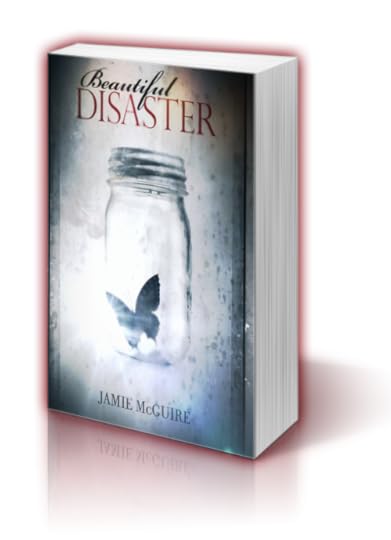 Title: Beautiful Disaster
Author: Jamie McGuire
Publication: August 14, 2012
Pages: 432
Genre: Young Adult/Adult
Publisher: Atria Books
ISBN: 1476712042
Price: $12.00
Synopsis
The new Abby Abernathy is a good girl. She doesn’t drink or swear, and she has the appropriate number of cardigans in her wardrobe. Abby believes she has enough distance from the darkness of her past, but when she arrives at college with her best friend, her path to a new beginning is quickly challenged by Eastern University’s Walking One-Night Stand.
Travis Maddox, lean, cut, and covered in tattoos, is exactly what Abby wants—and needs—to avoid. He spends his nights winning money in a floating fight ring, and his days as the ultimate college campus charmer. Intrigued by Abby’s resistance to his appeal, Travis tricks her into his daily life with a simple bet. If he loses, he must remain abstinent for a month. If Abby loses, she must live in Travis’s apartment for the same amount of time. Either way, Travis has no idea that he has met his match.
My thoughts
What can I say that has not already been said about this New York Times Bestseller? McGuire self-published this book in May 2011 and in approximately one year and a few months, it was picked up by Atria Books and re-published under a different cover in August 2012. Beautiful Disaster had already reached success as a self-published title and for good reason. It’s an incredibly well written contemporary work of fiction. Although I would not necessarily classify it as YA, it does teeter back and forth between YA and adult fiction. The main character is Abby, a 19-year old college student who, although incredibly bright and sharp with her tongue, still has a teenage ‘voice’ and seems to make terrible decisions. The other characters in the book are equally young in voice, which is appropriate. Each character was carefully crafted and it was entertaining to follow them through the Beautiful Disaster journey. I found that perhaps the author was either employing symbolism or some other type of representative approach to the character names in the book. For instance, the only to two average names in the story were those of the two main characters and those who were involved in the love interest, Abby and Travis. Abby’s best friend was America, America’s boyfriend was Shepley, Abby’s gay friend was Finch, and a mutual friend of everyone was Brazil. Those are an odd mix of names!
Although the love story was a complete and utter mess, as sometimes they can be, I found the ending to be just a little too need and tidy for my taste. I felt as though Abby would not have really gone that route, although Travis obviously would. I won’t say more about this because I don’t want to spoil the ending for anyone, BUT I did find the ending slightly disappointing and expected something more grandiose or dramatic, keeping with the theme of the entire book. One thing that I felt was a little over-the-top and not realistic was Travis’ obsession with Abby. Yes, young men can become obsessive about their girlfriends, but Travis exemplified one of the most obsessive and unhealthy cases of ‘psycho boyfriend’ symptom I’ve ever read about or have witnessed in real life. With that said, the book was still great and I recommend it to readers who enjoy contemporary fiction with some sex, lots of violence, and tons of unhealthy obsession.
My favorite passage
“I had fought my feelings, guarded them, and bottled them up. I had experienced the happiest moments of my life while at Eastern, all of them with Travis. Fighting, laughing, loving or crying, if it was with him, I was where I wanted to be.” - Page 228
My rating



