Lori Hatcher's Blog: Refresh Blog, page 78
September 20, 2015
3 Reasons Why We Need Quiet
We live in a noisy world.
Devices ding, ping, jangle, and whistle. Media delivers a non-stop monologue. And then there are those blessed people whom God has placed in our lives—those who call us Mom, Dad, Husband, Wife, Grandma, Grandpas, Co-worker, Boss, Friend, Fellow-church member, and Passerby.
And if outside noise isn’t enough, there’s also a whole lot of noise in our heads. Sometimes it’s productive, because it reminds us of important stuff we need to do, but most of the time, it’s just environmental overflow from the hubbub around us. It elbows its way into the quiet spots in our heads like a 300-lb. man squeezing himself into the seat beside us on an airplane.
Today I’d like to share three reasons we need quiet times in our lives:
 1. Quiet allows us to hear God’s voice. As I study God’s Word, I see times when he thunders from the mountain top or shouts through a storm. Most often, however, he speaks to his children in the still, small voice of the Holy Spirit in our souls.
Think of Elijah on the mountaintop and David in the open fields, or Daniel in his prayer closet and Jesus during his early morning worship times. Sometimes he shouts over the din or our lives through an accident, illness, crisis, or family emergency, but often, even then, his voice is muffled by the chaos around us.
Ralph Waldo Emerson said, “Be silent, that we may hear the whisper of God.”
2. Quiet allows us to hear our voice.
Quiet spaces in our minds are open fields where God can plant the seeds of creativity and inspiration. When we still ourselves, turn off our devices, and wait in quiet reflection, it’s amazing what we think.
On a recent early-morning walk in the woods, I cleared my mind of clutter and invited the Lord into my consciousness. As my thoughts wandered, I began to connect Scripture with an idea for a blog post. Then I thought of a lovely gift idea for my daughter for Christmas. Before the walk had ended, I had the solution to a problem I’d been wrestling with, another blog post idea, and the basis for a women’s ministry presentation.
Peter Drucker, an American businessman, said, “Follow effective action with quiet reflection. From the quiet reflection will come even more effective action.” Building times of quiet thought into our days allows us to hear our own voices and leaves room for our creativity to blossom.
3. Quiet restores our souls.
Psalm 23 reminds us that God the Good Shepherd invites us to lie down in green pastures, leads us beside still waters, and restores our souls. Listen to the words the psalmist chose to describe the place where God refreshes us: lie down (not race around), green pastures (not black asphalt), and still waters (not raging rivers). Peaceful, hushed places, whether they’re on the top of a mountain or the corner or your bedroom, are restorative and invigorating.
Keep in mind that the place is less important than the presence. When we carve out time to sit in stillness before the Lord, we gain a fresh perspective, spiritual energy for the day, and hope for the future.
I hope by now you’re convinced that intentional periods of quiet are healthy, productive, and necessary. But the same busy world that steals our quiet also often prevents it.
How can we build times of quiet into our lives? Here are three ideas:
1. Make an early morning quiet time a priority.
You may not naturally be a morning person, but it’s worth retraining your biological clock. There’s a reason Jesus, probably the busiest soul on the planet, met with God early in the morning. I’ve found that if I wait until nighttime/bedtime to have my quiet time, I fall asleep in the middle of it.
2. Look for moments of quiet during the day, and instead of pulling out your cell phone to check Facebook, open your Bible app, and meditate on one verse of Scripture.
Or think about what you read that morning in your quiet time. Ask God to speak to you. Then direct your mind to conscious listening. Jot down what you think you heard. (Hint: One way to know if it’s actually God speaking is that what you hear always agrees with Scripture.)
3. Turn off the noise.
When you’re driving, walking, or working around the house, instead of turning on the TV or your Ipod, listen instead to the silence. You’ll find mental room to think and pray if your mind isn’t pulled in a thousand different directions based on what you’re hearing from an outside source. Don’t be afraid of silence.
"Make time for the quiet moments, as God whispers, and the world is loud."
I’d love to hear your thoughts on how to build quiet into your days. Do you have a suggestion on how to capture or create moments of silence? Have you experienced on of the benefits I’ve listed above, or maybe you’ve thought of one I haven’t? Leave a comment below and share your thoughts.
Today, why not begin your day with a few moments of silence? And after you've stilled your soul and rested in God's peace, allow Kari Jobe's "Be Still My Soul" set the tone for the rest of your day.
If you enjoyed this post, why not subscribe? I'll send you twice-weekly 5-minute devotions to help nourish your soul.
Because women need to connect with God in the craziness of life.
Enter your email address and VALIDATE the Feedburner email sent to your inbox.
Delivered by FeedBurner
If this post was meaningful to you, would you consider sharing it with a friend by clicking on one of the buttons below? Did you know you can receive bi-weekly Hungry for God posts sent directly to your email inbox? Visit http://www.lori-benotweary.blogspot.com and click on the link in the right hand corner to Subscribe Via Email.
Copyright 2012 by Lori Hatcher
Devices ding, ping, jangle, and whistle. Media delivers a non-stop monologue. And then there are those blessed people whom God has placed in our lives—those who call us Mom, Dad, Husband, Wife, Grandma, Grandpas, Co-worker, Boss, Friend, Fellow-church member, and Passerby.
And if outside noise isn’t enough, there’s also a whole lot of noise in our heads. Sometimes it’s productive, because it reminds us of important stuff we need to do, but most of the time, it’s just environmental overflow from the hubbub around us. It elbows its way into the quiet spots in our heads like a 300-lb. man squeezing himself into the seat beside us on an airplane.
Today I’d like to share three reasons we need quiet times in our lives:
 1. Quiet allows us to hear God’s voice. As I study God’s Word, I see times when he thunders from the mountain top or shouts through a storm. Most often, however, he speaks to his children in the still, small voice of the Holy Spirit in our souls.
Think of Elijah on the mountaintop and David in the open fields, or Daniel in his prayer closet and Jesus during his early morning worship times. Sometimes he shouts over the din or our lives through an accident, illness, crisis, or family emergency, but often, even then, his voice is muffled by the chaos around us.
Ralph Waldo Emerson said, “Be silent, that we may hear the whisper of God.”
2. Quiet allows us to hear our voice.
Quiet spaces in our minds are open fields where God can plant the seeds of creativity and inspiration. When we still ourselves, turn off our devices, and wait in quiet reflection, it’s amazing what we think.
On a recent early-morning walk in the woods, I cleared my mind of clutter and invited the Lord into my consciousness. As my thoughts wandered, I began to connect Scripture with an idea for a blog post. Then I thought of a lovely gift idea for my daughter for Christmas. Before the walk had ended, I had the solution to a problem I’d been wrestling with, another blog post idea, and the basis for a women’s ministry presentation.
Peter Drucker, an American businessman, said, “Follow effective action with quiet reflection. From the quiet reflection will come even more effective action.” Building times of quiet thought into our days allows us to hear our own voices and leaves room for our creativity to blossom.
3. Quiet restores our souls.
Psalm 23 reminds us that God the Good Shepherd invites us to lie down in green pastures, leads us beside still waters, and restores our souls. Listen to the words the psalmist chose to describe the place where God refreshes us: lie down (not race around), green pastures (not black asphalt), and still waters (not raging rivers). Peaceful, hushed places, whether they’re on the top of a mountain or the corner or your bedroom, are restorative and invigorating.
Keep in mind that the place is less important than the presence. When we carve out time to sit in stillness before the Lord, we gain a fresh perspective, spiritual energy for the day, and hope for the future.
I hope by now you’re convinced that intentional periods of quiet are healthy, productive, and necessary. But the same busy world that steals our quiet also often prevents it.
How can we build times of quiet into our lives? Here are three ideas:
1. Make an early morning quiet time a priority.
You may not naturally be a morning person, but it’s worth retraining your biological clock. There’s a reason Jesus, probably the busiest soul on the planet, met with God early in the morning. I’ve found that if I wait until nighttime/bedtime to have my quiet time, I fall asleep in the middle of it.
2. Look for moments of quiet during the day, and instead of pulling out your cell phone to check Facebook, open your Bible app, and meditate on one verse of Scripture.
Or think about what you read that morning in your quiet time. Ask God to speak to you. Then direct your mind to conscious listening. Jot down what you think you heard. (Hint: One way to know if it’s actually God speaking is that what you hear always agrees with Scripture.)
3. Turn off the noise.
When you’re driving, walking, or working around the house, instead of turning on the TV or your Ipod, listen instead to the silence. You’ll find mental room to think and pray if your mind isn’t pulled in a thousand different directions based on what you’re hearing from an outside source. Don’t be afraid of silence.
"Make time for the quiet moments, as God whispers, and the world is loud."
I’d love to hear your thoughts on how to build quiet into your days. Do you have a suggestion on how to capture or create moments of silence? Have you experienced on of the benefits I’ve listed above, or maybe you’ve thought of one I haven’t? Leave a comment below and share your thoughts.
Today, why not begin your day with a few moments of silence? And after you've stilled your soul and rested in God's peace, allow Kari Jobe's "Be Still My Soul" set the tone for the rest of your day.
If you enjoyed this post, why not subscribe? I'll send you twice-weekly 5-minute devotions to help nourish your soul.
Because women need to connect with God in the craziness of life.
Enter your email address and VALIDATE the Feedburner email sent to your inbox.
Delivered by FeedBurner
If this post was meaningful to you, would you consider sharing it with a friend by clicking on one of the buttons below? Did you know you can receive bi-weekly Hungry for God posts sent directly to your email inbox? Visit http://www.lori-benotweary.blogspot.com and click on the link in the right hand corner to Subscribe Via Email.
Copyright 2012 by Lori Hatcher


September 17, 2015
Reveille and Taps -- Are You Ready for the Trumpet?
Every morning at 5:55, bugle fanfare echoes across the quiet streets of my neighborhood. It’s First Call, a signal to the troops that morning has arrived. Five minutes later, Reveille sounds. Reveille, which originates from the French word "wake up,” began as a way to rouse military personnel at dawn. At Fort Jackson, in my home city of Columbia, South Carolina, Reveille also signals the raising of the flag.
Trumpet calls are not unique to the United States military. They go back to the dawn of civilization. When God summoned Moses to Mount Sinai, he used thunder, lightning, and a trumpet call (Ex. 19:19). Leaders used trumpets made of rams horns to assemble the Israelites for holy days (Lev. 25:19), gather troops for battle (Num. 10:4), and direct battle maneuvers (Judges 3:27). Buglers traditionally go ahead of troops into battle to provide a rallying point.
During times of war, the bugle is the voice of the general leading the charge.
General Daniel Butterfield, a Civil War soldier with the Union army, loved bugle calls. Because troops would often get confused on the battlefield as to which call belonged to their battalion, Butterfield composed his own calls unique to his regiment.
In 1862 he took a French bugle call that had gone out of fashion, rearranged the notes, and re-purposed it. He used this call to signal “Lights out,” to the troops. Within days of introducing it, the call, composed of only 24 notes, spread through the ranks. Within weeks, the entire Union army was using the melody to signal the close of the day.
At 11 p.m., if my windows are open and the night is still, I can hear the soothing sound of “Taps” playing in the darkness.
First Thessalonians 4:16-17 tells us of the trumpet blast that will sound at the time of Christ’s coming:
“For the Lord himself shall descend from heaven with a shout, with the voice of the archangel, and with the trump of God: and the dead in Christ shall rise first: Then we which are alive and remain shall be caught up together with them in the clouds, to meet the Lord in the air: and so shall we ever be with the Lord.”
First Corinthians 15:52 gives additional details about this glorious day:
“In a moment, in the twinkling of an eye, at the last trump: for the trumpet shall sound, and the dead shall be raised incorruptible, and we shall be changed.”
Ft. Jackson no longer uses a lone bugler to sound the 14 calls that announce everything from mealtime to lights out. Instead it has a very effective public address system that residents in nearby neighborhoods like mine have insisted is too loud.
I love to hear the bugle calls. I listen for them in the early morning and in the late evening. They remind me that even while I sleep, soldiers are protecting me and my country from harm.
I also listen for the trumpet call to end all trumpet calls—the one that will announce the return of Christ to take his bride, the church, home. Hoping one day to hear this call reminds me to make the most of every day and live in light of Christ’s return. It also reminds me that even while I sleep, God is working out his purposes in the world and preparing me to spend eternity with him in heaven.
If you know Christ as Savior, these truths are yours as well. In the words of the apostle Paul, “Comfort one another with these words.”
What about you? Are you eagerly anticipating the sound of the trumpet and Christ’s return, or are you dreading the day of his coming? Are you living for Christ and making the most of every day, or are you living for yourself and wasting the life God has given you?
Make no mistake, the trumpet will sound, and we will all give an account of ourselves before God. Will you be ready?
If you’d like to know more about how to have a relationship with Christ, CLICK HERE to access the page, “How to Know God.” If you already know him, why not share this post with someone you love who needs to know him, too?
And if you'd like to hear more about the origin of Taps, check out this fantastic video, Taps The Bugler's Cry-The Origin of Sounding Taps.
If you enjoyed this post, why not subscribe? I'll send you twice-weekly 5-minute devotions to help nourish your soul.
Because women need to connect with God in the craziness of life.
Enter your email address and VALIDATE the Feedburner email sent to your inbox.
Delivered by FeedBurner
If this post was meaningful to you, would you consider sharing it with a friend by clicking on one of the buttons below? Did you know you can receive bi-weekly Hungry for God posts sent directly to your email inbox? Visit http://www.lori-benotweary.blogspot.com and click on the link in the right hand corner to Subscribe Via Email.
Copyright 2012 by Lori Hatcher
September 14, 2015
Work hard or pray hard? How to live a productive Christian life
Jackie lives a charmed life. Opportunities fall into her lap, she wakes up with creative thoughts, and she always seems to be in the right place at the right time.
 Seth is the same way. When he didn’t have money for college, an anonymous donor paid his way. When his friends were still living with their parents and rolling burritos at Moe’s, he was starting an entry-level position in the field of his choice. Like a modern-day Midas, everything he touches goes viral.
Others, however, are not so fortunate. They sing the chorus of the old Hee Haw song: “If I didn’t have no bad luck, I’d have no luck at all. Gloom, despair, and agony on me.”
This disparity begs the question, does God love some people more than others? Like a first grade teacher, does he select a few teacher's pets on whom to bestow special lunch privileges while confining the rest to eraser duty?
The apostle Paul belongs to the ranks of Jackie and Seth. An apostolic hot shot, he hit the ground running after his dramatic conversion. Although he was late coming to faith, he quickly superseded the other apostles. Rising through the ranks like a Fortune 500 apprentice, he soon became known as ‘the apostle to the Gentiles.” He replaced frontrunner Peter and traveled the world sharing the Gospel.
Did God bestow a special measure of grace and favor on Paul? And on Jackie? And on Seth? First Corinthians 15:10 sheds some light on the question. Listen to Paul’s words:
“But by the grace of God I am what I am, and his grace to me was not without effect.”
Yes, God bestowed grace on Paul. He plucked him from the hopelessness of Pharisaical unbelief and planted his feet firmly on the Gospel of faith. He discipled him, sanctified him, and sent him out to evangelize the world. This was God’s responsibility—performing supernatural acts in Paul’s life.
But what was Paul’s responsibility?
“. . . No, I worked harder than all of them—yet not I, but the grace of God that was with me.”
“Surely you remember, brothers, our toil and hardship; we worked night and day in order not to be a burden to anyone while we preached the gospel of God to you” (1 Thes. 2:9).
“We were not idle when we were with you, nor did we eat anyone's food without paying for it. On the contrary, we worked night and day, laboring and toiling so that we would not be a burden to any of you” (2 Thes. 3:7-8).
Paul worked hard. So did Jackie and Seth. Jackie worked late into the night while her friends are scrolling through Facebook and reality TV. Seth worked two part-time jobs in college and submitted more than 100 job applications before he was hired. Both are people of faith, but they don’t use their faith as an excuse to be lazy.
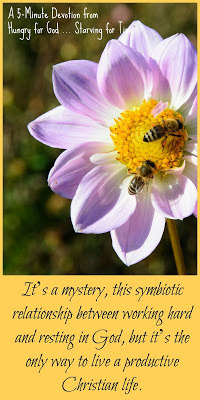 In response to their efforts and to their faith, God bestows grace upon them. It’s a mystery, this symbiotic relationship between working hard and resting in God, but it’s the only way to live a productive Christian life.
There are two misconceptions that challenge this balanced approach. The first is the mistaken notion that God does it all, and we are free to sit back and receive his gifts like a king accepting gifts from his subjects. This makes us God and him our servant.
The second is the equally false belief that it’s all up to us. We work hard. We create opportunities. Our effort determines our success. Like the first danger, this mindset also places me on the throne, only instead of God doing all the work and us reaping all the benefits, God’s not in this picture at all. A friend of mine who believes this often says, “Who can I depend on for my success? Me, myself, and I.”
Paul, Jackie, and Seth understand the symbiosis—that a believer should work hard while simultaneously trusting God to lead, guide, and bless his or her efforts. A hearty dose of sweat and effort, combined with earnest, humble faith produce a grace-filled life that God is pleased to bless.
The next time you’re tempted to think another person’s success just fell into his or her lap, look a little closer. I bet you’ll find a whole lot of effort behind the grace they are enjoying. And if you’re looking for a model to chart the course of your life, why not adopt Paul’s?
“I worked harder than all of them-- yet not I, but the grace of God that was with me” (1 Cor. 15:10).
I’m always interested in hearing from you. Why not leave a comment in the box below and share your thoughts?
If you enjoyed this post, why not subscribe? I'll send you twice-weekly 5-minute devotions to help nourish your soul.
Because women need to connect with God in the craziness of life.
Enter your email address and VALIDATE the Feedburner email sent to your inbox.
Delivered by FeedBurner
If this post was meaningful to you, would you consider sharing it with a friend by clicking on one of the buttons below? Did you know you can receive bi-weekly Hungry for God posts sent directly to your email inbox? Visit http://www.lori-benotweary.blogspot.com and click on the link in the right hand corner to Subscribe Via Email.
Copyright 2012 by Lori Hatcher
 Seth is the same way. When he didn’t have money for college, an anonymous donor paid his way. When his friends were still living with their parents and rolling burritos at Moe’s, he was starting an entry-level position in the field of his choice. Like a modern-day Midas, everything he touches goes viral.
Others, however, are not so fortunate. They sing the chorus of the old Hee Haw song: “If I didn’t have no bad luck, I’d have no luck at all. Gloom, despair, and agony on me.”
This disparity begs the question, does God love some people more than others? Like a first grade teacher, does he select a few teacher's pets on whom to bestow special lunch privileges while confining the rest to eraser duty?
The apostle Paul belongs to the ranks of Jackie and Seth. An apostolic hot shot, he hit the ground running after his dramatic conversion. Although he was late coming to faith, he quickly superseded the other apostles. Rising through the ranks like a Fortune 500 apprentice, he soon became known as ‘the apostle to the Gentiles.” He replaced frontrunner Peter and traveled the world sharing the Gospel.
Did God bestow a special measure of grace and favor on Paul? And on Jackie? And on Seth? First Corinthians 15:10 sheds some light on the question. Listen to Paul’s words:
“But by the grace of God I am what I am, and his grace to me was not without effect.”
Yes, God bestowed grace on Paul. He plucked him from the hopelessness of Pharisaical unbelief and planted his feet firmly on the Gospel of faith. He discipled him, sanctified him, and sent him out to evangelize the world. This was God’s responsibility—performing supernatural acts in Paul’s life.
But what was Paul’s responsibility?
“. . . No, I worked harder than all of them—yet not I, but the grace of God that was with me.”
“Surely you remember, brothers, our toil and hardship; we worked night and day in order not to be a burden to anyone while we preached the gospel of God to you” (1 Thes. 2:9).
“We were not idle when we were with you, nor did we eat anyone's food without paying for it. On the contrary, we worked night and day, laboring and toiling so that we would not be a burden to any of you” (2 Thes. 3:7-8).
Paul worked hard. So did Jackie and Seth. Jackie worked late into the night while her friends are scrolling through Facebook and reality TV. Seth worked two part-time jobs in college and submitted more than 100 job applications before he was hired. Both are people of faith, but they don’t use their faith as an excuse to be lazy.
 In response to their efforts and to their faith, God bestows grace upon them. It’s a mystery, this symbiotic relationship between working hard and resting in God, but it’s the only way to live a productive Christian life.
 There are two misconceptions that challenge this balanced approach. The first is the mistaken notion that God does it all, and we are free to sit back and receive his gifts like a king accepting gifts from his subjects. This makes us God and him our servant.
The second is the equally false belief that it’s all up to us. We work hard. We create opportunities. Our effort determines our success. Like the first danger, this mindset also places me on the throne, only instead of God doing all the work and us reaping all the benefits, God’s not in this picture at all. A friend of mine who believes this often says, “Who can I depend on for my success? Me, myself, and I.”
Paul, Jackie, and Seth understand the symbiosis—that a believer should work hard while simultaneously trusting God to lead, guide, and bless his or her efforts. A hearty dose of sweat and effort, combined with earnest, humble faith produce a grace-filled life that God is pleased to bless.
The next time you’re tempted to think another person’s success just fell into his or her lap, look a little closer. I bet you’ll find a whole lot of effort behind the grace they are enjoying. And if you’re looking for a model to chart the course of your life, why not adopt Paul’s?
“I worked harder than all of them-- yet not I, but the grace of God that was with me” (1 Cor. 15:10).
I’m always interested in hearing from you. Why not leave a comment in the box below and share your thoughts?
If you enjoyed this post, why not subscribe? I'll send you twice-weekly 5-minute devotions to help nourish your soul.
Because women need to connect with God in the craziness of life.
Enter your email address and VALIDATE the Feedburner email sent to your inbox.
Delivered by FeedBurner
If this post was meaningful to you, would you consider sharing it with a friend by clicking on one of the buttons below? Did you know you can receive bi-weekly Hungry for God posts sent directly to your email inbox? Visit http://www.lori-benotweary.blogspot.com and click on the link in the right hand corner to Subscribe Via Email.
Copyright 2012 by Lori Hatcher
September 10, 2015
Last words are precious
 Last words are precious.
Visiting at a family member’s bedside at the end of a long illness, I watched the tender hugs, tears, laughter, and the carefully chosen words she exchanged with family members and friends in that sacred place.
There was a lot of reminiscing. “Remember when we . . .” would spark a lively skip down memory lane. Although she didn’t say much, her eyes smiled. Ours did, too, though oftentimes, when she wasn’t looking, we’d turn away to blink back tears.
There was business that needed to be taken care of. “Make sure you make my house payment. Don’t forget my check to the church. Take care of each other.”
The words I heard most often at her bedside, though, were words we don’t hear often enough. “I’m sorry. Will you forgive me? I love you.”
I’m grateful God gave us precious time to say everything that was important before we said goodbye. Not everyone has this privilege.
If someone precious to you died today, what would you wish you had said?
 Would you wish you had told her how much you appreciate her? Would you regret not calling or visiting him more often? Would you yearn to ask forgiveness and make things right? Would you wish you could tell her you love her one more time?
Thankfully, we don’t have to wait for deathbed vigils to say and do the right things. Healing, reconciliation, and affirmation are just a phone call or visit away.
If there’s something you’ve left unsaid for far too long, why not do something about it today? Someday you’ll be glad you did.
If you enjoyed this post, why not subscribe? I'll send you twice-weekly 5-minute devotions to help nourish your soul.
Because women need to connect with God in the craziness of life.
Enter your email address and VALIDATE the Feedburner email sent to your inbox.
Delivered by FeedBurner
If this post was meaningful to you, would you consider sharing it with a friend by clicking on one of the buttons below? Did you know you can receive bi-weekly Hungry for God posts sent directly to your email inbox? Visit http://www.lori-benotweary.blogspot.com and click on the link in the right hand corner to Subscribe Via Email.
Copyright 2012 by Lori Hatcher
September 7, 2015
If Your Children Turn Out Badly, Is It Your Fault?
 I recently participated in an interesting online discussion about kids, and culture, and parenting. One conscientious mom wrote, "If your children turn out badly, there's no one to blame but yourself."
I respectfully disagreed.
My response generated quite a few grateful emails. It was evident I had struck a nerve. It made me wonder how many Christian parents are living in fear that if they don’t do everything “right,” their children are going to turn their backs on God and it will be all their fault.
I agree that one of our best responses to the culture is to train our children in the ways of the Lord. And I also used to think that the primary responsibility for the way my children turned out was up to me. If I homeschooled them or didn’t homeschool them, sent them to youth group or didn’t send them to youth group, had devotions with them, taught them to memorize Scripture, took them to church every time the doors were open, then they’d grow up to love God. If I messed up somehow, or failed to do something important, it would be my fault if they went astray.
When I’d see families with wayward children, I’d secretly assume (but never say aloud) that there must have been some inconsistency or failure on their part as parents. Maybe they look spiritual on the outside, I’d think, but behind closed doors, well . . .
I’ve come to realize, however, that I was presumptuous in thinking I held the power to make my children turn out “right.” I realize that I was powerless, through the force of my will or the conscientiousness of my parenting, to compel my children to love God.
 I now know that I can till the ground and plant the seeds of faith, but only God can make them grow. By assuming the misplaced responsibility for what were, ultimately, my children’s decisions to make, and thinking that if they turned out “bad,” it was my fault, I had assumed a responsibility that wasn’t rightfully mine.
 If your children grow up to love God, it will be because of God’s mercy and grace (Gal. 1:15). If they grow up to reject him, then they alone will bear the responsibility for their choices. Your parenting can put them on the right path, but only their choices and the work of the Holy Spirit can keep them on it. Thinking it’s all up to you is assuming a burden and responsibility no parent should bear.
I’m not saying we’re not responsible to rear our children in the nurture and admonition of the Lord, because we are. Deuteronomy 6 gives Christian parents very clear instructions. What I am saying is that we can do everything right (as if we can really do everything right), but the choice to follow God is, ultimately, up to our children.
As I look back on my active, homeschooling, child rearing years, I’d still homeschool. I’d still take them to church. I’d still teach them to memorize God’s Word, and so on and so on. What I would do differently would be to pray more diligently and earnestly for God’s Holy Spirit to draw my children to himself and conform them to his image. Because this is something only God can do.
This is my prayer for you all, as you parent your children in faith.
" . . . God, who set me apart from birth and called me by his grace. . ."
If you enjoyed this post, why not subscribe? I'll send you twice-weekly 5-minute devotions to help nourish your soul.
Because women need to connect with God in the craziness of life.
Enter your email address and VALIDATE the Feedburner email sent to your inbox.
Delivered by FeedBurner
If this post was meaningful to you, would you consider sharing it with a friend by clicking on one of the buttons below? Did you know you can receive bi-weekly Hungry for God posts sent directly to your email inbox? Visit http://www.lori-benotweary.blogspot.com and click on the link in the right hand corner to Subscribe Via Email.
Copyright 2012 by Lori Hatcher
September 3, 2015
Grieving the Loss of Someone You Love
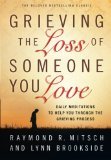
 I think I’ve bought ten copies of
Grieving the Loss of Someone You Love
over the years. I always keep one on my bookshelf, but the others I’ve given away. My husband and I first read it when we lost my brother-in-law, my sister-in-law, and my sister within eight-months time. I wish I’d known about it when my granny passed away. And now, in the days following my mother-in-law’s death, we’re reading it again.
I think I’ve bought ten copies of
Grieving the Loss of Someone You Love
over the years. I always keep one on my bookshelf, but the others I’ve given away. My husband and I first read it when we lost my brother-in-law, my sister-in-law, and my sister within eight-months time. I wish I’d known about it when my granny passed away. And now, in the days following my mother-in-law’s death, we’re reading it again.Ironically, we’re reading the copy we gave her when she was walking through the loss of her two children.
Grieving the Loss of Someone You Love, by Raymond R. Mitsch and Lynn Brookside is a small, unassuming book that spreads a healing balm on the raw wounds of grief. Comprised of 70 daily devotions, this little book has walked us through the roller coaster of thoughts, emotions, and physical manifestations of losing loved ones.
It came highly recommended by a dear friend who had lost his young wife to spinal meningitis and had sought counsel from Raymond, a clinical counselor, in the early days of his grief. His family has given away more copies of this book than we have.
Each daily reading identifies and validates the different thoughts, emotions, and physical manifestations people experience when they’re grieving. Did you know grieving people often suffer from loss of concentration, panic attacks, and sleeplessness? Or that sometimes they feel anger toward their loved ones who have died? Did you realize it’s normal for them to suffer flashbacks of the last time they saw their loved one? Or to hear their voices or think they see them in a crowd or driving down the road?
Each short chapter talks about a different aspect of grief. Because both authors have lost loved ones, (Ray lost his father when he was 12 years old), they also share snippets of their own grieving experiences. This makes the book seem more like a conversation with an empathetic friend than a grief-counseling manual.
 Grieving the Loss of Someone You Love is especially helpful for those who are suffering a significant loss for the first time. It’s also been helpful to my husband and me with every subsequent death we’ve experienced. While the process of grieving grows more familiar with every loss, each death is different, and we find different parts of the book resonating with us depending on what we’re wrestling with.
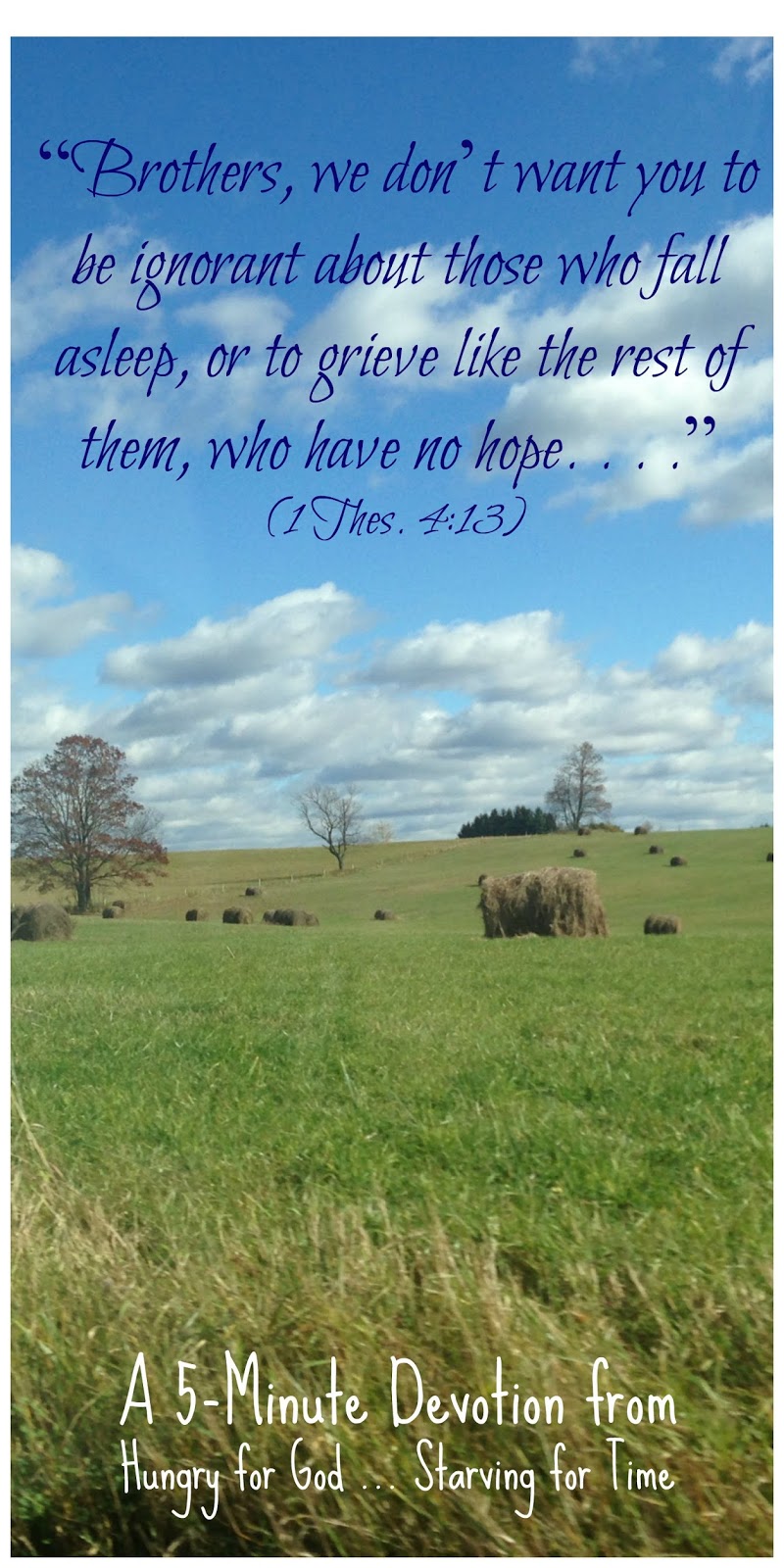
What brings us the most comfort as we work our way through this book—again—is that Ray and Lynn are Christians, and this is a Christian devotional for dealing with grief and loss. The book’s foundation is the hope-filled truths of Scripture, and their words are Spirit empowered. From the first devotion to the last, they share the basis of our hope as believers, 1 Thessalonians 4:13-18:
“Brothers, we don’t want you to be ignorant about those who fall asleep, or to grieve like the rest of them, who have no hope. . . .”
If you’re grieving today, or you know someone who is, I highly recommend Grieving the Loss of Someone You Love.
If you enjoyed this post, why not subscribe? I'll send you twice-weekly 5-minute devotions to help nourish your soul.
Because women need to connect with God in the craziness of life.
Enter your email address and VALIDATE the Feedburner email sent to your inbox.
Delivered by FeedBurner
If this post was meaningful to you, would you consider sharing it with a friend by clicking on one of the buttons below? Did you know you can receive bi-weekly Hungry for God posts sent directly to your email inbox? Visit http://www.lori-benotweary.blogspot.com and click on the link in the right hand corner to Subscribe Via Email.
Copyright 2012 by Lori Hatcher
August 31, 2015
Tea Parties and Worship -- Taking Your Imagination for a Walk
 I recently had the pleasure of watching a tiny girl host an imaginary tea party.
 With delicate movements, she skillfully filled each invisible glass with invisible tea. She doled out invisible cookies onto invisible plates and sampled her invisible delicacies with obvious delight. She said please and thank you to invisible guests and smiled charmingly at their silent answers. Her powers of imagination were astounding for one so young, and I was delighted to be invited to the soiree.
We expect children to use their imagination, and we recognize this as a mark of intellectual growth. Grownups, however, often set their imaginations aside. We choose to concentrate on the “real” world—the things we can see and touch. We forget there is a greater world beyond us.
Today, perhaps inspired by my recent tea party hostess, I dusted off my out-of-shape imagination and took it for a walk. We were responding to an invitation that read like this:
“Ascribe to the LORD the glory due his name; bring an offering and come into his courts. Worship the LORD in the splendor of his holiness; tremble before him, all the earth.”
As we strolled down Psalm 96 Lane, my Host gently prompted me,
Let the heavens rejoice.
I imagined what it might look like when the heavens rejoice.
In my mind’s eye I saw sunbeams shining from behind clouds like giant spotlights. I visualized the silent symphony of a yellow/orange sunrise dotted with black silhouettes of soaring geese. I pictured the extravagance of a setting sun painted with a hundred shades of pink and purple.
This is what it might look like when the heavens rejoice.
Let the earth be glad.
I imagined what it feels like when the earth is glad. I suspect the sun shines warmly upon us, and the breeze blows sweet and refreshing across our faces. The fragrance of rain-dotted earth, flower-strewn paths, and rushing mountain streams fill our nostrils with sensory delights.
This is what it might feel like when the earth is glad.
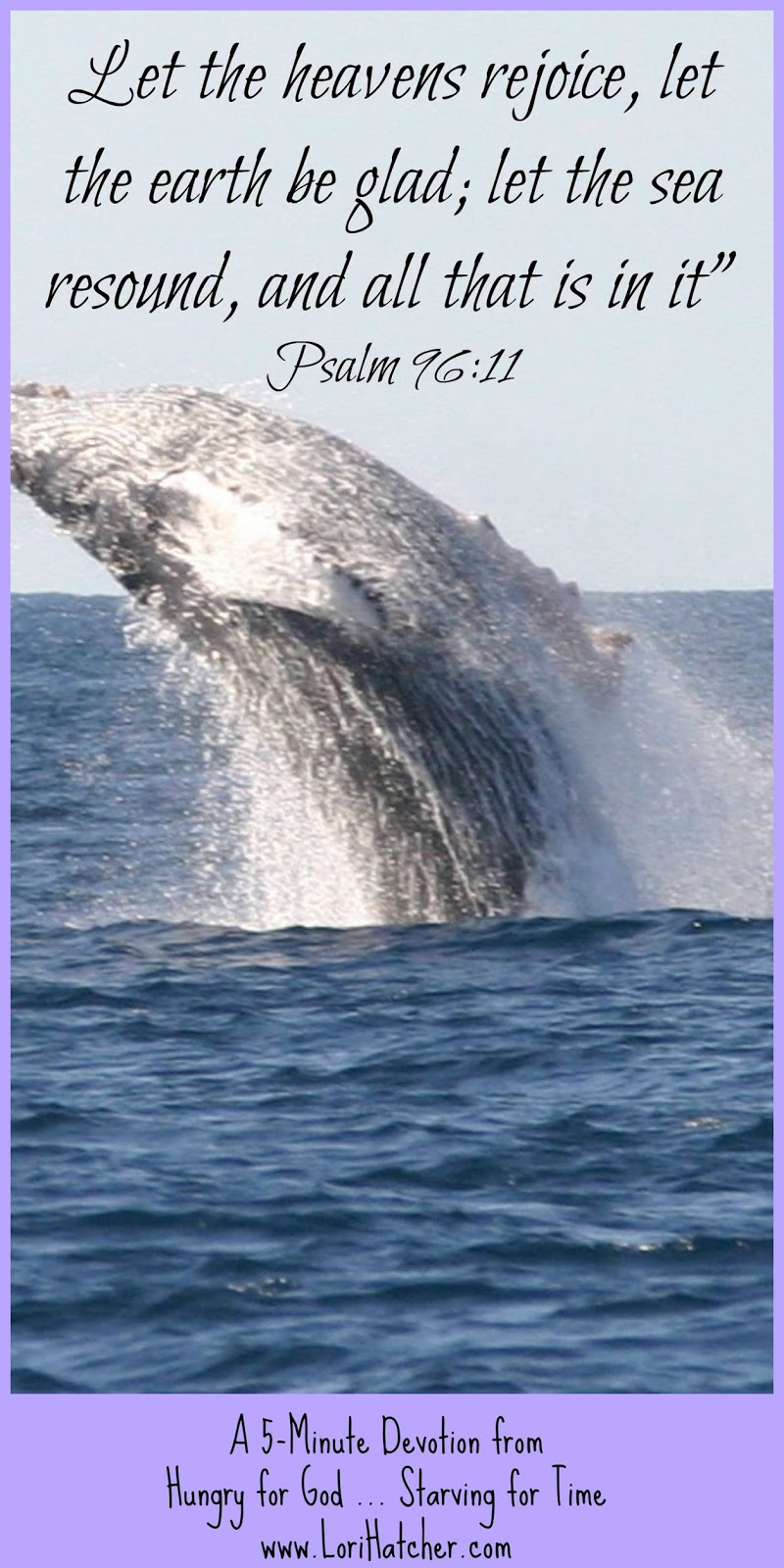
Let the sea resound, and all that is in it.
Resound means to ring with sound—loudly, boldly, extravagantly. When I picture a resounding sea, my ears echo with the noise of frothy waves breaking on rocky cliffs. I see a mammoth whale launching itself into the air in a powerful arc and crashing into the water with mighty splash. I picture pods of smiling dolphins dancing on their tales in a delicate, choreographed ballet, the air filled with their clicks, and chirps, and laughs.
This is what it might sound like when the sea resounds.
Let the fields be jubilant, and everything in them.
What might it look like when the fields and everything in them is jubilant? Jubilant means to be filled with joy, to exult in triumph and satisfaction. My mind’s eye sees miles of golden fields dipping and swaying as the wind keeps time with its wheat stalk baton. I see spotted fawns prancing and dancing with cotton-tailed bunnies. I watch as a flock of crows rise as one amidst a cacophony of flapping wings and noisy squawks. I see mighty elk rear back, tuck their heads, and connect with a crash that rattles their powerful antlers.
This is what it might look like when the fields are jubilant.
Then all the trees of the forest will sing for joy.
What might it sound like when the trees of the forest sing for joy? I picture a grove of yellow Aspen trees, their heart-shaped leaves jangling in the wind like a million topaz jewels. I see the massive redwoods bending their heads, whispering the secrets they’ve gathered over the centuries. I hear the cicadas, tree frogs, and nightingales singing us to sleep with their woodsy lullaby.
This is what it might sound like when the trees of the forest sing for joy.
“Ascribe to the LORD the glory due his name; bring an offering and come into his courts. Worship the LORD in the splendor of his holiness; tremble before him, all the earth. (Psalm 96:8-9)
When was the last time you worshiped the Lord? If it’s been a while, why not open your Bible to Psalm 96, take your imagination by the hand, and walk through the beauty of his holiness? And if your imagination needs a little jump start, spend some time with a child. There’s a very good reason their angels always see the face of God.
If you enjoyed this post, why not subscribe? I'll send you twice-weekly 5-minute devotions to help nourish your soul.
Because women need to connect with God in the craziness of life.
Enter your email address and VALIDATE the Feedburner email sent to your inbox.
Delivered by FeedBurner
If this post was meaningful to you, would you consider sharing it with a friend by clicking on one of the buttons below? Did you know you can receive bi-weekly Hungry for God posts sent directly to your email inbox? Visit http://www.lori-benotweary.blogspot.com and click on the link in the right hand corner to Subscribe Via Email.
Copyright 2012 by Lori Hatcher
August 27, 2015
How to Protect Yourself from an Extra-Marital Affair
 The media continues to buzz with stories of notable Christian men caught in or confessing to adulterous affairs. These men's families are destroyed. Their ministries are thrown into turmoil. And the world, the flesh, and the devil carve notches into their evil belts and smile.
Adulterous affairs seldom make our local news unless the people involved are high profile citizens, but the effect of their sin is equally devastating. I’ve seen smart men and women who love God risk their families, ministries, careers, wealth, and reputations because they’ve become emotionally involved with someone other than their spouse.
The why is complicated, but I think I discovered a clue to the how during my quiet time.
Job was a righteous man, by God’s standards, one who “feared God and shunned evil.” He was committed to purity and took special steps to avoid temptation and lust. “I have made a covenant with my eyes,” he said. “Why then should I look upon a young woman?”
He recognized what many people forget—that when we allow our eyes to go places they shouldn’t, our minds, and often our bodies follow closely behind. Jesus said, “Whoever looks at a woman to lust for her has already committed adultery with her in his heart” (Mat. 5:28).
Listen again to Job, “If my step has turned from the way, or if my heart walked after my eyes,” (Job 31:7). “If my heart walked after my eyes. . .” What a painfully accurate description of what happens when people commit adultery.
Think about David and Bathsheba. David saw her on the roof bathing. Instead of turning his eyes away, he continued to look. His lingering look led to lustful thoughts, which led him to covet Uriah’s wife, which led him to commit adultery.
I wonder how many sins we could avoid if we didn’t allow our hearts to walk after our eyes.
 Dave Carder is the author of
Close Calls! What
Dave Carder is the author of
Close Calls! What
 Adulterers Want You to Know About Protecting Your Marriage.
His book contains the list, “19 Danger Signs of Close Call Relationships.” Based on years of counseling research, he’s identified the actions that often precede extra-marital affairs. The list is eye opening and frightening.
Adulterers Want You to Know About Protecting Your Marriage.
His book contains the list, “19 Danger Signs of Close Call Relationships.” Based on years of counseling research, he’s identified the actions that often precede extra-marital affairs. The list is eye opening and frightening.Even more eye opening is his description of how subtly and innocently most extramarital affairs begin. Because men and women are thrown together so much more in today’s society than they used to be—at work, the gym, and yes, even at church, the possibility for temptation is higher than it’s ever been. It’s not unusual that men and women spend more time together every day with someone other than his or her spouse.
This opens up a whole new world of temptation. Regularly working together on business projects, working out at the same gym, and even ministering together on a worship team or a church committee throws members of the opposite sex together in ways that didn’t happen 40 years ago.
I’ve included Part I of Carder’s interview with Moira Brown below. If you’re reading by email, CLICK HERE TO VIEW Dave Carder’s interview. It contains wise advice about how you can protect your marriage against adultery. You owe it to yourself to watch it, then share it with your spouse and other people you care about.
Getting married takes work. Staying married takes even more work. But it’s worth it. May we heed the wise warning of 1 Peter 5:8:
“Be self-controlled and alert. Your enemy the devil prowls around like a roaring lion looking for someone to devour. Resist him, standing firm in the faith.”
If you enjoyed this post, why not subscribe? I'll send you twice-weekly 5-minute devotions to help nourish your soul.
Because women need to connect with God in the craziness of life.
Enter your email address and VALIDATE the Feedburner email sent to your inbox.
Delivered by FeedBurner
If this post was meaningful to you, would you consider sharing it with a friend by clicking on one of the buttons below? Did you know you can receive bi-weekly Hungry for God posts sent directly to your email inbox? Visit http://www.lori-benotweary.blogspot.com and click on the link in the right hand corner to Subscribe Via Email.
Copyright 2012 by Lori Hatcher
August 24, 2015
Chocolate Crying Days -- Planned Parenthood and Abortion
 There are days when all I want to do is eat chocolate and cry. Sometimes I eat chocolate then cry. Sometimes I cry and then eat chocolate. And sometimes I cry while eating chocolate.
 Yesterday was a chocolate cry day. As I typed, there were tears threatening to tumble from my eyes. Three Snickers wrappers sat next to my computer. They were as empty as I was.
I’m a tenderhearted person. I do my best to avoid sad animal stories, news reports about cruelty to the elderly, and documentaries about child abuse. I know it’s out there, and I’m committed to do whatever I can to prevent it, but I can’t know the details. They linger in my mind, haunt my nights, and, yes, bring about chocolate cry days.
This is why I’ve been diligently avoiding the Planned Parenthood videos. I understand the tragedy of abortion. I was nine years old when Roe v. Wade promised a new kind of reproductive freedom to women.
As an unsaved teenager, I bought the “progressive freedom” lie hook, line, and sinker. If I’d gotten pregnant out of wedlock like some of my friends did, I’d have marched right down to the nearest abortion clinic, handed over my $350, and signed the paperwork to “fix my problem and get on with my life.” This makes me just as guilty as anyone who’s actually had an abortion, I think. Didn’t Jesus say if we commit sin in our hearts, we’re as guilty as if we’ve actually done the deed? You’ll never hear condemning words from me if you were deceived into having an abortion.
But today, while I was working on the Internet, there they were—horrible, graphic pictures of tiny little baby parts swimming in blood.
And my heart broke.
My heart broke for the young women.
Pregnant, scared women who have been lied to and deceived into thinking abortion will make their problems go away, when in reality their problems will have only just begun. No one tells them their abortions will haunt them every day of their lives. That they’ll see their babies’ faces everywhere they look. That they’ll track their children’s ages and imagine what they would have looked like at 3, at 5, at 13, at 18. That they’ll suffer guilt, depression, and shame.
And my heart broke for the babies.
Nearly 50 million babies aborted since Roe v Wade legalized abortion*. Stalin killed 4-10 million Russians, and they called him a murderer. Hitler killed nearly 10 million Europeans, and they called him the master of genocide. Doctors kill 50 million babies, and we call them women’s rights activists.
These babies were future fathers and mothers, teachers and nurses, scientists and Sunday school teachers. They were someone’s sons, daughters, sisters, brothers, nieces, nephews, and grandchildren. They were tiny, perfect, beautiful people who died before they lived in what should have been the safest place in the world—their mothers’ wombs.
And then my heart broke for our world.
So sick and depraved that we murder our infants in the name of women’s rights and sell their body parts on the black market while the collective conscience looks the other way.
We do not deserve God’s mercy.
Yet he offers it freely.
“I will give you a new heart and put a new spirit in you;” says the Lord, “I will remove from you your heart of stone and give you a heart of flesh. And I will put my Spirit in you and move you to follow my decrees and be careful to keep my laws. You will live in the land I gave your forefathers; you will be my people, and I will be your God. I will save you from all your uncleanness” (Eze. 36:26-29).
Chocolate and tears won't save us. New legislation won't save us. Protests won't save us. Only God can save us—our nation, our families, our children, and the babies who have no voice but our own.
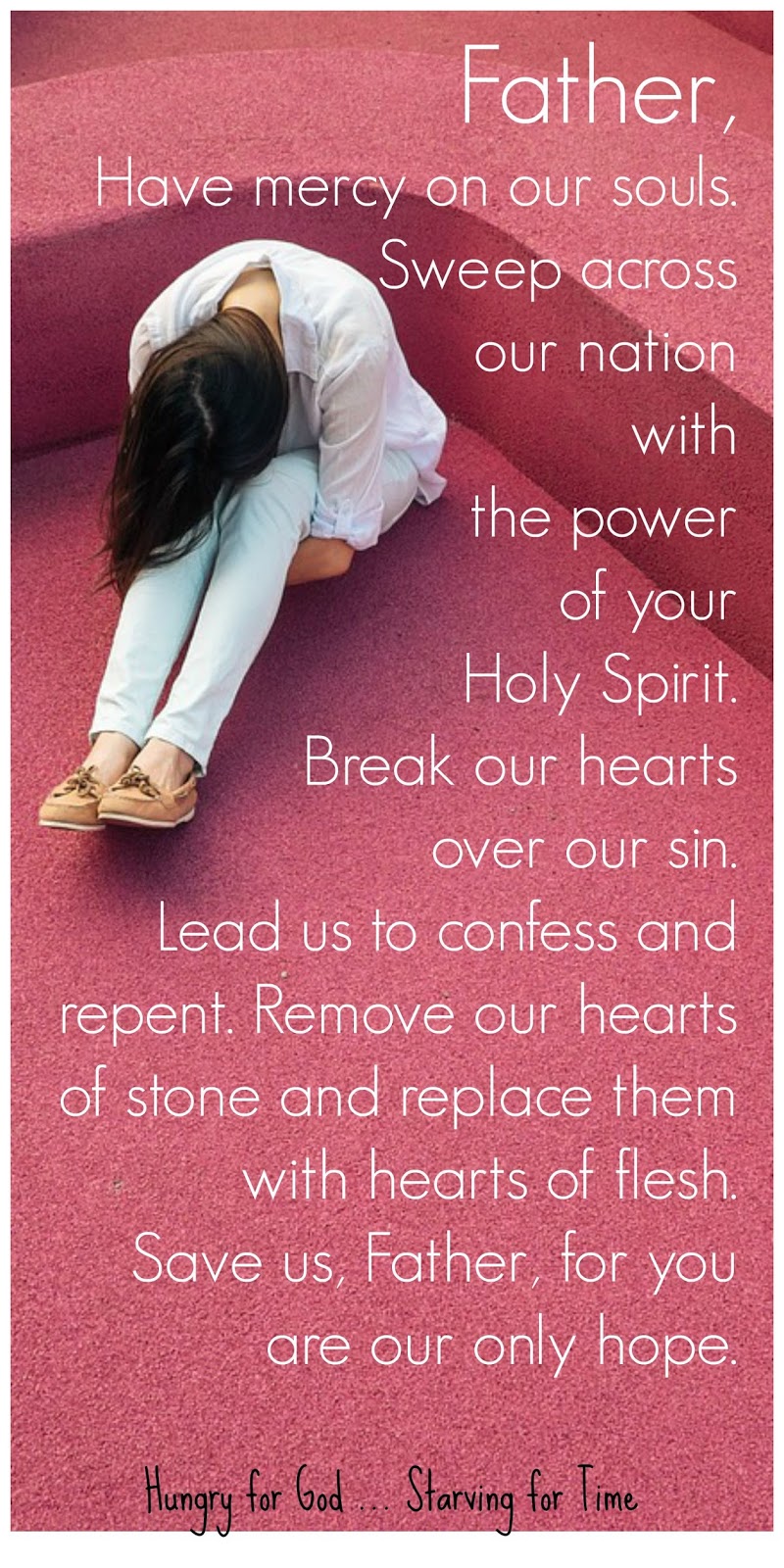
Father, I pray you will have mercy on our souls. Sweep across our nation with the power of your Holy Spirit. Break our hearts over our sin. Lead us to confess and repent. Remove our hearts of stone and replace them with hearts of flesh. Save us, Father, for you are our only hope.
In the mighty name of Jesus I pray, Amen.
*http://cnsnews.com/news/article/nearl...
If you enjoyed this post, why not subscribe? I'll send you twice-weekly 5-minute devotions to help nourish your soul.
Because women need to connect with God in the craziness of life.
Enter your email address and VALIDATE the Feedburner email sent to your inbox.
Delivered by FeedBurner
If this post was meaningful to you, would you consider sharing it with a friend by clicking on one of the buttons below? Did you know you can receive bi-weekly Hungry for God posts sent directly to your email inbox? Visit http://www.lori-benotweary.blogspot.com and click on the link in the right hand corner to Subscribe Via Email.
Copyright 2012 by Lori Hatcher
August 20, 2015
5 Surprising Things that Happen When We Read Our Bibles
I try really hard not to say, “You should . . .,” because it seldom goes over well.
Whether I’m talking to my husband, my adult children, or my friends, the words, “You should . . .” usually invite heated discussion rather than speedy compliance. Even as a writer, basic blogging courses teach, Never make your reader feel as though you’re preaching at them. As I’ve matured, I’ve learned to use the subtleties of communication to change an imperative into an option. “Perhaps you’d like to consider . . .” or “Have you thought of . . .”
But today, I’m breaking all the rules. Because it’s important. Because I’m passionate about it. Because your spiritual life depends on it. Here goes:
You should read your Bible every day.
And here’s why—surprising things happen when we read our Bibles. Here are five of them:
1. We have more peace. In this frantic, stress-filled world in which we live, who wouldn’t like more peace? Peace, in its truest form, isn’t the absence of strife; it’s the gentle resting of a child in the arms of her father. “Great peace have they who love your law, and nothing can make them stumble,” Psalm 119:165 tells us. When we read God’s Word, he reminds us he is in control, and we are safe.
2. We live a purer life. Think of the ills that plague our society: murder, rage, adultery, gossip, promiscuity, abortion, alcoholism, drug abuse, robbery . . . I could go on forever. Applying God’s Word to our lives protects us from these. “How can a young man keep his way pure? By living according to your word,” says Psalm 119: 9.
3. We experience God’s provision. “No good thing does he withhold from those whose walk is blameless,” Psalm 84:11 says. This is a conditional promise—if we live blamelessly (not perfect, but diligently trying to obey God), God will meet our needs. And we cannot live blamelessly without spending time in God’s Word.
4. We experience deeper and more satisfying relationships. How many times, when we’re struggling to be a good spouse, parent, family member, or friend have we said, “I just wish there was a book I could read”? Well, there is—the Bible. The best relational advice in the world is sitting quietly on the pages of Scripture just waiting for us to read and apply it.
5. We talk with the God of the universe. When we pray, we talk to God. When we read God’s Word, he talks to us. Think about how excited you’d be if you could talk to the wisest man in the world. Now multiply that wisdom by a gazillion, and you get a glimpse of what happens when we spend time in God’s Word. In addition to wise counsel, God’s Word speaks love, tenderness, encouragement, hope, and perspective.
I hope by now you understand why I broke my rule and told you, “You should read your Bible.” And I also hope, as you’ve read five of the surprising things that happen when we spend time in God’s Word every day, you’re intrigued and challenged to read your Bible every day. Of all the disciplines of the spiritual life, daily Bible reading is the one that will impact your life in the most amazing ways.
My short list is incomplete. I’d love to hear about the benefits you’ve discovered as you’ve read your Bible. Leave a comment below and share your thoughts. If you're reading by email, CLICK HERE to leave a comment.
And if you'd like to hear a lovely musical rendition of Psalm 84, I invite you to worship with Jason Silver.
If you enjoyed this post, why not subscribe? I'll send you twice-weekly 5-minute devotions to help nourish your soul.
Because women need to connect with God in the craziness of life.
Enter your email address and VALIDATE the Feedburner email sent to your inbox.
Delivered by FeedBurner
If this post was meaningful to you, would you consider sharing it with a friend by clicking on one of the buttons below? Did you know you can receive bi-weekly Hungry for God posts sent directly to your email inbox? Visit http://www.lori-benotweary.blogspot.com and click on the link in the right hand corner to Subscribe Via Email.
Copyright 2012 by Lori Hatcher
Whether I’m talking to my husband, my adult children, or my friends, the words, “You should . . .” usually invite heated discussion rather than speedy compliance. Even as a writer, basic blogging courses teach, Never make your reader feel as though you’re preaching at them. As I’ve matured, I’ve learned to use the subtleties of communication to change an imperative into an option. “Perhaps you’d like to consider . . .” or “Have you thought of . . .”
But today, I’m breaking all the rules. Because it’s important. Because I’m passionate about it. Because your spiritual life depends on it. Here goes:
You should read your Bible every day.
And here’s why—surprising things happen when we read our Bibles. Here are five of them:
1. We have more peace. In this frantic, stress-filled world in which we live, who wouldn’t like more peace? Peace, in its truest form, isn’t the absence of strife; it’s the gentle resting of a child in the arms of her father. “Great peace have they who love your law, and nothing can make them stumble,” Psalm 119:165 tells us. When we read God’s Word, he reminds us he is in control, and we are safe.
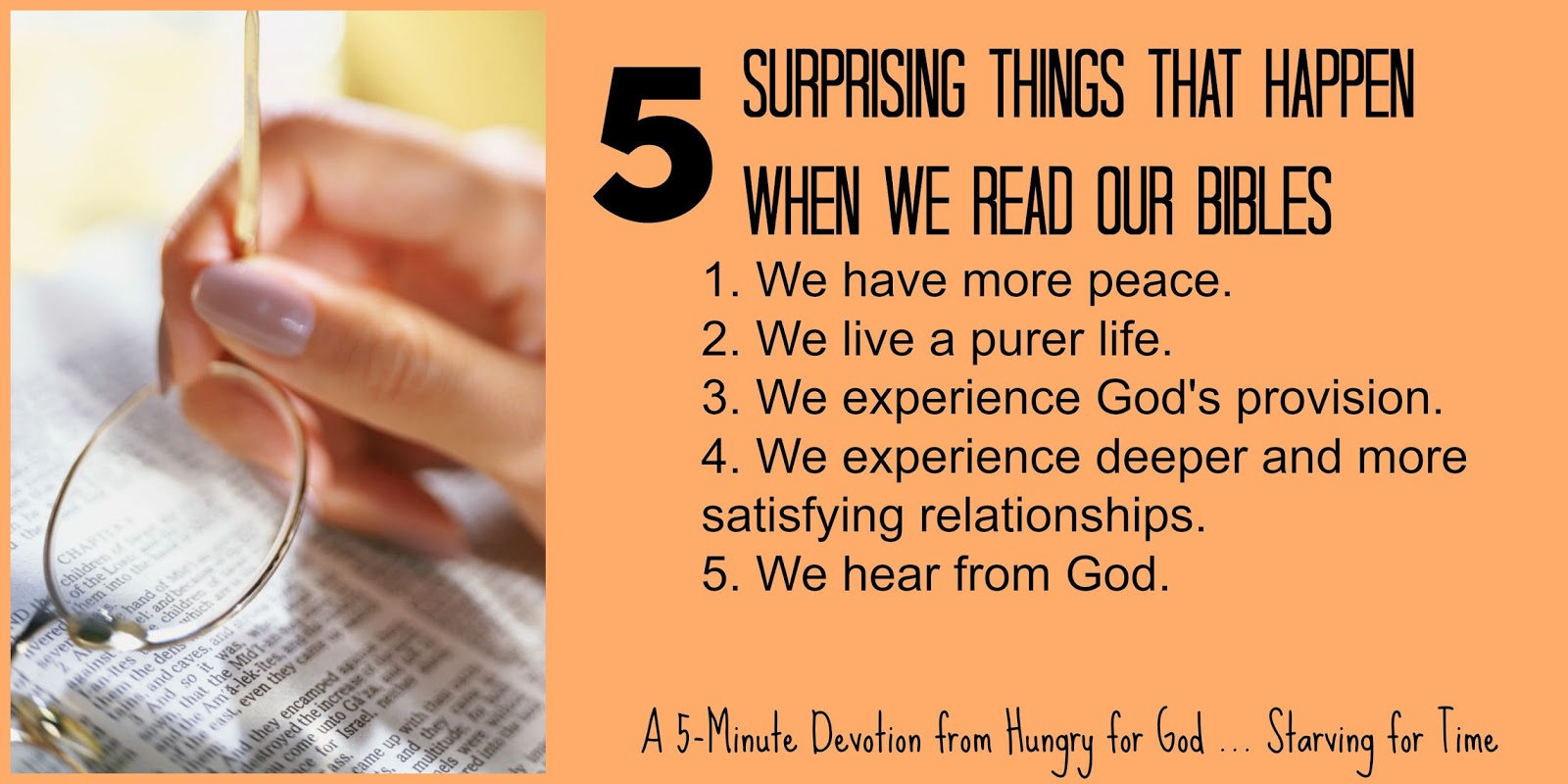
2. We live a purer life. Think of the ills that plague our society: murder, rage, adultery, gossip, promiscuity, abortion, alcoholism, drug abuse, robbery . . . I could go on forever. Applying God’s Word to our lives protects us from these. “How can a young man keep his way pure? By living according to your word,” says Psalm 119: 9.
3. We experience God’s provision. “No good thing does he withhold from those whose walk is blameless,” Psalm 84:11 says. This is a conditional promise—if we live blamelessly (not perfect, but diligently trying to obey God), God will meet our needs. And we cannot live blamelessly without spending time in God’s Word.
4. We experience deeper and more satisfying relationships. How many times, when we’re struggling to be a good spouse, parent, family member, or friend have we said, “I just wish there was a book I could read”? Well, there is—the Bible. The best relational advice in the world is sitting quietly on the pages of Scripture just waiting for us to read and apply it.
5. We talk with the God of the universe. When we pray, we talk to God. When we read God’s Word, he talks to us. Think about how excited you’d be if you could talk to the wisest man in the world. Now multiply that wisdom by a gazillion, and you get a glimpse of what happens when we spend time in God’s Word. In addition to wise counsel, God’s Word speaks love, tenderness, encouragement, hope, and perspective.
I hope by now you understand why I broke my rule and told you, “You should read your Bible.” And I also hope, as you’ve read five of the surprising things that happen when we spend time in God’s Word every day, you’re intrigued and challenged to read your Bible every day. Of all the disciplines of the spiritual life, daily Bible reading is the one that will impact your life in the most amazing ways.
My short list is incomplete. I’d love to hear about the benefits you’ve discovered as you’ve read your Bible. Leave a comment below and share your thoughts. If you're reading by email, CLICK HERE to leave a comment.
And if you'd like to hear a lovely musical rendition of Psalm 84, I invite you to worship with Jason Silver.
If you enjoyed this post, why not subscribe? I'll send you twice-weekly 5-minute devotions to help nourish your soul.
Because women need to connect with God in the craziness of life.
Enter your email address and VALIDATE the Feedburner email sent to your inbox.
Delivered by FeedBurner
If this post was meaningful to you, would you consider sharing it with a friend by clicking on one of the buttons below? Did you know you can receive bi-weekly Hungry for God posts sent directly to your email inbox? Visit http://www.lori-benotweary.blogspot.com and click on the link in the right hand corner to Subscribe Via Email.
Copyright 2012 by Lori Hatcher
Refresh Blog

A place to refresh your faith, hope, and prayers with 5-minute weekly posts.
- Lori Hatcher's profile
- 101 followers