
Lori Hatcher's Blog: Refresh Blog, page 74
January 28, 2016
Three Secrets to Living Longer
 A recent study, detailed in Health magazine, “found that four bad behaviors—smoking, drinking too much alcohol, not exercising, and not eating enough fruits and veggies—can hustle you into an early grave, and, in effect, age you by as many as 12 years.”
 These results don’t surprise me. The medical community has known this for a long time. What does surprise me is that after an extensive Internet search, none of the top articles I read addressing the topic of longevity reported what I learned this morning during my Bible reading time.
I discovered three secrets to help us live a long and happy life:
1. Keep God’s commands.
Proverbs 3:1-2 says: "My son, do not forget my teaching, but keep my commands in your heart, for they will prolong your life many years and bring you prosperity." Wow, not just prolong my life, but prolong my life MANY years. AND bring me prosperity.
How does this work? Let’s think it through. If I’m honoring God’s commands, I’m not going to make many of the lifestyle choices that lead to premature death. I suspect thieves and murderers have a considerably shorter life expectancy than law-abiding citizens. Those destined for the electric chair certainly do.
Honoring God’s commands also means that we’re less likely to engage in reckless or foolish behavior, irresponsible eating and drinking, and life-destroying relationships. A woman who has chosen to honor God with her body won’t be sleeping around and catching an STD, nor will she be driving drunk.
If she’s applying God’s commandments to her life, she’s also going to be developing solid, strong friendships, a life enhancing quality, according to Prevention magazine. She’s going to be working hard caring for her family and her home, another life-extending behavior. And she’s going to have less stress, because it’s impossible to simultaneously worry and trust God.
From a financial standpoint (remember the second half of the promise in Psalm 3:1-2, prosperity), applying God’s commands mean we’re less likely to engage in financially reckless behavior. We’ll save instead of spending carelessly. We’ll give to the church and other worthy causes. We’ll avoid indebtedness, repay what we owe in a timely manner, and pay our taxes. Financial advisers like Dave Ramsey agree that following these practices will help bring about prosperity.
What do you know? God’s Word is spot on. “Walk in all the way that the LORD your God has commanded you, so that you may live and prosper and prolong your days in the land that you will possess” (Deut. 5:33).
2. Honor our parents.
Deuteronomy 5:16 commands us to "Honor your father and your mother, as the LORD your God has commanded you, so that you may live long and that it may go well with you.” Ephesians 6 calls it “the first command with a promise.” A promise. From God. To bless us.
Honoring our parents means listening carefully to and considering their wisdom. It means treating them with respect, serving them unselfishly, and making time for them. When we honor our parents, we take into account their human frailties, personality quirks, and sin and love them anyway. Honoring them becomes an extension of worship to our Lord, our heavenly Father, and this pleases God. So much, that he promises to bless us and extend our lives.
The final secret to help us live a long and happy life isn’t limited to our physical lives. If we put this next step into practice, we’ll not only have a reasonably good chance of living to a ripe, old age, we’ll live forever.
3. Believe in Jesus Christ.
Our lives on this earth are fleeting. Following God’s commands and honoring our parents will help extend and enhance them, but one day they will end. Our souls, however, will live on. What we’ve done with Jesus Christ will determine whether our souls will spend eternity in God’s presence or eternally separated from him.
Thankfully, God has made provision for this as well. John 3:16 records his plan: “For God so loved the world that he gave his only begotten Son, that whoever believes in him shall not perish, but have everlasting life” (John 3:16).
Medical science has discovered much about longevity and life-extending practices. The truths found in God’s Word form the basis of this knowledge. Obeying God’s Word and honoring our parents will increase our chances of living a long life, but there are no guarantees. Godly believers who honor their parents still die, and some of them die young. This is why what matters most is what happens after our physical bodies die. Entrusting our souls to Jesus Christ is our only hope.
But it is a strong and sure hope.
Now it’s your turn. What life-extending practices have you embraced, and with which ones are you still struggling? Leave a comment below and share your thoughts.
If you enjoyed this post, why not subscribe? I'll send you twice-weekly 5-minute devotions to help nourish your soul.
Because women need to connect with God in the craziness of life.
Enter your email address and VALIDATE the Feedburner email sent to your inbox.
Delivered by FeedBurner
If this post was meaningful to you, would you consider sharing it with a friend by clicking on one of the buttons below? Did you know you can receive bi-weekly Hungry for God posts sent directly to your email inbox? Visit http://www.lori-benotweary.blogspot.com and click on the link in the right hand corner to Subscribe Via Email.
Copyright 2012 by Lori Hatcher


January 25, 2016
How to Be Angry and Sin Not
 It’s midnight Saturday night, and the music is blaring from our next-door neighbor’s house. In my husband’s BC (Before Christ) days, this would have been an invitation to a great evening, but now it’s just annoying. And frustrating. And about to make him angry.
 Unlike our partying neighbors, we plan to attend church in the morning. My husband, the pastor, doesn’t have the option to sit on the back pew and take a nap. He’s got to preach. And to be ready to preach, he’s got to get a good night’s sleep. But with the ground-pounding, window-rattling noise, sleep is impossible.
We lie there, and I feel his body tensing in frustration. He tosses one way, then the other, mashing the pillow against the side of his head in an attempt to block out the noise. I grab the portable fan from the kitchen and turn it on high, hoping to drown the waves of music in a sea of white noise. It does little to muffle the pounding beat.
His frustration, combined with anger and fatigue, finally does him in. He leaps from bed, storms out the door, and confronts our neighbor.
It isn’t pretty.
Or polite. Or God-honoring. My husband’s angry reaction was something he regretted later, when morning dawned, and he wasn’t so tired. He’s conscious of the fact that our neighbors don’t yet know the Lord, and he wants to be a good witness. Clashes like this hinder his attempts to develop a relationship with them, and, one day, share the Gospel.
Anger, especially righteous anger, is a powerful thing. Our neighbors were unnecessarily loud and inconsiderate, and my husband’s complaint was justified. But even he, in the light of day, acknowledged that responding in anger wasn’t the best way to handle the situation.
“Be angry and do not sin,” Psalm 4 warns us. James 1:20 tells us why: “for man's anger does not bring about the righteous life that God desires.”
Thankfully, in addition to a warning, the fourth Psalm gives us guidance for how to deal with anger in a God-honoring way:
“Be angry, and do not sin.
Meditate within your heart on your bed, and be still.
Offer the sacrifices of righteousness,
And put your trust in the Lord” (v 4-5).
Several months after this incident, my husband had an opportunity to put these instructions into practice.
It was 3 a.m., and we were startled awake by a car alarm sounding under our bedroom window. Peeking through the blinds to make sure no one was stealing our neighbor’s car, I saw his adult daughter drive off. “Must have hit the alarm by accident.”
At least five times a day thereafter, our neighbor’s car alarm would sound. Four ear-splitting honks. It happened in the daytime, and it happened at night. One night it awakened us at 11 p.m., the next night at midnight.
“I know what we’re going to,” my husband said one morning at breakfast.
“What?”
“Bring ‘em a pound cake.”
“What?”
“A pound cake. Getting angry doesn’t help, so let’s try a different approach. Let’s bake ‘em a pound cake.”
So I did. And he took it over. And he didn’t say a word about the car horn.
The next day, when the clock radio went off at 4:45, he said, “I’ve been awake since three, when the car alarm went off. I’m going to have to say something to them.”
Uh oh, I thought. He left for work, and I prayed. Lord, you tell us not to sin in our anger. Please help David express his frustration without getting angry. Please help them have a conversation that glorifies you.
Later that day, he told me what happened.
“I was polite. I just told him how disturbing the alarm was and asked him what was going on. His daughter bought the car used, and it didn’t come with a key fob. Every time she unlocks the door, the horn starts blaring until she puts the key in the ignition. She’s about to pull her hair out. It’s embarrassing. Anyway, they’ve ordered a fob and hopefully it’ll be in soon. He apologized for the noise.”
Success—and such a different outcome.
 Here are the four steps to take, according to Psalm 4, when we become angry:
 1. Acknowledge our anger, but do not sin.
2. Meditate on God’s Word. Ask him to remind us of Scripture that applies to the situation.
3. Respond with righteous acts instead of sinful ones.
4. Trust God to either bring about a resolution or give us the grace to bear it.
Our noisy neighbor situation is mild compared to some issues. Pound cake and a peaceful conversation might not defuse more complicated clashes, but, big or small, we can apply the steps laid out for us in Psalm 4 and trust God to work. His Word is trustworthy, wise, and given for our instruction. We do well to apply it.
Now it’s your turn. Have you ever chosen to honor God in a situation, even though your emotions wanted to strike out in anger? What was the result? Leave a comment below. I’d love to hear your story.
If you enjoyed this post, why not subscribe? I'll send you twice-weekly 5-minute devotions to help nourish your soul.
Because women need to connect with God in the craziness of life.
Enter your email address and VALIDATE the Feedburner email sent to your inbox.
Delivered by FeedBurner
If this post was meaningful to you, would you consider sharing it with a friend by clicking on one of the buttons below? Did you know you can receive bi-weekly Hungry for God posts sent directly to your email inbox? Visit http://www.lori-benotweary.blogspot.com and click on the link in the right hand corner to Subscribe Via Email.
Copyright 2012 by Lori Hatcher
January 21, 2016
Don't Just Pray FOR People, Pray WITH Them
“So, what’s new with you since I saw you last?” I asked my dental patient as I seated her in the chair and clipped a napkin around her neck.
“Oh,” she said with a smile, clasping her hands together, “today’s a big day. My daughter’s in labor with her fourth child. They just called me from the hospital.”
“Then why are you here?” I asked, my voice one octave lower than a squeal. “You can get your teeth cleaned anytime. Go to the hospital.”
“No, no,” she said, “It’ll be a while before I can see them. I’ll head over after I’m finished. But if it’s OK, I’m going to keep my phone on just in case they call.”
“Absolutely,” I said, and got right to work. I had just finished polishing her teeth when her phone vibrated.
“Hello. Yes. Oh no! OK, I’ll get there as soon as I can.” She snapped the phone shut and turned to me with frightened eyes.
“The baby’s been born, but he’s having trouble breathing. They think there’s something wrong with his heart.”
A thousand thoughts swirled in my mind, but one rose to the surface: We’ve got to pray.
One the heels of that thought, however, came a half dozen others: You don’t know if this lady even believes in prayer. What if she doesn’t want you to pray? What if it’s awkward? What if your boss walks by and sees you? What if you get in trouble?
Then the quiet voice of the Holy Spirit stilled the naysayers. That baby needs your prayers. And this grandmother needs them, too.
 "Oh, Mrs. B.,” I said, placing my hand on her arm, “let’s pray for your grandson.” We bowed our heads, and I prayed. “Lord, please spare this baby’s life. Give the doctors and nurses wisdom and skill to care for him. Send your peace to quiet the parents’ frightened hearts. Most of all, glorify yourself in and through this scary situation. In Jesus’ name I ask, Amen.”
“Thank you so much,” Mrs. B. said.
Removing the napkin from around her neck and handing her her purse, I walked her down the hall and out the door.
“Please let me know how the baby’s doing,” I called after her. “I’ll be praying.”
In my 35 years as a believer, I’ve had many opportunities to pray with people in need. Sometimes I do, and sometimes I don’t. Sometimes the situation doesn’t allow me to pray on the spot, and I tell them, “I’ll pray for you,” and sincerely mean it. Other times I could pray with them, but I chicken out. I listen to the voices of the enemy instead of the voice of God and miss the opportunity to speak faith into a troubled soul.
 In my lifetime, many people have prayed aloud over me. It's a very powerful experience. These spoken prayers invite God’s power into my situation. They reassure me that someone is standing in the gap for me and calling my name before God’s throne.
Silent, faith-filled prayers are powerful. In many situations, faith-filled prayers spoken aloud are even more powerful.
This is why my goal in 2016 is, whenever possible and appropriate, not only to pray FOR people, but also to pray WITH them. Will you join me?
And if you’re wondering about Mrs. B.’s grandson, he’s now a strong, healthy 15-year-old whose difficult beginning secured him a very special place in his grandma’s heart. And in mine as well.
"For this child I prayed, and the LORD has granted me my petition . . .” (1 Sam. 1:27 NKJV).
If you enjoyed this post, why not subscribe? I'll send you twice-weekly 5-minute devotions to help nourish your soul.
Because women need to connect with God in the craziness of life.
Enter your email address and VALIDATE the Feedburner email sent to your inbox.
Delivered by FeedBurner
If this post was meaningful to you, would you consider sharing it with a friend by clicking on one of the buttons below? Did you know you can receive bi-weekly Hungry for God posts sent directly to your email inbox? Visit http://www.lori-benotweary.blogspot.com and click on the link in the right hand corner to Subscribe Via Email.
Copyright 2012 by Lori Hatcher
“Oh,” she said with a smile, clasping her hands together, “today’s a big day. My daughter’s in labor with her fourth child. They just called me from the hospital.”
“Then why are you here?” I asked, my voice one octave lower than a squeal. “You can get your teeth cleaned anytime. Go to the hospital.”
“No, no,” she said, “It’ll be a while before I can see them. I’ll head over after I’m finished. But if it’s OK, I’m going to keep my phone on just in case they call.”
“Absolutely,” I said, and got right to work. I had just finished polishing her teeth when her phone vibrated.
“Hello. Yes. Oh no! OK, I’ll get there as soon as I can.” She snapped the phone shut and turned to me with frightened eyes.
“The baby’s been born, but he’s having trouble breathing. They think there’s something wrong with his heart.”
A thousand thoughts swirled in my mind, but one rose to the surface: We’ve got to pray.
One the heels of that thought, however, came a half dozen others: You don’t know if this lady even believes in prayer. What if she doesn’t want you to pray? What if it’s awkward? What if your boss walks by and sees you? What if you get in trouble?
Then the quiet voice of the Holy Spirit stilled the naysayers. That baby needs your prayers. And this grandmother needs them, too.
 "Oh, Mrs. B.,” I said, placing my hand on her arm, “let’s pray for your grandson.” We bowed our heads, and I prayed. “Lord, please spare this baby’s life. Give the doctors and nurses wisdom and skill to care for him. Send your peace to quiet the parents’ frightened hearts. Most of all, glorify yourself in and through this scary situation. In Jesus’ name I ask, Amen.”
 “Thank you so much,” Mrs. B. said.
Removing the napkin from around her neck and handing her her purse, I walked her down the hall and out the door.
“Please let me know how the baby’s doing,” I called after her. “I’ll be praying.”
In my 35 years as a believer, I’ve had many opportunities to pray with people in need. Sometimes I do, and sometimes I don’t. Sometimes the situation doesn’t allow me to pray on the spot, and I tell them, “I’ll pray for you,” and sincerely mean it. Other times I could pray with them, but I chicken out. I listen to the voices of the enemy instead of the voice of God and miss the opportunity to speak faith into a troubled soul.
 In my lifetime, many people have prayed aloud over me. It's a very powerful experience. These spoken prayers invite God’s power into my situation. They reassure me that someone is standing in the gap for me and calling my name before God’s throne.
 Silent, faith-filled prayers are powerful. In many situations, faith-filled prayers spoken aloud are even more powerful.
This is why my goal in 2016 is, whenever possible and appropriate, not only to pray FOR people, but also to pray WITH them. Will you join me?
And if you’re wondering about Mrs. B.’s grandson, he’s now a strong, healthy 15-year-old whose difficult beginning secured him a very special place in his grandma’s heart. And in mine as well.
"For this child I prayed, and the LORD has granted me my petition . . .” (1 Sam. 1:27 NKJV).
If you enjoyed this post, why not subscribe? I'll send you twice-weekly 5-minute devotions to help nourish your soul.
Because women need to connect with God in the craziness of life.
Enter your email address and VALIDATE the Feedburner email sent to your inbox.
Delivered by FeedBurner
If this post was meaningful to you, would you consider sharing it with a friend by clicking on one of the buttons below? Did you know you can receive bi-weekly Hungry for God posts sent directly to your email inbox? Visit http://www.lori-benotweary.blogspot.com and click on the link in the right hand corner to Subscribe Via Email.
Copyright 2012 by Lori Hatcher
January 18, 2016
Snake Oil, Leeches, or Cocaine -- What Cure Are You Trusting In?
 In the 1700s, physicians believed people ran fever because their body fluids were unbalanced. They often prescribed leeches as a way to reduce blood volume and bring about a “cure.” Doctors used bloodletting four times on George Washington when he contracted strep throat in the winter of 1799. The final time, they drained 32 ounces of blood from his body.
 He died soon after.
Today we know that infection-fighting white blood cells help people recover from illnesses like strep throat.
A 2012 article in Business Insider states that some of the greatest medical minds of the 1800s praised cocaine as a cure-all and wonder drug. Sigmund Freud believed in its health properties and wrote to his wife: "I take very small doses of it regularly against depression and against indigestion and with the most brilliant of success." Today we know it’s an incredibly additive drug with the power to damage a person’s body and mind.
In the 1990s, The Center for Science in the Public Interest filed a lawsuit against Coca Cola for claiming Vitamin Water was healthy. The Center says that the 33 grams of sugar in each bottle “can do more harm by promoting obesity, diabetes, and other health problems, than the vitamins do to promote any health benefits.”
I’ve seen medical theory come and go. I remember the oat bran craze of the 90s. Then came the promise that if you drank a tablespoon of vinegar every day you’d live to be a hundred. Cardiologists used to prescribe fish oil to help lower cholesterol and support heart health, but newer studies show it has little effect. Then there was the relative (who shall be nameless) who believed that blowing cigarette smoke into a child’s ear would cure an earache.
As the body of knowledge grows, medical cures will continue to come and go. A growing understanding of disease processes will bring about new and more-effective treatments. Scientists may discover the cure for cancer in my lifetime.
There is one sickness, however, that’s been around since the dawn of creation. Good people and evil ones have succumbed to its devastating effects. The young and the elderly suffer equally. It’s passed along from generation to generation and is always fatal. This disease is sin, and the Bible confirms the hopeless prognosis:
“the wages of sin is death” (Rom. 6:23).
 Thankfully, although the disease is devastating, there is a cure. It’s also been around since the beginning and has never changed: “For the wages of sin is death, but the gift of God is eternal life in Jesus Christ our Lord.”
 Since Adam and Eve chose to obey Satan instead of God in the Garden of Eden, mankind has suffered under sin’s curse. In love, God, the Great Physician, devised a cure. Like the “cures” of George Washington’s day, it involved bloodletting, but of a much different nature. On the cross of Calvary God shed the blood of his only Son.
Jesus bent his back to the whip that tore his flesh. He surrendered his head to the thorny crown that pierced his scalp. And held out his hands to the spikes that nailed him to the beam. When he had paid the sin debt of mankind, he pronounced the cure:
“It is finished. The debt has been paid in full.”
The blood he shed, when applied to a sin-sick soul, has the power to cleanse, heal, and make whole.
“But God demonstrates his own love for us in this: While we were still sinners, Christ died for us. Since we have now been justified by his blood, how much more shall we be saved from God's wrath through him! For if, when we were God's enemies, we were reconciled to him through the death of his Son, how much more, having been reconciled, shall we be saved through his life!” (Rom. 5:8).
If you’re still suffering under sin’s curse, stop trying to cure yourself. No amount of self-help, determination, or New Year’s resolutions can cure you. You can swallow snake oil all you like, but the only remedy is to confess your sin to God, ask for his forgiveness, and accept the cure Jesus makes available to us all.
“For whoever will call upon the name of the Lord will be saved” (Rom. 10:13).
It’s that simple. What are you waiting for?
And if you already know Christ as your Savior, will you stop a moment to pray for those reading this post who don’t? And while you’re praying, if the Lord brings someone to mind who doesn’t know for sure they’ll go to Heaven when they die, will you share this with them? Posting it on Facebook, Twitter, or Pinterest (click on the share buttons below the post) is another great way to reach people who need the hope of the Gospel.
And for a beautiful worship experience, here's Kari Jobe. If you're reading by email, click here to listen to Kari Jobe's, "O, the Blood."
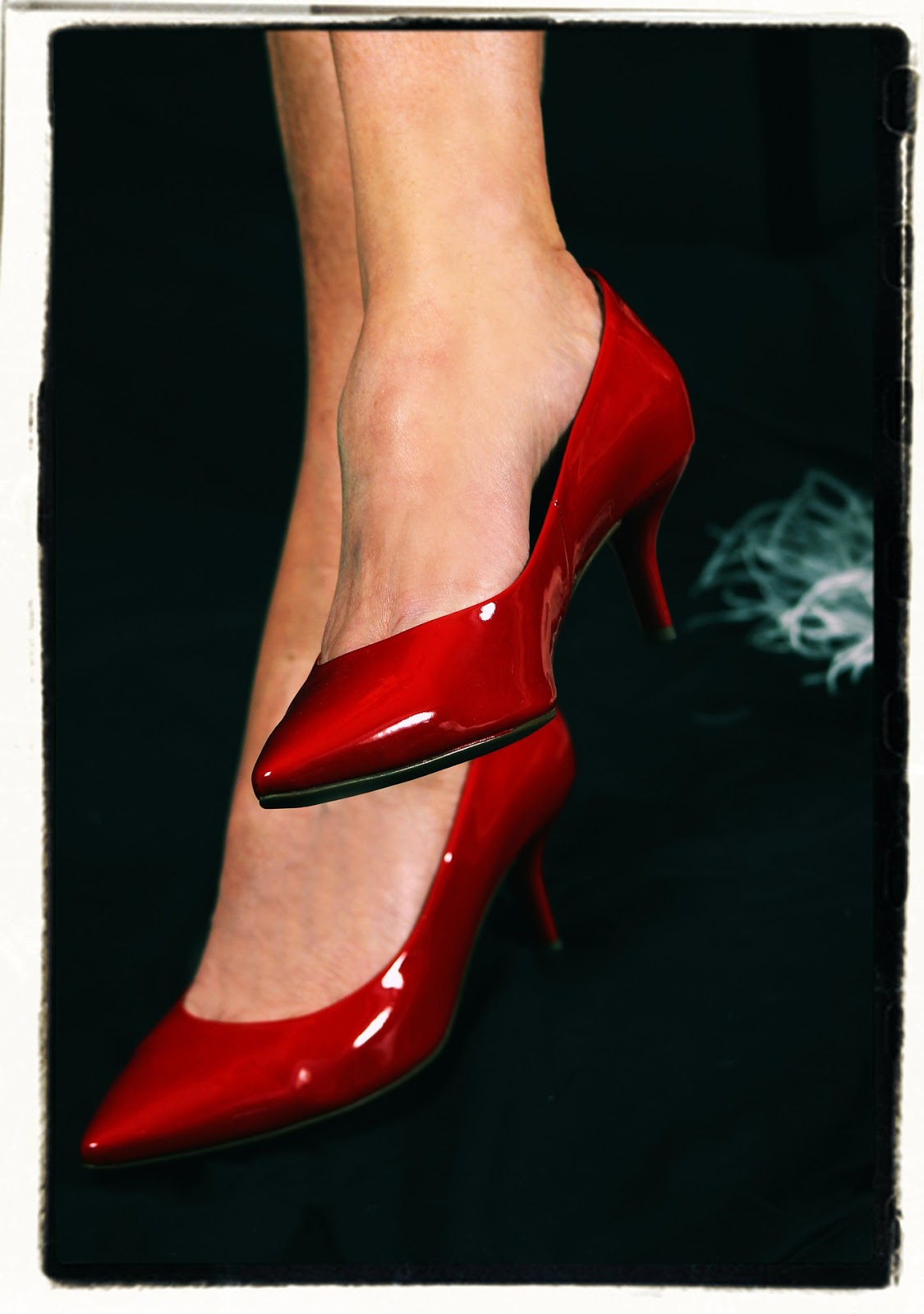 If you're within driving distance of Columbia, I'd love to meet you at the debut of my new presentation, Stepping Out, How Our Footwear Impacts Our Faith, at Sandhills Community Church, Saturday, January 23 from 9-12.
Veteran Bible teacher Carmen Roberson will be the co-leader for this event, which is open to the public. Click here to learn more and register. The deadline is Monday, January 18, so don't delay.
If you're not within driving distance or would like to host a women's ministry event of your own, I'd love share this fun presentation with your ladies. Check out the sneak preview. For all the glorious details on "Stepping Out," click here.
And if you're a homeschooling parent who lives in the Savannah, GA, area, I'll be sharing one of my favorite homeschooling talks, "8 Mistakes I Made While Homeschooling" with the amazing folks from Family Education for Christ Tuesday night, January 19. Guests are welcome. For more information on this meeting, email Janie Gibson at www.fefconline.com.
If you enjoyed this post, why not subscribe? I'll send you twice-weekly 5-minute devotions to help nourish your soul.
Because women need to connect with God in the craziness of life.
Enter your email address and VALIDATE the Feedburner email sent to your inbox.
Delivered by FeedBurner
If this post was meaningful to you, would you consider sharing it with a friend by clicking on one of the buttons below? Did you know you can receive bi-weekly Hungry for God posts sent directly to your email inbox? Visit http://www.lori-benotweary.blogspot.com and click on the link in the right hand corner to Subscribe Via Email.
Copyright 2012 by Lori Hatcher
January 14, 2016
Tips to Make Life Better - What Works for Me
Much about the new year is theoretical. We hear a lot about setting goals, choosing a verse or a word for the year, and reevaluating our priorities. But what about the nitty gritty? The stuff we deal with every day? I’m talking dirty dishes and trash cans, not Scripture memorization and tithing. Common sense wisdom.
Wisdom isn’t intelligence. Wisdom is knowing how to use our intelligence to make our lives better. Today I’m going to deviate from my normally spiritually-minded content and share some street smarts, some breadcrumbs of wisdom I’ve gathered along the trail. I don’t take credit for most of it. Like almost everything good in my life, I have it because someone shared it with me. So here goes.
What Works for Me:
Hold kind words tightly and hurtful words loosely. Revel in compliments. Write them down. Tell your best friend. Savor them. Do the opposite for hurtful ones. Don’t empower them by holding them close to your heart or making a home for them. Extract any nuggets of truth and discard the rest. As one friend often says, “Eat the fish and spit out the bones.”
 Winston is my favorite furry friend. David's pretty special, too.Pet your dog or cat every day. Scratch his ears, rub his belly, toss his ball. Go ahead, kiss his fuzzy head if you feel like it. Studies have shown that petting an animal reduces blood pressure and lifts depression.
Clean up spills immediately. They only get worse with time. This includes stove tops and refrigerators. Wash toothpaste globs and whiskers down the drain before they stick.
Keep a running grocery list on your fridge. Don't trust your memory. When you use the last of something or notice you’re almost out, write it down. Don’t forget to take the list with you.
Wipe your bathroom vanity top with tissue after a steamy shower. It doesn’t sanitize, but it’s great for a quick shine.
Pay someone a sincere compliment every day. The recipient will feel great, and so will you.
Floss. This habit, which takes about a minute a day, will help protect your teeth, gums, heart, and kidneys. I have dental patients who need joint replacement surgery but can’t have it because they have diseased or infected teeth and gums. Reputable surgeons require patients to have a clean bill of dental health prior to surgery, so think ahead. It’s never too late to start. Unless you’ve already lost your teeth :( .
If you work at a desk, get up and move every hour or work standing up some of the time. Even if you just take a lap around the office or a walk to the water fountain, moving every hour improves our circulation and clears our minds. On days when I work at home, I intersperse times of sitting with a walk in the neighborhood or five minutes of strength-building exercises. Other times I take a 10-minute break to throw dinner in the crock pot or a load of laundry in the washer.
Turn off the television. When you reach the end of your life, do you really want to explain spending that much time doing something with no eternal value?
Put an old, damp sock over your hand and wipe your ceiling fans at least once a month. When you’re finished, turn the sock inside out and throw it away.
If you feel hungry, drink a glass of water. My husband’s dietitian tells us that our bodies can’t distinguish between being thirsty and hungry. It just knows it’s craving something. Many times a big glass of water gets rid of the craving without adding unneeded calories. Toss a lemon or lime wedge in it for extra flavor.
Count your blessings. Literally. Write at least three a day in a thankful journal or blessing jar. Verbalize them. Find a parking spot close to the front? Thank God aloud. Experience a near miss in traffic, thank God for protecting you. Pass a homeless man on the street? Thank God for providing your needs every day. Concentrate on what you have instead of what you don’t.
 Carry non-perishable food in your car. My food of choice is packages of peanut butter or cheese crackers. I keep an 8-pack box under the front seat of my car. If I pass a homeless person begging on a street corner, I hand him a box of crackers as I go by. It may not be much, but at least I know he won’t be hungry for one meal.
Change your dishcloth every day. Nasty bacteria grows in warm, damp fabric, and the last thing we want to do is wash dishes and utensils with a germ-filled cloth. Yuck.
Eat more soup. Soup is a great way to feed fiber-rich veggies to your family. Use a tomato base instead of calorie- and fat-laden cream varieties for maximum nutrition. Using your crock pot will help minimize dishes. And there’s nothing nicer than an inexpensive, hot meal waiting for you after a long day of work.
If you’re married, at least once a week, go to bed before you’re sleepy. ‘Nuff said. Figure it out.
Give money away. Sponsor a missionary, adopt a Compassion child, or donate to your favorite charity. Give to your church out of every paycheck. If you don’t think you can afford to give, tally up what you spend on Starbucks coffee, cable TV, or fast food. Everyone can give something. Remember the widow’s mite.
The next time you have a longer car ride ahead of you, call a friend or relative you haven’t talked to in a while. Even if you only reach their voice mail, tell them you're thinking of them. Finish with a quick prayer for his or her well being. Instead of wasting your commute time, you’ve reached out to someone special to you.
At least once a month, have lunch with a friend. If you don’t have money to go out, brown bag it and meet at a park or food court. If you think you’re too busy, do it twice a month. Friendships are like rare and precious orchids. They wither if you neglect them.
This is a little bit of what works for me. Now it’s your turn. What works for you? Leave a comment below and share your wisdom.
If you enjoyed this post, why not subscribe? I'll send you twice-weekly 5-minute devotions to help nourish your soul.
Because women need to connect with God in the craziness of life.
Enter your email address and VALIDATE the Feedburner email sent to your inbox.
Delivered by FeedBurner
If this post was meaningful to you, would you consider sharing it with a friend by clicking on one of the buttons below? Did you know you can receive bi-weekly Hungry for God posts sent directly to your email inbox? Visit http://www.lori-benotweary.blogspot.com and click on the link in the right hand corner to Subscribe Via Email.
Copyright 2012 by Lori Hatcher
Wisdom isn’t intelligence. Wisdom is knowing how to use our intelligence to make our lives better. Today I’m going to deviate from my normally spiritually-minded content and share some street smarts, some breadcrumbs of wisdom I’ve gathered along the trail. I don’t take credit for most of it. Like almost everything good in my life, I have it because someone shared it with me. So here goes.
What Works for Me:
Hold kind words tightly and hurtful words loosely. Revel in compliments. Write them down. Tell your best friend. Savor them. Do the opposite for hurtful ones. Don’t empower them by holding them close to your heart or making a home for them. Extract any nuggets of truth and discard the rest. As one friend often says, “Eat the fish and spit out the bones.”
 Winston is my favorite furry friend. David's pretty special, too.Pet your dog or cat every day. Scratch his ears, rub his belly, toss his ball. Go ahead, kiss his fuzzy head if you feel like it. Studies have shown that petting an animal reduces blood pressure and lifts depression.
 Clean up spills immediately. They only get worse with time. This includes stove tops and refrigerators. Wash toothpaste globs and whiskers down the drain before they stick.
Keep a running grocery list on your fridge. Don't trust your memory. When you use the last of something or notice you’re almost out, write it down. Don’t forget to take the list with you.
Wipe your bathroom vanity top with tissue after a steamy shower. It doesn’t sanitize, but it’s great for a quick shine.
Pay someone a sincere compliment every day. The recipient will feel great, and so will you.
Floss. This habit, which takes about a minute a day, will help protect your teeth, gums, heart, and kidneys. I have dental patients who need joint replacement surgery but can’t have it because they have diseased or infected teeth and gums. Reputable surgeons require patients to have a clean bill of dental health prior to surgery, so think ahead. It’s never too late to start. Unless you’ve already lost your teeth :( .
If you work at a desk, get up and move every hour or work standing up some of the time. Even if you just take a lap around the office or a walk to the water fountain, moving every hour improves our circulation and clears our minds. On days when I work at home, I intersperse times of sitting with a walk in the neighborhood or five minutes of strength-building exercises. Other times I take a 10-minute break to throw dinner in the crock pot or a load of laundry in the washer.
Turn off the television. When you reach the end of your life, do you really want to explain spending that much time doing something with no eternal value?
Put an old, damp sock over your hand and wipe your ceiling fans at least once a month. When you’re finished, turn the sock inside out and throw it away.
If you feel hungry, drink a glass of water. My husband’s dietitian tells us that our bodies can’t distinguish between being thirsty and hungry. It just knows it’s craving something. Many times a big glass of water gets rid of the craving without adding unneeded calories. Toss a lemon or lime wedge in it for extra flavor.
Count your blessings. Literally. Write at least three a day in a thankful journal or blessing jar. Verbalize them. Find a parking spot close to the front? Thank God aloud. Experience a near miss in traffic, thank God for protecting you. Pass a homeless man on the street? Thank God for providing your needs every day. Concentrate on what you have instead of what you don’t.
 Carry non-perishable food in your car. My food of choice is packages of peanut butter or cheese crackers. I keep an 8-pack box under the front seat of my car. If I pass a homeless person begging on a street corner, I hand him a box of crackers as I go by. It may not be much, but at least I know he won’t be hungry for one meal.
 Change your dishcloth every day. Nasty bacteria grows in warm, damp fabric, and the last thing we want to do is wash dishes and utensils with a germ-filled cloth. Yuck.
Eat more soup. Soup is a great way to feed fiber-rich veggies to your family. Use a tomato base instead of calorie- and fat-laden cream varieties for maximum nutrition. Using your crock pot will help minimize dishes. And there’s nothing nicer than an inexpensive, hot meal waiting for you after a long day of work.
If you’re married, at least once a week, go to bed before you’re sleepy. ‘Nuff said. Figure it out.
Give money away. Sponsor a missionary, adopt a Compassion child, or donate to your favorite charity. Give to your church out of every paycheck. If you don’t think you can afford to give, tally up what you spend on Starbucks coffee, cable TV, or fast food. Everyone can give something. Remember the widow’s mite.
The next time you have a longer car ride ahead of you, call a friend or relative you haven’t talked to in a while. Even if you only reach their voice mail, tell them you're thinking of them. Finish with a quick prayer for his or her well being. Instead of wasting your commute time, you’ve reached out to someone special to you.
At least once a month, have lunch with a friend. If you don’t have money to go out, brown bag it and meet at a park or food court. If you think you’re too busy, do it twice a month. Friendships are like rare and precious orchids. They wither if you neglect them.
This is a little bit of what works for me. Now it’s your turn. What works for you? Leave a comment below and share your wisdom.
If you enjoyed this post, why not subscribe? I'll send you twice-weekly 5-minute devotions to help nourish your soul.
Because women need to connect with God in the craziness of life.
Enter your email address and VALIDATE the Feedburner email sent to your inbox.
Delivered by FeedBurner
If this post was meaningful to you, would you consider sharing it with a friend by clicking on one of the buttons below? Did you know you can receive bi-weekly Hungry for God posts sent directly to your email inbox? Visit http://www.lori-benotweary.blogspot.com and click on the link in the right hand corner to Subscribe Via Email.
Copyright 2012 by Lori Hatcher
January 11, 2016
Something Old and Something New in 2016
I’m doing something old and something new in my spiritual life in 2016.
First, the old. I’ve used a prayer journal to guide and record my prayers for more than a decade. At the start of every year, I rewrite the main prayer request pages of my journal. I have a page for my husband, daughters and sons-in-law (including my grands), extended family, and friends. Sometimes the people I love share things they’d like me to pray specifically for, but I also have a list of good things I pray into my family members’ lives.
 I also have a page of prayer requests for myself. Here are some things I ask the Lord for every day:
Lord, help me love you with my whole heart.
Use me as a bold witness for you.
Help me be affectionate and unselfish to my husband.
Give me a spirit of wisdom and revelation so I can know you better.
Help me be wise in my interactions with my adult children and help us have loving relationships.
I have other requests that come and go—speaking ministry opportunities, writing and teaching projects, and needs for inspiration and guidance.
I always conclude my prayer time for myself by praying the prayer of Jabez (1 Chr. 4:10):
“Oh, that you would bless me indeed,
And enlarge my territory.
That your hand would be with me,
And you would keep me from evil.”
The beauty of a written prayer journal is that it helps me remember everything I want to pray about, gives order and consistency to my prayer time, and provides a place to record God’s answers in response to my requests.
At the end of every year, when I’m rewriting my pages for the upcoming year, I flip through the pages and see the many answers to prayers I’ve received—answers I might have forgotten if I hadn’t written them down. This strengthens my faith and gives me courage and motivation to trust God for new requests in the coming year.
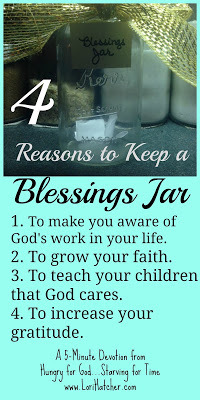 The new practice I’m introducing this year is called a “Blessings Jar.” Like the thankful pages I have in my journal, it’s a place to record God’s blessings, small and great, as they occur. The difference in a blessing jar is that my husband and I will share the joy of counting our blessings. And, unlike my private journal, our blessings jar will contain things for which we’re thankful as a couple.
This simple Mason jar, decorated with a ribbon, will sit in a prominent place in our kitchen. Each night at dinner we’ll reflect on our day. If God gave one (or both) of us a blessing that day, we’ll write it on a slip of paper and place it in the jar.
On December 31, we’ll open the jar and read the entries. It will serve as a powerful reminder of God’s love and care for us throughout the year. I wish I had come across this idea when my children still lived in our home. It would have been a visible, tangible reminder to them of God’s daily interaction in our family.
So, one old discipline and one new one for me in 2016. As you enter 2016, what will you be doing again that you’ve done in years past? And what new will you incorporate into your life? I’d love to hear your thoughts. Leave a comment below and bless us all.
May 2016 be a year filled with God’s goodness.
And if you’d like to read 4 Reasons to Use a Prayer Journal , click here.
If you enjoyed this post, why not subscribe? I'll send you twice-weekly 5-minute devotions to help nourish your soul.
Because women need to connect with God in the craziness of life.
Enter your email address and VALIDATE the Feedburner email sent to your inbox.
Delivered by FeedBurner
If this post was meaningful to you, would you consider sharing it with a friend by clicking on one of the buttons below? Did you know you can receive bi-weekly Hungry for God posts sent directly to your email inbox? Visit http://www.lori-benotweary.blogspot.com and click on the link in the right hand corner to Subscribe Via Email.
Copyright 2012 by Lori Hatcher
First, the old. I’ve used a prayer journal to guide and record my prayers for more than a decade. At the start of every year, I rewrite the main prayer request pages of my journal. I have a page for my husband, daughters and sons-in-law (including my grands), extended family, and friends. Sometimes the people I love share things they’d like me to pray specifically for, but I also have a list of good things I pray into my family members’ lives.
 I also have a page of prayer requests for myself. Here are some things I ask the Lord for every day:
Lord, help me love you with my whole heart.
Use me as a bold witness for you.
Help me be affectionate and unselfish to my husband.
Give me a spirit of wisdom and revelation so I can know you better.
Help me be wise in my interactions with my adult children and help us have loving relationships.
I have other requests that come and go—speaking ministry opportunities, writing and teaching projects, and needs for inspiration and guidance.
I always conclude my prayer time for myself by praying the prayer of Jabez (1 Chr. 4:10):
“Oh, that you would bless me indeed,
And enlarge my territory.
That your hand would be with me,
And you would keep me from evil.”
The beauty of a written prayer journal is that it helps me remember everything I want to pray about, gives order and consistency to my prayer time, and provides a place to record God’s answers in response to my requests.
At the end of every year, when I’m rewriting my pages for the upcoming year, I flip through the pages and see the many answers to prayers I’ve received—answers I might have forgotten if I hadn’t written them down. This strengthens my faith and gives me courage and motivation to trust God for new requests in the coming year.
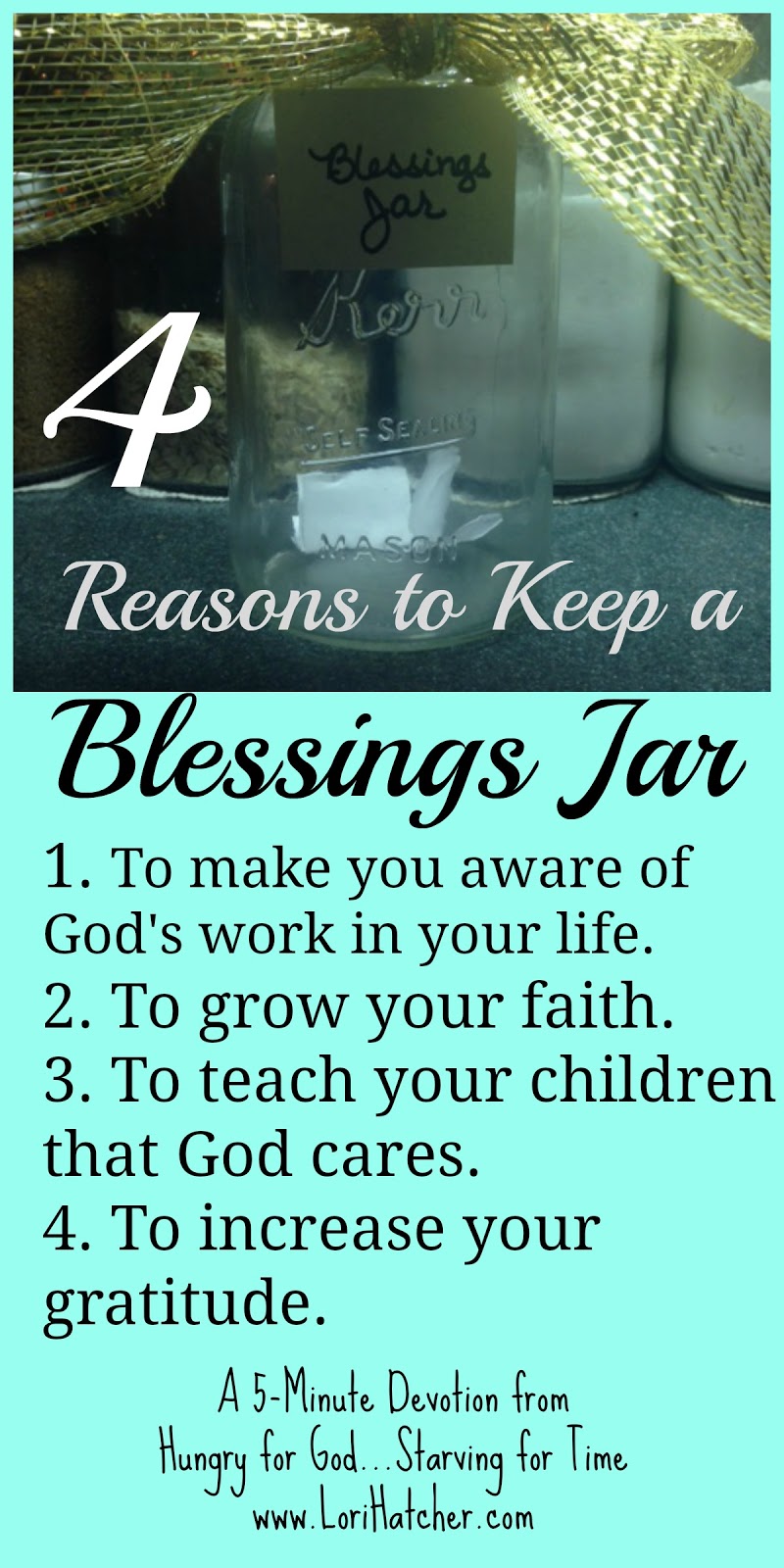 The new practice I’m introducing this year is called a “Blessings Jar.” Like the thankful pages I have in my journal, it’s a place to record God’s blessings, small and great, as they occur. The difference in a blessing jar is that my husband and I will share the joy of counting our blessings. And, unlike my private journal, our blessings jar will contain things for which we’re thankful as a couple.
 This simple Mason jar, decorated with a ribbon, will sit in a prominent place in our kitchen. Each night at dinner we’ll reflect on our day. If God gave one (or both) of us a blessing that day, we’ll write it on a slip of paper and place it in the jar.
On December 31, we’ll open the jar and read the entries. It will serve as a powerful reminder of God’s love and care for us throughout the year. I wish I had come across this idea when my children still lived in our home. It would have been a visible, tangible reminder to them of God’s daily interaction in our family.
So, one old discipline and one new one for me in 2016. As you enter 2016, what will you be doing again that you’ve done in years past? And what new will you incorporate into your life? I’d love to hear your thoughts. Leave a comment below and bless us all.
May 2016 be a year filled with God’s goodness.
And if you’d like to read 4 Reasons to Use a Prayer Journal , click here.
If you enjoyed this post, why not subscribe? I'll send you twice-weekly 5-minute devotions to help nourish your soul.
Because women need to connect with God in the craziness of life.
Enter your email address and VALIDATE the Feedburner email sent to your inbox.
Delivered by FeedBurner
If this post was meaningful to you, would you consider sharing it with a friend by clicking on one of the buttons below? Did you know you can receive bi-weekly Hungry for God posts sent directly to your email inbox? Visit http://www.lori-benotweary.blogspot.com and click on the link in the right hand corner to Subscribe Via Email.
Copyright 2012 by Lori Hatcher
January 7, 2016
Stepping Out - How Our Footwear Impacts Our Faith
I'm so excited to tell you about a new women's ministry presentation I've created called
Stepping Out, How Our Footwear Impacts Our Faith.
I'll be premiering this presentation at Sandhills Community Church on Saturday, January 23 from 9-12.Veteran Bible teacher Carmen Roberson will be the co-leader for this event, which is open to the public. Click here to learn more and register.
If you're not within driving distance or would like to host a women's ministry event of your own, I'd love share this fun presentation with your ladies. Check out the sneak preview. For all the glorious details, click the title link below.
Stepping Out
How Our Footwear Impacts Our Faith
Shoes.
We love them! From the sassy sling backs to the sleek stiletto, there's a pair for every occasion. Some see shoes as an accessory, others a necessity, but did you know that shoes can have spiritual connotations, too?
In this fast-paced, interactive presentation, Reach Out, Columbia magazine editor and author/blogger Lori Hatcher invites you to take a thoughtful look at the spiritual shoes you wear every day. She'll talk about styles that enhance our Christian walk, those that hinder it, and the one pair of shoes we can't live without.
So strap on your favorite pair of shoes and join us for a time of fun, fellowship, and fashion.
For more information on hosting this presentation, click here:
Stepping Out - How Our Footwear Impacts Our Faith.

If you enjoyed this post, why not subscribe? I'll send you twice-weekly 5-minute devotions to help nourish your soul.
Because women need to connect with God in the craziness of life.
Enter your email address and VALIDATE the Feedburner email sent to your inbox.
Delivered by FeedBurner
If this post was meaningful to you, would you consider sharing it with a friend by clicking on one of the buttons below? Did you know you can receive bi-weekly Hungry for God posts sent directly to your email inbox? Visit http://www.lori-benotweary.blogspot.com and click on the link in the right hand corner to Subscribe Via Email.
Copyright 2012 by Lori Hatcher
January 4, 2016
The Fight - A Guest Post by Shannon Upton
 I used to be scared all the time, which meant I was brave most of the time.
 I was brave when I stepped outside my home. I was brave when I met the eye of a grocery store cashier. I was brave when I allowed my kids to climb up a ladder and slip down a slide. Every moment that I fought my panic, I was brave.
I developed a postpartum anxiety disorder after the birth of my second child. The anxiety seized my heart for four long years before the Lord in His mercy lifted it from me. My memories of those years are laced with my constant struggle to be brave. I prayed, I tried, I succeeded and I failed. And I learned.
“Turn from evil and do good. Seek peace and pursue it.” (Psalm 34:14)
First, I learned that being organized actually lessened my anxiety. Without direction, I wandered around in worry, attempting to prevent each possible calamity. I soon realized that I had to be thoughtful and intentional about my life — not just to turn from evil but to do good. I planned out my days and then I gave each of them over to God, bravely loosening my grip.
I also learned that I could fight the fear. Peace was not something I was going to sit around and wait for! Part of being brave was to seek peace and pursue it. I paid close attention to my thoughts and feelings, searching for those things that were causing me anxiety. Then I bravely went to battle.
When I started to panic about things that weren’t even happening, I’d think, No. I trust in God. When I felt helplessly rushed, I’d think, Wait, what’s my hurry? And when I felt that my anxiety kept me from measuring up to others’ expectations (or even my own), I’d think, Who says I have to do that? Does God?
When I left my clinical anxiety behind, I realized that a more pedestrian anxiety lives within all of us. We worry that we’re not being the parents or spouses or children of God we should be. We feel rushed, like we don’t have the time to get to the things that matter. We secretly feel certain that we don’t measure up. But God doesn’t want those fears to clutter our hearts. He wants us to be brave.
 What fears and anxieties are cluttering up your spirit? Over the next few days, listen to your repetitive negative thoughts. Some of those thoughts will be useful, prompting you do get organized and do good. Some of those thoughts will be useless and hurtful, and you’ll need to pursue peace by deciding to surrender them to God.
 Paul says that we’re to demolish all arguments that aren’t of God, to take captive our thoughts and make them obedient to Christ (II Corinthians 10:5). Demolish. Take captive. How very brave we are called to be when it comes to our own spirits! And how the Lord helps us through the fight.
 Shannon Upton is a mother of three and a Christian speaker. Her experience with postpartum anxiety led her to start a ministry for Christian women and author two books, Organizing You: Finding Your Spiritual Clutter and Using Organization to Clear it Out and Building Your House: A Faithful Mom’s Guide to Organizing Home and Family. You can learn more about Shannon and her ministry at OrganizingJesusMoms.com.
 If you enjoyed this post, why not subscribe? I'll send you twice-weekly 5-minute devotions to help nourish your soul.
Because women need to connect with God in the craziness of life.
Enter your email address and VALIDATE the Feedburner email sent to your inbox.
Delivered by FeedBurner
If this post was meaningful to you, would you consider sharing it with a friend by clicking on one of the buttons below? Did you know you can receive bi-weekly Hungry for God posts sent directly to your email inbox? Visit http://www.lori-benotweary.blogspot.com and click on the link in the right hand corner to Subscribe Via Email.
Copyright 2012 by Lori Hatcher
December 31, 2015
4 Steps to Take If Your New Years' Resolutions Always Fail
“It will make your back feel better, protect you from injury, and give you great abs.”
The physical therapist was making a compelling case for why I should make time every day for the exercises she was prescribing. Years of working in awkward positions as a dental hygienist, combined with the hours of computer work I do every day was causing me discomfort—enough discomfort to seek medical advice. The exercises she prescribed would take less than ten minutes a day, and I should feel better almost immediately. I eagerly embraced her recommendations. After all, it was my idea to seek help.
Yet I didn’t do the exercises.
Oh, I thought about them every day. I agreed they were good for me. I acknowledged I should do them. I even bought an exercise ball and put it in the family room so I’d have everything I needed to follow her plan.
Yet I didn’t do the exercises.
 One of my dental patients shared a similar story. “I know I need to floss,” she said. “When I do, my mouth feels cleaner, my breath smells better, and my gums don’t bleed. I read just yesterday how having healthy gums can help prevent heart and kidney disease, which is really important since my father died of a heart attack.”
Yet she doesn’t floss.
I even hear this in regard to spiritual disciplines. “I know I should ________________(read my Bible, pray, give, serve). When I do, I feel less fearful, more fulfilled, and more productive. I handle stress better, and my husband and I fight less.”
Yet many don’t have regular times of Bible reading and prayer.
Why?
Why do we struggle to do the things we should? Even the things we want to do and acknowledge are good and helpful?
Even the mighty apostle Paul struggled with this. He expressed his frustration in Romans 7:18-19:
"I have the desire to do what is good, but I cannot carry it out.”
If Mary Hunt, the brain behind the money-saving blog, Everyday Cheapskate, had been around in Paul’s day, he would have benefited from her advice. Thankfully, Mary IS around in our day. She recently shared a post called “Why 88% of New Years Resolutions Fail and How to Make Them Work.” It’s a practical, helpful read, and one I suggest you print and keep.
Without copying and pasting the whole article here, she and B.J. Fogg, Ph.D., director of the Persuasive Tech Lab at Stanford University, share four steps to new year resolution success:
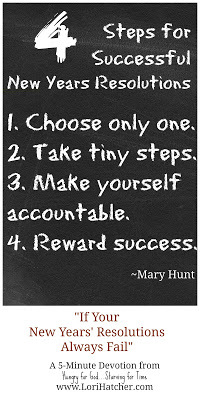 1. Pick only one resolution. Instead of vowing to lose 30 pounds, exercise daily, and cut out everything but vegetables and tofu from your diet, choose one goal. My goal is to do my physical therapy exercises.
2. Take baby steps. “Make it tiny, even ridiculously so,” Hunt advises. The characteristics of a truly tiny step is that it’s quick and easy. For me, it would be doing one set of my PT exercises (there are 10 in the overall plan). For my floss-flunking patient, it might be to floss one tooth.
3. Become accountable. Write it down. Tell someone else. Enlist a partner to work on one resolution of her own and compare notes at the end of each week.
4. Give yourself positive feedback. Reward yourself, do something that makes you happy, or celebrate with your accountability partner.
After sharing our mutual self-improvement failures, my dental patient and I agreed to make ourselves accountable to each other. “I’ll work toward doing my exercises regularly,” I told her, “and you work on developing a regular floss habit.” She agreed, and when she comes back in 6 months for her checkup, we’re going to compare notes.
I’ve been working Mary Hunt’s plan for about a month now. Instead of trying to do all the sets of exercises my physical therapist prescribed every day (ten in all), I decided to exercise on Mondays, Wednesdays, and Fridays. On those days, I might not do all the exercises, but I at least do something.
Four weeks into my experiment, I'm still exercising. There’s something delicious about giving myself the freedom to skip a day in between. And take the whole weekend off. One day this week, I chose to do my exercises on Tuesday instead of Wednesday, because I knew Wednesday would be busier. SCANDALOUS!
Instead of experiencing defeat and a totally failed resolution, I’m successfully building a habit. And you know what? I feel great. No back pain. No muscle cramps. And I think maybe, just maybe, I see a hint of an ab muscle forming . . . imagine that.
As you move into the new year, I hope you’ll choose one discipline to work on. Begin with baby steps, make yourself accountable, and reward yourself for progress. At the end of the year, you’ll be delighted with what you’ve accomplished.
And if spending time with the Lord every day is your goal, may I suggest a resource that will help?
 I wrote my devotional book, Hungry for God . . . Starving for Time because I know busy women struggle to make time for the Lord in the craziness of everyday life. Each devotion takes less than five minutes to read. The book is small enough to carry with you and pull it out whenever you have a few minutes for quiet reflection.
And it’s available on Kindle, so if you carry your phone with you, you can also carry my book. At $2.99 for the Kindle version, it’s cheaper than your favorite latte and will be a great investment in your spiritual life in 2016.
Whatever your goals for the new year, I pray God’s blessings on your efforts. And if you’d like to make yourself accountable, leave a comment below, and I’ll pray for you. Happy New Year!
If you enjoyed this post, why not subscribe? I'll send you twice-weekly 5-minute devotions to help nourish your soul.
Because women need to connect with God in the craziness of life.
Enter your email address and VALIDATE the Feedburner email sent to your inbox.
Delivered by FeedBurner
If this post was meaningful to you, would you consider sharing it with a friend by clicking on one of the buttons below? Did you know you can receive bi-weekly Hungry for God posts sent directly to your email inbox? Visit http://www.lori-benotweary.blogspot.com and click on the link in the right hand corner to Subscribe Via Email.
Copyright 2012 by Lori Hatcher
The physical therapist was making a compelling case for why I should make time every day for the exercises she was prescribing. Years of working in awkward positions as a dental hygienist, combined with the hours of computer work I do every day was causing me discomfort—enough discomfort to seek medical advice. The exercises she prescribed would take less than ten minutes a day, and I should feel better almost immediately. I eagerly embraced her recommendations. After all, it was my idea to seek help.
Yet I didn’t do the exercises.
Oh, I thought about them every day. I agreed they were good for me. I acknowledged I should do them. I even bought an exercise ball and put it in the family room so I’d have everything I needed to follow her plan.
Yet I didn’t do the exercises.
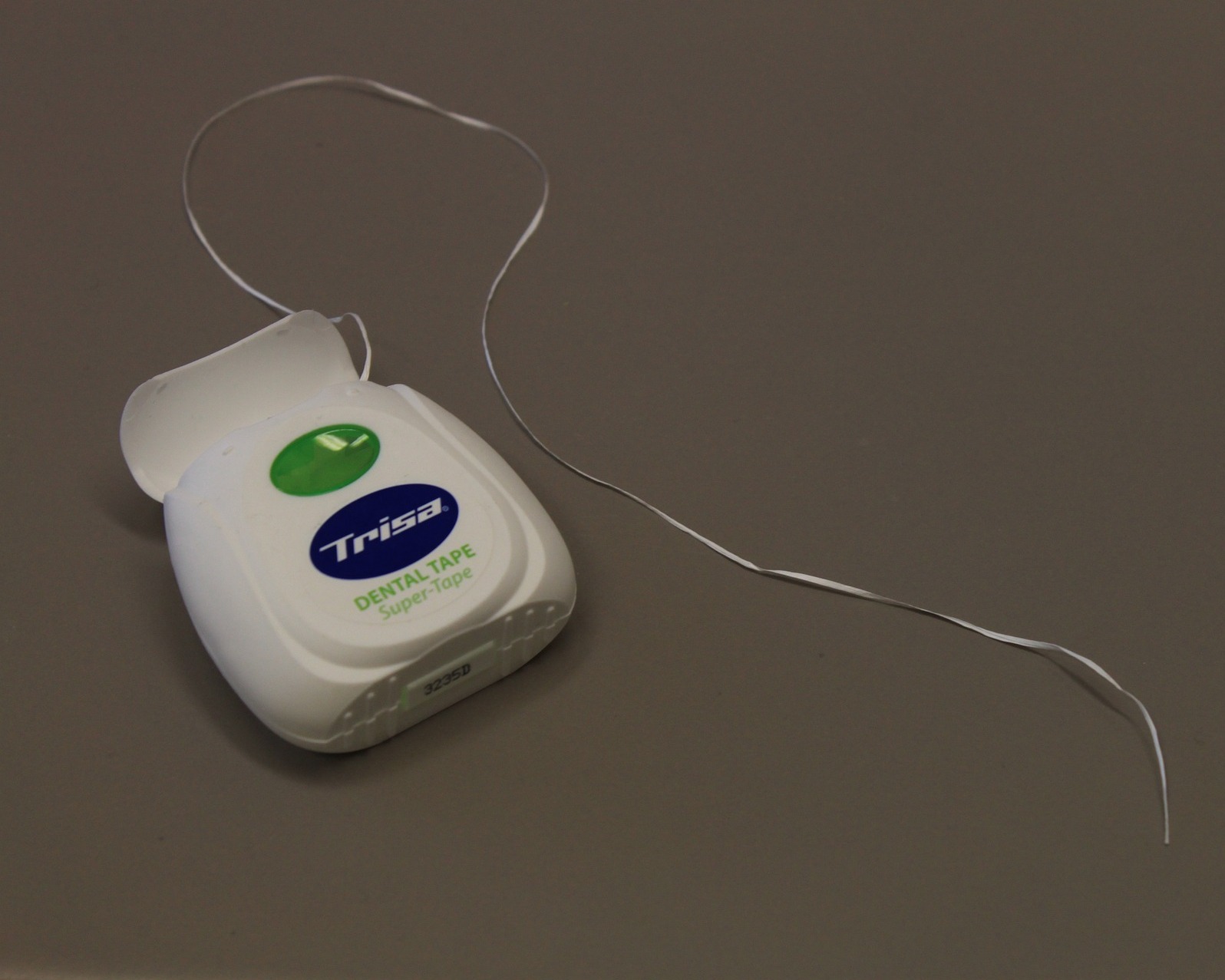 One of my dental patients shared a similar story. “I know I need to floss,” she said. “When I do, my mouth feels cleaner, my breath smells better, and my gums don’t bleed. I read just yesterday how having healthy gums can help prevent heart and kidney disease, which is really important since my father died of a heart attack.”
Yet she doesn’t floss.
I even hear this in regard to spiritual disciplines. “I know I should ________________(read my Bible, pray, give, serve). When I do, I feel less fearful, more fulfilled, and more productive. I handle stress better, and my husband and I fight less.”
Yet many don’t have regular times of Bible reading and prayer.
Why?
Why do we struggle to do the things we should? Even the things we want to do and acknowledge are good and helpful?
Even the mighty apostle Paul struggled with this. He expressed his frustration in Romans 7:18-19:
"I have the desire to do what is good, but I cannot carry it out.”
If Mary Hunt, the brain behind the money-saving blog, Everyday Cheapskate, had been around in Paul’s day, he would have benefited from her advice. Thankfully, Mary IS around in our day. She recently shared a post called “Why 88% of New Years Resolutions Fail and How to Make Them Work.” It’s a practical, helpful read, and one I suggest you print and keep.
Without copying and pasting the whole article here, she and B.J. Fogg, Ph.D., director of the Persuasive Tech Lab at Stanford University, share four steps to new year resolution success:
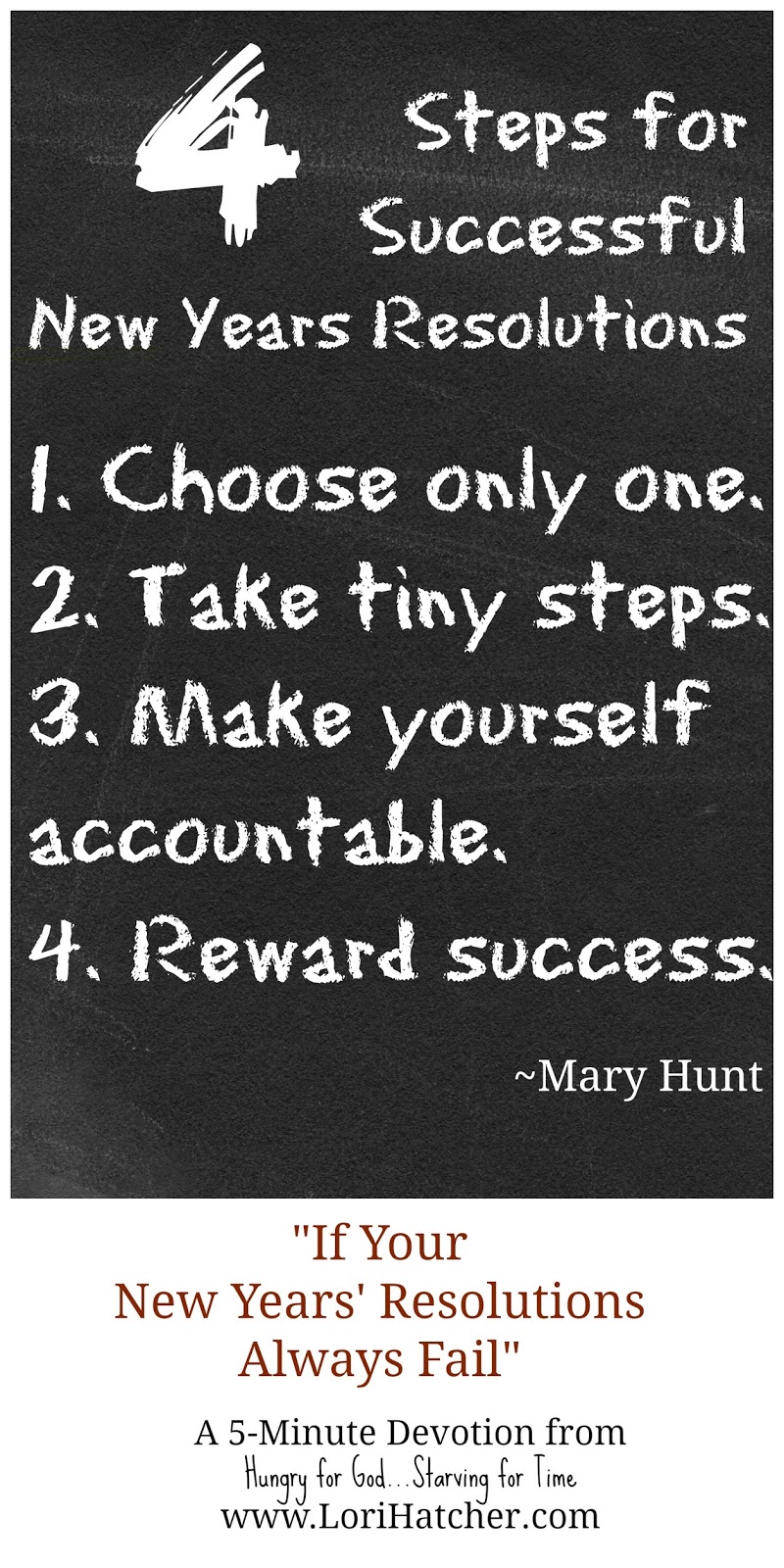 1. Pick only one resolution. Instead of vowing to lose 30 pounds, exercise daily, and cut out everything but vegetables and tofu from your diet, choose one goal. My goal is to do my physical therapy exercises.
2. Take baby steps. “Make it tiny, even ridiculously so,” Hunt advises. The characteristics of a truly tiny step is that it’s quick and easy. For me, it would be doing one set of my PT exercises (there are 10 in the overall plan). For my floss-flunking patient, it might be to floss one tooth.
3. Become accountable. Write it down. Tell someone else. Enlist a partner to work on one resolution of her own and compare notes at the end of each week.
4. Give yourself positive feedback. Reward yourself, do something that makes you happy, or celebrate with your accountability partner.
After sharing our mutual self-improvement failures, my dental patient and I agreed to make ourselves accountable to each other. “I’ll work toward doing my exercises regularly,” I told her, “and you work on developing a regular floss habit.” She agreed, and when she comes back in 6 months for her checkup, we’re going to compare notes.
I’ve been working Mary Hunt’s plan for about a month now. Instead of trying to do all the sets of exercises my physical therapist prescribed every day (ten in all), I decided to exercise on Mondays, Wednesdays, and Fridays. On those days, I might not do all the exercises, but I at least do something.
Four weeks into my experiment, I'm still exercising. There’s something delicious about giving myself the freedom to skip a day in between. And take the whole weekend off. One day this week, I chose to do my exercises on Tuesday instead of Wednesday, because I knew Wednesday would be busier. SCANDALOUS!
Instead of experiencing defeat and a totally failed resolution, I’m successfully building a habit. And you know what? I feel great. No back pain. No muscle cramps. And I think maybe, just maybe, I see a hint of an ab muscle forming . . . imagine that.
As you move into the new year, I hope you’ll choose one discipline to work on. Begin with baby steps, make yourself accountable, and reward yourself for progress. At the end of the year, you’ll be delighted with what you’ve accomplished.
And if spending time with the Lord every day is your goal, may I suggest a resource that will help?
I wrote my devotional book, Hungry for God . . . Starving for Time because I know busy women struggle to make time for the Lord in the craziness of everyday life. Each devotion takes less than five minutes to read. The book is small enough to carry with you and pull it out whenever you have a few minutes for quiet reflection. And it’s available on Kindle, so if you carry your phone with you, you can also carry my book. At $2.99 for the Kindle version, it’s cheaper than your favorite latte and will be a great investment in your spiritual life in 2016.
Whatever your goals for the new year, I pray God’s blessings on your efforts. And if you’d like to make yourself accountable, leave a comment below, and I’ll pray for you. Happy New Year!
If you enjoyed this post, why not subscribe? I'll send you twice-weekly 5-minute devotions to help nourish your soul.
Because women need to connect with God in the craziness of life.
Enter your email address and VALIDATE the Feedburner email sent to your inbox.
Delivered by FeedBurner
If this post was meaningful to you, would you consider sharing it with a friend by clicking on one of the buttons below? Did you know you can receive bi-weekly Hungry for God posts sent directly to your email inbox? Visit http://www.lori-benotweary.blogspot.com and click on the link in the right hand corner to Subscribe Via Email.
Copyright 2012 by Lori Hatcher
December 28, 2015
Faith, an Anonymous Donor, and What God Did
 My husband always regretted not finishing college.
 But his scholarship had run out, he was struggling academically, and we were in love. I mean in luuuuuv. When his pastor told him he didn’t need a degree to be a minister, he took it as God’s direction and quit school.
He found a job, we got married, and by the time our daughters came along, finishing school was the last thing on his mind. Contrary to his pastor’s advice, however, the lack of a degree dogged his steps for 20 years. Churches were more than happy to let him teach a Sunday school class, lead an AWANA program, or preach occasionally, but they always hired ministers with a degree for their permanent positions.
Twenty years into our marriage, my husband raised the subject of going back to school. “I’ve always regretted not finishing,” he said, “and it’s continued to hinder me.” His alma mater, Liberty University, had just opened its online degree program. He could take classes remotely and continue to work full time—a must, because I was a stay-at-home mom.
And then his courage faltered. “If I take one class at a time,” he said, “it will take me FIVE YEARS to finish. Do you know how OLD I’ll be in five years if I go back to school?”
“Do you know how old you’ll be in five years if you DON”T go back to school?” I responded, and he was convinced.
Except for one problem—we didn’t have money for him to go back to school. Every month we had just enough to pay the bills, buy groceries, and tuck a little away for an emergency. Each class cost $500, plus books—a small fortune to us.
But David felt led to step out in faith, fairly certain God was calling him back. “We’ll take money out of savings to pay for the first class, and if God is really calling me, he’ll provide the rest.”
Unbeknownst to him, I’d been squirreling away coupon money, rebate checks, and birthday cash for several years. When I counted the money in my stash, I was delighted to find I’d accumulated $500. I immediately called our church office.
“I’d like to give some money to help my husband pay for his first class, as an encouragement,” I told the financial secretary, “but I don’t want him to know it’s from me.” She assured me I could bring the money by, and they’d mail him a check from an “anonymous donor.”
I smiled all the way to the church. Two days later, he received the envelope. An anonymous donor has given $500 to help you with school expenses, the letter read. May God bless your studies.
I’ve never seen my husband laugh and cry at the same time, but I saw it that day. We sent off the check, and he went to work on his first class.
I wonder what we’re going to do when it’s time to register for the next class? I thought. There’s no more money in my stash, and registration will be here before we know it.
“The Lord will provide,” my husband said when I raised the question. “If he’s called me to go back, he’ll send the money.” He was convinced. I wasn’t so sure.
Two days later, he received a letter in the mail from the college. Dear Mr. Hatcher, it read. We are crediting your account $500. An anonymous donor has paid for your class.
“There must be a mistake,” he said and called the finance office. “Why are you refunding my money?”
“Because an anonymous donor has paid for your class,” the secretary replied.
“I know an anonymous donor paid for my class,” he said. “I got the check in the mail, and that’s how I paid my tuition.”
“Well sir, I don’t know anything about the check you got in the mail. All I know is that an anonymous donor sent us money to pay for your first class, so we’re refunding your money.”
“You mean I have TWO anonymous donors?” he said, turning to me with disbelieving eyes. I was more shocked than he was, and I knew it was time to come clean.
“David,” I said, my words tumbling out, “The first $500 came from me. I sent it to the church and asked them to send it to you. I wanted to encourage you. It was money I’d saved for something special.” Then I paused. “But I don’t know anything about this other anonymous donor. I think it REALLY WAS the Lord.”
This time we laughed and cried together.
Later, alone in my bedroom, I confessed my disbelief to the Lord. Lord, I’m so sorry. I doubted you could provide for David to go back to school. I was afraid he’d be disappointed and discouraged and want to quit. When I gave that money, I wasn’t trusting you. I was trusting myself. Please forgive me. And thank you for teaching me what my husband already knows, that when you call, you also provide.
 Although David had been a struggling student the first time around, 20 years of growth, maturity, and common sense made him dedicated and hard-working the second time through. Reminiscent of a kindergartner showing off his first report card, David grinned from ear to ear when he showed me his grade—a beautiful B.
 And then it was time to register again. He selected his class, using the credit on his account to pay the tuition.
A week later the school sent him a check for $500.
Wondering if his past academic struggles had come home to roost, and he’d been put on academic probation, he called the school office. “Why was my tuition refunded?”
“Because you have a credit balance,” the secretary replied. “An anonymous donor paid your tuition.”
“I know an anonymous donor paid my tuition,” he said, “but that was last semester. I registered for another class this semester.”
“I don’t know anything about last semester,” the secretary said. “All I know is that an anonymous donor has paid for this class.”
“And to keep us from having this conversation again next semester,” she said, “you need to know—this same donor has authorized us to bill him or her for every class you take until you graduate.”
We laughed and cried again, marveling at how God had worked in response to my husband’s faith.
Every semester my husband registered for a new class, and every semester his anonymous donor paid the bill. This unknown person donated over $17,000 in tuition money over the course of five years.
“Did you ever find out who sent the money?” people sometimes ask him when we tell this story.
“Oh, I know who sent the money,” he says. “The Lord.”
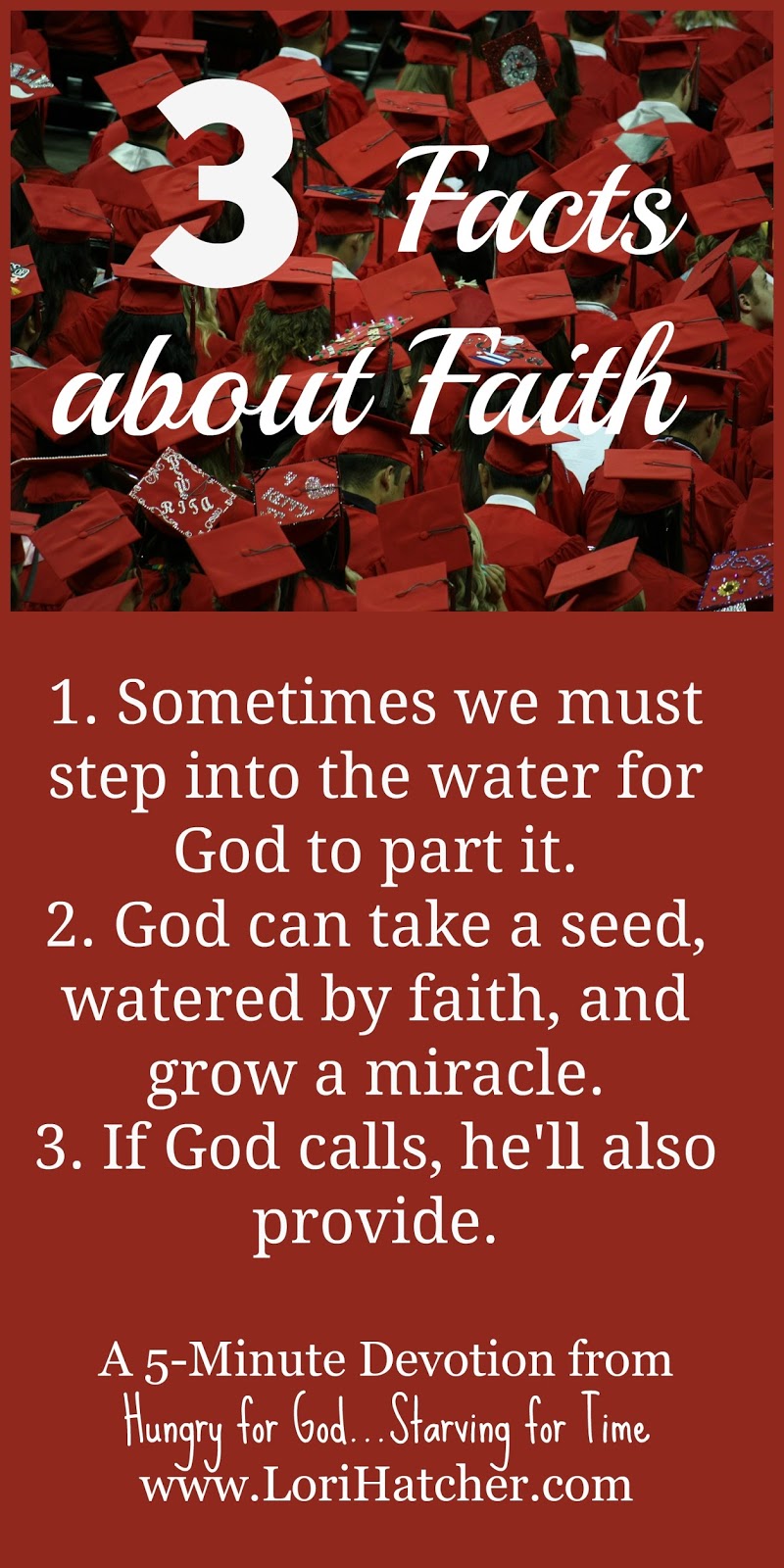
 David and I learned several lessons from this adventure. First, we learned that sometimes we have to step into the water for God to part it. Second, we learned that God can take seed money, watered by faith, and grow a miracle. Third, (I know you saw this coming), we learned that when God calls us to do something, he will provide what we need to accomplish it.
 In December of 2008, my husband received his Bachelor of Science in Religion degree from Liberty University. And yes, he was five years older than when he started.
Thirty-one years ago today, David and I were married. Happy anniversary, Hubby. I love you more than ever!
If you enjoyed this post, why not subscribe? I'll send you twice-weekly 5-minute devotions to help nourish your soul.
Because women need to connect with God in the craziness of life.
Enter your email address and VALIDATE the Feedburner email sent to your inbox.
Delivered by FeedBurner
If this post was meaningful to you, would you consider sharing it with a friend by clicking on one of the buttons below? Did you know you can receive bi-weekly Hungry for God posts sent directly to your email inbox? Visit http://www.lori-benotweary.blogspot.com and click on the link in the right hand corner to Subscribe Via Email.
Copyright 2012 by Lori Hatcher
Refresh Blog

A place to refresh your faith, hope, and prayers with 5-minute weekly posts.
- Lori Hatcher's profile
- 101 followers


