
Lori Hatcher's Blog: Refresh Blog, page 55
October 4, 2017
The First Step in Listening Well
Boy did I blow it.
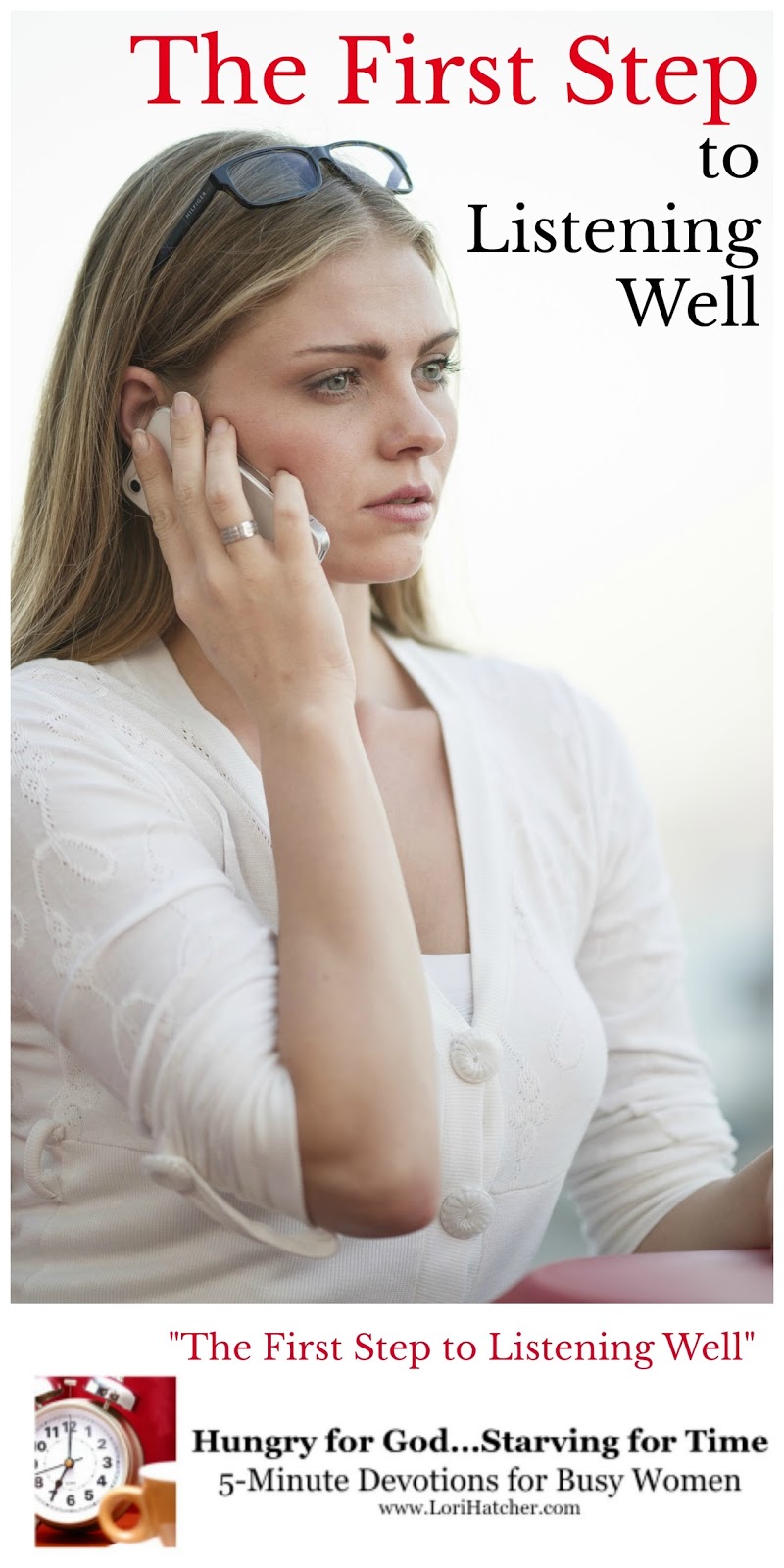 A friend was sharing her heart with me. Tender thoughts. Frightening possibilities. Hard questions with no easy answers. As I listened to her plight, my theology engine kicked in. Which is often a good thing. But not this time.
 When she finished, I responded with a strong and compelling argument why she shouldn’t be afraid. I had three Bible verses, a hero-of-the-faith story, and a personal example of how I had faced a similarly-frightening situation and come out spiritually stronger because of it. She nodded, but I could tell my words hadn’t calmed her heart.
Reflecting on the conversation later (which is a nice way of saying, God took me to task over it), I realized how I had failed my friend. She had come to me with a need, and I had totally missed it. Instead of encouraging her, I added weight to her already-burdened shoulders.
Listening to the quiet voice of the Lord, I realized that none of my responses were inherently wrong, just ill-timed.
Did she need to be reminded of God’s sovereignty? Yes.
Were the Bible verses I quoted appropriate and powerful? Yes.
Were the stories I shared true and inspiring? Yes.
Because I love my friend, I wanted to fix her situation – to ride in on the white horse of God’s deliverance, brandish my faith sword, and watch the fear demons scatter. But at that moment, she didn’t need a theological pep talk. She just needed me to listen. And empathize. And remind her of God’s love.
Perhaps God’s Spirit might have steered our conversation to the doctrine of God’s sovereignty, the Scripture, or the stories, but in order for those truths to take root, I needed to soften the soil of her heart with tender mercies, and compassion.
“No one cares how much you know,” once said, “until they know how much you care.” So often my left-brained, logical, get-er-done self wants to dispense heart medicine before I’ve even listened to it beat.
Thankfully, as I prayed for my friend later that day, the Lord showed me where I had erred. As soon as I could, I reached out to her and apologized for my insensitivity.
“No worries,” she said. “I know you care.”
I’m thankful for the valuable lesson I learned that day, one I suspect I’ll have to revisit often: Don’t just listen to their words. Listen to their heart.
What about you? Are you also quick to dispense spiritual medicine before you’ve thoroughly assessed the patient’s needs? What steps have you taken to become “quick to hear and slow to speak”? Leave a comment below and share your thoughts.
If you enjoyed this post, why not subscribe? I'll send you twice-weekly 5-minute devotions to help nourish your soul.
Because women need to connect with God in the craziness of life.
Enter your email address and VALIDATE the Feedburner email sent to your inbox.
Delivered by FeedBurner
If this post was meaningful to you, would you consider sharing it with a friend by clicking on one of the buttons below? Did you know you can receive bi-weekly Hungry for God posts sent directly to your email inbox? Visit http://www.lori-benotweary.blogspot.com and click on the link in the right hand corner to Subscribe Via Email.
Copyright 2012 by Lori Hatcher


October 1, 2017
What Comes Next? Why It's Better to Savor Instead of Strive
 “I’m four now,” my granddaughter announced as she came down the stairs the morning of her birthday. “What comes next?”
 Oh, I am so like our little Lauren. And you are too.
We humans are an ambitious lot. We set goals, create career maps, and plot the path of our families, faith, and futures. We eye the success of our neighbors and covet their homes and their marriages. If one of our children reaches a major milestone, the flush of success warms our heart until we think about how far they still have to go. That home improvement project? The iPhone camera glow barely fades before we’re planning the next one. And that sweet thing our husband did? It gets lost in the mental list of Yeah, but I wish he’d . . . .
We’re always eyeing the next thing without stopping to savor the good gifts God has placed in front of us. Today. Right now.
Like my granddaughter, we barely reach one goal before we set the next one. We fail to let ourselves to enjoy the fullness of the moment.
If you feel like you spend more of your day striving instead of savoring, here are three tips to help you.
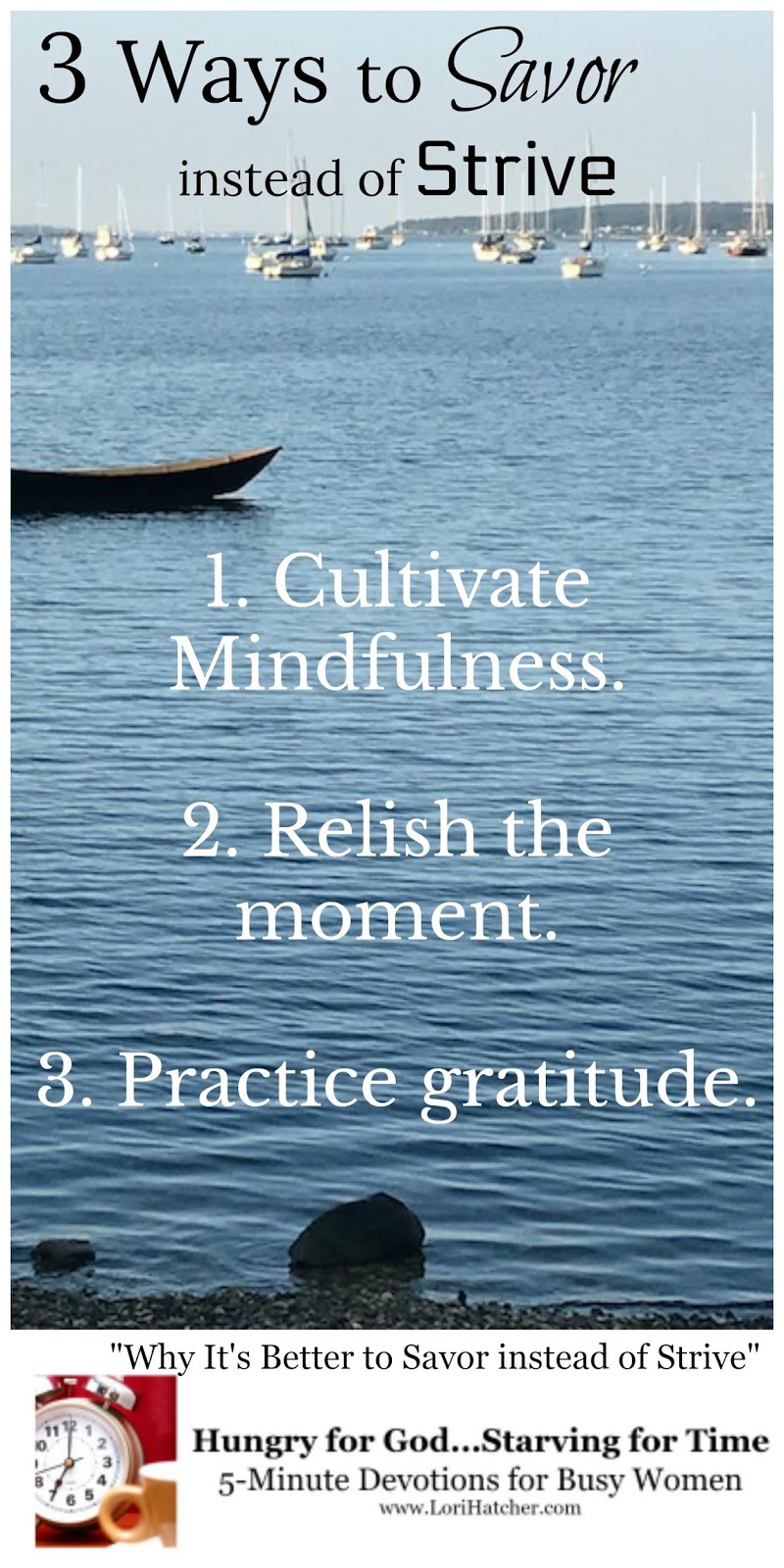 1. Cultivate mindfulness.
 Psychology Today defines mindfulness as “a state of active, open attention on the present. . . . Instead of letting your life pass you by, mindfulness means living in the moment and awakening to your current experience, rather than dwelling on the past or anticipating the future.”
Although Buddism, Taoism, and a number of other religions make mindfulness a foundational pillar, the concept originates with the God of the Bible. Listen to how the psalmist prays in Psalm 90:12: “Teach us to number our days aright, that we may gain a heart of wisdom.”
2. Relish the moment.
The Psalmist understood this when he penned the challenge, “Taste and see that the Lord is good.” When we relish and enjoy what’s happening right here, right now, we begin to experience an increase in positive emotions like happiness, joy, and contentment and a decrease in negative ones.
3. Practice gratitude.
The Fox News health article, “Research Shows Grateful People Are Healthier,” says, “A growing body of research suggests that maintaining an attitude of gratitude can improve psychological, emotional and physical well-being. Adults who frequently feel grateful have more energy, more optimism, more social connections and more happiness than those who do not, according to studies conducted over the past decade. They're also less likely to be depressed, envious, greedy or alcoholics. They earn more money, sleep more soundly, exercise more regularly and have greater resistance to viral infections.”
Perhaps this is why 1 Thessalonians 5:18 reminds us, “In everything give thanks.”
There’s nothing wrong with setting goals and being ambitious, but if you find yourself striving and never satisfied, maybe it’s time to rethink your attitude. Cultivating mindfulness, relishing the moment, and practicing gratitude can help you live fully in the goodness of God today.
“This is the day the Lord has made,” the psalmist exhorts us. “We will be glad and rejoice in it.”
Now it’s your turn. Is it hard for you to find the balance between living in the moment and planning for the future? What helps you savor instead of strive? Leave a comment below and share your thoughts.
I'm excited to share "6 Reasons Homeschool Moms Quit and How to Avoid Them" with the lovely ladies of Herald 5 this evening, Monday, October 2, at 7 pm. If you're a homeschooling mom in need of encouragement, and you live within driving distance of Columbia, please join us.
Location: Three Rivers Baptist Church's LifeHouse building, 7452 Broad River Rd., Irmo, SC
If you enjoyed this post, why not subscribe? I'll send you twice-weekly 5-minute devotions to help nourish your soul.
Because women need to connect with God in the craziness of life.
Enter your email address and VALIDATE the Feedburner email sent to your inbox.
Delivered by FeedBurner
If this post was meaningful to you, would you consider sharing it with a friend by clicking on one of the buttons below? Did you know you can receive bi-weekly Hungry for God posts sent directly to your email inbox? Visit http://www.lori-benotweary.blogspot.com and click on the link in the right hand corner to Subscribe Via Email.
Copyright 2012 by Lori Hatcher
September 27, 2017
The Only Imperfection in Heaven
Life has a tendency to beat us up. People wound us. Health challenges cripple us. Circumstances leave us battered and bruised. Perhaps this is why my pastor/husband’s statement one Sunday morning echoed in my ears long after he’d moved on to another point in his sermon:
“The only imperfections in heaven are Jesus’ scars.”
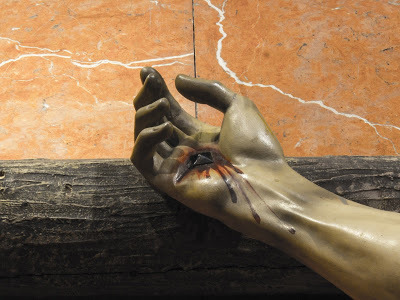 Remember Jesus, in his resurrected body, appearing before the doubting disciple Thomas? He invited him, "Put your finger here; see my hands. Reach out your hand and put it into my side. Stop doubting and believe” (John 20:27).
This same Jesus, in a body of supernatural human flesh, walked and talked with his disciples for 40 days before he ascended into heaven, carrying with him the nail holes in his hands and feet and the gash from the spear in his side.
Profound in its exclusivity, this statement, by omission, reveals a great and precious truth:
 If Jesus’ scars are the only imperfections in heaven, then when our turn comes to depart this earth, we will shed the wounds of life like the leathery skin of a reptile, empty and unneeded, because all things will have become new.
That broken heart? Whole again.
That sick body? Healed.
That depressed mind? Tormented no more.
Those thousand sleepless nights? Resting quietly in the arms of the Savior.
The wounds of persecution? Erased.
 Jesus, the one who was pierced for our transgressions and crushed for our iniquities, whose punishment brought us peace, and by whose wounds we were healed bears our scars so we won’t have to (Isa. 53:5).
And one day soon, “he will wipe every tear from (our) eyes. There will be no more death or mourning or crying or pain, for the old order of things has passed away."
"I am making everything new!" he says. "Write this down, for these words are trustworthy and true." (Rev. 21:4-5).
The apostle Paul understood this. In Romans 8:18 and 21 he said, “I consider that our present sufferings are not worth comparing with the glory that will be revealed in us. . . . For the creation itself will be liberated from its bondage to decay and brought into the glorious freedom of the children of God.”
No scars. No SCARS. NO SCARS!
But until then, we place our battered and bruised selves into the hands of the One who died for us and wait in hope and trust. We say with Paul, “I consider everything a loss compared to the surpassing greatness of knowing Christ Jesus my Lord, for whose sake I have lost all things. I consider them rubbish, that I may gain Christ and be found in him, not having a righteousness of my own that comes from the law, but that which is through faith in Christ – the righteousness that comes from God and is by faith.
“I want to know Christ and the power of his resurrection and the fellowship of sharing in his sufferings, becoming like him in his death, and so, somehow, to attain to the resurrection from the dead” (Phil. 3:8-11).
If you’re feeling the pain of your scars and the angst of living in this sin-sick world, take heart. This life is but a vapor. But the next one is forever.
And in heaven, the only imperfections will be the scars of Jesus.
Now it’s your turn. Which precious truths of heaven comfort you? Leave a comment below and share your thoughts.
If you enjoyed this post, why not subscribe? I'll send you twice-weekly 5-minute devotions to help nourish your soul.
Because women need to connect with God in the craziness of life.
Enter your email address and VALIDATE the Feedburner email sent to your inbox.
Delivered by FeedBurner
If this post was meaningful to you, would you consider sharing it with a friend by clicking on one of the buttons below? Did you know you can receive bi-weekly Hungry for God posts sent directly to your email inbox? Visit http://www.lori-benotweary.blogspot.com and click on the link in the right hand corner to Subscribe Via Email.
Copyright 2012 by Lori Hatcher
“The only imperfections in heaven are Jesus’ scars.”
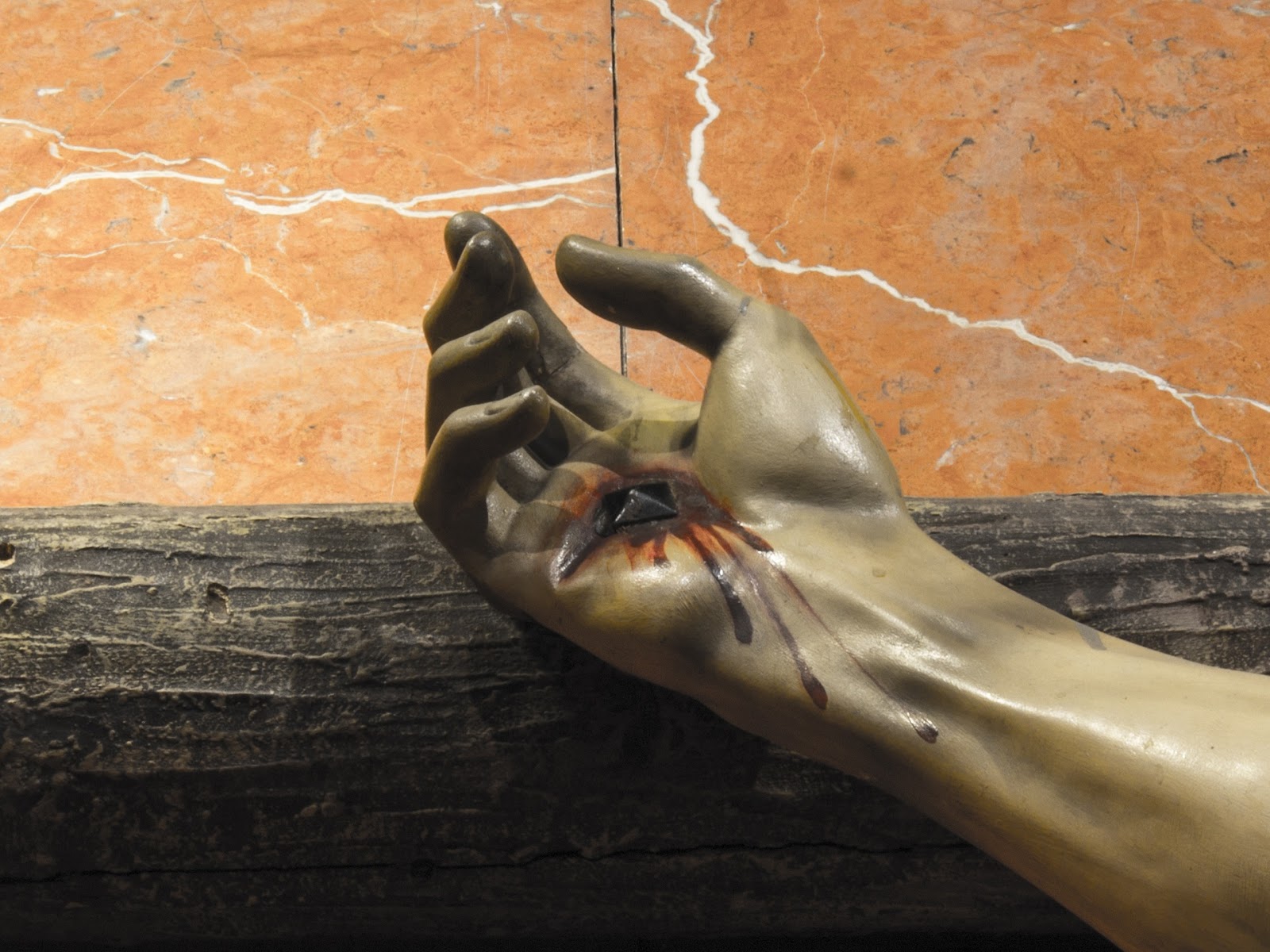 Remember Jesus, in his resurrected body, appearing before the doubting disciple Thomas? He invited him, "Put your finger here; see my hands. Reach out your hand and put it into my side. Stop doubting and believe” (John 20:27).
This same Jesus, in a body of supernatural human flesh, walked and talked with his disciples for 40 days before he ascended into heaven, carrying with him the nail holes in his hands and feet and the gash from the spear in his side.
Profound in its exclusivity, this statement, by omission, reveals a great and precious truth:
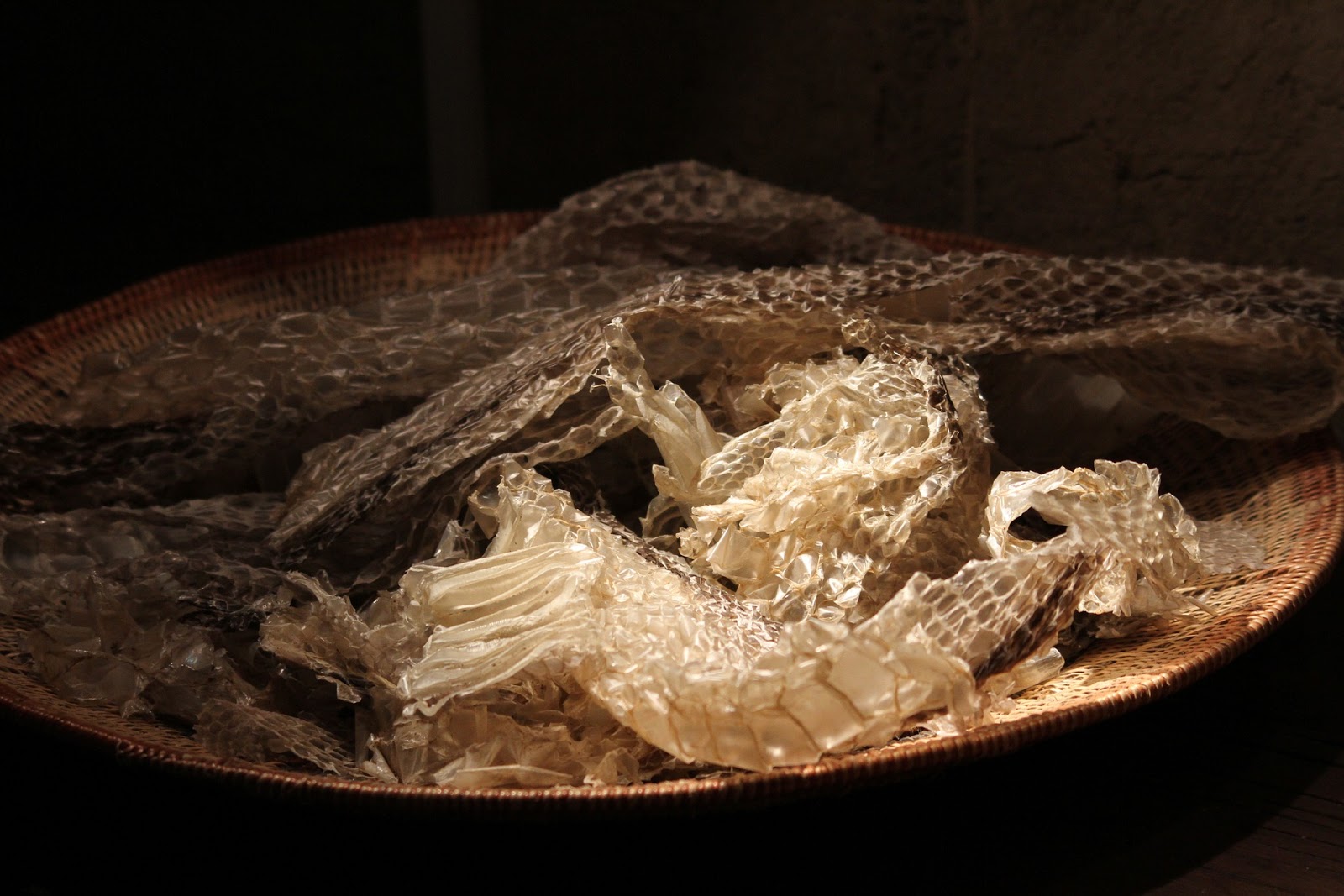 If Jesus’ scars are the only imperfections in heaven, then when our turn comes to depart this earth, we will shed the wounds of life like the leathery skin of a reptile, empty and unneeded, because all things will have become new.
 That broken heart? Whole again.
That sick body? Healed.
That depressed mind? Tormented no more.
Those thousand sleepless nights? Resting quietly in the arms of the Savior.
The wounds of persecution? Erased.
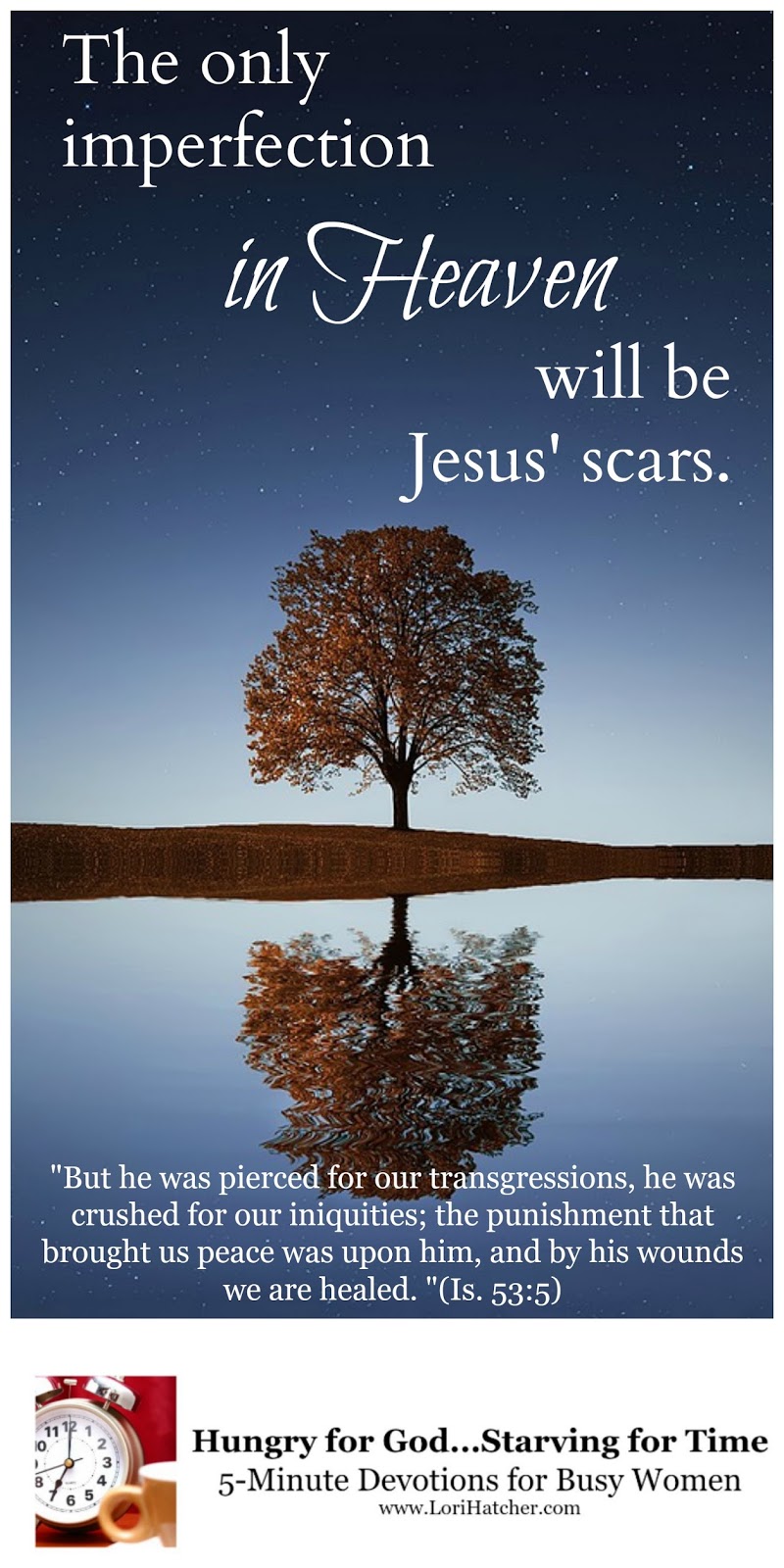 Jesus, the one who was pierced for our transgressions and crushed for our iniquities, whose punishment brought us peace, and by whose wounds we were healed bears our scars so we won’t have to (Isa. 53:5).
 And one day soon, “he will wipe every tear from (our) eyes. There will be no more death or mourning or crying or pain, for the old order of things has passed away."
"I am making everything new!" he says. "Write this down, for these words are trustworthy and true." (Rev. 21:4-5).
The apostle Paul understood this. In Romans 8:18 and 21 he said, “I consider that our present sufferings are not worth comparing with the glory that will be revealed in us. . . . For the creation itself will be liberated from its bondage to decay and brought into the glorious freedom of the children of God.”
No scars. No SCARS. NO SCARS!
But until then, we place our battered and bruised selves into the hands of the One who died for us and wait in hope and trust. We say with Paul, “I consider everything a loss compared to the surpassing greatness of knowing Christ Jesus my Lord, for whose sake I have lost all things. I consider them rubbish, that I may gain Christ and be found in him, not having a righteousness of my own that comes from the law, but that which is through faith in Christ – the righteousness that comes from God and is by faith.
“I want to know Christ and the power of his resurrection and the fellowship of sharing in his sufferings, becoming like him in his death, and so, somehow, to attain to the resurrection from the dead” (Phil. 3:8-11).
If you’re feeling the pain of your scars and the angst of living in this sin-sick world, take heart. This life is but a vapor. But the next one is forever.
And in heaven, the only imperfections will be the scars of Jesus.
Now it’s your turn. Which precious truths of heaven comfort you? Leave a comment below and share your thoughts.
If you enjoyed this post, why not subscribe? I'll send you twice-weekly 5-minute devotions to help nourish your soul.
Because women need to connect with God in the craziness of life.
Enter your email address and VALIDATE the Feedburner email sent to your inbox.
Delivered by FeedBurner
If this post was meaningful to you, would you consider sharing it with a friend by clicking on one of the buttons below? Did you know you can receive bi-weekly Hungry for God posts sent directly to your email inbox? Visit http://www.lori-benotweary.blogspot.com and click on the link in the right hand corner to Subscribe Via Email.
Copyright 2012 by Lori Hatcher
September 24, 2017
3 Simple Habits to Make Your Marriage Better
Someone once asked Ruth Bell Graham if she ever considered divorcing her world-famous evangelist husband, Billy. “I’ve never considered divorce,” she said once. “Murder, yes, but not divorce.”
 Now that my husband and I have passed our third decade of marriage, young couples sometimes ask what our “secret” is. In the spirit of Ruth Graham’s premise, my husband will sometimes say, “The best way to stay married is not to get divorced.”
Sounds simple, right? No one marries with the intent of divorcing, but I must admit to being very grateful to be where we are today.
God’s grace, a lot of prayer, and a few simple habits have carried us through. If you’re struggling in your marriage or you simply want to shore up an already good relationship, I encourage you to consider adding these habits to your life.
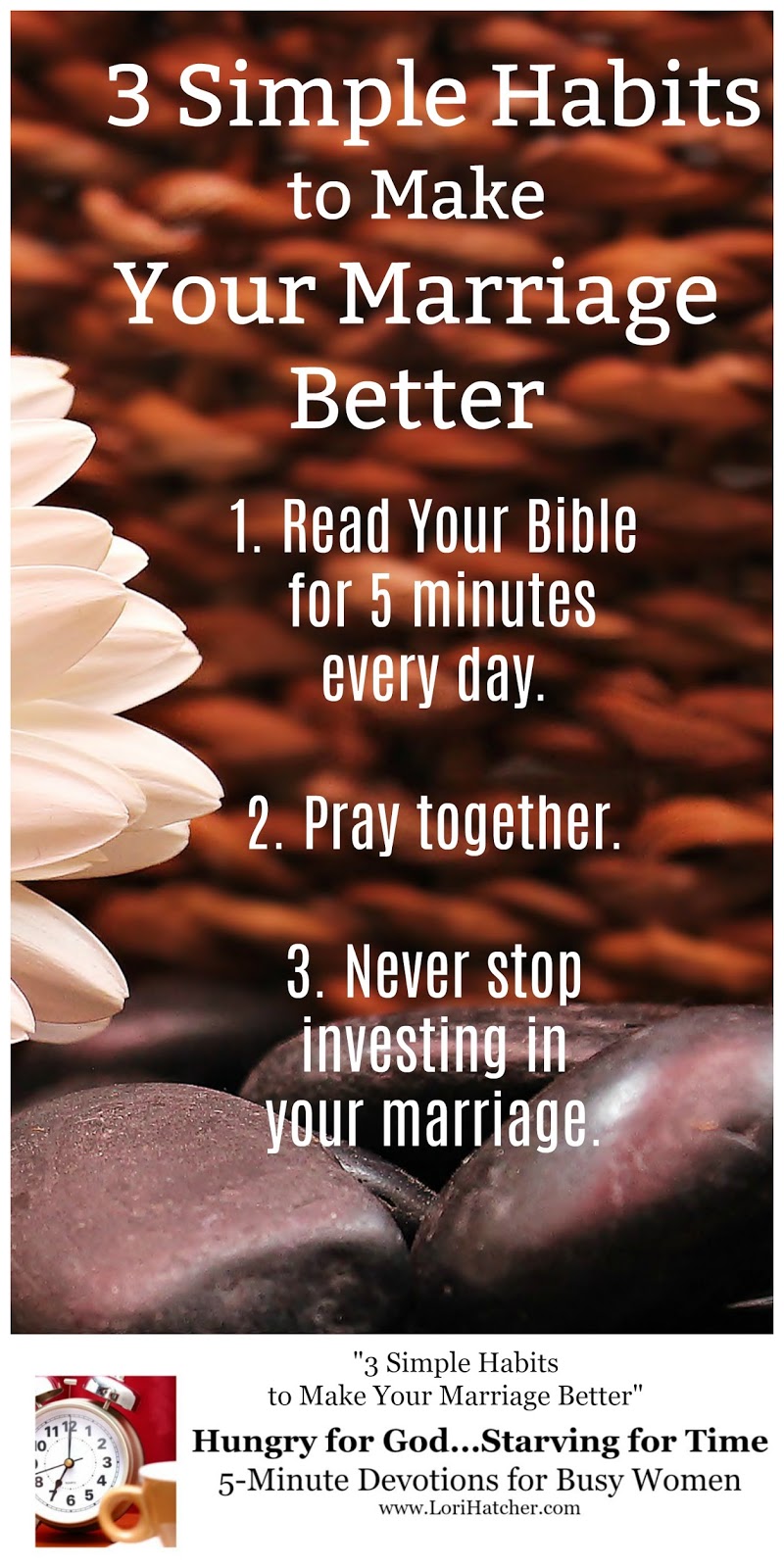
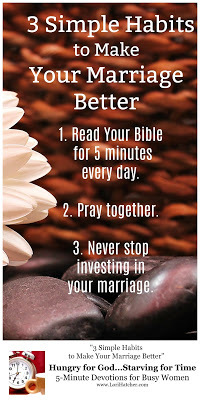 1. Read your Bible for five minutes every day.
Some days God’s Word is the only truth I hear. I’m serious. The news is slanted, people lie, and our culture twists even the most basic truths to advance its agenda. But God’s Word never lies.
It reminds me of who I am in Christ. It challenges me to live in a way that honors God. It rebukes me when I’m selfish, lazy, or downright wicked. It shines a light into the dark corners of my soul and nudges me to clean them out. When I read God’s Word every day, I’m inspired to live like Jesus did. This makes every relationship in my life better, including my marriage.
2. Pray with your spouse every day.
I don’t know when my husband and I began this habit. We found the suggestion in one of the many marriage books we’ve read, and it’s been a good one. Every morning, before we part for the day, we ask each other, “How may I pray for you today?”
My husband might share about a difficult customer he’s going to see or a concern he has with one of his coworkers. I might ask for prayer for a challenging assignment or a hard conversation I have to have with someone. After we’ve shared our requests, we pray aloud for each other. Throughout the day, as the Lord brings the needs to our minds, we pray again.
For a habit that takes less than five minutes, this one accomplishes a lot. First, it cracks the door on what the other is thinking or concerned about as they go into their day. Second, it helps our love grow. You can’t pray for someone without caring for them. As we pray for each other, God knits our hearts together. Third, swapping prayer requests gives us a way to reconnect at the end of the day. Rather than, “How was your day?” “Fine,” we have something specific to ask about. This one point of conversation usually expands to a more detailed recap of the day’s events.
3. Continue to work on your marriage, no matter how long you’ve been together.
For us, this has taken many forms. When our children were young, we made it a priority to go away for a weekend, without the children, at least once a year. Sometimes we’ll go on an organized marriage retreat, and other times we just get away for rest, relaxation, and reconnection.
A few years ago, I interviewed family psychologist Gary Chapman. In the interview he mentioned that the second highest divorce rate occurs during the empty nest years. I found this terribly alarming, because that’s the stage we’re in.
To combat this, we invited a small group of like-minded couples who are also committed to work on their marriages to meet for Bible study. Every spring and fall we pick a new study on marriage and go through it together.
Another easy way we’ve worked on our marriage is by reading from a devotional book every day. Around year ten, our marriage got really stale. We weren’t fighting; we were just bored and blah. More like roommates than lovers, we knew something had to change if our marriage was going to go the distance.
I suspected that if our hearts were connected spiritually, the love connection would likely follow, so I proposed a new idea to my husband. “Would you be willing to have devotions together in the morning if I get up with you in the mornings?” He said, yes, and we were off.
While he ate the simple breakfast I’d fixed, I’d read a brief devotion from a couple’s devotional book. Then we’d exchange prayer requests and pray for each other. It took less than 10 minutes, but it set the tone for the day. Some devotional books would ask a question or two that we’d answer if we had times. Other days we’d just think on what we’d read as we headed off into our day.
I could list other things we’ve done over the years that have strengthened our marriage, but these three simple habits are an excellent beginning.
In the same interview that gave us Ruth Bell Graham’s humorous quote about divorce and murder, her husband, Billy, had something to say. Calling their relationship “a romance,” he said, “We have a better relationship now. We look into each other’s eyes and touch each other. It gets better as you get older. The secret is the Lord Jesus Christ–to have Him in the center of our lives.”
Whether you’re newly married, have a decade under your belt, or have been married longer than you were single, it’s always a good time to invest in one of the most important relationships of your life.
Now it’s your turn. What habits have strengthened your marriage? Leave a comment below and share your ideas.
If you enjoyed this post, why not subscribe? I'll send you twice-weekly 5-minute devotions to help nourish your soul.
Because women need to connect with God in the craziness of life.
Enter your email address and VALIDATE the Feedburner email sent to your inbox.
Delivered by FeedBurner
If this post was meaningful to you, would you consider sharing it with a friend by clicking on one of the buttons below? Did you know you can receive bi-weekly Hungry for God posts sent directly to your email inbox? Visit http://www.lori-benotweary.blogspot.com and click on the link in the right hand corner to Subscribe Via Email.
Copyright 2012 by Lori Hatcher
 Now that my husband and I have passed our third decade of marriage, young couples sometimes ask what our “secret” is. In the spirit of Ruth Graham’s premise, my husband will sometimes say, “The best way to stay married is not to get divorced.”
 Sounds simple, right? No one marries with the intent of divorcing, but I must admit to being very grateful to be where we are today.
God’s grace, a lot of prayer, and a few simple habits have carried us through. If you’re struggling in your marriage or you simply want to shore up an already good relationship, I encourage you to consider adding these habits to your life.
 1. Read your Bible for five minutes every day.
 Some days God’s Word is the only truth I hear. I’m serious. The news is slanted, people lie, and our culture twists even the most basic truths to advance its agenda. But God’s Word never lies.
It reminds me of who I am in Christ. It challenges me to live in a way that honors God. It rebukes me when I’m selfish, lazy, or downright wicked. It shines a light into the dark corners of my soul and nudges me to clean them out. When I read God’s Word every day, I’m inspired to live like Jesus did. This makes every relationship in my life better, including my marriage.
2. Pray with your spouse every day.
I don’t know when my husband and I began this habit. We found the suggestion in one of the many marriage books we’ve read, and it’s been a good one. Every morning, before we part for the day, we ask each other, “How may I pray for you today?”
My husband might share about a difficult customer he’s going to see or a concern he has with one of his coworkers. I might ask for prayer for a challenging assignment or a hard conversation I have to have with someone. After we’ve shared our requests, we pray aloud for each other. Throughout the day, as the Lord brings the needs to our minds, we pray again.
For a habit that takes less than five minutes, this one accomplishes a lot. First, it cracks the door on what the other is thinking or concerned about as they go into their day. Second, it helps our love grow. You can’t pray for someone without caring for them. As we pray for each other, God knits our hearts together. Third, swapping prayer requests gives us a way to reconnect at the end of the day. Rather than, “How was your day?” “Fine,” we have something specific to ask about. This one point of conversation usually expands to a more detailed recap of the day’s events.
3. Continue to work on your marriage, no matter how long you’ve been together.
For us, this has taken many forms. When our children were young, we made it a priority to go away for a weekend, without the children, at least once a year. Sometimes we’ll go on an organized marriage retreat, and other times we just get away for rest, relaxation, and reconnection.
A few years ago, I interviewed family psychologist Gary Chapman. In the interview he mentioned that the second highest divorce rate occurs during the empty nest years. I found this terribly alarming, because that’s the stage we’re in.
To combat this, we invited a small group of like-minded couples who are also committed to work on their marriages to meet for Bible study. Every spring and fall we pick a new study on marriage and go through it together.
Another easy way we’ve worked on our marriage is by reading from a devotional book every day. Around year ten, our marriage got really stale. We weren’t fighting; we were just bored and blah. More like roommates than lovers, we knew something had to change if our marriage was going to go the distance.
I suspected that if our hearts were connected spiritually, the love connection would likely follow, so I proposed a new idea to my husband. “Would you be willing to have devotions together in the morning if I get up with you in the mornings?” He said, yes, and we were off.
While he ate the simple breakfast I’d fixed, I’d read a brief devotion from a couple’s devotional book. Then we’d exchange prayer requests and pray for each other. It took less than 10 minutes, but it set the tone for the day. Some devotional books would ask a question or two that we’d answer if we had times. Other days we’d just think on what we’d read as we headed off into our day.
I could list other things we’ve done over the years that have strengthened our marriage, but these three simple habits are an excellent beginning.
In the same interview that gave us Ruth Bell Graham’s humorous quote about divorce and murder, her husband, Billy, had something to say. Calling their relationship “a romance,” he said, “We have a better relationship now. We look into each other’s eyes and touch each other. It gets better as you get older. The secret is the Lord Jesus Christ–to have Him in the center of our lives.”
Whether you’re newly married, have a decade under your belt, or have been married longer than you were single, it’s always a good time to invest in one of the most important relationships of your life.
Now it’s your turn. What habits have strengthened your marriage? Leave a comment below and share your ideas.
If you enjoyed this post, why not subscribe? I'll send you twice-weekly 5-minute devotions to help nourish your soul.
Because women need to connect with God in the craziness of life.
Enter your email address and VALIDATE the Feedburner email sent to your inbox.
Delivered by FeedBurner
If this post was meaningful to you, would you consider sharing it with a friend by clicking on one of the buttons below? Did you know you can receive bi-weekly Hungry for God posts sent directly to your email inbox? Visit http://www.lori-benotweary.blogspot.com and click on the link in the right hand corner to Subscribe Via Email.
Copyright 2012 by Lori Hatcher
September 20, 2017
Why "I'm Sorry" Isn't Enough - What True Repentance Looks LIke
 “You two stop arguing and tell each other you’re sorry,” Mom would yell to my sister and me. Crossing my arms and glaring at her, I’d squeeze out the required apology.
 “Sorry.”
“Sorry,” my sister would mumble back.
But as soon as Mom’s attention was elsewhere, we’d stick out our tongues and stomp off. Anyone watching would agree that although my sister and I had spoken the right words, our actions didn’t back them up. The sin that caused the conflict continued to dwell safely in our unrepentant hearts. And without repentance, we had no real change.
The books of First and Second Corinthians paint a much different picture, albeit of a more serious sin than the childhood spats between my sister and me. First Corinthians 5 tells us that members of the church were engaging in sexual immorality. And not just your garden variety of immorality, but “such sexual immorality as is not even named among the Gentiles.”
The MacArthur Study Bible adds this commentary: “This sin was so vile that even the church’s pagan neighbors were doubtless scandalized by it.” Now if the pagans are scandalized by it, you know it’s bad. Sadly, neither the sinning members nor the church took the sin seriously.
With apostolic authority, Paul challenged the offending members and the church. The book of Second Corinthians describes the happy ending – all involved repented and were restored. Unlike my sister and me, however, the offending members of the Corinthian church displayed characteristics of true repentance.
 Let’s look at them in Second Corinthians 7:9-11.
 Godly sorrow – Because repentance, as MacArthur defines it, “refers to the desire to turn from one’s sin and restore one’s relationship with God,” godly sorrow is a necessary component. Different from regret, which often focuses on wishing we hadn’t sinned because we got in trouble, godly sorrow springs from the conviction of the Holy Spirit that our sin has offended God himself.
Diligence – This is the immediate desire to eagerly pursue righteous living.
A Desire to Clear Oneself – Not to be confused with trying to avoid punishment, this refers to the repentant sinner’s yearning to regain his godly reputation, earn back the spiritual trust they’ve lost, and no longer bring shame to the name of Christ.
Indignation – In contrast to loving the sin they’ve committed, those who genuinely repent feel anger at the lies of the world, the flesh, and the devil that enticed them to sin.
Fear – Fear is appropriate when one has sinned grievously against God. As Isaiah experienced when he saw God in all his glory, we should be frightened to stand before God with sin in our lives. Those who haven’t called upon Christ for salvation are one breath away from spending eternity in Hell. Those who have a relationship with Christ are in danger of God’s discipline. Either prospect should invoke fear.
Vehement Desire – Once we’ve restored our relationship with God through confession and repentance, we must then work to restore the relationships with others that we’ve damaged by our sin. Vehement desire describes a passion to do whatever it takes to make things right.
Zeal – Zeal is the dynamic energy that commits itself to maintaining purity and warning others about sin’s effects. As a testimony of God’s ability to bring beauty from ashes, sometimes those most wounded by a particular sin become the greatest champions against it.
Vindication – No longer committed to protecting themselves from the penalty of their actions, repentant sinners desire vindication against the effects of their sin, no matter what it costs them. The dishonest tax collector, Zacchaeus, in Luke 19, is a beautiful example of this. When he placed his faith in Christ, he confessed his sin and expressed his desire to “restore three-fold” whatever he had wrongfully taken.
Many people experience sorrow and regret over their wrong actions, but those who genuinely repent always demonstrate some of these biblical characteristics. Saying “I’m sorry,” whether we say it to God or to one another, just isn’t enough. To be true and life-changing, repentance requires that we confess and forsake our sin and call upon God to help us banish it from our lives forever.
If you enjoyed this post, why not subscribe? I'll send you twice-weekly 5-minute devotions to help nourish your soul.
Because women need to connect with God in the craziness of life.
Enter your email address and VALIDATE the Feedburner email sent to your inbox.
Delivered by FeedBurner
If this post was meaningful to you, would you consider sharing it with a friend by clicking on one of the buttons below? Did you know you can receive bi-weekly Hungry for God posts sent directly to your email inbox? Visit http://www.lori-benotweary.blogspot.com and click on the link in the right hand corner to Subscribe Via Email.
Copyright 2012 by Lori Hatcher
September 17, 2017
Check Your Blind Spot -- Seeing Sin Before It Wrecks Your Life
The guy in the SUV never saw it coming. But I did.
 Stopped in traffic in the far right lane on a busy 4-lane highway, I did what my driving instructor had taught me – put your left turn signal on, watch in your side mirror for traffic in the next lane to clear, check your blind spot, then prepare to pull out.
The guy behind me did the same – minus one very important step – he failed to check his blind spot. The bright green porta-potty truck (complete with a sloshing tank and a porta-potty strapped to the back) had almost passed him when he pulled into its path. I watched it happen in my mirror like a slow-motion crash scene in a low budget Hollywood movie. There was nothing I could do to stop it.
“No. No. NO!”
CRASH!
 The forward motion of the truck knocked the SUV back into its lane and into the rear of my Toyota. In three long seconds it was over. Two cars totaled and nary a scratch on the porta-potty truck. We were all thankful it didn’t lose its load.
Later the driver of the SUV told the police officer, “I guess it was in my blind spot. I never saw it coming.” Two weeks later, the driver’s words still ring in my ears. Instead of thinking about wrecked cars, however, I’m thinking about wrecked lives, because we all have blind spots.
By definition a blind spot is an area where a person's view is obstructed. Collins dictionary gets more specific. “If you say that someone has a blind spot about something, you mean that they seem to be unable to understand it or to see how important it is.”
Not limited to the scene in a rear-view mirror, our blind spots pop up in different areas of our lives. They limit our ability to make right choices and endanger our physical, financial, relational, and spiritual lives.
Some of us have blind spots concerning our physical health. We fail to see (or choose to ignore) our increasing weight, decrease in stamina, or rising blood sugar or cholesterol numbers. We slip into poor eating habits or turn a blind eye to the value of exercise. Short-term medication to get us through a bad spot becomes long-term therapy with no exit plan.
Others suffer because of financial blind spots. We ignore mounting debt and pay only the minimum while continuing to borrow money. Or turn our backs on the wise principles of saving and charitable giving. Or continue to “loan” money to people who never pay it back.
Sometimes we struggle with relational blind spots. We fail to see the needs of others and find ourselves in a crisis we never saw coming. Or continue to do the same thing the same way and wonder why we don’t get different results. We lose our ability to distinguish between helping and enabling, or we give others too much power, allowing them to make us feel inadequate, inferior, and insecure.
Finally, our spiritual life is one of the greatest areas for blind spots. Relationships become idolatrous when they take first place over our relationship with God. Complacency and laziness dull our desire to pray, serve, and worship, leaving our spiritual lives lukewarm and ineffective. Society’s siren song of love apart from truth causes us to compromise on foundational biblical principles.
It’s not enough just to be aware of blind spots, we have to take action against them.
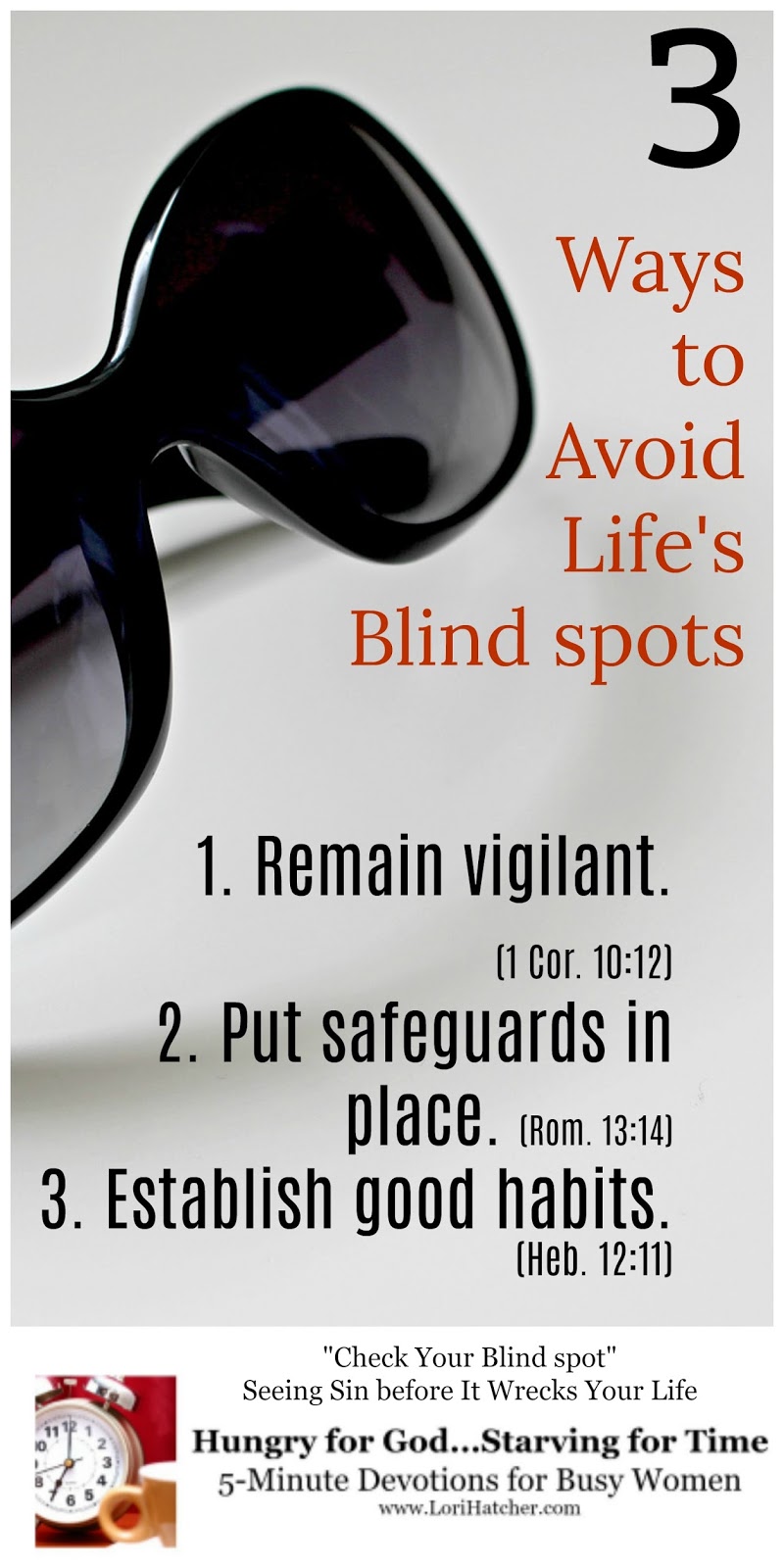
 Here are three ways we can protect ourselves:
1. Remain vigilant. Never think you’re too healthy, financially smart, relationally sound, or spiritually mature to be blinded.
“So, if you think you are standing firm, be careful that you don't fall!” (1 Cor. 10:12).
2. Put safeguards in place. Alone or with your spouse, establish ground rules for the important areas of your life. Decide in advance how you’re going to act in different scenarios. God always promises to make a way to escape temptation, but even better than escaping is is avoiding it all together.
“But put on the Lord Jesus Christ, and make no provision for the flesh in regard to its lusts” (Romans 13:14).
3. Maintain good habits. What we do regularly charts the course of our lives, good or bad. Here are some of mine: Physical – I exercise for at least 30 minutes a day. Financial – we pay off our credit card every month. Relational – we've agreed divorce is not an option. We do what it takes to work it out. Spiritual – I make church attendance and daily Bible reading a priority.
“No discipline seems pleasant at the time, but painful. Later on, however, it produces a harvest of righteousness and peace for those who have been trained by it” (Heb. 12:11).
If the driver who hit me had been watching his blind spot, he wouldn’t have wrecked his car or mine. If we stay alert for physical, financial, relational, and spiritual blind spots, we can avoid wrecking our lives and the lives of those around us. Even better, we can honor and glorify God and point others to him.
Now it’s your turn. Which blind spots to you struggle with the most? How do you guard against them? Leave a comment below and share your thoughts.
If you enjoyed this post, why not subscribe? I'll send you twice-weekly 5-minute devotions to help nourish your soul.
Because women need to connect with God in the craziness of life.
Enter your email address and VALIDATE the Feedburner email sent to your inbox.
Delivered by FeedBurner
If this post was meaningful to you, would you consider sharing it with a friend by clicking on one of the buttons below? Did you know you can receive bi-weekly Hungry for God posts sent directly to your email inbox? Visit http://www.lori-benotweary.blogspot.com and click on the link in the right hand corner to Subscribe Via Email.
Copyright 2012 by Lori Hatcher
 Stopped in traffic in the far right lane on a busy 4-lane highway, I did what my driving instructor had taught me – put your left turn signal on, watch in your side mirror for traffic in the next lane to clear, check your blind spot, then prepare to pull out.
 The guy behind me did the same – minus one very important step – he failed to check his blind spot. The bright green porta-potty truck (complete with a sloshing tank and a porta-potty strapped to the back) had almost passed him when he pulled into its path. I watched it happen in my mirror like a slow-motion crash scene in a low budget Hollywood movie. There was nothing I could do to stop it.
“No. No. NO!”
CRASH!
 The forward motion of the truck knocked the SUV back into its lane and into the rear of my Toyota. In three long seconds it was over. Two cars totaled and nary a scratch on the porta-potty truck. We were all thankful it didn’t lose its load.
 Later the driver of the SUV told the police officer, “I guess it was in my blind spot. I never saw it coming.” Two weeks later, the driver’s words still ring in my ears. Instead of thinking about wrecked cars, however, I’m thinking about wrecked lives, because we all have blind spots.
By definition a blind spot is an area where a person's view is obstructed. Collins dictionary gets more specific. “If you say that someone has a blind spot about something, you mean that they seem to be unable to understand it or to see how important it is.”
Not limited to the scene in a rear-view mirror, our blind spots pop up in different areas of our lives. They limit our ability to make right choices and endanger our physical, financial, relational, and spiritual lives.
Some of us have blind spots concerning our physical health. We fail to see (or choose to ignore) our increasing weight, decrease in stamina, or rising blood sugar or cholesterol numbers. We slip into poor eating habits or turn a blind eye to the value of exercise. Short-term medication to get us through a bad spot becomes long-term therapy with no exit plan.
Others suffer because of financial blind spots. We ignore mounting debt and pay only the minimum while continuing to borrow money. Or turn our backs on the wise principles of saving and charitable giving. Or continue to “loan” money to people who never pay it back.
Sometimes we struggle with relational blind spots. We fail to see the needs of others and find ourselves in a crisis we never saw coming. Or continue to do the same thing the same way and wonder why we don’t get different results. We lose our ability to distinguish between helping and enabling, or we give others too much power, allowing them to make us feel inadequate, inferior, and insecure.
Finally, our spiritual life is one of the greatest areas for blind spots. Relationships become idolatrous when they take first place over our relationship with God. Complacency and laziness dull our desire to pray, serve, and worship, leaving our spiritual lives lukewarm and ineffective. Society’s siren song of love apart from truth causes us to compromise on foundational biblical principles.
It’s not enough just to be aware of blind spots, we have to take action against them.
 Here are three ways we can protect ourselves:
 1. Remain vigilant. Never think you’re too healthy, financially smart, relationally sound, or spiritually mature to be blinded.
“So, if you think you are standing firm, be careful that you don't fall!” (1 Cor. 10:12).
2. Put safeguards in place. Alone or with your spouse, establish ground rules for the important areas of your life. Decide in advance how you’re going to act in different scenarios. God always promises to make a way to escape temptation, but even better than escaping is is avoiding it all together.
“But put on the Lord Jesus Christ, and make no provision for the flesh in regard to its lusts” (Romans 13:14).
3. Maintain good habits. What we do regularly charts the course of our lives, good or bad. Here are some of mine: Physical – I exercise for at least 30 minutes a day. Financial – we pay off our credit card every month. Relational – we've agreed divorce is not an option. We do what it takes to work it out. Spiritual – I make church attendance and daily Bible reading a priority.
“No discipline seems pleasant at the time, but painful. Later on, however, it produces a harvest of righteousness and peace for those who have been trained by it” (Heb. 12:11).
If the driver who hit me had been watching his blind spot, he wouldn’t have wrecked his car or mine. If we stay alert for physical, financial, relational, and spiritual blind spots, we can avoid wrecking our lives and the lives of those around us. Even better, we can honor and glorify God and point others to him.
Now it’s your turn. Which blind spots to you struggle with the most? How do you guard against them? Leave a comment below and share your thoughts.
If you enjoyed this post, why not subscribe? I'll send you twice-weekly 5-minute devotions to help nourish your soul.
Because women need to connect with God in the craziness of life.
Enter your email address and VALIDATE the Feedburner email sent to your inbox.
Delivered by FeedBurner
If this post was meaningful to you, would you consider sharing it with a friend by clicking on one of the buttons below? Did you know you can receive bi-weekly Hungry for God posts sent directly to your email inbox? Visit http://www.lori-benotweary.blogspot.com and click on the link in the right hand corner to Subscribe Via Email.
Copyright 2012 by Lori Hatcher
September 13, 2017
Conformed or Transformed? Which Are You?
“Squish it in like this,” I instructed Lauren, my 3-year-old granddaughter, “and then press the lever hard. See how it comes out the other end in a big, long tube.”
 I was showing Lauren how to use a play dough extruder – the toy that allows you to stuff a wad of play dough in one end and squeeze it out into a variety of shapes. Following my instructions, she pressed out a long, star-shaped log that she sliced into ten identical pieces.
At the other end of the table, my husband was rolling dough with his hands to form more unique creations. So far he’d made a snowman with a hat and scarf, a man’s face, and a family of rabbits.
The contrast between Lauren’s identical stars and my husband’s one-of-a-kind creations reminded me of Romans 12:2, "Do not conform any longer to the pattern of this world, but be transformed by the renewing of your mind."
So often the world, like the play dough extruder, tries to conform us. It attempts to stuff us into its mold, apply the pressure of societal and political correctness, and squeeze out someone that looks, acts, and thinks exactly like everyone else.
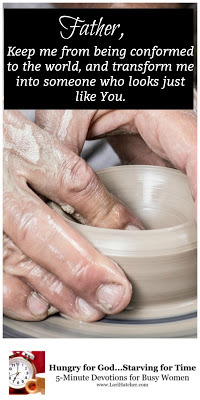 In contrast, God seeks to transform us. With loving care he applies the truth of his Word to gently shape us into the best possible version of ourselves – one that looks and acts a lot like his son, Jesus.
Which would you rather be? An identical replica conformed to this world or a unique creation transformed into God’s image?
Renewing our minds daily with God’s Word helps us position ourselves to be transformed instead of conformed. If you're feeling the press of the world today, why not spend some time in the Bible?
Father, I invite you to lovingly transform me into the image of your Son, Jesus. Mold me, shape me, and use me for your glory.
If you enjoyed this post, why not subscribe? I'll send you twice-weekly 5-minute devotions to help nourish your soul.
Because women need to connect with God in the craziness of life.
Enter your email address and VALIDATE the Feedburner email sent to your inbox.
Delivered by FeedBurner
If this post was meaningful to you, would you consider sharing it with a friend by clicking on one of the buttons below? Did you know you can receive bi-weekly Hungry for God posts sent directly to your email inbox? Visit http://www.lori-benotweary.blogspot.com and click on the link in the right hand corner to Subscribe Via Email.
Copyright 2012 by Lori Hatcher
 I was showing Lauren how to use a play dough extruder – the toy that allows you to stuff a wad of play dough in one end and squeeze it out into a variety of shapes. Following my instructions, she pressed out a long, star-shaped log that she sliced into ten identical pieces.
At the other end of the table, my husband was rolling dough with his hands to form more unique creations. So far he’d made a snowman with a hat and scarf, a man’s face, and a family of rabbits.
The contrast between Lauren’s identical stars and my husband’s one-of-a-kind creations reminded me of Romans 12:2, "Do not conform any longer to the pattern of this world, but be transformed by the renewing of your mind."
So often the world, like the play dough extruder, tries to conform us. It attempts to stuff us into its mold, apply the pressure of societal and political correctness, and squeeze out someone that looks, acts, and thinks exactly like everyone else.
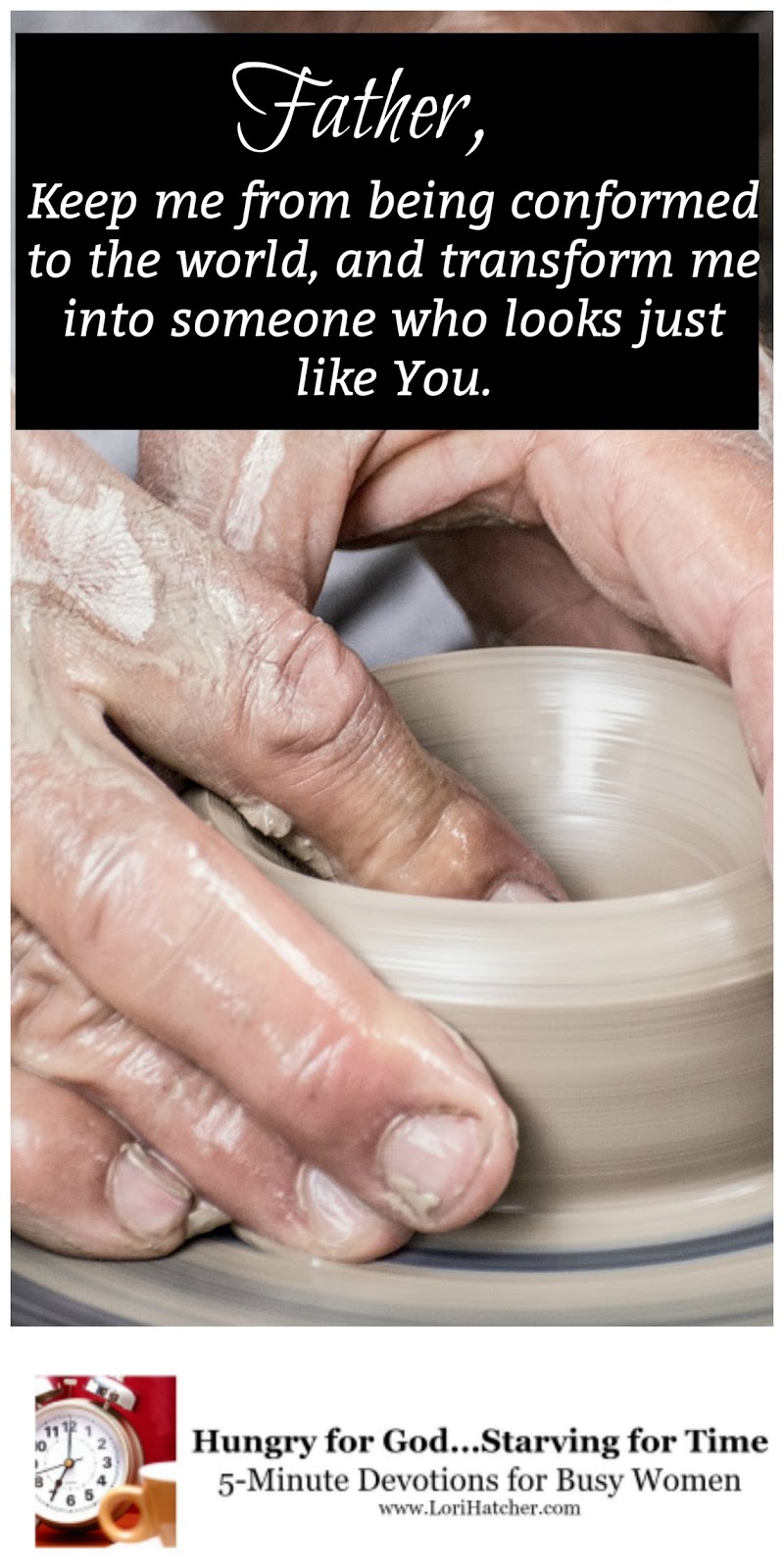 In contrast, God seeks to transform us. With loving care he applies the truth of his Word to gently shape us into the best possible version of ourselves – one that looks and acts a lot like his son, Jesus.
 Which would you rather be? An identical replica conformed to this world or a unique creation transformed into God’s image?
Renewing our minds daily with God’s Word helps us position ourselves to be transformed instead of conformed. If you're feeling the press of the world today, why not spend some time in the Bible?
Father, I invite you to lovingly transform me into the image of your Son, Jesus. Mold me, shape me, and use me for your glory.
If you enjoyed this post, why not subscribe? I'll send you twice-weekly 5-minute devotions to help nourish your soul.
Because women need to connect with God in the craziness of life.
Enter your email address and VALIDATE the Feedburner email sent to your inbox.
Delivered by FeedBurner
If this post was meaningful to you, would you consider sharing it with a friend by clicking on one of the buttons below? Did you know you can receive bi-weekly Hungry for God posts sent directly to your email inbox? Visit http://www.lori-benotweary.blogspot.com and click on the link in the right hand corner to Subscribe Via Email.
Copyright 2012 by Lori Hatcher
September 9, 2017
Living in the Cone of Uncertainty
For five days now I’ve been living in “the cone of uncertainty.” In the path of Hurricane Irma, my fellow South Carolinians and I have been glued to the National Weather Service updates. We want to know whether this monster storm is going to smash our homes and drown our state.
As Irma charges across the Atlantic like a fat kid on a diving board, her first cannonball has swamped the tiny islands of Barbuda and Puerto Rico. The Florida Keys are next. Then Miami? Palm Beach? Tampa? It’s the cone of uncertainty.
Spaghetti models wiggle their way from Cuba, to Miami, to Tennessee and all parts in between. The wide path of possibilities have half the South queuing up in long lines at gas stations and grocery stores. The other half has hit the road searching for safety.
We stock our kitchens with enough food to feed the evacuees who have arrived on our doorsteps, while wondering if we’ll have the electricity to refrigerate and cook it. Again, the cone of uncertainty.
We tie down lawn furniture, top off the grill’s propane tank, and eye the stately oaks we normally adore with a wary eye and a fearful glance. Will the roof hold? Will the trees topple? Will the streets flood? Curse that cone of uncertainty.
The irony strikes us – while we prepare for possibly the worst weather of our lives, we enjoy the best weather of the season. Cool nights, low humidity, and clear skies. A breeze whispers in our ears, and we wonder, has it begun? Dogging our steps is the cone of uncertainty.
You might not live in the path of Hurricane Irma, but you may still be experiencing the cone of uncertainty. You might be asking questions like:
Will my marriage survive?
Will my prodigal come home?
Will I find a job? Will my cancer return?
Will I ever get married, have a baby, finish school?
The cone of our uncertainty is as wide and varied as the squiggly spaghetti models. We’re sure God knows the path our lives will take, but wish he’d unfold the map and give us a peek.
How do we cope with life’s cone of uncertainty? The only way is to set our anchor on the bedrock of God’s promises. Here are five of my favorites:
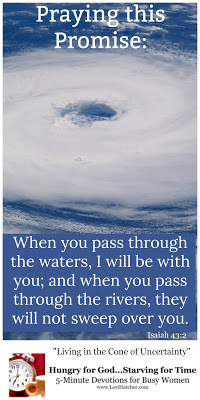
1. Isaiah 43:2: “When you pass through the waters, I will be with you; and when you pass through the rivers, they will not sweep over you. When you walk through the fire, you will not be burned; the flames will not set you ablaze. I will never leave you nor forsake you.”
2. Romans 8:38-39: "For I am convinced that neither death nor life, neither angels nor demons, neither the present nor the future, nor any powers, neither height nor depth, nor anything else in all creation, will be able to separate us from the love of God that is in Christ Jesus our Lord.”
3. Psalm 138:7-8: “Though I walk in the midst of trouble, you preserve my life; you stretch out your hand against the anger of my foes, with your right hand you save me. The LORD will fulfill his purpose for me; your love, O LORD, endures forever . . .”
4. Philippians 4:19: “And my God will meet all your needs according to his glorious riches in Christ Jesus.”
5. Revelation 21:3-5: “And I heard a great voice out of heaven saying, ‘Behold, the tabernacle of God is with men, and he will dwell with them, and they shall be his people, and God himself shall be with them, and be their God. And God shall wipe away all tears from their eyes; and there shall be no more death, neither sorrow, nor crying, neither shall there be any more pain: for the former things are passed away.’ And he that sat upon the throne said,’ Behold, I make all things new. And he said unto me, ‘Write: for these words are true and faithful.’”
Whether your cone of uncertainty involves a hurricane, a husband, or a heartache, God wants to meet you there. He is your anchor. He is your deliverer. He is the rescue boat in the storm. Run to him and find safety.
And if you’re in the path of Hurricane Irma, please know I am praying for you. If you'll leave your name in the comment box, I can pray for you by name.
To remind you that God is in control, here's Ray Stevenson's "Eye of the Storm."
If you're reading by email, click here to see Ray's "Eye of the Storm" music video.
If you enjoyed this post, why not subscribe? I'll send you twice-weekly 5-minute devotions to help nourish your soul.
Because women need to connect with God in the craziness of life.
Enter your email address and VALIDATE the Feedburner email sent to your inbox.
Delivered by FeedBurner
If this post was meaningful to you, would you consider sharing it with a friend by clicking on one of the buttons below? Did you know you can receive bi-weekly Hungry for God posts sent directly to your email inbox? Visit http://www.lori-benotweary.blogspot.com and click on the link in the right hand corner to Subscribe Via Email.
Copyright 2012 by Lori Hatcher
As Irma charges across the Atlantic like a fat kid on a diving board, her first cannonball has swamped the tiny islands of Barbuda and Puerto Rico. The Florida Keys are next. Then Miami? Palm Beach? Tampa? It’s the cone of uncertainty.
Spaghetti models wiggle their way from Cuba, to Miami, to Tennessee and all parts in between. The wide path of possibilities have half the South queuing up in long lines at gas stations and grocery stores. The other half has hit the road searching for safety.
We stock our kitchens with enough food to feed the evacuees who have arrived on our doorsteps, while wondering if we’ll have the electricity to refrigerate and cook it. Again, the cone of uncertainty.
We tie down lawn furniture, top off the grill’s propane tank, and eye the stately oaks we normally adore with a wary eye and a fearful glance. Will the roof hold? Will the trees topple? Will the streets flood? Curse that cone of uncertainty.
The irony strikes us – while we prepare for possibly the worst weather of our lives, we enjoy the best weather of the season. Cool nights, low humidity, and clear skies. A breeze whispers in our ears, and we wonder, has it begun? Dogging our steps is the cone of uncertainty.
You might not live in the path of Hurricane Irma, but you may still be experiencing the cone of uncertainty. You might be asking questions like:
Will my marriage survive?
Will my prodigal come home?
Will I find a job? Will my cancer return?
Will I ever get married, have a baby, finish school?
The cone of our uncertainty is as wide and varied as the squiggly spaghetti models. We’re sure God knows the path our lives will take, but wish he’d unfold the map and give us a peek.
How do we cope with life’s cone of uncertainty? The only way is to set our anchor on the bedrock of God’s promises. Here are five of my favorites:

1. Isaiah 43:2: “When you pass through the waters, I will be with you; and when you pass through the rivers, they will not sweep over you. When you walk through the fire, you will not be burned; the flames will not set you ablaze. I will never leave you nor forsake you.”
2. Romans 8:38-39: "For I am convinced that neither death nor life, neither angels nor demons, neither the present nor the future, nor any powers, neither height nor depth, nor anything else in all creation, will be able to separate us from the love of God that is in Christ Jesus our Lord.”
3. Psalm 138:7-8: “Though I walk in the midst of trouble, you preserve my life; you stretch out your hand against the anger of my foes, with your right hand you save me. The LORD will fulfill his purpose for me; your love, O LORD, endures forever . . .”
4. Philippians 4:19: “And my God will meet all your needs according to his glorious riches in Christ Jesus.”
5. Revelation 21:3-5: “And I heard a great voice out of heaven saying, ‘Behold, the tabernacle of God is with men, and he will dwell with them, and they shall be his people, and God himself shall be with them, and be their God. And God shall wipe away all tears from their eyes; and there shall be no more death, neither sorrow, nor crying, neither shall there be any more pain: for the former things are passed away.’ And he that sat upon the throne said,’ Behold, I make all things new. And he said unto me, ‘Write: for these words are true and faithful.’”
Whether your cone of uncertainty involves a hurricane, a husband, or a heartache, God wants to meet you there. He is your anchor. He is your deliverer. He is the rescue boat in the storm. Run to him and find safety.
And if you’re in the path of Hurricane Irma, please know I am praying for you. If you'll leave your name in the comment box, I can pray for you by name.
To remind you that God is in control, here's Ray Stevenson's "Eye of the Storm."
If you're reading by email, click here to see Ray's "Eye of the Storm" music video.
If you enjoyed this post, why not subscribe? I'll send you twice-weekly 5-minute devotions to help nourish your soul.
Because women need to connect with God in the craziness of life.
Enter your email address and VALIDATE the Feedburner email sent to your inbox.
Delivered by FeedBurner
If this post was meaningful to you, would you consider sharing it with a friend by clicking on one of the buttons below? Did you know you can receive bi-weekly Hungry for God posts sent directly to your email inbox? Visit http://www.lori-benotweary.blogspot.com and click on the link in the right hand corner to Subscribe Via Email.
Copyright 2012 by Lori Hatcher
September 6, 2017
Who's Listening to Your HeartSong? The Insanity of God
Dmitri was a Russian pastor leading a house church. As townspeople heard of the powerful manifestations of God taking place among the worshipers, more and more crowded into Dimitri’s home to hear about Jesus. One night, more than 150 people gathered.
The authorities couldn’t let this continue, so they sent Dmitri a thousand kilometers away from his family and locked him in prison. He was the only believer among 1,500 hardened criminals. His captors tortured him to force him to renounce his faith, but Dmitri held firm.
 Nik Ripken’s book,
The Insanity of God, A True Story of Faith Resurrected,
describes what happened next.
Nik Ripken’s book,
The Insanity of God, A True Story of Faith Resurrected,
describes what happened next.
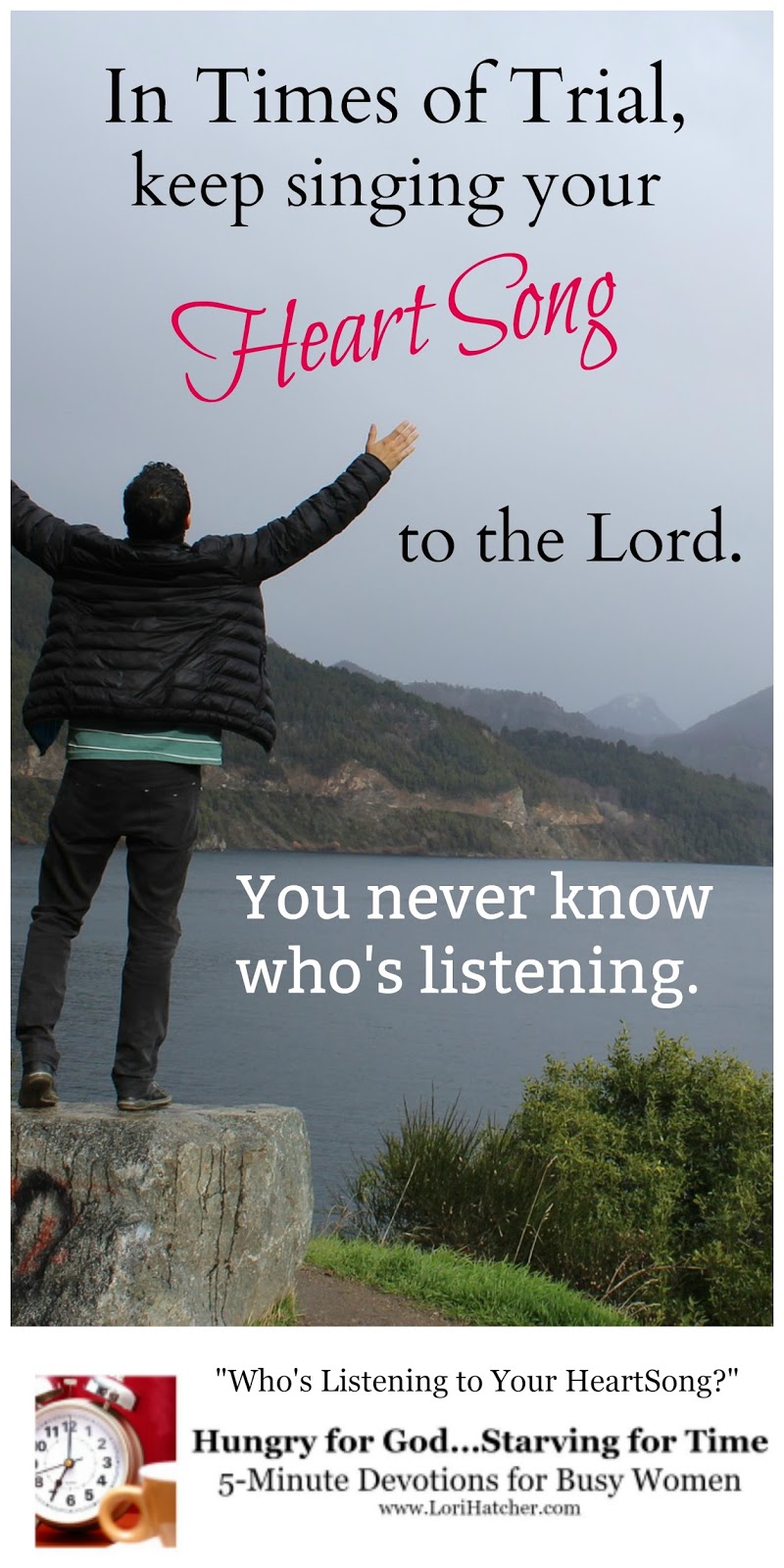
“For seventeen years in prison, every morning at daybreak, Dmitri would stand at attention by his bed. As was his custom, he would face the east, raise his arms in praise to God, and then he would sing a HeartSong™ to Jesus.”
The other prisoners would laugh, curse, and jeer. “They’d bang metal cups against the iron bars in angry protest. They threw food and sometimes human waste to try to shut him up and extinguish the only true light shining in that dark place every morning at dawn” (p. 156).
One day, Dmitri found a full sheet of paper and a pencil in the prison yard. “I rushed back to my jail cell, and I wrote every Scripture reference, every Bible verse, every story, and every song I could recall.” He posted it on a damp pipe in his cell as an offering to the Lord. His jailor saw it, beat and punished him, and threatened him with execution.
As jailors dragged him from his cell and down the corridor, “the strangest thing happened. Before they reached the door leading to the courtyard—before stepping out into the place of execution—fifteen hundred hardened criminals stood at attention by their beds. They faced the east and they began to sing . . . the HeartSong™ that they had heard Dmitri sing to Jesus every morning for all those years.”
Shocked, his jailors released their hold and backed away from him.
“Who are you?” one demanded. Dimitri straightened his back and stood as tall and as proud as he could.
“I am a son of the Living God, and Jesus is His name!” The guards returned him to his cell and shortly afterward, he was released and returned to his family.
Every morning, for 17 years, Dmitri sang his HeartSong™. In the face of intense opposition and persecution, he offered praise to God. In the darkest and most hopeless of circumstances, he clung to the Lord Jesus and proclaimed his faith.
By all outward appearances, Dmitri’s prison “ministry” was fruitless. He was one man, surrounded by evil, clinging to a God who seemed to have forgotten him. But because Dmitri lived to tell his story, we know better. Through his testimony, God cracks the curtain on the mystery of stubborn faith in the face of suffering.
Most of us will never suffer for our faith as Dmitri has, but we are suffering. Health crises, job loss, wayward children, broken marriages, financial ruin, infertility, loneliness, and depression lock us in prison and torture us until we think we might break.
Yet every day, sometimes with voices that others must strain to hear, we lift our HeartSongs™ to God. We may not sing aloud, although sometimes we do. Most days those around us hear our songs through our actions and our words.
We continue to pray. We refuse to lose hope. We serve God despite our heartache, and proclaim his goodness to anyone who will listen. We place our hand in the nail-scarred hand of Jesus and declare with Job, “Though he slay me, yet will I trust in him” (Job 13:15). Our lives of faith and service are our offerings of praise for all the world to hear.
Dear suffering friend, like the prisoners in Dmitri's story, someone near you is listening to your HeartSong™.
Don’t stop singing.
Now it’s your turn. Has God ever revealed to you, perhaps years later, that someone was watching how you walked through a trial? Leave a comment below and share your story.
Would you like to hear Dmitri's HeartSong? Here's a haunting clip from the movie.
If you’re reading by email, CLICK HERE to watch the clip.
If you’d like to read or watch more stories of those who follow Jesus when it doesn’t make sense, click HERE for The Insanity of God book and HERE for the Insanity of God DVD.
If you enjoyed this post, why not subscribe? I'll send you twice-weekly 5-minute devotions to help nourish your soul.
Because women need to connect with God in the craziness of life.
Enter your email address and VALIDATE the Feedburner email sent to your inbox.
Delivered by FeedBurner
If this post was meaningful to you, would you consider sharing it with a friend by clicking on one of the buttons below? Did you know you can receive bi-weekly Hungry for God posts sent directly to your email inbox? Visit http://www.lori-benotweary.blogspot.com and click on the link in the right hand corner to Subscribe Via Email.
Copyright 2012 by Lori Hatcher
The authorities couldn’t let this continue, so they sent Dmitri a thousand kilometers away from his family and locked him in prison. He was the only believer among 1,500 hardened criminals. His captors tortured him to force him to renounce his faith, but Dmitri held firm.
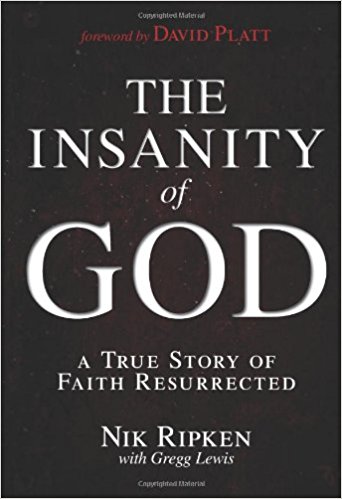 Nik Ripken’s book,
The Insanity of God, A True Story of Faith Resurrected,
describes what happened next.
Nik Ripken’s book,
The Insanity of God, A True Story of Faith Resurrected,
describes what happened next. “For seventeen years in prison, every morning at daybreak, Dmitri would stand at attention by his bed. As was his custom, he would face the east, raise his arms in praise to God, and then he would sing a HeartSong™ to Jesus.”
The other prisoners would laugh, curse, and jeer. “They’d bang metal cups against the iron bars in angry protest. They threw food and sometimes human waste to try to shut him up and extinguish the only true light shining in that dark place every morning at dawn” (p. 156).
One day, Dmitri found a full sheet of paper and a pencil in the prison yard. “I rushed back to my jail cell, and I wrote every Scripture reference, every Bible verse, every story, and every song I could recall.” He posted it on a damp pipe in his cell as an offering to the Lord. His jailor saw it, beat and punished him, and threatened him with execution.
As jailors dragged him from his cell and down the corridor, “the strangest thing happened. Before they reached the door leading to the courtyard—before stepping out into the place of execution—fifteen hundred hardened criminals stood at attention by their beds. They faced the east and they began to sing . . . the HeartSong™ that they had heard Dmitri sing to Jesus every morning for all those years.”
Shocked, his jailors released their hold and backed away from him.
“Who are you?” one demanded. Dimitri straightened his back and stood as tall and as proud as he could.
“I am a son of the Living God, and Jesus is His name!” The guards returned him to his cell and shortly afterward, he was released and returned to his family.
Every morning, for 17 years, Dmitri sang his HeartSong™. In the face of intense opposition and persecution, he offered praise to God. In the darkest and most hopeless of circumstances, he clung to the Lord Jesus and proclaimed his faith.
By all outward appearances, Dmitri’s prison “ministry” was fruitless. He was one man, surrounded by evil, clinging to a God who seemed to have forgotten him. But because Dmitri lived to tell his story, we know better. Through his testimony, God cracks the curtain on the mystery of stubborn faith in the face of suffering.
Most of us will never suffer for our faith as Dmitri has, but we are suffering. Health crises, job loss, wayward children, broken marriages, financial ruin, infertility, loneliness, and depression lock us in prison and torture us until we think we might break.
Yet every day, sometimes with voices that others must strain to hear, we lift our HeartSongs™ to God. We may not sing aloud, although sometimes we do. Most days those around us hear our songs through our actions and our words.
We continue to pray. We refuse to lose hope. We serve God despite our heartache, and proclaim his goodness to anyone who will listen. We place our hand in the nail-scarred hand of Jesus and declare with Job, “Though he slay me, yet will I trust in him” (Job 13:15). Our lives of faith and service are our offerings of praise for all the world to hear.
Dear suffering friend, like the prisoners in Dmitri's story, someone near you is listening to your HeartSong™.
Don’t stop singing.
Now it’s your turn. Has God ever revealed to you, perhaps years later, that someone was watching how you walked through a trial? Leave a comment below and share your story.
Would you like to hear Dmitri's HeartSong? Here's a haunting clip from the movie.
If you’re reading by email, CLICK HERE to watch the clip.
If you’d like to read or watch more stories of those who follow Jesus when it doesn’t make sense, click HERE for The Insanity of God book and HERE for the Insanity of God DVD.
If you enjoyed this post, why not subscribe? I'll send you twice-weekly 5-minute devotions to help nourish your soul.
Because women need to connect with God in the craziness of life.
Enter your email address and VALIDATE the Feedburner email sent to your inbox.
Delivered by FeedBurner
If this post was meaningful to you, would you consider sharing it with a friend by clicking on one of the buttons below? Did you know you can receive bi-weekly Hungry for God posts sent directly to your email inbox? Visit http://www.lori-benotweary.blogspot.com and click on the link in the right hand corner to Subscribe Via Email.
Copyright 2012 by Lori Hatcher
September 3, 2017
Do We Talk too Much? A Lesson from Dr. Seuss
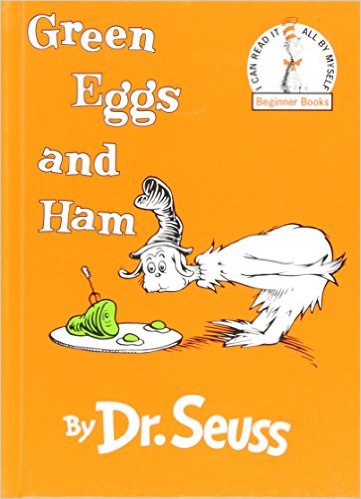 Green eggs and ham, green eggs and ham. I do not like them, Sam I am.
Best known for his classic children’s books, Theodor Geisel Seuss perfected the art of succinct communication. The Cat in the Hat, the early reader that turned Dick and Jane on their heads, ushered in a whole new era in children’s books.
The New Yorker article, “Cat People – What Dr. Seuss Really Taught Us,” gives us the background on this classic. In May 1954, Life magazine published a report on illiteracy among school children which concluded that children were not learning to read because their books were boring. William Ellsworth Spaulding, the director of the education division at Houghton Mifflin, compiled a list of 348 words he felt were important for first-graders to recognize. He asked Seuss to cut the list to 250 words and write a book using only those words. Spaulding challenged him to “bring back a book children can't put down.” Nine months later, Seuss completed The Cat in the Hat, using 236 of the words.
But Seuss didn’t stop there. When Bennett Cerf, the co-founder of Random House, bet him he couldn’t write a book with 50 or fewer distinct words, he won the bet by producing one of his most popular works, Green Eggs and Ham, using exactly 50 unique words. Green Eggs and Ham went on to be Geisel’s best-selling work, so even though he never collected on the bet, his endeavor paid off royally.
We could learn a lot from Dr. Seuss’s example. And from the Bible. Did you know that Scripture embraces the concept of communicating with an economy of words? It gives us very clear instructions against using “a multitude” of words when a few will do. Here are three principles we can apply to the judicious use of speech:
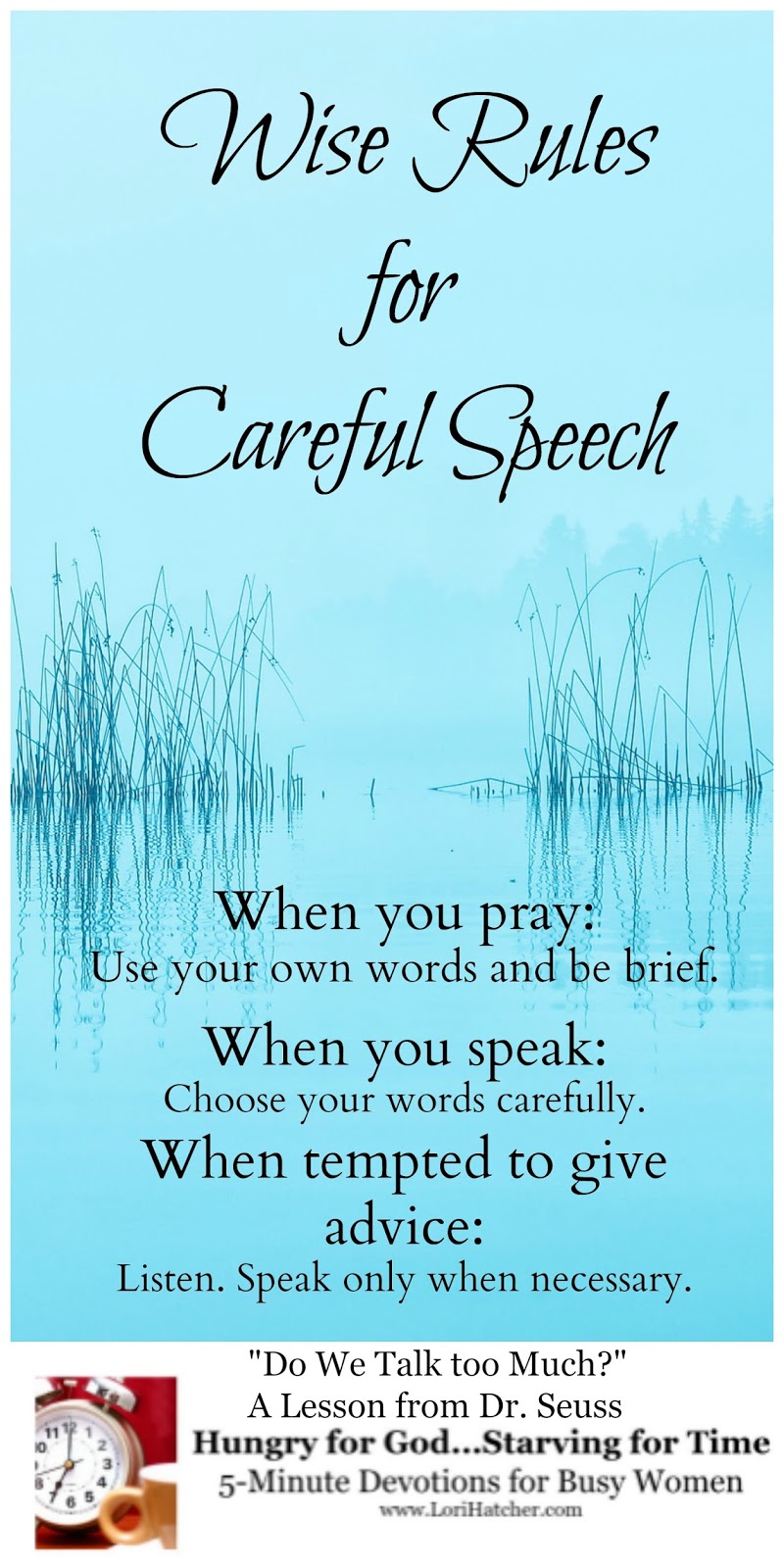 1. When we pray, our prayers should be heart-felt, original, and to the point. Matthew 6:7 instructs us, “And when you pray, do not keep on babbling like pagans, for they think they will be heard because of their many words.” While scripted prayers can serve as a guide, God is most interested in our words expressing the thoughts and desires of our heart.
 2. The surest way to sin with our mouth is to open it. Proverbs 10:19 says, “When words are many, sin is not absent, but he who holds his tongue is wise.” Sometimes the best thing we can say is nothing.
3. We can gain a reputation for wisdom by listening, not speaking. If you’re like me, you’re quick to offer an opinion, share information, or propose a solution to someone else’s problem. Proverbs 17:28, however, suggests the opposite. Instead of blurting out the first thought that comes to our mind, we (and others) would be better served if we listened, weighed our words carefully, and sometimes chose not to speak at all. “Even a fool is thought wise if he keeps silent, and discerning if he holds his tongue.”
As a writer, I’d love to be known for the ability to communicate truth with nary a wasted word. As a Christian, I want to pray earnestly, know when to speak, and know when to be silent. These are noble goals – ones I think honor the Lord.
Now it’s your turn. How do you most often get into trouble? By speaking too much or speaking too little? What are your favorite Bible verses on the subject of words? And while you’re commenting, what is your favorite Dr. Seuss book? Leave a comment below and share your thoughts.
If you enjoyed this post, why not subscribe? I'll send you twice-weekly 5-minute devotions to help nourish your soul.
Because women need to connect with God in the craziness of life.
Enter your email address and VALIDATE the Feedburner email sent to your inbox.
Delivered by FeedBurner
If this post was meaningful to you, would you consider sharing it with a friend by clicking on one of the buttons below? Did you know you can receive bi-weekly Hungry for God posts sent directly to your email inbox? Visit http://www.lori-benotweary.blogspot.com and click on the link in the right hand corner to Subscribe Via Email.
Copyright 2012 by Lori Hatcher
Refresh Blog

A place to refresh your faith, hope, and prayers with 5-minute weekly posts.
- Lori Hatcher's profile
- 101 followers

