
Jerome R. Corsi's Blog, page 19
October 18, 2025
‘Spreading fake news’: Newsom shuts down major freeway over Marine Corps anniversary, blames White House
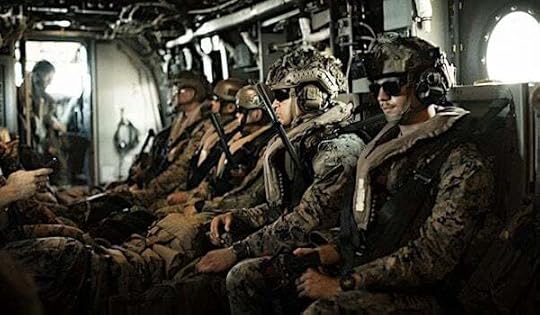
 U.S. Marine Corps Lance Cpl. Nosikahhokli Melendez, a fire support Marine with III Marine Expeditionary Force Information Group, prepares to depart on a MV-22 Osprey, attached to 1st Marine Aircraft Wing, during exercise Keen Sword 25 in Okinawa, Japan, Oct. 28, 2024. (U.S. Marine Corps photo by Staff Sgt. Manuel Serrano)
Democratic California Gov. Gavin Newsom blamed the Trump administration for his own decision to close parts of the Golden State’s interstate Saturday.
Vice President JD Vance and Secretary of War Pete Hegseth are leading a live-fire demonstration Saturday at Camp Pendleton’s Red Beach to celebrate the 250th anniversary of the United States Marine Corps. The event is a training exercise conducted entirely on approved ranges and will follow established safety protocols, according to a Marine Corps press release. The Marines also confirmed that no highways or public transportation routes would be affected.
Still, Newsom announced Saturday he would close portions of I-5, claiming that “because of the Trump Admin’s plans,” drivers should expect delays on the highway.
“Governor Newsom is spreading Fake News to Californians to fearmonger and score cheap political points,” Vance’s press secretary, Taylor Van Kirk, said in a statement shared with the Daily Caller News Foundation (DCNF). “Vice President Vance is eager to be in California on Saturday celebrating the 250th anniversary of the Corps alongside United States Marines who, despite the Democrats’ shutdown, will continue to receive pay thanks to President Trump’s hard work.”
This would be an absurd show of force, and totally uncalled for during a government shutdown when members of the military cannot even get a paycheck. https://t.co/hG3EI1FMwT
— Governor Newsom Press Office (@GovPressOffice) October 15, 2025
The event is expected to draw thousands of Marines, sailors, veterans, and families, but Newsom’s press office on Wednesday amplified reports claiming the White House planned to shut down I-5 for a so-called “vanity parade.”
“Donald Trump and JD Vance think that shutting down the I-5 to shoot out missiles from ships is how you respect the military,” Newsom posted Wednesday, repeating the false media reports. The rumors also falsely linked the supposed closure to the nationwide No Kings protests also scheduled for Saturday.
By Saturday, Newsom’s office continued to insist the demonstration posed an “extreme life safety risk and distraction to drivers.”
VP Vance and Second Lady Usha here on site as demonstrations begin shortly @DailyCaller pic.twitter.com/0ncKXOTXS7
— Hailey Grace Gomez (@haileyggomez) October 18, 2025
Following Newom’s announcement, the White House reiterated that neither it nor the Marines had requested highway closures and that the military had made clear there were no public safety concerns related to the event.
“Today is the 250th anniversary celebration of [the United States Marine Corps] at Camp Pendleton in California. But Gavin Newsom – who never served a day in the military – is overruling the best-trained and most-experienced leaders of our Marine Corps and shutting down the main interstate highway in the San Diego region for no other reason than a spiteful publicity stunt and to ruin the occasion,” Republican Rep. Darrell Issa of California posted on X. “It’s a disgusting abuse of power. But not at all surprising.”
Newsom’s office did not respond to the DCNF’s request for comment.
Content created by The Daily Caller News Foundation is available without charge to any eligible news publisher that can provide a large audience. For licensing opportunities of our original content, please contact licensing@dailycallernewsfoundation.org.


To ‘make ends meet’: Dem bill would allow federal workers not to pay their rent

A Democratic U.S. senator has introduced a bill that would allow federal workers not being paid during the government shutdown to forgo their rent or mortgage payments, without penalty.
The bill, introduced by Sen. Brian Schatz, D-Hawaii, and 17 Democratic colleagues, would relieve workers and contractors from their obligations to pay rent, mortgages, insurance premiums and student loan payments during shutdowns, reports Reason.
In addition, it stays eviction and foreclosure proceedings for 30 days after the shutdown ends, with a penalty of fines or even jail time.
Said Schatz: “Right now, hundreds of thousands of federal workers, federal contractor employees, and their families don’t know whether they’ll be able to pay rent and make ends meet. Our bill will protect these workers and make sure they aren’t harmed during this shutdown.”
What Schatz does not mention is that once the shutdown ends, all back pay owed will go to those same federal workers — money that can be used to catch up with rental payments.
As Reason reports, a recent study published in the Journal of Urban Economics compared the strength of tenant protections to rents. It found that stronger tenant protections reduced evictions but also reduced vacancies and were correlated with higher rents and higher rates of homelessness.
Democrats still haven’t learned any lessons

On Thursday, Senate Democrats voted for the 10th time to prolong the federal government shutdown. They also voted against funding the military, thereby necessitating that the Pentagon initiate some innovative accounting in order to ensure service members are paid on time.
Senate Minority Leader Chuck Schumer, D-N.Y., defended his caucus’s latest vote, opining, “It’s always been unacceptable to Democrats to do the defense bill without other bills that have so many things that are important to the American people in terms of health care, in terms of housing, in terms of safety.” But to most Americans, such tendentious bloviating falls on deaf ears. Most commonsense Americans understand that there is no reason paying America’s warriors should be held hostage to arcane debates over housing policy.
As Sen. John Fetterman, D-Pa., one of three Senate Democrats who joined Republicans on Thursday in support of the defense appropriations bill, put it earlier this week: “You know, if you’re thinking about winning the election, now, that’s all going to come down to seven or eight states. … And a lot of the things, the extremism that people turned their back in ’24, and that’s how we kind of came up short.”
It’s wise advice. But Fetterman is likely to pay for being such a rare voice of (relative) reason within the party with an impending bruising Senate primary contest.
Why exactly are Democrats, who control neither chamber of Congress nor the presidency, continuing to insist on a protracted shutdown battle? It’s a more complex question than it ought to be. But the basic disagreement amounts to one over expiring Obamacare subsidies and the scope of Medicaid coverage – pertaining, to no small extent, to illegal aliens.
In short, then, air traffic control operations are suffering from a potentially dangerous shortage, America’s beautiful national parks are understaffed, and service members could go without pay – all, seemingly, because Democrats think more taxpayer dollars should go toward subsidizing the health care of illegal aliens.
This is an astonishingly weak negotiating position. Minority parties completely out of power typically do not get what they want during high-profile Beltway budgetary standoffs or shutdown fights, and there is very little reason to expect Republicans to cave. As the shutdown goes on, moreover, the polling on which side is more to blame seems to be gradually shifting toward Democrats as the more blameworthy side.
It is far from obvious what exactly Schumer and House Minority Leader Hakeem Jeffries, D-N.Y., expect to accomplish as the shutdown barrels ahead toward its third week. They are not going to prevail – and the longer it goes on, the worse political shape they will find themselves in.
Democrats seem to be unable to avoid tripping all over themselves.
On the issue of illegal immigration, the American people are overwhelmingly opposed to their agenda. A Harvard/Harris poll earlier this month revealed that 56% of registered voters support deporting all illegal aliens, and 78% support deporting criminal illegal aliens. On the question of taxpayer subsidization of the genital mutilation and chemical castration procedures often euphemistically referred to as “gender-affirming care,” another culture war sticking point, another recent poll showed that 66% of Americans are in opposition. The polling on biological male participation in women’s sports is even starker.
Illegal immigration and gender radicalism are perhaps the two least popular issues right now for Democrats. Yet they are arguably the two issues most at the forefront of the current Beltway standoff – or at least the debate over the scope of taxpayer funding is.
Sun Tzu, the ancient Chinese military strategist, famously taught that a battle is won before it is fought by choosing the terrain on which it is fought. President Donald Trump, the decadeslong branding and marketing genius, already has a keen knack for framing issues in such a way – the art of the 80-20 issue, as this column has called it. And Democrats seem all too eager to make his job easier by choosing the side whose loss is a foregone conclusion.
What gives?
A rational political party interested in self-preservation and electoral success would certainly take a different approach. Such a party would ditch the post-2008 obsession with identity politics and wokeism and revert to the Clinton-era message of economic growth and cultural centrism.
That Democratic leadership is so woefully incapable of doing this, even following Trump’s resounding triumph last November across all the major swing states, indicates that the party is not currently guided by rational calculations. Democrats today are guided not by sober empiricism but by fanciful ideology.
The biggest reason Trump prevailed in the contentious 2016 Republican presidential primary and has won so much popular support since is that he had little use for abstract ideology. He saw the American people as they are, and he sought to serve them.
Democrats would be wise to follow suit.
What the freed hostages can teach us

Can you imagine what it was like to be one of the hostages held by Hamas for more than two years? Can you imagine the fear, the sense of having no control, the humiliation, the deprivation? Can you imagine living underground day after day, month after month, cut off from family and friends, knowing that this living hell could go on for years?
Very few of us have experienced anything remotely close to what these hostages experienced, which makes their resilience and courage all the more amazing. What can they teach us about life? What lessons can we learn from them?
Without question, most of them face a long road to recovery before life can be fully normal again. And sometimes internal wounds heal much more slowly than external wounds. Yet even now, their stories are inspiring courage and strength among others, as their very release has invigorated a nation that has lived in collective trauma since Oct. 7, 2023.
Eli Sharabi endured 491 days in captivity before his release, determined to survive his ordeal for his wife and two teenage daughters, from whom he was separated on October 7 when Hamas took over Kibbutz Be’eri.
He assured them he would be back as the terrorists dragged him away, feeling confident that not even Hamas would take women and children hostage, also hoping that their British passports would save their lives. He also wanted to be strong for his older brother Yossi, who lived in the same Kibbutz and worked for years side by side with Eli.
Eli has now shared his story in the gripping book titled “Hostage.” (If you enjoy audiobooks, the reading of Sharabi’s story by Geoffrey Cantor is incredibly moving.)
What was one of the keys to Sharabi’s survival? He said to himself, as well as to the other hostages with whom he was imprisoned at times, “There is always a choice. You always have a choice.”
It was true that they had no choice in terms of being prisoners of Hamas. They were captured against their wills, kept shackled against their wills, dragged into dungeons against their wills, stripped and humiliated against their wills, separated from their loved ones against their wills, and deprived of adequate food against their wills.
Yet even as lowly hostages, they had a choice: Will I cave in emotionally and let fear win? Will I give way to despair and lose all hope? Will I throw a pity party for myself? Will I believe the negative reports being shared by the captors, reports that Israel had forgotten about the hostages, that the nation had lost its will to fight, that it was suffering terrible losses to Hezbollah and to Iran?
Some of the hostages were given the choice of getting adequate food if they would convert to Islam. Would they let hunger override their moral and religious convictions?
Some of the hostages were people of faith, others much more secular. Yet each of them made choices every day, choices to survive, choices that said to Hamas, “Even though you have power over our bodies, you do not have power over our minds and souls. That is why we will make it to the end.”
Eli Sharabi’s story was especially cruel, as, just days before his release, he learned from a Hamas captor that his brother Yossi had been murdered on October 7. Yossi was gone!
Then, on his way to meet his family with his IDF escorts, he was told, “Your mother and sister are waiting for you.”
His mother and sister? What about his wife and daughters? What about them? He was told that his mother and sister would explain.
It was only then that he learned that the light of his eyes and the joy of his life, his precious wife and daughters, had been slaughtered by the terrorists right there in the kibbutz. He would never see them again.
Remarkably, as unspeakably agonizing as this news was, he had already gone through every possibility in his mind during his long months in captivity, considering the possibility of this horrific news too. In that sense, as devastating as the loss was, he had already braced himself. Such was his resolve. (I must confess that I broke down weeping during this part of the story as I listened to the audio book, even though I already knew it was coming.)
What then, can we learn from these heroes?
First, like them, we always have a choice – in the midst of sickness, in the midst of loss, in the midst of pain, in the midst of betrayal, in the midst of deprivation, in the midst of whatever cruelties life brings. (A psychologist might object here, saying that in cases like clinical depression, people sometimes cannot choose to get out of the depression. For the record then, rather than play psychologist, I’m speaking to all of us who do have the ability to control our thoughts.)
We can choose to capitulate, to cease living, to throw in the towel for good. Or we can choose to get out of bed, to function (even if we feel like robots), to say, “I will survive!” And with God’s help, we can and we will.
Eli and his fellow hostages determined to find something for which they could be thankful every day. That is a choice we too can make.
Second, we must remember that in many ways, these Israelis were already battle-tested, having faced rocket bombardments for years, having taken refuge in bomb shelters and safe rooms countless times, having served in the IDF and having understood what it is to be hated by one’s surrounding neighbors.
And so, as no strangers to adversity, they understood that what did not kill them only made them stronger.
This reminds me of the words of Paul, who wrote that, we not only boast in our hope of the glory of God, “but we also glory in our sufferings, because we know that suffering produces perseverance; perseverance, character; and character, hope.” (Romans 5:3-4)
And it was Paul, whose sufferings for righteousness were almost beyond description (see 2 Corinthians 11:23-33), who wrote to his young disciple Timothy, saying, “Take your share of suffering as a good soldier of Christ Jesus.” (2 Timothy 2:3)
There are lessons here for us!
Why air travel is so miserable today

The 1950s were apparently the “Golden Age of Flying.” My mother loves to recall a time when airlines served full-course meals on china, with actual silverware and linen napkins. Until I was in high school, I thought you had to be dressed up to get on an airplane, because my mother insisted that we be in our Sunday best to travel.
That era is long gone, but traveling by air was at least pleasant when I was younger – sometimes even fun. Now it seems to be a test of how much misery passengers can be forced to endure, and how much the airlines can get away with charging for what used to be (and should be) basic services.
We can start with space.
A few years ago, I watched the classic Gene Hackman film “The French Connection.” The movie, set in 1971, features a brief scene in which some of the characters are on what I believe was an Eastern Airlines commuter flight between Washington, D.C., and New York City. It’s shocking to see that even on that small DC-9 jet, there were two big, comfortable seats on either side of an aisle wide enough that flight attendants could walk past each other – with a cart.
The average width of an airplane seat in 1970 was 18 inches. Now the average is 16.5 inches. And the “seat pitch” (legroom distance from the back of your seat to the back of the seat in front of you) has decreased from 35 inches to 31 inches, with some as short as 28 inches. That shrunken space is why if you need the purse, diaper bag or laptop you’ve dutifully stowed under the seat in front of you before takeoff, you’ll be planting your face in your neighbor’s lap to get the item out again during the flight.
Airlines play fast and loose with these deteriorating standards by changing the names of the seat classes. Names like “Economy Plus” describe what used to be called “Economy,” while “Economy” now means “Only Slightly Better Than Standing and Holding a Bus Loop the Entire Time.” (Most people I know who are taller than 5-foot-6 would probably prefer the bus loop.)
Space isn’t the only place where airlines are socking passengers for fees. Most airlines now charge for luggage. (“You’re traveling, but you want to bring a suitcase? That’s extra.”) And food. (“Isn’t this cool? You can pay for the overpriced stale sandwiches with your phone!”) And Wi-Fi. (“Want to stay connected in the air? It’s only $10 a minute!”) And if you’d like to actually sit next to the people you’re traveling with? There’s now a fee for that too. At this rate, there will soon be credit card readers to access the toilets, and it will be extra if you want toilet paper or soap to wash your hands afterward.
You get better options on a Greyhound bus.
But it gets worse. Earlier this week, The Sun newspaper reported that WestJet will begin charging passengers additional for their airfare if they want a seat that reclines. WestJet calls those seats “Premium.” They come with a built-in tray too. (Remember when all airplane seats did?)
Eventually, the airlines will charge you if you want a seat at all; “Economy” class will be down with the pets in the baggage compartment. (Hey, it will come with free oxygen, heat and air conditioning.) Don’t scoff. In 2012, the Italian design firm Aviointeriors released an airline seating design called “SkyRider” – narrow, saddle-like seats that passengers straddle rather than actually sit in. The seat pitch gets reduced to only 23 inches with that novel idea. The company insists that the design was purely conceptual. We’ll see.
Airlines justify all the new charges by claiming that the low “base price” for a ticket makes flying “affordable” for everyone. Frankly, it’s unclear at this point how desirable an objective that really is. Almost daily, you can find videos captured on phones and posted on social media of unsettling, threatening, dangerous and even violent behavior by people who are having complete mental breakdowns in the cabin, screaming obscenities, trying to open the emergency doors mid-flight, climbing across the tops of seats, pulling other passengers’ hair, throwing punches and fighting with flight attendants, who apparently need to be trained to operate Tasers or tranquilizer guns now.
All of this is without mentioning the long security lines, the frisking by TSA agents, the drug- and bomb-sniffing dogs, the requirements that you strip to your underwear and place everything you’ve got into an X-ray machine, and the rows of travelers sleeping in the terminals.
While economy travel gets progressively insufferable, first-class seats on domestic and international carriers are getting more and more luxurious, with wall dividers, fully reclining leather seats with designer bedding, flatscreen TVs, customized menus with gourmet meals, expensive liqueurs and champagnes, complimentary toiletries, pajamas, slippers, private lounges – even showers on some long-haul flights.
There’s something eerily symbolic about all this. At a time when one hears widespread complaints about the growing economic gap between “the 1%” and everyone else, the travel accoutrements for the very wealthy are shockingly luxe, while the vast majority of travelers deal with cattle car conditions (or worse), and there is very little in the middle.
The airline industry needs an overhaul. In the meantime, I’ll fly if I have to, but otherwise, I’m taking Amtrak. Yes, it’s slow and there are frequent delays, but at least they don’t charge you to actually bring luggage on a trip, the seats are wide and recline for free (with a footrest!), and disruptive or dangerous passengers can be tossed off the train at the next stop.
America’s can-do spirit: Will Gen Z pessimism snuff it out?

 Washington evacuated 9,000 American troops, horses, artillery and supplies across East River to Manhattan
In the autumn of 1775, as George Washington’s volunteers laid siege to Boston, a local bookshop owner-turned-citizen-soldier named Henry Knox proposed a daring plan: Take a small force to the French-owned Fort Ticonderoga, steal its 59 cannons, position them on the Dorchester Heights, and drive the 11,000 British troops from the city.
Floating 120,000 pounds of guns, artillery, and ammunition down Lake George and then 300 miles overland through roadless wilderness in wintertime was as audacious an idea as challenging the divine rights of kings and forming the world’s first elective democracy.
Both succeeded.
Gen. Washington approved Knox’s gambit, which gave the Continental Army its first significant military victory. And as we begin the year-long commemoration of America’s 250th anniversary, this early example of Americans’ can-do spirit comes at a fraught inflection point. Here’s why: Henry Knox was only 25 years old when he embarked confidently on his improbable mission.
“We want great men, who when fortune frowns will not be discouraged,” Knox wrote to his wife during the Revolutionary War. “God will I trust in time give us these men.”
By and large his trust proved to be well-placed. In the ensuing two and a half centuries – through civil war, women’s suffrage, two world wars, the Great Depression, the labor movement, the civil rights movement, environmental reconsideration, and periodic reassessments of what is owed those harmed or left behind by the nation’s unrelenting expansion and growth – America found the will, and the leaders, demanded by those many tribulations.
But will this national resilience endure? The evidence is mixed.
Americans in their 20s today have vastly less confidence in their ability to forge a better future – or even faith in the American project itself. This pessimism has been documented in numerous studies, including a new poll by RealClear Opinion Research.
In a national survey of 1,000 U.S. voters only a bare majority of respondents (52%) think America’s best days are ahead, while 48% think the country’s best days are behind us.
Among Gen Z and younger millennials, the picture is particularly bleak: With this group America is essentially underwater: 57% voters under 40 say America’s best days are in the rear-view mirror.
The nation’s youngest voting cohort – those aged 18-29 – is far less enamored of their country than their elders, or any generation previously measured: Only 52% of voters under the age of 30 are “proud” to be Americans, 19 percentage points lower than the next-lowest group.
Similar findings have shown up in a 2024 Statista survey, in the biannual Harvard Youth Poll done last spring, and in a Gallup polling done earlier this summer. As the Gallup data shows, the generational malaise is getting worse – and at a disquieting rate.
The implicit anti-Americanism that hummed like a low-level electrical current through some of the 2020 Black Lives Matter protests and many of the pro-Palestinian demonstrations of the last two years has focused attention on what is being taught in America’s institutions of higher learning as well as in our elementary and secondary schools. The problematic developments range from teaching junk Middle East history through the prism of “colonialism” to examples of overt hostility toward Jews by our nation’s teachers unions.
And yet, whether they are conservative or liberal, the pollsters closest to college students tend to hold sympathetic views toward Gen Z.
“Younger Americans are forming their views of the nation through lived experiences marked by uncertainty and polarization,” said Emerson College pollster Spencer Kimball, who directed the RCP survey, “while older generations, who have witnessed periods of both turmoil and progress, tend to see America’s best days as still ahead.”
John Della Volpe, the longtime Institute of Politics pollster who oversees the Harvard Youth Poll, amplified on this point.
“This is a generation that is stretched incredibly thin – financially, emotionally, politically,” added Della Volpe, who also helped found RealClear Opinion Research. Speaking in June, when his latest survey of college-age Americans was released, Della Volpe added, “They’ve lost trust in our leaders. They’ve lost trust in institutions. I don’t think there’s apathy there, but I do think that unless we connect with them and listen – and listen soon – it’s going to be much harder to win them back.”
A House Divided
It comes as no surprise that in our highly polarized current political environment the latest RealClear Opinion Research survey also documented stark partisan divisions on questions pertaining to Americans’ vision of themselves, their safety, and their future.
A majority (74%) of Republicans think America’s best days are ahead of it, while 56% of independents and 64% of Democrats think America’s best days are behind it. Likewise, fully 96% of Republicans are proud to be an American, compared to 63% of independents and only 53% of Democrats.
Respondents were also asked whether they consider gang violence to be (a) “a very serious” problem; (b) “a somewhat serious” problem; or (c) “not too serious” a problem. Among Democrats, only 20.3% deemed gang violence a “serious” problem, with 44.1% answering “somewhat,” and fully 50.4% answering “not too serious.”
Republicans have much different perceptions, with 42.9% labeling gang violence as “very serious,” 26.7% “somewhat serious,” and only 20.6% saying “not too serious.” Independent voters are significantly closer in their answers to Republicans.
The context for these responses is instructive. On the one hand, it is Democrats who predominate in urban areas and are therefore much more likely to have first-hand knowledge of gang activity (and to be victims of gang-related crime), so their answers are counterintuitive. What helps explain it is that President Trump has used gang violence as a pretext to send National Guard troops into cities controlled by Democrats, a move resisted almost universally by Democratic Party officials and opposed by majorities of Democratic rank-and-file voters.
Nonetheless, a huge majority of voters (84%) think the government should be doing more to prevent all acts of violence, though there is little consensus about what preventive measures would look like. When presented with a list of issues and asked which factors contribute most to violence in America, voters were all over the map:
20% easy access to guns19% political polarization17% mental health issues14% social media13% poverty and economic inequality5% weak law enforcement4% violent entertainment/media3% lack of education opportunitiesPolitical Violence in the United States
Huge majorities of Americans – Republicans, Democrats, and independents – say political violence is a “very” or “somewhat” serious problem. In the wake of Charlie Kirk’s assassination, however, significantly more Republicans (37.5%) than Democrats (29.5%) believe political violence is a “very serious” challenge.
In an implied rebuke to both major political parties – and the media – fully 88% of voters believe the recent tone of America’s political discourse encourages this kind of violence. Almost four in 10 voters say the GOP rhetoric tends to be more violent, while nearly as many (36%) think the Democratic Party rhetoric is more violent – with 21% answering that both are “equally violent.”
Voters were also asked whether they are more concerned about homegrown extremists or foreign terrorists. By a 3-1 margin, they said they are more fearful of the homegrown variety.
Perhaps that’s because we are talking to one another in our ideological silos: When discussing the news with their friends, 49% of voters find that their friends’ views “sometimes” align with their own political views; 39% are “often” in line with their friends’ views. Only 12% of respondents said their typical political conversations are with people who “rarely” share their views.
This is indicative of the kind of self-sorting that exists online, but also increasingly in the workplace, schools, houses of worship, and neighborhoods. This phenomenon was first documented in 2008 by Texas journalist Bill Bishop. It has been supercharged by Silicon Valley algorithms and foreign tech entities like TikTok. Although some critics say the problem of The Big Sort is overstated, in this RealClear Opinion Research poll, fully 57% of voters say they have intentionally avoided talking with friends and family with differing political views.
“This isn’t a new phenomenon,” notes Spencer Kimball. “Voters often engage in selective exposure to engage with people and content that aligns with their views. It is interesting that the rate of those who avoid talking to friends or family with opposing views increases with age, from 47% of voters under 30 to 65% of voters over 60 who avoid such conversation.”
On the other hand, the survey also found that the willingness to justify political violence rises in direct proportion to the hours one spends on social media – and gets higher, the younger the voter. Although just 7% of respondents said yes when asked if political violence is “ever justified,” among voters under 40 this figure was 13% – double that of any other group.
Jason Steinhauer, a bestselling author and public historian, has written a thoughtful essay about the intellectual underpinnings of political violence – particularly (but not solely) among the disciples of the radical left. Yet Steinhauer also expresses solicitude for young Americans whose alienation has made them susceptible to such rhetoric.
“Young Americans have come of age in an era of endless wars, economic uncertainty, job insecurity, staggering inflation, political violence, environmental degradation and unending social media feeds full of disinformation and propaganda,” he told RealClearPolitics.
“It should not be surprising, then, to learn that they do not feel sanguine about the future – theirs or their country’s,” Steinhauer added. “Those of us in positions of political and societal leadership have an obligation to demonstrate to all Americans – but especially young people – that our institutions care about their concerns, can devise concrete solutions to their problems, and see them as equal partners in co-creating a better future.”
Much is riding on it. In 1776, Henry Knox put it this way: “The eyes of all America are upon us; the matters which we are to act are of infinitely high import, as we play our part posterity will bless or curse us.”
This article was originally published by RealClearPolitics and made available via RealClearWire.‘Thanks for the pic’: George Conway dons ‘I am Antifa’ shirt at ‘No Kings’ rally

WASHINGTON — Former Republican attorney George Conway appeared to embrace Antifa during Saturday’s “No Kings” rally in the nation’s capital.
Conway, a co-founder of the anti-Trump Lincoln Project, attended the Washington, D.C. protest wearing a shirt reading, “I am Antifa.” The rally was one of numerous No Kings protests nationwide focused against the Trump administration and its policies.
The opposition of Conway, a longtime critic of the president, dates back to when his then-wife, Kellyanne Conway, served as a senior counselor to Trump during his first term in office. In 2025, Conway began crying while decrying what he described as the president’s threats against “democracy” and the “rule of law” on The Bulwark podcast.
Never-Trumper George Conway spotted wearing an “I am Antifa” shirt at DMV “No Kings” protest. pic.twitter.com/0PFYZxD9nd
— Daily Caller (@DailyCaller) October 18, 2025
Conway could not be reached for comment but shared an image of him taken by the Daily Caller News Foundation (DCNF) at Saturday’s rally on the leftwing social media site, Bluesky.
Thanks for the pic, @dailycaller.bsky.social !
Be sure to tag me and @ofthebraveusa.bsky.social with your best, most fun #NoKings content!
— George Conway (@gtconway.bsky.social) Oct 18, 2025 at 11:41 AM
While No Kings emphasizes a “commitment to nonviolent action” on its website, radical leftists have used anonymous blogs to encourage illegal activity at the event.
Leading up to the rally, CrimethInc, an international anarchist group, encouraged supporters to engage in “anti-authoritarian” uprisings similar to the 2020 Black Lives Matter riots. The group specifically recommended “direct action planning,” which CrimethInc defines as mobilizing people to cause a public disruption, even at the risk of arrest.
Signs reading “8647,” commonly interpreted as meaning “kill” or “murder,” according to Cassell’s Dictionary of Slang, were also spotted at the Washington anti-Trump rally. A protester was also observed by the DCNF carrying a poster depicting what appeared to be a guillotine.
BREAKING: DC “No Kings” protester carries a sign that appears to show a GUILLOTINE. pic.twitter.com/4q6W2rJFKT
— Daily Caller (@DailyCaller) October 18, 2025
The Trump administration in previous weeks has moved aggressively to crack down on Antifa. The president designated the group as a domestic terrorist organization in September, following the politically motivated murder of Turning Point USA founder Charlie Kirk. In addition, the FBI continues to investigate leftist groups for potential ties to the assassination.
In his executive order designating Antifa as a terror group, Trump directed his administration to “utilize all applicable authorities to investigate, disrupt, and dismantle any and all illegal operations.” On Thursday, the Department of Justice brought its first federal terrorism case against two people connected to the left-wing ideology who allegedly coordinated a July attack on a Texas federal immigration detention facility.
Content created by The Daily Caller News Foundation is available without charge to any eligible news publisher that can provide a large audience. For licensing opportunities of our original content, please contact licensing@dailycallernewsfoundation.org.
Needed: A ‘Manhattan Project’ for U.S. ships
 The USS William P. Lawrence maintains position in the Pacific Ocean during rigid-hull inflatable boat operations in the U.S. 7th Fleet area of operations in support of free and open Indo-Pacific, Thursday, Nov. 23, 2023. (U.S. Navy photo)Introduction
The United States is in a decisive period of maritime competition and has been for years. China is building combat ships at a rate unseen since the Second World War and now has a blue water Navy that surpasses the size of our Navy by a wide margin. China has also invested extensively in anti-access/area-denial capabilities designed to push American naval power further from their shores and territorial waters and experts agree these missiles put our ships at serious risk. To prevent our carriers from being sunk, we now plan to keep them out of range of China’s missiles, making defense of our allies much more difficult. China asserts ownership of the entire South China Sea through its mythical Nine Dash Line. Despite an international court rejecting its ownership claims, China continues to harass the Philippines and other nations in international waters. In addition, Russia is modernizing its submarine fleet and is feeling its oats as the extended war in Europe against Ukraine amply proves. Meanwhile, the U.S. Navy struggles to meet its force-level goals due to slow ship construction, horrendous maintenance backlogs, and the premature retirement of ships such as much of the LCS class due to a combination of construction flaws and failure to be able to fulfill its intended mission. If the Navy is to have the ability to deter war, project power, and assure our treaty allies of our ability to defend them, it must undertake a fundamental reimagining of shipbuilding and fleet sustainment. This article expands upon the concept of a ‘Manhattan Project for Ships’ by summarizing my recent articles in Patriot Post and Real Clear Defense into a single framework. It integrates ideas on fleet expansion through industrial mobilization, strategic planning, and program management with sustaining the current fleet through improved maintenance and exploring the potential reactivation of retired ships as a near-term measure. The result is a comprehensive roadmap for restoring American maritime dominance.
Shipbuilding Challenges and Reform ProposalsU.S. Navy’s shipbuilding faces a series of structural problems that hinder producing ships at the required pace and scale. Aircraft carriers now take more than a decade to build (the USS Ford took 13+), attack submarines face delays of years, ballistic missile submarine construction is both behind schedule and adversely impacting other programs, and amphibious ships have seen declining readiness rates with half of the 32 now in commission deemed in poor shape and not mission capable. Key bottlenecks include:
• Workforce shortages: Thousands of skilled welders, pipefitters, and engineers are needed, but the industrial base labor pool is lacking. In recent decades American education has moved away from the trades to the detriment of heavy industry capability, especially shipbuilding.
• Supply chain fragility: Critical components such as nuclear propulsion systems, high-grade steel, and electronics are produced by a severely limited number of suppliers. There is too much reliance on sources outside the U. S. including many raw materials like rare earths and components that are manufactured overseas including in China!
• Facility obsolescence: Many shipyards have old, outdated physical plants dating to the early 20th century, resulting in slower production throughput and antiquated methods in c. arison with shipbuilding abroad.
• Budget uncertainty: Continuing resolutions and shifting procurement priorities disrupt planning and prevent multi-year investments. Congress’ failure to pass budgets on time for most recent fiscal years, places an undo burden on such long-term enterprises such as shipbuilding of the world’s most advanced and complicated ships. It is almost a certainty that Congress will not pass the War Department budget on time again this year.
To overcome these barriers, the Navy must adopt more modern manufacturing methods, including ‘takt time’ scheduling, which standardizes production intervals and drives predictability. Similar principles enabled the wartime construction of Liberty Ships at rates unimaginable today. Although modern warships are far more complex, the principle of synchronized flow is still applicable if paired with digital design, modular construction, and early supplier integration. The nation must invest in building up the workforce of naval trades through education reforms so that the shipyards will have the employees they need to build the ships the Navy needs. Similarly, American tax dollars must be invested in naval supply chain improvements so that materials and parts are available when needed and ship construction delays are minimized. Shipyards are strategic assets! The nation must invest in building up the shipbuilding industry through grants and subsidies to stimulate the marketplace to put U. S. shipbuilding back on the map. Finally, Congress must treat shipbuilding budgets as a national priority and allow no delays in funding to occur and to use multiyear appropriations to aid in shipbuilders’ planning and execution of our urgent ship construction.
The Manhattan Project for Ships ConceptA Manhattan Project for Ships would elevate shipbuilding to the level of a strategic imperative, coordinated at the national level. Just as the original Manhattan Project unified scientific, industrial, and governmental resources to achieve a singular goal, a naval mobilization project would bring together Congress, the Navy, private industry, education, and allied partners under a unified and supportive structure. Core elements include:
• Unified Governance: A central authority empowered to make cross-service and interagency decisions, bypassing the fragmentation of current acquisition structures. Included in this would be Congress granting authority to Navy acquisition managers to streamline acquisition as a national imperative avoiding Federal Acquisition rules that are an obstacle to speedy acquisition or have limited impact of a national scope.
• Stable Funding: Multi-decade procurement commitments backed by law to provide predictability to industry.
• Industrial Base Expansion: Provide incentives for new entrants, subsidies for key builders and suppliers, and the use of commercial and overseas shipyards to supplement naval production.
• Workforce Development: Establish national-level apprenticeships, technical training pipelines, and wage incentives to attract skilled labor. Create DOE mandates to restore trades education in schools and promote young people to learn trades as honorable and noble professions that are a strategic imperative for the nation.
• Technological Acceleration: Speed investment in automation, AI, robotics, cloud computing, materials science and a host of other technical fields that are needed to reduce costs and accelerate construction.
• Allied Collaboration: Support leveraging allied shipyards for auxiliary production and shared logistics. Most advanced shipyards in the world are in other nations, nations friendly to the U.S. like South Korea and Japan. NATO allies Germany, France, Italy, and Spain all have advanced shipbuilding industries. Specialty ships like icebreakers can be built in partnership with the world’s leaders like Finland and Canada. We can and should partner with all of these to accelerate shipbuilding. It is to our allies’ advantage to aid the US in regaining supremacy in rebuilding the world’s biggest, most capable Navy.
The goal is not only to meet current Navy fleet objectives such as the 355-ship goal long ago established in law by Congress but to develop and build quickly a much stronger industrial and manpower base that underpins deterrence.
Fleet Maintenance & SustainmentShipbuilding alone cannot solve the Navy’s force-level crisis if existing ships are unavailable due to maintenance delays. The Navy currently faces a persistent readiness gap: 40 percent of its attack submarines are awaiting maintenance or in extended shipyard availability, and surface combatants often miss deployment windows due to deferred repairs. Problems include inadequate dry dock capacity, an aging public shipyard infrastructure, and a limited skilled workforce.
The Shipyard Infrastructure Optimization Program (SIOP) seeks to modernize four public naval shipyards, but completion timelines stretch over 20 years. This is incompatible with near-term readiness needs. As a corrective, the Navy should expand the use of private shipyards for Maintenance, Repair, and Overhaul (MRO), a practice that has already proven workable for surface ships. For submarines and carriers, where nuclear expertise is essential, investments in workforce training and dock expansion are urgent. SIOP is a good start, but it must be vastly expanded and made a national priority to create more modern shipyards and aid in recruitment of their workforce.
Another reform is to accelerate and add resources to ship maintenance to get ships back to sea. This must include adding more shipyards to spread the workload around more. The Navy must adopt best practices used by the most advanced shipbuilding entities around the world, accelerate the use of AI used by world class shipyards of our allies. More funding for fleet maintenance should be a priority and schedules must be tightened. Every day a ship that sits idle in port is lost deterrence, and closing the maintenance gap is as strategically important as launching new hulls.
Reactivation of Retired ShipsAnother tool for expanding fleet capacity in the near term is the selective reactivation of retired ships. Historical precedent includes the reactivation of the Iowa-class battleships in the 1980s, which provided a cost-effective surge in firepower. In assessing the Navy mission and what types of ships it takes to perform the mission a refresher on the core missions of the Navy is in order so that we can see what the challenges are and what types of ships are needed. Quoting from the U. S. Navy website, the Navy has six core missions. They are:
“Sea Control: This is arguably the foundational capability. It involves achieving and sustaining control over specific maritime areas when and where needed. Sea control allows the Navy and joint forces to operate freely while denying adversaries the use of the sea. It is considered essential for protecting the homeland from afar, ensuring global security and maneuverability, and projecting national power. It enables all other naval functions and involves defeating threats above, on, and below the surface.
Power Projection: The Navy projects American power from the sea to influence events ashore. This is done through various means, including launching aircraft from carriers for strikes, firing cruise missiles from submarines and surface ships, and deploying Marines ashore from amphibious vessels. This capability allows the U.S. to respond to crises and shape events globally without relying on land bases in potentially hostile areas.
Maritime Security: This involves a broad range of operations to counter threats in the maritime domain, ensuring the safety and security of sea lanes crucial for global commerce. These operations include counterterrorism, counter-piracy, counter-narcotics, interdicting illicit trafficking, and upholding international maritime law. Numbered fleets often dedicate significant effort to these missions within their areas of responsibility, often with allies and partners.
Strategic Deterrence: The Navy provides the nation’s most survivable and enduring nuclear deterrent capability through its fleet of Ballistic Missile Submarines (SSBNs). These stealthy platforms carry submarine-launched ballistic missiles (SLBMs) and operate continuously, ensuring a credible retaliatory capability that deters potential adversaries from launching a nuclear attack against the United States or its allies.
Forward Presence: Keeping a persistent presence around the globe is a key aspect of the Navy’s strategy. Deploying forces forward—often embodied by the numbered fleets operating in their assigned regions—allows the Navy to deter aggression, reassure allies and partners, respond rapidly to crises, protect U.S. interests, and maintain freedom of the seas. This visible presence signals U.S. commitment and capability.
Humanitarian Assistance/Disaster Response (HA/DR): Naval forces have unique capabilities well-suited for responding to natural disasters and humanitarian crises. Large amphibious ships can serve as mobile bases with medical facilities and space for supplies, while embarked helicopters and landing craft can reach inaccessible areas. Dedicated hospital ships provide extensive medical care. The Navy’s ability to operate self-sufficiently at sea allows it to provide rapid aid where shore infrastructure may be damaged or nonexistent.”
Our newest most capable ships are needed for sea control, power projection, and strategic deterrence as these are core missions of the gravest importance. However, the other mission sets can be conducted by a variety of ship types including older ships, smaller ships, less capable ships, and even ships taken out of retirement and put back into service. China has unified command and control of all its maritime assets. It combines the People’s Liberation Army Navy ships with the ships of its Coast Guard and Maritime Militia for keeping ships present throughout the South China Sea. In this way China has essentially seized control of the vast ocean expanse of the South China sea, a massive expanse of 1,423,000 square miles.
While frontline combatants retired since the Cold War may not be practical candidates for reactivation, certain classes of amphibious ships, logistics vessels, and sealift assets could return to service at modest cost. For example, amphibious transport docks (LPDs) retired early for budgetary reasons could potentially be repaired and refitted, providing critical lift capacity for Marine Corps operations like humanitarian assistance. Similarly, auxiliary ships such as fleet oilers or hospital ships could be reactivated to greatly ease the burden on now active units.
Reactivation is not without limitations. Costs can approach those of new construction once extensive modernization is needed, and reactivated ships often have limited-service lives. However, as a bridge, particularly in conflict contingency, the rapid return of even a handful of ships could significantly alter operational flexibility.
Recommendations
To restore maritime dominance, the following actions are recommended:
1. Accelerate Shipbuilding:
• Expand multi-year procurement and block-buy contracts.
• Incentivize industry with cost-sharing and risk-reduction measures.
• Expand shipyard capacity through infrastructure modernization and allied partnerships.
2. Strengthen Workforce:
• Launch national apprenticeship and vocational programs tied to shipyards.
• Provide tax credits for companies training skilled labor in welding, nuclear engineering, and systems integration.
3. Enhance Maintenance:
• Increase the share of MRO assigned to private shipyards.
• Accelerate SIOP timelines by authorizing emergency infrastructure funding.
• Implement predictive maintenance across the fleet.
4. Consider Reactivation:
• Reactivate auxiliaries, sealift, and selected amphibious ships as a cost-effective stopgap.
• Avoid overinvestment in obsolete combatants with limited modernization potential.
5. Whole-of-Nation Approach:
• Establish a national-level authority to oversee shipbuilding and sustainment, modeled on the original Manhattan Project.
• Treat naval shipbuilding as a strategic imperative, not simply a procurement program.
American sea power stands at a decision point. My father had a favorite old saying, “Come weal or woe, our status is quo.” In recent years nothing much in shipbuilding seemed to ever change. Pundits and critics for decades have been calling for action to build up the Navy, our most strategic asset to exert our national will overseas. The most influential military thinkers of the past…Thucydides, Machiavelli, Sir Walter Raliegh, John Adams, Alfred Thayer Mahan, Teddy Roosevelt, Churchill, even General Douglas MacArthur, and Reagan all pointed to the control of the sea as the most important strategic imperative. But we continued to plod along, treating the Navy as an afterthought and thinking it would be nice to have the world’s most powerful Navy but there is really nothing much that can be done about that. The leaders of our nation and our citizens are more focused on the economy or prices or international trade or health care or the political divide or a dozen other crises of the moment. The time has come to change that mindset.
But what if we had an Elon Musk who was focused on the Navy? I am not suggesting Elon take this on. He plans to move to Mars, and I don’t doubt he is going to succeed. Has there ever been a more phenomenal, creative, driven, polymath like Elon? Tesla, SpaceX, OpenAI, Starlink, PayPal, X, the list goes on and on. And, oh….in his spare time he dabbles in government a bit too with his DOGE effort that has saved billions. To succeed in our nation’s shipbuilding enterprise, we need an Elon Musk to step forward to take the lead and remake the entire shipbuilding industry. Elon…. Can you help us find someone like you to take this on?
The Navy cannot deter aggression, project power, or reassure allies without a fleet that is both much larger and more ready. A Manhattan Project for Ships offers a strategic, industrial, and political framework to rebuild the nation’s maritime strength. The effort must be led by a national figure with Musk-like talents and be empowered by our government to make things happen. This must also be aligned with urgent action on fleet maintenance and selective reactivation. We urgently need rapid near-term readiness gains, sustained and accelerated shipbuilding production, and an industrial renaissance. Anything short of this will be slow decline, ceding the maritime domain to China. China recognizes that control of the seas is still and always will be the foundation of global power. Will America wake up to this fundamental reality before it is too late?
CAPT Brent Ramsey, (U.S. Navy, ret.) has written extensively on Defense matters. He is a director with Calvert Task Group whose recent book, Don’t Give Up the Ship, was strongly endorsed by Secretary of War Pete Hegseth, Board of Advisors member for STARRS and the Center for Military Readiness, and member of the Military Advisory Group for Congressman Chuck Edwards (NC-11). He supports many other military advocacy organizations such as Flag Officers 4 America, Veterans for Fairness and Merit, the Heritage Foundation, and the MacArthur Society of West Point Graduates.
Notes:Takt time is an important yet frequently misunderstood tool for aligning production with demand and establishing flow in process. It is broad in scope, impacting capacity planning, process design, production scheduling, and plant floor operations. See www.ooe.com.
ChatGPT query September 23, 2025
https://www.defensedaily.com/navy-con...
CRS Report of March 28, 2025
This article was originally published by RealClearDefense and made available via RealClearWire.Scaffolding of modern society: The slowly mounting mineral crisis

China’s latest squeeze on mineral exports––and Washington’s threat of retaliation––ends any illusion that critical minerals are a niche matter. They are the scaffolding of modern society. A nearly bewildering array of minerals are essential for everything from defense technologies to EV dreams to the great race for “dominance” in artificial intelligence. Neither America, nor our allies, extract and refine enough key minerals.
The United States depends on imports for most (in some cases all) key minerals including copper, lithium, nickel, cobalt, graphite, and especially the 17 vital rare earth elements. Without foreign suppliers, we face a shock of varying degrees, from serious to catastrophic, across all industries and services. COVID-driven supply chain disruptions provided a glimpse of what could come.
The International Energy Agency (IEA) is one of a handful of non-aligned entities that looks at and advises about global critical minerals. Unfortunately, it appears that the IEA either ignores or is naïve about market-shaping realities, including those put in play last week by China. This matters because IEA’s genesis was the 1970s oil shock, tasked with brokering facts to anticipate, if not prevent another such catastrophic event in the future. Instead, IEA’s Global Critical Minerals Outlook 2025 should earn a Pollyanna award; it assumes the kinds of needed cooperation, innovation, and capital flows are happening or will. If policymakers mistake that analysis as a blueprint, or as a rationale for inaction or action––as was done by the Biden Administration to justify the LNG-export pause—we could well learn what mineral scarcity looks like.
China is, as is now well-known, the dominant energy minerals market-shaper. It doesn’t merely mine and refine; it finances, secures offtakes, standardizes chemistries, and wields export controls. It commands a variety of chokepoints that differ for each mineral. In other words, it wields a monopolistic-like ability to manipulate markets. Dominance in the activities that make minerals useful neutralizes efforts to diversify the sources of various minerals. It doesn’t matter if a new mine opens in the US, or a different hemisphere or continent if one country’s investment can control a significant proportion of supply. And as a result China can “dump” so much supply, long enough, into the market to collapse prices that bankrupt competition, cause unprofitable mines to be mothballed, or make planned projects infeasible.
Nonetheless, new mines, smelters, and refineries are needed. But all face a steep uphill battle for multiple reasons, including what the IEA correctly calls “above-ground risks”—what the mining industry terms “the social license to operate” (SLO). These issues are really opportunities rather than risks, and their importance cannot be overstated. (Although the IEA Outlook understates them). If not properly engaged, dealings with local communities can stall or prevent permitting, or even slow or stop development. This ultimately adds costs, further advantaging China’s producers.
Another overlooked aspect is that it often takes decades for new sites to begin operations. Refining is an inherently energy-intensive and chemical-centric industry, a frankly dirty business. Western firms, and regulations, have long exercised due caution. But it will likely take a great deal of innovation and intense investment for new facilities to meet ever-more stringent environmental standards and costs that don’t again advantage China.
On top of that, an in-the-weeds nuance that is utterly critical: the IEA underplays the long-run decline in ore grades, i.e., the share of the rock that contains the mineral. Existing mines, particularly copper, will require ever more energy and water per ton of metal, creating more tailings waste to manage, more capital expenditure, and thus more delays. Efficiency and recycling can’t come close to doing enough to bridge the looming gap between supply and demand.
Oil shocks cause price leaps, lines at gas stations, political fallout. Mineral shocks are slow burns, until they’re not. They might initially surface as longer delivery times, stalled grid projects, costlier products––or some with missing features. But if mineral shortages continue, if (limited) stockpiles are exhausted, markets unavoidably face price shocks.
For the United States, the solution has long been known and remains urgent: rebuild end-to-end capability at home and simultaneously, vital for velocity, work with allies (and other friendly resource-endowed countries) on such key areas as geology, mining, refining, and component manufacturing. Streamline permitting without diluting environmental standards. Use different tools such as targeted offtakes, public-private finance and defense authorities to anchor new refineries and processing hubs. And level with voters: everything starts with mining (or farming). If we won’t mine at home or overseas with trusted partners, we will continue to face economic and security fragility—on terms set elsewhere.
The IEA was founded to help prevent energy shocks, not promote policies that make them more likely. In minerals, models that minimize or ignore chokepoints and social license realities will steer the world into the very emergencies we want to avoid. We don’t need aspirational scenarios. We need mineral realism.
Portia Roberts is Policy Director for the National Center for Energy Analytics.
Peter Bryant is Chairman of Clareo and Key Minerals Forum.
This article was originally published by RealClearEnergy and made available via RealClearWire.Jerome R. Corsi's Blog

- Jerome R. Corsi's profile
- 74 followers

