
Marc Weidenbaum's Blog, page 93
September 5, 2023
Sound Ledger: Noise, Soundscapes
2,500,000: amount, in euros, allowed by Luxembourg’s government “to help homeowners pay for insulation from airport noise”
18,138: number of tracks tagged “soundscape” on freesound.org
700: rough number of “soundscapes” on earth.fm


September 4, 2023
Archeological and Environmental Fiction
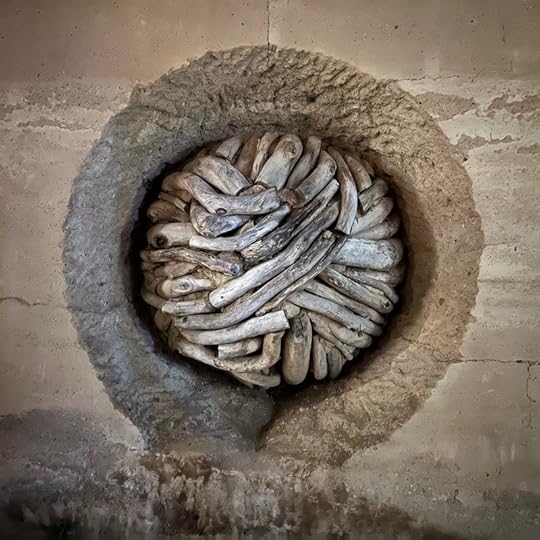
This excavated wall by Andy Goldsworthy in the Presidio is easily one of my favorite pieces of public art in a city with a lot of great public art. It’s a fantastic work of archeological and environmental fiction. You can sense, long after its creation, the growth — as well as the effort required to unearth it.
September 3, 2023
Upcoming Event: Music That Listens to Itself
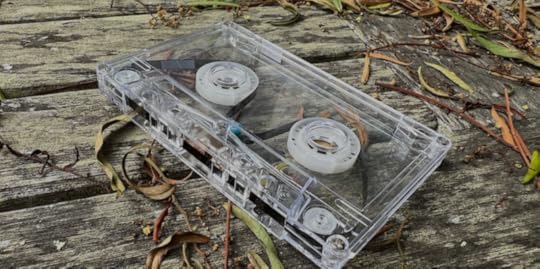
It’s been a while since I did a live event. I think the last one may have been last year when I interviewed Mark Fell, Rian Treanor, and James Bradbury at the Algorithmic Art Assembly here in San Francisco. Now I’ve got a new event scheduled, across the Bay in Berkeley. On the evening of Friday, September 29, from 7pm to 9pm, I’ll be leading an in-person session in the Expanded Listening series at the venue Berkeley Alembic (berkeleyalembic.org). I was invited by my old friend Erik Davis (Techgnosis, Burning Shore) to program an evening’s listening after I attended an Expanded Listening session he did last month with Sam Plattner, a sound designer and field recordist. It’s a great format: I’ll speak a bit before the listening session, then we’ll listen straight through for about 80 minutes to music I’ve assembled from a variety of sources, and then we’ll discuss what we heard, as well as our experience of listening to it. It’s a comfortable, airy space, with yoga mats and cozy cushions to lay out on while the music plays.
Here is the official event description:
For this session of the Expanded Listening series, we’ll enjoy a program of ambient and ambient-adjacent artists from around the world that employs techniques to not just slow but to even reverse and revisit time. From reverb to echo to tape loops to granular synthesis, various recording and performance practices give artists the means by which to examine the space within sound. We’ll listen to some of these artists via recordings as they explore what might be called the “poetics of the buffer”: the ability to capture sound, often in real time, and toy with it while it still lingers in the mind’s ear. This is music that listens to itself. Such recordings lend themselves readily to meditative states, to a consideration of music as a time-based art, and to an appreciation of the ways that numerous genres aspire to a state of utmost stillness. The evening will open with some framing comments from Marc Weidenbaum, a music critic and the moderator of the Disquiet Junto, a long-running online community for electronic musicians, some of whose compositions will be included.
There’s an Eventbrite page to get a ticket. Hope to see you there.
TWiS Listening Post (0011)
This went out last Wednesday as a weekly bonus — a thank-you to people who financially support This Week in Sound. It supplements the free Tuesday and Friday issues, which feature a broader array of material from the field of sound studies. It contained an annotated playlist of recommended music. I wrote about (1) a nearly four-hour album of “impossible” piano music by Kenneth Kirschner, (2) a half-day-long video by Dan Coffey of slow shifts in syncopation, and (3) a taste of the upcoming Andrew Pekler album.
September 2, 2023
Scratch Pad: Spelling, FCGDAEB, Fincher
I do this manually at the end of each week: collating most of the recent little comments I’ve made on social media, which I think of as my public scratch pad. I mostly hang out on Mastodon (at post.lurk.org/@disquiet), and I’m also trying out a few others. And I take weekends off social media.
▰ I’m the only customer at the pupuseria, and I can hear the hand slaps as they are made, one at a time — the cook, out of sight, singing along with the radio, just the chorus of each song
▰ The Who’s “Won’t Get Fooled Again” gets a little longer every few years. There’s a committee that decides when and by how much, but the group’s governance and decision-making are tightly guarded secrets.
▰ If a widely used word processor can recognize the brand names for fast food, athletic equipment, and cleaning products, there’s no excuse for it not to recognize these names.
▰ Fluffy Clouds Generate Divine Ambient Ether Blankets
Fluffy Clouds Generate Divine Ambient Ether Blankets
Fluffy Clouds Generate Divine Ambient Ether Blankets
Fluffy Clouds Generate Divine Ambient Ether Blankets
(I’m, er, belatedly getting around to memorizing the circle of fifths. And I originally had “Frothy” but Acoustic Mirror, on Mastodon, correctly suggested “Fluffy” in its place.)
▰ 1-Across “Sound made by an electric vehicle at low speed”
The answer had three letters. The New York Times Mini has my number.
▰ Everything I need to know about the upcoming David Fincher movie, The Killer. (And Peter Albrechson noted Ren Klyce, Fincher’s longtime collaborator, returns for sound design, a role rarely highlighted in this sort of credit list.)

▰ For the record: a lunch that is one third Sichuan leftovers and two thirds Salvadoran leftovers is excellent.
September 1, 2023
Junto Profile: leon clowes
This Junto Profile is part of an ongoing series of short Q&As that provide some background on various individuals who participate regularly in the online Disquiet Junto music community.
What’s your name? My name is leon clowes. I prefer to write it all in lower case as that looks better, more balanced. I don’t like the capital ‘L’ or ‘C’ in my name, not sure why. (better not to question some things).
Where are you located? I grew up in a village called Ipstones and went to school in a town called Leek in North Staffordshire. I was born from and into a traumatized family and because of this, my maternal grandparents had to adopt me. It was an unsettling childhood because of secrecy around my father’s identity. This difficult childhood was compounded by being a gay teenager during the onset of AIDS in the 1980s. Being so vulnerable, I was bullied relentlessly at school.
To counter this I wrote electro pop and Brecht/Weill type cabaret songs using affordable synths and a Tascam Porta One under the moniker Damian’s Deviants. (This was a nod to Marc and the Mambas. Marc Almond, and the Some BIzzare record label roster, were my route to outsider and experimental music and is the point I’ll always return to.)
I dreamed of escaping to London and I did, being fortunate enough to be in an age where working class kids could still get grants to study arts at higher education levels in England. In 1988 I moved to London to attend Goldsmiths College to study music and, apart from 4 months in Leicester and 4 years in Manchester, that’s where I’ve stayed.
I was co-running multimedia performance clubs in the 1990s and being commissioned to write music for fringe plays in London and Glasgow but I f***ed it up by drinking and drugging. As a sort-of-functioning but pretty self-destructive addict I did successfully hold down jobs in arts administration though. That at least gave me lots of contacts in the cultural sector and the know-how of grant applications.
So in 2018 I started to get sober and when lockdown happened I made my re-entry into creative practice by making a radio audio collage piece, Days of Future Past, which got picked up by various queer festivals and exhibitions.
I’m currently doing a PhD into my own creative practice at London College of Music, University of West London. My research is into the self-compassionate use of autoethnography as a technique for artists exploring lived trauma.
What is your musical activity? I’m still working this out, in all honesty. My starting point was in the mid-’80s and my influences then would have been the alternative music I mentioned above, acts on the Some Bizzare label (Soft Cell, The The, Foetus, Cabaret Voltaire, Psychic TV). I was also massively into Joni Mitchell, Burt Bacharach, and David Bowie, so it was a fairly broad pop palette that funneled into me wanting to be an alternative pop star. Studying music was a portal to classical music. I know every single note of Beethoven’s Violin Concerto as I studied it at A level.
Because I was using analogue synths and a four-track recorder to make music until the early ’90s, when I began my transdisciplinary creative practice a few years ago, the hardest thing of all was to get back into writing music. Even though the technology had greatly improved and become much more intuitive than the CuBase I knew in the ’90s, I struggled with the amount of choice and possibility. I presented a practice research paper about this recently.
Mostly I’ve been writing electronic instrumental music and composing using recorded materials of acoustic instruments and sounds. I’ve mostly been drawn to recording acoustic improvisations and editing them into new music. It was a technique I developed using Audacity as an editing tool for composition. Here’s a film work ‘nesting’ that I made which uses four of these short pieces.

What is one good musical habit? Do the Disquiet Junto and Naviar Records SoundCloud weekly challenges. They perfectly complement each other. The Disquiet ones help me think about new ways of composing, and the Naviar Haikus give me free rein to explore. As a re-emerging composer I need the motivation, the deadlines, and the supportive online communities. Being involved in both has been absolutely key to my creative revival.
That said I’ve been a bit absent recently, it’s been silly busy with stuff. I miss it, creating for the sake of creating.
What are your online locations? I don’t hang out much online, I should spend a bit more time in https://llllllll.co/ as I would learn so much more. There’s a resolution I’ve just made. I’ve got loads of socials and a website: leonclowes.com.
Artworks are here:
Vimeo: https://vimeo.com/user11974720
YouTube: https://youtube.com/user/lennyclaves
SoundCloud: https://soundcloud.com/leonclowes
Mixcloud – SHAMES: https://mixcloud.com/leonclowes/playlists/shames-looking-never-hurt/
Socials:
Instagram: https://instagram.com/leonclowes/
Twitter: https://twitter.com/ClowesLeon
Facebook: https://facebook.com/leon.clowes
What was a particularly meaningful Junto project? Oh there’s been so many. It’s like a notebook of ideas, doing the Juntos. I will go back, barely remember something and it’s an idea that’s been jotted down I can return to.
I’m going to pick this: https://soundcloud.com/leonclowes/5-pulse-waves-played-55-times-disquiet0555
I got the math wrong on it, I didn’t give it a name, and I absolutely love this one. When I mixed together a series of Naviar and Disquiet pieces for the Naviar Records Haiku Fest at Cafe Oto in December last year, this was the opener, it was the perfect way to start ‘The Haunting’, the recording of the live performance is available to watch here.
For people who might find the subject abstract, can you talk about how instrumental music can express personal experience? What a thoughtful question. I’m halfway through my practice research study at London College of Music, and with the prospect of analysing and revisiting the electronic pop music I wrote as a teenager I had thought to focus on the lyrics rather than the music, but this question reminds me that that would be avoidant.
I worked recently with an instrumentalist who was, and is, going through a difficult grief process. By recording the improvisations we made together, there was something sorrowful and profound captured on the zoom recordings which prompted a series of compositions. Recording acoustic instruments in particular spaces has become a growing fascination — on these particular improvisations I’m referring to, we recorded the playing in the player’s home and there’s faint wind chimes outside the window and a clock ticking in the room. This depth generates sound materials that provide me with a rich palette for composing.
I was scratching my head about this question at first but I have found it very helpful in clarifying how I’m developing my compositional process, so thank you Marc!
Can you talk more about strategies you’ve developed to avoid the issue you describe about contemporary music tools providing too much choice and possibility? Initially I restricted myself to only using GarageBand to write music. I’d like to say that was a deliberate strategy but truthfully it was what was freely available on my MacBook Air. When I was writing on a synth and four track in the ’80s and ’90s, I had access to one polyphonic synth, drum machine, and piano. Being a beginner again, by having only a limited range of free software sounds, encouraged innovation. I layered multiple GarageBand instruments in A Love Divine to find timbres that echoed what I had recorded in the 1989 demo of the same song. I’m also fond of how you can record and overdub effects on instruments on GarageBand (such as in this Disquiet track), my favourite of this being the gradual shifts that are possible with organ stops (like in this Disquiet piece). I particularly like the warm pulsing and throbbing of the organ sounds, it puts me in mind of Talk Talk’s ‘Spirit of Eden’ and ‘Laughing Stock’ albums which are extraordinary albums.
Also, I like to record things quickly and instantly. A melody that pops into the head, or a short improvisation. Get it out quickly, no more than a few instruments. Don’t re-record, keep the first take. On something like this track Webbed, I think that works well. However in my next phase of compositional practice I want to sit with material and go much deeper, take more time, use more reflection. For that reason I’m now starting to collaborate with other more experienced musicians.
The photo of leon clowes was taken by Amber Franks as part of her ‘Dead Memories’ project last year: amberfranks.co.uk/dead-memories.
August 31, 2023
Pixel Sound

I hadn’t touched DALL·E 2 in months, since the initial intrigue dissipated, and then today I got an alert that the credits I’d once purchased were about to expire, so I had the AI pump out a bunch of pixel art of field-recording microphones in various settings. These are just a few of the sequences that resulted.
Disquiet Junto Project 0609: Speed Limit Pt 1
Each Thursday in the Disquiet Junto music community, a new compositional challenge is set before the group’s members, who then have just over four days to upload a track in response to the assignment. Membership in the Junto is open: just join and participate. (A SoundCloud account is helpful but not required.) There’s no pressure to do every project. It’s weekly so that you know it’s there, every Thursday through Monday, when you have the time and interest.
Deadline: This project’s deadline is the end of the day Monday, September 4, 2023, at 11:59pm (that is, just before midnight) wherever you are. It was posted on Thursday, August 31, 2023.
Tracks are added to the SoundCloud playlist for the duration of the project. Additional (non-SoundCloud) tracks appear in the lllllll.co discussion thread.
These following instructions went out to the group’s email list (at tinyletter.com/disquiet-junto).
Disquiet Junto Project 0609: Speed Limit Pt 1
The Assignment: Record a track at precisely 60 BPM with the intention someone will subsequently rework it.
Step 1: You’re going to record a simple track at 60 BPM in 4/4 that will be reworked subsequently by other musicians, including potentially being combined with other tracks. Think about how you want to structure something with that intention.
Step 2: Record a 60 BPM track in 4/4 based on the thinking that resulted from Step 1.
Note: This is the first part of a two-part project. You don’t need to participate in both. In the Junto, all projects are intended to be doable as standalones. However, there often are sequences. The intended second project of this project, next week, will build on this one, so please consider making your track downloadable and available for reworking/remixing.
Eight Important Steps When Your Track Is Done:
Step 1: Include “disquiet0609” (no spaces or quotation marks) in the name of your tracks.
Step 2: If your audio-hosting platform allows for tags, be sure to also include the project tag “disquiet0609” (no spaces or quotation marks). If you’re posting on SoundCloud in particular, this is essential to subsequent location of tracks for the creation of a project playlist.
Step 3: Upload your tracks. It is helpful but not essential that you use SoundCloud to host your tracks.
Step 4: Post your track in the following discussion thread at llllllll.co:
https://llllllll.co/t/disquiet-junto-project-0609-speed-limit-pt-1/
Step 5: Annotate your track with a brief explanation of your approach and process.
Step 6: If posting on social media, please consider using the hashtag #DisquietJunto so fellow participants are more likely to locate your communication.
Step 7: Then listen to and comment on tracks uploaded by your fellow Disquiet Junto participants.
Step 8: Also join in the discussion on the Disquiet Junto Slack. Send your email address to marc@disquiet.com for Slack inclusion.
Note: Please post one track for this weekly Junto project. If you choose to post more than one, and do so on SoundCloud, please let me know which you’d like added to the playlist. Thanks.
Additional Details:
Length: The length is up to you.
Deadline: This project’s deadline is the end of the day Monday, September 4, 2023, at 11:59pm (that is, just before midnight) wherever you are. It was posted on Thursday, August 31, 2023.
Upload: When participating in this project, be sure to include a description of your process in planning, composing, and recording it. This description is an essential element of the communicative process inherent in the Disquiet Junto. Photos, video, and lists of equipment are always appreciated.
Download: It is always best to set your track as downloadable and allowing for attributed remixing (i.e., a Creative Commons license permitting non-commercial sharing with attribution, allowing for derivatives).
For context, when posting the track online, please be sure to include this following information:
More on this 609th weekly Disquiet Junto project, Speed Limit Pt 1 (The Assignment: Record a track at precisely 60 BPM with the intention someone will subsequently rework it), at: https://disquiet.com/0609/
About the Disquiet Junto: https://disquiet.com/junto/
Subscribe to project announcements: https://tinyletter.com/disquiet-junto/
Project discussion takes place on llllllll.co: https://llllllll.co/t/disquiet-junto-project-0609-speed-limit-pt-1/
August 30, 2023
This Week in Sound: “A Thunderous Boom as They Worshipped a Thunder God”
These sound-studies highlights of the week originally appeared in the August 29, 2023, issue of the Disquiet.com weekly email newsletter, This Week in Sound. This Week in Sound is the best way I’ve found to process material I come across. Your support provides resources and encouragement. Most issues are free. A weekly annotated ambient-music mixtape is for paid subscribers. Thanks.
▰ MAYBE TAKE AN ANIMAL DEGREE: Researchers such as Michelle Fournet, a professor at the University of New Hampshire, are working to “decode” the language of the animal kingdom — from humpback whales to hummingbirds — so we might communicate with other species: “Fournet has shared her catalog of humpback calls with the Earth Species Project, a group of technologists and engineers who, with the help of AI, are aiming to develop a synthetic whup. And they’re not just planning to emulate a humpback’s voice. The nonprofit’s mission is to open human ears to the chatter of the entire animal kingdom. In 30 years, they say, nature documentaries won’t need soothing Attenborough-style narration, because the dialog of the animals onscreen will be subtitled. And just as engineers today don’t need to know Mandarin or Turkish to build a chatbot in those languages, it will soon be possible to build one that speaks Humpback—or Hummingbird, or Bat, or Bee.”
▰ YOU’LL SHUT ME DOWN WITH A PUSH OF YOUR BUTTON: “[M]ysterious saboteurs who have, over the past two days, disrupted Poland’s railway system — a major piece of transit infrastructure for NATO in its support of Ukraine — appear to have used a far less impressive form of technical mischief: Spoof a simple radio command to the trains that triggers their emergency stop function.” The assault, which took place on August 25th and 26th, isn’t merely infrastructural: “The saboteurs reportedly interspersed the commands they used to stop the trains with the Russian national anthem and parts of a speech by Russian president Vladimir Putin.” The system’s weakness is striking: “anyone with as little as $30 of off-the-shelf radio equipment can broadcast the command to a Polish train — sending a series of three acoustic tones at a 150.100 megahertz frequency — and trigger their emergency stop function.”
▰ DANCE OFF: “Different layers of soil, ash and guano created a floor that absorbed shocks while emitting resonant sounds when people stomped on it.” That is not a report from Burning Man. It is a summary of archeological details from a 700-year-old site in Peru called Viejo Sangayaico, where humans apparently “stomped rhythmically on a special dance floor that amplified their pounding into a thunderous boom as they worshipped a thunder god.” Per Miriam Kolar, an archaeoacoustics researcher at Stanford University: “Evidence of other sound-altering structures has also been found at Andean sites older than Viejo Sangayaico. … Conch-shell horns found in a ceremonial center at a roughly 3,000-year-old site called Chavin de Huántar could have produced a range of sounds, from nearly pure tones to loud roars, that were emphasized in ceremonially important passages and ventilation shafts.” (Thanks, Nicola Twilley!)
▰ BRAIN TEASER: “In a milestone of neuroscience and artificial intelligence, implanted electrodes decoded Mrs. Johnson’s brain signals as she silently tried to say sentences. Technology converted her brain signals into written and vocalized language, and enabled an avatar on a computer screen to speak the words and display smiles, pursed lips and other expressions.” And the results have broad applications: “The goal is to help people who cannot speak because of strokes or conditions like cerebral palsy and amyotrophic lateral sclerosis. … The field is moving so quickly that experts believe federally approved wireless versions might be available within the next decade.” (Gift link to nytimes.com.)
▰ USE YOUR ILLUSION: “If there is a scene of a jungle, then you will hear a classic jungle soundscape, even if it includes animals from a different continent. If you are in a more foreboding or swampy area, you will hear a loon. Doesn’t matter where the actual location is supposed to be.” That is Steven Novella — you sorta have to love that family name in the context of a stated desire for truth — weighing in on how the sounds of animal and environments in TV and movies often have no basis in reality: “Eagles, for example, do not make that cool-sounding screech that is almost always paired with a video of an eagle. That is the sound of a red-tailed hawk, which has become the standard sound movies use for any raptor. Eagles make a high-pitched chirping sound. If you have seen a bear roar in a movie, chances are the sound you heard was that of a tiger. All primates hoot like a chimp, all frogs ‘ribbit’ like that one species whose range includes Hollywood.” And Novella, a Yale University School of Medicine professor, includes human activities in his diagnosis of this widespread problem: “I do think heavy reliance on such tropes can have downsides worth discussing. One is that they can become lazy, even unnecessary. Have you noticed that every time someone steps in front of a live microphone there is a moment of feedback? Is that really necessary? Isn’t the fact of the amplified voice enough to convey to the audience that the mic is live? I get the feeling that at some point things like this are done just because they are done. It becomes a thoughtless part of the process — you have to add the feedback every time someone steps up to a live mic.” In brief, I agree with him. (Thanks, K.r. Seward!)
▰ NOISE-CANCEL CULTURE: Donna Wu thinks noise-canceling technology can only go so far, and that we’re due, culturally, for a “reckoning.” She quotes David McAlpine, academic director of Macquarie University Hearing: “‘We’ve simply outsourced our sound world in a way we’ve never outsourced our visual world,’ he says. Imagine if all civic beautification efforts were replaced by individuals putting on AR/VR goggles, then walking around in their own private, alternative realities all day. ‘And that’s problematic.’”
▰ MONSTER MASH: “Kitamura conducted an experiment in a forest where he randomly placed small speakers, played Pokemon sounds, and recorded them. This allowed him to analyze how Pokemon cries sounded in a natural environment. He also discovered that insect sounds resemble the electronic sounds of synthesizers, which are used to create Pokemon sounds. By simulating sound echoes and the diffraction caused by plants and trees, the audio team at Game Freak aimed to make Pokemon sound more realistic.” Kitamura is Kazuki Kitamura, director of Connect+Echo Audio, and he is paraphrased here from a presentation about the sound design of Pokemon games at the recent Computer Entertainment Developers Conference (CEDEC 2023), which was held in Japan from August 23-25.
▰ QUICK NOTES: Match Game: “Many animals use sounds to attract others. In this game you’ll find out what type of animal you match with!” — a program of the Yale University Music Lab (thanks, Lotta Fjelkegård!). ▰ Heart Beat: Wearable devices to detect cardiovascular disease are being developed to filter out real-world external noise that can cause mistaken data. ▰ Ear Plug: Sony PlayStation has purchased the headphone company Audeze, which specializes in a particular type of magnetic driver. ▰ Best Buds: Forthcoming AirPods Pro 2 from Apple will reportedly include features such as adaptive audio, conversation awareness, muting/unmuting, and personalized volume, among other upgrades. ▰ Stem Cells: If you notice an uptick — and upgrade — in remixes and mashups, it may have to do with the DJ software Serato adding the ability to identify and single out stems (i.e., specific elements), per Peter Kirn at cdm.link. ▰ Ear-in-the-Sky: So-called “noise cameras” in New York City can lead to fines upwards of $2,500. ▰ Electric Avenue: The new sonic logo for the Indian electric car company Tata is said to blend “electronic circuits with a powerful ripple sound, inspired by the intersection of nature and technology.” ▰ Elephant’s Memory: “Artificial intelligence could help determine the verdicts of future court cases involving musical copyright.” ▰ Down the Tubes: “new research from the University of Wisconsin-Madison shows that talking through a PVC tube can alter the sound of someone’s voice enough to trick [virtual assistants like Siri and Alexa].” ▰ Hum Bucker: I read about hum-to-search for songs at least as far back as late 2021, but apparently this is now a new-in-the-works YouTube feature.
I Am Not in Switzerland
I am not in Switzerland, but the Disquiet Junto has, for the fifth year in a row, collaborated with the great Musikfestival Bern on a series of music composition prompts and resulting recordings. The festival, which will run from September 6th through 10th, has Éliane Radigue as its composer-in-residence this year, and her work inspired our three projects. Tobias Reber of the festival interviewed me about the work in this short (roughly 13-minute) video. Despite appearances, otherwise it’s in English.
We discuss a variety of topics, including: composers communicating about concepts non-verbally, musicians making music for other musicians, Rebecca Solnit’s essay “Preaching to the Choir,” the benefits of there being “too much music” on the Internet, and the 145 individual recordings that resulted from this year’s trio of Junto x Bern projects — many of which tracks will be played in a special exhibition space in Bern during the upcoming festival.


