Antonio Nieto-Rodriguez's Blog, page 22
October 1, 2019
ANR #15: The Project Manifesto
 The Guiding Principles of the Project Economy
Good Day!
I hope you are doing well.
After months of hectic activity, it is time to get back talking about the latest trends in the Project Economy.
Sara, a good friend told me recently: “After +20 years working in the credit risk department at an international Bank, which is now being heavily automated, I have been appointed project director of a large compliance project! At first, I was worried. Suddenly what seemed a clear career path disappeared. It was being replaced by a role in a project for the next 12 months… and nothing concrete after. It took me a couple of weeks to get over my concern; now I am truly enjoying it, I learn new things every day, about myself, about others and about the bank.”
Sara’s story is not the only one, more and more people are shifting functional jobs – what has been the norm for the past 60 years – to project-based roles.
Another example that we are witnessing the rise of projects as the main unit of work, as well as the essential model to deliver change and create value for individuals, organizations, and society at large.
Yet, despite this surge in project activities and project spending, the risk of project failure continues to be huge and will continue to increase unless organizations and governments embrace advanced project leadership practices.
Widely used management disciplines are often linked to a few simple frameworks that can be easily understood, and applied, not only by managers but also by the majority of individuals. Porter’s Five Forces is a great example. In contrast, project management methods have tended to be too complex to be easily understood and applied by non-experts.
Under these circumstances, it is not surprising that we saw the rise of agile, triggered by the Agile Manifesto, in February 2001 by 17 independent-minded software practitioners.
I firmly believe that it is time that we co-create the Project Manifesto. My proposal is composed of the 12 guiding principles that you can see below. Appreciate if you can share your thoughts, add or challenge them, and ultimately endorse the Manifesto.
Thanks in advance. Keep well.
Antonio
Project Management Champion to the World
Latest ANR ActivitiesThe Project Revolution >Udemy MOOC >Whitney Johnson Podcast >
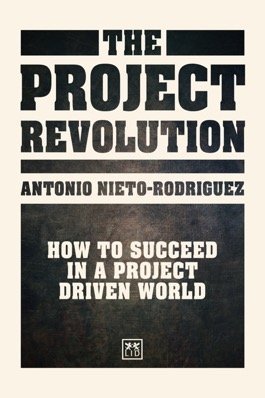 Use limited code: “Project30” to get a 30% discount >
.The Project Revolution: How to succeed in a project driven world >The Project ManifestoWe recognize the significant importance of projects for our society and humanity at large, and that there are better ways of implementing projects successfully and helping others to do so. Through this work:We acknowledge that governments implement policies through projects and that countries develop and societies evolve through projects; we believe that ideas are made a reality through projects and that, if one-day poverty is eradicated from the earth, it will be through a project.We believe projects are the lingua franca of governments, businesses and personal worlds, from the C-suite right through to an individual managing their career and relationships.We are uncovering a new vast disruption; due to the new reality of accelerated change, more and more aspects of our lives are driven by projects, and more and more aspects in organizations are becoming projects; projects are thus becoming an essential element in everyone’s professional and personal journeys.In a world that is becoming increasingly automated and robotized, we see projects as the most human-centric way of working.We believe that organizational agility is achieved through projects, which break through silos, reduce management layers and create high-performing teams.We recognize that start-ups and organizations innovate, grow, transform, create long-term value, and achieve their visions and strategic goals through projects; founders, entrepreneurs and CEOs are the ultimate project leaders.We consider our lives to be a set of projects; studies have become projects, and careers have become series of projects too.Our highest priority is to deliver projects better, to reduce the failure rate, to create more value for individuals and organizations, and to create more sustainable development in our economies and societies at large.We see that projects and project implementation have received very little attention and have been ignored by leading business thinkers, management publications and business schools; we believe that in the past years this deficiency is being rectified.We recognize project-based education as the best and most enduring learning experience for students and adults.We seek recognition of projects and project implementation capabilities as essential for all management and leadership positions; we aspire for it to become part of the curriculums of every school and undergraduate programme; we aim for it to be taught in every business school and MBA programme.We declare that projects and project implementation should be recognized as a profession.< NEWSLETTER ARCHIVEJoin 51,000+ subscribers in keeping up to date with the latest trends and best practices in project management and strategy implementation.Name*Email* This iframe contains the logic required to handle Ajax powered Gravity Forms.


December 21, 2018
ANR #14: With Roger Martin – World’s #1 Management Thinker
 Organizations and managers should organise their work around Projects.
Good Day!
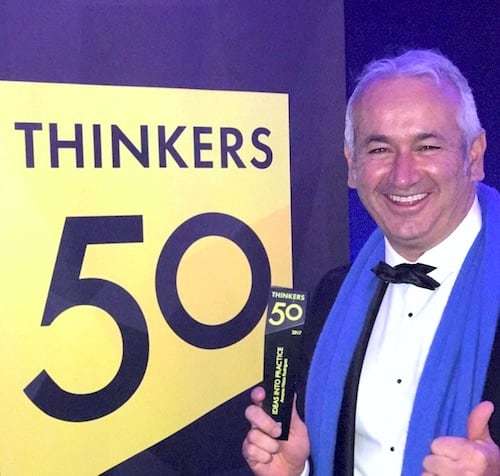
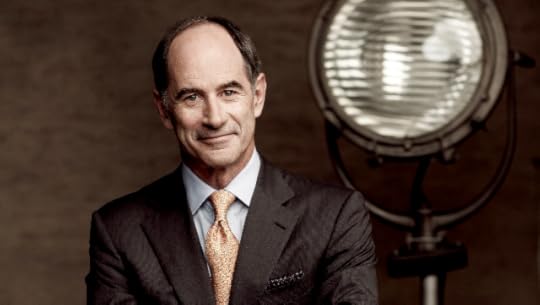
There is no better way to finish a year full of exciting news with Roger Martin. Roger has an extraordinary career, full of achievements and recognitions. In 2017 he was named the world’s #1 management thinker by Thinkers50. He has published 25 articles in Harvard Business Review and 11 bestselling books!
Two things struck me in our conversation:
Roger has an astonishing ability to simplify complex matters, cut through the chase and explain with plain words the essences of some of the most intricate management topics, mainly around strategy.The second eye opening was Roger is actually one of the first thought leaders who wrote about the importance of projects and project management in his HBR article “Rethinking the Decision Factory”[1].
“My advocacy vis a vis projects is that the entire decision factory (white collars work) should be thought of as nothing but projects. Projects, projects and more projects; managers should organise their life around projects.”
“I would argue that companies that have organised white collar work around projects are winning.”
You can find an extract of the interview here and the full video version on the Project Revolution youtube channel. Hope you enjoy it and learn from Roger’s extraordinary wisdom. I want to take the opportunity to thank your for reading my post this year. Not easy to find the time when there is so much information around us.
Finally, I wish you an extraordinary Holiday’s season with your loved ones, and a fabulous 2019!Keep well,
Antonio
Project Management Champion to the World
1. October 2013, https://hbr.org/2013/10/rethinking-th...
Coming Soon (2019)The Project Revolution: How to succeed in a project driven world >Interview with Roger MartinWorlds #1 Management ThinkerIn 2017, Roger was named the world’s #1 management thinker by Thinkers50 , a biannual ranking of the most influential global business thinkers. A Canadian from Wallenstein, Ontario, Roger received his AB from Harvard College, with a concentration in Economics, in 1979 and his MBA from the Harvard Business School in 1981. Roger is a trusted strategy advisor to the CEOs of companies worldwide including Procter & Gamble, Lego and Verizon.
Roger Martin serves as the Institute Director of the Martin Prosperity Institute and the Michael Lee-Chin Family Institute for Corporate Citizenship at the Rotman School of Management and the Premier’s Chair in Productivity & Competitiveness. From 1998 to 2013, he served as Dean. In 2013, he was named global Dean of the Year by the leading business school website, Poets & Quants.
He has published 11 books the most recent of which are Creating Great Choices written with Jennifer Riel (Harvard Business Review Press, 2017) Getting Beyond Better written with Sally Osberg (HBRP, 2015) and Playing to Win written with A.G. Lafley (HBRP, 2013), which won the award for Best Book of 2012-13 by the Thinkers50. He has written 25 Harvard Business Review articles.
More about Roger Martin:
https://rogerlmartin.com
https://twitter.com/RogerLMartin
https://hbr.org/search?term=roger+martin
https://www.amazon.com/Roger-L.-Martin/e/B001IXNZ82
Today is a special day as I have the pleasure to interview Roger Martin, the world’s number one management thinker, author of 11 bestselling books and 25 Harvard Business Review articles, awarded Dean of the year while transforming Rotman…. and an amazing person.
A great way to finish a great year.
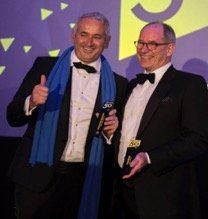 Antonio: Thank you Roger for dedicating some of your precious time to share your views with our experts, who are eager to learn from you.
Roger : It’s a great pleasure, Antonio. As I told you during the Thinkers 50 awards ceremony, this community of people who are trying to bridge the world of rigorous academic thought with actual practice is an important community and so I’m thrilled to be talking to you this morning. Because you’re a member of that small but important community.
Antonio: Thank you Roger. Let me start by asking you a bit about your background and history. When you were a kid, Roger, did you want to be a guru like you are now?
Roger : No, no, not really. I guess what I did know is that I loved business. My father was an entrepreneur, he started his company on animal feed manufacturing from scratch when I was two. He had all the struggles that entrepreneurs have. A couple of times he almost went out of business when I was growing up. He went through crises but he was totally dedicated to serving his customers and having a great product.
So I grew a love for business and how it operated, how to think about customers and employees and your community. I understood the importance of the enterprise supporting the community. I think it was more those matters I knew I wanted to dedicate my life.
Antonio: And when did it become more clear that you wanted to be a thinker, an influencer. When was that moment, how did it happen?
Roger : You know I think it happened while I was at Monitor. As you probably know I was one of the guys that built up the company. What became more evident over time was that consultants from all over Monitor would come to me and say: “Roger, have you come across your work with this issue or written anything about that”.
Senior partners at Monitor didn’t write stuff down regularly and say here’s what I learned on this study.
While I created a whole portfolio of memo’s I’d written to CEOs about many different topics. It was probably in the 90s when I realised I did something a little bit different than others. Monitor had fantastic consultants that would go in and solve problems for companies. But they didn’t step back and say: “What did all this mean? Is there a general trend here?” It became evident to me that I liked that and it was valuable because the Monitor people would keep coming to me.
Antonio: And then you became the Dean of Rotman Business School. One of the institutions that I see more hard to change are business schools. And you did that, you transformed Rotman. Can you tell us a bit about that experience?
Roger : Sure. I sometimes wonder myself. Because you’re right, business schools are very difficult to change, it was a tough challenge. My strategy was to focus on growing the business school dramatically. Get everybody more money to do what they’re doing now, pay them higher salaries, give them more research money to do even more things. They won’t begrudge the fact that I’m getting even still more money, to new initiatives affecting design, country competitiveness….
I inherited a budget of about $13 million, when I left it was $130 million. When I double or triple the existing $13 million everybody was saying: Wow, this new dean he’s giving us more resources to do what we want to do.
And then they will be supportive of the additional things that I’m doing, even if they might think I don’t know if that’s good and useful stuff. But they’d say: Well, let him do that because he’s helping me, not bothering me. He’s making my life easier not harder. And that, I think, was the secret.
Antonio: I’ve done a lot of change management and I’ve never heard about a theory like yours. I think there’s room for another book there, Roger. You engage the people by giving them more freedom and more resources to try more things. More projects in the end. And there is no confrontation. Very interesting.
Roger : And it really supported the things that they did. We had a great guy, Joel Baum who was then reasonably senior but not yet a super star in strategic management. He had a vision for how he could build a strategy department at the school. And I said: “Do it. Do it. I’ll give you the resources, but you have to aim for being one of the top strategy departments on the planet.”
So I asked faculty and staff if they had projects in mind. We did the same in accounting. We’re now one of the top accounting business schools. The departments that said we want to just do more of what we’re doing, they were staying with the same resources.
 Antonio: You were acting as an executive sponsor: supporting the team, not just with providing resources, but with stretching their mind and setting ambitious goals and following through.
Roger : And clearing their paths… I think of this like American football, the part of the team at the front clearing the path so that the fast guys at the back can score touchdowns.
Let’s make sure there are not a lot of people disturbing Joe while he is doing his projects.
For example, we didn’t actually have in the plan hiring a full Professor in strategic management, we had only room for an Assistant Professor. But then a full Professor came by and said: Well, I like what you’re doing”.
Rather than saying “oh Joe, you’ve got to go back to the Committee to get this upgraded” and the university is going to say: “Well, we didn’t have a slot for that”. I just said: “Hire him. I’ll figure out all that other stuff, you’ve been able to attract this awesome full Professor in exactly the area you want. You did the hard work of building a department that was worthy of this person wanting to come. I’ll take care of the messy stuff around that.”
Antonio: Roger you have published 11 books, 25 HBR articles, where do you find the inspiration?
Roger : I think it comes from my dad, honestly. Who was not highly educated, he was a High School educated entrepreneur. I always say that I learned more from him than I learned from two years at Harvard Business School. He always wanted solutions. Elegant and simple solutions. I think that’s why my writing strives to be simple.
Inspiration comes very naturally. All the articles I write are just a result of me hanging around with senior leaders in the world of business, watching what bothers them, confuses them, annoys them, frustrates them.
My most important academic mentor is a wonderful man, named Chris Argyris [1], one of the co-founders of the Yale School of Management.
And then along came Harvard Business School, Professor and he was a proponent of action learning. He says: “Unfortunately you’ll learn less in classrooms than you wish and retain little of it against learning while doing”.
My entire approach to all of the books and articles that I’ve written is action learning. I don’t say: Maybe I could study the following. And maybe I could create a survey or develop a database or dataset. I’ve never done that.
What I say is: “Wow if companies had a tool that could do this or they could do this CEOs would be helped. Then I’ll do research based on that”.
Antonio: Let me move now into our field of projects and project management. Our feeling has been that we’ve been a bit ignored by the big thinkers and business schools. What are your views about projects in general Roger?
Roger: Well, I mean I’m in your camp, entirely. The article I would point to on this is my HBR article on “Rethinking the decision factory” [2]. In which I say that modern white collar life is project management. It isn’t anything other than projects and project management.
In an assembly line you would come to work at whenever your shifts are; let’s say 9am and you do the same work until 5pm and then come back the next day. These are flat jobs, you’re hired to do a task and do it the same every day. And that’s in those and then I say well okay, what’s the job of all those people who live in office towers in the same company?
I work a lot with Procter & Gamble [3]. They have people working in plants producing pampers, head and shoulders, fairy, tide … but then you have a bunch of people working in office towers too, all over the world. What do those people do? They manufacture decisions: every day they come into work and assemble decisions.
Unlike in the manufacturing plant where the service operation is the same all the time – it’s flat. In the decision factory it’s all curves, up and down. In fact the tricky thing for that world is mainly that these things compound on one another. If you only have the product relaunch underway that’s great. But if you have a quality problem in Turkey and you’re the Global Brand Manager of Pampers, that’s another project.
My view on project management: if a person like you observing project management says that they are done badly, is because we structured those jobs as if they’re flat jobs.
Antonio: Absolutely. It makes lots of sense.
Roger : In fact, there might be a 5% or 10% of the job of everybody who works in one of those towers that is flat.
You know, every Monday morning from 8 to 9 you’d have a meeting, that could be considered as flat and routine. But at least 80% and probably closer to 95% are an amalgam of projects – a portfolio of projects. Instead of thinking my life is projects, the average person living in one of those buildings thinks my life is this regular job and then I have these damn projects which get in the way of my regular job. And of course they get mismanaged.
My advocacy vis a vis projects is that the entire decision factory should be thought of as nothing but projects . Project, project, projects and more projects; managers should organise their life around projects.
I think that maybe it’s because I used to live in a professional service firm where everything is a project. In fact, the white collar part of an organization should look more like professional service firms.
I think the difficulty with project management is mostly contextual. It’s not the substance of the work itself. I think people can run projects eventually, but they are often in the wrong.
I believe that over time we’re going to migrate. It is going to take 50 years; it always does in the world of business. All firms will look more like today’s professional service firm. There will be a very, very small number of flat jobs in the decision factory and the rest will be projects.
Antonio: How does productivity affect to the decision factory?
Roger : In fact, there has not been productivity growth in the decision factory, because, in general, they’re doing things, kind of, grotesquely inefficiently.
Labour productivity growth in the United States until the mid-70s was 3%-4%, year after year, constantly. Then it dropped, it dropped to 1 to 1.5% growth. The US is getting less productive or its productivity increase is slowing. But if you look at plant or manufacturing operation productivity, nothing has changed, it is still bopping along at 3 to 4% increase. But productivity growth in the decision factories has been close to zero.
Antonio: Very interesting. Can you please elaborate a bit further on the concept?
Roger : One of the first assignments we did at Monitor was a study for Arthur Andersen on what they could do besides auditing. We helped them create what was then known as the Systems Integration Practice of Arthur Andersen, which then became Anderson Consulting and later Accenture. The study was done in ’85 or ’86, 30 years ago. And how big is Accenture now? I think last time I checked about $50 billion company.
Incredible growth, right, that’s incredible growth. Deloitte is a $35 billion maybe it’s even $40 billion company now. McKinsey is approaching $10 billion company.
I would argue that companies that have organised white collar work around projects are winning.
McKinsey can show in one day with 50 consultants and you are maybe ten times bigger ($100 billion company), but you cannot find 50 white collar workers. Because they’re all tied down to existing jobs.
I think that in terms of evolutionary fitness the professional service firms are more evolutionarily fit in terms of their white collar activities than the world’s large corporations and that’s why the world’s large corporations are under so much scrutiny and pressure. It’s because they’re like dinosaurs.
That’s why I think you and I are in common field. Maybe we approach it a little bit differently, but unless we bring the project as the unit of work, we’re going to be having these dinosaurs getting less and less fit for this changing globalising environment. We will have to make them more fit. That would be my goal vis a vis projects.
Antonio: What you are saying is music to my ears Roger. A lecture on the evolution of projects and project management. I recently talked to Rita McGrath, and she shares our views. I was recently talking to an IBM HR person and she told me that soon they will no longer have job descriptions, the will just have project descriptions.
Roger : Really. Oh wow. That’s cool. That’s cool I should talk to her. I mean that’s a breakthrough for a big company, because yes I often challenge people on job descriptions. I say, let’s just look at your job description, right. And for starters most executives can’t find it. But I make them find it and then I say: “I think you’re being insubordinate”. And they’re like: “What do you mean?” I say: “Well let’s look at what you do versus what it says you do. There’s almost no link, there’s almost no link and so most job descriptions are placeholders, placeholders to say: I guess we’ve got to get somebody who looks like this and then they end up doing if you just ask what they actually do. There’s almost no resemblance…
So if IBM is doing that, that is very clever, that is very clever, that’s a step in the right direction in both of the ways you and I think.
Antonio: Roger, one final question. Project Managers are often considered technical and tactical. What are the skills they need to develop or how can they advance in their career?
Roger : Well, it’s a very interesting question. I wonder if you’ve probably even though it about more than I have. But I’ll give you the top of my mind answer.
For starters project management in the sense that we’re using it, in the white collar sense is as much a social exercise as it is a technical or conceptual exercise.
I think project managers have the skills of understanding people, aligning people to jobs that will make them productive and happy .
It is that sense of saying I need a bunch of people to be able to pull the project together. How do you get that to happen? You get that to happen by having the dialogue and having flexibility, and not having such a firm view of this is the way it’s going to happen. It is about being great at organising, motivating people and creating a context. I think that’s going to be the great 21st century skill.
Antonio: I recently talked to Alan Mulally, former CEO of Boeing and Ford, and he actually did and said something similar. He named his leadership approach “Working together”. He was not the expert, but he was there to motivate, put people working where they are best at and make everyone work together as a team.
Roger: I’ve never met Alan but I’ve heard great things about him.
Antonio: The good thing about project is that robots will not take them over, right?
Roger : No, no. They will not.
Antonio: It has been an absolutely honour to spend a bit of time with such a brilliant mind and great person. I’m sure I will be watching this video many times, it’s such a gift to hear your thinking. I hope we can keep in touch.
Roger : Yes, we share a common cause on something that is necessary to the world. I think that if we can increase productivity to 3% or 4% a year annually in the white collar parts of companies, by figuring out how to do projects better, it would make a step change difference in the global GDP per capita. This is a very big global issue, so count me as interested.
Antonio: What a brilliant way to finish our conversation! Thank you Roger, thank you very much!
Roger : Thanks to you Antonio.
[1] https://en.wikipedia.org/wiki/Chris_Argyris[2] October 2013, https://hbr.org/2013/10/rethinking-the-decision-factory
[3] https://us.pg.com/Join 51,000+ subscribers in keeping up to date with the latest trends and best practices in project management and strategy implementation.Name*Email* This iframe contains the logic required to handle Ajax powered Gravity Forms.
< NEWSLETTER ARCHIVE
September 7, 2018
ANR #13: With Alan Mulally – former CEO of Ford Motors and former CEO of Boeing
Good Day and Welcome Back!
I hope you had a splendid and relaxing summer period.
There is no better way to start the “back to work period” with one of the most formidable leaders I have ever come across: Alan Mulally, for many considered the best CEO in US recent history. For me, the Jack Welch of our times.
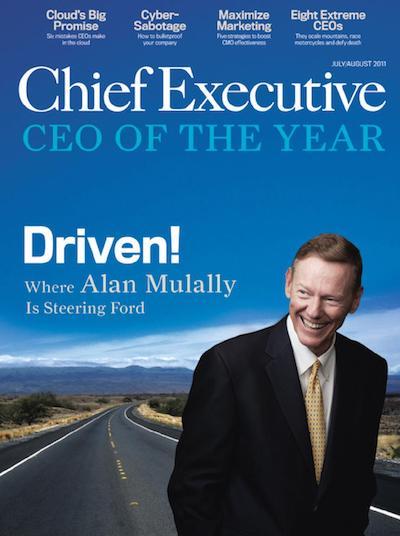 I’ve researched for years’ projects and talked to thousands of project managers, but have never come across someone like Alan’s career. From engineering project manager to CEO of two of the largest corporations in the world doing a remarkable work in every job he carried out.
I wanted to find out more about him, his experience, his methods and his suggestions for us to become better managers and project leaders. One of the quotes that stuck with me is:
“the reason why I’d want to support you is you dedicate your life to programme and project management. I really think it’s the future because it’s going to be business and projects that actually keeps us moving forward by making products and services that people want and value.”
You can find the full interview on my youtube channel and the written version here. Hope you enjoy it and learn from Alan’s unique wisdom. It is truly inspirational; a free lesson for every leader, not too be missed.
Keep well and stay focused.
Antonio
Project Management Champion to the World
Interview with Alan MulallyThe Future is about Projects and Project Management
Alan Mulally is an American engineer, programme manager, business executive, and former President and Chief Executive Officer of the Ford Motor Company. He retired from Ford Motor Company on July 1, 2014. Ford had been struggling during the late-2000s recession, returned to profitability under Mulally, and was the only American major car manufacturer to avoid a bailout fund provided by the government.
Alan’s achievements at Ford are chronicled in the book, An American Icon: Alan Mulally and the Fight to Save Ford Motor Company by Bryce G. Hoffman, published in 2012. On July 15, 2014, he was appointed to the Google Board of Directors.
Alan was the executive vice president of Boeing and the CEO of Boeing Commercial Airplanes (BCA). He began his career with Boeing as an engineer in 1969 and was largely credited with BCA’s resurgence against Airbus in the mid-2000s.
More about Alan Mulally:
https://en.wikipedia.org/wiki/Alan_Mulally
https://web.archive.org/web/20070219051013/http://media.ford.com/article_display.cfm?article_id=24203
https://www.forbes.com/sites/siimonreynolds/2014/02/13/notes-on-the-worlds-best-ceos-alan-mulally/#5e8e925e18bc
Alan, it is such an honour to have you, thank you so much for being with us today.
You’re welcome Antonio, and I’m pleased to be with you, and I’m also an admirer of your work to capture project and programme management.
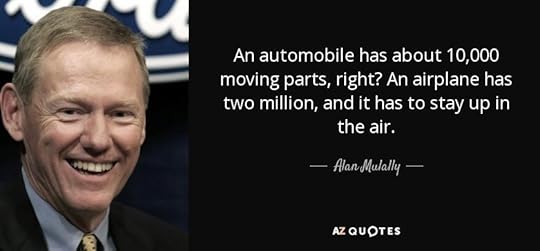
Thank you. Alan, everybody knows what you’ve achieved, but when you were a kid, did you want to be the CEO of Boeing and then later the CEO of Ford Motors?
Well, one of the things I wanted to be was an astronaut. When I was in high school, Bruce Porter College, President Kennedy announced that we were going to go to the moon, and they were looking for some people with the right skills to go to the moon. And it was very compelling to me because he described the things we’d learned by going to the moon, technically, but also the things that we’d learned to help make life better on earth.
So I joined the air force and I learned to fly. I found out that I had a colour blindness, which disqualified me, because the first lunar landings were going to be manual. So I finished my education in aeronautical engineering and then I found my dream to go to work as an aeroplane designer at Boeing.
And you made your whole career in Boeing?
Yes, I had the honour to serve on the design team for every Boeing airplane: the 707, 727, 737, 747, 757, 767. Then they asked me to serve as the chief engineer and the programme leader of the 777 airplane. And then as the CEO of Boeing, I helped launch the 787. Over 60-70% of all the seats that are flying today are in a Boeing airplane. It’s quite an honour to get people together around the world.
What an achievement Alan! That means that you’ve been leading projects a big time of your career. What kind of approaches you were taking at Boeing? Can you tell us a bit more about that?
Oh, sure. I’ve summarised all the lessons I’ve learned on the simple document that I sent to you.
And it’s titled, “ Skilled and Motivated Teams Working Together, Principles and Practices ”. Everything that I’ve learned over the last 37 years at Boeing, and also eight years at Ford, are on the one piece of paper. The big points are to include everybody, it’s all about people. It’s kind of really saying love them up, appreciate them so much, because you have all these talented people around the world that are working, everybody needs to be included.
Come together around a compelling vision for what the airplane or the programme or the business is, a strategy for achieving it, and also a relentless implementation plan, and that’s where the business plan review comes from. Then, of course, clear performance goals, having one plan, using facts and data, and the biggest one, Antonio, probably is that everybody knows the plan, everybody knows the status, and everybody knows the areas that need special attention. And that’s where the business plan reviews comes in .
And then, of course, the behaviours of positive, can do, find a way attitude, respect each other, help each other, appreciate each other, maintain your emotional resilience, and also have fun. So enjoy the journey, what you’re doing, and enjoy each other, and a corollary to that last one is never humour, Antonio, at anybody else’s expense, because what happens is that people will go along to get along.
You set also quite ambitious goals, is this how you get people focused? and put a bit of pressure, which I guess is always good?
Well, I think so and it’s really kind of a positive pressure too because, for example, on airplanes, when you design a new airplane,
a commercial airplane has around four million parts
. And you take the 777, it’s the most sophisticated product in the world because it carries 200 to 300 people halfway around the world.
It’s the safest transportation system ever. And, of course, you actually make these commitments to the airlines and the traveling public, and then you deliver the performance, the reliability, the maintainability, the predictability, the affordability. You deliver all those commitments on a schedule, five years in advance.The airlines are actually paying the progress payments along the way, they already have the tickets sold, they have their routes all in place.
So you’re actually creating this four million parts in this airplane on a schedule that is like scheduled programme management innovation . So that’s a pressure in itself, but on the other hand, you can imagine what that does to enable talented people to actually work together to create these fabulous products.
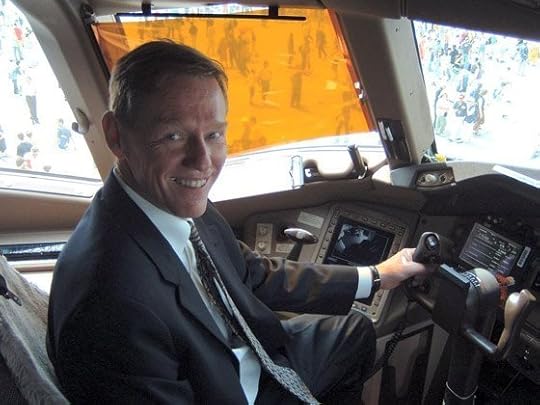 Alan, two additional features I noticed in some of your videos:
a) you go deep into the details: you have the experts, but you understand very well the business, both in Boeing and later on in Ford.
b) you have a strong business sense: you look at figures, financial, budgets, profits, something that we project managers don’t do very often. We are focusing on deliverables, but we miss that business part.
Can you tell us a bit more about these two aspects?
Oh, sure, I think that’s a great question, especially the way you asked it because just starting at the basics,
the fundamental of business is to deliver profitable growth for all the shareholders, all the stakeholders, not just the shareholders, but everybody associated with the enterprise
. So that like in Boeing’s case, or Ford’s case, the people that drive their vehicles or ride on the airplanes, the customers, the airlines themselves, the Ford stores around the world appreciate your products and services.
Also the investors, all your partners, your suppliers, all the employees, so the only way to have a viable business and a sustainable business is to create a business that is growing profitably, because then you get to continue to make the products and services that people want and value, and you keep improving your quality and productivity every year, so what’s neat about is it’s just a design job, right?
All we’re doing is creating a viable business just, like we’re creating a viable airplane or cars and trucks. So it’s not just me that knows it, but everybody on the team knows where we are on the plan to deliver profitable growth with our products and services, and that we are creating a business that’s sustainable , that’s going to provide great jobs for a lot of people, contribute to the economy, and contribute to energy independence, security and sustainability.
Alan, at some points in your career you had to lay off people. I heard that you try to still make it in a nice and positive way. Yet, it is probably one of the most difficult parts of your job; what is your approach?
It really, is because when you work together this way, you become very close with each other.
I mean, a lot of respect, of course, it’s based on respect for people and respect for each other and enjoying each other. The thing that I found is the most important thing is to be transparent and as honest as you can about what the situation is . For example, at Boeing, when we had the terrorist attack of 9/11, none of us ever thought that a commercial airplane would be used as a weapon. No one imagined that.
It completely changed our world, and those are Boeing airplanes that were involved. And, of course, the travel degraded tremendously after that because people were concerned, and so our production at Boeing actually went from over 680 airplanes to maybe 240 in the following year. And no company that I know of can keep going with that kind of a throughput crash. So we shared it with everybody, we had to match our production to the real demand.
And as you pointed out, the only way to save the company was to reduce all of our expenses, including a lot of the members of our team. On the other hand, because we did that, we saved the company. We actually continued to invest in new products, and so now we’re able to hire our employees back.
If you don’t match your production to the real demand, then you will go bankrupt and you’ll be out of business.
So as hard as it is, I just found that sharing it with everybody, and with compassion and thoughtfulness and empathy, and help people find other jobs and move on with grace, and then be able to come back later and do what they love doing.
Alan, can you tell us a bit more about the Boeing 777 project? I understood that you made part of the project design team the main stakeholders, including customers and suppliers, a quite innovative approach.
Absolutely. One of the reasons I believe that Boeing has been successful over the years is that on every airplane programme, and especially on the 777, we’ve always included the airlines – our customers – in the actual design of the airplane.

Because they have so much knowledge about how to operate the airplane, and how it’s going to be used, and their reliability requirements, and the maintainability requirements, and how they’re going to take care of it, how they’re going to fly the airplane, how they’re going to maintain the airplane.
So we actually invite the airlines that want to participate in the launch of the aircraft to join the project team. And it’s really funny, Antonio, because at first, some of the airlines will say, I don’t want to be in the same room with our competitor. And if I’m going to share a lot of my knowledge with you in front of the competitor, is that going to put me at a competitive disadvantage?
I remember one of the airlines in one of the early meetings. We had 12 of the world’s best airlines in the same room. And one of the airline leaders said, okay, here’s the deal, we want to help Boeing build the best airplane in the world. When we get that best airplane in the world, because we’ve all contributed to it, then we can complete as airlines.
But what we want, all of us, is the best airplane, and that just broke the ice. From then on everybody was willing to share their ideas, from how the airplane operates, how we fly the airplanes.
The depth of the knowledge that we’re able to incorporate in our innovations by utilising all of the airlines best practices around the world, actually resulted in the airplane being what it is today.
What was the most difficult part in that 777 programme? What was the thing that was the toughest to come through?
I really don’t think of it in those terms, Antonio, because when you operate with these principles and practises, it’s all out in the open. So it’s not a problem,
it’s a gem when somebody has an issue
.
It’s a gem because now you know what the issue is and you’re also recognising that this an invention. It’s going to be iterative process, and that’s what engineering, design, manufacturing are about.
It’s almost like you’re legitimising the process of project or programme management. Not all is going to go right on the plan. And we have a process to uncover the areas that need special attention. It is critical as a program leader to create a culture where everybody is able to share the areas that need special attention . Which will get solved by working together as a team.
So we can’t wait to get to the business plan review every week to see what we need to work on, because now we know that issues are part of the process.
Amazing. We project managers tend to look at issues in a very defensive way. Yet, the way you look at problems is so fresh and so constructive.
And I believe that’s what programme and project management is about.Admitting that there will be challenges and changes – as the project is about innovation – but together we are going to solve them.
You can now see, whether it’s a project or whether it’s managing a business, whether it’s Boeing, whether it’s Ford, whether it’s your personal or family life. I mean, it’s all going to come together if we adopt working together principles and practices and come together on that vision, the strategy for achieving it, and then that relentless implementation plan, where we deal with the issues and turn the reds KPIs into yellows and into greens, while delivering all of our commitments on plan.
I love that. I think this deserves a book
July 5, 2018
ANR #12: Re-Humanising Work Through Projects
Good Day!
Since the industrial revolution, workers have been progressively reduced to numbers, headcount, assets, fixed costs; and organizations have been driven primarily by targets and control systems. Significant innovations in management have mostly focused at doing the work faster and cheaper.
Yet, there is one model of collaboration, a method of work to generate value, which has remained constant over centuries, resisting to any organizational evolutions. This universal method has proven to be the most human-centric, the most engaging and inspiring, and the one that has created most of the value for our planet.
But even more important so, it is resilient to robots, artificial intelligence and many of the technologicaladvances that aim at eradicating our right to work.
You can read the full article I wrote for the Global Peter Drucker Forum.

Will projects be the new norm? Curious to hear your views.
Keep well and stay focused.
Antonio
Project Management Champion to the World
Re-Humanising Work (and Organizations) Through ProjectsBy Antonio Nieto-Rodriguez
“The purpose of an organization is to enable ordinary human beings to do extraordinary things”, Peter Drucker
Article Published for the 10th Global Peter Drucker Forum
At its origins, work was considered an essential part of human beings: a mean to provide for food, clothes and shelter. In the light of the social turmoil of the early 19th century and the rising unemployment which led to the French Revolution of 1848, the French socialist leader Louis Blanc
But since the industrial revolution, workers have been progressively reduced to numbers, headcount, assets, fixed costs; and organizations have been driven primarily by targets and control systems. Significant innovations in management and organizational development during this ample period, such as mass production, Taylorism, Total Quality Management, Business Process Reengineering, IT, Outsourcing, … have mostly focused at doing the work faster and cheaper.
We had to wait for Peter Drucker to put the human being at the central stage, with his famous “Knowledge Worker”. Employees were not just hands, but they also had a brain.
Unfortunately, Drucker’s words of wisdom were soon devoured by the shameful theories that centred the organizations’ purpose around shareholder value. Productivity, efficiency gainsand short termism, would prime for decades mostly at the expense of employees and the human and social side of organizations.
Today, the story of work is still unfolding, with great changes taking place throughout the world and in a more accelerated fashion than ever before. In our civilization, change and technological progress have always taken a human toll, yet, it has never been as dramatic as in this past decade. The impact of globalization and technological advancements, with thousands of companies collapsing and millions of jobs vanished in western economies, has generated an enormous loss of confidence in capitalism and western leaders. And according to Silicon Valley futurists, over the next ten years, societies will experience more changes than in the past two hundred and filthy years. More changes, at greater speed than ever!

It is not a surprise that the overall mood about the future in western countries is of desolation and utterly pessimism.
Despite this daunting outlook, there is at least one idea that should inspire us to remain positive and prompt us to take action.
There is one model of collaboration, a method of work to generate value, which has remained constant over centuries, resisting to any organizational evolutions. This universal method has proven to be the most human-centric, the most engaging and inspiring, and the one that has created most of the value for our planet. But even more important so, it is resilient to robots, artificial intelligence and many of the technological advances that aim at eradicating our right to work.
Yet, this method of work has been mostly ignored by academia, thought leaders, businesses and media.
This way of working and organizing the work are “Projects”. The construction of the pyramids in Egypt, the development of the modern cities, the Marshall Plan, the man landing on the moon, the creation of the European Union, etc. all these achievements have been the outcome of ideas turned into reality through projects. Project based work has been the engine that generated the major accomplishments in our civilisation; they have stimulated society to advance and often go beyond their limits.
Behavioural and social sciences endorse that there are few ways of working and collaborating more motivating and inspiring for people than being part, or contributing to, a projectwith an ambitious goal, a higher purpose and a clear deadline.
Yet, researchThe Project Revolution
In this new landscape, Projects are becoming the essential model to deliver change and create value. We are witnessing the rise of the Project Economy. The so-called gig economy is driven by projects. This massive disruption is not only impacting the way organizations are managed. My prediction is that by 2025, senior leaders and managers will spend at least 60% of their time selecting, prioritizing and driving the execution of projects.
Yet, this massive disruption is not only impacting organizations. Every aspect of our lives is becoming a set of Projects. The main implications are:
Education: For centuries, learning was achieved by memorising books and hefty material. Today, the leading educational systems, starting from early ages, apply the concept of projects to teach. Applying theories and experimenting through projects have proven to be a much better learning method, and will become the norm soon.Careers: Not so long ago, professional careers were made in only one organization. Most of our parents worked for one company only. Today, we all go through several companies, for which we are best equipped if we approach them like a set of projects. Projects in which we apply the learnings from previous jobs, companies and industries. Whilst keeping developing for the next career move, often not known in advance.Democracy: The current crisis that we are seeing in the political systems around the world has led to political academia propose new ways of governing countries. One of the most revolutionary experiments is being carried out in Northern Ireland. The Irish Constitutional Convention (ICC) – established by the Irish government in 2012 – will address a number of potential constitutional reforms through projects.Corporate Governance: Boards play a critical role in value creation and long term success of the organization. Conversely, ignorance of the accountability duties by director in these matters is a weakness in corporate governance which can have devastating consequences for corporations, destroying vast amount of value, often bringing corporations to the verge of collapse.We all soon become Project Managers, but have never been trained to do so.
Project based work will increase the focus on Humans – Embrace it !
The good news is that, as explained above, project based work is human-centric. Projects cannot be carried out by machines, they need humans to do the work. They gather together around the purpose of the project, splitting the work amongst the team, bonding, interact, and addressing emotional aspects to create a high-performing team. Technology will of course play a role in projects. It will improve the selection of projects and increase the chances of success. But technology will be an enabler and not the goal.
My final ask is for society, organizations, leaders, politicians and people to build the competencies required to transform and thrive in the new digital and project driven economy. To learn how to set ambitious and inspiring goals; how to establish clear deadlines and engage employees around a higher purpose. To establish a culture in which ideas are transformed into reality through projects. We should not be afraid of the future and the unknown. Let’s keep learning, and embrace project based work.
June 13, 2018
ANR#11 – Marshall Goldsmith – World’s #1 Executive Coach – The project managers of the future will be more facilitators than experts
Good Day!
Most of us have experienced coaching in our professional lives. At one point, we want to get better, improve some of our weaknesses. It is often a painful process, which requires moving out of our comfort zone. Sometimes the coaching process works, but often it doesn’t.
About a year ago, I had the pleasure of meeting Marshall Goldsmith. Marshall is considered the number #1 executive coach in the world. He is the creator of the 360-degree feedback. Some of the top leaders in the past decades have been coached by him.
It was an honor interviewing Marshall a few days ago. I wanted to learn more about executive coaching and his very successful approach, centered around stakeholders (Marshall Goldsmith Stakeholder Centered Coaching). Was also curious to hear his views about project manage
Three highlights of the interview:
Executive coaching assignments are managed as a project, one of the reasons for its success.Working on an approach and certification program for “High-Performance Project Leadership” to increase project performance and successBoth the executives and the senior project managers of the future will be much more a facilitator than an expert.You can read the entire interview here or watch it on my Youtube channel.
Hope you learn from Marshall’s coaching approach and colourful stories.Keep well and stay focused.
Antonio
Project Management Champion to the World
Interview with Dr. Marshall GoldsmithWorld’s #1 Executive CoachDr. Marshall Goldsmith was born in Valley Station, Kentucky, and received a degree in mathematical economics from Rose-Hulman Institute of Technology in Terre Haute, Indiana in 1970. He then earned an MBA from Indiana University’s Kelley School of Business in 1972, and a PhD from UCLA Anderson School of Management in Los Angeles, California in 1977.
Dr. Marshall Goldsmith is the only two-time winner of the Thinkers 50 Award for #1 Leadership Thinker in the World. He has been ranked as the #1 Executive Coach in the World and a Top Ten Business Thinker for the past eight years. Marshall is the author or editor of 36 books, including three New York Times bestsellers, that have sold over 2.5 million copies and been listed bestseller in 12 countries. His books, What Got You Here Won’t Get You There and Triggers have been recognized by Amazon.com as two of the Top 100 Leadership & Success Books Ever Written.
“My mission is simple. I want to help successful people achieve positive, lasting change in behavior; for themselves, their people, and their teams. I want to help you make your life a little better.”
Dear Marshall, many thanks for accepting to share some of your wisdom with the project management community. I am sure they will listen carefully and act on it. I promise not to take too take too much of your time, but I do want to take a lot of your wisdom
April 27, 2018
ANR Newsletter #10 With Rita McGrath – The Future is about Projects
Good Day!
 It was in 2013 when I first came across Rita McGrath work. I still remember the impact that “The End of Competitive Advantage” had on my thinking. It was an eye-opener of the disruptions that would be soon coming and turn our world upside-down. Exactly one year ago, I had the pleasure to meet Rita in person at the European Business Forum. We were sitting at the same table together with Marshall Goldsmith, Erin Meyer and later on by Michael Porter.
Last November, we were both awarded at the Thinkers50 gala in London, where she was recognised again as one of the most influential management thinkers in the world.
Since then we had several discussions about the future of strategy and management. A few days ago, I had the pleasure of interviewing Rita; I wanted to find out about her latest thinking, and in particular, on her views about project and project management. I was totally flabbergasted when she mentioned (18’08”):
“I actually think the future is about Projects.”
You can find the full interview on my Youtube channel and the written version here. I hope you enjoy it and learn from Rita’s wisdom. It is truly inspirational; a free lesson you should not miss.
Finally, I am delighted to announce that two weeks ago I signed with LID to publish my next book, Project Revolution. I am very excited about this new “project”, which I would like to make you part of. You’ll hear more soon.
Keep well and stay focused,
Antonio
Project Management Champion to the World
Rita Gunther McGrath is a globally recognized expert on strategy, innovation, and growth with an emphasis on corporate entrepreneurship. Her work and ideas help CEOs and senior executives chart a pathway to success in today’s rapidly changing and volatile environments. McGrath is highly valued for her rare ability to connect research to business problems and in 2016 received the “Theory to Practice” award at the Vienna Strategy Forum.
Recognized consistently as one of the top 10 management thinkers by global management award Thinkers50, McGrath also received the award for outstanding achievement in the Strategy category. She is a highly sought after speaker at corporate events, such as the Yale CEO Summit, the Innosight CEO Summit and at the World Economic Forum meeting in Davos.
McGrath is one of the most widely published authors in the Harvard Business Review , including the best-selling “Discovery Driven Planning” (1995), which was recognized as an early articulation of today’s “lean” startup philosophy and has been praised by Clayton Christensen as ‘one of the most important ideas in management – ever.’
Rita McGrath full bio .
Rita thank you very much for dedicating some of your precious time to share your thoughts with us. It is a great opportunity for project managers to get to know people like you; unique for all what you’ve done and the way foresight way to look at management.
I promise not to take too take too much of your time, but I do want to take a lot of your wisdom