Antonio Nieto-Rodriguez's Blog, page 19
May 22, 2022
ANR #63: Ukraine: The Undesirable Power of Projects
Dear friends and colleagues,
The world is looking with shock, despair, and sadness at the recent events in Ukraine.
I try to imagine how my life would radically change if tomorrow we would see tanks in the street, we had to move to shelters or metro stations, live with the fear of being hit by a bomb 24/7, or leave everything that you have built and flee to a neighbor country.
I am a huge believer in the incredible power of projects for good and noble causes, but also conscious about their undesirable side. Whenever there is a conflict of such magnitude, the merciless leaders always have an incredibly well-defined project to implement their devastating views. In contrast, the other leaders have a very fragile project, if they have one at all.
<>It is really difficult to write about such a sensitive and sad topic, but my belief is that project and project management professionals should be able to share their views about any kind of project.
My thoughts are with the Ukrainian people and those drawn into this war unwillingly.
I hope that we see an end to this dramatic event as soon as possible.
Stay well.
Antonio
Project Management Champion to the World
PD. Ah, and thanks in advance for sharing with your colleagues!
< NEWSLETTER ARCHIVE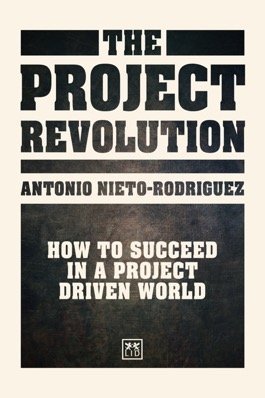 Use limited code: “Project30” to get a 30% discount >
.The Project Revolution: How to succeed in a project driven world > Join 60,000+ subscribers in keeping up to date with the latest trends and best practices in project management and strategy implementation.
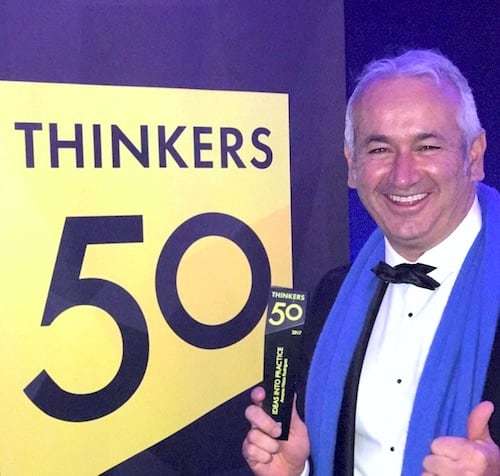

The post ANR #63: Ukraine: The Undesirable Power of Projects first appeared on Antonio Nieto-Rodriguez.


December 8, 2021
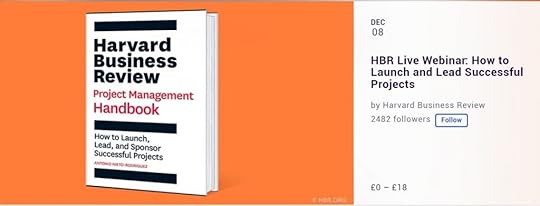
ANR #62: Invitation HBR Webinar and some insights about the journey
 ANR NEWSLETTER #62
Good day,
I hope you are doing well!
Over the past month, I had the pleasure to work closely with the HBR team, it is an amazing group, extremely professional. Interestingly, a few times already they told me that they “thought project management was an unattractive topic“, yet when they listen to some of the concepts and challenges we address in our profession, they become positively surprised on how much it relates to current challenges that leaders and organizations around the world are facing! Their perception and understanding are changing rapidly!
The other important learning is that the combination between HBR and project management is a big success so far. They hardly publish books on the topic; the sales expectations for my book, the Harvard Business Review Project Management Handbook, were around 1.000 the first month, like other books in their series, yet, they have sold close to 5.000. Their global webinars have about 700 registrations, yet, the one I invite you with this letter has already close to 2.000 registrations.
It is great to show the power of the project management community and to discover this unchartered territory so that some of you can continue building this journey.
I am happy to invite you to the first HBR webinar in Project Management – at least in the past 7 years – that will take place next Wednesday 8th Dec, from 1 pm to 2 pm UK time. Registration here. Feel free to share with other colleagues and hope to see you there!
Also wanted to share that yesterday we launched a year-end promotion for our very appreciated Strategy Implementation online course, just in case you or your team are looking to develop further in this fast-growing area.
With regards to projects and project management discussions, we had a lot of insightful comments, and sometimes heated debates ;-), in some of the recent LinkedIn newsletters. Here is an overview of the topics, feel free to join any of them, your views are much welcome!
Welcome to my LinkedIn newsletterUnbelievable ProjectsWhy Wedding projects are never late?Want to increase Project Success? Coach your Executive to be an effective Project SponsorProject Managers have the skills to become CEOs, so why don’t they?Afghanistan Chaos: Why closing a Project requires careful planningWhy do we need to learn from Teenagers and support their Projects?The “Project Canvas” – A simple tool for everyone that wants to Lead Projects more SuccessfullyThe Project Canvas in Practice: HomeCare.gov vs. Chileans Miners Rescue ProjectInterview with Rita McGrath on the Project EconomyPrecious Project Management Lessons from the Global PandemicForget about selling Products and Services, sell Projects!New LinkedIn Learning courses for Project Sponsors and Project ManagersEverlasting Poor Project Success Rates – How Come?COP26: Projects and Project Management to Solve the Climate CrisisA Gigantic and Costly Mistake: Agile vs. Waterfall Project ManagementKnowing When to Start a Project often determines its Success What do Senior Leaders think about Project Management (survey with HBR)Thanks a lot for reading and supporting me, as always, any feedback is much welcome!
Stay well, hasta la vista!
Antonio
Project Management Champion to the World
PD. Ah, and thanks in advance for sharing with your colleagues!
< NEWSLETTER ARCHIVE
Use limited code: “Project30” to get a 30% discount >.The Project Revolution: How to succeed in a project driven world > Join 60,000+ subscribers in keeping up to date with the latest trends and best practices in project management and strategy implementation.
The post ANR #62: Invitation HBR Webinar and some insights about the journey first appeared on Antonio Nieto-Rodriguez.
ANR #61: Harvard Business Review – Spotlight Project Management and The Project Economy
 ANR NEWSLETTER #61
Good day,
I hope you are doing well!
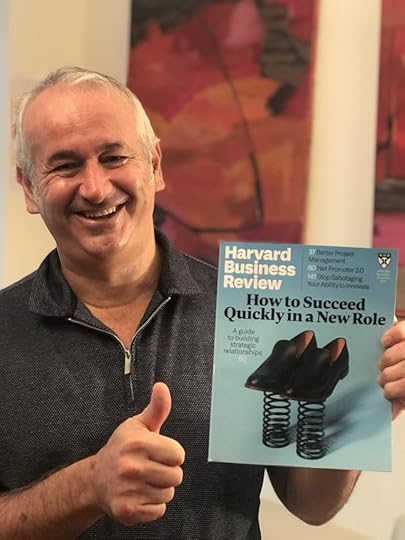
I am very happy to share with you that the current issue of Harvard Business Review printed magazine has Project Management and my article, “The Project Economy Has Arrived” in the spotlight, including the editorial from their chief editor, Adi Ignatius.
Having the backing of the most powerful and influential brand in leadership and management is a vital step in recognizing that the project management profession should be high on the agenda of senior executives around the world.
In fact, in my talks with the HBR team, I was teasing them telling them that it is the first time in HBR history that they have “project management” on their front cover 😉
I also told them that despite all the buzz about agile, strategy, innovation, etc, a fraction of employees work in agile teams or need to innovate, yet, everyone, from senior leaders to managers to junior employees, is dealing and struggling with projects.
As Adi Ignatius says in his editorial “Projects are your Future“, yet few organizations and senior leaders master have the competencies to do it. Roger Martin once told me that most HQ senior leaders’ jobs are an amalgam of projects. As I shared in my latest newsletter, the hype of agile methods and ignorance of project management has led to tribalism and has not increased project success.
Over the past fifteen years, one of my most important objectives (and probably the craziest one) was to see the words “project management” on the front cover of HBR.
This is the result of the amazing work that all of you, PMI, thousand of volunteers, and millions of projects managers have been doing over the past decades. It is great to have now that recognition, hopefully, we can benefit from it and push further!
I am convinced that if we bring project management experts to the table where big decisions are taken, like COP26 or Davos, we will be more successful in addressing the big themes impacting our world. This will be the next big challenge.A few brief updates:
Here is a link to my interview for HBR IdeaCast “The Future of Work is Projects“ with Alison Beard, interestingly, towards the end of the interview she admits that the topic is much more exciting/interesting than what she envisioned a project management expert would be 😉Thanks for the amazing support with the release of The Harvard Business Review Project Management Handbook , in it, is the first month it has sold more than 3.000 copies, and more importantly, it has received incredible feedback!Thanks also for having joined my weekly LinkedIn Newsletter, Lead Projects Successfully , we have amazing (and sometimes heated) debates 😉The LinkedIn Learning courses have been followed by +8.000 students in the first month. Project Management Reinvented for Non-Project Managers / How to Be an Effective Project SponsorThanks a lot for the inspiration that you bring.
As always, any feedback is much welcome!
Stay well, hasta la vista!
Antonio
Project Management Champion to the World
Use limited code: “Project30” to get a 30% discount >.The Project Revolution: How to succeed in a project driven world > Join 60,000+ subscribers in keeping up to date with the latest trends and best practices in project management and strategy implementation.
The post ANR #61: Harvard Business Review - Spotlight Project Management and The Project Economy first appeared on Antonio Nieto-Rodriguez.
October 16, 2021
ANR #60: LinkedIn Learning – Modern Project Management for Executives Sponsors and non-PMs
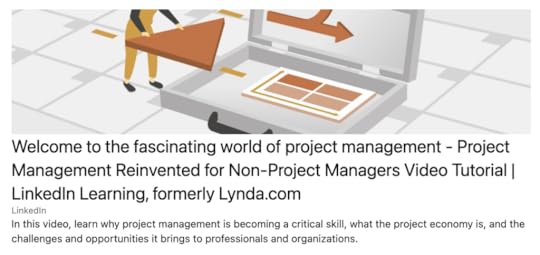 Modern Project Management for Executives Sponsors and non-PMsI remember that my first project management course was a five-day course, quite technical and complicated; it brought me memories of my earlier student years. I wanted to make project management exciting and easy for everyone to learn and get better at. And focus on senior executives and non-project management professionals.ANR Newsletter #60
 Good day,
I hope you are doing well.
I was never a good student. At high school and later on at university, I always struggled. Some subjects were interesting, yet, during the classes, I was hardly absorbed by the teacher; my mind was most of the time wandering around. I did pass the exams, but one of the main lessons from those 15 years was that studying was tedious and painful!
All this changed when I did an MBA at London Business School. I remember the first class; it was about marketing, the professor started by talking about some notorious brands, Apple and Volkswagen, and what they had done to become so successful. He fascinated my mind straightaway; I paid attention the entire 50 minutes – something that had never happened in the previous 15 years!Wow, this is an entirely different way of teaching. So engaging, super interactive, and with so much impact. The professor made learning easy and fun! I got inspired and said to myself; I want to become like these professors. I remember that my first project management course was a five-day course, quite technical and complicated; it brought me memories of my earlier student years. I wanted to make project management exciting and easy for everyone to learn and get better at. And focus on senior executives and non-project management professionals.As part of this journey, I aspired to develop a few courses for LinkedIn Learning. It was not an easy process as they get thousands of requests, but after many failed attempts, it worked out, thanks also to the help of a couple of good friends.This summer we recorded the following two courses, which apply the same principles as when I started teaching: simple, fun, and impactful:
Project Management Reinvented for Non-Project Managers
How to Be an Effective Project Sponsor
I remember that my first project management course was a five-day course, quite technical and complicated; it brought me memories of my earlier student years. I wanted to make project management exciting and easy for everyone to learn and get better at. And focus on senior executives and non-project management professionals.As part of this journey, I aspired to develop a few courses for LinkedIn Learning. It was not an easy process as they get thousands of requests, but after many failed attempts, it worked out, thanks also to the help of a couple of good friends.This summer we recorded the following two courses, which apply the same principles as when I started teaching: simple, fun, and impactful:
Project Management Reinvented for Non-Project Managers
How to Be an Effective Project Sponsor
I hope you enjoy them and share them with your colleagues. As always, any feedback is much welcome!
As always, if you have any comments or suggestions, please get in touch.
Keep well, hasta la vista!
Antonio
Project Management Champion to the World
Use limited code: “Project30” to get a 30% discount >.The Project Revolution: How to succeed in a project driven world > Join 60,000+ subscribers in keeping up to date with the latest trends and best practices in project management and strategy implementation.
The post ANR #60: LinkedIn Learning - Modern Project Management for Executives Sponsors and non-PMs first appeared on Antonio Nieto-Rodriguez.
ANR #60: LinkedIn Learning – Modern Project Management for Executives Sponsors and non-PMs
This summer we recorded the following two LinkedIn Learning courses, which apply the same principles as when I started teaching: simple, fun, and impactful: a) Project Management Reinvented for Non-Project Managers; b) How to Be an Effective Project Sponsor.
The post ANR #60: LinkedIn Learning – Modern Project Management for Executives Sponsors and non-PMs appeared first on Antonio Nieto-Rodriguez.
September 27, 2021
ANR #59: Executive Project Sponsors: addressing the weakest link in Projects
Good day,
I hope you are doing well.
By now, we have enough evidence that executives sponsors are one of the weakest links in successful project implementation. After years of research and practice, I found a way to overcome this significant flaw in our profession which I would like to share and get your thoughts on.
“The project management profession has been hoping, for more than 40 years and in vain, that executives dedicate time to learn the importance and the key responsibilities of their role when sponsoring projects. If we want to increase our low project success rates exponentially to succeed in the Project Economy, we can not wait any longer.”
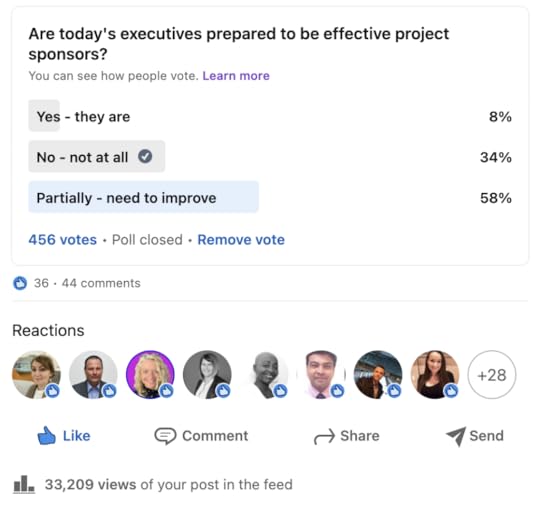
Some years ago, I was managing a global transformation project for a large bank. The entire project team was afraid of the project sponsor, a guy called Matthias.
He occasionally participated in our regular project updates; he felt he didn’t need to know the details of the project; he was the guy with the vision. He was authoritarian, always looking for mistakes and blaming others. And, of course, Matthias was never wrong and didn’t know what was expected from him as a project sponsor. It was a painful project that didn’t meet its goals, nobody enjoyed it, and we were all glad when it was over.
You are probably familiar with similar projects, right?
“An inadequate and untrained sponsor in a project frequently leads to an unhappy team and almost inevitable project failure.”
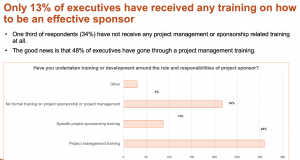
In my experience, I’ve seen that having an effective sponsor contributes at least 30%, if not more, to a project’s success. Yet, according to recent research carried out jointly with Harvard Business Review, only 13% of executives had received specific training on becoming successful project sponsors.
A fabulous example of Project Sponsorship
Examples of poor project sponsorship are everywhere and in most failed projects, but there are also great examples of incredible project sponsorship.
My favorite example is when Steve Jobs launched Project Purple to develop the first iPhone in 2004. As the project sponsor, he spent up to two days per week supporting, challenging, contributing, and steering the project.
It was Apple’s most strategic project, so it’s expected that the CEO was spending a significant amount of time on it, right?
But, when was the last time you saw your CEO in any of your project steering committees?
Dare to coach and train your Project Sponsor
My recommendation is that as soon as you start the project, you meet the executive sponsor to tell them the importance of the role, explain to them their key responsibilities and offer your assistance to coach them through the project.
In this initial meeting, I always discuss the importance of being available to discuss the progress of the project regularly.
To show their commitment to the project, I ask them to have 30 minutes meeting every two weeks (same weekday and time to create a little habit in their head), which I use to update and remind them of the duties of the role.
“I found it critical to have this initial coaching session and lockdown of regular meetings from the beginning of the project and before the executives move on with their busy schedules. It has proven to be a game-changer when dealing with project sponsors.”
Curious to hear about your experience with project sponsors. Any fantastic or terrible stories? And advice you want to share?
As always, if you have any comments or suggestions, please get in touch.
Keep well, hasta la vista!
Antonio
Project Management Champion to the World
Use limited code: “Project30” to get a 30% discount >.The Project Revolution: How to succeed in a project driven world > Join 60,000+ subscribers in keeping up to date with the latest trends and best practices in project management and strategy implementation.
The post ANR #59: Executive Project Sponsors: addressing the weakest link in Projects first appeared on Antonio Nieto-Rodriguez.
ANR #59: Executive Project Sponsors: addressing the weakest link in Projects
An inadequate and untrained sponsor in a project frequently leads to an unhappy team and almost inevitable project failure. Meet the executive sponsor to tell them the importance of the role and offer your assistance to coach them through the project.
The post ANR #59: Executive Project Sponsors: addressing the weakest link in Projects appeared first on Antonio Nieto-Rodriguez.
July 16, 2021
ANR #58: Essential competencies post pandemic according to McKinsey: Project Management
Good day,
I hope you are doing well.
It’s been a while since I wrote; apologies for the long silence; I got busy with too many exciting projects, which was hard to say no.
In this decade, the world will see more projects than ever. The trillions of funds that have been promised for the pandemic recovery are millions of projects that will require millions of project managers.
A few weeks ago, I came across a McKinsey survey on the most critical skills organizations need to develop post-Covid-19. To my surprise, the usual innovation, strategy, entrepreneurship,… were not at the top of the list; instead, project management was!
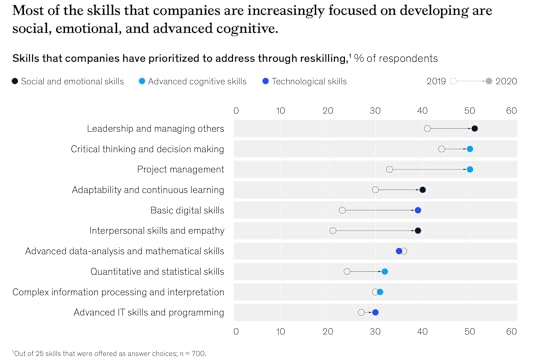
Seeing this recognition also by McKinsey is another iconic milestone. I remember when I joined the Board of Directors of the Project Management Institute in 2013 that our envisioned goal was “Worldwide, organizations will embrace, value, and utilize project management and attribute their success to it.”
By now, we have enough evidence that we are close to reaching that goal, if not already done. It is the culmination of the work of millions of project managers and the infinite efforts from members and volunteers and the Project Management Institute, IPMA, APM, and other professional associations.
Yet, despite this great outlook, the project management methods we use today were designed for a world where operations were the primary focus and projects were a small fraction of an organization’s activities. In the Project Economy, project-based work becomes the primary unit of work, while operations need less and fewer resources to be carried out. Basically, all the current project management, program management offices, portfolio management methods, tools, and techniques are “old” and need to be reinvented.
The second urgent call for action is the appalling failure rates, around the 60% to 70%, that we see in every research on project success. I am not aware of any other profession that has such low-performance rates.
Imagine the benefits, both for organizations and society at large, if we could increase the current poor project success rate—the additional trillions of dollars and social, environmental, educational, and other benefits that would represent. And the impact could be almost immediate.
To succeed in the Project Economy, we needed to reinvent project management. Refresh our methods, adapt them to the current and future needs, simplify our tools, like the Project Canvas, and significantly increase project success; that is how we will gain greater trust and appreciation from our work from the top.
There is no doubt that these are exciting times for the project management world. It is in our hands to make it happen!
And to conclude, a few other developments that might be interesting for you, which I will cover more in detail in future newsletters:
I just launched my LinkedIn newsletter, entirely dedicated to sharing knowledge about projects, project management, and strategy implementation => please subscribe here and contribute with your views!The Harvard Business Review Project Management Handbook is now completed and ready to be released in October (what a marathon project!) => you can find out more and pre-order it here.The Strategy Implementation Professional online course and APMG certification continue to grow, with more than 200 members and 60 certified professionals worldwide => you can join us here.State of Project Management Survey => thank you all for your contribution; I will share the results in upcoming newsletters.I recorded my first two LinkedIn Learning courses => fantastic experience, I will share more in the near future in case this is something you are consideringMore to come in next newsletterAs always, if you have any comments or suggestions, please get in touch.
Keep well,
Antonio
Project Management Champion to the World
Use limited code: “Project30” to get a 30% discount >.The Project Revolution: How to succeed in a project driven world > Join 52,600+ subscribers in keeping up to date with the latest trends and best practices in project management and strategy implementation.
The post ANR #58: Essential competencies post pandemic according to McKinsey: Project Management first appeared on Antonio Nieto-Rodriguez.
ANR #23: Essential competencies post pandemic according to McKinsey: Project Management
Good day,
I hope you are doing well.
It’s been a while since I wrote; apologies for the long silence; I got busy with too many exciting projects, which was hard to say no.
In this decade, the world will see more projects than ever. The trillions of funds that have been promised for the pandemic recovery are millions of projects that will require millions of project managers.
A few weeks ago, I came across a McKinsey survey on the most critical skills organizations need to develop post-Covid-19. To my surprise, the usual innovation, strategy, entrepreneurship,… were not at the top of the list; instead, project management was!
Seeing this recognition also by McKinsey is another iconic milestone. I remember when I joined the Board of Directors of the Project Management Institute in 2013 that our envisioned goal was “Worldwide, organizations will embrace, value, and utilize project management and attribute their success to it.”
By now, we have enough evidence that we are close to reaching that goal, if not already done. It is the culmination of the work of millions of project managers and the infinite efforts from members and volunteers and the Project Management Institute, IPMA, APM, and other professional associations.
Yet, despite this great outlook, the project management methods we use today were designed for a world where operations were the primary focus and projects were a small fraction of an organization’s activities. In the Project Economy, project-based work becomes the primary unit of work, while operations need less and fewer resources to be carried out. Basically, all the current project management, program management offices, portfolio management methods, tools, and techniques are “old” and need to be reinvented.
The second urgent call for action is the appalling failure rates, around the 60% to 70%, that we see in every research on project success. I am not aware of any other profession that has such low-performance rates.
Imagine the benefits, both for organizations and society at large, if we could increase the current poor project success rate—the additional trillions of dollars and social, environmental, educational, and other benefits that would represent. And the impact could be almost immediate.
To succeed in the Project Economy, we needed to reinvent project management. Refresh our methods, adapt them to the current and future needs, simplify our tools, like the Project Canvas, and significantly increase project success; that is how we will gain greater trust and appreciation from our work from the top.
There is no doubt that these are exciting times for the project management world. It is in our hands to make it happen!
And to conclude, a few other developments that might be interesting for you, which I will cover more in detail in future newsletters:
I just launched my LinkedIn newsletter, entirely dedicated to sharing knowledge about projects, project management, and strategy implementation => please subscribe here and contribute with your views!The Harvard Business Review Project Management Handbook is now completed and ready to be released in October (what a marathon project!) => you can find out more and pre-order it here.The Strategy Implementation Professional online course and APMG certification continue to grow, with more than 200 members and 60 certified professionals worldwide => you can join us here.State of Project Management Survey => thank you all for your contribution; I will share the results in upcoming newsletters.I recorded my first two LinkedIn Learning courses => fantastic experience, I will share more in the near future in case this is something you are consideringMore to come in next newsletterAs always, if you have any comments or suggestions, please get in touch.
Keep well,
Antonio
Project Management Champion to the World
Use limited code: “Project30” to get a 30% discount >.The Project Revolution: How to succeed in a project driven world > Join 52,600+ subscribers in keeping up to date with the latest trends and best practices in project management and strategy implementation.
The post ANR #23: Essential competencies post pandemic according to McKinsey: Project Management first appeared on Antonio Nieto-Rodriguez.
June 19, 2021
ANR #57: HBR State of Project Management
Download Form Name* First Name Email* CAPTCHA jQuery(document).bind('gform_post_render', function(event, formId, currentPage){if(formId == 5) {} } );jQuery(document).bind('gform_post_conditional_logic', function(event, formId, fields, isInit){} ); jQuery(document).ready(function(){jQuery(document).trigger('gform_post_render', [5, 1]) } );
As the number of projects in organizations skyrocket, understanding project fundamentals and fostering project management skills have become essential for all leaders and managers. Yet project failure rates remain extremely high. Why?
Leaders have too many projects with too little visibility into them, and they lack the project oversight and delivery competencies to untangle them. Project managers have the technical skills, but have trouble translating their hands-on knowhow up to the leader’s-eye view.
As part of the development of the forthcoming HBR Project Management Handbook, we performed a survey with HBR readers to better understand how organizations are using projects now, where they are finding success with projects, and where they are struggling.
Special thanks to the support provided by Antoine Adams, CEO and founder of pmo-online.com, and Jonathan Norman, my editorial adviser since 2012, in the development of this report.
This report summarizes the findings of the research completed during the summer of 2020, composed of two surveys, one answered by 556 executives and the second by 728 project professionals. A total of 1.284 respondents, who we want to thank for their valuable insights.
KEY FINDINGSIn a world driven by change, executives are spending more time on projects.2/3rds of project management professionals also have an operational role.In the past five years, whilst the number of projects has significantly increased, it remains stubbornly difficult to estimate how much of a company’s revenue is generated by projects.The amount of revenue generated by projects is clearly significant, yet the ROI% that projects deliver is low across the board.26% of projects are dedicated to organizational transformation.Whilst 50% of projects are deemed to succeed, the other half don’t deliver their expected value.Lack of resources, poor project management competencies, inappropriate culture are main challenges.Sponsors struggle with the lack of alignment, too many stakeholders and the lack of discipline on their projects.Selection and prioritization of projects is a top-down exercise, using outdated techniques.Boards of Directors and key Shareholders are regularly updated on their key projects.Executives appreciate the value of projects but don’t fully recognize project managers.The increase in project numbers, is not matched by an increase in time and focus senior leaders dedicate to their oversight.Only 13% of executives have received a training on how to be an effective sponsor.Project management professionals struggle to invest in the learning and education required to increase levels of project success.80% of executives aspire to invest and build project management competencies within their organization.
Waterfall project management is still used far more widely than agile; hybrid approaches are on the rise.
The post ANR #57: HBR State of Project Management first appeared on Antonio Nieto-Rodriguez.