Paul David Adkin's Blog, page 29
March 15, 2017
When Sirens Call (the song of the book)
This song can be interpreted different ways. It bears the same title as Paul Adkin’s novel, but it is not simply a song about the novel, and, on a narrative level, the song doesn’t seem to bear any relationship to the plot of the book; to find the connection we need to examine the text […]
via WHEN SIRENS CALL — P.D. Adkin Singer Songwriter



March 6, 2017
THE GREAT CIRCLE OF ANTI-PROGRESS
[image error]
THE UROBOROS
Universalism forms the foundation of all monotheisms. Yet it is a foundation badly rooted, for it is constructed on the sediments of separation.
All the separatisms – subject/object; man/God; man/nature; man/woman; man/world; Earth/Universe; Heaven/Hell; master/slave; European/Asian; Christian/Muslim; Muslim/Jew; nation A/nation B – pervert the universalism, rendering it hypocritical.
Monotheism is an intuition for the One. But for the impossible One, for it is the One that is affirmed from a segregation. Only the enlightened can know the one. Hence there arises a new segregation between the enlightened and the ignorant. Even the most universal of religious philosophies, the Tao, makes the separation of Yin and Yang a basis of its whole. To understand the One, we have to understand how it is separated. The pure aspect of the Yin and Yang is not the black and white, or black and red, antagonisms, but the circle around them.
The circle, in the form of the Uroboros, is the oldest symbol of the universal: the cycle is its first limitation. Once the circle is interpreted as a constant, ever-changing form of mobility, it immediately assumes a conservative dogma of anti-progress and a negation of becoming. Inside the cycle, the One is not an expansion but an illusion of progress that merely returns us, through different seasons, to that which is, which always has been, and always will be.
The function of separation, seen through the spectrum of the cycle, is to regenerate and reconfirm the machinery of the One without changing the One itself. In its basic concept, spiritualism is therefore this sense of being in this magnificent, pure, self-generating machinery.
But this sense of being part of the whole is the first thing that monotheisms attack. With the fabrication of God, the Universe itself becomes subordinate to a Master, and spiritualism is relegated to a sense of submission before the All Powerful; a bowing and kowtowing under the omnipotence of the Creator.
What we witness, in this process of hypocritical universalism, is the implementation of all the dogmas of power.
For social progress and individual freedom to be possible and authentic, therefore, the psychological dogma of the circle has to be broken. The tail must be pulled away from the Uroboric serpent’s mouth and turned into a rail that we can drive ourselves forward on. The Earth may be spinning around, but the Universe is expanding.


March 4, 2017
ART AS ANTI-PRODUCTION
[image error]
“Labour becomes productive only by producing its own antithesis (that is, capital)” Karl Marx
Let the artist not kid him/herself: no matter how much the artist creates, he or she does not produce. In order to produce, the artist must find an agent of production.
The agent of production is that which produces nothing itself, but knows how to turn the creations of others into commodities. The agent of production may be a capitalist, or it may be the State, or it may be an antithetical Mr Hyde character created by the Dr Jekyll artist himself. In whatever form the agent of production appears, once the creation is turned over to the agent it loses its autonomy and the artist loses his/her freedom in relation to the work. Even in the latter case, where the artist (anti-producer) becomes his/her own agent: a stress is produced on the artist’s creativity. The marketing of art, in any fashion, produces a stress on art.
The labour of art is, therefore, essentially unproductive. Art only becomes productive when the agent takes hold of the creation and produces it, i.e. turns it into a marketable commodity. In his or her essence, the artist remains an anti-producer; an outsider to the economy; an economic aberration in fact.
The fact that art can survive at all in an economic-political society is an indication of its enormous strength. In theory, it should have been made extinct long ago by both the capitalist and socialist systems that are both so deeply immersed in the politics of production.
Not only is this great anti-producer Art a tremendously powerful human drive and social force, it may also be a marker showing us the way to a post-production society in which capital, perhaps even the monetary system itself, has been rendered obsolete.
In fact, all truly positive, purposive political and social thinking will need to analyse the creative and unproductive force of art in order to revaluate and recreate the positive human society that we are all crying out for. The answer to all our problems lies in the anti-productive nature of art.


February 21, 2017
THE NEW METAPHYSICAL-VALUATION (the Post-Thanatos age)
[image error]
Metaphysically speaking, we are living in cultures dominated by the Second Valuation of reality. Our Western Civilisation has been in this Second Valuation so long that is hard for us to imagine what the First Metaphysical-Valuation was like, but it would have been based on two misconceptions: a) That we were existing in and moving over a horizontal plane that extends infinitely into space; and b) That we would never die if we were not killed or made to wither away by someone’s magic, and subsequently there are people who have lived for a very long time.
The Second Metaphysical-Valuation is, basically, a complete refutation of the original fundamental ideas, and any culture or society now professing a belief in the vision of the First Valuation would be labelled ‘primitive’. In refuting this First Valuation, the Second Valuation advocates that: A) We are trapped on the surface of a sphere and that everything is cyclical; and B) We all die. Both A and B are intertwined: we all die because everything is cyclical, and everything is cyclical because we all die.
The Second Metaphysical-Valuation of reality is irrefutable, but also misleading because it hides the basis of the new, Third Metaphysical-Valuation: I) Although everything is revolving around each other, the general movement in the Universe is expansion. In fact, the underlying truth is that we are moving forward rather than circling aimlessly around; and from this II) Death is merely one of the characteristics of progress – a point of change and renewal which is necessary in the overall process of continuity and expansion.
Death is not an end, but a part of continuation, and therefore death is not death itself. The idea of continuation kills death.
This is the dawning of the Post-Thanatos age.


February 15, 2017
GOAL-IMAGES & HUMAN SURVIVAL
[image error]
Macro-systems like cultures and civilisations are driven by a goal-image stimulus so powerful that it permeates the habitus and doxa spheres and seeps into the formation of all our identities. This is seen clearly in monotheistic religions with their goals of reaching ‘Heaven’ or at least avoiding ‘Hell’. But even materialistic drives, like consumerism, have goal-image motors (the drive to attain as much money as possible, in order to buy anything and everything one wants).
the most radical rejection of the macro-system, would therefore be a decision to have no goals: become a cynic and live in a barrel like Diogenes, or become a nihilistic saint like E. M. Cioran. Yet, to stay adrift after such a reaction, one would also have to have faith in the veracity of your cynicism, which means that your rejection of goals itself becomes your goal.
So, the goal is the essence of all motivation, and is the basis of all political, religious, cultural and economic ideologies. Our world-life narrative is an exposition of goals, moulding our personal aims into a doxa: a popular, cultural movement that gives us a sense of habitus and normality.
In order to make the world a better place, therefore, we have to create better goal-images.
Human history has been an anti-human dividing process, yet the basis behind each of the greatest goal-image ideas, has been the desire to unite the whole of humanity under one great singular motivation. The attempt to find such a singularity has had the most tragic consequences and has been the reason for countless conflicts – and yet, the need to find the answer to a viable world-uniting goal-idea may now be tantamount to our survival as a species.
For that reason, it is imperative that we keep asking the question – the question that all religions have asked: What idea would be strong enough to bring us all together?
In its time, the monotheistic idea was a great one, and it could have been perfect if (a) there had been some scientific basis to it, or (b) no one had come up with the idea that there could be very different interpretations of what the One God’s will actually was.
The singular goal-image won’t be found until the best goal-image is found. And the best goal-image will only be found if we have the faith to keep looking for it.
The discovery of the best goal-image is almost certainly a long way away, and it may well be impossible, or may simply never be found. But by trying to find it, at least we start a process towards discovery, which is much better than the dangerously decadent and depleted state of macro-system induced passivism we currently waddle in.
The first step to beginning this process of goal improvements must come from an acceptance that what we have so far is not perfect, and because of that it can be improved. Nor is it the least worst of all bad scenarios: we also need to get beyond the cynical idea that all the alternatives are likewise imperfect and therefore futile. The acceptance of this cynicism breeds Sisyphus-like rock-pushers, happy with in their labour until the rock slips back and crushes them. There are better goal-images, and we must look for them – we need them.
The first thing that has to be dismissed to get the now better ball rolling, is to accept that nothing perfect exists and that perfection is a process of becoming. This gives us the dynamic stimulus to act creatively and purposefully, but that creativity needs to be anchored in a goal-image, something meaningful that should be for the whole of humanity. We presently have such a concept: Our survival as a species. Our survival in the world, leading into our permanence in an eternal Universe.
SURVIVAL
Survival has always been a real human concern, as it is an authentic concern for any biological entity. So, what we are proposing should not be essentially anything new – and yet it is.
Survival is something that has come to be taken for granted in the so-called developed world of western Civilisation. And yet, it is the technological complexity that ensures our comfort and protection from the hostilities of our natural environment that has led us to the looming collapse of the equilibrium allowing the biosphere to be the life-supporting atmosphere that defines it.
There is something necessarily nostalgic in almost all goal-images. Religions yearn for the world driven according to the will of the original creator and harken to ancient texts to support their arguments. Nationalisms are maintained by cultural traditions. Marxism hopes to correct the exploitive course of the history of civilisations. Only consumerisms have a generally non-nostalgic drive, which is what makes consumerism the most dangerous force against the human-in-the-world partnership.
Of all our goal-images, therefore, consumerism is the worst.
The first step to imagining a better goal-image must come from a deep revaluation of consumerism. Here lies the first step forward.
For more on Habitus see Paul Adkin https://pauladkin.wordpress.com/2015/02/28/habitus/


January 30, 2017
FREEDOM IS KNOWLEDGE
[image error]
A BRIEF GENEALOGY OF INTENTIONAL OR UNINTENTIONAL EXISTENCE
ONE: The Universe, intentionally or unintentionally, creates the world, our Earth, in a way that the possibility of generating living organisms exists.
TWO: The existence of life is subject to the rules of the constructed World in the constructed Universe.
THREE: The World, intentionally or unintentionally, creates life which, intentionally or unintentionally, evolves into ever more complex forms, eventually becoming conscious, intelligent, self-aware organisms.
FOUR: These sentient organisms are subject to the rules of their own constructed biology, as well as the rules of the Constructed World and the Constructed Universe.
FIVE: The intelligent life-form can use its intelligence to construct a reality within the reality (societies and cultures). Part of this construction is intentional, part of it is unintentional. It could also be said that the intentional decisions can often create unintentional results.
SIX: These unintentional results modify intentionality and provoke a need for deeper understanding of the rules of the Constructed World and Universe in which intentional social constructions must take place in order to return a metaphysical authenticity to the social construct of existence.
SEVEN: Unintentionality is a result of an imperfect understanding and/or control of the laws of the Constructed Universe.
EIGHT: In order to create freely, one must understand the already constructed.
NINE: The individual is subject to the laws of the constructed social reality as well as the laws of its constructed biology and the laws of the constructed World in the constructed Universe. The individual, intentionally or unintentionally, must succumb to the necessities imposed by this chain of constructed forms in order to exist as an individual in the World.
WHERE DOES FREEDOM LIE?
Given the complexity of this chain of command that makes it demands on the individual, we must ask ourselves how individual the individual really is. Or, ‘where does freedom lie?’
The only space freedom can move in here, is in that of intentionality.
Freedom lies in one’s capacity to carry out one’s intentions.
As we know that an imperfect knowledge of the laws of the constructed worlds will cause unintentional consequences from intentions, the ability to carry out intentions will depend on the acquisition of knowledge regarding the laws of the constructed worlds.
This means that the acquisition of knowledge is the essential requisite for all freedom.
From the political point-of-view: any human construct that values democratic freedom must, therefore, ensure that all the members of its demos are empowered with the means to develop knowledge and, as such, favour their ability to realise their own intentionality.
A principle law of a constructed freedom would be that no individual or collective intentionality may retard or inhibit the intentionality of any other individual or group.
THE UNINTENTIONAL RESULTS OF OUR CONTEMPORARY, INTENTIONALLY- CREATED WORLD
The systems that exist today manipulate intentionality in a way that restricts the fulfilment of intentions to the compressed spheres of power, condemning the immense area of the rest of humanity to a very limited and cramped field of intentions.
Education is not encouraged, or is given gratuitously in a way that cuts it off from any freedom empowering sense.
The system’s economic paradigm is created in such a way that intentions have to be constantly directed towards desires to consume through the acquisition of tokens like money, made through their own participation in the creation of other consumable products. In this area knowledge has to paddle in very shallow, constantly-receding waters.
The fantasy of acquisition creates an all-consuming monster that reduces individuals to the status of consumers and knowledge to something that is only interesting if it can be sold as a consumer good.
Human beings are measured by their power to consume and intentionality is degraded into a simple vehicle that is driven toward the acquisition of that power. Education and understanding become peripheral objects, equally subject to the laws of acquisition. The only laws necessary are those that lead to or protect profit. However, once the acquisition of understanding is belittled in favour of acquisitions of power, unintentionality blossoms.
The result is a chaotic scenario, continually moving closer toward more unintentionality that no-one really wants.


January 28, 2017
POPULISM
[image error]
‘Populism’: what a feeble term it is. So weak that once it has been uttered it almost immediately needs a clarification. In reality, it could be changed to ‘anti-system’ or ‘radical’; or for certain specific kinds of populisms: ‘anti-capitalist’, ‘neo-fascist’ or ‘neo-Nazi’.
All of these terms, however, carry far more weight and symbolic punch than ‘populism’, which gives us an insight into why the newspeak had a need to invent this new terminology in the first place.
‘Populism’ makes the radical sound legitimate. By diluting the radicalism, it makes it possible to analyse the opponent in a decaffeinated way. But why is the light-discourse necessary in the first place?
The necessity for diluting the radical comes from the very popularity of the anti-systemic feelings. If we call populisms ‘anti-system ideologies’, then we are admitting that the system itself is being deeply questioned by society in a radical way. The ‘populist’ term, however, envelops the radical within the system itself. It turns it into just another political current within the system and eventually, therefore, it hopefully makes it lose its essential pulse and swallow its own tail – even though the success of ‘populisms’ seems to indicate the opposite.
Likewise, it wraps all radicalisms into the same sack, with a belief that this will confuse support for them – how can we support the radical-left if they are fundamentally the same as the neo-Nazis? And vice versa.
Nevertheless, the term itself carries a dangerous charge for the ‘democratic’ system that could blow up in its face. By calling the radical threat ‘populists’, the system puts the radicals on the side of the demos. A ‘populist’ is popular because he/she understands the demos. In its hermeneutic essence, by calling the radical a ‘populist’ there is an insinuation that that same populism reflects a clearer, more popular, more democratic will than the questionably democratic system does.
Of course, if the radical is more popular than the system, then the system really is under threat. In any case, whether you want the system to collapse or not, it is not a good idea to keep using the term ‘populism’.


December 21, 2016
PROGRESS VS THE GRAVITY OF WEALTH
[image error]
PROGRESS
Progress is change with continuity. Revolution breaks continuity.
However, when the change gravitates into a cyclical motion, revolution is needed to reinstate progress.
In a positive, progressive sense, revolution is a poor term for the idea of this interruption of cyclical motion because it implies a new kind of cyclical motion rather than a positive redirection with a continual-change momentum. In a practical sense, however, all revolutions have in fact been redirecting-breakaways that have gravitated back into cyclical motion.
An analysis of this reality indicates a pessimistic vision of a never-ending cyclical reality. But, does it have to be so? And if so, why?
Nietzsche and Deleuze argued that this had to come about because ideals and purposes cannot be sustained once they are achieved. But, what happens if purpose has a deliberately unattainable objective? That purpose becomes the purpose of always becoming rather than the maintenance of what is? That it becomes motored by progress and creativity itself? Could this not be the basis for a forward pushing drive for humanity?
Yet, if this is possible; how is it that we’ve never been able to manage it before?
WEALTH
What is the gravity that has constantly pulled progress back around itself into a cyclical form?
That gravity is “wealth”. “Wealth” as a driving force within the libido of our very civilisation itself.
Any deep analysis of civilisation will always indicate (either positively or negatively, depending on the stand-point from which the analysis is carried out) the role of Wealth in the creation and maintenance of all civilisations. In other words, civilisation is a construct erected by Wealth in order to move all accumulations in an upward way that benefits Wealth itself. All revolutions, so far, have been simple replacements of Wealth without ever removing Wealth from the central position of society.
Wealth uses its own gravity to bend continuity, drawing it back and looping it in cyclical knots.
For this reason, the main foe to human progress is Wealth.
Cycles are necessary for the perpetuation of Wealth – and this explains why we have always had a cyclical reality. For Wealth to perpetuate itself it needs cycles. Wealth has always been the centre of Civilisation; therefore, Civilisation has always had a cyclical form.
If we now interpret Lampedusa’s famous political axiom: “In order for things to remain the same, things have got to change” from this point of view, we see the clever reversal that Wealth itself needs to bring about in order to maintain itself, takes place by bending the curve of progress so acutely that it can curl down and around and perpetuate itself as a cycle.
So, is continual progress impossible, or is it merely inconvenient for Wealth?
If progress is defined as economic growth, then continual progress is impossible; but if progress means an advance of humanity as a whole in the fields of learning, creativity and general well-being, then the answer is the latter – it is not impossible, it is only inconvenient for Wealth.
Wealth is diminished in authentic human progress, and maintained by a politics based on slave-creating economies that function in cyclical forms. For human progress to be possible we have to declare war on Wealth.
[image error]


December 20, 2016
The Poet is Dead (for Leonard) — P.D. Adkin Singer Songwriter
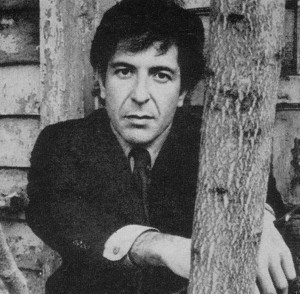
“And the poet is dead And what is left For those of us outside the mine His verses live on Whilst we remain strong But die, if we fall in the slime.” P.D.Adkin, The Poet is Dead, November 2016 The artist, as any creator of great works, never dies until his or her work […]
via The Poet is Dead (for Leonard) — P.D. Adkin Singer Songwriter


December 7, 2016
The End of Purpose and the Crisis of Creativity
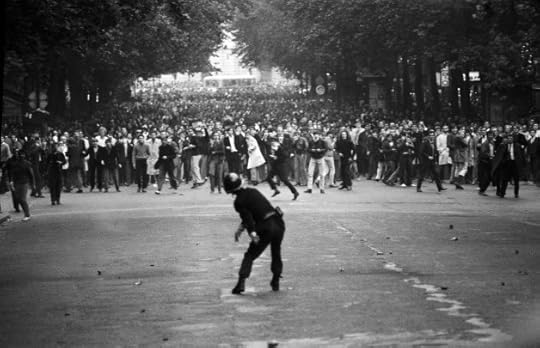
In his 1981 thesis, ‘Simulacra and Simulation’, Jean Baudrillard lamented the ruination of the university: “non-functional … lacking cultural substance or an end purpose of knowledge.”
Perhaps we should not victimise the universities, the same can be said of our entire nihilistic culture, nevertheless, the idea that a university lacks a reason for learning is a tremendously sad one.
The crippling result of the lack of purposiveness allows societies to throw in their own self-interested crutches: the university becomes a simple place to prepare people for the work-force, or, on a more hopeful level, an environment that will stimulate creativity. But if there is no purpose or reason, why be creative? In fact, how can one be creative when nothing matters? Or the opposite is true: it’s very easy to be creative when nothing matters – too easy.
Either way, the result will always be a crisis of creativity.
“Today’s nihilism is one of transparency, and it is in some sense more radical, more crucial than its prior and historical forms, because this transparency, this irresolution is indissolubly that of the system, and that of all the theory that still pretends to analyse it.”
Baudrillard regarded Romanticism as the first great manifestation of nihilism; the destroyer of the order of appearances. The second great manifestation came through Dada, Surrealism, the Absurd, and political nihilism – corresponding to the destruction of the order of meaning.
But, destruction is inevitable when appearances and meanings themselves are devoid of substance; when they are castles made of sand. It wasn’t the Romantics or Dada that destroyed meaning; they were merely realisations that meaninglessness had evolved around them. The real destroyers were those in the institutions themselves, trying to maintain a system which made no sense.
Such a condition can only be perpetuated by dissimulation, and only whilst society swallows the performance in the staging of an ersatz purpose that the system offers them. Once the society grows tired of the theatrics played out before them they will start to yawn, or grimace if they are injured by it, and through that yawn or grimace they will see through the stage-craft to the emptiness behind it. When this happens on a massive scale, real revolution or a brutal reaction can take place.
This awareness is happening today, it has been bubbling for some years, but the train is turning toward the Dystopia rather than any purposive Utopia.
Buadrillard observed a similar scenario in the student revolts of Paris, 1968. Why didn’t a revolution happen then? Why is a purposive revolution unlikely to happen now?
According to Baudrillard, the staging carried out by the media is no longer a staging. He calls the media: “a strip, a track, a perforated map of which we are no longer mere spectators”. All that remains, he says: “is the fascination for desertlike and indifferent forms for the very operation of the system that annihilates us.”
In other words, we are enchanted and enamoured by the same media that is strangling us and numbing our brains. We love to see the violence and perversion that the society produces so much that we would probably fall into a kind of spiritual crisis if the brutality of the system was taken away from us.
J. Baudrillard, Simulacra and Simulation, Michigan, 1994, digital version p. 98
Ibid, p.104