Paul David Adkin's Blog, page 33
April 3, 2016
The Mind
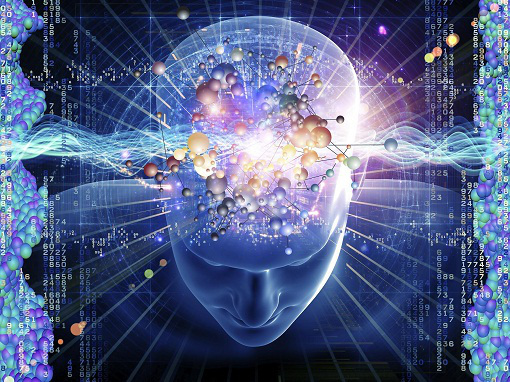
Collage of human head, molecules and various abstract elements on the subject of modern science, chemistry, physics, human and artificial minds
Perhaps the greatest miracle in nature after the creation of the Universe, is the creation of the mind. It is through the mind that the Universe is able to be perceived and be made intelligible. It is through the mind that existence is awakened and affirmed. It is in the mind that the cosmos is spread out, and the world that exists, unfolding itself before us whenever we open our eyes and ears, is inside, in the brain, in the mind. What we perceive; that which we are so sure of to the world around us, is in fact an image, being projected back within us. That so much information is able to be absorbed as reflection, in an upside-down way, digested by the mind and turned the right way up again, analysing it, drawing conclusions about it, and creating physical responses to all that information in the body, all in a microsecond instant, is truly incredible.
We know the mind is in our brain: damage that brain and the processing of reality becomes distorted or even totally incapacitated. The brain is in the world, so the mind is in the world too. But, is it? The world is in space, but the mind defies space. From a mountain top you can open your eyes and look at the horizon: how can that space be enclosed in your mind, in the physical space of your brain?
The reality perceived is not reality, it is just a representation of reality perceived on a certain scale and frequency. In fact, most of reality is unperceived by human sensors and we need reason and technology in order to measure and grasp the kind of reality that our dogs and cats, or the flies buzzing around our faces, can perceive quite naturally.
As for flies: what must the mind of a fly be like? So tiny is the fly’s brain compared to the magnificent super-computer that is the human mind and yet the fly constantly out perceives us. It flaps around our face, darting through the hairs of our legs to suck annoyingly on the liquid oozing out of our pores. Its compound eyes make our lenses-type eyes seem so primitive. How is it that their pin-prick sized brains are capable of processing the Universe in such a way that time moves slower for them? That is why we cannot catch the fly. No matter how fast we try to slap it, it sees the danger coming fly-minutes before the hand reaches it. In the slow-motion universe that the fly inhabits, it always has plenty of time to calmly fly away.

In order to understand where the mind really is, and not fall into the logical trap of concluding that it is outside space, we need to understand the enormous amount of space that exists in the quantum world. In a sense, we, and all living organisms are in the middle of the Universe as far as size goes.
The Universe is 1026 times bigger than us and 10-26 times smaller than us on the quantum scale. We have to multiply 10 with 26 zeroes in order to get to the limits of the Universe, and divide it by 10 with 26 zeroes to reach the space so small that nothing can fit in it.
Perhaps it is that detail that explains how we are capable of seeing all the way to the horizon and projecting it back inside our mind. The reality spread before us is a quantum perception of it within us, and the space within is just as vast, in potential, as the space without.
All outward exploration is an inner one as well.



March 24, 2016
WHAT HEGEL SKIPPED
WHOOPS!!!!
Hegel’s dynamic vision of history, and his optimism was to see the historical process as a movement toward a grand totality. In order to draw a positive conclusion from the millennia of oppression and exploitation, and of the rise and fall of oppressive regimes and greedy empires, Hegel described history as a process of overcoming that preserves that which has been overcome. The paradox of that which overcomes and at the same time preserves was termed Aufhebung by Hegel. For Hegel, the overcoming elevates that which has been overcome into a grand totality in which the essence of that which is overcome is allowed to be preserved.
However, in order to get into this Hegelian dynamic something essential needs to be skipped over, for how can something overcome something else if we are all flowing within the same river? Before an “overcoming” can take place a division has to occur between what is going to overcome and that which can be overcome. This primal division was overlooked by Hegel. He skipped over the essential element of our human condition, our “humanity”. That is what had to be overlooked in order to allow any “overcoming” to take place. In order for the grand totality to be created, we have to overlook the fact that the real grand totality of humanity already exists.
This skipping over was, therefore, a de-railing of history as human-history, projecting us into a cyclical continuum of separation and then a re-constructing of the amputated parts. What came about from this was an anti-human historical process which is, therefore, a seemingly endless process of separations themselves struggling to build themselves into other re-unifications that splutter and splatter forward until a new process of de-railing pushes the cycle into a downward spiralling trajectory again. This cyclical process takes place, not because it is the natural process, but because the frame around which the cycle takes place demands the cyclical procedure in order to keep the process contained.
This self-interested frame, created by those who can overcome, determines the anti-human historical reality and is reality, but this does not mean that it has to be reality. The logical condition would in fact be for humanity to be framed by a reality that is made for humanity itself.
By de-humanising the historical process and driving it into profit-making areas for certain groups, humanity itself is endangered and human fulfilment is rendered impossible.
In order to put history on track, we need to re-establish what has been skipped over in the anti-human historical process – we need to re-establish humanity and relocate the human element in the picture.


March 17, 2016
JIGSAW PUZZLES – THINKING ABOUT THINKING
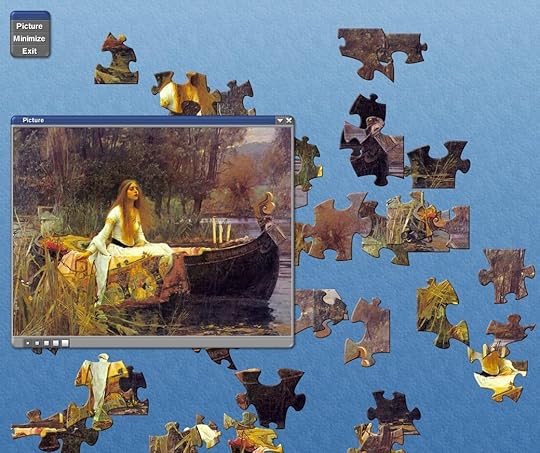
If the purpose of thinking is to uncover the hiddenness of Being, how does thinking about thinking help in fulfilling the deepest aims of the human condition as Sapiens? Thinking about thinking can uncover the traps that thinking plays on us when it convinces us that we know. Thinking about thinking is necessary in order to objectify our thought, to objectify the way we objectify reality. This objectification is necessary for all learning which is primarily subjective: the first relationship we have with the word is as an appropriation of that world through the entrapment of reality that takes place as soon as we frame it within our own perception. So, thinking about thinking has to take into account the limits of that framing in order to conceive of a greater enframing.
This could be explained through the metaphor of the jigsaw puzzle. A subjective experience that is not deeply thought about can create a piece of the jigsaw, but it has no idea of the larger frame into which that piece can be purposefully slotted if we want to complete the puzzle. Or in other words, without deep thought about life and about how our lives are or should be conceived, we throw ourselves into the game, but without the box to guide us. We have the pieces but no idea of how the finished product should look. So, in order to complete the puzzle we need to first of all try and create a mental construct from the pieces of what the overall picture could be. If there is a lot of sky blue, then the picture is probably an outdoor scene. Can we find any grass, or rocks? Etc..
Having the pieces of the jigsaw is not enough. We need to look for the bigger picture before we can hope to slot it all together. And in order to do that we need to think about what we are thinking about.


March 14, 2016
New Economics – a new approach to policy making
As a sceptical economist it is all to easy demonstrate the failings of contemporary economics, what is much harder is to suggest an alternative to the current practice of economics. However it is n…
Source: New Economics – a new approach to policy making


KNOWING AND BEING KNOWN FOR WHAT WE KNOW
 There are two kinds of being: the active being of knowing and the passive being of being known. The human condition, as homo sapiens, is wrapped up in them both. We are what we know and we are also what we are known to be. This is philosophically helpful because from it we can make a measure of human authenticity.
It is not what we have but what we know that is important if we are going to feel authentic fulfilment. It is not what we are known to have but what we are known to know that should be important in a human, Sapiens society.
Of course this is not the case in human praxis. Authenticity is sadly lacking in our nihilistic, consumerist civilisations. Our disassociation with authenticity stems primarily from our illusion of the importance of the “have” and the “have not” against the “know” and “know not”. It could be said that real human progress will not take off until this illusion is rectified. Progress through knowledge rather than through acquisitions.
Of the great “verbs” that describe the drives that create our identity, and through identity our sense of Being, to do, to have and to know, only the latter is truly a Sapiens’ characteristic, being itself rooted in the Cartesian cogito ergo sum. But knowing implies more than the simple thought process. It requires self-consciousness and language.
Knowing is not just thinking. It is a kind of thinking. The kind of thinking that can come to conclusions – that can guard memories and recall things.
Only through knowing can we be creative. Only through knowing can humanity have its greatest hallmarks – art and technology.


March 12, 2016
Life in the Hive
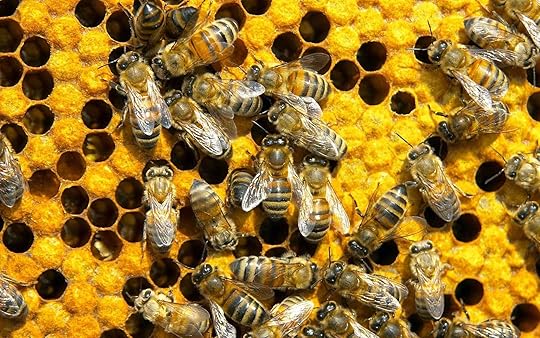
For the greater part of humanity, the experience of life is reduced to mere busyness. We are bees if you like, albeit intelligent ones, who are blessed or cursed with a self-consciousness that is full of great hopes and expectations. Yet our hive is a most ambiguous place. We find ourselves working within a great, global civilisation that is supposed to be structured to improve the standards of living for humanity, whilst, in reality, despite global think-tank institutions like the United Nations, the World Bank and the International Monetary Fund, we proceed without any authentically human driven plan toward actually achieving our humanistic aim. The real honey-gathering bees, it could be said, are actually motivated by more genuine purposes when they fly from flower to flower than we do whenever we turn on our computers or catch the train to work.
If our global civilisation does have a plan, it has very little to do with humanity itself. Instead of using our immense technological potentials for improving lifestyles globally, the system is obsessed with the creation and maintenance of channels that allow wealth to be streamed in a constant upward flow. The busyness of the human-hive is a perpetual process of making the rich richer and the imposition of security systems to protect its accumulations and keep its doors open for more wealth to enter. If standards of living at the lower levels can benefit from this process then it is tolerated, but only as long as the bigger aim of pushing money upward is not impaired.
And so the busyness is a nihilistic activity that lacks any purposeful strategies for the lives of the human bees that are doing most of the buzzing. The plan that does exist, fabricated in the silent halls of the echelons of wealth, are devoid of any true forward transforming goals for humanity. Wealth is already turning its backs on the humanity it never cared for and looking toward the transhumanist stage of their own elite’s evolution.
Technology evolves because it is good business or because its evolution will allow the elite’s own evolution away from what it hates – humanity. The elite has no interest in humanity, and it has always been interested in confounding and thereby ultimately degrading humanity.
Heidegger said that busyness gives the impression of a higher reality, but this impression is not authenticity. “Ongoing activity becomes mere busyness whenever, in the pursuing of its methodology, it no longer keeps itself open on the basis of an ever-new accomplishing of its projection-plan, but only leaves that plan behind itself as a given.”
In fact, the plan was left behind so long ago that no one can really remember what it was in the first place. We have been busy in our nihilism so long that we have started to have faith in that same nihilism as something meaningful, which is absurd. Meaning is being confused with busyness, an empty meaning, lacking the grounding of a projection-plan. A projection plan rooted in what we are: human beings, homo sapiens, creatures that think and can envisage great, purposeful things for the future, who can see a purposeful direction forward for all of humanity.


March 8, 2016
Incomplete Nihilism
In the Will To Power Nietzsche has a brief note mentioning the concept of an incomplete nihilism:
“Incomplete nihilism; its forms: we live in the midst of it.”
We are in the midst of it, but what does that mean? Does our condition reconfirm what Nietzsche says or has contemporary society evolved out of the incomplete nihilistic state? Our civilisation certainly possesses a dynamic in which the big questions are played down and made flimsy whilst the old values are maintained in order to give us something to hold on to whilst we blindly stagger through the void – is this what Nietzsche was referring to? A nihilism that hides itself in religions and ideologies? We live in a nihilism but it doesn’t actually feel nihilistic. Is this what Nietzsche sensed as well?
What is civilisation driven by if not a flimsy will to acquire more wealth, or to improve our personal image as we measure ourselves against the acquisitions of all the others. We are in awe at the novelties of technology rather than creating a technology that will free our human gifts of real invention and allow us real freedom from the obligations of mindless, soulless labour. We are immersed and trapped in the money system and the anti-human behaviour it engenders in our lives like violence, poverty, crime, hunger and war. The only justification for any of this are flimsy ones: weak-willed arguments that our weaknesses are ingrained in our human nature, stamped in our genes. The real Sapiens’ potentials are not encouraged unless they can promote egoistic acquisitions. Even medical research is only carried out when potential profits are seen.
And through all this weak-willed pessimism and egoism the system is bolstered up by the values of the family, God and the nation. The nihilism is incomplete, but it is there, and, paradoxically, all its weak-willed nihilism is, because of this incompleteness, enormously powerful.
This condition is of real benefit only to a select few, although, absurdly enough, it seems perfectly rational to the majority. They see it, not as a flimsy superficial existence but quite simply as the way things are. Which is also the way things have always been, and this collapses into the submission to the way things have to be – until we die.
The system is our oxygen. The majority believe and can only imagine anything different to be an utter disaster.
Nietzsche believed that the only way to escape our nihilism was to revalue the values we have held so far. This is obviously very difficult to do, but, as Heidegger says:
“Revaluing becomes the overturning of the nature and manner of valuing.”
However, it is the uncertainty in this overturning that frightens us. A fear of opening a hole in the wall of the dam; of creating a deluge by inventing a way of making it rain.
Nevertheless, perhaps the answer to the problem of our incomplete nihilism is also an incomplete revaluation. I.e., not to revaluate everything but to revalue with real values: values that all human beings can call authentic because they are authentic human values; that a strong humanism is the answer to a weak and incomplete nihilism.
Friedrich Nietzsche, WILL TO POWER, #28


March 7, 2016
GETTING HUMANITY OUT OF ITS DEPRESSION

If we are with someone who is depressed we might tell them that only they themselves can pull themselves back on track, and the reason for giving this advice is simple – the purposes and grounds that determine and support our lives are individual, personal ones. Perhaps they include a family and they are no doubt embellished with certain other marking factors – stamps of identity, memberships, beliefs and ideologies. In fact, the mesh is so complex that if our friend tells us that he or she is feeling down and lacks the motivation to go on and we ask why? our friend will probably reply that he or she doesn’t know. Perhaps there are clear reasons for the break down, perhaps not, the point is that whether there are or not, when we ask why, they don’t know the answer. They don’t know because the reasons for the purposes and grounds that we stand on are themselves flimsy ones, without any more than a superficial substance based on a measuring of our lives against the lives of others.
This measuring of ourselves is void of any meaningful placement of ourselves within the entirety of things. As soon as we let our thoughts stray toward this entirety we are doomed. Pascal’s nightmare of “the eternal silence of these empty spaces,” terrifies us all, and, like Pascal, we could drop into the religious for comfort, but even so, the day to day flimsiness still whirls around us and even the churches seem full of this flimsiness.
The temples feed us with man-made dogmas that supposedly come from our omnipotent creator only to make us more guilt-ridden than happy with our place in the world. In theory the monotheistic religions should draw us into the universal and allow us to embrace humanity, but they fail to do this because their dogmas are separating ones, buried in a narrative of good versus evil; of accomplishment versus failure; of our message against theirs.
Decentred, an individual needs to be centred again within the ecumenical whole, and the real community for the individual human being must be humanity itself. Only by positing ourselves with humanity itself can we start to find concrete answers to the why question.
Not only is the damage done by the devaluating of the human a psychological or spiritual problem, it has also pushed us to the brink of existential disaster in our persistent ecological damage to the biosphere that maintains us and all life forms on this planet. The lack of humanity as the measure of all human values and internecine promotion of sectarianism and separations will only keep us on a knife-edge over an annihilating abyss.
Nevertheless, this pessimistic condition has an optimistic side. As Nietzsche believed, the devaluing will lead to a revaluing. The nihilism embedded in our anti-humanity civilisation will become clearer and clearer to the individuals who suffer the consequences of that nihilism, a clarity that will create necessary revaluations and new purposes and grounds for existence, based, hopefully on unifying rather than separating elements. A will to be human, or to be Sapiens. But, in order for human power to be liberated we must accept that nihilism reigns in the world and understand that our nihilistic civilisation is working against humanity rather in its favour.
At the moment we stand at a crucial crossroads between a great revaluation of civilisation or a nihilistic slide into nightmarish dystopias or even internecine destruction and annihilation. Fukuyama preached we had reached the end of history. Quite the contrary, we stand at the doorstep of its beginning – what we call the historical process so far has been an anti-human historical process that needs to be shut down in order to allow for a truly human history to take shape.
Both science and philosophy have led us beyond the magical relationship with the suprasensory. Sacrifices are no longer intelligible acts of bonding with the universal. What really binds us is the fact that we all possess rational minds that need to understand and articulate the reality around us. The real purposes and groundwork for our lives lies in our thoughts and imaginations and our capacity to perceive and dream a Universe that finds itself fulfilled. A Universe in which its own Being is authenticated in the representation of itself in our collective minds.


February 20, 2016
PROGRESS, NEEDS and THE BEAUTY OF HUMAN MINDS

If we gauge progress according to the fulfilment of life’s needs through the satisfying of pleasure, then we could say that civilisation seems to do very well. This is a most hedonistic society, surely pleasure triumphs. But actually it doesn’t succeed at all. It tries hard but ultimately fails on the biological level of human life, and ignores over and over again the potential for creating pleasure on the psychological (artistic, spiritual and/or intellectual) level.
At the biological level civilisation operates in a rather perverse way. The needs to eat, defecate and reproduce have to be satisfied in a “balanced” way, whilst the civilisation of the homo economicus demands excessiveness and surplus. This in turn creates its own psychosis, as moderation is also a necessary part of the art of pleasure.
On the other hand, and this seems ironic, our psychological space needs to be constantly expansive in order to fulfil human potential. The art of psychological pleasure and the defeat of boredom has to be fundamentally concerned with finding the best way to unleash the creative and intellectual potentials of our minds. We have four areas to do this in: art, philosophy, science and technology. Four areas which are therefore interrelated as perpetrators of the art of pleasure at the psychological level, and which are retarded by the tools of Wealth.
The Big Economy reality that we live in deprecates the enormous wealth of creativity and know-how contained in the vast resource of the billions of thinking brains that make up the human race. Diverse thinking minds, all with an enormous potential that is unappreciated by the system of wealth-accumulation-for-the-wealthy that civilisation protects and propagates. The great cost of this is the enormous lack of exploitation of creativity. Yes, we do see enormous technological advances, but they are self-interested ones, and because of that “limited” advances, veiling the real technological progress that could be made if human creativity and thought were properly unshackled.
The culture of the homo economicus revolves around the cult of money. It disdains art, philosophy and science, except when it can ensure the continuation of the movement of wealth to the wealthy. In the place of these three elements of psychological pleasure we are fed another three more malleable ones: pornography, religion and sport.
But real pleasure is anchored in meaning, and the pleasure of meaningfulness is built through our humanity (unity, love, kindness and social intelligence); justice; transcendence (through hopes, humour, creativity, objectivity and spirituality); intelligence (curiosity, open-mindedness and love of learning); temperance (forgiveness, humility, self-regulation) and our courage and integrity. And in all of these ingredients lie our real potential to be authentic human beings.


February 13, 2016
THE HORIZONS AROUND IT ALL

Once we began using language we were obliged to form limits for everything. Calling something by name means to draw a circle around it, limiting it by its own definition. Definition has, therefore, a purpose to create limits.
Yet, while this is true, we also have a seemingly insatiable curiosity which, if allowed to operate, will always be struggling to see over the borders of the circles that we have drawn around things. This is more easily done if we first of all understand that the encircling of things by defining them is a process of creating horizons rather than boundaries or solid walls. The horizon, we know, is not an obstacle, but merely an ever expanding limitation. The reality in every thing is alike the flesh of an onion in its complexity and a horizon in its spatiality. When we peel off a layer there is another fine layer underneath; when we approach its limits they keep moving away from us. We can never go beyond it, we just discover how it forever opens itself before our own progress; how it never fails to unfold before us as we move towards the limits that we imagine are there but do not really exist. However, for this eternal unfolding of horizons to take place, we must, first of all, put ourselves in motion and go forward. We can never reach the end of a rainbow, but the landscape around us will change enormously if we try.