Rain Trueax's Blog, page 15
February 1, 2015
Can it be too late?
Generally my heroines have been women in their mid-twenties to late-thirties. I have one exception, the first heroine of the Oregon series, who is 18. I generally don't like writing young, naive heroines, but she is the one whose story came to me when I was that age. There is no changing her age. Besides her love of books, her direct personality, her determination make her seem older than her years.
With Rose's Gift, for the first time I wrote a love story for a heroine who is almost 61 and being romanced by a 58 year-old man. Romances aren't generally written about couples in the last act of their lives, but then I consider this novella to be more a slice of life story anyway, one about being old, making a good life, finding an unexpected love, second chances, and how vitality is not solely the provenance of the young. In fact, age might add to it.
Rose Redman appears in two earlier books as a secondary character. In 1886's Tucson Moon, she is the housekeeper, cook, and confidant for the heroine. Her husband is butler and all around take-care-of-everything guy. Then in 1899, she appears in Arizona Dawn where she is a widow in a bit of an emotional fog when that book's heroine, Grace, comes back to Tucson and gives her a reason to again pay attention to life.
When Rose's Gift begins, Rose is out of her fog of depression. Another young house guest, Holly Jacobs, had helped that happen. Still Rose is very aware of being old. It is not appropriate for her to be feeling what she is. Still, she can't deny the truth. She is very much attracted to a man and with those feelings come a mixture of shock, fear of being hurt, and a strange sort of sorrow for what she can't share with her deceased husband.
The hero, Ollie, is in two earlier books. In the first of the Arizona series, Arizona Sunset, he is jokingly called the hero's mother, as he looks out for him even though Sam is the boss and Ollie the foreman. Sam calls him old man, but it's as much for wisdom as it is for his actual age. He's only ten years older than Sam-- which was a lot when they first met. He appears again in Tucson Moon as a voice of reason but also a sick man who goes to Tucson only reluctantly to see a doctor. Ollie is a stubborn, opinionated and strong man who now knows exactly what he wants-- Rose to be his wife.
The story asks whether it can be too late for romance and a big life change. The characters from the three earlier Arizona historical romances have come together for Christmas. Change is in the air.
From the benefit of my own age, 71, I could bring to these characters my experiences of having once been a woman of 60 where I found it to be very different than I had expected. One of the advantages of writing at my age is how I can draw on all those earlier years to bring more depth to my characters through the benefits of personal experience.
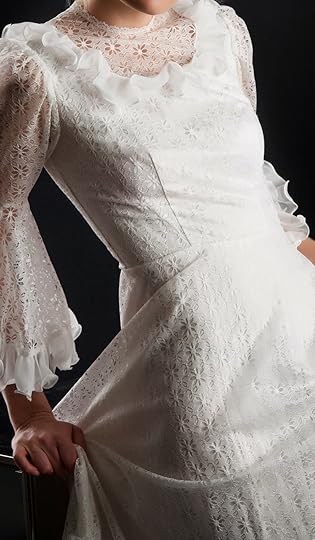
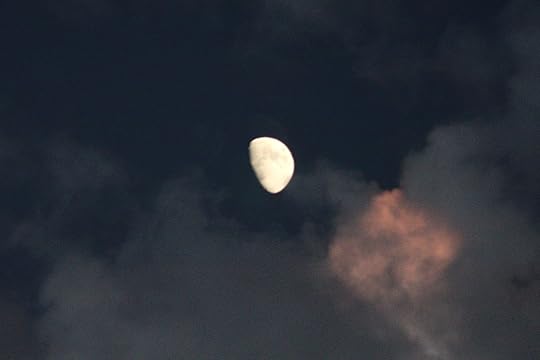
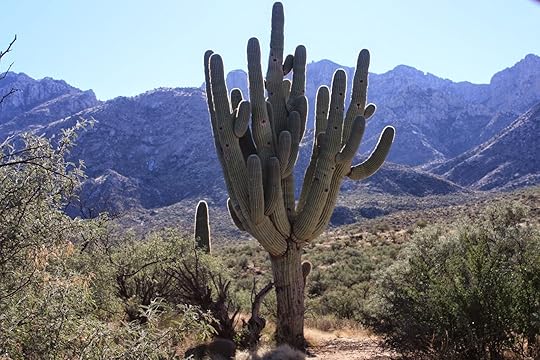
As usual, i have created a trailer, which was fun to make. I had to throw out a few images, because trailers can't have too many or they feel rushed. The images that were edited away were as good as the ones I used, but they weren't needed to illustrate the energy of the story. They are above.
Rose's Gift
is available at Amazon for Kindle but will be in the other sites tomorrow probably. For the month of February, the novella will be 99¢.
It is the fourth Arizona historical. It was a bit unexpected when the idea came to me because I expected the fourth Arizona historical to be a novel. This novella though had a story that needed to be told. The next one will now be the fifth.
As soon as I get the first Oregon historical launched, probably in mid-March, I will start writing that fifth. I am looking forward to that book as it has a lot of things about it to excite me; but first must come promotions for Rose's Gift. Marketing... alas, guess I should write about that again. Not sure if I know anything more about it, but it is an issue if an author wants their books read by anybody but themselves.
With Rose's Gift, for the first time I wrote a love story for a heroine who is almost 61 and being romanced by a 58 year-old man. Romances aren't generally written about couples in the last act of their lives, but then I consider this novella to be more a slice of life story anyway, one about being old, making a good life, finding an unexpected love, second chances, and how vitality is not solely the provenance of the young. In fact, age might add to it.
Rose Redman appears in two earlier books as a secondary character. In 1886's Tucson Moon, she is the housekeeper, cook, and confidant for the heroine. Her husband is butler and all around take-care-of-everything guy. Then in 1899, she appears in Arizona Dawn where she is a widow in a bit of an emotional fog when that book's heroine, Grace, comes back to Tucson and gives her a reason to again pay attention to life.
When Rose's Gift begins, Rose is out of her fog of depression. Another young house guest, Holly Jacobs, had helped that happen. Still Rose is very aware of being old. It is not appropriate for her to be feeling what she is. Still, she can't deny the truth. She is very much attracted to a man and with those feelings come a mixture of shock, fear of being hurt, and a strange sort of sorrow for what she can't share with her deceased husband.
The hero, Ollie, is in two earlier books. In the first of the Arizona series, Arizona Sunset, he is jokingly called the hero's mother, as he looks out for him even though Sam is the boss and Ollie the foreman. Sam calls him old man, but it's as much for wisdom as it is for his actual age. He's only ten years older than Sam-- which was a lot when they first met. He appears again in Tucson Moon as a voice of reason but also a sick man who goes to Tucson only reluctantly to see a doctor. Ollie is a stubborn, opinionated and strong man who now knows exactly what he wants-- Rose to be his wife.
The story asks whether it can be too late for romance and a big life change. The characters from the three earlier Arizona historical romances have come together for Christmas. Change is in the air.
From the benefit of my own age, 71, I could bring to these characters my experiences of having once been a woman of 60 where I found it to be very different than I had expected. One of the advantages of writing at my age is how I can draw on all those earlier years to bring more depth to my characters through the benefits of personal experience.

As usual, i have created a trailer, which was fun to make. I had to throw out a few images, because trailers can't have too many or they feel rushed. The images that were edited away were as good as the ones I used, but they weren't needed to illustrate the energy of the story. They are above.
Rose's Gift
is available at Amazon for Kindle but will be in the other sites tomorrow probably. For the month of February, the novella will be 99¢.
It is the fourth Arizona historical. It was a bit unexpected when the idea came to me because I expected the fourth Arizona historical to be a novel. This novella though had a story that needed to be told. The next one will now be the fifth.
As soon as I get the first Oregon historical launched, probably in mid-March, I will start writing that fifth. I am looking forward to that book as it has a lot of things about it to excite me; but first must come promotions for Rose's Gift. Marketing... alas, guess I should write about that again. Not sure if I know anything more about it, but it is an issue if an author wants their books read by anybody but themselves.


January 28, 2015
abusive relationships
At their core, romances are about relationships. Generally speaking, their most important relationship will be sexual, whether that means with a consummation or merely suggestion. The stories are about emotions because there is no relationship where more emotions come into play than a romantic attachment.
Romances are thought to be aimed at women, but I think the stories are good for men too when they understand the romance novel speaks to relationships and emotions. Romances explore how men see things as well as women. Romances can be dramatic and strong stories.
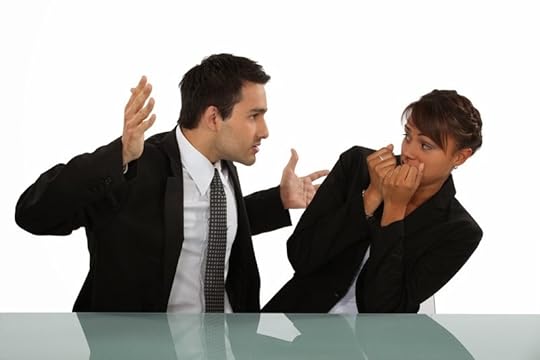 CanStock Image
As a writer, I read a lot of human interest stories. Yes, I care if Yemen is suffering a coup or how the Saudis will be with a new king, but I also care about the stories regarding the problems real people have faced, overcome or been destroyed by. I am also a good listener to friends or sometimes even acquaintances, who want to tell me their story. This interest in relationships has gone back to being a little girl and listening to adult conversations (at least until they realized I was there). You learn a lot by listening. I also learn a lot by articles. A story like the following is one I've heard in real life more times than I care to count. The reality is all relationships are not healthy. When they go bad, what are the warning signs?
I could no longer take his abuse
I would hazard a guess that every romance writer out there wants to write emotionally satisfying books where the reader takes away a stronger sense of self and what a healthy relationship looks like, helping to make their own stronger. There are those who claim it's not what happens to those who read romances. The claim (disputed by studies) is that such readers become dissatisfied with their own lives, maybe even leave them for a relationship that only exists in fantasy.
Writers can only take on so much responsibility for what their books influence. It's not possible to control whether readers will like what we write and equally not possible to be sure what they will take away from the words. I am not sure how many romance writers concern themselves with such things-- but I know some do. I do.
I like to write about women who, even if they don't start out strong, will end up that way. I like it when their path to becoming stronger feels real to me. I have never written a story about a victim even knowing that's very popular in the romance genre. With my heroines, if they aren't admirable to start with, they will get there in a realistic way. They will grow through what they experience. I also will never write about someone who is just plain mean to others, with the expectation that will change by the end.
The story above shows how relationships can deteriorate or someone can be fooled in the beginning where the situation changes so gradually that they do not react to the changes. While it's not the kind of story I enjoy writing, it is a good warning to someone who might be in such a relationship. Get out before it's too late.
Romances are thought to be aimed at women, but I think the stories are good for men too when they understand the romance novel speaks to relationships and emotions. Romances explore how men see things as well as women. Romances can be dramatic and strong stories.
 CanStock Image
As a writer, I read a lot of human interest stories. Yes, I care if Yemen is suffering a coup or how the Saudis will be with a new king, but I also care about the stories regarding the problems real people have faced, overcome or been destroyed by. I am also a good listener to friends or sometimes even acquaintances, who want to tell me their story. This interest in relationships has gone back to being a little girl and listening to adult conversations (at least until they realized I was there). You learn a lot by listening. I also learn a lot by articles. A story like the following is one I've heard in real life more times than I care to count. The reality is all relationships are not healthy. When they go bad, what are the warning signs?
I could no longer take his abuse
I would hazard a guess that every romance writer out there wants to write emotionally satisfying books where the reader takes away a stronger sense of self and what a healthy relationship looks like, helping to make their own stronger. There are those who claim it's not what happens to those who read romances. The claim (disputed by studies) is that such readers become dissatisfied with their own lives, maybe even leave them for a relationship that only exists in fantasy.
Writers can only take on so much responsibility for what their books influence. It's not possible to control whether readers will like what we write and equally not possible to be sure what they will take away from the words. I am not sure how many romance writers concern themselves with such things-- but I know some do. I do.
I like to write about women who, even if they don't start out strong, will end up that way. I like it when their path to becoming stronger feels real to me. I have never written a story about a victim even knowing that's very popular in the romance genre. With my heroines, if they aren't admirable to start with, they will get there in a realistic way. They will grow through what they experience. I also will never write about someone who is just plain mean to others, with the expectation that will change by the end.
The story above shows how relationships can deteriorate or someone can be fooled in the beginning where the situation changes so gradually that they do not react to the changes. While it's not the kind of story I enjoy writing, it is a good warning to someone who might be in such a relationship. Get out before it's too late.
January 25, 2015
Getting it off the ground
For those of you who are interested in writing but have had a hard time getting into a project, check this out.
Wednesday writing opportunity
Basically, Linda Kay, who is a writer, is offering, in her blog, a chance for her readers to write something short linked to a photograph or any image that has tweaked their imagination. The instructions are in the above link. You will write your piece on your own site and link it to hers.
To me this seems like a nice idea to encourage a writer, who feels blocked. How many times have we looked at an object and thought there is a story behind it. Linda did a good job on making this set up work for readers and writers. Because, right now, I have too much on my own plate, I won't be adding to it, but will go there on Wednesdays.
I just finished the last edit for Rose's Gift (although my editor might see it otherwise). It will be out probably the first of February. That requires writing blurbs and getting the word out-- although I don't plan on doing any big events. I also have to do the final edit for the first of the Oregon historical series. I will get over to Linda's though on Wednesdays to see what others write. Anything that brings together writers is a plus in my mind.
Over the last week, I've had some dreams that work with Aztec Moon. One gave me more of my hero's back story. I've known the basics of it, but I actually saw some of the scenes that will show up in the book. It was funny how that worked into a dream that had nothing to do with the book and tied to my daily life-- kind of. I tend to dream these stories with my kids being much younger mixed together with people i know today.
Although I had meant to wait on writing this new one, it does seem to be calling me. After I do the edit of the Oregon historical, I could lay down a few thousand words just to get it off the ground. I don't like to do that though unless I have a block of time available to write the entire rough draft. So I am not sure. The muse may not be as patient about this. I never like to say no to the muse ;). He might not be around when I am ready for the writing. Muses can be temperamental-- maybe off to help another writer...
Most writers probably have that small still voice that they can call whatever they want. What does it look like? Well, I think mine might look like this-- although I can't say I have seen him, just felt him ;)
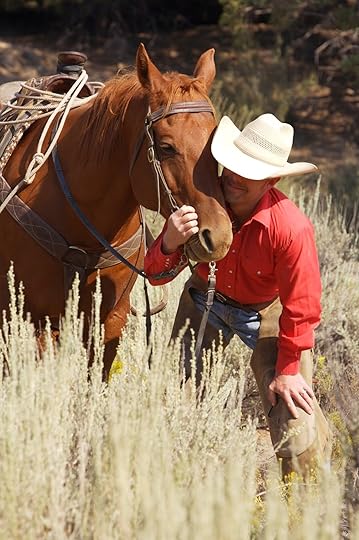 image from CanStock
My other muse is sitting in his den right now and working on another of his projects. That one I do see and have since 1962-- although he's changed a little during those years, as have I :)
Anyway if you are interested in writing and want to get yourself inspired, check out Linda's blog, at the link on top. It seems like a good way to get your toe in the water and maybe meet other interesting writers. Sometimes a short project, that you can share with others, is a way to build up inspiration-- or get your muse more interested in helping you with something bigger. Small projects sometimes are only the first step to big ones.
Wednesday writing opportunity
Basically, Linda Kay, who is a writer, is offering, in her blog, a chance for her readers to write something short linked to a photograph or any image that has tweaked their imagination. The instructions are in the above link. You will write your piece on your own site and link it to hers.
To me this seems like a nice idea to encourage a writer, who feels blocked. How many times have we looked at an object and thought there is a story behind it. Linda did a good job on making this set up work for readers and writers. Because, right now, I have too much on my own plate, I won't be adding to it, but will go there on Wednesdays.
I just finished the last edit for Rose's Gift (although my editor might see it otherwise). It will be out probably the first of February. That requires writing blurbs and getting the word out-- although I don't plan on doing any big events. I also have to do the final edit for the first of the Oregon historical series. I will get over to Linda's though on Wednesdays to see what others write. Anything that brings together writers is a plus in my mind.
Over the last week, I've had some dreams that work with Aztec Moon. One gave me more of my hero's back story. I've known the basics of it, but I actually saw some of the scenes that will show up in the book. It was funny how that worked into a dream that had nothing to do with the book and tied to my daily life-- kind of. I tend to dream these stories with my kids being much younger mixed together with people i know today.
Although I had meant to wait on writing this new one, it does seem to be calling me. After I do the edit of the Oregon historical, I could lay down a few thousand words just to get it off the ground. I don't like to do that though unless I have a block of time available to write the entire rough draft. So I am not sure. The muse may not be as patient about this. I never like to say no to the muse ;). He might not be around when I am ready for the writing. Muses can be temperamental-- maybe off to help another writer...
Most writers probably have that small still voice that they can call whatever they want. What does it look like? Well, I think mine might look like this-- although I can't say I have seen him, just felt him ;)
 image from CanStock
My other muse is sitting in his den right now and working on another of his projects. That one I do see and have since 1962-- although he's changed a little during those years, as have I :)
Anyway if you are interested in writing and want to get yourself inspired, check out Linda's blog, at the link on top. It seems like a good way to get your toe in the water and maybe meet other interesting writers. Sometimes a short project, that you can share with others, is a way to build up inspiration-- or get your muse more interested in helping you with something bigger. Small projects sometimes are only the first step to big ones.
January 21, 2015
Smart Girls Read Romance
Earlier I wrote about joining an author group and my first article there would be the 22nd. Well, tomorrow it goes up and here is the link to the group--
Smart Girls Read Romance
The monthly schedule is posted there with a different author every two days. It seems to be pretty loose for what the authors post, which can be from their lives or their work. So if you are interested in writing and what inspires it, this is a good blog to check in on.
What I liked about joining this group is how it promotes not only the idea of reading romances but also helps readers understand what lies behind the words. Romance has been a disrespected genre and yet it sells a lot of books. I think there are reasons. In a positive way, it's not just about boy meets girl; but it has an energy that can positively add to the lives of its readers. Whatever genre a reader prefers, it has energy; and it's wise if the reader understands what that energy will be giving them.
For my first post, I figured I should have it be about myself as although I do know some of these authors, I don't know how many know me. I have written before how difficult writing a profile can be. I played around with writing a couple of versions before I realized there was one I still consider important about me as well as what I write. It surprised me how much was from my growing up years. I say surprised because I don't often look back (which complicates writing profiles).
Whether we look back, those experiences are there. They are part of the way we think and live. There are some who look at their childhood and make danged sure they don't have any of that in their adulthood-- but isn't that still impacting them?
For someone like me, who grew up on the edge of wilderness, with lots of time for my imagination to run wild-- as well as myself, I see how much it impacts who I am as well as what I wanted in my life and how I raised my own children.
So return to that link tomorrow, and you will see how I resolved my problem of introducing what was important about me, what influenced the books I write-- and it how it all went to the girl growing up in hills at the mouth of the Columbia River Gorge. It's changed-- and yet nothing really has :).
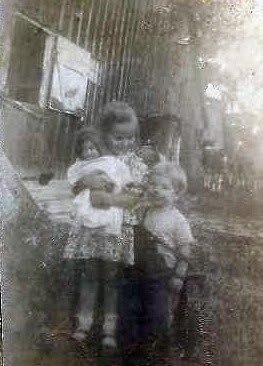
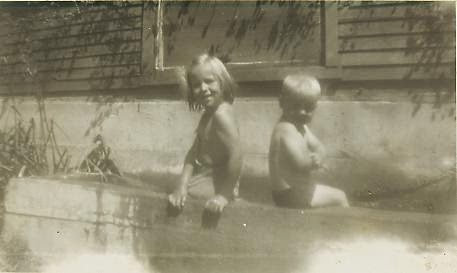
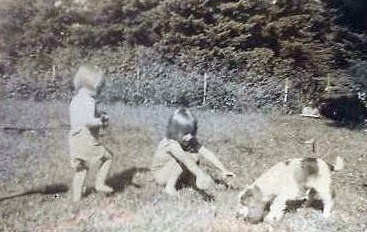
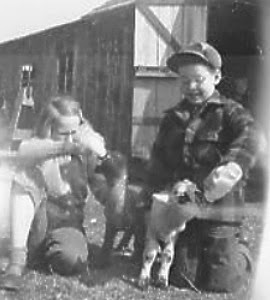 I should add that those bummer lambs, which my brother and I were feeding (bummer means they were either rejected or orphaned), often grew up to chase me across the orchard requiring a leap onto a rock wall or climbing a tree to avoid being butted. Letting a sheep (especially a wether (neutered male), become a pet can lead to that sort of behavior-- another life lesson...
Smart Girls Read Romance
The monthly schedule is posted there with a different author every two days. It seems to be pretty loose for what the authors post, which can be from their lives or their work. So if you are interested in writing and what inspires it, this is a good blog to check in on.
What I liked about joining this group is how it promotes not only the idea of reading romances but also helps readers understand what lies behind the words. Romance has been a disrespected genre and yet it sells a lot of books. I think there are reasons. In a positive way, it's not just about boy meets girl; but it has an energy that can positively add to the lives of its readers. Whatever genre a reader prefers, it has energy; and it's wise if the reader understands what that energy will be giving them.
For my first post, I figured I should have it be about myself as although I do know some of these authors, I don't know how many know me. I have written before how difficult writing a profile can be. I played around with writing a couple of versions before I realized there was one I still consider important about me as well as what I write. It surprised me how much was from my growing up years. I say surprised because I don't often look back (which complicates writing profiles).
Whether we look back, those experiences are there. They are part of the way we think and live. There are some who look at their childhood and make danged sure they don't have any of that in their adulthood-- but isn't that still impacting them?
For someone like me, who grew up on the edge of wilderness, with lots of time for my imagination to run wild-- as well as myself, I see how much it impacts who I am as well as what I wanted in my life and how I raised my own children.
So return to that link tomorrow, and you will see how I resolved my problem of introducing what was important about me, what influenced the books I write-- and it how it all went to the girl growing up in hills at the mouth of the Columbia River Gorge. It's changed-- and yet nothing really has :).
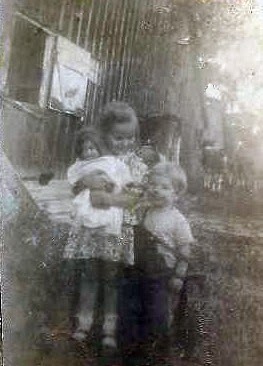


 I should add that those bummer lambs, which my brother and I were feeding (bummer means they were either rejected or orphaned), often grew up to chase me across the orchard requiring a leap onto a rock wall or climbing a tree to avoid being butted. Letting a sheep (especially a wether (neutered male), become a pet can lead to that sort of behavior-- another life lesson...
January 18, 2015
One thing leads to another
 maps on wall behind me involve the fourth Oregon historical and its region
The week has involved a lot of hours writing and researching. I decided on a title for the fourth Arizona historical and found an intriguing twist that I hadn't expected (this before actually starting to type). While my main work had been on the novella, its story is set between 'Arizona Dawn' and the next book, these books tie characters strongly together-- even with each book ending without a cliffhanger. The novella begins in the fall of 1900 in Tucson and ends with the new year. The next story will open in the spring of 1901.
The unexpected element, which excited me during the day, led to a scary and even horrifying dream-- one of my movie dreams. These dreams come now and again, rarely are nightmares. I might like to, but I don't control such dreams. They come when they come mixed into prosaic dreams where my main issue is to figure out what swimsuit to buy someone. I don't always remember them. This one I did, and am still trying to decide if it came out of the research or what in in the newspapers about world events.
There are two reasons I don't write horror or frightening books-- my dreams and my unwillingness to immerse myself in the negative side of life for the length of time it takes to write a book. When I am writing a rough draft, that world becomes as real as mine. I think about these characters all the time and am constantly considering what comes next. So I am not about to write stories that are depressing. Yeah, some struggle, some danger, some fighting for a victory can be energizing to me but not dark stories that have no happy outcome. As I've said many times, I can get that by reading the newspapers. I like writing a romance that engages my interest in characters and the story itself. What are these people doing, what comes next, and yeah I want to see the lovers work it out, but it's not just about them for me.
My interest in the prehistoric and Native American peoples of western North America has led to visiting sites, museums, and reading. Years ago, it inspired an idea for a romance with an Anasazi heroine and the hero a trader from one of the Pacific Northwest tribes, Haida would have worked. For those of you who know much about the Pacific Northwest tribes, they were quite interesting, and the ones along the ocean especially in British Columbia were a handsome, rugged people. They killed whales from their canoes, but they also raided and traveled widely. Some of them were traders up and down the Coast. Exploring inland is no stretch considering the goods that were found in Southwest ruins.
 from http://www.mortkunstler.com/images/dayinhistory/pictures/1008.jpg
I never wrote that book because of my difficulty in putting myself into the mind of a woman of another culture. I write mostly heroines who are from my basic culture even if from an earlier time. I do this because I want to get into the head of my heroines. What would an Anasazi woman think about relationships, her own goals, could she choose a husband, or would that endanger her in the tribe? I had no idea because even though a lot has been found about prehistoric cultures, what is known is constantly changing with new discoveries. (If you are interested in such research, give this book a look-- Man Corn Cannibalism and Violence in the Prehistoric American Southwest by Christy G. Turner and Jacqueline A. Turner).
What I will be writing is about an archaeologist who heads up a dig into a ruin in Central Arizona at a time when that was still a very rugged and sometimes violent land. This heroine turned up first in the epilogue to Arizona Dawn. She is also in the soon-to-be published novella, Rose's Gift. Her reason for wanting to do this particular dig ties into that earlier idea I had for a book, through reincarnation dreams-- part of which I can draw from my own experiences.
The fourth historical will be called Aztec Moon. Some might wonder why Aztec; but, as I said above, there was a lot more interaction in the cultures of the Prehistoric Americas than many would expect. It can be discovered through a combination of the artifacts and legends. My intention for its underlying themes will be family, love, revenge, healing, danger, and discovery.
Back to the dream that worried me for awhile. I had been researching the significance of my title choice when I learned about a myth regarding the Aztec moon goddess and the art left behind to tell [her story]. Gruesome... If you are familiar with Aztec art, you know how often it can be violent-- at least in our eyes.
 from http://abraxas-d.blogspot.com/2010_06_01_archive.html
You can kind of see how that story and image could lead to a dream. I am sticking to the title and will be sure, when writing that book, to read less newspaper stories and watch only sweet movies ;). As much as the story is drawing me to it, I have other responsibilities, which come first-- i.e. editing, editing and more editing.
Oh and we got our first lambs-- twins. They beat Imbolc this year ;)
January 14, 2015
Defining or explaining just about anything...
Writing a full-sized book involves a lot of steps. I don't think they have to be in any set order. I've started books with the first sentence, and all the rest was in my head. I've begun with a character from an earlier book and given it time to come up with a love interest and plot. Anytime I start a book, I always know where it's going to be by the time I write The End. The events along the way are the fun of writing and why I can't be in a big hurry. Rushing makes it harder to hear the small still voice that says-- uh uh... not that way-- or had you thought about...
Writers refer to being a pantser or a plotter with some a little of each, which is where I am-- although I never do an outline. I do though put together character lists which help with a series like my Arizona one. I write down birth date and place as part of defining a character. Especially in the old West, some states definitively helped explain who a person will be by what they experienced growing up. Birth dates are important even for important secondary characters as some of them end up with a story of their own.
Delaying starting the next full-length book has been-- write a novella, drive back from Tucson, Christmas, a routine medical matter, and a dental issue. That doesn't even include all the research that was going to be required.
In the midst of this, I was invited to join a writing blog. This is a group with about fifteen writers, who write about their books, their process, and their lives. I liked the idea of it because it is to promote romance writing-- Smart Girls Read Romances . I think romance writing is often disrespected, despite some very good writers in the genre, I was happy to be invited to offer a once a month blog. The complicated part was coming up with my first, which was to introduce myself...
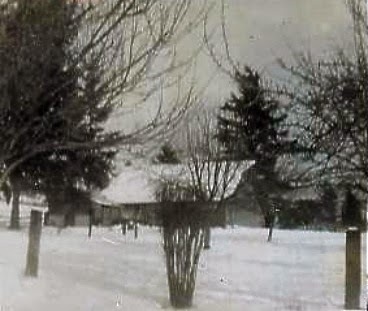
There is not much I dislike more than trying to define who I am. How do you decide what matters most about your life-- even more so how that impacts what you write? When that blog goes up January 22nd, I'll put a link to it here for anyone who is curious as to how I did that... kind of. The following picture is going to be in it.
And then-- one thing that had been bugging me, about the next Arizona historical novel, was lack of a title. I don't always know them before I start, but I wanted one to help me get a feel for what was coming. The complicating factor, for me, was that it's part of a series (well so is the current WIP, the novella). The earlier titles were Arizona Sunset; Tucson Moon; Arizona Dawn... and... I needed it to fit with those first three but be distinct.
Then there was the matter of a cover. While I was looking for the right cover for the first Oregon historical, I was also looking for someone who suited the hero of this fourth (as yet unwritten) Arizona book. I knew what the heroine looked like. Being blonde, beautiful and slender, she was not difficult to find the right images.
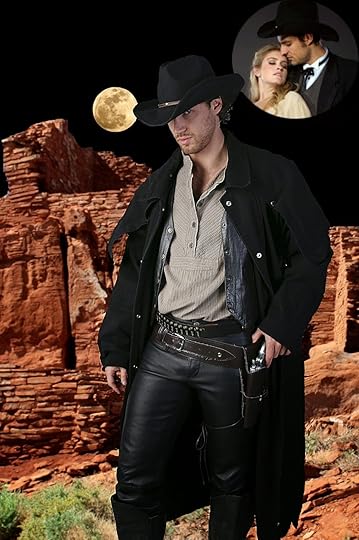
The hero is 42 years old and frankly a lot of the photo sites offer much younger men, some not much more than boys. I actually thought I had found and bought the right one in December but he really looked too young. I was resigned to using him until I came across the perfect image to suit what I saw in my imagination. Even better when I found her and him in a clinch-- until i remembered the other three covers were a man standing alone with the clinch in the background. Back to the sites.
You know a man 42 doesn't really look old by any means. He just looks assured, like he's been around, with a few lines by his eyes. My son is 45, and he still looks youthful, but he now has the assured confidence of a man. Still, this hero has led a very hard life. I wanted that to show in the image. He had to look old soul.
I finally found the right image and even in period costume. There had been another mature man, who I also liked, but they had put him in a plaid shirt, and I was not sure when men actually started wearing patterned shirts. Most clothing had been made in the family until 1850s and even by the 1900s, with more stores and choices, there were limitations on the kind of fabric available.
While trying to find out if men wore shirts with plaid, I found something interesting about the plaid in a tartan. After the Scots rebelled, England made it illegal for them to wear plaid as a way to block the power of the clans.
But a tartan wasn't the kind of fabric in this guy's shirt. It was cotton and kind of madras in feel (based on the photo). Historical readers can be pretty knowledgeable about details; so it wasn't worth the possibility of using it and having a reader turn off the book based purely on the cover being wrong for 1901.
So, I have the cover for the book I have yet to write... with a few changes possible (the moon may vary in size). I also have the title-- I think. Onto my bulletin board, I pinned up inspiring photos, many my own of the region where the majority of the story will be set. I still though need to do research involving logistics.
While creating this cover as a way to take breaks from writing, I finished the rough draft of the novella. Some do not think novellas exist. It is either short story or novel.
Stephen King said about novellas, "an ill-defined and disreputable literary banana republic" which clearly means they can be anything for form. Is that bad? King has actually written quite a few of them whatever he calls them. They were less popular when the only way to read a book was with paper. Now with the eBook, novellas and short stories are more good for a quicker read when there is no time for a longer story.
Looking around, I found this used as a way to label stories by lengths; short story-- under 7,500 words; novelette-- 7,500-17,500 words; novella-- 17,500- 40,000 words; and novel anything over 40,000 words.
Where this will matter most is for the blurb. Readers can be irked when they find they bought what they thought was a full sized book and it is not.
Then I have one other thing to figure out. As I added the chosen cover for the novella to my folder of covers, I put a four with it to keep it in line for how it fits time-wise-- except it's not a novel. The fourth historical is slated to be a full length novel. How do I keep a novella lined up so readers know the order in which to read-- and what about the earlier short story, which came in between books two and three?
Even though this story, at about 20,000 words, ended up longer than I expected, (when writing, you do have to take the story to where it's required), I will still put it out at 99¢. Writers get almost nothing for a 99¢ book, as Amazon takes 70% of it. Still, it will introduce readers to what is coming in that next Arizona historical. The novella does stand alone as a slice of life with a romance of its own-- a rather unexpected one, I might add.
And, finally, my book, Arizona Dawn, is book of the week on Easy Chair Bookshop-- Book of the week check it out :)
Writers refer to being a pantser or a plotter with some a little of each, which is where I am-- although I never do an outline. I do though put together character lists which help with a series like my Arizona one. I write down birth date and place as part of defining a character. Especially in the old West, some states definitively helped explain who a person will be by what they experienced growing up. Birth dates are important even for important secondary characters as some of them end up with a story of their own.
Delaying starting the next full-length book has been-- write a novella, drive back from Tucson, Christmas, a routine medical matter, and a dental issue. That doesn't even include all the research that was going to be required.
In the midst of this, I was invited to join a writing blog. This is a group with about fifteen writers, who write about their books, their process, and their lives. I liked the idea of it because it is to promote romance writing-- Smart Girls Read Romances . I think romance writing is often disrespected, despite some very good writers in the genre, I was happy to be invited to offer a once a month blog. The complicated part was coming up with my first, which was to introduce myself...
There is not much I dislike more than trying to define who I am. How do you decide what matters most about your life-- even more so how that impacts what you write? When that blog goes up January 22nd, I'll put a link to it here for anyone who is curious as to how I did that... kind of. The following picture is going to be in it.

And then-- one thing that had been bugging me, about the next Arizona historical novel, was lack of a title. I don't always know them before I start, but I wanted one to help me get a feel for what was coming. The complicating factor, for me, was that it's part of a series (well so is the current WIP, the novella). The earlier titles were Arizona Sunset; Tucson Moon; Arizona Dawn... and... I needed it to fit with those first three but be distinct.
Then there was the matter of a cover. While I was looking for the right cover for the first Oregon historical, I was also looking for someone who suited the hero of this fourth (as yet unwritten) Arizona book. I knew what the heroine looked like. Being blonde, beautiful and slender, she was not difficult to find the right images.
The hero is 42 years old and frankly a lot of the photo sites offer much younger men, some not much more than boys. I actually thought I had found and bought the right one in December but he really looked too young. I was resigned to using him until I came across the perfect image to suit what I saw in my imagination. Even better when I found her and him in a clinch-- until i remembered the other three covers were a man standing alone with the clinch in the background. Back to the sites.
You know a man 42 doesn't really look old by any means. He just looks assured, like he's been around, with a few lines by his eyes. My son is 45, and he still looks youthful, but he now has the assured confidence of a man. Still, this hero has led a very hard life. I wanted that to show in the image. He had to look old soul.
I finally found the right image and even in period costume. There had been another mature man, who I also liked, but they had put him in a plaid shirt, and I was not sure when men actually started wearing patterned shirts. Most clothing had been made in the family until 1850s and even by the 1900s, with more stores and choices, there were limitations on the kind of fabric available.
While trying to find out if men wore shirts with plaid, I found something interesting about the plaid in a tartan. After the Scots rebelled, England made it illegal for them to wear plaid as a way to block the power of the clans.
But a tartan wasn't the kind of fabric in this guy's shirt. It was cotton and kind of madras in feel (based on the photo). Historical readers can be pretty knowledgeable about details; so it wasn't worth the possibility of using it and having a reader turn off the book based purely on the cover being wrong for 1901.
So, I have the cover for the book I have yet to write... with a few changes possible (the moon may vary in size). I also have the title-- I think. Onto my bulletin board, I pinned up inspiring photos, many my own of the region where the majority of the story will be set. I still though need to do research involving logistics.

While creating this cover as a way to take breaks from writing, I finished the rough draft of the novella. Some do not think novellas exist. It is either short story or novel.
Stephen King said about novellas, "an ill-defined and disreputable literary banana republic" which clearly means they can be anything for form. Is that bad? King has actually written quite a few of them whatever he calls them. They were less popular when the only way to read a book was with paper. Now with the eBook, novellas and short stories are more good for a quicker read when there is no time for a longer story.
Looking around, I found this used as a way to label stories by lengths; short story-- under 7,500 words; novelette-- 7,500-17,500 words; novella-- 17,500- 40,000 words; and novel anything over 40,000 words.
Where this will matter most is for the blurb. Readers can be irked when they find they bought what they thought was a full sized book and it is not.
Then I have one other thing to figure out. As I added the chosen cover for the novella to my folder of covers, I put a four with it to keep it in line for how it fits time-wise-- except it's not a novel. The fourth historical is slated to be a full length novel. How do I keep a novella lined up so readers know the order in which to read-- and what about the earlier short story, which came in between books two and three?
Even though this story, at about 20,000 words, ended up longer than I expected, (when writing, you do have to take the story to where it's required), I will still put it out at 99¢. Writers get almost nothing for a 99¢ book, as Amazon takes 70% of it. Still, it will introduce readers to what is coming in that next Arizona historical. The novella does stand alone as a slice of life with a romance of its own-- a rather unexpected one, I might add.
And, finally, my book, Arizona Dawn, is book of the week on Easy Chair Bookshop-- Book of the week check it out :)
January 11, 2015
it's the details that can pull you in

When doing research for historical books, there are a lot of things that can get complicated fast. One of them is currency or money and how the heck did people pay for what they wanted? Of course, there has always been barter but basically a culture that expects to grow needs a system of dependable currency.
Currency in Arizona 1880s
For a long time, the dollars people accepted in payment were printed and stood behind by a multitude of banks-- which incidentally could fail. If you accepted dollars, you might want to know which bank had issued them. For years, the federal government did not issue money. It wasn't until 1862 that it set standards for paper and sizes.


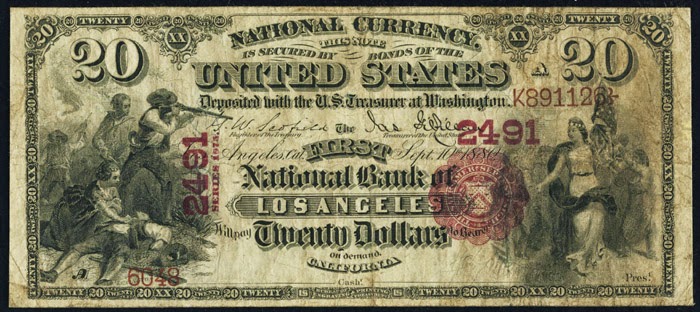
During the Civil War, the South, in leaving the Union, needed its own currency. This was done through various states and of course, became worthless when the South lost the war (except someday to collectors, of course).

With the failure of banks, which happened again and again with various recessions, eventually there came a need for a consistent currency that the federal government stood behind and issued. That came in 1914. At first, it was backed by gold-- the gold standard.
Then along came the Great Depression and a run on banks to get gold. In 1933, Roosevelt took the US off the gold standard. People could no longer redeem their notes for gold and money began to float. That takes us to today when money stays constant... other than inflation that is. Ever check out the price of a paperback book in 1950 something? Try 25¢. Yeah the government stands behind it... way behind it :).
January 7, 2015
Memorable moments, if not proud ones, in our nation's history
 "The Sand Creek Massacre" by Robert Lindneaux
 Anyone who has done any research about the American West and our history with the Native Americans, has heard of Sand Creek. Below is a good article as a refresher as to how such happened as Americans moved across this nation and needed to dispossess the ones already here. Sand Creek was not about a noble battle but a massacre.
Sand Creek
Should we learn from history?
The basics are, a surprise attack at dawn of November 29th, 1864, with 675 volunteer soldiers commanded by Col. Chivington, struck a village of about 700 Cheyenne and Arapaho, which was made up of warriors, women and children. Those in the village didn't stand a chance, and the barbarism that followed the attack still gives Chivington a name that goes down in ignominy.
"Witnesses described Indians on their knees begging for mercy and children used for target practice. Victims' body parts were sliced off and taken to Denver as trophies. Two other military leaders refused to let their men participate and condemned the attack." Eric Gorski in Denver PostEven reading of the brutality following the immediate attack makes a person wonder how someone can get to the point that they see other humans as less than human. Mobs do get that way though and even those under military command can reach that point.
It wasn't to be the last time the soldiers set out to massacre Indians by hitting their villages in a surprise attack. Sometimes it worked. Most spectacularly in June 1877 at the Little Big Horn, it did not. Some though believe Custer that day hoped to capture hostages, not slay women and children, and believed he could then make the warriors surrender as he had on the Battle of the Washita. As is well known, The Little Big Horn didn't work out so well for him or his men. After Custer was killed at Little Big Horn, it set in motion certain events where the military felt entitled to kill without warning.

It was later that same summer. Native Americans were being forced onto reservations by the military. The Nez Perce had decided to flee, women, children, warriors to avoid being incarcerated in one of those reservations where often food was inferior, they had poor shelter, and no ability to hunt as they always had done. Thinking they could get to Canada where life would be better, they had traveled peacefully some distance, even traded with some of the posts, and by August 9th, they camped at one of their favorite places to rest and dig Camas root.
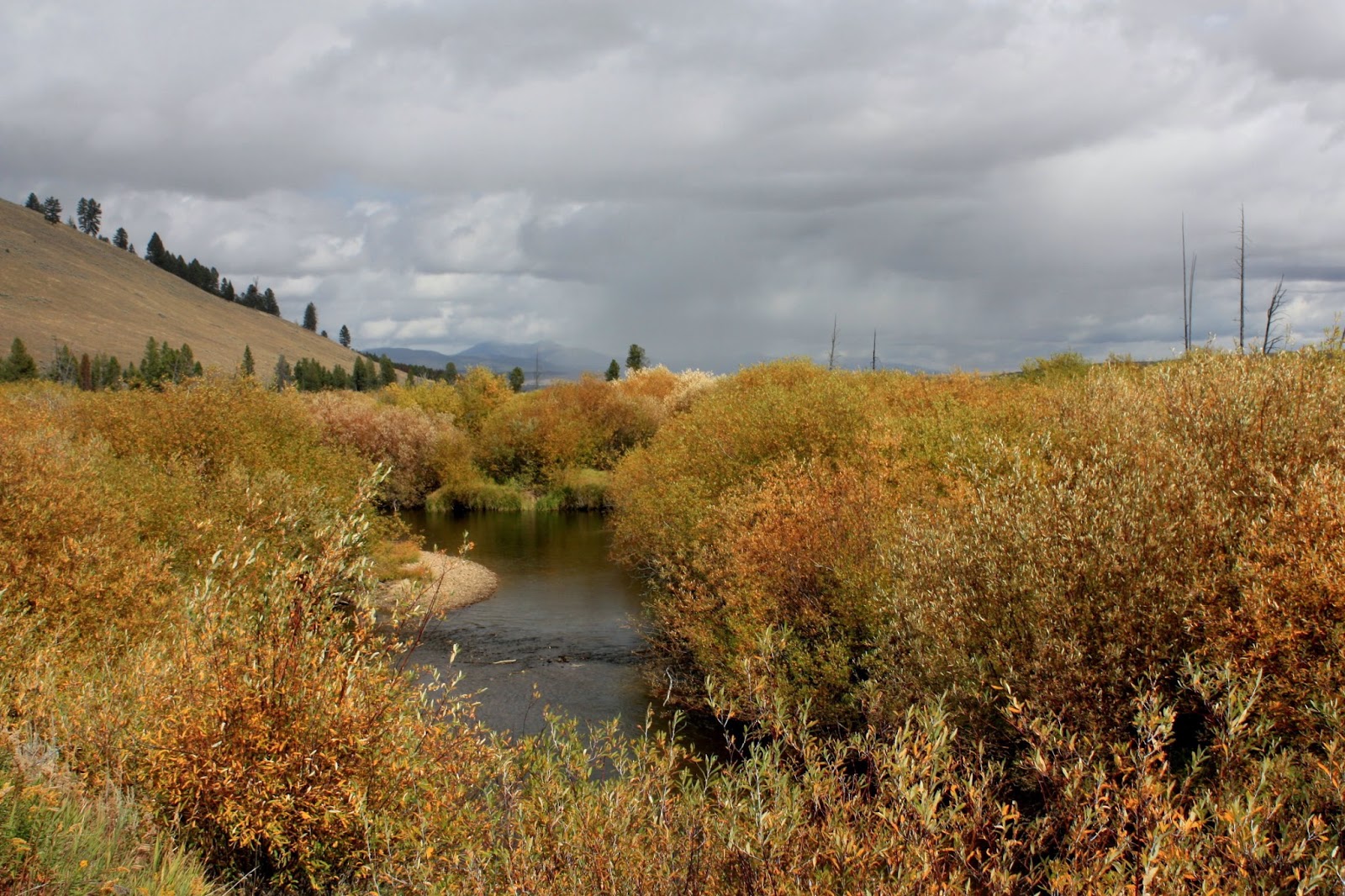
Being there today, it's easy to imagine how they felt. You can almost hear the children playing, the women chattering as they worked at setting up camp and digging the roots that were one of their staple foods. Sometimes if you are lucky you will see a moose or sandhill crane. Still it's not hard to hear other sounds if you are sensitive to vibrations.
What the Nimíipuu (the Nez Perce own name for themselves-- which means The People) didn't know is they were being chased by a military which had a desire for revenge over the defeat of the 7th Cavalry on the Little Big Horn.
As they had done before, the military struck the camp at night. The warriors fought back, women and children hid in the water. The screams, cries and sound of guns went on for two days. But this battle ended differently as the warriors covered for the escape of the surviving women and children, and then escaped themselves. 90 Nez Perce and 31 soldiers and volunteers died those two days.
I incorporated these two battles into my own book, Diablo Canyon as events like these don't really die with the people. Their energy and lessons continue.
The Big Hole National Battlefield has been preserved to tell the story. The ones who worked to make this a park had fought in the battle and saw the need to not forget what happened there. The Nez Perce never got their homeland back, which was the Wallowas but they were settled in Idaho.

Possibly the most memorable massacre of Native Americans, at least for those who study such events, would be Wounded Knee, December 29, 1890 and that because photography left a physical record for people to see the aftermath. This photo is the least horrifying of the historic images.
This massacre was brought on by fear regarding the Ghost Dance, which involved magic shirts that would protect the wearer from bullets. I think the dance was also intended to bring dead warriors back to life. The fear sounds like an excuse, but then I am looking at it from 2014. It started as coming there to disarm the Sioux, but ended up with the 7th Cavalry, still bitter over what had happened to Custer, firing on everyone they could see-- or was that what happened?
Wounded Knee
Eye Witness to history
The people who insist on talking about American exceptionalism must also deal with historic reality. I know there is quite a movement out there to rewrite ourselves as constantly being heroes but how do you do that when you have so many stories that paint a very different picture? Well, one way is to get people to ignore what is not convenient.
What makes these moments important today, not just for writers who might use them in a story, is how a culture can get to a point where they see other humans as less than human. The 'other' is a threat and must be subdued or killed. I am not sure if human nature ever gets beyond it. I do though believe we ought to try.
January 4, 2015
researching for writing and fun
 Montezuma's Castle, Arizona 1972
When I finish Rose's story for the Arizona historicals, then I will finally begin writing the fourth Arizona novel. When writing an historical, there is figuring out the characters but also getting the history right. Research, lots of research even if what I learn doesn't get used.
This heroine was introduced in the third Arizona historical. She is an anthropologist with an interest in doing an archaeological dig in the Southwest. This was before the Southwest was having so many digs. The big interest in 1900 was in Europe. The ruins had been seen, of course, but people didn't know what to make of them or the ones who had left them rather precipitously.
With a serious interest in finding ancient Pueblo settlements there were those who like Virginia McClurg, a journalist at Mesa Verde in '82-85. She found several of the dwellings and many artifacts.
A family of ranchers in southern Colorado, the Wetherhills, are credited with finding most of the big ruins at Mesa Verde. The Native Americans of the regions told them of the dwellings, which they said had been built by the ancient ones. It was December of 1888 when Richard Wetherhill and Charles Mason found Cliff Palace. If you have ever been there, you know what an impressive dwelling it is even today.
 Pueblo Grande 1976 Arizona
Across the southwest are these kinds of dwellings which have intrigued many with their beauty and mystery. Why build such elaborate and often graceful structures and then leave them with often their pots and tools as though they might return? These are the questions archaeologists try to answer by doing the kinds of digs that reveal the items and when they were put in place. They do this through soil analysis and detailed notations to leave the information for future scientists to take farther.
From the beginning of their being found, coming to these sites were the curious, artifact seekers, vandals, and gold hunters. Many didn't care what damage they did to the structures. Some archeologists had goals like Indiana Jones-- What can I take away. A good example of this was Gustaf Nordenskiöld, the son of a polar explorer. Nordenskiöld was a trained mineralogist who did introduce scientific methods to his collecting, recorded locations, photographed, diagrammed, etc. but he took what he found and sent it to Sweden where the artifacts found their way to a museum in Finland. This inspired the United States to make Mesa Verde into a park to protect it.
I've been to many ruins across the Southwest and always find them fascinating. Even with a crowd of people, you can feel the energy in such sites. Mesa Verde is, of course, spectacular, but Chaco Canyon has the advantage of letting you go through the structures with no one around. I've hiked into ruins hidden away without names. Always, if I can sit long enough, I begin to feel the energy of those who had come before, can imagine living there in an ancient time. Between these sites and petroglyphs, I've had a life long interest in archaeology (my daughter is an archaeologist although currently she is not working in the field).
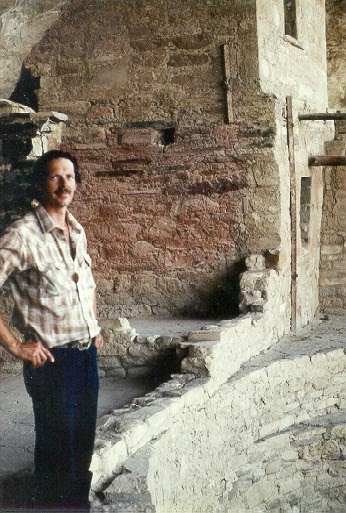
Mesa Verde 1981
When I begin writing the fourth Arizona historical, I will set its dig in a little known site... actually an imaginary one because I like the freedom of that. My heroine will be ahead of the time archaeologists became interested in the Southwest. She is looking for artifacts, of course, but more it's the story she wants to prove or discover. For her though, there is an even more personal reason, which will be brought out in the story.
This book will also involve an outlaw family which led to more to research regarding the Outlaw , Hole in the Wall, and Robber's Roost in Utah. My hero has an outlaw father and his three predatory brothers (imaginary names, of course) who he has spent his life trying to get shed of. His skill with a gun has complicated his life time and again. Keeping most of the characters fiction makes it easier to write what I wish-- but I like to know the real stories of these outlaws and how the community regarded them-- often with great favor. Times don't change as much as we sometimes like to think!
So research has been a big deal for me lately. I've been sidetracked by my real life but also other things I came across in history which I can't use but will share as who knows maybe someone else reading this will be interested in creating their own historical. History was one of my minors in college and has been a lifelong interest. There just aren't enough hours in the day to cover all that fascinates me. Kind of neat to have it be that way as it means I am never bored-- well rarely.
December 31, 2014
New Year's Eve
Actually, I like New Year's Eve. This is not because I want to party or even stay up to see the new year come in. I like it because it feels like a new start. That is silly, of course, as a calendar doesn't give us a new start, but I like the feeling that it does. Who knows what 2015 will hold?
Personally, although 2014 was overall a good year for me personally, I am not at all sorry to see it come to an end. An election swung the direction of the country from what it had just voted to do in 2012. As a people, we are more divided than ever-- and I find myself often not agreeing with either political party. But you just have to let such things go. Why not do that December 31st.
For me some of the things I wanted in '14 happened. Some did not. I had some surprises-- some good, some definitely not. It made for an 'interesting' year. I am not remotely going to delve into what all happened. I am not into rehashing my personal experiences (they are in the past), unless I can learn from them or feel someone else can. I am much more interested in what comes next, which is why I like the last day of a year. I am thinking what I might want in this year, what I will need to do-- want it or not.
Where it comes to my writing, I have two new projects, which I am looking forward to getting back into. One of them (short story or novella), I began writing in Tucson but other things got in the way-- life has a tendency to do that. Now, back in Oregon, I am ready to finish that one and dig into research for the novel I also have in mind-- fourth Arizona historical.
For some time I have been debating bringing out the Oregon historical romances. There are four, which cover the time period from 1852 to 1868 and follow one family with four separate romances. These books were written over a pretty long span of my life from girlhood to the last one finished fall of 2014. I use the term finished loosely as the fourth will need more editing. Well, they all will get a last polish before they come out at least two months apart.
One of my big concerns in bringing out these books was thinking romance readers, in particular, would find the later books more interesting than the first one-- but I absolutely had to start with the first one. If that happened, they wouldn't bother with the next three. The Oregon Trail had a lot of information attached to the trip. There is no way to tell the story without the trek. For someone who wants romantic angst on every page, this won't be their book.
My story is not only that of the trip but also the maturing of an eighteen year old girl and her twenty-one year old best friend, who would like to be more. Although the characters are young, this covers some tough subjects and is not a young adult book.
Finding a cover image for this book or even a good photo for how I saw the hero, Matthew Kane, was a major reason why it hadn't already come out. If readers don't care about him, it won't work. Looks-wise, Matt is not only young but also blond. I needed a face that told of the pain in his background, the strength of his personality, and showed what enabled him to survive what he had and be stronger for it. Although I had looked at a LOT of images since I began bringing out books, I had never seen the right photo for him.
And then I came across the perfect guy. He had the sensitivity I needed as well as the toughness. His photos were in a site using pretty accurate period costuming. Although the image was a lot more costly than my usual purchase, it was essential if I wanted to intrigue readers enough to give this first book a try. Covers matter a lot to readers and me. They are part of being proud of what I put out.
This story is one I am more emotionally attached than any other, which has concerned me as to how I will feel if it is rejected. Matt and Amy were first created on walks with my cousin when I was in high school. She and I would take turns telling their story and bringing them to life. Finally she only wanted to hear what I saw happening to them. In the years I was having my babies, that led to typing the first rough draft.
The original title was Taopi Tawote but reluctantly I gave that up as probably being too confusing to readers. The words are Lakota for wound medicine, for the plant yarrow. It's still its title in my heart, the one I first typed into a Royal upright typewriter, and does appear in the book-- just no longer its title.
This story has gone through some adjustments and extensive work with a consulting writer at least twenty years ago. But I didn't submit it to a publishing house partly because it's way too long for most of them to even consider from a first-time writer (they won't read anything over 100,000 words if it doesn't come through an agent-- getting an agent was a whole other problem). I was unwilling to cut it down and lose the story I wanted; so it stayed just with me, dear to me, more than any other book I've ever written, but one I held back.
Anyway come February, not sure what date, maybe toward the end, Round the Bend will be available for eBooks and paperbacks with one of the two covers below. I hope I have figured out which one by then. Right now I am torn. Each says something different about aspects of the story.

The image in the background and the one behind Couple #1 is from the Ben Kern wagon train. I came across those images last year, emailed, and then called to get permission to use them someday. I had a delightful conversation with the guy who helped take people on these trips, those who want a small piece of what the pioneers experienced. The lightning is part of CanStock images that I purchased and finally the wagons in #2 came from the Baker City Oregon Trail museum-- well worth visiting if you have never been there.
Anyway that's a tiny part of what I have planned for 2015. There is a saying about that-- life is what happens when you are making plans. I hope you will have a happy new year with a lot of enjoyable plans of your own.