Rain Trueax's Blog, page 14
March 8, 2015
Appetizers
The oldest form of storytelling is oral. Through oral mythologies, histories of cultures were saved for the next generations. Along with petroglyphs (rock drawings and carvings), a history of a people were preserved. It's easy to imagine the community sitting around a fire and listening to an elder tell the important stories of their gods, demons, and the travails, which took them to where they now were-- in short, their stories of what had made them the unique and important.
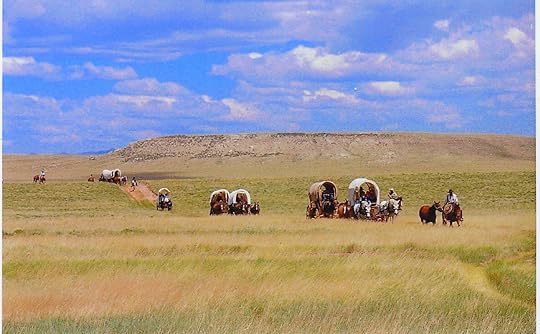 from Ben Kern wagon train photos
In some ways, the book I am bringing out March 21st, is the most organic of all my books for how it grew from oral story telling, back when I was probably 15. It will have traveled through my lifetime, never been forgotten, to finally be a paperback and eBook.
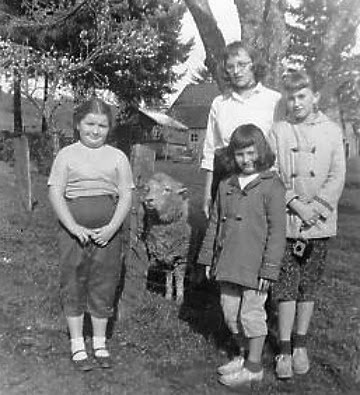
My cousin and I were close growing up (she's the blonde in the photo below and I am the one with glasses). When the family got together, she and I were a set. We played, took walks, and sometimes took turns making up stories. On one such walk, when I tried to turn the story over to her, she said--you tell it all. And I did.
My story was a romance set on the Oregon Trail. Growing up in the Pacific Northwest, I knew the basics of the Trail, but the heart of my story was two young people, who had grown up as friends. One wanted it to stay that way. The other had decided 'uh uh.' Even in the first oral telling of the story, the trip challenged them as did holding onto their relationship. What would it be? Big changes lay ahead on a physical and emotional level. Orally, I took them there.
When I was in my early 20s, I used a Royal upright typewriter to put that story onto paper-- white-out, carbon sheets, and stacks of paper. By then I had done more research into what going west on the Oregon Trail meant. It still was probably the length of a novella today. The characters though stayed true. They were the heart of the book.
Years went by and I read more books about the trip West. When a computer first came into my life, it was an Atari-- also a game machine. My husband told me its word processor would be better for writing. I thought no way. How could I write without seeing paper in front of me? For some writers, this is a truth; a few still hand write their books for the rough draft. For me though, where typing let me put down ideas as fast (almost) as I think them, I took to the new technology immediately. One feature alone sold me on it-- the ability to rearrange blocks of text-- well, and no more white-out. From then on I wrote on changing computers as I typed all my previously written stories onto hard-drives, with in the beginning floppy drives as insurance, then CDs and today jump drives of increasing capacity.
When I worked with a professional consulting writer, the story had a different title-- Taopi Tawote. Over a number of months, I spent a lot of money mailing pages back and forth. She taught me so much as she highlighted and sent back extensive notes. It felt like being back in school. Taopi Tawote is Lakota for the plant yarrow and means wound medicine. In the bigger sense, my story was about a wound that needed to be healed-- physically but even more emotionally.
The problem with that title was it sounded like a Native American story. It is not. Sometime in the 90s (how I wish I was more anal about keeping notes as to when I write this or that), I wrote another novel following this family forward a few years to after they got to Oregon. It had another complete romance. For awhile, I thought I could keep my plant titles (Native American confusion or not). Rose of Sharon was perfect for the second romance. Then in around 2010, another of the Stevens had their romance and Goldenrod had arrived.
When I began bringing books out in the winter of 2011, I held back on these. I loved these books but couldn't let them go. Along came a fourth, which I got the idea for in 2013 but didn't actually write until the fall of 2014. There simply was no fourth plant. I wanted four titles that would seem like a series, that would tell the essence of each book. When I came up with those four titles, I had my first one named-- Round the Bend.
My Oregon Series travels from 1851 in Missouri to Oregon and eventually takes the Stevens family to 1868. Background for each of the romances is the changing world that Oregon was as more people arrived, and the culture shifted with the changes in the growing nation. You might think, since the war wasn't fought there, that the Civil War would little impact a state this far west, but it did. Oregon also had a lot going on that made for interesting storytelling from its own Trail of Tears, shanghaiing, cultural rifts, and even Indian wars.
Now I had four books but was still undetermined as to whether to bring them out. I even debated trying to find a publishing house that might like Oregon historical romances. Except I had gotten used to having the freedom to tell my story my way-- and fall on my sword if readers didn't agree. I liked being an indie writer and had no desire to try and please an editor by changing things, which I felt were critical to my stories.
Still, what to do with them? It was the winter of 2015 that I decided to bring out all four-- three months apart. The first will be March 21-- date chosen because it's my brother's birthday and the first full day of spring.
It wasn't until I had made the decision that I realized the four books will be coming out on Spring Equinox, Summer Solstice, Fall Equinox, and Winter Solstice. I didn't plan it that way (maybe the muse did), but I like the idea.
 from Ben Kern wagon train photos
In some ways, the book I am bringing out March 21st, is the most organic of all my books for how it grew from oral story telling, back when I was probably 15. It will have traveled through my lifetime, never been forgotten, to finally be a paperback and eBook.
My cousin and I were close growing up (she's the blonde in the photo below and I am the one with glasses). When the family got together, she and I were a set. We played, took walks, and sometimes took turns making up stories. On one such walk, when I tried to turn the story over to her, she said--you tell it all. And I did.

My story was a romance set on the Oregon Trail. Growing up in the Pacific Northwest, I knew the basics of the Trail, but the heart of my story was two young people, who had grown up as friends. One wanted it to stay that way. The other had decided 'uh uh.' Even in the first oral telling of the story, the trip challenged them as did holding onto their relationship. What would it be? Big changes lay ahead on a physical and emotional level. Orally, I took them there.
When I was in my early 20s, I used a Royal upright typewriter to put that story onto paper-- white-out, carbon sheets, and stacks of paper. By then I had done more research into what going west on the Oregon Trail meant. It still was probably the length of a novella today. The characters though stayed true. They were the heart of the book.
Years went by and I read more books about the trip West. When a computer first came into my life, it was an Atari-- also a game machine. My husband told me its word processor would be better for writing. I thought no way. How could I write without seeing paper in front of me? For some writers, this is a truth; a few still hand write their books for the rough draft. For me though, where typing let me put down ideas as fast (almost) as I think them, I took to the new technology immediately. One feature alone sold me on it-- the ability to rearrange blocks of text-- well, and no more white-out. From then on I wrote on changing computers as I typed all my previously written stories onto hard-drives, with in the beginning floppy drives as insurance, then CDs and today jump drives of increasing capacity.
When I worked with a professional consulting writer, the story had a different title-- Taopi Tawote. Over a number of months, I spent a lot of money mailing pages back and forth. She taught me so much as she highlighted and sent back extensive notes. It felt like being back in school. Taopi Tawote is Lakota for the plant yarrow and means wound medicine. In the bigger sense, my story was about a wound that needed to be healed-- physically but even more emotionally.
The problem with that title was it sounded like a Native American story. It is not. Sometime in the 90s (how I wish I was more anal about keeping notes as to when I write this or that), I wrote another novel following this family forward a few years to after they got to Oregon. It had another complete romance. For awhile, I thought I could keep my plant titles (Native American confusion or not). Rose of Sharon was perfect for the second romance. Then in around 2010, another of the Stevens had their romance and Goldenrod had arrived.
When I began bringing books out in the winter of 2011, I held back on these. I loved these books but couldn't let them go. Along came a fourth, which I got the idea for in 2013 but didn't actually write until the fall of 2014. There simply was no fourth plant. I wanted four titles that would seem like a series, that would tell the essence of each book. When I came up with those four titles, I had my first one named-- Round the Bend.
My Oregon Series travels from 1851 in Missouri to Oregon and eventually takes the Stevens family to 1868. Background for each of the romances is the changing world that Oregon was as more people arrived, and the culture shifted with the changes in the growing nation. You might think, since the war wasn't fought there, that the Civil War would little impact a state this far west, but it did. Oregon also had a lot going on that made for interesting storytelling from its own Trail of Tears, shanghaiing, cultural rifts, and even Indian wars.
Now I had four books but was still undetermined as to whether to bring them out. I even debated trying to find a publishing house that might like Oregon historical romances. Except I had gotten used to having the freedom to tell my story my way-- and fall on my sword if readers didn't agree. I liked being an indie writer and had no desire to try and please an editor by changing things, which I felt were critical to my stories.
Still, what to do with them? It was the winter of 2015 that I decided to bring out all four-- three months apart. The first will be March 21-- date chosen because it's my brother's birthday and the first full day of spring.
It wasn't until I had made the decision that I realized the four books will be coming out on Spring Equinox, Summer Solstice, Fall Equinox, and Winter Solstice. I didn't plan it that way (maybe the muse did), but I like the idea.


March 4, 2015
grammar is perfect or not
After a lot of editing, and I mean a lot, grammar is much on my mind. Perfect grammar doesn't always 'sound' right. Imperfect grammar can lead to confusion in meaning. English is complicated...
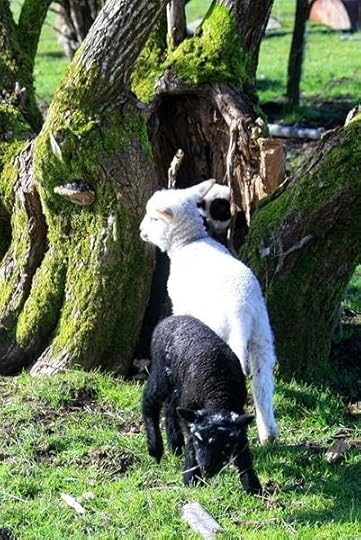 there are three lamb faces in this photo-- find the third!
In conversations, people don't talk with grammar in mind; so dialogue is a time out, where I ignore Word warnings, despite it going tsk tsk. Dialogue has each character with different education levels and way of talking. Cannot use a 'big' word for someone who wouldn't know it-- unless there is a special reason for their knowing it.
Prose is where grammar is more of a factor-- transitional, descriptive, and point of view sentences. In point of view, the character is thinking or observing. I don't feel it's needful that it sound like they talk, but it shouldn't have words that don't fit what that character would observe and know. If a character is the type to enjoy a sunset, the descriptive words should fit their nature. Poets sound like poets. Most other people do not. Fixing all of that, making it sound and feel right, is what editing is about.
My first draft will always be written fast without a lot of concern for the nuances of grammar. Because I grew up when diagramming sentences was part of learning to write, I generally put my sentences together with most of them correct. There are always some where my mind is ahead of my fingers, and the words prove it.
When editing comes along, I read for meaning and feeling and use Word underlining. I like the option of having it check what I most need. Sometimes, even in prose, I ignore the underline. More often I change it-- if not literally as they would suggest, but with a rewrite that avoids the underline. Sometimes it'll start with part of a sentence underlined and the suggestion it needs a comma. As soon as I add the comma, the whole sentence is underlined with a new complaint. Luckily Word isn't a person where we could get in an argument over it.
One of their interesting grammar warnings is-- you're too wordy. Most writers can definitely be that way. Seeing that warning is when I decide if the whole sentence is needed. If it is, I usually break the thought into several sentences. That can lead to a new warning.
The main problem I have with them is when something sounds right but is grammatically incorrect. Dangling prepositions are one example. When we talk, we don't worry about them. In dialogue I don't either. But when I'm writing a transitional or descriptive paragraph, they generally need to go-- not because they bother me, but because they might some readers.
There are some places Word isn't good at catching, and I really have to watch myself. An example is worse and worst. Theoretically, it's simple. Worse is in a chain of bad. Worst is the absolute most it can be... except sometimes either one just does not sound right even when it probably is. When that happens, I grab my thesaurus for an option to avoid fighting with myself over it or annoying a reader where that very word is their pet peeve.
Another place English can get confusing is for the verb was, which must fit its noun. Was is generally used with a singular noun, which means you don't write 'we was going to town' that is unless your character is uneducated and from the hills. But was isn't always correct for a singular noun. It changes when it's in certain clauses, which means were is correct for a singular noun-- even when to me it sounds worse worst worse wrong... If we were going to town, I'd take you along... If I was going to town, I'd take you along. See it sounds right only the second sentence is not. It should be-- If I were going to town, I'd take you along-- if you want it to have proper grammar. Don't ask me why.
Was or Were
The first times I came across this correction to was, I argued with the program and assumed it was wrong. It was not. In fiction writing, I still though won't use what sounds awkward just to make my grammar pass an English teacher's red check.
Another one, that Word regularly catches, but in a rough draft I often write incorrectly, is the split infinitive. I don't really know why it's so bad (it always sounds fine to me), but I change it when I see the warning. It might bother a reader. As you may have already deduced, editing is really about the reader. I already know what I intended to say.
Word is a great program for helping the editor. Some buy more complicated programs, but I've tried a few. They aren't always better. In fiction, correct isn't always best. If it comes across as awkward, it's not best even if it's most grammatically correct. Who and whom come to mind for that. I get it when whom is the right word to use, but not if it is too highfaluting for a character whose point of view is simple.
I can't emphasize enough how important it is to get point of view right for the character. A simple woman, in her thought life, won't use words she would not use talking to a friend. Writers generally have quite wide vocabularies, but where it comes to point of view, they can't use them all no matter how tempting.
This has recently been my world as I went over my Oregon historical to make sure it passed muster-- which is very important to me. I want my book to go out with zero errors. I am not sure they ever do.
Editing is about a lot more than Word's warnings, but they force me to look at a passage for a clearer way to make my point. I recognize though that sometimes a round about way of saying something is better, when the goal is create a word picture for the reader.
If you didn't get enough grammar yet, give this article from the New Yorker a try--
Comma Queen
.JPG) there are three lamb faces in this photo-- find the third!
there are three lamb faces in this photo-- find the third!In conversations, people don't talk with grammar in mind; so dialogue is a time out, where I ignore Word warnings, despite it going tsk tsk. Dialogue has each character with different education levels and way of talking. Cannot use a 'big' word for someone who wouldn't know it-- unless there is a special reason for their knowing it.
Prose is where grammar is more of a factor-- transitional, descriptive, and point of view sentences. In point of view, the character is thinking or observing. I don't feel it's needful that it sound like they talk, but it shouldn't have words that don't fit what that character would observe and know. If a character is the type to enjoy a sunset, the descriptive words should fit their nature. Poets sound like poets. Most other people do not. Fixing all of that, making it sound and feel right, is what editing is about.
My first draft will always be written fast without a lot of concern for the nuances of grammar. Because I grew up when diagramming sentences was part of learning to write, I generally put my sentences together with most of them correct. There are always some where my mind is ahead of my fingers, and the words prove it.
When editing comes along, I read for meaning and feeling and use Word underlining. I like the option of having it check what I most need. Sometimes, even in prose, I ignore the underline. More often I change it-- if not literally as they would suggest, but with a rewrite that avoids the underline. Sometimes it'll start with part of a sentence underlined and the suggestion it needs a comma. As soon as I add the comma, the whole sentence is underlined with a new complaint. Luckily Word isn't a person where we could get in an argument over it.
One of their interesting grammar warnings is-- you're too wordy. Most writers can definitely be that way. Seeing that warning is when I decide if the whole sentence is needed. If it is, I usually break the thought into several sentences. That can lead to a new warning.
The main problem I have with them is when something sounds right but is grammatically incorrect. Dangling prepositions are one example. When we talk, we don't worry about them. In dialogue I don't either. But when I'm writing a transitional or descriptive paragraph, they generally need to go-- not because they bother me, but because they might some readers.
There are some places Word isn't good at catching, and I really have to watch myself. An example is worse and worst. Theoretically, it's simple. Worse is in a chain of bad. Worst is the absolute most it can be... except sometimes either one just does not sound right even when it probably is. When that happens, I grab my thesaurus for an option to avoid fighting with myself over it or annoying a reader where that very word is their pet peeve.
Another place English can get confusing is for the verb was, which must fit its noun. Was is generally used with a singular noun, which means you don't write 'we was going to town' that is unless your character is uneducated and from the hills. But was isn't always correct for a singular noun. It changes when it's in certain clauses, which means were is correct for a singular noun-- even when to me it sounds worse worst worse wrong... If we were going to town, I'd take you along... If I was going to town, I'd take you along. See it sounds right only the second sentence is not. It should be-- If I were going to town, I'd take you along-- if you want it to have proper grammar. Don't ask me why.
Was or Were
The first times I came across this correction to was, I argued with the program and assumed it was wrong. It was not. In fiction writing, I still though won't use what sounds awkward just to make my grammar pass an English teacher's red check.
Another one, that Word regularly catches, but in a rough draft I often write incorrectly, is the split infinitive. I don't really know why it's so bad (it always sounds fine to me), but I change it when I see the warning. It might bother a reader. As you may have already deduced, editing is really about the reader. I already know what I intended to say.
Word is a great program for helping the editor. Some buy more complicated programs, but I've tried a few. They aren't always better. In fiction, correct isn't always best. If it comes across as awkward, it's not best even if it's most grammatically correct. Who and whom come to mind for that. I get it when whom is the right word to use, but not if it is too highfaluting for a character whose point of view is simple.
I can't emphasize enough how important it is to get point of view right for the character. A simple woman, in her thought life, won't use words she would not use talking to a friend. Writers generally have quite wide vocabularies, but where it comes to point of view, they can't use them all no matter how tempting.
This has recently been my world as I went over my Oregon historical to make sure it passed muster-- which is very important to me. I want my book to go out with zero errors. I am not sure they ever do.
Editing is about a lot more than Word's warnings, but they force me to look at a passage for a clearer way to make my point. I recognize though that sometimes a round about way of saying something is better, when the goal is create a word picture for the reader.
If you didn't get enough grammar yet, give this article from the New Yorker a try--
Comma Queen
March 1, 2015
a horse in your story
Until the early 1900s, unless someone took a train, horses were required for most land transportation whether a wagon, buggy, stage, or horseback (oxen, mules and donkeys were also used but just not as frequently). Before the first automobiles found their way into popular use, it's probably difficult today to realize how much horses were a necessity. They are though still an important part of the American psyche-- especially where it comes to the West or cowboys (although the ATV does a lot of their work today).
When you put your hero or heroine on a horse, besides many breeds, there will also be the question of gender: colts (uncastrated males) and fillies under four years of age; mares (over four); stallions (any uncastrated adult male); and geldings (castrated male).
Some issues are surprisingly hot button to romance readers and writers-- one of them being whether a hero would logically ever choose to ride a stallion given their temperament. Well, the same thing could be asked about choosing to ride a mare given she will come in heat. For those who want to know more about what that means, here's a bit on [how to manage the mare in heat].
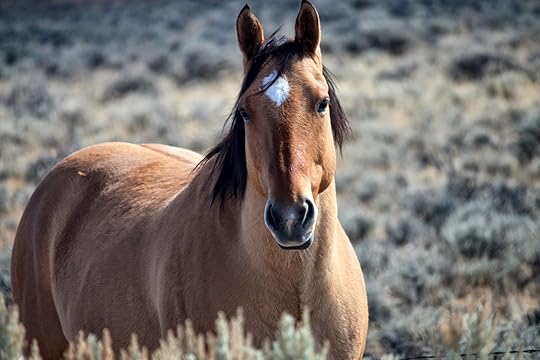
In this discussion on horses, I should start with saying that while I know a lot about horses, I am not a horse woman. I've ridden horses off and on since I was a girl but never was that good on them. I am no horse whisperer. I have never had an interest in English riding, dressage, or in competing. My interest has always been in trail riding, and it's the only kind of riding I've done.
Twice, I have experienced going off a horse (both of them geldings). The first time, I was a girl and heading back to the house when the horse started to run. I pulled on the reins, which stopped him quickly. I went right over his head. Fortunately it was a dirt road-- no harm done other than startling him and me. My father was badly allergic to horses, and not long after that, the horse had to go.
The other time, years later, when I went off a horse, I chose it. My husband and I had been on a trail ride in Central Oregon. The horse was barn sour, which means he started to run toward the barn as soon as we turned that way. I had not expected it and knew I didn't have a steady enough seat. Although we were riding on a dirt road (luck again), ahead was a paved road. I figured, with the horse needing to make an abrupt right turn to get to the barn, I was going off-- it was only a question of where. I literally dismounted the running horse and rolled with the only damage being done to a shoulder (wearing a sleeveless blouse) where I got a scrape and had to run into town for a tetanus shot as mine weren't up to date.
Otherwise though, I know a lot about big animals, having raised cattle for almost forty years, having been around horses a fair amount, and having a lot of books about them, their value, and techniques for riding. I find horses beautiful animals and enjoy watching them. Although we have had a few horses on this place, this is is a cattle and sheep ranch. Horses need to be constantly worked, and neither my husband nor I have had the time or inclination. You can take a good horse and ruin it if you don't know what you are doing.
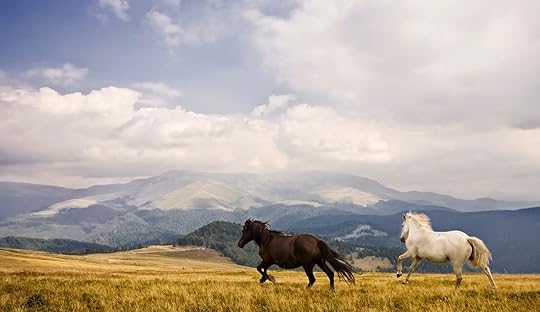
Horses, for all their romantic and almost mystical feeling to people, are big animals and potentially very dangerous ones-- even those that are not stallions. They are prey species with the same tendencies of self-preservation-- which explains how they can startle. Each have their own personality. Some breeds are known for this or that characteristic but even within that, there will be different qualities-- some due to how they were raised.
Stallions are the ones with the bad rep-- not totally undeserved, although a lot of it comes from people trying to be around them without the skills to do it. Choosing a horse is like choosing any animal. You want the right temperament, and you need to be the alpha animal. If you are not, I don't care if it's sheep, cattle, or a house pet, you are in trouble.
My husband worked on a ranch when he was in high school where they had an Arabian stallion, who was temperamental-- around some people. But there were those who could do anything with him-- one of them being a tiny woman. Yes, a stallion will be excited when he's near a mare in heat. A mare in heat has her own set of dispositions at that time as the above article indicated.
Recently I had reason to look up riding a stallion. I've written quite a few books where horses were ridden. Two of them had the hero on a stallion. After reading complaints that stallions were a poor choice (ignoring the fact that Roy Rogers rode a highly trained one), I decided I better research it again.
In the Civil War, the generals mostly rode stallions, but the rest of the cavalry rode geldings. Throughout time, stallions had been considered a requirement for war horses-- until after the Civil War when the cavalry came to believe geldings could be just as good at endurance, training, and not have the temperament issues of a stallion. Not sure many soldiers would have chosen a mare for assorted reasons-- one of which would be if they had to ride long distances.
A few years ago I also learned that it's not good for anyone over 200 lbs. to ride a horse-- too hard on their backs. Romance heroes are often big guys and likely weigh that or more.
The distance you can ride a horse without a break is another debate that has many opinions. I researched it for one of my books and came up with numbers that made sense to me-- but again a lot would depend on the person riding it. Also the cavalry when they rode long distances did walk part of the way to give the horses breaks.
Below are a couple of interesting articles I came across on stallions. The first is in regards to one of George Custer's that he rode into battle during the Civil War. Custer always favored stallions, but this one had a rather unique story-- as well as a good example of how dangerous such a horse can be.
Custer's famous war horse, Don Juan The famed [Lippizans] are always stallions.This is one of many on what one should expect if they want to train and ride a stallion:
[Riding a stallion]
One of our neighbors used to breed Appaloosas. He rode his stallion in parades where he'd wear full Indian regalia. The horse had a wonderful temperament. The man though had to have the stallion gelded when his son wanted to compete in 4-H, as they would not permit a stallion in the shows.
The idea that a western hero would never ride a stallion is, in my opinion, wrong. Okay, maybe a beta hero never would *s*. But a hero would ride the animal that best suited his own temperament and needs. I've written heroes who rode geldings more often than stallions-- but twice I was convinced the hero would have ridden a stallion. Nothing else would have suited his personality and need.
Whatever animal your characters choose, it should suit their personality and feel like a real animal of that type. Don't give your character a cat if you don't know cats. You don't have to own one. You just have to know what their personalities are like.
Saying that, I have learned, after reading the prejudices of romance writers, there can be a price for choosing to put your hero on their idea of the 'wrong' horse. Same thing happened to me when I wrote a story where my heroine chose her own path in the 1880s. Some readers had a hard time with that too. They could accept mail order brides or women being forced to run from an abusive relative, but absolutely could not accept a heroine, of that period, who didn't follow the prescribed path and instead chose an adventure. They needed to read a few more memoirs is what I think...
Anyway, as a writer, if you have your hero ride a horse that irks some readers, they'll be finished with the book. You can instead follow the stereotypes that are acceptable... if that's the kind of writing you want to do. Yahoo!
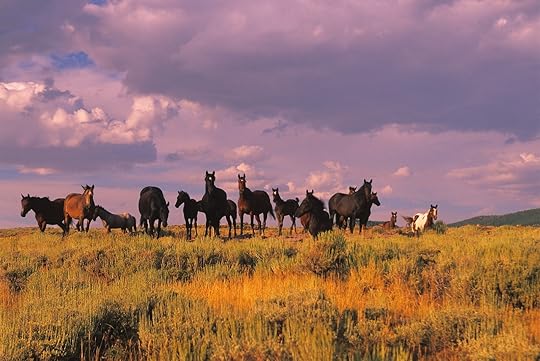
When you put your hero or heroine on a horse, besides many breeds, there will also be the question of gender: colts (uncastrated males) and fillies under four years of age; mares (over four); stallions (any uncastrated adult male); and geldings (castrated male).
Some issues are surprisingly hot button to romance readers and writers-- one of them being whether a hero would logically ever choose to ride a stallion given their temperament. Well, the same thing could be asked about choosing to ride a mare given she will come in heat. For those who want to know more about what that means, here's a bit on [how to manage the mare in heat].
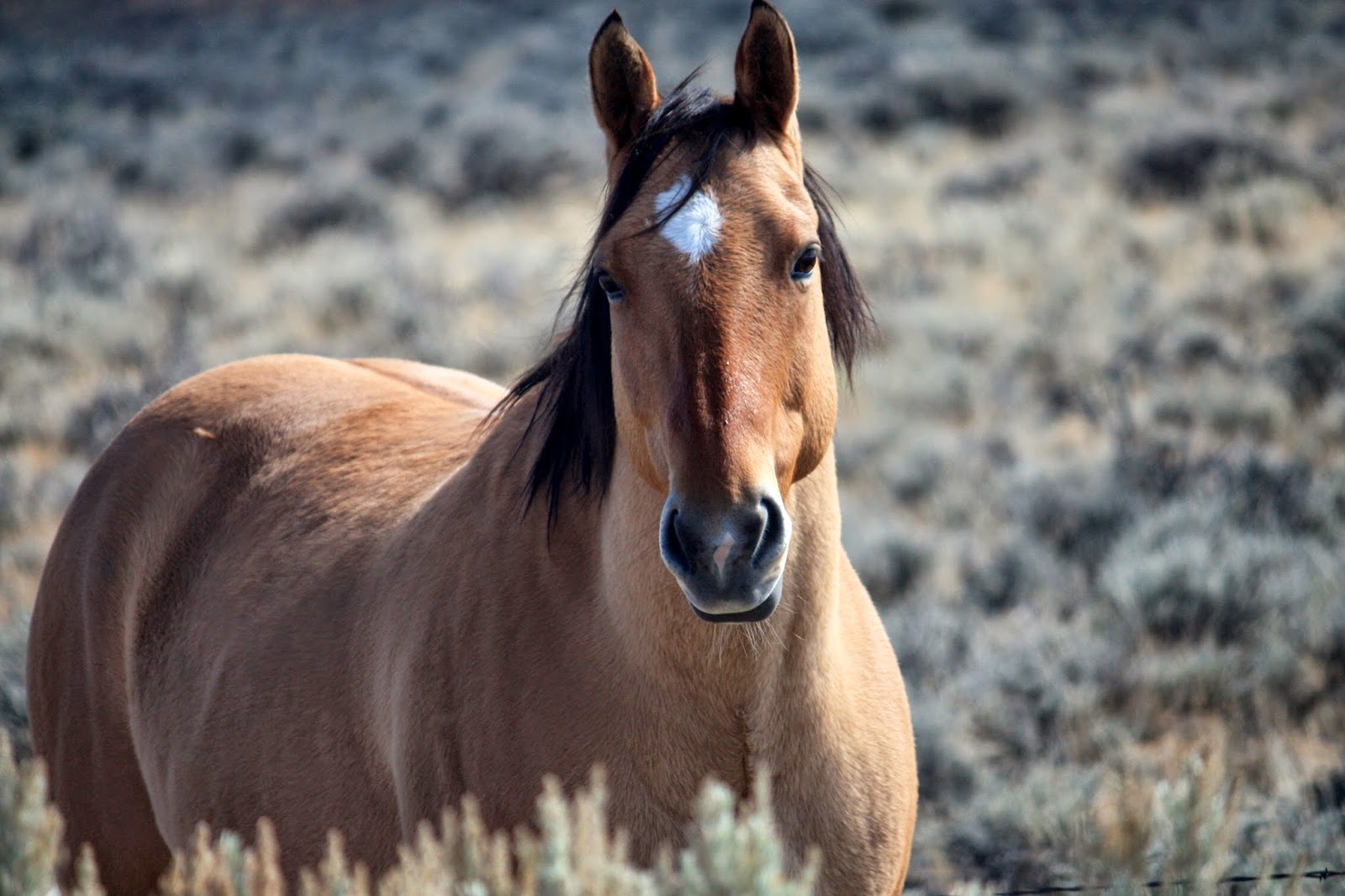
In this discussion on horses, I should start with saying that while I know a lot about horses, I am not a horse woman. I've ridden horses off and on since I was a girl but never was that good on them. I am no horse whisperer. I have never had an interest in English riding, dressage, or in competing. My interest has always been in trail riding, and it's the only kind of riding I've done.
Twice, I have experienced going off a horse (both of them geldings). The first time, I was a girl and heading back to the house when the horse started to run. I pulled on the reins, which stopped him quickly. I went right over his head. Fortunately it was a dirt road-- no harm done other than startling him and me. My father was badly allergic to horses, and not long after that, the horse had to go.
The other time, years later, when I went off a horse, I chose it. My husband and I had been on a trail ride in Central Oregon. The horse was barn sour, which means he started to run toward the barn as soon as we turned that way. I had not expected it and knew I didn't have a steady enough seat. Although we were riding on a dirt road (luck again), ahead was a paved road. I figured, with the horse needing to make an abrupt right turn to get to the barn, I was going off-- it was only a question of where. I literally dismounted the running horse and rolled with the only damage being done to a shoulder (wearing a sleeveless blouse) where I got a scrape and had to run into town for a tetanus shot as mine weren't up to date.
Otherwise though, I know a lot about big animals, having raised cattle for almost forty years, having been around horses a fair amount, and having a lot of books about them, their value, and techniques for riding. I find horses beautiful animals and enjoy watching them. Although we have had a few horses on this place, this is is a cattle and sheep ranch. Horses need to be constantly worked, and neither my husband nor I have had the time or inclination. You can take a good horse and ruin it if you don't know what you are doing.

Horses, for all their romantic and almost mystical feeling to people, are big animals and potentially very dangerous ones-- even those that are not stallions. They are prey species with the same tendencies of self-preservation-- which explains how they can startle. Each have their own personality. Some breeds are known for this or that characteristic but even within that, there will be different qualities-- some due to how they were raised.
Stallions are the ones with the bad rep-- not totally undeserved, although a lot of it comes from people trying to be around them without the skills to do it. Choosing a horse is like choosing any animal. You want the right temperament, and you need to be the alpha animal. If you are not, I don't care if it's sheep, cattle, or a house pet, you are in trouble.
My husband worked on a ranch when he was in high school where they had an Arabian stallion, who was temperamental-- around some people. But there were those who could do anything with him-- one of them being a tiny woman. Yes, a stallion will be excited when he's near a mare in heat. A mare in heat has her own set of dispositions at that time as the above article indicated.
Recently I had reason to look up riding a stallion. I've written quite a few books where horses were ridden. Two of them had the hero on a stallion. After reading complaints that stallions were a poor choice (ignoring the fact that Roy Rogers rode a highly trained one), I decided I better research it again.
In the Civil War, the generals mostly rode stallions, but the rest of the cavalry rode geldings. Throughout time, stallions had been considered a requirement for war horses-- until after the Civil War when the cavalry came to believe geldings could be just as good at endurance, training, and not have the temperament issues of a stallion. Not sure many soldiers would have chosen a mare for assorted reasons-- one of which would be if they had to ride long distances.
A few years ago I also learned that it's not good for anyone over 200 lbs. to ride a horse-- too hard on their backs. Romance heroes are often big guys and likely weigh that or more.
The distance you can ride a horse without a break is another debate that has many opinions. I researched it for one of my books and came up with numbers that made sense to me-- but again a lot would depend on the person riding it. Also the cavalry when they rode long distances did walk part of the way to give the horses breaks.
Below are a couple of interesting articles I came across on stallions. The first is in regards to one of George Custer's that he rode into battle during the Civil War. Custer always favored stallions, but this one had a rather unique story-- as well as a good example of how dangerous such a horse can be.
Custer's famous war horse, Don Juan The famed [Lippizans] are always stallions.This is one of many on what one should expect if they want to train and ride a stallion:
[Riding a stallion]
One of our neighbors used to breed Appaloosas. He rode his stallion in parades where he'd wear full Indian regalia. The horse had a wonderful temperament. The man though had to have the stallion gelded when his son wanted to compete in 4-H, as they would not permit a stallion in the shows.
The idea that a western hero would never ride a stallion is, in my opinion, wrong. Okay, maybe a beta hero never would *s*. But a hero would ride the animal that best suited his own temperament and needs. I've written heroes who rode geldings more often than stallions-- but twice I was convinced the hero would have ridden a stallion. Nothing else would have suited his personality and need.
Whatever animal your characters choose, it should suit their personality and feel like a real animal of that type. Don't give your character a cat if you don't know cats. You don't have to own one. You just have to know what their personalities are like.
Saying that, I have learned, after reading the prejudices of romance writers, there can be a price for choosing to put your hero on their idea of the 'wrong' horse. Same thing happened to me when I wrote a story where my heroine chose her own path in the 1880s. Some readers had a hard time with that too. They could accept mail order brides or women being forced to run from an abusive relative, but absolutely could not accept a heroine, of that period, who didn't follow the prescribed path and instead chose an adventure. They needed to read a few more memoirs is what I think...
Anyway, as a writer, if you have your hero ride a horse that irks some readers, they'll be finished with the book. You can instead follow the stereotypes that are acceptable... if that's the kind of writing you want to do. Yahoo!

February 25, 2015
letting the reader know
Every now and again, what I read elsewhere leads to my rearranging the order in which I publish here. This time, it was the question of heat in romance novels. It came up in a writer/reader group to which I belong. The question was asked, and I'd pretty much say ended up divided, as to whether the readers wanted sex in their books or not.
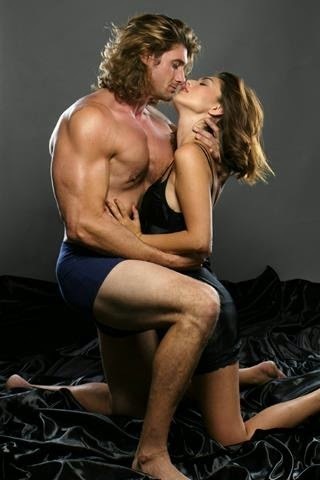 Image purchased from Period Images
One thing that gets to me, when such questions arise, is some of the readers use two terms I dislike regarding romances with no sex-- sweet and clean.
Starting with sweet-- To me, sweet is like a Jane Austin where the people are gentle, living ordinary lives and economics or social issues are their biggest dilemmas. The so-called sweet romances, which a lot of these readers are discussing, might have a heroine on the run from an evil uncle who means her wrong. They might have a gunman hero, who shoots those who get in his way. Sweet, with violence in it, just does not work for me.
And clean seems just as wrong. It implies sex is dirty or maybe it's that to read about it is dirty. That same reader who finds it dirty could read about it in a sex manual and that would be okay-- just keep it clinical. But to put it into fiction, with healthy examples of how two people 'get it on' that's dirty.
Yes, sex can be crude and demeaning and that which uses others, but it isn't dirty by its nature. It is a beautiful thing that is meant to bond a committed couple together in a way that goes beyond holding hands.
As a writer, I respect the desire wish of those who want zero sex. Books should not bushwhack a reader. For the writer, it is beneficial to let readers know what to expect. I used to use 'for adult readers' or spicy but that doesn't really say much. Neither would a movie code as PG-13 can be pretty 'hot' these days.
So I began thinking of a code that I could put at least on my descriptive blogs as a way to alert readers what to expect in the book. For now, I've come up with this as a header on blogs that describe the books:
Sex in a romance novel, in my experience, is intended to warm the reader above the belt-- not below (not saying it might not do that too but it's not its purpose). I like writing the couple when they come to the closest relationship two people can have. I like it when it enriches their relationship, when it helps them see what their connection is, and it goes beyond flesh to the soul. I happen to believe it is healthy for the readers also as it gives them ideas on what is possible.
Erotica, which some think of as romance, really isn't. It's aimed at below the belt. Erotica is far more descriptive with very graphic language. It is where you get into kink, but mostly consensual (from what I've seen).
Erotica is written to arouse. Sex scenes in romances are not. They are aimed at taking the couple further into their relationship. They might make the reader's heart beat faster, but it's more about their relationship. In my books, only committed (but not necessarily married) couples have sex. I try to write about what I think enriches our lives and casual sex doesn't-- in my opinion.
The historical romance that I plan to bring out March 23rd was one of my few books that years ago I actually sent off to a publishing house. They kept it quite awhile, which made me hopeful. After months, it came back. They told me it was too steamy for their line. I had to laugh. In the book (back then), the couple never actually did it. But yes, they were wanting to. I wasn't going to take that building desire out of the book, nor did I want to make it steamier for a publishing house where they might want the couple doing it one-third of the way through.
Now when I am bringing it out in March, it still has the steam, but 'doing' it still has the same complications. There were reasons for the delay. They are on a wagon train for Pete's sake-- not a lot of privacy for an unmarried or married couple, but it still qualifies as ♥♥♥♥ -- just takes awhile to get that last heart. :)
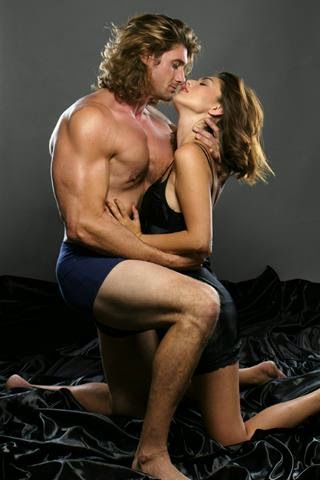 Image purchased from Period Images
One thing that gets to me, when such questions arise, is some of the readers use two terms I dislike regarding romances with no sex-- sweet and clean.
Starting with sweet-- To me, sweet is like a Jane Austin where the people are gentle, living ordinary lives and economics or social issues are their biggest dilemmas. The so-called sweet romances, which a lot of these readers are discussing, might have a heroine on the run from an evil uncle who means her wrong. They might have a gunman hero, who shoots those who get in his way. Sweet, with violence in it, just does not work for me.
And clean seems just as wrong. It implies sex is dirty or maybe it's that to read about it is dirty. That same reader who finds it dirty could read about it in a sex manual and that would be okay-- just keep it clinical. But to put it into fiction, with healthy examples of how two people 'get it on' that's dirty.
Yes, sex can be crude and demeaning and that which uses others, but it isn't dirty by its nature. It is a beautiful thing that is meant to bond a committed couple together in a way that goes beyond holding hands.
As a writer, I respect the desire wish of those who want zero sex. Books should not bushwhack a reader. For the writer, it is beneficial to let readers know what to expect. I used to use 'for adult readers' or spicy but that doesn't really say much. Neither would a movie code as PG-13 can be pretty 'hot' these days.
So I began thinking of a code that I could put at least on my descriptive blogs as a way to alert readers what to expect in the book. For now, I've come up with this as a header on blogs that describe the books:
Romances are books about relationships and falling in love. They may or may not have sex within. Because mine vary for the 'heat' level, I devised this chart. If you find a book that interests you, look for the hearts.I may amend it. I still am not sure how I can use it in a blurb. If I can work that out, it will help readers and me. No writer wants an unhappy reader. It's fair to let them know, where it's possible, what they will find in terms of sexuality. For some people, who won't skip over what they don't like, this is a big issue.
♥ ------holding hands, perhaps a gentle kiss
♥♥ ---- more kisses but no tongue-- no foreplay
♥♥♥ ---kissing, tongue, caressing, foreplay & pillow talk
♥♥♥♥ --all of above, full sexual experience including climax
♥♥♥♥♥-all of above including coarser language and more frequent sex
Sex in a romance novel, in my experience, is intended to warm the reader above the belt-- not below (not saying it might not do that too but it's not its purpose). I like writing the couple when they come to the closest relationship two people can have. I like it when it enriches their relationship, when it helps them see what their connection is, and it goes beyond flesh to the soul. I happen to believe it is healthy for the readers also as it gives them ideas on what is possible.
Erotica, which some think of as romance, really isn't. It's aimed at below the belt. Erotica is far more descriptive with very graphic language. It is where you get into kink, but mostly consensual (from what I've seen).
Erotica is written to arouse. Sex scenes in romances are not. They are aimed at taking the couple further into their relationship. They might make the reader's heart beat faster, but it's more about their relationship. In my books, only committed (but not necessarily married) couples have sex. I try to write about what I think enriches our lives and casual sex doesn't-- in my opinion.
The historical romance that I plan to bring out March 23rd was one of my few books that years ago I actually sent off to a publishing house. They kept it quite awhile, which made me hopeful. After months, it came back. They told me it was too steamy for their line. I had to laugh. In the book (back then), the couple never actually did it. But yes, they were wanting to. I wasn't going to take that building desire out of the book, nor did I want to make it steamier for a publishing house where they might want the couple doing it one-third of the way through.
Now when I am bringing it out in March, it still has the steam, but 'doing' it still has the same complications. There were reasons for the delay. They are on a wagon train for Pete's sake-- not a lot of privacy for an unmarried or married couple, but it still qualifies as ♥♥♥♥ -- just takes awhile to get that last heart. :)
February 22, 2015
it's all about the choices

I am an avid reader of human interest stories. People interest me. If you and I were sitting across from each other, with cups of coffee or tea, I'd be interested in your life, your experiences. From where that comes, I cannot say other than it's been a part of my life since childhood. I remember sitting where I could listen to the adults talk-- that is until they would see me.
So newspaper articles like this fit into my curiosity about human nature, how we figure out what works for us, as well as what we choose to do that fouls up our whole life-- when we head down a detrimental path. The lady who got into trouble with this said--
It was just pranks
No, it was not. It was way beyond pranks. It seems crazy, but when a person who is not crazy does such things-- how did they get there?
Making such behavior seem believable in a book can be dicey. We might shake our head at a newspaper story; but in fiction, we want it to make sense. Not everything humans do makes sense or even fits a pattern. When a man shoots his neighbor because he cut down a tree or over a parking space or because the neighbor is the wrong religion, it seems insane, and yet it's part of human nature-- the dark part.
For writers looking for ideas for plots, I suggest reading human interest stories. They are out there, and one of them may lead to the next step in the situation you've been thinking would work for a book.
Take that woman in the link, who was being very malicious-- while she calls it pranks. How far was she from physically harming the couple? Stay on a path and each step takes you to the next one-- or because we are human, we can change our path. It's always a choice although I wonder if at a certain point, the choices are gone.
For me, it's not hard to see how someone who was once seemingly normal can turn into someone who is a full fledged sociopath or worse a psychopath. Are we born into that or do we turn into it?
Answering that question is what makes for great plots.
In my book, Tucson Moon, I used the step-by-step down a path in showing how someone becomes a villain. The guy had been weak, self-centered, and manipulative in the book before it, Arizona Sunset. He was slowly moving, with each choice, into a position where he would not just orchestrate or manipulate others into something bad but was willing to go all the way himself. Little by little, as he made choices, he became someone who would harm others without a second thought.
Life works that way-- either way. Step by step someone becomes a hero or a villain and it's all about the choices along the way.
February 18, 2015
Reality is what exactly?
Currently I have a lot going on where I could write about it-- especially editing issues; but I had another thing I've been setting aside related to where a writer finds inspiration-- which is sometimes from the news. While I am doing word for word editing to get the first Oregon historical in shape to come out, I thought I'd share a few of those stories that interested me-- even though currently they aren't playing into a story of my own.

One of the complaints about romances is they are not realistic enough. Except what is realistic? There are things that happen in life that simply cannot be explained. Such a story was in the Missoulian a week or two back.
a bizarre death that isn't the whole story
If you take the time to read the story, I think it offers some interesting thoughts. The one that I particularly liked was this,
"...Wayne came to her one other time, as she sat in a kiva at the sacred Chaco Canyon site in the Four Corners region during a vacation. You belong here, she says he told her, and so she packed her belongings, found 35 acres in a remote canyon, built a home and found her calling in Navajo education. Paula, now 69, remains there today." from the MissoulianI've sat in those kivas, like the one in the photo above. We spent several nights in the campground in 1999, sleeping in our van and walking the trails to various ruins. There is a very mystical feel there whether one has a lost love or not.

The belief is that Chaco, which has very photographic ruins, was not where the Anasazi people lived other than possibly priests. It was a spiritual center and roads lead to it from communities all around New Mexico and northern Arizona. People doubtlessly came there for their rituals and important religious celebrations-- some of which might be much like the Hopi have today.
Chaco is a place that goes beyond special with some ruins right off the loop drive and others that require a hike. I can so relate to what this woman felt and how their story didn't end with his death. Many people have had such experiences but only share them with the ones who will understand and not feel they are crazy.
February 15, 2015
Speaking of Changes
While I am discussing changes, I guess this is a good time to clarify my novellas. I've written five of them, my first being A Montana Christmas and the newest Rose's Gift. I finally created a category alongside my blog just for novellas. I found I like reading and writing these stories, which can be read in an evening. Mine range from 21-45,000 words (The paranormals just kept growing). They are complete books with no cliffhangers. Their action, by necessity, moves right along.
Previously, I've written about what led to When Fates Conspire. I had lost a beloved cat and that night asked for a dream to tell me the truth of life. I wanted to think she wasn't really gone forever. The dream was like watching a movie. It was so exact, as to its meaning, that the next morning I knew it should be a book.
That was that. I had no intention of there being a second book...
Except, then I knew there was another story-- The Dark of the Moon. It began to explore spiritual power of the 'other' side as it seemed if we have spirit guides, there doubtless are other beings out there-- perhaps not so well-intentioned. What about the humans who have spiritual powers?
It was no sooner written than I saw that the overall telling required one more-- Storm in the Canyon. This book took the whole experience another step into the spirit world. For it, I did research on Native American spirit beings-- negative and positive. The characters in it are growing their spiritual power, and they better as something is out there. It has to be fought-- and earth powers must be confronted by earth power.
Each novella is complete as one distinct romance, for a different set of lovers, but the characters from before are the ones who must learn to fight-- for some of them, a new way. The setting is a big cattle ranch, south of Billings, Montana.
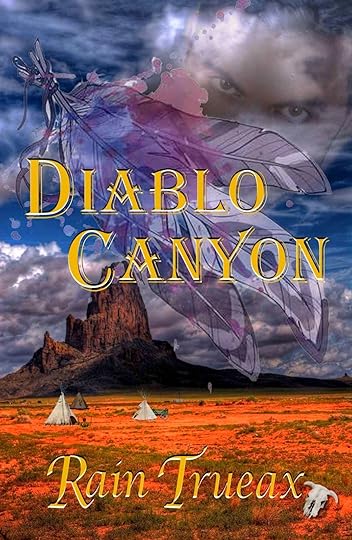 Diablo Canyon Cover by: http://cover-ops.blogspot.com/
It seemed logical at that point to put the three of them into one book-- Diablo Canyon, which was as much a character in the stories as were the spirit beings and lovers. This is my only book with a cover I didn't create.
When I write a novella, I don't have sex in it. I write the lead up, often the aftermath (pillow talk often carries a story forward) but no sex scenes. This is because of word constraints. Sex scenes take up space, can be lengthy (depending on the couple), but they generally don't carry the plot or theme forward. For the plot, it's enough to know they did or didn't do it.
However... once I put the three together in Diablo Canyon, I had no such constraint. Here's a confession-- I like writing about healthy sex as part of a whole relationship. That means Diablo Canyon is spicy. The novellas are not.
For awhile I withdrew the novellas from Amazon for fear their availability would confuse readers. They might buy a novella, then the novel, and be irked to find they had already read part of it. I still have that concern, but discuss it in each blurb. I see the advantage of offering the shorter stories with closed doors on the sex knowing some readers find it objectionable.
~~~~~~~~~
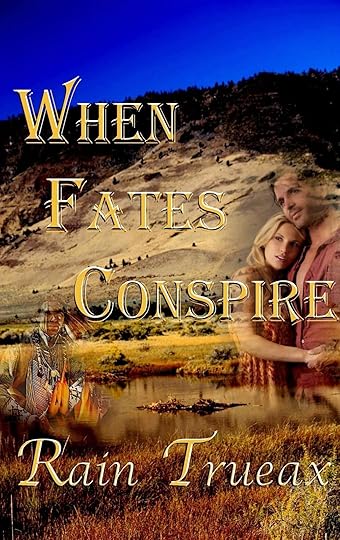 When Fates Conspire, Book 1 of the
Diablo
Canyon
Trilogy
-- Fate, love, soul mates, and the spirit world, set in Billings, Bozeman and Bear Butte as two couples try to work out a happily ever after with very different ideas of what that should mean while two spirit guides bicker over their own role in helping their charges. With humor and pathos, When Fates Conspire explores questions of destiny, fate and love.Trailer at: https://www.youtube.com/watch?v=NCilIQxlJWIAmazon Kindle: http://www.amazon.com/dp/B00I53K8CE
When Fates Conspire, Book 1 of the
Diablo
Canyon
Trilogy
-- Fate, love, soul mates, and the spirit world, set in Billings, Bozeman and Bear Butte as two couples try to work out a happily ever after with very different ideas of what that should mean while two spirit guides bicker over their own role in helping their charges. With humor and pathos, When Fates Conspire explores questions of destiny, fate and love.Trailer at: https://www.youtube.com/watch?v=NCilIQxlJWIAmazon Kindle: http://www.amazon.com/dp/B00I53K8CE
The Dark of the Moon, Book 2 of the Diablo Canyon Trilogy --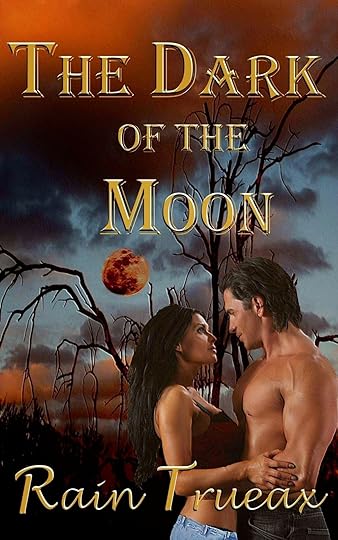 The middle-aged mother of the hero in When Fates Conspire is trying to keep her ranch going when a stranger appears. He is not what he seems, but is he what she needs? This is a story of the unseen side of life, facing danger, second chances, and life on a Montana ranch. For all of us, when momentous events happen, it can force a reevaluation of what life is about.
Trailer at: https://www.youtube.com/watch?v=lwDx-76d8RQ Amazon Kindle: http://www.amazon.com/gp/product/B00K105OVY
Storm in the Canyon, Book 3 of the Diablo Canyon Trilogy --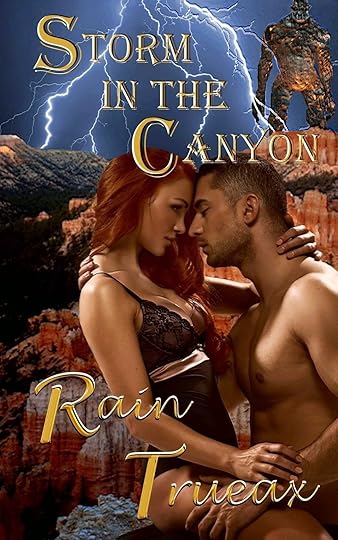 From the two previous novellas, three powerful women of different generations (one coming from beyond generations) will be matched with three powerful men, all with their own secrets, their own destinies. The spirit and human world are faced with a third world—one mankind has long tried to suppress. Diablo Canyon has drawn power to itself through natural events, which is now being used by these timeless beings with their desire to retake power. Storm in the Canyon is the story of the relationship between man and woman as well as humans and the ‘other’ side. Facing the deadliest of foes, nature and spirit must come together to win the day or see the world change as a new power takes over. It will all be decided in the canyon.Trailer at: https://www.youtube.com/watch?v=xe0h9H6AoCcAmazon Kindle: http://www.amazon.com/dp/B00L0LQEG2
All three novellas plus the spice are in Diablo Canyon-- at $2.99, which will stay that way through February. I thinking now of upping Storm in the Canyon to $1.99 at some point as it's really long for a novella but leaving the first two at 99¢. If that happens, Diablo Canyon might go back to $3.99-- where it was. But anyway through February, it stays as it is.
Diablo Canyon buy links: http://romanceswithanedge.blogspot.com/2014/10/diablo-canyon-links.html
Diablo Canyon Trailer: http://youtu.be/h5AfRZbalLQ
Previously, I've written about what led to When Fates Conspire. I had lost a beloved cat and that night asked for a dream to tell me the truth of life. I wanted to think she wasn't really gone forever. The dream was like watching a movie. It was so exact, as to its meaning, that the next morning I knew it should be a book.
That was that. I had no intention of there being a second book...
Except, then I knew there was another story-- The Dark of the Moon. It began to explore spiritual power of the 'other' side as it seemed if we have spirit guides, there doubtless are other beings out there-- perhaps not so well-intentioned. What about the humans who have spiritual powers?
It was no sooner written than I saw that the overall telling required one more-- Storm in the Canyon. This book took the whole experience another step into the spirit world. For it, I did research on Native American spirit beings-- negative and positive. The characters in it are growing their spiritual power, and they better as something is out there. It has to be fought-- and earth powers must be confronted by earth power.
Each novella is complete as one distinct romance, for a different set of lovers, but the characters from before are the ones who must learn to fight-- for some of them, a new way. The setting is a big cattle ranch, south of Billings, Montana.
 Diablo Canyon Cover by: http://cover-ops.blogspot.com/
It seemed logical at that point to put the three of them into one book-- Diablo Canyon, which was as much a character in the stories as were the spirit beings and lovers. This is my only book with a cover I didn't create.
When I write a novella, I don't have sex in it. I write the lead up, often the aftermath (pillow talk often carries a story forward) but no sex scenes. This is because of word constraints. Sex scenes take up space, can be lengthy (depending on the couple), but they generally don't carry the plot or theme forward. For the plot, it's enough to know they did or didn't do it.
However... once I put the three together in Diablo Canyon, I had no such constraint. Here's a confession-- I like writing about healthy sex as part of a whole relationship. That means Diablo Canyon is spicy. The novellas are not.
For awhile I withdrew the novellas from Amazon for fear their availability would confuse readers. They might buy a novella, then the novel, and be irked to find they had already read part of it. I still have that concern, but discuss it in each blurb. I see the advantage of offering the shorter stories with closed doors on the sex knowing some readers find it objectionable.
~~~~~~~~~
 When Fates Conspire, Book 1 of the
Diablo
Canyon
Trilogy
-- Fate, love, soul mates, and the spirit world, set in Billings, Bozeman and Bear Butte as two couples try to work out a happily ever after with very different ideas of what that should mean while two spirit guides bicker over their own role in helping their charges. With humor and pathos, When Fates Conspire explores questions of destiny, fate and love.Trailer at: https://www.youtube.com/watch?v=NCilIQxlJWIAmazon Kindle: http://www.amazon.com/dp/B00I53K8CE
When Fates Conspire, Book 1 of the
Diablo
Canyon
Trilogy
-- Fate, love, soul mates, and the spirit world, set in Billings, Bozeman and Bear Butte as two couples try to work out a happily ever after with very different ideas of what that should mean while two spirit guides bicker over their own role in helping their charges. With humor and pathos, When Fates Conspire explores questions of destiny, fate and love.Trailer at: https://www.youtube.com/watch?v=NCilIQxlJWIAmazon Kindle: http://www.amazon.com/dp/B00I53K8CEThe Dark of the Moon, Book 2 of the Diablo Canyon Trilogy --
 The middle-aged mother of the hero in When Fates Conspire is trying to keep her ranch going when a stranger appears. He is not what he seems, but is he what she needs? This is a story of the unseen side of life, facing danger, second chances, and life on a Montana ranch. For all of us, when momentous events happen, it can force a reevaluation of what life is about.
 Trailer at: https://www.youtube.com/watch?v=lwDx-76d8RQ Amazon Kindle: http://www.amazon.com/gp/product/B00K105OVY
Storm in the Canyon, Book 3 of the Diablo Canyon Trilogy --
 From the two previous novellas, three powerful women of different generations (one coming from beyond generations) will be matched with three powerful men, all with their own secrets, their own destinies. The spirit and human world are faced with a third world—one mankind has long tried to suppress. Diablo Canyon has drawn power to itself through natural events, which is now being used by these timeless beings with their desire to retake power. Storm in the Canyon is the story of the relationship between man and woman as well as humans and the ‘other’ side. Facing the deadliest of foes, nature and spirit must come together to win the day or see the world change as a new power takes over. It will all be decided in the canyon.Trailer at: https://www.youtube.com/watch?v=xe0h9H6AoCcAmazon Kindle: http://www.amazon.com/dp/B00L0LQEG2
All three novellas plus the spice are in Diablo Canyon-- at $2.99, which will stay that way through February. I thinking now of upping Storm in the Canyon to $1.99 at some point as it's really long for a novella but leaving the first two at 99¢. If that happens, Diablo Canyon might go back to $3.99-- where it was. But anyway through February, it stays as it is.
Diablo Canyon buy links: http://romanceswithanedge.blogspot.com/2014/10/diablo-canyon-links.html
Diablo Canyon Trailer: http://youtu.be/h5AfRZbalLQ
February 11, 2015
Changes to Sky Daughter and about covers
.jpg) I tried this image in my blog, 'Romances with an Edge' for the buy links. It never made it to an actual cover... although....
I tried this image in my blog, 'Romances with an Edge' for the buy links. It never made it to an actual cover... although....It might seem, what with marketing a new historical novella, the Oregon historicals needing a final edit before coming out March 21 (tentative date), and a future novel to work out preliminary details and do research, that a book, which never sold well would not be on my to-do list.
Sky Daughter, which I wrote in 2002, was a book whose characters I especially liked (hero, heroine, villain, and some wonderful elders) as well as its plot. Ironically I held it back to be one of the last contemporaries I ePublished because I thought it was one of my best. It combined many elements into what I considered as a strong story. It did have one reviewer who felt the same way:
"SKY DAUGHTER is Rain Trueax's best, most thrilling romance novel. I feared for Maggie and the man who entered her life from the first to the end. The characters were trapped in a situation that is close to reality which makes the story more interesting and profound. One of the most basic quotes from the book is Maggie's words. "Fear makes people do bad things." This book will be most appreciated by women who like female characters who learn to use their own power to fight for their rights and male heroes who are more than just beautiful on the outside."Sky Daughter
This is now 2½ years later and before giving it a shot at success in Select and KU, I decided it needed a new cover. The fact that it never sold a lot of books may have nothing to do with the cover. Covers are supposed to fit the book, give a clue to what a reader will find. In a book with a lot of elements, which one do you use on the cover? Romance? Paranormal? Family? Nature? Hero? Heroine? Both?
The heroine of Sky Daughter has come to her grandfather's Idaho mountain as a way to heal from disappointments and tragedies. She loves nature and was taught that by her grandmother who died years before. The thing is she didn't really know that grandmother -- at least not as well as she thought. Besides healing and growing into her own power, she finds mystery, danger, and love.
When I wrote the book, I debated whether to make the spiritual power real or what some assume is real by tricking their minds or even using their own energy. I did research regarding experiences others had with monsters and unexplainable, frightening spirit beings. I then opted for the real deal. It was my first paranormal/fantasy with Diablo Canyon (made up of three novellas: When Fates Conspire, The Dark of the Moon, and Storm in the Canyon ) following 12 years later. All of these stories are set into what feels like a real world but it's what you don't see at first look that are at their heart.
Below are Sky Daughter's many covers and the approximate order in which I tried them, with the reasons why each was eventually replaced.


In 2012, when it came out, my first attempts were painted by me. I like painting people, and this was at the point I was still naive enough to believe readers would like that. They saw it as amateur-city. It was about then that I realized, if I wanted to do my own covers, I would have to buy model images, using my photos as backgrounds.
I could have turned those first model images painterly, but actually once I had the people, I kind of liked them. The first choices didn't do any better for attracting readers.

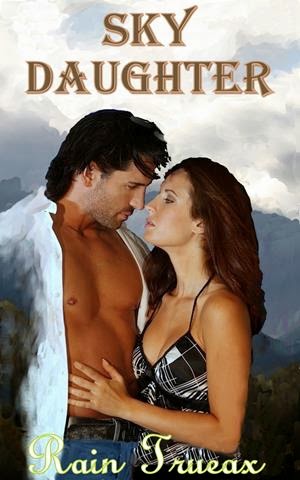
If showing the couple wasn't going to work, I decided to use the woman alone (and by the way, those aren't the original titles for these two. Most of the first covers were deleted awhile back with keeping only their basic images. I put the titles on them to protect them from being used by someone else. Yeah, that does happen). I was kind of going back to my first concept but with real models. The heroine went through a lot of stages as the book progressed; so I opted to try different phases.


Nice covers but didn't do any better.
Because the book has sensuality in it... yeah, it's spicy, I thought maybe a spicier cover will work.
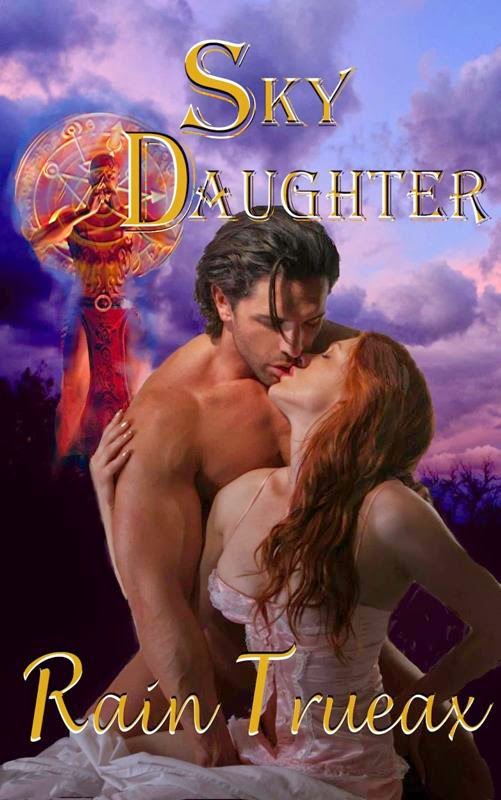
By this time, it is obvious I had no idea what would work, but I was into playing with images... I admit, that there's been a little of that all along. Anyway, I found creative images I liked at CanStock and bought them-- going for a little artier look.
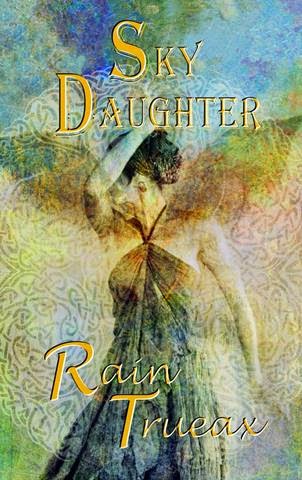
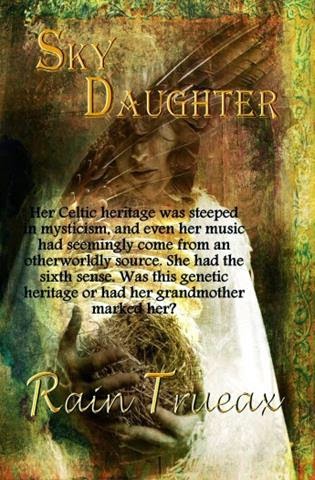
Much as I liked the last one, it was too cluttered for a cover. I am keeping the one above it for the paperback but decided when the book went into Select and KU for the Kindle, I would give it a different emphasis and create a cover I liked-- as clearly, I had no idea what would appeal to a potential reader.
The final cover is made from an image I bought from CanStock last year, with no idea how I'd use it. Below is a spider web. I think the two show the love my heroine has for nature, the land she has claimed now for her own, but also the trap that lingers waiting for her. I do think it's the last cover the Kindles will see. In the end, every cover has to satisfy me first... well and my publisher. This one does that (he did the titles).

Some might think that this long string of failures must be depressing-- all these attempts and none worked. But I am also a visual artist. For me, creating covers is play. Yes, I could have bought someone else's covers, but I want them to be my concepts, my art, my philosophy behind my books (with one exception, the cover for Diablo Canyon). When I am writing, it's fun to get a break. Doing covers or trailers is recreation.
What kind of cover do you prefer? Will a cover lead you to read a sample of the book or turn you off totally?
February 8, 2015
keeping sanity

What does an artist expect to get from their effort? And I don't mean just in terms of money--
on the sanity of artists this link was in The Dish; so I hope it still works now that Sullivan has ended that blog
Although I have been involved in painting, drawing, photography, and sculpture, I am personally looking at this in regards writing-- specifically mine. I don't do the craft type, where I look at what has sold well and try to put my spin on it-- basically formula writing. My stories, as is the case with most writers, come from within. If my plot structures fit any formula, it's Joseph Campbell's the hero's journey-- which is pretty much about the journey of life.
For me, writing that kind of story is pure pleasure-- no problems with sanity. I love setting up a situation, creating characters, getting a feel for who they are, and then taking them through various experiences to a meaningful climax-- as I see it. Some say that for them, writing is like pulling teeth or sweating blood. It's not for me. I love diving into these fictional characters' lives, becoming involved in their problems, helping them work it all out, and forgetting for a little while my own...
Lost a pregnant ewe who got over onto her back and was unable to get up. Sheep die in an hour or two if they get onto their backs that way. At a certain point, they cannot get up without help. Twelve lambs lost this year with thirty-seven on the ground but will we lose some of them? Two or three ewes left to lamb.
Found a great buyer for last year's lambs. I hate to see them go, but this is as good a set up as possible. We need to sell some cattle; will that buyer come through as he promised? Pineapple Express is giving us the rain we need-- is the creek rising too much? How come my smart phone is eating up its battery in a few hours? Timeout to get passport photos renewed and sent off before ours expires. Is that crown really feeling okay now? Definitely do not turn on the news, it's too depressing; and on it goes.
All that can be put aside when I am writing a story in an organic way. My stories grow out of their situation and the characters. When writing a rough draft, I am constantly thinking of these people and what comes next. The story swallows my world for the time it takes to get that rough draft. With writing stories this way, I have control and I know it will all work out, which is a lot more than I can say for what happens in the real world.
Marketing books, on the other hand, brings me right back to myself with a thud. I have very little real control, and I constantly have to make choices. If I venture into social media, it's not my characters, it's me. How do I present my books? Do I present them? What should I share of my world? And on it goes.
Amazon is the one creating some of my current angst. Recently I read a link which claimed if you don't put your book in Amazon Select/KU, it will drop into Amazon's black hole. And I know from experience how Amazon helps that happen. In January, I had a book sell seven copies in a short time. Do you know what it did for its rankings? It might as well have sold one. In December a book sold a couple of copies that didn't impact its rankings at all. I emailed Amazon on that one trying to figure out if they had made a mistake. They had not. It's all about their mysterious algorithms dontchaknow.
To be in Select or KU, where Amazon might help my books show up, I would need to pull them from B&N, Kobo, etc. Amazon is as much trying to sell books as they are trying to push out the competition. Yes, it's the way of business, but I don't like it. Staying out of KU may have meant some of my books, one is coming to my mind, suffer. That can't be good either. The other sites do sell, but very few. You can see how my thinking is going round in circles. Which good matters most?
My publisher wants me to give KU a try and because he's my partner in this (not to mention husband), I am going along with it for a book that has been out there for quite awhile and has never sold well-- lately nada.
Sky Daughter has been a hard book to promote whether in blurbs or covers. Although I think people would like it if they gave it a try, who am I to know since my taste in romance reading isn't the same as the best sellers.
So we made the tough decision. It has been pulled from the other sites to be in Select and KU. I have a month to see how it goes and to decide if KU should be how I bring out the first of the Oregon historicals. If I do that with the first one, I think I'd leave it there the required three months, until the second comes out. Pull it, put it into the other sites while the second one goes to KU/Select. That would get repeated until all four of are out. But what if KU actually gets rentals or sales for Sky Daughter and that first Oregon historical? hmmmmmm
I hate having to think about this... It's trading off what is best for my books with what might be best for selling books in general. Will it be best for even my books? I am going in circles.
Keeping sanity while marketing is not an easy thing-- if the writer cares about getting sales and reviews (getting reviews is even tougher where I am not operating within a clique). I've been reading lately about something called street teams where writers ask some fans to join together to help their books be seen. As part of that, there is a private site, and team members get some freebies as well as closer access to the writer.
Previously, I had never even heard of the term. Looking it up, I learned that street teams began in the '90s to sell music. It is a buzz word where some think it's the way to go and others feel it doesn't really gain much.
Do I need a street team? Do I even have the potential to have one? Street teams and beta readers are why some books come out and instantly have fifteen reviews-- in case you didn't know.
When I see a book like Rose's Gift, which had pretty decent sales (especially for my books recently-- helped along by support from other writers), but has gotten zero reviews, I see why some like having such groups to be sure that does not happen to their books. It's not dishonest because most of those in a street team, maybe all, genuinely like that writer's work.
All these questions, which go in circles, are why for years, I had continued to write new Oregon historicals but held off on publishing. I now feel I should let them go out, give them a chance. It is also possible that to give them their best shot will require them being in the KU, at least to begin. Maybe :). Does it also require a street team? *sigh*
February 4, 2015
discussing Rose's Gift
Don't do a video to sell something. I am not that convinced they work for that. Do it because you like multiple ways to communicate. Do it because it's fun-- if it's not, don't do it. For me, creating a video is interesting-- even when it does not work so well. Sometimes it just doesn't fly, and I leave it to come back another day. It does require being in the right or should that be 'write' mood.
For reasons of sound control, I mostly have used the webcam above my computer. I keep thinking I'll do one outside with a camera but so far have not. My preparation is pretty much to look at what is behind me. I prefer it to not be cluttered, pillows where they belong, etc. For this one I already had the maps up for the fifth Arizona historical; so they weren't going down. I don't write a script or create an outline, which means sometimes I blow it. I don't write anything down because I want it to feel like a conversation, not a lecture. Ideally it should feel as if you and I were sitting across a table from each other, and I was telling you about something of interest to me. Of course, you don't get a word in-- until it's over anyway.
I generally have music on for background. I've noticed that with it, the log truck that might pass by, is not noticed. It appears to modulate sound.
For awhile I did more of these, because as much as I love books, I am a visual person who loves talking-- yes, introverts can love talking ;). It though has been quite awhile since I created one (October when I looked).
The topic for this one is Rose's Gift, my first eBook about a senior citizen-- some say elder... others the elderly. Rose is sixty; so you decide. I liked writing a story about a woman who wasn't young and yet-- she wasn't done either. I could say more here but why not watch the video.
Incidentally, if you have a slow system, one way to watch these is hit the arrow to start; then put it on pause for a minute or so, while you go off to get a cup of coffee or tea and it buffers. My granddaughter taught me that one.
For reasons of sound control, I mostly have used the webcam above my computer. I keep thinking I'll do one outside with a camera but so far have not. My preparation is pretty much to look at what is behind me. I prefer it to not be cluttered, pillows where they belong, etc. For this one I already had the maps up for the fifth Arizona historical; so they weren't going down. I don't write a script or create an outline, which means sometimes I blow it. I don't write anything down because I want it to feel like a conversation, not a lecture. Ideally it should feel as if you and I were sitting across a table from each other, and I was telling you about something of interest to me. Of course, you don't get a word in-- until it's over anyway.
I generally have music on for background. I've noticed that with it, the log truck that might pass by, is not noticed. It appears to modulate sound.
For awhile I did more of these, because as much as I love books, I am a visual person who loves talking-- yes, introverts can love talking ;). It though has been quite awhile since I created one (October when I looked).
The topic for this one is Rose's Gift, my first eBook about a senior citizen-- some say elder... others the elderly. Rose is sixty; so you decide. I liked writing a story about a woman who wasn't young and yet-- she wasn't done either. I could say more here but why not watch the video.
Incidentally, if you have a slow system, one way to watch these is hit the arrow to start; then put it on pause for a minute or so, while you go off to get a cup of coffee or tea and it buffers. My granddaughter taught me that one.