Russell Atkinson's Blog, page 103
October 19, 2015
GUT SHOT – Episode 24
Gut Shot – episode 24
© Russell Atkinson 2015
As I approached the garage I looked around for any other Bureau employees, but didn’t see any. I walked up the fire exit stairs to the top floor. From the inside the fire door opened outward with just a push bar, as required by fire code, but it was locked from the outside, again needing an electronic key card. I went back down one floor and found that I could enter there. I walked over to the auto ramp that led to the top floor and took a spot standing between two parked cars close to the gate. It took only seven or eight minutes for an FBI car to drive up the ramp and approach the gate. I looked at the driver long enough to be sure it wasn’t Watkins then bent over as though tying a shoe or picking something up. I heard the rumble of the gate as the chains lifted it slowly. The car drove through, negotiating the sharp left-hand curve up the ramp. I slipped in under the gate as it was closing. Because of the curve, the driver couldn’t see me.
I waited just inside the gate until I heard the thunk of a driver’s door closing followed by the creak of the pedestrian exit door. Then I walked farther up the ramp into the parking area. No one was around so I found a spot where I could discreetly watch who came and went. There was a sign saying “Private” on the gate but no signs saying “No Trespassing” and I was sure I wasn’t doing anything illegal; but I also knew I’d be pissing off some FBI personnel if they found me up there.
I realized that I didn’t know what kind of car Watkins drove. For all I knew he commuted by bus or train from the East Bay where he lived. Still, with his seniority the odds were good he had a Bureau car assigned to him. With free gas and free parking available, he almost certainly commuted by car and parked here on days he wasn’t out at the range. Since I knew Bobu was in the office from what Miranda had said, I also knew it wasn’t a Firearms training day. I had a good chance of spotting him before the day was over.
It took longer than I thought. After two hours of hanging out up there I still hadn’t seen him. During the entire two hours, only one pair of agents saw me in the corner. They were young and didn’t know me. I nodded and opened my briefcase on the hood of the car where I was standing and started looking through it. They looked me over and nodded back tentatively. As a well-groomed white guy in a suit holding a briefcase in the FBI garage in the heart of the Tenderloin, I must be another agent, they no doubt assumed. The fact that I was twenty years their senior and held myself with confidence no doubt added to their reluctance to challenge me. They walked down the stairs.
Another half hour passed before I was rewarded for my effort. Watkins drove in and parked. No one else was in the car with him. I walked over to him as he got out of the car.
“Jeez, Cliff,” he said, startled, “What are you doing here?”
Of all the agents in the arrest scenario, Rod Watkins was the one I knew the best after Woody. We’d served on the same squad for about a year when he first transferred in from his first office. He’d been in his late twenties then, which put him at about forty now. He was already graying at the temples, something I’d managed to avoid even into my fifties, but in his case, it gave him a grizzled, authoritative air, which is a good thing for a firearms instructor. He was a fitness buff, too, which was typical for those instructors who also taught self-defense and arrest techniques. Much of the FBI’s instruction is to local officers, a responsibility not well known to the general public. Cops respect guys who look like Rod.
“Waiting for you.”
“This is about the shooting, isn’t it? I heard you were working for Woody.”
“Yes. He needs someone to help him. Do you have a few minutes?”
“Not here, Cliff. I’ll talk to you but we’d both get in trouble if anyone saw us up here.”
“There’s a court order that says …”
“I know what it says, but the SAC personally came into our unit and told us he was rescinding the order not to talk to the defense, but he also looked us right in the eye and almost shouted that we didn’t have to talk to you. He asked about five times if we understood. He said the order gave us a choice and we should remember what side we were on when we made that choice.”
“He’s an SOB. Woody deserves a chance for a defense. I’m just trying to find out what happened.”
“Follow me. There’s a coffee shop a couple of blocks over that no one goes to.”
He led me down the stairs and peeked out the exit door to the street before waving me out. No one but a mentally ill panhandler or two saw us together so far as I could tell. Once in the coffee shop Watkins spoke freely.
“Cliff, I don’t know that I can help. I was right there and Woody gunned Jermaine down.”
“I know he shot Jermaine, but I’m trying to figure out how and why it happened. I read your 302. You’re the only one who mentioned that SWAT bag in the bedroom. Do you know how that got there?”
“The SWAT bag? Why? What does that have to do with anything?”
I found this response interesting. Apparently he didn’t know that was Woody’s bag. When I thought about it, it wasn’t that surprising. The eyewitnesses had been shooed out of there to do their 302s almost immediately. It was the ERT who came in later and did the search and crime scene photos. That’s when they found it was Woody’s bag. Woody hadn’t said anything other than it had been an accident. Watkins, and maybe all the agents in the scenario may still think Woody had carried the gun in an ankle holster or waistband. The news leak had said the gun was his, but hadn’t said anything about the SWAT bag. I decided there was no harm in telling him it was Woody’s. The prosecution knew it already.
“That was Woody’s SWAT bag. I’m trying to find out how it got into the barracks. Someone had to put it there.”
“Ahh. That explains one thing.”
“What?”
“Well, when the gun went off, Woody’s eyes got big as saucers and he dropped the gun like a hot potato. So you’re saying he didn’t carry the gun in?”
“I’m not saying anything, Rod. I’m just asking questions. Did you see him bring that SWAT bag in? Or see him with the revolver before the shooting?”
“No.”
“Did you see anyone else with that bag?”
“No. I wondered what it was doing there.”
“So you thought Woody was surprised when the gun went off?” I was finally getting something favorable to Woody, something that might mean he really was innocent.
“I didn’t say that. I said his eyes got big and he dropped the gun. That could have been due to surprise, but at the time I thought he just realized the significance of what he had done. He’d just called Jermaine a cocksucker and told him to die. I took it to mean he was suddenly feeling the enormity of his guilt.”
Damn! That wasn’t what I was hoping for. Still, the very fact he made the statement that it could have been a surprise was something useful at trial. The part about the eyes getting big as saucers was something Bert would use on cross, no doubt.
“Rod, you know Woody’s no actor. If he looked surprised, don’t you think it was because he was surprised.”
Watkins thought about it for a few seconds and responded, “Well, he would have had to have been a good actor either way.”
“How do you mean?”
“When he yelled ‘Die, cocksucker,’ he sounded like he meant it. If he didn’t, then he was doing a good job of acting.”
“Come on. You know how guys are in those things, trying to sound like a tough criminal, cussing and spitting and wrestling with the arresting agent. They’re like they’re back in junior high. Haven’t you ever heard it in those scenarios?”
“Maybe.” He paused a bit and then volunteered, “Yeah, okay, I’ve done it, too. When I broke away from Jermaine I swore at him, too.”
“What did you say?”
“You aren’t writing this down are you? Out of context it sounds bad.”
“Rod, grow up. You’re the only direct eyewitness at the instant of the shooting other than Woody. Jermaine’s dead. The prosecution is going to have to put you on the stand if this goes to trial and Woody’s lawyer is going to be asking these questions. You’ll be under oath and have to answer them, so you might as well be up front about it. Explain the context to me. I won’t write anything down if that bothers you, but you know it won’t make any difference.”
“I guess you’re right. When I broke away from Jermaine I said, ‘Fuck you, G-man.’ I was just kidding, though, you know. I was smiling and he was laughing back at me. When he caught me in the hall he whispered in my ear, ‘Fuck you very much,’ but he was chuckling. We both knew we were play-acting. Then, Woody yelled and the gun went off.”
“Thanks for telling me that, Rod. I know it wasn’t easy, but it gives Woody a chance.”
“You really think it could have been an accident?”
“I don’t know. I really don’t, but he deserves a decent defense. Let the jury decide. So let’s get back to the SWAT bag. Did you see anyone around Woody’s car?”
“Probably when we were all arriving. Everyone parks in the lot and is near all the other cars, but I don’t remember anything of note. No SWAT bags if that’s what you’re asking.”
“How about later, while everyone was watching the video? Did anyone get up and go outside, maybe to go to the john or something?”
“No doubt someone did. We’d all had our coffee, but I don’t remember anyone in particular.”
“Did you leave the room during the video?”
This gave him pause. “Hold on. You aren’t going to try to pin this on me, are you?”
“Of course not. I’m just trying to find out if it was possible for someone to have left the room and put the bag in the barracks and returned.”
“Of course it’s possible. Anything’s possible.”
I noticed that he hadn’t answered the question about whether he’d left the room, but I decided not to push it. The fact that he dodged the question was enough for Bert’s purposes. I didn’t want to make him so leery he’d end the interview.
“You’ve been doing firearms a long time. Is this scenario a new one?”
“It’s hard to say. We’ve been doing arrest scenarios for decades. I’m sure you did them here and in Hogan’s Alley, too.”
He was talking about the mock town at Quantico near the firing range. Every new agent or police officer in National Academy is run through a scenario there during training. When I was in training a mean-looking man popped up out of a window pointing a gun at me. I fired at him with my red handle. It turned out to be another agent, a cardboard one. He was wearing an arm band saying FBI, but I was too focused on the gun pointed at me to notice it. The exercise was designed to make you realize how difficult it is to take in all the information around you when you feel an immediate threat.
“Of course. This one was called the Two Fugitive Extraction Scenario, wasn’t it?”
“Yes. Chris told us that’s what we’d be doing. It’s something he learned back at Quantico at his last in-service.”
“Did he say anything about the SWAT bag?”
“Not to Woody and me. I don’t know what he told the arresting agents.”
“Did you ever see anyone in the area, maybe someone who didn’t belong?”
“No. No one.”
“Is there anything at all you can tell me that can help? Anything unusual, anything suspicious?”
“Nothing, Cliff. Really. It was a little unusual in that we did an arrest scenario. We only do that once every year or two, but it has been a regular thing ever since I’ve been an agent. We were just doing all the normal stuff and then Woody shot Jermaine. I tried to stop the bleeding. I did the best I could. If Woody hadn’t meant to do it, why didn’t he help Jermaine?”
I’d thought of this myself, and knew what the answer was going to be when we asked Woody. He’d say he was in shock and too stunned, but I was dismayed to hear that others had been wondering the same thing. It added to the appearance of guilt.
“I’m sure he was in shock. Let’s talk about the gun. Do you know if Woody was carrying it at the beginning of the scenario?”
“I thought you said it was in the SWAT bag.”
“I said it was Woody’s bag. I don’t know if the gun was in it. That’s what I’m trying to find out. Give me a break here, Rod. I’m just asking questions. Don’t draw any conclusions. Did you see that revolver, maybe in an ankle holster or anywhere else?”
“Not until he dropped it on the floor.”
“What was Woody wearing during the exercise?”
“His grays. Shirt, pants.”
“No jacket or vest over the shirt?”
“I don’t think so. I see where you’re going with that. You’re saying someone would have noticed if he had it in his waistband. But he could have been carrying it in an ankle holster. The pants leg would cover that. The grays have big pockets. He could have had it in his pants pocket.”
I didn’t reply directly to this. His statement seemed to confirm that it would have been noticed if it had been on Woody’s person. I knew the ankle holster and belt holster were both in the bag when he was arrested, so this was as close as I could get to proof that Woody did not bring in that gun. It was in the bag at the start of the scenario. It didn’t prove he was telling the truth. If he’d been planning to kill Jermaine, he would have realized that he couldn’t carry the gun in on him and still claim it was an accident. He could have planted the bag himself in order to provide an alternate explanation.
“Did you see any sign of animosity between Woody and Jermaine? Were they talking or arguing?”
“No. We were all standing around talking before class. The usual stuff. They were going at it about football. They both played college ball, I think. You know, making snide remarks about the other guy’s team, touting their own, but it was all good-natured. Ricardo was doing it, too, and one of the ASACs.”
“Do you know if either one was dating anyone?”
“I don’t know anything about that. I heard on the news about Woody’s girlfriend dumping him for Jermaine, but I don’t know if it’s true or who that is. They both work in R.A.’s I work here in the city. I never see those guys except at firearms training days. I don’t know anything about their personal life.”
“His girlfriend hasn’t dumped him. That was a lie the AUSA told.”
“Cliff, I don’t want to hear it. It’s none of my business. After that first night, I stopped watching the news. I keep my car radio on a music station. I’ve been trying to avoid hearing anything about the case. I just know what I saw and heard and that’s all I want to know. I want to testify without any bias.”
I realized he wasn’t being honest with himself. Maybe that’s what he wanted to believe, but the reality was that he was as curious as everyone else about what happened. He’d asked me a lot of questions. I sensed that he believed Woody murdered Jermaine, but wanted to find some reason to believe otherwise. I also noticed that he’d used the term “when” not “if” he testified. That told me he was probably scheduled to testify before the grand jury soon. Watkins kept looking at his watch and I felt I’d covered the main points I wanted with him, so I thanked him for talking to me and asked if I could give him a call if I thought of anything else. He said sure, but his lack of enthusiasm was evident. I could call, but I wasn’t so sure he’d answer.
I let him leave first so he wouldn’t be seen walking with me. I realized he’d left me with the check for our coffee, so I paid it and left, walking an extra block out my way to avoid the federal building. I took BART to my car and drove back to my office. It had been a productive trip.
When I got back, Maeva was gone. She was out doing some records checks at the county offices for one of my paying jobs. She’d texted me where she was. I got back online and checked the social media sites for all the involved parties. Connie Jefferson had posted a photo on Facebook of an elegant dinner she’d had at a restaurant I knew to be expensive. I doubted she could afford that place on her own. Who had she gone with? I hoped it was her parents treating her. Didn’t she realize how that looked? I’d be willing to bet that Sheila Morrissey already had someone at that restaurant finding out if she was there with another man.
Now that I knew Bobu wasn’t going to talk to me, I decided to reactivate Huntress, the fake identity I’d created. I logged onto the police instructors forum and posted that I was looking to create an arrest scenario and wanted suggestions. I’d let that sit a day or two and see if “Bubo” chimed in. If not, then I’d send a personal message to him.
I saw that Bert had emailed me some more documents that he’d received from Sheila Morrissey. There were reports from the ERT including a list of everything seized at Santa Rita. There was also a search warrant return for Woody’s apartment. Apparently the FBI had gone there and seized a lot of personal records, his computer, and one other gun. Neither Bert nor I had been informed this search had taken place until now. Since Woody lived alone, no one there had become aware of it to let him or us know. Obviously, it’s normal not to alert the subject of a search that he is about to be searched, in order to avoid the destruction of evidence, but usually once the search is under way or immediately thereafter, the subject becomes aware of it from some source, even if it’s just when he gets home and sees everything in chaos. Here, that didn’t happen. I wondered if they’d broken down the door, but I considered it more likely they’d located the landlord and gotten a key.
I’d promised Ellen I was going to be home early, so I didn’t take the time to study the documents. That could wait. It was after four, so I headed home. This time she was still in a good mood and had fixed a nice dinner. Tommy had only woken her once overnight, so she’d gotten a decent night’s sleep for a change. We spent the evening in front of the TV cuddling on the couch. It was the nicest evening we’d had in a long time. I didn’t bother to check my email or messages all evening and we even skipped the nightly news.


October 17, 2015
Murder at the Geo-Cache by Victoria L.K. Williams
 Murder at the Geo-Cache…A Citrus Beach Mystery by Victoria L.K. Williams
My rating: 1 of 5 stars
As a geocacher I really wanted to like this book, but it just wasn’t very good. The writing was poor and the proofreading non-existent. There were so many errors I can’t even summarize them here, but one I found particularly amusing was when a main character’s farm was described as having barns, fields, and padlocks. (Paddocks in case you were wondering). The writer obviously knows nothing about geocaching. She even spells it wrong. There’s no hyphen in geocache. There are good geocaching-themed murder mysteries out there, but this isn’t one.
The Diver’s Clothes Lie Empty by Vendela Vida
 The Diver’s Clothes Lie Empty by Vendela Vida
My rating: 4 of 5 stars
Reviews are all over the place on this best-seller and I can see why. Everything about it is unconventional. It’s written entirely in the second person. You do this. You do that. It smacks of one of those early text-only role playing games like Zork or Amnesia. Eventually we learn that you are a young woman from Florida fleeing a rather nasty domestic situation by making a not-very-well-thought-out trip to Morocco. The author doesn’t bother to give most characters names. If I were to read my own description of this book I probably would never have chosen to open it, but I found it quite compelling. It’s described by reviewers as a “literary thriller” and that’s as good a label as any.
Almost immediately “you” have your backpack stolen, along with your passport, money, camera and apparently your sanity, since you then go on to do some rather insane things. Adventures and misadventures ensue in one long, continuous take. It’s a quick read, partly due to the fine writing style and partly because it’s almost impossible to put down since the plot, if one can call it that, consists almost entirely of crises on the brink of being resolved. I can’t give it five stars, but it kept me thoroughly entertained from beginning to end.
October 15, 2015
In Case of Emergency by Courtney Moreno
 In Case of Emergency by Courtney Moreno
My rating: 3 of 5 stars
The lead character is a bisexual female emergency medical technician or EMT. The book is split about 60-40 with her relationship with a lesbian being the 60 and her adventures (and misadventures) taking ambulance calls the 40.
I really liked the 40%. The dark humor, inside jargon, and debunking of TV medical crap all were terrific. I learned that PFO means Pissed and Fell Over, CATS means Cut all to Shit, and a Badge Bunny is a female EMT trying to land a firefighter or cop.
I’m probably being unfair, but I didn’t like the 60%. The author writes well, but I ended up skimming or even skipping most of it. So sue me. I’m a heterosexual male and just can’t relate to a love affair between two badly screwed-up females. Why are romances in novels almost always dysfunctional, populated by people with horrible relationship histories? I guess it sells, but it turns me off.
I think the author and publisher were really going for a romance with this one, not a medical thriller. Only one of the 29 Goodreads reviews is written by a male, although two or three others are not identifiable. Maybe they’re bi, too. That’s usually a sign of a chick lit piece. The nice thing about the way it’s written, though, is that the medical part and romance part are nicely separated by chapter, so it’s easy to cherry-pick what you want to read.
GUT SHOT – Episode 23
Gut Shot – Episode 23
© Russell Atkinson 2015
San Francisco has always been a haven for misfits and weirdos. I’m both of those, which is why I came here. Michael Franti
Chapter 12
I didn’t want to call any of the eyewitness agents. I’d learned that I wasn’t likely to get a face-to-face interview if I called first. If I wanted one, I’d have to surprise them at work, like I did with Mossberg, or at home. I wasn’t sure which was better. It had worked out okay with Mossberg, but I thought the agents were more likely to be guarded in the office environment. On the other hand, they might resent me showing up at their home and interrupting their family lives. I decided to take my lunch break while I thought about my next move.
After a short workout with heavy weights and a quick half sandwich, I returned to the office to find that Bert Breen had called. I called him back.
“Cliff, I just got off the line with the D.A.’s office. They’re planning to file animal cruelty on you. You can’t let that happen. I’ve gotten them to hold off for now. Can you come over here tomorrow?”
“I can’t believe this. I’m attacked by muggers and a dog and I’m the one they choose to prosecute. What’s happening tomorrow?”
“One of the reasons they think you’re guilty is that you refused to help identify those two thugs you say followed you.”
“The ones who followed me, not the ones I say followed me.”
“Of course, the ones who followed you.”
“And I didn’t refuse anything. It was a subject interview, Bert, not a witness interview. I was an FBI agent for twenty-five years. I know the difference. He was trying to get admissions, not evidence. For Pete’s sake, you of all people should understand why I invoked. I shouldn’t have talked as much as I did.”
“I get it. I get it. But the deputy must have told it differently to the D.A. So I’ve arranged with someone I know over at OPD for you to look through mug books and try to identify the muggers. I’ll be with you to make sure they don’t question you. Can you come?”
“Christ, I guess I’ll have to. As long as I’m coming over, can we go see Woody again? I’ve talked to Kaneesha and it’s not looking good on the motive front. Logan was still going after Connie Jefferson according to her. We need him to come clean on the relationship situation.”
“What about the video? Did you see anything there?”
“As Maeva said, no smoking gun.”
“She’s a regular comedian.”
“It’s looking bad there, too. The SWAT bag and gun were his.”
“Yeah, I saw the lettering on his bulletproof vest. I agree we need to get back with him. I can arrange that for tomorrow afternoon. We can do the lineup thing in the morning and then head out to the prison.”
“Okay. Oh, and they took a laptop from Jermaine’s car. You should do a discovery request for a full copy of that hard drive. They’ll probably be getting any records that might show communication with Jefferson or Woody. E-mail, texting, chat, phone records, the works. Get your hands on that.”
“I’ve already asked for all that social media stuff, but I didn’t know about the laptop. Anything else?”
“Yeah. I noticed in Bobu’s 302 that he called the arrest exercise the ‘Two-Fugitive Extraction Scenario’ like it was an official scripted thing. You should ask for whatever records would show what that is. Maybe a layout diagram. It may give us an idea how that bag got in there. There might be some written records back at Quantico. Bobu had just been back there on an in-service, as I recall. Maybe he was taught that exercise then.”
“Okay, good. Anything else.”
“Not that I can think of now. I’ll let you know tomorrow if I come up with anything else.”
“Alright. See you then. Come here first, ten o’clock. We’ll go over to the PD substation in Chinatown. That’s the closest one to where the attack happened and they have the mug books.”
“I will.”
As soon as I was off the phone with Bert, I called Ellen to see how she was doing. She said everything was fine and apologized for her outburst the previous evening. She didn’t sound all that chipper, though, and I wondered if she was just putting on a brave face. I told her that my interview in Oakland wasn’t going to happen today, so I should be home at a reasonable hour. That was one benefit of Kaneesha calling me.
The more I investigated, the more it seemed there was to do. I’d have to delegate more of it to Maeva, if I could figure out what she could do. The most important items on my list were the interviews of Watkins, Bobu, and Garcia. By looking at the FBI office telephone lists I’d determined that Watkins and Bobu were both assigned to San Francisco in the Training Unit. Garcia was assigned to the Concord Resident Agency, an East Bay city fifty miles away, and lived all the way out in Benicia, a small city that consisted primarily of a huge oil refinery and a few tract houses. It was in the FBI’s Sacramento Division territory. Bay Area housing was so expensive that young agents often lived as far away as possible. I didn’t want to drive all that way without knowing whether he was around and willing to talk to me.
I decided that it was worth the risk to go up to San Francisco and try to catch either Bobu or Watkins at the office. That drop-in tactic had worked out well with Mossberg and it was more difficult to refuse to talk when someone was right there. I made sure I had the 302s accessible on my smart phone and told Maeva where I was going.
I drove up to the Millbrae BART station and parked. Trying to find parking in downtown San Francisco is a nightmare. I rode in on the train and got off at the Civic Center stop. It was a short walk to the federal building. The building is two blocks away from City Hall, which is probably the most beautiful building in the city, but sits right on the edge of the Tenderloin, a rundown district best-known for the flophouse hotels full of winos and drug addicts. At least there were no demonstrators when I walked into the lobby.
This time the receptionist, a young Asian woman, knew me and greeted me by name when she saw me walk in. I’d worked there briefly as a squad supervisor, before I quit, but already I’d forgotten her name. I smiled and said that awkward “Hi, it’s great to see you again,” back that you say when you can’t remember the other person’s name. I quickly asked if Chris Bobu or Ron Watkins was available. She called a number and said something I couldn’t overhear through the bulletproof window, then hung up. There was a perforated metal disk in the Plexiglas that was supposed to make conversation possible, but it only worked if both parties leaned close and almost shouted. I thought she would ask me to wait on one of the government-issue sofas but instead she asked me how retired life was. I was reluctant to get into a conversation with her because I still couldn’t remember her name or anything else about her, except that she wasn’t in Reception when I’d been there. She must have been in the typing pool or someplace else. I babbled something inane in response for a minute or so when I was rescued by her phone ringing. She held up one finger and picked up the phone. Then she turned to me and said someone would be right down.
I knew at that point that I wasn’t going to have any luck. If it was Bobu or Watkins she would have said so. Within seconds the door opened and Miranda Little, the Principal Legal Advisor, came out. She was a few younger than me and, like me, had started to put on weight when she’d hit forty. Her ill-fitting pants suit looked like it had been purchased when she was ten pounds lighter. She wore half-glasses hanging from a chain around her neck. The only makeup she wore was a conservative shade of lipstick. Her cheeks were peeling like she’d been sunburned a week earlier. I remembered that she was a skier.
“Miranda, how are you?” I said warmly, acting glad to see her. Actually, although I would rather have seen Bobu or Watkins, I didn’t have to act, since I genuinely liked Miranda. She and I had both been Legal Instructors at the same time some ten or more years earlier. That’s a part-time job in the FBI, another hat to wear when you aren’t doing your regular case work, just like most of the firearms instructors. I’d gone on to become a squad supervisor and she’d become the PLA, a full-time attorney position.
“Cliff, you hermit. You never make it up here to the functions.”
“Busy, busy, busy. You know how it is. I have a new baby and a business to run.”
“A baby! I didn’t know that. Congratulations.”
“Thank you. So let me guess, someone sent you down to get rid of me.”
She laughed. “Something like that. Neither Chris nor Rod is available. Sorry.”
“Miranda, you know there’s a court order.” I hadn’t said why I wanted to talk to them, but they all had to know by now I was working on Woody’s defense. The only reason to send the PLA to deal with me was if it involved a legal matter.
Still smiling she said, “And you know that it only says the employees can’t be ordered not to talk to you. It doesn’t say they must talk to you and it doesn’t say we have to make our facilities available to you for that purpose. They have important work to do during work hours.” She kept a straight face while she said it but I knew her too well.
“Firearms instructors here at their desks have important work? What? Dry firing at the wall?” I grinned.
“Probably practicing marksmanship playing Call of Duty,” she said dead-pan. “Sorry, Cliff. If you’re going to talk to them, you’ll have to catch them off-duty and not here.”
“At least tell me which one sicced you on me.”
“Now, now, attorney-client.”
“I’m not asking you to tell me what they said, only which one called you. If he doesn’t want to talk to me, I can’t make him, and you know I’m not going to harass anybody. But if it’s only one of them trying to dodge me, please don’t make me chase them both down. You’re saving Woody money by not wasting my time. Give him a break at least. You can tell me without telling me.”
She thought about this for a moment, then replied, “Watkins is out of the office right now.” This told me that it was Bobu who had gotten the call from reception and then called her. I still had a shot at Watkins.
“Okay, thanks. How are the kids?”
“My daughter’s a junior at UC Santa Cruz. My son’s a senior in high school. He’s still trying to decide. Five more years before I can retire, unless I hit the lottery.”
She said this jokingly but an instant later I saw the shadow cross her face that I see too often when people realize they’d made a faux pas. I’d been able to retire early only because of the multi-million settlement I’d received when my first wife had been killed. Miranda realized that her comment could be interpreted as suggesting she thought I’d lucked out when Fredericka had been killed, the way Rick Porillo had. I knew she hadn’t meant that, but it was still painful to be reminded of that time. I tried not to let it show.
“That’s great, Miranda. I look forward to helping Tommy pick a college, too, if I’m not too senile by then. I’ll let you get back to it.”
I could see the relief flood her features when she saw I wasn’t upset. “It really is nice to see you, Cliff. Good luck.” She took my hand in both of hers and gave it a squeeze. I pulled her toward me and turned the hand squeeze into a quick hug, which she returned with obvious sincerity.
There was no point in hanging around, so I left the lobby. Back down on the street I tried to decide whether to hop back on the train and call it a wasted trip, but figured that as long as I was up there, I might as well take my shot at Watkins. I knew that supervisors and a few senior agents had parking spaces in the basement of the federal building, which was guarded, but most agents in San Francisco had to park in a separate garage a few blocks from the office. It was a multistory garage with public parking on the lower levels and exclusive FBI parking on the top level. You needed an electronic key card to get the heavy metal gate to open on the upper level, so the public couldn’t drive in,. I strolled through the Tenderloin, taking in the wafting stench from the winos until I reached the garage. I passed one agent I knew walking the other way and chatted briefly. He didn’t mention the case and neither did I.
October 12, 2015
GUT SHOT – Episode 22
Gut Shot – Episode 22
© Russell Atkinson 2015
Absence of evidence is not evidence of absence.
Carl Sagan
Chapter 11
The next morning things seemed back to normal. Ellen was in a good mood. She apologized for her crying jag the previous night and chalked it up to her hormones being out of whack. I told her I may have another interview in Oakland and if it was after work, I’d be late again. She told me not to worry about it.
At the office I gave Maeva the digital photos and video to review. Like any sane person, she normally hated reviewing video, but she was still excited enough to be working on a murder case that she didn’t protest. She did show obvious relief when I told her she wouldn’t have to work for free, despite her earlier promise to do so.
I sat down and started reviewing the FD-302 reports from the agents at the scene. All of them were short, presumably because they were under orders to keep them that way. Mossberg’s was consistent with what he had told me the previous day, but just covered the arrest itself. He made no mention of what the other agents said had happened. This was normal, since it would be hearsay and the other agents were going to write their own 302s. He didn’t want to put anything in writing that might be slightly inconsistent with whatever they wrote. It was about as favorable as it could be to Woody, mentioning that he was cooperative, and even volunteered to be handcuffed if necessary. There was a mention of Woody’s remark that it was an accident, but no other statements.
The two ASACs’ write-ups were one or two paragraphs saying nothing more substantive than they didn’t see anything and were ordered by the SAC to leave to deal with other matters when Garcia came to report the shooting. Fitzhugh’s was even terser. He said that SA Ricardo Garcia had come running to him while he was shooting and told him that SA Braswell had shot SA Logan after yelling “Die, cocksucker.” Fitzhugh had then gone to the barracks area to confirm this information and when he did, he ordered Braswell arrested for assaulting a federal officer.
This left Garcia, Watkins, and Bobu, the real eyewitnesses. I read and re-read their 302s several times. They all started with the beginning of the arrest scenario, who was there, who played what role, what happened during the scenario up until the shooting. Since each of the agents was in a different spot, the accounts differed in detail.
Garcia’s 302 was consistent with what Woody had told me. He’d been the one who had been in the back of the barracks. He’d ordered fugitive “Jones” out and Woody had complied, then run back into the barracks. He hadn’t been able to shoot because other people, possibly including fellow arresting agent Logan, were in the hallway. Garcia had run to the open kitchen window and saw Woody start to enter the kitchen, but then retreat back quickly into the hall. Garcia had actually shot at him at that point, but probably not in time. Since the guns did not have ammunition, the others in the scenario, including Woody, apparently hadn’t heard the click of his gun.
Garcia then ran to the back door and looked in quickly while taking cover to the side. He saw Watkins being led down the hall to the front by Logan. Then he heard the words “Die, cocksucker” as a hand reached around from the open bedroom doorway, and there was a loud explosion. Logan fell to the floor clutching his abdominal area, bleeding. At that point Garcia ran inside where Watkins was already bent over Logan trying to stop the bleeding. Logan was moaning and Braswell was standing in the doorway looking down at Logan. Bobu came rushing in from the front door and saw the situation, then stepped back, pulled out a cell phone, and called 911. Garcia also bent down over Logan and tried to comfort him, but wasn’t able to do anything useful besides hold his hand. He noticed a five shot revolver lying on the floor near Braswell’s feet; from the smell he knew it had been fired. Bobu then came up to him and told him to go get the SAC and Mossberg. He did this.
SAC Fitzhugh came rushing over to the scene, took a look at Logan and spoke briefly with Bobu and Watkins. Then Bobu and Mossberg arrested Braswell, who was by this time in the front bedroom instead of the back one where he had been at the time of the shooting. Right after that the ambulance arrived and the SAC told them to get away from Logan to let the EMT crew in. He stepped out the back as the EMTs were rushing in the front door. The SAC then instructed him to go back to the office and write a 302 recording what he had witnessed, so he got in his car and left the scene while the ambulance crew was still trying to get Logan into the ambulance.
When I finished reading this, I felt I had a somewhat better grip on the situation, but it was still frustrating to have so much left out. Garcia hadn’t mentioned the SWAT bag. Had he even seen it? What about the cars? Did he see anyone around Woody’s car? He said he saw Woody standing there after the shot, but didn’t describe his expression. Did he look surprised? Aghast? Did he have an evil grin? I looked at the approval initials and saw “TF” there. Theodore Fitzhugh, the SAC, was personally supervising the paperwork. I couldn’t be sure, but I was willing to bet that Garcia had put in something about Woody’s expression or demeanor but it had been scrubbed. That’s pretty normal, and I couldn’t blame Fitzhugh too much, since that sort of thing is largely opinion, but it would have been nice to know whether Garcia thought Woody was totally surprised when the gun went off. I would just have to get that during the interview, if there was one.
Next, I tackled Bobu’s 302. He started with briefing the participants in the scenario. I noticed that he called it the Two-Fugitive Extraction Scenario, using initial capital letters. He named all the agents there and their roles. Woody and Watkins were the fugitives. He described the instructions he gave to Woody and Watkins, which matched what Woody had told me. He also described the instructions he’d given to Garcia and Logan, the arresting agents. He’d told them that Watkins, who was playing the role of fugitive Smith, was considered the dangerous one who had used a gun in a robbery. Braswell, playing Jones, was considered the follower, the less-violent one. Bobu said he would cover the side of the house where the bedrooms were so neither could exit the windows there. The other two agents were to take the front and back doors.
He had also warned Garcia, who was taking the back, that “Jones” was known to keep a gun handy in a drawer. This may have explained how Garcia knew to run to the kitchen window, since the kitchen was the only place in the house with a drawer. When the scenario started, Bobu had seen Braswell run back into the house and dodge into the back bedroom. He could see into that bedroom from his position on the side. Since it was a bright day and the room was not lighted, he could only see a general shape rushing into the room and could not tell if he had a gun in his hand. However, he knew it was Braswell because he had seen Braswell run back into the house, and he could tell from the general height and body build of the figure, too. He did see Braswell approach the window, spot him covering from behind a barricade, and go back deeper into the room, bend down, then dash back to the doorway.
Bobu could tell there was a commotion of some sort inside and then heard the shot. He realized something was wrong and rushed in through the front door. After that the 302 matched what Garcia’s 302 said, and what Mossberg had told me. The one new fact was that once the ambulance crew had cleared the scene, the SAC ordered everyone to stay out of the barracks until the Evidence Recovery Team, or ERT, had arrived and done the photos and bagging and tagging.
Once again I was frustrated that there was no mention of the SWAT bag or the cars. How had that bag and gun gotten into the room, and why? What was Woody’s demeanor? The 302 mentioned that Woody had said it was an accident and that Bobu had read him his Miranda warnings and told him not to talk. He warned him again in the car en route to the office for processing. This was consistent with what Woody and Mossberg had said, but it got me to wondering. Once the warnings are given, the recommended practice in the car is for the arresting agents to remain silent and let the arrestee talk his head off if he wants to. As long as the agents aren’t questioning him, everything volunteered is admissible in court. Of course, Woody was a fellow agent, not the typical lowlife subject, and it’s not surprising that Bobu wouldn’t want Woody to incriminate himself. I was pleased that Bobu had taken this route, but I suspected that Fitzhugh would not have approved, and in fact may have instructed him or Mossberg to get a statement from Woody if possible.
Ron Watkins, the other fugitive in the scenario, wrote with a different style from the others. It was hard to pinpoint what about it was different, but he sounded more intelligent. The grammar and vocabulary were a notch better than any of the others’ 302’s, including Fitzhugh’s. Especially Fitzhugh’s. The facts didn’t appear to vary, though. He’d been taken by surprise in the front room of the barracks when Logan leaped through the door unannounced. Since Logan had the drop on him, he let his gun fall to the floor. He complied at first but then took off running down the hall toward the back door when he heard Woody burst in the back. He passed the open bedroom door where Woody was hiding, but did not know he was in there at the time. Logan caught up to Watkins easily and had a gun to his head. Logan cuffed him in the hall then started walking him back toward the front door. As they passed the bedroom door he heard Woody yell, “Die, cocksucker” an instant before a gun was fired between him and Logan. He looked to his right and saw Braswell standing there. The revolver hit the floor at that moment, so he looked down. When he looked up he noticed the SWAT bag in the room and through the window saw Bobu come out from behind his position of cover and run in the direction of the front. From there it was all the same story as the others.
I spent the next hour trying to find inconsistencies in the accounts, but I couldn’t find anything significant. Needing a break, I went out to Maeva’s desk to see how she was doing with the photos. She was myopic and too vain to wear glasses, so she was hunched over, way too close to her screen. When she saw me approach she looked up, grateful for the excuse to stop concentrating.
“Anything significant yet?” I asked.
“No smoking gun, if you’ll excuse the expression. At least I can’t tell if it’s smoking.”
She clicked her mouse a couple of times and a photo of the gun appeared. The shot was taken from the direction of the window looking toward the hall. The butt of the gun was closest to the camera with the barrel facing toward the hall. It looked like any other small revolver to me. I was never into the whole gun culture and I couldn’t tell a Colt from a Smith and Wesson or any of the many other makes out there. The cylinder was closed, but I could see the rims of more shells in the cylinder. The gun had been fully loaded before the fatal shot, it appeared, and only one round was spent. One could make the argument that if Woody had really been trying to kill Jermaine, he would have fired more than one shot, but I knew that was weak. Woody could not plausibly contend he didn’t know the gun was loaded after firing the first shot, although it was plausible that he could reflexively pull it twice since agents are trained to double tap. She showed a photo from another angle of the same gun. The serial number was right there on the butt.
The next photo she brought up for me was one of the SWAT bag. The zippered end pocket was unzipped. I couldn’t tell whether the shape of a gun would have been visible if it had been zipped shut with a gun inside. The main section was zippered shut. I asked for any more shots of the bag. Maeva brought up a shot showing the main section unzipped and with the contents still inside, but it was hard to see what was in there. The next one showed the same thing with all the contents pulled out and displayed on the floor. There was a large baton, a set of handcuffs, a pair of boots, a packet of plastic flexcuffs bound together with a twist tie, an ankle holster for a small revolver, a hip holster for a small revolver, a first aid kit, a raid jacket (blue with big white letters saying “FBI”), and a BPU, or ballistic protective undergarment, the FBI’s prolix term for a Kevlar vest. The vest was the largest item in the bag. The FBI’s vests are thick and heavy, much more substantial than the ones worn by police officers, because they are worn outside normal clothing and only in hazardous situations; most police officers wear vests all day long every day on patrol, typically under their shirts, so they’re thinner and have a smaller profile.
There were a few more items, but my eyes stopped on the vest. Written in black Magic Marker on the white BPU was the single word “Braswell.” So it was Woody’s SWAT bag, unless someone was setting him up. I asked Maeva to print that one out and the one of the gun’s serial number, too. Woody was still insistent that the bag and gun couldn’t have been his and I wanted to hear him deny it again when I put the photos in front of him. Maybe he’d say that wasn’t his handwriting, but I was expecting him to finally come clean. Woody was a big guy and wore an extra large vest, which meant the bag was quite heavy. At least it was plausible that the extra weight of the revolver might not have been noticed. Maybe Woody put the bag in the room for some unfathomable reason and just forgot the gun was there.
The pictures of the hallway where Logan had fallen were surprisingly free of blood. I guessed that he’d fallen straight down and then backward, lying on his back. If the bullet hadn’t penetrated all the way through his body, the gut wound would be on top. The other agents were there trying to stanch the bleeding with pressure, so it was possible the bleeding was mostly internal with only a little soaking of his shirt or pants in front. That told me the bullet would be found inside Jermaine’s body. That would either match Woody’s gun or it wouldn’t, but I suspected that bullet had already been retrieved and matched. It had to match since there was no dispute that Woody had fired the gun and dropped it right at the scene. The serial number would prove it was his. They didn’t need the match from the bullet, but I knew they’d get it anyway just so the Bert Breens of the world wouldn’t be able to raise doubt in the mind of some gullible juror.
I looked through a few more photos but there really wasn’t much to see. The barracks, the hallway, the bedroom with the SWAT bag, the revolver on the floor and a semiautomatic pistol in the kitchen drawer. That would be Woody’s service weapon, a 9mm Sig Sauer. It was photographed in the open drawer, then again on the counter with the slide drawn back showing an empty chamber. Next to it in that photo was the magazine that fit in the grip. It, too, was empty. The gun was unloaded, as it was supposed to be. I wondered about the other guns. What happened to the ones carried by the other four agents? Presumably the three arresting agents would have retained their guns in their holsters when they left the scene, but Watkins had been disarmed during the scenario. His service weapon should have been on the floor in the front room. There were no photos of that gun, though.
These had all been still photos and there weren’t all that many. I asked Maeva about the video and she said she hadn’t finished looking at it. She pulled up that window on her screen and I could see the progress bar at the bottom less than halfway through. She marked the spot down on a piece of paper so she could return to it and asked if I wanted to see the video from the beginning. I said yes, but told her to fast forward through it so I could tell her to stop it when I saw something interesting.
The shots of the interior of the barracks didn’t look interesting from what I could make out at that speed. I had her slow it down to normal play when the video came to the front room. There was no gun there. The trip through the kitchen showed the drawer closed and no gun, so it must have been made before the stills were taken. I saw no blood. At one point Maeva said there was something strange: there was no shell casing shown anywhere. I had to point out to her that the shot had been from a revolver, not a semi-automatic, so the shell would stay in the cylinder. She knows nothing about guns. The SWAT bag was closed. So far, it was boring. Then something did pique my interest: the search of the car.
The videographer approached the car from the barracks, which probably meant it was done after the ERT had been there awhile and other people may have been coming and going. As the camera approached the car I noticed several other cars in the lot on the far side of the white Explorer. There were two Expeditions, both bronze, a gray Ford Taurus, a beat-up extended cab Ford F150 pickup, a red Dodge Charger, a new-looking blue Buick, maybe a Lacrosse or a Regal. I pegged that last one as the SAC’s car, since the ASACs had already been sent away by that time. A brand new Buick probably would not go to a brick agent on the ERT. Those were the only ones I could make out, and it took several times through to get those. At least I had a good idea that the SAC was still there at that point, although I wasn’t sure that was important. Because of the camera angle I couldn’t tell if there were other cars farther away in the lot.
I was trying to figure out who the pickup belonged to. Not all agents had government cars assigned to them, so it wasn’t unusual for an agent to drive his or her personally-owned car or pickup to firearms, but I’d have been very surprised if an agent would drive a personal car all the way out to Santa Rita to do an ERT search. They’d find a ride with someone else on the ERT who had a Bureau car. All the agents and ASACs who had been there at the time of the shooting had been sent away by this time, I thought, so I assumed it was only ERT people and the SAC. Then a figure appeared that answered the mystery: the garage mechanic. His name was Rory Zimmer and he had predictably acquired the nickname Dimmer, which owed its genesis as much to his mental acumen as it did to his name.
Zimmer held up the single car key fob to the camera, then handed it to one of the ERT agents, a middle-aged woman I didn’t know. She moved toward the Explorer’s passenger side. With a gloved hand she tried to open that door manually, then all the other doors and the liftgate without success. This was to demonstrate that it was locked. Then she used the button on the key fob to open up the driver’s side door. The video camera panned around the interior of the vehicle, showing nothing of interest there. When the ERT woman got to the rear area, she opened it. There were the usual sorts of things in the trunk – an emergency road kit, a blanket, some bottled water, another first aid kit, but no SWAT bag.
The video scene stopped and resumed with a similar search of the red Dodge. There was no narration, but I presumed this was the car Jermaine had driven. The interior held nothing interesting but the trunk contained a laptop. The video showed the same ERT woman putting an evidence sticker on it, initialing it, and putting it into a box.
I stopped watching at that point because the phone rang. It was Kaneesha Lambeau.
“Is this Mr. Knowles?”
“Speaking.”
“This is Kaneesha, Connie Jefferson’s friend.”
“Hello, Kaneesha. I’m glad you called. I wanted to talk to you.”
“I don’t know what she told you, but I did not sell out Woody.” She sounded agitated.
“You’re talking about Connie? She never said you did.”
“I did not talk to no prosecutor. If she said that, it’s a lie.”
“Take it easy. She didn’t say that. Obviously someone told the AUSA that there was trouble between Connie and Woody. Do you know how that happened?” I was careful to phrase it that way rather than ask specifically who it was, so she wouldn’t consider herself “selling out” anyone.
“It could have been anyone. Jermaine had a lot of friends. A lot of people knew he was hot for her. I told him she said she thought he was cute.”
“Okay. So what do you think about Woody? Did he ever say anything or do anything to make you think he was jealous of Jermaine?”
“Not that I saw. But Jermaine was still trying to make it with Connie. That girl, she flirt with him, you know.”
“Tell me.”
“Let’s just say she likes to keep her options open. Always have another one on a string, you know what I mean?”
“I think I do. Tell me something, Kaneesha. I assume she called you and told you about our conversation. What did she say?”
“She said I sold out Woody because I was hot on Jermaine. That’s a lie.”
“Was Jermaine a close friend of yours?”
“Not like that. I’m married. She knows that. Sure, I thought he was cute, too. He was pretty fine, but I’m not lookin’ for someone else. Woody, he’s fine, too. I don’t know what happened out there that day, but Woody had reason to be jealous. Jermaine was tryin’ to move in on his territory.”
“Has anyone interviewed you, or just asked casual-like about this? An agent, I mean, anyone who might be investigating the incident.”
“No one. I’m keeping my mouth shut, but I don’t want Woody thinkin’ I sold him out. You tell him that. I don’t know anything. That’s my story if anyone asks. They put me on the stand, that’s all I’m sayin’. I don’t know anything.”
“I’ll tell him, Kaneesha. You’ve been a big help. Thanks for calling.” We hung up.
This was one more nail in Woody’s coffin. I didn’t believe for a minute that Kaneesha would keep her mouth shut if she was put on the stand. She’d spilled everything to me without me half trying. She said she’d keep her mouth shut, but obviously she wasn’t reticent with me, a total stranger. I wouldn’t be surprised if she ended up in grand jury, if not as a trial witness. A potential motive of jealousy was looking more and more clear. I wasn’t sure how much Woody knew about Jermaine’s designs on Connie, but a jury wouldn’t have a hard time believing the worst.
October 11, 2015
Shrunken classmates
I recently attended my 50th high school reunion. There were many interesting stories there, but I won’t foist them on you since you didn’t know those people. However, I did make one observation you may want to consider. Most of the people there, men especially, were shorter than I remember.
I haven’t grown a millimeter in height since high school. In fact, I’m a half inch shorter than I was then. I just had my physical so I know this for a fact. But men who used to be as tall or taller than me back then are now shorter. One of my friends who was 6’3″ in high school is now 6’1″. Several others admitted they were shorter now. There were a few men who sprouted up after high school, and a few women who “blossomed” afterward if I may be excused for what is probably a sexist term. But the vast majority of both sexes (not genders, remember!) are now fatter and shorter than they were back then.
I believe there’s a correlation there. I’m no doctor or physiologist, but I think that most of the height loss comes from the discs in the spine flattening out over time. This is exacerbated by weight gain. I’m skinny, only four or five pounds heavier than I was in high school, and all of that and more is in my legs from decades of running. In fact, my upper body is no doubt lighter than it was back then when I was on the swimming and water polo teams. I contend that is why I haven’t shrunk as much as others in my class.
So now you have one more good reason to lose weight, or at least keep from gaining more, unless of course you want to be shorter.
October 10, 2015
Flame Out by M.P. Cooley
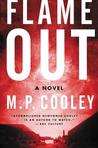 Flame Out by M.P. Cooley
My rating: 3 of 5 stars
After Cooley’s excellent debut novel Ice Shear I was looking forward to a long series of mysteries with excellent writing. Sadly, this is not to be. Flame Out is a major drop in quality. The author’s gift for description is still on display, and barely nudges the overall rating into 3-star territory, but the plot is way too convoluted and implausible. There are so many characters with confusing family relationships that I lost track of who was connected to whom and how early on. The last 100 pages or so were more like a homework assignment than a pleasure. I suggest starting a spreadsheet and a genealogical chart when you begin this one.
The author’s lack of actual law enforcement knowledge was all too evident in this book. I found it telling that the acknowledgments in Ice Shear included two police officers by name, but there were none in this book other than “all the people that lent their expertise in law enforcement.” I wouldn’t want my name associated as police advisor on this one, either.
Both books have a recurring FBI character who is supposed to be the SAC of Albany Division. As an FBI agent retiree I found Cooley’s lack of FBI knowledge in Ice Shear slightly distracting, but in Flame Out, it’s positively ludicrous. In both books this SAC is trying to recruit June, the lead character and a former agent, to come back into the FBI. He rides around with her on interviews and other mundane police investigation. Neither one of these things would ever happen with an SAC. He’s both too high up and too low down for either task. SAC Albany is a mid-management position about equal to the colonel of an army base. You won’t find him cleaning the latrines and doing KP (below his pay grade) nor would he be the one to appoint the first openly gay Muslim to pilot Air Force One (above his pay grade). Allowing a resigned agent back in has never been done and would take FBI Director approval, and then only if that person had very unique (i.e., only person in the country) skills that were badly needed. There wasn’t even any FBI jurisdiction in this case, at least not at the point the SAC became involved. His whole presence is a puzzling and pointless irritation. I thought he might turn out to be a love interest, but that hasn’t happened either. C’est la vie.
October 8, 2015
Anagram on the News
McCARTHY AND RYAN OUT AS SPEAKER = NARY A RED STATER CHUMP CAN SAY O.K.
October 6, 2015
Laws of Nature
Any sufficiently advanced technology is indistinguishable from magic.
Arthur C. Clarke
Any sufficiently advanced incompetence is indistinguishable from malice.
Vernon Schryver