
Larissa Reinhart's Blog, page 241
June 5, 2012
ExPat Yakitori to Feature in MyCityCuisine.org
 Hey y'all! It seems our Ohanami (cherry blossom viewing) Yakitori post caught the attention called Mycitycuisine.org
 "a wiki project providing travelers withEat it abroad and make it back home. Pretty cool, huh? So I'm linking that original spring post here, but including the recipe below. Yakitori (grilled chicken skewers) are also great for summer grilling!
information on local cuisine in cities around the world."
Cherry Blossom Viewing Yakitori
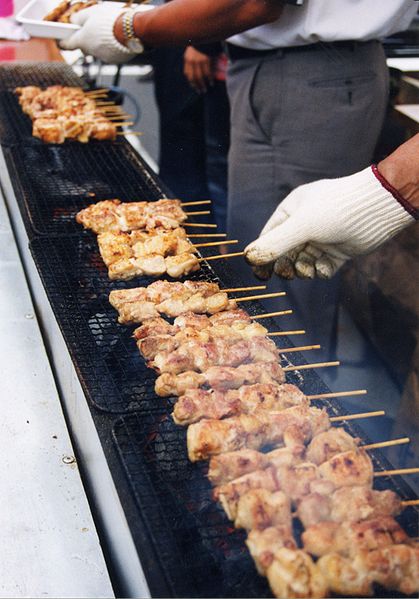
Basic Yakitori: grilled (yaki) chiciken (tori)
Chicken thigh (about 3 lbs), skinned and boned
2 bundles of green onion (white part only), if you like onion
1/3 c mirin (sweet rice wine for cooking, you can substitute cooking sherry)
2 T soy sauce
1/2 t minced fresh ginger (we use ginger paste, works nicely)
1 clove minced or pressed garlic
bamboo skewers soaked in water (so they don't burn)
Cut chicken into about 1 inch pieces, making certain the pieces are roughly the same size. If you're using onion, cut them into 1 1/4 inch lengths. The chicken will shrink.
Mix the marinade and soak the chicken. Some recipes will have you thread the chicken on the skewers and brush the marinade on while it's cooking. You can do it either way. Marinating is easier and you get a stronger sauce flavor. You know how I feel. It's your kitchen. Whatever.
Skewer the chicken alternating with the green onion if you're using the onion.
Grill the skewered chicken on a grill or broiler. Cook, turning once, until meat is no longer pink inside.
Aspara-Bacon and Tomato-Bacon
Rinse the vegetables. Wrap a 1/2 piece of bacon around each veg.
For the asparagus use 2 skewers and thread about 4 aspara-bacon horizontally (will look like a ladder).
Use bacon wrapped cherry tomatoes (grape tomatoes are too small, others are too big) and thread them on one skewer.
Grill or broil for about 15 minutes until bacon is crisp.
 Asparabacon from Isekaya Ginji restaurant


May 29, 2012
Goodreads Book Giveaway
 I'm taking a break from expat thoughts to let you know about a contest I'm doing on Goodreads. If you're headed to the beach, pool, or your living room couch this summer, enter to win one of 10 ARCs (Advanced Reader Copy) of my mystery PORTRAIT OF A DEAD GUY. It won't be out until August 28, but if you're lucky you can win a free book before its release!
The contest is May 23 through June 20 and ten lucky winners will get a signed ARC. If you're not familiar with Goodreads, it's a website for readers and writers to connect. You can share reviews, join bookclubs and chat with authors and other readers, but Goodreads is also a great resource for looking up books. Because I'm anal about books, I love to track what I'm reading and what I've read. I can also keep up with new books from authors I like. Feel free to friend me on Goodreads!
Here's the Goodreads contest entry link:
.goodreadsGiveawayWidget { color: #555; font-family: georgia, serif; font-weight: normal; text-align: left; font-size: 14px; font-style: normal; background: white; } .goodreadsGiveawayWidget img { padding: 0 !important; margin: 0 !important; } .goodreadsGiveawayWidget a { padding: 0 !important; margin: 0; color: #660; text-decoration: none; } .goodreadsGiveawayWidget a:visted { color: #660; text-decoration: none; } .goodreadsGiveawayWidget a:hover { color: #660; text-decoration: underline !important; } .goodreadsGiveawayWidget p { margin: 0 0 .5em !important; padding: 0; } .goodreadsGiveawayWidgetEnterLink { display: block; width: 150px; margin: 10px auto 0 !important; padding: 0px 5px !important; text-align: center; line-height: 1.8em; color: #222; font-size: 14px; font-weight: bold; border: 1px solid #6A6454; -moz-border-radius: 5px; -webkit-border-radius: 5px; font-family:arial,verdana,helvetica,sans-serif; background-image:url(http://www.goodreads.com/images/layou... background-repeat: repeat-x; background-color:#BBB596; outline: 0; white-space: nowrap; } .goodreadsGiveawayWidgetEnterLink:hover { background-image:url(http://www.goodreads.com/images/layou... color: black; text-decoration: none; cursor: pointer; }
Goodreads Book Giveaway
Portrait of a Dead Guy by Larissa Reinhart Giveaway ends June 20, 2012. See the giveaway details at Goodreads. Enter to win
Good luck! I hope you win!
Has anyone read some good expat related books that they'd like to share for a summer reading list? I'd love to share a list for a post.

Below is a blurb about PORTRAIT:
PORTRAIT OF A DEAD GUY (Henery Press, Aug 2012)
2012 Finalist in the Daphne du Maurier Award for Excellence in Mystery/Suspense
In Halo, Georgia, folks know Cherry Tucker as big in mouth, small in stature, and able to sketch a portrait faster than buckshot rips from a ten gauge -- but commissions are scarce. So when the well-heeled Branson family wants to memorialize their murdered son in a coffin portrait, Cherry scrambles to win their patronage from her small town rival.
As the clock ticks toward the deadline, Cherry faces more trouble than just a controversial subject. Between ex-boyfriends, her flaky family, an illegal gambling ring, and outwitting a killer on a spree, Cherry finds herself painted into a corner she'll be lucky to survive.
[image error]

May 22, 2012
Okonomiyaki Japanese Pancake Reprise
This week is a reprise of a fun festival food that's popular in Japan in the summer: Okonomiyaki. The pancake that isn't a pancake.
The quickest way to wax nostalgic is through the stomach.
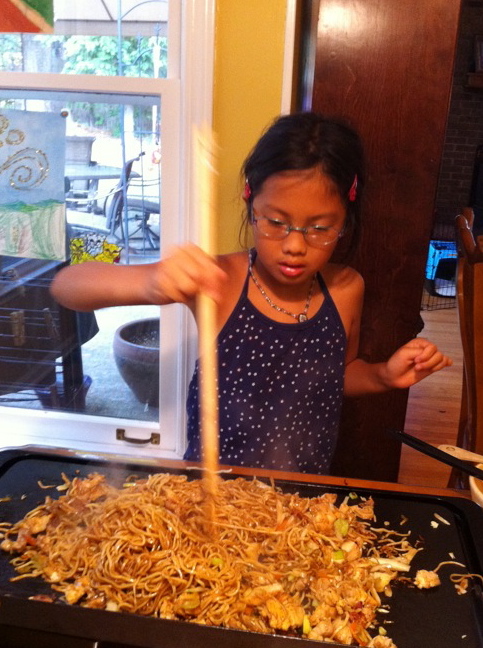 Yakisoba--stir fried noodles sometimes put in HiroshimayakiAt least for us. Which is why we started cooking Japanese food. We continue to cook it because most of the home-cooking dishes are simple, affordable and delicious. And fun. Grilling or cooking your own food at a restaurant is popular in Japan. Our kids especially loved these restaurants. One of their favorite things to cook was okonomiyaki, which translates as "cook how you like." It looks like a giant pancake, but the flavors are savory not sweet. And like all good Japanese food, it tastes great with beer.
 Okonomiyaki covered with
(top to bottom):
Katsuobushi flakes,
mayo,
Aonori (seaweed),
and okonomiyaki sauce.
Don't let the toppings scare you away!
Remember cook how you like!As you can decipher from the translation, you can cook okonomiyaki with a variety of ingredients and differences in cooking technique. There is regional pride in different styles of okonomiyaki. Our friend from Hiroshima swears by Hiroshimayaki style and voluntarily cooked it at our house for our edification. Tokyo and Osaka have their own variations in cooking.
Bento.com has a great okonomiyaki page with a sample menu of all the different ingredients. All okonomiyaki begins with a pancake-like batter with cabbage in it. You can take in many different directions from there.
I stole this recipe from a wonderful site called Okonomiyaki World. Check them out for okonomiyaki information. You can also buy ingredients on this site like the flour, sauce, and Japanese mayonnaise. Good to know for all you expat returnees who miss your food and have no Asian grocer close to home.
When we make okonomiyaki at home, we use the recipe on the flour bag (DH can read Japanese). As for ingredients, we wing it. We are partial to bacon and corn, lots of sauce, and Kewpie mayo. Sometimes we toss in whatever we've got leftover in the fridge. But you know, it's okonomiyaki. Use whatever you want.
*You'll find this recipe also on the recipe page at this site.*
SIMPLE OKONOMIYAKI (thanks to Okonomiyaki World):
 One popular brand of
okonomiyaki flourBatter:
1 cup Okonomiyaki flour (found at most Asian food stores)
or all-purpose flour (you can get fancy and add potato or yam starch to make it stickier, but regular flour will work)
2/3 cup water
Whisk flour and water together until smooth in the largest bowl you've got.
To batter stir in (but don't overmix):
2 eggs
4 cups of shredded cabbage
Other stuff you can mix in:
thinly sliced green onions (about 2 stalks)
pickled ginger (found in Asian stores)
raw shrimp in 1/2" chunks or very small shrimp
Or other foods of similar size, (check bento.com for Japanese menu choices)
You could use cooked chicken (cut into 1/2" chunks), veggies (partially cooked for thicker veg), other seafoods and meat.
(IMHO cheese is delicious in okonomiyaki even though we were skeptical before trying it at our favorite okonomiyaki joint in Japan. Kind of a cabbagey grilled cheese.)
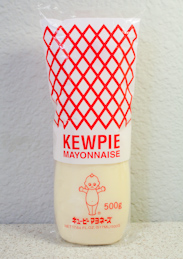 The ever popular
Kewpie Mayo
Stuff to put on the pancake while cooking:
Bacon, about 6 strips cut into 3" pieces
Traditional toppings after it's cooked (best in this order):
*Sauce
Kewpie or other Japanese Mayonnaise
(This kind of food is one of the reasons why Japanese mayo comes in a squirt bottle. It's a topper, not a sandwich condiment).
Aonori (seaweed flakes)
Katsuobushi (dried bonito flakes)
 A variety of
okonomiyaki sauce.*Once again, the toppings are your choice but it's not the same without the sauce. You can buy okonomiyaki sauce or make it.
Sauce:
3 TB ketchup
1 TB Worcestershire sauce
1 ts Soy Sauce
The technique:
Oil a griddle to about 400F (200C) and pour about 1/2 the batter into a pancake shape or all batter into 2 shapes if you've got the room.
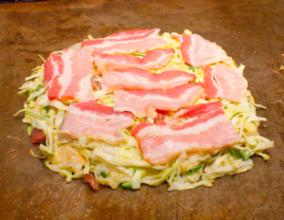 Flatten the pancake with a spatula to about 3/4" and about 12" wide.
Add bacon pieces to cover the top of each pancake. You can also brush on some sauce now, if you like it saucy.
After about 3 minutes, flip the pancake (bacon side down) and cook for another 4 minutes. It's tricky to flip! Don't sweat the mess.
Brush with sauce and flip pancake again (bacon side up) and cook for another 3 minutes or until firm and well browned.

Remove to plate and drizzle with okonomiyaki sauce. Make lovely patterns with your squirty mayo. Sprinkle with Aonori and Katusobushi (or not).
Eat it hot! It's not a reheat type of food.
Okay, it's not super healthy unless you skip the sauce, mayo, bacon, etc. But dagnabbit, it is delicious. And pretty fun!
What festival foods were popular in your host country

May 15, 2012
Salad Days: Literally & Figuratively (with Asian Dressing)
I'm experiencing an exciting new juncture in my life with my debut novel. A true "Salad Days", as I'm so green and so thrilled by every aspect of the publication journey. In my thrall to editing and writing, cooking (and a bunch of other stuff) has gone by the wayside.
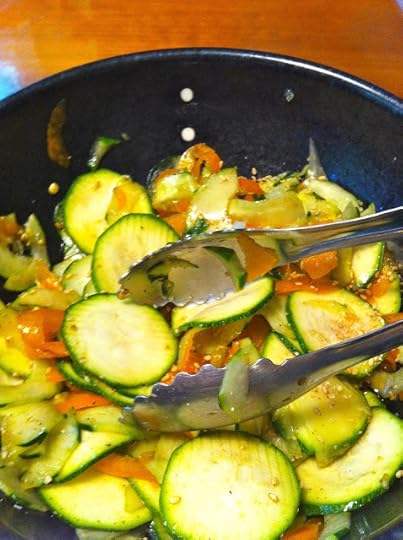 "Asian Summer Salad"
Luckily, it's summer weather here in the south. I don't know why, but cooking feels simpler in the summer. Grilling. Salads. Food held by buns. Maybe it feels easier because I have a partner who takes over outdoor cooking (inside he suffers from Male Refrigerator Blindness), and I can delegate more. I get homemade pulled pork in good weather.
I like good weather.
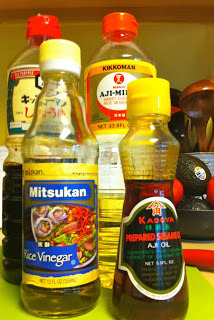 Soy sauce, mirin, rice vinegar
& sesame oilUnless we want the ultimate caveman diet, I do have to scrounge some sides. So, today I have a salad chock full of nature's goodness with an easy Asian dressing. Good anytime, this especially takes advantage of great summer veggies. It helps to have a mandolin or another kind of slicer, but you can cut the veggies thinly with a knife.
There are several Japanese vinegar and soy based dressings that go well with cold meat and veggies. This one is based on a Sanbaizu (3 flavor dressing) but I add a fourth ingredient for extra yumminess: sesame oil.
Asian Summer Salad
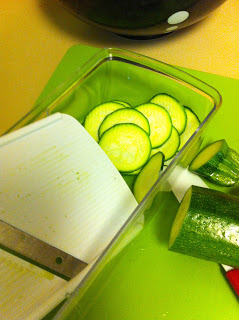 My Japanese slicerCucumber
Carrot
Zucchini
Red Pepper
Red or Sweet Onion
And/Or any other veggie that can be eaten raw and thinly sliced (e.g. yellow squash)
Peel and Seed appropriately. Slice all thinly. Super thin if you can. Like 1/16" or 1/4 centimeter. Mix with Sanbaizu +1 dressing. Sprinkle with toasted sesame seeds.
Sanbaizu Dressing + 1
I love ratio dressings. Mainly because I hate dividing. This is great on all kinds of salads. We love it on cold meat, too.
Rice Vinegar
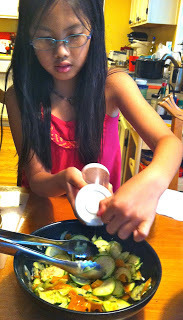 Big sister using
grinder over saladSoy Sauce
Mirin (Japanese sweet cooking wine)
5:5:3 (5 parts vinegar & soy sauce; 1 part mirin)
Combine, bring to a boil, and cool. A quick boil smoothes the vinegar. In a pinch you can make it without boiling.
+ 1 sesame oil (add after boiling to the 5:5:3).
I have found Aji sesame oil (with added chili pepper) gives it a nice kick, but can be too spicy for my kids. Be sure you keep the 5:5:3:1 ratio. Sesame oil is really strong!
 Our sesame seed grinderCheck out this little sesame seed grinder. We got it in Japan, so I don't know if it's available elsewhere. We had a favorite ramen restaurant that had these at the table, and I had to get one.
Instead of sprinkling the sesame seeds over the salad, I use the grinder. It gives the salad an even nuttier flavor.
Hope you enjoy! And here's to summer, where ever you may be.
Do you have any great summer recipes inspired by your host country that you'd like to share? Tell me in the comment section. I'd love to share your recipe on the blog!
And thank you to the Japan Blog Directory (by Nihon Ichiban) for adding The ExPat Returneth to your directory! Arigato Gozaimashita!

 "Asian Summer Salad"
Luckily, it's summer weather here in the south. I don't know why, but cooking feels simpler in the summer. Grilling. Salads. Food held by buns. Maybe it feels easier because I have a partner who takes over outdoor cooking (inside he suffers from Male Refrigerator Blindness), and I can delegate more. I get homemade pulled pork in good weather.
I like good weather.
 Soy sauce, mirin, rice vinegar
 & sesame oilUnless we want the ultimate caveman diet, I do have to scrounge some sides. So, today I have a salad chock full of nature's goodness with an easy Asian dressing. Good anytime, this especially takes advantage of great summer veggies. It helps to have a mandolin or another kind of slicer, but you can cut the veggies thinly with a knife.
There are several Japanese vinegar and soy based dressings that go well with cold meat and veggies. This one is based on a Sanbaizu (3 flavor dressing) but I add a fourth ingredient for extra yumminess: sesame oil.
Asian Summer Salad
 My Japanese slicerCucumber
Carrot
Zucchini
Red Pepper
Red or Sweet Onion
And/Or any other veggie that can be eaten raw and thinly sliced (e.g. yellow squash)
Peel and Seed appropriately. Slice all thinly. Super thin if you can. Like 1/16" or 1/4 centimeter. Mix with Sanbaizu +1 dressing. Sprinkle with toasted sesame seeds.
Sanbaizu Dressing + 1
I love ratio dressings. Mainly because I hate dividing. This is great on all kinds of salads. We love it on cold meat, too.
Rice Vinegar
 Big sister using
grinder over saladSoy Sauce
Mirin (Japanese sweet cooking wine)
5:5:3 (5 parts vinegar & soy sauce; 1 part mirin)
Combine, bring to a boil, and cool. A quick boil smoothes the vinegar. In a pinch you can make it without boiling.
+ 1 sesame oil (add after boiling to the 5:5:3).
I have found Aji sesame oil (with added chili pepper) gives it a nice kick, but can be too spicy for my kids. Be sure you keep the 5:5:3:1 ratio. Sesame oil is really strong!
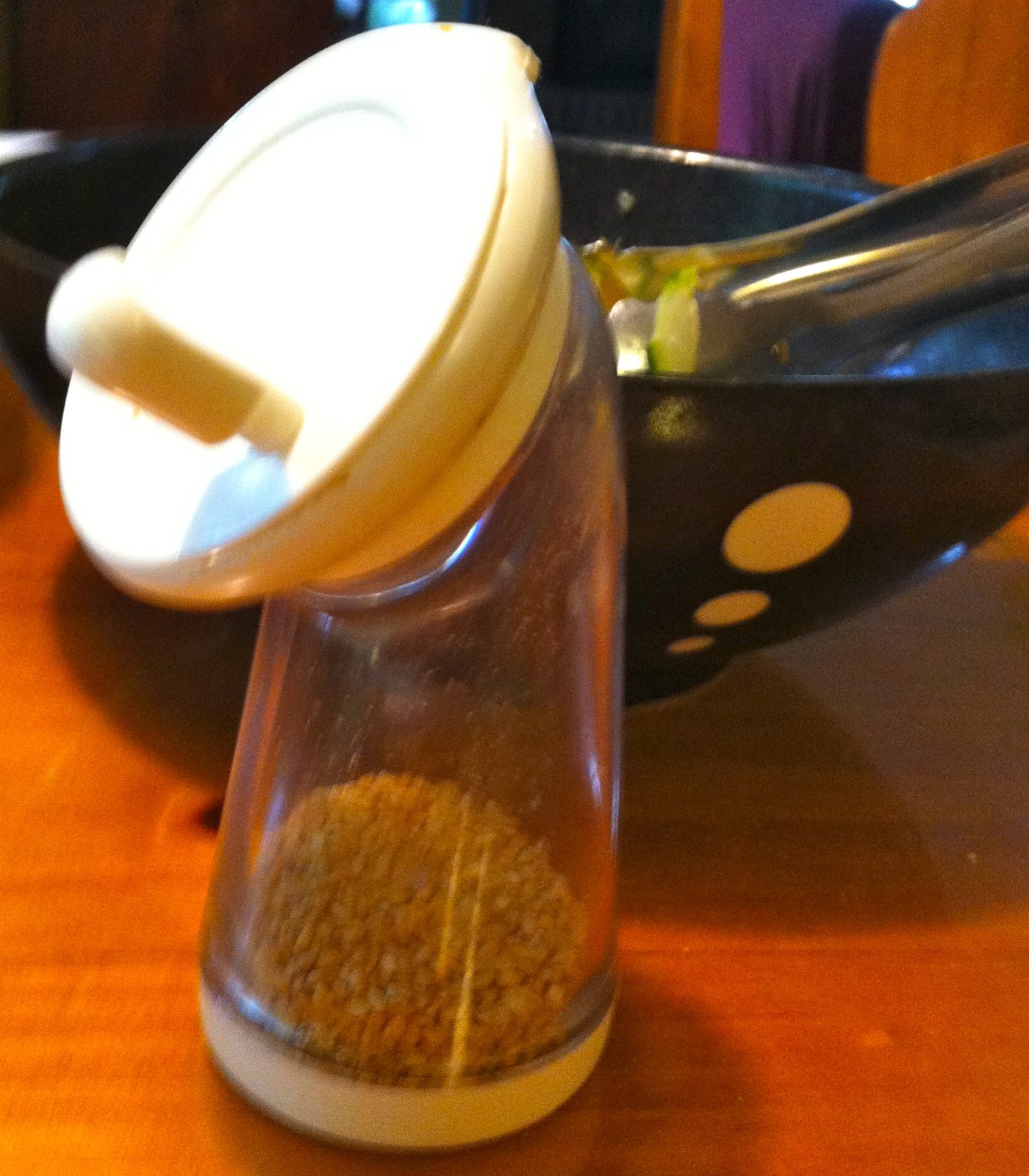 Our sesame seed grinderCheck out this little sesame seed grinder. We got it in Japan, so I don't know if it's available elsewhere. We had a favorite ramen restaurant that had these at the table, and I had to get one.
Instead of sprinkling the sesame seeds over the salad, I use the grinder. It gives the salad an even nuttier flavor.
Hope you enjoy! And here's to summer, where ever you may be.
Do you have any great summer recipes inspired by your host country that you'd like to share? Tell me in the comment section. I'd love to share your recipe on the blog!
And thank you to the Japan Blog Directory (by Nihon Ichiban) for adding The ExPat Returneth to your directory! Arigato Gozaimashita!
May 8, 2012
Versatile Blogger Award
 The Expat Returneth has been nominated for the Versatile Blogger Award! I'm so grateful to Sabrina Garie, one of my Triberr mates and a returned expat, for the nomination. She blogs at SabrinaGarie.com. Definitely check her out and thanks Sabrina!
As part of the rules, I have to list 7 things about myself and nominate 15 other bloggers. Since this is an expat blog, I'm going to keep those 7 things expat related and maybe you'll find some similarities in your experiences. The blogs I have chosen are ones I read so you'll have a mix of food blogs and writer blogs.
1. Egypt was my first international experience and I think my second time flying. I went in college as part of a independent study class. Halfway through the ten day trip, Iraq invaded Kuwait (the start of the Gulf War). Our tour had taken us up the Nile as far as Aswan and on our return to Cairo by boat we started seeing more and more soldiers standing in front of sandbag barricades with semi-automatic weapons. In the days before internet and satellite TV, we had no idea what had happened. Our hotel in Cairo was overrun by Kuwaiti businessmen who couldn't return home. I had to lock myself in my room. That's as close to war as I ever want to get.
2. I was almost bitten by a monkey in Thailand. My husband and I were trekking across the island to catch a boat back to the mainland. How on earth I didn't notice a monkey chained to the side of the road, is one of life's mysteries. My legs had continued the treck while my brain did a "THERE'S A MONKEY ON MY ARM TRYING TO BITE ME!" Luckily the nasty thing was jerked off my arm when it reached the end of its chain just before the teeth clamped on my skin. To this day I don't mix with monkeys.
3. I have eaten raw whale meat and it's pretty delicious. I've also had cow anus (cooked) and it's pretty much what you think it would taste like (really, really rubbery). BTW, we didn't know we had ordered cow anus and the cook had a really good laugh.
4. We let our daughters (at the time age 1 & 3) try wine in France. They didn't like it. Well, one didn't.
5. My favorite Japanese food is the kind you find in cheap bars or diners. The same is pretty much true all over the rest of the world.
6. My children were born in China and my youngest came from a province known for extremely spicy food. I'd walk in a restaurant and my nose would start running (I learned Bu la!, no spice, real fast). When she was a baby she would eat jalapeños with milk. Today she's got a great palette but refuses to eat anything spicy.
7. I don't cook Japanese food because I'm a foodie. I didn't learn to cook until forced to (in Japan) and now I find it easier cooking than other kinds of food. It's fast, the prep is easy, and the ingredients are usually cheap. Plus we miss eating out in Japan, so there's the nostalgia factor. And we just like it. If you have 5 key ingredients in your cupboard -- soy sauce, mirin, cooking sake, vinegar, and sugar -- you can make most dishes. Add rice or noodles.
The Fifteen Blogs:
1. The Displaced Nation An expat and travel friendly site that shares stories, food, information, all kinds of things that have to do with the nomadic way of life.
2. Bento.com A Japanese restaurant advice guide but a great source to learn all kinds of things about Japanese food.
3. JustHungry.com An awesome Japanese food blog by an expat Japanese.
4. TastyKitchen.com Another Japanese food blog (are you detecting a trend?).
5. Shizuokagourmet.com Yet another Japanese food blog, this time by an expat living on the island of Shizuoka. The blogger comments on recipes, restaurants, and travel in Japan.
6. Jennifer Tanner: Romance and Other Legal Stimulants Jennifer lives in California and blogs about everything from food, to writing, to travel. You never know what you'll get, but it's always entertaining. She's also a romance writer.
7. ChickSwagger This hilarious blog written by Misty Dietz and Josie is meant to enlighten women and also teach us to lighten up. Definitely not G rated, but always interesting. They know how to push the envelope without getting crass.
8. CindyCarroll.com Cindy is a suspense author and queen of Social Media. She offers workshops for writers. Her posts are well written and chock full of information.
9. CaseyWyatt.com Casey is a urban fantasy and paranormal romance author. She writes about writing and fun things going on in her family life.
10. KarenDocter.com Karen is another writer who writes romantic suspense and romance. Her blog focuses on other writers and recipes. Fridays are Karen's Killer Fixin's. Great recipes and you can learn about new books!
11. Jill Kemerer Jill writes inspirational romance novels. She blogs about writers, writing, and interesting stuff going on in her life.
12. Brinda Berry Brinda writes Young Adult and has Cairn Terriers both fictional and real (I only have real). Her blog is always interesting, covering everything from writers to books to all kinds of things that strike her fancy.
13. Christine's Words Christine Warner writes romance and blogs three times a week on different topics. She's funny and wise, which is a great pairing!
14. Sherry Isaac Wildflower weaves her beautiful storytelling into her blog. Her writing is inspirational and gorgeously written.
15. Avery Flynn is a romantic suspense writer whose enthusiastic attitude is infectious. Her blog combines books, writing, fun stuff going on in Avery's world, and great author interviews.

May 1, 2012
What Do You Miss? The Expat Goods Exchange
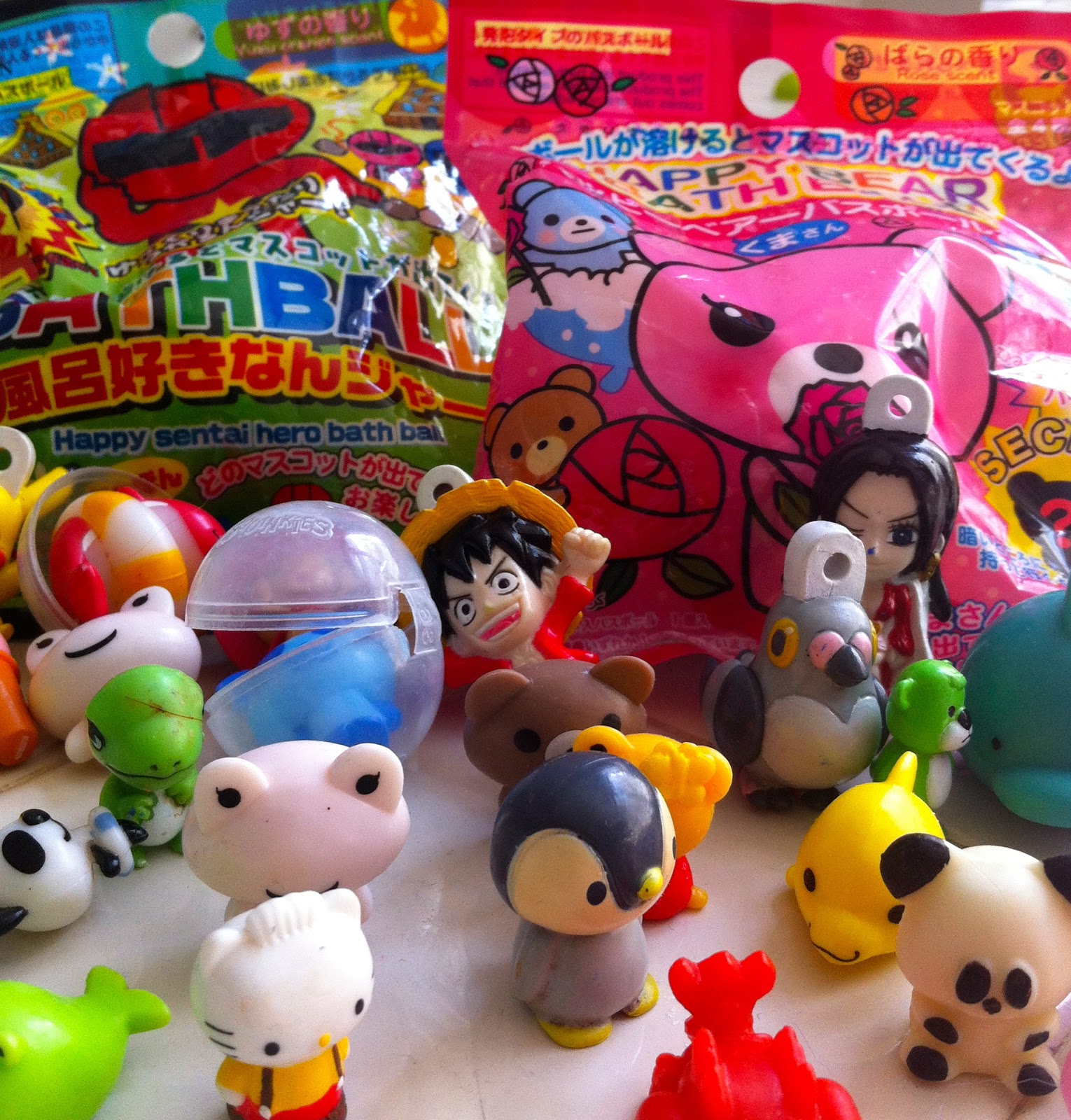 The bath ball toy parade
The past week my husband's colleague from Japan came to the US on business. He and his family used to live nearby, and recently have moved home to Japan. His wife, Saiko, and I use our husbands' business trips as an opportunity to exchange goods. I shop at Target for her and she shops at the Japanese equivalent for me. We also make our husbands shop.
We are doing our part to support both economies. And we've got a nice little foreign exchange going.
 Some of the kid snacks.
 Unfortunately most were devoured before I could take a picture!Before her husband's visit, she sent me a brief message on Facebook: "What do you want from Japan?"
I've noticed my list of needs have dropped dramatically from our initial move back a year and half ago. I can buy some stuff here. We're also learning to live without items we used to love like mochi (sticky rice cakes) and jelly drinks (soda with bits of jelly floating in them).
 A bath ball package.
 Just like cereal: Happy Bear hidden inside
but you have to take a bath to get him!I always ask for fizzy bath balls that have toy surprises inside. My kids adore them; they still love the Japanese bath culture. I wish I could find the bath balls in the US. They're a brilliant idea for kids' baths, especially if you've got a child with an abhorrence for water.
The other item she always sends are fun kid snacks and osembe, rice crackers, for the adults.
 Yummy rice crackers
Thanks Saiko and Taro for the goods exchange!
What items do you miss the most from your host country? Do you have a friend that will send you the "can't live without" foods or goods? Most importantly, have you seen bath balls with toys inside in the US? Please share!

April 24, 2012
Nabe: Simmering Japanese Soup for the Spring Chill
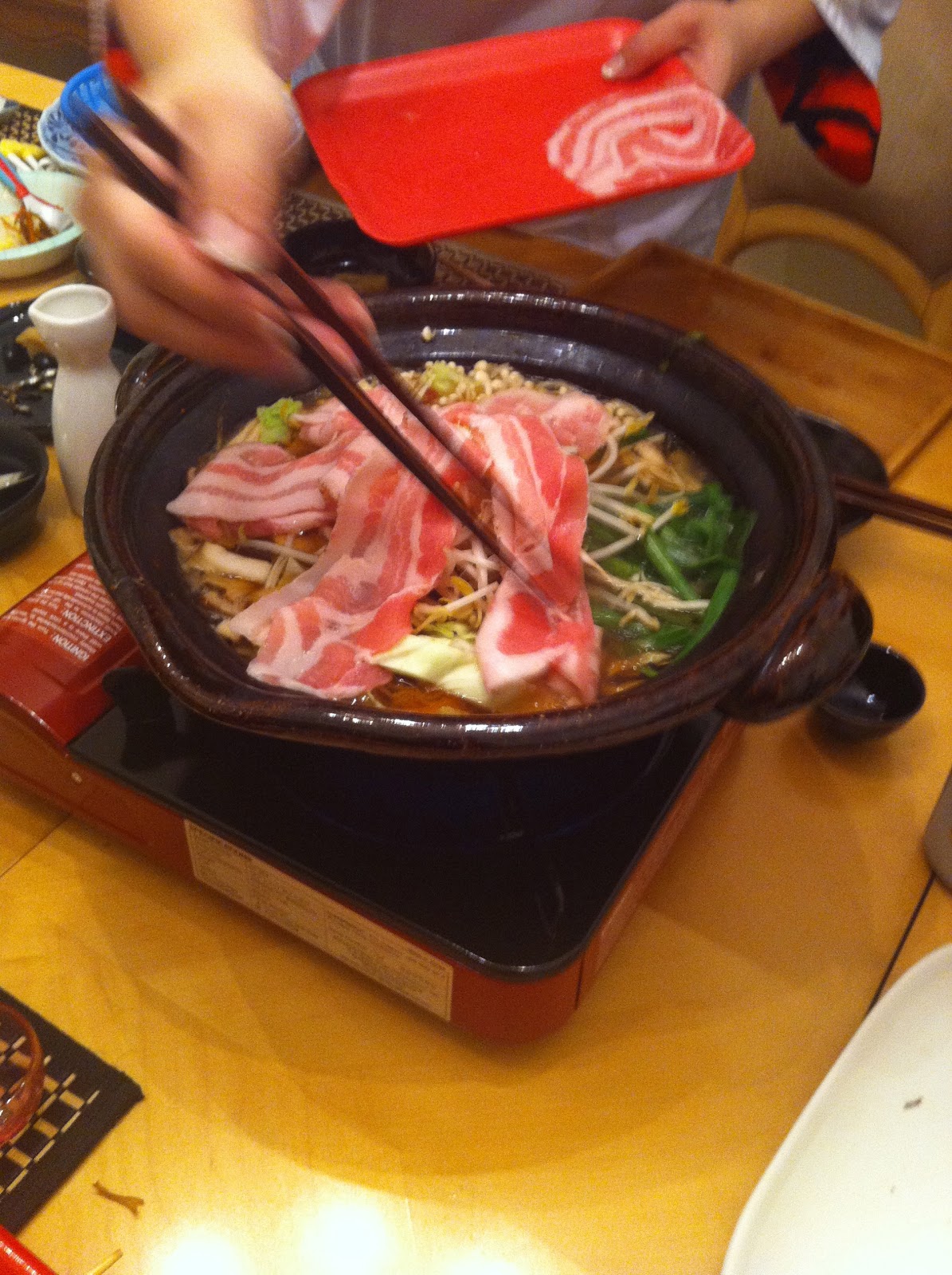
Now that we've had a little cold snap, it reminds us of one of our favorite cold-weather foods, NABE (nah-bay). NABE is a catch-all term for food simmered in a broth in an earthen pot, usually about 12 inches across and 3 inches deep. The best way to do it is NOT on the stovetop, but to use a little single burner and cook it on the table, right in the middle everyone.
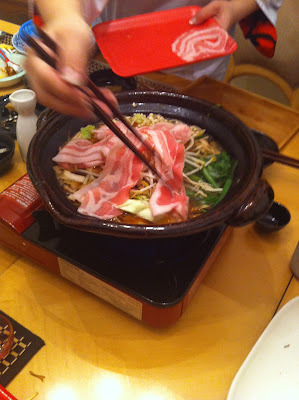 Typical nabe pot with single burner stove
Ingredients for nabe include the following: cabbage, thinly sliced meat (beef or pork), mushrooms (esp. SHIITAKE, but also ENOKI [thin, white stringy things]), green onions, KONYAKU (a vegetable-based gelatin substance, either in cube form or noodles), tofu, spinach, sliced leeks. Really, you can put anything in NABE as long as it tastes good with the other ingredients.
For the broth, you can be really simple and use just water, or add a little DASHI or some other stock flavoring.
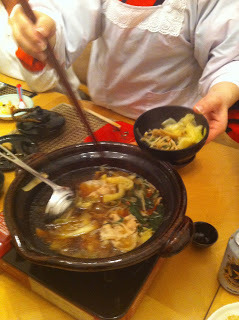
After the ingredients have had some time to cook, pull out small amounts by tongs or chopsticks, place in little bowls that everyone should have, and go to town. We especially like to put a little PONZU (citrus-flavored soy sauce) in our bowls and zest up the broth. I also like adding a bit of TOHGARASHI (Japanese red pepper) to give it a kick.
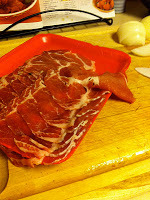 Note: for the meat, we like to get pre-sliced frozen pork from the ever-awesome Buford Highway Farmer's Market in Atlanta, but you can buy pork loin or a cut of sirloin and cut as thin as possible, similar to the kind of sliced meat you might want to add to SHABU SHABU.
And, finally, a great night of NABE ends with a healthy dose of (pre-boiled) RAMEN or UDON noodles in the broth. This both takes advantage of the absorbed flavors of the broth and provides a nice little carbo kick at the end of the meal to ensure proper nutrition and absorption of the beer that was drunk during the eating of the NABE.
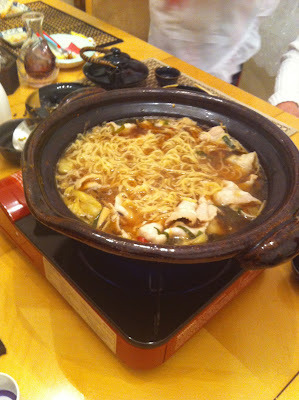 Adding the ramen
NABE: Japan's version of fondue that is as wonderful as it is flexible and delicious (OISHII!!!).
Enjoy.
After getting his M.A. in Japanese Art History, Trey Hoffman eschewed university life for Japanese business. He's worked for four Japanese companies in the U.S.; for a U.S. state office in Japan; and for a Japanese City Hall in the JET program. A father and husband, Trey enjoys teaching his kids about other cultures and introducing them to bizarre foods.
 Typical nabe pot with single burner stove
Ingredients for nabe include the following: cabbage, thinly sliced meat (beef or pork), mushrooms (esp. SHIITAKE, but also ENOKI [thin, white stringy things]), green onions, KONYAKU (a vegetable-based gelatin substance, either in cube form or noodles), tofu, spinach, sliced leeks. Really, you can put anything in NABE as long as it tastes good with the other ingredients.
For the broth, you can be really simple and use just water, or add a little DASHI or some other stock flavoring.
JustHungry.com has a great post on a classic nabe, sukiyaki, including lyrics for the most popular karaoke song of all time: Sukiyaki. For a chicken nabe, check this JustHungry.com post.My point is that it's simple. Put liquid in earthen pot/basin thingy, put on heat, and add ingredients to your liking. Simple, healthy, yummy, and participatory.

After the ingredients have had some time to cook, pull out small amounts by tongs or chopsticks, place in little bowls that everyone should have, and go to town. We especially like to put a little PONZU (citrus-flavored soy sauce) in our bowls and zest up the broth. I also like adding a bit of TOHGARASHI (Japanese red pepper) to give it a kick.
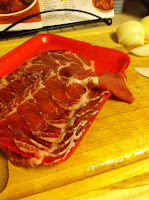 Note: for the meat, we like to get pre-sliced frozen pork from the ever-awesome Buford Highway Farmer's Market in Atlanta, but you can buy pork loin or a cut of sirloin and cut as thin as possible, similar to the kind of sliced meat you might want to add to SHABU SHABU.
Note: partially freeze your meat before slicing thin for easier cutting
And, finally, a great night of NABE ends with a healthy dose of (pre-boiled) RAMEN or UDON noodles in the broth. This both takes advantage of the absorbed flavors of the broth and provides a nice little carbo kick at the end of the meal to ensure proper nutrition and absorption of the beer that was drunk during the eating of the NABE.
 Adding the ramen
NABE: Japan's version of fondue that is as wonderful as it is flexible and delicious (OISHII!!!).
Enjoy.
After getting his M.A. in Japanese Art History, Trey Hoffman eschewed university life for Japanese business. He's worked for four Japanese companies in the U.S.; for a U.S. state office in Japan; and for a Japanese City Hall in the JET program. A father and husband, Trey enjoys teaching his kids about other cultures and introducing them to bizarre foods.
April 16, 2012
Quick & Easy Taco Rice -- Japan via Okinawa -- Your Family's New Favorite Meal
I was going to write something pithy this week, but I'm not feeling the pithy vibe. I don't feel like cooking, cleaning, or anything house related. I'm almost finished with a first draft of another novel and all I want to do is write (except for my Pinterest and Facebook addictions).
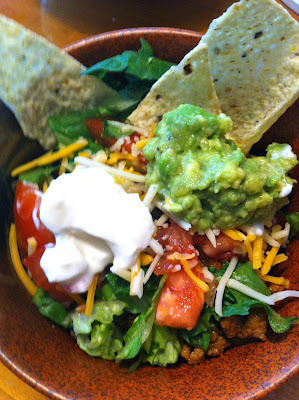 Beautifully simple Taco Rice
So this week we are having Takoraisu: Taco Rice. I could make Taco Rice every week, and my family would happily kiss the rice cooker. We love Taco Rice so, so much. And you will, too, if you like tacos and rice. And since we're talking Japanese food, I don't mean octopus (tako in Japanese).
But tacos and rice, you say? How can it be that easy? It can. It's not even saffron rice. Just plain ol' short-grained rice. But you can do the long grained thing if you're into that.
Taco Rice is brilliant, brilliant, brilliant. The tasty dish hails from Okinawa. Presumably American marines brought it to the islands, combining the beloved American taco with the beloved Okinawan rice. Another reason to love the US troops.
Here's our little Taco Rice story. While living in Japan, our family happened on a restaurant called Yummy. (There are always restaurants named something like Yummy in Japan. It's how Japan works). Yummy served a variety of Okinawan and Hawaiian style food in a sort of fast food type setting.
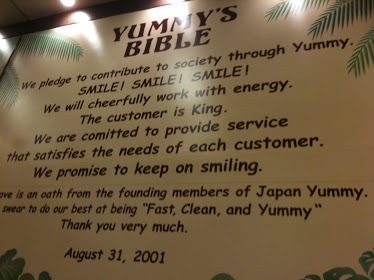 Yummy's Bible
I like their styleEldest daughter scanned the menu hanging on the wall. "I want taco rice."
"Remember, you don't like octopus," I said. "You said it tastes like erasers."
"No, look," she replied, pointing to the picture of a bowl with something like tortilla chips, cheese, and salsa spilling over the rim. (In Japan, there are always pictures or plastic replicas of food at restaurants. Very handy).
We bought her taco rice because we are obliging parents and eldest daughter always eats well.
Of course, we tried her taco rice and loved it. And she will forever remind us that we are indebted to her for introducing taco rice to our family.
Tasty Kitchen also has a post on Takoraisu with beautiful pictures. I took Yummy's idea and made it my way.
Taco Rice
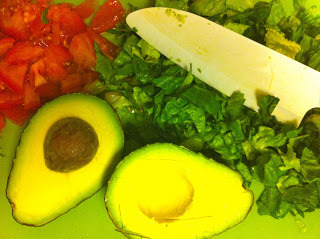
Hot cooked rice
Your favorite taco ingredients minus the tortillas or taco shells
Add your favorite taco ingredients on top of the hot cooked rice
How simple is that?
More specifically:
I usually make 2 go of rice in my rice cooker, which equals about 1 1/2 cups of uncooked rice. Make the amount of rice you normally use for a side dish.
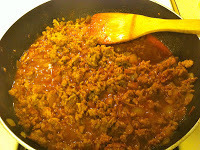 Cooking the meat, onions
and seasoning1 lb. of ground meat (turkey, beef, &/or pork)
chopped onion
taco seasoning
Cook the chopped onion and meat. Drain the fat. Add the taco seasoning as directed on the package.
Your favorite taco condiments (for example):
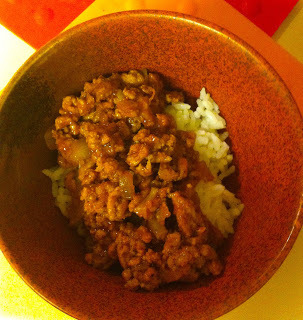 Adding the taco meat on top of the ricesalsa
shredded cheese
sour cream
guacamole
sliced olives
chopped tomato
chopped lettuce
tortilla chips
Put whatever you like on top of the rice. It's not rocket science.
Which is why I love Taco Rice.
Enjoy! Salud! Kampai!

 Beautifully simple Taco Rice
So this week we are having Takoraisu: Taco Rice. I could make Taco Rice every week, and my family would happily kiss the rice cooker. We love Taco Rice so, so much. And you will, too, if you like tacos and rice. And since we're talking Japanese food, I don't mean octopus (tako in Japanese).
But tacos and rice, you say? How can it be that easy? It can. It's not even saffron rice. Just plain ol' short-grained rice. But you can do the long grained thing if you're into that.
Taco Rice is brilliant, brilliant, brilliant. The tasty dish hails from Okinawa. Presumably American marines brought it to the islands, combining the beloved American taco with the beloved Okinawan rice. Another reason to love the US troops.
Here's our little Taco Rice story. While living in Japan, our family happened on a restaurant called Yummy. (There are always restaurants named something like Yummy in Japan. It's how Japan works). Yummy served a variety of Okinawan and Hawaiian style food in a sort of fast food type setting.
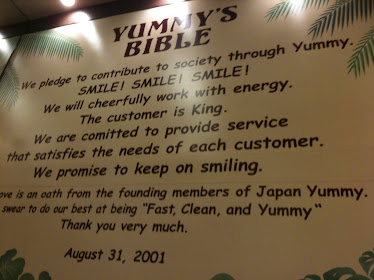 Yummy's Bible
I like their styleEldest daughter scanned the menu hanging on the wall. "I want taco rice."
"Remember, you don't like octopus," I said. "You said it tastes like erasers."
"No, look," she replied, pointing to the picture of a bowl with something like tortilla chips, cheese, and salsa spilling over the rim. (In Japan, there are always pictures or plastic replicas of food at restaurants. Very handy).
We bought her taco rice because we are obliging parents and eldest daughter always eats well.
Of course, we tried her taco rice and loved it. And she will forever remind us that we are indebted to her for introducing taco rice to our family.
Tasty Kitchen also has a post on Takoraisu with beautiful pictures. I took Yummy's idea and made it my way.
Taco Rice

Hot cooked rice
Your favorite taco ingredients minus the tortillas or taco shells
Add your favorite taco ingredients on top of the hot cooked rice
How simple is that?
More specifically:
I usually make 2 go of rice in my rice cooker, which equals about 1 1/2 cups of uncooked rice. Make the amount of rice you normally use for a side dish.
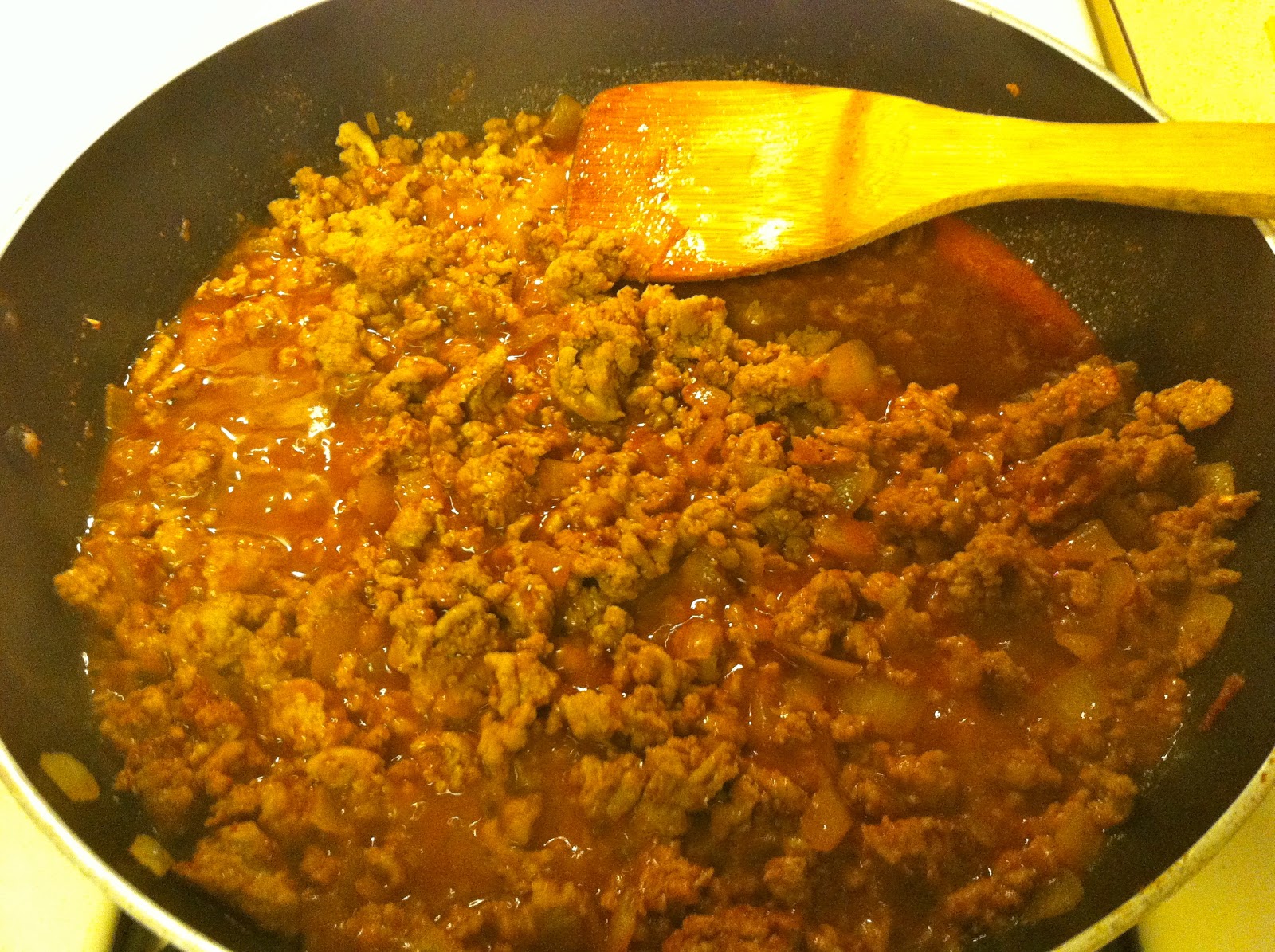 Cooking the meat, onions
 and seasoning1 lb. of ground meat (turkey, beef, &/or pork)
chopped onion
taco seasoning
Cook the chopped onion and meat. Drain the fat. Add the taco seasoning as directed on the package.
Your favorite taco condiments (for example):
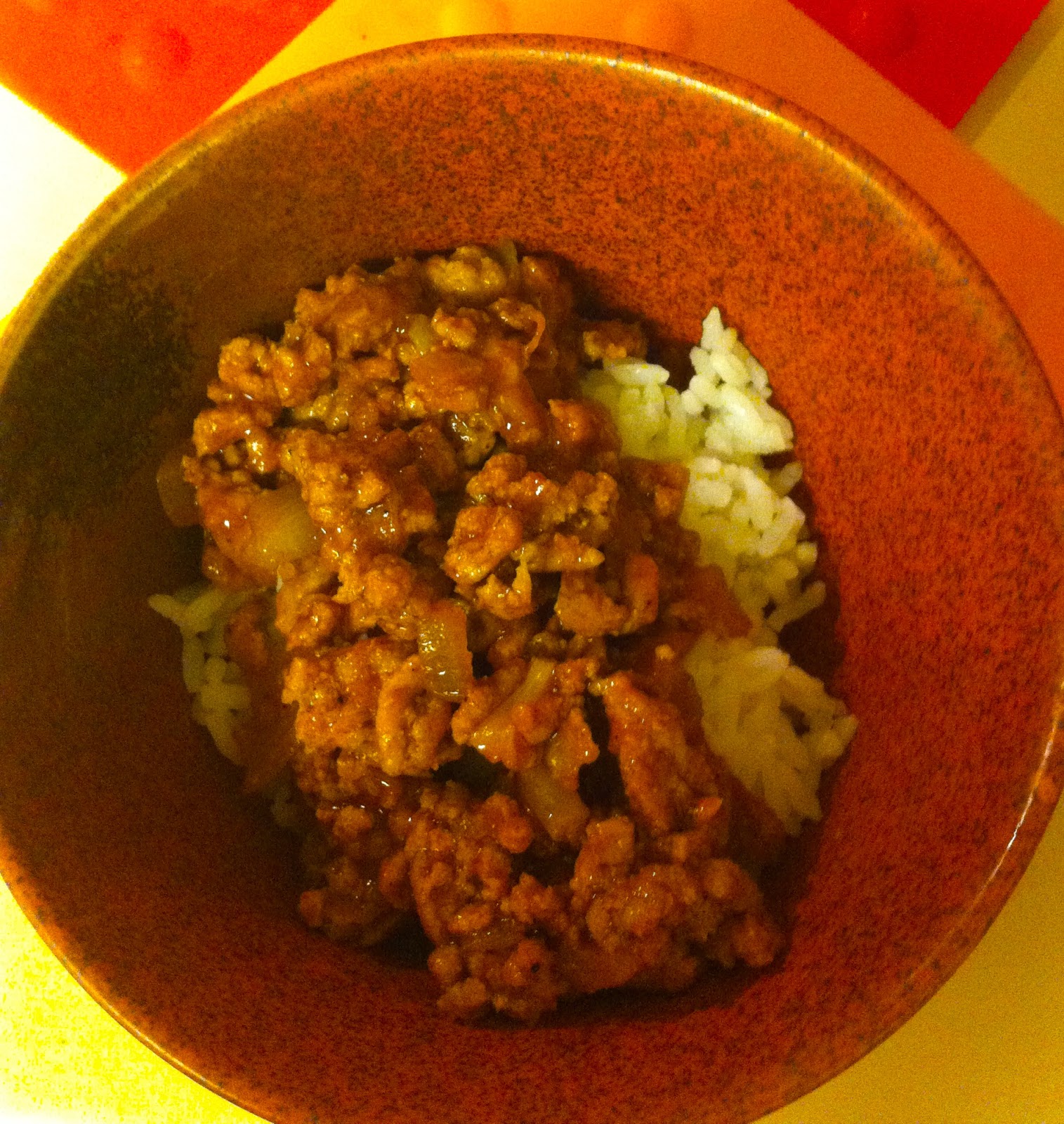 Adding the taco meat on top of the ricesalsa
shredded cheese
sour cream
guacamole
sliced olives
chopped tomato
chopped lettuce
tortilla chips
Put whatever you like on top of the rice. It's not rocket science.
Which is why I love Taco Rice.
Enjoy! Salud! Kampai!
April 10, 2012
Cherry Blossom Viewing Yakitori (Grilled Chicken)
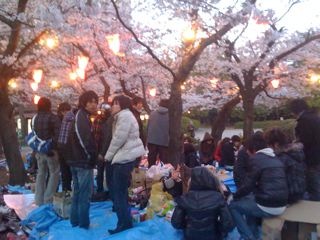 Only hard rain will deter the ohanami partyDown here in Georgia, the cherry blossoms have come and gone, but I know they are nearing their peak in my old stomping grounds in Japan. The weather tends to be iffy, but cherry blossom season is arguably the best time to be in Japan. Not only is the country covered in great swaths of billowy pink and white clouds, it is one great national festival that begins in the south and works it way north with the opening of the blossoms.
  Ise City has 1,000 cherry trees
along the Miyagawa RiverOhanami is huge. You can follow blossom viewing reports on the news. Kyoto and other famous cherry blossom viewing areas become overrun with national and international tourists. Japan has an official travel site for cherry blossom travel at Japan Travel Info that has great information about the season.
There are some amazing national spots to see the explosion of color, but almost every part of Japan has a particularly beautiful area -- usually a park -- with a lovely grouping of cherry trees. And under these trees you will find groups of people sitting and laying on blue tarps, drinking and eating.
It's ohanami or cherry blossom viewing party. And IMHO, the best dang party of the year.
 Note the blue tarps
Families will stroll under the trees and picnic. Night viewing with hanging lanterns or spotlights are popular. But what will catch your attention is the insane revelry of the company party. Office workers, still partially clad in suits, get hammered on warm canned beer, sake, and whatever other liquor someone brings. Earlier in the afternoon, the company sends out their junior workers to stake a claim under a tree with tarps, portable grills, coolers of food, and cases of beer. Workers leave the office at a reasonable hour or even early (unusual for Japan) and head to the spot. Then the real partying begins.
[image error] This is some of the craziness that
happens at Ohanami parties.
Once we had children, my husband and I had to chill on the ohanami parties. We chose more family-friendly picnicking but still brought the tarp, portable grill, cooler of food and beer. Back in the U.S., we live in a city in Georgia that has quite a few cherry trees, including a neighbor's that hangs over our fence in our backyard. Having an ohanami party is still a must, although we tend to eat at our patio table and stare at the tree from afar instead of putting the tarp under the tree.
This year hubby made yakitori (skewered grilled chicken), aspara-bacon (grilled bacon wrapped asparagus) and tomato-bacon (grilled bacon wrapped cherry tomato).
Dudes, you so have to make this. Especially now that we're entering prime grilling season. Shizuoka Gourmet has a nice post on the basics of yakitori. Bento.com has a list of all the different types of yakitori you can get at a true yakitori restaurant. I'm offering a basic recipe of what many Americans might call terikyaki grilled chicken.
Festival yakitori in JapanBasic Yakitori: grilled (yaki) chiciken (tori)Chicken thigh (about 3 lbs), skinned and boned
2 bundles of green onion (white part only), if you like onion
1/3 c mirin (sweet rice wine for cooking, you can substitute cooking sherry)
2 T soy sauce
1/2 t minced fresh ginger (we use ginger paste, works nicely)
1 clove minced or pressed garlic
bamboo skewers soaked in water (so they don't burn)
Cut chicken into about 1 inch pieces, making certain the pieces are roughly the same size. If you're using onion, cut them into 1 1/4 inch lengths. The chicken will shrink.
Mix the marinade and soak the chicken. Some recipes will have you thread the chicken on the skewers and brush the marinade on while it's cooking. You can do it either way. Marinating is easier and you get a stronger sauce flavor. You know how I feel. It's your kitchen. Whatever.
Skewer the chicken alternating with the green onion if you're using the onion.
Grill the skewered chicken on a grill or broiler. Cook, turning once, until meat is no longer pink inside.
Aspara-Bacon and Tomato-Bacon
Rinse the vegetables. Wrap a 1/2 piece of bacon around each veg.
For the asparagus use 2 skewers and thread about 4 aspara-bacon horizontally (will look like a ladder).
Use bacon wrapped cherry tomatoes (grape tomatoes are too small, others are too big) and thread them on one skewer.
Grill or broil for about 15 minutes until bacon is crisp.
Asparabacon from Isekaya Ginji restaurant
March 13, 2012
March Hiatus
Hi everyone,
This month, I'm knee deep in revision mode for my mystery PORTRAIT OF A DEAD GUY (releasing August, 2012), so I'm taking a break from the blog.
However, during March, I will continue to cook more Japanese food and to think about differences in my US. life vs. Japan life.
For example, today's thought while showering:
Why can't I get Pantene shampoo refill bags in the U.S. like I could in Japan? If we're all about recycling, why don't we do the refill bag? So many products were available in refill bags in the rest of the world. You buy the big bottle once and refill it. Simple, space saving, and economic.
Have a wonderful March. Here's to seeing you with the April flowers!
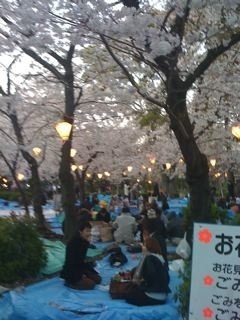
And speaking of April flowers, we're going to attempt Ohanami, cherry blossom viewing, in our yard this year. For those of you who haven't experienced that in Japan, it's all about spreading a tarp, eating, and drinking under a full-bloom cherry tree. We'll discuss in April.
I would love to hear from you! Are you trying any expat recipes? Please share! And who else wants to give Ohanami a go outside of Japan?
Cheers,
Larissa
This month, I'm knee deep in revision mode for my mystery PORTRAIT OF A DEAD GUY (releasing August, 2012), so I'm taking a break from the blog.
However, during March, I will continue to cook more Japanese food and to think about differences in my US. life vs. Japan life.
For example, today's thought while showering:
Why can't I get Pantene shampoo refill bags in the U.S. like I could in Japan? If we're all about recycling, why don't we do the refill bag? So many products were available in refill bags in the rest of the world. You buy the big bottle once and refill it. Simple, space saving, and economic.
Have a wonderful March. Here's to seeing you with the April flowers!
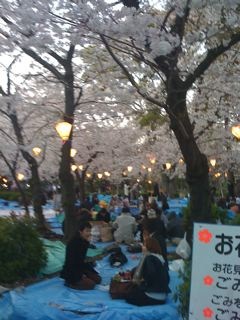
And speaking of April flowers, we're going to attempt Ohanami, cherry blossom viewing, in our yard this year. For those of you who haven't experienced that in Japan, it's all about spreading a tarp, eating, and drinking under a full-bloom cherry tree. We'll discuss in April.
I would love to hear from you! Are you trying any expat recipes? Please share! And who else wants to give Ohanami a go outside of Japan?
Cheers,
Larissa


![[image error]](http://henerypress.com/TopHOME.gif)
![[image error]](https://fbcdn-sphotos-a.akamaihd.net/hphotos-ak-prn1/564064_3335269633313_1615763102_2666304_734455552_n.jpg)