
Larissa Reinhart's Blog, page 240
August 13, 2012
For the Love of a Small Press on Romance University
I'm on Romance University today talking about writing for a small press. Follow the link below to read more.Please give a warm welcome to mystery author Larissa Reinhart! I met Larissa right here on RU last year, and I was lucky enough to share the excitement of her first sale to Henery Press.Larissa takes the podium to explain the benefits of working with a small press.Asking me to talk about the publishing world is a lot like asking the mother of a newborn to talk about raising teenagers. My publishing experience is still wonderful and amazing in its infant stage. I am not yet jaded by my book’s sarcastic back talk and it doesn’t yet ignore me to hang with its friends.So I begin with that qualification. I am still in love with publishing, and IMHO it is due to the small press (Henery Press) with whom I am working. I’ve heard small press horror stories. I’ve also heard plenty of large press horror stories. I can only speak of which I know. So I asked some other authors to contribute their opinions on working with small presses as well. Read more at: http://romanceuniversity.org/


August 8, 2012
Another Goodreads Giveaway of PORTRAIT OF A DEAD GUY!
Some book news:
I'm doing my last Goodreads Giveway of 10 ARCs of PORTRAIT OF A DEAD GUY from now until August 21. See below to enter the giveaway.
[image error]
PORTRAIT recently received a 5/5 star review from Examiner.com! We're counting down the days to the August 28 launch with a blog tour.
Some highlights of the tour: Today, August 8, begins the tour at Kristi Belcamino's blog. An interview on Thursday, August 23, at the Mysteristas. A day in the life of Cherry Tucker at Notes From Me. Writer Julia Buckley's interview on August 28. An interview on the Waterworld Mermaids on August 29. And Get Lost in a Story on August 31.
I'll also be at a book signing on August 28 from 7-9 pm at Johnny's Pizza in Peachtree City and at the Decatur Book Festival on September 1, speaking & signing from 10 a.m. Hope you can make it!
Folks know Cherry Tucker as big in mouth, small in stature, and able to sketch a portrait faster than buckshot rips from a ten gauge, but commissions are scarce. So when the Branson family wants a coffin portrait of their dead son, Cherry scrambles to win their patronage and faces more trouble than just a controversial subject. Between ex-boyfriends, her flaky family, an illegal gambling ring, and outwitting a killer on a spree, Cherry finds herself painted into a corner she'll be luck to survive.
Goodreads Book Giveaway Portrait of a Dead Guy by Larissa Reinhart Giveaway ends August 21, 2012.
See the giveaway details at Goodreads. Enter to win
I'm doing my last Goodreads Giveway of 10 ARCs of PORTRAIT OF A DEAD GUY from now until August 21. See below to enter the giveaway.
[image error]
PORTRAIT recently received a 5/5 star review from Examiner.com! We're counting down the days to the August 28 launch with a blog tour.
Some highlights of the tour: Today, August 8, begins the tour at Kristi Belcamino's blog. An interview on Thursday, August 23, at the Mysteristas. A day in the life of Cherry Tucker at Notes From Me. Writer Julia Buckley's interview on August 28. An interview on the Waterworld Mermaids on August 29. And Get Lost in a Story on August 31.
I'll also be at a book signing on August 28 from 7-9 pm at Johnny's Pizza in Peachtree City and at the Decatur Book Festival on September 1, speaking & signing from 10 a.m. Hope you can make it!
Folks know Cherry Tucker as big in mouth, small in stature, and able to sketch a portrait faster than buckshot rips from a ten gauge, but commissions are scarce. So when the Branson family wants a coffin portrait of their dead son, Cherry scrambles to win their patronage and faces more trouble than just a controversial subject. Between ex-boyfriends, her flaky family, an illegal gambling ring, and outwitting a killer on a spree, Cherry finds herself painted into a corner she'll be luck to survive.
Goodreads Book Giveaway
Portrait of a Dead Guy by Larissa Reinhart Giveaway ends August 21, 2012. See the giveaway details at Goodreads. Enter to win
August 1, 2012
Japanese Summer Festivals: Obon and Grilled Corn
In Japan not a month goes by without a festival happening somewhere. This is likely true in any country of ancient origins. However, August is the true festival month because of the celebration of Obon. One of the few periods when vacations are taken from work, mid-August is the time for returning to your hometown and paying respect to your deceased ancestors (or taking a holiday to Hawaii if you are so inclined). Cemetery spots are cleaned. Lanterns are lit to guide the spirits home. Special gift boxes of household products are sent to family.
[image error]
My favorite part of Obon is Bon Odori, the Obon dance. Neighborhoods celebrate Obon with a community dance. In the evening, lanterns surround a tall stage where folk music is played by a band or by elderly women djing from a boom box. The crowd, following prescribed steps specific to each song, revolves around the stage. The simple steps reflect local history in their movements. Men, women, and children wear yukata, cotton kimono. Anyone can join in the dance. It's magical to walk along a street, catch the sound of bon music drifting from a nearby temple, and suddenly happen upon bon odori. And the dancing is actually fun because it's easy to learn.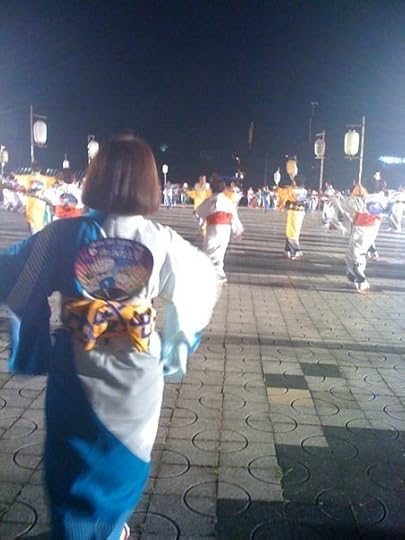 Gigantic multi-neighborhood bon odori
(taken at Nagoya Port Festival)
With any festival, food booths can be found. Candy apples, choco-banana (frozen, chocolate dipped bananas), fried chicken bites, and french fries are normal fare. So are takoyaki (octopus chunks cooked in a ball of pancake-like batter), yakitori (grilled chicken kabobs), yakisoba (panfried noodles with meat and vegetables), dango (grilled pounded rice balls), and yakitomorokoshi (grilled corn).
Our favorites? Yakitori. Yakitomorokoshi. Yakisoba. Dango. And chocobanana, of course. I wrote about Yakitori, the grilled chicken kabobs, in April. Today I'll cover the grilled corn, yakitomorokoshi. And we'll look at yakisoba and dango in the following weeks. These are awesome summer foods that can be eaten year round. All are simple, delicious, and fairly healthy.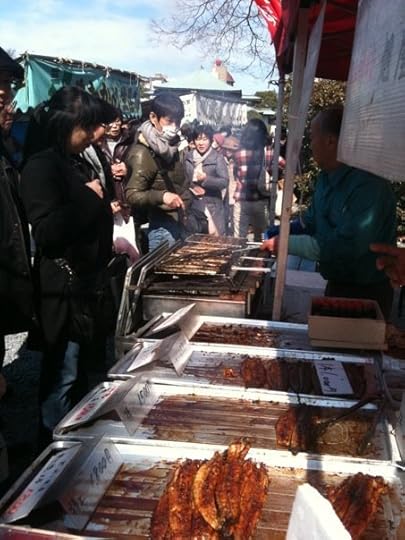 Various grilled stuff at a festival
Yakitomorokoshi (Grilled corn with soy sauce and mirin).
whole corn in husks soy saucemirin
Prepare a 1:1 ratio of soy sauce and mirin, depending on the amount of corn you are grilling. About 1/4 cup of the mixture per 4 ears of corn. Boil the soy sauce and mirin until it reduces to half the amount and becomes syrupy. You can do this while grilling the corn.
You might have your own way of grilling corn, so feel free to adjust to your grilling method. The crux of this recipe takes places at the end of grilling. The recommended method is to keep the husks during grilling. Soak them for about 20 minutes to keep from burning. Grill the corn at about 400 degrees (200 c) for 20 minutes, turning them every five minutes. Let them cool, then shuck the husks.
Replace the shucked corn on the grill and brush with the soy/mirin mixture. Allow for grill marks, but remember to turn so the corn doesn't char. Grill until corn is hot and cooked through.
The soy/miring syrup is also a great mixture for yakionigiri, grilled rice balls, and to brush on other grilled vegetables.
Any festival foods that you like to cook at home? Please share! Thanks to Julie Johnston for reminding me of this yummy recipe!

My favorite part of Obon is Bon Odori, the Obon dance. Neighborhoods celebrate Obon with a community dance. In the evening, lanterns surround a tall stage where folk music is played by a band or by elderly women djing from a boom box. The crowd, following prescribed steps specific to each song, revolves around the stage. The simple steps reflect local history in their movements. Men, women, and children wear yukata, cotton kimono. Anyone can join in the dance. It's magical to walk along a street, catch the sound of bon music drifting from a nearby temple, and suddenly happen upon bon odori. And the dancing is actually fun because it's easy to learn.
 Gigantic multi-neighborhood bon odori
 (taken at Nagoya Port Festival)
With any festival, food booths can be found. Candy apples, choco-banana (frozen, chocolate dipped bananas), fried chicken bites, and french fries are normal fare. So are takoyaki (octopus chunks cooked in a ball of pancake-like batter), yakitori (grilled chicken kabobs), yakisoba (panfried noodles with meat and vegetables), dango (grilled pounded rice balls), and yakitomorokoshi (grilled corn).
Our favorites? Yakitori. Yakitomorokoshi. Yakisoba. Dango. And chocobanana, of course. I wrote about Yakitori, the grilled chicken kabobs, in April. Today I'll cover the grilled corn, yakitomorokoshi. And we'll look at yakisoba and dango in the following weeks. These are awesome summer foods that can be eaten year round. All are simple, delicious, and fairly healthy.
 Various grilled stuff at a festival
Yakitomorokoshi (Grilled corn with soy sauce and mirin).
whole corn in husks soy saucemirin
Prepare a 1:1 ratio of soy sauce and mirin, depending on the amount of corn you are grilling. About 1/4 cup of the mixture per 4 ears of corn. Boil the soy sauce and mirin until it reduces to half the amount and becomes syrupy. You can do this while grilling the corn.
You might have your own way of grilling corn, so feel free to adjust to your grilling method. The crux of this recipe takes places at the end of grilling. The recommended method is to keep the husks during grilling. Soak them for about 20 minutes to keep from burning. Grill the corn at about 400 degrees (200 c) for 20 minutes, turning them every five minutes. Let them cool, then shuck the husks.
Replace the shucked corn on the grill and brush with the soy/mirin mixture. Allow for grill marks, but remember to turn so the corn doesn't char. Grill until corn is hot and cooked through.
The soy/miring syrup is also a great mixture for yakionigiri, grilled rice balls, and to brush on other grilled vegetables.
Any festival foods that you like to cook at home? Please share! Thanks to Julie Johnston for reminding me of this yummy recipe!
July 25, 2012
TACO RICE REPRISE
Hey expats! We've got some family stuff going on this week, so I'm going to give you an oldie but a goodie. This recipe stemmed a lot of comments on and off the blog. It's great any time of the year, but when you're short on time, inclination, or imagination here's a great dinner option: Taco Rice!
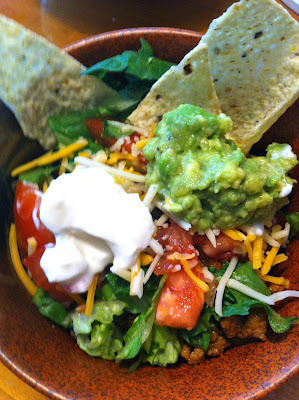 Beautifully simple Taco Rice
So this week we are having Takoraisu: Taco Rice. I could make Taco Rice every week, and my family would happily kiss the rice cooker. We love Taco Rice so, so much. And you will, too, if you like tacos and rice. And since we're talking Japanese food, I don't mean octopus (tako in Japanese).
But tacos and rice, you say? How can it be that easy? It can. It's not even saffron rice. Just plain ol' short-grained rice. But you can do the long grained thing if you're into that.
Taco Rice is brilliant, brilliant, brilliant. The tasty dish hails from Okinawa. Presumably American marines brought it to the islands, combining the beloved American taco with the beloved Okinawan rice. Another reason to love the US troops.
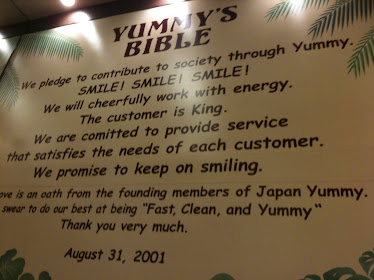
Here's our little Taco Rice story. While living in Japan, our family happened on a restaurant called Yummy. (There are always restaurants named something like Yummy in Japan. It's how Japan works). Yummy served a variety of Okinawan and Hawaiian style food in a sort of fast food type setting.
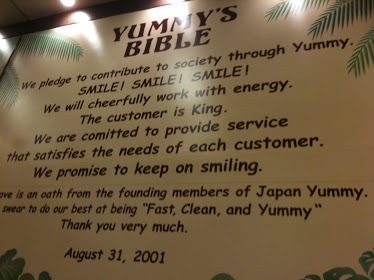 Yummy's Bible
I like their styleEldest daughter scanned the menu hanging on the wall. "I want taco rice."
"Remember, you don't like octopus," I said. "You said it tastes like erasers."
"No, look," she replied, pointing to the picture of a bowl with something like tortilla chips, cheese, and salsa spilling over the rim. (In Japan, there are always pictures or plastic replicas of food at restaurants. Very handy).
We bought her taco rice because we are obliging parents and eldest daughter always eats well.
Of course, we tried her taco rice and loved it. And she will forever remind us that we are indebted to her for introducing taco rice to our family.
Tasty Kitchen also has a post on Takoraisu with beautiful pictures. I took Yummy's idea and made it my way.
Taco Rice
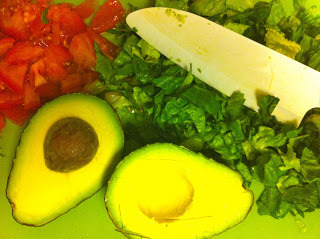
Hot cooked rice
Your favorite taco ingredients minus the tortillas or taco shells
Add your favorite taco ingredients on top of the hot cooked rice
How simple is that?
More specifically:
I usually make 2 go of rice in my rice cooker, which equals about 1 1/2 cups of uncooked rice. Make the amount of rice you normally use for a side dish.
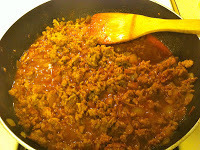 Cooking the meat, onions
and seasoning1 lb. of ground meat (turkey, beef, &/or pork)
chopped onion
taco seasoning
Cook the chopped onion and meat. Drain the fat. Add the taco seasoning as directed on the package.
Your favorite taco condiments (for example):
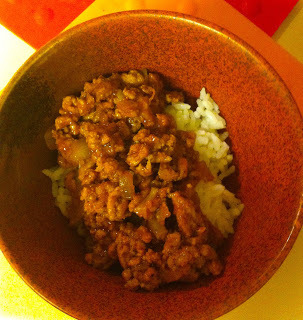 Adding the taco meat on top of the ricesalsa
shredded cheese
sour cream
guacamole
sliced olives
chopped tomato
chopped lettuce
tortilla chips
Put whatever you like on top of the rice. It's not rocket science.
Which is why I love Taco Rice.
Enjoy! Salud! Kampai!

 Beautifully simple Taco Rice
So this week we are having Takoraisu: Taco Rice. I could make Taco Rice every week, and my family would happily kiss the rice cooker. We love Taco Rice so, so much. And you will, too, if you like tacos and rice. And since we're talking Japanese food, I don't mean octopus (tako in Japanese).
But tacos and rice, you say? How can it be that easy? It can. It's not even saffron rice. Just plain ol' short-grained rice. But you can do the long grained thing if you're into that.
Taco Rice is brilliant, brilliant, brilliant. The tasty dish hails from Okinawa. Presumably American marines brought it to the islands, combining the beloved American taco with the beloved Okinawan rice. Another reason to love the US troops.
Here's our little Taco Rice story. While living in Japan, our family happened on a restaurant called Yummy. (There are always restaurants named something like Yummy in Japan. It's how Japan works). Yummy served a variety of Okinawan and Hawaiian style food in a sort of fast food type setting.
 Yummy's Bible
I like their styleEldest daughter scanned the menu hanging on the wall. "I want taco rice."
"Remember, you don't like octopus," I said. "You said it tastes like erasers."
"No, look," she replied, pointing to the picture of a bowl with something like tortilla chips, cheese, and salsa spilling over the rim. (In Japan, there are always pictures or plastic replicas of food at restaurants. Very handy).
We bought her taco rice because we are obliging parents and eldest daughter always eats well.
Of course, we tried her taco rice and loved it. And she will forever remind us that we are indebted to her for introducing taco rice to our family.
Tasty Kitchen also has a post on Takoraisu with beautiful pictures. I took Yummy's idea and made it my way.
Taco Rice

Hot cooked rice
Your favorite taco ingredients minus the tortillas or taco shells
Add your favorite taco ingredients on top of the hot cooked rice
How simple is that?
More specifically:
I usually make 2 go of rice in my rice cooker, which equals about 1 1/2 cups of uncooked rice. Make the amount of rice you normally use for a side dish.
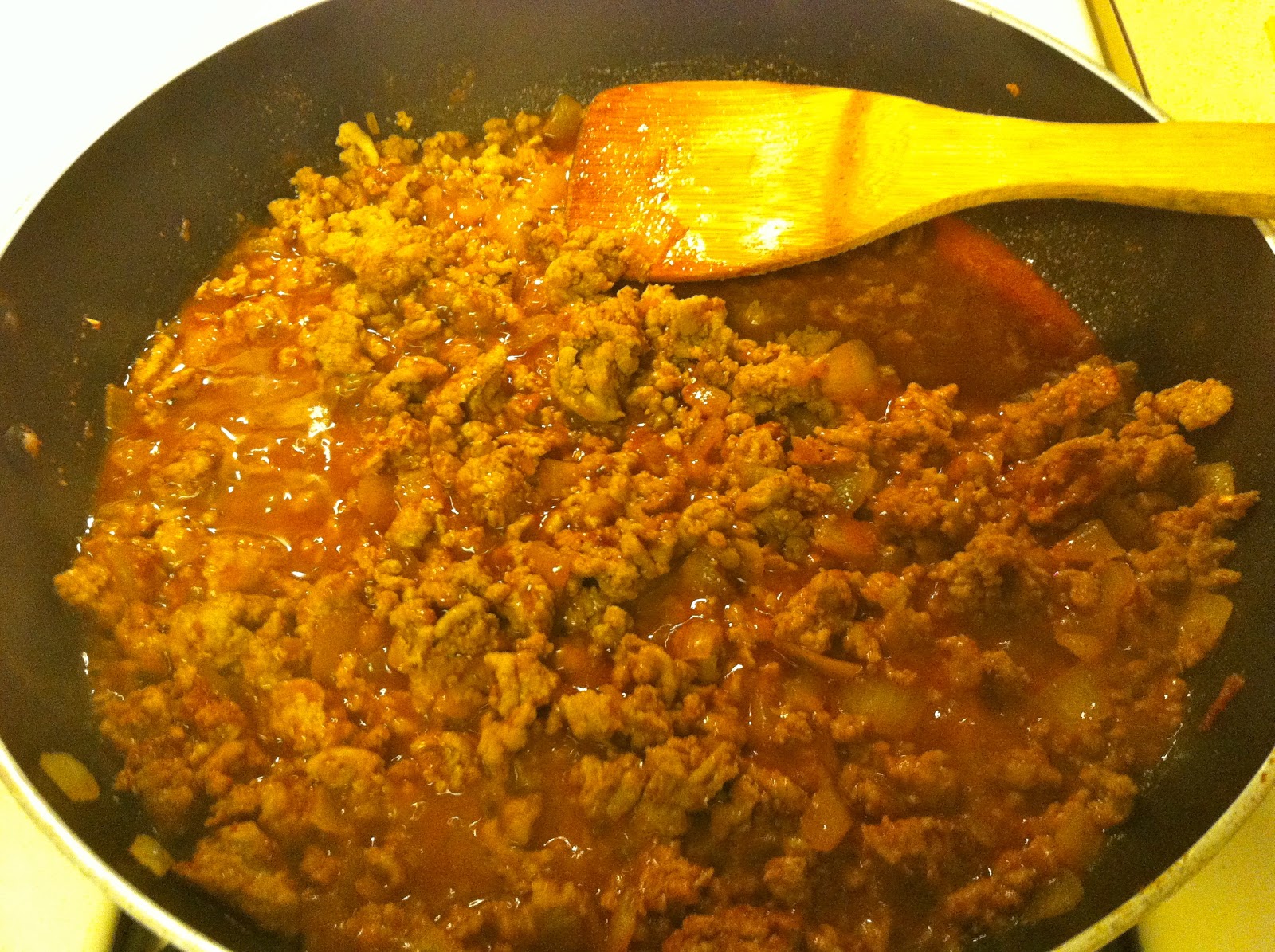 Cooking the meat, onions
and seasoning1 lb. of ground meat (turkey, beef, &/or pork)
chopped onion
taco seasoning
Cook the chopped onion and meat. Drain the fat. Add the taco seasoning as directed on the package.
Your favorite taco condiments (for example):
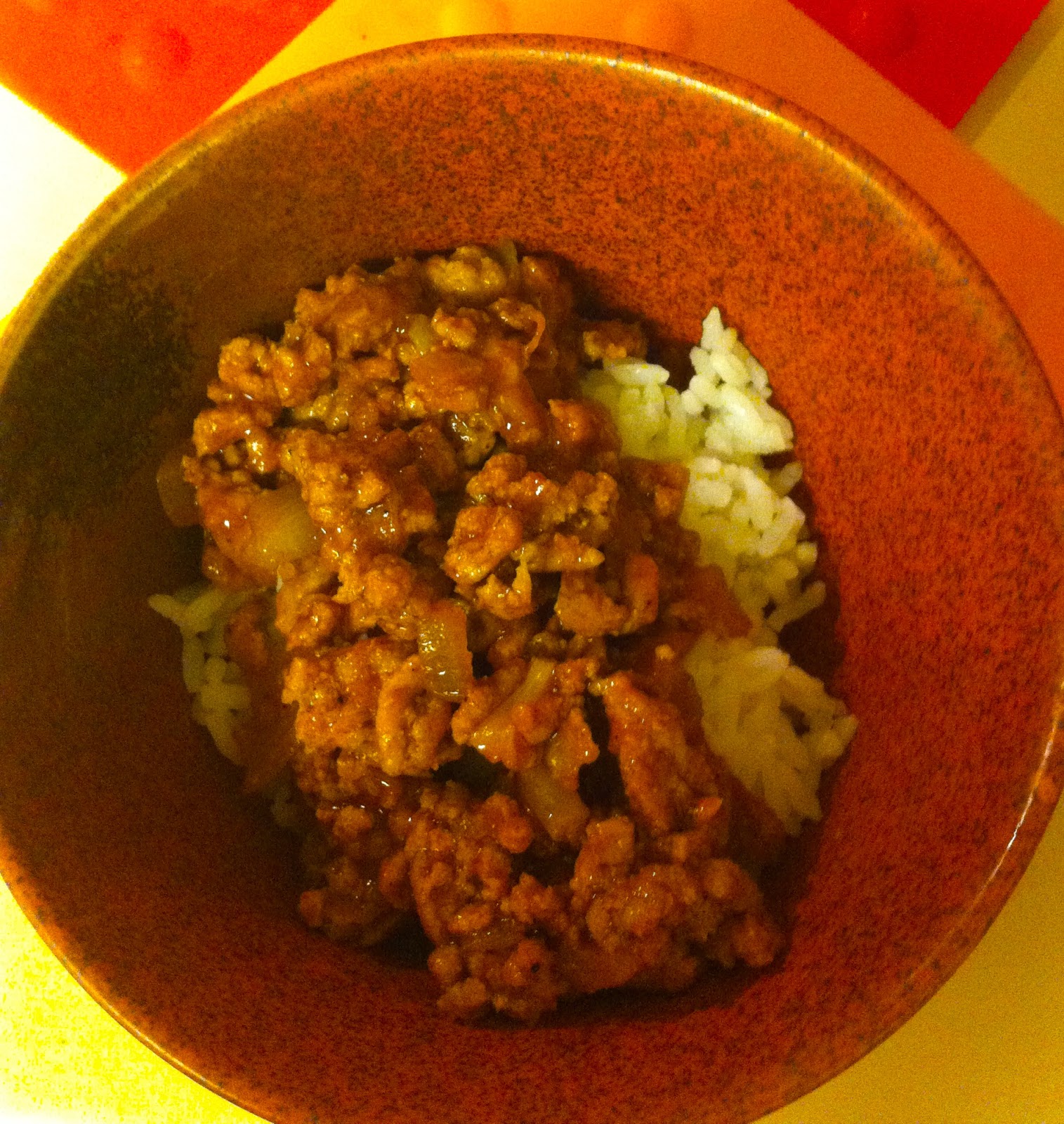 Adding the taco meat on top of the ricesalsa
shredded cheese
sour cream
guacamole
sliced olives
chopped tomato
chopped lettuce
tortilla chips
Put whatever you like on top of the rice. It's not rocket science.
Which is why I love Taco Rice.
Enjoy! Salud! Kampai!
July 16, 2012
LITTLE READ HENS: For Book Lovers Who Love to Chat Books
Hey expats! I wanted to let everyone know about another blog I'm writing with some friends called THE LITTLE READ HENS. We have a site on Facebook at Little Read Hens where we'll host Wednesday chats on book topics. We'll take the discussion back to the Little Read Hen House at our website: littlereadhens.com.
On Tuesdays we'll introduce you to new books and their authors. We'll have an announcement at the Facebook site where you can speak to the author and a link back to our website with more information about the book and author.
I hope you join us, especially if you love books! It should be a lot of fun with lively discussions. The first chat on Wednesday, July 18, will be on The List. What fictional characters would make your hottie list?
Tomorrow, Tuesday July 17, we're hosting Terri L. Austin and her new mystery, DINERS, DIVES & DEAD ENDS. Come meet the author and learn about this hilarious new mystery!


On Tuesdays we'll introduce you to new books and their authors. We'll have an announcement at the Facebook site where you can speak to the author and a link back to our website with more information about the book and author.
I hope you join us, especially if you love books! It should be a lot of fun with lively discussions. The first chat on Wednesday, July 18, will be on The List. What fictional characters would make your hottie list?
Tomorrow, Tuesday July 17, we're hosting Terri L. Austin and her new mystery, DINERS, DIVES & DEAD ENDS. Come meet the author and learn about this hilarious new mystery!
July 10, 2012
When Family Doesn't Want You to Move Abroad
Today at the ExPat Returneth, we have a helpful guest post by Melanie Slaugh for those of you preparing to move far from home. The hardest part of moving overseas is the separation from family and friends. The internet has made this situation easier, but skyping doesn't placate everyone. I think most expats have dealt with this situation, and I thank Melanie for these great tips. [image error]
Tips for Dealing with Family Who Don’t Want You to Move AbroadDeciding to move abroad is an exhilarating feeling. The decision is not one that’s made lightly, and can open up an array of opportunities that you would have never been exposed to otherwise. However experiencing new countries and cultures isn’t something that everyone is on board with, and you can get a lot of flak from family members who are against you moving abroad. While you probably will never be able to fully convince everyone that what you’re doing is right for you, there are some ways you can deal with family who is against you moving abroad.Don’t react negatively to their negativity: By getting defensive you will only fuel their fire and start a war that doesn’t need to be fought. Instead remain calm, disagree with respect, and then move on to a safer topic. If they can’t get under your skin then there’s no basis for continuing the argument.
Let them vent to you: Whether they just want to be heard, are scared for you, or are secretly jealous of the fact that you are able to take such a huge life risk, they likely want to at least tell you their feelings. Is it selfish? Yes. It’s your life and you should be free to make the decisions you want. However it will at least quell some of their misgivings if you hear out what they have to say.
Do your research ahead of time so you are prepared to answer any questions they may have: At some point you’re probably going to be bombarded with questions about the country, its safety, what you’ll do for work, how you’re going to survive, if you’ll be in contact regularly, etc. Do you research ahead of time so that you are able to answer all of these questions knowledgeably. Knowing that you’ve done your homework and aren’t just leaving the country without a plan can help put worried family members at bay.
Avoid voicing any concerns you have to them: While you may want to confide in your family members about any concerns you have about moving abroad, this will only give them fuel to continue to support the idea that you shouldn’t go. Instead talk to supportive friends or contact people you know who have already been through the moving abroad process and voice your concerns to them.
Have family members come visit you: Either before you move or once you actually move abroad, invite skeptical family members to come visit the country with you. Being able to show them the country you are living in can help negative family members put a visual to where you’re going, and see how happy moving abroad makes you. No matter how supportive some people will be about your decision to move abroad, there will always be naysayers who disagree with your decision. However it is ultimately just that: your decision. Don’t let negativity sway you from reaching for your dreams, and deal with any negativity with tact and poise and armed with knowledge. At some point people will either begin to understand why you’re doing it or begin to trust that you know what’s best for you.Author BioMelanie Slaugh is enthusiastic about the growing prospects and opportunities of various industries and writing articles on various consumer goods and services as a freelance writer. She writes extensively for internet service providers and also topics related to internet service providers in my area for presenting the consumers, the information they need to choose the right Internet package for them. She can be reached at slaugh.slaugh907 @ gmail.com.

July 3, 2012
HAPPY 4TH OF JULY
Happy Birthday to the US from the ExPat Returneth!
We'll be back next week. Enjoy your holiday & stay cool!
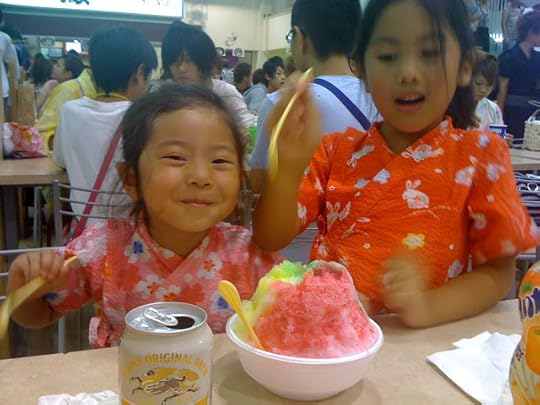

We'll be back next week. Enjoy your holiday & stay cool!

June 25, 2012
Festival Fish
 When we lived in Japan, one of our favorite activities was attending festivals. You could count on candy apples, chocolate bananas, takoyaki (batter dipped octopus balls), yakisoba (stir fried noodles), and beer. The kids loved putting on their yukata (cotton kimono) and trying their hand at the games.
 [image error] Kid Tai floatThe big festivals have some kind of special significance, usually related to Shinto rites. For example, on the Expat header you see the giant fighting Tai (Sea Bream) fish from the Toyohama Tai festival.
But there are also many neighborhood festivals throughout the year, particularly in summer.
 Taiko drumming at a festival
The big festivals are fun. Crowded with tourists from Japan and elsewhere, they usually featured some kind of parade and ritual. Many times the drinking of sake accompanied carrying heavy floats. No motorized trailers decorated with tissue covered chicken wire, these floats are portable shrines. The most famous is the Gion Festival in Kyoto where giant, wooden shrines on wheel, some several stories high, are pulled and pushed through the narrow streets. Crowds scream as the shrines make tight turns and threaten to tip over. Beer and sake flows among crowds packed shoulder-to-shoulder.
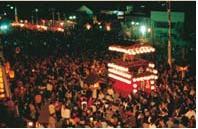 A Gifu festival shrine
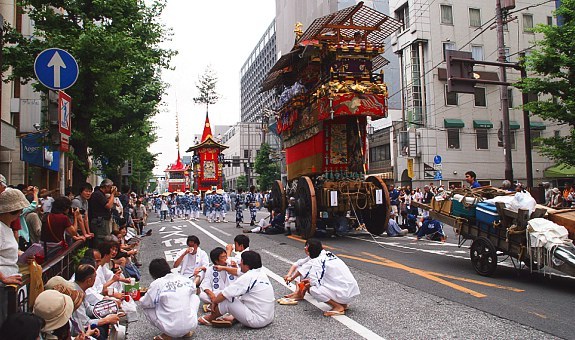 The Gion festival floats in Kyoto
The neighborhood festivals often times have an activity attached. Our local festival had a kind of scavenger hunt where we had to answer questions at different stations for a prize. We won shrimp crackers. The girls were pleased. I was hoping for the big money win: a bag of rice.
[image error] Fish Catch
 The yoyo balloon game
[image error]
Free swords at a neighborhood festival
The yoyo balloon game
[image error]
Free swords at a neighborhood festivalAt a festival, you could always count on finding the particularly unusual or amusing. Twice we saw a man dressed in diaper and panda mask claiming to be Pandaman. The Onigiri man, wearing a rice ball hat, extolled the virtues of rice balls at a nearby neighborhood festival. Sometimes we'd run into a festival. We love the serendipity of walking around a corner and finding ourselves immersed in revelry.
[image error] Onigiri (rice ball) man at a local festival
 A Animecon festival
What kinds of festivals did you attend in your host country? Please share! Anyone attend one of the many naked festivals?
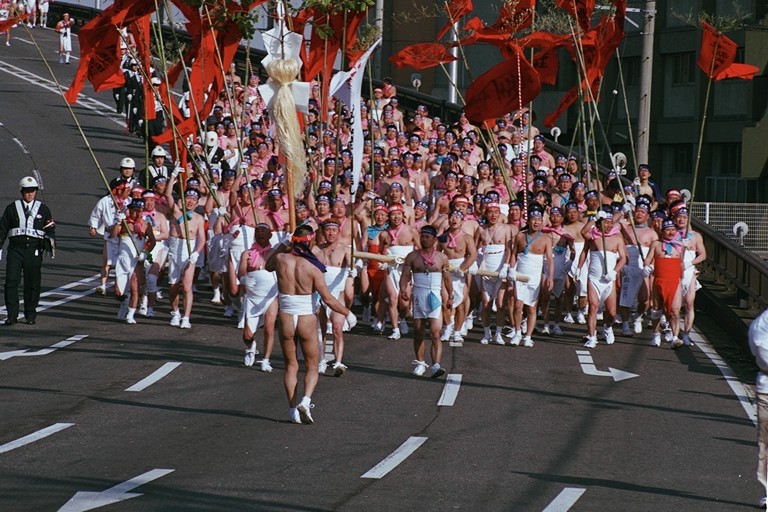 The Konomiya Naked Festival
June 19, 2012
My Cost List for Living In the Most Expensive Cities in the World
Recently a report by Mercer Consulting listed the ten most expensive cities in the world for expats. According to Mercer, that while the global economy is slowing, the cost of living is still rising in many places throughout the world. These benchmarks affect how companies look at compensating their expats living overseas. It also affects workers' decisions to make the move.
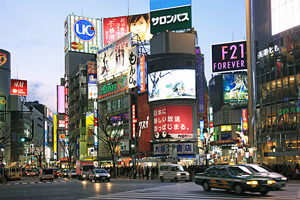
It turns out my husband and I have basically lived in three of the ten most expensive cities in the last twenty years. Japan made the list three times. Tokyo is the most expensive city to live in now (we lived in Yokohama, connected to Tokyo by urban sprawl). Osaka made number three. And our sweet, little Nagoya? Number 10! Woot!
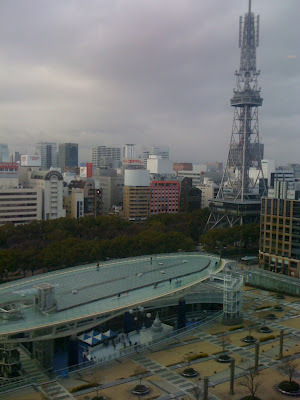 Nagoya; view of Oasis 21According to the article, renting a luxury apartment in Nagoya still costs half the price of the same apartment in Tokyo. Their other parameters -- for example, a fast food meal, an international newspaper, a gallon of gasoline, and a cup of coffee -- are the same price in Tokyo and Osaka. I would agree with this assessment. Food, gas, etc., is going to cost about the same wherever you go in Japan. Renting in Tokyo is ridiculously expensive and prices have been driven up by the Great Tohoku Earthquake last year.
However, looking at some of the prices listed, I'd like to know why it's costing someone $6.38 to buy a cup of coffee in Nagoya. Everyone knows you can get a breakfast set at Komeda for about $3 which includes coffee, toast, and a boiled egg. McDonald's large coffee and sausage McMuffin is $2.10. And what fast food meal cost $8.42? They're not eating at Yoshinoya, that's for sure.
As an expat, you want your company to recognize the cost of living in these cities. Mercer based their rankings on the cost of 200 items. Here are some other prices I'd like to see in the list:
The cost of a single Croc shoe when your child loses one in the gap between the subway platform and the subway. And the cost to your pride when your children and wife cry all the way back to the hotel because of the missing shoe.
The cost of weekly breakfast sets for you and your preschool age child because the preschool opens one hour later than the elementary school and it's too far from your home to drive back and to sit in your car for an hour would drive you completely insane. (See price of Komeda and McDonald's breakfast sets listed above).
The price of trying to make a three year old walk home from a festival so crowded that getting on subways or finding cabs is impossible. The actual price is found at a 7-11 in the form of candy. Lots and lots of candy.
The price of walking your children to an early morning sumo practice at a local temple and their getting to meet a sumo wrestler? Free. That's the kind of experiences that makes putting up with high prices in foreign cities worth it.


It turns out my husband and I have basically lived in three of the ten most expensive cities in the last twenty years. Japan made the list three times. Tokyo is the most expensive city to live in now (we lived in Yokohama, connected to Tokyo by urban sprawl). Osaka made number three. And our sweet, little Nagoya? Number 10! Woot!
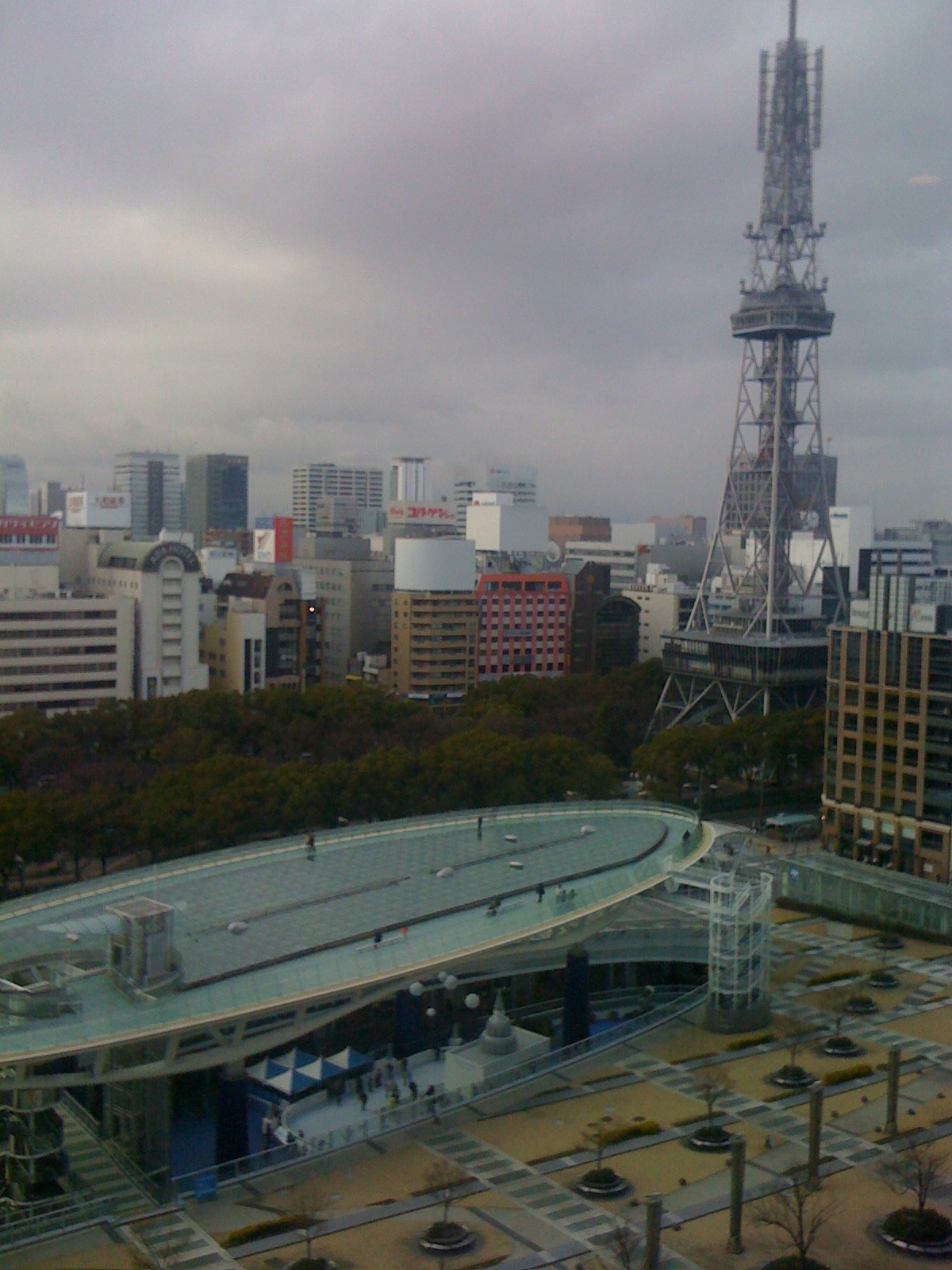 Nagoya; view of Oasis 21According to the article, renting a luxury apartment in Nagoya still costs half the price of the same apartment in Tokyo. Their other parameters -- for example, a fast food meal, an international newspaper, a gallon of gasoline, and a cup of coffee -- are the same price in Tokyo and Osaka. I would agree with this assessment. Food, gas, etc., is going to cost about the same wherever you go in Japan. Renting in Tokyo is ridiculously expensive and prices have been driven up by the Great Tohoku Earthquake last year.
However, looking at some of the prices listed, I'd like to know why it's costing someone $6.38 to buy a cup of coffee in Nagoya. Everyone knows you can get a breakfast set at Komeda for about $3 which includes coffee, toast, and a boiled egg. McDonald's large coffee and sausage McMuffin is $2.10. And what fast food meal cost $8.42? They're not eating at Yoshinoya, that's for sure.
As an expat, you want your company to recognize the cost of living in these cities. Mercer based their rankings on the cost of 200 items. Here are some other prices I'd like to see in the list:
The cost of a single Croc shoe when your child loses one in the gap between the subway platform and the subway. And the cost to your pride when your children and wife cry all the way back to the hotel because of the missing shoe.
The cost of a cab ride to your home from the end subway station when your husband falls asleep on the train to wake up in a deserted station and realizes the trains are done running for the night.

The cost of weekly breakfast sets for you and your preschool age child because the preschool opens one hour later than the elementary school and it's too far from your home to drive back and to sit in your car for an hour would drive you completely insane. (See price of Komeda and McDonald's breakfast sets listed above).
The cost of a new iPhone because you kept one in your backpocket when you helped your child in a squat toilet at a park and then helplessly watched the phone drop down the sewage hole.Where not to keep your iPhone

The price of trying to make a three year old walk home from a festival so crowded that getting on subways or finding cabs is impossible. The actual price is found at a 7-11 in the form of candy. Lots and lots of candy.
The price of walking your children to an early morning sumo practice at a local temple and their getting to meet a sumo wrestler? Free. That's the kind of experiences that makes putting up with high prices in foreign cities worth it.
Meeting a Sumo

June 12, 2012
Zaru Soba: Delightful Cold Summer Noodles
It's the third week of summer vacation and like many moms, I'm enjoying a more relaxed schedule. However, I find lunch a hassle. My children seem to think summer living should include room service with a menu plan. The minions have lived overseas and they know there is more to the palette than PB&J. I have enough trouble coming up with dinner ideas. To me, lunch is a powerbar and an apple. Maybe a cheese-stick and Triscuits if I'm lucky. I like PB&J. The short ones scoff and give me complicated explanations on healthy eating that has been hammered into their brains by the school system.
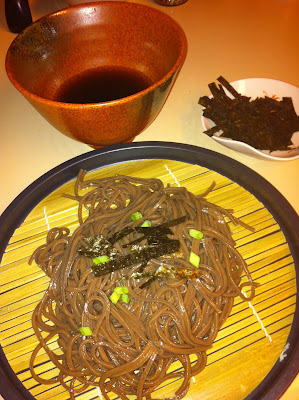 Zaru SobaWe have created nutritional monsters. Mine made worse by their strange non-kid appetites.
So I make them Zaru Soba, cold soba buckwheat noodles, and everyone's happy. It's simple and fast (yay for me) and satisfies the little foodies. Win-win.
In Japan, this is a common summer lunch dish, although you could eat it for dinner, too. Hot soba noodles in a soup is also a common dish and can be accompanied with tempura, mountain vegetables, deep-fried tofu, and other ingredients. We'll save that for cooler weather.
Cold noodles sounded a bit strange to me the first time I tried them (although we do eat noodle salads in the US), but I was immediately hooked. The soy sauce based dipping sauce is tangy and refreshing, the buckwheat taste of the noodles earthy and smooth. Really delicious.
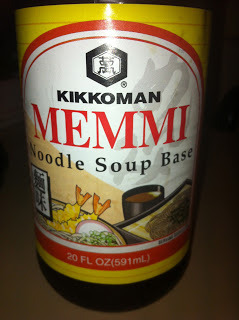 Noodle Soup BaseWhat makes the noodles so simple to make is the sauce. Noodle soup base sauce added to hot or cold water makes many Japanese soups and sauces. This stuff rocks. You can find this soup base at most Asian stores and some large supermarkets. Just mix the base with water. Of course, you can always make the sauce yourself with soy sauce, mirin, sugar, and dashi stock -- but why? If you're into cooking the hard way, here's the recipe from JustHungry.com. JustHungry recipes are yummy, but even she says the simplest way to make these noodles is to buy prepared base.
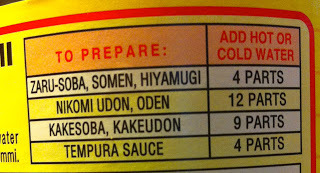 Soup Base proportionsHere's my snapshot from the back of the bottle showing the ease of making all the different sauces/soup bases. As you can see, for Zaru Soba it 4 parts cold water to 1 part soup base.
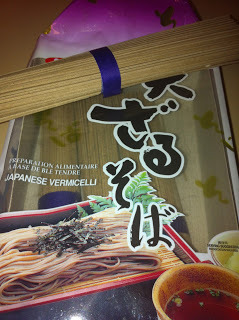 Soba bundle and Soba packageZaru Soba for One
Prepare Zaru Soba sauce the easy way above (1 cup cold water to 1 Tb of soup base) or the hard way (see JustHungry.com).
1 bundle of Soba (buckwheat) Noodles
Boiling Water (no salt, no oil, just water)
Condiments to sprinkle on the noodles
(suggestions to follow)
Soba generally come in packs with the dried noodles tied in bundles. One bundle makes enough for one person, depending on the gusto of the eater.
Bring a pot of water to boiling, add noodles, and boil for 6-7 minutes. Test for doneness. They should be firm but not hard. Rinse hot noodles in cold water (don't plunge in cold water, rinse them and run your hands through them) and allow to drain.
Actually, Zaru Soba is named for the zaru, a bamboo flat basket. It acts to drain the water from the noodles. We bought zaru dishes (at the Japanese version of the dollar store, no less), which are rimmed plates with a bamboo insert.
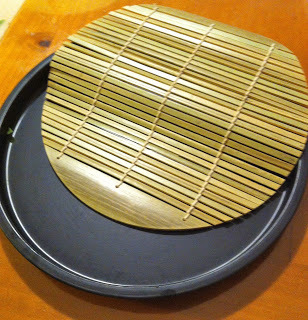
No 100 Yen Store close by? If you have a sushi roller, put it on top of a plate. That was my old standby. Otherwise... so your noodles sit in a small puddle. Life will go on.
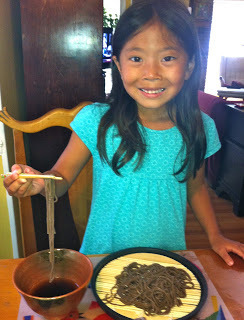 Dipping the noodlesPut about a cup of cold soup/sauce in a small bowl. Dip the noodles as you eat them in the sauce. Add condiments as you like. My girls like nori (roasted seaweed) cut in little slivers (I do this with a scissors) and sprinkled on their noodles. Sliced green onion is delicious. Toasted sesame seeds, wasabi, and grated fresh ginger are also popular. Add these to the soba sauce.
Do you have a favorite summer dish from your host country? Please share!

 Zaru SobaWe have created nutritional monsters. Mine made worse by their strange non-kid appetites.
So I make them Zaru Soba, cold soba buckwheat noodles, and everyone's happy. It's simple and fast (yay for me) and satisfies the little foodies. Win-win.
In Japan, this is a common summer lunch dish, although you could eat it for dinner, too. Hot soba noodles in a soup is also a common dish and can be accompanied with tempura, mountain vegetables, deep-fried tofu, and other ingredients. We'll save that for cooler weather.
Cold noodles sounded a bit strange to me the first time I tried them (although we do eat noodle salads in the US), but I was immediately hooked. The soy sauce based dipping sauce is tangy and refreshing, the buckwheat taste of the noodles earthy and smooth. Really delicious.
 Noodle Soup BaseWhat makes the noodles so simple to make is the sauce. Noodle soup base sauce added to hot or cold water makes many Japanese soups and sauces. This stuff rocks. You can find this soup base at most Asian stores and some large supermarkets. Just mix the base with water. Of course, you can always make the sauce yourself with soy sauce, mirin, sugar, and dashi stock -- but why? If you're into cooking the hard way, here's the recipe from JustHungry.com. JustHungry recipes are yummy, but even she says the simplest way to make these noodles is to buy prepared base.
 Soup Base proportionsHere's my snapshot from the back of the bottle showing the ease of making all the different sauces/soup bases. As you can see, for Zaru Soba it 4 parts cold water to 1 part soup base.
 Soba bundle and Soba packageZaru Soba for One
 Prepare Zaru Soba sauce the easy way above (1 cup cold water to 1 Tb of soup base) or the hard way (see JustHungry.com).
1 bundle of Soba (buckwheat) Noodles
Boiling Water (no salt, no oil, just water)
Condiments to sprinkle on the noodles
(suggestions to follow)
Soba generally come in packs with the dried noodles tied in bundles. One bundle makes enough for one person, depending on the gusto of the eater.
Bring a pot of water to boiling, add noodles, and boil for 6-7 minutes. Test for doneness. They should be firm but not hard. Rinse hot noodles in cold water (don't plunge in cold water, rinse them and run your hands through them) and allow to drain.
Actually, Zaru Soba is named for the zaru, a bamboo flat basket. It acts to drain the water from the noodles. We bought zaru dishes (at the Japanese version of the dollar store, no less), which are rimmed plates with a bamboo insert.

No 100 Yen Store close by? If you have a sushi roller, put it on top of a plate. That was my old standby. Otherwise... so your noodles sit in a small puddle. Life will go on.
 Dipping the noodlesPut about a cup of cold soup/sauce in a small bowl. Dip the noodles as you eat them in the sauce. Add condiments as you like. My girls like nori (roasted seaweed) cut in little slivers (I do this with a scissors) and sprinkled on their noodles. Sliced green onion is delicious. Toasted sesame seeds, wasabi, and grated fresh ginger are also popular. Add these to the soba sauce.
Do you have a favorite summer dish from your host country? Please share!


![[image error]](http://henerypress.com/PORTRAITcover.jpg)
![[image error]](https://sphotos-a.xx.fbcdn.net/hphotos-snc6/6530_1109326811308_3515343_n.jpg)
![[image error]](http://officeimg.vo.msecnd.net/en-us/images/MH900145555.jpg)
![[image error]](https://fbcdn-sphotos-a.akamaihd.net/hphotos-ak-snc7/38015_1400445969105_4799238_n.jpg)
![[image error]](https://fbcdn-sphotos-a.akamaihd.net/hphotos-ak-snc7/60537_1461373932266_4455541_n.jpg)
![[image error]](https://sphotos.xx.fbcdn.net/hphotos-snc6/37596_1400262284513_7687905_n.jpg)
![[image error]](https://fbcdn-sphotos-a.akamaihd.net/hphotos-ak-snc7/38788_1400260124459_3473190_n.jpg)