John A. Heldt's Blog, page 18
May 3, 2016
Two more for the audio files
As a reader for the past couple of years, I have really been a listener. More often than not, I have selected audio books over print and digital books because they are flat out more convenient.
With audio, I can “read” a novel while driving my car or walking the dog or resting my eyes after a long day. I can can consume quality literature at times that work best for me.
Aware that many other readers prefer to do the same, I have sought ways to turn my Kindle novels into audio novels. Thanks to reader Aaron Landon and Podium Publishing, I succeeded in 2014 with the release of The Mine . Thanks to reader Caroline Miller and an unexpected stipend from Amazon's Audiobook Creation Exchange (ACX), I succeeded again, last fall, with the release of The Journey .
I am pleased to report that two more books will soon join their ranks.
Chaz Allen, the producer of Little Known Facts, a nationally syndicated radio program, is about a quarter of the way into September Sky , my longest novel and the first in the American Journey series. The Oklahoman has narrated fifty-four audio books.
Sonja Field, a classically trained actress from Philadelphia, has just started recording The Show , the third novel in the Northwest Passage series. She has narrated twenty-seven audio books.
I hope to release both novels this summer. When completed, they will be available through Amazon, Audible, and iTunes.
With audio, I can “read” a novel while driving my car or walking the dog or resting my eyes after a long day. I can can consume quality literature at times that work best for me.
Aware that many other readers prefer to do the same, I have sought ways to turn my Kindle novels into audio novels. Thanks to reader Aaron Landon and Podium Publishing, I succeeded in 2014 with the release of The Mine . Thanks to reader Caroline Miller and an unexpected stipend from Amazon's Audiobook Creation Exchange (ACX), I succeeded again, last fall, with the release of The Journey .
I am pleased to report that two more books will soon join their ranks.
Chaz Allen, the producer of Little Known Facts, a nationally syndicated radio program, is about a quarter of the way into September Sky , my longest novel and the first in the American Journey series. The Oklahoman has narrated fifty-four audio books.
Sonja Field, a classically trained actress from Philadelphia, has just started recording The Show , the third novel in the Northwest Passage series. She has narrated twenty-seven audio books.
I hope to release both novels this summer. When completed, they will be available through Amazon, Audible, and iTunes.


April 22, 2016
Putting disaster on center stage
One of the things I enjoy most about writing time-travel novels set in twentieth-century America is learning about the people, customs, and events that defined particular eras. This is particularly true with events like natural disasters, events no movie studio could improve.
I found many of these cataclysmic events to be fascinating stories in their own right and did my best to incorporate them into my books. In four of my eight novels, in fact, I have used natural disasters as backdrops, starting points, and/or climactic turning points.
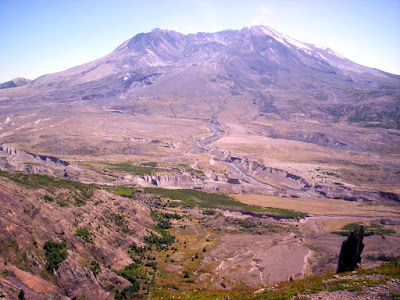
In The Journey , I bring my protagonist in close proximity to the May 18, 1980, eruption of Mount St. Helens. In The Fire , I devote several chapters to the Great Fire of 1910, a relatively little known but widely destructive inferno that charred three million acres of pristine forestland in Washington, Idaho, and Montana.
In both books, the main characters know a disaster is coming but can do little more than spare a precious few from harm. The same is true in September Sky , where a reporter and his college-age son try to minimize the impact of a hurricane they know will strike Galveston, Texas, in 1900 and claim several thousand lives.
I like incorporating natural disasters into my stories because they provide added drama, sharpen distinctions, and bring out the best and worst in people. Timid men and women become heroes in an instant, while some of the cocky and powerful become cowards.
I learned this when researching The Fire , set in Wallace, Idaho. As the flames closed in on the isolated and vulnerable mountain town on August 20, 1910, many men helped women and children escape by loading them onto trains. A few acted less nobly. They pushed others out of the way in an effort to save themselves, much like some men did on the RMS Titanic less than two years later.
I didn’t use a natural disaster to draw out heroes and cowards in Indiana Belle , but I did use one to get the novel off to a roaring start. A few chapters into the book, my protagonist comes face to face with the Tri-State Tornado, a mile-wide tempest that killed nearly seven hundred people in the Midwest on March 18, 1925.
Reading about these disasters made me appreciate modern technology all the more. People who confronted wildfires, hurricanes, and tornadoes in the early 1900s did not have television, smartphones, the Internet, or Doppler radar to alert them to pending doom. They faced nature’s wrath blindly.
Part of the fun of researching the books that featured the disasters was visiting the disaster sites themselves. I visited Wallace in 2013, Galveston in 2014, and southwest Indiana earlier this year. The first two venues offer several museums, historical sites, and attractions that commemorate their respective calamities.
I visited Mount St. Helens National Volcanic Monument -- pictured above in 2005 -- several years before writing The Journey . It is an attraction no one with a memory of the May 1980 eruption or its aftermath should miss when visiting Washington state.
I found many of these cataclysmic events to be fascinating stories in their own right and did my best to incorporate them into my books. In four of my eight novels, in fact, I have used natural disasters as backdrops, starting points, and/or climactic turning points.

In The Journey , I bring my protagonist in close proximity to the May 18, 1980, eruption of Mount St. Helens. In The Fire , I devote several chapters to the Great Fire of 1910, a relatively little known but widely destructive inferno that charred three million acres of pristine forestland in Washington, Idaho, and Montana.
In both books, the main characters know a disaster is coming but can do little more than spare a precious few from harm. The same is true in September Sky , where a reporter and his college-age son try to minimize the impact of a hurricane they know will strike Galveston, Texas, in 1900 and claim several thousand lives.
I like incorporating natural disasters into my stories because they provide added drama, sharpen distinctions, and bring out the best and worst in people. Timid men and women become heroes in an instant, while some of the cocky and powerful become cowards.
I learned this when researching The Fire , set in Wallace, Idaho. As the flames closed in on the isolated and vulnerable mountain town on August 20, 1910, many men helped women and children escape by loading them onto trains. A few acted less nobly. They pushed others out of the way in an effort to save themselves, much like some men did on the RMS Titanic less than two years later.
I didn’t use a natural disaster to draw out heroes and cowards in Indiana Belle , but I did use one to get the novel off to a roaring start. A few chapters into the book, my protagonist comes face to face with the Tri-State Tornado, a mile-wide tempest that killed nearly seven hundred people in the Midwest on March 18, 1925.
Reading about these disasters made me appreciate modern technology all the more. People who confronted wildfires, hurricanes, and tornadoes in the early 1900s did not have television, smartphones, the Internet, or Doppler radar to alert them to pending doom. They faced nature’s wrath blindly.
Part of the fun of researching the books that featured the disasters was visiting the disaster sites themselves. I visited Wallace in 2013, Galveston in 2014, and southwest Indiana earlier this year. The first two venues offer several museums, historical sites, and attractions that commemorate their respective calamities.
I visited Mount St. Helens National Volcanic Monument -- pictured above in 2005 -- several years before writing The Journey . It is an attraction no one with a memory of the May 1980 eruption or its aftermath should miss when visiting Washington state.
April 15, 2016
A book with a bit of everything
If there is one thing I’ve learned in four years as an indie author, it’s that people like certain things in the books they read. They like appealing characters, drama, humor, history, a quick pace, and a healthy dose of intrigue. They like a satisfying ending.
While it’s easy to incorporate all of these elements into a series, it’s not easy to incorporate them into a single book. Doing so requires planning, patience, and imagination. It means finding a balance.
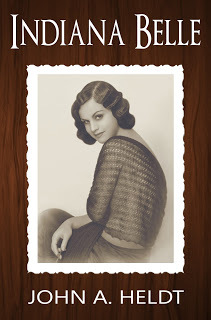 With
Indiana Belle
, I think I found that balance. My eighth novel, the third book in the American Journey time-travel series, is one that hits all the right notes.
With
Indiana Belle
, I think I found that balance. My eighth novel, the third book in the American Journey time-travel series, is one that hits all the right notes.
Like September Sky , Mercer Street , and the novels of the Northwest Passage series, Indiana Belle looks at the past through the eyes of the present. Unlike the other books, it offers a glimpse of the distant future too.
On Valentine's Day 2017, Cameron Coelho, 28, is a quiet loner working on his doctorate in history in Providence, Rhode Island. Then he receives a package from an old woman in Indiana that turns his world upside down.
Armed with revealing letters, diary pages, and a mesmerizing photograph of Candice Bell, a society editor murdered in 1925, Cameron follows a trail that takes him to Geoffrey Bell, the “time-travel professor,” and the age of flappers, jazz, and Prohibition.
Readers who like natural disasters, like those presented in The Journey , The Fire , and September Sky , will get one here. The Tri-State Tornado, one of the most destructive storms in history, gets ample play. So do speakeasies, car races, and religious revivals.
Readers who like murder mysteries, like the one in September Sky , will get that too. They will also get a love story and a snapshot of a rebellious era that is still firmly etched in the American imagination.
In writing Indiana Belle , I pulled the best elements from each of my first seven novels and put them in a story that I hope will entertain, inform, and amuse. The work, available as a Kindle book on Amazon.com and its international sites, goes on sale today.
While it’s easy to incorporate all of these elements into a series, it’s not easy to incorporate them into a single book. Doing so requires planning, patience, and imagination. It means finding a balance.
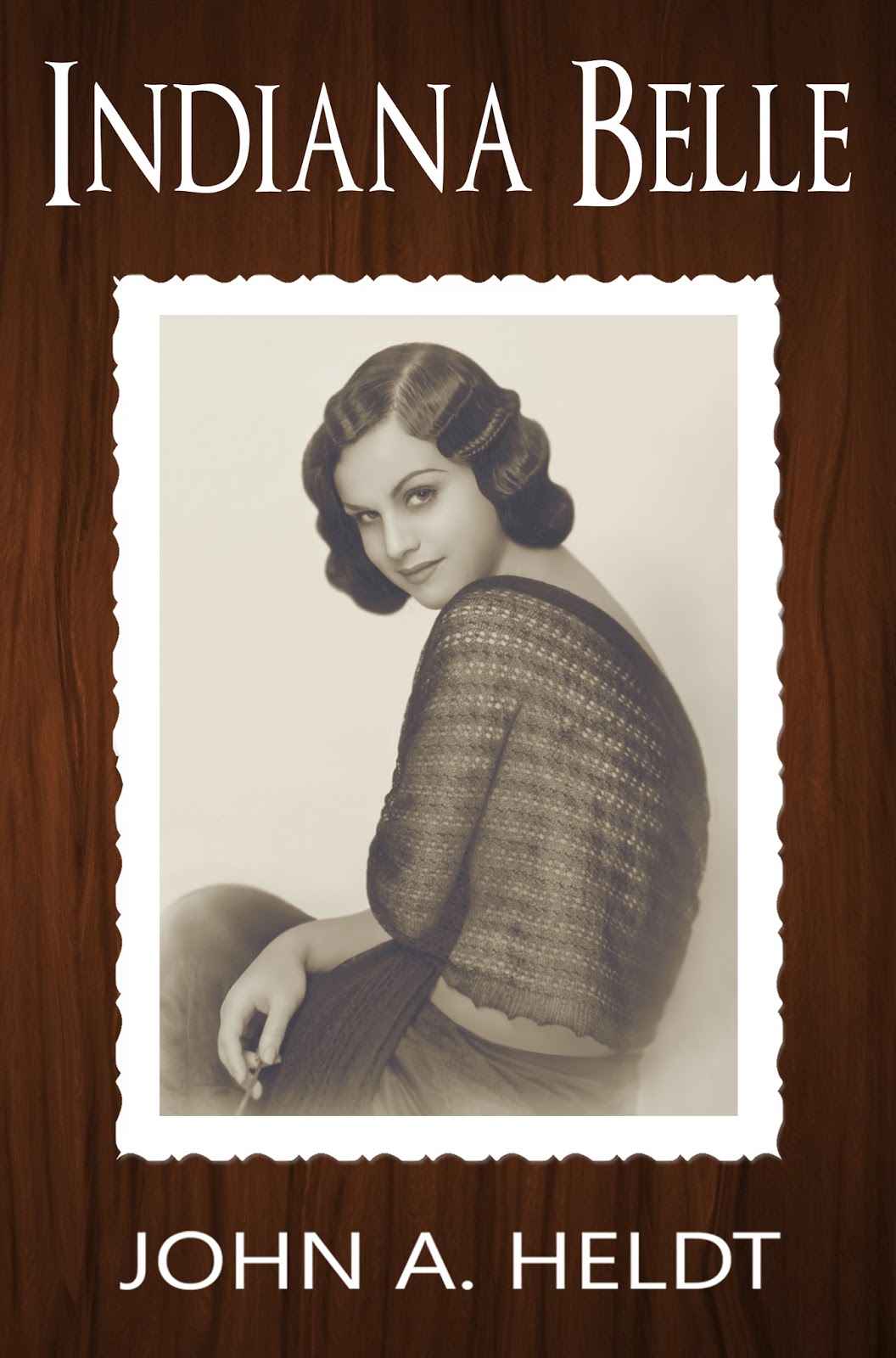 With
Indiana Belle
, I think I found that balance. My eighth novel, the third book in the American Journey time-travel series, is one that hits all the right notes.
With
Indiana Belle
, I think I found that balance. My eighth novel, the third book in the American Journey time-travel series, is one that hits all the right notes.Like September Sky , Mercer Street , and the novels of the Northwest Passage series, Indiana Belle looks at the past through the eyes of the present. Unlike the other books, it offers a glimpse of the distant future too.
On Valentine's Day 2017, Cameron Coelho, 28, is a quiet loner working on his doctorate in history in Providence, Rhode Island. Then he receives a package from an old woman in Indiana that turns his world upside down.
Armed with revealing letters, diary pages, and a mesmerizing photograph of Candice Bell, a society editor murdered in 1925, Cameron follows a trail that takes him to Geoffrey Bell, the “time-travel professor,” and the age of flappers, jazz, and Prohibition.
Readers who like natural disasters, like those presented in The Journey , The Fire , and September Sky , will get one here. The Tri-State Tornado, one of the most destructive storms in history, gets ample play. So do speakeasies, car races, and religious revivals.
Readers who like murder mysteries, like the one in September Sky , will get that too. They will also get a love story and a snapshot of a rebellious era that is still firmly etched in the American imagination.
In writing Indiana Belle , I pulled the best elements from each of my first seven novels and put them in a story that I hope will entertain, inform, and amuse. The work, available as a Kindle book on Amazon.com and its international sites, goes on sale today.
March 31, 2016
Touting the tools of the trade
As one who came of age in the early 1980s, I remember what writing was like before Microsoft Word, spell check, and the Internet. I remember manual typewriters, correction ribbons, card catalogs, and clunky, dog-eared monstrosities called dictionaries.
Even as a newspaper editor as in the mid-1990s, I kept a dictionary close. It was the last line of defense against errors that readers -- usually elderly Scrabble-loving women -- liked to circle with red pens and offer as proof of Western civilization’s decline.
Things are much better now. When I write a book, I can count on a number of Internet resources to make an otherwise difficult task easy and even enjoyable. These resources include not only online dictionaries but also search engines, grammar guides, and specialty web sites that don’t get even a fraction of the love they deserve.
My Elite Eight, ranked in no particular order, are as follows:
1. Google Books: Ever wonder whether a phrase has been used by others, is still in vogue, or is even grammatically correct? This is one place to find out. I often use this tool to see how publishers treat words and phrases. The Ngram Viewer is a nice side feature.
2. Library of Congress: Though I wrote about America's library last year, the institution deserves another mention. There is no better place in the world to get an authoritative answer to a question.
3. Thesaurus.com: If you're a writer who strives to avoid repetition, this is a site you cannot do without. In two or three clicks, you can go from a good word to a great word to one that is perfect.
4. Grammar Girl: There are more grammar sites on the Internet than adverbs in Stephen King’s proverbial road to hell, but few are as enjoyable or helpful as this one. Creator Mignon Fogarty provides useful tips and guidance in language anyone can understand.
5. Wikipedia: Some people consider this Internet mainstay an unreliable ending point. I consider it a useful starting point. Most articles are thorough and clearly written and feature extensive bibliographies that can be used to explore a topic in depth.
6. OneLook: Why search just one dictionary when you can search a thousand at the same time? This versatile tool provides quick, clear results. And, unlike many other dictionary sites, it is not cluttered with annoying advertisements or cumbersome graphics.
7. Online Etymology Dictionary: This is an indispensable resource for any writer of historical fiction. Want to know when carpetbagger and scalawag were first used in literature? OED has the answer.
8. Daily Writing Tips: On the rare occasion I stray from Grammar Girl, I head to this site. Operated by a team of credentialed writers and editors, the resource is user-friendly and highly informative. The contributors regularly tackle grammar issues that others do not.
I recommend these sites to those who take writing seriously and want to improve their craft. They are as essential now -- at least to me -- as the typewriter and dictionary were a generation ago.
Even as a newspaper editor as in the mid-1990s, I kept a dictionary close. It was the last line of defense against errors that readers -- usually elderly Scrabble-loving women -- liked to circle with red pens and offer as proof of Western civilization’s decline.
Things are much better now. When I write a book, I can count on a number of Internet resources to make an otherwise difficult task easy and even enjoyable. These resources include not only online dictionaries but also search engines, grammar guides, and specialty web sites that don’t get even a fraction of the love they deserve.
My Elite Eight, ranked in no particular order, are as follows:
1. Google Books: Ever wonder whether a phrase has been used by others, is still in vogue, or is even grammatically correct? This is one place to find out. I often use this tool to see how publishers treat words and phrases. The Ngram Viewer is a nice side feature.
2. Library of Congress: Though I wrote about America's library last year, the institution deserves another mention. There is no better place in the world to get an authoritative answer to a question.
3. Thesaurus.com: If you're a writer who strives to avoid repetition, this is a site you cannot do without. In two or three clicks, you can go from a good word to a great word to one that is perfect.
4. Grammar Girl: There are more grammar sites on the Internet than adverbs in Stephen King’s proverbial road to hell, but few are as enjoyable or helpful as this one. Creator Mignon Fogarty provides useful tips and guidance in language anyone can understand.
5. Wikipedia: Some people consider this Internet mainstay an unreliable ending point. I consider it a useful starting point. Most articles are thorough and clearly written and feature extensive bibliographies that can be used to explore a topic in depth.
6. OneLook: Why search just one dictionary when you can search a thousand at the same time? This versatile tool provides quick, clear results. And, unlike many other dictionary sites, it is not cluttered with annoying advertisements or cumbersome graphics.
7. Online Etymology Dictionary: This is an indispensable resource for any writer of historical fiction. Want to know when carpetbagger and scalawag were first used in literature? OED has the answer.
8. Daily Writing Tips: On the rare occasion I stray from Grammar Girl, I head to this site. Operated by a team of credentialed writers and editors, the resource is user-friendly and highly informative. The contributors regularly tackle grammar issues that others do not.
I recommend these sites to those who take writing seriously and want to improve their craft. They are as essential now -- at least to me -- as the typewriter and dictionary were a generation ago.
March 20, 2016
Review: The Martian
When it comes to movies and books, I’m not a first-run or first-edition kind of guy. I will almost always wait until the works are inexpensively available before taking a look at them.
Such was the case with The Martian by Andy Weir. I wanted to jump into the story as early as 2013 -- when I first became aware of a self-published novel that was taking the nation, or at least its science-fiction community, by storm -- but it wasn't until recently that I did so. And when I did, I picked the picture over the words.
I finally saw the movie, based on the New York Times bestselling novel, last night and must say it is every bit as good as most people say it is. With an 8.1 average rating on IMDb.com and 92-percent score on Rotten Tomatoes, it has drawn almost universal acclaim.
The story of Mark Watney, an American astronaut stranded on Mars, The Martian covers familiar ground. It is a little Robinson Crusoe on Mars and a lot of MacGyver with some high-tech spin. Watney survives by using his wits and does so with humor and flair.
The Oscar-nominated movie, directed by Ridley Scott, succeeds on several levels. The cinematography is breathtaking and the acting is compelling. Matt Damon is superb as Watney, a wisecracking loner who looks at every deadly challenge as an opportunity.
(Those who watch this film, released last fall by 20th Century Fox, will never again look at potatoes and duct tape the same way.)
As one who knows the challenges of writing, publishing, and marketing an indie novel, I can only admire Weir’s rags-to-riches success. In fact, I am somewhat indebted to him.
When Podium Publishing contacted me three years about turning The Mine into an audiobook, it noted a link between readers who liked Weir’s self-published work and those who liked mine. Ten months later, in January 2014, The Mine was released on Audible.
I don’t know if Weir, a California computer programmer, plans to write more books, but I hope he does. His first novel, and the blockbuster film it inspired, are each worthy of a sequel. Rating: 5/5.
Such was the case with The Martian by Andy Weir. I wanted to jump into the story as early as 2013 -- when I first became aware of a self-published novel that was taking the nation, or at least its science-fiction community, by storm -- but it wasn't until recently that I did so. And when I did, I picked the picture over the words.
I finally saw the movie, based on the New York Times bestselling novel, last night and must say it is every bit as good as most people say it is. With an 8.1 average rating on IMDb.com and 92-percent score on Rotten Tomatoes, it has drawn almost universal acclaim.
The story of Mark Watney, an American astronaut stranded on Mars, The Martian covers familiar ground. It is a little Robinson Crusoe on Mars and a lot of MacGyver with some high-tech spin. Watney survives by using his wits and does so with humor and flair.
The Oscar-nominated movie, directed by Ridley Scott, succeeds on several levels. The cinematography is breathtaking and the acting is compelling. Matt Damon is superb as Watney, a wisecracking loner who looks at every deadly challenge as an opportunity.
(Those who watch this film, released last fall by 20th Century Fox, will never again look at potatoes and duct tape the same way.)
As one who knows the challenges of writing, publishing, and marketing an indie novel, I can only admire Weir’s rags-to-riches success. In fact, I am somewhat indebted to him.
When Podium Publishing contacted me three years about turning The Mine into an audiobook, it noted a link between readers who liked Weir’s self-published work and those who liked mine. Ten months later, in January 2014, The Mine was released on Audible.
I don’t know if Weir, a California computer programmer, plans to write more books, but I hope he does. His first novel, and the blockbuster film it inspired, are each worthy of a sequel. Rating: 5/5.
March 1, 2016
Pictures, words, and covers
According to a saying popularized by newspapers, a picture is worth a thousand words. It can say things that even a hundred words cannot. It sends messages, creates impressions, and sets tones.
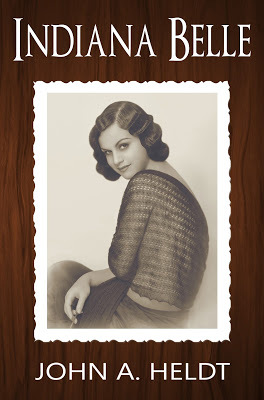 But when I set out to find a cover image for my eighth novel, I did not need one that was worth a thousand words. I needed one that was worth only two: Candice Bell. She is the wholesome but flirtatious 25-year-old society editor who is at the heart of a time-travel story set in Evansville, Indiana, in 1925.
I found the right picture last month on a stock image site. Thanks to illustrator Laura Wright LaRoche, the photo is now the centerpiece of a cover that does justice to a lively character and her times.
In the past, I have shied away from using photographs on covers or have used only ones that show people in shadows or silhouette. The reason is simple. It is difficult, if not impossible, to find images that even loosely resemble the characters described in a book.
I made an exception this time because the woman in this photo matches my heroine to a T. The faded sepia image also resembles a photo mentioned in the opening chapter, a portrait that draws Cameron Coelho, my time-traveling protagonist, to 1925.
Indiana Belle, the third novel of the American Journey series, is now in the hands of editors and beta readers. It is set for a May release.
 But when I set out to find a cover image for my eighth novel, I did not need one that was worth a thousand words. I needed one that was worth only two: Candice Bell. She is the wholesome but flirtatious 25-year-old society editor who is at the heart of a time-travel story set in Evansville, Indiana, in 1925.
I found the right picture last month on a stock image site. Thanks to illustrator Laura Wright LaRoche, the photo is now the centerpiece of a cover that does justice to a lively character and her times.
In the past, I have shied away from using photographs on covers or have used only ones that show people in shadows or silhouette. The reason is simple. It is difficult, if not impossible, to find images that even loosely resemble the characters described in a book.
I made an exception this time because the woman in this photo matches my heroine to a T. The faded sepia image also resembles a photo mentioned in the opening chapter, a portrait that draws Cameron Coelho, my time-traveling protagonist, to 1925.
Indiana Belle, the third novel of the American Journey series, is now in the hands of editors and beta readers. It is set for a May release.
February 29, 2016
Review: Of Mice and Men
I barely remember the first time I read
Of Mice and Men
. It was one of those classics I read in school because I had to. As a teen in the 1970s, it was not easy to relate to two drifters in the 1930s.
But when I read — or listened to — the novella again this month, I needed only a few minutes to see why so many consider it a masterpiece of literature. Published in 1937, it is the story of George Milton and Lennie Small, California migrant field workers.
As is so often the case, the friends are polar opposites. George is “small and quick and dark of face.” Lennie is a mild-mannered giant with a low IQ and penchant for petting small animals to death. Together they work toward a shared goal of financial independence.
When they land jobs on a ranch in the Salinas Valley, this goal appears to be within reach. But it isn’t long before Lennie’s habits and limitations invite trouble and put a happy future at risk.
The thing I liked most about Mice was the author’s description of time and place. I could almost smell the stench in the bunkhouse and see the dust roll over the fields. No one described the United States during the Great Depression like John Steinbeck.
I also liked the narration by Gary Sinise, one of my favorite actors. He nailed the accents and demonstrated impressive vocal range, though I must admit his portrayal of Lennie sounded an awful lot like Patrick Star, the dimwitted starfish in SpongeBob SquarePants .
I didn't care as much for the novella's rough language, which I found authentic but distracting. It is one reason that Mice , unfortunately, is among the most challenged of books in schools and libraries.
That said, the virtues of this timeless work, both the print and audio versions, outweigh its vices. I recommend it to anyone who likes stories about a difficult time in American history. Rating: 4/5.
But when I read — or listened to — the novella again this month, I needed only a few minutes to see why so many consider it a masterpiece of literature. Published in 1937, it is the story of George Milton and Lennie Small, California migrant field workers.
As is so often the case, the friends are polar opposites. George is “small and quick and dark of face.” Lennie is a mild-mannered giant with a low IQ and penchant for petting small animals to death. Together they work toward a shared goal of financial independence.
When they land jobs on a ranch in the Salinas Valley, this goal appears to be within reach. But it isn’t long before Lennie’s habits and limitations invite trouble and put a happy future at risk.
The thing I liked most about Mice was the author’s description of time and place. I could almost smell the stench in the bunkhouse and see the dust roll over the fields. No one described the United States during the Great Depression like John Steinbeck.
I also liked the narration by Gary Sinise, one of my favorite actors. He nailed the accents and demonstrated impressive vocal range, though I must admit his portrayal of Lennie sounded an awful lot like Patrick Star, the dimwitted starfish in SpongeBob SquarePants .
I didn't care as much for the novella's rough language, which I found authentic but distracting. It is one reason that Mice , unfortunately, is among the most challenged of books in schools and libraries.
That said, the virtues of this timeless work, both the print and audio versions, outweigh its vices. I recommend it to anyone who likes stories about a difficult time in American history. Rating: 4/5.
February 18, 2016
Review: The Nightingale
Near the end of
The Nightingale
, a novel by Kristin Hannah, the protagonist, an old woman, makes an observation in 1995. Looking back at her life and her role in the French Resistance during World War II, she observes that war is essentially a guy thing.
When it comes to remembering wartime contributions, it is men who get the parades and the medals. It is men who write the books, make the speeches, hold reunions, and seek the glory.
It is men who get the credit.
But as The Nightingale reminds us, women -- in this case, civilian women -- fight wars too. They do it quietly, bravely, and usually with little fanfare. They do it in ways that are no less important than the men fighting for God and country on the front lines.
In The Nightingale , the No. 1 New York Times bestseller, two French sisters, Vianne and Isabelle Rossignol, take up the fight against their Nazi German occupiers in different ways and at different times. Both succeed to different degrees.
Vianne, the go-along-get-along school teacher, at first seeks accommodation with the enemy. She tries to ride out the war from the family home as she takes care of Sophie, her young daughter, and awaits the return of Antoine, her French soldier husband.
Isabelle, the rebellious younger sister, jumps right into the fight. A beautiful misfit battling a host of personal demons, stemming from a lifetime of neglect, she joins the active resistance and repeatedly risks her life guiding downed Allied airmen to Spain and freedom.
Telling the story from the perspective of both sisters, Hannah produces a novel that is poignant, captivating, and informative.
Many have compared this book to All the Light We Cannot See and The Book Thief , the recent and widely celebrated novels by Anthony Doerr and Markus Zusak, respectively. All three works paint a compelling picture of occupied Europe during World War II.
I think The Nightingale holds up well against the other books. As a work about the role of women in the French Resistance, it also compares favorably to Jackdaws , a novel by Ken Follett, and Charlotte Gray , a 2001 feature film starring Cate Blanchett.
I recommend The Nightingale not only to readers who like riveting accounts of civilians in wartime but also to those who are drawn to celebrations of the human spirit. Rating: 5/5.
When it comes to remembering wartime contributions, it is men who get the parades and the medals. It is men who write the books, make the speeches, hold reunions, and seek the glory.
It is men who get the credit.
But as The Nightingale reminds us, women -- in this case, civilian women -- fight wars too. They do it quietly, bravely, and usually with little fanfare. They do it in ways that are no less important than the men fighting for God and country on the front lines.
In The Nightingale , the No. 1 New York Times bestseller, two French sisters, Vianne and Isabelle Rossignol, take up the fight against their Nazi German occupiers in different ways and at different times. Both succeed to different degrees.
Vianne, the go-along-get-along school teacher, at first seeks accommodation with the enemy. She tries to ride out the war from the family home as she takes care of Sophie, her young daughter, and awaits the return of Antoine, her French soldier husband.
Isabelle, the rebellious younger sister, jumps right into the fight. A beautiful misfit battling a host of personal demons, stemming from a lifetime of neglect, she joins the active resistance and repeatedly risks her life guiding downed Allied airmen to Spain and freedom.
Telling the story from the perspective of both sisters, Hannah produces a novel that is poignant, captivating, and informative.
Many have compared this book to All the Light We Cannot See and The Book Thief , the recent and widely celebrated novels by Anthony Doerr and Markus Zusak, respectively. All three works paint a compelling picture of occupied Europe during World War II.
I think The Nightingale holds up well against the other books. As a work about the role of women in the French Resistance, it also compares favorably to Jackdaws , a novel by Ken Follett, and Charlotte Gray , a 2001 feature film starring Cate Blanchett.
I recommend The Nightingale not only to readers who like riveting accounts of civilians in wartime but also to those who are drawn to celebrations of the human spirit. Rating: 5/5.
February 13, 2016
American Journey, Take Three
I didn’t quite match the frenetic pace of some in the NaNoWriMo crowd. It took me five weeks to write fifty thousand words and eight to write eighty, but I got it done. On the fourth anniversary of the release of my first novel, I finished the rough draft of my eighth.
AJ3, as I often call the third book in the American Journey series, is now ready for a revision process that will take twelve to fifteen weeks. At eighty-two thousand words, or about 275 Kindle pages, it will be my second-shortest work, after The Journey , and the first that takes on not only the past but also the future.
It is the story of Cameron Coelho, a loner who stumbles upon an old photo while studying for a doctorate in history. Mesmerized by the beautiful woman in the picture, a society writer murdered in 1925, he contacts Geoffrey Bell, the “time-travel professor,” and soon finds himself on a train to Evansville, Indiana, and the Roaring Twenties.
I hope to choose a title and a cover image by early March. In the meantime, the drive to turn a good draft into a great book begins.
AJ3, as I often call the third book in the American Journey series, is now ready for a revision process that will take twelve to fifteen weeks. At eighty-two thousand words, or about 275 Kindle pages, it will be my second-shortest work, after The Journey , and the first that takes on not only the past but also the future.
It is the story of Cameron Coelho, a loner who stumbles upon an old photo while studying for a doctorate in history. Mesmerized by the beautiful woman in the picture, a society writer murdered in 1925, he contacts Geoffrey Bell, the “time-travel professor,” and soon finds himself on a train to Evansville, Indiana, and the Roaring Twenties.
I hope to choose a title and a cover image by early March. In the meantime, the drive to turn a good draft into a great book begins.
January 7, 2016
One (hundred) is not enough
There are days I think Nora Roberts isn’t real. No one, I am convinced, could write 214 books, including 195 New York Times bestsellers, even over thirty-five years. Any novelist that prolific must surely be a software program or a committee of twenty authors writing with a common purpose and a common voice.
Yet writers like Roberts really do exist. They produce full-length novels at a pace that is both mind-boggling and inspiring.
Stephen King has more than sixty full-length works and 200 short stories to his credit. R.L. Stine has penned hundreds of children's books. For them, National Novel Writing Month is every month.
And that’s just the current crowd. A few writers from the past have set records that may never be broken. Barbara Cartland wrote 723 romance novels, including twenty-three in a single year. She left 160 unfinished manuscripts behind when she died in May 2000.
Charles Hamilton, another Briton, wrote 100 million words, most in short stories for magazines. That's the equivalent of 1,200 books.
Science fiction legend Isaac Asimov published more than five hundred works in half a century. His output covers nine of the ten classes, or primary categories, in the Dewey Decimal system.
Corín Tellado of Spain wrote more than four thousand novellas before her death in 2009. That's thousand with a T.
I don’t plan to write four thousand of anything. I like sleep too much. I do, however, plan to write several more books, including at least three more novels in the American Journey series.
Work on the untitled third book of that series, set in Evansville, Indiana, in 1925, is under way. I hope to have a first draft out by the middle of March and a finished product out by June.
Yet writers like Roberts really do exist. They produce full-length novels at a pace that is both mind-boggling and inspiring.
Stephen King has more than sixty full-length works and 200 short stories to his credit. R.L. Stine has penned hundreds of children's books. For them, National Novel Writing Month is every month.
And that’s just the current crowd. A few writers from the past have set records that may never be broken. Barbara Cartland wrote 723 romance novels, including twenty-three in a single year. She left 160 unfinished manuscripts behind when she died in May 2000.
Charles Hamilton, another Briton, wrote 100 million words, most in short stories for magazines. That's the equivalent of 1,200 books.
Science fiction legend Isaac Asimov published more than five hundred works in half a century. His output covers nine of the ten classes, or primary categories, in the Dewey Decimal system.
Corín Tellado of Spain wrote more than four thousand novellas before her death in 2009. That's thousand with a T.
I don’t plan to write four thousand of anything. I like sleep too much. I do, however, plan to write several more books, including at least three more novels in the American Journey series.
Work on the untitled third book of that series, set in Evansville, Indiana, in 1925, is under way. I hope to have a first draft out by the middle of March and a finished product out by June.