Carolee Dean's Blog, page 29
May 8, 2012
IRA POETRY PANEL
Below is an Excerpt from my recent post on Crowe's Nest. To read the entire article go to the Crowe's Nest
On Sunday, April 29th, I took part in an all day preconference institute at the International Reading Association in Chicago with seven other authors and another Crowe's Nester - Lisa Schroeder.
The title of our institute was Rekindling the Reading and Writing Fire. We spent an entire day sharing author tips with teachers about how professional authors write and think about stories as we explored a variety of genres that ended with a poetry panel that included me, Lisa, April Halprin Wayland, and Caroline Starr Rose.
The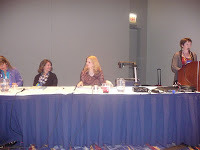 focus of our panel was on exploring how to hook struggling readers with verse novels in our segment entitled: Social Issues in Contemporary Fiction and Verse Novels: Recognizing Literary Devices and the Implications for Struggling Readers
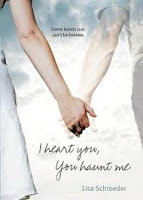
Lisa and I have special places in our hearts for struggling readers. I work in the public schools as a speech-language pathologist and both of us have books selected as YALSA Quick Picks for Reluctant Readers.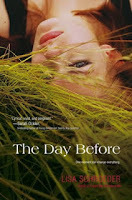
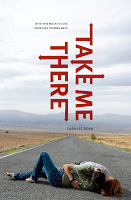
Although TAKE ME THERE is not a verse novel, it contains several original poems. It's about a boy who can't read or write, but dreams of becoming a poet. My first true verse novel, FORGET ME NOT, will be published by Simon Pulse in October of 2012.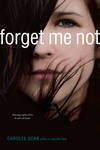
To Read the Rest of the Article go to the Crowe's Nest
On Sunday, April 29th, I took part in an all day preconference institute at the International Reading Association in Chicago with seven other authors and another Crowe's Nester - Lisa Schroeder.
The title of our institute was Rekindling the Reading and Writing Fire. We spent an entire day sharing author tips with teachers about how professional authors write and think about stories as we explored a variety of genres that ended with a poetry panel that included me, Lisa, April Halprin Wayland, and Caroline Starr Rose.
The
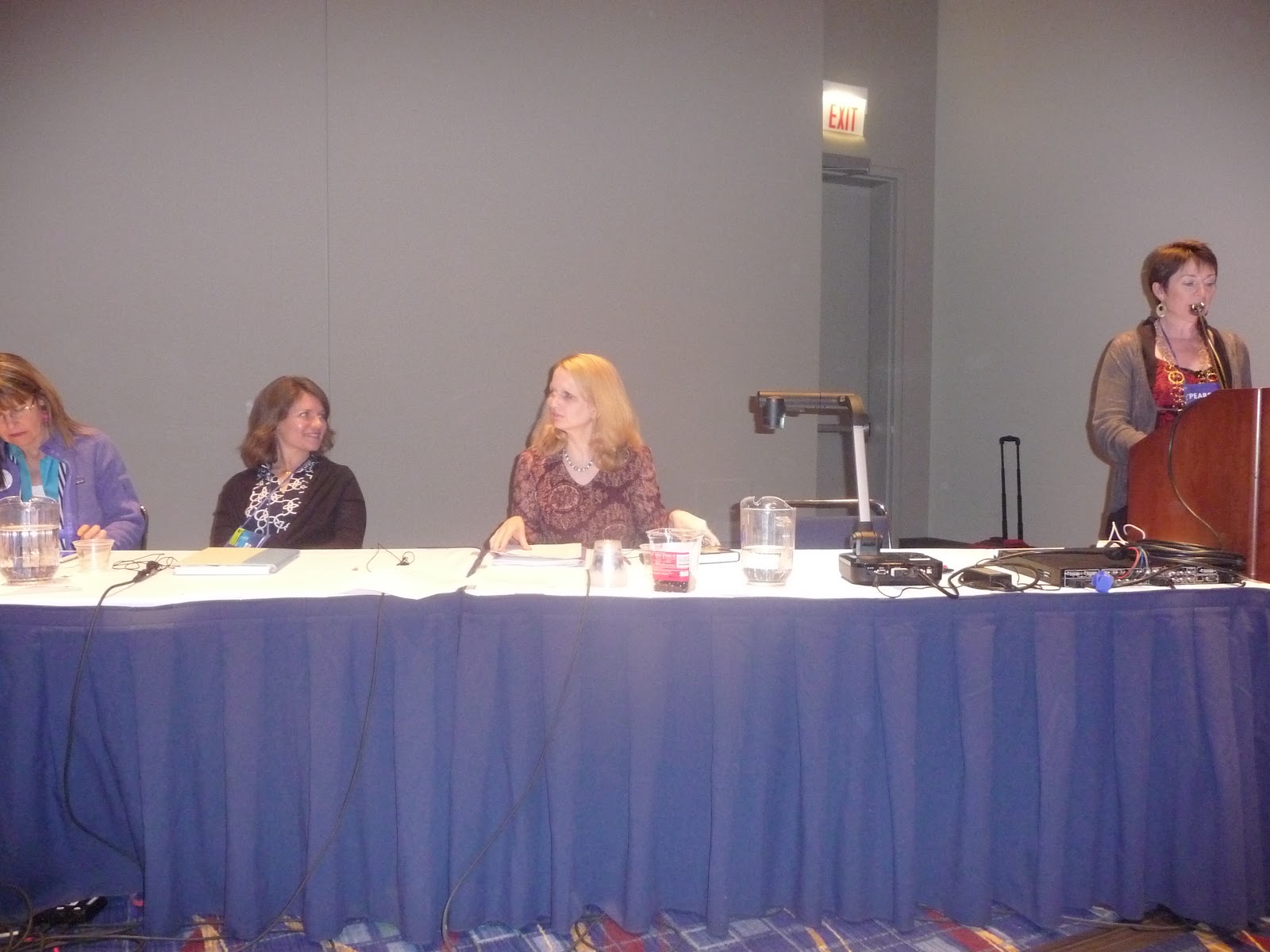 focus of our panel was on exploring how to hook struggling readers with verse novels in our segment entitled: Social Issues in Contemporary Fiction and Verse Novels: Recognizing Literary Devices and the Implications for Struggling Readers
Lisa and I have special places in our hearts for struggling readers. I work in the public schools as a speech-language pathologist and both of us have books selected as YALSA Quick Picks for Reluctant Readers.

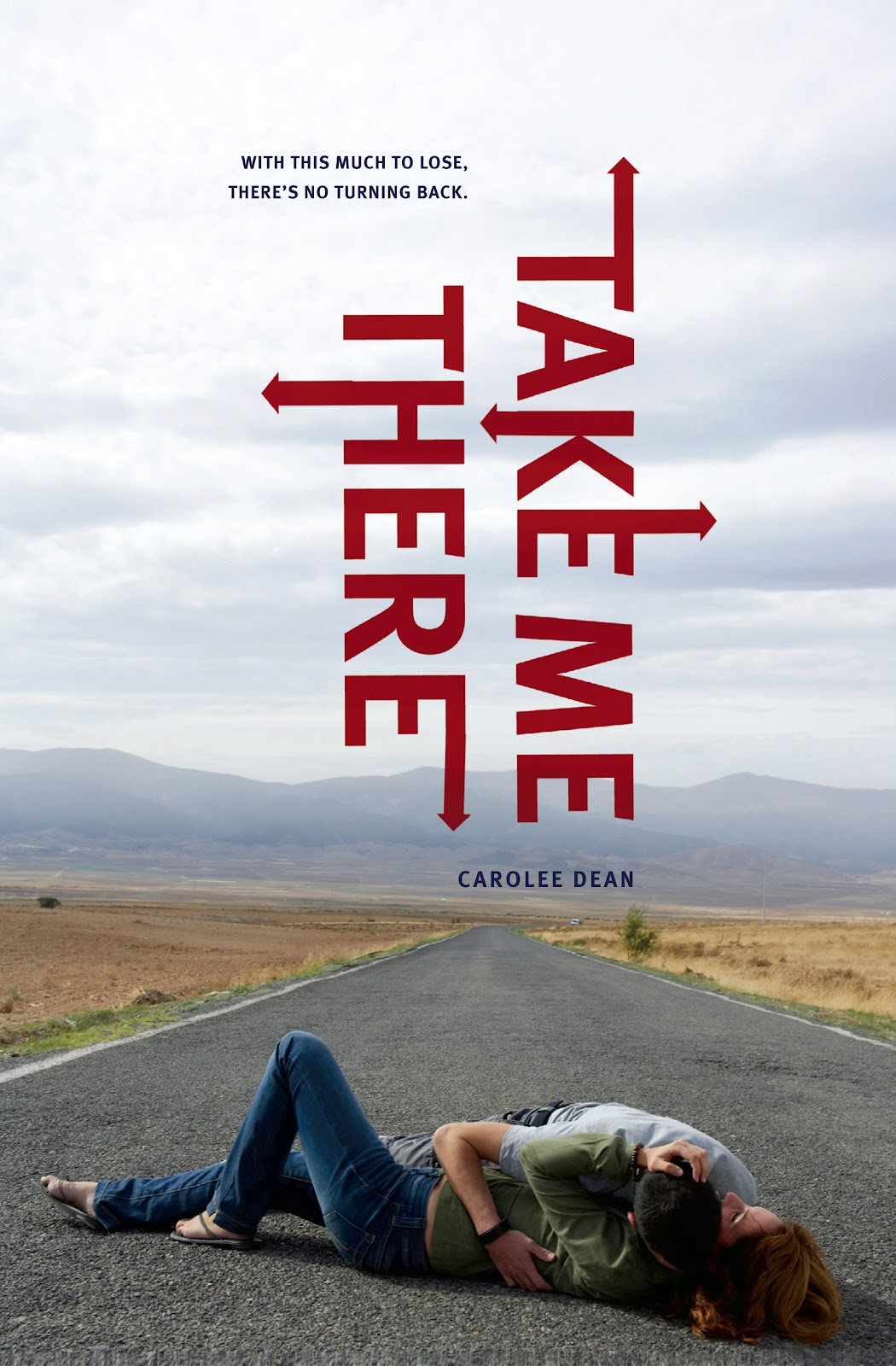
Although TAKE ME THERE is not a verse novel, it contains several original poems. It's about a boy who can't read or write, but dreams of becoming a poet. My first true verse novel, FORGET ME NOT, will be published by Simon Pulse in October of 2012.

To Read the Rest of the Article go to the Crowe's Nest


May 6, 2012
FITNESS FOR SITTERS
Being a writer requires long hours of sitting in front of a computer. So do many other professions. Sitting for hours at a time is very taxing on the body. Repetitive stress injuries like carpal tunnel syndrome and tendonitis can be extremely painful, not to mention the negative affects of lack of exercise on overall health. But for people who sit for a large part of their day, it can be difficult to get moving. As the old adage goes, "Bodies in motion stay in motion. Bodies at rest stay at rest."
So what is a writer (or other sedentary couch potato) to do? How does one get up from the chair and move, especially if there are looming deadlines? How do we fit exercise into an already hectic schedule, especially if you are juggling a writing career with a full-time job? We all know that exercise has numerous health benefits, but who has the time?
A recent article in the IDEA Fitness Journal summarized a study conducted by The Karolinska Institute in Stockholm conducted that was published in the Journal of Occupational & Environmental Medicine (2011: 53 [8]). The purpose of the study was to determine the result of work productivity on workers who were given time off (2.5 hours per week) to exercise. Actual productivity of these workers was similar to that of people who didn’t get time off to exercise, but the exercise group reported that they felt more productive and took fewer days off due to illness. The bottom line was that taking time off to exercise didn’t decrease productivity, and in some cases, increased it.
Could the same be true for writers? Would I write the same number of pages even if I used some of my limited time for exercise?
My personal experience has been that when I adhere to an exercise schedule and take breaks to exercise, I feel more mentally alert, more energetic, and more organized. It’s hard to get started though. Sometimes it can feel like trying to move a mountain, (or at least my mountain-like butt).
 A book I have found extremely helpful is 8 Minutes in the Morning by Jorge Cruise. He outlines a weight lifting program that addresses all the major muscle groups and can be accomplished in as little as 8 minutes a day. He cites evidence that when we exercise in the morning, we continue to burn calories all day. His book contains handy travel cards that you can slip into your wallet when you’re on the road. There is a diet plan and even inspirational motivators.
But to be completely honest, I leave for work at six forty-five in the morning, and I write before that, so many days even that 8 minutes feels impossible. One solution I've incorporated is to take an adjustable weight to work and do two minutes of exercise at a time. I also have an adjustable set of weights next to my writing desk at home. This reminds me to get up every now and then and move my body. Even this small amount of exercise helps me stay toned and pain free. Just as writing a book requires focusing on one page at a time, even a couch potato like me can become fit if I just do a little bit of exercise every day.

So what is a writer (or other sedentary couch potato) to do? How does one get up from the chair and move, especially if there are looming deadlines? How do we fit exercise into an already hectic schedule, especially if you are juggling a writing career with a full-time job? We all know that exercise has numerous health benefits, but who has the time?
A recent article in the IDEA Fitness Journal summarized a study conducted by The Karolinska Institute in Stockholm conducted that was published in the Journal of Occupational & Environmental Medicine (2011: 53 [8]). The purpose of the study was to determine the result of work productivity on workers who were given time off (2.5 hours per week) to exercise. Actual productivity of these workers was similar to that of people who didn’t get time off to exercise, but the exercise group reported that they felt more productive and took fewer days off due to illness. The bottom line was that taking time off to exercise didn’t decrease productivity, and in some cases, increased it.
Could the same be true for writers? Would I write the same number of pages even if I used some of my limited time for exercise?
My personal experience has been that when I adhere to an exercise schedule and take breaks to exercise, I feel more mentally alert, more energetic, and more organized. It’s hard to get started though. Sometimes it can feel like trying to move a mountain, (or at least my mountain-like butt).
 A book I have found extremely helpful is 8 Minutes in the Morning by Jorge Cruise. He outlines a weight lifting program that addresses all the major muscle groups and can be accomplished in as little as 8 minutes a day. He cites evidence that when we exercise in the morning, we continue to burn calories all day. His book contains handy travel cards that you can slip into your wallet when you’re on the road. There is a diet plan and even inspirational motivators.
 But to be completely honest, I leave for work at six forty-five in the morning, and I write before that, so many days even that 8 minutes feels impossible. One solution I've incorporated is to take an adjustable weight to work and do two minutes of exercise at a time. I also have an adjustable set of weights next to my writing desk at home. This reminds me to get up every now and then and move my body. Even this small amount of exercise helps me stay toned and pain free. Just as writing a book requires focusing on one page at a time, even a couch potato like me can become fit if I just do a little bit of exercise every day.
April 27, 2012
HOME OF THE BRAVE and THE SECRET LANGUAGE OF STORIES
One of the verse novels I read for poetry month was HOME OF THE BRAVE, by Katherine Applegate.
 It is the story of a teenage boy named Kek, a Sudanese refugee who saw his father and brother killed in Africa and then came to America to live with his aunt. The spare verse is accessible for students ages 10 and up, yet the themes of relocation, ostracism, and political oppression make this book of interest for high school students as well, especially low readers (high interest-low readability). It fits well with themes of African studies. The variety of poetic and literary devices found in this story make it a good resource for covering those topics in preparation for SBA testing. I will be using the 12 steps of my story analysis method I call THE SECRET LANGUAGE OF STORIES (SLOS) to talk about the plot. To learn more about SLOS see the tab on this blog. Kek, a young Sudanese refugee receives a CALL to adventure to leave his refugee camp and come to America. As the story begins, he is making his CROSSING from the OLD WORLD of the camp to the NEW WORLD of Minnesota in the dead of winter by way of a "flying boat" or airplane. He is met at the airport by Dave, a man assigned to help him make the transition to America. Dave serves as a MENTOR as he gives Kek advice about adjusting to his new live. The boy was reluctant to come to America without his mother and hopes that she will soon join him. Dave takes Kek to live with Kek's aunt and cousin Ganwar who lost his hand the same night Kek's father was killed.
On their way to his aunt's apartment, Kek sees a cow standing alone in the snow and asks Dave to stop so that he can pet the animal. Back in Africa, cattle meant life to Kek and his family who were herders.
Kek faces many challenges in making the adjustment to America. The language is totally confusing to him. He uses terms like "the fast-car road" to describe the highway and "the don't-move belt" to describe the seatbelt. Nothing is like it is back home. He looks up to his older cousin, Ganwar, who has already gone through the male initiation rite and bears the scars on his forehead that prove he is a man. Kek very much wants to become a man, but does not know how to do that in this strange new place. Ganwar is a very flawed and embittered role model.
A PROBLEM arises when Kek tries to wash his aunt's dishes in the washing machine in the basement and ends up breaking them. He makes a PLAN to repay her by going back to the farm where he saw the cow and asking the owner, a woman named Lou, if he can have a job. At the MIDPOINT of the story he does just that. He asks Lou for a job. During the DOWNTIME he enjoys his new employment and even PURSUES a position for his cousin Ganwar. Kek names the cow Gol which means family. Gol symbolizes both his family and his search for manhood because of the responsibility he assumes in caring for the cow.
Unfortunately, Lou is getting old and she decides to sell the farm. She's not sure what she's going to do with the old cow. Kek becomes despondent with this news and quits going to the farm. Shortly thereafter he receives news that Dave was able to track down the people who made it to the second refugee camp and Kek's mother was not with them. He then has a flashback about what happened the night she disappeared. Their camp was attacked by gunfire and they ran. His mother hurt her leg and couldn't go any further, but instructed him to keep running and return for her when it was safe. When he returned, she was gone. This is the DEATH and TRANSFORMATION point in the story, because all hope seems lost. At first this desperation just causes Kek to run away, to try to make it back to Africa to look for his mother, but as he passes the farm and Lou's house, he wants to tell her thank you and goodbye, so he gets off the bus. Lou shows him pictures of her and her husband and the farm when they were young. Then she shows him a picture of her sister's house in LA. She says she is hopeful because even though her sister's yard is tiny in comparison to the farm, she can grow things year round. Kek realizes that like him, Lou must leave the home she has always known. He remembers his aunt's words, "Kek finds sun when the sky is dark," and he realizes that finding the sun wherever you are is one way to be a man. His transformation occurs when he decides to go back to work for Lou as he stays in Minnesota and waits for his mother and tries to make the best of his new life.
At the CLIMAX of the story Kek, with Lou's permission, walks Gol, the cow, all the way to the zoo. He and Ganwar stop traffic and end up getting a police escort. When they arrive at the zoo the "zoo boss" is reluctant to accept the cow. This is not the way animals are usually acquired. Kek finally persuades him and as Gol is taken into the petting zoo, he makes the analogy the she is going to her new land to begin again. The REWARD is that he has found a place for Gol, but another reward awaits him. In the epilogue, his mother finally meets him in America.
I have created a 17 page teacher's guide that focuses primarily on exploring the poetic and literary devices found in the novel. It is geared toward low readers and may be found on the Teacher Resources page on this blog.

CONGRATULATIONS CAROLINE STARR ROSE!
2012 Spring New Voices Titles AnnouncedBy Shannon OConnor on Thursday, Apr 19, 2012
 For the past few months, the 2012 New Voices Committee has been hard at work, reading more than 80 titles by first-time authors. Their task? To pick the top debuts published between January 1 and June 30, 2012 in two categories: Ages 8 - 12 and Teen. The results are in, and the committee’s top six picks in each category are featured on a flier arriving at ABA member stores in the May Children’s White Box mailing.The 2012 Spring New Voices titles, picked by kids’ booksellers for bringing something fresh and exciting to literature for children and teens, are:Ages 8 - 12
Child of the Mountains
, by Marilyn Sue Shank (Delacorte/Random House)
Glory Be
, by Augusta Scattergood (Scholastic Press)
If Only
, by Carole Geithner (Scholastic Press)May B., by Caroline Starr Rose (Schwartz & Wade/Random House)
My Mixed-Up Berry Blue Summer
, by Jennifer Gennari (Houghton Mifflin Harcourt)We’ve Got a Job: The 1963 Birmingham Children’s March, by Cynthia Levinson (Peachtree Publishers)Teen
Breaking Beautiful
, by Jennifer Shaw Wolf (Bloomsbury)
Cinder: Book One in the Lunar Chronicles
, by Marissa Meyer (Feiwel & Friends/Macmillan)
Me and Earl and the Dying Girl
, by Jesse Andrews (Abrams)
Wonder Show
, by Hannah Barnaby (Houghton Mifflin Harcourt)
Something Like Normal
, by Trish Doller (Bloomsbury)
Shadow & Bone
, by Leigh Bardugo (Henry Holt/Macmillan)
For the past few months, the 2012 New Voices Committee has been hard at work, reading more than 80 titles by first-time authors. Their task? To pick the top debuts published between January 1 and June 30, 2012 in two categories: Ages 8 - 12 and Teen. The results are in, and the committee’s top six picks in each category are featured on a flier arriving at ABA member stores in the May Children’s White Box mailing.The 2012 Spring New Voices titles, picked by kids’ booksellers for bringing something fresh and exciting to literature for children and teens, are:Ages 8 - 12
Child of the Mountains
, by Marilyn Sue Shank (Delacorte/Random House)
Glory Be
, by Augusta Scattergood (Scholastic Press)
If Only
, by Carole Geithner (Scholastic Press)May B., by Caroline Starr Rose (Schwartz & Wade/Random House)
My Mixed-Up Berry Blue Summer
, by Jennifer Gennari (Houghton Mifflin Harcourt)We’ve Got a Job: The 1963 Birmingham Children’s March, by Cynthia Levinson (Peachtree Publishers)Teen
Breaking Beautiful
, by Jennifer Shaw Wolf (Bloomsbury)
Cinder: Book One in the Lunar Chronicles
, by Marissa Meyer (Feiwel & Friends/Macmillan)
Me and Earl and the Dying Girl
, by Jesse Andrews (Abrams)
Wonder Show
, by Hannah Barnaby (Houghton Mifflin Harcourt)
Something Like Normal
, by Trish Doller (Bloomsbury)
Shadow & Bone
, by Leigh Bardugo (Henry Holt/Macmillan)
April 18, 2012
Verse Novel Workshop in Albuquerque and Upcoming IRA Conference in Chicago
On Saturday, April 14, Caroline Starr Rose and I held a verse novel workshop at Alamosa Books. It was the culmination of a city-wide poetry contest. Students from elementary through high school submitted poems from all over the city and there was a poster contest for the 2Pac poster with the "Dead Rapper Rap" poem from FORGET ME NOT (Simon Pulse, October 2012). Kids had to find the 2Pac song titles hidden within the poem.
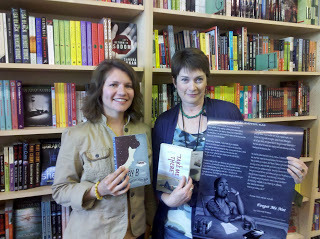 Several students showed up to read their original poems. The elementary and secondary schools with the most poetry submissions won free author visits. Kennedy Middle School was the winner of the Secondary School Author Visit. I'll be going there on Friday, April 27th. to meet with students. Some of them are planning a performance of the "Dead Rapper Rap."
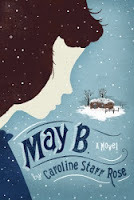
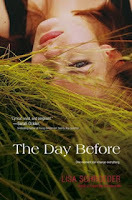
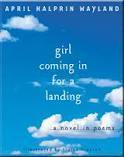
Meanwhile, I've finished the novels I planned to read for poetry month, May B. by Caroline Starr Rose and The Day Before by Lisa Schroeder. I even had time to go back and read an old favorite - Girl Coming in for a Landing by April Halprin Wayland. Last weekend I got a pad of sticky notes, made a cup of coffee, and went through these books page by page, looking for literary devices to use as examples for our upcoming poetry panel in Chicago. The four of us will be presenting a panel entitled: Social Issues in Contemporary Fiction and Verse Novels: Recognizing Literary Devices and the Implications for Struggling Readers.
What inspired me as I read through these verse novels was the sheer number of literary and poetic devices the authors used. There were numerous examples of metaphor, simile, allusion, personification, alliteration, and assonance. Even though almost all of the poems were written in free verse, they were still filled with beautiful imagery, figurative language, and word play. For our panel, I'm creating a "Treasure Hunt" based on examples from these books and my own verse novel, FORGET ME NOT (Simon Pulse, October 2012). I'll share it in my Teacher Resources section soon.
Our panel is part of an all day pre-conference institute entitled Rekindling the Reading Fire - Author Panel - Using the Story Strategies of Professional Authors to Inspire a Love of Reading and Writing. There is a separate fee for the institute, but participants don't have to be attending IRA to come to the institute. We already have people signed up from over ten different states and five different countries. So... if you know anyone who is going to be in Chicago on April 29th, tell them to check out our institute. There will be a total of 9 authors participating. Some of our other panels include:
Brave New Worlds in Fantasy and Magic Realism: Inspiring Literacy by Sparking the Imagination Kimberley Griffiths Little, Kersten Hamilton, Lisa Schroeder
Social and Cultural Influences: Approaching Plot Through the Intersection of Character, Setting, and Time - Uma Krishnaswami, April Halprin Wayland, Esther Hershenhorn
Content Area Literacy: Making History Come Alive - Carolyn Meyer, Caroline Starr Rose, Kimberley Griffiths Little
I will also be presenting an overview of The Secret Language of Stories, my twelve step story plotting system.
IT WILL BE A GREAT WAY TO END POETRY MONTH!!!!!

 Several students showed up to read their original poems. The elementary and secondary schools with the most poetry submissions won free author visits. Kennedy Middle School was the winner of the Secondary School Author Visit. I'll be going there on Friday, April 27th. to meet with students. Some of them are planning a performance of the "Dead Rapper Rap."

Meanwhile, I've finished the novels I planned to read for poetry month, May B. by Caroline Starr Rose and The Day Before by Lisa Schroeder. I even had time to go back and read an old favorite - Girl Coming in for a Landing by April Halprin Wayland. Last weekend I got a pad of sticky notes, made a cup of coffee, and went through these books page by page, looking for literary devices to use as examples for our upcoming poetry panel in Chicago. The four of us will be presenting a panel entitled: Social Issues in Contemporary Fiction and Verse Novels: Recognizing Literary Devices and the Implications for Struggling Readers.
What inspired me as I read through these verse novels was the sheer number of literary and poetic devices the authors used. There were numerous examples of metaphor, simile, allusion, personification, alliteration, and assonance. Even though almost all of the poems were written in free verse, they were still filled with beautiful imagery, figurative language, and word play. For our panel, I'm creating a "Treasure Hunt" based on examples from these books and my own verse novel, FORGET ME NOT (Simon Pulse, October 2012). I'll share it in my Teacher Resources section soon.Our panel is part of an all day pre-conference institute entitled Rekindling the Reading Fire - Author Panel - Using the Story Strategies of Professional Authors to Inspire a Love of Reading and Writing. There is a separate fee for the institute, but participants don't have to be attending IRA to come to the institute. We already have people signed up from over ten different states and five different countries. So... if you know anyone who is going to be in Chicago on April 29th, tell them to check out our institute. There will be a total of 9 authors participating. Some of our other panels include:
Brave New Worlds in Fantasy and Magic Realism: Inspiring Literacy by Sparking the Imagination Kimberley Griffiths Little, Kersten Hamilton, Lisa Schroeder
Social and Cultural Influences: Approaching Plot Through the Intersection of Character, Setting, and Time - Uma Krishnaswami, April Halprin Wayland, Esther Hershenhorn
Content Area Literacy: Making History Come Alive - Carolyn Meyer, Caroline Starr Rose, Kimberley Griffiths Little
I will also be presenting an overview of The Secret Language of Stories, my twelve step story plotting system.
IT WILL BE A GREAT WAY TO END POETRY MONTH!!!!!
April 17, 2012
FAMOUS POETS WHO OVERCAME READING DISABILITIES
In honor of poetry month and the poets who sometimes struggle with their craft, I've written an article for Cynsations about poets with reading disabilities. There is an excerpt below, but be sure to go to Cynsations to read the rest of the article.
William Butler Yeats is considered one of the great poets of the 20th century, and yet he struggled with one of the most basic skill needed for his craft, the ability to read.
An article by Marylou Minder and Linda S. Siegel in the 1992 (Vol. 25, Number 6) issue of the Journal of Learning Disabilities, entitled “William Butler Yeats: Dyslexic?” sites several examples from The Autobiography of William Butler Yeats that indicate that he may have suffered from this reading disability.
The authors begin the article with a quote from his book:
BE SURE TO VISIT CYNSATIONS TO READ THE REST OF THE ARTICLE...

William Butler Yeats is considered one of the great poets of the 20th century, and yet he struggled with one of the most basic skill needed for his craft, the ability to read.
An article by Marylou Minder and Linda S. Siegel in the 1992 (Vol. 25, Number 6) issue of the Journal of Learning Disabilities, entitled “William Butler Yeats: Dyslexic?” sites several examples from The Autobiography of William Butler Yeats that indicate that he may have suffered from this reading disability.
The authors begin the article with a quote from his book:
"Several of my uncles and aunts had tried to teach me to read, and because they could not, and because I was much older than children who read easily, had come to think, as I have learnt since, that I had not all my faculties." (Yeats, 1965, p. 14)
BE SURE TO VISIT CYNSATIONS TO READ THE REST OF THE ARTICLE...
April 16, 2012
Exploring Verse Novels in the Classroom
The following in an excerpt from an article about Verse Novels that I wrote for Caroline By Line
Novels in verse have become very popular with teens over the past few years and are a great way to engage students, including the sometimes hard to reach struggling reader.
Each poem encapsulates a complete concept so a student doesn’t have to struggle through an entire chapter before thinking about the main idea. Sentences tend to be spare, rather than complex. Punctuation encourages frequent pauses. The amount of white space on the page is much less daunting than a dense text. Even so, these stories don’t come across as “easy readers.” Literary devices such as simile, metaphor, and personification abound. SBA tests frequently explore literary devices, yet these concepts and definitions are often abstract to students. They need numerous examples to recognize them, and verse novels often provide more examples of literary devices per page than other genres.
To read the rest of the article visit Caroline's blog at Caroline By Line

Novels in verse have become very popular with teens over the past few years and are a great way to engage students, including the sometimes hard to reach struggling reader.
Each poem encapsulates a complete concept so a student doesn’t have to struggle through an entire chapter before thinking about the main idea. Sentences tend to be spare, rather than complex. Punctuation encourages frequent pauses. The amount of white space on the page is much less daunting than a dense text. Even so, these stories don’t come across as “easy readers.” Literary devices such as simile, metaphor, and personification abound. SBA tests frequently explore literary devices, yet these concepts and definitions are often abstract to students. They need numerous examples to recognize them, and verse novels often provide more examples of literary devices per page than other genres.
To read the rest of the article visit Caroline's blog at Caroline By Line
April 8, 2012
Is it Dystopia or is it History?
"The best-kept secret about history is that the past is the ultimate secondary world." That quote is from a recent Spellbinders article by J. Anderson Coats, author of The Wicked and the Just.The following is an excerpt along with a Dystopian/ History Quiz. You can't get more dystopian than the rubber plantations in the Belgian Congo where they'd cut off people's hands and kidnap their families to ensure that quotas were met, or the transportation of petty criminals to a prison colony on the other side of the planet. These things are real, and they give fiction a run for its money every time.
Here's a little quiz: which of the following are plot summaries of recent YA novels, and which are actual historical events? * The daughter of a gladiator must marry the fighter who kills her father and captures her dowry bracelet.
* When her wealthy husband dies, a teenage widow must climb on his funeral pyre with him and be burned alive, or else face recrimination, ostracism and destitution.
* During a seemingly unstoppable plague, a city closes its gates and forbids anyone to enter or leave, and any houses in which plague suffers already live are boarded up with the healthy and sick alike trapped inside.
* Girls who reach legal maturity are given a special tattoo that indicates their sexual availability to the entire society.
Answers:
1 - Dystopian (Girl in the Arena by Lise Haines)
2 - Historical (pre-British India; the practice of sati)
3 - Historical (14th century Milan)
4 - Dystopian (XVI by Julia Carr) To read the rest of the article and to find out more about J. Anderson Coats, visit Spellbinders.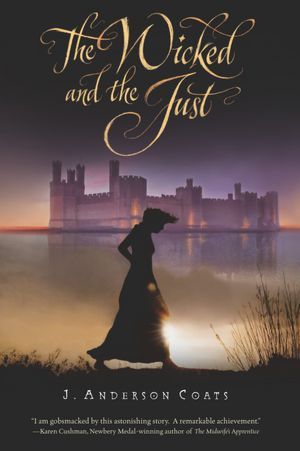

Here's a little quiz: which of the following are plot summaries of recent YA novels, and which are actual historical events? * The daughter of a gladiator must marry the fighter who kills her father and captures her dowry bracelet.
* When her wealthy husband dies, a teenage widow must climb on his funeral pyre with him and be burned alive, or else face recrimination, ostracism and destitution.
* During a seemingly unstoppable plague, a city closes its gates and forbids anyone to enter or leave, and any houses in which plague suffers already live are boarded up with the healthy and sick alike trapped inside.
* Girls who reach legal maturity are given a special tattoo that indicates their sexual availability to the entire society.
Answers:
1 - Dystopian (Girl in the Arena by Lise Haines)
2 - Historical (pre-British India; the practice of sati)
3 - Historical (14th century Milan)
4 - Dystopian (XVI by Julia Carr) To read the rest of the article and to find out more about J. Anderson Coats, visit Spellbinders.
March 25, 2012
THIS BLOG HAS MOVED
Check out my new blogsite by going to http://caroleedeanbooks.blogspot.com
February 28, 2012
My tweets
Mon, 06:05
: Football and books and School to World at Carolee Dean Books http://t.co/rFHdojI1
Mon, 08:05
: Spellbinders - Award-Winning Books for 2012! #constantcontact http://t.co/ii4x4Itu
Mon, 11:23
: Such beautiful weather. Went for a bikr ride on Sunday:)