
Ariel S. Winter's Blog, page 4
November 15, 2012
UPTON SINCLAIR: THE GNOMOBILE
+-+002.jpg) WHEN THE TWENTY-EIGHT YEAR OLD UPTON SINCLAIR published his muckraking classic The Jungle in 1906, he had been a professional writer for twelve years. That's right, Sinclair had been earning his living as a writer since the age of fourteen. And as a child author, it is only appropriate that he started his career as a children's author.
WHEN THE TWENTY-EIGHT YEAR OLD UPTON SINCLAIR published his muckraking classic The Jungle in 1906, he had been a professional writer for twelve years. That's right, Sinclair had been earning his living as a writer since the age of fourteen. And as a child author, it is only appropriate that he started his career as a children's author.At the end of the nineteenth century, pulp magazines came into their own, and a large portion of their readership, like the comic books that would begin to replace them in the late 1930s, was children. Originally writing for magazines such as Argosy and Munsey's, Sinclair got his most steady work when he was hired by Street and Smith at age eighteen (while still a graduate student at Columbia University) to write a series of stories about life as a cadet in the United States Military Academy, West Point. The Mark Mallory series was so popular that Sinclair launched a second series set at the Naval Academy in Annapolis about new cadet Cliff Faraday. These stories were printed in magazines such as Army and Navy Weekly, Half-Holiday, and True Blue, and were later collected in series such as McKay's "Boys Own Library," and Caldwell's "Famous Books for Boys." According to Sinclair, at that time he wrote 8,000 words a day.
+-+003.jpg) When he finished graduate school in 1900, however, Sinclair wanted to focus on becoming a "serious" artist. He sequestered himself in a cabin in Quebec and set out to write his first adult novel. For Sinclair, writing children's stories was a thing of the past, outgrown. Soon he was a social reformer whose fiction led to legislation, like the first Food and Drug Act.
When he finished graduate school in 1900, however, Sinclair wanted to focus on becoming a "serious" artist. He sequestered himself in a cabin in Quebec and set out to write his first adult novel. For Sinclair, writing children's stories was a thing of the past, outgrown. Soon he was a social reformer whose fiction led to legislation, like the first Food and Drug Act.But having grandchildren can change a man. 1933 saw the birth of Sinclair's grand-daughter Diana. Much of the next two years were spent on his third campaign for governor of California, but when he lost the election, Sinclair set out on a speaking tour that took him through the redwood forests of northern California and Oregon. It was there that he decided he would attempt a children's novel, dedicated to Diana: The Gnomobile, A Gnice Gnew Gnarrative With Gnonsense, but Gnothing Gnaughty.
+-+004.jpg) ELIZABETH, along with her mother and her mother's traveling companion Miss Jellife, are on their way to visit Elizabeth's grandfather and uncle in Seattle. On the way, they stop off in Redwood National Park to get a soda, and Elizabeth wanders off into the trees. Soon she meets Bobo, a one hundred year old gnome (a child in gnome years) with "a face about the size of your fist."
ELIZABETH, along with her mother and her mother's traveling companion Miss Jellife, are on their way to visit Elizabeth's grandfather and uncle in Seattle. On the way, they stop off in Redwood National Park to get a soda, and Elizabeth wanders off into the trees. Soon she meets Bobo, a one hundred year old gnome (a child in gnome years) with "a face about the size of your fist."Bobo has been warned by his grandfather Glogo to never talk to "big people." "'They murder the trees. They destroy the forests, and that is the end of life.'" But Bobo is worried for his grandfather, who sits by himself all of the time looking mournful--Elizabeth diagnoses him with "neurasthenia," essentially depression. As Glogo and Bobo are the only gnomes left, Bobo needs help.
Elizabeth promises to return with her Uncle Rodney, who "is kind and good; he has never cut down any trees." She knows better than to tell her mother, who "says I am imaginative, and would think that I have made you up, and scold me about you."
+-+011.jpg) Elizabeth has neglected to mention that Rodney is the youngest son of a logging scion, who is vastly wealthy for cutting down a vast number of trees. But Rodney abhors his father's business, and has even bought forest land to put aside as state parks. When Elizabeth says she wants to return to the redwoods, Rodney is more than game. They drive back to the redwood forest where Elizabeth introduces him to Bobo, and Bobo introduces them both to Glogo.
Elizabeth has neglected to mention that Rodney is the youngest son of a logging scion, who is vastly wealthy for cutting down a vast number of trees. But Rodney abhors his father's business, and has even bought forest land to put aside as state parks. When Elizabeth says she wants to return to the redwoods, Rodney is more than game. They drive back to the redwood forest where Elizabeth introduces him to Bobo, and Bobo introduces them both to Glogo.Glogo does not want to meet the big people who kill trees. "'A tree has no tongue with which to make words. A tree speaks in actions. If you love it and live with it, its spirit becomes one with yours and you understand it, and hate the madmen who murder it.'"
Rodney convinces Glogo that the only way to ensure the continuance of the gnomic race is to locate other gnomes, so that Bobo may marry. Reluctantly, Glogo agrees, and Rodney's car goes from automobile to " gnomobile."
+-+016.jpg) The quartet begin a long road trip all over the United States, stopping at forest after forest, looking for gnomes. Along the way, questions are asked about what lives in the two baskets Rodney and Elizabeth carry with them to hide the gnomes. At one hotel Rodney answers that they "are royal Abyssinian geese,' but won't show them. The mystery attracts the local newspaper, "Lumber Scion Carries Pet Geese," and soon it's national news. Rodney and Elizabeth are hounded all along the way by papers such as the Whizzle-Bang, Fizzle-Toot, and Sizzle-Hoot.
The quartet begin a long road trip all over the United States, stopping at forest after forest, looking for gnomes. Along the way, questions are asked about what lives in the two baskets Rodney and Elizabeth carry with them to hide the gnomes. At one hotel Rodney answers that they "are royal Abyssinian geese,' but won't show them. The mystery attracts the local newspaper, "Lumber Scion Carries Pet Geese," and soon it's national news. Rodney and Elizabeth are hounded all along the way by papers such as the Whizzle-Bang, Fizzle-Toot, and Sizzle-Hoot.They know it is essential, however, that the gnomes remain a secret, to protect them from being endangered or exploited, but the press won't leave Rodney and Elizabeth alone. Eventually, Rodney buys two real geese, and auctions them off with proceeds to go to the Green Cross, a conservation group. However, he makes the mistake of saying he has Abyssinian goose eggs, so the speculation and interest continues.
+-+018.jpg) All this time, they have found no new gnomes. Glogo becomes more and more distraught, while Bobo is having the time of his life learning about the big people. The time comes when Rodney must hold another press conference about the supposed goslings, which he claims have been donated to an undisclosed farm. However, at about the same time, a showman, who wants to purchase the goslings, tricks Elizabeth into leaving the gnomes unattended, and they are gnome-gnapped.
All this time, they have found no new gnomes. Glogo becomes more and more distraught, while Bobo is having the time of his life learning about the big people. The time comes when Rodney must hold another press conference about the supposed goslings, which he claims have been donated to an undisclosed farm. However, at about the same time, a showman, who wants to purchase the goslings, tricks Elizabeth into leaving the gnomes unattended, and they are gnome-gnapped.From there, the book becomes a mystery. Rodney and Elizabeth employ a pair of private detectives, Mr. Smith and Mr. Guggins, who they take into their confidence. They're on the trail, when the showman begins to advertise "the most marvelous spectacle ever offered in the history of mankind."
Bobo is now a sideshow attraction, but he's thrilled with the setup. He's protected by the men who want to keep their star happy, and he has negotiated an incredible deal. "'The gate is about a thousand dollars a day, and we're splitting fifty-fifty.'"
Glogo, however, has lost the will to live. He dies just after being reunited with Rodney and Elizabeth. Late that night, after the show ends, Bobo and his entourage go out to the forest to bury Glogo.
While there, Bobo discovers, at last, another group of gnomes. These are "civilized gnomes" with "a city quite as fine as Johnstown," (which is where the circus currently is showing). There, he is asked by the gnome's captain of industry Mr. Morgo to marry his daughter Queenly. Among his own kind for the first time in his life, Bobo decides to leave the big world behind, and settle with Queenly.
The book ends with Elizabeth's promise, "'When I grow up, I'm going to help to save the forests, and have them all full of lovely little gnomes again!'"
+-+019.jpg)
IT WOULD NOT BE WRONG to think of The Gnomobile as a proto-Lorax. In fact, lovers of Dr. Seuss's The Lorax might wonder if Seuss was aware of Sinclair's book about conservation. It even breaks into rhyme at times. As Rodney says at Glogo's funeral:
Build his bones into a tree,It figures that Upton Sinclair--decrier of the meat industry, the oil industry, the automobile industry--could not resist a strong, moralizing message, even in his children's book.
And his blood the sap shall be;
And his tiny hands shall turn
Into waving fronds of fern;
All the forest things that run
With an old gnome shall be one;
...And the longing of his soul
Make the fallen forest whole.
WHEN THE GNOMOBILE was published in 1936, originally by Upton Sinclair and then by Farrar and Rinehart, it was illustrated by the wonderful John O'Hara Cosgrave, II (whose illustrations can be seen throughout this post). Sinclair reissued the book in 1962 with new illustrations by Marcel Tillard (to appear in a future post), and some slight adjustments.
Most of the changes are minor, breaking large paragraphs into smaller paragraphs, adding or removing clauses for clarity. There are at least two notable differences. (There may be others.) When Elizabeth and Rodney decide to go "incog," and register at hotels under other names, Elizabeth wishes in 1936 that she could be Shirley Temple, but in 1962, the name she would like is Jacqueline Kennedy. More striking is the excision in 1962 of the reference to the Depression, which in the original reads:
These changes show that, even thirty years later, Sinclair cared enough about his children's story to go over it critically."There were other things not so easy to explain [to the gnomes]: old men with gray hair, plodding along by the edge of the highway, with heavy-looking bundles on their backs. Rodney was embarrassed to have to explain the state of the big people's world, with millions out of work and homeless, waiting for nothing, going nowhere."
+-+001.jpg)
But it wasn't the reissue that gave The Gnomobile a second life. That came in 1967, when Walt Disney turned it into a movie starring Walter Brennan "and those Mary Poppins kids," Matthew Garber and Karen Dotrice (again, see future post). It is the 1962 text used in the movie tie-in edition (seen to the right).
IN COMPOSING THIS POST, I consulted Ronald Gottesman's Upton Sinclair: An Annotated Checklist, William A. Bloodworth, Jr.'s Upton Sinclair, Anthony Arthur's Radical Innocent: Upton Sinclair, Kevin Mattson's Upton Sinclair: And the Other American Century, as well as several websites.
To see all of John O'Hara Cosgrave, II's illustrations for The Gnomobile see my Flickr set here.
COMING SOON: WALT DISNEY PRESENTS THE GNOME-MOBILE
All images are copyrighted © and owned by their respective holders.


October 22, 2012
JAMES JOYCE: THE CATS OF COPENHAGEN
 BACK IN FEBRUARY, my post on James Joyce's picture book The Cat and the Devil went slightly viral when it was announced that a small Irish publisher would be publishing a new picture book by Joyce entitled The Cats of Copenhagen. The circumstances around this event were slightly controversial (refer back to the original post), so it was unclear if the book would ever be available to the general public at an affordable price. Just last week, Scribner published an American edition, which can be found in stores now.
Unlike The Cat and the Devil, there isn't a strong narrative in The Cats of Copenhagen. It's comprised mainly of absurd observations about cats and policemen and crossing streets. Its tone is somewhere between Ruth Krauss's A Hole is to Dig and the works of Edward Gorey. Casey Sorrow's single color line illustrations resonate with the spare text so that each page is a whole idea, the words and art almost a single lexical unit. In short, it's a wonderful book. But I haven't tested it out on any kids yet.
All images are copyrighted © and owned by their respective holders.

October 15, 2012
Review Roundup: The Twenty-Year Death
 BEFORE I PUBLISHED A BOOK, I had never been on Facebook. But in the lead up to the releases of
One of a Kind
and
The Twenty-Year Death
, I started a Facebook page to make it easy for people to follow the Ariel S. Winter news. It was important to me to not use We Too Were Children as an advertisement for my books, since you signed on to hear about obscure vintage kids' books, not me. But a number of people have complained that, since they are not on Facebook, they have no clue what is going on, and have even missed some major news. So, for those people, here are the big items.
BEFORE I PUBLISHED A BOOK, I had never been on Facebook. But in the lead up to the releases of
One of a Kind
and
The Twenty-Year Death
, I started a Facebook page to make it easy for people to follow the Ariel S. Winter news. It was important to me to not use We Too Were Children as an advertisement for my books, since you signed on to hear about obscure vintage kids' books, not me. But a number of people have complained that, since they are not on Facebook, they have no clue what is going on, and have even missed some major news. So, for those people, here are the big items.The New York Times , The Los Angeles Times , and The Washington Post all gave The Twenty-Year Death rave reviews. The Baltimore City Paper ran a cover article on me, and then named The Twenty-Year Death Best of Baltimore 2012: Best Fiction. I wrote an article for The City Paper on James M. Cain's novel The Moth, an article for Criminal Element on the novel that inspired Who Framed Roger Rabbit?, and an essay for Powell's Books on authorial voice. The Japanese language rights sold, so a year from now you'll be able to read The Twenty-Year Death in Japanese. For anything beyond that, dig through my Twitter or go to Facebook if you are able and check it out.
In children's book news, I had the pleasure of speaking to Val Teal's daughter and grandson about The Little Woman Wanted Noise, which was a real thrill, since so much of my research is strictly from books. Hopefully there will be more to announce in that regard soon. Stand by for more We Too Were Children some day.
All images are copyrighted © and owned by their respective holders.

August 15, 2012
GUEST POST ON VKBMKL: THE LITTLE WOMAN WANTED NOISE
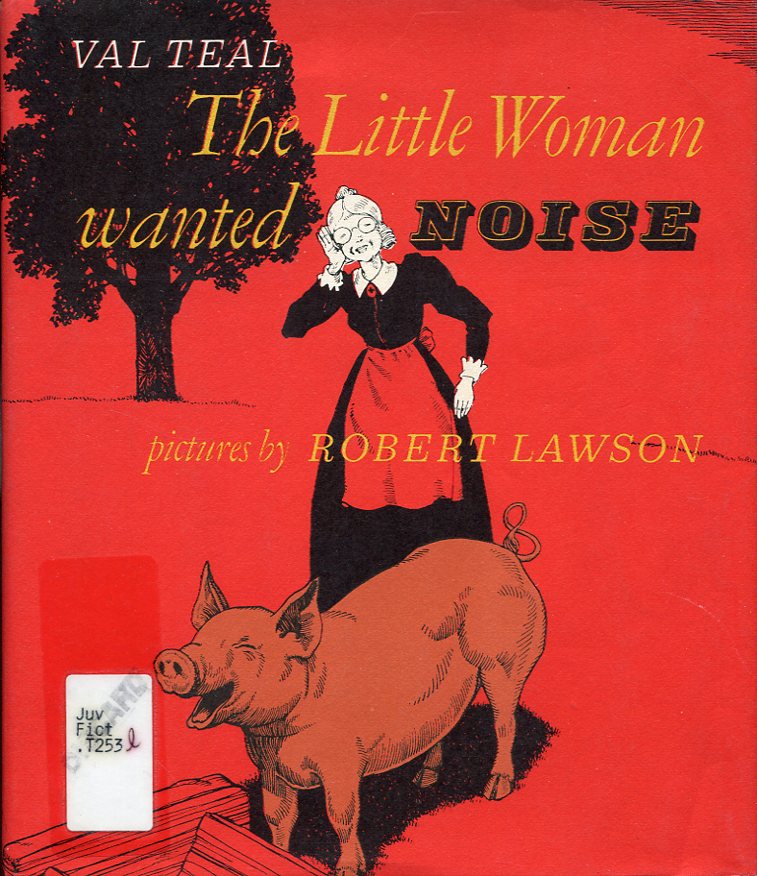 I HAVE A GUEST POST on Vintage Kids' Books My Kid Loves today,
The Little Woman Wanted Noise
by Val Teal, illustrations by Robert "The Story of Ferdinand" Lawson. It's an animal sounds book that all parents with little little ones should get their hands on.
I HAVE A GUEST POST on Vintage Kids' Books My Kid Loves today,
The Little Woman Wanted Noise
by Val Teal, illustrations by Robert "The Story of Ferdinand" Lawson. It's an animal sounds book that all parents with little little ones should get their hands on.In case you haven't been following on Facebook, I also appeared on NPR's The Dinner Party last week, got another rave review in The Washington Post on Monday, and had a list of great crime novels on The Huffington Post also on Monday, among other exciting things. I hope to be back with a proper We Too Were Children post sometime before school starts, but we'll just have to see. Thanks for your patience.
All images are copyrighted © and owned by their respective holders.

July 26, 2012
THE TWENTY-YEAR DEATH
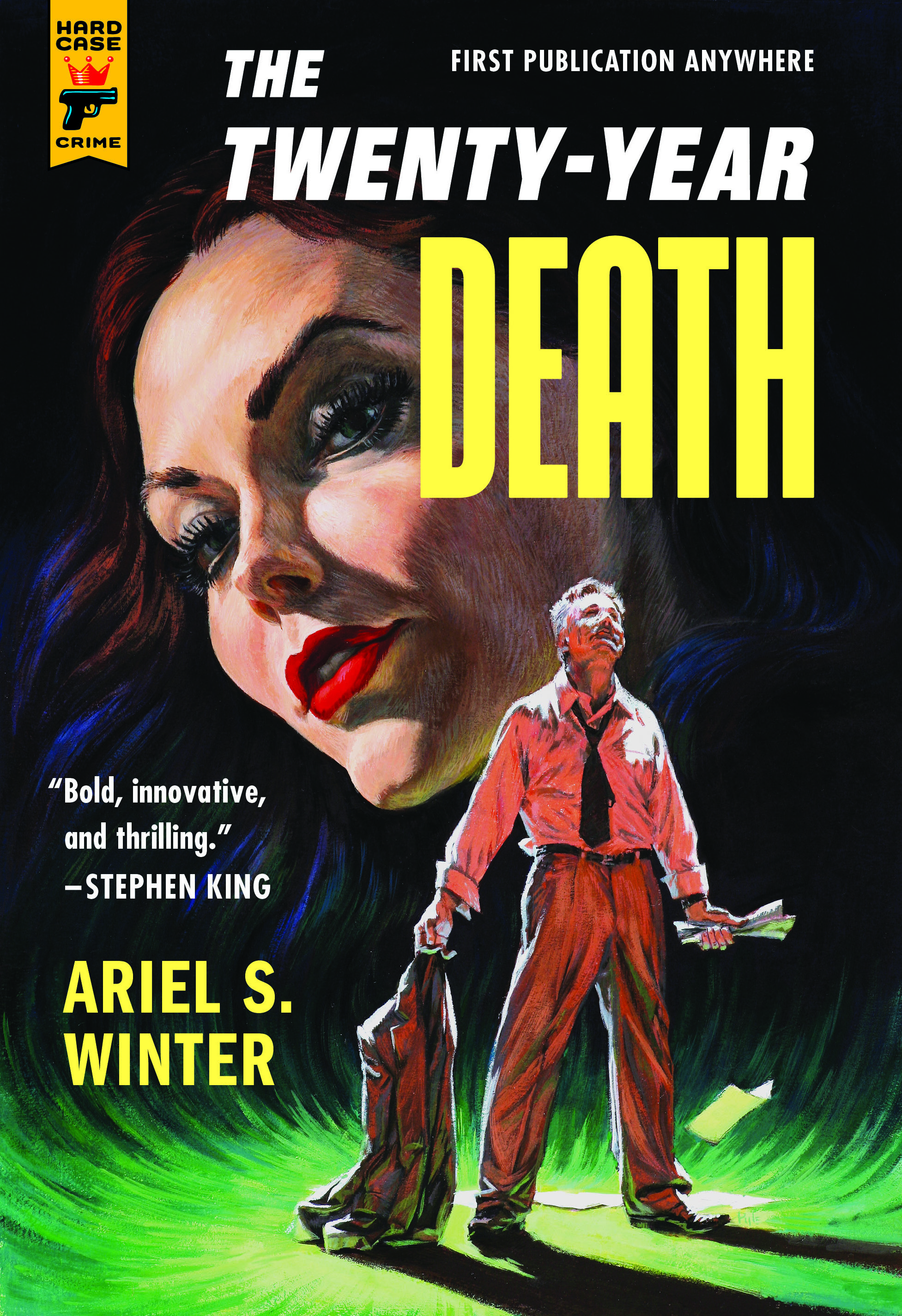 IT'S BEEN QUIET here on We Too Were Children, but with good reason. My novel for adults The Twenty-Year Death comes out on August 7th. The L.A. Times today calls it a "Triumph." Stephen King (as you can see on the cover) calls it "Bold, innovative, and thrilling." Booklist says it is "immersive, exhilarating, and revelatory." People are excited! And as a result, I have spent the last month writing lots of guest posts, top ten lists, and essays that will appear on many different websites in the next few weeks. I have given a number of interviews, which will also show up online soon. And starting today, my new short story "Pawn" will be released on Hard Case Crime's Twitter feed sixty tweets a day for the next week (so make sure you follow @HardCaseCrime). To stay on top of all of the news, head over to my Facebook profile and hit the Like button. And most importantly, pre-order the book.
And as soon as the dust settles, I will be back with more We Too Were Children.

June 18, 2012
GERTRUDE STEIN: THE WORLD IS ROUND, FRANCIS ROSE ILLUSTRATIONS
 WHEN GETRUDE STEIN WROTE
THE WORLD IS ROUND
, her first choice for illustrator was one of her protégés, the painter Sir Francis Rose. Her editors, William Scott and John McCullough, however were opposed. They felt Rose's art would not appeal to children. As McCullough wrote in a letter to Stein, the "rather studied decadence and sophistication, though possessing qualities of its own strikes me as neither appealing to children nor particularly appropriate to the imaginative vitality of your writing." Stein in a letter to her good friend Carl Van Vechten said, "the editor William R. Scott 224 West Eleventh Street and the editor of [The World Is Round] John McCullough have found an illustrator, I had suggested Francis Rose but they seemed to want an American, they sent me some of the illustrations by Clement Hurd, they seem sweet but very undistinguished..." Hurd became the illustrator, and ended up doing three iterations in his lifetime, as I have written about in my original post (link above).
WHEN GETRUDE STEIN WROTE
THE WORLD IS ROUND
, her first choice for illustrator was one of her protégés, the painter Sir Francis Rose. Her editors, William Scott and John McCullough, however were opposed. They felt Rose's art would not appeal to children. As McCullough wrote in a letter to Stein, the "rather studied decadence and sophistication, though possessing qualities of its own strikes me as neither appealing to children nor particularly appropriate to the imaginative vitality of your writing." Stein in a letter to her good friend Carl Van Vechten said, "the editor William R. Scott 224 West Eleventh Street and the editor of [The World Is Round] John McCullough have found an illustrator, I had suggested Francis Rose but they seemed to want an American, they sent me some of the illustrations by Clement Hurd, they seem sweet but very undistinguished..." Hurd became the illustrator, and ended up doing three iterations in his lifetime, as I have written about in my original post (link above).In 1965, Haskell House, "Publishers of Scholarly Books," at last released an edition with Sir Francis Rose's illustrations. The first is a halftone reproduction of what looks to be a watercolor sketch labeled "Rose" and dated 1939, the year the first edition of The World Is Round appeared.

The rest are black and white line drawings interspersed throughout the text. I have not been able to ascertain if the line drawings were also executed in 1939, making the Haskell House edition a restoration of sorts, but I suspect they were not and were created specifically for this edition.


 In 1958, Rose again lent his talents to a book closely connected with Stein, The Alice B. Toklas Cookbook, by Stein's life partner Alice B. Toklas. The cookbook went on to become a bestseller.
TO SEE ALL OF FRANCIS ROSE'S ILLUSTRATIONS for The World Is Round, visit my Flickr set here. In addition to the research I did for my original post, for this post I consulted The Letters of Gertrude Stein and Carl Van Vechten: 1913-1946, and Margaret Wise Brown: Awakened By The Moon by my distant cousin Leonard S. Marcus.
All images are copyrighted © and owned by their respective holders.

June 17, 2012
HAPPY FATHER'S DAY
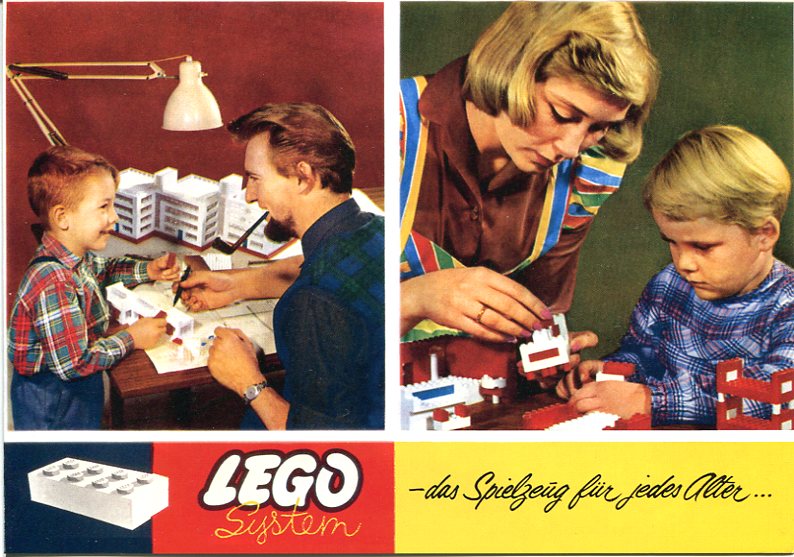 SORRY I'VE BEEN M.I.A. As you may have noticed, my picture book
One of a Kind
came out at the beginning of the month. I was at Book Expo America that whole week, and I've had a few other events since then as well. I have a post that is practically ready to go up, which I'll publish in the next few days.
SORRY I'VE BEEN M.I.A. As you may have noticed, my picture book
One of a Kind
came out at the beginning of the month. I was at Book Expo America that whole week, and I've had a few other events since then as well. I have a post that is practically ready to go up, which I'll publish in the next few days.In honor of Father's Day, I've added this image to my Flickr photo set Dad's the One With the Pipe . It's the first German LEGO catalog from 1959. (I scanned a facsimile.) As you can see, even in Germany, Dad's the one with the pipe. Click through to my photo set for more from the heyday of pipe-smokin' Pop. Happy Father's Day.
All images are copyrighted © and owned by their respective holders.

May 15, 2012
UMBERTO ECO: THE GNOMES OF GNÙ
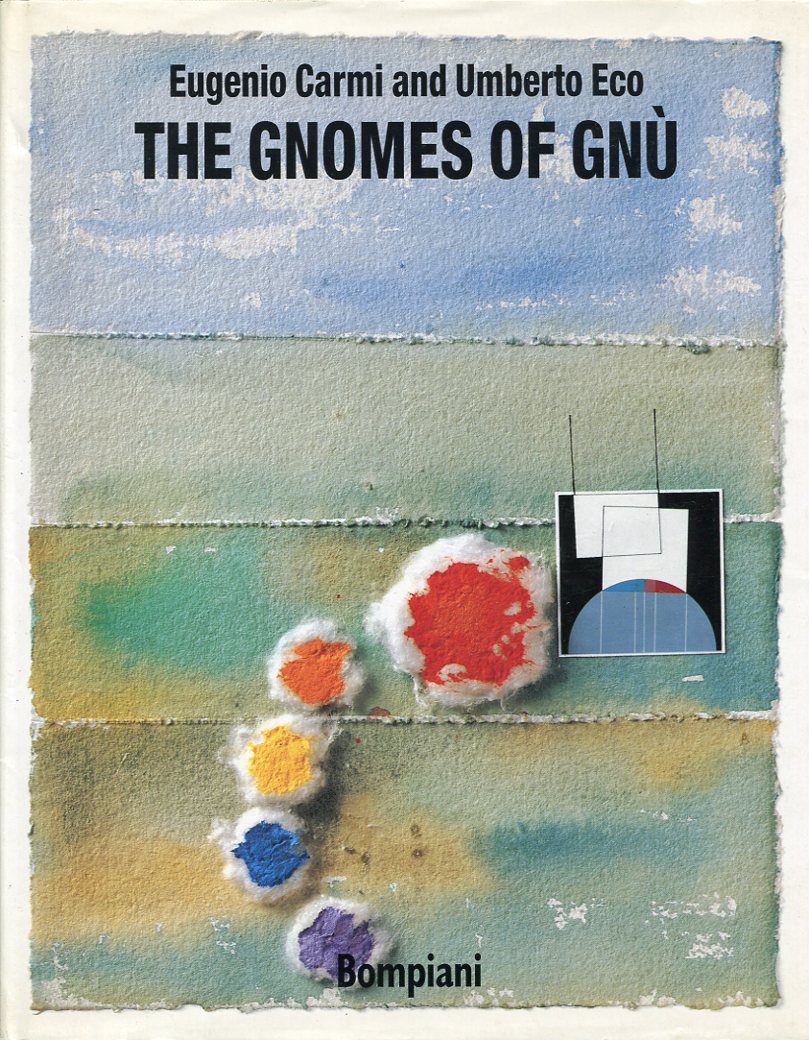 A LITTLE OVER TWENTY-FIVE YEARS after they published their first two children's books, Umberto Eco and Eugenio Carmi published the ecological parable The Gnomes of Gnù. Like in the earlier works, The Gnomes of Gnù carries a heavy-handed message, in this case that we should work on cleaning up the earth. But unlike
The Bomb and the General
and
The Three Astronauts
, The Gnomes of Gnù lacks a clear protagonist that undergoes some kind of change meant to represent the change we should all make to improve the world. There is a protagonist, the Space Explorer (called SE throughout), but he functions simply as a lens that focuses on all of the ecological horrors that plague the earth: smog, oil spills, deforestation, not to mention drug abuse and automobile accidents, not quite ecological, but still a problem. He's willing to then be the messenger of change, but not through any conviction, simply because, why not? As a result, the book isn't that compelling, which is perhaps why it is so scarce. Only five libraries hold the English edition worldwide according to WorldCat.
A LITTLE OVER TWENTY-FIVE YEARS after they published their first two children's books, Umberto Eco and Eugenio Carmi published the ecological parable The Gnomes of Gnù. Like in the earlier works, The Gnomes of Gnù carries a heavy-handed message, in this case that we should work on cleaning up the earth. But unlike
The Bomb and the General
and
The Three Astronauts
, The Gnomes of Gnù lacks a clear protagonist that undergoes some kind of change meant to represent the change we should all make to improve the world. There is a protagonist, the Space Explorer (called SE throughout), but he functions simply as a lens that focuses on all of the ecological horrors that plague the earth: smog, oil spills, deforestation, not to mention drug abuse and automobile accidents, not quite ecological, but still a problem. He's willing to then be the messenger of change, but not through any conviction, simply because, why not? As a result, the book isn't that compelling, which is perhaps why it is so scarce. Only five libraries hold the English edition worldwide according to WorldCat.
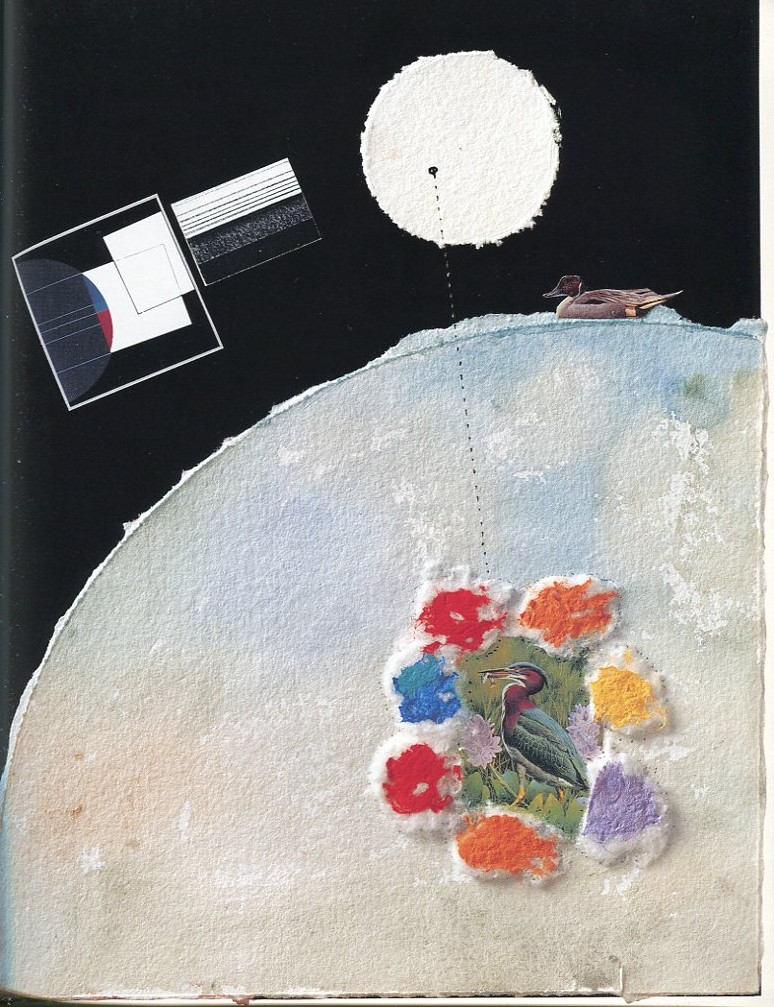
"ONCE UPON A TIME there was on Earth -- and perhaps there still is -- a powerful Emperor, whose greatest desire was to discover a new land." His ministers have to inform him that all of the land on Earth has been discovered, and that space exploration is the future of discovery. So he sends out a Space Explorer, SE, to find a beautiful planet to which they can bring civilization.
After combing "the immensity of space for a long time," finding only barren rocks and spitting volcanoes, SE finally finds an inhabited planet: Gnù.
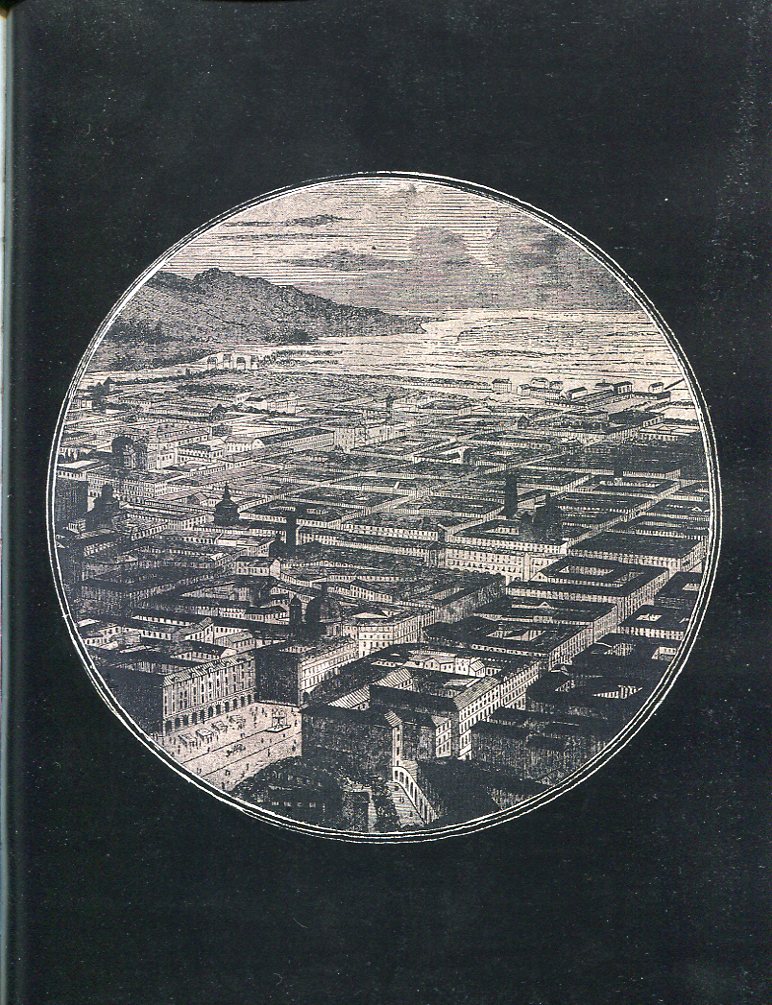 The gnomes of Gnù come out to meet SE, and SE tells them he's discovered them. They say that they discovered him, but they won't quibble over the matter, "otherwise we'll spoil our day." SE says he's come to bring them civilization. The gnomes ask what civilization is.
"'Civilization,' SE answered, 'is a whole lot of wonderful things that Earth people have invented, and my Emperor is willing to give it all to you free of charge.'"
The gnomes require more of a definition than this, so SE pulls out "his megalactic megatelescope and trained it on our planet."
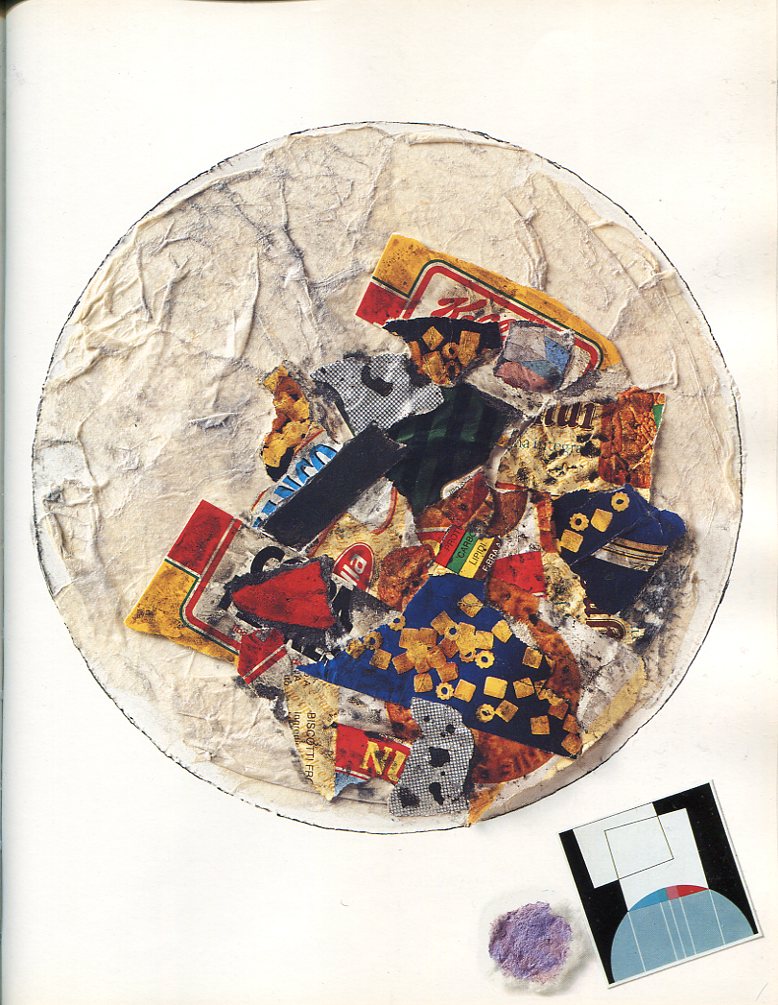 That's where, somewhat embarrassed, SE has to admit that Earth has smog, oil spills--"'You mean your ocean is full of shit?' the second gnome asked, and all the others laughed, because when somebody says 'shit' on Gnù, the other gnomes can't help laughing.'"--, litter, deforestation, traffic jams, automobile crashes, disease from smoking, intravenous drug abuse, and motorcycle accidents. The gnomes are understandably not interested in receiving civilization.
"'Listen, Mr. Discoverer, I've just had a great idea. Why don't my people go down to Earth and discover you?'" The gnomes can then teach everyone to take care of meadows, gardens, trees, to collect litter and end pollution, and to walk instead of drive.
SE just says, "'All right then..I'll go home and talk about it with the Emperor.'"
At home, the ministers aren't going to let the gnomes come without the proper papers. Then one of them trips on chewing gum and is grievously injured, thus changing the subject.
"For the moment our story ends here. We're only sorry we can't add that everybody lived happily ever after." Let's just hope we can do on our own what the gnomes would have taught us.
TO READ THE GNOMES OF GNÙ in its entirety, you can view it as a Flickr set here. To answer your question, yes, the book actually uses the word "shit."
All images are copyrighted © and owned by their respective holders.

April 19, 2012
TWO WHOLE YEARS
 TWO WHOLE YEARS. It's been two whole years since I launched We Too Were Children, Mr. Barrie. I may not post as often as I wanted to in the beginning, (I thought I'd get a new author up a week!) and I may not have posted in a while (almost two months since my last "real" post), but I'm still here and have lots more planned. (I've partially scanned the long-ago promised The Gnomes of Gnu by Umberto Eco, and hope to have it up next week, emphasis on the "hope.")
For the longest time, especially in the beginning, I often wondered why I was doing it. Was anyone reading? But since then, many of you have let me know how much you appreciate the blog, and that makes it worth it. According to Blogger's built-in stats, I've had over 102,000 page views since the start of the site, and I average about 300 page views a day even when I haven't posted in awhile. I have 134 followers here, and Google Reader tells me I have another 274 followers there. (And that's the extent of my know-how in terms of guesstimating my audience.) Thank you to everyone for reading. Thank you for your words of encouragement. And please keep checking back as I am by no means done.
You may have noticed over on the right that I have two books coming out in the next few months, both a children's picture book and a novel for adults. If you want to stay in the know, see some behind the scenes treats, and keep track of where I'm going to do book signings be sure to Like my Facebook page. (Stephen King said of my novel, “Bold, innovative, and thrilling – The Twenty-Year Death crackles with suspense and will keep you up late.”) This is going to be a very exciting year. Thank you all.
All images are copyrighted © and owned by their respective holders.

April 5, 2012
ETIENNE DELESSERT: BEING GREEN (Guest post on Vintage Kids' Books)
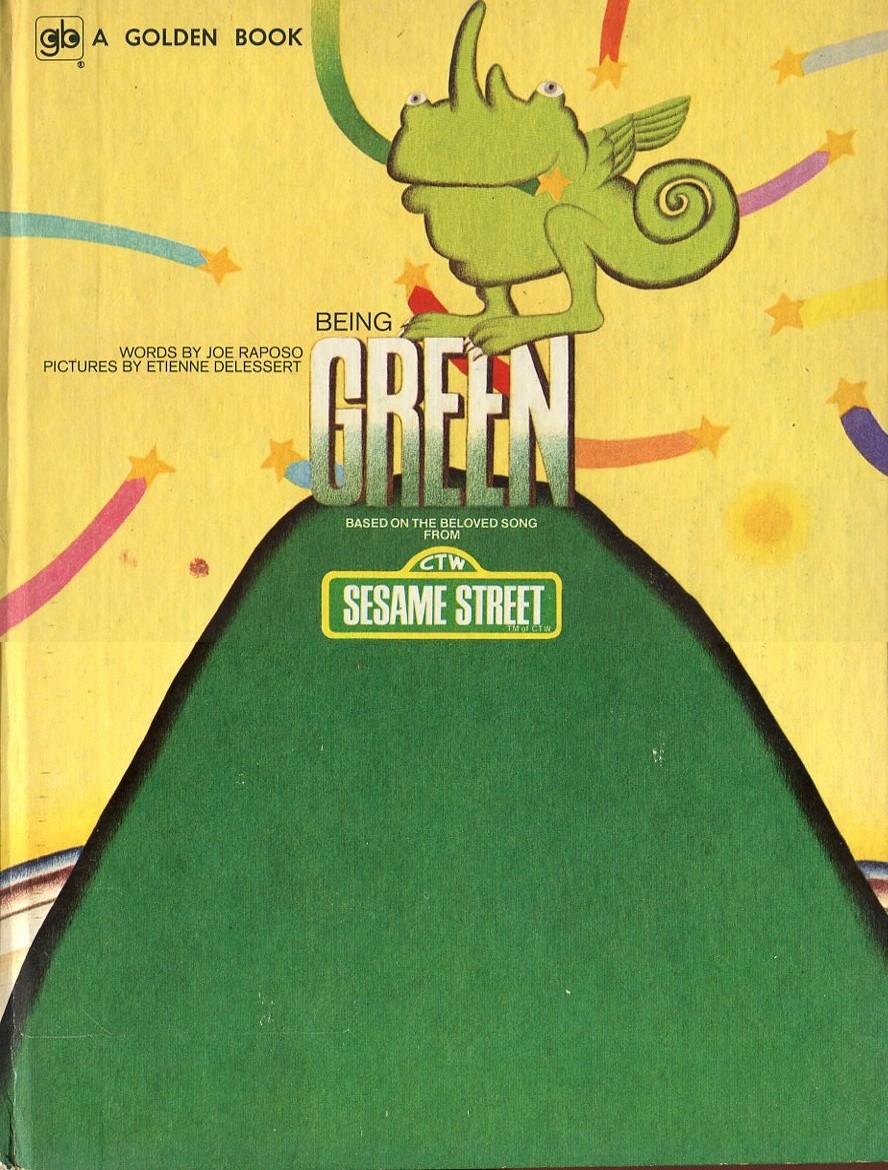 LAST MONTH I POSTED an interview with master children's illustrator Etienne Delessert regarding his work with Eugène Ionesco. One of the Delessert treasures that I've been longing to share is his picture book version of Being Green, Kermit the Frog's anthem about fitting in, written by Joe Raposo. There are no adequate words to describe this book. Every Muppets fan, children's book fan, and illustration fan should see it. Yesterday, I guest posted on Vintage Kids' Books My Kid Loves, sharing my experience of the book. I have also posted the entire book as a Flickr set. Cue up the song on YouTube and enjoy.
All images are copyrighted © and owned by their respective holders.

Ariel S. Winter's Blog

- Ariel S. Winter's profile
- 67 followers
Ariel S. Winter isn't a Goodreads Author
(yet),
but they
do have a blog,
so here are some recent posts imported from
their feed.

