Naomi Dathan's Blog, page 8
June 15, 2015
I Love Powerful Women. Especially Tiny Ones
. . . who haven’t yet learned that their power makes them unattractive.



Commit Mayhem.
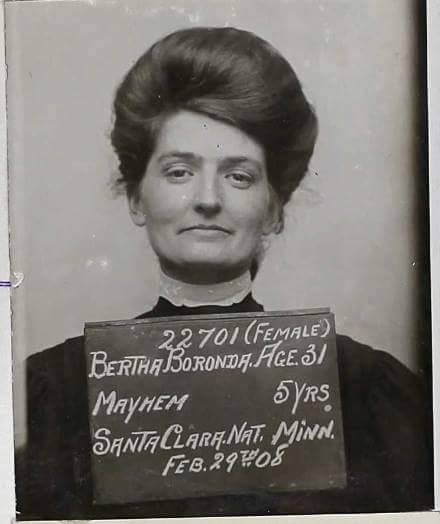
And don’t even be sorry.


June 10, 2015


June 9, 2015


June 2, 2015
I Quit.
I’m an entrepreneur walking on a thin, thin line.
I’m not young. While I’m not exactly old either, I’m probably way too old to start a career in Filemaker Pro with no tech background.
Before I started, I was a novelist and caregiver — not a business woman.
My lack of tech background means I don’t know any of the technologies surrounding Filemaker. I don’t know SQL, HTML or any other important strings of letters.
Nearly everyone in my business starts out with a mentor, but I don’t have one.
Every new advance in the Filemaker Pro platform terrifies me, because this could be the innovation that my poor, nearly fifty year old brain just cannot comprehend.
So I quit a lot.
I think the first time I definitely quit was when I killed my Mac. I was working full time at a temp job, trying to master Filemaker on my lunch hour. Thanks to the systemically bad plumbing in the moneypit house we were living in, My Tom had fallen in the shower and gotten a head injury that we’re still dealing with today. In ad attempt to clear the pipes, I filled a 5 gallon bucket with water to dump down the toilet. The bucket slipped and a tidal wave of water washed up to the bathroom counter. The Netflix show I was listening to went silent, and without even a single last gasp, my Mac was dead. I was without my computer, and, in fact, without my one and only Filemaker license key, and I had no money to replace either one.
It was a sign from the universe that I’d been pouring way too much time and effort into a futile pursuit. I was obviously never going to master cascading value lists anyway. So I quit.
A month later, I used our tax refund check to replace the laptop and a new copy of Filemaker Pro Advanced.
When Filemaker announced the release of Filemaker 13, I quit again. I hadn’t even succeeded in mastering Filemaker 12, and now here was a new version to learn! I would never catch up! I let My Tom know that I was done and he, as he does, let me rail on and make plans to “get a real job.”
I listened to the podcast Filemaker Success Tips (a great source of information and perspective), and gradually realized that Filemaker 13 was a new version of what I was already learning — not an entirely new technology.
I quit when I couldn’t find my first client. I quit when I was overwhelmed by building my first client’s database. I quit when her database was done and it didn’t lead to future work. I quit when I was faced with the impossible tasks of really setting up the business — the tax ID, the accountant, the bank account, the LLC.
I quit when my second client called me, because, who was I to think I could do this for a living?
I quit virtually every time I send an invoice, because I’m certain the client will be mad at me. For charging them the price they agreed on for the work they asked me to do.
When a client did push back against an invoice (that’s another blog), I resolved the problem in my mind by deciding to quit. So much easier than what I ultimately did — sent and email, worked through the misunderstanding, salvaged and rebuilt the relationship.
I quit again yesterday. I was headed into a lunch meeting with a client I really like. He’s smarter than I am and has a long history of working with databases and tech software (compared to me, the one trick Filemaker pony). I’m sure you’ve heard that writers have to be keenly observant, in order to create their worlds on the page, but I am not keenly observant and I don’t remember faces or names. I’m horrible with faces and was worried that I would walk past the client without recognizing him. We were going to discuss his database, and I was convinced this would be the time that he and I would simultaneously realize I don’t know what I’m doing. And worst of all, I also had to invoice him. So he was going to be angry with me for wanting money, obviously.
My stress was compounded by life things — tomorrow My Tom is going to have brain surgery to try to resolve the pain from his injury. I may also be getting surgery this month. I’m ecstatic to have won a scholarship to DevCon in July, but human numbers can’t express how nervous I am to be among other developers for the first time.
On the way into the restaurant, I quit.
It’s always such a relief, such an unloading of stress, to decide to let the business go. I’ll just get a job working for someone else; let someone else carry the burden of finding clients, figuring out taxes, absorbing the risk. I’ll show up, put in my time, maybe as a receptionist or dry cleaning clerk. Something that doesn’t require me to think or research or solve puzzles.
The meeting went great. This client is so generous with his business experience, so after we planned our next moves I picked his brain for more wisdom. By the time I walked out of the restaurant, leftover enchiladas in hand, I decided to keep the business going for another day or so.
Today was a better day, but tomorrow I’ll be trying to revise a dashboard and some schemawhile a doctor saws a piece of My Tom’s skull open and manipulates and artery and a nerve.
I may quit.
 What? No, I’m totally relaxed as I embark on my career. I’m fine.

May 20, 2015



May 19, 2015
Press Release (and Happy Announcement) :-)
On May 15, Keena Tomko, a Lakewood-based Filemaker Pro business consultant, won the 2015 DevCon scholarship to attend the Filemaker Pro industry conference in Las Vegas.
The scholarship, sponsored by Filemaker Pro consulting companies Thorsen Consulting and iSolutions, was developed to bring new people into the Filemaker Pro community. Keena Tomko and co-winner Jesse Wakley were chosen from a very competitive pool of applicants.
Tomko wrote in her application essay that after finding herself widowed and in debt, she discovered Filemaker Pro and studied on lunch hours and evenings until she was ready to launch her database consulting business in 2014. She currently provides services to several Cleveland and Akron manufacturers, and has formed a group to find and coach potential new developers.
“There are many other people who are in similar situations,” she wrote in her essay. “Bright and willing to work but with no clear path before them. . . the DevCon scholarship will also benefit the careers of other potential developers who will get every drop of knowledge I can absorb while I’m there.”
“I still have a lot to learn,” she says. “There’s a lot to Filemaker. But everything I learn, I pass on to the group. Right now we’re having a Filemaker trivia contest — the one with the most points wins a $25 gift card. My eventual goal is to hire good people, or even them get them trained so other companies hire them. It’s a great career.”


May 18, 2015
Best Practices
Whether you are a manager, a cog in the wheel, or scratching together a business with your two hands (or all three), you should keep the concept of “Best Practices” in mind. A fast Google search returned this definition:
Commercial or professional procedures that are accepted or prescribed as being correct or most effective.
 “Hold on, Mister. Have you been cleared to access this computer?”
For example, in a manufacturing setting, a best practice would be to require clear pathways at all times. Employees with quotas may be impatient with or even angered by the enforcement of the policy by management (“We’ve got three backlogged orders and she’s worried about whether the aisle looks pretty!”) But it’s up to management (and long-sighted employees) to understand that clutter can cause accidents that not only create delays but could cause injury or even death.
How do you establish Best Practices?
1. You’re probably a better person than I am, but I have a tendency to re-invent the wheel. Why learn from the wisdom of those who have gone before when you can figure everything out by a series of painful experiences? You’re better than that. Whatever your industry, someone has already dealt with many of your same challenges. They’ve had stalled production, angry customers, injured team members and lost data.
You have an internet — use it! Find out what others have done to prevent and address these problems.
2. Constantly monitor and refine. While you can learn from others’ experiences, your situations will be unique. Their wisdom is your jumping off point. Figure out a way to track specific outcomes, change things up, and compare results.
3. Enforce compliance. Explain to your team why these Best Practices are essential. Reward compliance. Address non-compliance, every time. Make sure job requirements don’t force employees to choose between job success or compliance.
4. Seek feedback. You can’t address a problem until you know about it. Put a system in place to gather feedback from customers, co-workers and every employee on the line. Make sure every employee has more than one way to convey concerns to you, and make sure you respond in a positive way.
You’re so busy trying to stay out of the red, it’s far too easy to fall into a pattern of putting out fires. Unfortunately, taking that approach can only work for so long before one of the fires gets ahead of you. Be knowledgeable and proactive, and, like the bear says, prevent those forest fires.


May 14, 2015


May 12, 2015
Go Get It.
I was poor most of my life. I’ve cut mold off one end of the cheese block. I’ve gathered children’s half-eaten apples and used them to make applesauce. I’ve cut up stale food bank bread and made it into French toast sticks. I’ve felt like the shabbily dressed one, the boxed-hair-color one, the ragged cuticle nailed one in many settings.
Truth: While we talk a good game about America being the land of opportunity, our economy is set up so the poor usually stay poor. If you are poor — if you’ve ever stared at a bounced check notice and had absolutely no idea how you were going to handle it, or if you’ve ever been far from home with $3 in gas money — you might make a few visitations to lower middle class over your life, but you’re probably not going to be president.
Now, you may be mentally arguing that our current president was a poor kid on food stamps once. In fact, if you look you’ll find other examples of poor kids who made good — celebrities, inventors, brilliant minds, who beat the odds and made it to the top. We hear about them because they did beat the odds. The odds were stacked against them, and with some combination of hard work, brains and luck, they overcame the odds.
By definition then, most people do not overcome the the odds. Most of us will not be millionaires. We will not win the lottery. We will not be discovered by Simon Cowell during a late night karaoke session. We will not save the president’s daughter and become a media darling.
Please understand, I’m not trying to kill your hope. “Hope” is a small word, but it keeps our eyes open and our hearts beating. But while we all need a certain amount of wild imaginings, those aren’t hope. Notice that with each of my examples, your ultimate success is beyond your control. Unless you pulled a Lucille Ball, you didn’t arrange for Simon Cowell to be in that seedy karaoke bar, and hopefully you didn’t put the president’s daughter in danger so that you could rescue her. You were just walking along one day and something amazing happened to you that solved all of your problems and catapulted you into a world of fine dining, high fashion, fast cars and adoring paparazzi. Fantasies are fun, but they aren’t useful when you’re making life decisions.
Keep your imaginings, but separate them from your hope. What is your hope? That you’re kids will never grow to hate you? That your romantic relationship will endure and age into the finest of wines? That you’ll reach a point of financial security, where the phrases “pay bills” or “grocery shopping” don’t cause an automatic clench in your stomach? That you’ll be able to help the less fortunate, instead of always being helped by the more fortunate? That you’ll be healthy?
These sound like modest goals, but in truth, they are everything. Even the ones are born or stumble into wealth, security and fame often fail to find them, even knowing, as you do — as we all do — that these hopes are far more under our control than the wild imaginings.
Of course none of these hopes are completely under your control. A bad heart arrhythmia or failing pancreas can break a lot of the above hopes. You can’t fix the economy. You can’t make people love you. No matter how much we put into our children, in the end they will do what they will do. The same goes for our romantic love.
Unlike your wild imaginings, though, attaining your hope is often under your control. You can work out, train, practice, get counseling, or educate yourself. Also, unlike your wild imaginings, you can improve the odds.
Back when my life was the hardest, when I was virtually always exhausted and my nerves were drawn taut between the grip of money worries and terror of the future, I sometimes talked about the dream of losing weight. At that point it was more of a fantasy than a hope; I really had nothing left inside of me to direct toward such a pretty dream. But that didn’t stop people from giving helpful advice, like, “Just get up a half hour earlier and work out! It’s just a half hour so you won’t miss the sleep and it will make all the difference.”
Here I’ll stop to reassure you that I didn’t kill people who said that to me, or even cut long ribbons of flesh off their faces (I tended to reserve that for people who reminded me that God never gave me more than I could bear). At any rate, it made me angry. It hurt me. It made me indignant: How can anyone, knowing I was caring for a chronically ill, dying man, smile into my strung out face and recommend that I do more?
But — and here’s the important thing — I did do more. I plotted books in my head while pushing IV’s. I took notes on healthcare customer service rep’s speech patterns while I argued with them. I sat in frigid emergency room cubicles, butt-numb on hard plastic chairs, typing word after word after word, making my lovers lover deeper, my bad guys meaner, my tension more goose-bumpy.
I had no money. I ate badly. My kids were miserable and their dad was a dying shell. Health care collection companies knew my favorite color and my dogs’ name. My giant hair had bloomed into a tumbleweed with gray roots. But by God I wrote.
For many people, selling a novel is a fantasy, one of those wild imaginings. But for me, it was a hope. Writing is as central to me as the bones in my spine. I had a goal, and I had a plan to get there. In 2011 I sold three books, just before my life changed entirely. The hope was realized.
This blog is almost a thousand words long, so I’m sure anyone who happened to click this way has already moved on, but I’ll get to the point anyway.
Around the time I turned twelve, two things happened to me: I started to eat for comfort, and my love for reading grew into a need to write. In concrete terms, selling a book is actually more difficult than losing weight. However hard it may be internally, if you eat well and exercise enough, you will lose weight. The only factor really beyond your control is health conditions — issues or medications that genuinely prevent weight loss. No matter how hard you work to learn to write well and create a great finished products, your success will always be dependent on the opinion (whim) of editors and the reading public.
in my case though, while I often imagined myself at a healthy weight, it wasn’t real in my mind. By contrast, selling a book was absolutely inevitable. That was my hope. If someone had advised me to get up a half hour earlier to sell a book, I might not have been able to do it because of physical limitations, but I would have seen the logic.
As I mentioned, things have changed for me. I say I don’t write anymore, although of course I send this blog out into the void every month. My passion is for my Filemaker business is nearly as core as the writing, and much more tangibly rewarding. I’m 49 years old, so my acute awareness of my mortality has elevated healthy living from a pretty imagining to a core hope.
Now you know my story. What is yours? Sort through your favorite dreams. Which are core hopes? Which are pretty imaginings?
Have you allowed life, obligations, or the expectations of others to drive your core hopes into the background?
I made so, so many mistakes during those hard years (I continue to make them) and abandoned more of my core self than I retained. The writing was one of the last and only things I held on to. But my absolute, unquestioning commitment paid off (in satisfaction; not in any tangible way).
That’s the part of you that I want you to find. Whether it’s writing, or Filemaker developing, or being a doctor, admit it. Honor it. Own it. Let it own you. Maybe it seems like one of your wild imaginings, like that time when you were the only person on a plan who was able to talk down the terrorist and save the 213 souls on board. Maybe people in your life agree — maybe they’re a Greek chorus of Can’t. But you know. When your hands start to shake from exhilaration watching a surgery. When stories run in your head, night and day. When you see an injustice and are obsessed with righting the wrong.
 Find your path — YOUR path. And follow it, no matter what the seagulls screech at you.