
Austin Ratner's Blog, page 12
November 30, 2010
Goodnight Nobody
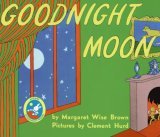 Goodnight Moon by Margaret Wise Brown
My rating: 5 of 5 stars
There is still no children's book to my mind that conveys so great a sense of peace, security, and well-being as does Goodnight Moon. Clement Hurd's illustrations are just as compelling as the words. The translation of the people into bunnies, while hardly the first personification in the history of books, does a great deal to foster that very safe feeling that emanates from the "great green room"--the complexities of people and human relationship are for the time being ignored. As others have noted, the parental figure and the child do not interact in this story; the parent is more like a part of the furniture, like a part of the heavenly firmament, like a moon. What's important about her is that she is there, and in some sense will always be there, following right beside you in your mind as a moon follows along with you as you go for a walk at night or even if you drive a country road in a speeding car; it is with you; it sets, but it always returns. The narrative strategy of Goodnight Moon is akin to the first lines of Genesis--a naming of things. But it isn't a story of creation upon the void, but an insistence that all that was there will remain there, even at night, that darkness or unconsciousness or anything that may reside in a child's imagination, does not abolish the elements of his or her world. They are sturdy. Quietness and gentleness are sturdy. Love is sturdy. It will not disappear from the earth. The only thing that doesn't exist is nothingness and nobody itself: even "Nobody" has sufficient being to warrant an individually addressed goodnight. The mouse that's on every page also seems to reiterate without saying it, in a way that is more vital than words, that is antecedent to words, that is real and independent of the child: I am here, I am here, I am here...
There is a less reassuring, but interesting, story behind the disposition of the royalties for Goodnight Moon--not what you think, not a squabble over money, but something at once more strange and sad. For the story, go here. That is reality, that is life; but it's not the part of life to which Goodnight Moon addresses itself, a part that is real, that is there, that is there, that is there....
View all my reviews


November 23, 2010
In the Black Corner, Death; in the Red Corner, Tolstoy
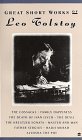 Great Short Works of Leo Tolstoy by Leo Tolstoy
My rating: 5 of 5 stars
The great short works of Tolstoy are in fact great, but they are not, unsurprisingly, short. My edition of almost 700 pages approximates a cube (it will stand up by itself on any of its six faces), and it's colored a dyspeptic puce as if to warn you in advance of the excess of it, the literary heartburn. The size of the book accurately suggests the titanic, unparalleled power of Tolstoy. In the cover photograph of the great writer working at his desk, his beard is like a cloud of factory smoke swirling around his industrious brain. He is a conqueror. He will prevail as the Russians prevailed over Hitler and Napoleon before him--by sheer size--an oceanic volume of thought, feeling, reality that can overwhelm anything, even Time, Death, or the deficits of translation from Russian to English.
Tolstoy is the great portraitist of all that's horribly obligatory in life--death and desire are the uncontrollable thunder and lightning that buffet the little human ego in the works of Tolstoy, much as they can in real life. I don't think there is anything in literature going back to the The Iliad that compares with Tolstoy's depictions of death and loss. Homer comes in second and it's not close. Here is the beginning of the first 'short' story in the group, "Family Happiness" (which weighs in at a slender 83 pages):
We were in mourning for my mother, who had died in the autumn, and I spent all that winter alone in the country with Kátya and Sónya. Kátya was an old friend of the family, our governess who had brought us all up, and I had known and loved her since my earliest recollections. Sónya was my younger sister. It was a dark and sad winter which we spent in our old house of Pokróvskoe. The weather was cold and so windy that the snowdrifts came higher than the windows; the panes were almost always dimmed by frost, and we seldom walked or drove anywhere throughout the winter.... The feeling of death clung to the house; the air was still filled with the grief and horror of death. My mother's room was kept locked; and whenever I passed it on my way to bed, I felt a strange uncomfortable impulse to look into that cold empty room.
As in the work of Robert Frost, the incontrovertible and indifferent will of the universe is plainly reified in a blanketing snow and wind at once inimical to human life and also, in a way, the opposite: an occasion for retreat to the comforting hearth of loved ones. But Tolstoy's characters are not passive or static in their grief; the main character in the next paragraph of "Family Happiness" frets over wasting another winter "in the solitude of the country." Desire always comes in the midst of grief to whipsaw the aggrieved from within and without. Tolstoy understands this perfectly and one feels that he--or his books, anyway--are a friend at your hearth who understands and consoles.
Harold Bloom has observed that Hadji Murád, the Chechen warrior in the penultimate story in this collection, in some ways represents a critique of the Shakespearean tragic hero. Shakespeare's tragic heroes usually bring disaster on their own heads, but Hadji Murád does everything right and he still loses. That is quintessential Tolstoy: it isn't up to Hadji Murád. It's up to forces much bigger than him.
Tolstoy hated Shakespeare for reasons that remain obscure to me, but he was so adept at the depiction of desire that he imparts a psyche of Shakespearean complexity and vitality to even the most peripheral characters. Everybody lives on Tolstoy's pages, even characters present for a line or two, because in that space any character that appears does so with evident desire. He creates so much life with his art, with such efficiency and skill, that you can almost hear the Grim Reaper crying out his surrender under the weight of all those many pages and pages of real human life.
View all my reviews
November 18, 2010
Leviathan
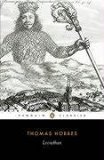 Leviathan by Thomas Hobbes
My rating: 5 of 5 stars
Hobbes reminds me, in a good way, of the ape who learned to act like a human being in Kafka's hilarious short story, "A Report to an Academy." The Kafka story begins:
Honored members of the Academy! You have done me the honor of inviting me to give your Academy an account of the life I formerly led as an ape. I regret that I cannot comply with your request to the extent you desire. It is now nearly five years since I was an ape, a short space of time, perhaps, according to your calendar, but an infinitely long time to gallop through at full speed, as I have done, more or less accompanied by excellent mentors, good advice, applause, orchestral music, and yet essentially alone....
Hobbes trains his attention on our primate nature, a nature prone to quarreling from three principal causes, as he sees it (p. 185, Penguin Classics ed.): Competition, Diffidence (i.e., fear), and Glory. And we are motivated in our quarrels accordingly, says Hobbes, by the objectives of Gain, Safety, and Reputation. I hear ya, brother, give me some of all that. He sure is preaching to the ape.
Many people think of Hobbes as a cynic with a low opinion of human beings. But that's wrong. On the contrary, Hobbes is very sympathetic with us hungry beings in need of food, safety, and respect. He is far more sympathetic to innate Desire than St. Augustine, for example:
"But neither of us [Hobbes himself and the average man who locks his doors at night] accuse mans nature in it. The Desires, and other Passions of man, are in themselves no Sin. No more are the Actions, that proceed from those passions, till they know a law that forbids them...." (p. 187)
Another reviewer expresses hatred for Hobbes because of his supposed endorsement of the reign of Christendom. There is a late section in Leviathan on "Christian Common-Wealth," and I confess I haven't read very much of that part, but what I did read was nothing other than an attempt to compel people with Christian morals to see that the Bible does not invalidate or supercede his rationalist political and moral philosophy. In Part II, "Of Common-Wealth," which I have read thoroughly, he makes it pretty clear what he thinks of religious claims to political authority (p. 230):
"And whereas some men have pretended for their disobedience to their Soveraign, a new Covenant, made, not with men, but with God; this also is unjust: for there is no Covenant with God.... But this pretence of Covenant with God, is so evident a lye, even in the pretenders own consciences, that it is not onely an act of an unjust, but also of a vile, and unmanly disposition."
All righty then. His revolution was the systematic application of reason to the planning of society; he derived his conclusions from first principles of human passions that he didn't intuit but observed, in others and also in himself--he exhorts us (p. 82), Nosce teipsum: Read thy self. Supposedly he knew Descartes and Galileo and was influenced by them; like them, he is one of those Leviathans of rationalist, humanist Renaissance thought who laid the groundwork for the Enlightenment. He was less imaginative than John Locke, it's true, when it came to the possible forms of political representation, but it was he, before Locke, who described government as a social contract between men by which those men defend themselves from each other and from their own passions; it was Hobbes who described government as a representative of its citizens and not of God.
It's impossible not to love the engraving on the cover of the Penguin Classics edition, which comes from the frontispiece of the original from 1651. Across the top it reads, "Non est potestas Super Terram quae Comparetur ei," meaning "There is no power on earth which can be compared to him." That's a quote from Job about a "big, ugly monster" as my three-year-old would say. But Hobbes means something different: he means the monarch who embodies the interests and security not of God but of human beings.
View all my reviews
November 12, 2010
James Joyce's Martello Tower
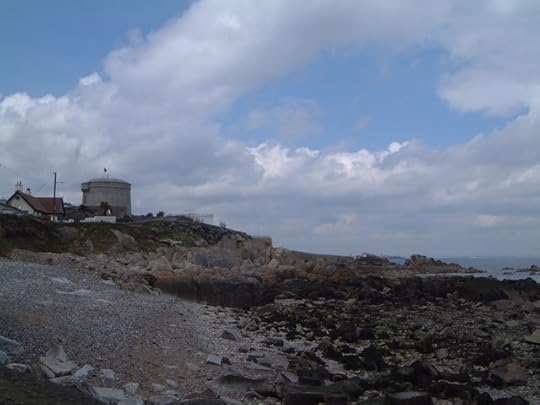 In September 1904, James Joyce lived in an old demilitarized tower on the coast south of Dublin. After his roommate nearly shot him in the middle of the night, he left the tower and Ireland forever. Joyce later set the memorable first chapter of Ulysses in the tower. It remains my favorite chapter of Ulysses (the rest is also not bad), and I visited the Martello Tower on my honeymoon, which was not quite before the advent of the internet, but definitely before the advent of Goodreads. More on the tower and the relation between fiction and reality in Ulysses plus a picture of me looking fairly bloated from a steady diet of tea scones on top of the tower in my blog, which guest stars this week at www.writershouses.com.
This link will take you there.
November 5, 2010
Walter Pater and the Modernists
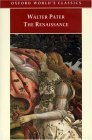 The Renaissance: Studies in Art and Poetry by Walter Pater
My rating: 5 of 5 stars
Good, empathic, sensitive, wise and true Walter Pater, secular prophet to a generation of modernists.
Pater’s aesthetics favor the neo-classicism and “Greek sensuousness” of the Renaissance, which he says “does not fever the conscience” in the way that medieval “Christian asceticism” does. He abjured the latter philosophy as one which discredits “the slightest touch of sense.” (However, he sees the roots of the Renaissance in the middle age, as far back as Abelard.) Major modernists like Joyce, Woolf, and Yeats drew inspiration from Pater and created an art continuous with the Renaissance in its focus on individual, worldly experience. This is what makes Adam Phillips's introduction to the Oxford World's Classics edition so execrable: he tries to appropriate Pater into a postmodern tradition of “terrible skepticism” that has very little to do with him and much more to do with the world-denying medieval philosophies Pater rejected.
With a line from the Bible, Pater encapsulates his idea of Christian asceticism as the antithesis of “artistic life, with its inevitable sensuousness”: I did but taste a little honey with the end of the rod that was in mine hand, and lo! I must die.
The speaker of this line, from 1 Samuel, is Jonathan, whose father Saul is one of the great nutcases of the Bible. Saul has declared a religious fast, enforceable by death, to thank God for delivering the Philistines into the hands of the Israelites. But Jonathan didn’t hear the decree, was hungry, and ate some honey (is that a euphemism?—eating honey off the end of his “rod,” which was “in his hand”? Hmm.). At any rate, when Saul hears Jonathan’s words, he responds with characteristic paternal feeling, “God do so and more also: for thou shalt surely die, Jonathan.” Saul, like Abraham before him who brought his son Isaac up a hill to kill him for his God, is prisoner to a conscience of irrational extremes. It’s up to people who think more sensibly about conscience to rescue Jonathan, and they do, declaring to Saul: “God forbid: as the LORD liveth, there shall not one hair of his head fall to the ground.”
That’s the kind of lawyer I’ll need in Purgatory, me and the great and decent Walter Pater.
View all my reviews
October 27, 2010
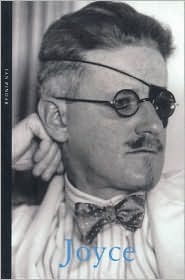
James Joyce's "Grace": Temperance of Conscience
 The psychoanalyst Eugene Mahon in 2006 published a wonderful paper in The Psychoanalytic Study of the Child entitled “The Invention of Purgatory: A Note on the Historical Pedigree of the Superego.” He writes of Purgatory as a kind of “third way” in the history of imaginings of the afterlife:
 “If Heaven and Hell sound absolute in their depiction of total damnation or total eternal salvation, Purgatory seems to represent a yearning for continued communication with the afterlife in an attempt to modify the imagined sufferings of departed ‘souls.’ ”
Mahon then poses the fascinating question: “Is the psychology that led to the concept of Purgatory a possible forerunner of the later Freudian concept of the superego, which, at its most mature, rejects splitting and magical absolutism in favor of a more reasoned assessment of guilt and pleasure?”
The question caused me to turn back to “Grace,” the penultimate short story in James Joyce’s collection Dubliners, in which Tom Kernan drunkenly falls down some pub stairs on the way to the bathroom and bites off the end of his tongue. The memory or idea of this incident seems to have had some importance for Joyce, as it reappears in Ulysses in the interior monologue of Molly Bloom: “Tom Kernan that drunken little barrelly man that bit his tongue off falling down the mens W C drunk in some place or other…” Joyce’s brother Stanislaus informs us that “Grace” treats the Kernan fall as an allegory: “Mr Kernan’s fall down the steps of the lavatory,” Stanislaus writes in My Brother’s Keeper, “is his descent into hell, the sickroom is purgatory, and the Church in which he and his friends listen to the sermon is paradise at last.”
Most of “Grace” takes place in that Purgatorial “sickroom,” where Kernan’s friends sit and talk with him while he recuperates; eventually, they make plans to atone, as inhabitants of Purgatory are meant to do. The word “grace” is in fact one intimately connected with Purgatory in the Christian faith. The Stanford Encyclopedia of Philosophy explains that Christian Purgatory is “the state in which those who have died in grace expiate their sins….”
Whether Joyce would agree with Mahon’s interpretation of Purgatory I don’t know, but Joyce clearly had Purgatory on his mind in the writing of “Grace,” a story I never much liked because it seemed to ridicule its own graceless characters in a simplistic and unsympathetic way. But rereading the story with Mahon’s insights in mind, I think Joyce may have been using the idea of Purgatory in a more sympathetic way than I first understood. While the characters certainly look foolish in their slapstick discussion of theology (Mr. Cunningham tells a ludicrous story about an Irish priest they all know who supposedly argued with the Pope over papal infallibility only to be overruled on the question by infallible papal verdict)—but while they’re foolish, they’re also wiser than I first guessed—especially the hero, Tom Kernan, with the bitten-off tongue.
Of the fourteen stories in Dubliners based on a Christian vice or virtue (that is, all the stories except “The Dead”), “Grace” occupies the anchoring fourteenth position. The virtue Joyce assigned to this story is clearly temperance, as Kernan and friends seek to temper their drinking. But more importantly, they exhibit a healthy temperance when it comes to the conscience that damns sinners to eternal Hell. As such, “Grace” is not only deep, but a sort of antidote to the damning syndrome of psychological paralysis introduced in the collection’s first story, “The Sisters.”
Kernan’s friends’ discussion of sin and atonement is warm-hearted, jovial, and hilariously funny, nothing like the grave treatment of sin in that opening story. There are no bottled-up, paralyzed, tortured figures here. Kernan amiably goes along with the plan to confess in church, but he knows the limits of his conscience. When Mr. Cunningham tells him he has to stand up with a lighted candle and renew his baptismal vows, he balks. Joyce writes:
“No, damn it all,” said Mr. Kernan sensibly, “I draw the line there. I’ll do the job right enough. I’ll do the retreat business and confession, and... all that business. But... no candles! No, damn it all, I bar the candles!”
Shortly thereafter Kernan rephrases his objection to the candle ceremony in a wonderful and telling way: “I bar the magic-lantern business!” he cries. It’s as though Mr. Kernan, in waving off “the magic-lantern business,” is renouncing precisely that “magical absolutism” of conscience that Mahon describes as the animating force in the Manichean system of Heaven and Hell. Kernan’s conscience “sensibly” makes a Purgatorial compromise wherein he’ll renounce Satan but not himself, who he stands up for with his sense of humor intact: “I’ll just tell him my little tale of woe. I’m not such a bad fellow—” he tells his wife.
This jolly, kindly, self-tolerant, all-together-now group of friends may drink too much, but it appears they’ve achieved a higher form of grace in Joyce’s eyes: temperance of conscience. This hilarious story of self-forgiveness has now become a favorite of mine. Another indication of its importance to Joyce is its prefiguration of Leopold Bloom, the amiable, self-tolerant protagonist of Ulysses; one of Kernan’s friends, Mr. M’Coy, is an advertising canvasser married to a soprano (like Bloom—and when Molly thinks of Tom Kernan in Ulysses she also has some unflattering words for Mrs. M’Coy’s singing). “Grace” also contains very funny mention of a banker named Mr. Harford, an Irish Jew like Bloom. Joyce writes that “his fellow-Catholics, whenever they had smarted in person or by proxy under his exactions, spoke of him bitterly as an Irish Jew and an illiterate, and saw divine disapproval of usury made manifest through the person of his idiot son. At other times they remembered his good points.”
Mr. Harford the Jew is not only saved, comically, from damnation but, in Joyce’s created conscience, granted an apotheosis—into the stardom of Leopold Bloom.
October 21, 2010
The Naturalist of Good and Evil
 Utilitarianism, On Liberty, and Essay on Bentham: Together With Selected Writings of Jeremy Bentham and John Austin by John Stuart Mill
My rating: 5 of 5 stars
John Stuart Mill is the rock star of moral philosophy. And I don't say that because he trashed his hotel rooms. He didn't trash them, or even stay in them, to my knowledge.
But he's got the sort of brilliance that sings, that fears no tradition and no opprobrium. Jeremy Bentham's idea of utilitarianism (a good action is one that has happiness of self and others as its consequence) was genius to begin with and Mill applies his own genius to it to give it another level of subtlety and versatility. Mill's utilitarianism is for me the most honest and helpful of moral philosophies.
Some people complain that utilitarian ethics neglect 'Kantian' notions of good: fairness and justice. Mill was aware of this complaint and he addresses those questions about the connection between justice and utility in Chapter V of Utilitarianism, titled "On the Connection Between Justice and Utility." See how to-the-point he is? And he addresses the question to my satisfaction, thoroughly. Mill is a naturalist who observes and describes moral sentiments more than he attempts to interpret the will of a moral God; he observes morals in action like David Attenborough hiding in the bushes and training his binoculars on a troop of baboons. I suspect he offends people who believe religiously that we are not animals and that morality is an emanation of the divine. Mill says, "[O]bjectively the dictates of Justice coincide with a part of the field of General Expediency." That is, you can explain the moral value of justice in the secular terms of utility. His analysis of moral instincts points ahead to Nietzsche's brilliant On the Genealogy of Morals and on to Freud.
Warning: Mill does often write in those endlessly lapping nineteenth century waves of dependent clauses upon dependent clauses. They seem to sway to and fro across the page and actually make my chin swing back and forth.
Spoiler: Mill dies. The chronological table says (p. 346) that he became godfather to a baby named Bertrand Russell in 1872 and died in 1873. I knew there was something foreboding about the fact that he was born in 1806, but still I was rooting for him.
View all my reviews
October 13, 2010
Pious Aeneas
 The Aeneid by Virgil
My rating: 5 of 5 stars
How is this for a blurb: I liked this book so much, I named my first-born child after its author.
Virgil is a legend. Just as the Romans 'Hellenized' the world and spread Greek culture to all of us barbarians in the hinterlands, Virgil helped to canonize Homer with his Homeric epic in Latin, The Aeneid. Virgil's poem follows Aeneas after the fall of Troy (just as The Odyssey follows Odysseus after the fall) and Virgil explicitly borrows from and transforms the work of his predecessor as writers have been doing ever since. For maximum enjoyment, read The Iliad and The Odyssey before The Aeneid and then go on to Dante's Inferno, where Virgil becomes Dante's tour-guide through Hell.
But enjoyment is not exactly the point. The Aeneid may be one of those great works that rewards close reading but isn't as successful on the dramatic level. I had to translate it from Latin in high school and I remember that a lot of the language was very beautiful. It's the work from which I learned the literary tropes and the basics of grammar and I have a particular fondness for it as a literary mother of sorts.
If you do want to compare Virgil and Homer, it may be of interest to note the way that The Aeneid rebuts certain elements of the worldview of The Iliad and The Odyssey. The Aeneid seems to me to mark a transition from the morality of the Greeks towards a more guilty pre-Christian morality. Aeneas's epithet is "pious" versus Odysseus's defining trait of wiliness--and this may be partly why The Aeneid is a bit stiffer as a story, because Aeneas is a more duty-bound and inhibited creature than Odysseus. The Aeneid begins with a reversal of perspective that's similar to what the Christian gospels were doing at the time they were written. The gospels retell the story of a crucifixion from the perspective of the victim and glorify martyrs; in the same vein, Virgil revisits the destruction of Troy from the perspective of the victim and glorifies the victims, not the conquerors. (The victims in fact literally "inherit the earth" since Aeneas's Trojan line supposedly gives rise to the Roman people.) The Aeneid was written for Augustus Caesar to glorify the Roman people, but it's politically subversive, precisely because of its ironic attitude to conquerors.
A.D. Nuttall describes Aeneas as "great and at the same time rather weird." Where Odysseus is always breaking free, Aeneas is bound and suffering. Odysseus is his own man, alone, while Aeneas dutifully carries his father on his back. There's the contrast of all of Odysseus's sexual liaisons and Aeneas's grim and painful love affair with Dido. And then there's the contrast of their divine sponsors--the warlike Athena for Odysseus and the goddess of love for Aeneas.
I've read the Fitzgerald and Mandelbaum translations but not the Fagles. I'm fond of Fitzgerald, who was a professor but also a practicing poet and a friend to Flannery O'Connor, who lived with him and his wife in Connecticut for a couple of years. But any recommendations of other translations are welcome.
View all my reviews
October 4, 2010
Hamlet: War of the Generations
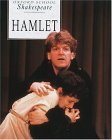 Hamlet by William Shakespeare
My rating: 5 of 5 stars
"Hamlet is the finest of all the plays in the English revenge tradition," says Roma Gill, editor of the Oxford School Shakespeare edition of Hamlet. Some would call that an understatement, since Hamlet is frequently invoked as the greatest play in any tradition. (Flaubert said, "The three finest things God ever made are the sea, Hamlet, and Mozart's Don Giovanni.") Hamlet is, however, a revenge play, a fact which often seems to go unappreciated by directors and actors and existentialist critics. Laurence Olivier was a fantastic actor, I grant--hey, I saw Marathon Man--but there was little of the revenge motif in his very stylized and emotionally beige Hamlet, who seemed to suffer from "indecision" as if indecision were akin to shingles, or something you'd find in the DSM IV, as opposed to a manifestation of inner conflict.
Who wants to watch Hamlet bitching about his terminal shingles?
Hamlet is about a war of the generations, between young and old, fathers and mothers versus sons and daughters. Claudius makes war on (and kills) his older brother, King Hamlet; Hamlet makes war on his uncle and his mother and their royal advisor Polonius; Laertes and Ophelia laugh at their father Polonius for being "out of touch" and giving stale old advice. Claudius, Gertrude, and Polonius make war on Hamlet; Polonius doesn't trust his son Laertes and sends Reynaldo to check up on him; and of course King Hamlet's ghost wants his younger brother dead and torments his son Hamlet with charges of filial debt and obligation, a sense of belittlement, and with his taunting, withdrawing, loveless apparitions and his absence.
At the same time, Hamlet honors and wishes to avenge his dead father, and Laertes feels the same way after the murder of his father Polonius, who he formerly laughed at. The ambivalent, “two-way” relations between the generations reflect inner conflict, a war of rage and guilt, and these opposing emotional vectors create a doubleness in the major characters. Hamlet is like Laertes in mourning his father and like Claudius in having robbed someone else (Laertes) of his. Claudius has boldly stolen his brother’s crown and his wife, but he suffers self-doubt, berates his own actions as “rank,” much as Hamlet frequently berates himself. Hamlet is thoroughly self-possessed in his skilled verbal exchanges and at the same time he remains loyal servant to his father. The name Shakespeare gave to the son of Polonius, “Laertes,” seems to signify this instability of identity where sons identify with both their fathers and themselves; in Greek mythology, Laertes was not a son, but a father, the father of Odysseus, no less. Shakespeare has seemingly assigned the name to the wrong party, but it's fitting, since rage and guilt are dynamic poles that split the characters’ personalities in Hamlet, warping identity, perception, and fate.
There is nothing native to Hamlet of the chemically inert, romantic substance fed into him by his interpreters on stage. As written, he’s a yin-yang of hate and self-hate, more hate and more self-hate. The role calls for an actor who can access guilt and rage during a performance, and it got just that in Zeffirelli’s movie version, because he had Mel Gibson, who portrays it flagrantly, on screen and off.
Harold Bloom says in The Western Canon, p. 365, “[T]he masterpiece of ambivalence is the Hamlet/Oedipus complex.” (The “Macbeth complex” is, according to Bloom, “the masterpiece of anxiety.”) Hamlet touches the same iconic themes as Oedipus Rex but has been realized with an unparalleled level of psychological realism. That’s why it’s not only the finest revenge play, but so much more.
I like the Oxford School editions of Shakespeare; they’re meant for high school and college students and are straightforward, not self-serious, and their notes on the text are aligned vertically at the edge of the extra-wide page, so that you don’t have to hunt at the bottom for an explanation. Its cover photo, however, is of a Kenneth Branaugh whose expression is noteworthy for not seething with either hate or self-hate or, better yet, both.
View all my reviews
September 28, 2010
Unsinkable John Milton
 Paradise Lost: An Authoritative Text Backgrounds and Sources Criticism by John Milton
My rating: 5 of 5 stars
Harold Bloom on Paradise Lost:
"What makes Paradise Lost unique is its startling blend of Shakespearean tragedy, Virgilian epic, and Biblical prophecy. The terrible pathos of Macbeth joins itself to the Aeneid's sense of nightmare and to the Hebrew Bible's assertion of authority. That combination should have sunk any literary work nine fathoms deep, but John Milton, blind and battered by political defeat, was unsinkable. There may be no larger triumph of the visionary will in Western literature." (The Western Canon, p. 160)
I love Milton's ambition. I love his opening note in which he declares his intention to be the first in English to restore the "ancient liberty" of the heroic poem, delivering it "from the troublesome and modern bondage of rhyming." Then in ll. 12-16 of the poem itself he writes: "I thence / Invoke thy aid to my advent'rous song, / That with no middle flight intends to soar / Above th' Aonian mount, while it pursues / Things unattempted yet in prose or rhyme." And while you may not be able to tell from those somewhat abstract lines, Milton to my mind achieved all the greatness he sought after. Paradise Lost has stuck in my mind more firmly over the last twenty years than anything I've read other than Hamlet and Ulysses.
Paradise Lost is peopled with specifically rendered, touching human characters as in Shakespeare, but it's more epic than anything in Shakespeare (even more than the Henry tetralogy, which is quite an epic in itself). Paradise Lost is more epic in fact than anything since the ancients. It's a poem and a story, but it's also a comprehensive worldview. Accordingly, it has a more formal, Virgilic, stately syntax, than Shakespeare's plays do, but it looks as deeply into the human heart and, like Shakespeare's work, it overflows with fine metaphor and subtilitas naturae.
Milton appeared to be conscious of writing in the shadow of Shakespeare, to whom the younger poet dedicated his first published poem (called "On Shakespeare"). Milton's father, according to The Milton Reading Room (hosted by Prof. Thomas Luxon at Dartmouth), was a trustee of the Blackfriars Theater, where Shakespeare's King's Men performed in the last decade of Shak's life. John Milton Sr.'s commendation was printed in the opening pages of the First Folio, and Milton Jr.'s "On Shakespeare" appears in the first pages of the Second Folio. (That must be the most awesome blurb in history.) Milton was 7 years old when Shakespeare died. Prof. Luxon speculates that if Milton had ever met Shakespeare, he would probably have let us know about it himself, but given his father's ties to the King's Men, I like to imagine Milton in Shakespeare's presence and literally looking up at him.
Link to Prof. Luxon's Milton Reading Room: http://www.dartmouth.edu/~milton/reading...
I liked the Scott Elledge annotations in the Norton Critical edition.
View all my reviews
Austin Ratner's Blog

Untimely thoughts on books both great and supposedly great.
- Austin Ratner's profile
- 32 followers
Austin Ratner isn't a Goodreads Author
(yet),
but they
do have a blog,
so here are some recent posts imported from
their feed.

