
L.M. Long's Blog, page 20
August 15, 2013
What Do I Know?
We are creatures of continual change and growth. That's how God made us. We have this deep, innate desire/urge to progress. We seek for knowledge and guidance, ways to learn and improve. We find comfort in answers, excitement in success, and peace in heavenly support.
We are imperfect. God made us that way, too. I like to call myself perfectly imperfect :) I believe He made me this way so I can learn to trust Him with my weakness, and He can help me make them strengths. It's a beautiful principle, really. In black and white, on a glowing screen, it rings true. But, in real life, it is harder to see, and even a bit scary to live.
At least, it was for me the day before I wrote this post.
I have two biological children. Twelve years ago I had a mandatory complete hysterectomy due to medical issues. The night before my surgery I requested a blessing from my bishop. In it, Heavenly Father told me my family wasn't finished growing. I'll admit, I peaked open one eye and looked towards the ceiling as I thought, "You do know what kind of surgery I'm having tomorrow, right?"
Of course He did.
And of course He was right.
Three years ago my youngest daughter (then six) joined our family through adoption. Most of my life, through my own intellect and His guidance, I've been able to figure things out. But, my daughter came with a slew of problems that were completely new to me.
The things she would do and say were difficult for me to understand and accept. Many a night I would cry myself to sleep, convinced someone else could be a better mother. I mean, what mother doesn't understand her child? What mother has no idea what is best for her child? What mother wishes she could go away on an extended kid-free vacation . . . for like a year? (Okay, that last one wasn't serious...mostly.)
Over the years she has grown and improved--and so have I. She has blossomed into a beautiful young lady who loves her family and her faith. Through prayer and study, I have obtained a greater knowledge, understanding, and skill in helping her. More times than not things run pretty smoothly around here, and all is well.
Until something like yesterday happens.
I won't say what she did. Sufficeth it to say, while visiting a friend's house she did something that was just off the wall crazy.
I get an "FYI" text from her friend's mom, and in less than five minutes I was bringing my daughter home.
I was so upset I wouldn't speak for the first ten minutes. I could have, but the well of my emotions would have violently spilled over. So, I kept quiet.
When I was ready to talk, in measured and control tones, I informed her of the consequences of her actions, and sent her to her "thinking pad" on the floor to write sentences while I escaped to my room and cried.
What was she thinking? Who is this kid anyway? Haven't I taught her better? Doesn't she know better?
The questions and doubts rushed through my heart and head and out my tears. I became angry, embarrassed, frustrated, and lost. What do I do with this child?
I counseled with my husband and a good friend, who offered peace and support. But, it wasn't until late last night that I received the answer I needed to hear from my Father in Heaven. And it wasn't the answer I was expecting.
My mind was taken back to my scripture study that morning. I had read Alma 40, part of Alma's letter to his son Corianton. He had been teaching Corianton about the resurrection, and came to a point of doctrine that Alma, himself, didn't know. I had underlined the last half of verse 5, which read, " . . . it mattereth not; for God knoweth all these things; and it sufficeth me to know that this is the case."
Alma didn't know all the answers. And he was okay with that.
Then a truth hit me like a ton of bricks: My anger and frustration didn't come from what my daughter had done, but from the fact that I didn't know why she would do it, and I didn't know what I needed to do to help her.
I realized I was upset because I didn't have the answers. (Perhaps that is why I enjoy writing so much--because not only can I control the questions, but the answers as well.)
I let that realization sink in a bit deeper in my soul as I rolled it around in my brain. The real reason I am angry is because of me.
It's really hard when God shines a light on a weakness. As I said above, it's a beautiful theory and scripture (Ether 12:27), but in reality, it is really hard. And honestly, it took a few minutes for it to sink in. The problem is with me.
As soon as I accepted that God-given truth, the end of the verse came back to my mind, " . . . God knoweth all these things; and it sufficeth me to know that this is the case."
God knows my daughter. He knows why she does what she does. Even though I don't have all the answers about her, HE does. He knows I am weak, imperfect, and He still brought her to me. I find great peace in that. I need to trust that He knows all things. And I need to find the strength to be okay not knowing everything.
As a mom, I wish I had all the answers. In that respect, I'm like the millions of other parent that jokingly mourn the lack of a parenting manual. But I don't. I do all I can to educate myself--reading, studying, praying, talking, teaching, etc. But, even after all I can do, there are certain things that, in this life, I may never fully understand. And that's okay. Because God does.
That's where the faith comes in. Not just the faith to know, but having the faith not to know. It's a hard concept, especially when it comes to your own kids. But, I have to say, in the light of the day, and my new faith and perspective, I am at peace.
My daughter came in to my room this morning to show me her sentences. She was happy and proud of her work, seemingly unmarred from the choices of the day before. I don't get it. But, He does. And that's enough for me.
I gave her a hug and told her I loved her. She smiled and said, "I know," and skipped out of my room.
I don't t know everything, but I DO know that God does. I DO know that God trusts me with her (my gift), and my other two children(my joy and my heart.) I DO know that God is parenting them with me. I DO know that as I follow His guidance I become a better mother. I DO know that I love my children and they love me. I DO know that He will take care of what I can't.
And I DO know that it's okay not to know anything else.

Michelle
We are imperfect. God made us that way, too. I like to call myself perfectly imperfect :) I believe He made me this way so I can learn to trust Him with my weakness, and He can help me make them strengths. It's a beautiful principle, really. In black and white, on a glowing screen, it rings true. But, in real life, it is harder to see, and even a bit scary to live.
At least, it was for me the day before I wrote this post.
I have two biological children. Twelve years ago I had a mandatory complete hysterectomy due to medical issues. The night before my surgery I requested a blessing from my bishop. In it, Heavenly Father told me my family wasn't finished growing. I'll admit, I peaked open one eye and looked towards the ceiling as I thought, "You do know what kind of surgery I'm having tomorrow, right?"
Of course He did.
And of course He was right.
Three years ago my youngest daughter (then six) joined our family through adoption. Most of my life, through my own intellect and His guidance, I've been able to figure things out. But, my daughter came with a slew of problems that were completely new to me.
The things she would do and say were difficult for me to understand and accept. Many a night I would cry myself to sleep, convinced someone else could be a better mother. I mean, what mother doesn't understand her child? What mother has no idea what is best for her child? What mother wishes she could go away on an extended kid-free vacation . . . for like a year? (Okay, that last one wasn't serious...mostly.)
Over the years she has grown and improved--and so have I. She has blossomed into a beautiful young lady who loves her family and her faith. Through prayer and study, I have obtained a greater knowledge, understanding, and skill in helping her. More times than not things run pretty smoothly around here, and all is well.
Until something like yesterday happens.
I won't say what she did. Sufficeth it to say, while visiting a friend's house she did something that was just off the wall crazy.
I get an "FYI" text from her friend's mom, and in less than five minutes I was bringing my daughter home.
I was so upset I wouldn't speak for the first ten minutes. I could have, but the well of my emotions would have violently spilled over. So, I kept quiet.
When I was ready to talk, in measured and control tones, I informed her of the consequences of her actions, and sent her to her "thinking pad" on the floor to write sentences while I escaped to my room and cried.
What was she thinking? Who is this kid anyway? Haven't I taught her better? Doesn't she know better?
The questions and doubts rushed through my heart and head and out my tears. I became angry, embarrassed, frustrated, and lost. What do I do with this child?
I counseled with my husband and a good friend, who offered peace and support. But, it wasn't until late last night that I received the answer I needed to hear from my Father in Heaven. And it wasn't the answer I was expecting.
My mind was taken back to my scripture study that morning. I had read Alma 40, part of Alma's letter to his son Corianton. He had been teaching Corianton about the resurrection, and came to a point of doctrine that Alma, himself, didn't know. I had underlined the last half of verse 5, which read, " . . . it mattereth not; for God knoweth all these things; and it sufficeth me to know that this is the case."
Alma didn't know all the answers. And he was okay with that.
Then a truth hit me like a ton of bricks: My anger and frustration didn't come from what my daughter had done, but from the fact that I didn't know why she would do it, and I didn't know what I needed to do to help her.
I realized I was upset because I didn't have the answers. (Perhaps that is why I enjoy writing so much--because not only can I control the questions, but the answers as well.)
I let that realization sink in a bit deeper in my soul as I rolled it around in my brain. The real reason I am angry is because of me.
It's really hard when God shines a light on a weakness. As I said above, it's a beautiful theory and scripture (Ether 12:27), but in reality, it is really hard. And honestly, it took a few minutes for it to sink in. The problem is with me.
As soon as I accepted that God-given truth, the end of the verse came back to my mind, " . . . God knoweth all these things; and it sufficeth me to know that this is the case."
God knows my daughter. He knows why she does what she does. Even though I don't have all the answers about her, HE does. He knows I am weak, imperfect, and He still brought her to me. I find great peace in that. I need to trust that He knows all things. And I need to find the strength to be okay not knowing everything.
As a mom, I wish I had all the answers. In that respect, I'm like the millions of other parent that jokingly mourn the lack of a parenting manual. But I don't. I do all I can to educate myself--reading, studying, praying, talking, teaching, etc. But, even after all I can do, there are certain things that, in this life, I may never fully understand. And that's okay. Because God does.
That's where the faith comes in. Not just the faith to know, but having the faith not to know. It's a hard concept, especially when it comes to your own kids. But, I have to say, in the light of the day, and my new faith and perspective, I am at peace.
My daughter came in to my room this morning to show me her sentences. She was happy and proud of her work, seemingly unmarred from the choices of the day before. I don't get it. But, He does. And that's enough for me.
I gave her a hug and told her I loved her. She smiled and said, "I know," and skipped out of my room.
I don't t know everything, but I DO know that God does. I DO know that God trusts me with her (my gift), and my other two children(my joy and my heart.) I DO know that God is parenting them with me. I DO know that as I follow His guidance I become a better mother. I DO know that I love my children and they love me. I DO know that He will take care of what I can't.
And I DO know that it's okay not to know anything else.

Michelle


August 13, 2013
Exercise, Discipline, and Affection
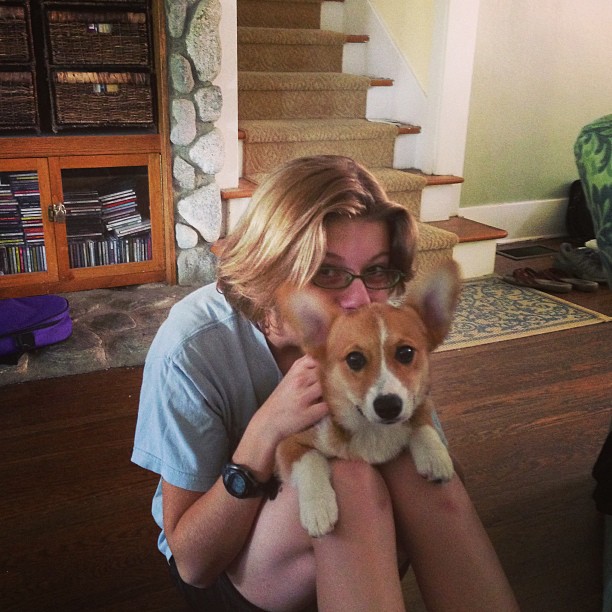
We bought a puppy in May--a purebred Pembroke Welsh Corgi. We named her Moneypenny --"Penny" for short. She's almost six months old, and while she's not quite as demanding as a newborn baby, it does take a lot of work to raise a dog. Penny is a delight 99% of the time, and we can deal with the other 1%.
We've never had a dog before, so back when we got Penny, I went to the library and checked out a bunch of books by Cesar Millan, known worldwide as The Dog Whisperer. I wanted to find out the best way to raise a problem-free puppy without a lot of trial and error on our part. I know that there are some who disagree with Cesar's methods, but we have found them remarkably effective as we follow them.
Cesar's biggest piece of advice for dog owners is that dogs need exercise, discipline, and affection--in that order. When he is called in to help a family struggling with canine issues, he finds that if the humans will stick to those three things--in that order--most (if not all) of their dog problems will cease.
Cesar says most people struggle with the concept of discipline, fearing that it's synonymous with punishment. But it's not--Cesar is all about structure and consistency. Expectations and follow-through--which means the discipline is actually more for the owner than for the pet.
As I've taken Penny on long walks and created and maintained structure for her days (and petted and cooed over her plenty), I've pondered the exercise-discipline-affection triumvirate. It seems remarkably effective for humans, too. When my kids get plenty of physical, mental, and spiritual exercise, they are relaxed and receptive. As far as discipline goes, I've always been a huge fan of structure, consistency, and logical consequences. And of course, daily, unconditional affection is crucial to the development of any child.
This morning, it occurred to me that Cesar's formula works for writers, too.
Exercise: writers write, and they need to do a lot of it. Have you put in your 10,000 hours to become a world-class writer yet? If not, get on it; time's a-wastin.'
Discipline: what's your routine? Are you consistent? Can you get your rear in your chair and get the words out of your fingers even when you don't feel like it?
Exercise and discipline alone will take you far in your career, but make sure to allow yourself some writerly affection. Read for the pure pleasure of it. Write something different than you normally do: a poem or a song, a personal essay or a guest post. Attend a conference and bond with other writers. Take pride in your accomplishments and focus on your growth.
Exercise, discipline, and affection--give them a try. I believe they can solve 95% of the problems we have, both as mothers and as writers.
August 8, 2013
Announcements of sorts
Sometimes I know exactly what to blog about. Sometimes there is just that one thing that I really need to talk about or what to hear what other people think. This is not one of those times. My perfect bumper sticker for the moment would be: Summer Happens.In a month of never ending busy-ness, compounded by the scuffs, scrapes, and obstacles that are life with young children, I have just been trying to keep my head. NO seriously, there was a moment where a heavy toy and my face nearly made contact while I was trying to do some stretching. Near misses aside, I have news. Though I did announce that my first novel, The Accidental Apprentice, would be a Xchyler Publishing (Hamilton Springs Press) publication I can now tell you that it will be out in February of 2014. Holy deadlines Batman!I can also tell you that registration for the 2014 Time Out for Writers, sponsored by the American Night Writers Association, will open Oct 1st. And our Keynote Speaker- (drumroll please) is Sarah M. Eden!! I do promise, despite my mountain of tasks, that I will construct a really thought provoking/entertaining/insightful blog post for next month. In the meantime, watch this delightful episode of the Big Bang Theory, and impatiently await the season premiere with me. It’s how I get the laundry folded. ;)
August 5, 2013
School Days- My End of Summer Lament
“One hundred and four days of summer vacation and school comes along just to end them.” Makes me wonder how long ago that song was written for Phineas and Ferb or where. Here in Arizona, if it hasn’t already, school is about to begin. That gave us a whopping total of seventy-three days of summer vacation. An entire month- 31 days- missing. At least if you go with the song. I don’t know if it is early indoctrination from the Nursery Rhyme and I am Mistress Mary quite contrary or just how I am wired but unlike many of my friends and fellow mothers I am not excited or happy that summer is coming to an end-at least as far as school is concerned. The temperatures are not going to cool down significantly for a while yet but now the pools are closed. Kids will soon be sweating along with playground teachers in long pants or uniforms, some are lucky enough to have shorts or skorts, on play grounds all over the valley.
I grew up in Wyoming and I remember summer being long and filled with fun and boredom, and I think at least a little of both is good for kids. How long do you really have to be a kid anyway? Every kid who has run out of things to do for the summer should hear from their mother at least once in their life time, “Only boring people get bored.” Boredom can be good. It gives opportunity for thinking and problem solving in a real life situation and appreciation for learning opportunities.
Last school year my children were given a writing assignment on an article written by Peter R Orszag. The article is entitled, “How Summer Is Making U.S. Kids Dumber and Fatter.” When I heard about it I have to admit it made me angry. The title is a bit incendiary. The article referred to a couple of studies that show how children go back to school a month or so behind where they left off at the beginning of summer and that they gain weight. The studies and article all showed that lower-income children were at greater risk than middle to upper income children. One of the studies made the great claim that learning loss is cumulative over time because some children lose what they have learned then need more time to actually learn the new stuff so they never catch up and therefore get further and further behind each year.
I have news for you ladies and gentlemen who teach though I am sure you have discovered it already, kids forget a lot of what they learned immediately after the test is taken, or over the weekend or when they can finally smell a little bit of freedom. That in my probably not humble enough opinion is normal and applies to all people- you included. It is also per the same opinion, at least partly because a lot of the learning in school is not inspiring- there is no reward to retain.
I disagree with the article and the study that implies that learning loss is cumulative. I do agree that there is some skill loss due to lack of use, and that some kids have a harder time learning. I have two that have dealt with developmental dyslexia. Both by the way are voracious readers and one of them a promising young author. I believe that there are valuable things to learn that are not academic that can only happen in the long boring days of summer. I also have no problem with review. There is nothing wrong with review. In fact if more people spent time on review perhaps there would be fewer mistakes made in other areas. Not a thing wrong with review. I don’t believe that learning loss is cumulative. I believe that if you can’t remember something you haven’t really learned it yet. So the notion that a child has lost something that they just can’t get back in time to learn the next new thing means that that child did not learn it in the first place. The idea was presented, perhaps played with and used a little, and maybe there was success once in a while- a good guess on a test, but the concept was not really learned. That is not cumulative learning loss, that is learning not happened yet. You know what I think? I think that is o.k.
I have not yet met any two children or adults that learn, think or process things alike. There were concepts that I did not learn when I was supposed to in elementary school. In fact to some of my teachers I was a helpless idiot. For a lot of years I felt that I was too. You know what? I got over it. I learned something in those long boring days of summer that had nothing to do with my inability to comprehend fractions in third grade. I learned how to get along and have fun with my family even when we were bored. I learned how to grow strawberries and petunias and that garlic grows under the ground. My mom and my dad taught me those things. Mom also taught me the concept of square roots and how to count money back to customers when I got my first fast food job- took about two seconds per lesson. I learned I wasn’t a helpless idiot. In fact given the chance I learn pretty fast- just not always in a class room. You know what else, I have learned all those things I didn’t learn “when I was supposed to.” I learned them when I was ready. Kids do if you don’t make it so unpleasant that they don’t want to.
The bad news in my same, I will add unapologetic opinion, is that I don’t see the shorter summers, longer days- except when they are shorter for teacher meetings once a week, improving the education of our children. I am not blaming teachers by the way. I respect and admire most of the teachers I know and consider them caring and exceptional people trying to make a difference. Kudos to the valiant men and women in the trenches!
When I asked an educator why they keep shortening summer, she told me it was done because the fall and spring vacations were made longer, something that parents wanted. Someone forgot to ask me! I LIKE spending time with my kids AND having them home- all nine of them and I like a long summer! Actually, I am rebellious enough to disbelieve that imprisoning kids in a class room six to eight hours a day for most of the year makes them smarter. In fact in some cases, I really believe that it does the opposite. I also believe that data on education quality in recent years backs that up.
That is kind of inflammatory, I realize. I will just say it is my opinion and I am not apologizing for it. So since I am complaining, do I have any better ideas? Well, I believe I do. They are of course untried on a grand scale but I believe that is kind of the point. I would say my parents got a better education than I did and I got a better one than is currently offered- back in the days before No Child Left Behind or Core Standards, when teachers had more freedom to just teach and kids had more freedom to be kids. Those were also times when parents took the time to be involved with their kids and encourage discovery outside (or inside) rather than alien annihilation in the living room. So perhaps my lament for the end of summer is also a lament for the end of other precious things, things that really ought to be lamented when they are lost.
My sympathies to those wiggling masses about to begin another “year” of studies, my sorrows for your summer adventures and boredoms cut short. I do not sympathize with moms who are ready to march you out the door onto the bus so they can finally get the house clean again and have some peace and quiet- it won’t really happen anyway Mom. Remember the meetings and class room volunteering and homework and… Well, I think I am beginning to get preachy, or maybe I have been all along so I will stop, dismantle my soap box and get to work. Good bye summer!
I grew up in Wyoming and I remember summer being long and filled with fun and boredom, and I think at least a little of both is good for kids. How long do you really have to be a kid anyway? Every kid who has run out of things to do for the summer should hear from their mother at least once in their life time, “Only boring people get bored.” Boredom can be good. It gives opportunity for thinking and problem solving in a real life situation and appreciation for learning opportunities.
Last school year my children were given a writing assignment on an article written by Peter R Orszag. The article is entitled, “How Summer Is Making U.S. Kids Dumber and Fatter.” When I heard about it I have to admit it made me angry. The title is a bit incendiary. The article referred to a couple of studies that show how children go back to school a month or so behind where they left off at the beginning of summer and that they gain weight. The studies and article all showed that lower-income children were at greater risk than middle to upper income children. One of the studies made the great claim that learning loss is cumulative over time because some children lose what they have learned then need more time to actually learn the new stuff so they never catch up and therefore get further and further behind each year.
I have news for you ladies and gentlemen who teach though I am sure you have discovered it already, kids forget a lot of what they learned immediately after the test is taken, or over the weekend or when they can finally smell a little bit of freedom. That in my probably not humble enough opinion is normal and applies to all people- you included. It is also per the same opinion, at least partly because a lot of the learning in school is not inspiring- there is no reward to retain.
I disagree with the article and the study that implies that learning loss is cumulative. I do agree that there is some skill loss due to lack of use, and that some kids have a harder time learning. I have two that have dealt with developmental dyslexia. Both by the way are voracious readers and one of them a promising young author. I believe that there are valuable things to learn that are not academic that can only happen in the long boring days of summer. I also have no problem with review. There is nothing wrong with review. In fact if more people spent time on review perhaps there would be fewer mistakes made in other areas. Not a thing wrong with review. I don’t believe that learning loss is cumulative. I believe that if you can’t remember something you haven’t really learned it yet. So the notion that a child has lost something that they just can’t get back in time to learn the next new thing means that that child did not learn it in the first place. The idea was presented, perhaps played with and used a little, and maybe there was success once in a while- a good guess on a test, but the concept was not really learned. That is not cumulative learning loss, that is learning not happened yet. You know what I think? I think that is o.k.
I have not yet met any two children or adults that learn, think or process things alike. There were concepts that I did not learn when I was supposed to in elementary school. In fact to some of my teachers I was a helpless idiot. For a lot of years I felt that I was too. You know what? I got over it. I learned something in those long boring days of summer that had nothing to do with my inability to comprehend fractions in third grade. I learned how to get along and have fun with my family even when we were bored. I learned how to grow strawberries and petunias and that garlic grows under the ground. My mom and my dad taught me those things. Mom also taught me the concept of square roots and how to count money back to customers when I got my first fast food job- took about two seconds per lesson. I learned I wasn’t a helpless idiot. In fact given the chance I learn pretty fast- just not always in a class room. You know what else, I have learned all those things I didn’t learn “when I was supposed to.” I learned them when I was ready. Kids do if you don’t make it so unpleasant that they don’t want to.
The bad news in my same, I will add unapologetic opinion, is that I don’t see the shorter summers, longer days- except when they are shorter for teacher meetings once a week, improving the education of our children. I am not blaming teachers by the way. I respect and admire most of the teachers I know and consider them caring and exceptional people trying to make a difference. Kudos to the valiant men and women in the trenches!
When I asked an educator why they keep shortening summer, she told me it was done because the fall and spring vacations were made longer, something that parents wanted. Someone forgot to ask me! I LIKE spending time with my kids AND having them home- all nine of them and I like a long summer! Actually, I am rebellious enough to disbelieve that imprisoning kids in a class room six to eight hours a day for most of the year makes them smarter. In fact in some cases, I really believe that it does the opposite. I also believe that data on education quality in recent years backs that up.
That is kind of inflammatory, I realize. I will just say it is my opinion and I am not apologizing for it. So since I am complaining, do I have any better ideas? Well, I believe I do. They are of course untried on a grand scale but I believe that is kind of the point. I would say my parents got a better education than I did and I got a better one than is currently offered- back in the days before No Child Left Behind or Core Standards, when teachers had more freedom to just teach and kids had more freedom to be kids. Those were also times when parents took the time to be involved with their kids and encourage discovery outside (or inside) rather than alien annihilation in the living room. So perhaps my lament for the end of summer is also a lament for the end of other precious things, things that really ought to be lamented when they are lost.
My sympathies to those wiggling masses about to begin another “year” of studies, my sorrows for your summer adventures and boredoms cut short. I do not sympathize with moms who are ready to march you out the door onto the bus so they can finally get the house clean again and have some peace and quiet- it won’t really happen anyway Mom. Remember the meetings and class room volunteering and homework and… Well, I think I am beginning to get preachy, or maybe I have been all along so I will stop, dismantle my soap box and get to work. Good bye summer!
July 30, 2013
July 29, 2013
Article ReWrites....
As a non-fiction writer, I'm always looking for ways to improve my article writing.... I write for several online websites and I've gotten to the point where I can get an 800 word article, essay, opinion piece or book review off in a day. It has taken me at least 10 years to accomplish this feat and I'm still working towards perfection.
As I scanned my list of writer's tips I came across this gem but I can't remember where I got it....I'm sure it was some website and I normally include the original place but this time it was not marked. I think what I did was read the original article and took notes from what I learned so here it is..... (if you recognize it to be yours---please tell me so I can say so...)
I have used almost all of these ideas to write my non-fiction pieces and they work wonderfully for fiction as well as non-fiction.
A List of Nine Strategies to Rewrite an Article
1. Write earlier. This teaches you what you already know and what you need to know. When I begged for more time on a story it was usually because I felt I needed more time to report, to understand the subject. "I need a couple more hours/days/weeks," I'd tell my editor. When I started drafting earlier, I began to see that the hole I needed to fill was already complete, but there are other gaps I wouldn't have recognized as quickly. Revision doesn't mean more time, but rescheduling the time you have. Let's face it. Whatever time we have for a story most of us spend the bulk of reporting. After all, we're reporters. But there are ways to build in revision earlier in the process.
 2. Hit the print button as early as possible. Computers are wonderful, but they give the illusion of perfection. To revise this column, I made a printout of the first draft, approximately 1,000 words written in less than an hour over two days. I began by crossing things out, penning in questions, examining the prose (which sentences held up, which need re-tooling, etc.). Then I read back over my revised version and made more corrections until it was perfect.... or near to perfection as I could get.
3. Put it away. John Fowles, the British novelist ("French Lieutenant’s Woman"), described drafting as much as 60,000 words and then putting them in a desk drawer for a few months. Nice work, I can hear the journalists out there muttering, if you can get it. Few working writers, especially those under daily or even weekly deadlines, have that freedom. But any attempt to put a story out of your mind will give your unconscious mind the chance to work on it. The idea of putting away your writing is works amazingly but most non-fiction article writers do not have the luxury of a few months. I give this an hour, maybe six hours or even 24 if you have the time but it never fails...if I put it away, I always catch something I had not seen before and more ideas come into my head for a rewrite. Giving the writing a rest does wonders to your brain and fantastic ideas come after some time away.
4. Break revision into manageable tasks. To me this is a no-brainer. Sometimes the sheer enormity of revisions is so overwhelming it makes my head spin. Make separate printouts — one for names and titles, another for verb constructions, a third to trim the fat from quotes helps enormously in keeping yourself on target for a finished product.
5. Read aloud. Listen to your story and you can hear where it flags, where a quote runs on or echoes the previous phrase (The mayor said he's dissatisfied with the council's action. "I'm just not satisfied," Mayor Naughton said). I read out loud to myself all the time!!!! Sometimes my children ask me who I'm talking to. This idea is a great one for catching mistakes and rewriting sentences.
6. Diagnose, then treat. As you read, make quick notes ("cut," "move up?" "boring?" "stronger evidence?") Then go back and make the necessary changes. I once read that many writers will use different marks from the keyboard and colored text markings to go back and fix after reading through the entire piece first. I have done this as well and the notes help to keep your ideas on target.
7. Test your story against your focus. If it's about a young woman's fight against cerebral palsy, why does it begin with an anecdote about her grandfather's experiences in the California gold rush? Keep the focus on what is the main thrust of your piece. What drives your article and what questions does it answer? This is all very important.
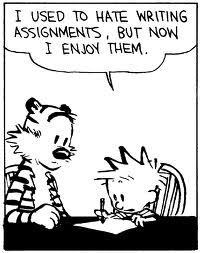 8. Find a first reader. Editors are our first readers--and our last line of defense. Show your draft to an editor--or a colleague. Ask them to tell you what works and what needs work. Ask for a movie of their reading. Better to turn in something to an editor that we know isn't perfect with an eye to finding the promise and the pitfalls in it and the path to a clear, concise, readable story than letting the whole world see our mistakes. My editors have done wonders with some of my work and I trust them to help me improve my writing.
9. Develop patience. When I begin to write, the ideas often flow in a flood, leaving the landscape obscured by mountains of impenetrable mass, uprooted trees, houses and everything else in its path. Instead of a tidy piece of prose, what I have is a mess that makes my spirits droop. I wanted it to be so good and instead it seems so bad that I fear I can never get it to the point where anybody else would want to read it. I have to keep telling myself it will come if I keep at it and it does. I cut paragraphs, reword sentences, change my focus because sometimes my brain puts out ideas faster than I can handle and I have to keep my focus. But with practice and patience, you can become a pro and write for newspapers, websites and blogs....
As I scanned my list of writer's tips I came across this gem but I can't remember where I got it....I'm sure it was some website and I normally include the original place but this time it was not marked. I think what I did was read the original article and took notes from what I learned so here it is..... (if you recognize it to be yours---please tell me so I can say so...)
I have used almost all of these ideas to write my non-fiction pieces and they work wonderfully for fiction as well as non-fiction.
A List of Nine Strategies to Rewrite an Article
1. Write earlier. This teaches you what you already know and what you need to know. When I begged for more time on a story it was usually because I felt I needed more time to report, to understand the subject. "I need a couple more hours/days/weeks," I'd tell my editor. When I started drafting earlier, I began to see that the hole I needed to fill was already complete, but there are other gaps I wouldn't have recognized as quickly. Revision doesn't mean more time, but rescheduling the time you have. Let's face it. Whatever time we have for a story most of us spend the bulk of reporting. After all, we're reporters. But there are ways to build in revision earlier in the process.
 2. Hit the print button as early as possible. Computers are wonderful, but they give the illusion of perfection. To revise this column, I made a printout of the first draft, approximately 1,000 words written in less than an hour over two days. I began by crossing things out, penning in questions, examining the prose (which sentences held up, which need re-tooling, etc.). Then I read back over my revised version and made more corrections until it was perfect.... or near to perfection as I could get.
3. Put it away. John Fowles, the British novelist ("French Lieutenant’s Woman"), described drafting as much as 60,000 words and then putting them in a desk drawer for a few months. Nice work, I can hear the journalists out there muttering, if you can get it. Few working writers, especially those under daily or even weekly deadlines, have that freedom. But any attempt to put a story out of your mind will give your unconscious mind the chance to work on it. The idea of putting away your writing is works amazingly but most non-fiction article writers do not have the luxury of a few months. I give this an hour, maybe six hours or even 24 if you have the time but it never fails...if I put it away, I always catch something I had not seen before and more ideas come into my head for a rewrite. Giving the writing a rest does wonders to your brain and fantastic ideas come after some time away.
4. Break revision into manageable tasks. To me this is a no-brainer. Sometimes the sheer enormity of revisions is so overwhelming it makes my head spin. Make separate printouts — one for names and titles, another for verb constructions, a third to trim the fat from quotes helps enormously in keeping yourself on target for a finished product.
5. Read aloud. Listen to your story and you can hear where it flags, where a quote runs on or echoes the previous phrase (The mayor said he's dissatisfied with the council's action. "I'm just not satisfied," Mayor Naughton said). I read out loud to myself all the time!!!! Sometimes my children ask me who I'm talking to. This idea is a great one for catching mistakes and rewriting sentences.
6. Diagnose, then treat. As you read, make quick notes ("cut," "move up?" "boring?" "stronger evidence?") Then go back and make the necessary changes. I once read that many writers will use different marks from the keyboard and colored text markings to go back and fix after reading through the entire piece first. I have done this as well and the notes help to keep your ideas on target.
7. Test your story against your focus. If it's about a young woman's fight against cerebral palsy, why does it begin with an anecdote about her grandfather's experiences in the California gold rush? Keep the focus on what is the main thrust of your piece. What drives your article and what questions does it answer? This is all very important.
 8. Find a first reader. Editors are our first readers--and our last line of defense. Show your draft to an editor--or a colleague. Ask them to tell you what works and what needs work. Ask for a movie of their reading. Better to turn in something to an editor that we know isn't perfect with an eye to finding the promise and the pitfalls in it and the path to a clear, concise, readable story than letting the whole world see our mistakes. My editors have done wonders with some of my work and I trust them to help me improve my writing.
 9. Develop patience. When I begin to write, the ideas often flow in a flood, leaving the landscape obscured by mountains of impenetrable mass, uprooted trees, houses and everything else in its path. Instead of a tidy piece of prose, what I have is a mess that makes my spirits droop. I wanted it to be so good and instead it seems so bad that I fear I can never get it to the point where anybody else would want to read it. I have to keep telling myself it will come if I keep at it and it does. I cut paragraphs, reword sentences, change my focus because sometimes my brain puts out ideas faster than I can handle and I have to keep my focus. But with practice and patience, you can become a pro and write for newspapers, websites and blogs....
July 25, 2013
Waiting for the Urge
I came across an old interview with bestselling author, Sue Grafton, online yesterday (you can read the whole interview here . . . I highly recommend it) in which she laid out "the 10 stages of the creative cycle" as she experiences it. I found it somehow reassuring:
1. Urge 2. Inspirations 3. Research 4. First Draft 5. Revisions 6. Completion 7. Submission 8. Elation 9. Second Thoughts10. Dormancy
You see, I'm a slow writer like her. She puts out a book every other year. (Okay, I'm even slower at this stage of my career. If I can get to a book every other year, I'll consider that progress!)
Anyway, I'm sort of in that 10th stage just now. I say "sort of" because while I've submitted my latest manuscript to an agent, I've also got it out to some beta readers. I've learned enough by now to hedge my bets and be ready for the agent rejection, sending me into perhaps one more round of revisions. Then I'll submit it to about 20 other selected agents (plus a couple of other editors I pitched who wanted the full).
(If you're wondering why I haven't yet sent it to those editors, it's because I'm really hoping this manuscript will get me an agent, and I want the agent first.)
Still, the completion of the story left me elated . . . for a while. Then, as Sue Grafton describes:
Second Thoughts . . . creep in again making you wonder if the book is anywhere close to what you hoped for when you first started out.
So here I wait in Dormancy--"that point when your head is completely empty and you're convinced you'll never have another idea for as long as you live."

Waiting. Waiting for the Urge.
1. Urge 2. Inspirations 3. Research 4. First Draft 5. Revisions 6. Completion 7. Submission 8. Elation 9. Second Thoughts10. Dormancy
You see, I'm a slow writer like her. She puts out a book every other year. (Okay, I'm even slower at this stage of my career. If I can get to a book every other year, I'll consider that progress!)
Anyway, I'm sort of in that 10th stage just now. I say "sort of" because while I've submitted my latest manuscript to an agent, I've also got it out to some beta readers. I've learned enough by now to hedge my bets and be ready for the agent rejection, sending me into perhaps one more round of revisions. Then I'll submit it to about 20 other selected agents (plus a couple of other editors I pitched who wanted the full).
(If you're wondering why I haven't yet sent it to those editors, it's because I'm really hoping this manuscript will get me an agent, and I want the agent first.)
Still, the completion of the story left me elated . . . for a while. Then, as Sue Grafton describes:
Second Thoughts . . . creep in again making you wonder if the book is anywhere close to what you hoped for when you first started out.
So here I wait in Dormancy--"that point when your head is completely empty and you're convinced you'll never have another idea for as long as you live."

Waiting. Waiting for the Urge.
July 22, 2013
Retreat and Renew
 I attended the ANWA Southwest Region Writing Retreat last month. Last year I didn't go and missed the opportunity to renew my spirit. This year I told myself I was going no matter what. Of course, like everyone else that desires to set aside time for a specific purpose many challenges and obstacles cropped up in the path to hinder me from going. But I went and I am truly grateful.The general public and usually family do not understand the need for a writer to have uninterrupted time devoted to writing. Any serious writer will tell you that retreats are essential. Holly Robinson recently wrote about writing retreats and gave sage advice in her blog. She recommends every writer take a retreat four times a year. Retreats do not have to be costly. Writing Retreats are not the same as Writing Workshops or Writers Conferences. Retreats can be as simple as setting aside alone time in a place that is quiet and conducive to writing without any distractions such as phones, internet, television and so forth. Retreats can be done alone or with a small group of friends. One important rule that needs to be followed is no chatting during writing time. Visiting and or critiquing should be done at a set time in the evening. The majority of time should be spent on writing, writing, writing, and more writing. Of course that also includes editing and rewriting.When retreat is over the writer returns home with renewed spirit and energy to tackle tasks not related to writing and renewed hope and insight for their current work in progress.Let's get some writing done!
July 18, 2013
Sock Shepherd
By H. Linn Murphy
 I found this exact sock on the road while I was walking.
Let's talk about socks. We all have them in droves. Sometimes I feel as if I'm merely a glorified Sock Shepherd. I search for them. I find them. I usher them to the washer, returning for the stragglers, whistling for those hiding and lost. I'm seriously considering getting a sheepdog just for sock-herding. Surely getting matching pairs of socks in our piles of freshly laundered clothes will pay for the upkeep on the canine.
I thought I had trained my family to stand next to the washer when they remove their dirty clothes, so that they can slip them right into the washer. Apparently my thought processes were flawed. It was a grand idea until they told me they'd never be caught dead stripping down in the laundry room. Go figure.
Even my next novel idea drew 'The Stare'.
"Why not simply take things off in your room and toss them straight in the washer? It's even the lazy person's way to do it. You only have to pick the item up once and you're done. No fuss, no whining."
 Most socks in this house (which are not mine or the Hubs' or my one clean child) reside on the floor a minimum of three months. At least that's how it seems when I examine the dust bunnies coating said foot apparel. I have herded them from beneath the bed, behind or in bookcases, from the back yard and in gym bags, out from under dressers, and from gigantic piles of like-minded clothing.
I say like-minded because by the time I find them all, most have grown sentient and mated with other non-matching socks to produce funky stretched-out ankle socks. I know this because I find socks I know I never bought. They had to have grown from a love match between two other denizens of the Underbed.
 Growing up, we had a dryer which would often eat at least one stocking per load. We were certain that the sock monster resided somewhere in the depths of the big silver drum. For some reason we never once considered that they'd never made it to the dryer at all.
I have a basket for all the lonely socks left without their mates. Some stay a short time, released from their misery by the advent of their soul mate. Some have languished in the dregs of the basket for years. I haven't the heart to doom them to the trash because I know as soon as I do it, the other sock mate will reappear and give me that forsaken look that begs, "Why couldn't you have been patient just a little longer? Why?"
I wonder if somewhere there's a place (besides my basket) where the lost wait patiently for me to do their work--to reunite them with their loving families. There'll be tiny inhabitants who sidle up to me and whisper, "Too bad you didn't find me when the boy's feet were small enough to wear me." And I'll get all maudlin and mushy over the tiny survivor.
"Yep. Too bad he never learned to put his wretched socks in the washer," I'll say.

July 15, 2013
Wanna Play?
First off, I'd like to thank Valerie for allowing me to jump on board. I am so excited to be here, posting articles and rubbing shoulders with these great ladies!!
 I grew up in California, which was not easy for a pasty girl who loves to layer. But, one thing I did love was swimming. We didn't have a pool, but had many friends and neighbors who did. I spent many hours in the pool playing Marco Polo, doing tricks, playing with tubes, splashing, and just having fun.
As I grew older the swimming turned from playing in the pool, to basking by the side of the pool, lathered in suntan lotion. That was before they called it sunscreen. Yep, in the eighties it was all about getting tan. It only took a few painful episodes, however, to come to the realization that I had two colors: red and white.
As a mom, my pool side basking morphed into life-guard duty slash referee as my gaggle of kids (yes, three feels like twelve in a pool) splashed, thrashed, played, and fought. I would dip into the pool some of the time, but as my weight grew, so did the time spent outside the pool.
A few weeks ago we had a 'heat wave' here in the Northwest. The temperature hit almost 90, and we were dying. A friend invited me and the kids over to swim in her in-ground swimming pool (one of like three in our entire county. Who needs a year-round pool in Washington?)
We packed up our stuff and headed on over. I slathered on sun-block and settled into my spot next to the pool as the children played. They had a blast, and I enjoyed myself as well. . . until I got hot. Really hot.
So, I dipped my feet into the pool. And it felt good. I inched my way in until the water reached my neck, and it felt great. I ducked me head under--holding myself still for just a moment to soak in the coolness-- and it felt wonderful.
I bobbed around and floated on a pool mattress while the children played around me. After about an hour, I was about to get out when the kids decided to play a game called Shark. The little kids were excited because it was about the only game the big kids would actually play with them (think Marco Polo combined with tag on a group level with sharks). As I was making my way out of the pool, my son's friend (who is sixteen and hilarious) turns to me and says, "Hey, do you wanna play?"
A laugh escaped my lips. I don't think anyone has looked at me and asked, "Do you wanna play?" since I was kid. It sounded funny, but not as funny as how it made me feel. Suddenly, from somewhere deeper than the deep end of the pool, emerged a child-like giddiness. They want to play with me. And that little girl inside me wanted to play with them.
And I did.
We played for over a hour, chasing, laughing, yelling, and swimming. For a while, I felt the joy of the pool I had experienced when I was a kid, and I loved it!
That got me thinking about life.
As a kid, most of us played. We ran, laughed, pretended, and had a great time. Then we grew up. It's the natural way of things. Batting adolescent eyelashes and flexing budding muscles replaced Barbies and GI Joes. Then, dating, marriage and parenthood come. Budgets, deadlines, and chores replace games, pretend play, and fun.
 It isn't a bad thing. It's just life.
But, somewhere along the way we can get stuck on the proverbial side of the pool, and forget that there is still fun to be had, and life to be lived.
We can become so mired down by our grown-up ways that we either forget, or don't think, that playing is for us anymore.
Oh, but it is! God intends for us not only to have joy in life, but to have good, clean, fun. It doesn't necessarily have to be in a pool with kids (but I highly recommend that it). If you are stressed out with financial burdens, bummed out by politics, exhausted by mothering duties, or down for any other reason, I say to you . . . "Hey, do you wanna play?"
 Come on! Jump in. The water's warm. Splash around, laugh a little.
Of course we don't have a real pool to jump into--but jumping in and playing in your life may look like grabbing the kids and going to a movie. Or playing a board game. Or going out to lunch with a friend. You could steal your spouse away for a spontaneous date, or simply play the radio loud with the windows down while singing out loud.
Do something fun today. Play and laugh like you did when you were a kid. Lighten up, lighten your load, and give yourself permission to laugh.
Having fun--yes, playing-- is a part of life, even the life of a grown-up. So, do something fun today. Then, will you do me a favor, and come back here and tell me? That would be fun for me!!
Till next time . . .Michelle
http://www.michellewilsonatlarge.comhttp://allegoricallyspeaking.blogspot.com
 I grew up in California, which was not easy for a pasty girl who loves to layer. But, one thing I did love was swimming. We didn't have a pool, but had many friends and neighbors who did. I spent many hours in the pool playing Marco Polo, doing tricks, playing with tubes, splashing, and just having fun.
As I grew older the swimming turned from playing in the pool, to basking by the side of the pool, lathered in suntan lotion. That was before they called it sunscreen. Yep, in the eighties it was all about getting tan. It only took a few painful episodes, however, to come to the realization that I had two colors: red and white.
As a mom, my pool side basking morphed into life-guard duty slash referee as my gaggle of kids (yes, three feels like twelve in a pool) splashed, thrashed, played, and fought. I would dip into the pool some of the time, but as my weight grew, so did the time spent outside the pool.
A few weeks ago we had a 'heat wave' here in the Northwest. The temperature hit almost 90, and we were dying. A friend invited me and the kids over to swim in her in-ground swimming pool (one of like three in our entire county. Who needs a year-round pool in Washington?)
We packed up our stuff and headed on over. I slathered on sun-block and settled into my spot next to the pool as the children played. They had a blast, and I enjoyed myself as well. . . until I got hot. Really hot.
So, I dipped my feet into the pool. And it felt good. I inched my way in until the water reached my neck, and it felt great. I ducked me head under--holding myself still for just a moment to soak in the coolness-- and it felt wonderful.
I bobbed around and floated on a pool mattress while the children played around me. After about an hour, I was about to get out when the kids decided to play a game called Shark. The little kids were excited because it was about the only game the big kids would actually play with them (think Marco Polo combined with tag on a group level with sharks). As I was making my way out of the pool, my son's friend (who is sixteen and hilarious) turns to me and says, "Hey, do you wanna play?"
A laugh escaped my lips. I don't think anyone has looked at me and asked, "Do you wanna play?" since I was kid. It sounded funny, but not as funny as how it made me feel. Suddenly, from somewhere deeper than the deep end of the pool, emerged a child-like giddiness. They want to play with me. And that little girl inside me wanted to play with them.
And I did.
We played for over a hour, chasing, laughing, yelling, and swimming. For a while, I felt the joy of the pool I had experienced when I was a kid, and I loved it!
That got me thinking about life.
As a kid, most of us played. We ran, laughed, pretended, and had a great time. Then we grew up. It's the natural way of things. Batting adolescent eyelashes and flexing budding muscles replaced Barbies and GI Joes. Then, dating, marriage and parenthood come. Budgets, deadlines, and chores replace games, pretend play, and fun.
+07.15.13+MAuthors.png) It isn't a bad thing. It's just life.
It isn't a bad thing. It's just life.But, somewhere along the way we can get stuck on the proverbial side of the pool, and forget that there is still fun to be had, and life to be lived.
We can become so mired down by our grown-up ways that we either forget, or don't think, that playing is for us anymore.
Oh, but it is! God intends for us not only to have joy in life, but to have good, clean, fun. It doesn't necessarily have to be in a pool with kids (but I highly recommend that it). If you are stressed out with financial burdens, bummed out by politics, exhausted by mothering duties, or down for any other reason, I say to you . . . "Hey, do you wanna play?"
 Come on! Jump in. The water's warm. Splash around, laugh a little.
Of course we don't have a real pool to jump into--but jumping in and playing in your life may look like grabbing the kids and going to a movie. Or playing a board game. Or going out to lunch with a friend. You could steal your spouse away for a spontaneous date, or simply play the radio loud with the windows down while singing out loud.
Do something fun today. Play and laugh like you did when you were a kid. Lighten up, lighten your load, and give yourself permission to laugh.
Having fun--yes, playing-- is a part of life, even the life of a grown-up. So, do something fun today. Then, will you do me a favor, and come back here and tell me? That would be fun for me!!
Till next time . . .Michelle
http://www.michellewilsonatlarge.comhttp://allegoricallyspeaking.blogspot.com


