
L.M. Long's Blog, page 18
October 24, 2013
Physical Health vs. Mental Health: There Should Be No Difference
I'm going to keep this brief and to the point. Why do we, as a society, treat physical ailments one way and then stigmatize all mental disorders (Depression, Anxiety, Bi-Polar, Schizophrenia, OCD, etc.) under a separate category of "Mental Health"?
With all that we have learned about the brain during this past decade, we know now that all of these disorders have to do with chemical imbalances in the brain. Isn't the brain part of the human body? Isn't it, in fact, the most important organ of the body? It controls all of our bodily functions. That's why a person isn't really dead until he's "brain dead."
Even PMDD (Pre-Menstrual Dysphoric Disorder) is now classified as a mental disorder, even though you'd think it has more to do with your hormones than anything up in your brain...but then, I guess our brains control hormone levels, as well.
What is the difference, anyway, between a diabetic, who needs regular insulin shots to keep his/her blood sugar stabilized, and a person with OCD, who needs regular medication to keep his/her seratonin and dopamine levels stabilized?
Nothing. No difference in my opinion. It's all physical. Let's get over the "mental"block we have about these things.
So the next time someone has the guts to admit that they've been diagnosed with any of those disorders, reassure them, give them a pat on the back, show your support. Just don't give them the look that says, "Yeah, sure...it's all in your mind. Get over it, already."
It's not in their imagination, it's in their brain.
With all that we have learned about the brain during this past decade, we know now that all of these disorders have to do with chemical imbalances in the brain. Isn't the brain part of the human body? Isn't it, in fact, the most important organ of the body? It controls all of our bodily functions. That's why a person isn't really dead until he's "brain dead."
Even PMDD (Pre-Menstrual Dysphoric Disorder) is now classified as a mental disorder, even though you'd think it has more to do with your hormones than anything up in your brain...but then, I guess our brains control hormone levels, as well.
What is the difference, anyway, between a diabetic, who needs regular insulin shots to keep his/her blood sugar stabilized, and a person with OCD, who needs regular medication to keep his/her seratonin and dopamine levels stabilized?
Nothing. No difference in my opinion. It's all physical. Let's get over the "mental"block we have about these things.
So the next time someone has the guts to admit that they've been diagnosed with any of those disorders, reassure them, give them a pat on the back, show your support. Just don't give them the look that says, "Yeah, sure...it's all in your mind. Get over it, already."
It's not in their imagination, it's in their brain.


October 21, 2013
Cancer Awareness Month

Today I am sharing about Writers Unite to Fight Cancer warriors who choose to battle cancer with the pen and through other positive forces.

Marilyn Hartness is a survivor of the rare cancer Non-Hodgkin’s Mantle-cell Lymphoma. She is the author of inspirational memoir Brave the Day: An Account of Surviving Cancer. Marilyn donates half the profits from her book sales to the Leukemia Lymphoma Society for research. At the end of her book, Marilyn shares recipes of her favorite dishes that she ate while going through chemotherapy and radiation and continues to eat today. She has given permission to publish them in the WUFC cookbook: Cauldron of Love . Marilyn also participates in fundraising marathons.

Dr. Lise Alschuler is the co-author of Five To Thrive: Your Cutting-Edge Cancer Prevention Plan , with Karolyn Gazella, medical journalist. Their newest book: The Definitive Guide to Thriving After Cancer: A Five-Step Integrative Plan to Reduce the Risk of Recurrence and Build Lifelong Health focusses on cancer prevention for cancer survivor who have increased risk for reoccurrence and secondary cancers due to chemotherapy and radiation treatments. Lise Alschuler is a naturopathic oncologist who is a breast cancer survivor, or as she coins it, thriver. Karolyn Gazella was living her dream until cancer paid a heart-breaking visit. Her sister was diagnosed with breast cancer, their mother died of advanced pancreatic cancer, and Karolyn was diagnosed with ovarian cancer.

Holly Roseis the founder of Don’t be a Chump! Check for a Lump! She discovered she had breast cancer at the age of 39 after being reminded on Facebook to perform a self-breast exam. Holly Rose has chosen to share her inspirational journey through breast cancer and so much more in her book, “Live and Give: Facebooking My Way Through Breast Cancer.” She is an active breast cancer prevention advocate with Don’t Be a Chump! Check for a Lump! events, which include Wig Out to provide breast cancer patients with free wigs and an annual Flash Mob.
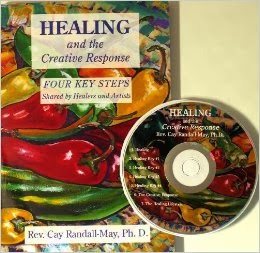 Dr. Cay Randall-May is and artist author of several books and CD’s including:
Healing and the Creative Response, Four Key Steps Shared by Artists and Healers”
This book demystifies natural and spiritual healing and cites specific examples drawn from various modalities including prayer, laying-on-of-hands, Therapeutic Touch, Reiki, and Energy Medicine. The author explains that these share four Key Steps: 1. set intention; 2. relax and clear; 3. engage and blend; 4. attune to the highest, unconditional love. Dr. Cay Randall-May is a cancer survivor.
Dr. Cay Randall-May is and artist author of several books and CD’s including:
Healing and the Creative Response, Four Key Steps Shared by Artists and Healers”
This book demystifies natural and spiritual healing and cites specific examples drawn from various modalities including prayer, laying-on-of-hands, Therapeutic Touch, Reiki, and Energy Medicine. The author explains that these share four Key Steps: 1. set intention; 2. relax and clear; 3. engage and blend; 4. attune to the highest, unconditional love. Dr. Cay Randall-May is a cancer survivor.  Kim Adair is a colo-rectal cancer survivor. During the follow-up, her surgeon asked if she'd heard Katie Couric was coming to town. She decided to go and meet her as she had lost her husband to colon cancer. At the fundraiser lunch for Rocky Mountain Cancer Center Kim filled out an "ask Katie a question" card: "Why are more and more women getting colon cancer and what can we do about it?" Katie answered: "Get the word out about early detection." Kim proceeded to found
Butt-Check.org
and has been an activist for colon cancer prevention ever since.
Kim Adair is a colo-rectal cancer survivor. During the follow-up, her surgeon asked if she'd heard Katie Couric was coming to town. She decided to go and meet her as she had lost her husband to colon cancer. At the fundraiser lunch for Rocky Mountain Cancer Center Kim filled out an "ask Katie a question" card: "Why are more and more women getting colon cancer and what can we do about it?" Katie answered: "Get the word out about early detection." Kim proceeded to found
Butt-Check.org
and has been an activist for colon cancer prevention ever since.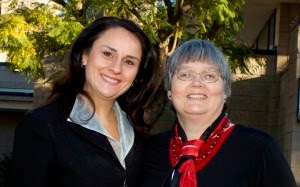
Lisa Finder, author of Black Sand , is the CEO of 4Best Life, a pharmanaturals company. She founded the White Lions Foundation in 2010 as a non-profit organization dedicated to research and education in alternative cancer therapies. Lisa is one of the Writers Unite to Fight Cancer original eight authors and supports us by extending non-profit status through White Lions.
October 17, 2013
Bug Zoo Escapee
 bugguide.netby H. Linn Murphy
 I don't know about you, but there's a merit badge two of my boys have gone for that I don't much appreciate. That's the entomology badge.
 bugguide.netNormally I'm fine with bugs unless they are invading my space, in which case it's open season. That's what hair spray and a match are for (or big boots). I don't freak out about spiders unless they are on my skin and obviously venomous.
 But having to deal with their decaying, smelly, powdery carcasses gives me the heebee geebees, especially if the meal worms have gotten to them. That was the case with my second son's bug zoo. The little cannibals had gone through half the zombies pinned to the board and gutted them in the most literal sense. There were some seriously cool bugs on there who had met their demise in the cause for boy scout advancement.
 bugguide.netSo when my last son announced he wasn't going to dink around with a bug zoo, I had mixed feelings. For one thing, I'd just come by a grasshopper roughly the size of a Buick. And he's a pretty thing. He has red wings and an iridescent green body and he can just about get out of his jar all by himself...shudder.
Nope. The boy wasn't messing with that sucker. He advocated dumping it out in the yard where I found it. "I'm not dumping it back in our yard to eat our trees," I said emphatically. "That's why he's in that jar. If we have to dump it out, it's going out the car window into an undisclosed location." There that gargantuan behemoth sits awaiting its fate with fire in its eyes, while I decide whom to bless with my addition to their bug zoo.
 bugguide.net
So I guess my years of collecting bugs, driving boys to merit badge summits, checking to see if they actually brought underwear for their camping trip to Havasupai, and attending their eagle courts is about over. It's a bittersweet thing. I kind of liked doing many of those things with them. I work for the Boy Scouts as a unit commissioner. I used to work in the units and have more actual contact with the kids. Now it's less companionable and more administrative.
 bugguide.net
And my own are growing out of it all. Soon all I'll have left of them are their moldering bug zoos and an occasional phone call (if they're anything like their mom, they'll call every February 30th). It's kind of how I felt on Graduation Day with my life like a bug zoo before me. Did I jump or fly or run along the edge of the jar? Would I end up on a pin? Or escape into the wild blue yonder?
The world is wide open but I'm mildly terrified to leave the jar. I've had kids around for coughthirtyyearscough. What will life be like without them?
 bugguide.netWell. Enough maundering. I've got to find somewhere to dump this monster.
October 14, 2013
Beautiful
by Michelle Wilson
(from Allegorically Speaking)
I was looking across some photos the other day, and came across a picture of my mom when she was a young mother.
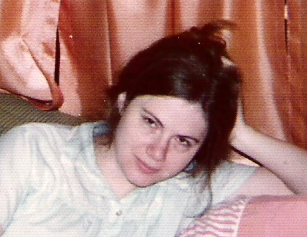
She is in her pajamas, no make up. And yet, she is beautiful.
I see her humor in the slight curve of her smile, and the kiss she saves for me in the corner of it.
I see truth and conviction behind her dark eyes. She knew who she was- a daughter of God, and taught me to believe I was, too. I see sacrifice under her eyes, from time spent caring for her kids rather than sleeping. I see virtue, kindness, and most of all, love in her face.
She is beautiful.
And not a stitch of makeup.
I like make up and hair product. They polish me up. They're also easy to hide behind. I sometimes wonder if I had an airbrush if I would use that, too. But, beauty- real beauty- isn't what is outside, but inside. We've all heard that, right. But most of us still wear makeup.
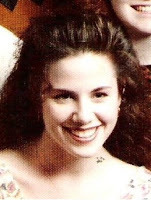 Heck, I grew up in the eighties and nineties with dark make up and giant hair. They were my shield, and my glory. As I matured, the compliments grew. I'll admit, I liked it. So much so that I began to depend in it. It got to the point, in my early twenties, where I wouldn't dare be seen without makeup or my hair done. Then a deeper problem began to grow. My sense of self became attached to the compliments given. If they told me I was pretty, than I was. If they didn't think I was, the I must not be. So, I tried harder to be pretty in their eyes, because I wanted to be pretty in mine. I even went to a modeling agency once. They told me my features were plain and "too soft" and I could stand to lose thirty pounds. I weighed 120 back then. I didn't feel pretty that day.
Then I met my husband. One of the first things he said to me was, "You're pretty on the outside, but that'll fade. What's on the inside?"
I was shocked. Wasn't my Cher-worthy hair good enough for him?
Thankfully, it wasn't. For the first time in my life, I had to look at my inside completely dependent from my outside. There was some good things there, dare I say a lot of good things. I was kind, loving, helpful, smart and funny.
(What?! You say. Is Michelle really complimenting herself? I am. And you should, too. To not acknowledge the good thing inside of you is an insult to God, your creator, who gave you those things. There's more about that at the end of this post.)
I was pretty good in the inside. I realized, though, that I had spent more time fussing and nurturing and polishing the outside that those good things within.
So I started focusing more on my insides. What did I really believe? How did I really behave? What did I really want? How strong was I really? I launched a search to find all my weaknesses and faults- something had I tried to hide my entire life. And when I found them, I turned them over God, and with Him, tried to make them stronger, or even disappear.
I learned more about God and my Savior, and tried to become like Them. A pursuit which is nearly entirely internal.
I worked on, and am still actively working on what is inside. And I will for the rest of my life.
How grateful I am for my husband's priorities. He did, and still does, look for what is in me. I'm so glad, because my outside is changing. I'm 41. The gray hairs are sprouting. Skin is sagging. The bags under the eyes are appearing. The single-digit pants are gone. I'm not a fan of any of it. But, I really, really like what's in me.
This is my mother again. I just love her. And this is me, as I write this post. No make up. Hair air-dried with no style. Bad lighting and a messy room. Yep- that's me.
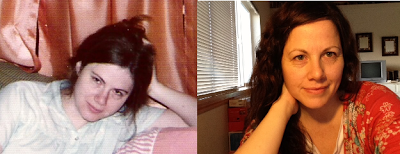
And I'm totally ok with it.
In fact, I think I might resemble my sweet mother. At least, I hope I do.
I hope my kids can see the humor in the slight curve of my smile, and the kiss I save for my them in the corner of it;the truth and conviction behind my hazel eyes. I am a daughter of God, and teach my children they are children of God, too; the sacrifice under my eyes, from time caring for my children rather than sleeping;the virtue and kindness I strive to exemplify as I try to follow my Savior's example each day.
But I hope, most of all they will see love.
I love God. I love being His daughter. I love my husband. I love my children.
And I love me; outside....but especially in.
Who I am makes me feel beautiful.
Society tells us we need to look a certain way, wear certain fashions, to be beautiful. They tell us we should love who are, but then is up in arms when we one of us stands up and says, "I think I'm beautiful."
That happened to me once.
I was in a group of women. The subject of loving yourself came up. One woman asked, "Do you feel pretty?" One by one the women said, "Oh, no. Not me. I'm just me. I would never say that."
Why not?
When it came to me, I said, "Yes, I do." You would have thought I just admitted to a heinous crime! They took my remark as arrogant and conceited. They clutched their chests and wore looks that screamed "We don't say things like that about ourselves. Real women are burdened with guilt, insecurity and self-deprecation."
Well, I still struggle with guilt and insecurity. I even self-deprecate sometimes.
But, I still feel pretty.
I don't feel pretty because of my outside. That is mostly out of my control, and is fading fast.
I feel pretty because my of what is in me: the DNA of Deity. I strive to have His image in my countenance. How can that not be pretty - even beautiful?
That's what I see in that picture of my mother. That's what makes her beautiful.
Perhaps the most beautiful part of it all, is that that is what makes you beautiful.
Make up or not. Messy house or not. Trendy or not. Believe it or not. You are beautiful, too.
I was looking across some photos the other day, and came across a picture of my mom when she was a young mother.

She is in her pajamas, no make up. And yet, she is beautiful.
I see her humor in the slight curve of her smile, and the kiss she saves for me in the corner of it.
I see truth and conviction behind her dark eyes. She knew who she was- a daughter of God, and taught me to believe I was, too. I see sacrifice under her eyes, from time spent caring for her kids rather than sleeping. I see virtue, kindness, and most of all, love in her face.
She is beautiful.
And not a stitch of makeup.
I like make up and hair product. They polish me up. They're also easy to hide behind. I sometimes wonder if I had an airbrush if I would use that, too. But, beauty- real beauty- isn't what is outside, but inside. We've all heard that, right. But most of us still wear makeup.
 Heck, I grew up in the eighties and nineties with dark make up and giant hair. They were my shield, and my glory. As I matured, the compliments grew. I'll admit, I liked it. So much so that I began to depend in it. It got to the point, in my early twenties, where I wouldn't dare be seen without makeup or my hair done. Then a deeper problem began to grow. My sense of self became attached to the compliments given. If they told me I was pretty, than I was. If they didn't think I was, the I must not be. So, I tried harder to be pretty in their eyes, because I wanted to be pretty in mine. I even went to a modeling agency once. They told me my features were plain and "too soft" and I could stand to lose thirty pounds. I weighed 120 back then. I didn't feel pretty that day.
Then I met my husband. One of the first things he said to me was, "You're pretty on the outside, but that'll fade. What's on the inside?"
I was shocked. Wasn't my Cher-worthy hair good enough for him?
Thankfully, it wasn't. For the first time in my life, I had to look at my inside completely dependent from my outside. There was some good things there, dare I say a lot of good things. I was kind, loving, helpful, smart and funny.
(What?! You say. Is Michelle really complimenting herself? I am. And you should, too. To not acknowledge the good thing inside of you is an insult to God, your creator, who gave you those things. There's more about that at the end of this post.)
I was pretty good in the inside. I realized, though, that I had spent more time fussing and nurturing and polishing the outside that those good things within.
So I started focusing more on my insides. What did I really believe? How did I really behave? What did I really want? How strong was I really? I launched a search to find all my weaknesses and faults- something had I tried to hide my entire life. And when I found them, I turned them over God, and with Him, tried to make them stronger, or even disappear.
I learned more about God and my Savior, and tried to become like Them. A pursuit which is nearly entirely internal.
I worked on, and am still actively working on what is inside. And I will for the rest of my life.
How grateful I am for my husband's priorities. He did, and still does, look for what is in me. I'm so glad, because my outside is changing. I'm 41. The gray hairs are sprouting. Skin is sagging. The bags under the eyes are appearing. The single-digit pants are gone. I'm not a fan of any of it. But, I really, really like what's in me.
This is my mother again. I just love her. And this is me, as I write this post. No make up. Hair air-dried with no style. Bad lighting and a messy room. Yep- that's me.
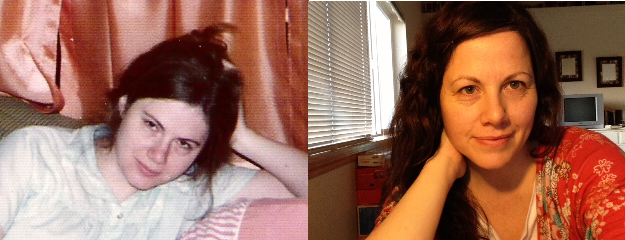
And I'm totally ok with it.
In fact, I think I might resemble my sweet mother. At least, I hope I do.
I hope my kids can see the humor in the slight curve of my smile, and the kiss I save for my them in the corner of it;the truth and conviction behind my hazel eyes. I am a daughter of God, and teach my children they are children of God, too; the sacrifice under my eyes, from time caring for my children rather than sleeping;the virtue and kindness I strive to exemplify as I try to follow my Savior's example each day.
But I hope, most of all they will see love.
I love God. I love being His daughter. I love my husband. I love my children.
And I love me; outside....but especially in.
Who I am makes me feel beautiful.
Society tells us we need to look a certain way, wear certain fashions, to be beautiful. They tell us we should love who are, but then is up in arms when we one of us stands up and says, "I think I'm beautiful."
That happened to me once.
I was in a group of women. The subject of loving yourself came up. One woman asked, "Do you feel pretty?" One by one the women said, "Oh, no. Not me. I'm just me. I would never say that."
Why not?
When it came to me, I said, "Yes, I do." You would have thought I just admitted to a heinous crime! They took my remark as arrogant and conceited. They clutched their chests and wore looks that screamed "We don't say things like that about ourselves. Real women are burdened with guilt, insecurity and self-deprecation."
Well, I still struggle with guilt and insecurity. I even self-deprecate sometimes.
But, I still feel pretty.
I don't feel pretty because of my outside. That is mostly out of my control, and is fading fast.
I feel pretty because my of what is in me: the DNA of Deity. I strive to have His image in my countenance. How can that not be pretty - even beautiful?
That's what I see in that picture of my mother. That's what makes her beautiful.
Perhaps the most beautiful part of it all, is that that is what makes you beautiful.
Make up or not. Messy house or not. Trendy or not. Believe it or not. You are beautiful, too.
October 10, 2013
Responsible Parenting vs. Banning Books

I recently participated in a blog hop for Banned Books Week. As a writer and reviewer I read many books, and often I might like the book, but feel it is inappropriate for certain age levels. When I looked at the top ten ALA 2012 banned book list I had to agree with most of the books on there, and the reasons why the books were in question. Then there were books like Captain Underpants that made me laugh at the choice. I don't believe in banning books, but I do believe in age appropriate books.
In fact, my 8th grader was supposed to read 2 of them for summer reading and I said no. What were they? 13 Reasons Why by Asher and The Absolutely True Diary of a Part-Time Indian, by Sherman Alexie. I read 13 Reasons Why a couple years ago and enjoyed its poignant portrayal of a girl who chose to commit suicide. But, when I finished the book, I set it aside and told my oldest daughter she could not read it until she was sixteen. So, when my twelve year old was assigned it as summer reading I was astonished. I immediately wondered at the rest of the books that had been assigned. Most were fine, but then I ran across The Absolutely True Diary of a Part-Time Indian.
As I began researching the book I was dismayed at the sexual references. Again I believed this book was not age level appropriate. I asked my daughter not to read it. She agreed when I explained to her my problems with both books. A problem arose when the teacher announced that the only way to earn an A first quarter back in the Fall, was to read the Part-Time Indian book. My daughter was devastated, but I sat her down and explained that she was taking a stand for what was right and that her school grade was not, at that moment, the most important thing.
As a mom, the most important thing in my life is raising good and moral children. It is my parental responsibility to monitor things like television and books. I don't want a library doing it for me. Their ideas might not coincide with my own. As an author I sometimes get flack from other authors about content in YA novels. Many writers today believe that YA is now an anything goes genre. It makes me sad to see what is put out there and considered appropriate for early teens. Please don't be afraid to be responsible. Talk to your children about what is appropriate to read at their age. Let them know that when they are older, in my kids cases 16, they are free to read what they want and I hope that they will choose wisely, but it will be their choice. And to teachers that assign questionable books- Please value children as much as their moms and dads do.
October 9, 2013
Loving Limitations- a how-not-to
“And if men come unto to me I will show unto them their weakness. I give unto men weakness that they may be humble; and my grace is sufficient for all men that humble themselves before me, and have faith in me, then will I make weak things become strong unto them.” Ether 12:27
Bah, humbug. The message of the scripture above (from the Book of Mormon for anyone not familiar therewith {I got to use the word therewith :D}) is one that I have been at odds with since, well, forever. I have a ton of weaknesses. Most of them involve food like cheese and chocolate and caramel and . . . . *takes snack break* Ok, what was I saying? Right, weaknesses. I find myself frustrated daily with the prospect of tackling even one of these little demons at a time, and I am super distractible, another failing. Don’t get me wrong this isn’t a pity party post; I just feel like I have a grievance to air.My faults don’t make me humble. They make me angry. Hulk. Smash. Angry. And according to a really great councilor I met once, anger is the physiological response to the belief that something is unfair. What I have intellectualized from this is that I think it is unfair that I have to have weaknesses. Probably because I don’t want them. More than that, I can’t accept them. I refuse to just acknowledge and move on from the fact of my mortality and therefore my imperfect nature. And despite this TED talk, this talk from the LDS General Conference this weekend, oh and this one, too, I can’t seem to get to a place of embracing my limited nature. I often see people’s Facebook posts full of awesome accomplishment, and rather than feeling joy for their success, I want to punch myself in the face for not being equally excellent. Even as I am typing this my husband is gently explaining to my son that we don’t use the word stupid in our house, except that he learned that from me. So technically we do. I do. I shouldn’t. *forehead palm*What this means for my writing is that I go into these places of complete lock down. I can’t write because every word is wrong. Every plot line is stupid, insipid, cliché. I find myself sitting at my computer with enough rage at my own ineptitude to melt the screen with my laser vision. I have tried to tackle this particular issue a few times. And I manage to make a little progress. I can breathe through the mistakes, shake off the humiliation of one more, “Oops.” And then the cat-o-nine tails comes out and floggings begin anew. Maybe it’s because I care what people think of me (I want them to think good things, only good things), maybe it’s because I know I’m not quite living up to my potential, maybe I just need more chocolate. I want to be humble. I want to face a place where I need some help or just more work and be able to say, “I know this isn’t my strong place, but I’m going to just try. And that’s enough for now because I am mortal and imperfect.” Yet every time I approach a failing with the intent to work on it I have an internal tantrum. “Why aren’t I better at this? Why is this taking so long? This makes no sense! Why can’t I just be perfect?”I have no lesson here other than those given in the links above (You should watch them, really. They are fantastic.). So if any of you have been here, this place of epic frustration and wheel spinning over the stuff that isn’t right yet, please let me know. Let me know it’s not just me. And in keeping with the theme, I signed up for this awesome write-a-thon and I missed the first two days. Check it out, I’m giving away a copy of the anthology I am in to someone who, you know, actually accomplishes stuff.
October 7, 2013
Turn Around

I live in a small town in Los Angeles county (which I realize sounds like an oxymoron to those unfamiliar with Southern California). It's a great place to live when you love culture and food the way I do. In minutes, I can eat at fantastic Asian or Mexican restaurants; see paintings and sculptures created by some of the finest artists of all time; hear a world-class symphony in a world-renowned landmark; sit and have the tension baked out of me at my choice of jimjilbangs; visit gorgeous beaches that have been memorialized in film and song; or find unearthly peace in one of my religion's largest and oldest temples. Millions of people live in the valleys to the south, east, and west of my house, as is evidenced by the sometimes horrendous traffic on our legendary freeways.
But just days ago, I realized with a shock that I live on the edge of wilderness. Our house backs up to the San Gabriel Mountains, and we regularly have coyotes, mule deer, and black bears ambling down our street and generally causing a ruckus. And the other morning, I was walking our dog and looked up at the mountains, which were wreathed in a mist that made them look even more forbidding and inaccessible than usual. What lay beyond them, I wondered. When I got home, I looked us up on Google Maps and realized that civilization basically ends just feet from our front door--because beyond those mountains lies the Mojave Desert.
What's more, 45 minutes to the south of us is the Pacific Ocean. Paddle out into that in a straight line, and you wouldn't hit land again for thousands of miles. When I look at where I live while contemplating these two wild borders--the mountains and the sea--Los Angeles suddenly feels very small. And what lies beyond my house and neighborhood and city feels like a gift that has been waiting for me all along. The great Tang Dynasty poet Li Bai wrote, " As the peach-blossom flows downstream and is gone into the unknown, I have a world apart that is not among men." Seeing the world around me in this new way was a radical shift in perspective for me, one that gave me a bit of a sense of vertigo.
Sometimes we need a similar shift in perspective when it comes to our writing careers. Those of us who are still waiting for our careers to take off, or who are hoping to take things to the next level, may at times feel like we're on the edge of a marvelous city, with all kinds of wonders just beyond our grasp. We may feel envy or a sense of injustice when someone else we know is admitted through the gates, while we remain outside, hoping for a chance to enter. We may have had some success, but it might not feel like enough, or as though things are moving much more slowly than we would like. When will it be our turn?
But maybe, when frustration rises, we just need to turn around. Have you been looking in one direction so long that you've forgotten what's behind you? Perhaps if we do an about-face, we'll see how far we've come on our journey and realize the bounty with which we've been gifted. And we, like Li Bai, will be able to retreat into a world that is not among men--and find peace there.
September 30, 2013
Finding your Passion
Valerie J. Steimle
We are all writers. We all have families which need our care. We want to take care of both but not sure how. We know how to take care of our families but we don't always know how to break into writing.
 After all the reading I have done for the last 20 years on writing and writers, there is a specific direction to follow. From Heather Moore's My Writer's Lair blog, there are some fantastic questions we can ask ourselves to get on track as a writer. Check out her blog as she has an excellent collection of books she has written which are fantastic. You can read selections of her books and they are heat warming, clean and spiritually uplifting. As an LDS author she has broken into the secular world of publishing as well and is recognized as a clean romance writer. So great!!
She is full of phenomenal insight and here are a few of ideas. My comments are in maroon.
Questions to ask yourself in finding your passion to write:
*1. What are you an expert in?
If you are writing a book on parenting, why not start a blog on parenting tips/experiences and build a readership beforehand? Get articles published in magazines, newspapers. Become that expert.
Valerie: Something I have been doing for over 20 years. Families are my passion so the family is what I write about... all aspects of the family.
*2. How are you different?
This will constantly change, but what set your book, or your writing apart from all the others out there?
Valerie: This is an ongoing process that I'm even dealing with. What do I know or have that not a lot of people know or have.... hmmmm.
*3. Relationship with your readers:
Through blogging, social networking, newsletters, etc. keep growing your platform through contact with your readers.
Valerie: This one is a biggie!!! Networking is one of the most important writing jobs you have. Whether it's social networking, blogging or networking online through groups--the idea is to get yourself out there with your writing.
*4. Join a group
Which professional organizations relate to your book topic? If you are writing historical fiction, join the historical society in your city. Become a board member. Join writers groups, volunteer to help at conferences. Find internet groups that deal with your subject matter. Become an active participant.
 Valerie: Also very important. I have homeschooled for years and wrote a homeschooling book to help other parents. I still spread the word about homeschooling and it is a great niche to be included in catalogs, speaking engagements and online websites. Fine your niche.
*5. Volunteer
When you have joined a professional group, volunteer to be on the board, a committee, etc. When I first started going to the LUW chapter meetings, I didn’t know anyone. A year later, I was became the Chapter Secretary, then was the Chapter President. When I joined LDStorymakers, it took me awhile to even get “approved” and I only knew 2 writers. From the group, I’ve developed dozens of life-long friendships, served at the 2008 conference co-director, etc. At the co-director, I was able to work with an agent and a NY Editor on personal basis.
*6. Speak for free
When you are not in demand, you won’t get the big bucks. When you are advertising your availability, note that you are doing so FREE of charge. Until you can build up a demand, you are best off donating your time. You will go through a period of trial and error.
Valerie: I have done this myself at homeschool meetings and these speaking engagements not only solidifies what you believe and wrote about, you are spreading the word about your topic. Whether it's clean romance or action adventure, people will listen to what you have to say under the right circumstances.
*7. Platform: You are a writer
Beyond your platform based on the topic of your book, you are a writer. This is a platform as well. You can be the expert on:
Your writing journey
How you got published
The research you’ve done for your book (location, time period, truth uncovered)
The “how to’s” of writing a book
A couple of years ago, I attended the LUW Utah Valley Chapter meeting. The class was taught by a gentleman who had spent the previous summer attending writers conference across the nation. His teaching topic? Which Writers Conferences were worth the time and money. He gave a very interesting run-down.
*8. Learn to teach/present
You might be an introvert. I am. The first time I even dared to say “hi” to a boy in the hall at school was in 7th grade. And he had been my neighbor for 7 years! (luckily he said “hi” back). The best thing I probably did was take drama in school, and work in retail in college. I had to greet customers and ask them if I could help them. This was intimidating. When you are doing a book signing, you need to be making eye contact and telling complete strangers about your book in an engaging way. Yes—you have to be a SALES PERSON.
You’ll have to work on your teaching skills. I went to a Toastmasters meeting only one time. It was amazing. I learned a lot in that meeting, but I was too intimidated to go back.
*9. Create a one-sentence pitch
In one sentence, be able to tell someone what your book is about. Develop your platform from there.
In Richard Paul Evan’s book, The Gift, the main character has Tourette’s syndrome. He said, “I also have Tourette’s. The symptoms I describe in the book are based on my own.” As he was on book tour and doing televisions interviews, no one wanted to talk about the story in his book, but about the fact that this best-selling author had Tourette’s.
Valerie: A great idea for any writer with a plan. I have been asked thousands of times, what my books are about and I can in a few words tell others about what I'm passionate about. So important.
Heather B. Moore
http://mywriterslair.blogspot.com
Find your passion in writing....
We are all writers. We all have families which need our care. We want to take care of both but not sure how. We know how to take care of our families but we don't always know how to break into writing.
 After all the reading I have done for the last 20 years on writing and writers, there is a specific direction to follow. From Heather Moore's My Writer's Lair blog, there are some fantastic questions we can ask ourselves to get on track as a writer. Check out her blog as she has an excellent collection of books she has written which are fantastic. You can read selections of her books and they are heat warming, clean and spiritually uplifting. As an LDS author she has broken into the secular world of publishing as well and is recognized as a clean romance writer. So great!!
She is full of phenomenal insight and here are a few of ideas. My comments are in maroon.
Questions to ask yourself in finding your passion to write:
*1. What are you an expert in?
If you are writing a book on parenting, why not start a blog on parenting tips/experiences and build a readership beforehand? Get articles published in magazines, newspapers. Become that expert.
Valerie: Something I have been doing for over 20 years. Families are my passion so the family is what I write about... all aspects of the family.
*2. How are you different?
This will constantly change, but what set your book, or your writing apart from all the others out there?
Valerie: This is an ongoing process that I'm even dealing with. What do I know or have that not a lot of people know or have.... hmmmm.
*3. Relationship with your readers:
Through blogging, social networking, newsletters, etc. keep growing your platform through contact with your readers.
Valerie: This one is a biggie!!! Networking is one of the most important writing jobs you have. Whether it's social networking, blogging or networking online through groups--the idea is to get yourself out there with your writing.
*4. Join a group
Which professional organizations relate to your book topic? If you are writing historical fiction, join the historical society in your city. Become a board member. Join writers groups, volunteer to help at conferences. Find internet groups that deal with your subject matter. Become an active participant.
 Valerie: Also very important. I have homeschooled for years and wrote a homeschooling book to help other parents. I still spread the word about homeschooling and it is a great niche to be included in catalogs, speaking engagements and online websites. Fine your niche.
*5. Volunteer
When you have joined a professional group, volunteer to be on the board, a committee, etc. When I first started going to the LUW chapter meetings, I didn’t know anyone. A year later, I was became the Chapter Secretary, then was the Chapter President. When I joined LDStorymakers, it took me awhile to even get “approved” and I only knew 2 writers. From the group, I’ve developed dozens of life-long friendships, served at the 2008 conference co-director, etc. At the co-director, I was able to work with an agent and a NY Editor on personal basis.
*6. Speak for free
When you are not in demand, you won’t get the big bucks. When you are advertising your availability, note that you are doing so FREE of charge. Until you can build up a demand, you are best off donating your time. You will go through a period of trial and error.
Valerie: I have done this myself at homeschool meetings and these speaking engagements not only solidifies what you believe and wrote about, you are spreading the word about your topic. Whether it's clean romance or action adventure, people will listen to what you have to say under the right circumstances.
*7. Platform: You are a writer
Beyond your platform based on the topic of your book, you are a writer. This is a platform as well. You can be the expert on:
Your writing journey
How you got published
The research you’ve done for your book (location, time period, truth uncovered)
The “how to’s” of writing a book
A couple of years ago, I attended the LUW Utah Valley Chapter meeting. The class was taught by a gentleman who had spent the previous summer attending writers conference across the nation. His teaching topic? Which Writers Conferences were worth the time and money. He gave a very interesting run-down.
*8. Learn to teach/present
You might be an introvert. I am. The first time I even dared to say “hi” to a boy in the hall at school was in 7th grade. And he had been my neighbor for 7 years! (luckily he said “hi” back). The best thing I probably did was take drama in school, and work in retail in college. I had to greet customers and ask them if I could help them. This was intimidating. When you are doing a book signing, you need to be making eye contact and telling complete strangers about your book in an engaging way. Yes—you have to be a SALES PERSON.
You’ll have to work on your teaching skills. I went to a Toastmasters meeting only one time. It was amazing. I learned a lot in that meeting, but I was too intimidated to go back.
*9. Create a one-sentence pitch
In one sentence, be able to tell someone what your book is about. Develop your platform from there.
In Richard Paul Evan’s book, The Gift, the main character has Tourette’s syndrome. He said, “I also have Tourette’s. The symptoms I describe in the book are based on my own.” As he was on book tour and doing televisions interviews, no one wanted to talk about the story in his book, but about the fact that this best-selling author had Tourette’s.
Valerie: A great idea for any writer with a plan. I have been asked thousands of times, what my books are about and I can in a few words tell others about what I'm passionate about. So important.

Heather B. Moore
http://mywriterslair.blogspot.com
Find your passion in writing....
September 26, 2013
How Writing is Like Setting Up a First Grade Classroom
I haven't been able to write for a couple of weeks now because my daughter, a first grade teacher, got "surplused" (it may not be in the dictionary, but Utah teachers know the term) just 3 and a half weeks into the school year. To be brief, it meant there was one too many teachers at her school and not enough at another, so... since she was the last hired, she got shifted.
That meant another trip to Utah to help her set up her classroom for the second time. I've now helped set up three different classrooms and I began to see certain parallels between this process and the process of writing.
First, in this day and age, much as you may like to write by hand, in the end you can't avoid the technical. Manuscripts must be typed in the end and most submissions are now done online or by email. School is no different. Even though these are only First Graders, this was a Title 1 school and so one whole wall was devoted to computers.

You can't see it from here, but that's a Math bulletin board above the computers. While writers tend toward right brain activities, we can't neglect the business side of our profession if we want to be successful. We have to count sales, deal with sales tax, etc.
Happily, though, our main concern is with words. And words are most important to First Graders as they are trying to master reading and writing. This bulletin board or Word Wall at the back reminded me of my need to avoid repetition of certain words and, instead, search for new ways to express common ideas.
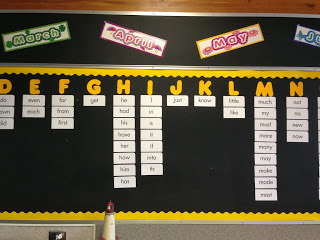
But we don't ask these young kids to read without also encouraging them to take their first real steps in writing. My daughter's classroom has a theme of "Sailing Toward Knowledge," and like these inexperienced first graders, we can sometimes feel "Under the Sea" when it comes to taking our pencils or keyboards in hand and pounding out that first draft.
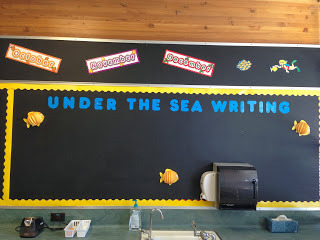
I might point out, as well, the names of the months above the entire back bulletin board--a reminder that we must write day in and day out, week after week, and month after month if we expect to get better at our craft.
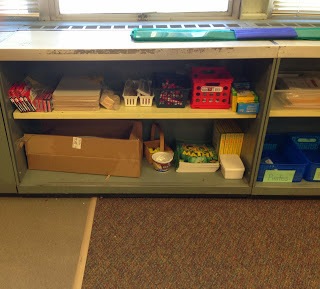
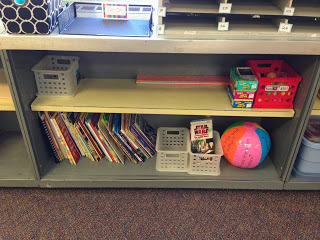
Next is our continual need for resources and research material. She has a whole side of her room devoted to math manipulatives, books, and other educational tools. Likewise, we writers need ready access to the kinds of resources that will enhance our finished product...beginning with a good dictionary and grammar book.
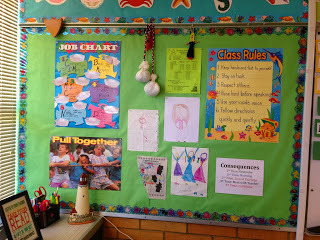
At the same time, both writers and teachers need to establish certain boundaries or rules for themselves and those with whom they are engaged. A teacher needs to outline class rules and consequences for misbehavior, as well as inspire both the children and herself/himself. A writer needs to outline his/her own rules (such as no social media until your writing is done for the day) both for self and loved ones who may share the same roof. After all, though both occupations can be time consuming, teaching or writing is not, in the end, the sole purpose of our existence.
I interview other writers a lot for my own blog and I invariably ask about their "writing space." I'm always intrigued to know what works for other writers and what it may reveal about them. For me, I need some kind of view, something that sends my mind beyond myself. In the same way, First Grade teachers need to set up a happy, colorful environment that will pull in these young minds.
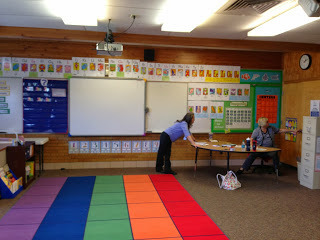
Neither of these women is my daughter. The one on the right is her full-time aide, though...another benefit of a Title 1 school. Sometimes, as a writer, I wish I had a full-time aide and that's where critique groups and writing groups come in. They can help us see the weak links in our work and inspire us to forge ahead. We like to think of our profession as a solitary kind of occupation, but I think we all relish the opportunity we get at writers conferences and retreats to mingle with other like-minded individuals. In the same way, teachers now work as teams more often than not. And my daughter has a terrific team.
In the end, though, it's you facing a blank screen and making a decision about what to put on it. You've got all the letters, numbers, words, and ideas running around in your head. But which ones will you use and when and how?
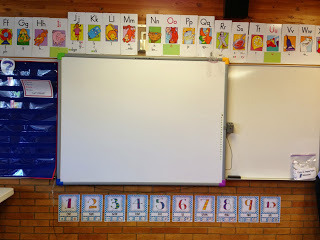
That's where a clean, orderly work station comes in. Granted, every few months or so I find I have to reorganize and clear away the clutter, but I always write better (and I'm sure teachers always teach better) when the "house" is in order.
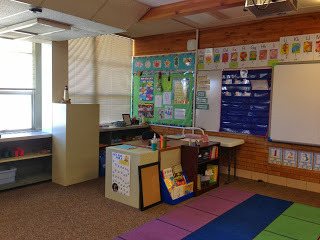
When all else fails, turn to a good book. You can't write well if you don't read a lot. And there are times (like after you've just finished one manuscript) when you need to relax and hibernate a bit. Do it with a good book or two. Teachers do the same thing. If a lesson has failed that day, First Grade teachers can always count on an entertaining read to pull the kids' attention back and make everyone (especially the teacher) feel better. "Piggie Pie" will do it every time!
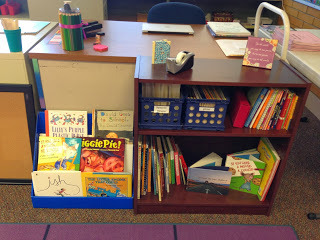
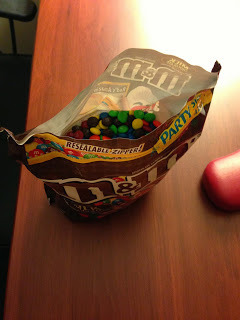
Finally, one thing continues to provide the necessary fuel, whether I'm writing or helping to set up a classroom: chocolate. Let's just say I ate a lot of M&Ms this past week. :D
That meant another trip to Utah to help her set up her classroom for the second time. I've now helped set up three different classrooms and I began to see certain parallels between this process and the process of writing.
First, in this day and age, much as you may like to write by hand, in the end you can't avoid the technical. Manuscripts must be typed in the end and most submissions are now done online or by email. School is no different. Even though these are only First Graders, this was a Title 1 school and so one whole wall was devoted to computers.

You can't see it from here, but that's a Math bulletin board above the computers. While writers tend toward right brain activities, we can't neglect the business side of our profession if we want to be successful. We have to count sales, deal with sales tax, etc.
Happily, though, our main concern is with words. And words are most important to First Graders as they are trying to master reading and writing. This bulletin board or Word Wall at the back reminded me of my need to avoid repetition of certain words and, instead, search for new ways to express common ideas.

But we don't ask these young kids to read without also encouraging them to take their first real steps in writing. My daughter's classroom has a theme of "Sailing Toward Knowledge," and like these inexperienced first graders, we can sometimes feel "Under the Sea" when it comes to taking our pencils or keyboards in hand and pounding out that first draft.

I might point out, as well, the names of the months above the entire back bulletin board--a reminder that we must write day in and day out, week after week, and month after month if we expect to get better at our craft.
Next is our continual need for resources and research material. She has a whole side of her room devoted to math manipulatives, books, and other educational tools. Likewise, we writers need ready access to the kinds of resources that will enhance our finished product...beginning with a good dictionary and grammar book.


At the same time, both writers and teachers need to establish certain boundaries or rules for themselves and those with whom they are engaged. A teacher needs to outline class rules and consequences for misbehavior, as well as inspire both the children and herself/himself. A writer needs to outline his/her own rules (such as no social media until your writing is done for the day) both for self and loved ones who may share the same roof. After all, though both occupations can be time consuming, teaching or writing is not, in the end, the sole purpose of our existence.

I interview other writers a lot for my own blog and I invariably ask about their "writing space." I'm always intrigued to know what works for other writers and what it may reveal about them. For me, I need some kind of view, something that sends my mind beyond myself. In the same way, First Grade teachers need to set up a happy, colorful environment that will pull in these young minds.
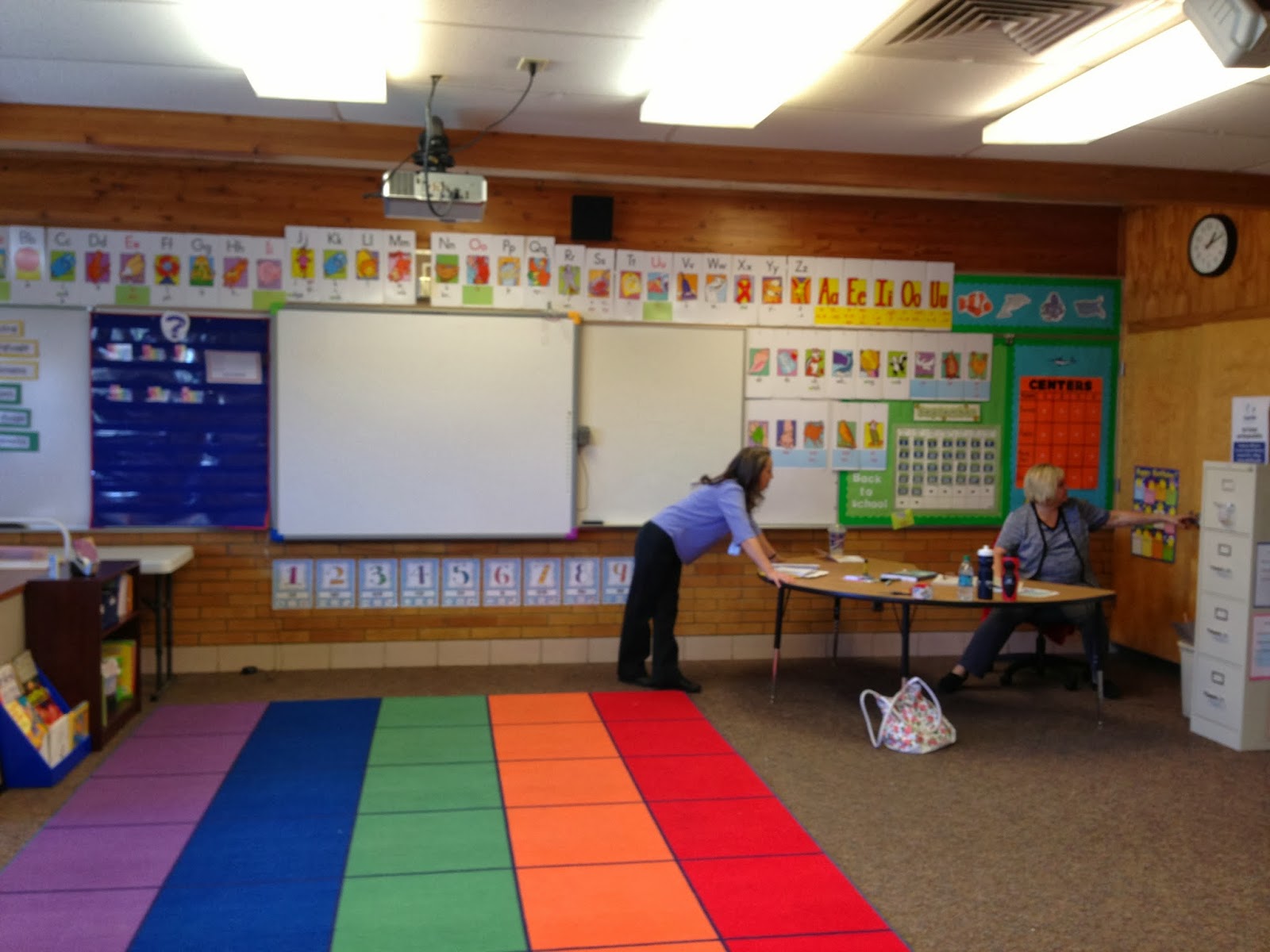
Neither of these women is my daughter. The one on the right is her full-time aide, though...another benefit of a Title 1 school. Sometimes, as a writer, I wish I had a full-time aide and that's where critique groups and writing groups come in. They can help us see the weak links in our work and inspire us to forge ahead. We like to think of our profession as a solitary kind of occupation, but I think we all relish the opportunity we get at writers conferences and retreats to mingle with other like-minded individuals. In the same way, teachers now work as teams more often than not. And my daughter has a terrific team.
In the end, though, it's you facing a blank screen and making a decision about what to put on it. You've got all the letters, numbers, words, and ideas running around in your head. But which ones will you use and when and how?

That's where a clean, orderly work station comes in. Granted, every few months or so I find I have to reorganize and clear away the clutter, but I always write better (and I'm sure teachers always teach better) when the "house" is in order.
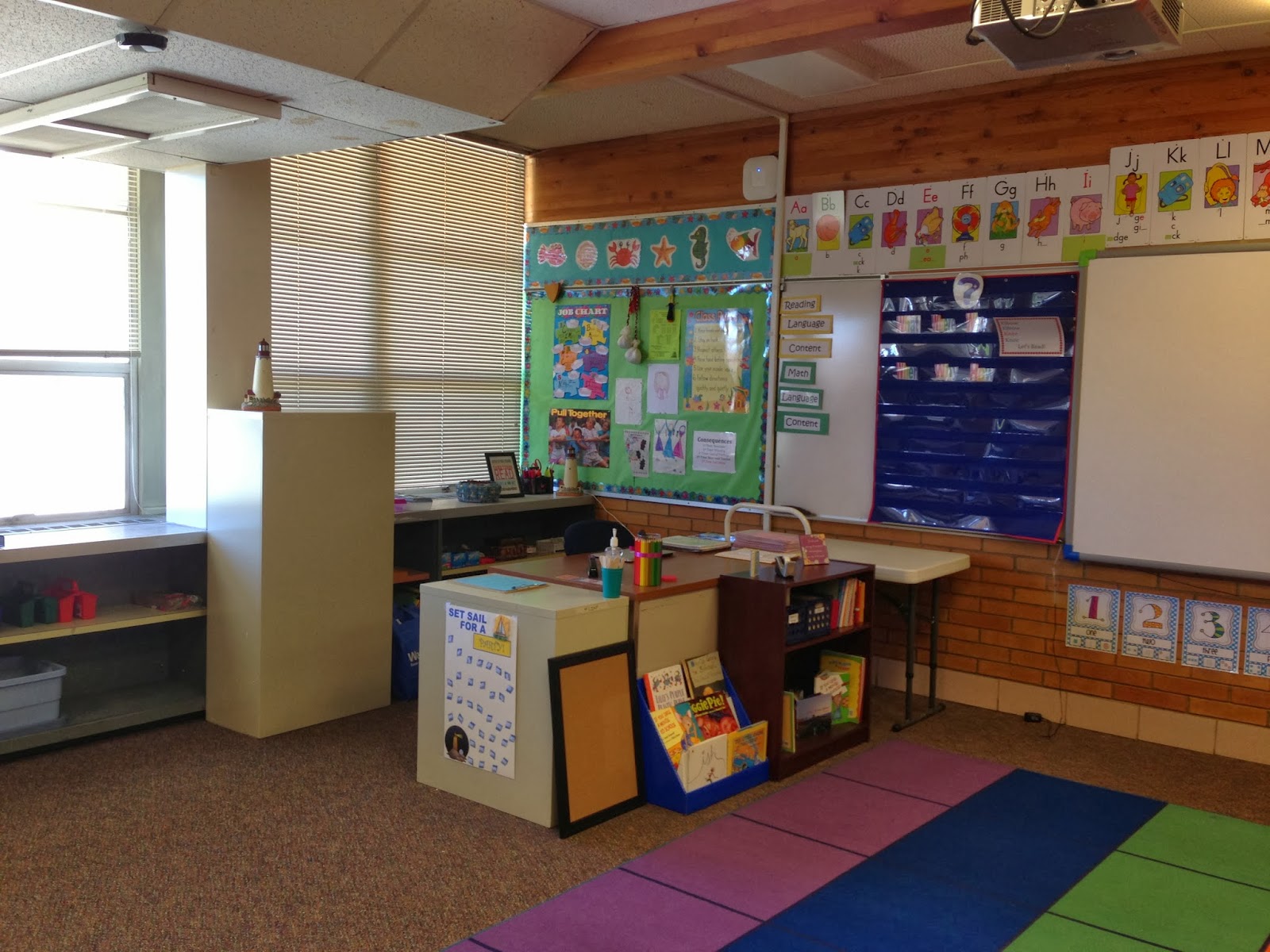
When all else fails, turn to a good book. You can't write well if you don't read a lot. And there are times (like after you've just finished one manuscript) when you need to relax and hibernate a bit. Do it with a good book or two. Teachers do the same thing. If a lesson has failed that day, First Grade teachers can always count on an entertaining read to pull the kids' attention back and make everyone (especially the teacher) feel better. "Piggie Pie" will do it every time!

Finally, one thing continues to provide the necessary fuel, whether I'm writing or helping to set up a classroom: chocolate. Let's just say I ate a lot of M&Ms this past week. :D

September 23, 2013
A Solitary Occupation Improved with a Group Endeavor
 Writing is a solitary occupation that requires concentration and dedication - a perfect job for a recluse. Mothers usually don't have this luxury unless they wait until the wee hours of the night, and then they are still interrupted by a child who is afraid of the monster in the closet, the sick baby who needs tending and more. Distractions abound, yet there are examples of successful mommy authors who persevered including ANWA president Janette Rallison and famous J. K. Rowling.
 Publication of the written word on the other hand is a group endeavor that involves the writer, writing / critique groups, beta readers, developmental editors, content and /or copy editors, formatters, layout designers, artists, publishers (whether independent, small, mid or major publishing houses), reviewers, printers, distributors, and publicists. Agents, legal counselors and others become involved from time to time. Thus the mommy author must reach out of the comfort of her writing cave and join the outside world.
Must? What if the writer chooses not to extend their influence beyond their comfort zone? If publication is not the goal then keeping quiet and laying low works. Perhaps all this writer wants is to keep private journals, or doesn't want their narratives read until after they have passed away. They can always hope that future anthropologists will discover their scribbles somewhere in the distant future - like the gnostic gospels.
Benefits of belonging to a writing group:
Receiving feedback from someone other than the characters in your mind and / or children who may or may not understand.Learning from other's experiences.Sharing experiences with others with similar goals.Networking and discovering resourcesMarketing assistance.
 Writers Unite to Fight Cancer(WUFC) is a different kind of writing group. Our original group of eight writers began as students with Dr. Pamela R. Goodfellow. In getting to know one another we learned that each of us had a connection to cancer. So when our publication process was in the final stages, while we planned our book launch, we decided to combine our efforts to help a good cause - defeating cancer. Now we are over 100 members strong. We continue to raise money for cancer research and provide support to one another in our writing careers. We invite any interested published authors to join our ranks. Contact Margaret L. Turley at writersunitetofightcancer@gmail.com for more information or questions.

