
L.M. Long's Blog, page 23
April 15, 2013
Trust
This is a preview for the fourth short story in my collection The First Year. If you like this preview and want to finish the story, it can be found on my personal blog. You can read the whole story HERE
Enjoy!TrustThou shalt love thy neighbor as thyself Lev. 19:18 This morning is a blur. I remember Peter getting up for work, but only vaguely. He kissed me good-bye, said “I love you,” and left. At least, I think that’s all that happened. That’s all I remember, anyway. I glance at the digital clock on my nightstand. Crap. 11:45. I did it again. I close my eyes tightly and try to focus on how I feel: Warm. Comfortable. My head is clear. I hold on to this moment for as long as I can before I think of Mallory. Mallory. She is the bane of my existence. Sighing, I reach for my phone. I have no text messages. Go figure. The only people who text me are all at work. They all have jobs because they are all worth something. I think I hear Mallory stirring. I sit up and look around our tiny bedroom. The walls are white. The bedspread is twisted around my legs. The floor is scattered with clothes. My sweatpants. I reach for these, trying hard not to fall out of bed. This is the only work out my abs ever get. Once I retrieve my sweatpants, I swing my legs over the side of the bed. First, I slip the pants over my right leg. Then the left. I shimmy the waistband over my thighs, and finally stand. The waistband feels a little tighter than normal. Mallory is definitely awake in the other room. I bend down to grab a shirt. The shirt on top of the pile closest to me is green. I put it on. It’s Peter’s. I look down at the Nike swoosh across my chest. Just do it.Yeah right. I reach up for my blonde hair and pull it over my shoulders. It’s a tangled, greasy mess. I try to comb my fingers through it, but then I give up. It’s not like there’s anyone to impress anyway. I pull the rubber band off my wrist, fling my head down, and watch my hair cascade toward the ground. I grab it and throw it up into a messy bun on top of my head. There. Now it’s at least out of the way. I walk over to the bedroom door and yank it open. Peter showed me how to fix it, but I haven’t yet. I don’t want to destroy our apartment. Chili, everywhere. Up the side of the refrigerator, all over the linoleum, inside the drawers and cabinets. I shake my head. I can’t do anything right. Once the door is open, I look to my right. There she is. Sitting on the couch. Waiting for me. She’s wearing white underwear and a powder-blue shirt that v-necks right to the top of her perfect cleavage. “Good morning, Mallory.” She sneers, crossing one long, tanned leg over the other. “Shut up, you lazy slob. It’s almost noon. It isn’t morning anymore.” I walk over to the kitchen and flip on the light. There are still a few chili beans on the floor. I lean down to pick them up. I have to bend my knees, because I’m not as flexible as I used to be. “Don’t bother. The apartment is a pigsty anyway. You might as well leave the mess.” I toss the beans into the sink, trying to ignore her. “Can I have some Cheerios this morning? Or are you going to make me eat donuts again?” Mallory didn’t like donuts. They were the mortal enemy of her hour-glass figure. I look in the cupboards. They are full, but only because Peter works so hard. I hate Cheerios. I push them aside and reach for the box of donuts that I keep hidden behind all the healthy food that Peter buys for me. “I knew it. You are so weak.” I can’t help it. I don’t like healthy food, and I just can’t force myself to eat it. Who cares if I live a long life? Bring on the diabetes and the cancer and the high cholesterol. I don’t care. Maybe I’d go on a run later to counteract it. But I know I won’t. My muscles are already so tired, I can barely stand.
Enjoy!TrustThou shalt love thy neighbor as thyself Lev. 19:18 This morning is a blur. I remember Peter getting up for work, but only vaguely. He kissed me good-bye, said “I love you,” and left. At least, I think that’s all that happened. That’s all I remember, anyway. I glance at the digital clock on my nightstand. Crap. 11:45. I did it again. I close my eyes tightly and try to focus on how I feel: Warm. Comfortable. My head is clear. I hold on to this moment for as long as I can before I think of Mallory. Mallory. She is the bane of my existence. Sighing, I reach for my phone. I have no text messages. Go figure. The only people who text me are all at work. They all have jobs because they are all worth something. I think I hear Mallory stirring. I sit up and look around our tiny bedroom. The walls are white. The bedspread is twisted around my legs. The floor is scattered with clothes. My sweatpants. I reach for these, trying hard not to fall out of bed. This is the only work out my abs ever get. Once I retrieve my sweatpants, I swing my legs over the side of the bed. First, I slip the pants over my right leg. Then the left. I shimmy the waistband over my thighs, and finally stand. The waistband feels a little tighter than normal. Mallory is definitely awake in the other room. I bend down to grab a shirt. The shirt on top of the pile closest to me is green. I put it on. It’s Peter’s. I look down at the Nike swoosh across my chest. Just do it.Yeah right. I reach up for my blonde hair and pull it over my shoulders. It’s a tangled, greasy mess. I try to comb my fingers through it, but then I give up. It’s not like there’s anyone to impress anyway. I pull the rubber band off my wrist, fling my head down, and watch my hair cascade toward the ground. I grab it and throw it up into a messy bun on top of my head. There. Now it’s at least out of the way. I walk over to the bedroom door and yank it open. Peter showed me how to fix it, but I haven’t yet. I don’t want to destroy our apartment. Chili, everywhere. Up the side of the refrigerator, all over the linoleum, inside the drawers and cabinets. I shake my head. I can’t do anything right. Once the door is open, I look to my right. There she is. Sitting on the couch. Waiting for me. She’s wearing white underwear and a powder-blue shirt that v-necks right to the top of her perfect cleavage. “Good morning, Mallory.” She sneers, crossing one long, tanned leg over the other. “Shut up, you lazy slob. It’s almost noon. It isn’t morning anymore.” I walk over to the kitchen and flip on the light. There are still a few chili beans on the floor. I lean down to pick them up. I have to bend my knees, because I’m not as flexible as I used to be. “Don’t bother. The apartment is a pigsty anyway. You might as well leave the mess.” I toss the beans into the sink, trying to ignore her. “Can I have some Cheerios this morning? Or are you going to make me eat donuts again?” Mallory didn’t like donuts. They were the mortal enemy of her hour-glass figure. I look in the cupboards. They are full, but only because Peter works so hard. I hate Cheerios. I push them aside and reach for the box of donuts that I keep hidden behind all the healthy food that Peter buys for me. “I knew it. You are so weak.” I can’t help it. I don’t like healthy food, and I just can’t force myself to eat it. Who cares if I live a long life? Bring on the diabetes and the cancer and the high cholesterol. I don’t care. Maybe I’d go on a run later to counteract it. But I know I won’t. My muscles are already so tired, I can barely stand.


April 12, 2013
Write or Die

I first posted a version of this post on my blog about a year and a half ago. In re-reading it, I find myself so grateful for the paradigm shift it describes--and I wonder if that shift might benefit some of my fellow writers. Here it is.A couple of months ago, after my initial excitement over my new work-in-progress (WIP) wore off, I suffered a crisis of extreme self-doubt. I have been down this road before. The landmarks are thus:I will never be able do to this story justice.I should just mail the idea to Audrey Niffenegger or Margaret Atwood or A.S. Byatt.This concept is way cooler than my writing will ever be.Why can't I write what I see in my head?Why does everything I write seem boring/derivative/hackneyed/awful?My writing stinks.My life stinks.I stink.Yes, I know these ugly landmarks because I encounter them with every book. Each and every time, the pattern is the same. I realize that I'm talking nonsense to myself, and I try to ignore it and muscle my way through this nasty form of Resistance (now that I know what its name is). And I eventually get there. It just takes me a while, and there is a fair amount of agony involved.
In Ann LaMott's Bird by Bird (which I sincerely hope you have all read), her strong and wise advice is to give yourself permission to write a Bad First Draft. ("Bad" is not the modifier she uses, by the way. :) )
Why bother to write a Bad First Draft? Because, she writes, a bad first draft is infinitely easier to revise--and thus make good--than a nonexistent first draft.
That makes sense to me. I have counseled other writers to do this. I have tried many times to take her advice myself, but secretly? I haven't ever gotten very far with it. Here's why. Up until recently, my daily (or not-so-daily) writing process went like this:
1) Conquer Resistance for the day.
2) Re-read what I wrote the day before, tinkering and tweaking slightly as I get into the rhythm of the narrative.
3) Write new words very slowly and carefully, considering each phrase and punctuation mark, ensuring that I don't use the same word too often, watching the frequency of my semi-colons, reading the sentences over to myself to make sure they flow properly--all the while completely enslaved to the stern taskmaster that is my Inner Perfectionist. Fret that my writing isn't conveying what I want it to convey. Fume that I am not better at this after all these years. Doggedly keep at it. Sometimes find satisfaction in how something has turned out.
4) Quit for the day hours later, somewhat pleased, but mentally exhausted.
I have written three novels (and parts of several others) in this manner. Many successful writers do exactly this.
The upside is that my first drafts read pretty well. Many experienced professionals have characterized my first drafts as "clean" and "well-crafted." In my experience, that's not so common.But there is significant downside. I find that Resistance takes this form: "You don't have four hours to write today, and you can't get much done in the one hour you DO have. You didn't get enough sleep last night to have the stamina to sit and create lovely (or even decent) prose for 60 or 120 or 240 minutes. You shouldn't even try." Sometimes I get past that Resistance and write, but many times, I do not.
When I started my current exercise routine, it was such a revelation. I had been resigned to the old workout schedule, had made it work. But as I found how well my body responded to an hour of yoga every morning at 5:00 a.m.--as I discovered how much day I had at my disposal when I accomplished exercise and scripture study and laundry very early each morning--I decided to re-think other parts of my life that were giving me fits. Like my writing process.
I prayed to know how I could become a better, more consistent, less Resistance-prone writer. And I got the answer to my prayer in two parts. The first was that I read this post by Seth Godin. (I love it when God answers my prayers through other people's blog posts.) The second was that I found this website.
That's right, Write or Die, authored by none other than the dorkily-named Dr. Wicked. It's a simple computer program in which the writer a) enters the amount of time she would like to spend writing; b) enters her word count goal for that time period; and c) clicks the Start! button. There are three modes: Gentle, Normal, and Kamikaze--these modes govern how fast you have to write before you start getting warnings. And there are three consequence levels: Forgiving, Strict, and Kamikaze. With Kamikaze, apparently, if you stop typing for too long, your words start unwriting themselves. Yikes.
Write or die. Snort. How unspeakably cheesy, I thought. (And how had I never heard of it before, despite all my dabblings with NaNoWriMo? I now know that it is a staple for NaNo veterans.)
But then I thought about what Anne LaMott had been trying to tell me for years: Bad First Draft. And I added in what Seth Godin had just told me: Write Poorly, Write A Lot. And it occurred to me that if I had to write very fast, as with Write or Die, I wouldn't have time to do anything OTHER than write a Bad First Draft.
So, back in the first week of October, I decided to try it. Talk about a revelation. Ka-BAM.
On my very best writing days in the past--one day per week on which I pay a babysitter a considerable amount of cash so that I can sit by myself for hours on end--I could maybe get in 3,000 words. But those days were rare, indeed. In my very best writing sessions with no babysitter--just a napping toddler--I could get in 1200 or so words.
Using Write or Die for the first time, I wrote 3,716 words in a FRACTION of the time I normally spend writing. It was a babysitting day, so I had tons of time left over to go to a restaurant and read while I ate lunch, and plenty more time to listen to our son's first college radio show. I did all this while recovering from a concussion. But it gets better.
The next day was Friday. I wrote another 1,600 words or so. Saturday was the same. So were Monday, Tuesday, and Wednesday. (I don't write on Sundays.)
And the day after that? A day I would normally be pouting and throwing up my hands in dramatic despair, since I spent my precious babysat hours taking Tess to a doctor's appointment in Manhattan instead of writing?
That day I wrote 1200 words before 9am and another 976 after lunch when I got home. Over 2,000 words on a day when I was out of the house for hours on end.
In all my life, I have RARELY had a week in which I have written almost 14,000 words.
I have RARELY had a week in which I wrote every single day except for Sunday.
I have NEVER had such a stress-free experience writing. Oh, and if I need to research something, like a name of a new character or a medical procedure or a facet of 19th-century life? I don't stop and do the research right then. Oh, no. I type "***" to remind myself later that I need to look something up, and I KEEP A-GOING. As I drove to Manhattan that day with Tess, I was agog. It was 9:00 in the morning. I had already done an hour of yoga; prepared breakfast for my family; studied several chapters of Mosiah; done the breakfast dishes and two loads of laundry; showered, dressed, and done hair and makeup; and written 1200 words. And it was only 9am! And I wasn't even tired!
Do you even get my wonder at this? I had accomplished more in four hours than I have in many, many whole DAYS in the past. With this new routine, I have time to spend with my kids, time to fulfill my church callings, time to try new recipes and read and knit and visit with friends--ALL without the freaking Sword of Damocles that used to be my writing hanging over my head.And my rates have steadily improved in the weeks since. Most days I write about 2,000 words. Yesterday--a babysitting day--I wrote over 5,000 words and still had time for a leisurely pedicure, lunch out, good reading time, and excellent hang-out sessions with my kids.
Now, I know the words I'm writing are not the quality that I am used to writing. But I am not allowing myself to go back and re-read them, either--I am going to keep that Inner Perfectionist firmly turned OFF until I finish this draft.
HOWEVER, I know that these words are not half bad--even though I'm typing as fast as I can and taking almost no thought as to what is coming out of me. I am feeling the rhythm of my story--partly because it is so fresh in my mind due to an almost total LACK of any interfering RESISTANCE.
I do take a minute to look at my outline before I start writing, just to remind myself what I'm trying to achieve that day. But then I plunge in and GET IT DONE. IT'S SO EASY.
Can you join me in a hearty holler of exuberance and elation? LIFE IS AWESOME right now. I feel bionic.
Sorry for all the capital letters. I'm just. So. Excited.
Will a piper have to be paid once I've finished this draft and I go back and re-read it with editing in mind? Possibly. I'll let you know when I get there. But I am trusting in Anne LaMott. I know I'm an excellent editor, and I will exercise faith that my Bad First Draft will be something with which I can work. I can do this!And now, the rest of the story, 18 months later: once I went back and revised that first draft, those words I'd gotten out so quickly and efficiently weren't nearly as bad as I had feared they would be. Yes, revision still takes work--but I will NEVER go back to my old way of drafting. I'll be using Write or Die until, well....
April 8, 2013
By the Numbers
Humans are forgetful. The keys, where the car is parked, that one thing I was supposed to pick up, that ladies' name all seem to fall right out of our heads. More than that it seems that mortals are prone to forgetting essential truth even when we believe it and have been reviewing it for years.
I was recently reminded by my sister of such a truth. My mortal mind has been caught up for the last year in a never ending parade of studies and statistics regarding adopted children. How the brain develops, what birth and circumstance impart to a child, and the likelihood of success in redirecting a child away from their birth parent's choices have been a source of constant study for me since my children came into my care. The numbers are sad and staggering. The information available is overwhelming. I was buried in a place of repeat patterns, cyclical behaviors and lost potential. I was looking at my two oldest daughters, neither in kindergarten, and seeing only an inevitable road of misery and bad choices. It made discipline, well. . . . hard. I didn't want to pour the energy into loving intervention that I thought would go no where. What's the point of making her go back and do things over if she's just going to meet some idiot, drop out, get pregnant, and die of an overdose?! (No joke, the narrative in my head was that dramatic)
I was lamenting my girls' lost lives and potential to my sister one night. She kept giving the, "What is wrong with you?" look. Finally, after I had waved away notions of how young they are, how cute they are, how smart they really are, my sister just hit me with truth."They are eternal beings. They were before the world was and before any of this happened to them, and they will continue to be after all of this. They are different and special and their lives are already different than their birth-mom's, so how can you saddle them with her choices?" And then in her typical whimsy, bad hispanic accent and all, "Their jus' babies. Leave 'em alone." I cried, we hugged, it was a moment. But it seriously shook away months of building despair. I had forgotten one of the simplest principles of my faith. I am a child of God. He knows me. He loves me. And he gave me a life so that I can make choices, fall down, rely on my Savior, and stand up again. And if all this is true for me, then it is true for every single man, woman, and child on this planet. My girls are special. They are not statistics. Already the fact that they are adopted and in a home that wants them, and wants to see them to succeed, puts them way outside the mean. I took away two practical upshots, 1. It's time to put the stats away. They served a purpose in a time when I had no idea and no directions. Now I know enough to know when I don't know something, and when that happens, I know where to find the answers. 2. It is never enough to say, "I know, I know," with a roll of the eyes and a wave of dismissal when it comes to that which is most true and of most value. I have witnessed miraculous recovery in my youngest daughter. I have witnessed incredible progress in my older girls, who my husband pointed out to me have stopped slobbering on themselves when angry. (It's the little things.) I have to continue to refresh my own understanding of what it means to be a disciple of Christ, everyday, or the sheer numbers of what is out there will make me forget that the Lord is over all. And if that wasn't enough, it seems that President Uktdorf had similar direction on the subject over the weekend. Any thoughts?
I was recently reminded by my sister of such a truth. My mortal mind has been caught up for the last year in a never ending parade of studies and statistics regarding adopted children. How the brain develops, what birth and circumstance impart to a child, and the likelihood of success in redirecting a child away from their birth parent's choices have been a source of constant study for me since my children came into my care. The numbers are sad and staggering. The information available is overwhelming. I was buried in a place of repeat patterns, cyclical behaviors and lost potential. I was looking at my two oldest daughters, neither in kindergarten, and seeing only an inevitable road of misery and bad choices. It made discipline, well. . . . hard. I didn't want to pour the energy into loving intervention that I thought would go no where. What's the point of making her go back and do things over if she's just going to meet some idiot, drop out, get pregnant, and die of an overdose?! (No joke, the narrative in my head was that dramatic)
I was lamenting my girls' lost lives and potential to my sister one night. She kept giving the, "What is wrong with you?" look. Finally, after I had waved away notions of how young they are, how cute they are, how smart they really are, my sister just hit me with truth."They are eternal beings. They were before the world was and before any of this happened to them, and they will continue to be after all of this. They are different and special and their lives are already different than their birth-mom's, so how can you saddle them with her choices?" And then in her typical whimsy, bad hispanic accent and all, "Their jus' babies. Leave 'em alone." I cried, we hugged, it was a moment. But it seriously shook away months of building despair. I had forgotten one of the simplest principles of my faith. I am a child of God. He knows me. He loves me. And he gave me a life so that I can make choices, fall down, rely on my Savior, and stand up again. And if all this is true for me, then it is true for every single man, woman, and child on this planet. My girls are special.
 They are not statistics. Already the fact that they are adopted and in a home that wants them, and wants to see them to succeed, puts them way outside the mean. I took away two practical upshots, 1. It's time to put the stats away. They served a purpose in a time when I had no idea and no directions. Now I know enough to know when I don't know something, and when that happens, I know where to find the answers. 2. It is never enough to say, "I know, I know," with a roll of the eyes and a wave of dismissal when it comes to that which is most true and of most value. I have witnessed miraculous recovery in my youngest daughter. I have witnessed incredible progress in my older girls, who my husband pointed out to me have stopped slobbering on themselves when angry. (It's the little things.) I have to continue to refresh my own understanding of what it means to be a disciple of Christ, everyday, or the sheer numbers of what is out there will make me forget that the Lord is over all. And if that wasn't enough, it seems that President Uktdorf had similar direction on the subject over the weekend. Any thoughts?
April 5, 2013
It's National Poetry Month
I would love a nickle for every time someone told me that poetry was not their thing. Personally, I love poetry. I think the reason most people say it is not their thing is because it can be intimidating. That is the thing about poetry, it is kind of a tiny bundle of pure power. We do not meet up with poetry much in our culture except maybe in the form of songs or greeting cards- unless we are the lucky ones who get a healthy dose of Mother Goose, Dr. Seuss and Sandra Boynton. This unfamiliarity with poetry I think is the root of the problem. In High School I remember class mates complaining about how hard it was to read and understand Shakespeare. I will be the first to agree that Shakespeare's language was a different kind of English than that which we speak in America today. I don't believe that is the real problem though. I believe it is a lack of familiarity- because other than what we are assigned in Junior High and High School, we just don't read him and because we are uncomfortable with him, we don't go back and try to get to know him better. For many, it is the same with Scriptures or any work that hasn't been written in the last ten years. This doesn't just apply to reading poetry, but also to writing poetry. I recently attended the ANWA Writer's Conference in Mesa, AZ. There was a class taught by Angela Morrison, a YA author and an excellent teacher, about using free verse poetry to improve prose. What was funny to me was some of the people who had chosen to attend this class were complaining about having to write a poem. I even heard someone say that they didn't write poetry it "wasn't their thing." By the end of the class, we had all written a poem and used it to create a powerful scene in prose. I think everyone left with a new perspective on poetry. I know for sure there was some powerful writing done in that class and we all have another technique to improve our writing. Because it is National Poetry Month, I would like to take the opportunity to hopefully inspire others to give poetry another chance, maybe put more effort into getting to know it better, maybe make at least some of it their thing. Lets take a look at poetry. My 1980's American Heritage Dictionary defines a poem as, "A verbal composition having the suggestive power to engage the feelings and imagination, typically through the highly structured patterning and movement of sound, rhythm and meaning characteristic of verse." Yes! Cadence, rhythm, the beating of drums, clapping of hands, meter, symmetry, flow. Not all poems rhyme but they all have rhythm, they all flow they all have imagery that evokes some emotion in us. I like rhyme.
'Mistress Mary Quite contraryHow does your garden grow?''With silver bellsAnd cockle shellsAnd pretty maids all in a row.'
'Mary had a little lambwhose fleece was white as snowand every where that Mary went the lamb was sure to go.'These two poems are Nursery Rhymes that I was taunted with on the play ground in Elementary school. The funny thing about them is that I AM quite contrary and always was and I have always loved gardens though I have never been able to make silver bells grow and have no idea what a cockle shell is. I also raised a bum lamb that I fed with a bottle. These are still two of my favorites.
During this same time in my life, I discovered a poet who understood me on a level no one else did. His name is Dr. Seuss and his wonderful hero Horton heard a Who and declared for all to hear that "A person's a person no matter how small." What a relief to my bruised ego and fists. Being named Mary, being short and contrary is a lot to deal with. This was the time I wrote my first poem. I am a river.I have fish in me.The fish dance in me.Now what does a third grader know about symbolism? All I really knew was that the teacher told us to imagine being something else and asked what it would be like. So I didn't know anything about symbolism then, but I do now. So who is to say that those fish aren't ideas? Ideas do dance in me like a fish would in a river- sometimes fast and constant, sometimes lazy and slow.
Later when I was beginning to make some important decisions in my life, I met Robert Frost and he taught me about choices. The Road Not TakenTwo roads diverged in a yellow wood,And sorry I could not travel bothAnd be one traveler, long I stoodAnd looked down one as far as I couldTo where it bent in the undergrowth;
Then took the other, as just as fair,And having perhaps the better claim,Because it was grassy and wanted wear;Though as for that the passing there Had worn them really about the same,
And both that morning equally layIn leaves no step had trodden black.Oh, I kept the first for another day!Yet knowing how way leads on to way,I doubted if I should ever come back.
I shall be telling this with a sighSomewhere ages and ages hence:Two roads diverged in a yellow wood, and I-I took the one less traveled by,And that has made all the difference.
Another poet taught me about hope at a time when I needed it. Emily Dickinson wrote:Hope is the thing with feathersThat perches in the soul,And sings the tune without the words,And never stops at all,
And sweetest in the gale is heard; And sore must be the stormThat could abash the little birdThat kept so many warm.
I've heard it in the chillest land,And on the strangest sea;Yet never in extremity,It asked a crumb of me.I have had my children memorize that poem. Some of them don't understand it because they are too young, but some day, it will be there for them. My sixteen year old son asked me if we had any national poems. I told him that we certainly did, one is now our national anthem- it was originally a poem- perhaps a prayer of gratitude that we had not lost the battle of Ft. McHenry in the War of 1812. I would also submit that the Gettysburg address is a form of poetry. If you have never read it, I would suggest that you find a copy and read it. What do you think- poetry or not? Abraham Lincoln wrote many poems. A good number of leaders in history did, King David for one. Check out the Psalms in the Old Testament. Poetry is a great way to express feelings. How do you feel today- throw down some words on paper, images that come to mind. Don't worry about order or meter or form, just put them down. Let the words carry you. It may not turn into anything earthshatteringly brilliant, then again it might. I hope I have inspired you to try out some poetry this month- reading and writing.One last poem, a silly poem because laughter is as good for the soul as poetry.By Gelett BurgessThe Purple CowI never saw a Purple Cow,I never hope to see one;But I can tell you, anyhow,I'd rather see than be one. Till next month!
'Mistress Mary Quite contraryHow does your garden grow?''With silver bellsAnd cockle shellsAnd pretty maids all in a row.'
'Mary had a little lambwhose fleece was white as snowand every where that Mary went the lamb was sure to go.'These two poems are Nursery Rhymes that I was taunted with on the play ground in Elementary school. The funny thing about them is that I AM quite contrary and always was and I have always loved gardens though I have never been able to make silver bells grow and have no idea what a cockle shell is. I also raised a bum lamb that I fed with a bottle. These are still two of my favorites.
During this same time in my life, I discovered a poet who understood me on a level no one else did. His name is Dr. Seuss and his wonderful hero Horton heard a Who and declared for all to hear that "A person's a person no matter how small." What a relief to my bruised ego and fists. Being named Mary, being short and contrary is a lot to deal with. This was the time I wrote my first poem. I am a river.I have fish in me.The fish dance in me.Now what does a third grader know about symbolism? All I really knew was that the teacher told us to imagine being something else and asked what it would be like. So I didn't know anything about symbolism then, but I do now. So who is to say that those fish aren't ideas? Ideas do dance in me like a fish would in a river- sometimes fast and constant, sometimes lazy and slow.
Later when I was beginning to make some important decisions in my life, I met Robert Frost and he taught me about choices. The Road Not TakenTwo roads diverged in a yellow wood,And sorry I could not travel bothAnd be one traveler, long I stoodAnd looked down one as far as I couldTo where it bent in the undergrowth;
Then took the other, as just as fair,And having perhaps the better claim,Because it was grassy and wanted wear;Though as for that the passing there Had worn them really about the same,
And both that morning equally layIn leaves no step had trodden black.Oh, I kept the first for another day!Yet knowing how way leads on to way,I doubted if I should ever come back.
I shall be telling this with a sighSomewhere ages and ages hence:Two roads diverged in a yellow wood, and I-I took the one less traveled by,And that has made all the difference.
Another poet taught me about hope at a time when I needed it. Emily Dickinson wrote:Hope is the thing with feathersThat perches in the soul,And sings the tune without the words,And never stops at all,
And sweetest in the gale is heard; And sore must be the stormThat could abash the little birdThat kept so many warm.
I've heard it in the chillest land,And on the strangest sea;Yet never in extremity,It asked a crumb of me.I have had my children memorize that poem. Some of them don't understand it because they are too young, but some day, it will be there for them. My sixteen year old son asked me if we had any national poems. I told him that we certainly did, one is now our national anthem- it was originally a poem- perhaps a prayer of gratitude that we had not lost the battle of Ft. McHenry in the War of 1812. I would also submit that the Gettysburg address is a form of poetry. If you have never read it, I would suggest that you find a copy and read it. What do you think- poetry or not? Abraham Lincoln wrote many poems. A good number of leaders in history did, King David for one. Check out the Psalms in the Old Testament. Poetry is a great way to express feelings. How do you feel today- throw down some words on paper, images that come to mind. Don't worry about order or meter or form, just put them down. Let the words carry you. It may not turn into anything earthshatteringly brilliant, then again it might. I hope I have inspired you to try out some poetry this month- reading and writing.One last poem, a silly poem because laughter is as good for the soul as poetry.By Gelett BurgessThe Purple CowI never saw a Purple Cow,I never hope to see one;But I can tell you, anyhow,I'd rather see than be one. Till next month!
March 30, 2013
We are a "happy family"...right?
Twice a year my church has a large televised conference teaching basic joyful life principles, especially about families. One conference was particularly terrific—until we actually involved our family. As we all listened to wise words, bickering, snickering, and outright contention were pretty much the modus operandi.The apex came when one of the speakers said that the most important thing in life is our family. Just then our nine-year-old stood at the doorway of the room and announced, “I hate this family!” then slammed her bedroom door. We found out this outburst was completely justified because it had been about the design of a blanket fort and she had not been able to have it her way.Sigh.I thought about what the speaker had said. Did that mean we were doing it wrong because my children were being pills? Dealing with the matter at hand, we paused from watching the conference and talked with the girls (after a calming time out) about how the key to getting good things was behaving in a good way, etc., etc., etc. Ironically, not an hour later we enjoyed relative peace as the girls played in their blanket fort, the dog sighed contentedly, and I made a yummy big brunch with the hum of family chit chat surrounding me.All was right with the world.And it hit me—that’s a family. One minute you want to pull out your hair (or theirs), and the next you're roasting marshmallows and thinking how to make the moment last. So if there is some contention, a little door slamming, and some good old-fashioned sticking out of tongues, know that you're doing just fine.Meanwhile, take a deep breath, give a hug, share a smile, and say something good about each family member as often as you can. They may not respond in kind but you will have set the tone. Families have stretching and growing pains, some stages lasting longer than others. So put on a smile, see the good in your stage, and move on with joy.
March 28, 2013
The Only Eyes That Count
There is a huge difference between being good enough and being perfect. Those who are perfectionists have difficulty seeing that difference, unfortunately, and so they allow despair and discouragement to derail their progress. Why is this so?
While I have a touch of the perfectionist in me, I am not incapacitated by it. Long ago, I realized this journey toward perfection commanded by the Savior, would take eons, lasting well beyond this mortal life.
That is not to say that, as a mother, I haven't had, and don't still have moments in which I wonder "Am I good enough?" As I watch my son or daughter flounder and struggle over a life issue, I can't help but ask myself, "What kind of mother am I? Couldn't I have prepared them a little better for this?" It's interesting to me that, other than "Mother of the Year" competitions, there is no ranking system for parenthood. We have to rank ourselves.
Writing is a different matter. There are ranking systems and plenty of awards competitions that serve to pat certain writers on the back, while causing others to doubt their own ability. We have the oft-disputed 5-star ranking system on Amazon and Goodreads, allowing perfect strangers to weigh in on the fruits of our countless hours of creating, writing, plotting, and revision. An author friend recently put forth her own list of "Do's and Don't's" for readers when it comes to ranking a book. Many authors feel as she does, but not all. I, myself, reserve the coveted 5 stars for those books that impact me profoundly, causing me to think about its contents for at least a few days.
But her point is valid. Those rankings make a huge difference to authors, not only in terms of sales but in terms of self-esteem about their craft. If we get a 3-star review or (shudder) even less, we can't help but ask, "Am I not good enough?"
As we approach Easter Sunday, the day when we most celebrate Christ's atonement and resurrection, let's remind ourselves that all that the Savior suffered in Gethsemane was a powerful response to that question: "Am I good enough?" His answer: "Yes." He tried us in the balance and did not find us wanting. His sacrifice was for every single one of us. No, we are not perfect, but we are, all of us, most assuredly good enough.
And then He broke the bands of death so that we might have eons with Him to continue our pursuit of perfection.
When it comes to ranking ourselves--as mothers, as writers, in anything, really--we cannot afford to listen to others or, sometimes, even to our own inner doubts, for we "see as through a glass darkly." His are the only eyes that count.
While I have a touch of the perfectionist in me, I am not incapacitated by it. Long ago, I realized this journey toward perfection commanded by the Savior, would take eons, lasting well beyond this mortal life.
That is not to say that, as a mother, I haven't had, and don't still have moments in which I wonder "Am I good enough?" As I watch my son or daughter flounder and struggle over a life issue, I can't help but ask myself, "What kind of mother am I? Couldn't I have prepared them a little better for this?" It's interesting to me that, other than "Mother of the Year" competitions, there is no ranking system for parenthood. We have to rank ourselves.
Writing is a different matter. There are ranking systems and plenty of awards competitions that serve to pat certain writers on the back, while causing others to doubt their own ability. We have the oft-disputed 5-star ranking system on Amazon and Goodreads, allowing perfect strangers to weigh in on the fruits of our countless hours of creating, writing, plotting, and revision. An author friend recently put forth her own list of "Do's and Don't's" for readers when it comes to ranking a book. Many authors feel as she does, but not all. I, myself, reserve the coveted 5 stars for those books that impact me profoundly, causing me to think about its contents for at least a few days.
But her point is valid. Those rankings make a huge difference to authors, not only in terms of sales but in terms of self-esteem about their craft. If we get a 3-star review or (shudder) even less, we can't help but ask, "Am I not good enough?"
As we approach Easter Sunday, the day when we most celebrate Christ's atonement and resurrection, let's remind ourselves that all that the Savior suffered in Gethsemane was a powerful response to that question: "Am I good enough?" His answer: "Yes." He tried us in the balance and did not find us wanting. His sacrifice was for every single one of us. No, we are not perfect, but we are, all of us, most assuredly good enough.
And then He broke the bands of death so that we might have eons with Him to continue our pursuit of perfection.
When it comes to ranking ourselves--as mothers, as writers, in anything, really--we cannot afford to listen to others or, sometimes, even to our own inner doubts, for we "see as through a glass darkly." His are the only eyes that count.
March 25, 2013
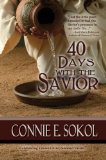
40 Days with the Savior
40 Days with the Savior
is an amazing inspirational book by Connie Sokol that helps prepare your mind, heart, and soul for the Easter Season, or any other time a person wants to become more like closer to Jesus Christ. The part I like best about the book is the thought provoking question she posts after each section. Connie shared the following excerpt from this new publication in her newsletter last week.
 HE COMPREHENDS MOTHERHOOD
Mark 6:54-56
And when they were come out of the ship, straightway they knew him . . . And ran through that whole region round about, and began to carry about in beds those that were sick, where they heard he was.
And whithersoever he entered, into villages, or cities, or country, they laid the sick in the streets, and besought him that they might touch if it were but the border of his garment: and as many as touched him were made whole.
Maybe it's because I'm knee deep in raising seven children, ages nineteen to seven months, but I can see in this scripture that Jesus understands exactly how it feels to be a mother.
The scripture says that the people came straightway-meaning, as soon as they caught sight of his ship they ran to Him like bees to honey. And then they ran and told everyone else to bring all their sick because look, He's here, and He will heal you!
Have you, to some degree, felt like that as a mother-that someone is always needing you or touching you, wanting to be made whole, or at least wanting to get their homework question answered or school paper signed? Busy helping, women often don't have time to go to the bathroom when they need to-a truth I can attest to from almost twenty years of mothering.
Jesus knew how it felt to have people throng Him for His healing power. Can you imagine the energy it took for Him to do that amount of healing? And yet you don't hear in the scriptures of someone coming up and saying, "Sit down, take a rest. I'll come back tomorrow." No, it seems everyone wanted what they wanted, when they wanted it, without considering how the Healer was doing.
Sometimes mothers feel like that-a little used and taken advantage of. The endless cooking, cleaning, washing, and carpooling feels expected rather than appreciated. So on those days when a spouse's gratitude seems scarce and society's expectations high, remember that He gets it. He knows how it feels, and He relied on His Father to help provide the energy to do it. So can we.
Just for today, appreciate how the Savior gave and served without price or complaint, and how He looked to spiritual renewal in order to achieve it.
What is one way the Savior's life and example helps me be a better mother?
I highly recommend this book for meditation and devotional exercises.
 HE COMPREHENDS MOTHERHOOD
Mark 6:54-56
And when they were come out of the ship, straightway they knew him . . . And ran through that whole region round about, and began to carry about in beds those that were sick, where they heard he was.
And whithersoever he entered, into villages, or cities, or country, they laid the sick in the streets, and besought him that they might touch if it were but the border of his garment: and as many as touched him were made whole.
Maybe it's because I'm knee deep in raising seven children, ages nineteen to seven months, but I can see in this scripture that Jesus understands exactly how it feels to be a mother.
The scripture says that the people came straightway-meaning, as soon as they caught sight of his ship they ran to Him like bees to honey. And then they ran and told everyone else to bring all their sick because look, He's here, and He will heal you!
Have you, to some degree, felt like that as a mother-that someone is always needing you or touching you, wanting to be made whole, or at least wanting to get their homework question answered or school paper signed? Busy helping, women often don't have time to go to the bathroom when they need to-a truth I can attest to from almost twenty years of mothering.
Jesus knew how it felt to have people throng Him for His healing power. Can you imagine the energy it took for Him to do that amount of healing? And yet you don't hear in the scriptures of someone coming up and saying, "Sit down, take a rest. I'll come back tomorrow." No, it seems everyone wanted what they wanted, when they wanted it, without considering how the Healer was doing.
Sometimes mothers feel like that-a little used and taken advantage of. The endless cooking, cleaning, washing, and carpooling feels expected rather than appreciated. So on those days when a spouse's gratitude seems scarce and society's expectations high, remember that He gets it. He knows how it feels, and He relied on His Father to help provide the energy to do it. So can we.
Just for today, appreciate how the Savior gave and served without price or complaint, and how He looked to spiritual renewal in order to achieve it.
What is one way the Savior's life and example helps me be a better mother?
I highly recommend this book for meditation and devotional exercises.
March 18, 2013
Religious Addiction v. Religious Conversion
My comments today are about the idea of “religious addiction,” how it is different from conversion, and why it is detrimental to society. I know it isn't about being a mom, or even really about being an author, but it's something I've thought a lot about and want to share. Before I begin, I’d like to say that I am a member of the Church of Jesus Christ of Latter-day Saints. I believe in the Book of Mormon, which Joseph Smith said is “the most correct of any book on earth,” and I believe that man will “get nearer to God by abiding by its precepts, than by any other book” (Introduction of The Book of Mormon). Likewise, I believe the LDS religion is the most correct religion, and that man can get nearer to God by abiding by its precepts than any other religion. It has brought joy into my life, and I enjoy sharing the Gospel with others who might also benefit from the joy I’ve found through the LDS doctrine. However, while I believe in the everlasting Gospel, in God and His Son, and in modern day revelation, I still believe that my church is run by people, and people are not (and never will be) perfect. I believe God’s Word is totally correct, but I don’t think we necessarily have all of it right all the time, as imperfect beings. Therefore, I believe my church is the most correct church, if not the only church or moral philosophy that has any truth to offer. Everyone has lived different lives, believed different things, and been in different stages of spiritual growth throughout their mortal experience, and I truly believe that most people, whether they belong to my church, a different church, or no church at all, are just trying to be the best they can, whatever that means for them at that time. And that is why I find it so horrifying that religious addiction exists. Religious addiction has been the source of persecution, genocide, war, and despair throughout history (consider the Crusades or the Middle East, which are NOT the only examples), and Latter-day Saints are not blameless. There are many out there who are addicted to their religion, not converted to it, and that saddens me greatly. What is religious addiction, you ask? Well, Psychology Today says that “addiction is a condition that results when a person…engages in an activity that can be pleasurable but the continued use of which becomes compulsive and interferes with ordinary life responsibilities, such as work or relationships, or health. Users may not be aware that their behavior is out of control and causing problems for themselves and others.” Religious addiction is the same as any other addiction. You receive pleasure in the feeling you get when you serve others, or live righteously, or when you think ahead to the promised blessings if you follow God, but you do it because you think you must, or because you like how it feels, or because everyone else is doing it. Not because your heart has been changed. I read an article in a Postmodern Literature class I took at BYU that outlines symptoms of religious addiction. It’s copyrighted by Paschal Baute, and it is adapted from When God Becomes a Drug, by Leo Booth. I’ve spent a lot of time pondering the entire list, and you should look at it. But for my purposes today, I’d like to focus on the symptoms of religious addiction that cause people to belittle, persecute, be contentious toward, and judge anyone who doesn’t believe exactly as they do. I believe that religious addiction exists, and I believe that it is not the same as religious conversion.
SYMPTOMS OF RELIGIOUS ADDICTION…rigid [and] obsessive adherence to rulesUncompromising judgmental attitudes: readiness to find fault or evil out thereConflict and argumentation with science, medicine, and educationProgressive detachment from the real world, isolation and breakdown of relationshipsManipulating scripture or texts … claiming to receive special messages from GodAttitude of righteousness or superiority: "we versus the world," including the denial of one's human-ness.The ultimate temptation of the believer is to assume that his or her way to God is the best or only way for others. The particular Way to God becomes what is adored, not [God himself].(For the entire list, go to http://www.lexpages.com/SGN/paschal/religious_addiction.html)
This list is filled with a lot of negative words: Rigid, obsessive, uncompromising, judgmental, conflict, argumentation, detachment, isolation, manipulation, denial—Now, take Christianity. None of those words describe Christ. We can’t be like Him, if this is what we are instead. Religious addiction results in a lack of love and respect for others, and it has harmed humanity. Your way might not be the best and only way, so work on improving yourself, not on improving others. You can share your beliefs; you can have discussions, but don’t be self-righteous. Be open-minded, and accept the good in all religions and philosophies, while deciding for yourself what is true and what is not…for you. This will lead you to conversion, as well as keep you from addiction. One leads to positive behaviors and attitudes, the other to destructive ones. Man is that he might have joy. Find happiness in your conversion, and let it change your heart to make you a better person. If you’re grouchy, filled with guilt, or judgmental because of the religion you practice, then you probably are not converted. Maybe you’re even addicted. Let your fruits be charity, love, and kindness, not intolerance, superiority, or contention. What you do shows who you really are. Are you converted? Or are you simply addicted?
Like me on Facebook: https://www.facebook.com/authorjillia...
or
Read my personal blog: jilliantorassa.blogspot.com
to learn more about me.
SYMPTOMS OF RELIGIOUS ADDICTION…rigid [and] obsessive adherence to rulesUncompromising judgmental attitudes: readiness to find fault or evil out thereConflict and argumentation with science, medicine, and educationProgressive detachment from the real world, isolation and breakdown of relationshipsManipulating scripture or texts … claiming to receive special messages from GodAttitude of righteousness or superiority: "we versus the world," including the denial of one's human-ness.The ultimate temptation of the believer is to assume that his or her way to God is the best or only way for others. The particular Way to God becomes what is adored, not [God himself].(For the entire list, go to http://www.lexpages.com/SGN/paschal/religious_addiction.html)
This list is filled with a lot of negative words: Rigid, obsessive, uncompromising, judgmental, conflict, argumentation, detachment, isolation, manipulation, denial—Now, take Christianity. None of those words describe Christ. We can’t be like Him, if this is what we are instead. Religious addiction results in a lack of love and respect for others, and it has harmed humanity. Your way might not be the best and only way, so work on improving yourself, not on improving others. You can share your beliefs; you can have discussions, but don’t be self-righteous. Be open-minded, and accept the good in all religions and philosophies, while deciding for yourself what is true and what is not…for you. This will lead you to conversion, as well as keep you from addiction. One leads to positive behaviors and attitudes, the other to destructive ones. Man is that he might have joy. Find happiness in your conversion, and let it change your heart to make you a better person. If you’re grouchy, filled with guilt, or judgmental because of the religion you practice, then you probably are not converted. Maybe you’re even addicted. Let your fruits be charity, love, and kindness, not intolerance, superiority, or contention. What you do shows who you really are. Are you converted? Or are you simply addicted?
Like me on Facebook: https://www.facebook.com/authorjillia...
or
Read my personal blog: jilliantorassa.blogspot.com
to learn more about me.
March 14, 2013
Blackbird

My father died 11 days ago. He suffered a severe head injury as the result of an accident and lay in a coma for 10 days before his 66-year-old body shut down. I was able to drive to Phoenix from my home in Southern California and sit with him and hold his hand before he died. My siblings gathered from the four corners to join the vigil, and then we planned and had the funeral together last Friday.
My father had 10 children, and my siblings and I represent as broad a spectrum of beliefs and opinions and political stances as you can possibly imagine. It was relatively easy for us to decide that we wanted the younger grandchildren to sing the Primary song "I Am a Child of God" as part of the memorial service. But coming to consensus on other music and words that would reflect Dad's rather eccentric life was a tricky dance.
Then I had a flash of inspiration. I had used the Beatles song "Blackbird" at a very low point in a character's quest in my novel Dispirited. He sings it as an act of faith at a moment that is literally and figuratively dark--and he eventually finds his way through his difficulties.
I chose that song very consciously when I wrote the book. For me, "Blackbird" has always been about rising up out of despair, of doing the best one can with what one is given, and of taking a leap of faith "into the light of the dark, black night." My father had loved the Beatles. It seemed a perfect choice for the teenage grandchildren to sing as a gift to their grandfather's memory.
I downloaded a choral arrangement of the song, which my genius husband and equally genius cousin, Sam Cardon, were able to simplify in light of our lack of available rehearsal time. The musical number ended up being the highlight of the funeral service for me. To hear those young, pure voices united in singing words of hope comforted me in a way that is difficult to express. The memory of their performance continues to light up the dark for me.
I'm home now, struggling to move on with my life even as I allow myself the space to mourn the loss of my father. Now, as I turn to my work in progress--a novel I'm almost finished revising--I realize that one of my characters loses her mother near the end of the story. I look forward to pouring my grief into the words that describe my character's loss; I can use my experience to make hers more real for my readers.
It seems I'll travel full circle as I do so--having used something from my writing to help deal with reality, then mining a painful reality to deepen the emotional effect of my writing. "Everything is copy," said Nora Ephron, and she was right. All of our life's experiences--joyful and painful--can add wisdom and meaning to the stories we tell, if we have the courage and faith to let them.
Paul McCartney was right, too. Grief has broken my wings, but I'll fly again.
March 11, 2013
A Meditation on the Meaning of "Three Little Birds"
My mind has recently been changed on a technique for improving how a person thinks about and talks to themselves. In previous times I thought affirmations were silly. Standing in front of the mirror saying things about myself I didn’t believe felt like a lie and totally ridiculous. Every time I tried I would have “Cool Runnings” flash backs, and give the whole thing up as insane. I was fortunate enough, however, to attend one of Leslie Householder’s classes at the American Night Writers Association’s Time Out for Writers conference. There were two game changing things that I took away from that class: 1. Faith (which I knew was any action word) can be applied as behaving as if the blessings in which we stand in need, have already been given to us, and 2. Write your affirmations down and read them every day. The second change was such a, “duh, why didn’t I think of that,” alternative to a daily mirror narrative that I came home, and within the next two days had covered the wall next to my computer with half sheets of card stock that said things like, “I exercise every day,” and “I am a best-selling and beloved author!” Those papers are there every day conveying to me that my goals and dreams are reality in the formative stages, and one day I will able to say those things with verity and conviction. The first idea, the one about faith, took a few days to digest. At first it seemed like the height of hubris to behave as if the Lord had already given you everything you want, but then I got to thinking about what the Lord can do. Which is everything. And if we really believe that the Lord can do all things, and if we are keeping our hearts in line with his will for us, then we can assume, based on his promises, that everything we need will be taken care of, that solutions to difficulties that arise will present themselves, and that while the Lord will allow us to meet with trials He is not their author. Operating in this kind of paradigm also means looking at gratitude differently. If we are living as if the blessing to come are present already, then don’t we need to come to the Lord in gratitude for that which will be. It’s made my prayers take on a new quality. And as is typical to me, has added a whole new level of guilt to my tendency to worry and fret over everything. This morning I found this quotation from C. S. Lewis, “Some people feel guilty about their anxieties and regard them as a defect of faith, but they are afflictions, not sins.” I’ve always thought that having faith meant not worrying about most things, because you believed the Lord had a plan for you and everything would work out as long as you were doing your best. The story of Job doesn’t exactly jive with that notion. Anyway, Lewis goes on to say, “Like all afflictions, they are, if we can so take them, our share in the passion of Christ.” So I’m trying to breathe through the anxiety, read and live my affirmations, and let go of the guilt. Also humming, “Three Little Birds” helps.


