Randy Alcorn's Blog, page 191
October 21, 2013
How do we stay pure in today’s world?
In this video interview with EPM staff member Julia Stager, we discuss the question: How do we stay pure in today’s world? When someone simply gets out of bed in the morning, temptation is all around.
Randy: I certainly agree that there is a lot of temptation in the world. If that means from the time that you get out of bed you have thoughts in your mind, I get that.
 One of the things I would say is that we do have control over the environment in which we live. And I’ve actually seen people who want help in the area of sexual purity but have posters on their walls that promote sexual impurity. We need to think in terms of what choices we are making that are exposing us to sexual impurity. I can’t just magically snap my fingers and expect that I’m not going to face sexual temptation. Scripture says, “Flee from sexual immorality” (1 Corinthians 6:18).
Julia: Temptation is a complicated thing, in that certain temptations build and build and get stronger until we flee from that situation. But there are other temptations where we build up a resistance to them, and they become less and less of a temptation over time because it’s no longer a part of our lifestyle.
Randy: I agree. I remember years ago—many years ago—there was a certain store in Gresham (where we live). There was a particular magazine rack in that store, and when I went in inevitably it would seem like my eyes were wandering over there and I was seeing things I shouldn’t. Finally I just said, “Okay, Lord. I’m not going to go in that door. I’m staying away from that area of the store.”
Some people would say, “Well, wait a minute! That’s just pathetic that you can’t even walk in the door. Come on. Just keep your eyes away.” But I was struggling with it.
So I trained myself not to go in that door. Then years later, although the magazines were still there, one day I found myself in a hurry and I quickly went in the door. The interesting thing was, because I had disciplined myself by not giving myself access to that, I had now gotten to the point where I was able to keep my eyes away. And now it was no problem.
But the point is, don’t overestimate your ability to resist temptation. If you are falling in an area, stay away from that area.


Related Resources
Blog: Sexual Purity - 16 Things You Need to Know
Book: The Purity Principle
Article: Protecting Purity in a Technological Corinth
Stock photo credit: arinas74 via sxc.hu


October 18, 2013
Where God’s People Go When They Die
Brothers, we do not want you to be ignorant about those who fall asleep, or to grieve like the rest of men, who have no hope. — 1 Thessalonians 4:13
 When Marco Polo returned to Italy from the court of Kublai Khan, he described a world his audience had never seen—one that could be understood only through the eyes of imagination. Not that China was an imaginary realm, but it was very different from Italy. Yet, as two locations on planet Earth inhabited by human beings, they had much in common. The reference points of Italy allowed a basis for understanding China, and the differences could be spelled out from there.
The writers of Scripture present Heaven in many ways; for instance, as a garden, a city, a country, and a kingdom. We’re familiar with gardens, cities, countries, and kingdoms; they serve as mental bridges to help us understand Heaven.
Usually when we refer to Heaven, we mean the place where Christians go when they die. When we tell our children, “Grandma’s now in Heaven,” we’re referring to the intermediate, or present, Heaven. The term intermediate doesn’t mean it is halfway between Heaven and Hell, in some kind of purgatory or second-rate place. The intermediate Heaven is fully Heaven, fully in God’s presence, but it is intermediate in the sense that it’s temporary, not our final destination. Though it is a wonderful place, and we’ll love it there, it is not the place we are ultimately made for, and it is not the place where we will live forever. God has destined his children to live as resurrected beings on a resurrected Earth.
So, as wonderful as the intermediate Heaven is, we must not lose sight of our true destination, the New Earth, which will also be in God’s presence (because that’s what Heaven is, the central place of God’s dwelling).
Will Christians live in Heaven forever? The answer depends on what we mean by Heaven. Will we be with the Lord forever? Absolutely. Will we always be with him in exactly the same place that Heaven is now? No.
In the present Heaven, everyone is in Christ’s presence, and everyone is joyful. But everyone is also looking forward to Christ’s return to Earth, when they will experience their resurrection and walk on the earth again.
It may seem strange to say that the Heaven we go to at death isn’t eternal, but it’s true. Let me suggest an analogy to illustrate the difference between the intermediate Heaven and the eternal Heaven. Suppose you live in a homeless shelter in Miami. One day you inherit a beautiful house in Santa Barbara, California, fully furnished, on a gorgeous hillside overlooking the ocean. With the home comes a wonderful job doing something you’ve always wanted to do. Not only that, but you’ll also be near close family members who moved from Miami many years ago.
 On your flight to Santa Barbara, you’ll change planes in Denver, where you’ll spend an afternoon. Some other family members, whom you haven’t seen in years, will meet you at the Denver airport and board the plane with you to Santa Barbara, where they have inherited their own beautiful houses on another part of the same vast estate. Naturally, you look forward to seeing them. Now, when the Miami ticket agent asks you, “Where are you headed?” would you say, “Denver”? No. You would say, “Santa Barbara,” because that’s your final destination. If you mentioned Denver at all, you would say, “I’m going to Santa Barbara by way of Denver.”
When you talk to your friends in Miami about where you’re going to live, would you focus on Denver? No. You might not even mention Denver, even though you will be a Denver-dweller for several hours. Even if you left the airport and spent a day or a week in Denver, it still wouldn’t be your focus. Denver is just a stop along the way. Your true destination—your new long-term home—is in Santa Barbara.
Similarly, the Heaven we will go to when we die, the intermediate Heaven, is a temporary dwelling place. It’s a wonderfully nice place (much better than the Denver airport!), but it’s still a stop along the way to our final destination: the New Earth. It will be great to see friends and family in the present Heaven whom we haven’t seen for a while. But like us, they will be looking forward to the resurrection, after which we will actually live on the estate that God is preparing for us.
Another analogy is more precise but also more difficult to envision, because for most of us it’s outside our experience. Imagine leaving the homeless shelter in Miami and flying to the intermediate location, Denver, and then turning around and going back to your city of origin, which has been completely renovated—a New Miami. In this New Miami, you would no longer live in a homeless shelter but in a beautiful house in a glorious pollution-free, crime-free, sin-free city. So you would end up living not in a new home but in a radically improved version of your old home.
This is what the Bible promises us—we will live with Christ and one another forever, not in the present Heaven, but on the New Earth, which God will make into Heaven by virtue of the location of his throne and his presence, and where he will forever be at home with his people.
Related Resources
Blog: Spend Your Day with Eternity in Mind
Book: 50 Days of Heaven
Video: What is life like in the present Heaven?
Airplane wing photo credit: vimark via sxc.hu
October 16, 2013
Control, Coping, and Preparing for Holiday Stress
 Stress studies show that a sense of control is essential to mental health. Those who survive captivity with the fewest mental scars are those who maintain as much control as possible even when so much is out of their control. They may treat their cell as a home, rearrange the “furniture,” save food and share it with others, write notes to themselves, make plans for their days, order their lives in simple ways. Prisoners who lose their sense of control lose their purpose, their self-respect, and eventually their minds.
Most of us are not prisoners, but all of us, for better or for worse, face the holidays year after year. From mid-November to early January, our lives change, bringing many things that are delightful, but which increase our pressure and fatigue. For many, the holidays seem out of control, the chaos inevitable.
But in fact much of both the financial stress and the time crunch can be avoided with planning. Buy Christmas presents in advance (when they’re on sale); plan the dinner now, buy the food early (again, watch for sales) and freeze it; say “no” to extra engagements around Christmas; buy next year’s cards the day after Christmas (best sale day of the year) and begin writing them in October (do wait until December to mail them). Nanci and I don’t send Christmas cards, we send Thanksgiving cards. It’s more special then, and we don’t have to add it to December’s responsibilities.
To avoid the Christmas chaos of children opening ten presents in one night, spread out the presents the week before Christmas, letting them open one a day. Or simplify by making a few gifts for each other. Set aside time to read the Christmas story unrushed.
This is just a beginning. You can make dozens of changes. You cannot eliminate all holiday stress of course, but you can certainly minimize it. And if you don’t, remember, it’s not because you couldn’t but because you didn’t. It’s your choice.
For years I lived under the tyranny of the telephone. I treated the ringing of the phone as a divine mandate, and I missed too many dinners and bedtime prayers with my daughters because of that phone—no, actually because of my choice to answer the phone.
 Finally I discovered something that changed my life: phone calls are seldom from Mt. Sinai. There are few true emergencies and it won’t hurt people to wait an hour or a day for me to call. When my daughters were growing up there weren’t cell phones, and one of the best things about going out for the evening as a family was that nobody could reach us! We can do the same thing now—but it requires silencing the phone. You don’t have to see who’s calling, texting, tweeting, Facebooking, or…fill in the blank. In fact, if you do, you’re saying they are more important than the people you are with. “Wherever you are, be there.”
Nanci and I learned thirty years ago that the phone is our servant, not our master. By God’s grace that lesson stuck. Sure, we still get calls during dinner. We just don’t answer them! And we are guilt-free, because we know it’s what God wants. (The messages come in, and if it’s important we’ll pick up. But guess what—it’s almost never important enough to interrupt dinner!) Looking back, I’m amazed and embarrassed that until I was thirty I let that piece of technology disrupt me and my family. All because I didn’t take control. Thank you, Lord, for waking me up when you did!
Perhaps Christmas and the telephone aren’t a problem for you, but you worry about losing your job or you’re concerned about a friend who is facing a divorce. List several circumstances or situations in your life that trigger a stress response. Put them in one of the following categories: uncontrollable, controllable, and partly controllable.
After you identify the sources of stress and determine which ones you can control—even partially—jot down specifically what you can do about them. Make your plan, schedule the time to do it, then follow through and implement the necessary changes.
While there is much we can’t control, we can always follow God’s formula for dealing with stress by praying. “Do not be anxious about anything, but in everything by prayer and supplication with thanksgiving let your requests be made known to God” (Philippians 4:6, ESV). Sometimes we desperately want to take control when we cannot. But we know and trust the One who is in control and that’s where we rest.
Note from Eternal Perspective Ministries
Enjoyed this excerpt from Help for Women Under Stress? Download it on Kindle for FREE from Amazon! Offer good through Wednesday, October 16.
Want the print version? It's available for $9.99 (retail $14.99) from our online store. (Buy 10 or more for $8.99 each.)
star photo credit: kaniths via sxc.hu | phone photo credit: cinezi via sxc.hu
October 14, 2013
What encouragement do you have for fathers?
In this video interview with Julia Stager, EPM staff member, she asks, “What encouragement do you have for fathers?”
Randy: It’s a huge job, and fathers need encouragement. One of the things I think about is what Scripture says in 1 Thessalonians 2:12. Paul says when he was with the Thessalonians, he was encouraging them, comforting them, and urging them to live a life worthy of the Lord. When it comes to being a father, we tend to skip right to the urging: “Make our children be obedient. Make sure they are good. Make sure they do the right things.” You know, telling them what to do.
 I think Paul gives a good model when he talks about first encouraging and comforting children. Because when you are there to encourage and comfort your children, then you’ve got a relational basis for when the time comes that you have to urge them to behave the right way.
Does that make sense?
Julia: Absolutely! I think the father/son or father/daughter relationship is so important to the child. First establishing that foundational relationship is going to make the truth you speak into their lives much better received.
Randy: Yes. We have to come to our children with grace and with truth. That’s a huge job for fathers. But the thing I would say to encourage fathers in this process of parenting is that God is a father. God totally understands what it means to be a dad and that sometimes children will rebel. He understands that you are first His child and only second are you a father.
So learn, as a child of God, what you love and enjoy about your Father in Heaven. Then seek to be that kind of father to your children.
Related Resources
Blog: What is a father's primary responsibility?
Book: Courageous
Article: The Indispensible Father
Image credit: hortongrou via sxc.hu
October 11, 2013
Randy’s novel Edge of Eternity
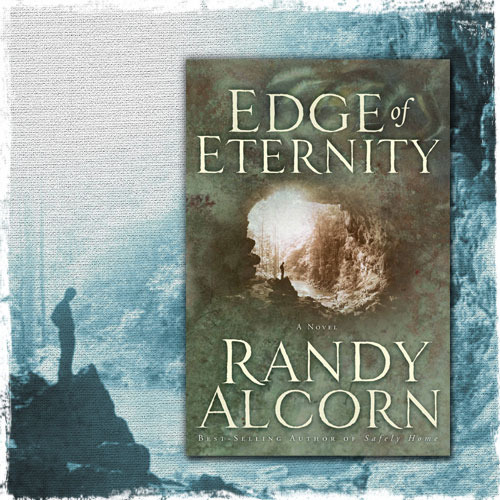 Edge of Eternity is one of Randy’s novels that’s quite different from some of his other fiction works; it takes place in an imaginary world that allowed him to depict invisible spiritual realities in visible ways. Nick Seagrave, a disillusioned business executive, finds himself inexplicably transported to what appears to be another world. Suddenly, he’s enabled to see, hear, taste, and smell the realities of both Heaven and Hell.
Writing about Edge of Eternity, Randy says, “I believe we all have moments, if we stop and pay attention, where we can sense being on the edge of eternity. And we know in those moments that we’re not made for this world, but for another world—where we’ll see the King at last.”
He continues, “I hope Edge of Eternity will help people see Christ in a fresh and powerful way and trust Him in areas where we don't see the results or rewards. We all need to be reminded of God's sovereignty and of the tangible reality of Heaven as our home. Through writing this book, the reality of my citizenship in Heaven hit home to me—and the reality of Hell, too, and the fact that we all have one chance to live life on this earth. Five minutes after we die, we'll know exactly how we should have lived. Fortunately, God has given us His Word and His Spirit and His people so we can live that way now.”
We recently received this encouraging note about the book:
A couple years after college, I had a dramatic encounter with God and turned my life over to him. A few years later, I read Edge of Eternity and thought the description of Christ's work on the cross was super powerful. Less than a year after reading the book, an old college friend and her husband were coming by where I now lived. My wife and I were excited to see them and wanted some natural way to share the Good News of Christ. They mentioned they loved to read books as they drove together. We told them we had an interesting book called Edge of Eternity. They took the book, said thanks and left after lunch together.
About 5 months later, an evangelistic festival was happening in our town. It just so happened that my friend was interested in what I now did for work, and I worked for the association putting on the festival. As the speaker gave people a chance to respond, my wife sat down next to my friend and asked what she thought about the message and invitation. She said she and her husband already did this. As they drove and read Edge of Eternity, they were impacted by the story. When they got to the end of the book, there is a prayer to receive Jesus Christ, and they came to know him while driving down the freeway. Now, 14 years later, they continue to walk with Jesus.
Have you had a moment when you sensed being on the edge of eternity?
Stephanie
Eternal Perspective Ministries
Related Resources
Book: Edge of Eternity
Blog: Do you plan to write more fiction?
Article: Question and Interesting Facts about Edge of Eternity
October 9, 2013
Eleven Giving Guidelines to Fight the Pull of Materialism
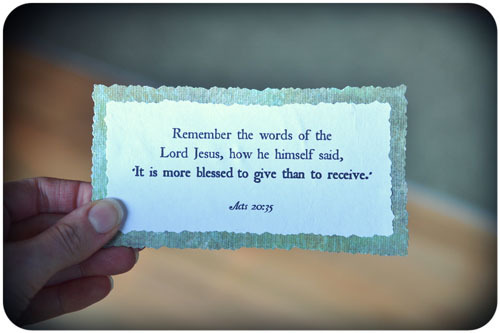 I believe the only way to break the power of materialism is first, to see ourselves as stewards that God has entrusted these money and possessions to, and second, to give. Jesus says, “It is more blessed to give than to receive” (Acts 20:35). As long as I still have something, I believe I own it. But when I give it away, I relinquish the control, power, and prestige that come with wealth. At the moment of release, the light turns on. The magic spell is broken. My mind clears, and I recognize God as owner, myself as servant, and other people as intended beneficiaries of what God has entrusted to me.
The New Testament offers guidelines for giving that can help us fight the pull of materialism:
1. Give. Giving affirms Christ’s lordship. It dethrones me and exalts Him. It breaks the chains of mammon that would enslave me and transfers my center of gravity to Heaven.
2. Give generously. How much is generous? There’s no one-size-fits-all answer. If you’ve never tithed, start there—then begin to stretch your generosity.
3. Give regularly. Stewardship is not a once-a-year consideration, but a week-to-week, month-to-month commitment requiring discipline and consistency.
4. Give deliberately. Giving is at its best when it’s a conscious effort that’s repeatedly made.
5. Give voluntarily. When we catch a vision of God’s grace, we will give beyond our duty.
6. Give sacrificially. We don’t like risky faith. We like to have our safety net below us. But we miss the adventure of seeing God provide when we’ve really stretched ourselves in giving.
7. Give excellently. Paul says, “See that you also excel in this grace of giving” (2 Corinthians 8:7).
8. Give cheerfully. If we’re not cheerful, the problem is our heart, and the solution is redirecting our heart, not withholding our giving.
9. Give worshipfully. Our giving is a reflexive response to God’s grace. It doesn’t come out of our altruism—it comes out of the transforming work of Christ in us.
10. Give more as you make more. Remember: God prospers us not to raise our standard of living,
but to raise our standard of giving.
11. Give quietly. Showiness in giving is always inappropriate. (But sometimes our acts of righteousness will be seen by men and even should be.)
Related Resources
Blog: Surviving the Dangers of Prosperity
Book: Managing God's Money
Audio: How did you discover the joy of giving?
October 7, 2013
Is God happy?
In this video interview with EPM staff member Julia Stager, we discuss the question: Is God happy?
Randy: I think this is a great question. Many people think of God as being happy about some things and unhappy about other things. To a certain degree that’s true. We see that He is happy when His children love Him and obey Him. He’s unhappy and displeased when people sin.
 But I think the more basic question is, what is God like intrinsically? Before creatures ever came into the equation, what was God like? His basic persona and His character, that’s who He is. And I believe, absolutely, God was happy from eternity past. Happiness is built into Him. The Father, Son, and Holy Spirit have always enjoyed a happy relationship.
You see in both the baptism of Christ and the transfiguration, “This is my Son, the beloved one, in whom I am well pleased” (Matthew 3:17; Matthew 17:5). The Father takes pleasure in the Son. You also see this in John 17 and other passages where the Father, Son and Holy Spirit enjoy this great relationship and are pleased with and happy with each other. They always have been and always will be.
This means that God in His core is truly happy.
Julia: Another part of God is how complex He can be in His emotions. I think of Jesus in the Garden of Gethsemane, where He was in so much agony, but also filled with so much love and submission to the Father. It takes a lot of emotional maturity for a human to feel such conflicting emotions. But it seems like the God of the universe can feel multiple things at once.
Randy: That’s right. You see this even for us: we’re sorrowful, yet always rejoicing (2 Corinthians 6:10). We weep with those who weep, we rejoice with those who rejoice (Romans 12:15). Are we happy or unhappy? Well, we are happy some of the time, and we’re unhappy some of the time. But the day is coming when those who know God and are His children will be happy for all eternity.
In fact, when we enter into God’s presence, what are we told? We’re told, “Well done, good and faithful servant. …Enter into the joy of your master” (Matthew 25:23). In other words, enter into a happiness that has always been, and will always be—the happiness of the Father, Son and Holy Spirit. This is what you were made for. It is the source of all happiness. He is, in and of Himself, happy. We will enjoy happiness forever because the God of all creation, our God, our Lord, and our Savior, is forever happy.
Related Resources
Blog: Seeking Our Happiness in God
Book: Seeing the Unseen
Video: God, Our "Happy Making" Sight
October 4, 2013
The Christ-exalting 2013 Desiring God National Conference
“For my name's sake I defer my anger,
for the sake of my praise I restrain it for you,
that I may not cut you off.
Behold, I have refined you, but not as silver;
I have tried you in the furnace of affliction.
For my own sake, for my own sake, I do it,
for how should my name be profaned?
My glory I will not give to another. Isaiah 48:9-11, ESV
Our God loves so deeply that He went to the cross for us. But He does not exist for our glory. We exist for His.
The Desiring God National Conference in Minneapolis this past weekend was magnificent precisely because it celebrated His glory. The Christ-centered worship was heart-moving. One of the highlights was being with Nanci, who has often said this is her favorite of all conferences.
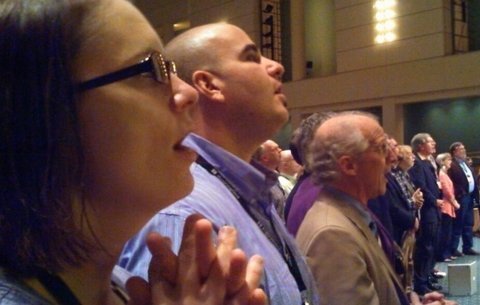 Our daughter Angela and husband Dan Stump sat by us in most of the sessions. My wonderful assistant Kathy Norquist and her husband Ron, as well as EPM board member Robin Green and her husband Lawrence, were there. So was Paul Martin, also on our board, and his brother Dave. So good to connect with these dear friends.
One of the many great things about Desiring God is that it not only broadcasts its sessions live online, but also posts them all so those who can’t afford the time or money to attend the conferences can benefit. I’ll provide links to the presentations I mention.
It was great spending time with the other speakers at dinners and lunches. I had never met Philip Ryken, president of Wheaton College, who I found to be an intellect full of imagination. Speaking of imagination, Kevin Vanhoozer is one of the most prominent evangelical theologians in the country, and did a fine job addressing “In Bright Shadow: C.S. Lewis on the Imagination for Theology and Discipleship.” Doug Wilson is one of a kind, as anyone who knows him or has read his books knows. Nanci and I found Doug and his wife Nancy to be delightful people. John Piper, the founder of Desiring God, who I’ve known for years, was his usual thought-provoking and engaging self both in person and in his two fine messages (The Central Story of Lewis's Life: Why We Call Him a "Romantic Rationalist" and Sanctified by the Word and Prayer: St. Paul and C. S. Lewis on the Holiness of Creation). God has used very few still-living men to influence me as John has.
 I don’t usually sit in the front row, but took advantage of the reserved seating this time for most of the sessions. One of the highlights for me was being on the panel with men (new friends and old) whom I respect, talking about Jesus first and above all, and Lewis, a secondary and imperfect person who God has used so significantly in each of our lives. (I also shared Saturday night at a session titled “C. S. Lewis on Heaven and the New Earth: God’s Eternal Remedy to the Problem of Evil and Suffering.”)
For those understandably wondering “Was this conference about exalting Lewis over Christ?, you could not actually have been at the conference or listened to the panel or messages and wondered that. There were many points of disagreement with Lewis, demonstrating that we were not a bunch of Lewis groupies who don’t recognize his flaws. Rather, we have all been touched by God through his books in profound ways.
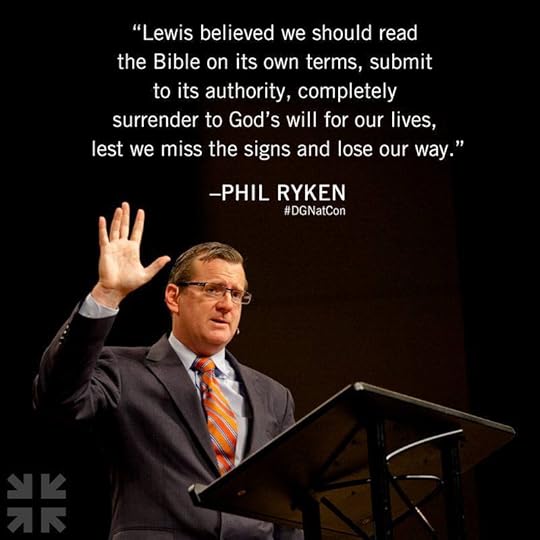 Phil Ryken gave the finest presentation I’ve ever heard on Lewis’s view of the inspiration of the Bible. Ryken was careful and thoughtful and clearly documented Lewis’s shortcomings in his view of Scripture. Lewis believed most of it and submitted to its authority yet believed there were errors of fact.
So why would we be so influenced by a man with a deficient view of Scripture? That question was asked of us on the panel, and from about 11:45 to 18 minutes into the video, several men make good points and I mention the issue of Lewis’s theological trajectory, as opposed to that of many today who are departing from sound doctrine and leading others away from it.
Because of my commitments, including speaking at the excellent Bethlehem College, I was unable to attend some of the Friday general sessions, those with N. D. Wilson, who I’ve heard before and who is a great writer and engaging speaker, and Colin Duriez, who is a Lewis and Tolkien scholar and also wrote a fine book on Francis Schaeffer. I did have lunch with Colin and other speakers after the conference, and found him to be delightful and fascinating. One of my favorite presentations was by Joe Rigney, related to his new book Live like a Narnian. Here’s my endorsement of this book, and it applies both to the book and to Joe’s presentation at the conference:
As a long-time lover of C. S. Lewis and the world of Narnia, I have read countless books about both. Joe Rigney’s Live Like a Narnian is one of the best. It overflows with an authentic sense of Narnian brightness, wisdom and wonder. Rigney seems equally at home with Lewis’s fiction and nonfiction. He draws them together beautifully, with truth and imagination. I highly recommend this delightful book!
The best part of the conference was its Christ-centeredness, both in the worship and the teaching. My assistant Kathy said of the conference:
I agree with my husband Ron when he said, “C. S. Lewis saw Jesus as King and that encourages me to do the same and to put myself under Him, enjoying the fact that He loves me even more than I realized. Because He’s King He can have all my trust and is the answer to all my desires.”
Besides the wonderful Christ-exalting worship and teaching, there were 60+ impactful ministries that had booths at the conference. I enjoyed interacting with people who came to our EPM booth and hearing how Randy’s books have impacted their lives.
 Thank you, Lord, for your servant C. S. Lewis, a very imperfect man who you have nonetheless used powerfully in my very imperfect life—and that of countless others. For the things he said that were off the mark, well, he’s known better now for fifty years as of November 22, 2013. For the many more things he said that were on the mark, thank you for using those in mentoring me as a young believer, and now as an older one. I’m grateful for your providence in touching many lives through Jack Lewis. I look forward to the day when I too am with you, and my blind spots are finally wiped away along with my sins and tears—and I will experience the miracle of seeing how you graciously used me when I was, by your empowerment, faithful to You and your Word.
Thank you too for the faithful brothers and sisters at Desiring God. Thank you for raising up that unique ministry, and using it so wonderfully in the lives of so many, including my own family and church.
Your eternally grateful son,
Related Resources
Blog: Longing for Joy, in C. S. Lewis
Audio: Heaven, New Earth, and C. S. Lewis
DVDs: Eternity 101
Credit for pictures with quotes: Desiring God Facebook page
October 2, 2013
Fixing Our Eyes on the Unseen
Do you have a life verse? Mine’s 2 Corinthians 4:18. It’s on our web page and at the end of every email I send:
So we fix our eyes not on what is seen, but on what is unseen, since what is seen is temporary, but what is unseen is eternal. (NIV)
What does Scripture mean when it tells us to fix our eyes on what we can’t even see? How do we begin to do that?
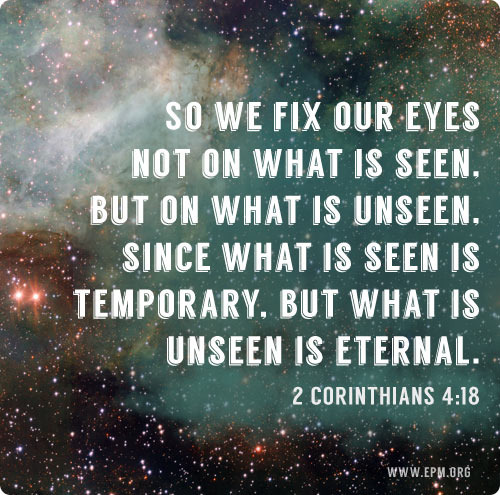 Even though as Christians we affirm the reality of the spiritual realm, sometimes we succumb to naturalistic assumptions that what we see is real and what we don’t see isn’t. Many people conclude that God can’t be real, because we can’t see Him. And Heaven can’t be real, because we can’t see it. But we must recognize our blindness. The blind must take by faith that there are stars in the sky. If they depend on their ability to see, they’ll conclude there are no stars.
Sitting here in what C. S. Lewis called the Shadowlands, we must remind ourselves what Scripture tells us about Heaven. We will one day be delivered from the blindness that obscures the light of God’s world.
For many people—including many believers—Heaven is a mysterious word describing a place that we can’t understand and therefore don’t look forward to. But Scripture tells us differently. What we otherwise could not have known about Heaven, God says He has revealed to us through His Spirit (1 Corinthians 2:10). God tells us about our eternal home in His Word, not so we can shrug our shoulders and remain ignorant, but because He wants us to anticipate what awaits us and those we love, and because it has the power to transform the way we live today.
Life on earth matters not because it’s the only life we have, but precisely because it isn’t—it’s the beginning of a life that will continue without end. It’s the precursor of life on the New Earth. Eternal life doesn’t begin when we die; it has already begun. With eternity in view, nearly any honest activity—whether building a shed, driving a bus, pruning trees, changing diapers or caring for a patient—can be an investment in God’s kingdom.
God is eternal. His Place is eternal. His Word is eternal. His people are eternal. Center your life around God, His Place, His Word, and His people, and reach out to those eternal souls who desperately long for His person and His place. Then no matter what you do for a living, your days here will make a profound difference for eternity—and you will be fulfilling the biblical admonition to fix your eyes on what is unseen.
My new book Seeing the Unseen, now available from EPM, includes 60 daily devotionals on a variety of topics related to this theme of living each day purposefully with an eternal perspective. I hope these devotionals will encourage readers to live with eternity in mind and to follow Jesus wholeheartedly.
From Eternal Perspective Ministries
Randy's newest book, Seeing the Unseen: A Daily Dose of Eternal Perspective is here! Order your copy today.
From the author of the bestselling book Heaven, here are 60 meditations that will inspire you to live each day with an eternal perspective. Each day's reading is coupled with Scriptures and inspirational quotes that can transform the way you think and live today. (Read an excerpt to sample the daily readings.)
Learn more about the book in this 1-minute video:
Seeing the Unseen is available from EPM in hardcover. At $7.99 (retail $9.99), it's an affordable gift book to share with friends and family, and will introduce them to Randy's writings on a variety of topics. (Would you like the Kindle version? It's available on Amazon.)
Background photo credit: European Southern Observatory
September 30, 2013
My Friend Greg Coffey, One of the First Faces I’ll Look for in Heaven
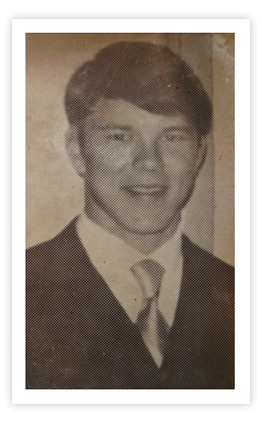 In The Goodness of God, I tell the story about my high school friend Greg Coffey, who died in a horrible accident in 1971, shortly after he and I both became Christ-followers. Though Greg was two years ahead of me in school, we were in a Spanish class together and got to know each other. He came to Christ his senior year, seven months after I did as a sophomore. Greg and I were both utterly transformed, and we enjoyed radical “first love” discussions of what it meant to follow Jesus. Our whole lives were before us and we dreamed great dreams of serving our King.
Not long ago, my friend Jim Swanson (now a Hebrew scholar, author of various reference works and editor of the much-heralded KJV401) wrote to say he had just found out that I had known Greg Coffey. Jim gave me a fresh perspective on Greg, who Jim knew before either of them were believers.
What I love most about Jim’s letter is the testimony to what Scripture says, something that we sometimes underestimate: the sheer transforming power of a trust in Jesus Christ as Savior. As Paul put it, “Therefore, if anyone is in Christ, he is a new creation. The old has passed away; behold, the new has come” (2 Corinthians 5:17).
Jim writes, “Greg Coffey was my enemy when he went to Gresham High School—he was a bully, and not a pleasant person to be around. Of course you know that class split off into Barlow, and I never saw him again. That is until I was in the music section of Mount Hood CC [our local community college] and ran into him. I was genuinely stunned at how he had changed. To me he was a total jerk before, but now he was a decent guy. As a non-Christian I had no thought of needing to forgive Greg for time in high school. But when I saw him again, whatever I had against him just melted away.”
Jim continues, “Greg hung out with some pretty tough kids in high school; I bet that senior year was a real trip for all his old friends when they saw the change! When he died, I was no Christian but I went to his funeral and was impressed with the views and testimonials from his Christian buddies.”
I was one of those buddies who shared at Greg’s packed funeral. Our beloved pastor of Powell Valley Covenant Church, Marden Wickman, shared from Hebrews 11, “Though being dead, yet he still speaks…”
 Going back to his story, after Greg graduated from Barlow High School in 1970, he and his girlfriend Sherel Trenholm, also sold out to Christ, went to Canada to attend Briercrest College. While he was home on Christmas break we spent a lot of time together in the Word. Greg had kind of a Keith Green persona and intensity. He meant business with Christ, and because I did too I was drawn to him, two young believers feeding each other books and writing letters to each other when he was in Canada. (In the photo, Greg is on the far left with the guitar, performing with “Plus One” from Mt. Hood Community College in 1970.)
Then it was three months later, during spring break, that Greg had his horrible accident. Smart, athletic, on fire for Christ, and with an incredibly promising future, Greg was swinging on a big tree branch, over a fence. The branch broke, and he was impaled upon a metal fence post.
The day of his accident, I spent the night in the hallway outside the downtown Gresham hospital emergency room, sitting on the floor except when I’d go back out to the waiting room and pray with others, including his precious Sherel, who Nanci and I loved deeply. Sometimes the nurses would kindly tell me how he was doing. I begged the Lord to heal Greg and was absolutely certain he would. No doubts.
When a nurse took pity on me and let me into ICU, I saw my friend fighting for his life. I was still convinced it could not be God’s will for him to die. He was growing closer to God every day, studying God’s Word, sharing his faith. Greg had a bright future in God’s service. Greg and Sherel were shining lights. Surely God wanted them to be married and serve Him together wholeheartedly. I knew God would heal him. I couldn’t have been more certain; I’ve never had greater faith.
Greg was transferred to Providence Hospital in Portland. We had a spring break Powell Valley Covenant Church retreat at Grace Haven Lodge at Tolovana, where a year earlier Greg had come to faith in Christ. Nanci and I really needed to be there, and I stayed in touch by phone about Greg’s condition. Then one night at the retreat, I got the call informing me that Greg had died.
Recalling that difficult day, Sherel wrote:
A vivid memory in my mind’s eye is when I was outside the ICU on Tuesday at Providence. The gathered family members were told that Greg was fighting for his life. Greg had whispered to me through dry, cracked lips that he wasn’t going to make it, but that he was going home. Like you, Randy, I insisted that the Lord was going to heal him, that He had work for us to do together. I kissed him, said, “I love you.” He said, “I love you.”
My folks had rushed back home and arrived just before the doctor came out and announced to us that Greg was gone. It was so surreal—my dad enveloped me in his arms, and me and my future melted into the Lord’s mercy and grace. (That weekend was supposed to have been our engagement weekend.)
Then from across the waiting room lobby one family member screamed at the top of her lungs, “I hate you, God!” There it was—the two choices—curse God or run to Him. Since that time, in grace upon grace, in my life conversation with my Lord come the words first recorded by our brother John (in John 6:68-69), when Simon Peter responded to Jesus’s question, “Do you also want to depart from me?” He answered, “My Adonai, to whom shall we go? You have words of eternal life and we have believed and come to know that You are the Holy One of God.”
Like so many others, I was devastated when I heard Greg had died, learning my first lesson that God is not captive either to my will or my faith. I had all the faith in the world God would heal Greg, but God had different plans, and I’ve never forgotten that lesson. Now I pray with my faith in God instead of my faith in my faith. I tell God what I want to happen, what seems best to me, and I ask Him for it. But I trust God not to do everything I think is best, but to do everything He knows is best.
That night, the Holy Spirit descended on the retreat center and numbers of teenagers came to faith in Christ. I had the privilege of leading seven kids to the Lord. Which of those is walking with Jesus today, I don’t know. But I do know that one of the first faces I will look for in Heaven is Greg’s. I always think of him as one of those people for whom conversion to Christ was what it’s supposed to be—utterly transforming, a testimony to the grace and power of God.
My old buddy Larry Gadbaugh was also a friend of Greg’s. He wrote this to Sherel and me:
I remember God using Greg’s death awakening so many people to Christ’s sacrifice for our sins, the hope of eternal life through faith in Christ. Sherel’s radiant faith, countenance, her example of grieving with confident hope through her tears, and continuing to point to Christ, were such strong witnesses throughout that time.
I remember that all of us seemed to be carried along as God was working from so many directions, to draw us further into the knowledge of Christ and His working in, among, through and around us.
I’ll close with a song Greg wrote, titled “Am I Worthy?”, that we sang at his memorial service. (Thanks to Larry, who was also a member of the Plus One singing group, for sharing the handwritten copy).
Am I Worthy by Greg Coffey
 Am I worthy of all He’s given to me
Am I worthy His tender mercies to see
Am I worthy of the love that God has shown
Am I worthy to be called His own
Covered with sin I was wasting away
‘Till I tasted the new life that we shall share someday
God knows I’m not worthy of all He’s given to me
So Jesus of my need died to set me free
Am I worthy of His death at Calvary
Am I worthy His righteous beauty to see
Praise God for love
Praise God for Jesus
Praise God for all He’s given
To unworthy me.
Thanks for the great memories, King Jesus. And see you soon, Greg.
Related Resources
Blog: The Hardest Lesson
Video: Blessed Are Those Who Mourn
Book: The Goodness of God