
Caitlin Hicks's Blog: Book Reviews, page 9
April 20, 2021
Grandpa on Transport

Today’s podcast is about my Grandfather, Joseph Andrew Prudell. My mother’s father. Lately I have enjoyed a curiosity about him as I look over the few photos of him, and especially his letters, written to me with illustrations. I always look for hints of his boisterous, mischievous personality.

Can you inherit something like a personality? I’m describing the ‘confrontational practical joke’ a lighthearted ‘gotcha’ that can be, if too insistent, off-putting, but with the right balance of energy, the kind of thing that makes you laugh in spite of yourself. That was my Grandpa, and that’s my brother P.
And look at that, a group family photo worthy of Instagram. That’s Grandpa waving the background. My mother is in the white dress. She looks to be 15 or so.

‘Grandpa’s Story’, today’s podcast, is the first piece of my writing that was published.
And looking at it, I realize that I still don’t really know that very much about him; he was my Grandpa, he had been an engineer in Wisconsin, he married Marie in the Philippines.

Gramma Marie had romantic looking adventures as a young couple, and five children with Joe. She was a gramma when she died in her sixties, when my mother was pregnant with me. Her hair was white through and through.
A few years later Grandpa married my Gramma Ester. They lived in Wauwatosa, Wisconsin and mostly I knew that I loved them both.
I was lucky to spend a summer week with him in his home in Wauwatosa, Wisconsin when I was fifteen. My parents arranged the trip for my mother to visit her family, as we lived in California, and had been separated all our lives – by that distance. Plane trips and telephone calls were expensive, so our Mother had had very little contact with her family of origin all during our lives.

Here she is standing under the street sign named after her father, with two of her children, that summer.

Below, a drawing of our outing sent to me in a letter afterwards. That’s me, Gramma Ester and Grandpa Prudell, illustrated by Grandpa.

There was a photo taken on one of those hot summer days in Wisconsin. I remember the photo; I was wading in a body of water and Gramma and Grandpa were looking on. My hair was long down my back, my skin so supple, and I was . . . fifteen! And when that picture was printed, I ached for them, and for the nearby ultimate loss I anticipated feeling when they died. But I brushed it aside, because it wasn’t my issue right then. Far from it: we were on opposite trajectories and I was so excited about mine: getting ready to go into the world!
My granddaughter is now almost 15.
The post Grandpa on Transport appeared first on Caitlin Hicks.


March 31, 2021
A woman’s body

What is it about this story? The benign nature of the tanning salon? The casual event of some man walking in the front door? The front-desk training, Be friendly, smile at the customers? The closeness of her abductor’s face against the screen of the cash machine?

What was so haunting?The kindness on her beautiful face? Or was it the closeness of his face right up against the cash machine?
It was 1995. It happened in our suburban backyard. We had just met Melanie Carpenter on the worst day of her life. Images and stories of her were all over the news.
She was beautiful and she was missing, and we couldn’t get enough. We prayed to anyone who would listen: Please, please let her be alive!
The post A woman’s body appeared first on Caitlin Hicks.
March 13, 2021
Freakish & Ordinary: Shark & Spaff
Creatures Whom I Admit to Having Loved
Sixteen years ago, our beloved marmalade cat Sharky died. It was the same day the pope died, and two days after Terri Schaivo was finally allowed to.
Even though, as the Dalai Lama says, we all suffer and are going to die someday, there never seems to be a good day to die.
As we slid him out of a shoe box into a hastily-dug hole out in the daisy garden under a dark sky and a pelting spring rain, I imagined that runty bag of cat bones drifting along in Bardo-land with the souls of Pope John Paul II and Terri Shaivo. How evolved were those three souls? Would they be searching for a couple in love into whose embrace they would be born again?
Did they lose their way?

Or . . . what?
Freakish & Ordinary. The magnificence of the planet, the solar system, the universe. The kittens.
The name for these two little beings who were just ours for our unique lives together. Those small meow-makers who came into our family, and it seemed like they were made just for us. The family of us, into whose embrace they were welcomed, our each-and-individual human uniqueness. The lottery that we won when we came into being; and the cats got lucky too, when they piled into their mama-kitty’s womb.
Then I think of Mumbai and all those people in India. How many we all humans are. But then, there must be waaaay more cats in India, and China and . . .everywhere there are cats.
And then again, these small creatures who shared our lives. Shark and Spaff.
The Freakish coincidence of just this little example.The mundane, the ordinary fact of our existence alongside the extraordinary miracles of everyday life.
But first, there was Sharky.
The post Freakish & Ordinary: Shark & Spaff appeared first on Caitlin Hicks.
Freakish & Ordinary:
Creatures & People Whom I Admit to Loving
and who have gone over to the other side
Sixteen years ago, our beloved marmalade cat Sharky died on the same day the pope died, and two days after Terri Schaivo was finally allowed to.
Even though, as the Dalai Lama says, we all suffer and are going to die someday, there never seems to be a good day to die.
As we slid him out of a shoe box into a hastily-dug hole out in the daisy garden under a dark sky and a pelting spring rain, I imagined that runty bag of cat bones drifting along in Bardo-land with the souls of Pope John Paul II and Terri Shaivo. How evolved were those three souls? Would they be searching for a couple in love into whose embrace they would be born again?
Or, were they desperately lost?

Or . . . what?
Right now I’m working on this first podcast (First, There Was Sharky) in a mini-podcast-series – exploring loss, what it tells us about ourselves and our lives, and how we move through it. I’m calling it: Freakish & Ordinary: Creatures & People Whom I Admit to Loving & who died anyway.
But first, there was Sharky.
Listen, here. Soon!
The post Freakish & Ordinary: appeared first on Caitlin Hicks.
February 23, 2021
George Goes for a Walk
A man steps off the curb
And out of his comfortable life. It happens in an instant.
“George rallies. He can see he’s the only one who has stepped into the intersection, so he must be the one. He puts his other foot forward, . . .”
Violent and traumatic, the event, and what he does in the the next few minutes, transform his life.
From a short story by Caitlin Hicks published on SMASHWORDS.
ARTWORK: Gordon Halloran
The post George Goes for a Walk appeared first on Caitlin Hicks.
February 13, 2021
Me and Ted Hughes
How did it happen, after this spectacular coincidence, that Ted Hughes, the Poet Laureate of England, in an auditorium full of fans, wrote a poem for me on the back of a ticket?
This is the story of that night. Of that poem.
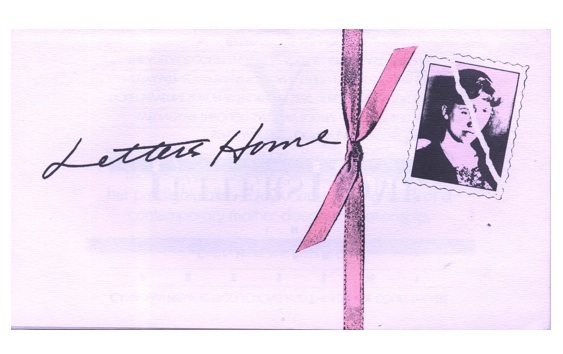
In 1983, I left my husband, my home, my friends, my family and my country to live with my lover, an artist from Toronto. In the months while waiting for his divorce to come through, we produced a show there, the first Canadian production of LETTERS HOME, by Rose Leiman Goldemberg. It was the story of Sylvia Plath’s life from 1950, the year she entered Smith College, to 1963, when she committed suicide. The story was told in letters written to her mother, Aurelia Plath.
In this production, I performed the role of Sylvia Plath, who was 31 with two children, and a cheating ex-husband when she put her head in the oven and towels in the cracks in the kitchen doors.
A week after the show closed at The Adelaide Court Theatre in Toronto, Ted Hughes, Sylvia’s husband at the time of her death, now the Poet Laureate of England, was the guest of honour at the 5th International Festival of Authors at Harbourfront. At this event, with hundreds of fans in line to get his autograph, I am somehow sitting next to him.

How did it happen, after this spectacular coincidence, that Ted Hughes, in an auditorium full of fans, wrote a poem for me on the back of my ticket?

This is the story of that night. Of that meeting. Of that poem.
Link to The 5th International Festival of Authors an article from the Kingston Whig Standard in 1983.
The post Me and Ted Hughes appeared first on Caitlin Hicks.
International Women’s Day * 2021 Event
Monday MARCH 8th 1 PM Pacific Daylight Time
The event can be accessed in a poston March 8 @ 1 PM:
on Facebook here:
www.facebook.com/SomeKindaWoman3 writers: Living in a Woman’s Body
 Robin Stevenson reads from MY BODY, MY CHOICE “Abortion is one of the most common of all medical procedures,” says Robin Stevenson. “But it is still stigmatized. Making abortion illegal or hard to access doesn’t make it any less common; it just makes it dangerous. Around the world, tens of thousands of women die from unsafe abortions every year.”
 MY BODY MY CHOICE provides historical context for the criminalization of abortion in the U.S., including its links to racism and white supremacy. It discusses the fight for legal abortion in the U.S. and Canada, explores the ongoing challenges to abortion access around the world, and, Stevenson says: “The long fight for abortion rights is being picked up by a new generation of courageous, creative and passionate activists. This book is about the history, and the future, of that fight.”Caitlin Hicks reads from her new novel KENNEDY GIRLIt’s 1968. High school graduate Teresa Feeney becomes pregnant from one encounter with a trusted priest Father Sully, who is leading a choir of students in a showcase of songs from HAIR. Annie Shea, herself from an enormous Catholic family where abortion is unthinkable, reluctantly becomes Teresa’s confidante. When Annie realizes Teresa is going to do what she desperately needs to do, she has to make a decision: Will she stand by her schoolmate and offer support during this critical procedure? What happens when Teresa follows through with her plans?Terrie Hamazaki reads from “O-heso (belly button)” (Swelling with Pride: Queer Conception and Adoption Stories).

“Coming out as an ‘infertile woman’ was akin to my coming out as a lesbian in the 1980s, both involved shame, invisibility, and moments of hope and uncertainty. My infertility journey also overlapped with topics such as miscarriage and abortion.”

The event can be accessed in a post on the
SOME KINDA WOMAN, Stories of Us pageon the day March 8 @ 1 PM:
on Facebook
www.facebook.com/SomeKindaWoman
Sponsored by The Writers Union of Canada and The Canada Council
The post International Women’s Day * 2021 Event appeared first on Caitlin Hicks.
February 2, 2021
I’m Staying Here
I’m Staying Here by Marco Balzano
Translation publication date: December 1, 2020
Other Press, New York
Review by Caitlin Hicks
I’m Staying Here is a simple title surrounding a profoundly moving story about ordinary people trying to live their lives as farmers, as they have for centuries. It’s 1923. Their village is Curon, an Italian/Austrian border town nestled in a valley as the forces of racism, hatred, and war swirl across Europe. Locally, Brown Shirts with guns patrol the streets and Mussolini’s edict forbids the speaking of German. Curon, originally in Austria, has recently been annexed by Italy.
The voice of this novel is Trina, a woman looking back on her life, still deeply grieving her long-lost daughter. She speaks in a tone soaked in both loss and resignation as well as a wisdom gained through suffering and the inevitability of life. Her words are written directly to her missing daughter, whose ghost fills the pages with another personality. We’ve opened the book, so we’ll pretend this narrative is meant for us as we piece together Trina’s life story. Over the shoulder of her loss, we see villagers struggling with the restrictions of Mussolini’s regime.
Trina determines to teach German anyway, but must do so in secret. She teaches here and there—a clandestine network of schools in the valley—and escapes discovery and capture. Her close friend, Barbara, who becomes a teacher at Trina’s urging does not, and her abrupt absence on the day Trina marries Erich, haunts Trina the rest of her life.
As a local backdrop to the changes taking place in Europe, there is the threat that a dam recently planned for the area will submerge the villages in the valley with water. The townsfolk of Curon and other towns to be affected by this dam alternate between a desire to fight against this threatened destruction and believing favorable rumors—effectively wishing it would go away. Farmers busy with everyday chores to maintain their rural lives talk of resistance to the dam but are distracted with the pressing necessities of their lives. Time passes, and the political environment with its growing menace of war seem to postpone any real plans to implement the building of the dam. Awareness of it fades.
When Germany announces the “Great Option” in 1939, and communities in South Tyrol are invited to join the Reich and leave Italy, the town begins to fracture, as some decide to leave. Those who choose to stay, like Trina and her family, are seen as traitors and spies by an increasing German presence; added to this complication is their son, Michael, whose teenage rebellions send him toward the fascist cause. One day Trina comes home and finds that her daughter is missing. And then, Erich is conscripted to fight. When he returns from the war, denouncing it and determined never to fight again, he is changed.
As the war closes in around them, Trina and Erich must flee the village into the mountains just to survive. On the run in the middle of winter, they encounter other farmers like themselves trying to live their lives in spite of the brutal realities of winter, suspicion, famine, and fear. Somehow, they find their way back and the war is over. Miraculously, their home is still standing; some of their animals still alive in others barns.
And then, activity of building the dam begins again with renewed power and determination.
The novel is simply but brilliantly told in Trina’s words to her daughter and the many characters she describes in her shorthand resemble us, as everyman: ‘the man in the hat’ the ‘fat woman’ ‘the old man’. Balzano’s observations through this character are so familiar and spot on, as to be poetry.
Here’s an excruciating truth told by ‘the man in the hat’ who came to represent the forces behind the building of the dam: “He knew people well; he’d traveled the world his whole life. They were the same everywhere, anxious for peace. Content not to see. That’s how it had been when he’d cleared other villages, emptied neighborhoods, demolished houses to put down railway tracks and motorways, thrown cement over fields, built factories along riverbanks. And his work never ran into trouble because it flourished wherever there was blind faith in destiny, absolute trust in God, the heedlessness of men who wanted only peace.”
I’m Staying Here puts a microscope on the history of a generation before us in one small corner of Europe, whose instincts are similar to our own: the desire for peace, the unwillingness to see what we don’t want to see until it can no longer be denied—and those of us who are lucky enough to be alive when there is a moment to contemplate it all. Ultimately I’m Staying Here begs the question after all, what is the meaning of a life?
This review is posted at New York Journal of Books
The post I’m Staying Here appeared first on Caitlin Hicks.
January 30, 2021
My Dark Vanessa
My Dark Vanessa, by Kate Elizabeth Russell
HarperCollins/An imprint of William Morrow
On sale: March 10, 2020
Reviewer: Caitlin Hicks

Kate Elizabeth Russell writes so deftly that the reader is on the fence way too long, trying to give Strane a chance to be a human being with feet of clay.
Because it’s so topical and #MeToo and yet not #MeToo at all, because it’s written with so many nuanced and believable details, My Dark Vanessa is gripping from the first page. The first question, introduced by a Tweet, “What kind of monster would do that to a child?” begs to be answered in every following page of the novel. The girl is 15, her professor, over 40. Moving forward from that yuck-factor upon which the story is built, the reader looks for the one thing, the one moment when Vanessa translates her experience and names it abuse.
But when we first hear the voice of the victim she is old enough to be anyone’s date, and she sounds rational, certainly intelligent enough to have deconstructed this tawdry situation and fled for the hills years ago. The first indication that this is not going to be an easy story to unravel is her text to Strane (‘the monster’). As a tweet storm rages around accusations that he has abused another student, Vanessa texts him: So, are you ok or . . . ?
The story is told from the point of view of an unreliable narrator, a 15-year-old girl desperately searching for validation, obsessively craving the glance, the tone of voice, the approval from her English teacher, and the same woman years older, who stubbornly refuses to define what happened to her, according to others’ victim standards.
The con is reconstructed in her own mind as she introduces him. “Above everything else, he loved my mind. He said I had a genius-level emotional intelligence and that I wrote like a prodigy.” Sure, we think. Is that not a line? On some level, who would not fall for that kind of a line, at least once? It would sound great to a desperate-for-attention, inexperienced 15 year old.
Strane follows up with the line of the century, a memory Vanessa chooses to embrace in the introduction to the story:
“It’s just my luck that when I finally find my soul mate, she’s fifteen years old.”
But she counters with “If you want to talk about luck, try being fifteen and having your soul mate be some old guy.” That Vanessa is so intelligent and that her teacher is equally so, makes the read thoroughly interesting and entertaining.
Kate Elizabeth Russell writes so deftly that the reader is on the fence way too long, trying to give Strane a chance to be a human being with feet of clay.
The story alternates between 2017 and as early as 2000, when Vanessa becomes a new student in a boarding school. She’s friendless, due to an ongoing spat with her ex-best girlfriend. This is part of the reason she’s a perfect target.
We hear Strane describe her 15-year-old self in a phone call that Vanessa initiates in 2017. Vanessa is trying to reassure him that it’s all “going to be okay,” an idea she repeats constantly throughout the book, no matter how okay or not okay things really are. Strane is dodging a scandal in which he’s accused of abusing a former student, in the years after Vanessa graduates, and in this conversation, Strane presumably tries to convince Vanessa there was never anyone else but her, really. Really.
“Vanessa,” he says, “you were young and dripping with beauty. You were teenage and erotic and so alive, it scared the hell out of me.” Even now, 17 years later, this kind of talk turns her bones “to milk.” She begs him to give her a memory of their time together, and he remembers a girl lying on her back in his office, her skirt above her waist, as Strane goes down on her. He remembers her being “insatiable.”
Sometimes she says she remembers these things, sometimes she contradicts herself saying her memories are “shadowy, incomplete.”
At 15, Vanessa is shy and rarely says out loud what she really thinks; she is a lonely new student in a new school and is highly susceptible to flattery. She claims to hate boys of her own age, while criticizing their pimples, how they objectify and use women and then toss them aside. She champions the older man who has presumably gone beyond that; her teacher loves her for her mind.
Vanessa soon parks herself in his classroom, thirsty for any tidbits of attention he throws her way. Soon, she’s getting assignments and suggestions of literature to read and study from her professor. Love poems written by famous writers and novels like Lolita. Discussed out loud in class. Soon Vanessa’s world revolves around her teacher’s every facial gesture, his many tones of voice, notes in the margins of her assignments. And conversations they have over all that erotic material he sends her way. It’s just a matter of permission, before he is thrusting himself into her, and she’s imagining herself on the ceiling looking down at both of them.
So then we wait for the lightbulb to go off for her; it’s now so bright for the reader. This is the hungry pilgrimage of the book (not the creepy sex scenes in which Vanessa yields and simultaneously disassociates from her body) but rather that Vanessa can somehow stand up for herself and shake him off and get on with her young, promising life.
The book presents a timely psychological journey that is difficult to reduce; Vanessa’s intimate thoughts and perceptions extend the complexity of this discussion. Through it all (the repetition of her thoughts about Strane—unwavering support of him, denial of his true nature), the stain of a confused obsession emerges as deep and lasting harm like a badly drawn tattoo you can never scrub off, no matter how hard you try.
This review was first published at The New York Journal of Books – Caitlin Hicks is a regular contributor
Listen! SOME KINDA WOMAN, Stories of Us a chorus of women’s voices, one character at at time
The post My Dark Vanessa appeared first on Caitlin Hicks.
January 28, 2021
Niagara Falls Daredevil
“Tourists at the edge of the falls saw the car floating down river and watched in amazement as Lenny casually waved to them before disappearing over the edge.”
This story features Zoe, a ‘spark plug’ working with her father at a used car dealership near the border town of Niagara Falls, Ontario.
Zoe dreams of following in the wake of other daredevils, who made history trying to outwit the roaring strength and magnificence of The Falls. In this podcast, Lenny, her former team-mate goalie, shops for a jalopy off the lot and Zoe sells it to him.
The post Niagara Falls Daredevil appeared first on Caitlin Hicks.
Book Reviews

From the main page, click on 'Reviews' ...more
- Caitlin Hicks's profile
- 39 followers


