David Williams's Blog, page 3
March 18, 2013
Confused comics
Here's a little anagram quiz for you. My son Joe wrote the first five as part of a Comic Relief quiz he set at work, and I added five for him to have a go at. The answer to each anagram is the name of a stand-up comedian. Answers are in the first Comment. Good luck.
1. LEAD NAVEL
2. REAL MINTY CHEMIC
3. A HINDI SPARK SHOP
4. KING EVER BIDS
5. TRY COP RULE
6. ANDY NORMAL
7. ONE IDLE FLING
8. A NOON CHARMER
9. OLDER, BRIGHT
10 HURL DIE, TEN GRAND
1. LEAD NAVEL
2. REAL MINTY CHEMIC
3. A HINDI SPARK SHOP
4. KING EVER BIDS
5. TRY COP RULE
6. ANDY NORMAL
7. ONE IDLE FLING
8. A NOON CHARMER
9. OLDER, BRIGHT
10 HURL DIE, TEN GRAND


December 24, 2012
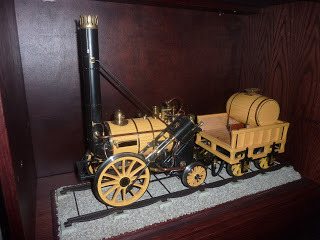
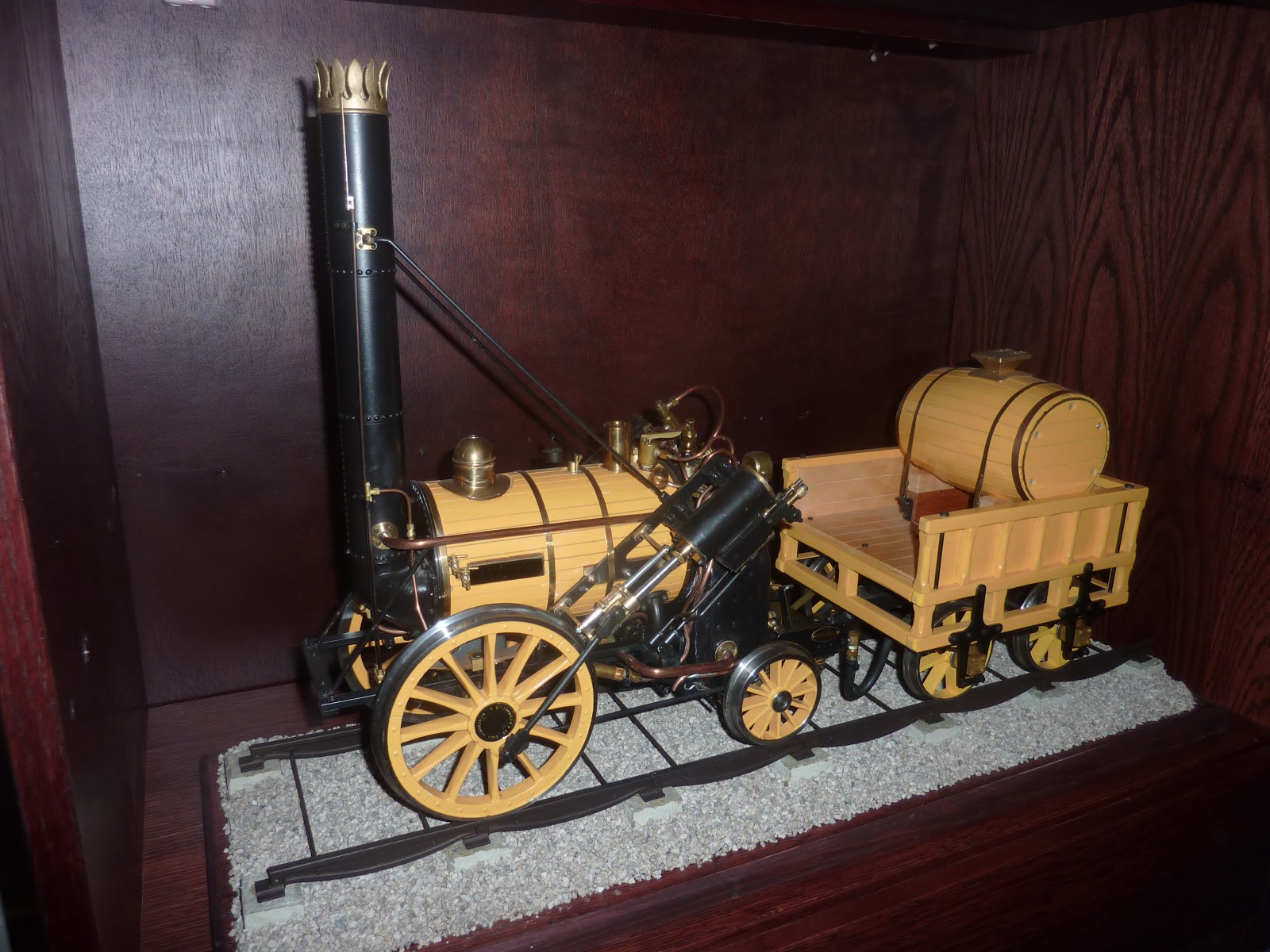
A model of The Rocket
One of the nice things about being a writer is that occasionally someone who likes your work will contact you to say so, and often will bring a new perspective or something interesting from their world into yours. Such has been the case with my novel Mr Stephenson's Regret which has prompted a fair degree of welcome correspondence since its publication, including some fascinating emails from North East railway enthusiast Colin Moran.
Like me, Colin is dismayed that North Tyneside Council have not seen fit to preserve long-time Stephenson residence Dial Cottage in West Moor as a visitor attraction in the way the National Trust have done so well with George Stephenson's birthplace in Wylam, Northumberland. Colin is currently conducting a one-man campaign on the issue, and I support him every step of the way.
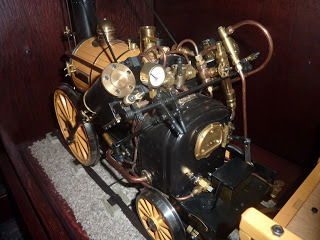
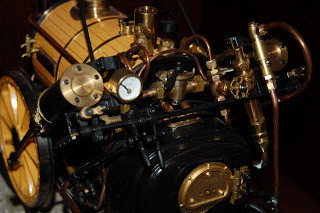
What I did not know about Colin until a few days ago is that he also constructs model replicas of some of the locomotives that have been so important in our railway heritage. The other day he sent me pictures of his model of Stephenson's Rocket which I'm so impressed with that I wanted to share them with readers of this blog. Colin has kindly given me permission, and so I reproduce some of the interesting images below. I don't know anything about model railways, so I'll simply copy what Colin had to say about his model:
Thought you may be interested in viewing my " Rocket " which l think is
quite spectacular in detail and finish. Notice the rails are very different
from today. They were called " Fish Belly " because of their curved shape
between the stone supports. The rails were tied together by bars to keep
the gauge. This was before sleepers were conceived shortly after the
Liverpool/ Manchester became operative. A clever man in Birmingham made the rails in moulded brass section, in
exactly the way the original cast iron rails were cast. I had the plinth
made and put all the the parts including cutting the blocks together. The
loco is a full working steam machine identical to the real thing in every
detail, although never steamed as l said. Its simply too good to soil, and
will remain l think in that condition, even after me some day.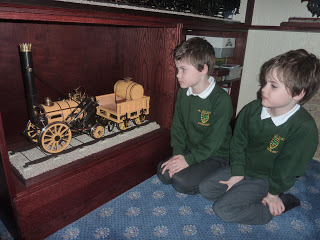
Thanks again, Colin. These look wonderful.
Like me, Colin is dismayed that North Tyneside Council have not seen fit to preserve long-time Stephenson residence Dial Cottage in West Moor as a visitor attraction in the way the National Trust have done so well with George Stephenson's birthplace in Wylam, Northumberland. Colin is currently conducting a one-man campaign on the issue, and I support him every step of the way.
What I did not know about Colin until a few days ago is that he also constructs model replicas of some of the locomotives that have been so important in our railway heritage. The other day he sent me pictures of his model of Stephenson's Rocket which I'm so impressed with that I wanted to share them with readers of this blog. Colin has kindly given me permission, and so I reproduce some of the interesting images below. I don't know anything about model railways, so I'll simply copy what Colin had to say about his model:
Thought you may be interested in viewing my " Rocket " which l think is
quite spectacular in detail and finish. Notice the rails are very different
from today. They were called " Fish Belly " because of their curved shape
between the stone supports. The rails were tied together by bars to keep
the gauge. This was before sleepers were conceived shortly after the
Liverpool/ Manchester became operative. A clever man in Birmingham made the rails in moulded brass section, in
exactly the way the original cast iron rails were cast. I had the plinth
made and put all the the parts including cutting the blocks together. The
loco is a full working steam machine identical to the real thing in every
detail, although never steamed as l said. Its simply too good to soil, and
will remain l think in that condition, even after me some day.



Thanks again, Colin. These look wonderful.
December 17, 2012
Write wit 3
Here is the third in my series of quotes about writing by writers. For the others, see Write wit and Write wit 2
A writer takes earnest measures to secure his solitude and then finds endless ways to squander it.
Don Delillo
My passions drive me to the typewriter every day of my life, and they have driven me there since I was twelve. So I never have to worry about schedules. Some new thing is always exploding in me, and it schedules me, I don’t schedule it. It says: Get to the typewriter right now and finish this.
Ray Bradbury
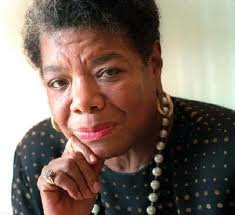 Maya Angelou
 I’ve had the same editor since 1967. Many times he has said to me over the years or asked me, Why would you use a semicolon instead of a colon? And many times over the years I have said to him things like: I will never speak to you again. Forever. Goodbye. That is it. Thank you very much. And I leave. Then I read the piece and I think of his suggestions. I send him a telegram that says, OK, so you’re right. So what? Don’t ever mention this to me again. If you do, I will never speak to you again.
Maya Angelou
Tips for a short story writer:
Use the time of a total stranger in such a way that he or she will not feel the time was wasted.
Give the reader at least one character he or she can root for.
Every character should want something, even if it is only a glass of water.
Every sentence must do one of two things — reveal character or advance the action.
Start as close to the end as possible.
Be a sadist. No matter how sweet and innocent your leading characters, make awful things happen to them-in order that the reader may see what they are made of.
Write to please just one person. If you open a window and make love to the world, so to speak, your story will get pneumonia.
Give your readers as much information as possible as soon as possible. To hell with suspense. Readers should have such complete understanding of what is going on, where and why, that they could finish the story themselves, should cockroaches eat the last few pages.
Kurt Vonnegut
In an unmoored life like mine, sleep and hunger and work arrange themselves to suit themselves, without consulting me.
Kurt Vonnegut
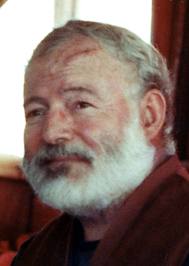 Ernest Hemingway All my life I’ve looked at words as though I were seeing them for the first time.
 Ernest Hemingway
There isn’t any symbolism. The sea is the sea. The old man is an old man. The boy is a boy and the fish is a fish. The sharks are all sharks no better and no worse. All the symbolism that people say is shit. What goes beyond is what you see beyond when you know. Ernest Hemingway
The most essential gift for a good writer is a built-in, shockproof shit detector. This is the writer’s radar and all great writers have had it. Ernest Hemingway
If there is a magic in story writing, and I am convinced there is, no one has ever been able to reduce it to a recipe that can be passed from one person to another. The formula seems to lie solely in the aching urge of the writer to convey something he feels important to the reader. If the writer has that urge, he may sometimes, but by no means always, find the way to do it. You must perceive the excellence that makes a good story good or the errors that makes a bad story. For a bad story is only an ineffective story.
John Steinbeck
Abandon the idea that you are ever going to finish. Lose track of the 400 pages and write just one page for each day, it helps. Then when it gets finished, you are always surprised.
John Steinbeck
You never have to change anything you got up in the middle of the night to write.
Saul Bellow
Write with the door closed, rewrite with the door open.
Stephen King
Fiction is a lie, and good fiction is the truth inside the lie.
Stephen King
Description begins in the writer’s imagination, but should finish in the reader’s.
Stephen King
 Tom Wolfe The problem with fiction, it has to be plausible. That’s not true with non-fiction.
 Tom Wolfe
Write without pay until somebody offers pay; if nobody offers within three years, sawing wood is what you were intended for.
Mark Twain
There’s nothing wrong with well-made, strongly constructed, purposeful long sentences.But long sentences often tend to collapse or break down or become opaque or trip over their awkwardness.They’re pasted together with false syntax.And rely on words like ‘with’ and ‘as’ to lengthen the sentence.They’re short on verbs, weak in syntactic vigor,Full of floating, unattached phrases, often out of position.And worse — the end of the sentence commonly forgets its beginning,As if the sentence were a long, weary road to the wrong place.
Verlyn Klinkenborg
Serious writers, I should say, are on the whole more vain and self-centered than journalists, though less interested in money.
George Orwell
All writers are vain, selfish, and lazy, and at the very bottom of their motives there lies a mystery. Writing a book is a horrible, exhausting struggle, like a long bout of some painful illness. One would never undertake such a thing if one were not driven on by some demon whom one can neither resist nor understand. For all one knows that demon is simply the same instinct that makes a baby squall for attention.
George Orwell
Every page was once a blank page, just as every word that appears on it now was not always there, but instead reflects the final result of countless large and small deliberations. All the elements of good writing depend on the writer’s skill in choosing one word instead of another. And what grabs and keeps our interest has everything to do with those choices.
Francine Prose
A girl pushing a carpet sweeper under my typewriter table has never annoyed me particularly, nor has it taken my mind off my work, unless the girl was unusually pretty or unusually clumsy.
EB White
A writer who waits for ideal conditions under which to work will die without putting a word on paper.
EB White
There are very few thoughts or concepts that can’t be put into plain English, provided anyone truly wants to do it. But for everyone who strives for clarity and simplicity, there are three who for one reason or another prefer to draw the clouds across the sky.
EB White
Often a word can be removed without destroying the structure of a sentence, but that does not necessarily mean that the word is needless or that the sentence has gained by its removal. If you were to put a narrow construction on the word ‘needless,’ you would have to remove tens of thousands of words from Shakespeare, who seldom said anything in six words that could be said in twenty. Writing is not an exercise in excision, it’s a journey into sound. How about ‘tomorrow and tomorrow and tomorrow’*? One tomorrow would suffice, but it’s the other two that have made the thing immortal.
EB White
 Susan Sontag
 The only story that seems worth writing is a cry, a shot, a scream. A story should break the reader’s heart.
Susan Sontag
Breathe in experience, breathe out poetry.
Muriel Rukeyser
Writing is only a substitute for living.
Florence Nightingale
December 13, 2012
All shall be published
In the latest issue of The Author (official magazine of The Society of Authors) I have an op-ed piece about digital publishing and its possible consequences for the professional writer. In the magazine my contribution has the title 'Indiscriminate tide'. I have reproduced the article below under its original title 'All shall be published'. Around about the time of the liberal, permissive (and much-missed) 1960s a well-worn expression was 'All shall have prizes'. This encapsulated the philosophy that participation was more important than competition. In certain circles the notion of winners and losers became anathema as it was too hard on the losers and discouraged involvement. Too great an emphasis on high standards would act as a disincentive to the mediocre - that is, most of us.
There was a certain logic to these ideas, but the counter-argument was that there was no reward for genuine ability and hard work, and less motivation for the highly skilled. Also, when the time inevitably came for selection (for university, for serious sport, for a job) how could selectors effectively discern who among the crowd was the real star, the person they needed?
This is a preamble to my thinking about the way publishing seems to be going. These days it has never been harder or easier to be published. On the one hand mainstream publishers are ever more nervous of trusting new talent, or even moderate successes of the past, relying instead on high profile established names and increasingly on celebrities for their publishing and marketing efforts. On the other hand, through Amazon, Smashwords and the rest, it is possible for anyone who wishes it were so to be published, at least in digital form, without any real expenditure and, significantly, without any quality standard or objective test of merit. Marketing, of course, is left entirely to the authors.
With what seems to be the inevitable demise of printed books in the near or long term in favour of the ebook format, and the correlative decline of the traditional apparatus (agents, publishers, bookshops) what we will be left with is a few huge digital bookstores. The good news for the would-be author is that it will be the easiest task in the world to self-publish and present in these bookstores - the new axiom is 'All shall be published.' No need now for those mind-cudgelling synopses and tricky pitches; no more dollars and pounds spent posting heavy manuscripts to every possible contact in the Writers' & Authors' Yearbook; no more waiting weeks and months for a reply; no more rejection slips; no more disappointment. Who would deny any writer the pleasure of seeing their work in print? Who could object that good writers with interesting stories who would otherwise be ignored by a celebrity-obsessed publishing sector should be given the opportunity to show the reading public what they can do, what they have done? Surely no-one: but when the barriers are down aren't we all - writers and readers alike - in danger of being drowned in the flood? How is any writer - good, bad or indifferent - going to be able to keep her head above water? to be spotted? to be picked out? to be read?
If the answer is word of mouth - or viral attention in digital-speak - I fear for the future of careful quality writing and editing. Infinite Shades of Grey, it seems, is what we have to look forward to.
It's true there never was a Golden Age, and in writing as in other forms of the arts excellence rarely equates with popularity - which is why quality newspapers generally struggle to achieve a circulation that will keep them financially sound, and why few first-rate authors ever make it to the Rich List - but until recently it was just about possible to make a living. Now, apart from the difficulties of gaining attention in a world where the noise-to-signal ratio produces so much distortion, there is the growing problem of perceived value.
The price of ebooks is generally way below their printed cousins (of course the production costs are much less) and the tendency is very much southwards. Hundreds of thousands of ebooks are available for free, either permanently or temporarily. Price promotions and heavy discounts are the norm, whether from the giants of distribution (Amazon, Sony) or directly from the digital publishers. One of my own publishers, Wild Wolf, regularly offers free downloads on its titles for the short term promotional gain the tactic provides - and I have personally benefited from a modest upsurge in real sales after the promotion ceases. But the cumulative effect is to devalue the printed word in general. As customers we are conditioned to become highly resistant to paying much, if at all, for what we read.
The amateur author may be quite happy to place a zero price tag on his ebook in the hope of winning readership, and there is no gainsaying that. Except we all have children to feed. The professional has somehow to make a living, but the prospect of doing so is receding rapidly for most. High quality writing does not come exclusively from the full-time professional - of course not - but just as professional sportspeople tend to be those at the peak of excellence because a) they have been through a careful, rigorous selection process and b) they hone their skills all day and every day, such is the general case for writers.
It would be to the detriment of mankind if economic exigency led to the literary art becoming once again the exclusive pursuit of the leisured or moneyed classes, or relegated to the province of the casual amateur. Ironically, what might be seen on the one hand as the democratisation of publishing in the digital age, accessible to all, could have the unintended effect of pushing us back into a pre-democratic age of inequality with the doors firmly shut on the aspiring professional.

November 22, 2012
Library lines
Encouraged by the Society of Authors and New Writing North I've become interested in the Save Newcastle Libraries campaign. Of course libraries are important to me now in my role as a writer - for research, as places in which I do talks, and as repositories of my books; and I have worked several times on behalf of Newcastle Libraries centrally, in branches and in the community - but my love of libraries goes back to early days in the old Ashington Library behind the Post Office. I've been searching in vain for pictures but I believe the building (which must have originally been a large house) still exists near the present library and I guess is owned by Northumberland County Council.
I remember the small junior library at the back of the building, the much larger adult library forbidden to us children, and the reading room upstairs which was also forbidden until we got to the Grammar School at the age of 11 and were allowed up there on the pretext of doing homework. I recall the first time I stepped up the staircase to the reading room holding on to the varnished brown banister in a confusion of thrill and fear, a feeling that I was encroaching on hallowed ground, that I was being regarded with suspicion bordering on rage by the library guardians downstairs, that I had no right to be making the journey, but that the journey itself was an exciting sort of treasure hunt for books I'd never set eyes on before, shelves I'd never had the opportunity to explore.
I remember, too, being so proud of my library tickets - it was either two or three small wallet-style tickets that could fit into each other, one for each book we could borrow - and especially when I was finally able to exchange the (pale green?) Junior tickets for the (blue?) Adult ones. Now I think of it, I believe we were allowed two tickets as Juniors and three as Adult readers. The old-style cards - which had the member's name handwritten and a date of expiry - were later replaced by a rather boring rectanglar charcoal-grey block of a card with no personal details, and of course in recent times by barcoded plastic.
Above all, though, what I remember as a child reader is being lost in whatever world I'd brought back with me between the covers of my library book. Worlds I could never have visited without that library portal to enter whenever I chose (opening hours allowing).
Although my mother was also an avid reader and like me a regular library visitor, there were no books in our house beyond comic annuals, a couple of dictionaries and a Bible. I'm sure the same could be said of virtually every one of the workers' homes in Ashington and other working class communities - in fact I remember as a student teacher reading a statistic from the then recently-published 1967 Plowden report on Education that the average home had only five books in it, including a dictionary and Bible. Labouring families at the time would not have dreamed of spending part of their hard-earned wages on books to keep. That's why the library was important to me, and millions like me. And why would it be different today, despite the obvious technological developments that have made reading material apparently more easily available? There were bookshops in my day, but we didn't visit them. There's a world of difference between possible and reachable, between available and availed.
In support of my argument for preserving and protecting libraries I have been collecting some thoughts on the subject from past and present authors and assorted creative types. I offer them below as evidence.
If you have a garden and a library, you have everything you need.
Marcus Tullius Cicero (statesman, scholar and orator)
Come, and take choice of all my library,
And so beguile thy sorrow.
William Shakespeare (dramatist and poet)

When I step into this library, I cannot understand why I ever step out of it.
Marie de Sevigne (diarist)
I have always imagined that Paradise will be a kind of library.
Jorge Luis Borges (poet and short-story writer)
I love the architecture of public libraries, the very large windows. Inside it’s polished, it’s quiet; during the day, the sun is usually streaming through one room or another. And all the people are sitting there together, but they’re all going to completely different places through the books they’re reading.
Maira Kalman (artist and author)
A library is not simply a repository of books, it is the symbol and centre of our culture - a door and a window for those who might not otherwise have such doors and windows.
Amy Tan (author)

The library … is no mere cabinet of curiosities; it’s a world, complete and completable, and it is filled with secrets. Like a world, it has its changes and its seasons, which belie the permanence that ordered ranks of books imply. Tugged by the gravity of readers’ desires, books flow in and out of the library like the tides.
Matthew Battles (Harvard rare books librarian)
I go into my library, and all history unrolls before me.
Alexander Smith (poet)
To a historian libraries are food, shelter, and even muse.
Barbara Tuchman (historian)
Everything you need for better future and success has already been written. And guess what? All you have to do is go to the library.
Jim Rohn (management speaker and author)
Libraries are reservoirs of strength, grace and wit, reminders of order, calm and continuity, lakes of mental energy, neither warm nor cold, light nor dark. The pleasure they give is steady, unorgastic, reliable, deep and long-lasting.
Germaine Greer (author and campaigner)
My alma mater was books, a good library . . . I could spend the rest of my life reading, just satisfying my curiosity.
Malcolm X (political activist)

When I got my library card, that's when my life began.
Rita Mae Brown (author)
The privilege we have in this country to borrow books from our public libraries is quite wonderful, really. It empowers all of us to keep on learning and exploring throughout our lives. That’s very special, because life is all about growing, changing and opening ourselves up to new ideas and information.
Elizabeth Taylor (actor)
We all love to hear a good story. We save our stories in books. We save our books in libraries. Libraries are the storyhouses full of all those stories and secrets.
Kathy Bates (actor)
Of the boys who worked in the reference library a surprising number must have turned out to be lawyers, and I can count at least eight of my contemporaries who sat at those tables in the 1950s who became judges. A school – and certainly a state or provincial school – would consider that something to boast about, but libraries are facilities; a library has no honours board and takes no credit for what its readers go on to do but, remembering myself at 19, on leave from the army and calling up the copies of Horizon to get me through the general paper in the Oxford scholarship, I feel as much a debt to that library as I do to my school.
Alan Bennett (actor, author and playwright)
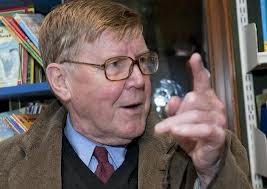
Perhaps no place in any community is so totally democratic as the town library. The only entrance requirement is interest.
Lady Bird Johnson (campaigner and First Lady)
There is not such a cradle of democracy upon the Earth as the Free Public Library - this republic of letters, where neither rank, office, nor wealth receives the slightest consideration.
Andrew Carnegie (industrialist and philanthropist)
When you are growing up, there are two institutional places that affect you most powerfully - the church, which belongs to God, and the public library, which belongs to you. The public library is a great equalizer.
Keith Richards (musician)
I’d be happy if I could think that the role of the library was sustained and even enhanced in the age of the computer.
Bill Gates (entrepreneur and philanthropist)
The library is the temple of learning, and learning has liberated more people than all the wars in history.
Carl Rowan (journalist and diplomat)
At the moment that we persuade a child, any child, to cross that threshold, that magic threshold into a library, we change their lives forever, for the better.
Barack Obama (statesman and politician)

Without libraries what have we? We have no past and no future.
Ray Bradbury (author)
What is more important in a library than anything else - than everything else - is the fact that it exists.
Archibald MacLeish (poet and playwright)


September 27, 2012
My favourite mondegreens (misheard lyrics)
It should be a good word for Scrabble except that it doesn’t have any high value letters, but at least it can be a conversation piece to distract your opponent when you add ‘monde’ to their ‘green’ and they say, ‘mondegreen’; what’s that? .
A mondegreen is a misheard, misinterpreted or misremembered lyric or phrase, often to comic effect. As a result of near-homophony, the line takes on an entirely new meaning for the listener. Why ‘mondegreen’? The word was coined by US essayist Sylvia Wright for her 1954 piece in Harper’s Magazine, The death of Lady Mondegreen. She wrote:
‘When I was a child, my mother used to read aloud to me from Percy's Reliques, and one of my favorite poems began, as I remember:
Ye Highlands and ye Lowlands,
Oh, where hae ye been?
They hae slain the Earl o' Moray,
And Lady Mondegreen.’
It was not until much later that Ms Wright realised the actual fourth line reads:
And laid him on the green. There was no existing term for the phenomenon of the misheard line, so ‘mondegreen’ was born.
The expression is usually applied to lines from verse, poetry or lyrics of songs. In this posting I’m going to focus on misheard song lyrics, but I’ll mention in passing one of the most famous examples in literature of a mondegreen that comes from misremembering; it explains an otherwise weird book title: The Catcher in the Ryeby JD Salinger. Well into the novel, the narrator Holden Caulfield hears a little boy wrongly singing the words to Rabbie Burns’ Comin’ Thro’ The Ryeas If a body catch a body coming through the rye, instead of Gin a body meet a body. It leads to an optimistic reverie by Caulfield and is memorialised by Salinger in the ‘catchy’ title.
My first memory of mondegreens (though I certainly didn’t know what they were called at the time) comes from my childhood mishearing of Christmas carols, and how we entertained ourselves in school or church services singing the ‘altered’ versions. We kids thought we were being smart, original and funny when we privately sang to each other our versions under cover of the adult voices singing the proper words, not realising that our mothers and fathers, and probably our grandparents, had done the same thing at our age. Who has not sung the first line of While Shepherds Watched as:
While shepherds washed their socks by night
The full version of the altered first verse is, as I’m sure you’ll recall:
While shepherds washed their socks by night
And hung them on the line,
The angel of the lord came down
And said those socks are mine.
It’s amazing how many carols and Christmas songs lend themselves to amusing mishearings. Among my early favourites were:
Deck the halls with Buddy Holly
Get dressed ye married gentlemen
We three kings of porridge and tar
The tradition goes on even to modern Christmas songs. My daughter recently pointed out to me that the Christmas single by The Waitresses Christmas Wrapping is in fact a greeting to former snooker world champion Terry Griffiths. You’ll see what I mean if you click below for a blast of the chorus:
Another British former world champion was famously featured in a sort of visual mondegreen on BBC TV’s flagship music show Top of the Pops in October 1982. Dexy’s Midnight Runners came on to sing their hit version of the Van Morrison song Jackie Wilson said (I’m in heaven when you smile). However, someone in the production team either mistook the name in the chorus or was having a laugh because the picture projected behind the group throughout the song was not the cool black American r&b singer Jackie Wilson, but the portly, lovable Scottish darts player Jocky Wilson. If you need it, here’s the proof:
Perhaps the most famous pop music mondegreen comes from the Jimi Hendrix classic Purple Haze. Is Jimi singing ‘Scuse me while I kiss the sky as the published lyrics suggest, or is it ‘Scuse me while I kiss this guy? You be the judge.
Not only can we get confused about pop lyrics, but sometimes convincingly so. For years I thought Dusty Springfield was singing:
You don’t have to say you love me,
Just because you can.
Check out the line below:
Mick Jagger’s vocals in many of the Rolling Stones’ songs lend themselves to plenty of misinterpretation. I defy anyone, without looking up the published lyrics, to make out the full first verse of Get off my cloud. I’ve just this moment had a go, and here’s what I’ve come up with - it all goes wrong for me at the third line:
I live on the apartment of the 99th floor of my block.
I sit at home looking out the window, imagining the world has stopped
And in flies a guy that’s all dressed up like a Union Jack
And I’ve walked by and found that I’ve since turned out a flicker good back
I said, hey you....etc.
Have a listen and see if you can come up with a more intelligible version:
I know I’m not alone in mishearing lyrics. In your own time you might want to check out some of these I’ve heard reported:
From Abba’s Dancing Queen:
See that girl, watch her scream, kicking the dancing queen.
From Abba’s Chiquitita:
Take your teeth out, tell me what’s wrong.
From Elvis Presley’s Hound Dog:
You ain’t pornographic and you ain’t no friend of mine.
From Kate Bush’s Wuthering Heights:
It’s me, I’m a tree, I’m a wombat
Oh, so cold at the end of your hole.
From Queen’s Bohemian Rhapsody:
Sparing his life for his warm sausage tea.
From Robert’s Palmer’s Addicted to Love:
Might as well face it, you’re a dick in a glove.
From the Ghostbusters title track:
Who you gonna call? Those bastards.
This is just a short selection - believe it or not there is a website dedicated to a comprehensive collection of funny misheard pop lyrics. It’s called, appropriately enough, KISSTHISGUY
From those early years in the carol service to today I’ve been entertained by mondegreens, but I don’t think I’ve laughed louder than when I watched comedian Peter Kay’s The Tour That Didn’t Tour on Channel 4 recently. Towards the end of the show, Peter demonstrates some of the misheard pop lyrics he has come across. Here’s the clip for your enjoyment - trust me, it is hilarious.

September 17, 2012
'Sweet Tooth' by Ian McEwan reviewed ***
 I always expect so much of an Ian McEwan novel that when one slightly disappoints it really disappoints. In truth, I have given three stars out of respect for the author more than for the novel, which I won't be reading again (though I am currenly listening to the recorded serialisation from the BBC's Book at Bedtime).
Plot-wise there are too many false set-ups, starting with the opening sentences: 'My name is Serena Frome (rhymes with plume) and almost forty years ago I was sent on a secret mission for the British security service. I didn't return safely.' Now, I'm no great fan of the spy story, but having been tempted in with such self-advertised promise it was a real let-down to be served porridge as it might be cooked in a 1970s English seaside B&B; porridge which is anyway removed by the landlord before it's eaten, and replaced by another unexciting course. Or to move the metaphor into more familiar territory for the genre, it's like being offered fantastic sex only to find oneself engaged in an unadventurous affair that 'ends' in coitus interruptus.
Serena's 'mission' - to recruit a first-time novelist who will unwittingly accept funding from MI5 who have some vague hope that he will turn out a story that is a) pro-establishment/anti-communist and b) highly successful and influential - is neither gripping nor credible. That the writer Tom Haley, having been thus recruited, goes on to write a novel at apparently breakneck speed that immediately wins a major literary prize and another book within the short space of this narrative that is meant to upend Serena's (and our) expectations is a device too far for this particular reader.
Yet it is not plot but character and tone that left me most dissatisfied. McEwan is usually pitch-perfect. His characters chime with the times and he provides subtle but revealing psychological insights through and of his protagonists. I don't know whether it has anything to do with his choice of a female voice to deliver a first person narrative, but this time I was not convinced. Serena gives us her history articulately but with all the passion of a cv. She records her emotions but somehow is unable to convey them in more than mere words.
I felt no whirl in any of her relationships - with Jeremy, with Tony, with Max or with Tom - despite her professions and her descriptions of their lovemaking. Consequently, none of these characters lived for me. With the exception of Tony, I found it difficult even to get a handle on how old or young they were, relying on contextual evidence as a reminder of what I was meant to imagine. Max is a cardboard career civil servant - his drunken but apparently sincere declaration of love for Serena (a significant development in the story) left me as cold as he is. Tom, according to what Serena tells us, is attractive, desirable and sensuous, but I could only take her word for it - I did not 'feel' Tom at all, which is a major drawback in appreciating the central relationship, the spindle upon which the story is meant to turn.
Essentially, I didn't care enough either about the plot or the relationships to engage fully with this novel. McEwan blows into life several small flames of action, using some of them as a torch to lead us down wrong tunnels, but that merely frustrates, and the one main flame is too weak to create a real conflagration. Of course the story is competently written and there is some of the old McEwan art to admire, but that ain't enough for a modern author of whom (like Tom Haley in the novel) much is expected. This book, like its central characters, lacks real substance and fails to capture heart or mind.
Sweet Tooth by Ian McEwan (Jonathan Cape London 2012)

September 12, 2012
Can words compete with music?
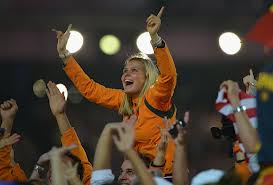
In company with millions of others I have spent much of the late summer indoors despite the warm weather, watching the Olympics and Paralympics unfold in London. I tuned in to the joyful celebrations of the opening and closing ceremonies and felt myself caught up in a swirl of excitement and delight, at one with the happy participants. It struck me how central music is to the spread of fellow-feeling and (yes) love at these times of shared experience. Music is the bond and also the conduit, a channel for expressed emotions and a carrier of the energy, the electricity that passes between us.
Classical music can stir the passion of a crowd (witness the Last Night of the Proms for example) but in particular it seems to be certain strains of pop music that carry the special infectious gene. As Noel Coward has Amanda say to Elyot in Private Lives: “Extraordinary how potent cheap music is.”
It’s hard to tease out quite why. I suppose at the most basic level we seem to respond as humans to beat and rhythm in a way that most animals don’t. There is a binding, a unifying quality to the beat, the throb, the ripple and resonance, the call of the drum, and it must have always been so as there is evidence of group dancing in early cave drawings, and many objects have been unearthed to confirm that our prehistoric ancestors made primitive musical instruments which were mainly percussive.
Melody has been with us just about forever too and, being a useful memory aid, has played a huge part in establishing a collective cultural heritage through oral tradition. Songs pass among us more quickly and easily than poems or speeches, and draw us together more effectively. We might gather to watch and listen to plays but we are rarely active participants in purely verbal dramatic performance as we are wherever songs are sung.
How important are the words? How much of the ‘potency’ of popular music is in the lyrics? Difficult to say in isolation. Staying with the Olympic events for my example, Danny Boyle’s wonderful opening ceremony featured Ray Davies of the Kinks singing perhaps my all-time favourite pop song, Waterloo Sunset:
“Terry meets Julie, Waterloo Station, every Friday night.”
I can never listen to that line without seeing the couple (in a monochrome long shot) moving into a gentle embrace, or without feeling their loving, sad intensity and an indefinable sense of loss that seems to be both theirs and mine. I know everything and nothing about these lovers. I am haunted and fascinated by them. Yet the words of the song, as in this one line, are plain, unadorned; the narrative a mere sketch. It’s the music and the vocal performance that provide poignancy, a feeling of an experience beyond the words, the sense of a life lived that has some connection with yours. Spare though lyrics, music and voice are separately, they act together to evoke something ‘other’ in the listener, like a great painting that somehow causes you to see beyond the mere representation in the frame.
Not many popular songs can withstand scrutiny as art in the way Waterloo Sunset can, but they still exert a power over us, not least when we are gathered together, whether as a small group of family and friends, or a large crowd in a concert, a festival or an arena. You can see the power working on our bodies, in our expressions, and in the way we engage with each other, smiling and eyes shining as we chorus words that on the page might look banal or even meaningless. What is that about? I think Nick Hornby gets close to explaining it in his novel High Fidelity when he writes: “Sentimental music has this great way of taking you back somewhere at the same time that it takes you forward, so you feel nostalgic and hopeful at the same time.”
I’m sure that is especially true of music enjoyed as a group experience. I must admit that I sometimes feel envious of the songwriter and performer who can go beyond mere words to make that connection. Words alone perhaps work best on an individual - few of even the great songs can make you entirely lose yourself in absorption, never mind provide insight or life-changing revelation as a great book can - but music works supremely well as a public expression.
I occasionally feel I’m a writer as a second-best vocation (and I’m sure I’ve heard Nick Hornby say something similar) because I do not have the talent to be a musician. Perhaps that’s why I enjoy public readings so much. I like to make the connection. I like to see the light shine in people’s eyes. Nevertheless I can’t stop wishing I’d learned to play more than three chords on my old acoustic guitar.

August 29, 2012
Ten tips for talks by writers
I spend a fair amount of time these days talking about and reading from my books to one group or another - mainly modest gathering of rotarians, local historians, reading groups or WIs with the occasional larger literary event or festival. I welcome these as a chance to boost book sales and ‘spread the word’ but also because I enjoy public readings; I get a buzz from the engagement of a live audience and the interest they show through their questions afterwards. I also believe reading in public gives you a better perspective on your work - and it does a writer good to get out now and again.
I hope I have enough experience now to offer a few tips for other writers contemplating public readings. I have concentrated on logistics and practicalities not the aesthetics or the finer points of nuancing a reading, so don’t expect Stanislavski.
1. Let them know you’re available. If your work becomes known you might get the occasional telephone call or email asking you to speak at an event, but that assumes the organizers know you are generally willing to speak and have your contact details. That is unlikely in the first instance, so it’s up to you to let potentially interested groups know you are waiting for their call. You need to think about who your work is likely to appeal to and approach them directly. The internet is a great resource for finding the contact details of various local, regional or national groups. You also need to decide how far you’d be prepared to travel before you make contact - how far do you want to spread your wings?
2. Let them know you’re a great choice. Your book may be fascinating, but what is the particular angle of interest for the group? You may need to tailor your approach accordingly. When I speak to Rotary Clubs about my Stephenson novel I focus on the big events, the engineering achievements; for WIs I do a talk on The Stephenson Women. If I’m reading short stories I select them according to the audience.
How do they know you are good? By quoting snippets from your reviews or briefly mentioning any awards you may have earned as a writer. Once you have a track record as a speaker, by offering testimonials and quotes from those whom you have already entertained.
3. Know what to expect. Obviously you need to be informed of the date, time and venue of your talk (plus any directions and the postcode for your sat nav if you have one), but you should pump the organizer for more information. Crucially, what are the likely numbers attending? Not only might this affect how you frame your talk, but it helps you decide how many books to take along. No point in staggering into a place with a huge box of books for sale if your potential customers number no more than ten. On the other hand there is chagrin all round if you run out of stock with customers still in the queue. (‘Chance would be a fine thing’ you might say, but I have been caught out a couple of times with not enough books to satisfy demand - outnumbered, I’ll admit, by the occasions I have tottered out with a box only a little lighter than the one I took so optimistically in. And by the way that’s another thing to check - is there somewhere near the entrance to park your car?) It may be useful, too, to know roughly the gender split of the audience, and whether there will be any children present.
Is there a particular theme to the event? (For example, some talks I’ve done have been for writers’ groups where the focus of interest has been on the business or getting published.) Are there any other speakers? Other writers? What other business might be conducted during the meeting, and how will that affect the time and duration of your talk? (See point 6.)
4. Don’t be out of pocket. Even the big-name festivals can be surprisingly stingy when it comes to fees; with the small local ones you will be very lucky to be offered a fee at all. Some do, though, and don’t be afraid to ask. At the very least you should ensure that all organizers are prepared to cover your expenses - you need to make that clear in advance to avoid any embarrassment on the day, and also clarify how you are going to be paid and whether an invoice is required. True, you may earn some income from book sales, but that’s not guaranteed and there is no reason why you should risk being out of pocket even for a charitable organization. On book sales, reject any suggestion that the hosts should take a commission - the author’s margin on book sales is slim enough. The WI and some other organizations have a national policy on claiming commission on book sales, but I for one always strike that out of the agreement if I’m not being paid a reasonable fee - I usually replace it with a note that says ‘0% commission in lieu of fee’. And no, rotarians, the free meal is no substitute for expenses however well it is cooked or how convivial the company.
5. Don’t be down at heel. Is there a particular dress code? Rotarians, for instance, expect you to be suited and booted for their meetings, though personally I draw the line at wearing a tie - like snooker player Alex ‘Hurricane’ Higgins who had a permanent doctor’s note claiming a neck rash to get out of wearing the otherwise obligatory bow tie during championship matches, my excuse is that a tie constricts my throat and affects my speaking. It might even be true. In general, though, don’t give your audience a reason for disliking you before you open your mouth by turning up in inappropriate dress or needlessly scruffy, however bohemian you wish to appear.
6. It’s not about you. Speaking to a local group such as a Rotary Club is quite different from appearing at a literary festival or a special event organized by a library where the audience (if one turns up - and I’ve known an occasion where it was literally one person) has come specifically to hear you talk and read. The local group meet regularly, perhaps weekly or monthly, and you are there as a guest, just part of the proceedings. One of the advantages is that you are guaranteed a certain number of bums on seats, but bear in mind they are not parked there especially for you.
As ‘the speaker’ you will find yourself having to wait for the normal business of the club to be conducted. There may be reports from the president, the secretary and treasurer; perhaps other guests to be welcomed and accommodated; a meal to be eaten or refreshments taken on board (or both); a forthcoming trip to be discussed; a raffle to be won (you may have the privilege of drawing the winning number); even, at rotary meetings, a series of ‘fines’ to be jokingly levied on several of the members attending, to boost the charity pot. My advice is to act the polite participant, interested, amused as appropriate, without reticence but without drawing too much attention to yourself, and without too many surreptitious glances at your watch or fretting about whether you will be left any time to say your piece.
7. It is about you. Once you are introduced (you will have provided a brief CV in advance to help with this, and with a bit of luck the person making the introduction might have glanced at it) the stage is finally yours. I say ‘stage’ but you are much more likely to be behind a table at the same level as everyone else, perhaps with a small lectern in front of you to add another little barrier between you and your audience. It is your job to make everyone (this includes yourself) leave behind all the distractions of earlier business and focus on your talk, your book. This might seem daunting, but my experience is that even if members of the audience don’t know you from Adam or Eve they will be generally well disposed towards you from the start simply because one of their colleagues has invited you along - for tonight you are their honoured guest and they will give you the respect that goes with the position whether or not you turn out to be the least interesting speaker they have heard this season. (For the removal of doubt, if there are no questions afterwards and no book sales, you probably were.)
There are really only three things you can do to lose that respect:
Give the slightest insult or offence to any of the members present, or to the customs of the organization.Make inappropriate jokes or comments.Exceed your time slot by more than five minutes.
I strongly recommend you do your best to avoid committing any of these sins.
Beyond that, there are a few things you can do to ensure that the focus remains on you and your work for the time you are speaking. It’s all about engagement, so it’s helpful to remove as many barriers as possible. If you can get away from that table, that lectern, into an open space that’s still close to the audience, take the liberated option; don’t hide behind the furniture. If you have been offered A/V equipment beforehand, think carefully: do you really need it? Any moment spent looking at the screen and not at you risks inattention. On the other hand if you have physical props that are relevant to your talk by all means use them - because you are directly handling these they will enhance, not distract. Think twice also before you accept the offer of a microphone. It’s unlikely that your audience will be large enough for you to need one. Microphone equipment available to a local group is generally of a low quality, and liable to malfunction. Unless it is a clip-on mike you will probably have to hold it close to your mouth (another barrier) and it will restrict your hand movement - try turning a page with a book in one hand and a mike in the other. If the microphone is on a stand you will find your head and body movement restricted. In any event listening to an amplified voice can be wearying after a short time; far better to rely on your own naked voice - well modulated, well projected.
I mentioned props and the difficulties of turning a page with one hand, which takes me to the most important prop of all - and potentially another barrier - the book you are reading from. These days I always do public readings from the Kindle version of my books, and here’s why: the Kindle is slim and easy to hold in one hand; the text can be bumped up several points larger so I can read easily while maintaining regular eye contact with my audience (vital in engagement); I can ‘turn the page’ with the same hand that holds the book simply by clicking the advance button with my thumb as I read; and I can flip easily from one extract to another with the use of pre-prepared ‘bookmarks’.
On the other hand, I want to persuade everyone to buy physical copies of my book at the event, so I ensure that I have all the books I’m referring to beside me to hold up on first mention (physical props) and of course I emphasise the delight of having a ‘real’ book to read while subtly advertising the fact that my books are also available on Kindle.
It’s very important that you come across as a ‘real’ person with a connection to the audience you are speaking to. Without eating up all the time of your talk by telling everyone your complete life history, include some relevant personal information - where you come from, something about your family, how you came to be interested in writing, in this subject. Let your enthusiasm for your work and for your readers come through. And be sure to invite questions at the end, because they are the best possible opportunity for real engagement and interaction. The question-and-answer session can often be the determining factor in whether a particular member of the audience is or is not going to buy your book.
8. Become a point of sale. You are going to arrive early at the venue (aren’t you?), not least because you need to check the configuration of the meeting to determine where you are going to speak from and where you are going to sell your books. It is vital that audience members can get to you and your books easily at the end of the talk, indeed that they should have to pass by on their way out. Think of visitor attractions, with the gift shop always the last stop and usually integrated into the exit. You and your books need to be where the natural flow is.
I say you and your books. At the end of your talk you must become the point of sale because it is you that audience members want to connect with, particularly if you have done a good job of engagement during the session. It’s much more likely that they will buy books if you are standing right next to them while you talk than if you are in another part of the room, especially if you are directly involved in the selling. Even if someone else is physically going to help you sell your books (which can be useful as it’s hard to talk and count money at the same time) you must be right alongside, still fully engaging with audience members until the last one has left.
Make it easy for your customers to buy. Before the event ask the organizer to ensure everyone knows that books will be available; otherwise they may not bring any cash. It’s important you bring along a float with plenty of the right change for the notes you will be offered. Bring a good signing pen too because weirdly (I’ve written about this before) so many people will want you personally to sign their books and perhaps include a message for them or the person they intend to give the book to.
Some people may get very enthusiastic about your talk, and want to chat with you at great length about it. This can be flattering, but be aware there might be a queue building up behind, even if it’s only a queue of one. People don’t like to be kept waiting. If necessary, ask to be excused for a moment to deal with the next customer, but let your enthusiast know you’re eager to continue the conversation. Otherwise you might be watching your potential sale disappear through the doorway while your new-found fan is still in full flow.
9. Ask for feedback and testimonials. You can partly trust your intuition to assess how well a talk has gone (sometimes but not always reflected in immediate book sales) and if it has been a positive experience you will usually have people coming to tell you so spontaneously. Virtually no-one will tell you if they didn’t like it, or even some aspect of it, unless you ask them directly. Don’t duck out of this; every talk is a valuable learning experience of one kind or another. My old friend Rosabeth Moss Kanter used to say if you want to learn how to do a better job take your sternest critic out to lunch. I’m not suggesting you go to those lengths, but how did I do? any advice for the future? are good questions to ask the organizer.
If you have done a good job you are well on your way to another one. The best routes to securing more talks, should you want them, are repeat business and referrals. Repeat business is valuable, though only really worthwhile when you have a new title on offer, otherwise you will be largely speaking to customers who either bought your book already or passed up the chance to purchase. Referrals will bring you new business, so ask your delighted organizer to spread the word around the network and also provide you with a couple of lines that you could use as a testimonial on your next piece of marketing material.
10. Keep and grow your contacts. These days every writer has to be a marketeer too. Every marketeer will tell you that their most valuable resource is their contact database. By keeping your contacts up to date, keeping in touch with people you have met along the way, and working with them to foster new relationships, you will grow your reputation and extend your opportunities to talk about your books, develop your readership and sell more books.
I hope I have enough experience now to offer a few tips for other writers contemplating public readings. I have concentrated on logistics and practicalities not the aesthetics or the finer points of nuancing a reading, so don’t expect Stanislavski.
1. Let them know you’re available. If your work becomes known you might get the occasional telephone call or email asking you to speak at an event, but that assumes the organizers know you are generally willing to speak and have your contact details. That is unlikely in the first instance, so it’s up to you to let potentially interested groups know you are waiting for their call. You need to think about who your work is likely to appeal to and approach them directly. The internet is a great resource for finding the contact details of various local, regional or national groups. You also need to decide how far you’d be prepared to travel before you make contact - how far do you want to spread your wings?
2. Let them know you’re a great choice. Your book may be fascinating, but what is the particular angle of interest for the group? You may need to tailor your approach accordingly. When I speak to Rotary Clubs about my Stephenson novel I focus on the big events, the engineering achievements; for WIs I do a talk on The Stephenson Women. If I’m reading short stories I select them according to the audience.
How do they know you are good? By quoting snippets from your reviews or briefly mentioning any awards you may have earned as a writer. Once you have a track record as a speaker, by offering testimonials and quotes from those whom you have already entertained.
3. Know what to expect. Obviously you need to be informed of the date, time and venue of your talk (plus any directions and the postcode for your sat nav if you have one), but you should pump the organizer for more information. Crucially, what are the likely numbers attending? Not only might this affect how you frame your talk, but it helps you decide how many books to take along. No point in staggering into a place with a huge box of books for sale if your potential customers number no more than ten. On the other hand there is chagrin all round if you run out of stock with customers still in the queue. (‘Chance would be a fine thing’ you might say, but I have been caught out a couple of times with not enough books to satisfy demand - outnumbered, I’ll admit, by the occasions I have tottered out with a box only a little lighter than the one I took so optimistically in. And by the way that’s another thing to check - is there somewhere near the entrance to park your car?) It may be useful, too, to know roughly the gender split of the audience, and whether there will be any children present.
Is there a particular theme to the event? (For example, some talks I’ve done have been for writers’ groups where the focus of interest has been on the business or getting published.) Are there any other speakers? Other writers? What other business might be conducted during the meeting, and how will that affect the time and duration of your talk? (See point 6.)
4. Don’t be out of pocket. Even the big-name festivals can be surprisingly stingy when it comes to fees; with the small local ones you will be very lucky to be offered a fee at all. Some do, though, and don’t be afraid to ask. At the very least you should ensure that all organizers are prepared to cover your expenses - you need to make that clear in advance to avoid any embarrassment on the day, and also clarify how you are going to be paid and whether an invoice is required. True, you may earn some income from book sales, but that’s not guaranteed and there is no reason why you should risk being out of pocket even for a charitable organization. On book sales, reject any suggestion that the hosts should take a commission - the author’s margin on book sales is slim enough. The WI and some other organizations have a national policy on claiming commission on book sales, but I for one always strike that out of the agreement if I’m not being paid a reasonable fee - I usually replace it with a note that says ‘0% commission in lieu of fee’. And no, rotarians, the free meal is no substitute for expenses however well it is cooked or how convivial the company.
5. Don’t be down at heel. Is there a particular dress code? Rotarians, for instance, expect you to be suited and booted for their meetings, though personally I draw the line at wearing a tie - like snooker player Alex ‘Hurricane’ Higgins who had a permanent doctor’s note claiming a neck rash to get out of wearing the otherwise obligatory bow tie during championship matches, my excuse is that a tie constricts my throat and affects my speaking. It might even be true. In general, though, don’t give your audience a reason for disliking you before you open your mouth by turning up in inappropriate dress or needlessly scruffy, however bohemian you wish to appear.
6. It’s not about you. Speaking to a local group such as a Rotary Club is quite different from appearing at a literary festival or a special event organized by a library where the audience (if one turns up - and I’ve known an occasion where it was literally one person) has come specifically to hear you talk and read. The local group meet regularly, perhaps weekly or monthly, and you are there as a guest, just part of the proceedings. One of the advantages is that you are guaranteed a certain number of bums on seats, but bear in mind they are not parked there especially for you.
As ‘the speaker’ you will find yourself having to wait for the normal business of the club to be conducted. There may be reports from the president, the secretary and treasurer; perhaps other guests to be welcomed and accommodated; a meal to be eaten or refreshments taken on board (or both); a forthcoming trip to be discussed; a raffle to be won (you may have the privilege of drawing the winning number); even, at rotary meetings, a series of ‘fines’ to be jokingly levied on several of the members attending, to boost the charity pot. My advice is to act the polite participant, interested, amused as appropriate, without reticence but without drawing too much attention to yourself, and without too many surreptitious glances at your watch or fretting about whether you will be left any time to say your piece.

7. It is about you. Once you are introduced (you will have provided a brief CV in advance to help with this, and with a bit of luck the person making the introduction might have glanced at it) the stage is finally yours. I say ‘stage’ but you are much more likely to be behind a table at the same level as everyone else, perhaps with a small lectern in front of you to add another little barrier between you and your audience. It is your job to make everyone (this includes yourself) leave behind all the distractions of earlier business and focus on your talk, your book. This might seem daunting, but my experience is that even if members of the audience don’t know you from Adam or Eve they will be generally well disposed towards you from the start simply because one of their colleagues has invited you along - for tonight you are their honoured guest and they will give you the respect that goes with the position whether or not you turn out to be the least interesting speaker they have heard this season. (For the removal of doubt, if there are no questions afterwards and no book sales, you probably were.)
There are really only three things you can do to lose that respect:
Give the slightest insult or offence to any of the members present, or to the customs of the organization.Make inappropriate jokes or comments.Exceed your time slot by more than five minutes.
I strongly recommend you do your best to avoid committing any of these sins.
Beyond that, there are a few things you can do to ensure that the focus remains on you and your work for the time you are speaking. It’s all about engagement, so it’s helpful to remove as many barriers as possible. If you can get away from that table, that lectern, into an open space that’s still close to the audience, take the liberated option; don’t hide behind the furniture. If you have been offered A/V equipment beforehand, think carefully: do you really need it? Any moment spent looking at the screen and not at you risks inattention. On the other hand if you have physical props that are relevant to your talk by all means use them - because you are directly handling these they will enhance, not distract. Think twice also before you accept the offer of a microphone. It’s unlikely that your audience will be large enough for you to need one. Microphone equipment available to a local group is generally of a low quality, and liable to malfunction. Unless it is a clip-on mike you will probably have to hold it close to your mouth (another barrier) and it will restrict your hand movement - try turning a page with a book in one hand and a mike in the other. If the microphone is on a stand you will find your head and body movement restricted. In any event listening to an amplified voice can be wearying after a short time; far better to rely on your own naked voice - well modulated, well projected.
I mentioned props and the difficulties of turning a page with one hand, which takes me to the most important prop of all - and potentially another barrier - the book you are reading from. These days I always do public readings from the Kindle version of my books, and here’s why: the Kindle is slim and easy to hold in one hand; the text can be bumped up several points larger so I can read easily while maintaining regular eye contact with my audience (vital in engagement); I can ‘turn the page’ with the same hand that holds the book simply by clicking the advance button with my thumb as I read; and I can flip easily from one extract to another with the use of pre-prepared ‘bookmarks’.
On the other hand, I want to persuade everyone to buy physical copies of my book at the event, so I ensure that I have all the books I’m referring to beside me to hold up on first mention (physical props) and of course I emphasise the delight of having a ‘real’ book to read while subtly advertising the fact that my books are also available on Kindle.
It’s very important that you come across as a ‘real’ person with a connection to the audience you are speaking to. Without eating up all the time of your talk by telling everyone your complete life history, include some relevant personal information - where you come from, something about your family, how you came to be interested in writing, in this subject. Let your enthusiasm for your work and for your readers come through. And be sure to invite questions at the end, because they are the best possible opportunity for real engagement and interaction. The question-and-answer session can often be the determining factor in whether a particular member of the audience is or is not going to buy your book.
8. Become a point of sale. You are going to arrive early at the venue (aren’t you?), not least because you need to check the configuration of the meeting to determine where you are going to speak from and where you are going to sell your books. It is vital that audience members can get to you and your books easily at the end of the talk, indeed that they should have to pass by on their way out. Think of visitor attractions, with the gift shop always the last stop and usually integrated into the exit. You and your books need to be where the natural flow is.
I say you and your books. At the end of your talk you must become the point of sale because it is you that audience members want to connect with, particularly if you have done a good job of engagement during the session. It’s much more likely that they will buy books if you are standing right next to them while you talk than if you are in another part of the room, especially if you are directly involved in the selling. Even if someone else is physically going to help you sell your books (which can be useful as it’s hard to talk and count money at the same time) you must be right alongside, still fully engaging with audience members until the last one has left.
Make it easy for your customers to buy. Before the event ask the organizer to ensure everyone knows that books will be available; otherwise they may not bring any cash. It’s important you bring along a float with plenty of the right change for the notes you will be offered. Bring a good signing pen too because weirdly (I’ve written about this before) so many people will want you personally to sign their books and perhaps include a message for them or the person they intend to give the book to.
Some people may get very enthusiastic about your talk, and want to chat with you at great length about it. This can be flattering, but be aware there might be a queue building up behind, even if it’s only a queue of one. People don’t like to be kept waiting. If necessary, ask to be excused for a moment to deal with the next customer, but let your enthusiast know you’re eager to continue the conversation. Otherwise you might be watching your potential sale disappear through the doorway while your new-found fan is still in full flow.
9. Ask for feedback and testimonials. You can partly trust your intuition to assess how well a talk has gone (sometimes but not always reflected in immediate book sales) and if it has been a positive experience you will usually have people coming to tell you so spontaneously. Virtually no-one will tell you if they didn’t like it, or even some aspect of it, unless you ask them directly. Don’t duck out of this; every talk is a valuable learning experience of one kind or another. My old friend Rosabeth Moss Kanter used to say if you want to learn how to do a better job take your sternest critic out to lunch. I’m not suggesting you go to those lengths, but how did I do? any advice for the future? are good questions to ask the organizer.
If you have done a good job you are well on your way to another one. The best routes to securing more talks, should you want them, are repeat business and referrals. Repeat business is valuable, though only really worthwhile when you have a new title on offer, otherwise you will be largely speaking to customers who either bought your book already or passed up the chance to purchase. Referrals will bring you new business, so ask your delighted organizer to spread the word around the network and also provide you with a couple of lines that you could use as a testimonial on your next piece of marketing material.
10. Keep and grow your contacts. These days every writer has to be a marketeer too. Every marketeer will tell you that their most valuable resource is their contact database. By keeping your contacts up to date, keeping in touch with people you have met along the way, and working with them to foster new relationships, you will grow your reputation and extend your opportunities to talk about your books, develop your readership and sell more books.
July 18, 2012
Finding the balance - the writer's 3Rs
What I’m calling the Writer’s 3Rs are like the standard 3Rs in two ways. First, they do not all begin with R, though they are closer than the originals. For Reading, ‘Riting, ‘Rithmetic I’d like to substitute Reading, Research, and ‘Riting. Second, like the standard 3Rs they are all fundamentally important if we are to have any chance of success.
Reading
Put simply, you can’t be a writer without being a reader. Forget Disraeli’s famously vainglorious ‘When I want to read a good novel I write one’; if you are not reading the best of others you will not make the best of yourself. This is not to say you should imitate what others are doing, but good reading gives you the rhythm of good writing.
By ‘good reading’ I mean reading both as a noun and a verb. Don’t read trash except for learning what to avoid in your writing or for occasional entertainment. You only have so much reading time; spend it wisely with the great writers of all ages, and I mean read them - it’s not enough to have these books on your shelves like trophies, and the screen adaptations are no substitute for the real thing, as good as they might be on their own terms. I’ve had many conversations with people who claim (and believe) they have read this Austen or that Dickens only to discover on probing that they have merely seen the film or TV series.
Don’t think of reading great books as homework, as a necessary duty; they are great books because they contain within them tremendous stories with wonderful characters, and these are books that make you feel, think and grow. Don’t play safe by sticking only to the classics; some of your contemporaries are greats in the making, not all yet widely recognized.
As writers, our ‘good reading’ is also creative reading, dynamic reading, and often rereading because when the writer’s spell is first on us we might become so entranced we fail to interrogate and analyse. Again, rereading is not homework; it is a different level of pleasure with learning in it, and enhances our own art. Creative reading has us thinking more productively, sometimes explosively. It charges our Eureka moments.
Research
I make the distinction between reading and research partly to indicate the more focused reading that purposeful research for a book requires, and partly as a reminder that research requires more than reading. It also means ‘being there’ in the footsteps of your characters, getting out to the locality of your plots; and listening. When J M Synge was writing The Shadow of the Glen he said that much of his inspiration came from overhearing the servant girls in the kitchen through a chink in the floor of the old Wicklow house where he was lodging at the time.
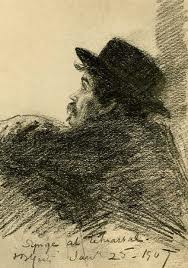 Sketch of JM Synge by John B Yeats
Good research is organised curiosity. The notes you accumulate along the way may eventually represent a forest, yet it will seem that you use only a few branches in the final book. Don’t look on the rest as waste. The research you have done will be in the timbre of your work even where it is not apparent in the content; in fact, research can become all too visible in a book and weaken the effect, like seeing the conjuror palm the card or catching a glimpse of the elegant model’s bra strap. Beware of exposing the architecture.
Do not confine your research to factual material. At certain times people speak more freely in fiction, not least in societies or periods such as the Victorian where repression is the norm and writers have to speak truth in disguise.
The most difficult decision in research is knowing when to stop. One route opens many others; the answer to the question you had yields more questions; or the material is just so damn interesting. In the age of high speed broadband, where you can be delivered in a trice to yet another treasure trove, it's especially tempting to sit, and sit, to sift the jewels ('Oh, my precious'). It’s important to recognize when exploration threatens to slide into procrastination, for then it’s time to write. For all our learning, we will only be credited for what we have ourselves contributed, not simply contemplated.
Writing
Writers do not exist who know exactly what they are going to say from beginning to end when they first sit down to craft the opening words of book or novel. Some will be highly organised with a detailed plot summary, time line, storyboard or chapter plan; others will have mapped out only the sketchiest outline, perhaps a paragraph or three of synopsis. However prepared, no writer is entirely in control at this stage.
The act of writing is a journey in the company of characters and ideas. You may think you know your characters at the outset - after all you have written their biographies and pinned them on the board in front of you - but you don’t. They will let you know more fully who they are as you move along together, just as real friends do on a long trip. Often they will take you to places you didn’t know you were going to visit. And as for the ideas you had when you started; prepare to shed some and take on board a host more that you will discover along the way. If you are new to the experience, prepare to be surprised how much you have to write to find out what you think.
Perhaps there should be a fourth R. Rewriting. At some point you are going to have to turn back and do it all again. Some writers wait until they put the final stop on the last sentence of their first draft, then pause before they begin the process of rewriting; others (myself included) constantly redraft as they go. The truth is, whatever our individual techniques, for most published writers six, seven, eight drafts and more are not unusual.
Master storyteller Stephen King in his book On Writing helpfully makes the distinction between writing with the door closed (first draft) and writing with the door open (rewriting). There is a heat and intimacy, a first flush, in your relations with your book which does not bear interference. But even lovers have to come out of the bedroom sometime. Getting the advice of others is like marriage counselling for your book - better make sure you consult with someone who has expertise on the subject.
Are you getting the idea yet that a writer’s life is a busy one? It is, and it is tricky to get the balance right between the three (or four) Rs to make it also a productive one. Nor are these all. Just as in school our children cannot become entirely rounded individuals by concentrating only on the 3Rs but must also explore other subjects and have time to play and socialise, so must we writers allow ourselves the opportunity to be fully human. Above all, we must find from somewhere the space for another 3Rs - Recreation, Rest and Recuperation. Oh, I wish had the time for one of those time management courses.