
Terri Windling's Blog, page 23
November 4, 2020
Thoughts on the morning after
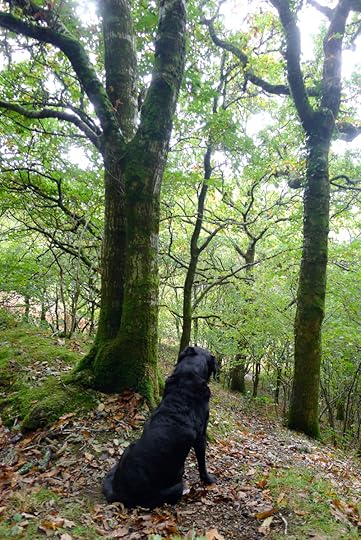
Stay centred. Stay calm. It's going to be a long week. As the US thrashes out the election, and the UK prepares for another long lockdown, the wild world is still around us...and art...and beauty...and mystery. Kindness matters more than ever.
"To open our eyes, to see with our inner fire and light, is what saves us," says Chickasaw poet and novelist Linda Hogan. "Even if it makes us vulnerable. Opening the eyes is the job of storytellers, witnesses, and the keepers of accounts. The stories we know and tell are reservoirs of light and fire that brighten and illuminate the darkness of human night, the unseen."
Stay safe. Stay strong.


November 3, 2020
Election Day
"What I want is so simple I almost can't say it: elementary kindness." - Barbara Kingsolver (Animal Dreams)
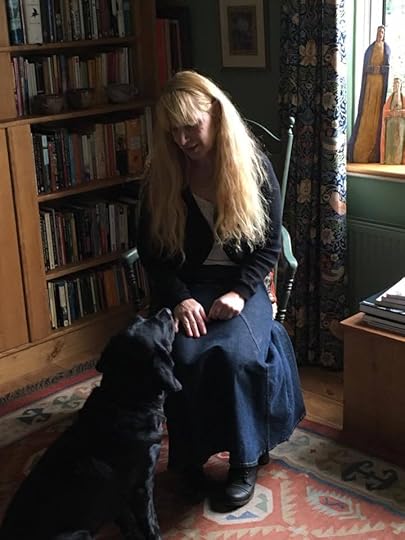
No matter what happens in the US election, it's going to be stressful in the days ahead. Please be kind to each other. Tilly and I send our love to American friends, family members, and colleagues in the Mythic Arts community.
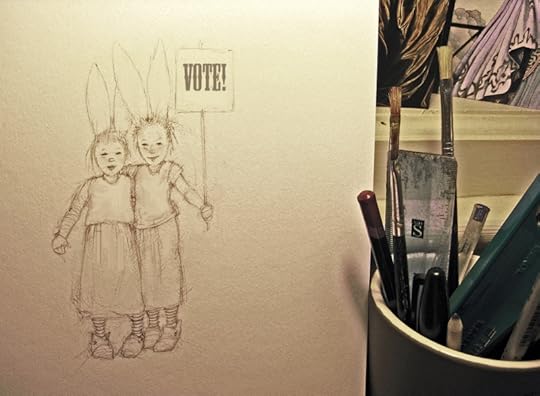
The ohotograph of me and Tilly was taken by Ellen Kushner. The little election day sketch, "Bunnies for Biden," is by me.
November 2, 2020
A ray of sunshine for Monday Morning
I'm unable to be in the studio today as Howard and I are still helping an elderly relative through a truly difficult situation, and it's taking up a great deal of time. In lieu of a "Monday tunes" post this week, I'm slipping online briefly to pass on this wonderful song discovered via Ellen Kushner.
As we head into a stressful week -- due to the US election, the impending UK lockdown, and rising pandemic numbers around the world -- this is music for the soul.
November 1, 2020
Twilight Tales

Between the setting of the sun and the black of night, dusk is a potent, magical time -- not just at Halloween/Samhain, but at every point in the calendar. The eerie, hushed, dimpsy of dusk (whether the long gloaming of a summer's eve, or a fleeting moment in the winter months) indicates, in the British folk tradition, that the gates between the our mortal world and the faery Otherworld stand ajar.

When I was a child, I longed to discover a doorway into Faerieland or a wardrobe leading to Narnia...and I actually attempted to find one, in the quiet twilight hour of a certain evening on the cusp of autumn. I remember it still: sitting huddled in the shadows, escaping the chaos of a troubled home, determined to conjure a portal to a magic realm by sheer force of will. I failed, of course. But like many children hungry for a deeper connection with the spirit-filled unknown, what I couldn't find in New Jersey that night I discovered in the pages of fantasy books...and, later, in the study of folklore and a life-time of wandering the landscape of myth.

My younger self may have been in the wrong place, but I'd instinctively managed to chose the right time, for twilight, in many mythic traditions, contains powerful enchantment.
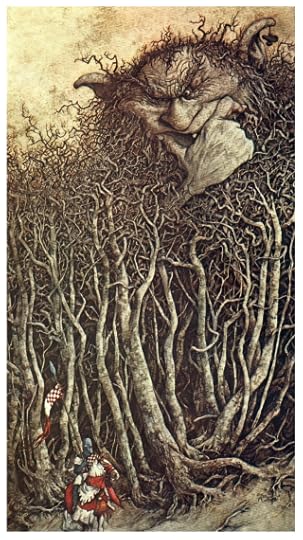 "Anytime that is 'betwixt and between' or transitional is the faeries' favorite time," says painter and folklorist Brian Froud. "They inhabit transitional spaces like the bottom of the garden: existing in the boundary between cultivation and wilderness. Or at the edges of water, the spot that is neither land nor lake, neither path nor pond. They relish moments of 'flux and flow': the hush between night and day, the times of change between one season and the next. They come when we are half-asleep. They come at moments when we least expect them; when our rational mind balances with the fluid irrational."
In myth, it is rarely easy to cross from the human world to the Otherlands, whatever those Otherlands may be: Faerie, Tir-na-nog, the Spirit World, the Underworld and the Realm of the Dead. Gods and guardians of the threshold are the border guards who will either stamp your passport or block your way -- such as Janus, the god of doorways, gateways, passages, beginnings and endings in Roman mythology; or Cardea, with whom he is often paired, the goddess of door-hinges, domestic thresholds, passageways of the body, and liminal states. According to Robert Graves' mad and brilliant book, The White Goddess, Cardea was propitiated at weddings by lighting torches of hawthorne, her sacred tree, for she had the power "to open what is shut; and shut what is open." (She was thus associated with virginity, virginity's end, and, consequently, with childbirth.)


A wide variety of guardian figures around the world (gods, faeries, supernatural spirits) regulate passage through mystic thresholds and access to sacred groves, glens, springs and wells. Some of them guard whole forests and mountains, while others protect individual trees, hills, stones, bridges, crossings, and crossroads. Myth and folklore tells us these guardians can be appeased, tricked, outwitted, even slain -- but usually at a price which is somewhat higher than one wants to pay.
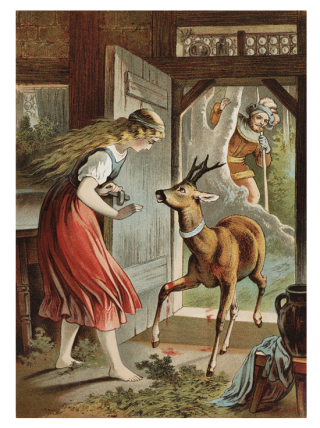 Sometimes it is the land itself preventing casual passage across mythic boundaries. In the Scottish ballad "Thomas the Rhymer," a river of human blood stands between Faerieland and the mortal world, and Thomas must pay the price of seven years servitude to make that crossing. In the German fairy tale "Brother and Sister," an enchanted stream must be crossed three times in the siblings' flight through the deep, dark woods. They are sternly warned not to stop and drink -- but the brother breaks this magical taboo and is transformed into a deer. In other tales, one princess must climb seven iron mountains to reach the land where her love is imprisoned; another must trick the winds into carrying her where her feet cannot. A magical hedge of thorns is the boundary between Sleeping Beauty's castle and the everyday world, and it cannot be penetrated until time, blood, and prophesy all stand aligned.


Trickster is a rare mythic figure who crosses borders and boundaries with ease. In his various guises around the globe (Hermes, Mercury, Loki, Legba, Maui, Monkey, Anansi, Coyote, Raven, Manabozho, Br'er Rabbit, Puck, etc.) he moves back and forth between the realms carrying messages, stealing fire and cattle, making mischief on both sides of the border, dancing in the borderlands between, and (in his role of Psychopomp) leading the dead in their journey to the Underworld or the Spirit Lands.
As Lewis Hyde points out: "A trickster does not live near the hearth; he does not live in the halls of justice, the soldier's tent, the shaman's hut, the monastery. He passes through each of these when there is a moment of silence, and he enlivens each with mischief, but he is not their guiding spirit. He is the spirit of the doorway leading out, and of the crossroad at the edge of town (the one where a little market springs up)....
"There are strangers on that road, and thieves, and in the underbrush a sly beast whose stomach has not heard about your letters of safe passage."


Many fantasy novels grow from the desire to go beyond the fields we know or to find the hidden door in the hedge. Unlike Tolkien's Lord of the Rings or Le Guin's Earthsea books, set entirely in invented landscapes, the protagonists of these tales cross over a border, or through a magical portal, traveling from our world to a strange Otherland. This device was used most famously in C.S. Lewis's The Lion, the Witch, and the Wardrobe (and his other Narnia books), but also in Andre Norton's Witchworld series, Pamela Dean's Secret Country books, Joyce Ballou Gregorian's Tredana trilogy, Charles de Lint's Moonheart, Phillip Pullman's His Dark Materials (although Lyra's Oxford isn't exactly our own), and numerous others.
There are also tales in which movement across the border goes in the opposite direction, spilling magic from the Otherworld into ours, such as Robert Holdstock's Mythago Wood series, Patricia McKillp's Solstice Wood, and William Hope Hodgson's The House on the Borderlands (1908). In his classic novel The King of Elfland's Daughter (1924), the great Irish fantasist Lord Dunsany focused on the borderland itself: the tricksy, shifting landscape squeezed between the mortal and magical realms...a device that was then irreverently updated by Bordertown, one of the earliest series in the "urban fantasy" genre, with its motorcycle-riding and rave-dancing elves, humans, and halflings in a crumbling city at the edge-lands of Faerie.

Magical realist works on the mainstream shelves also make use of border-crossing themes. Rick Collignon's The Journal of Antonio Montoya, Pat Mora's House of Houses, Alfredo Vea Jr.'s La Maravilla, Kathleen Alcala's Spirits of the Ordinary, and Susan Power's The Grass Dancer are all extraordinary books where the membrane between the worlds of the living and the dead is thin and torn; as is Leslie Marmon Silko's wide-ranging refutation of borders, The Almanac of the Dead. In Thomas King's Green Grass, Running Water, Trickster crosses easily from the mythic to modern world; while in Antelope Wife by Louise Erdrich these worlds are stitched together in the intricate patterns of Indian beadwork.

As myth, folklore, and fairy tales remind us, the border between any two things is a traditional place of enchantment: a bridge between two banks of a river; the silvery light between night and day; the liminal moment between dreaming and waking; the motion of shape-shifting transformation; and all those interstitial realms where cultures, myths, landscapes, languages, art forms, and genres meet.


We cross the border every time we step from the mundane world to the lands of myth; from mainstream culture to the pages of a mythological study or a magical tale. As a folklorist and fantasist, I cannot resist an unknown road or an open gate. I'm still that child at twilight on an autumn eve, willing magic into existence.
Words: The quote by Brian Froud is from a conversation I noted down when I was editing his book Good Faeries, Bad Faeries (Simon & Schuster, 1998). The quote by Lewis Hyde is from his excellent book Trickster Makes This World: Mischief, Myth, & Art (Farrar, Straus, & Giroux, 1998). All rights reserved.
Pictures: Art credits can be found in the picture captions. (Run your cursor over the images to see them.) The artists are John William Waterhouse, John Anster Fitzgerald, Brian Froud, Carl Offerdinger, Jayne Baynes, and Karina Plotnikova. All rights reserved by the artists.
October 31, 2020
Happy Halloween from Myth & Moor

In Celtic lore, October 31st is Samhain (All Hallow's Eve, or Halloween): the night when Arawn, lord of the Dead, rides the hills with his ghostly white hounds, and the Faery Court rides forth in stately procession across the land. In ancient times, hearth fires were smothered while bonfires blazed upon the hills, surrounded by circular trenches to protect all mortals from the faery host and the wandering spirits of the dead. In later centuries, Halloween turned into a night of revels for witches and gouls, eventually tamed into the modern holiday of costumes, tricks and treats.

Although the prospect of traffic between the living and the dead has often been feared, some cultures celebrated those special times when doors to the Underworld stood open. In Egypt, Osiris (god of the Netherworld, death, and resurrection) was drowned in the Nile by his brother Seth on the 17th of Athyr (November); each year on this night dead spirits were permitted to return to their homes, guided by the lamps of living relatives and honored by feasts.
 In Mexico, a similar tradition was born from a mix of indigenous folk beliefs and medieval Spanish Catholism, resulting in los Dias de Muertos (the Days of the Dead) -- a holiday still widely observed across Mexico and parts of the American South-West. The holiday varies from region to region but generally take place over the days of October 31st, November 1st, and November 2nd, celebrated with graveyard gatherings and Carnival-like processions in the streets. Within the house, an ofrenda or offering is painstakingly assembled on a lavishly decorated altar. Food, drink, clothes, tequila, cigarettes, chocolates and children's toys are set out for departed loved ones, surrounded by candles, flowers, palm leaves, tissue paper banners, and the smoke of copal incense. Golden paths of marigold petals are strewn from the altar to the street (sometimes all the way to the cemetary) to help the confused souls of the dead find their way back home.
According to Fredy Mendez, a Totonac man from Veracruz: "Between 31 October and 2 November, past generations were careful always to leave the front door open, so that the souls of the deceased could enter. My grandmother was constantly worried, and forever checking that the door had not been shut. Younger people are less concerned, but there is one rule we must obey: while the festival lasts, we treat all living beings with kindness. This includes dogs, cats, even flies or mosquitoes. If you should see a fly on the rim of a cup, don't frighten it away -- it is a dead relative who has returned. The dead come to eat tamales and to drink hot chocolate. What they take is vapor, or steam, from the food. They don't digest it physically: they extract the goodness from what we provide. This is an ancient belief. Each year we receive our relatives with joy. We sit near the altar to keep them company, just as we would if they were alive. At midday on 2 November the dead depart. Those who have been well received go laden with bananas, tamales, mole and good things. Those who have been poorly received go empty handed and grieving to the grave. Some people here have even seen them, and heard their lamentations."

In Greek mythology, Persephone regularly crosses the border between the living and the dead, dwelling half the year with her mother (the goddess Demeter) in the upper world, and half the year with her husband (Hades) in the realm of the dead below. In another Greek story, Orpheus follows his dead wife deep into Hades' realm, where he bargains for her life in return for a demonstration of his musical skills. Hades agrees to release the lovely Eurydice back to Orpheus, provided he leads his wife from the Underworld without looking back. During the journey, he cannot hear his wife's footsteps and so he breaks the taboo. Eurydice vanishes and the pathway to Land of the Dead is closed. A similar tale is told of Izanagi in Japanese lore, who attempts to reclaim his beloved Izanami from the Land of Shadows. He may take her back if he promises not to try to see Izanami's face -- but he breaks the taboo, and is horrified to discover a rotting corpse.
When we look at earlier Sumarian myth, we find the goddess Inana is more successful in bringing her lover, Dumuzi, back from the Underworld; in Babylonian myth, this role falls to Ishtar, rescuing her lover Tammuz: "If thou opens not the gate," she says to the seven gatekeepers of the world below, "I will smash the door, I will shatter the bolt, I will smash the doorpost, I will move the doors, I will raise up the dead, eating the living, so that the dead will outnumber the living." During the three days of Ishtar's descent, all sexual activity stops on earth. The third day of the drama is the Day of Joy, the time of ascent, resurrection and procreation, when the year begins anew.

Coyote, Hermes, Loki, Uncle Tompa and other Trickster figures from the mythic tradition have a special, uncanny ability to travel between mortal and immortal realms. In his brilliant book Trickster Makes This World: Michief, Myth, & Art, Lewis Hyde explains that Trickster is the lord of in-between:
 "He is the spirit of the doorway leading out, and the crossroads at the edge of town. He is the spirit of the road at dusk, the one that runs from one town to another and belongs to neither. Travellers used to mark such roads with cairns, each adding a stone to the pile in passing. The name Hermes once meant 'he of the stone heap,' which tells us that the cairn is more than a trail marker -- it is an altar to the forces that govern these spaces of heightened uncertainty. The road that Trickster travels is a spirit road as well as a road in fact. He is the adept who can move between heaven and earth, and between the living and the dead."
Trickster is one of the few who passes easily through the borderlands. The rest of us must confront the guardians who rise to bar the way: the gods, faeries, and supernatural spirits whose role is to help or hinder our passage over boundaries and through gates, thresholds, and liminal states of mind. In folk tales, guardians can be propitiated, appeased, outwitted, even slain -- but often at a price which is somewhat higher than one really wants to pay.
On Samhain, we cross from the old year to the new -- and that moment of crossing, as the clock strikes the midnight hour, is a time of powerful enchantment. For a blink of an eye we stand poised between two years, two tales, two worlds; between the living and the dead, the mortal and the fey. We must remember to give food to Hecate, wine to Janus, and flowers, songs, smoke, and dreams to the gate-keepers along the way. Shamans, mythic artists, and fantasy writers: they all cast paths of spells, stories, and marigold petals for us to follow, keeping us safe until the sun rises and the world begins anew.
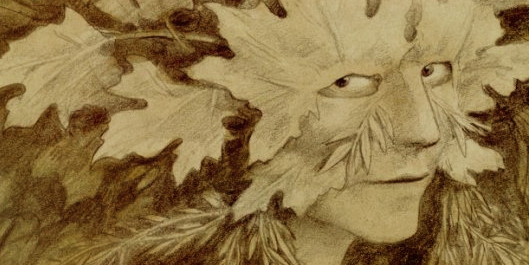
The art above is by Brian Froud, from The Land of Froud, Good Faeries/Bad Faeries, The Runes of Efland (with Ari Berk) and Trolls (with Wendy Froud); all rights reserved by the artist. Go here to see more of his work.
October 29, 2020
On a bleak, wet day in Devon
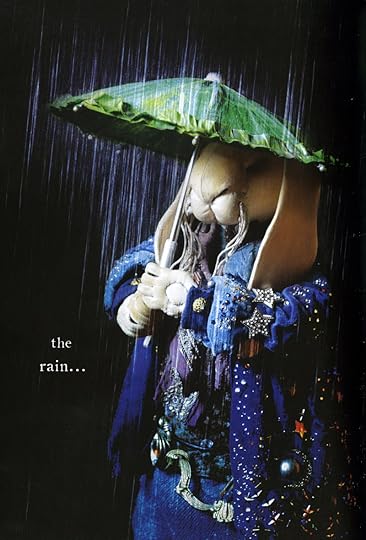
I'm afraid I have to step away from Myth & Moor today because of an overly-busy work schedule and some family matters that need immediate attention. I'll be back with Part II of the Art of Mr. Finch tomorrow (including more on the magical hare above), or Saturday at the latest. My apologies for the delay.
Until then, let me leave you with these words from novelist and poet Helen Dunmore (1952-2017), sent out to all of you immersed in creative work, perhaps facing a deadline or feeling overwhelmed in some other way:
"Don't worry about posterity -- as Larkin (no sentimentalist) observed, 'What will survive of us is love.' ''
October 28, 2020
Secret Threads
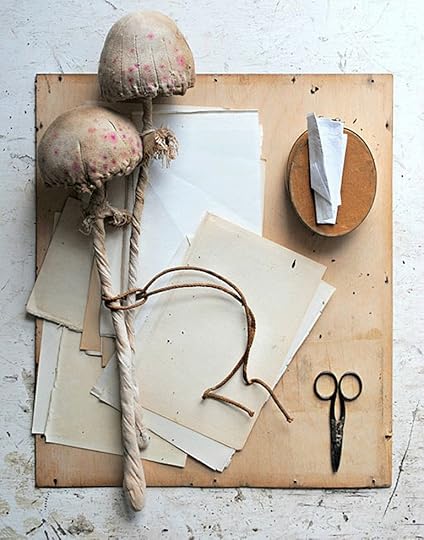
From The Problem With Pain by C.S. Lewis:
"You may have noticed that the books you really love are bound together by a secret thread. You know very well what is the common quality that makes you love them, though you cannot put it into words: but most of your friends do not see it at all, and often wonder why, liking this, you should also like that.
"Again, you have stood before some landscape, which seems to embody what you have been looking for all your life; and then turned to the friend at your side who appears to be seeing what you saw -- but at the first words a gulf yawns between you, and you realise that this landscape means something totally different to him, that he is pursuing an alien vision and cares nothing for the ineffable suggestion by which you are transported.
"Even in your hobbies, has there not always been some secret attraction which the others are curiously ignorant of -- something, not to be identified with, but always on the verge of breaking through, the smell of cut wood in the workshop or the clap-clap of water against the boat's side? Are not all lifelong friendships born at the moment when at last you meet another human being who has some inkling (but faint and uncertain even in the best) of that something which you were born desiring, and which, beneath the flux of other desires and in all the momentary silences between the louder passions, night and day, year by year, from childhood to old age, you are looking for, watching for, listening for?
"You have never had it. All the things that have ever deeply possessed your soul have been but hints of it -- tantalising glimpses, promises never quite fulfilled, echoes that died away just as they caught your ear. But if it should really become manifest -- if there ever came an echo that did not die away but swelled into the sound itself -- you would know it. Beyond all possibility of doubt you would say, 'Here at last is the thing I was made for.' "
This, to me, is what fantasy literature (and mythic arts) does best: it tugs on those secret threads, evokes bright worlds half-glimpsed at the corner of our eyes...where the heart's desire lies just ahead, but always just ahead, beyond the next turn of the page.
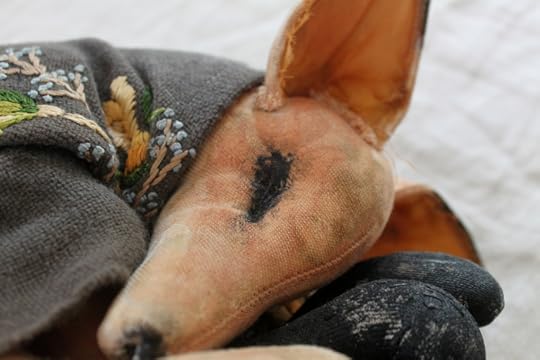
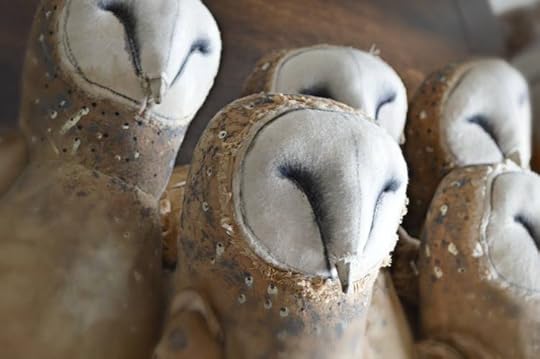
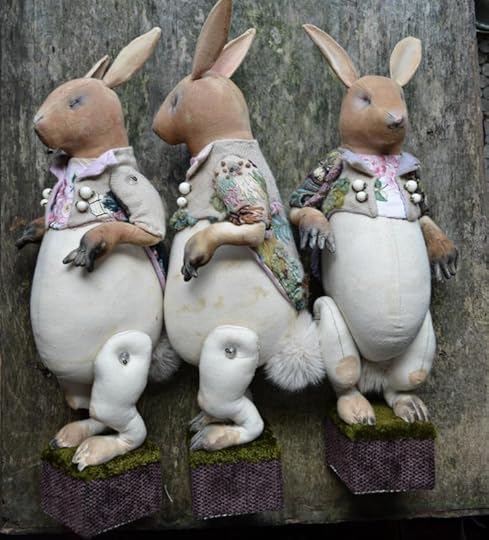
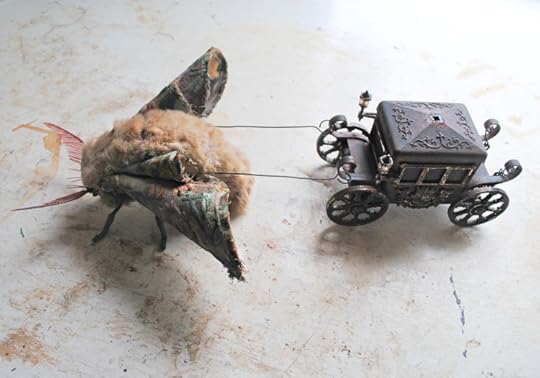
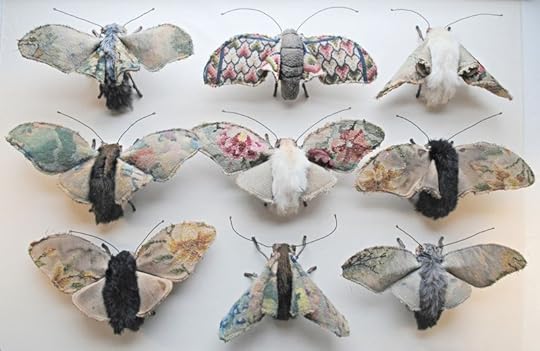
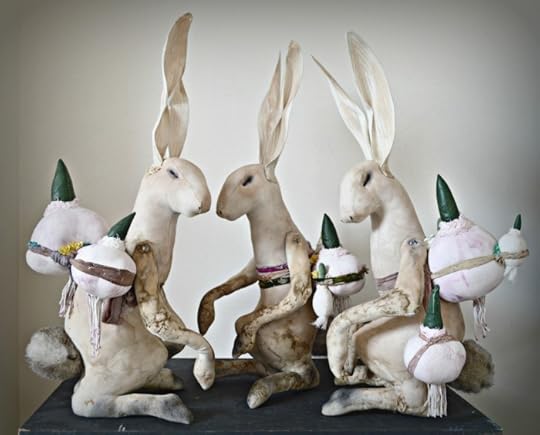
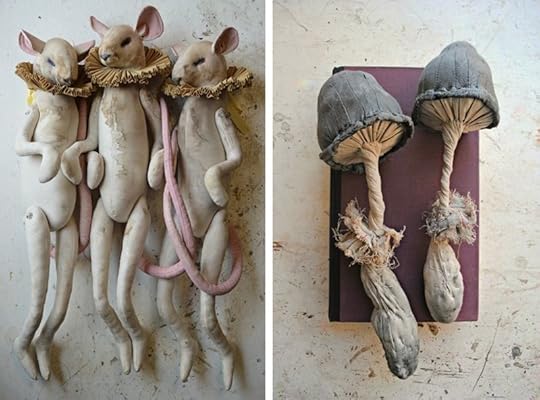
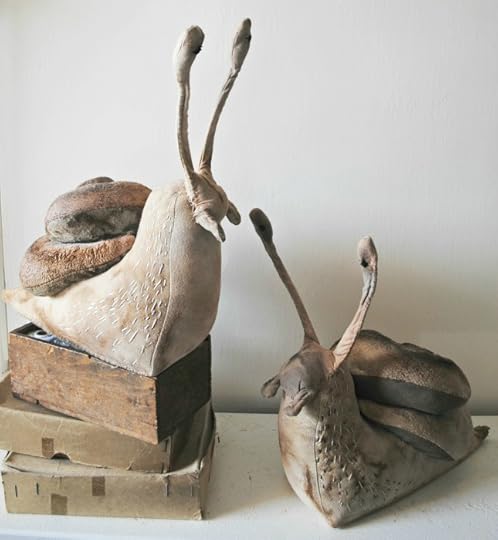
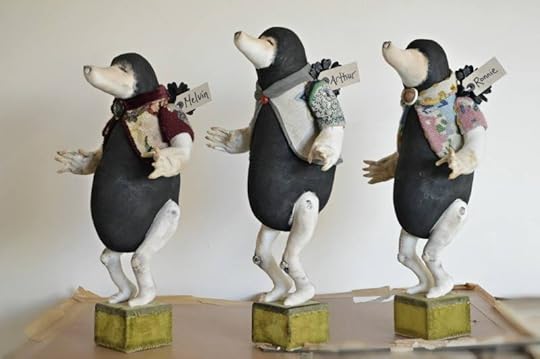
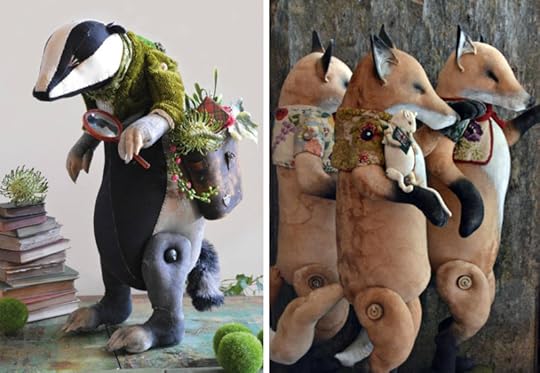
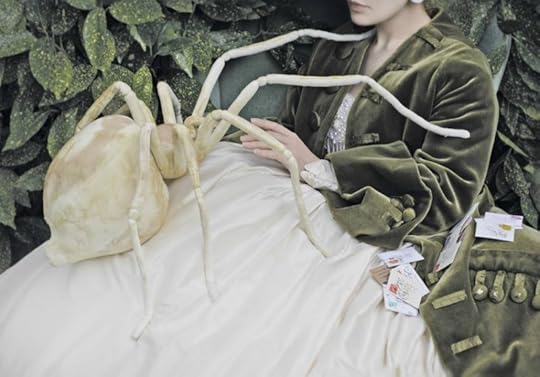
The gorgeous soft sculptures here are by Mr. Finch, a textile artist in Leeds, near the Yorkshire Dales, with a name straight out of a fairy tale.
"My main inspirations come from nature," he writes. "Flowers, insects and birds really fascinate me with their amazing life cycles and extraordinary nests and behaviour. British folklore is also so beautifully rich in fabulous stories and warnings and never ceases to be at the heart of what I make. Shape shifting witches, moon gazing hares and a smartly dressed devil ready to invite you to stray from the path. Humanizing animals with shoes and clothes is something I���ve always done and I imagine them to come alive at night. Getting dressed and helping an elderly shoemaker or the tired housewife.
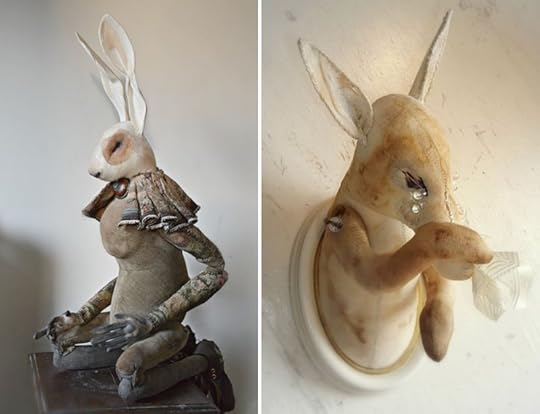
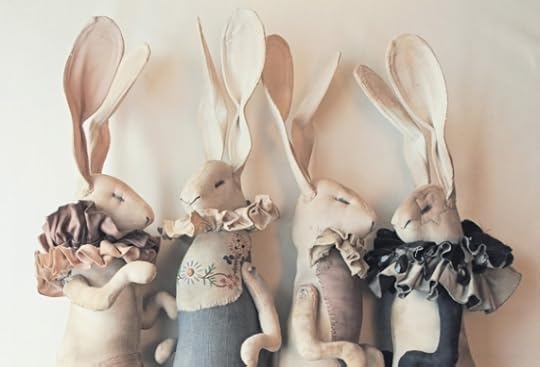
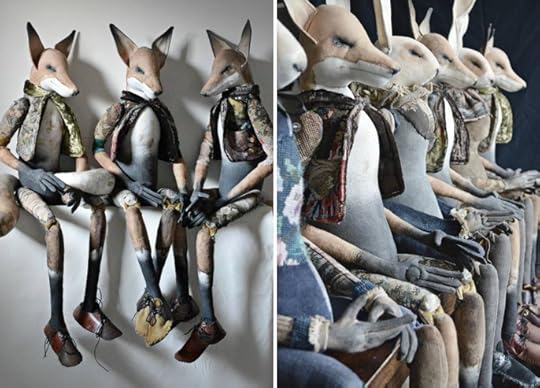
"Most of my pieces use recycled materials, not only as an ethical statement, but I believe they add more authenticity and charm. A story sewn in, woven in. Velvet curtains from an old hotel, a threadbare wedding dress and a vintage apron become birds and beasts, looking for new owners and adventures to have. Storytelling creatures for people who are also a little lost, found and forgotten���."
Visit Mr. Finch's website see his wondrous work. I love it deeply, and we'll be looking more tomorrow.
The passage by C.S. Lewis quoted above is from The Problem of Pain, published in The Centenary Press' "Christian Challenge" series in 1940. I first read it for a class on Lewis way back in my university days (as a non-Christian, it's not a book I would have been likely to pick up myself), and though it is indeed quite theological, it contains interesting passages on a number of other subjects too. In class, we read it in conjunction with Lewis' Grief Observed, about the death of his wife, which was a fascinating pairing. All rights to the text and art above reserved by the C.S. Lewis estate and Mr. Finch.
October 27, 2020
Sheltering in books
I've only just discovered Survival Lesson by Alice Hoffman (2013), a slim, wise, beautiful volume written after the author's treatment for breast cancer. Her advice for coping with fearsome passages of life includes turning to books for solace and escape -- a sentiment with which, as a fellow cancer survivor, I heartily concur. Revisit the stories you loved as a child, Hoffman writes:
" -- you'll love them even more now. Start with Andrew Lang's fairy books, books sorted by color. Red, Lilac, and Blue are my favorites. Sometimes I think we can learn everything we need to know about the world when we read fairy tales. Be careful, be fearless, be honest, leave a trail of crumbs to lead you home again.
"In a novel you'll find yourself in a world of possibilities. You'll find shelter there. I spent an entire summer reading Ray Bradbury. I was twelve, which can be a terrible year. It's the summer when you suddenly know you will never be a child again. Being an adult may not look so good. The world that awaits you is scary and hugh. This is when you want to stop time, be a kid, ride your bike. But everyone around you is growing up, and you have to, too.
"I remained in Bradbury's world for as long as possible. It was a place where it was possible to recognize good from evil, darkness from light. I was a cynical kid, and I didn't have much faith in the world, but I trusted Ray Bradbury. I took everything he said personally. Often I would read until the fireflies came out.
"I read because I wanted to escape sadness, which was a big theme in my family. My great-grandfather had been forced into the czar's army, where he served for twenty years, before he shot off his toes with a rifle so they would finally let him go. Because we were Russian, sadness came naturally to us. But so did reading. In my family, a book was a life raft.
"I've often wondered if I spent too much time inside of books. If perhaps I ended up getting lost in there. I feared that reading, and later writing, stopped me from living a full life in the real world. I still don't know the answer to this, but I'm not sure I would have gotten past being twelve without Ray Bradbury, and I know that imagining the plot for my novel The River King during a lengthy bone scan helped me get through that test. The hospital faded and I was walking through a small town where I knew everyone. I slipped into the river, past water lilies, past the muddy shore. Here was my life raft. A book."
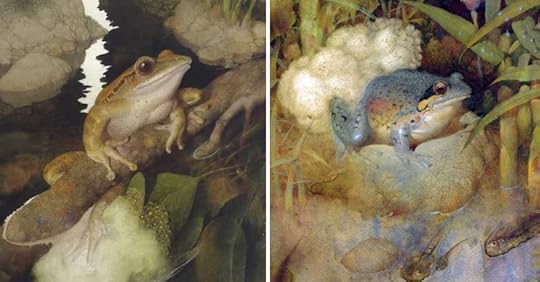
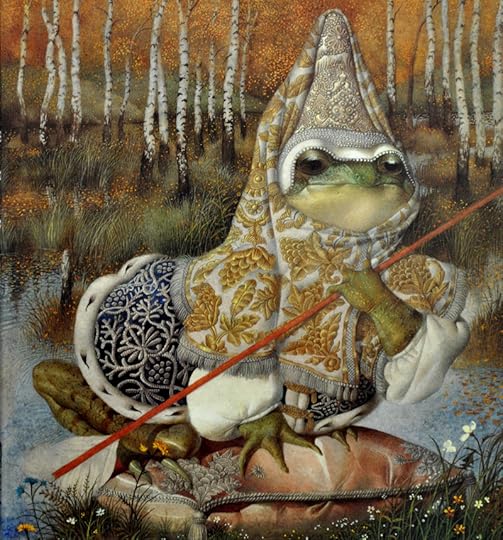
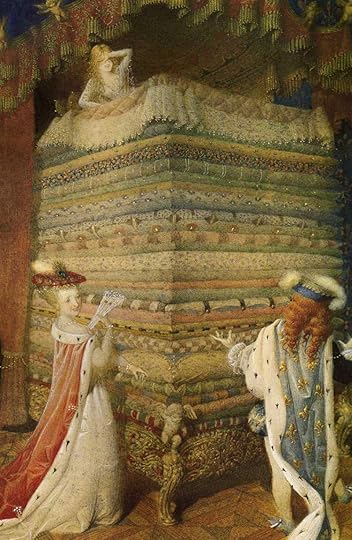
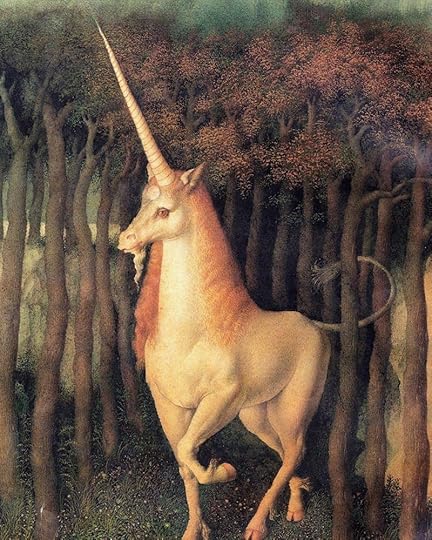
The art today is by the great Russian-American book artist Gennady Spirin. He was born and raised in the former Soviet Union, studied at the Academy of Arts in Moscow and Moscow Stroganov Institute of Art, and then worked for Soviet and European publishers before moving his family to the United States. Spirin's sumptuous watercolours -- reminiscent of traditional Russian folk art and paintings of the Northern Renaissance -- grace his numerous, award-winning books for children, including Boots and the Glass Mountain, The Children of Lir, The Frog Princess, The Tale of Tsar Saltan, The Fool and the Fish, Gulliver���s Travels in Lilliput, Kashtanka, The Sea King���s Daughter, Perceval, and The Tale of the Fire Bird.
To learn more about the artist, go here.
The passage above is quoted from Survival Lessons by Alice Hoffman (Open Road, 2013). All rights to the text and art in this post are reserved by the author and artist.
October 26, 2020
Tunes for a Monday Morning
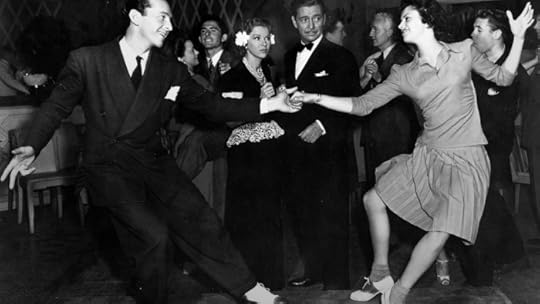
In the middle of a generally stressful year we've had an incredibly stressful week: supporting an elderly family member through a difficult situation, waiting for another family member's Covid test results (after a housemate tested positive for the virus), while also waiting for tests to tell us whether the scary lump on Tilly's leg was cancer or not. I can usually stay calm in a storm (I've weathered enough of them by now), but I admit that by week's end I was shaking with exhaustion and jumping at my own shadow. I'm greatly relieved to be able to report that the Covid test was Negative, and Tilly's lump is benign; so now we can focus on resolving the first problem, and getting back to normal life, or what passes for normal life in a global pandemic.
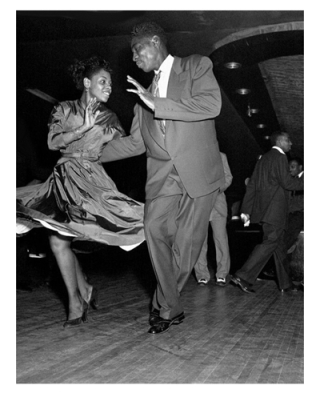 For me, that means not only re-finding calm and quiet but also simple pleasures and moments of joy. One of the things that gave me joy, pre-pandemic, was going to weekly lindy-hop lessons (when health allowed), and monthly swing dances in Exeter -- where a variety of Big Bands played, and people of all ages danced the night away, many of them dressed in clothes of the early swing & jive era: the 1930s, '40s, and '50s. All of that stopped when Covid hit, but Howard and I are keeping up our lindy-hop practice with regular sessions of dancing in the kitchen (the one room with a wooden floor and no rug). The moment I hear swing music playing, my spirits start to lift.
Today's music goes out to fellow dancers, and to everyone else who could use a lift too....
Above: "Bring Me Sunshine" performed by The Jive Aces, a popular jive & swing band here in the UK. Yes, swing started in America, but it was brought over to England by American GIs during World War II and has spread all around the world. The dancing in this video, with its athletic lifts and aerials, is a mix of jive and swing.
Below: "Bright Lights Late Nights" performed by The Speakeasies' Swing Band, from Thessalon��ki, Greece, with classic lindy-hop dance moves. This is the style of swing dancing that goes on in our kitchen.
Above: "Bei Mir Bist Du Schoen," a favourite song of mine from The Hot Sardines of New York City. You don't have to learn swing (or tap) dancing to enjoy the music....
Below: "Healing Dance" by Swingrowers, an electro-swing band from Palermo, Italy, with Sicilian rapper Davide Shorty.
Above: "Dramophone" by Caravan Palace, an electro-swing band from Paris. Electro-swing often involves more individual dancing than couple dancing, but incorporates many classic swing, jazz, and Charleston moves.
Below, ending as we started with The Jive Aces...and a pair of terrific lindy-hoppers. You're never too old to dance.
Oh heck, here's one more:
"Diga Diga Doo" by Skeedaddle, a swing & gypsy jazz band here in Devon. The violinist is Howard's cousin, Becky Doe; and the bass player is our friend and Chagford neighbour Tim Heming. They're a great band to dance to!
October 25, 2020
Built by books
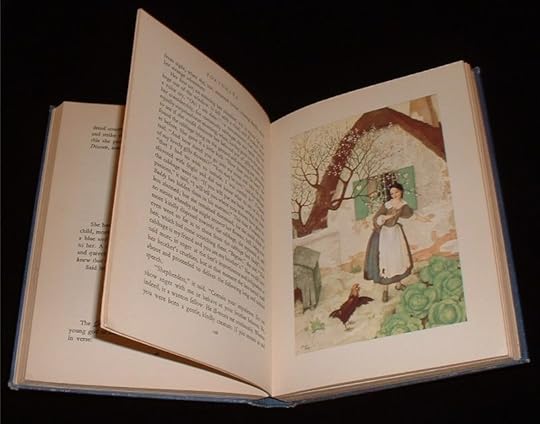
In her 2012 novel How it All Began, Penelope Lively describes her central character, Charlotte Rainsford, in a manner that many book lovers can relate to:
"Forever, reading has been central, the necessary fix, the support system," writes Lively. "[Charlotte's] life has been informed by reading. She has read not just for distraction, sustenance, to pass the time, but she has read in a state of primal innocence, reading for enlightenment, for instruction, even. She has read to find out how sex works, how babies are born, she has read to discover what it is to be good, or bad; she has read to find out if things are the same for others as they are for her ��� then, discovering that frequently they are not, she has read to find out what it is that other people experience that she is missing.
"Specifically, she read bits of the Old Testament when she was ten because of all that stuff about issues of blood, and the things thou shalt not do with thy neighbour���s wife. All of this was confusing rather than enlightening. She got hold of a copy of Fanny Hill when she was eighteen, and was aghast, but also intrigued.
"She read Rosamond Lehmann when she was nineteen, because her heart had been broken. She saw that such suffering is perhaps routine, and, while not consoled, became more stoical.
"She read Saul Bellow, in her thirties, because she wanted to know how it is to be American. After reading, she wondered if she was any wiser, and read Updike, Roth, Mary McCarthy and Alison Lurie in further pursuit of
the matter. She read to find out what it was like to be French or Russian in the nineteenth century, to be a rich New Yorker then, or a Midwestern pioneer. She read to discover how not to be Charlotte, how to escape the prison of her own mind, how to expand, and experience.
"Thus has reading wound in with living, each a complement to the other. Charlotte knows herself to ride upon a great sea of words, of language, of stories and situations and information, of knowledge, some of which she can summon up, much of which is half lost, but is in there somewhere, and has had an effect on who she is and how she thinks. She is as much a product of what she has read as of the way in which she has lived; she is like millions of others built by books, for whom books are an essential foodstuff, who could starve without."
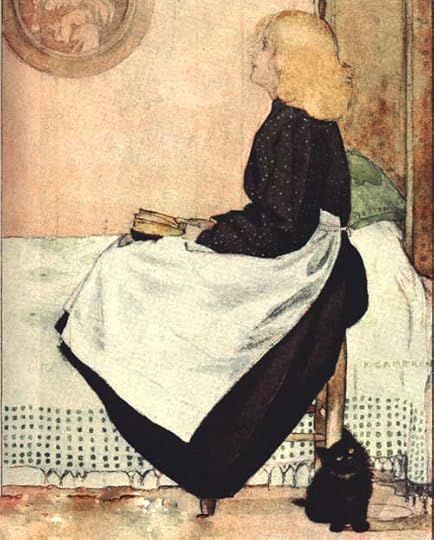
���I need fiction, I am an addict," Francis Spufford declared in his poignant memoir, The Child That Books Built. "This is not a figure of speech. I don���t quite read a novel a day, but I certainly read some of a novel every day, and usually some of several. There is always a heap of opened paperbacks face down near the bed, always something current on the kitchen table to reach for over coffee when I wake up. Colonies of prose have formed in the bathroom and in the dimness of the upstairs landing, so that I don���t go without text even in the leftover spaces of the house where I spend least time���.I can be happy with an essay or a history if it interlaces like a narrative, if its author uses fact or impression to make a story-like sense, but fiction is kind, fiction is the true stuff....I don���t give it up. It is entwined too deeply within my history, it has been forming the way I see for too long."
"Reading was my escape and my comfort, " Paul Aster concurs, "my consolation, my stimulant of choice: reading for the pure pleasure of it, for the beautiful stillness that surrounds you when you hear an author's words reverberating in your head.���
"When I got [my] library card, that was when my life began," says Rita Mae Brown, and I know just what she means.
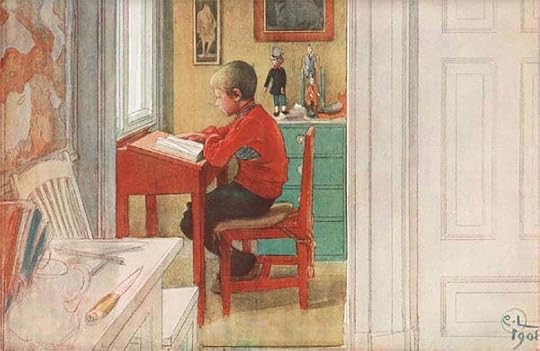
Thus I've been surprised (and a little alarmed) recently by conversations in several of the different spheres I inhabit in which smart, creative people admit that they haven't read many books (in some cases, any books) in a long while. My god, I keep thinking, if artistic and literary friends aren't reading, what hope for the rest of our culture?
Not reading is something I can't really fathom. I'm not boasting here; my reading habit is compulsive, like Spufford's, bordering on obsession, and I'd spend my last dollar on a book, not food. (I know this, because I occasionally did so in the difficult days of my youth.) I cannot imagine how I would survive were I confined to this one single life, this one problematic body, this one limited, fragile consciousness, instead of roaming the wide, wondrous world through the magic of ink and the alphabet.
There's a famous scene (famous to bookish folks, anyway) in the American television show The Gilmore Girls in which teenaged Rory fills her backpack with books to read before catching the bus to school...explaining to her mother that she needs a pack big enough for all of them because each one -- 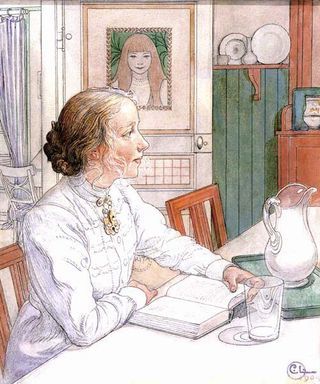 a novel, a biography, short stories, essays, etc. -- is necessary for different reading moods. Yes! My housemate found this hilarious, since it was the way I loaded my backpack too (in the days before e-books, of course). One of my great fears in life is being stuck somewhere with nothing to read. Oh, the horror!
"Writing is a form of therapy," said Graham Greene; "sometimes I wonder how all those who do not write, compose, or paint can manage to escape the madness, melancholia, the panic and fear which is inherent in a human situation." Greene's words can apply to reading too--
I was about to write: "since I don't know how people can cope without reading." But in fact I do know, for I once spent several months unable to read (or to write) while recovering from meningitis, which affected both my vision and my ability to concentrate on the linear unfolding of a text. Even audiobooks were too hard to follow; I was reduced to watching old episodes of Buffy and Angel: simple, visual, and familiar enough that I could waver in and out of the story. I recall saying over and over to friends: I just don't feel like me. Who am I, if I'm not reading or writing? It was, I am very glad to say, a temporary experience -- but profoundly unsettling, and just plain profound. It is frightening, yes, but also enlightening when life strips away those things that we most depend on...and then gives them back again.
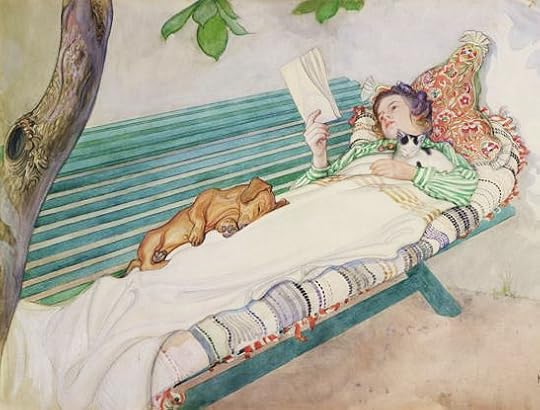
Even stranger than hearing that literary friends are no longer reading (or read only online) is meeting aspiring writers who rarely read...and this happens much more often than you'd think. The key word is "aspiring," however -- for I can't recall a single one of the many successful writers I've edited over the years who wasn't also a passionate and voracious reader of books, of one sort or another. Such alien creatures must exist, somewhere, since all things are possible under the sun, but I don't know how I'd work with a non-bookish writer. What common language would we speak?
Of course, sometimes when a novelist is at work, he or she will avoid reading some books or authors in order to avoid certain kinds of influence (a rhythm of prose that interfere with one's own, for example) -- although this varies from writer to writer, and also between one stage of writing and another. For me, when I'm on a first or last draft, I tend to limit the amount of fiction I'm reading (making up for it with nonfiction instead) so that my narrative voice is not overlayed by another fiction writer's style...but for in-between drafts I can, and do, read pretty much anything. I'm not worried, then, about influence; on the contrary, I seek it out: learning this from one writer and that from another; inspired by good books, educated (on what to avoid) by bad ones; filling the well so that the internal Waters of Story will never run dry.
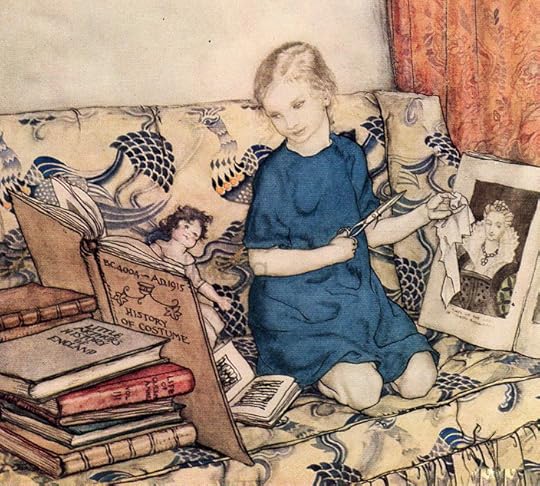
"A great painting, or symphony, or play, doesn't diminish us," assures Madeleine L'Engle, "but enlarges us, and we, too, want to make our own cry of affirmation to the power of creation behind the universe. This surge of creativity has nothing to do with competition, or degree of talent. When I hear a superb pianist, I can't wait to get to my own piano, and I play about as well now as I did when I was ten. A great novel, rather than discouraging me, simply makes me want to write. This response on the part of any artist is the need to make incarnate the new awareness we have been granted through the genius of someone else."
"Read, read, read," advised William Faulkner. "Read everything -- trash, classics, good and bad, and see how they do it. Just like a carpenter who works as an apprentice and studies the master. Read! You'll absorb it. Then write. If it's good, you'll find out. If it's not, throw it out of the window."
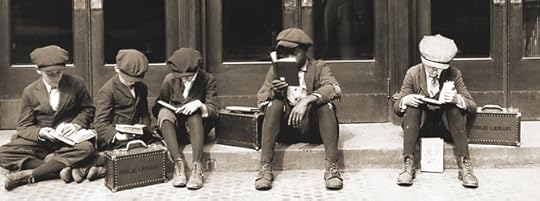
"Reading is the sole means by which we slip, involuntarily, often helplessly, into another's skin, another's voice, another's soul," says Joyce Carol Oates."
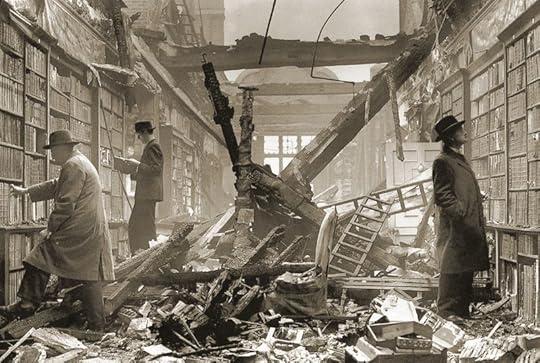
Or as Betty Smith wrote in A Tree Grows in Brooklyn (1943): "The world was hers for the reading."
Indeed it was. And still is.
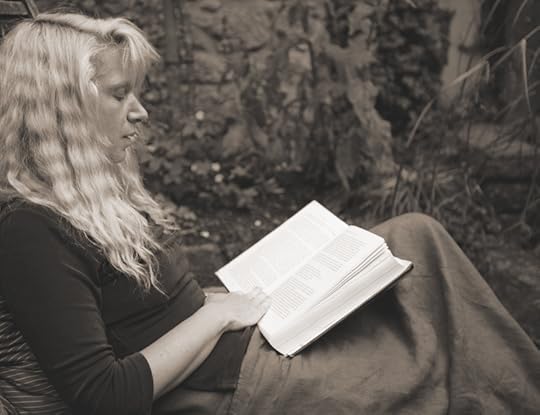
Images above: "The Fairy Garland" and "Little Girl in a Book" by Edmund Dulac (1882-1953), a pen & ink drawing by Arthur Rackham (1867-1939), The Good Book" by Katherine Cameron (1874-1965), three paintings by Carl Larsson (1853-1919) , "Making Clothes for Her Dolls" by Arthur Rackham, and three photgraphs: boys in front of the Public Library in Cincinatti, Ohio (exact date unknown), the Holland House Library in London during the Blitz (1940), and reading in the garden at Weaver's Cottage (2007, photograph by Alan Lee).
Terri Windling's Blog

- Terri Windling's profile
- 710 followers

