
Terri Windling's Blog, page 21
December 31, 2020
At the end of a very long year...
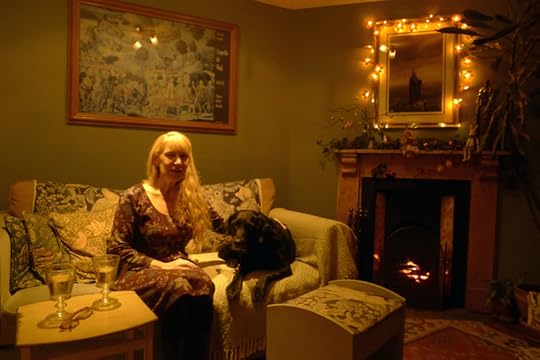
May the new year ahead be magical, transformational, and wildly creative, but also calm and thoughtful, harmonious and balanced. May your pathway lie clear, your desk clean and ready, with the tools that you need always right near at hand. May your body and mind and spirit be strong for the things that you know in your heart must do (and may this be the year that you finally do them). May your work go well, and your rest time too. May problems be fewer and friends be many. May old hurt soften and old grief lighten. May life, art, and love never fail to surprise you.
With love from me and the hound.


December 25, 2020
Happy Holidays from Myth & Moor
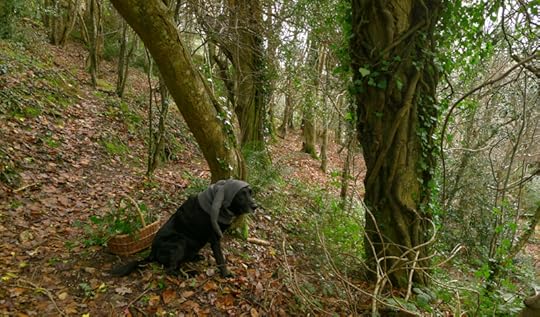
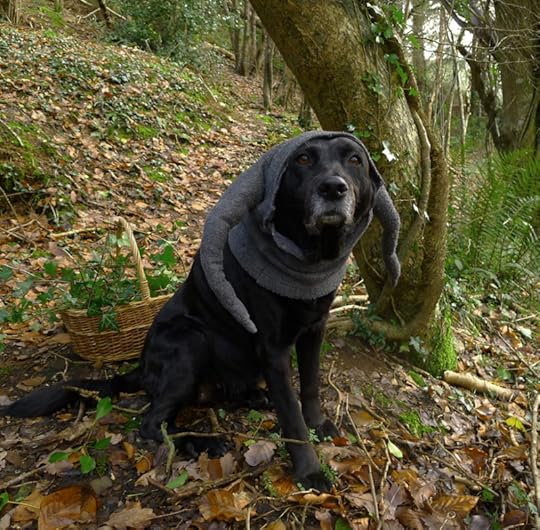
Tilly the Yuletide Elf and I wish you a merry Christmas, blessed Yule, and wonderful winter holidays.
December 24, 2020
The folklore of winter

As Christmas approaches, I'm been asked to re-post this piece on the tales and folk customs of winter holiday season.....
A cold wind howls, stripping leaves off of the trees, and the pathways through the hills are laced with frost. It's time to admit that winter is truly here, and it's here to stay. But Howard keeps the old Rayburn stove in the kitchen well fed, so our wind-battered little house at the edge of the village is cozy and warm. Our Solstice decorations are up, and tonight I'll make a second batch of kiffles: the Christmas cookies passed on through generations of women in my mother's Pennsylvania Dutch family...carried now to England and passed on to our daughter, who may one day pass it to children of her own.

My personal tradition is to talk to those women of the past generations as I roll out the kiffle dough and cut, fill, roll, and shape each cookie: to my mother, grandmother, and old great-aunts (all of whom have passed on now)...and further back, to the women in the family line that I never knew.


Kiffles are a labor-intensive process (as so many of those fine old recipes were), so I have plenty of time to tell the Grandmothers news and stories of the year gone by. This annual ritual centers me in time, place, lineage, and history; it keeps my world turning through the seasons, as all storytelling is said to do. Indeed, in some traditions there are stories that can only be told in the wintertime.

Here in Devon, there are certain "piskie" tales told only in the winter months -- after the harvest is safely gathered in and the faery rites of Samhain have passed. In previous centuries, throughout the countryside families and neighbors gathered around the hearthfire during the long, dark hours of the winter season, 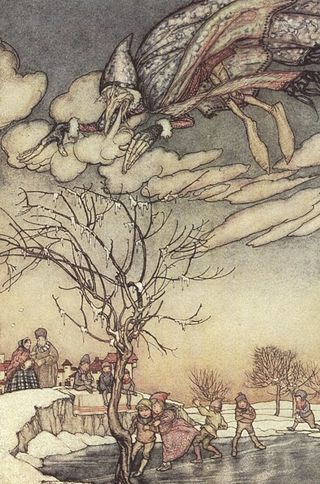 gossiping and telling stories as they labored by candle, lamp, and firelight. The "women's work" of carding, spinning, and sewing was once so entwined with storytelling that Old Mother Goose was commonly pictured by the hearth, distaff in hand.
In the Celtic region of Brittany, the season for storytelling begins in November (the Black Month of Toussaint), goes on through December (the Very Black Month), and ends at Christmas. (A.S. Byatt, you may recall, drew on this tradition in her wonderful novel Possession.) In early America, some of the Puritan groups which forbade the "idle gossip" of storytelling relaxed these restraints at the dark of the year, from which comes a tradition of religious and miracle tales of a uniquely American stamp: Old World folktales transplanted to the New and given a thin Christian gloss. Among a number of the different Native American nations across the continent, winter is also considered the appropriate time for certain modes of storytelling: a time when long myth cycles are told and learned and passed through the generations. Trickster stories are among the tales believed to hasten the coming of spring. Among many tribes, Coyote stories must only be told in the dark winter months; at any other time, such tales risk offending this trickster, or drawing his capricious attention.

In myth cycles to be found around the globe, the death of the year in winter was echoed by the death and rebirth of the Winter King (also called the Sun King, or Year King), a consort of the Great Goddess 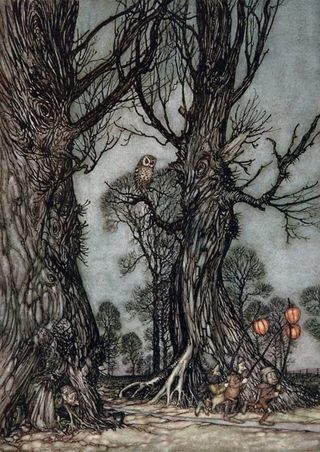 (representing the earth's fertility) in her local guise. The rebirth or resurrection of her consort (representing the sun, sky, or quickening winds) not only brought light back to the world, turning the seasons from winter to spring, but also marked a time of new beginnings, cleansing the soul of sins and sicknesses accumulated in the twelve months passed. Solstice celebrations of the ancient world included the carnival revels of Roman Saturnalia (December 17-24), the Anglo-Saxon vigil of The Night of the Mother to renew the earth's fertility (December 24th), the Yule feasts of the Norse honoring the One-Eyed God and the spirits of the dead (December 25), the Persian Mithric festival called The Birthday of the Unconquered Sun (December 25th), and the more recent Christian holiday of Christmas, marking the birth of the Lord of Light (December 25th).

Many symbols we associate with Christmas today actually come from older ceremonies of the Solstice season. Mistletoe, holly, and ivy, for instance, were gathered in their magical potency by moonlight on Winter Solstice Eve, then used throughout the year in Celtic, Baltic and Germanic rites. The decoration of evergreen trees can be found in a number of older traditions: in rituals staged in decorated pine groves (the pinea silvea) of the Great Goddess; in the Roman custom of dedicating a pine tree to Attis on Winter Solstice Day; and in the candlelit trees of Norse Yule celebrations, honoring Frey and Freyja in their aspects of Hunter, Huntress, and Protectors of Forests. The Yule Log is a direct descendant from Norse and Anglo-Saxon rites; and caroling, pageantry, mummers plays, eating plum puddings, and exchanging gifts are all elements of Solstice celebrations handed down from the pre-Christian world.
Even the story of the virgin birth of a Divine, Heroic or Sacrificial Son is not a uniquely Christian legend, but one found in cultures all around the globe -- from the myths of Asia, Africa and old Europe to Native American tales. In ancient Syria, for example, a feast on the 25th of December celebrated the Nativity of the Sun; at midnight the sun was born in the form of a child to the Virgin Queen of Heaven, an aspect of the the goddess Astarte.

Likewise, it is interesting to note that the date chosen for New Year's Day in the Western world is a relatively modern invention. When Julius Caesar revised the Roman calendar in 46 BC, he chose January 1 -- following the riotous celebrations of Saturnalia -- as the official beginning of the year. Early Christians condemned the date as pagan, tied to licentious practices, and much of Europe resisted the Julian calendar until the 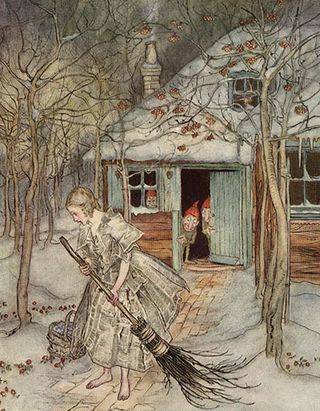 Gregorian reforms in the 16th century; instead, they celebrated New Year's Day on the 25th of December, the 21st of March, or various other dates. (England first adopted January 1 as New Year's Day in 1752).
The Chinese, Jewish, Wiccan and other calendars use different dates as the start of the year, and do not, of course, count their years from the date of Christ's birth. Yet such is the power of ritual and myth that January 1st is now a potent date to us, a demarcation line drawn between the familiar past and the unknowable future. Whatever calendar you use, the transition from one year into the next is the traditional time to take stock of one's life -- to say goodbye to all that has passed and prepare for a new life ahead. The Year King is symbolically slain, the sun departs, and the natural world goes dark. Rituals, dances, pageants, and spiritual vigils are enacted in lands around the world to propitiate the sun's return and keep the great wheel of the seasons rolling.


Special foods are eaten on New Year's Day to ensure fertility, luck, wealth, and joy in the year to come: pancakes in France, rice cakes in Ceylon, new grains in India, and cake shaped as boar in Estonia and Sweden, among many others. In my family, we ate the last of those scrumptious kiffles...if they'd managed to last that long. They could not, by tradition, be made again before December of the following year, and so the last bite was always a little sad (and especially delicious). The Christmas tree and decorations were taken down on New Year's Day, and the house was thoroughly cleaned and swept: this was another Pennsylvania Dutch custom, brushing out any bad luck lingering from the year behind, making way for good luck to come.
May you have a lovely winter holiday, in whatever tradition you celebrate, full of all the magic of home and hearth, of oven and table, and of the wild wood beyond.
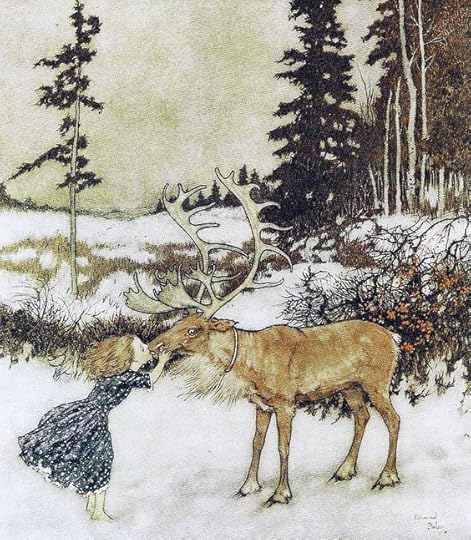


The paintings above are by three great artists of the Golden Age of Book illustration: Arthur Rackham (1867-1939), Edmund Dulac (1882-1953), and Charles Robinson (1870-1937). You'll find titles in the picture captions. (Run your cursor over the images to see them.) I recommend a related article by Derek Johnstone, published in The Conversation: "Why Ghosts Haunt England at Christmas But Steer Clear of America." Also, don't miss "Father Christmas: A New Tale of the North," a perfectly magical story by Charles Vess.
December 21, 2020
On Winter Solstice
"Winter is the time for comfort, for good food and warmth, for the touch of a friendly hand and for a talk beside the fire: it is the time for home." - Edith Sitwell
"Winter is when I reorganise my bookshelves and read all the books I acquired in the previous year and failed to actually read. It is also the time when I reread beloved novels, for the pleasure of reacquainting myself with old friends. In summer, I want big, splashy ideas and trashy page-turners, devoured while lounging in a garden chair or perching on one of the breakwaters on the beach. In winter, I want concepts to chew over in a pool of lamplight -- slow, spiritual reading, a reinforcement of the soul. Winter is a time for libraries, the muffled quiet of bookstacks and the scent of old pages and dust. In winter, I can spend hours in silent pursuit of a half-understood concept or a detail of history. There is nowhere else to be, after all." - Katherine May (Wintering)
''In seed time learn, in harvest teach, in winter enjoy.'' - William Blake
Wherever you enjoy these dark days best -- among books, outdoors, curled up in your quilts, drinking single-malt whiskey in front of the hearth-fire -- I wish you warmth, tranquility, strength, and the ancient blessings of the light returning.
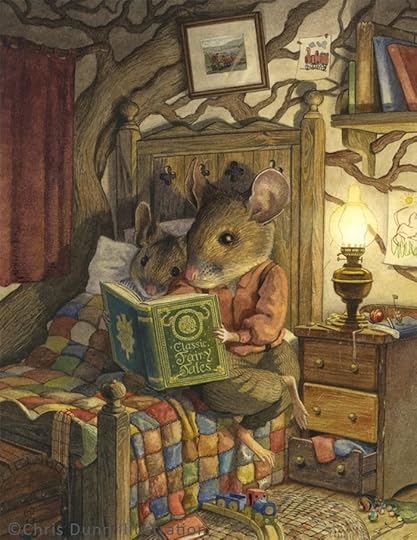
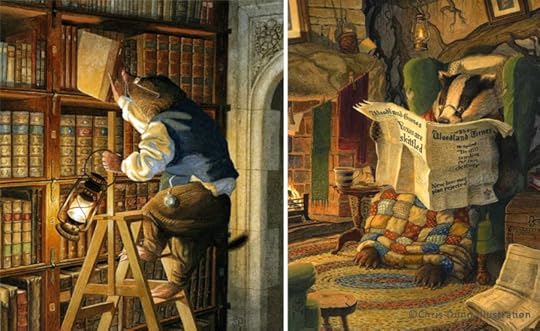
The lovely illustrations above are by Chris Dunn, who lives and works in Wiltshire. To see more of his art, please go here.
December 14, 2020
Tunes for a Monday Morning
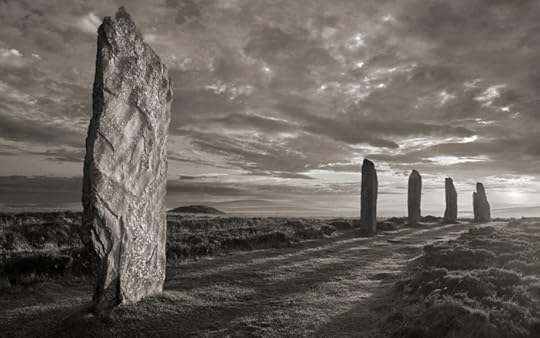
It's a cold, grey winter's day here in Devon, and I find myself thinking of the northern islands again ... specifically, of Erland Cooper's trilogy of albums inspired by his home in the Orkneys.
Above: the title track from his first Orkney album, Solan Goose (2018), dedicated to the birds of Orkney.
Below: a track from the second album, Sule Skerry (2019), dedicated to sea and shore.
Above: "Peedie Breeks" from the final album of the Orkney Triptych, Hether Blether (2020) -- named after the disappearing island of Orcadian folklore.
Below: "Screevar" from Hether Bletheer.
Above: "Sanday" by singer/songwriter Kris Drever (of Lau), from his beautiful new album Where the World is Thin (2020). Drever grew up in the town of Kirkwall, the Orcadian capital, but his father hails from the island of Sanday in the outer Orkneys.
Below: "Farewell to Fuineray," perfomed by Kris Drever, Liam �� Maonla��, Julie Fowlis, and Muireann Nic Amhlaoibh for the TG4 music series Port (2017). "I learned this song from my folks," says Drever. "It's traditionally in Gaelic, but Orkney is not a Gaelic speaking region so we had to rely on Victorian translations to get to the heart of it. I've always loved it."
I also highly recommend "Kris Drever on Orkney," from Matthew Bannister's excellent series Folk on Foot. And "Wildlife" by Erland Cooper, in collaboration with Scottish poet John Burnside (with thanks to artist and author Jackie Morris for pointing me to it).
December 8, 2020
We are storied folk
"I write to tell stories," says Finnish author Eppu Nuotio. "I believe that there are some professions in the world that will last forever: doctor or nurse, teacher, builder, and storyteller. I write also to become myself, more so day by day. Writing is a way to shape the visible and invisible, in myself as well as in the world."
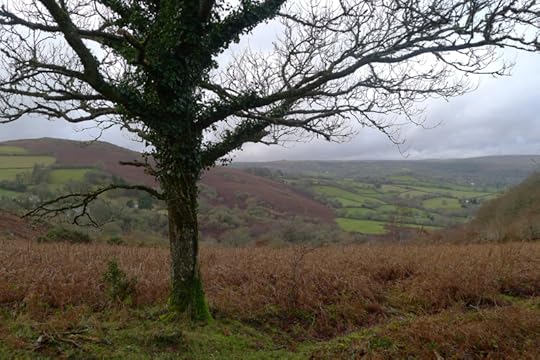
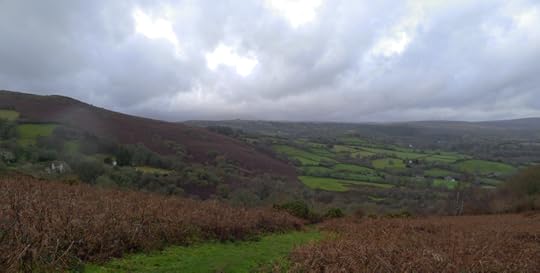
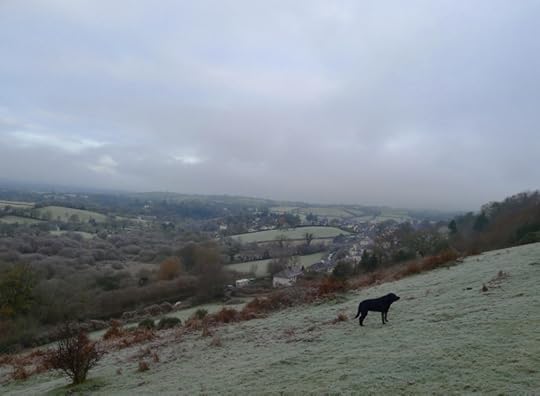
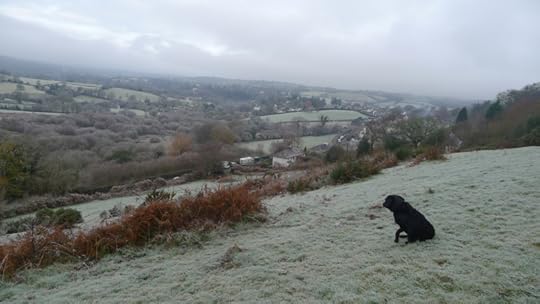
Here on Nattadon Hill, dawn shapes the visible and invisible...
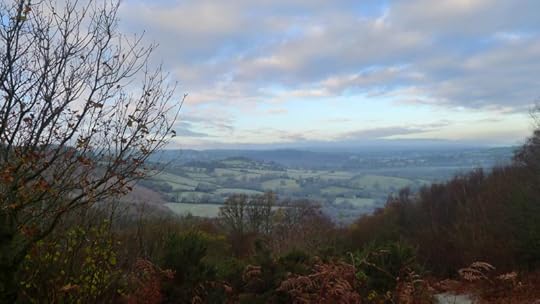
telling stories of light and shadow.
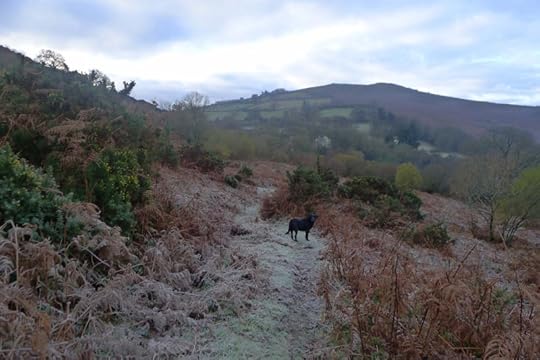
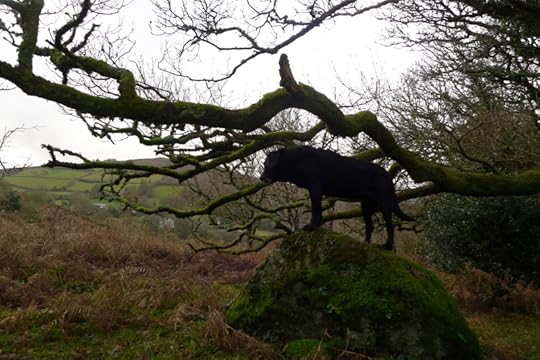
Tilly translates the land's stories for me. She is a trickster, a boundary crosser, moving between the human world and the numinous landscape, its language formed of light, rain, scent, and time.
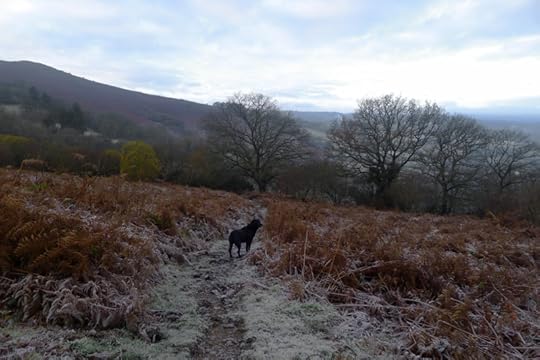
"Love and translation look alike in their grammar," notes the Spanish-Argentian poet Andr��s Neuman. "To love someone implies transforming their words into ours. Making an effort to understand the other person and, inevitably, to misinterpret them. To construct a precarious language together."
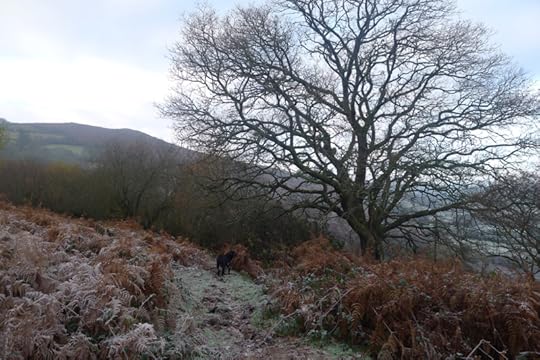
Each morning, Tilly and I walk the land and construct a language, a story, all our own.
"We are storied folk," states anthropologist Arthur Kleinman. "Stories are what we are; telling and listening to stories is what we do."
December 7, 2020
Sweet silence
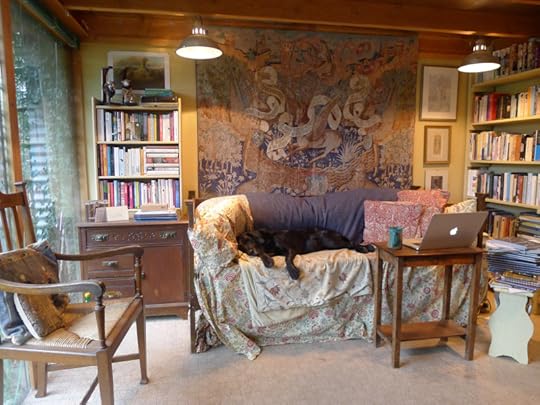
Stressful family business has been filling my time, agitating my dreams, and interrupting my work for several weeks running, but there's light at the end of this particular tunnel and I look forward to calmer days ahead. Back in the studio this morning, I find I don't want to start with the usual "Monday tunes," but to relish the silence of solitude, broken only birdsong from the woods and the snoring of the little black hound stretched out beside me as I type....
"Have you ever heard the wonderful silence just before the dawn? Or the quiet and calm just as a storm ends? Or perhaps you know the silence when you haven't the answer to a question you've been asked, or the hush of a country road at night, or the expectant pause of a room full of people when someone is just about to speak, or, most beautiful of all, the moment after the door closes and you're alone in the whole house? Each one is different, you know, and all very beautiful if you listen carefully.���
- Norton Juster (The Phantom Toolbooth)
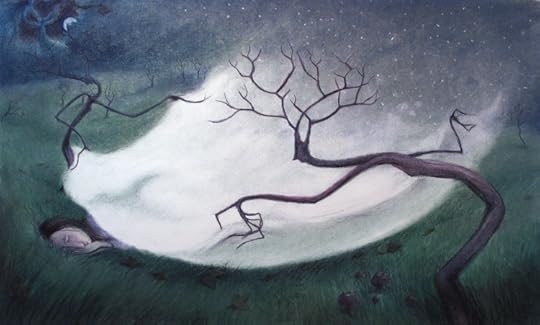
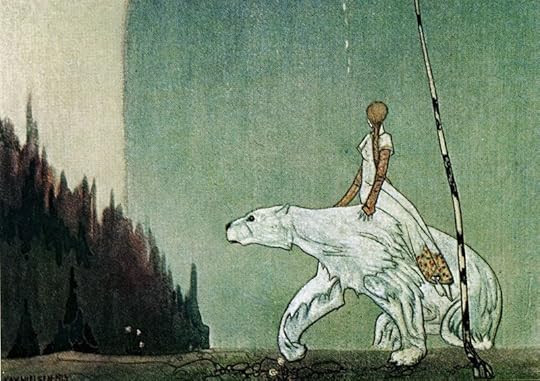
���After a time I found that I could almost listen to the silence, which had a dimension all of its own. I started to attend to its strange and beautiful texture, which of course, it was impossible to express in words. I discovered that I felt at home and alive in the silence, which compelled me to enter my interior world and around there. Without the distraction of constant conversation, the words on the page began to speak directly to my inner self. They were no long expressing ideas that were simply interesting intellectually, but were talking directly to my own yearning and perplexity.���
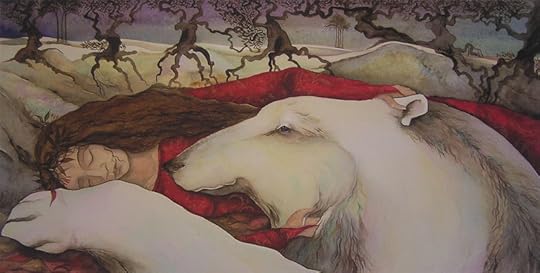
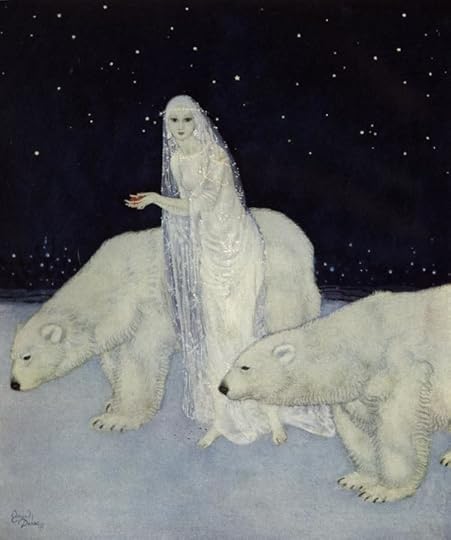
"I am obsessed by the idea of silence. I went through an entire library studying art, artists and their critics, philosophers, too, on the meaning and significance of the color white. I dreamed of white birds and white bears. I thought about the white pages of my mother���s journals. I became enthralled with John Cage and his work, 4���33���, his masterpiece of ambient sound. Rauschenberg, too. And then at some point I let go. What sticks to the soul is what gets placed on the page. Maybe that���s the unknown part, the mystery, the power of the empty page."
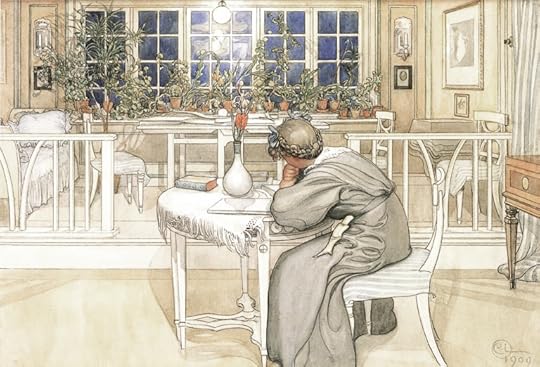
���How much better is silence; the coffee cup, the table. How much better to sit by myself like the solitary sea-bird that opens its wings on the stake. Let me sit here for ever with bare things, this coffee cup, this knife, this fork, things in themselves, myself being myself.���
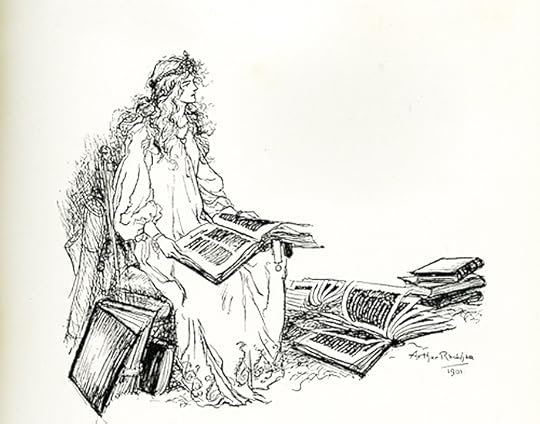
Pictures:"The Dreamer of Dreams" by Edmund Dulac (1882-1953), "Blanket of Snow" by Virginia Lee, "The White Bear" (from East of the Sun, West of the Moon) by Kay Nielsen (1886-1957), "A Silence Like Intimacy" by Jackie Morris, "The Night Before the Journey to England" by Carl Larsson (1853-1919), and a pen & ink skerch by Arthur Rackham (1867-1939).
Words: The Terry Tempest Williams quote comes from an interview, On Writing as an Act of Living (Brevity Magazine, Jan. 11, 2013), which I highly recommend.
December 5, 2020
Breaking open

From Wild Comfort by Kathleen Dean Moore:
" 'There is something infinitely healing in the repeated refrains of nature,' Rachel Carson wrote. 'The assurance that dawn comes after night, and spring after winter.'
"I have never felt this so strongly as I do now, waiting for the sun to warm my back. The bottom may drop out of my life, what I trusted may fall away completely, leaving me astonished and shaken. But still, sticky leaves emerge from bud scales that curl off the tree as the sun crosses the sky. Darkness pools and drains away, and the curve of the new moon points to the place where the sun will rise again. There is wild comfort in the cycles and the intersecting circles, the rotations and revolutions, the growing and ebbing of this beautiful and strangely trustworthy world.
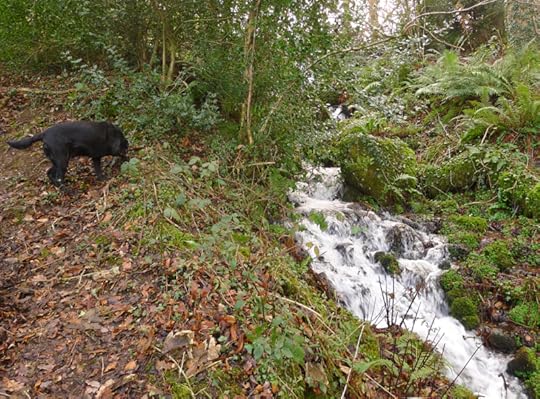
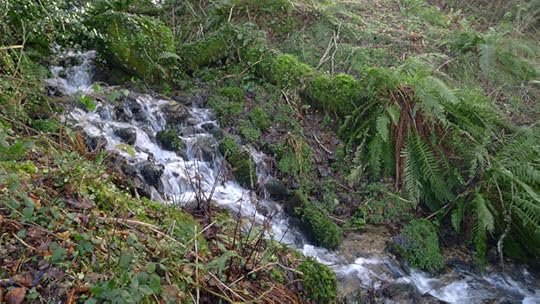
"I settle back on the rock and drag my sleeping bag over my knees. Diffuse light silvers the water; I can just make out a dragonfly nymph that crawls toward the surface with no expectation of flight beyond maybe a tightness in the carapace across its back. No matter how hard it tries or doesn't, there will come a time when the dragonfly pumps the crinkles out of its wings, and there they will be, luminous as mica, threaded with lapis and gold.


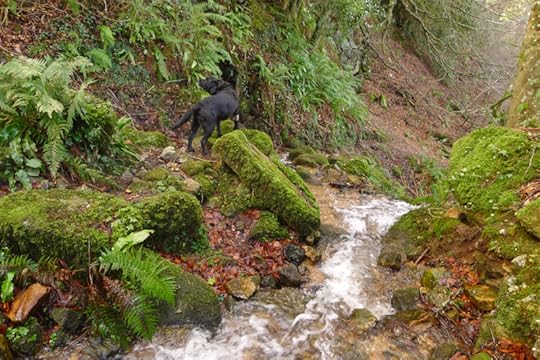

"No measure of human grief can stop Earth in its tracks. Earth rolls into sunlight and rolls away again, continents glowing green and gold under the clouds. Trust this, and there will come a time when dogged, desperate trust in the world will break open into wonder. Wonder leads to gratitude. Gratitude into peace."


Where, or how, do you find wild comfort?

The passage above is from Wild Comfort: The Solace of Nature, essays by Kathleen Dean Moore (Trumpeter Books, 2010); all rights reserved by the author. The text is the picture captions is adapted from a post after winter storms in 2012.
December 4, 2020
Wild Prayer

After many days of rain and mist, there is blue sky and a rainbow over our village. In a darkening season of water-soaked fields and foot trails ankle-deep in mud, it feels a blessing.
The sky is blue over Meldon Hill, though a bank of dark clouds hovers over the moor. Sun or rain, I am ready for both. Rainbow-blessed and vision restored, I'm reminded to love the earth's full palette: the delicacy of winter blue, the wet vibrancy of green and gold, but also the spectrum of color that gives us grey days, comfortless as they sometimes seem. Grey is the color of mist, mystery, mythic entrances to the Otherworld. Grey is the hidden and the unseen -- which we sometimes need to be ourselves.

In her essay collection Wild Comfort, Kathleen Dean Moore takes sorrow and the hardships of life into nature, seeking clarity, solace, and a form of prayer unattached to the religion she was raised in and no longer practices. Alone in her kayak on a small mountain lake, she is enclosed in the grey world of falling snow, cut off from sight of the land by the storm. In the thick of the snow squall, she writes:
"a frog began to sing. It must have been a tree frog, Hyla regilla. Of course I couldn't see it; I couldn't see anything but snow beyond my vanished bow. But I knew that song, and I could imagine the tiny frog up to its eyes in water, snowflaked falling on its head fiery green enough to melt the snow.
"As long as the frog sings, I will not be lost in the squall. The song tells me where the cattails are, and the cattails mark the shore. I am sure of this much, that Earth lights these small signal fires -- not for us, but among us -- and we can find them if we look. If we are not afraid, if we keep our balance, if we let our anxious selves dissolve into the beauties and mysteries of the night, we will find a way to peace and assurance. Signal fires burn all over the land."

Here is the prayer Moore finds in the middle of the storm, and that she offers to us:
"May the light that reflects on this water be a wild prayer. May water lift us with its unexpected strength. May we find comfort in the 'repeated strains of nature,' the softly sheeting snow, the changing seasons, the return of blackbirds to the marsh. May we find strength in light that pours under the snow and laughter that breaks through the tears. May we go out into the light-filled snow, among meadows in bloom, with a gratitude for life that is deep and alive. May Earth's fires burn in our hearts, and may we know ourselves to be part of this flame -- one thing, never alone, never weary of life."
May it be so. Mitakuye Oyasin.


The two passages quoted above are from Kathleen Dean Moore's essay "Never Alone or Weary" in Wild Comfort: The Solace of Nature (Trumpeter Books, 2010); the poem in the picture captions is from The Collected Poems of Denise Levertov (New Directions, 2013); all rights reserved by the authors. I wrote about rainbows in my own personal symbology here, back in 2010.
December 3, 2020
Climbing into the clouds
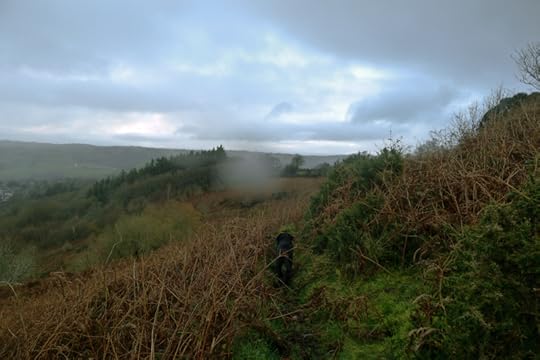
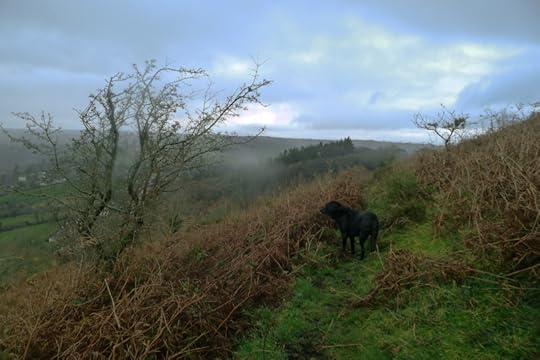
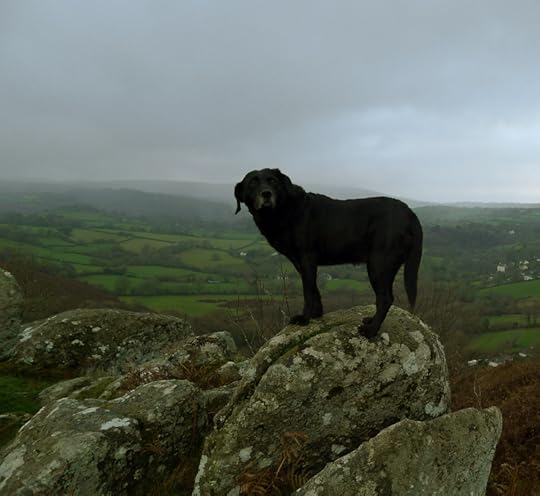
Today Tilly joined me for my birthday walk to the top of the hill behind our house. I'm grateful that life has brought me to this age, this place, this landscape, this story.
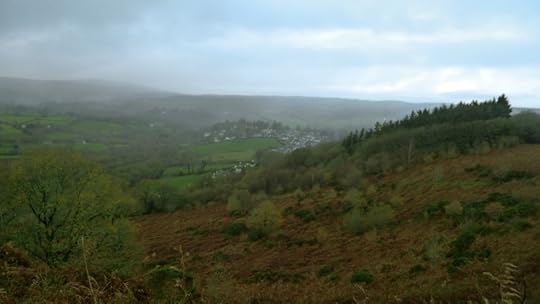
When is one officially "old," I wonder? To me, being "old" seems to come and go, present one day and not the next. There were times as a child when I felt as old as the hills -- and there are times now when I feel like the downiest of fledgling chicks, still flapping my wings, and still just beginning.
"The great secret that all old people share," wrote Doris Lessing, "is that you really don't change in seventy or eighty years. Your body changes, but you don���t change at all. And that, of course, causes great confusion."
An old neighbour of mine, sharp and vigorous well into her nineties, would have disagreed with this, however. She felt that changing as you age is exactly the point. "The thing about growing older, dear," she once told me, "is that you don't ever stop being the age you were, you just add each new age to it. So I never envy the young, because I'm still twenty years old myself, and thirty, and forty, and so on. By the time you're my age, you have so many selves to be, and draw upon, and enjoy, that I can only feel compassion for young people, who still have so very few."
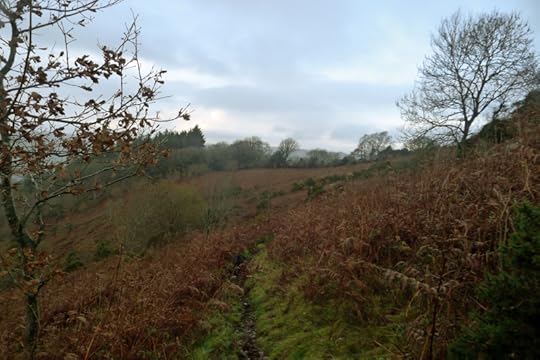
Sometimes I'm actually glad that health traumas caused me to doubt, at times, if I'd live to grow old -- for ageing to me is precious and magical, and I'm grateful for it. Thus I love these words from rock-and-roller Pat Benatar's memoir (Between a Heart and a Rock Place):
"I've enjoyed every age I've been," she says, "and each has had its own individual merit. Every laugh line, every scar, is a badge I wear to show I've been present, the inner rings of my personal tree trunk that I display proudly for all to see. Nowadays, I don't want a 'perfect' face and body; I want to wear the life I've lived.���
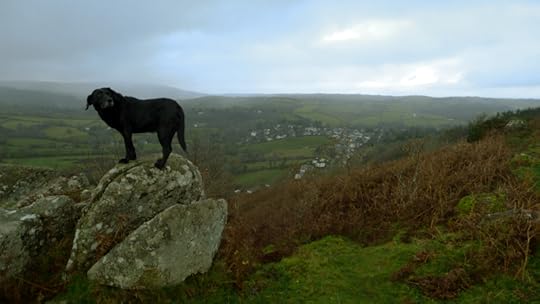
Time writes across the body in a language that we must all come to know as we grow and age: the language of experience, loss, revelation, endurance, and mortality. Today, I'm simply thankful for the roads, dark and bright, that brought me to the miraculous present; as well as for the unknown roads, dark and bright, that still lie ahead of me.
I'm another year older. I'm travelling a little slower. I carry multitudes inside. But I'm here, well-worn like the stones of Nattadon Hill. And I am only just beginning.
Terri Windling's Blog

- Terri Windling's profile
- 710 followers

