
Andrew Weil's Blog: Dr. Weil's Healthy Living Blog, page 6
February 8, 2021
Legacy: Love Is All We Need
We’re just a few days from Valentine’s Day, indeed a Hallmark holiday, but it provides us with an opportunity to focus on the importance of living our love, although we’ve had to create new ways of expressing our love during the COVID-19 pandemic.
We can’t hug our friends or our grandchildren, and for those of us who live alone and are well, that may be our greatest loss. Fortunately, we have technology to communicate our love, and time to write legacy letters of love to our beloveds.
Maya Angelou wrote: “Love is so much larger than anything I can conceive. It may be the element that keeps the stars in the firmament.” And Oprah, said, “I know this for sure: Love is.” Mother Teresa reminded us, “In this life we cannot do great things. We can only do small things with great love.”
Love is complex, multi-dimensional, and multi-leveled: conditional and unconditional, physical, romantic, built with compassion, friendship. There’s self-love, love for other people and species, love of nature and the earth, and spiritual love: of God.
“Love and compassion are necessities, not luxuries. Without them, humanity cannot survive.”
– Dalai Lama
Believing his powerful thought, we realize that “love” is a verb, an action. During COVID-19, while we spend endless hours at home, we can’t express our love directly by service (though we can send money to food shelves). We know we love, but often believe that others know it without our expressing it.
Feeling gratitude & not expressing it is like wrapping a present & not giving it.
– William Arthur Ward
What better way to love now than to express it on paper? An almost forgotten art, writing in our own hand to communicate and preserve our love, is what legacy writing is all about. Writing our love is tangible, can be preserved, read and reread, and nurtures our loved ones.
An early filled with love Valentine’s Day to all!
Taking Action:Reflect in your journal or your meditation about love as you see it, and experience it in your personal relationships, in your community, and in the larger world. Spend no more than 15-20 minutes a day for as many days as it is a fruitful exploration for you.Make a list of the people, communities, and things you love.Choose one person from your list and write a love letter to her/him. Focus on what delights you about them, and share a specific time orstory when you felt your love strongly. Express your honest recognition of their lovableness, your authentic appreciation and caring for her/him.Especially if you are writing for a specific occasion in her/his life, be sure to conclude your letter with a blessing that expresses your love at this time, and your hopes for them as they move into this new chapter in their lives.Return to your journal and write for five minutes about your experience as you wrote about love. (I call this writing “Personal Reflections” or “process notes” and it is often rich with insight and “aha” moments for the writer.Mail or give this “legacy love-letter” at the appropriate time. If for Valentine’s Day perhaps with an accompaniment of chocolate.Steps 3-4 can be repeated at any time during the year. Expressing love as part of your legacy when received to mark a significant occasion (a graduation, confirmation, beginning a new job, a new relationship, a special birthday, or an accomplishment) will be especially treasured.
May your written words be filled with love, and may they bless all those who read and treasure them,
– Rachael Freed
Rachael Freed, LICSW, senior fellow, Earl E. Bakken Center for Spirituality & Healing, University of Minnesota, is the author of Your Legacy Matters, Women’s Lives, Women’s Legacies: Passing Your Beliefs & Blessings to Future Generations and Heartmates: A Guide for the Partner and Family of the Heart Patient. Rachael can be found at rachael@life-legacies.com and www.life-legacies.com.
The post Legacy: Love Is All We Need appeared first on DrWeil.com.


December 31, 2020
The Legacy Of January’s Renewal
As we’re just past the longest night and the shortest day of 2020, we begin the new year, 2021. It’s a perfect time to focus light on some basic principles of legacy and the practice of writing legacy letters.
The format of a letter was first used by “ethical will writers” in ancient times. The obligation as well as the opportunity to make a difference in the lives of others by sharing learning and wisdom is similar to the ancient, though modern-day legacy writers spread light to loved ones and future generations by writing about many subjects and occasions.
We differentiate legacy writing from storytelling in its basic purpose: to communicate and preserve values, blessings, and love for future generations.
Only when we are brave enough to explore the darkness will we discover the infinite power of our light.
― Brené Brown
Before we write, a few words about context. Preparing to write a legacy letter, you may sit alone at your desk, at your computer, be cozied in a rocker with afghan and cup of tea. You may have at hand your favorite pen or a freshly sharpened #2 pencil with its eraser. You may have lit a candle and turned on your favorite music. This is your personal context.
Include in your preparation your awareness that we don’t live in a vacuum, that we live in a particular time, and place. As our family history shaped us, we are also shaped by the context of the time in which we live. I’ll suggest two that might find their way into your legacy letters now. Both can be seen in relation to darkness and light.
First, and perhaps simply, it’s January, when each day since the winter solstice is a little longer. In a Washington Post article, Judith Levine explained: “The midwinter holidays originated in pagan rites to seduce the sun back from the under-world.” Today, as in pagan times, we yearn as individuals and culturally for more light in a dark time. It’s no wonder we light candles as part of our holiday rituals, and try to push back the darkness by decorating the outdoors with a profusion of holiday lights!
Ring the bells that still can ring
Forget your perfect offering
There is a crack in everything.
That’s how the light gets in.
― Leonard Cohen
But the darkness of 2020 was greater than the calendar. It was the year of the pandemic, when COVID-19 affected the globe as well as every aspect of our individual and family lives. We are living in the darkness of a global health crisis, a local, national, and global economic crisis, and for all of us the darkness of an unknown future. There is a ray of light, like a candle in the night, with the successful development of vaccines that could light the globe in 2021.
There are two ways of spreading light: to be the candle or the mirror that reflects it.
– Edith Wharton
Action Steps:
Consider writing a January legacy letter, an opportunity to dispel the dark with the radiant light of your being for someone(s) you love.
Tell your loved ones the story of your personal experience and learning in 2020, and your hope for the light of 2021. . . (How different in intent from the usual annual letter recounting the year’s activities, or a listing of New Year’s resolutions).
Then bless them with light to illumine their way with hope for the future. (You might even accompany your letter with a beautiful candle!)
Share the context of the past year to record and preserve this most unusual year for generations a hundred years from now.
Write “process notes” directly after writing a legacy letter. Process writing, the mental counterpart of your heart-filled letter, adds light and clarity to your learning. Process notes (reflective writing) is a gift you give yourself.
May your legacy writing be a prayer and a gift to those you love this January and may your letters light up their lives and be cherished always.
– Rachael Freed
Rachael Freed, LICSW, senior fellow, Earl E. Bakken Center for Spirituality & Healing, University of Minnesota, is the author of Your Legacy Matters, Women’s Lives, Women’s Legacies: Passing Your Beliefs & Blessings to Future Generations and Heartmates: A Guide for the Partner and Family of the Heart Patient. Rachael can be found at rachael@life-legacies.com and www.life-legacies.com
The post The Legacy Of January’s Renewal appeared first on DrWeil.com.
December 18, 2020
Your Immune System
The primary job of your immune system is to distinguish self from non-self, which enables it to recognize and take appropriate action against anything that shouldn’t be in your body, including abnormal and damaged components. A healthy immune system can seek out and destroy germs and cells infected by germs as well as recognize and destroy tumor cells. Along with the common-sense steps you can take to protect yourself from being exposed to or infected with COVID-19 and other illnesses, keeping your immune system in optimum working order is your best defense.
Be aware that as we age our immune system’s ability to fight off illness begins to wane. It also can be weakened by overuse of antibiotics as well as smoking and stress. Beyond that, HIV and AIDS can compromise immunity by disabling immune cells, as can autoimmune related diseases including:
Lupus
Rheumatoid arthritis
Type 1 diabetes
Asthma
Leukemia
Lymphoma
Given the importance of the immune system, what can you do to keep it healthy? Here are my suggestions modulating the immune system:
Exercise: Be sure to get regular, moderate physical activity. A study from the UK published in 2020 looked at the effect of exercise on immune function. The authors wrote that it is widely agreed that regular, moderate intensity exercise is beneficial for immunity but noted that some experts believe more vigorous exercise without an adequate period of recovery may suppress immune function.
Reduce stress: Laughter as well as expressing positive emotions, such as optimism, are associated with better immune function and a number of other health benefits, including lowered production of the stress hormone cortisol and reduced risk of chronic diseases. If you are stressed out or anxious and tend to become negative as a result, follow my recommendations below:
Get adequate rest and sleep.
Maintain a healthy diet: Specifically, avoid polyunsaturated vegetable oils and products made from them. Their tendency to form free radicals makes them dangerous to immune system cells.
Consume less protein: Residues of protein metabolism can irritate the immune system, especially in people prone to allergy and auto-immunity. A plant-based diet with an abundance of fruits, vegetables and fiber is good for immunity as well as general health.
Do not eat many foods of animal origin: Meat, poultry, and dairy products often carry residues of antibiotics and steroid hormones that can interfere with immunity. If you do eat these foods, opt for organic versions.
Minimize consumption of meat and milk products: This is especially important if you are prone to allergy or autoimmunity. Cow’s milk protein is a common immune system irritant.
Take antioxidant supplements: Here’s where you can find a list of antioxidants.
Astragalus tea: The root of a plant found in northern China, Mongolia and Korea, astragalus (Astragalus membranaceous) has been used for thousands of years as a healing tonic. The root also contains abundant antioxidants, which help protect cells against damage. Astragalus is a key component in fu zheng therapy, a contemporary Chinese herbal treatment designed to restore immune function in patients undergoing chemotherapy and radiation. If you would like to try astragalus tea, here’s my favorite recipe:
Brew astragalus tea bags as you would any tea
Or simmer one tablespoon of dried, shredded astragalus root with 2 cups of water covered, for 10 minutes.
Strain and serve hot or iced.
You can find slices of dried astragalus root at Chinese groceries and at some health-food stores – seek out organic versions. Astragalus also is available in pill form and as liquid extracts and tinctures. Always follow the directions on the labels of these products for proper use and dosages.
Astragalus is non-toxic and can be used year-round to help support normal immune function when faced with colds, the flu, and other infectious illnesses. Check with your doctor before taking astragalus if you take lithium or drugs that suppress the immune system.
Andrew Weil, M.D
The post Your Immune System appeared first on DrWeil.com.
December 8, 2020
COVID-19 And Testosterone Levels
By Sheldon H. F. Marks, M.D. – Recent research reveals that men infected with COVID-19 often experience a significant drop in testosterone. Studies have shown that following an infection there is damage to the testosterone producing cells, called Leydig cells, which are located throughout the testicles. Because this is only preliminary information, there are still many questions to be answered about this decrease in the male hormone, and many details to be worked out. Researchers do not yet know if the testosterone levels always drop in all men infected with COVID-19. It is also unclear if this occurs in those with no symptoms or if testosterone drops only in those men who are very sick or hospitalized from the infection. Doctors also are unsure if testosterone levels are affected right away or if the levels decrease over time. To make things even more confusing, scientists don’t know how long testosterone levels remain depressed, if the problem may be quickly resolving or a long-term concern, and when or if the levels will even return to normal.
Although researchers have detected the COVID-19 virus in the testicles of infected men, along with damage to the sensitive Leydig cells which produce testosterone, they are not sure if this damage is from the viral infection itself, the high fevers commonly seen with the infection, from the body’s natural immune and inflammatory reaction to the infection, or if these changes could actually be caused by the treatments for the COVID-19.
Because what we know about COVID-19 is in the very earliest phases, anything we think is correct about it today is often contradictory, confusing and could very well be proven incorrect tomorrow. What this means is that it will probably take years to fully understand the true impact of a COVID-19 infection on testosterone, as well as its implications for male fertility and health.
What should I do now?
Because such a high percentage of men have had a COVID-19 infection with no or only minimal symptoms, it would be prudent to ask your doctor to order a testosterone level now as a baseline study. Having this blood test done before you are ill will provide your doctor a lab result for future comparison, and aid in your care and management should your testosterone levels drop after a COVID-19 infection.
If you have had a COVID-19 infection, you may want to talk to your doctor about checking your testosterone level, especially if you are experiencing a new onset of symptoms consistent with low testosterone levels, such as fatigue, low sex drive and reduced muscle mass.
While this potential problem is certainly being investigated, there are still no clear and consistent answers about the possible consequences of a COVID-19 infection on testosterone levels. It is in your best interest to monitor the research to keep tabs about the most current information and recommendations. Of course, the CDC website is always a reliable resource, as well as talking with your own personal doctor, ideally your urologist, about COVID-19 and testosterone.
About the author:
Dr. Marks is the Director of ICVR (International Center for Vasectomy Reversal), instructor at international courses, author of “Vasectomy Reversal: Manual of Vasovasostomy and Vasoepididymostomy,” and Assistant Clinical Professor of Urology at the University of Arizona College of Medicine, Tucson, Arizona.
The post COVID-19 And Testosterone Levels appeared first on DrWeil.com.
November 4, 2020
Self-Care As Legacy
From the dictionary: the practice of taking an active role in protecting one’s own well-being and happiness, in particular during periods of stress: expressing oneself is an essential form of self-care.
We’re all aware of the basics of physical self-care: getting enough sleep, eating well, and doing regular exercise. But even these simple things can be difficult to maintain during this pandemic. For example, have there been days when you failed to brush your teeth or hair, didn’t shower or get dressed, and padded around all day in your slippers? I answer yes to all those, and my feelings and spirit have suffered.
Almost everything will work again if you unplug it for a few minutes, including you.
Anne Lamott
What we’ll explore in order to leave a legacy of values is self-care of our souls (our deepest, truest selves), especially fragile during these stressful times and connected to our physical self-care.
The dictionary suggests that “self-care is the practice of taking an active role (the key word here is active) in protecting one’s own well-being and happiness, in particular during periods of stress: expressing oneself is an essential form of self-care.”
Two phrases in the definition are clues for our exploration of self-care. The first is “Protecting one’s own well-being.” I know from experience that the earlier I get dressed and ready for the day, though I may never leave home, nor get further from my bed than to the computer, can make all the difference in protecting my well-being. We’re all familiar with the wisdom of airplane attendants: “put on your own mask before helping another.” The lesson seems to be that we must take responsibility for ourselves. Although loving exchanges with people dear to us can raise our spirits in the moment, in the long term we have to know (or learn) what protects our well-being and take responsibility to discipline ourselves to act.
Caring for myself is not self-indulgence, it is self-preservation, and that is an act of political warfare.
Audre Lorde
Self-care is how you take your power back.
Delia Lalah
Rabbis of old suggested that we speak 100 blessings every day. One early spring day (soon after I learned that) I was driving along an empty highway accompanied only by the dirty grey slush edging the road, when I noticed a large flock of birds flying overhead, returning en masse to Minnesota for the spring and summer seasons. I was so filled with gratitude, I said aloud, alone in my car, “Baruch atah Adonai ‘birdies’” and then laughed aloud in pure joy. I didn’t need to know the words of the blessing: feeling grateful and expressing it aloud, though only to myself, was my self-care and blessing in that moment.
Remember always that you not only have the right to be an individual, you have an obligation to be one.
Eleanor Roosevelt
Talk to yourself like you would to someone you love.
Brené
Taking Action:
Considering what you do to take care of the more elusive parts of yourself will be useful in your personal self-care, and also provide wisdom to impart in a legacy letter to those needing a boost in these perilous times.
Here are some questions to prompt your musings and writing (you may have others of your own, and all these questions may not move you).
How do you care for your feelings of anxiety and fear for yourself and those you love in this pandemic?
How do you take care of your need for laughter and humor?
How do you care for the needs of your mind, your intellect?
How do you take care of your soul that awaits your attention?
How do you take care of your need to be nurtured by nature?
How do you take care of your need to touch others, be touched by others, have social interaction, get the hugs you need?
How do you honor your need to grieve the losses of this time?
How do you allow and acknowledge your sadness about the losses of this year of the pandemic without succumbing?
How do you address your need to be creative? To create things of beauty and meaning for yourself and/or others?
After musing and writing about the questions that pertain to you, turn your musings and personal wisdom into a legacy letter for someone(s) you love.
May your self-care practices lighten and enlighten you in these times, and may they nourish those you love,
Rachael Freed
Rachael Freed, LICSW, senior fellow, Earl E. Bakken Center for Spirituality & Healing, University of Minnesota, is the author of Your Legacy Matters, Women’s Lives, Women’s Legacies: Passing Your Beliefs & Blessings to Future Generations and Heartmates: A Guide for the Partner and Family of the Heart Patient. Rachael can be found at rachael@life-legacies.com and www.life-legacies.com
The post Self-Care As Legacy appeared first on DrWeil.com.
October 28, 2020
Microdosing: An Overview
What is microdosing and what, if anything, can it do for you?
Simply put, microdosing is taking about one-tenth the amount of LSD or psilocybe mushrooms needed for tripping.
In recent years, microdosing has become increasingly popular, especially among entrepreneurs and techies in Silicon Valley. Users of these low doses credit them with many positive changes, including easing anxiety, increasing creativity and improving both work performance and relationships. Whether this really happens or is all in the mind of the beholder has not yet been definitively answered by clinical trials testing the effects of microdoses against placebos, but preliminary research is positive, and more studies are underway. At the moment, most of what we know comes from the self-reports of people who microdose regularly.
James Fadiman, author of The Psychedelic Explorer’s Guide and a respected authority on psychedelics and their use, collects information from microdosers worldwide. Many have reported decreased anxiety and depression as well as new feelings of resolve that have helped them professionally.
Fadiman recommends taking 10 micrograms of LSD every three or four days while continuing with regular daily activities.
Scientists in Europe have been studying the effects of microdosing for some time. (Research in the U.S. has been limited because LSD and psilocybin are illegal here.) The first placebo-controlled study of microdosing was conducted at the University of London. It was designed to determine if the participants, none of whom had used LSD in the previous five years, could even feel the effect of such a low dose. Some microdosers contend that you don’t; others maintain that if you don’t, it isn’t working. For the study, the participants were randomly assigned to take LSD or a placebo. Results showed that the microdoses altered the participants’ sense of time but suggested that most did not feel any drug effect. The study, which was published in 2018, also tested participants’ perception of time on the basis of how they reacted to the length of time a blue dot showed on a computer screen. The participants were to hold a key down as long as they saw the dot. Those who received microdoses held the key down longer than those who received the placebo, which better represented the time interval.
Another study, from the Netherlands, also published in August 2018, concluded that microdoses of psilocybin don’t affect abstract reasoning or the ability to solve problems and think rationally. But it did show improvements in the types of thinking regarded as the underpinnings of creativity, including mental flexibility and the ability to focus on abstract concepts in order to find answers to specific problems. However, because this study had no control group, there is no way to know if the improvements resulted from the activity of psilocybin or the subjects’ expectations.
James Fadiman says people tell him that microdosing has helped them get off pharmaceutical drugs, while others report improvements in sleep and maintenance of healthy habits.
Dr. Weil’s take:
“I’ve tried microdoses of LSD twice and did not like the feeling – could not get comfortable with the stimulating energy of the drug effect, which lasted too long (about 10 hours). I’ve microdosed with mushrooms several times and liked that better, but have not done it often or regularly enough to notice any effects on mood or creativity.”
Sources:
Devin B. Terhune et al, “The effects of microdose LSD on time perception: a randomised, double-blind, placebo-controlled trial,” Psychopharmacology, April 2019.
Bernhard Hommel et al “Exploring the effect of microdosing psychedelics on creativity in an open-label natural setting,” Psychopharmacology, August 11, 2018, doi: 10.1007/s00213-018-5049-7
The post Microdosing: An Overview appeared first on DrWeil.com.
October 1, 2020
The Legacy Of Community
While I was searching for a meaningful topic for the October, 2020 Legacy Tips & Tools, I knew I’d found it when I read Kate Murphy in The NY Times. On September 1, 2020 she wrote, “We humans are an exquisitely social species, thriving in good company and suffering in isolation. More than anything else, our intimate relationships, or lack thereof, shape and define our lives.”
After sheltering-in-place for more than six months to avoid contracting or communicating COVID-19 to our loved ones, we know Murphy’s words to be true deep within ourselves even if we’ve not spoken the words aloud.
In my studies about veterans and “moral injuries” I read Sebastian Junger. In his book, Tribe: On Homecoming and Belonging he discussed a theory of Charles Fritz’s from his book: Disasters and Mental Health.
Fritz’s theory was that modern society has gravely disrupted the social bonds that have always characterized the human experience, and that disasters thrust people back into a more ancient, organic way of relating. Disasters, Fritz proposed, create a “community of sufferers” that allows individuals to experience an immensely reassuring connection to others. “As people come together to face an existential threat, class differences are temporarily erased, income disparities become irrelevant, race is overlooked, and individuals are assessed simply by what they are willing to do for the group. It is a kind of fleeting social utopia that is enormously gratifying to the average person and downright therapeutic to people suffering from mental illness.” Surely the 2020 pandemic counts as a disaster that creates a “community of sufferers,” although we’ve been unable to come together in person yet to ‘experience an immensely reassuring connection to others’ – to experience the ‘social utopia that is enormously gratifying and therapeutic.’ But we know it to be true as we know experientially the opposite, the loss of community, that the pandemic has wrought.
On the other hand, “Necessity is the mother of invention,” and we’ve been highly creative to experience community through technology (think of what these months would have been like without being ‘with others’ on Zoom), sharing “air hugs” and making phone calls to combat loneliness.
Community is first of all a quality of the heart. It grows from the spiritual knowledge that are alive not for ourselves but for one another. Community is the fruit of our capacity to make the interests of others more important than our own. The question, therefore, is not ‘How can we make community?’ but, ‘How can we develop and nurture giving hearts?’
– Henri Nouwen
Taking Action:
Take time to reflect on the difference between ‘tribe’ and tribalism (which has polarized our country even before COVID) and love. Philosopher, Micah Goodman, in a recent podcast suggests that the opposite of community is tribalism. He defines tribalism as individuals united in shared hate, while community is united by love.
“…aim to build community, to transcend boundaries, to love differences, and to marvel in similarities.”
– Brain Pickings 2020
Muse and write for 15-30 minutes, about your personal need for community (as clarified by losing it to the COVID pandemic). Delve deep to find words to express your personal feelings about community and how you feel about its loss.
We were born to unite with our fellow men, and to join in community with the human race.
– Cicero
After you’ve written for yourself, consider writing a legacy letter to future generations, sharing your learning during the pandemic about the meaning of community and humans’ need for love. Remember to close your legacy letter with a blessing that comes from your depth of understanding about community.
May this uncertain time increase your understanding of our need for community, and for love. May a new understanding about balancing self-actualization and commitment to community be a gift to you from this pandemic, and to those who come after you.
– Rachael Freed
Rachael Freed, LICSW, senior fellow, Earl E. Bakken Center for Spirituality & Healing, University of Minnesota, is the author of Your Legacy Matters, Women’s Lives, Women’s Legacies: Passing Your Beliefs & Blessings to Future Generations and Heartmates: A Guide for the Partner and Family of the Heart Patient. Rachael can be found at rachael@life-legacies.com and www.life-legacies.com
The post The Legacy Of Community appeared first on DrWeil.com.
September 8, 2020
Cleaning & Disinfection: Pros & Cons In The Age Of COVID-19
By Aly Cohen, M.D. and Frederick vom Saal, Ph.D – The coronavirus has changed just about every routine in our lives, cleaning now among them. The rational fear of SARS-CoV-2 (COVID-19) spread has led to an enormous growth in the creation and use of a multitude of products that we wipe, spray, and fog, particularly where we eat, sleep, commute, and study. But in the US the history of the use of chemicals has often been followed years later with public health agencies realizing that potential adverse effects on health were downplayed as everyone focused on supposed benefits. This approach has often led to massive overuse of different classes of chemicals, which is the case now with cleaning and disinfecting chemicals. We are faced with a pandemic that is causing unprecedented, exponential use of cleaning and disinfection products, and we already are finding evidence this is leading to downstream health issues in humans and wildlife.
From oven cleaners, air fresheners, toilet bowl cleaners, laundry detergent and softeners, chemical wipes and mildew sprays, the drive to make your home, office buildings, schools and shopping areas sparkling clean and eliminate germs has become a multi-billion-dollar industry. Cleaning products and disinfectants are among the most toxic products sold today. In fact, because of their high toxicity, they are the only household products regulated by the Consumer Product Safety Commission under the 1960 Federal Hazardous Substances Labeling Act. Household cleaning products that have known hazardous ingredients will have one of three warning signs:
Danger (skull and crossbones): could kill an adult if just a pinch is ingested
Warning: could kill an adult if a teaspoon is ingested
Caution: will not kill an adult unless an amount from 2 tablespoons to 2 cups is ingested.
However, this 60-year-old law for determining poison risk is grossly outdated, since many modern household cleaning and disinfectant products can kill you. Many newer products are particularly dangerous to have around children, whose increased sensitivity to their toxic effects was not taken into account in the 1960 law. More than 300 children are treated for poisoning from these products each day in emergency departments across the United States, according to the US Centers for Disease Control and Prevention (CDC), with, on average, two children dying. In fact, accidental poisonings from cleaners and disinfectant has increased by 20% in the first quarter of 2020 as compared to rates from 2018 and 2019, according to one CDC report. Researchers believe the increase coincides with stay-at-home orders and guidelines to clean hands and surfaces to prevent COVID-19 infection.1
Disinfecting Versus Cleaning
One of the most important ways to reduce exposure to some of the strongest, more toxic chemicals is to first decide how aggressively you need to clean vs. disinfect! For example, cleaning refers to the removal of dirt and germs from surfaces, but does not necessarily kill germs. BUT, by removing them, it lowers their numbers and the risk of spreading infection (the amount of virus you are exposed to matters). Removal of germs, the vast majority of which cause no harm to human health, can be done with products that are a lot less harmful to the human body than stronger chemicals used to remove infectious bacteria and viruses. For simple cleaning, we can use safe, effective cleaners such as bar and liquid soap made without fragrance, coloring, preservative, and that can contain anti-bacterial chemicals that are not necessary for basic cleaning.
Disinfecting, on the other hand, refers to using chemicals to kill germs on surfaces, but this involves using chemicals with much stronger, and potentially lethal, ingredients. Disinfectants are chemicals that can have serious effects on human health that may become apparent after short-term as well as long-term use. Bleach is one example, where this strong disinfecting chemical can cause short term health issues like cough (bronchospasm), shortness of breath, and even trigger an asthma attack. Long-term use may increase risk of thyroid gland dysfunction and other endocrine disorders if protection for skin contact, inhalation, and ventilation of the use area, are not managed properly.2 The important point is that unlike simple cleaning products, disinfectants are designed to kill organisms.
With the Covid-19 virus, disinfection is critical to reduce spread of the virus, especially on door handles, light switches, table and counter surfaces, and arms of chairs, so both a diluted household bleach solution or an alcohol solution (think “rubbing” alcohol or isopropyl alcohol, which are not drinkable) with at least 70% alcohol should be effective.
Diluted household bleach solutions should be used with extreme care to effectively disinfect SARS-CoV-2 on a variety of surfaces, which requires people to follow manufacturer’s instructions for application and proper ventilation. Check to ensure the product is not past its expiration date, which could reduce strength and effectiveness. Unexpired household bleach will be effective against coronaviruses when properly diluted. Never mix household bleach with ammonia or any other cleanser.
Avoid handling bleach if you have a history of asthma, COPD, emphysema or other lung conditions. Use skin protection (rubber gloves), eye protection (clear mask, eyeglasses, sunglasses, or swim goggles) when handling bleach, and make sure the room is well ventilated and/or windows are open, and no children or pets are present.
The Center for Disease Control (CDC) in the US recommends this bleach solution mixture:
5 tablespoons (1/3rd cup) bleach per gallon of water or
4 teaspoons bleach per quart of water.
Links to EPA’s ‘List N’ and CDC list for effective disinfecting products:
Cleaning and Disinfection for Households
Disinfectants for Use Against SARS-CoV-2 (COVID-19)
Long-term use of a strong disinfectant should be carefully considered. If it is not necessary to disinfect the area, you can use a variety of safe, effective cleaning products. Nowadays, there is never a reason to use unsafe products, there are just too many good products available! Look up safe products at EWG’s Guide to Healthy Cleaning …or just make your own, using simple ingredients such as white vinegar, real lemon juice, sea salt for scrubbing, castile soap, 100% organic lavender oil.
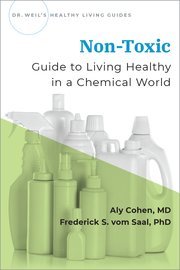 We provide many “do-it-yourself” recipes for making safe cleaning solutions, and also discuss in our newly released consumer guidebook, Non-Toxic: Guide to Living Healthy in a Chemical World, the reality is that in the U.S., with the exception of products with older known hazardous ingredients, today, manufacturers of cleaning products and disinfectants are NOT required to list the full ingredient panel of their products. Cleaning products producers are also not responsible for supplying information about any testing or toxicity findings for the products that they create, because in the U.S., they are protected as a trade secret. In the event of an accidental poisoning, even poison control centers are unable to access information about the ingredient details of the product ingested. While industries argue that protecting their profits from products by keeping ingredients secret is essential, not informing consumers about chemicals in these products that have been shown to cause harm is unacceptable.
Health Effects from Cleaning Product Ingredients
Researchers have shown health effects in both animal and human studies for several classes of cleaning ingredient chemicals. Phthalates, a class of chemicals added for fragrance or ‘perfume’, are intended to increase the shelf life of the product’s odor. Research shows that phthalate exposure during pregnancy has been associated with developmental abnormalities in both animal and human studies.3 ‘Anti-bacterial’ chemicals, such as Triclosan, the most widely known antimicrobial, are registered with the EPA as pesticides. Triclosan is marketed under more than a dozen different names, including Microban, Irgasan, Biofresh, Lexol-300, Ster-Zac, Bactroban, and Cloxifenolum. Antibiotic chemicals, such as triclosan, are readily absorbed through human skin and are often detected in blood. In fact, 75% of urine samples4 and 97% of breast milk samples in the United States and Sweden were found to include triclosan. After only one shower using a body wash containing triclosan, researchers found blood levels of triclosan immediately increased! Paraben and quaternary ammonium compounds are among other classes of chemical additives raising concern, especially now with the coronavirus. These unregulated chemicals may pose serious short and long term health risks, and they are particularly dangerous for fetuses and should be avoided by pregnant women.
Cleaning and disinfectant products are now being used in greater quantities (using ‘foggers’), over a wider variety of surfaces, and are used among workers (occupational risk) and lay people (teachers, administrators e.g.), who may not have experience using these stronger chemicals. Perhaps of greatest concern is the now pervasive use of many powerful disinfectant chemicals in environments such as schools and day care centers where the evidence for safety has yet to be fully elucidated, and where vulnerable students with history of asthma, or vaping may likely experience increased risk for lung injury from repetitive, long-term exposure, thus placing them at increased risk of dying from COVID-19.4,5
And the effects of constant spraying of disinfectant chemicals in outdoor venues, such as restaurants, sidewalks, over neighborhoods (via drones) and public spaces has not gone unnoticed. Adverse effects on the environment and an increase in death of wildlife is yet another downstream effect from the pervasive use of many chemical cleaners, which make their way into local bodies of water (streams, lakes, aquifers), and according to the WHO, can deleterious effects on our natural surroundings, as well as making its way into drinking water for humans and wildlife.6
General Rules for ‘safe cleaning’?
The ‘less is more approach’ is always best. Buy and use fewer products. Dispense with the use of fabric softener, dryer sheets, and air fresheners. This is the first step to eliminate hundreds of undisclosed chemicals that may be harmful to your health. Clearly, you cannot rely on statements on product labels to assess the safety of these products, since they are essentially unregulated. Buy the products with the least ingredients in the product, and with most ingredients you can recognize.
In general, it’s wise to avoid products that contain ammonia, chlorine bleach, quaternary ammonium or “quats”, and non-chlorine bleach substitutes such as oxygen bleach, which are corrosive and irritating to skin. Avoid use of air fresheners, carpet powders, cleaning products with bleach and other lung irritants, and products containing fragrance or perfume. Limonene and other citrus fragrances are often added to cleaning products and should be avoided because of their ability to form formaldehyde when used with ozone in the air. Also, look for companies that are reputable for not only having ingredients safe for the planet (no microbeads or nanoparticles used for instance), but also use ingredients safe for human health. Look up your cleaning products on the internet or just make your own!
Bottom Line:
Cleaning products in the U.S. are under minimal regulatory oversight and contain chemicals known to cause many health issues. Avoid buying harmful cleaning products to begin with, purchase products checked on reliable online sources, or make your own cleaners with basic, inexpensive natural ingredients. Open windows to clean out odors, spot clean spills and messes at the source, and throw in some old-fashioned elbow grease instead of relying on a toxic chemical fix. And finally, do not try to mask odors with air fresheners that release toxic chemicals into the air you breathe in your home and at work. As we move into this ‘brave new world’ with COVID-19, be judicious with using disinfectant chemicals over the use of cleaning agents, and consult vetted resources, such as the Environmental Working Group’s list for safe cleaning products as well as the CDC and EPA lists for effective disinfectant products.
About the Authors
Aly Cohen, MD is a board-certified rheumatologist, integrative medicine, and environmental health expert, and creator of the environmental health and wellness platform, TheSmartHuman.com. She is working to create ‘environmental health’ curricula to be available to high school students nationally. For more information, go to Dr. Cohen’s environmental health and prevention platform, TheSmartHuman.com and follow on Facebook, Twitter, and Instagram, The Smart Human, and sign up for The Smart Human newsletter and listen to the newly launched, The Smart Human podcast.
Dr. Frederick vom Saal, PhD is professor of neuro- and reproductive biology, who’s decades of research is largely responsible for the removal of the endocrine disruptor, bisphenol A (BPA) from plastic baby bottles in the U.S. in 2012.
Dr. Cohen and vom Saal’s new guidebook, in the Dr. Weil’s Healthy Living Guides series, Non-Toxic: Guide to Living Healthy in a Chemical World, published by Oxford University Press is available now, in stores and online. This new book is an invaluable resource to living cleaner and greener in our modern environment, and teaches readers how to reduce chemical and radiation exposures by recognizing potential threats. Non-Toxic is designed to be referred to again and again for its relevant, cost-effective, and practical ways to reduce exposure and thereby lower risk for developing a variety of environmentally associated illnesses, to assist in improving people’s health and even prevent illness, including COVID-19.
Stobbe M. US lockdowns coincide with rise in poisonings from cleaners. Associated Press. https://apnews.com/5621611ac1e1c04de3.... Published 2020. Accessed2020.
Rogan WJ, Paulson JA, Baum C, et al. Iodine deficiency, pollutant chemicals, and the thyroid: new information on an old problem. Pediatrics. 2014;133(6):1163-1166.
Dutta S, Haggerty DK, Rappolee DA, Ruden DM. Phthalate Exposure and Long-Term Epigenomic Consequences: A Review. Front Genet. 2020;11:405-405.
Wittenberg A. PANDEMIC: Toxic cleaners pose new risks as schools reopen. Environment & Energy News. https://www.eenews.net/stories/106370.... Published 2020. Accessed August 16, 2020.
vom Saal F, Cohen A. How toxic chemicals contribute to COVID-19 deaths. Environmental Health News. https://www.ehn.org/toxic-chemicals-c.... Published 2020. Accessed July 2, 2020.
Roth A. Wildlife deaths from coronavirus disinfectant use alarm scientists. National Geographic. https://www.nationalgeographic.com/an.... Published 2020. Accessed August 17, 2020.
The post Cleaning & Disinfection: Pros & Cons In The Age Of COVID-19 appeared first on DrWeil.com.
August 31, 2020
The Legacy Of Hearth And Home
We know after sheltering-in-place for months to avoid COVID-19 that our lives have been changed perhaps forever. We hear mostly about what’s broken, what’s difficult, and depressing. But there is another perspective of this reality to consider.
In 2003 I wrote The Legacy Workbook for the Busy Woman, where in Chapter 2 “Embracing Our Everyday Selves” I introduced the Greek goddess Hestia, Zeus’ sister. She was the goddess of hearth, home, and temple. Her symbol was sacred fire, source of light, warmth, and safety. Fire, not only essential in homemaking and mothering, also represented spirit, the light of internal meaning.
By demeaning “women’s work” in the 19th and 20th centuries, in order to compete to be “just like men,” women lost something valuable. COVID offers us the opportunity to do a rebalance, reclaiming a lost part of ourselves. Is it any wonder that grocery stores ran out of yeast this spring? Women had returned to their kitchens baking bread as their grandmothers once did.
My neighbor, a fast moving and rising manager in a major corporation, has been working at home since March. She hopes the change is permanent. Slowed by the virus, she’s had time to plant and weed her garden, time to read daily to her 3 year old son, Gio, time to hang washed bedding in the sun, bake cookies, and call her Mom. Intermittently during the workday she returns to her compute to attend a daily Zoom meetings with her co-workers. What she described was that COVID had given her the opportunity to rebalance her priorities … rediscover that her home and family are not afterthoughts, but a most important part of her identity and values.
“Our life’s mission may very well be hidden in the simple routine the we have come to devalue . . .There is holiness and meaning in even the most mundane tasks.”
– Rabbi Naomi Levy
Re-owning devalued characteristics of ourselves, becoming more of ourselves and experiencing ourselves as multi-dimensional, perhaps more whole, is one of the potential gifts of this pivotal time. Becoming our authentic selves is a lifelong task, formed like basalt cooling gradually after blasting out of the fires of a violent volcano (“COVID”) and transforming what was into what is. As our past forms the present, as our history and values mature, and as the contextual pressures of our environment reshape us even further, sheltering-in-place may be the modern woman’s best gift from COVID.
“Home is where my dignity is.”
– Irshad Manji
Taking Action:
1. Make a two-part list: on one side of a piece of paper, list domestic activities you enjoy (for example hanging laundry in the sun); on the other side, list domestic activities you dislike, find boring or lacking in meaning (for example, turning the family’s socks right side out). Or instead perhaps differentiate by listing “the ordinary domestic things you love” and “the ordinary domestic things you don’t love, but would dearly miss should your life be at risk.”
“I long to accomplish a great and noble task, but it is my duty to accomplish humble tasks as though they were great and noble.”
– Helen Keller
2. Muse and write for 15-30 minutes, your purpose to explore your domestic preferences, passions, gifts and talents. Something you took for granted or thought meaningless may awaken new interest or old memories. Recall your mother’s and grandmothers’ domestic and creative talents, and attitudes. Then muse about what domestic activities you particularly value and want to be part of your future daily life.
“You need only claim the events of your life to make yourself yours.”
– Florida Scott-Maxwell
3. After you’ve written for yourself, consider writing a legacy letter to women of younger and future generations about your personal domestic values and your sense of how the domestic has been in times past and continues now to have the possibility of spiritual meaning for our culture.
“The spiritual journey is the soul’s life commingling with ordinary life.”
– Christina Baldwin
“May the Greek goddess, Hestia, and COVID-19 be sources of blessing for you. May a new freedom of attitude and action be a gift to you in this pivotal time, and to the women who come after you.”
– Rachael Freed
Rachael Freed, LICSW, senior fellow, Earl E. Bakken Center for Spirituality & Healing, University of Minnesota, is the author of Your Legacy Matters, Women’s Lives, Women’s Legacies: Passing Your Beliefs & Blessings to Future Generations and Heartmates: A Guide for the Partner and Family of the Heart Patient. Rachael can be found at rachael@life-legacies.com and www.life-legacies.com
The post The Legacy Of Hearth And Home appeared first on DrWeil.com.
July 31, 2020
The Legacy Of Wonder
Do you remember being a child of four or five wondering about the puffy white clouds floating in a perfect blue sky as you lay in the sweet-smelling grass? Or your wonder as you freed a minutes old butterfly newly born from its chrysalis? Or your wonder the first time you rode a two–wheeler or paddled a canoe or heard a symphony live? Those moments of awe and curiosity, the wonders of life that we experienced as young children, seem uncapturable today.
Yet ‘wonder’ is a gift and a legacy available to everyone that we can pass on to those who will come after us. We just need to reawaken it in ourselves, nourish it with our attention, and experience it (and share it). Certified Legacy Facilitators have been meeting on Zoom since May to document our responses to the twin pandemics we’ve been exposed to. In July I invited them to write about WONDER, both a noun and a verb, with complex meanings: the first relates to curiosity: “wondering why or how.” The second refers to “awe and amazement.”
As I began my writing I found myself wondering at the power of John Lewis’ life and the awe I felt about him; but I also found myself curious about how he’d maintained his dignity, strength, and love when for fifty years he’d been spat upon, beaten, and imprisoned. I further wondered if I would’ve had his strength given his circumstances.
Thinking about his circumstances, I wondered how I would have related to what Jews experienced during the Holocaust. Would I have had the courage and dignity to go on when I’d lost my name, my family, my spiritual community, and experienced the brutality of humiliation, beatings, starvation, and worse?
John Lewis’ answer was love. He wrote: “Anchor the eternity of love in your own soul and embed this planet with goodness. Lean toward the whispers of your own heart, discover the universal truth, and follow its dictates. Release the need to hate, to harbor division, and the enticement of revenge. Release all bitterness. Hold only love, only peace in your heart, knowing that the battle of good to overcome evil is already won. . . .”
But I admitted in my wondering that I didn’t believe I’d ever have the largesse to love humanity as John Lewis and Holocaust survivors did . . .. My wondering grew bigger than simple curiosity; it related to what my life and its purpose is. It’s not a new question, but what felt new was honestly letting myself look inside, taking off my masks.
After my writing I felt neither happy nor pleased with myself, but cleaner, more honest, less naïve. The surprise and wonder I experienced as I wrote honestly for myself was worth the unmasking I did, and now I will turn my curiosity and awe, my wonder, into a legacy letter for my grandchildren and theirs.
Taking Action:
Take some time to muse about the wonder you experienced as a child. Allow yourself to visit your world today opening to wonder, though it may be of an entirely different nature than you experienced back then.
Reflect on these thoughts: The National Book Award winner, Ta-Nehisi Coates, wrote, “I wanted to learn to write, which was ultimately, still, as my mother had taught me, a confrontation with my own innocence, my own rationalizations.” And Fr. Richard Rohr wrote: “…our thoughts and actions become more mature…only when we begin to question our own viewing ‘platform.’”
Consider your own experience of wondering, perhaps a gift of being sheltered-in-place without our usual diversions and distractions of this unique moment.
Write to those you love about your experience, values, and feelings. Document your experience of wonder, then and now. Close your letter with a blessing of love.
May we all be enriched by wonder, its memory and the wonders all around us today, and may we grow by writing honestly for ourselves and those who will follow us, and may our wonder help build a world of love for everyone,
– Rachael Freed
Rachael Freed, LICSW, senior fellow, Earl E. Bakken Center for Spirituality & Healing, University of Minnesota, is the author of Your Legacy Matters, Women’s Lives, Women’s Legacies: Passing Your Beliefs & Blessings to Future Generations and Heartmates: A Guide for the Partner and Family of the Heart Patient Rachael Freed rachael@life-legacies.com and www.life-legacies.com
The post The Legacy Of Wonder appeared first on DrWeil.com.


