Greg Levin's Blog, page 4
March 24, 2020
A Message from Mr. Brightside: Six Positive Things about the Coronavirus
Very few people know this about me, but I have an alter ego. Its name is Mr. Brightside. The reason almost nobody knows about this alter ego is it rarely rears its head. It appears only during the WORST of the worst of times.
For instance, Mr. Brightside showed up in 1993 when I was poor and lonely and depressed in New York City. It immersed me in books full of life-altering poetry and fiction, as well as introduced me to meditation.
Mr. Brightside showed up in Spain eight years later—right after 9/11 and a divorce—and it started writing my first novel.
It showed up after my brother Jeff passed away unexpectedly on New Year’s Day 2007. Mr. Brightside held me together and handled all the funeral arrangements while my devastated parents and my other brother were snowed in for several days in different parts of the world.
And, not surprisingly, Mr. Brightside showed up the other day. It asked if it could use my blog to get an urgent message out during this pandemic. I told it there were much bigger platforms than my blog it could use to get an urgent message out. It said it was well aware of that, then threw me out of my writing office and, in typical Mr. Brightside fashion, shouted through the door, “Sorry I had to get rough, Greg, but look on the bright side—I could have easily killed you.”
Mr. Brightside then—
… I’ll take it from here, Greg; you’re taking too long. Hi folks, Mr. Brightside here. My apologies for barging in and commandeering Greg’s blog like this, but there are some things I think you need to know—things that will provide you with some hope and solace in these trying times. And with all due respect to Greg, he’s not the guy you turn to for hope or solace. He’s the guy you turn to for dark and twisted fiction, and for sardonic humor, and if you’re low on vodka or bourbon. And while those things have their place and can provide some sense of escape during a global pandemic and an imminent recession, they aren’t nearly enough to sustain you and your loved ones—and society in general—right now. Escape is nice and all, but it’s no match for hope and solace. No match for connection and kindness. No match for love and compassion.
Call me an optimist (no, really, I want you to—I was pretty much named after optimism), but a lot of good can and will come from the coronavirus outbreak … and actually already has. I’m not joking. I’m not being sarcastic.
I’m not Greg.
I hope you’ll bear with me for a couple of minutes and continue reading, and you’ll start to see what I’m talking about. You’ll start to see the light at the end of—and even inside—the tunnel. You’ll start to see the bright side. Even Greg’s starting to see it, and he’s the worst.
So let’s do this.
Below is a list of just some of the positive things that are happening and developing as a result of the coronavirus taking over the planet. Things that will remind you all is not lost—not even close.
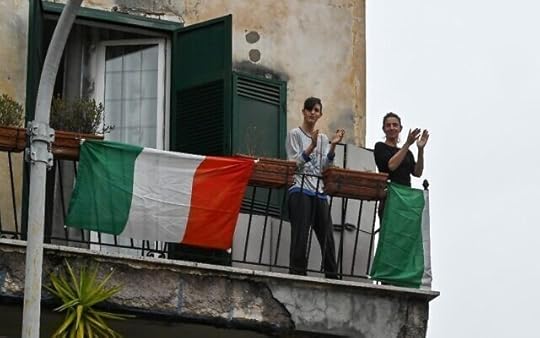
1) A surge in community spirit. Up until a couple of weeks ago, the last time I witnessed youthful neighbors asking older neighbors if they needed anything from the grocery store was … never. Same goes for the last time I watched Italians sing to one another from their balconies, or the last time a nightclub transformed itself into a food distribution center, or … I could go on forever with examples of people who’ve banded together (while keeping their distance) to lift the collective spirit of humanity, but there just isn't enough time.
On second thought, screw it—all we actually HAVE now is time (alone in our houses/apartments/vans/tents), thus here are several more examples of how (extra)ordinary communities have risen to the occasion lately:
Many supermarkets have introduced exclusive shopping times for senior citizens and individuals with disabilities (i.e., folks most at risk during this pandemic). Yo-Yo Ma performed Bach's 'Cello Suite No. 3' via Twitter in honor of healthcare workers fighting the coronavirus. Medical experts from China flew to Rome with a supply of masks, respirators, and other supplies. The flight brought around thirty tons of equipment to Italy, which is currently the country worst-hit by COVID-19. A rabbi and several congregants from his synagogue delivered pizza to quarantined families in the Bronx. WestJet held a mini-graduation for four members of a Canadian college's female vollyeball team (all of them seniors) during a flight home after their college closed due to the coronavirus. The owners of the Stock Exchange Hotel in Manchester, UK (which had to close its doors to customers a few days ago) will be offering free accommodation to National Health Service workers who can't return home for risk of infecting their families. In addition, the hotel will not be laying off any of its staff during this time, and will be granting them paid leave if they themselves need to self-isolate.���
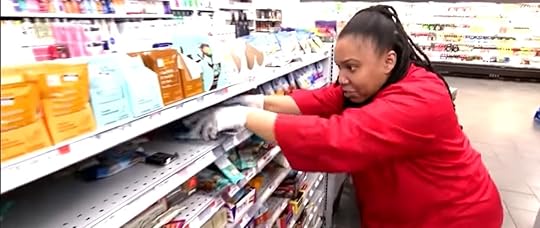
2) A recognition of—and an appreciation for—some of the unsung heroes in our society. This is not any kind of a dig on famous athletes or movie stars or the like (especially since many of them have been donating their time, money and influence during this pandemic). However, with professional sporting events cancelled and cineplexes shut down everywhere, the spotlight has shifted to all the everyday unsung heroes in our midst—the individuals the world truly couldn’t do without on a daily basis. The nurses and the first-responders and the pharmacy staffers and the parcel delivery people and the grocery store employees and the sanitation workers and the truck drivers. And the teachers. And the comedians. And whatever you call the small team of behind-the-scenes people at each radio station who keep the informative and entertaining voices coming into our kitchens.
And, well, basically anyone else you’ve been relying on to help you and your loved ones—and countless others—endure all the chaos and fear and uncertainty pervading these unprecedented times.
 3) A free masterclass in doing more with less. You know who doesn’t need 116 types of cereal to choose from in a single supermarket aisle on any given day? Everyone. You know who would now do a dance if they were able to get their overly sanitized hands on just a single bag of dried pinto beans whenever they needed it? Same answer: EVERYONE.
For decades, many of us in the U.S. and other western and/or “first world” countries have gotten a little too accustomed to excess and immediate gratification. Now? Now the playing field has been significantly leveled, and most over-privileged first-world folk are learning just how absurdly wasteful an egg-white omelette is, and just how far a bag of dry beans and a sack of potatoes can go toward keeping us alive—and provide us with the energy needed to voice our outrage in a tweet or Facebook post. (Sorry gang, Greg snuck in on this one and felt compelled to add a little of his signature snark. Go easy on him—he simply doesn’t know how to "bright-side" correctly.)
 4) A significant decrease in pollution worldwide. It’s sadly ironic that it took a global virus wreaking havoc on the human respiratory system to create an environment where the air is actually safe(r) to breathe. According to the Centre for International Climate Research in Oslo, Norway, as the burning of fossil fuels has dropped during the pandemic, air quality has improved significantly—and the impact has been felt worldwide.
True, the drop in pollution is likely to be only temporary and has come at a tragic cost (we’re fast-approaching 20,000 lives lost due to COVID-19). Still, this frightening and devastating outbreak has placed a laser pointer on the impact our modern way of life has on the planet—the planet we all hope will continue to be habitable well beyond our lifetime and that of our children’s children’s children. This isn’t to say we should all continue to self-isolate and forever practice social distancing even after the pandemic disappears (and the economy reappears); however, it does give us a lot to think about—and a lot of hope—with regard to our power to prolong the Earth’s lifespan for eons.
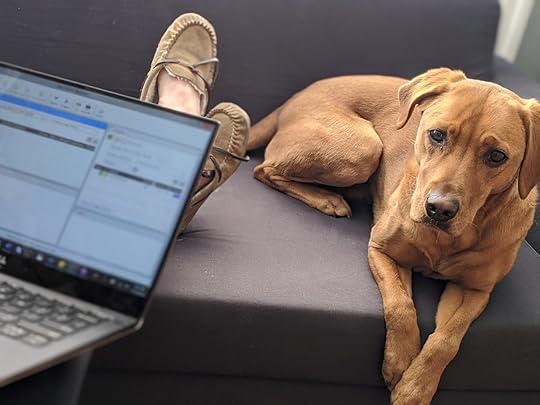 5) A future with less traffic and road-rage—and a workforce with a healthier work-life balance. A lot people have lost their jobs because of what the coronavirus has done to the economy—nothing cool about that. But there is something cool about how many companies and businesses have embraced the work-at-home model and virtual offices to keep people employed and the world running during this extremely challenging time.
Admittedly, remote work isn’t for everyone—some folks struggle without face-to-face human interaction and teams; also, for many occupations, the virtual work model simply isn’t feasible much of the time, or ever. That all said, many people would kill to work from home (granted, under better circumstances than a global pandemic)—and a lot of those folks will likely let their bosses know they want to continue to work remotely once the threat of the coronavirus is gone. If the aforementioned bosses say yes to these employees’ request, it’ll be a huge victory not just for the employees, but also for: their families (no commute means more quality time); their companies (happier workers + an expanded labor pool); the environment (less pollution, remember?); and society as a whole … including the people who don’t want to or can’t work from home—they’ll no longer have to contend with the impenetrable crush of vehicles jamming up highways during rush-hour day after day after day. The only real loser in all this will be road-rage.
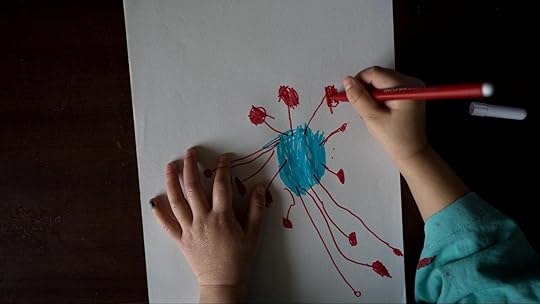 6) A chance to create, a time to (re)invent. At the outset of this post, Greg mentioned how I got him into poetry and fiction when he was broke and lonely in the 1990s, and how his first novel came out of a painful divorce. I’ve always found that humans are at their most creative and innovative during times of distress, destitution, despondence. Chaos and calamity serve as beautiful muses if you lean into them.
Now, to be clear, I’m not suggesting that, say, an author suffering from writers block set their city on fire or start a riot in hopes that it will enable them to crank out a literary masterpiece. It wouldn’t work. It couldn’t. Intentionally causing destruction is the opposite of creating art and thus can never be done in the name of it. However, when the sky is falling, when the four horsemen are approaching, when life as you’ve always known it slams on the breaks and comes to a screeching halt, that’s the time to write or paint or compose or invent something. Something new and bold and hopeful. Something that pierces the darkness—inside and out.
Life as we’ve always known it is, indeed, ending. But LIFE itself is not. WE are not.
This is your chance to create. An opportunity to reinvent what life could be. What YOU could be.
I can’t wait to see what you come up with.
A NOTE FROM GREG: Nothing in this post is intended to downplay the seriousness of what we as a species are going through, or to turn a blind eye to the loss of life, health, physical freedom, jobs, or income (in some cases, entire life savings) that is occuring every day. If you need to express your anger or sadness or loneliness—or ALL of it—feel free to let it out in the form of a rant or a question (or whatever you want) in the comments section below, or you can hit Mr. Brightside (or me) up privately HERE.
And if you're feeling truly OVERWHELMED by anger/sadness/loneliness, please seek the support and guidance of a qualified mental health professional (seriously). A great place to start is the Coronavirus Information and Resources Guide provided by the National Alliance on Mental Illness (NAMI).


March 10, 2020
Eight Reasons Why You Shouldn't Marry a Crime Writer
When I told my wife I was working on a fun post tentatively titled “Five Reasons Why You Shouldn’t Marry a Crime Writer,” she suggested I add a couple of zeros. I told her five hundred reasons was too long for a blog post. She said in that case turn it into a book. Long story short, I compromised—kept it as a blog post but bumped the number up from five to eight. So now everyone’s happy. Except my wife.
And with that, I present to you “Eight Reasons Why You Shouldn’t Marry a Crime Writer.” (There are MANY more. Just ask you-know-who.)
1) For an author of crime fiction, “Till death do us part” is more of a temptation than a vow. I’m certainly not suggesting every crime fiction author is a potential killer who values human life less than normal people do. Just those authors with three or more novels under their belt. True, there’s no research that shows any kind of connection between writing books featuring murder and committing actual murder; however that may very well be because there’s a gang of crime writers going around offing anyone trying to conduct such research. So, just to be safe, don’t marry a crime novelist, or, if you must marry one, at least have the good sense to pick one who writes about solving homicide cases. Or who writes cozy mysteries.
2) They’ll make their plan to murder you look like mere book research. If and when (mostly when) you start to suspect your crime-writing spouse is devising the perfect way to be single again, good luck getting the authorities to take your suspicions and fears seriously. When you show the cops your spouse’s browsing history and ask them how they can just sit there and NOT take precautionary actions based on all the searches for “best murder methods” and “ways to dispose of a body,” the cops are just going to turn things around on you and say, “You obviously haven’t read any of your spouse’s novels”—a fact that may even be used to support a ruling of “justifiable homicide” in the event you ever do turn up not alive.
3) They’ll constantly complain there aren’t enough shocking twists in your relationship. People who spend the lion’s share of their time coming up with stunning plot twists and jaw-dropping endings for their stories start to expect the same level of excitement in their real-life relationships. And sure, you may be able to satisfy them for a while with a surprise party here or a last-minute trip to Vegas there, but it’s only a matter of time before your spouse will start to bitch and moan about how you never shock them with news that you're actually your own twin sibling. Or that you're living a dangerous double-life. Or that you've actually been dead this whole time.
4) They’ll often call out someone else’s name in bed—and that someone else will likely be a serial killer or a corrupt cop. Now some of you might be thinking, "That actually sounds kind of hot—a sort of accidental role-playing game that could spice up things in the bedroom." But what you need to realize is that the wrong-name thing usually won’t happen during sex. Your partner will just be lying there snoring and then all of a sudden pop up and shout, “Detective Jones!”
5) You’ll be eleven times more likely to die while on a cruise or a train. Due to the plethora of 20th century crime novels set on a luxury cruise liner or passenger train, every author of crime fiction has vacation-homicide wired into their writerly DNA. Even if they’ve never read a single one of the aforementioned types of books, just being a writer of the genre makes them eleven times more likely to consider tossing you overboard or poisoning you in a dining car. It’s one of the main reasons why, when my wife and I take vacations, she insists we travel by plane and sit in separate seats. Or take separate vacations.
6) They’ll make you watch crime-related movies and TV series—and ruin every single one of them for you. Authors of crime fiction will insult your affinity for rom-coms and/or epic fantasies and/or soft sci-fi, then force you to watch The Usual Suspects and Breaking Bad over and over while pointing out any and all flaws in the plot. You’ll be left gritting your teeth and shaking your head—wondering how the hell the love of your life is able to spot the tiniest incongruity or embellishment in a hit show or film yet miss multiple plot holes in every short story or novel they themselves have ever written. And if you ever dare try to question your spouse’s skepticism regarding Keyser Söze’s mythical back-story or Walter White’s meteoric rise to drug-kingpin status—or even hint at the shortcomings of one of your spouse’s own crime thrillers—be sure you aren’t on a cruise ship or a train at the time.
7) They’ll kill to protect their writing time. Granted, this is true of any writer, but with a crime fiction writer, things can get very Jack-Nicholson-in-The Shining very quickly. For instance, I keep a gun and a chainsaw next to my writing desk in case of interruptions by family members. Sure, both “weapons” are just props, but my wife and daughter don’t know that and aren’t likely to find out—because they, like most people, don’t read my blog.
8) You’ll get nothing in the divorce. I say this not because authors of crime fiction are known to secure shrewd legal counsel; rather because most authors of crime fiction (or any fiction, really) earn less than an unemployed part-time dishwasher. Therefore, unless you marry a mega-bestselling author like James Patterson or Gillian Flynn—or are dating a writer who is also an anesthesiologist or works four jobs to support their writing habit—don’t expect to get much of anything when you divorce them for all the reasons above … assuming you survive long enough to even serve them the divorce papers.
DISCLAIMER: Just because all the facts and statistics in this post are 112% accurate doesn’t mean my wife—or the spouse of any other crime fiction writer—is in any real mortal danger. If anything, it’s we writers who should be worried. After all, most of us spend so much time researching and writing about criminal acts, we don’t exercise enough to be able to cause any real physical harm to anyone other than ourselves. That, coupled with the fact that most of us don’t give our supportive spouses the love and attention they deserve, puts our lives in grave peril on a daily basis.
February 18, 2020
I Finally Landed My Dream Literary Agent!
(so WHAT if it nearly killed me.)
Up until very recently, reading a blog post title like the one above would fill me with the urge to punch or break something. Or get drunk. Usually all three. It’s not that I wasn’t happy to hear about other authors landing a literary agent; it’s simply that my pettiness and jealousy outweighed such happiness. (In my defense, I'm not a very good person.)
However, now that I’ve landed a literary agent (finally!), titles like the one above don’t seem to bother me at all. In fact, instead of wanting to punch and break things and get drunk, I want to hug and kiss complete strangers, and get drunk. But I promised my wife I’d stop doing those first two—at least until my agent sells my novel (Into a Corner) to a major publisher.
But enough about me. Let’s talk about my agent, Janet Reid.
I could just end this blog post right here, as most people in the writing and publishing world are aware of who Janet is, how helpful her advice is for writers (particularly those in the querying stage), and the great things she has accomplished as an agent for many authors.
But I’m not going to end this post so abruptly because:
1) Ending a post so abruptly is a clear sign of insanity, and I’d rather Janet not find out I’m insane this early on in our agent/client relationship. (Of course, Janet already knows I’m a little crazy—as evidenced by her comment in an email referenced a little later on in this post.)
2) Four of the thirteen people who read my blog aren’t in the writing/publishing world and thus may not have ever heard of Janet.
3) I want to share what having an agent of Janet’s caliber in my corner means (and doesn’t mean) for my writing career going forward.
But before I go any further, here are a few factual(ish) stats that will help those of you who don't understand why I’m so giddy and grateful about getting a literary agent:
A typical literary agent receives hundreds (if not billions) of queries each month from writers seeking representation. Somewhere between one in a thousand and one in a trillion writers who send out queries regarding their novel will end up landing a literary agent. A typical writer drinks between two and twenty-six alcoholic beverages a day to help cope with the stress of waiting to hear back from agents regarding their query. (The majority of writers who aren’t drinkers smoke excessively or pop pills while waiting to hear back. Among the small percentage of writers who don’t drink, smoke or pop pills to help get them through the querying process, most of them died during the querying process.)I realize the above bullet points contain a lot of math—well, for a writer, anyway. It’s not very accurate math, but that doesn’t matter. I merely wanted to give you an idea of how hard it can be to get a literary agent, and how much I peed my pants when I received an email from Janet Reid a few weeks ago that read:
Hi Greg,
Just finished reading Into A Corner and it's clear you're demented.
On the other hand, I laughed my asterisk off reading the sodium
hydroxide scene, so I'm clearly just as demented.
I'd be glad to talk to you about next steps for this book.
Let me know what day/time works for you for a telephone call.
In the publishing industry, the call Janet refers to is called “the call.” Among writers, “the call” is sort of like Big Foot or the Loch Ness Monster—something you hear about all the time but are almost certain you’ll never witness personally. The purpose of “the call”—aside from making authors pee their pants—is for an agent to get a better feel for the author before deciding for sure whether to offer representation, and for the author to get key questions answered, like “What did you like about my manuscript?” and “What is your editorial vision for the book?” and “Will you pretty please with sugar on top offer me representation before I throw up from all the anxiety?” (That last question is best asked in silence.)
I made sure I was ready for my “the call” with Janet (which was scheduled for the day following her email that caused my incontinence). I went into “the call” equipped with a concise list of expert-recommended questions, as well as an adult diaper, and 5 mg of Valium to take the edge off of the 10 mg of Adderall I’d taken to remain sharp. I don’t really remember anything about “the call,” but it went great. Apparently, Janet told me such wonderful things about my manuscript, I had to be rushed to the emergency room by my wife to have my ego shrunken back down to a normal human-sized one.
At the end of “the call” (this part I remember), Janet told me not to give her an answer yet. As an author, you read all about this your entire pre-agent life—how, during “the call,” you need to show patience and restraint and not just shout “YES, YES, A THOUSAND TIMES, YES!”—especially if the agent hasn’t even offered representation yet. Janet, as all the top agents do, recommended I take some time—a week or two—to think about what I wanted for my writing career and whether or not I felt she truly was the best fit for me. She suggested I reach out to a few of her existing clients (of my choosing) and ask each of them what they thought of her, what it’s like being represented by her. She also reminded me to let any other agents who were currently considering my manuscript know that I was on the brink of accepting an offer of representation. She pointed out that doing the latter could result in me getting multiple offers from agents just as competent as her. (Basically, a literary agent is the opposite of a car salesperson—or any salesperson, for that matter. Nothing against salespeople, but if you ever were to eagerly whip out your checkbook to commit to a 4Runner at a Toyota dealership, the sales rep probably wouldn’t tell you to calm down and weigh all your options, or say, “Make sure you go across the street to the Mazda dealership and check out the CX-9—she’s a real beauty and drives like a dream!”
So, even though I’d dreamt of Janet Reid being my literary agent ever since I was old enough to dream about having a literary agent, I took my time and did exactly what Janet said to do—because you don’t get THIS close to landing Janet Reid and decide not to do exactly what she says. The clients of hers I emailed each promptly responded to me with the highest of praise for Janet and with enthusiastic congratulations for me on having gotten “the call” from her. Even the handful of agents I had notified about Janet’s offer responded with praise for her and congrats for me—basically stating far be it from them to stand in the way of my pending agreement with a rock star. (Okay, fine, a couple of them merely said Janet seemed like a better fit for me and my manuscript. But, hey, as a fiction writer, I like to embellish [read: lie] a little.)
Thus, I sat down and crafted my “I’ve-thought-long-and-hard-about-it-and-would-be-beyond-honored-and-thrilled-to-have-you-represent-me-till-death-do-us-part” email to Janet. But before clicking “send,” I checked the calendar and realized only two days had passed since “the call.” So I saved the email as a draft, then strapped on another adult diaper and bounced off the walls for a few days so Janet would know I had impulse control and that I’d be a cool, calm, breezy client. Then, five days after “the call”—while somehow on vacation in Australia visiting my in-laws—I clicked send and, when I didn’t hear back from Janet immediately, went into a panic-induced coma. I awoke from the coma hours or days or months later, just in time to find the following email from Janet waiting for me in my inbox:
I'm DELIGHTED to welcome you on board! Like seriously thrilled.
I can't wait to get started.
Once you're back, let's set up a telco to plot world domination.
What I did immediately after reading her message is all just a blur to me, but according to my wife and her family, my shrieks of joy shattered every window in my father in-law’s condo in Sydney. Needless to say, the rest of my vacation in Australia is also just a blur, but according to my wife and her family, I couldn’t shut up about landing my dream agent.
Now that I’ve had a few weeks to calm down and recover from the coma and the shrieking and the jetlag, I’ve got my head on straight and realize there’s a LOT of work to do (e.g., manuscript revisions/tweaks, social media sharpening, platform-growing, et. al.). And there's no guarantee of success. Sure, having an agent like Janet repping me is awesome and opens up a lot of new doors and gives me a solid chance to take my writing career to the next level—maybe even to earn enough to almost live off of. However, even the very best literary agents (of which Janet is certainly one) sell only about two out of every three manuscripts they take on and submit to publishers. Granted, I like the landing-a-publisher math a helluva lot more than the landing-an-agent math I cited earlier. Still, I won’t be popping any champagne corks or shattering any more windows with my joyous shrieks until Janet tells me it’s time to do so. I'll be awaiting her call or email—the one where she says, “Greg, I have some news—I hope you’re wearing a diaper.”
Big thanks to all of you for enduring my longer-than usual post (assuming you didn’t just skip to the end, like I would have done). It’s not often we writers get any sunlight, and I appreciate you spending a little extra time with me today while I basked in the warm rays—before another dark storm moves in and settles. Enjoy the rest of your ...
... oh, wait, just TWO MORE overly long sentiments before I go:
First—to all the writers out there who’ve been looking for an agent but receiving rejection after rejection yet still want an agent, DO NOT GIVE UP. I almost did, and know exactly how you feel. Remember, many good and great books get rejected over and over before getting that one “yes” from the right agent. And if you end up never getting an agent, who cares? We’re all going to die anyway, so have fun and NEVER STOP WRITING (until, of course, you die).
Secondly—landing a literary agent is never a solo act—and it was anything but in my case. I owe a gigantic THANK YOU to several people who were instrumental in me ending up on Janet Reid’s coveted client list. So…
THANK YOU, Darynda Jones (you mega best-selling author, you), for taking the time to reach out and introduce yourself this past summer, then convince me that I had the goods to get repped. THANK YOU, Elisabeth Elo, for echoing Darynda Jones' sentiments (even if you didn't know it)—right when I was thinking of throwing in the querying towel. THANK YOU, E.A. (Ed) Aymar, for always taking the time to answer my questions—many of which were stupid—about the quest for an agent, and the best way to tie a noose. THANK YOU, Chris Rhatigan (of All Due Respect Books), for believing I had something special with Into a Corner and for your invaluable assistance in making the manuscript sparkle enough to catch the attention of the agent I’ve always wanted. THANK YOU, Lauren Sapala, for the powerful, beautiful, incredibly encouraging message you sent me after I came to cry on your virtual shoulder. (In case you don’t remember the message, I’d be happy to take picture of it and send it to you. I have it right here next to me—I keep a printed copy of it on my writing desk at all times. No joke.) THANK YOU, Miranda (my amazing wife), for believing in me and my writing since day one, and for refusing to even come close to ever letting me quit.February 4, 2020
I Can't Quit You, Writing
Dear Writing,
We’ve known each other a long time and have been through so much together. Some of our experiences have been beautiful and unforgettable; others have been brutal and abusive. Words can’t describe how much I love and resent you. Yes, I realize that’s ironic and dichotomous—jeez, Writing, I’m not a total idiot … despite what most of my high school English essays may have implied.
Were it not for you, Writing, I would not be a writer today. And for that I will be forever grateful and tormented. Emphasis on forever. You see, Writing, no matter how hard I try to ignore you, suppress you, take a break from you, LEAVE you, I always come back. Sometimes I come running and jump into your arms; other times I drag myself kicking and screaming across shards of glass and lay myself at your feet. Our relationship is the most passionate and dysfunctional and magical and toxic one I've ever had. Considering I once dated a strip-club bartender poet, that’s saying something.
Someone very wise once told me, “A writer saying they’re quitting writing is like an immortal saying they’re quitting living. Both need to save their breath and just keep doing what they hate to love. Forever.”
Okay, fine—maybe it wasn’t someone very wise but rather me in a recent tweet. And not to pat myself or my tweet on the back, but that quote above is everything in a nutshell. I hate to love you, Writing. You’re that drug I’ll never kick. You’re my crack, my heroin. You’re the tiny white pill I pop before going to the dentist or a wedding. You fill me with euphoria and bliss and warm fuzzies that never end—until they do end and leave me a little shaky and constipated. Yet I keep coming back for more—three or four hours every day, even if it means cutting quality time with family and friends and pets. Even if it means skipping a workout or a meal or a shower or another shower.
And we both know me coming back for more will never stop, Writing. Doesn’t matter if my existing novels stop selling or if my upcoming novel doesn’t get everyone buzzing or if my work-in-progress puts me in a chokehold. You’ll have to kill me first, Writing. And someday you will—just don’t expect me to go gently. Be ready for me to fight back. Hard.
I guess all I’m really saying is this: I can’t quit you, Writing.
Sometimes I want to.
But more importantly, I never will.
Much love and a little hate,
Greg
January 14, 2020
Allow Me to Save You the Trouble: My Books Boiled Down to Their Best Bits
I’ve been so busy recovering from the holidays, working on novels, and teaching English to Chinese children via video, I haven’t had much time to create new content for my blog. It’s kind of like how a lot of you have been so busy doing all the things you do, you haven’t had time to read all of my books. So I figured I’d do us both a favor and create a blog post featuring the best bits from my three novels. This way, I get content to fill this space, and you get some of the greatest lines of neo-noir fiction ever written by anyone named Greg Levin.
Now I know what you’re all thinking: “Greg, that isn’t fair to you—it’s not an even trade, you deserve more!” Folks, please, don’t worry about it. It’s my pleasure to share my work.
Okay, fine, if you absolutely insist on not taking advantage of me, I guess you could purchase one of my novels. Actually, you couldn’t pick a better time do so—because for the first time EVER, ALL of my novels are available for JUST 99 CENTS! (Kindle version only.)
Never before have In Wolves’ Clothing, Sick to Death, and The Exit Man each been priced at under a buck at the same time. So why now, you ask? Because never before have I overestimated my net worth by so much or overspent so badly during the holidays—thus, I need to do everything I can to bring in some extra cash without having to endure the pain and inconvenience of getting a better-paying job or making any real sacrifices.
To help you decide which of my ridiculously low-priced novels you’d like to buy (or gift to a friend), have a look at the rest of this post. Below you’ll find a brief description of each novel, along with what I and three of my five fans believe to be the best lines from each book, as well as praise from renowned writers/reviewers I didn’t even have to bribe.
(Note: Click on any of the red title links above or below to be brought to the Amazon Kindle page for that book. Have I mentioned each book is currently just $0.99!? )
On his best days, Zero Slade is the worst man you can imagine.
After seven years on a team fighting international sex trafficking,
Zero's quite good at schmoozing with pimps, getting handcuffed by cops,
and pretending not to care about the young girls he liberates. But the
dangerous sting operations are starting to take a toll on his
marriage and health. Not to mention his sanity.
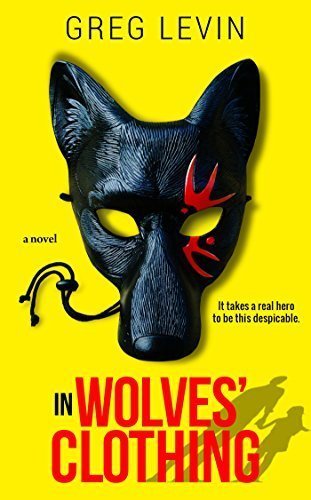
Some "killer" lines from IN WOLVES' CLOTHING:
“There’s nothing better than being the bad guy. Long enough to do some good.” “I tell him I’ll be back to my old self once we’re getting handcuffed in Phnom Penh.” “I can’t remember if I took an oxy during the flight, so I eat two. They pair nicely with the scotch. It’s good to be home.” “That’s one of the drawbacks of good narcotics—they often cause you to say cheerful things.” “Appear too confident and comfortable, and your cover is blown. You are a perverted coward with no shred of decency, so for God’s sake act like it.” “To get into character, think about the biggest douchebag frat guy you’ve ever met, imagine him with several million dollars, multiply his money and demeanor by ten, and then act like that guy. Right up until the cops remove your handcuffs and thank you.” “Before I joined Operation Emancipation, I was just like the dozens of people fuming at Gate A-11 right now. Flight delays would ruin my day. Now? Now I can smile and whistle while walking through a pediatric cancer ward.” “Whenever out with others, I can do pleasant. I can do content. I’m even able to muster empathy and interest on occasion. It’s not as easy as doing conniving, creepy, sleazy and sinister, but sometimes you just have to leave work at the office.” “Barrett and Malik just arrived. A former Navy Seal and recovering coke addict, and a former Secret Service agent who got fired for punching a senator in the throat. Finally, some people I can relate to.” “Maybe Caleb really is the bright and shining star Fynn has described. Maybe he’s self-actualized and stable and moral. Maybe he’s undamaged goods. If so, he’ll never fit in.” “Human trafficking has a tremendous future. Even brighter than drug trafficking. It’s why many big-time dealers are diversifying—dipping their toes into the sex trade.” “The reaction I’m looking out for is anger, which is the natural reaction and thus unacceptable. I’m also looking out for sadness, especially tears. Tears are completely normal. This job is not.” “It’s more serious than I suspected. Caleb isn’t an alcoholic or a drug addict or suffering from PTSD. He isn’t depressed or bipolar or a masochist. He’s a Buddhist. I can overlook a lot of shit in a Jump Team member, but total enlightenment is where I have to draw the line.” “And here I am, toasting a silver and sapphire blue ceramic container, trusting that the Eden Funeral Home got things right. That there were no mix-ups in the crematorium. I don’t like drinking with strangers.”
Praise for IN WOLVES' CLOTHING
“Levin movingly conveys the horrors of child sex trafficking in this effective thriller. He provides a window into one of the world's darkest underbellies, while somehow managing to insert appropriate lighter moments. This author deserves a wide audience.” —Publishers Weekly
“A riveting, fast-paced thriller. In Wolves' Clothing is an immensely satisfying read by an author with a genuine flair for originality and narrative-driven action. Unabashedly recommended.” —Midwest Book Review
“I highly recommend In Wolves' Clothing to those who love dark crime fiction and thrillers, as well as edgy literary and transgressive fiction— especially Chuck Palahniuk fans.” Lauren Sapala, author of Between the Shadow and Lo and The INFJ Writer
“Truly original and enthralling. Levin's blazing prose and acerbic wit capture the madness and the humanity of working undercover in the darkest corners.” —Radd Berrett, former Jump Team member, Operation Underground Railroad
“A sharp novel, both in action and in style, with fabulous dialogue and a flawed hero you'll love.” —Olga Núñez Miret, Rosie's Book Review Team
“There’s no escaping the adrenaline-packed punch of emotions that conclude with a thrilling ending. An unforgettable novel.” —Paul Falk, NetGalley reviewer
Knowing you’re dying can be murder.
When Gage Adder finds out he has inoperable cancer,
things really start to look up for him. He leaves his
soul-crushing job, joins a nice terminal illness support group,
and takes up an exciting new hobby: serial killing.
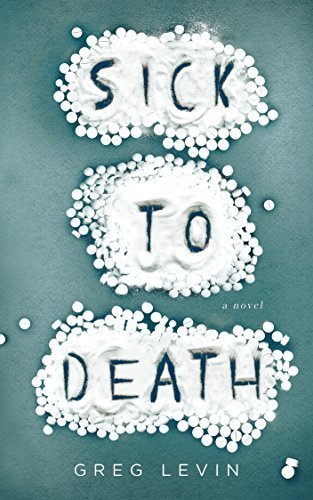
Some "killer" lines from SICK TO DEATH:
“Over the previous six months, there was only one thing Gage had become more efficient at than killing… and that was dying.” “Gage had never cared much for dark comic books. He was simply becoming the main character in one.” “He never praised me whenever I’d hit a home run in little league, but I kill a few people and all of the sudden I’m his idol.” “That’s the problem. They potentially have decades and decades ahead of them. A long and bright future. Too much life is getting in the way.” “It was like picking teams for kickball at recess, only there were three team captains instead of two doing the picking. And getting picked meant you’d soon be dead.” “Dying was the least of Gage’s problems.” “Prison? You’re worried about prison? You’re already on death row, my friend.” “It’s best to discuss mass murder behind closed doors, and Jenna lived the closest.” “Learning he might not be dying really threw a wrench into Gage’s plans. He didn’t see how he could go on killing if there was a chance he’d go on living.” “The problem with celebrating a birthday in a hospice center is all the oxygen.” “Sitting in a hospice room staring at three uncommon zombies, the sickly triplets behind the most popular murder spree of the century.” “That’s one way to lose your religion. Watching your deity vomit next to some road kill.” "We’d be dead. Big deal. Death’s not such a long drop these days. Not for us."
Praise for SICK TO DEATH
“A tour de force dark comedy.” —Craig Clevenger, author of cult classics The Contortionist's Handbook and Dermaphoria
“A satirical thriller that says serious things as well as telling a stonking story. It'll appeal to readers who enjoy Dexter's adventures. For me, it ranks alongside Josh Bazell's Beat The Reaper.”—Rowena Hoseason of Murder, Mayhem & More
“Uniquely entertaining and captivating. Levin's prose is playful yet ominous, and the negotiation of this unique spectrum produces some truly great dialog and passages. He takes this story in bold directions that keep the pages turning. Definitely worth checking out!” —Bryce Allen, author of The Spartak Trigger and Idol Threat
“Darkly funny, with literary undertones. Look past the sharp wit and clever turns of phrase to find a novel that speaks to man's purpose in life, escalated by his impending death. When the third act begins to spin out of control, the author clinches it with a clever twist that leaves a very satisfying ending. I'd highly recommend this book to anyone ... except maybe the terminally ill.” —Scott Kelly, author of [sic] and the Keep the Ghost Trilogy
“Greg Levin has done it again with Sick to Death. As in his previous books, Levin weaves dark humor and a human touch into every chapter of this transgressive tale. Highly recommended.” —J.R. Hardenburgh, hard-to-please reader
Suicide should come with a warning label: “Do not try this alone.”
Eli Edelmann never intended on taking over his father's party supply store.
Nor did he ever intend on making a living through mercy killing.
But life doesn't always go according to plan.
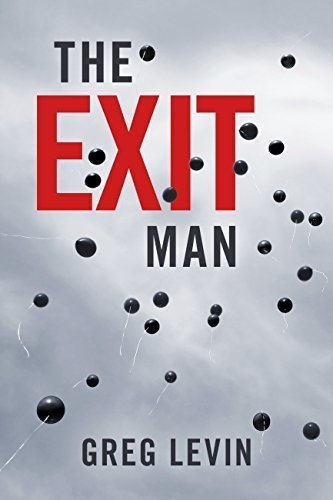
Some "killer" lines from THE EXIT MAN:
“I wasn't some monster looking to feast on the weaknesses of salvageable souls. I saw myself as a noble purveyor, a humanist catering to the completely vanquished.” “I was an equal opportunity executioner.” “After a year or so of helping people die, I was really starting to reach my full potential.” “The weekend had been interesting and eventful, but it was time for me to return to my normal life of selling party supplies and lining up suicides.” “It’s hard enough meeting someone you find beguiling enough to want their contact information. Start nitpicking about a few past indiscretions or a police record and you’ll end up dying sad and alone.” “A team was forming. And what a pair we were. Collectively we represented multiple consecutive life sentences—me for my illicit side job; her for a single mistake.” “You get used to offering condolences and shaking hands with family members of the person you helped put in the casket or urn before you.” “It wasn’t enough sneaking around helping sick people disguise their suicide as natural death. I needed some excitement in my life.” “She had become an integral part of my life—just not the part with all the death.” “There’s nothing quite like a perfectly executed suicide to get you feeling right again.”
Praise for THE EXIT MAN
“The sharpest, funniest voice in U.S. literature since Carl Hiaasen. Greg Levin's second novel is a corker.” —If These Books Could Talk
“Imagination-capturing and fresh. I highly recommend reading The Exit Man, but strongly advise: Do not try this at home!” —TNT Reviews
"The Exit Man is black humor at its best. If you like dark humor, buy it now." —D.E. Haggerty, author of Life Discarded and Buried Appearances
“A surprisingly delightful and exciting read. Levin’s deft wrangling of the language lifts the subject matter from macabre to entertaining, from WTF to LOL, from “you’ve got to be kidding me” to “I’m sticking around for the ride.” —Michael Smart, author of the Dead Reckoning, Deadeye, and Deadlight
“Smart dark humor wrapped in an inventive story. Levin handles the topic of assisted suicide with respect while busting conventional thinking with clever humor and quirky characterization. A unique, inventive, and well-written novel.” —Lisa Haneberg, author of the Spy Shop Mysteries
Thank you very much for stopping by. I’m truly humbled by you letting me show you how amazing my books are. Don’t forget to take advantage of the very limited time offer—just 99 cents for each of my three novels! Sorry, I didn’t mean to shout.
DO IT!
(For those of you in the UK, you can take advantage of the book sale by clicking here.)
Oh, and tune in next time, when I (expect to) share some exciting news about my upcoming novel, INTO A CORNER.
January 6, 2020
Interview with Cheryl A. Head: Author of riveting mysteries, champion of diversity (in fiction and beyond)
If you’re into mysteries featuring macho-man private investigators and familiar tropes that have crowded the crime fiction genre for decades, don’t read anything by Cheryl A. Head. If, however, you dig mysteries that steer clear of clichés and delve into more intriguing territory, you’re going to want to pick up one of Head’s novels.
Which one? Doesn’t matter—they’re all damn good, damn entertaining, and damn fearless. Sorry for all the swearing; it’s just, Head is a badass. She takes her mysteries where most mysteries fear to tread—presenting a highly diverse cast of characters and exploring challenging social issues that grab you as a reader without knocking you over the head.
Book 4 of Head’s riveting Charlie Mack Motown Mystery series—Judge Me When I'm Wrong—just launched in October (via Bywater Books). Book 5 of the series—Find Me When I’m Lost—is due out in mid-April and already available for pre-order.
As busy as Head has been knocking out great novels, she was kind enough to let me bug her with a bunch of interview questions … and took the time to provide me with some very insightful, thought-provoking responses. So let's get to it!
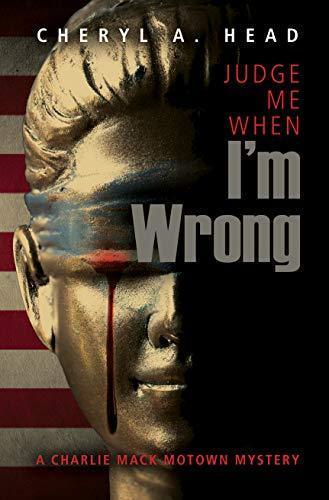
Welcome, Cheryl, and congrats on your latest: Judge Me When I'm Wrong. This book—along with the three others in the Charlie Mack series—is excellent. I get that this isn’t actually a question, but I figured you wouldn’t hate receiving the praise.
Writers always love every bit of praise, so thank you!
The deeper you get into the Charlie Mack series, have you found it easier to keep things compelling—since you’re “in the groove”—or do you find it harder because readers are always expecting more excitement, twists, and surprises?
I’m finding it a bit harder to come up with overall case plots. The big ideas. I’m always my first reader, and I want to keep myself amused, engaged and learning something new. The concept for Book 5, Find Me When I’m Lost, was already in the back of my mind, but as I think of Book 6 and beyond, I have momentary panic about not having fresh material. In actuality, I know that won’t be the case because I have more ideas than Prince had songs in the vault. For instance, I know I want to explore more about the fight Charlie’s mother undertakes with Alzheimer’s. I know I want to focus on Don Rutkowski’s (Charlie’s business partner) internal machinations with racism. I want to introduce a new partner into the Mack Private Investigation firm. I just have to figure out how to seamlessly incorporate those ideas within one of Charlie’s investigations.
One of the many reasons readers (including myself) enjoy your novels is how deftly they rep the diversity that makes America America today. Your stories don’t shy away from important and often challenging themes and issues around diversity—while simultaneously keeping readers riveted and entertained. Who have been the biggest influences on you and your ability to write such real, daring, and captivating fiction?
Wow. Thank you for getting what I do and enjoying it. I’m jazzed by that.
I have to say I see myself as a bit of a race woman. By that I mean I think all the time about our country’s ongoing wrestle around diversity issues. In my opinion, we won’t live up to the potential we have as a country unless we confront the systemic issues of race which include class, public policy, religion, public education, poverty, etc.). I’m taking a small bite out of the apple to write about some of these issues through the prism of protagonist who is African American and lesbian. I feel compelled to do that. I want the kernels of truth I present to be ideas that build up our empathy for each other. I know, without a doubt, that people across the globe have many of the same aspirations, hopes and goals. These universal desires, at a very primal level, connect us as human beings.
I guess my best inspiration for writing about tough subjects is being a wide-eyed, open-eared observer. I also believe I’m very empathetic person. I try to pour a lot of that awareness into my writing. However, I haven’t yet surrendered myself to that process. If I do, I know I’ll write a very good book. I say “if” rather than “when” because to do so, I’ll have to give up my emotional control. I don’t do that very easily.
A little while back, author (and our mutual Twitter pal) Matt Coleman wrote a piece for Book Riot in which he opined that the best crime fiction authors today are women writers, writers of color, and writers from the LGBTQ community. Would you agree? Care to comment? And please, don’t let the fact that I’m a straight white male with thin skin influence your response! Bring it!
You asked for it, so I’m going to bring it. LOL.
Of course, Matt is a genius and a super-nice person. I totally agree with him. The glimpses of brilliance in literature, and in the arts in general, often come from creatives on the margins. There is something about being held back, unseen, discounted, pigeonholed, and ignored that makes one write with furious, truthful, authority. These stories are born of passion, pain, promises, perversion, perspective, pathology, pensiveness, pleasure, proximity, and purpose. They come from LGBTQ writers, writers of color, women writers, any group really outside of the privileged status of white, cis, male, straightness, and enrich our literary canon. There are so many contemporary mystery writers to point to as an example of this brilliance: Attica Locke, Steph Cha, Walter Mosley, Sujata Massey, Tracy Clark, Joe Ide, Penny Mickelbury, Shawn Cosby. I could go on for another ten minutes. And these are only the names of one group–writers of color, and in one literary genre–crime/mystery.
A lot has been written and said recently about the strides the publishing world’s making in terms of diversity. Do you feel enough is being done to bring new voices to crime fiction, or is there still a long way to go?
There is a lot being done to bring new voices to crime fiction, and still a lot to do. 2019 was a bad year for the crime writing community in terms of navigating diversity issues. There were just too many head-in-the-sand, tone deaf, bull-in-the-china shop bungling of things. We’ve all heard, and read, about the acts of commission and omission this year with some of our major conferences, and organizations in our community. Hopefully, 2020 will be smoother. Notice has been given, and I believe the community understands more precisely that embracing diversity as a bona fide value within a system is hard work. Not surface work. I could say more, but I’ll save it for a conference panel. LOL. On a positive note, I’ll point to the formation of the Crime Writers of Color group by Walter Mosley, Kellye Garret, and Gigi Pandian. It is a wonderfully effective support group.
When did you first realize you wanted to be a crime fiction author? What do you like most about writing in this genre? What do you find most challenging?
I guess I didn’t know I wanted to be a crime fiction writer until maybe after reading both Barbara Neely’s Blanche series, and early installments of Sue Grafton’s alphabet series. I’ve always been a fan of the genre. The bulk of my work as an adult (before taking an early retirement) was in television production, so I’ve always visualized mystery/crime stories and been a fan of the movie/TV versions of the genre. I’ve also been acutely aware of the diversity—or lack thereof—in those offerings.
I wrote my first mystery in four months. It was a cathartic exercise after a particularly grueling experience writing historical fiction. That first mystery novel (which I self-published) connected me to my current publisher and eventually became Book 1 of the Charlie Mack Motown Mystery series.
My only challenge is carving out the time to write. I love writing crime fiction. It gives me the opportunity to opine about the dark side of human nature, present the perspectives of the underdog, point to mankind’s shared commonalities, poke at power, celebrate those who are inherently heroic, and murder people who need to be killed.
Who are a few of your favorite authors? What was the last novel you read? What are you currently reading?
I’ve already mentioned some of my favorites. I read, and enjoy, the works of a lot of male authors because I really do like the tough protagonists; the archetypal noir loners with a code of honor. It’s the reason I love westerns so much. Some of the novels I’ve read recently include: Sarah Paretsky’s Shell Game—V.I. Warshawski is one likeable, kick-ass P.I.; Tara Laskowski’s One Night Gone—wonderful imagery; and one of the books in Alex Segura’s Pete Fernandez mystery series. On my bedside table—on rotation—is a Joe Ide novel and Loren Estleman’s Black and White Ball. My reading for the last month has been short stories, so I’m sort of behind on novels.
What can we look forward to in Book 5 of the Charlie Mack series? Do you have any plans to write something outside of that very popular and successful series?
Book 5 (out in April) is a complex story of family betrayal and murder, but there’s some fun, catty, fireworks between Charlie and her ex-husband’s new wife; and there’s been a change of personnel in Charlie’s P.I. firm, which adds additional intrigue.
I’ve been slowly working on a stand-alone set in Washington, DC with a new, male P.I. I’ll finish it sometime this spring. The one thing I came to grips with in writing the new piece is I don’t have the same affinity and affection for DC that I have for Detroit. So, Go Lions! And boo to the football team whose racist name I don’t speak aloud. Is that too much information? LOL
Is there anything you were hoping I’d ask but didn’t?
No. But I can tell you that I’ve decided 2020 will be my year to say “no.” I overcommitted in 2019 to work that was fun, like conferences and award-judging, and to things I believed in, like panels and presentations about diversity, but I didn’t have as much time this year to just think and write. In 2020, I’ll be thinking and writing and reading for pleasure. Maybe I’ll look for a writing retreat to facilitate meeting those goals.
That being said, thank you so much for the opportunity to respond to these thoughtful questions. And let me say, I admire your work—so keep on doing it! I look forward to reading your new novel in 2020.
Well, thank YOU, Cheryl—for the kind words, and for your time and candor. I wish you continued success with your writing and life, and look forward to reading everything you have coming down the pike!
If you’d like to learn more about Cheryl A. Head and her excellent books, check out her website, Amazon author page or Facebook author page—and be sure to follow her on Twitter and Instagram.
December 17, 2019
The Twelve Days of Crime Fiction Christmas
I know what you’re all thinking: “Really, Greg, you’re going to co-opt a beloved Christmas song and turn it into an anthem that celebrates criminal activity—all just to help promote the types of books you write?”
In my defense, YES.
Okay, maybe not all of you are thinking what I’ve assumed above. My parents, for instance, are probably thinking, “Greg, what the hell are you even doing with a beloved Christmas song? We’re Jewish!”
I guess the point I’m trying to make is, enjoy!
Here’s my version of The Twelve Days of Christmas—with a heavy twist of crime fiction added in for good measure:
On the first day of Christmas, my true love gave to me
An hour every day to just read.
On the second day of Christmas, my true love gave to me
Two alibis
And an hour every day to just read.
On the third day of Christmas, my true love gave to me
Three dead bodies
Two alibis
And an hour every day to just read.
On the fourth day of Christmas, my true love gave to me
Four red herrings
Three dead bodies
Two alibis
And an hour every day to just read.
On the fifth day of Christmas, my true love gave to me
Fiiiiive anti-heroes
Four red herrings
Three dead bodies
Two alibis
And an hour every day to just read.
On the sixth day of Christmas, my true love gave to me
Six snitches snitching
Fiiiiive anti-heroes
Four red herrings
Three dead bodies
Two alibis
And an hour every day to just read.
On the seventh day of Christmas, my true love gave to me
Seven villains killing
Six snitches snitching
Fiiiiive anti-heroes
Four red herrings
Three dead bodies
Two alibis
And an hour every day to just read.
On the eighth day of Christmas, my true love gave to me
Eight perps escaping
Seven villains killing
Six snitches snitching
Fiiiiive anti-heroes
Four red herrings
Three dead bodies
Two alibis
And an hour every day to just read.
On the ninth day of Christmas, my true love gave to me
Nine narrators lying
Eight perps escaping
Seven villains killing
Six snitches snitching
Fiiiiive anti-heroes
Four red herrings
Three dead bodies
Two alibis
And an hour every day to just read.
On the tenth day of Christmas, my true love gave to me
Ten gangs uniting
Nine narrators lying
Eight perps escaping
Seven villains killing
Six snitches snitching
Fiiiiive anti-heroes
Four red herrings
Three dead bodies
Two alibis
And an hour every day to just read.
On the eleventh day of Christmas, my true love gave to me
Eleven PIs peeping
Ten gangs uniting
Nine narrators lying
Eight perps escaping
Seven villains killing
Six snitches snitching
Fiiiiive anti-heroes
Four red herrings
Three dead bodies
Two alibis
And an hour every day to just read.
On the twelfth day of Christmas, my true love gave to me
Twelve cases closing
Eleven PIs peeping
Ten gangs uniting
Nine narrators lying
Eight perps escaping
Seven villains killing
Six snitches snitching
Fiiiiive anti-heroes
Four red herrings
Three dead bodies
Two alibis
And an hour every day to just read!!!
There, see—that wasn’t so bad or disrespectful or inappropriate or sacrilegious or blasphemous, right?
More importantly …
HAPPY HOLIDAYS TO ALL, AND TO ALL A GOOD READ!
See you in 2020!
December 3, 2019
Laughing in the Dark: How "Funny" Can Be Fierce
My novels explore some really dark stuff. Stuff like terminal illness, voluntary euthanasia, serial killing, sex trafficking, drug addiction, dementia. Yes, I have sought professional help. No, it hasn't stopped me from tackling such grim topics. And here’s the thing: When reviewing a novel of mine—whether the book is about a terminally ill man who kills people, or about a man who kills terminally ill people, or about a man who pretends to be a pedophile to catch sex traffickers—most readers mention they found the book funny. Many say they laughed a lot. Some say they peed a little.
Those of you who’ve never read any of my books (and I know who you are—I’m making a list, checking it twice) may be thinking, “What kind of sociopath writes books that make light of such horrific topics and issues? And what kind of sociopaths read such books and laugh enough to need an adult diaper?”
First of all, go easy on my readers—they’re good people. Secondly, allow me to explain:
I don’t make light of people dying or killing. I don’t make light of cancer or the people suffering from it. I don’t make light of sex trafficking or drug addiction or dementia. What I do (or try to, at least) is show how humans—when stuck in the darkest of spaces—will scratch and claw at the walls until even the tiniest speck of light breaks through. Humor is a natural survival mechanism, so naturally I try to weave some into books about people facing serious adversity. My aim isn't for readers to laugh at the darkness but rather to laugh in it. I never try to force “the funny” (like I sometimes do on my blog or when trying to embarrass my daughter in public). Instead I try to use the funny to appropriately juxtapose the frightening and the fierce.
If you were to ask me what I’m most proud of in my writing career, I’d make no mention of awards or Hollywood options or major book deals (especially not that last one, since I’ve never had a major book deal.) What I’m most proud of are the times when readers—particularly those who’ve personally experienced the same/similar tragedy or peril featured in a book of mine—reach out to say they appreciated how the book’s humor elevated the story rather than detracted from it. How it elicited laughter without disrespecting the dire straits the characters faced. As a writer, there’s only one thing more rewarding than hearing that a reader “got” exactly what you were going for: Hearing that what you were going for made a lasting impact on a reader and helped to ease their suffering, relieve their grief, make their day (or even just their hour or minute).
That’s what novels by the likes of Chuck Palahniuk, Kurt Vonnegut, Elmore Leonard and Sara Gran do for me. Such books break my heart while making me bust a gut. They show humanity at its worst yet somehow manage to restore my faith in it. They cause me to cringe and clench and cheer and laugh in equal measure. A few other authors who effectively pepper their powerful, gritty fiction with humor are Joe Clifford, Rachel Howzell Hall, Nico Walker, and Will Christopher Baer.
If you look at the reviews for any of my novels, you’ll see plenty of readers starting off with something like, “I didn’t know what the hell I was getting myself into with this book” or “I was a little nervous about cracking this one open,” but what soon follows is usually something like, “I couldn’t believe I was laughing along with and rooting for these characters” or “Hilarious and delightful, though also heart-wrenching.” (For a perfect example of such a review, click HERE.)
I love receiving reviews like those. Not because they’re positive and full of praise (though sure, that’s nice, too); rather because I love it when readers take a chance on books with topics that worry or rattle or frighten them—books they fear may cross the line or trigger painful emotions or memories. And I love it even more when those readers, after diving into such books, walk away rewarded for their risk—feeling not only entertained but also touched and moved. Perhaps even inspired.
Just like how I feel every time I discover a novel that dares to laugh in the dark.
How about you? Have you ever bought or borrowed a book you thought might scar you for life but that ended up moving you to tears and laughter? I’d love to hear about it—please share in the comments section below.
November 19, 2019
The People and Things I'm Most Grateful for as a Writer
I don’t know what's gotten into me lately. Something's wrong—I’ve been experiencing an overwhelming sense of gratitude. Sure, there are worse things than gratitude to come along and suddenly start ruling your life, but for someone who’s been sarcastic and cynical and annoying since birth, becoming immensely grateful out of the blue can be a real shock to the system.
Imagine waking up one morning and instead of your first thought being, “I wonder how the universe is going to punk me today” or “People who change lanes without signaling should be executed,” it’s more along the lines of “Being alive is a wondrous gift!” or “Hugs aren’t so bad!” Honestly, I don’t even know who I am anymore. Oddly enough, my family and friends hope my existential crisis continues.
Maybe it's because Thanksgiving's right around the corner. Maybe it’s the meditation I’ve been doing daily. Or my long walks through the woods behind my house. Or the strange magical powder made from a Southeast Asian plant I recently started ingesting to help with my anxiety. (Don’t worry, it’s legal—the powder I mean, not my anxiety.) All I know for sure is I’m more grateful than ever.
While I hope this whole gratitude thing doesn’t hinder my ability to write dark, disturbing novels, I can't help but mention the people and things I'm most grateful for with regard to my fictional—er, I mean fiction—career.
Readers/followers/subscribers. People have extremely busy lives. There are so many other things they must do and could be doing that don’t involve reading a single word I write. So whenever someone lets me in—even if it’s through the tiniest sliver and for only a few minutes here and there, I don’t take it for granted.
I realize “readers/followers/subscribers” is a bit of a clunky term to be used by someone who is supposed to be good with words, but I’m not yet comfortable using the term “fans”—mainly because I once used that term when referring to a friend who has read all my books, and she said, “Fan? Don’t get carried away, Greg.” I’m actually glad she said it. I am. No, really, I’m grateful to her for keeping my ego in check, even if I’ve yet to fully recover from that crushing blow.
My Launch Team. For those of you who don’t know what a launch team is, you must not love my writing enough to be on mine. A launch team is a group of people who not only enjoy reading an author’s work, they're also are eager to help spread the word about each new book that author puts out so that many other people can enjoy reading the author’s work. And man, I can’t tell you how grateful I am to the dozens of people on my Launch Team. I’m especially grateful that none of them jumped ship when I ended up not launching my upcoming novel (Into a Corner) when I said I was going to—even though many of them had already taken the time to read an advanced reader copy (ARC) of the book and prepared an early review to help build buzz around it.
As somebody with minimal patience, I don’t deserve much of it in return. So, to each member of my Launch Team (and you know who you are, seeing as how you’ve received plenty of weird emails from me in recent months)—a huge THANK YOU for all of your continued support, encouragement, and enthusiasm around my writing efforts. And don’t worry, Into a Corner will (almost) definitely be published in 2020. (2021 at the latest.)
Kind, generous colleagues in the writing community. Emphasis on “community.” This year—more than any other in my writing career—I’ve had the great privilege of meeting and gaining invaluable insight and support from a whole host of authors who write the same kinds of books I write but who have sold many more copies. Some of these authors I’ve met only virtually; others in person. All of them, however, have been extremely generous with their time and, more importantly, their assistance in putting me on a path toward literary fame and fortune. (Mind you, it’s a long and crooked path inhabited by giant scorpions, plus I keep misplacing my compass.)
There isn’t enough space for me to list every author I’m crazy grateful for, or to go into detail why, but here are a handful of names (with links to each author’s [and an editor’s] website … because buy their books!): Lee Matthew Goldberg, Elisabeth Elo, Craig Clevenger, Darynda Jones, Richard Thomas, Chris Rhatigan, Eric Beetner, Lauren Sapala, Ed Aymar, Sarah M. Chen, Alex Segura, Lenny Kleinfeld. Oh, and a special shout-out to Joe Brosnan of Criminal Element—for inviting me to write feature pieces on a semi-regular basis for one of the best crime fiction platforms on the planet.
The internet. I met my wife through it. I found my cats through it. Most importantly, I learned the absolute best way to dispose of a dead body through it.
As instrumental as the internet has been in my real life, it’s been positively indispensable to me with regard to my writing life. Were it not for the worldwide web and its dark second cousins, I wouldn’t have a fraction of the readers/followers/subscribers I have, wouldn’t be able to work in just my underwear most days, and wouldn’t be a subject matter expert on such fun topics as euthanasia, sex trafficking, poison, or minimizing your carbon footprint when you murder someone. It has truly made me a better person.
My agent (on the TV side). I still don’t really know how I lucked into getting a TV/film agent at CAA a few years ago, but I’m not here to over-think things—I’m here to express how freakin’ grateful I am that my agent’s on the brink of sealing yet another option deal with a major TV studio/network for my novel The Exit Man. (Sorry, can’t disclose the studio’s name yet.) I’ve been here before—with HBO in 2015, and with Showtime in 2017—unfortunately neither of those option deals resulted in a TV show. Here’s hoping the third time’s a charm. Regardless, it’s an absolute honor just to have one of my books be in the position for a TV adaptation to happen.
(Some of you may have noticed I didn’t mention my literary agent here. It’s not because I’m ungrateful to my literary agent; it’s because I don’t have one. Yet. Working on it, and it’s not as easy as you might think. Well, either that, or my books aren’t good enough for NYC despite being good enough for Hollywood—which is sort of the writing-world equivalent of telling an actor they have a face for radio.)
My physical and mental health. Not a day goes by where I don’t thank my brain and body for continuing to allow me to write novels. You’d be surprised how taxing it can be to sit on your ass and make stuff up. Seriously, it takes a lot of back and wrist and finger muscles to keep words flowing onto a screen day after day for hours on end. And it takes a lot of brain muscles to ensure that the words flowing onto the screen make some semblance of sense and tell a story that doesn’t suck. Oh, and don’t even get me started on how many heart and mind and gut muscles it takes to deal with all the rejection and sales slumps—not to mention all the demands of imaginary people.
So yeah, I’m super-grateful for my physical and mental/emotional) health. That’s why I exercise and meditate every day, and why I limit my use of alcohol and drugs to when I’m awake.
My wife and daughter’s support and patience. This isn’t the first time I’ve used this blog to express how grateful I am to my wife and daughter for not having left me or murdered me or worse. And it won’t be the last, as I would very much like to stay married and loved and alive. Living with any fiction writer isn’t easy. Living with an HSP (Highly Sensitive Person) fiction writer like me is next to impossible. (“Would you people three rooms over please stop breathing so much—I’m trying to write a novel in here!”) Think I’m exaggerating? I once yelled at my daughter for feeding the cats too loudly while I was busy trying to dispose of an imaginary body.
The hell that writers like me put our characters through is a warm bubble bath compared to the hell we put our loved ones through. Because the hell we put our loved ones through is real, despite the fact that we do it in the name of fiction. Fiction that in most cases relatively few people will read. Fiction that rarely pays the bills—or even a bill. Fiction that … is fiction.
So, if you’re a writer who lives with other people, and you’re still married and loved and alive, you’d better thank whatever god or gods you believe in. Thank heaven. Thank your lucky stars. And, most importantly, thank those people—the ones three rooms over who are breathing too much and feeding the cats too loudly and putting up with your crazy bullshit but still letting you write since they know how big a part of you it is. Thank them right now. Thank them tomorrow. Thank them every damn day. Because even if you never sell a single copy of whatever you’re working on, you, my friend, have hit the jackpot.
Just like I have.
Your turn. Feel free to share what you're most grateful for—either as a writer or as a normal human being.
Oh, and Happy early Thanksgiving for those who celebrate it!
November 5, 2019
Almost Good Ideas for Thrillers I Almost Wrote
I often come up with an idea for a crime novel or thriller that seems so good, I don’t even think about how I should look at it more closely the next morning when I’m sober. Then the morning comes and, after looking at the idea more closely, I realize three things:
1) It’s not a very good idea.
2) Ideas I come up with while drinking rarely are.
3) I must like drinking more than I like good ideas.
There should be a support group that helps authors grieve over book ideas they lose to sobriety. (Actually, such a group sort of already exists—it’s called Alcoholics Anonymous. But I don’t like listening to alcoholics talk about their problems unless the alcoholics are authors and their problems are about books.)
Few things are worse than thinking you have a killer concept for a novel, only to wake up and discover your brilliant idea is DOA and that you’ve slept in your car.
Whenever this happens, there’s no need to despair. I’ve learned one of the best ways to get over dead novel ideas is to share them with others in a blog post on a Wednesday in November. Below are my three most recent ones.
1) title: THE FIXER-UPPER
Premise: Exasperated by the trappings of the modern world, criminal defense attorney Roxy Bower buys an old, rustic, off-the-grid cabin in the woods of Oregon, where she hope to decompress on weekends. After the contractor she hires botches the cabin’s renovation, Roxy kidnaps him and holds him hostage until he repairs everything he screwed up. Trouble is, the contractor—unbeknownst to Roxy—has ties to the Pacific Northwest underworld. Even worse, Roxy succumbs to reverse Stockholm syndrome and falls in love with the contractor, who, as it turns out, is her long-lost first cousin.
Will Roxy get murdered by the mafia before she gets her cabinets hung correctly and her plumbing fixed? Will her love for her hostage be requited and, if so, will they get married and have a child with three arms or some other incest-related birth defect?
2) title: WRITING WRONGS
Premise: William, a once great but now struggling novelist, is visited and tormented by several of his incomplete characters—all of whom are furious over the fact that he has left them stranded in abandoned manuscripts. Each character demands that William complete the book in which they are currently “stuck.” Several of the characters threaten William with grave physical harm if he even thinks about killing them off before fully developing them and giving their stories a proper conclusion.
Is this the end for William, or the best thing that could ever happen for his writing career? Or BOTH?
3) title: DEAD SET ON DEMOCRACY
Premise: Approaching the 2032 presidential election, the country is divided. Half the people love the rogue, egomaniacal incumbent president, Ronald Rump; the other half would do anything to oust Rump from the Oval Office. One thing everyone can agree on, however, is that Hollywood mega-celebrity Chloe Cavanaugh is a national treasure. So when news breaks that Ms. Cavanaugh has been abducted and murdered by a member of a misogynistic white nationalist organization, the entire country is traumatized and furious—especially since the captured killer has shown no remorse and says he was inspired by the ideology espoused by the president.
Despite Rump denouncing the horrendous crime, his favorability rating plummets just a week before Election Day. All signs point to him not being reelected, but a day before the election, it’s discovered that Chloe Cavanaugh faked her own murder to help “unite the people and save the country.” Will her bold and desperate plan work, or will it backfire and lead to even more political and social upheaval? Who the hell knows—there’s no way I’m ever going to write this novel.
If you’re thinking of tinkering with some of my dead novel ideas to see if you can make something out of them, please note that there is an advance directive in place for each that clearly states DO NOT RESCUSCITATE. Kindly respect the dying wishes of these dead book ideas—or at least share half the royalties with me if you end up turning one of them into an international bestseller. Thanks!