Greg Levin's Blog, page 17
June 17, 2014
Cut It Out: The Controversial Opening I Removed From My Upcoming Novel
 When you write a (somewhat) comic novel about suicide, you’re going to ruffle some feathers and catch some flack. Expecting not to is like walking into the Republican National Convention wearing a Bill Maher tee-shirt and expecting not to get shot. And punched. And shot again.
Now before any of you leave this blog post in disgust and decide you want to shoot and punch and shoot me, let me assure you that I understand there’s nothing funny about suicide. My soon-to-be published novel, The Exit Man, does not make light of offing oneself. It tells the tale of a man, Eli, who helps terminally ill individuals end their immense suffering and die with dignity. The humor in the book stems not from death or suffering but rather from the complicated predicaments that Eli continuously finds himself in. And from paradox. You see, Eli’s day job is that of a purveyor of party supplies.
That said, I acknowledge that the original opening (which I share below) to The Exit Man was a bit much. It did little to establish Eli as a compassionate figure. While many early reviewers of the original manuscript loved the aforementioned opening for its darkly comic and sardonic tone, a few others worried that it might make readers see my anti-hero as much more “anti” than “hero.” So, after much deliberation, I decided to scrap it from the book and replace it. (Not that the new intro isn’t dark and sardonic in its own right.)
Now, just because I decided the original intro wasn’t quite book-worthy doesn’t mean it isn’t blog-worthy. So here it is for your enjoyment, or your displeasure. Or both.
Most people can’t execute a successful suicide to save their life. I’m not talking about folks who go at the task half-assed as a cry for help – e.g., slitting their wrists superficially and sideways or chasing a couple extra Oxycontin tablets with a couple extra vodka shots. No, I’m referring to individuals who really want out but who very unintentionally botch the process, leaving themselves technically alive and with a lot of explaining to do.
In their defense, killing yourself can be tricky business. The human body, despite its seemingly brittle nature and uber-sensitive systems, is surprisingly resilient. It wants to stick around even when the brain is ready to call it quits. Mentally and emotionally you may have had enough, but your body is hell-bent on keeping at least a handful of critical organs open for business.
The body’s innate ability to hang on and bounce back isn’t the only issue. We humans also possess a general inability to gracefully operate instruments of self-destruction while under duress.
So the next time you hear about a failed suicide attempt, don’t instantly assume the “victim” in question didn’t try hard enough. It could very well be that they gave it their best shot but bungled it anyway.
I mean, consider the challenges and risks associated with the most common exit methods.
Wrist slitting. Blood let from arteries or veins by a razor blade often coagulates too quickly. Clots occur and keep the pulse pumping, thus ensuring that you’ll reluctantly live a long(er) life in a monitored room.
Self-inflicted gunshot. A rifle or revolver inserted into the mouth and aimed up at the brain pan tends to jerk forward when fired by an amateur, thus leaving the brain in tact but the face flayed – a vivid bisection from upper lip to forehead that makes facial reconstruction and future dating doubtful. It also greatly hinders one’s ability to do long division.
Overdose. Popping even a highly lethal dosage of pills often results in excruciating abdominal pain prior to passing out, after which involuntary regurgitation typically spoils the show. And even if it doesn’t, there’s often someone who discovers your toxic self and quickly calls in the paramedics for a successful stomach pumping.
Jumping from a bridge or building. Unless done from an excessive height, such attempts are often unsuccessful. The 50-foot leaps and 6th floor “falls” that we often hear about are really just an invitation for full paralysis and a lifetime of liquid food.
Jumping in front of an oncoming train. While this will do the job nine times out of ten – making it among the most fatal suicide methods – it is easily one of the messiest and most publicly invasive techniques, an ugly inkblot on the art form. Mind you, shattered bone fragments often act as dangerous shrapnel upon train impact, placing bystanders at risk of serious physical harm or, at the very least, post-traumatic stress disorder. And let’s not forget the damage that delayed trains do to the productivity of area businesses when jumpers opt to obliterate themselves during morning rush hour.
Carbon monoxide inhalation. This method is sooo 1975. Since then, nearly all automobiles have come equipped with a modern catalytic converter, which strips about 99% of the carbon monoxide from the vehicle’s exhaust. So unless you have a full day or two to sit around in a small, sealed garage with the motor running or can get your hands on a vintage Chevy or Dodge, forget about exiting John Kennedy Toole style. Keep in mind also that carbon monoxide poisoning is by far the least green method of suicide, so if you fail in your attempt, you not only will likely be institutionalized, you will have to endure the scorn of all your friends who recycle and drive a Prius.
Hanging. What are you, in prison? Living in a pre-industrial society? You can do better than this. I mean, I can see if you desperately need out and all you have at your disposal is some rope or fabric and a chair or tree. Otherwise, seriously rethink this. First of all, proper noose-making is a painstaking process. Secondly, the success rate for hanging isn’t high. Even when it does work, it’s not pretty – death often comes in the form of slow, painful strangulation rather than a quick cut of the cord.
Intentional car crash. Please. Today’s airbags are far too reliable. Besides, this method is really in poor taste. I mean, what did the innocent people in the oncoming car ever do to you? Even if your plan involves no other vehicle, why would you take out your own despondence on a majestic oak tree, or on a tax-payer funded overpass exhibiting artful graffiti that gives your suburb at least some semblance of a soul?
Drowning. You are not a poet and you never will be. So just stop it right now.
I do apologize if my attitude toward self-annihilation seems a tad cavalier. Please do not assume me a heartless bastard for exhibiting such callous levity. Let me assure you, I do not take suicide lightly.
After all, it’s how I make my living.
For the handful of you who made it to the end of this post and don’t need to lie down immediately, you can check out the new opening to THE EXIT MAN by clicking here .
And if you haven’t already joined my mailing list, do so now to receive the entire first chapter of THE EXIT MAN.


June 3, 2014
My 10 Favorite Dark Comic Novels
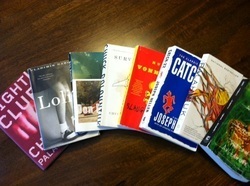 My love of dark comedy started at a very young age – likely ignited by watching my two older brothers punch one another in the face. Funny stuff. As I grew up, I’d often find myself laughing in places and at things that typically disturb more well-adjusted people. Hospitals. Funerals. Public education.
After I learned to read… correction… after I learned to LIKE to read – which didn’t happen until after college – it’s hardly surprising that I found myself drawn to books brimming with black humor. I’d even laugh while reading books that were dark but not at all intended to be funny. For instance, I found Dostoyevsky’s Notes From Underground to be a riot. And Kafka’s The Trial made me almost pee my pants.
There’s a fine line between humor and horror, laughing and lamenting, funny and frightening.
Following are my 10 favorite dark comic novels, along with my two favorite lines from each:
1) Fight Club (by Chuck Palahniuk)
A stunningly original tale of a young corporate insomniac whose life changes completely after befriending an enigmatic soap salesman who hosts underground fighting matches in bar basements. You’ve seen the movie – it’s good. Read the book (if you haven’t already) – it’s brilliant. Just don’t talk about it – that’s the first rule… and the second rule. I just broke both.
Favorite lines
“At the time, my life just seemed too complete, and maybe we have to break everything to make something better out of ourselves.”
“On a long enough time line, the survival rate for everyone drops to zero.”
2) Lolita (by Vladimir Nabokov)
As haunting and perverse as it is hilarious and tender, this was the first book that had me fully rooting for a character who, if I ever met in person, I would punch in the face before reporting him to the authorities.
Favorite lines
“You can always count on a murderer for a fancy prose style.”
“I knew I had fallen in love with Lolita forever; but I also knew she would not be forever Lolita.”
3) White Noise (by Don DeLillo)
White Noise is (mostly) about an “airborne toxic event” that forces a college professor and his family – along with the rest of his idyllic town – to evacuate and cope with the chaotic aftermath. Myself having experienced first hand the nuclear meltdown at Three Mile Island in 1978 (my elementary school class was on a field trip in Harrisburg, Pa., that day), this grim yet funny book really hit home. Yes, I’m allowed to write run-on sentences about books that moved me.
Favorite lines
“I've got death inside me. It's just a question of whether or not I can outlive it.”
“California deserves whatever it gets. Californians invented the concept of life-style. This alone warrants their doom.”
4) Survivor (by Chuck Palahniuk)
A book featuring a death cult, an imminent plane crash, and lots of steroids and collagen – how could it NOT be funny? It’s a brazen piss-take of fame, organized religion and just modern life in general. The chapters and pages are numbered backwards – beginning with Chapter 47 on page 289 and ending with page 1 of Chapter 1. Mr. Palahniuk is a madman. I want his autograph.
Favorite lines
“It's only in drugs or death we'll see anything new, and death is just too controlling.”
“People used what they called a telephone because they hated being close together and they were too scared of being alone.”
5) Slaughterhouse-Five (by Kurt Vonnegut)
Any one of Vonnegut’s novels are deserving of a spot here, but I went with Slaughterhouse-Five because Wikipedia told me it is his most influential and popular work, and I don’t question Wikipedia. The book is a combination World War II satire and absurdist sci-fi time-travel tale that leaves you laughing and crying simultaneously, assuming you are alive when reading it. It’s also Vonnegut’s most personal book: It centers on an actual historic event that he himself lived through as a soldier – the infamous firebombing of Dresden.
Favorite lines
“And I asked myself about the present: how wide it was, how deep it was, how much was mine to keep.”
“How nice -- to feel nothing, and still get full credit for being alive.”
6) American Psycho (by Bret Easton Ellis)
Readers should be arrested and locked away for enjoying this sick, twisted and unflinchingly violent novel. But that will never happen, as there simply isn’t enough space in the world’s prisons to accommodate everyone. Whatever you do, DON’T read it. But do.
Favorite lines
“I'm into, oh murders and executions mostly. It depends.”
“Disintegration – I'm taking it in stride.”
7) Catch-22 (by Joseph Heller)
Hands down the funniest novel about war ever written – and one of the funniest novels period. At the heart of the book is an American bombardier named John Yossarian, who, along with his fellow airmen, are forced to continue flying an ever-increasing number of perilous missions assigned by their callous colonel. That such comedy can come from such terror and chaos is fascinating. And confusing. I need to go lie down now.
Favorite lines
“Be glad you're even alive. Be furious you're going to die.”
“The Texan turned out to be good-natured, generous and likable. In three days no one could stand him.”
8) Rant (by Chuck Palahniuk)
No, Chuck Palahniuk’s publicist is not paying me anything. I realize that featuring in my list three books from a single author is a bit much, but Mr. Palahniuk is a modern master of dark comic fiction, and if you disagree, I’ll fight you in a bar basement. Rant tells the story of Rant Casey – a small-town high school rebel with a thing for getting bitten by rabid and poisonous creatures, destroying things during urban demolition derbies, and killing lots and lots of people. I believe it’s ranked dead last on the list of “Quaintest Books Ever Written.” You’ll laugh and have nightmares – often simultaneously.
Favorite lines
“In a world where billions believe their deity conceived a mortal child with a virgin human, it's stunning how little imagination most people display.”
“What if reality is nothing but some disease?”
9) Hope: A Tragedy (by Shalom Auslander)
You’ve probably never heard of this novel (or this author), but any book that features Anne Frank as one of its main characters AND makes you laugh out loud on every page is certainly deserving of a spot on this list. (By the way, in this tale, Ms. Frank survived the Holocaust and is living in the attic of a modern-day family’s farmhouse in rural New York.) Hope constantly shifts gears between uproarious and touching, irreverent and heroic. I actually applauded when I finished reading the last page. And then I apologized to my copy of The Diary of Anne Frank.
Favorite lines
“It’s a lot easier to stay alive in this world if everyone thinks you’re dead.”
“Hiding from genocide inside a Jew's attic… is like hiding from a lion inside a gazelle.”
10) The Exit Man (by Greg Levin)
I know, I’m just as surprised as you are to find my own upcoming book listed among some of the greatest dark comic novels ever written. My parents must be very proud. In case you didn’t already know it, The Exit Man tells the story of a party supply storeowner who leads a secret double life as a euthanasia specialist. Think Dexter meets Dr. Kevorkian.
Favorite lines
“Suicide should come with a warning label: ‘Don’t try this alone.’”
“After a year or so of helping people die, I was really starting to reach my full potential as a person.”
[UPDATE: Those of you who are itching to buy The Exit Man (Mom, Dad), I’m afraid you’ll have to wait just a little longer than expected. While the book is 100% written and edited, there have been some slight delays in the production process. So, instead of a late spring release, we’re looking at an early summer one. Sorry to keep you hanging, but I promise it will be worth the wait!]
Now it’s YOUR turn. I’d love to know what some of your favorite dark comic novels are. Please share them (or any other comments you have) in the “Comments” section below.
May 20, 2014
10 Ways to Tell You Are a True Writer
 Just because a person publishes a book or two or even three doesn’t automatically mean that the person is a TRUE writer. And just because a person has never published even a single book doesn’t mean that the person is automatically NOT a true writer.
While it may seem as if everyone today is a writer, a TRUE writer is actually a rather rare breed. A true writer is a highly dedicated and extremely passionate individual who, most importantly, is completely miserable most of the time.
Of course, that’s a bit of an overgeneralization. To find out if you truly are a true writer, read through the following list of traits and characteristics. If you are able to identify with all or most of them, I regret to inform you that you are indeed a true writer.
10) Your suicide note is so well written it gives you enough new hope and confidence in your craft to call off the attempt.
9) Whenever a great idea for a book comes to you and you have no way to jot it down, you scrawl it on your clothes in your own blood.
8) You throw a surprise birthday party for your favorite writer even though he/she has been dead for decades.
7) You’ve spent years cursing the emergence of e-books. Yours will be available next month.
6) When asked, “What do you do?” at parties and get-togethers, you respond with, “I’m a writer” or “I write” or “I work with words.” When asked to be more specific, you respond with, “I wait tables” or “I live off my spouse.”
5) You’re convinced that the reason you’re alone most of the time is that it’s the nature of a writer’s life and not the fact that you’re a moody and pretentious ass.
4) Dressing up for work entails exchanging your dirty tee shirt for a less dirty one. Casual Fridays entail wearing nothing but your significant other’s underpants.
3) You absolutely refuse to give up control and put your novel in the hands of a big literary agent or publisher… unless one asks you to.
2) You are not E.L. James.
1) You don’t give a damn that 80% of all published books fail – you are a writing warrior. And very bad at math.
If you have some additional “ways to tell you are a true writer” you’d like to share, get your OWN damn blog. Just kidding – feel free to list your items in the “Comments” section below.
May 6, 2014
A Rejection Letter for Rejecting a Rejection Letter
 There are plenty of feel-good quotes intended to inspire writers to fully embrace the craft and to dream and create and succeed.
Boooring.
I prefer quotes like this one from American science fiction writer John Scalzi:
"Engrave this in your brain: EVERY WRITER GETS REJECTED. You will be no different."
I have received my fair share of rejection letters from literary agents and publishers in my time as a writer. When I received my first few (back when I was pitching my debut novel, Notes on an Orange Burial) I became very discouraged and dispirited. After a while, however, I grew thicker skin. I also realized it wasn’t the agents’ and publishers’ fault that they were born without the ability to recognize latent literary brilliance. I just chalked it up to bad genetics. (Theirs, not mine.)
I even started to feel sorry for some of the agencies and publishing houses for lacking the wisdom and foresight to sign me. But I knew my pity wasn’t going to help them. So I decided to start rejecting their rejection letters with a rejection letter of my own.
Since I’m not a complete sociopath with a writing-career death wish, I never actually sent my “Rejection Letter for Rejecting a Rejection Letter” to any agents or publishers. However, I think it would be a lot of fun if you did so the next time you receive a rejection letter. (For those of you who aren’t writers, feel free to pass this post on to your friends or family members who are, or who think they are.)
And without further ado, here it is – the Rejection Letter for Rejecting a Rejection Letter:
Dear (name of agent or publisher),
Thank you very much for your recent rejection notification. Unfortunately, I am unable to accept your rejection at this time. Please understand that I receive a high volume of rejection notifications and must be highly selective in choosing those that I am able to handle.
The acceptance of rejection notifications is a highly subjective process. The fact that I have decided to pass on your rejection in no way signifies your rejection is sub-par, and I encourage you to continue rejecting authors’ queries and submissions. Just because I have decided to pass on your rejection doesn’t mean there aren’t numerous other authors who’d be happy to be rejected by you.
I wish you the best of luck in your future rejection endeavors and want to thank you for allowing me to review your work.
Sincerely,
(Your name here. Or a made-up name – to ensure that you have a snowball’s chance in hell of ever having another agent or a publisher even THINK about accepting your manuscript.)
If you liked this post, you can join my mailing list to have all my future “Scrawl Space” blog posts delivered directly to your inbox. (Even if you DIDN’T like this post, I’ll still let you join – I’m open-minded like that.) By joining the list, you’ll also immediately receive a FREE copy of the first chapter of my upcoming dark comic thriller, THE EXIT MAN (due out in just a few weeks!).
April 23, 2014
A Typical Day in a Writer's Life
 I’m often asked “What’s it like being a writer?” by my imaginary friends. My immediate response typically goes something like, “It’s just like any other job, only with more verbs.”
For those of you interested in a more intricate and (slightly) less ridiculous answer, below I describe a typical day in a writer’s life. I’ve opted to write it in second person to give you a real feel for what it’s like to pretend to make a living through the written word.
2:56 am: You wake up suddenly with a sense of dread and self-doubt, certain the novel you're working on is the worst thing you've ever written. You wonder why you ever stopped taking your medication.
2:57 am: You search the medicine cabinet for your old pills, popping one just for old time's sake. You fall back to sleep.
5:25 am: You wake up with a sense of euphoria and delusions of grandeur, certain the novel you're working on is the greatest thing you've ever written. You start planning what you'll wear to the Pen/Faulkner Awards dinner.
5:45 am: You go online to shop for your Pen/Faulkner Awards outfit, as 90% of your existing clothes fall into the category of pajamas.
6:30 am: You make a green breakfast smoothie containing all the vital nutrients you’ll need to fuel your brain and creativity for the entire two hours you plan on actually working that day. You wash the smoothie remnants down with a shot of vodka. You get the vodka taste out of your mouth by downing a can of Red Bull.
6:41: You sit down to write, but the Red Bull wants you to take a walk, which you do. You think about how many of the greatest writers used to take morning walks to clear their mind, and you smile at the thought of you being in the same “fraternity” as them. Then you think about how none of the greatest writers ever drank Red Bull, and you bow your head in shame – until the Red Bull picks you back up and reminds you that you are invincible and your novel is brilliant.
7:14 am: You sit down to write, and this time you actually start writing. Mostly tweets and Facebook author page updates about how you are a writer who is very busy writing. You take a break from the social media to actually add a couple of new paragraphs to your novel-in-progress.
8:02 am: You tweet and facebook about how you just added a couple of new paragraphs to your novel-in-progress.
8:05 am: You go on a hot streak with your novel writing and knock out five new pages… before realizing you already pretty much said everything you’ve just written several weeks earlier in a previous chapter. On top of that, one of the secondary characters you’ve involved in the action died three chapter ago. You delete all five “new” pages and curse yourself for declining your doctor’s offer to write you a prescription for amphetamines.
9:33 am: You decide to have another green smoothie to refuel, only this time you skip the actual green parts and go straight to the vodka, and then to the Red Bull, which, you tell yourself, is pretty much the same as amphetamines.
9:40: am: You sit down to write again and complete three of the most captivating and majestic pages you've ever written. You’re as lucid as you’ve ever been and your protagonist is fast becoming a highly compelling character who you’re certain will soon be etched in the minds of millions of readers, and who will be beloved for generations. You are in total harmony with your craft. Nothing can stop you now.
10:25 am: You stop to check your author page on Facebook to see if you have any new “likes”.
10:26 am: You continue working on your novel.
10:27 am: You stop to check your author website to see if your latest blog post has any new “likes” or comments.
10:28 am: You continue working on your novel.
10:29 am: You stop to check your Twitter account to see if your latest tweet about your Facebook author page and your author website got any retweets.
10:30 am: You congratulate yourself for your excellent multitasking skills, and then break for an early lunch.
11:20 am: You go to the mailbox and find a quarterly royalty check for your last novel.
11:21 am: You reenter the house, waving the royalty check ceremoniously above your head. You tell your spouse that you’re taking her out to dinner that night – to Chili’s… as long as she doesn’t get drinks or dessert.
11:22 am: You sit back down to continue working on your novel, but are too discouraged by the pitiful excuse of a royalty check you just received. You begin to wonder what’s the point of all this. You seriously consider scrapping the novel you’re working on and starting a new one about something that will actually sell.
11:55 am: You start writing the outline for a book about a post-apocalyptic vampire zombie invasion.
12:05 pm: You realize you don’t know nearly enough about vampires or zombies or things post apocalyptic. You decide to spend the rest of the day doing research – watching Hulu and Netflix shows/movies covering the aforementioned topics.
7:00 pm: You ask your spouse if you can just order Chili’s to go so that you can continue with your research, which you do until bedtime.
10:30 pm: You lay in bed, excited about the huge sales figures your new novel idea could bring in. You convince yourself that you are not abandoning your artistic or literary principles but rather are adapting to the times and paving the way for a successful and lucrative fiction writing career.
10:45 pm: After 15 minutes of sobbing quietly into your pillow, you fall asleep.
April 8, 2014
Prelude to a Mercy Killing (an excerpt from THE EXIT MAN)
 Whenever people ask what my upcoming novel – The Exit Man – is about and I tell them, “It’s about a party supply store owner who leads a double life as a euthanasia specialist, the response I often receive is, “You’re not well in the head.” Those who don’t nervously walk away from me then typically ask, “How did he get into that?”
Well, showing is always more interesting than telling. So, here’s an excerpt from Chapter 2 of the book to give you an idea of how my protagonist – Eli Edelmann – went from merely selling party supplies to facilitating final exits:
“You asked my father to kill you?” I asked Sgt. Rush, speaking in a hushed voice with my hand partially covering my mouth, even though we were alone in the shop.
“Sorry Eli – I should have handled that last part more subtly,” he said. “‘Kill’ is not the word. ‘Assist’ is much more accurate.”
“Assist? You were going to pay my father twenty grand to ‘assist’ you. With what, exactly?
“Stopping my cough.”
“What the… why?”
“C’mon Eli, look at me,” Sgt. Rush said just before unloading some more dust and dry phlegm into his handkerchief.
“What? You’re still a strong man… barely in your sixties. You used to get shot at by junkies and gang-bangers – surely you can hack a little emphysema?”
I was aware that I was severely understating his health condition, and that I had inadvertently issued a bad pun, but it was a very emotionally charged moment with little room for stronger arguments or better diction.
“Aw, Christ,” said Sgt. Rush, rolling his eyes. “Will you spare me the obligatory ‘You have everything to live for’ bullshit and just hear me out?”
“And why would you want to involve my father in this?”
“I’m getting to that, if you’d just close your mouth and open your ears for a second.”
“Sorry. I’m listening.”
Sgt. Rush cleared what was left of his throat, walked around to my side of the shop counter and sat down in the seat next to mine.
“First off, I’ve heard it all – hell I even used to say it all myself back when I was on the force: ‘Suicide is a cowardly act.’ ‘Suicide is selfish.’ Oh, and my favorite old chestnut, ‘Suicide is a permanent solution to a temporary problem’ – well, not when you’re chronically ill with two diseases, one of which eats your mind.”
“Wait, what else do you have?”
“Alzheimer’s. Goddamn early-onset ‘SDAT’ – Senile Dementia of the Alzheimer Type, to be more specific.”
“Oh shit. I’m sorry, Sgt. Rush, I had no idea.”
“Yeah, apparently neither will I within the next few months. And as for being ‘cowardly’ and ‘selfish’, that’s just people getting angry and tossing out insults because they’re too afraid to admit that sometimes taking one’s own life makes sense.”
“Okay, but what are we supposed to say when a friend mentions suicide? ‘Hey, good idea, Bill – let me know how I can help.’”
“No, but people do need to try to see things from the perspective of those in anguish. Especially when a degenerative disease – or two – is involved. To NOT do so, that’s selfish.”
“I agree. But it’s one thing to respect one’s decision to die, it’s quite another to help them carry it out. It’s gruesome and, uh, highly illegal. Why wouldn’t you just do it yourself, like normal suicidal people do – not that I’m condoning it.”
“Okay, at least we’re moving past the platitudes now and into the more pressing questions.”
“Yes, pressing indeed. Why did you ask my father to help you kill yourself?”
“I came to your father for three reasons: First, it’s really fucking hard to follow through with the act of suicide if you aren’t insane, no matter how badly you want out. Secondly, I knew your father was the kind of man who would do almost anything for a friend. And finally, he had easy access to the type of equipment needed for the job.”
“What equipment?”
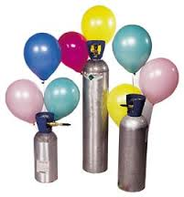
“Helium.”
“Helium? That’s just going to give you a squeaky voice.”
“I’m not talking about inhaling a few small balloons’ worth. I’m talking about inhaling a steady flow of the stuff, which is highly lethal and, when done right, one of the most painless ways to die.”
Sgt. Rush was grinning – actually grinning – as he delivered his macabre chemistry lesson.
“And best of all,” he continuted, “helium is nearly undetectable in toxicology reports.”
“Who cares? What, do they take away your pension for inert gas infractions? You’ll be dead.”
“You’re missing the point. If nobody finds any evidence of the helium – or anything else – in my system, it won’t be ruled a suicide. Remember, I’m a sick man – they’ll assume I died of ‘natural’ causes… with pride intact, and no life insurance coverage issues for my daughter to deal with.”
“What about the helium tank and whatever you plan on using to breathe the gas into your body? Won’t they find those items when...”
Cue the clicking sound in my head. It was at this moment that I came to fully understand what my father’s role was to be in the aforementioned arrangement.
“Ohhhh,” I said, nodding my head slowly and, for whatever reason, smiling.
“You’re a smart guy, Eli. I knew you’d catch on.”
(end of excerpt)
Would you read on? (If not, I’m in trouble – the book is done and will be out in just a few weeks!)
You can read a couple more excerpts from The Exit Man here , including the beginning of the opening chapter. And you can get the entire first chapter of the book (for free) simply by joining my mailing list. Enjoy!
March 26, 2014
Half-Baked Books: Ideas for My Future Novels
 My fans often ask what I'm working on, what I plan to write next, to which I typically respond, "Mom, Dad, stop bugging me and pass the potatoes." Today, however, I’ve decided to share what's in my novel hopper. And while I'm aware that publically sharing my ideas for future fiction projects brings with it the risk of another writer stealing one and running with it, I'm putting my faith in the artistic authenticity and common decency of authors. Plus I know a kick-ass intellectual property lawyer.
Following are several ideas I have for novels – some of which I've already started, some of which are merely visions I had after ingesting the wrong (read: right) type of mushroom.
Novel idea #1
Jake Killian must travel to Bali to find and rescue his drug-addled brother, an ex-patriot artist who has fallen for a dangerous woman and crossed the wrong locals. Jake’s “to do” list once he arrives: Exchange money; buy sunscreen; find brother and, if he’s alive, bring him home. Tentative titles: The Seminyak Express; Down and Out in Nusa Dua
Novel idea #2
Charlie Braun has had enough. Exasperated and overwhelmed by the speed of modern living and society’s overreliance on technology, he decides he needs to get away. A remote cabin in the woods, a small bungalow on a secluded beach – these aren’t really options for Charlie, as he’s an incurable agoraphobic. He comes up with a possible solution: Voluntary imprisonment. All he needs to do now is decide what crime to commit so that he can “escape”. Tentative titles: Sabbatical on Cell Block Nine; Freedom in a Cage
Novel idea #3
Three gritty friends – all in their late 70s/early 80s – are fed up over the rapid decline of their community. Nearing the end of their lives and feeling they have little to lose, the trio decides to team up and take on the city’s most violent and unjust inhabitants. They use their elderly image and assumed feebleness to deceive criminals, gangbangers and bullies and lure them into their vigilante lair, all the while driven by the team’s mantra: “Getting even is more rewarding than getting old.” Tentative titles: Fire in Autumn; The Gray Goons
Novel idea #4
A group of three 40-something friends each receives the same bizarre email from a fourth friend – a man who none of them have been in touch with for years and who, based on his email message, is losing his mind. Now all the friends need to do is find out where in the world their troubled friend is and come to his aid before it’s too late. Armed with only a few cryptic clues, a common bond and a quest for adventure, the friends set out on a road (and air and rail) trip of a lifetime. Tentative titles: Searching for Sanderson; The Four
Novel idea #5
William, a once great but now struggling novelist, is visited and tormented by several of his incomplete characters – all of whom are furious over the fact that he has left them stranded in abandoned manuscripts. Each character demands that William complete the book in which he or she is currently “stuck”. Several threaten him with grave physical harm if he even thinks about killing them off before fully developing them and giving their stories a proper conclusion. Is this the end for William, or the best thing that could ever happen for his writing career? (I’ll ping Woody Allen to see if he's interested in the film rights.) Tentative titles: Character Flaws; Writing Wrongs
Which of the above books would you be most interested in reading? Which one(s) would you pay me NOT to write? Share your answers in the ‘Comments’ area below – unless you intend on being critical, in which case just send me a telegram.
March 12, 2014
The World's Greatest (and Perhaps Only) Author Rap
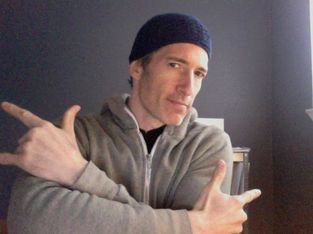 When I was about 14, I contracted what was then considered a rare disease – Hip Hopilepsy – while I was listening to a rap by Grand Master Flash and the Furious Five on my friend’s boom box. The symptoms started soon thereafter. They included sudden and spontaneous rhyming, the urge to show girls how I could (almost) spin on my head and pop & lock, and fits of uncontrollable rage whenever my mother refused to buy me parachute pants.
While most people afflicted with Hip Hopilepsy go into remission after a few years, my condition is chronic – perhaps even terminal, considering I now live in Texas, where rapping can get you shot by a drunken redneck quicker than you can say “Tupac lives”.
Now, I realize that those of you who have joined my mailing list to receive my author blog posts probably never expected to have to endure anything even remotely resembling a rap. All I ask is that you remember that I am sick, and that you therefore show some compassion.
And with that, I bring you what is largely being considered (by me) to be the world’s greatest (and perhaps only) author rap:
I'm kickin slick rhymes that I spit with diction
I'm very literary when I rip some fiction
Nothing that I've written really fits description
Might be more prolific if I quit prescriptions
I'll bomb ya with writing that's beyond all genres
Vocabulary's longer than an anaconda
Not long enough to find another rhyme with "onda"
So now it's time for me to get moving on'ta...
...the next line, the next verse, the next rhyme
First novel - meh - I'll get them next time
Second novel's set to be an Oprah best find
It's better than the rest and I hope you'll check why
My hopes are set high, my prose I let fly
Don't want to be a writer who just mostly gets by
I want to be a writer getting checks that let my
chauffeur and my butler go and get my neckties
I'll give it my best try, I've authored this rap storm
You might be like, "What's an author doing a rap for?"
I'm hoping it will elevate my authoring platform
I have a couple readers but I need to attract more
Every day and night I play to raise the hype
Some say I shouldn't rap because I'm way too white
I'm taking self-promotion to some brave new heights
Now go and give my Facebook page a "Like"
Word.
March 5, 2014
 Growing up as a hyperactive Jew in a sleepy Protestant town in Pennsylvania, I had a lot of imaginary friends. So interviewing a fictional character comes easily to me.
February 24, 2014
The "Selfie" author interview
 The writing world is fiercely competitive. As a novelist, getting interviewed by important figures in publishing is no simple endeavor. At least that’s what I’ve heard – I don’t like difficult endeavors and thus I haven’t actually even tried to secure such an interview. Instead, I recently used vodka to pay a friend to ask me a few questions about my fictional – I mean fiction – career. And yes, that friend was myself.
Here's how it went down:
Why did you become a writer? I was born with the innate inability to shut up, thus I needed a (somewhat) healthy outlet for my words. I’ve given professional public speaking a whirl, but audiences struggled to understand what the hell I was saying because I talk too fast. Plus, I often got distracted by shiny objects in the crowd. So writing is a natural fit for me. (A more traditional career isn’t really an option – I’m pretty much unemployable due to my moodiness and my genuine disdain for team-building, motivational posters and commercial carpeting.)
Now that you are a published novelist, do people come up to you in the street or at restaurants? Despite me posting pictures of myself and my book covers all over the Internet and on telephone poles, café bulletin boards and neighbors’ houses, people totally leave me alone when they see me in the street. I guess they respect my privacy. People do often approach me in restaurants, but it’s only to take my order or refill my water glass.
Who are some of your favorite authors? I’ll answer that like this: If my house ever caught on fire, after saving my wife and my daughter and my cat and my vodka, I would risk my life to save my books by Dostoevsky, Camus, Kafka and Nabokov. I would risk second-degree burns to save Vonnegut, Palahniuk, Chabon, Delillo, Bukowski and (Cormac) McCarthy. I would risk first-degree burns to save Faulkner, Joyce, Roth, Sartre, Nietzsche and Seuss. And I would risk getting a little smoke on my clothes to save Woody Allen’s short stories.
What do you hope readers get/got out of your first novel, Notes on an Orange Burial? I want them to empathize with my unstable protagonist Jona more than they fear him. I want them to cheer him on even when it appears he should be institutionalized. Most of all, I want them to laugh a lot, cry a little, and realize that poetry can be not horrible... and that kidnapping is wrong. (You can read more about Notes on an Orange Burial here.)
What are you working on now? I recently completed my second novel, The Exit Man, which will be available soon – this coming spring. It’s a dark comic thriller about a party supply store owner who leads a secret life as a euthanasia specialist. He helps terminally ill individuals end their lives peacefully and with dignity using something he has ready access to: helium. I know, I know, he sounds disturbed and morbid, but he really is a good guy once you get to know him. It's the perfect book for people who like Dexter and Dr. Kevorkian. (You can read more about The Exit Man here.)
And finally, if you were to ever win the Pulitzer Prize or the Pen/Faulkner Award, who would you thank during your acceptance speech? I would first thank the collie I grew up with, Cinnamon, who has been dead for 30 years but who always truly believed in me. I’d also thank my parents, my English teachers and writing coaches, my wife, my brothers, my daughter, and the kid who hit me in the head with a fastball in little league and damaged my cerebral cortex just enough to enable me to come up with the kinds of stories I write. Actually, I should probably thank that kid even more than I thank my dead collie. Oh yeah, and I’d certainly thank all my readers. You don’t win literary awards without those fantastic people behind you.
Enough about me. In the next installment of "Scrawl Space", I'll be interviewing Eli Edelmann – the protagonist of THE EXIT MAN. Eli's much more interesting than I am, and 89% more fictional.