Greg Levin's Blog, page 2
August 11, 2021
I Get By with a Little Hope for My Friends: How Cheering for My Peers Keeps Me (Somewhat) Sane in the Writing Game
Writing is a lonely endeavor, but being a writer needn’t be. And shouldn’t be.
It took me a while to learn that, and thank goodness I finally did. Otherwise I’d now likely be living in an inpatient mental health facility or roaming the streets and shouting at invisible enemies while wearing a tinfoil hat.
Once it hit me that other writers were not my competition but rather my colleagues, my confidants, my Klonopin, it felt as if a weight as heavy as a bunch of rejected manuscripts had been lifted off my shoulders.
At first, the most valuable thing about befriending fellow scribes seemed to be the source of commiseration it provided. (I’d always gotten plenty of pity and emotional support from family; however, I soon found nothing could compare to the joy of co-bitching and co-moaning with a bunch of like-minded, like-whining authors.) Then, a few years ago, I had an even bigger revelation: Happiness comes not only from being miserable together, but also from wishing success upon one another. Cheering each other on. Genuinely hoping things stop sucking for everyone involved.
Who knew?
In addition to giving you the positive jolt of endorphins that comes with exhibiting generosity, sending out vibes of hope and success to author friends also opens up the possibility of living vicariously through people you like and respect, as well as helps to take your mind off of everything that isn’t going right for you and your writing career. Sure, a little envy may creep in here and there when one of your peers breaks out, but nothing a couple of shots of liquor every night can’t tamp down.
Now, all of the above rambling is really just a preamble. It’s me setting the stage for what I really want to do today, and what I really want to do today is highlight a host of awesome, talented crime fiction authors I’m honored to call friends (even if just on Twitter), and whom I sincerely feel are deserving of a wider reading audience.
So without further ado, below (listed alphabetically) are just some of the great writers—who also happen to be great humans—I won’t stop rooting for until they make it big and start ghosting me:
E.A. Aymar (a.k.a., E.A. Barres)
(*I hesitated to include Craig, as he already kinda broke out with two amazing books—The Contortionist’s Handbook and Dermaphoria—in the early-mid 2000s; however, the publishing gods haven’t smiled on this BRILLIANT writer enough since, and he deserves for that to change ASAP.)
For this last author, I’m going out of alphabetical order, and with good reason. Scott Kelly passed away suddenly last October, and I want to be sure he and his work stand out in this post. Scott—my friend, fellow Vonnegut and Palahniuk fanatic, and partner in both crime (fiction) and drinking—was perhaps the best writer most people have never heard of. I could write an entire post about Scott’s inventive brand of existential transgressive fiction (and probably will in the near future), but for now I’ll just ask that you take a moment to check out his work. There’s nothing I’d love more than for Scott to posthumously achieve the wide readership and acclaim his talent so blatantly warrants—and which Scott never complained about not receiving.
Scott, I miss you, brother. I think about and read you often, and will continue spreading the word about your words until I join you, wherever you are.
NOTE: If you consider yourself one of my writer friends (or even just Twitter friends who writes) and you don’t see your name above, it’s likely because: a) I haven’t yet gotten around to reading your work; or b) you’ve already “made it” in my eyes. Yes, I’m talking to you S.A. Cosby, Jennifer Hillier, Rachel Howzell Hall, and Stephen Mack Jones. And guess what? … I couldn’t be happier for you!


July 13, 2021
The Shame and the Glory of Fiction Addiction
It’s 2:48, and I’m awake because an under-developed fictional person who lives inside my head insisted on ripping me from my slumber to discuss some plot points for the story he’s set to star in.
Just an average Monday night/Tuesday morning for me.
Don’t get me wrong—I’m not complaining. I actually welcome these sorts of disruptions to my sleep, my silence, my sanity.
That’s the problem.
You see, fiction writing is a sickness. An addiction as glorious as it is gut-wrenching, as sublime as it is shameful. I couldn’t live without writing novels and short stories—and they’ll surely be the death of me.
And apparently I’m okay with that.
I’ve never considered myself a masochist before, but the more I examine the evidence, masochism’s really the only explanation. Why else would I continue to go all in on my fiction, even after getting my heart broken and my soul crushed by so many near misses over the years, including—but certainly not limited to—the following:
Two TV options—one with HBO, one with Showtime—that didn’t get renewed at the wire. A third TV option (with another major network) that died just prior to the contract being signed; A late-stage rejection by a big literary agent. NOTE: I did finally land a different and even more amazing agent last year, so I no longer even think about the previously mentioned rejection as a “near miss.” Still, guess what happened right after signing with my amazing agent mere days before she was planning on submitting my manuscript to several big crime fiction publishers? Just a little thing called Covid-19. (Not that the pandemic has brought publishing to its knees, but it might make some major houses a little less likely to take a chance on a relatively unknown author like me.)Sound like a whole lot of whining and whingeing on my part? On the surface, maybe, but don’t be fooled. Deep down, and not even that deep, I love my failures, my misfortune, my poor timing. Of course I do—I’m a writer. We’re not truly happy unless we’re miserable.
The truth is, near misses only make me stronger. Well, my addiction stronger, anyway. Every incident of almost-but-not-quite feeds my disease, fuels it, compels me to continue forsaking most of my responsibilities and alienating my friends and family in pursuit of my lifelong dream of landing a solid traditional book deal—a book deal that seems to creep closer and closer but never quite materializes. A book deal that, if I’m lucky, would provide me with a fraction of what I would make if I spent a little less time writing and a little more time working even just a steady entry-level job.
That’s right, I’ve got full-on, stop-for-nothing tunnel vision that, best case scenario, might eventually lead to me earning enough to cover a year’s worth of nights at an extended stay motel after my wife throws my ass out for my fiction problem.
Making matters worse, or better—I’ve forgotten which—are the little victories I’ve managed to achieve via my writing over the years: the handful of indie author awards; the starred review from Publishers Weekly; the solid number of favorable reader reviews on Amazon; my favorite author telling me I have “it” (whatever “it” is). Each of these positive but by no means monumental achievements is the equivalent of a neighborhood drug dealer handing me a sample of the good stuff, knowing I’ll get hooked and stay hooked and keep coming back for more—even beg for some when I don’t have the funds to cover it.
Now you may be thinking, Isn’t the title of this post The Shame and the GLORY of Fiction Addiction? Where’s the glory part, Greg?
Well, the odd thing is, my answer to the “glory” question is perhaps the most shameful thing about all of this. For, you see, all or most of the glory that comes with fiction addiction occurs inside the head of the afflicted, inside the mind of the writer.
It’s the internal mania that floods a writer’s amygdala every time they fire off a killer sentence or paragraph or scene—hell, sometimes even just a strong verb.
It’s the delusions of grandeur that take over whenever a writer hears a compliment or sees four or five stars tethered to a review of their book.
It’s the nearly lethal levels of euphoria that send a writer skyward whenever they type the magic words “THE END” after months or years of pulling characters’ teeth and rolling a heavy plot up a jagged mountain.
And, of course, it’s all the near misses before they become near misses. All the little victories before hard evidence reveals those victories aren’t going to evolve into much larger ones.
But perhaps the greatest glory of fiction addiction is this: there is no cure. As shameful as it may be for a writer to keep plugging away and grinding and hustling and hoping and dreaming against all odds, there’s something supremely glorious about the fact that such agonizing persistence will never stop.
Now if you’ll excuse me, it’s 4:07 a.m., and that unstable, underdeveloped character I mentioned at the outset—the one who woke me up to talk about his tale—he’s got a box-cutter to my throat and won’t set me free me until he’s said his piece and gets his way.
Like I said, shameful.
And glorious.
Any of you out there have a creative pursuit that often feels more like an addiction? I'd love to hear about it—that way I'll feel less like a freak.
April 27, 2021
Writers, Schmiters—Here Are the Best READERS I Know
People often talk about their favorite authors. People also often talk about their favorite books. Well, today I’d like to talk about my favorite people who talk about their favorite authors and favorite books.
In other words, I’d like to talk about my favorite readers.
But first, I’d like to give a big shout-out to all readers. I don’t just mean everyone who can read; rather everyone who does read. You always hear about how much it takes to write a book; well, in a way, it takes even more to read one. [Pause here while all the writers of the world scowl, puff out their chest, mumble curse words, question my sanity.)
Allow me to elaborate with an analogy: Writing is to talking as reading is to listening. Talking is easy; listening is hard. It’s why most of us wish most of us would just shut the hell up. It’s why many of you are wishing I would right now.
When a person sits down to read a novel, it’s the equivalent of them saying to someone (the author), “Okay, I’ll let you do all the talking” or “The floor is all yours for as long as you need.”
If that’s not noble and generous, then I don’t know what is.
Now, before I receive a bunch of death threats and hate mail from other writers, allow me to point out I don’t think ALL writing is easy. Good writing certainly isn’t, and warrants much respect. Still, I do feel writing of any kind is a self-absorbed endeavor. It’s the writer basically saying, “I’ve got a bunch of important and entertaining stuff to tell you, so pipe down and listen to me for a few days or weeks.”
But I didn’t come here to trash my fellow scribes or make them question their value as human beings. Every writer does that just fine on their own. No, I’m here today to celebrate some of the best readers I know—those I respect not only for the sheer volume of books they consume, but also for their efforts in helping the writers of said books improve their craft and find more readers.
Angie McMann. Every writer would kill to have a reader like Angie in their life—and no writer deserves her. Especially me. Angie is that rare, wonderful creature: a talented writer who would rather read and promote other writers than herself. Whenever an author she likes comes out with a new book, Angie purchases multiple copies and gifts them to friends she feels will love the book (and the author) as much as she does. If it weren’t for Angie, my book sales would drop by about a third.
But what really makes Angie stand out is the behind-the-scenes support she offers her writer friends. She’s a marvelous proofreader and beta-reader—often catching typos, incongruencies and awkward sentences often overlooked by professional editors. What’s more, she provides many of her peers such invaluable services for free. (The only argument I’ve ever had with Angie was when I insisted on sending her money after she’d proofed an entire novel of mine—TWICE.) And as if all that weren’t enough to earn Angie a special place in reader heaven, she’s great at giving writers the kick in the pants or the words of encouragement they need whenever they start to get down on themselves. I once grumbled to her that I wasn’t sure if all the writing and work I was doing was worth it … and she threatened to kill me if I quit. Because Angie knows quitting would be a far more painful death for any writer.
Chris Rhatigan. If I had room in this article for everyone who runs a small press/publishing house, I’d include each of them. But due to limited space, I’m including only Chris, who busts his hump harder than just about any reader I know. Whether he’s perusing submissions from writers hoping to get published by All Due Respect Books, or digging deeper into and editing a book he’s already accepted for publication, or doing the same for one of the clients of his freelance editing biz, Chris never wavers in his passion for crime fiction or his respect for both established and aspiring authors.
I reached out to Chris a couple of years ago after receiving rave testimonials for his freelance services from several author colleagues. Fortunately he was able to fit me into his crazy busy schedule. Better yet, he not only “got” exactly what I was hoping to achieve with my upcoming novel, Into a Corner, his suggested changes made the book much sharper and leaner—which helped me land my dream agent last year.
So HELL YES Chris Rhatigan earned a spot on this list.
Mark Pelletier. If you follow the crime fiction scene on Twitter, no doubt you’ve stumbled across at least one of the many videos Mark has posted of him reading excerpts from his favorite books. If not, go to Twitter now and search on the “#BookTalk” hashtag. On second thought, do it after you finish reading this blog post—I don’t want you getting lost in the sea of Mark’s highly entertaining and captivating videos until you’re done here. Call me selfish.
Whom you’d never call selfish is Mark. While he’s quite a talented crime fiction writer in his own right, he spends much more time paying tribute to other authors of the genre than he does tooting his own literary horn. This is quite refreshing in a world where you can’t spit without hitting a writer touting their book. Which reminds me, here’s the #Booktalk clip Mark did of MY book Sick to Death.
Janet Reid. I’d have to be some kind of idiot not to include my own literary agent on this list. And while I am, indeed, some kind of idiot, I’m not THAT kind of idiot.
To be clear, Janet isn’t listed here merely because she was bold and kind enough to take a chance on a little-known writer like me last year. She’s on the list because I know how much and how hard she reads—and how much she roots for every writer who sends their book baby her way. Janet may offer representation to only a very small percentage of authors who query her, but she’s in each writer’s corner—quietly hoping they captivate her, astound her, even shock her with their writing. In addition to giving a fair shake to each manuscript she receives (and she receives a LOT), Janet maintains a very active blog in which she offers advice, tips and insight to help any writer looking to land a reputable agent or get a book deal or simply improve their craft.
She’s the best kind of reader—the kind who has dedicated their entire life to helping writers achieve their dreams.
Chuck Palahniuk. The first rule of Fight Club is don’t talk about Fight Club. But that doesn’t mean you can’t talk about workshopping your novel with the author of Fight Club. Some may accuse me of namedropping here, but when you get the chance to not only meet Chuck Palahniuk but also share your manuscript with him and receive his coaching, you bring it up on occasion.
But this isn’t about me. This is about Chuck (have I mentioned I know him) and how generous he is with his time and tutelage. Not many authors of his stature would create and lead a four-month-long, ten-session workshop for promising writers—and donate 100 percent of the proceeds from said workshop to an animal rescue organization. That’s exactly what Chuck did with his amazing “Writing Wrong” workshop, which he started in 2017. I was lucky enough to be among the fifteen writers selected for the inaugural workshop, and was blown away not only by how deep Chuck dove into every page presented by each participant, but also by how quickly and effortlessly he was able to spot what was holding some of the stories back, and how concise, creative and respectful he was with his feedback.
Having Chuck read my pages (from my since-published novel In Wolves’ Clothing) and offer suggestions created a monumental shift in how I think about writing and how I tell stories to this day. And he’s had the same powerful, lasting impact on pretty much every other writer who's had the great fortune of receiving his coaching.
My mother. My mother would read me at least one bedtime story every night when I was a child, which sparked my lifetime love of books. As for her love of books, it extended far beyond those by Dr. Seuss, Maurice Sendak, A.A. Milne and Beatrix Potter. She and my father would take my brothers and me on a beach vacation a couple of times every summer, and every trip my mother would bring whatever encyclopedia-thick novel she had bought for the week. My brothers and I would go off with Dad to bodysurf, toss the frisbee, play wiffle-ball, and invariably we would return to find my mother already 300-400 pages into her book. The only thing scarier than all the Stephen King novels my mother read in the 1980s was how quickly she devoured them.
To make sure my mother actually read each page of all the giant novels she breezed through, I would open a book she had just finished to a random page in the middle or toward the end, read a few sentences, then ask her to explain what was going on at that point in the novel. Not once did she fail to impress—providing details about the story I bet Stephen King himself would have forgotten.
Mom, who’s now nearly 82 years old, continues to devour fiction like it’s going out of style. And considering all the books she has consumed in her life, I can’t help but feel honored when I walk into my parents’ living room and see a copy of each of my novels prominently displayed on their end table. Of course, I realize one or two of those books are ones only a mother could love.
Some of you may be thinking I, being a writer, am merely pandering to readers with this post today—hoping to win them over with my “I love readers” theme, hoping to expand my platform, increase book sales.
In my defense, I was hoping you wouldn’t notice that.
March 24, 2021
25 of the Best Opening Lines in Crime Fiction
Few things enthrall me more than cracking (or clicking) open a novel and reading a first line that catapults me into Chapter 1. A line that reminds me why I read, why I write, what it means to be alive. A line that gives me whiplash. A line that makes me forget to feed my pets for the next few hours.
Now, not all great opening lines are from great—or even good—books. Some authors know how to grab you and yank you into a story they never quite figured out how to tell or finish. On the flipside, not all great books have great opening lines. In fact, many of my favorite novels open with nothing too spectacular—opting to lure readers in slowly before releasing the Kraken.
Today, though, I want to shine a light on that elusive literary gem: the phenomenal opening line to a phenomenal novel. Twenty-five such lines, to be exact. With the focus solely on crime fiction books.
Keep in mind, selecting the best opening lines to the best books is a highly subjective endeavor. That being said, none of my choices are up for discussion.
Enjoy!
Tyler arrived with the horses, February eighteenth, three days after the battleship Maine blew up in Havana harbor. —Cuba Libre by Elmore Leonard
It was the bright yellow tape that finally convinced me my sister was dead. —The Damage Done by Hilary Davidson
One lonesome winter, many years ago, I went hunting in the mountains with Gene Kavanaugh, a grandmaster hitman emeritus. —Black Mountain by Laird Barron
They were in one of the “I” states when Zeke told Isaac he had to ride in the trunk for a little while. —By a Spider’s Thread by Laura Lippman
It’s hard to get lost when you’re coming home from work. —Blonde Faith by Walter Mosley
It must have been Friday because the fish smell from the Mansion House coffee-shop next door was strong enough to build a garage on. —Bay City Blues by Raymond Chandler
The last camel died at noon. —The Key to Rebecca by Ken Follett
Ten days after the war ended, my sister Laura drove a car off a bridge. —The Blind Assassin by Margaret Atwood,
It is cold at six-forty in the morning on a March day in Paris, and seems even colder when a man is about to be executed by firing squad. —The Day of the Jackal by Frederick Forsyth,
The guy was dead as hell. He lay on the floor in his pajamas with his brains scattered all over the rug and my gun in his hand. —Vengeance is Mine! By Mickey Spillane
Some years later, on a tugboat in the Gulf of Mexico, Joe Coughlin’s feet were placed in a tub of cement. —Live By Night by Dennis Lehane
Eunice Parchman killed the Coverdale family because she could not read or write. — A Judgement in Stone by Ruth Rendell
We were about to give up and call it a night when somebody dropped the girl off the bridge. —Darker Than Amber by John D. MacDonald
Even on the night she died, Rose Shepherd couldn’t sleep. —Scared To Live by Stephen Booth
Geneva Sweet ran an orange extension cord past Mayva Greenwood, Beloved Wife and Mother, May She Rest with Her Heavenly Father. —Bluebird, Bluebird by Attica Locke
When the phone rang, Parker was in the garage, killing a man. —Firebreak by Richard Stark (a.k.a., Donald E. Westlake)
Death is my beat. —The Poet by Michael Connelly
It was one hell of a night to throw away a baby. —In the Bleak Midwinter by Julia Spencer-Fleming,
When I finally caught up with Abraham Trahearne, he was drinking beer with an alcoholic bulldog named Fireball Roberts in a ramshackle joint just outside of Sonoma, California, drinking the heart right out of a fine spring afternoon. —The Last Good Kiss by James Crumley
Bill Roberts decided to rob the firecracker stand on account he didn't have a job and not a nickel's worth of money and his mother was dead and kind of freeze-dried in her bedroom. —Freezer Burn by Joe Lansdale
The ambulance is still miles away when Dana awakens to the near dark of evening. —The Pocket Wife by Susan Crawford
Years ago, in state documents, Vachel Carmouche was always referred to as the electrician, never as the executioner. —Purple Cane Road by James Lee Burke
Winter came like an anarchist with a bomb. —The Pusher by Ed McBain
I feel compelled to report that at the moment of death, my entire life did not pass before my eyes in a flash. —I is for Innocent by Sue Grafton
The night of my mother's funeral, Linda Dawson cried on my shoulder, put her tongue in my mouth and asked me to find her husband. —The Wrong Kind of Blood by Declan Hughes
I LOVE reading great first lines I’ve never read before or have forgotten, so please feel free to share any of your favorites that didn’t make it onto my list.
February 2, 2021
Literary Death-Matches To Die For
Nothing says “I love literature” like cheering a fight to the death.
Every reader at one point or another has found themselves enthralled by some epic melee between a favorite protagonist and that character’s sworn enemy—or some other human obstacle standing in the protagonist’s way. As much as I love such scenes of intense conflict and tension, I often find myself wishing for even more. Like, wishing I could lift different characters out of their respective books to see how they’d fare in a fight with one another.
Yes, I am seeking professional help for this condition. But in the meantime, I’ve come up with a few literary death-matches for the ages—ones any devout fan of fiction would die for. Or at least finish reading this blog post for.
Enjoy!
Tyler Durden from Fight Club vs. Alex from A Clockwork Orange
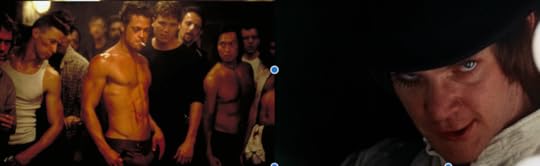
A no-holds-barred bout between these two anarchy A-listers would be as hilariously entertaining as it would be deadly. I can already hear the cacophonous laughter from both characters as they suffer and deliver bone-shattering blows coupled with witty, derisive barbs. Their mutual love of destruction and mayhem would further inspire each to keep bringing and receiving the pain. In the end though, it’s hard to imagine Alex still standing. As hard as it is to defeat a highly disturbed fictional individual, it’s even harder to defeat a highly disturbed figment of the imagination of an a even more disturbed fictional individual. Which is why the first unspoken rule of Fight Club is you don’t get into a death-match with the founder of Fight Club.
Lisbeth Salander from The Girl with the Dragon Tattoo vs. Patrick Bateman from American Psycho

I’d pay good money to see one of the most badass vigilante feminists in literature square off against one of the most psychotic misogynistic serial killers in literature—and I’d place more good money on the former taking down the latter. Sure, Patrick Bateman knows how to time the dropping of an active chainsaw down a spiral stairwell so that it perfectly eviscerates a fleeing victim, but such gruesome stunts wouldn’t fly with Ms. Salander, who’s smart enough to wear her kickass black motorcycle helmet whenever she senses the slightest chance she’ll encounter trouble. That, plus Patrick’s insatiable ego and lust would put him at a distinct disadvantage. Where he’d be focused on having sex with Lisbeth and adding her to his list of amorous conquests before murdering and dismembering her, Lisbeth would be focused solely on going for the kill. She has zero interest in external validation from men, and is the last person a man like Patrick would ever want catching him with his pants down.
“Richard Parker” the tiger from Life of Pi vs. the cat from The Cat in the Hat
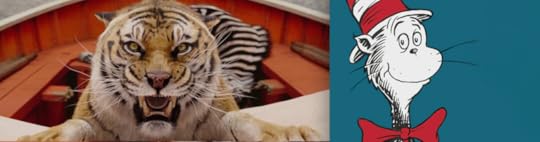
Who doesn’t love a good catfight, am I right? Now, I realize a 450-pound Royal Bengal tiger versus a fast-talking street cat might seem like a total mismatch on paper, but the truth is … nah, I’m not gonna lie—The Cat in the Hat would be a goner. But that’s okay; I never really liked that damn cat or his hat. True, he did teach millions of bored children how tons of fun can be had even on a dreary, rainy day; however, in the process he nearly destroyed a perfectly nice home, forced two innocent children into a high-stakes game of deception with their mother, and made his two kooky friends live inside a box. What a dick. So, him getting completely devoured by a giant ferocious feline—who by the way, showed tremendous restraint with that boy on that boat—well, that’s just karma.
Katniss Everdeen from Hunger Games vs. Robin Hood from The Merry Adventures of Robin Hood
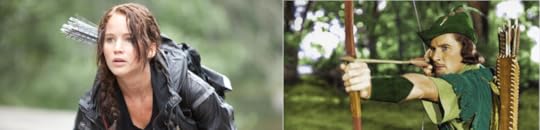
I’ve got nothing against either one of these characters and wish neither of them any harm; it’s just, archery is totally badass and I can’t help but wonder which of these two legends would be the truer shot when the stakes couldn't be higher. No doubt both heroes are highly skilled and very brave, but I’d have to give Katniss the slight upper hand—not only because she has more modern equipment, but also because Robin Hood’s skimpy tights would offer little in the way of protection. One shot anywhere near the femoral artery and the dude would bleed out. One shot a little bit higher and the dude would wish he'd bleed out.
Hannibal Lecter from Red Dragon vs. Sweeney Todd from Sweeney Todd: The Demon Barber of Fleet Street
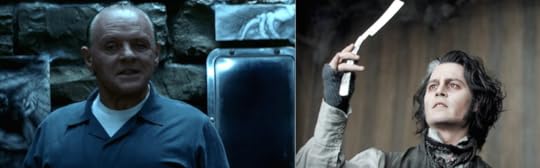
As with the Katniss/Robin Hood matchup, I think both of these characters are fine, upstanding individuals whom I’d be honored to call friends. It’s hard not to respect how they each use the whole human whenever they kill one. That’s very green of them, very ecological. Still, it would be an absolute morbid thrill to watch them battle to the death and, depending on the outcome, witness the winner either eating the loser with a nice Chianti or having their friend make sausage out of him.
What literary character death matches would YOU love to see? Or do you find the very notion of even fictional violence and murder appalling? If so, why are you reading my blog? You must be lost.
January 5, 2021
Five Fiction Predictions for 2021
This past year was the longest decade ever. And now that it’s finally over, I’m excited to welcome in 2021. Hell, I’d be excited to welcome in 1621 or 1721 or any other year or even a chainsaw-wielding serial killer. Anything but 2020 again.
A new year is a time for resolutions and predictions. And since I have a natural lack of resolve, I’m going to focus solely on the prediction part. Of course, making predictions requires one to have a solid grasp on reality, which I lack even more than I do resolve. Thus, I’m going to focus solely on predictions about fiction.
So, without further delay or convoluted transitional statements, I bring you my Five Fiction Predictions for 2021:
1) There will be a 325% increase in characters wearing masks. This will occur across almost all contemporary genres. The increase will be notably less in superhero graphic novels and literary erotica, the characters of which have been wearing masks for decades.
2) Fight scenes will be almost completely replaced by shootouts. Due to authors now feeling compelled to work social distancing into their stories, readers can expect to see fewer scenes featuring hand-to-hand combat and female characters kicking predatory male characters in the crotch, and more scenes of gunplay and female characters shooting predatory male characters in the crotch.
3) Horror sales will decline. I’ve always loved a good horror story and personally know and respect several authors who write in this genre, so this wasn’t an easy prediction for me. But hey, I don’t get paid to make or keep friends. In fact, I don’t get paid period and don’t have any friends—thus I’m just going with my gut here. Sales of horror novels will steadily start trending downward because, after all the chaos and terror we’ve all had to deal with in real life lately, everyone’s just bored of nightmares. Death and gore and terrifying suspense? That’s just an average Tuesday nowadays.
4) First-person POV serial killer novels will dominate U.S. bestseller lists. With such anger and divisiveness tearing America apart, people are becoming increasingly aggressive and violent—including authors. But since most authors never learned how to throw a proper punch and tend to lack upper-body strength, many will go on fictional murder sprees to help them take out their frustration on people who don’t think exactly like them or buy their books.
5) There will be a big shift to historical fiction and sci-fi. Lots of authors of contemporary fiction are sick of trying to adapt their work to align with what’s happening in the real world. This will cause many to abandon modern-day plots and settings for ones far enough in the past or future to eliminate the need for their characters to constantly wash their hands, stand six feet apart, and horde toilet paper.
YOUR turn: Do you have any fiction predictions for 2021? More importantly, do any of them hint at a massive increase in sales of MY books?
December 1, 2020
The Early Bird Gets the Words: Why I’ll Never Stop Waking Up at 4:30 a.m. to Write
I had heard of them. I’d even seen some of their pre-dawn tweets upon sitting down to write at 9 a.m. like a normal human. These folks would claim such absurd things as having just added 2,000 words to their novel-in-progress—with an hour to spare before even grabbing breakfast.
I used to just scoff at these “#5amwritersclub” participants. I’d dismiss them as maniacs. Freaks. Members of a dangerous cult.
And now, suddenly, I’m one of them.
No, nobody tricked or manipulated or deceived me into becoming a member. I wasn’t strong-armed or blackmailed or drugged. I simply woke up one morning at 4:30 and started writing ... and knew I’d never be the same. (Including never being able to stay up past 9 again.)
Anyway, here we are, five paragraphs into this post, which is probably a good time to get to the main point of it. And the main point is there are many benefits of waking up to write before even God gets out of bed. Following are seven reasons why I’ll never stop setting my alarm for 4:30 a.m. to write (at least until Daylight Saving Time starts again in March).
The silence. I’ve been wearing noise-canceling headphones to write for years and thus am used to relative quiet while screaming at my characters. But nothing quite compares to the blissful silence I experience now that I wear my noise-canceling headphones even when there’s no noise to cancel. The only sounds I hear these days while putting my protagonist through hell is the dull, harmonic tapping of the keyboard keys and the occasional muted crunch of my fist going through drywall whenever my protagonist refuses to cooperate. Such overall quietude has been wonderful for my creativity and fosters a true sense of calmness in the middle of murder scenes.
The stillness. No, stillness is not the same as silence. It could be perfectly quiet inside a writing office while squirrels have a death-match in a tree right outside your window. But at 4:30 a.m., there aren’t any squirrels—squirrels aren’t stupid enough to get up in the middle of the night to work on their novel. Thus, in addition to the glorious lack of sound while I’m writing, there’s no movement to wreak havoc on my ADHD. In fact, I’ve never been more—
SQUIRREL!
Sorry about that—I’m writing this blog post in the middle of the day.
The darkness. There being so little light outside when I sit down at my writing desk each morning not only inspires me and informs the dark themes I write about but also makes it hard to see and get distracted by any homicidal squirrels. I keep the lights off in my office to further feed off the ethereal and haunting predawn energy, as well as to keep any neighbors who may be awake from catching me act out any fights or stabbings or sex scenes I’m working on. (I once forgot to keep the lights off, and the next day the house next door had a “For Sale” sign up.)
The propulsion. When you catch a creative wave and ride it for hours into breakfast, it propels you through the rest of the day like nothing I can think of other than amphetamines. I emerge from my writing office at 7 a.m. with the energy and force of a tsunami, gleefully knocking over anything in my path. My puppy loves it; my wife dives for cover and threatens divorce.
The “hustle factor.” There’s a lot to be said about hustling and grinding and showing grit and moxy as a writer. Most of it is said by the writers themselves. Still, it does feel damn good to soldier up and overcome the challenge of not having time to write by waking up every morning hours before any sane person would just so you can work on a book nobody’s ever going to read.
The excuses. When you wake up at 4:30 a.m. and make sure everyone you know knows it, it gives you a lot of leverage for getting out of doings things you don’t want to do and seeing people you don’t want to see. For example:
“Darn it, buddy—I’d really love to come over for a dinner party with proper social distancing that we both know won’t actually be adhered to after all the guests finish their second drink, but I’ve got my pesky manuscript to work on right around the time you’ll be getting out of bed to throw up.”
Or:
“Shoot, honey—streaming Sex and the City reruns with you does sound like fun, but whoa, look at the time. I need to be awake, like, an hour ago. That next novel of mine isn’t going to write itself.”
Or:
"So sorry, neighbor, a puppy play-date this afternoon at 5:00 would be great—if only it didn’t encroach on my bedtime."
The hashtag. There’s an indescribably powerful sense of pride and honor that comes with being able to legitimately add “#5amwritersclub” to a tweet—knowing that all the other authors who are awake and tweeting on Twitter instead of actually working on their book will see it.
How about YOU? How badly do you want to punch me in the face for even THINKING of encouraging you to wake up at such a ridiculously early hour to do ANYTHING, let alone WRITE? Share in the comments section below.
November 11, 2020
Five Ways to Lessen the Sting of Rejection
Perhaps the biggest challenge of being a writer—apart from the laughably low pay and the staggering loneliness and the pressure to choose all the right words to fill all the blank pages—is dealing with rejection.
Every writer, whether it’s a hugely popular author or an author more like me, has to cope with some form of rejection in their career. It may be a literary agent rejecting their query, a publisher rejecting their manuscript, or a pawnbroker rejecting their typewriter. Point is, rejection in the writing and publishing world is universal. I have a couple of fully stuffed filing cabinets to prove it, though I can’t open either of them due to all the damage they’ve sustained from being punched and kicked.
That all said, rejection needn’t be so painful. While I acknowledge it’s hard not letting a “NO” stop your flow, I assure you there are ways to lessen the sting of literary rejection—some that don’t even require prescription pharmaceuticals or more illicit drugs or voluntary euthanasia.
Below are just a few.
(Note: While this piece is intended for writers, nearly all of the tactics can be applied to non-writers and OTHER types of sane people looking to cope with rejection.)
5) Befriend only bad writers. Whoever wrote “misery loves company” was a genius and thus not the kind of writer you should be friends with. No, you want to surround yourself with hacks—writers who are kind and generous but who lack any real talent. That way you’ll be too busy hearing about all their rejections to have time to dwell on and mope too much about your own. And isn’t feeling slightly superior to others really what friendship’s all about?
4) Marry an optimist. If you’re a writer who’s been at it a while but has yet to make a living from writing (in other words, 99.974% of all writers), chances are high you’re not an optimist. Years of rejection have a way of breeding new strains of pessimism. Therefore it’s wise to choose as your life partner someone who’ll drown you in smiles and encouragement and cheerleading chants so you don’t drown yourself in a lake after receiving your next “NO” from an agent or publisher or pawnbroker.
3) Develop and cultivate delusions of grandeur. Just because you aren’t an optimist doesn’t mean you can’t be delusional. Where optimism is a positive state of mind that requires a lot of effort, delusions of grandeur are positive signs of mental illness and thus very achievable for most writers. If you’re lucky, your delusions will enable you to convince yourself that you’ve been getting rejected because you’re actually too talented. I have a friend who’s fortunate enough to be crazy enough to believe agents and publishers reject him out of their fear he’s going to be too huge an author for them to handle. He’s certain they’d rather pass on his books than go through the inevitable grief and heartbreak of losing him to a more prestigious entity. You’ve never seen such a confident unpublished author! It’s beautiful.
2) Be placed into a medically induced coma. Admittedly this is sort of an outlandish approach, but then so is writing novels for money or enjoyment. The good news is being placed into a medically induced coma is a surefire way to not only lessen the sting of rejection but also lose weight while getting time off from your loathsome day job. Think of it as going on a peaceful yoga retreat without the worst part—the yoga.
1) Reject rejection. This is perhaps the most powerful way to deal with rejection, and thus the most dangerous, and thus the most fun. It’s like delusions of grandeur’s much tougher cousin, as it’s a lot more active and daring than merely losing your mind. Rejecting rejection requires a writer to stare straight into the eye of each “Thank you but no” email they receive and, without flinching or punching a filing cabinet, say, “Uh uh—thank YOU but no” or “Sorry but I cannot accept your lack of acceptance.” Or something even more badass, if that’s even possible.
What are some of YOUR tips for lessening the sting of rejection? (Don’t feel bad if I don’t accept them.)
October 13, 2020
Absence of Presence: Why Novelists Are “Not All There”
If I had a dime for every time my wife, Miranda, asked me to be more present or to pay closer attention or to get out of my own head, I’d be able to afford the divorce attorney I’m going to need if I don’t start heeding her requests.
In Miranda’s defense, she’s right.
In my defense, she married a novelist.
Now, before you decide to join Team Miranda and start yelling at me for not being present in my marriage, or you decide to join Team Greg and start insisting Miranda be less bossy and demanding, I need to clarify something: Miranda is bossy and demanding.
But with good reason.
You’d be bossy and demanding too if your spouse/significant other often didn’t respond to your questions or actively listen to your opinions/ideas/concerns or stepped in deer shit every single time you took a hike together.
It’s not that I don’t want to respond or to listen or to avoid animal excrement; it’s that I’m usually very busy discussing plot points with invisible people whenever my wife and I are alone. And these invisible people are even bossier and more demanding than she is. Fictional characters and muses always are.
Folks often joke about how novelists are “not all there”—implying we’re crazy, wacko, have a few screws loose. But the whole “insane author” thing is a just stereotype, one propagated by fictional writers like the one played by Jack Nicholson in The Shining, or by real writers like the one played by Virginia Woolf in, well, her tragically shortened life.
That said, it is true that most novelists are “not all there.” But I’m not talking about the chase-your-son-through-a hedge-maze-with-an-ax kind of “not all there”; I’m talking about the have-important-conversations-with-imaginary-people-in-the-presence- of-real-people kind of “not all there.” Big difference.
If I’ve just completed a three-hour writing session and I come out to the kitchen to make Miranda and I some lunch and she starts telling me about her morning or asking me about our upcoming weekend plans or why there’s a half-empty vodka bottle in my underwear drawer, it’s not likely I’ll catch everything she says or everything she picks up and throws at my head. My physical body may be standing right in front of her—nowhere near the manuscript on my laptop in my writing office—but most of my brain is still pondering the murder I just committed in Chapter 9. Miranda can’t expect my full attention in that moment or even hours or days after. Same way I can’t expect to have her full attention right after she finishes a nature hike or a 2000-piece jigsaw puzzle or something else she loves more than me. (I’m not saying I love writing more than I love my wife. Why would I admit that? She occasionally reads this blog.)
Many people may read this and think I’m suggesting writers should get special treatment, be given a pass on active listening and politeness and common decency, be allowed to be distracted all the time. Well, if that’s what you’re thinking after having read this, well, then I’ve succeeded in getting my message across.
Listen, I adore my wife, couldn't live without her. And I care about all of you. But c’mon—you can’t expect me to openly demonstrate it while I’m working on a novel or during the hours or days or months in between. That’s asking too much. That’s not respecting my condition, my affliction, my plight. That’s not taking into a count that, no matter how hard I try to take in everything you’re saying and doing and asking, I’m simply not all there.
Thanks for putting up with my (mostly) satirical rant. If anyone needs me, I’ll either be writing or half-listening to my wife while getting yelled at while thinking about writing.
September 23, 2020
The Five Best and Five Worst Things about Writing a Novel
Creative writing has given me more joy than I could have ever imagined and it is torture. No other activity fills me with such a strong sense of flow and purpose and pain and hopelessness. Wild horses couldn’t drag me away from writing except when it feels like I’ve been tied to several of them and they’re each galloping off in opposite directions.
Point is, aside from my family and my pets and my readers, there’s nothing I love more than writing novels and I hate it.
In keeping with such dichotomy, below are the five best and the five worst things about writing a novel:
5th best: The quiet. Sitting in complete silence while putting characters through total hell is incredibly peaceful and satisfying. For me—a crime fiction and thriller writer—it’s like a deep form of meditation … only with a bit more murder.
 5th worst: The noise. Sometimes it’s almost as if the neighbor remodeling their house doesn’t understand how much more important the imaginary crime you’re working on is. Or like the kids outside laughing and playing don’t care that you’re this close to finishing Chapter 8. Or your spouse in the other room doesn’t realize how much her breathing is keeping you from pulling off a shocking twist.
4th best: The power and control. You needn’t be a megalomaniac to enjoy having the power to control every action your characters does, every word they say, every thought and emotion they think and feel. But it helps. Regardless, it’s hard not to wish you had the same power and control in the real world—especially with relatives during Thanksgiving.
4th worst: The lack of power and control. Fictional characters—not unlike real people—often develop a mind of their own and start taking you and your novel in directions you never imagined heading in and would be wise to avoid. Some days, a character—usually an important one, like the protagonist—won’t listen to a single word you say. Or worse, they won’t even show up, leaving you sitting there staring at a blank page or an unfinished scene like some idiot who should have listened to their mother when she advised they go to medical or law school instead of becoming a novelist.
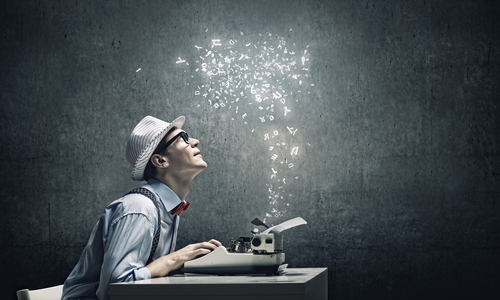
3rd best: The “high.” They say the only thing that compares to a “writer’s high” is a heroin high. And writing is less damaging to the liver, heart and brain. Unless you’re doing it correctly.
3rd worst: The lows. They say the only thing that compares to the overwhelming sense of anxiety and dread one experiences upon losing their writer’s high is the overflowing sense of anxiety and dread one experiences during heroin withdrawal. And at least extended heroin withdrawal usually causes death and thus an end to the suffering.

2nd best: The incredible sense of accomplishment. Fact: The odds of being born are 400 trillion to 1. Fact: Only 0.3% of people born go on to write a book. Thus, if you’ve written a book, it’s a freaking MIRACLE. And if you’ve actually SOLD a few copies, well, now you’re just showing off.
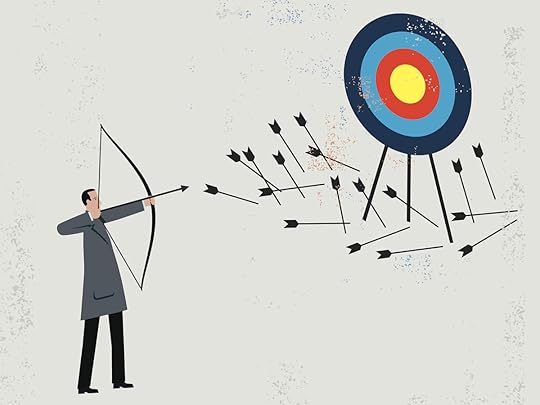
2nd worst: The soul-crushing sense of failure. Fact: The odds of landing a literary agent after finishing your novel are 1 in 1000. Fact: Even if you land an agent and the agent lands you a book deal, the average traditionally published book sells only 250-300 copies in its first year. And if you go the indie-route, keep in mind the average self-published book sells only 250-300 copies over the course of its entire lifetime. Thus, if you’re a writer getting pummeled with rejection notifications or putting up dismal numbers in the sales column, well … nobody cares—such failure is the norm! The natural thing is to quit … but writers don’t know how.
The absolute best: The immortality. There’s nothing as fulfilling or as empowering as knowing this thing you’ve created using nothing but your drunken mind and fingertips is going to be around and tied directly to you forever, or at least until Amazon crashes beneath its own weight.
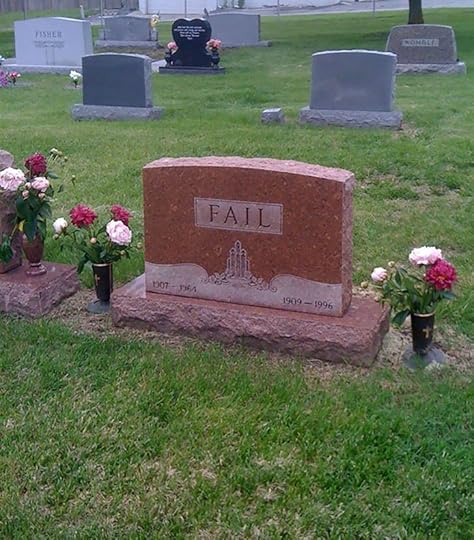
The absolute worst: The immortality. There’s nothing as debilitating or as humiliating as knowing the two major plot holes and five flagrant typos inside this thing you’ve created are going to be around and tied directly to you forever —even after Amazon crashes, as people LOVE to talk about the egregious mistakes of others for all eternity.
Speaking of egregious mistakes, surely I’ve missed some really great and some really horrible things about writing a novel. For those of you who’ve written one, feel free to share some of your worst and best things about it. For those of you who haven’t written one, just make some sh*t up—that’s all writers ever do.