
Andrew Bud Adams's Blog
July 3, 2024
"The Direct Approach"

My first contribution to the Pathfinder RPG was a piece of short fiction called "The Drawings on the Wall," featuring the Iconic characters Ezren and Fumbus. I recently had the opportunity to write a second story about two different Iconics, namely Jirelle the swashbuckler and Sajan the monk. Their playable classes appear in the Pathfinder Player Core 2, as does the above illustration of the "Water Sprint" feat by Alexander Nanitchkov.
This was another fun one to work on. Read the story here!


September 14, 2021
Last Dance of the Sugar Golem
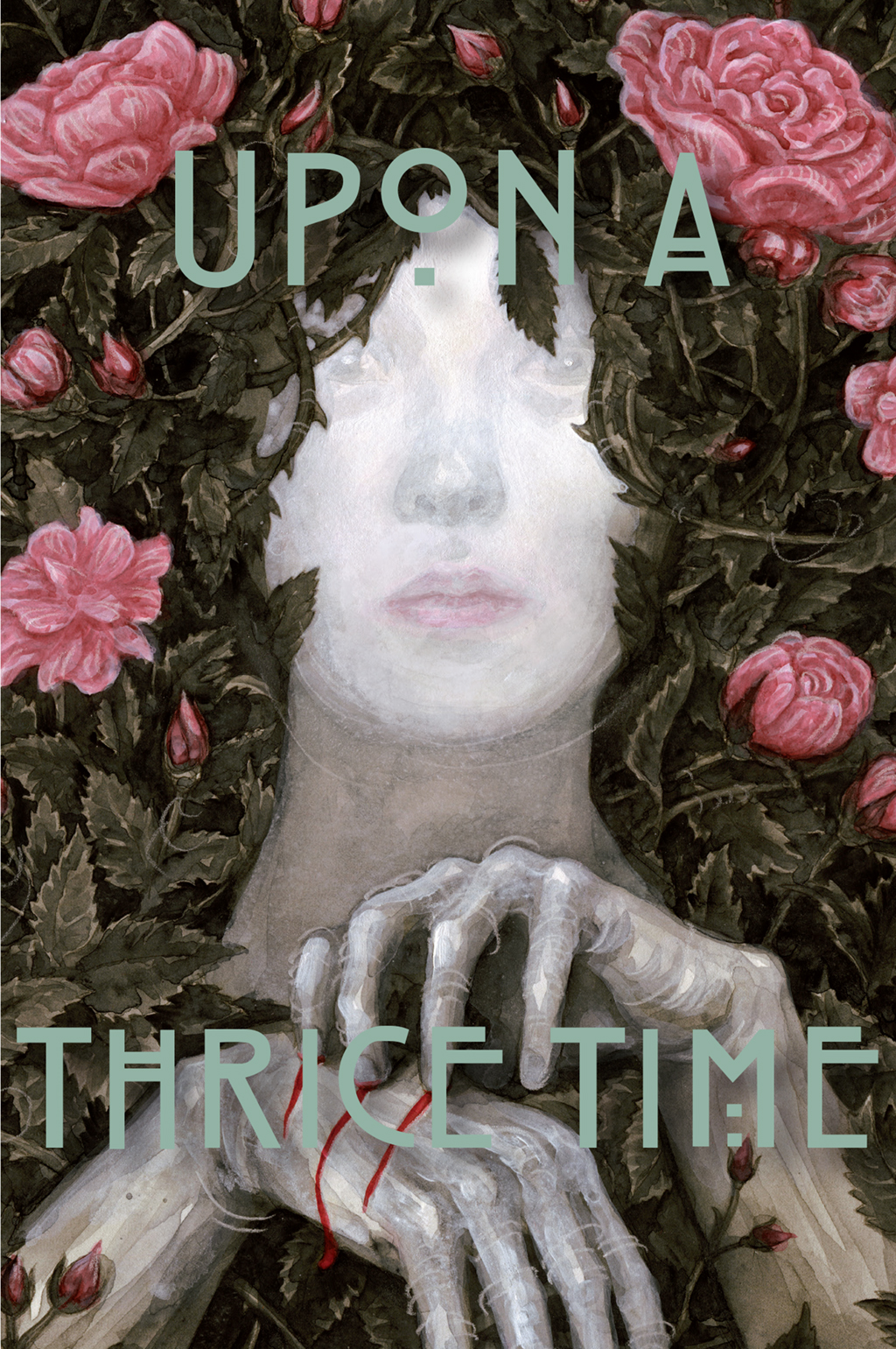
There's still time to back Upon a Thrice Time, a fairy tale anthology which includes my story "Last Dance of the Sugar Golem."
This started as an entry to Apex Magazine's holiday-themed flash fiction contest in 2015. A retelling of "The Nutcracker and the Mouse King" by E. T. A. Hoffmann (1816), it didn't win, but I liked it well enough to keep tinkering with it. Though never a big fan of the play, I had read Hoffmann's source material as part of my college study of old/classic second-world fantasy literature and really liked the similarities between Marie's visit to the Candyland-like doll kingdom and Margaret Cavendish's The Blazing World (1666).
My story went through several revisions and rejections leading up to 2020, when I learned about a call for submissions to Upon a Once Time. They were looking for fairy tale mashups--two stories combined and retold as fantasy, sci-fi, noir, etc. This helped me realize that my sugar golem story drew on not just "The Nutcracker," but also "Mr. Fox," Joseph Jacobs's version of the Grimm Brothers' "The Robber Bridegroom." A cousin recited "Mr. Fox" to me when I was little and I've never forgotten the grisly plot and haunting imagery. It took very little work to make its influence more overt, but a bigger revision was switching to a first-person narrative. I submitted it for Upon a Twice Time, the second volume in this series, and was accepted for the third volume.
You can visit the Kickstarter page here.
Cover art by Jana Heidersdorf.
September 17, 2020
"The Drawings on the Wall"
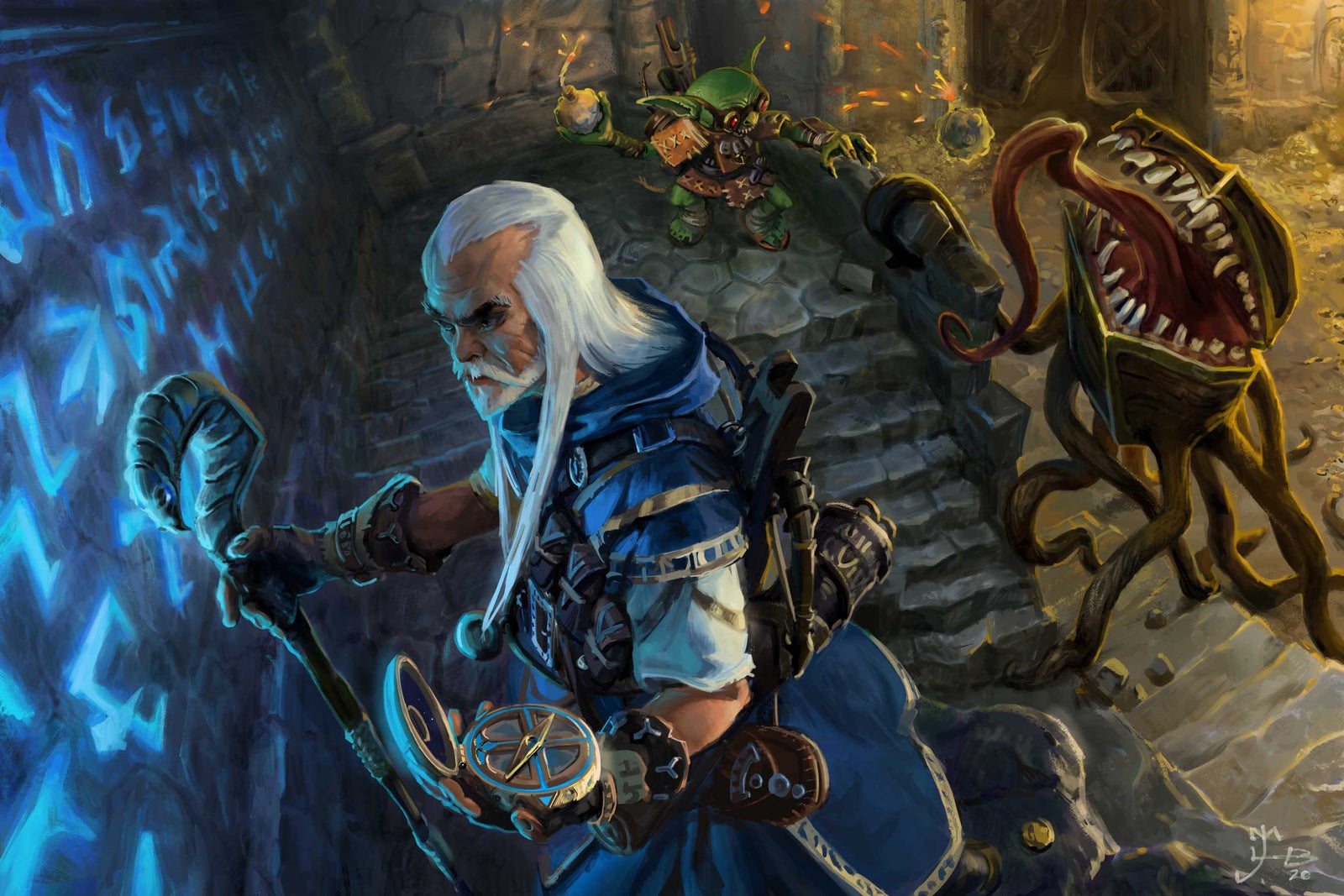
I got back into tabletop RPGs in 2006 when my sons and I started playing Pathfinder (1st edition). We loved Wayne Reynolds's artwork and the enormity of character options and published adventures. We plan to dive into 2nd edition with the upcoming Beginner Box, so I was thrilled by the opportunity to contribute a piece of web fiction to the Paizo Blog. The story prompt was the above illustration of Iconic characters Ezren and Fumbus by Juan Miguel Lopez Baraea, found in Pathfinder Lost Omens: Pathfinder Society Guide.
Read the story here!
September 7, 2017
Book Review: "Dawn of Wonder" by Jonathan Renshaw
 Dawn of Wonder by Jonathan Renshaw
My rating: 3 of 5 stars
I didn't realize when I bought a digital copy of Dawn of Wonder that it was so long. Deep Magic ("The E-zine of Clean Fantasy and Science Fiction") recommended it and it was on sale for a couple bucks. Even then, I wanted to sample it first. I'm not proud of this, but I became convinced the sample represented more of the novel than usual -- like, 90%. I must have ignored all the obvious indications to the contrary. The reason was because that sample -- the first nine chapters, if I remember right -- read like a complete story on its own. The protagonist was young, the villain was clear, the setting was detailed but tightly contained, etc. Earmarks of a short young adult novel.
Admittedly, it seemed odd that something marketed as epic fantasy hadn't yet introduced a single supernatural element. No magic, no fantastical races or beasts, no powerful MacGuffins. In their place was an unexpectedly realistic slave trade conflict. It took me back to a favorite book I used to borrow over and over from my middle school library: Deborah Chester's The Sign of the Owl (1981). It, too, stars a young man trying to win his father's approval and protect his corner of the world from invaders. It's definitely YA historical fiction and finishes at just over 200 pages. I unintentionally draped these same expectations on DoW and cloaked a few warning signs. For example, the damsel-in-distress trope struck me as an obvious misstep in this day and age, so obvious in fact that I assumed it was a red herring.
The sample ended at what I thought was just a few chapters shy of the ending. I'd been put through the ringer, having read most of the night. There'd been a clear story arc and most everything seemed like it could be resolved soon, with one or two deeper character developments reserved for sequels. I wanted to know how it ended, so I paid the couple bucks and kept reading, only glancing at the percentage at the bottom of my Kindle after the story didn't end when I thought it would.
It turned out I was only about 20-24% through. The plot slowed way down and I didn't pick it up again for at least a month. To be fair, that was also partially due to my lack of a regular reading schedule.
I haven't been able to find out if Renshaw ever pitched this to agents or publishers before going the self-publishing route. I give him major credit for making that work so well for him (all the positive reviews and awards), but I think I can guess their concerns. Based on my limited experience, these might include the extreme length for both a first and a YA novel (under 100K is typical; I'd guess this is closer to 150K) or the old well of tropes it draws from, like the chosen white male hero, the medieval European culture, the father-son relationship, and the aforementioned damsel-in-distress plot device. Granted, it has its roots in adventurous and moralistic fantasy worlds like Narnia and Prydain, and so do I. However, you might say Renshaw could have kept even closer to that tradition of shorter installments and less on-the-nose sermonizing.
(This is an aside that deserves a SPOILER ALERT: I read a review stating that DoW is refreshing because it avoids cliche archetypes. It explicitly gave deus ex machina as an example, the literary device in which the main characters are conveniently rescued from a rapidly downward-spiraling situation by a surprise development. Tolkien's Eagles are a fair example. To be clear, the review stated this does not happen in DoW. This confused me, as a pivotal scene in the book involves the main character overcoming his primary personal conflict, not to mention pretty downward-spiraling physical conflict, by direct intervention from not even a symbolic god, but an actual god, clearly this world's Messiah. And that's only the most obvious example. I don't fault people for liking this book, and this particular use of that trope could even be a good reason to. I'm just saying, call it like it is!)[I read a review stating that DoW is refreshing because it avoids cliche archetypes. It explicitly gave deus ex machina as an example, the literary device in which the main characters are conveniently rescued from a rapidly downward-spiraling situation by a surprise development. Tolkien's Eagles are a fair example. To be clear, the review stated this does not happen in DoW. This confused me, as a pivotal scene in the book involves the main character overcoming his primary personal conflict, not to mention pretty downward-spiraling physical conflict, by direct intervention from not even a symbolic god, but an actual god, clearly this world's Messiah. And that's only the most obvious example. I don't fault people for liking this book, and this particular use of that trope could even be a good reason to. I'm just saying, call it like it is!) (hide spoiler)]
An example of a series I've enjoyed with a young protagonist, subtle fantasy elements, and shorter installments is Joseph Delaney's The Last Apprentice series. It, too, draws from an old well of tropes, like the chosen white male hero or the aged mentor; however, it stays interesting because each book is focused on a self-contained episode in that training (a bit Harry Potter-like). My point is that there are ways to play in these traditional sandboxes while building something new and original. It's easy to see Renshaw moving in that direction, too, but the payoff may take years. SECOND SPOILER ALERT: By the end of book 1, there's something of a Schrodinger's Cat going on in the form of "Schrodinger's Fridged Female Character," in that the aforementioned damsel-in-distress could be either dead or alive, and more interestingly, still in distress or not. My guess, or hope, is alive and not distressed; that would explain Renshaw drawing this out, lending weight to the revelation that things aren't what the hero is expecting. However, I doubt I'll have the patience to find out firsthand. [By the end of book 1, there's something of a Schrodinger's Cat going on in the form of "Schrodinger's Fridged Female Character," in that the aforementioned damsel-in-distress could be either dead or alive, and more interestingly, still in distress or not. My guess, or hope, is alive and not distressed; that would explain Renshaw drawing this out, lending weight to the revelation that things aren't what the hero is expecting. However, I doubt I'll have the patience to find out firsthand. (hide spoiler)]
So I guess the recap is that I would have preferred this to be shorter, a bit more original, and more explicitly "fantasy." (I don't know where you fall on the TV series Gotham, but to me, a fantasy about the dawning of the fantastic is about as frustrating as a Batman story with no Batman.) It was more effort to finish than it should have been and I sensed I would have enjoyed it more twenty years ago.
Now to end with the reasons I did still finish this, i.e. what I enjoyed: The writing is strong. Renshaw is a former English teacher and seems a genuinely good guy (if the anti-bullying, anti-slave trading agenda both here and on his web site are any indication). He has a knack for natural yet original similes. The main character's complex relationship with his father and the conflict that creates is unusually real and poignant. Rare supernatural moments that have no right to be scary still are simply because they aren't taken for granted. There are several interesting female characters, one of whom is a person of color. The slow build means the conflict resolutions are all fairly satisfying. And finally, the messages of hard work, hope, and forgiveness make this something I might recommend to my teen kids. That way, they can give me the shorthand version of the sequel!
June 22, 2016
Dungeons & Dragons & Drawing

Once upon a time Often upon fifteen+ years ago, I played that little role-playing game called Dungeons and Dragons. As you'll notice in the "Labels" section on the right, I've mentioned D&D here before, plus in a short product description for Nerdy With Children a few years back. I owe my cousins for introducing it to me, because I loved it, and used it (like many people have) to build storytelling skills, plan and write novels, and enjoy a whole lot of adventures with my friends. I guess you could say this is my attempt to pay it forward!
I've mentioned in earlier posts that, after a long hiatus from dungeon-delving games, I eventually found Descent 2nd Edition. I'm still a rabid Descent fan, which I value for its artwork, its relative simplicity (compared to RPGs, which it isn't), and its short preparation time. In other words, I've appreciated not having to fill what I remember as the very time-consuming role of "Dungeon Master."
However, a few months ago, I discovered a Humble Bundle for an RPG called Pathfinder, which is D&D 3rd edition's Open License rule system re-branded by Paizo Publishing. I wasn't eager to jump back into tabletop RPGs; if anything, I avoided it. However, the bundle included digital copies of hundreds of dollars worth of rulebooks and quest modules for less than $20, which was hard to ignore. I mentioned it to a father and son at my church as well as my two boys, and they all convinced me to go for it.We love games in my house, but we also don't play nearly as often as we'd like to. Descent, Dice Masters, Smash Up, Labyrinth, Ticket to Ride...and now Pathfinder. In other words, we were slow to get started. Fortunately, with all the content I'd acquired, I didn't have to do much preparation. My sons were more excited about the imagination-based RPG than they ever were about the board-and-figure-based Descent, so I helped them make characters. (That's when I learned they took me seriously when I said they'd be able to do "anything." More on that below.) After several short sessions spread over a few weeks, we managed to finish the Beginner Box quest "Black Fang's Dungeon."
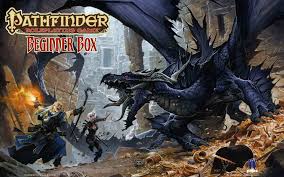
Both boys had a lot of fun. Though Descent is highly thematic and simplifies everything with custom dice and equipment/skill cards, there's something to be said for narrative-based exploration. Board games are a break from screentime, but RPGs replace it with a level of imagination usually only found in a good book. It was awesome to see the excitement and fear in my son's faces when they found a treasure chest buried in a room full of cobwebs, or when an underground lake monster crept up and grabbed one of them in its claw, or when they finally found Black Fang himself - the acid-spewing dragon depicted above - and one of them was immediately knocked unconscious, forcing the other to improvise. After cranking out crossbow shots from the safety of the narrow doorway, my eight-year-old managed to scare the dragon off. He is now determined to track Black Fang down and defeat him in a later quest.
Something else I haven't done much since my D&D days is draw. I used it a bit in college - even completed an illustration commission - but I finally stopped completely about six years ago (if you don't count Kindle doodles with a stylus). To my surprise, this first quest with my boys made me want to draw again, proving that it really is a powerful source of inspiration. In the old days, I would draw my friends' characters and whatever recurring foes they faced. I was excited to repeat this tradition with my own children.
Being rusty, I started with a rough outline:

Although I wanted to surprise them with a finished drawing, I decided to ask for their input about how their characters should look. Both boys had chosen nontraditional heroes, which I was okay with because a) this is for them! and b) I've always liked mutants. Lindon (11) wanted a man-wolf fighter, so we used the half-orc as a template and several of its alternate racial traits, like Bestial and the Keen Scent feat. James (8) wanted a man-snake hunter (druid/ranger) with a raptor companion named Blue. (Can you guess his favorite movie?) We went with the nagaji from the Uncommon Races. As you can see, I imagined him a bit more human, recoiling from the dragon's acid in an admittedly unheroic pose. James wasn't impressed, and drew this for me as a point of reference:
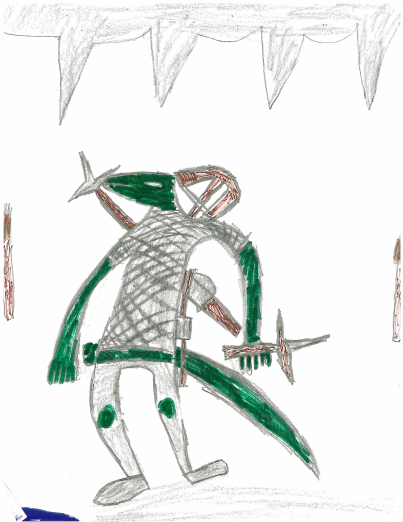
I almost turned over the project to him! However, I pointed out that his character wears studded leather armor, not chain mail, and we agreed he shouldn't have a tail, lest he come across more "lizard-man" than "snake-man." Below is the second (and final) draft:
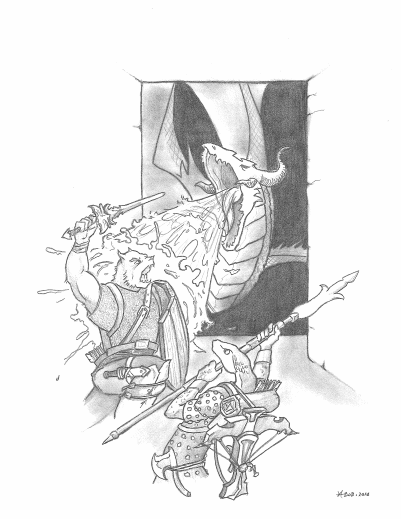
I kept a similar layout but tightened it a bit for drama's sake, darkened the dragon's lair for the same reason (even though it was open to sunlight from above), and tried to honor James's depiction of his character. It's not perfect. The dragon's acid appears to curve slightly; I wish the shading was maybe a bit more subtle; and the dragons-bane sword found by Lindon's guy, though based on the quest's illustration, could use better foreshortening. Blue was cut entirely because I felt who's fighting whom was already confusing.
They seem to like it, though. It was...I don't know...kind of cathartic coming back to pencil sketches. Admittedly, the game didn't run as smoothly as I might have liked. I never played 3rd edition, so I had to learn a lot of new rules, remember old ones, and try to keep track of everything while waiting for my phone and/or tablet to load the pages I needed. The boys, being young and new to role-playing, needed a lot of guidance. (I have now created the famous "DM's NPC," or non-player character, to fill that need.)
All that said, they constantly ask when we'll get to play again. Currently, they're in a similarly tricky situation: This time, James's character is the one unconscious, having just been pounded by an earth elemental, and Lindon is trying to decide between fight or flight. If anyone's interested, we'll let you know how things turn out! Meanwhile, thank you, cousins, friends, D&D, and Pathfinder, for making this (mostly) screen-less father-son time possible!
May 7, 2016
"Captain America: Civil War" Review
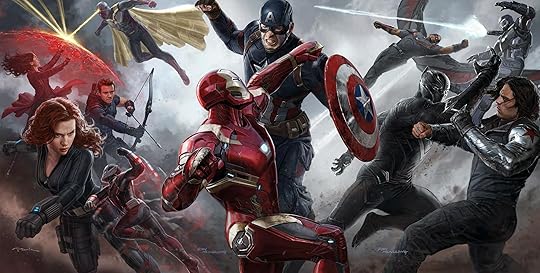
I'm going to give my SPOILER ALERT early, because any information can ruin a movie - something I wish I remembered before devouring every sneak peek I could find for Captain America: Civil War. If you sneak too many peeks, you gain a pretty good grasp of the whole without even seeing it. You can predict the plot.
Strangely, a fan like me often wants to predict the plot, which is why there are so many web sites and podcasts and YouTube channels specifically dedicated to that purpose. Like an appetizer, it tides you over while increasing your appetite, and all the while, you just assume the filmmakers are still going to surprise you.
And then they don't.
It's not their fault. Not entirely. Sure, sometimes formulaic writing and genre tropes are to blame; but again, if I watched every Captain America: Civil War trailer, tv spot, and clip leading up to the film's release, why am I surprised by the lack of surprise?
(Knowing this was another Russo movie, I even watched Community for the first time - every single episode! - because that's how eager I was for more of their work. At least now I notice the cameos.)
I guess what I'm saying is that I don't agree with a lot of the hype surrounding Civil War - specifically that it's the best superhero movie ever, or even within the Marvel Cinematic Universe. For me, Winter Soldier still holds that title. Repeat viewings might cause a change of heart, but like they say, you can't un-ring a bell, and I can't undo all my sneak peeking. My sons and I walked out of Ant-Man gushing pleasant surprise because we walked in knowing very little. We walked out of this...divided. Given its theme, maybe that was appropriate!
However, it seems like I only muster the energy for a review when I'm disappointed by a movie, which is kind of sad and not entirely fair. After all, I only see them and write about them because, under all the nitpicking, I do enjoy them. So as I delve into details, I'm going to try a binary approach and balance all my complaints with sincere praise. I know that's a bit ironic, given this movie largely resists binary, black-or-white interpretations, but whatever.
I'm going to call these warring sides "Team Obvious" (led by Captain Obvious, obviously) and "Team Other Hand."TEAM OBVIOUS: There are a lot of superheroes in this movie. While most critics seem to disagree with me, the ensemble is somewhat distracting and hard to keep track of - even for someone as prepared as I was. Every character has his and her own motivation, but more effort goes into building their supporting arcs than resolving them. Wanda/Scarlet Witch's is like a cringe-worthy custody battle. Natasha/Black Widow's rolls downhill from Winter Soldier - less poignant and more predictable. Spider-Man is welcome but extremely unjustified. He and Ant-Man actually end up looking somewhat bad for their contributions, which are given blindly.
There's a joke in the Winter Soldier HISHE (How It Should Have Ended) in which Steve wants to call in the Hulk for help and Nick Fury tells him no, without good reason. The implied problem with a larger superhero universe is that it's hard to explain why more heroes don't appear in each other's standalone stories to battle world-altering forces. With Civil War, it's like the Russos took that to heart (they do watch Honest Trailers), but proved why it's problematic. If you came for a Captain America movie, you want other characters revolving around him, not competing for your affection.
TEAM OTHER HAND: Spider-Man is awesome in this movie. That's one claim I agree with. He's Tobey Maquire's nerdy vulnerability combined with Andrew Garfield's wit and charisma, and more age appropriate. His involvement may have been shoehorned, but my happiest moment in the theater was when QUEENS showed on the screen and the Stark/Parker banter played out. So much fun. It's saying something, then, that I'm even more interested in Black Panther than Spider-Man: Homecoming. Both characters steal the show, but T'Challa/Black Panther's role is handled the most gracefully, and his presence is the least objectionable bit of franchise-building. He could have made Iron Man unnecessary (and saved him from taking such a brutal emotional beating). Ant-Man is great as usual, even if a LEGO playset spoiled his big moment weeks beforehand.
TEAM OBVIOUS: A related but distinct complaint is that the master villain, Zemo, is not a Captain America villain, but an Avengers villain. He is reacting to Sovokia (a name I'm getting tired of hearing) and the death of his family. Essentially, he's the Maximoff twins if they went after the Avengers alone instead of throwing in with Ultron. This is the most obvious reason why Civil War is not a Captain America movie; if it wasn't trying to be one, the various plots might have had more room to grow on their own.
In particular, I would have liked to see Wanda more involved in the Zemo storyline, given that obvious parallel. She also might have been more involved in the Cap/Bucky plot: Her powers came from the Mind Gem, we've seen her use them to awaken people's memories, and the primary problem with Bucky is that his mind needs resetting. It's a lock and key that never come together. Instead of solving problems, Wanda gets blamed for causing them, and we last see her huddled in a straight jacket. If it weren't Cap's movie (so-called), she wouldn't need his rescue; he would need hers. After losing Bucky in the first movie and fighting him in the second, Steve spends the third reuniting with and saving him at everyone else's expense. To what end? For Bucky to be put back on ice. Why couldn't Wanda have prevented that?
TEAM OTHER HAND: Zemo is still one of the most interesting villains of the MCU. Nontraditional and sympathetic, he joins Loki in surviving (barely) his first movie. His return seems unlikely, but who knows? Maybe he's the next chump to strike a deal with Thanos.
And to be fair, Civil War definitely starts and ends as a Captain America movie: Rumlow/Crossbones is the character nemesis, even if he exits quickly; Steve and Bucky do get to renew their brotherly bond; and with the burying of both Peggy Carter and Winter Soldier, Steve completes an arc that was always about finding where he belongs.
TEAM OBVIOUS: Speaking of Carter, we get a forced romance between Steve and Sharon - as if this movie wasn't already busy. We knew it was coming, but I for one expected a bit more preparation. They agree the kiss was a long time coming, but do we? They barely interacted in Winter Soldier, notwithstanding Natasha's attempts to play matchmaker.
TEAM OTHER HAND: I was still glad they didn't ignore Sharon entirely. Also, Sam and Bucky showing their approval was priceless.
TEAM OBVIOUS: This movie has a lot of those establishing shots mentioned earlier, labeled with big white letters that don't share visual continuity with the first two installments. That's because this is a globe-trotting movie, more so even than Age of Ultron, amplifying the need to build future MCU foundations. Establishing shot indeed! Winter Soldier was more grounded, tracking Cap's every move as soldier, then fugitive, then leader.
TEAM OTHER HAND: I usually defend the franchise-building in these movies and consider it the MCU's strength. Winter Soldier was a political thriller and so the action revolved around that; Civil War is, as the name implies, a larger conflict on a wider battleground. It doesn't have the luxury of that "I just like to know who I'm fighting" epiphany that simplified Steve's world. "How do we know the good guys from the bad guys?" Falcon asked last time, and this time, the answer is more complicated. As even my eight-year-old son remarked, that tonal and moral diversity is "different and interesting."
TEAM OBVIOUS: The last act revelation that Bucky killed Tony's parents was so predictable, I forgot it was supposed to be a secret. I was then distracted during the ensuing battle because I was trying to remember why Tony didn't know Bucky was brainwashed by Hydra. Sure, knowing wouldn't make it easy to forgive him...but certainly easier. Also, when did Steve find out? He didn't have the luxury of rewatching computer brain Zola's rapid confession in Winter Soldier like the rest of us.
It's frustrating when a story's conflict only exists because the characters don't share certain crucial details. Worse, that the villain can confidently rely on that.
TEAM OTHER HAND: What I didn't predict was Zemo killing the other Winter Soldiers instead of waking them, which was a nice twist that avoided the Doomsday problem from Batman v Superman (which I still haven't seen, but I'm assuming there's a parallel there). And yes, diplomacy always fails on screen. While that may be for the sake of conflict, it's also tragically accurate to reality. No one wants to be pushed around. Everyone wants justice until they're the ones on its receiving end.
Other Hand gets upper hand? I'm not really keeping score. Civil War doesn't declare winners, so why should I?
Update: Grace Randolph's spoiler review on her YouTube channel Beyond the Trailer goes into even more detail on a lot of these same points, plus several I forgot to mention. Not all of her concerns are mine, but I definitely agree that this movie makes Captain America a less likable character, which is a shame considering Winter Soldier is what convinced me he was cool.
December 18, 2015
"Star Wars: The Force Awakens" and Predictability

Star Wars!
Am I allowed to write a reaction to this movie? Is a bounty hunter going to come after me? Everyone's so nervous about spoilers that I feel like I'm doing something terrible. But I can't help myself. I saw it as soon as I could and that means most of the in-depth, nerd-tastic analysis I'm craving at the moment has yet to appear online, meaning I'm stuck with me. So let me preface this with a very clear
First I should say that I'm no expert on Star Wars. You want my brother for that. I've seen all the movies several times and followed the animated shows: Genndy's non-canonical but awesome mini-series, most of The Clone Wars, and Season 1 of Rebels so far. I even wrote George asking to play Anakin when I was a teenager. But I didn't exactly grow up on it. Its Lucas sibling Willow was my jam.
We had a recorded copy of Return of the Jedi that I thought was pretty cool. Even after seeing Episodes IV and V I still liked it the most. Between that and Caravan of Courage, I thought Star Wars = Ewoks. I know, blasphemy.
So let's say I'm initiated, if not as fully obsessed as some fans. I had expectations like anyone. Some were met in a good way and some were met in a less good way, leaving me with thoughts about predictability. When do you want to be right? When do you hope you're wrong? I think everyone's mileage will differ on that one.
Regardless, it's obvious that The Force Awakens mirrors the original Star Wars. I mean, we knew it was going to because a) duh and b) this franchise has always been about mirrors. (And if you have a bad feeling about that, give a Wilhelm Scream as you set off on your hero's journey.) However, plot "reflection" was basically J. J. Abram's lens flare in this movie, and was glaring enough that it's what I'm most eager to shine a light on. (Wow, so many puns. I apologize.)
I threw together the following comparison pretty quickly, so if you see something I missed, let me know in the comments!
PlotOriginal Trilogy (Ep. IV unless otherwise noted)The Force Awakens1A rebel agentLeiaPoe2loyal to an OrganaHer adoptive fatherLeia3has to hide a digital MacGuffinDeath Star plansMap to Luke4in a lovable droidR2-D2BB-85who gets stranded on a desert planetTatooineJakku6and is saved from junkersJawasThat thing riding a horse with a monitor head.7by a local nobody.LukeRey8The rebel agent is captured by a black knight with a voice changerVaderKylo Ren9with ambiguous authority over/under a British bad guyTarkinThat guy who was like Tarkin but younger and angrier.10and is tortured for intel.by Torture droidby the Force (except Leia resisted)11The intel escapes with someone less confidentR2-D2 and C-3PO (in the same instance as #5)Poe and Finn12and they crash and are separated on a desert planet.Tatooine (same as #5 again)Jakku (separate from #5)13Thieves come after the local nobodySand People vs. LukeJunker thugs vs. Rey (except she wins)14and then soldiersStormtroopersStormtroopers15so the heroes escape togetherMillennium FalconMillennium Falcon16and learn about the Force from an aged mentorBen KenobiHan Solo (Irony!)17only to watch him die later at the hands of the black knightVaderKylo Ren18who has history with said mentor.Was Ben’s pupil.Is Han’s son.19Oh, and the black knight answers to a holographic Bigger BadEmperor Palpatine (Ep. V)Supreme Leader Snoke20whose plan is to wipe out planets with a large laser-shooting orb.Death Star (that’s no moon)Starkiller Base (that’s no planet)21They’re aided by a unique looking soldier who never shows his/her face.Boba Fett (Ep. V)Captain Phasma22The orb weapon is used onceon Alderaanon like 5 planets (including Coruscant I think?)23and then destroyed by the rebels in a mission with starfightersLuke and co. (Ep. IV); Lando and co. (Ep. VI)Poe and co.24and an away teamHan and co. (Ep. VI)Han and co.25but the black knight survives.Vader in his Tie FighterNot sure how, but Snoke gave the order!26Somewhere in there are aliens chillingCantinaMaz Kanata’s hideout27and a tentacle creaturethe thing in the trash compactorthe things Han was smuggling28and debt collectorsPoor Greedothe two teams after Han29and talk of turning the black knight good again.Luke about Vader (Ep. VI)Leia about Kylo Ren30The former nobody goes looking for a new mentor living in exileYoda (Ep. V)Luke31and is taught about the Force by a short, wise, bald, really old alienYoda (Ep. V)Maz Kanata32and undergoes a trial in the form of a vision that doesn’t make much sense at the time.The cave (Ep. V)Rey’s memories (?) triggered by the lightsaber.33It ends by teasing the next installment.“I’ll meet you at the rendezvous point.” (Ep. V)Luke!
I guess what's most striking about this is how much The Force Awakens mirrors the entire Original Trilogy, not just Episode IV. I'm probably overthinking this, but my theory is that this trend won't continue in the other films. The predictability this time around was probably a welcome dose of nostalgia for most fans and did a lot to erase bad memories of the Prequel Trilogy. However, continuing in that vein risks a repeat of the not-so-secretive Wrath of Khan echoes in Abram's Star Trek Into Darkness. The wink-wink nudge-nudge see-what-we-did-there homages would get old.
So since we're talking about predictions, mine is that Episode VIII will not pick up immediately where VII left off. Not only would this be a first for the franchise, but it would continue to mirror Episode V, which, as shown above, we've already seen.
True, skipping Rey and Luke's initial conversations would mean we don't get to see his reaction to the news that Han is dead, or hear about his history with Kylo Ren, or witness his unwillingness to train Rey. But maybe that's a good thing. While The Force Awakens leaves a lot unexplained, the moments when it does drop exposition are among the least effective. Also, another tradition in this franchise is to fill those gaps in time with supplemental material like books, comics, and the aforementioned cartoons, and I'm sure Disney would welcome the opportunity.
I could be proven wrong very quickly ("We're picking up right where we left off!" says Kathleen Kennedy next week), but my hope is that the 2017 sequel will diverge from the path of predictability. What I liked most about VII were the character interactions. Everyone was funny, flawed, and endearing. I even feel like I know Chewy better! So I say let them drive the plot, instead of merely adding their own unique flavor to one we've already seen.
October 1, 2015
Descent 2nd Edition Painted Miniatures, Part 5
 HEROES
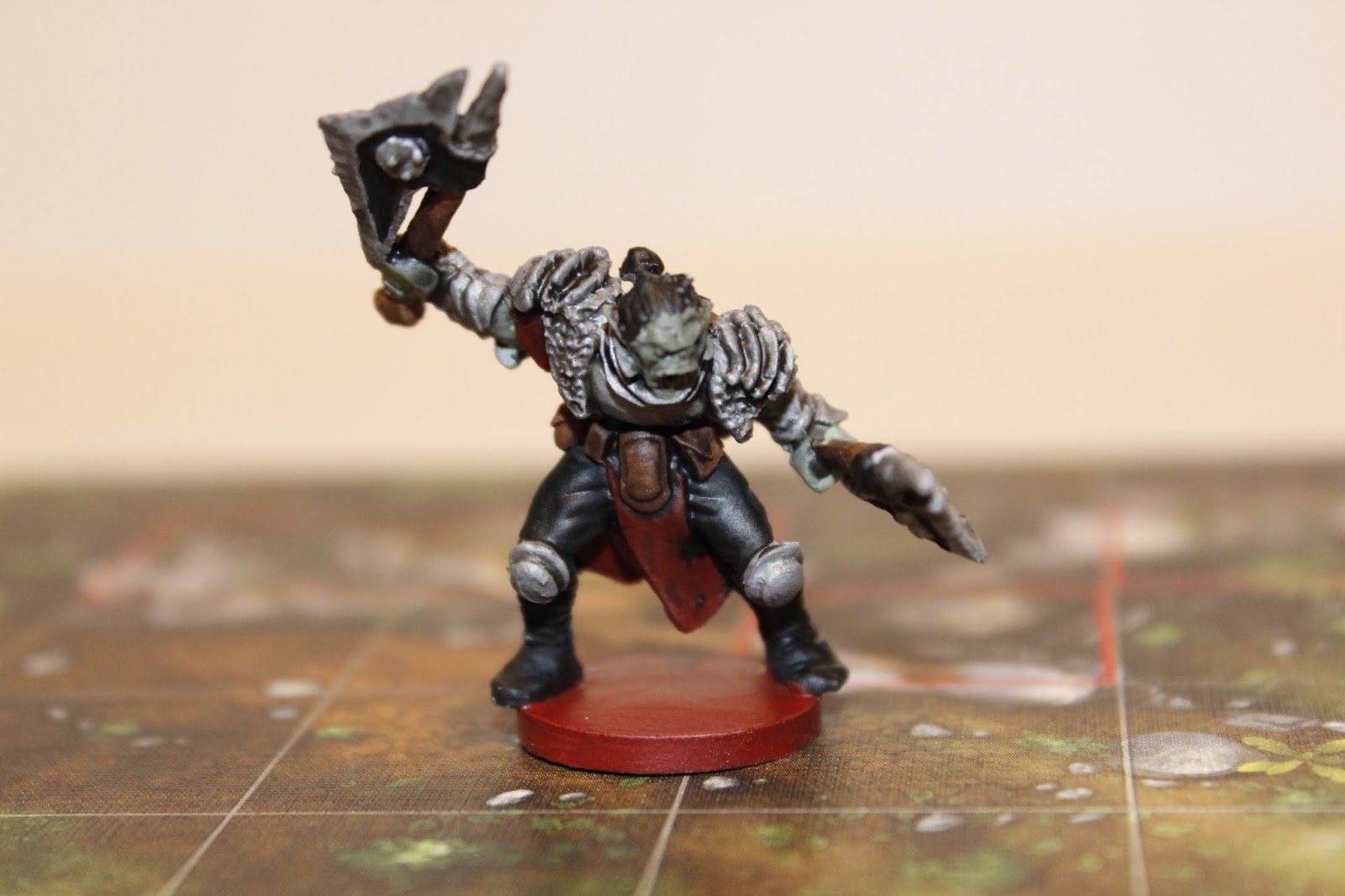 Mordrog (Orc Warrior)
 Lord Hawthorne (Human Warrior)
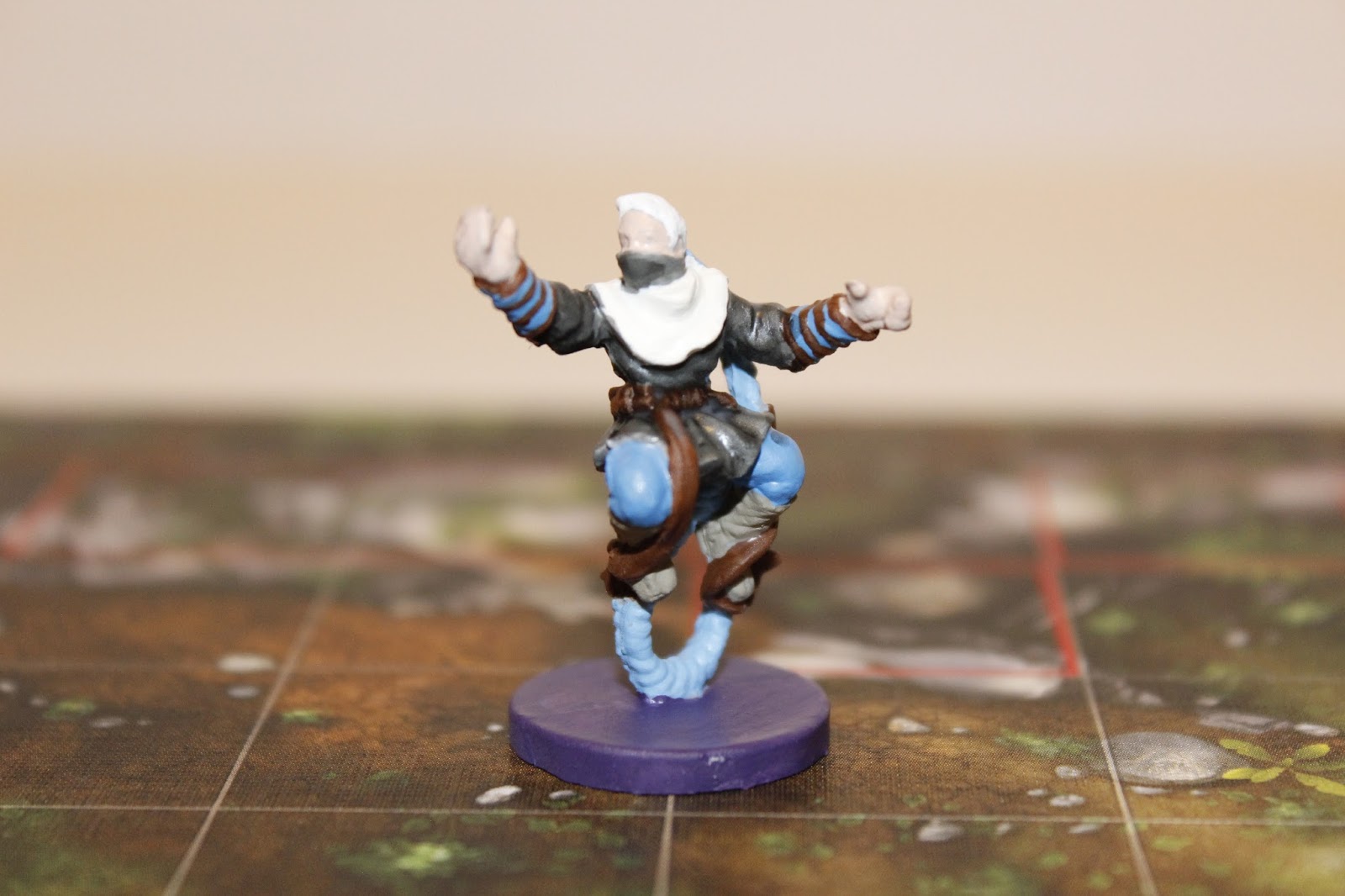 Sahla (Human Healer)
 Silhouette (Human Scout)MONSTERS
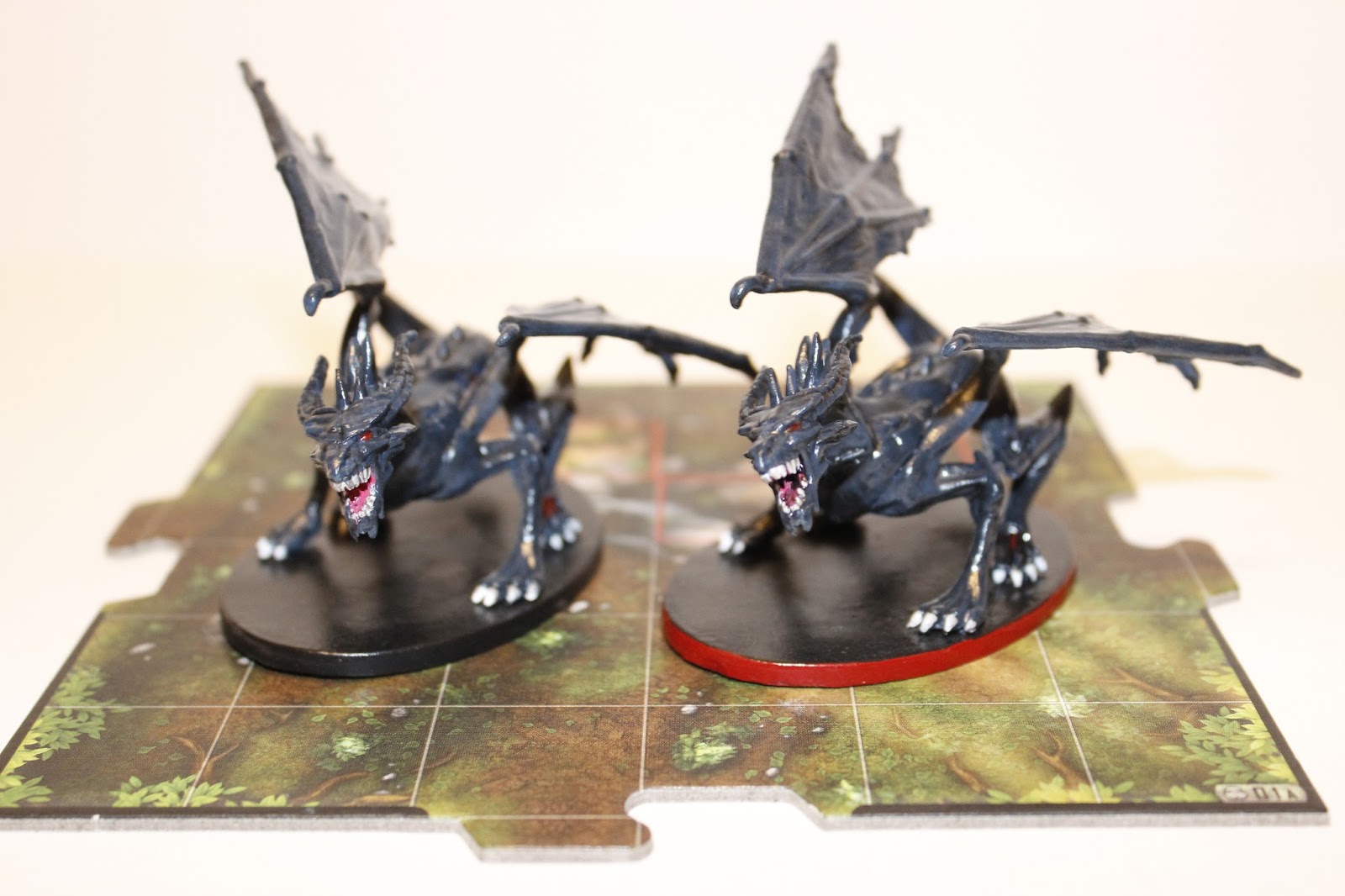 Crypt dragons
 Wendigos
 Dark priests
 HEROES
 Nara the Fang (Orc Warrior)
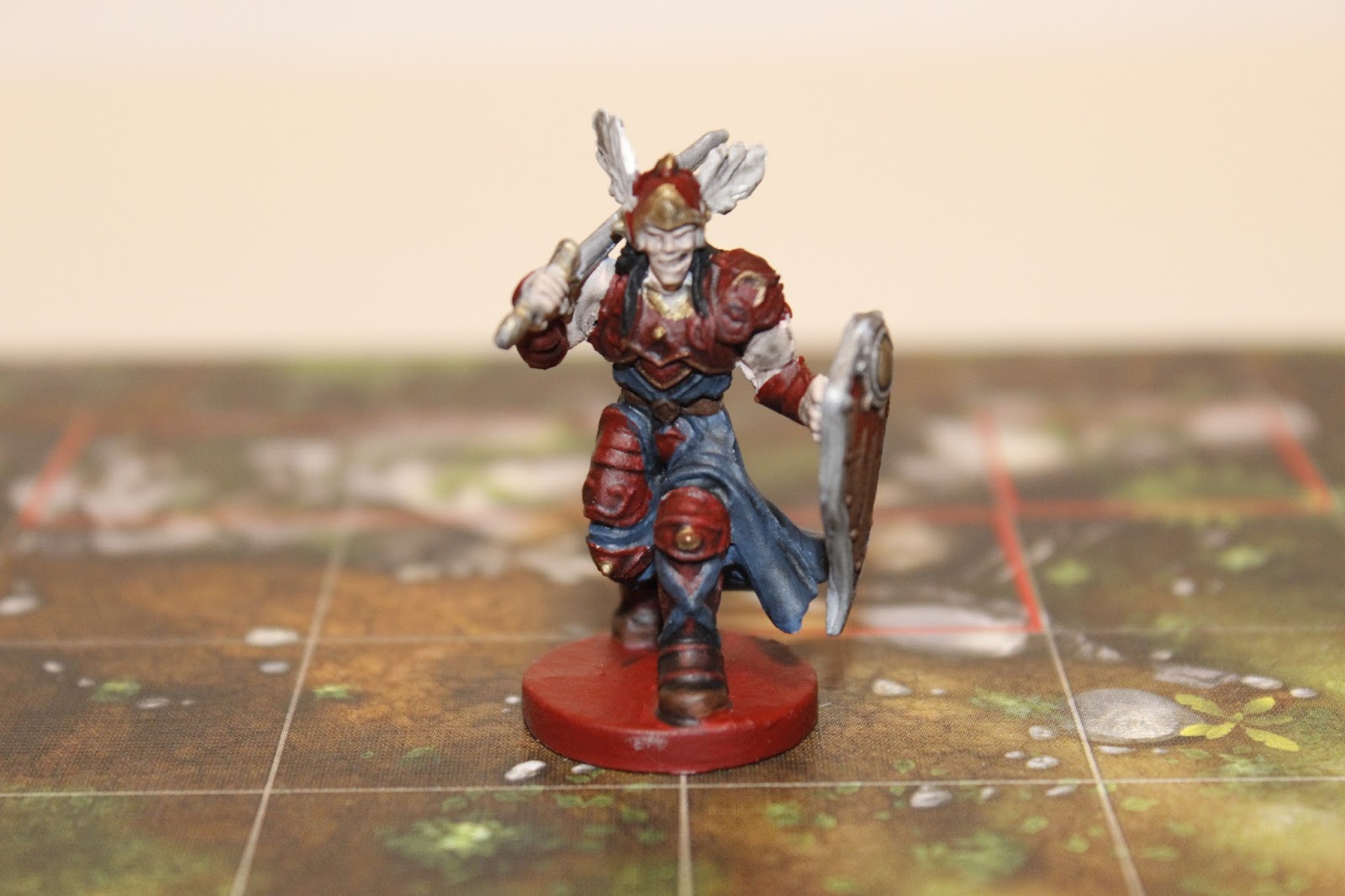 Sir Valadir (Human Warrior)
 Master Thorn (Human Mage)
 Ispher (Hybrid Healer)
MONSTERS
 Trolls
 Ogres
Ogres(I'm not sure where the second one went.)
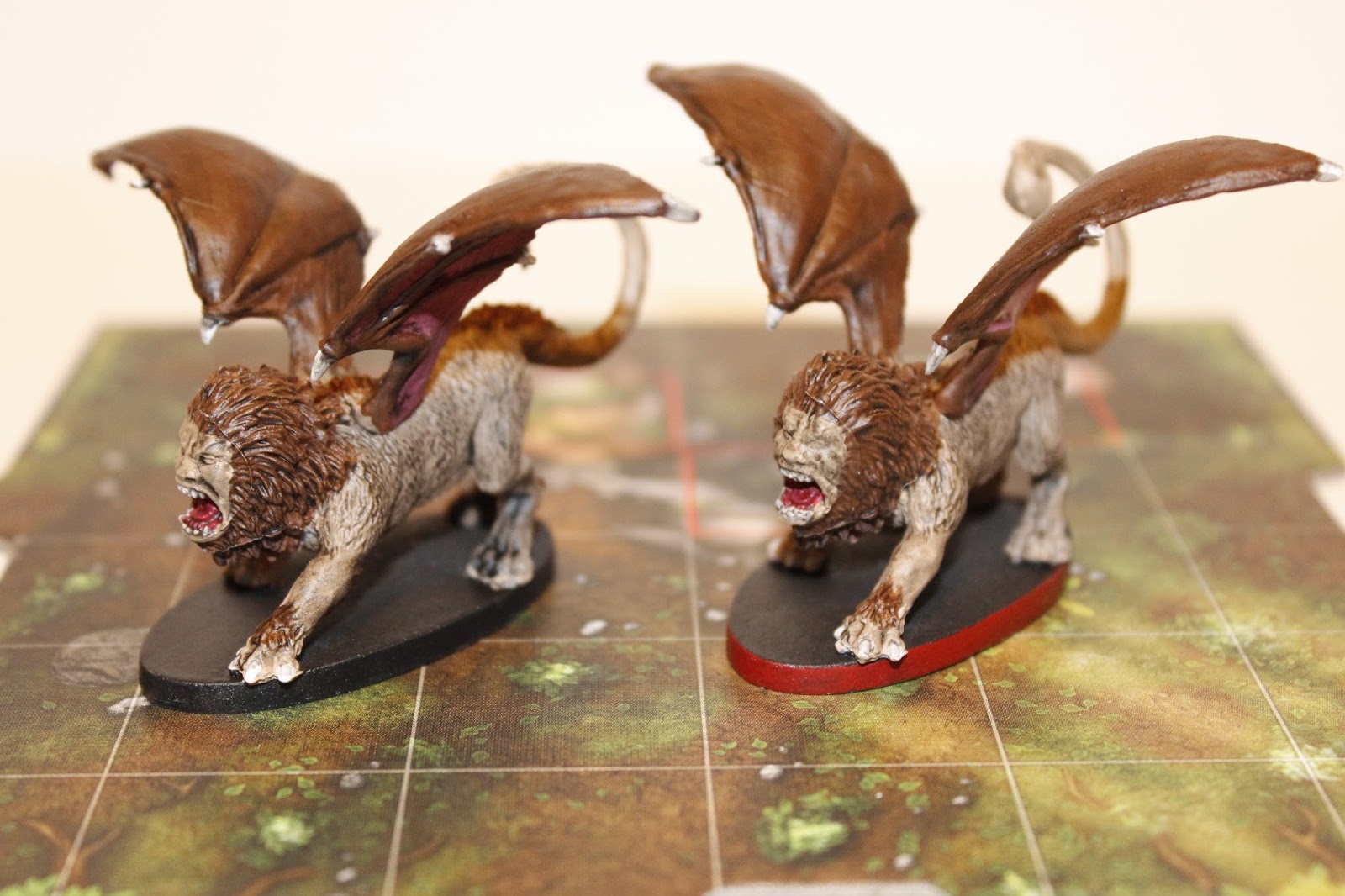 Manticores
August 11, 2015
Do You Want To Build a Scarecrow?
 Credit: solaroid by way of TV TropesToday's mail brought my copy of Scarecrow, a themed speculative fiction anthology edited by Rhonda Parrish and published by World Weaver Press. (See the cover here; you can order it here or from Amazon.) Along with work by Devil's Arithmetic author Jane Yolen and others I'm excited to read is my short story "The Straw Samurai," which was inspired in part by the above illustration of a tengu. A tengu is a Japanese mythological creature, and my original intent was to write a story about one for the companion anthology,
Corvidae
, to be continued in a sequel for Scarecrow. Because I had this idea just three weeks before the submission deadline (Halloween, 2014), I had to blend it into a single, standalone story that I barely finished on time. As expected, it deals with both tengu (crow-people) and a scarecrow, but it was chosen for the latter theme.
Credit: solaroid by way of TV TropesToday's mail brought my copy of Scarecrow, a themed speculative fiction anthology edited by Rhonda Parrish and published by World Weaver Press. (See the cover here; you can order it here or from Amazon.) Along with work by Devil's Arithmetic author Jane Yolen and others I'm excited to read is my short story "The Straw Samurai," which was inspired in part by the above illustration of a tengu. A tengu is a Japanese mythological creature, and my original intent was to write a story about one for the companion anthology,
Corvidae
, to be continued in a sequel for Scarecrow. Because I had this idea just three weeks before the submission deadline (Halloween, 2014), I had to blend it into a single, standalone story that I barely finished on time. As expected, it deals with both tengu (crow-people) and a scarecrow, but it was chosen for the latter theme.Here's a quick blurb:
Okamiko is a lonely human girl in a land of Monster villages. She wanders between these cow-people and bird-people and dog-people, struggling to find where she belongs...until a family of chough-children want her only friend - a supposedly magical stick of bamboo - in exchange for a straw samurai.Without giving anything significant away, I can also tell you:
the story is a retelling of the Japanese folktale "The Tengu's Magic Cloak"it features anthropomorphic animals, or mutants - a subject I devoted a lot of attention to in this posteven though the corvidae called choughs (pronounced "chuff") aren't native to Japan, I made my tengu red-billed chough-people because of the similarity in appearanceit represents my fascination with the subject of supernatural transformation, as explained herethe main character was inspired by both Ponyo (from the Miyazaki movie, itself a retelling of The Little Mermaid) and my daughter GretaI've written two novels set in this same universe of retold myths and legends, and while several excerpts were shortlisted and one was an honorable mention in the Writers of the Future Contest, this is the first story set in that universe to see publicationit is also the first to be written specifically for a themed call for submissionsIt's not a terribly long story, so that's probably more than sufficient preamble. I hope you'll take the chance to read it!
August 2, 2015
Descent 2nd Edition Painted Miniatures, Part 4

HEROES
 Trenloe the Strong (Human Warrior)
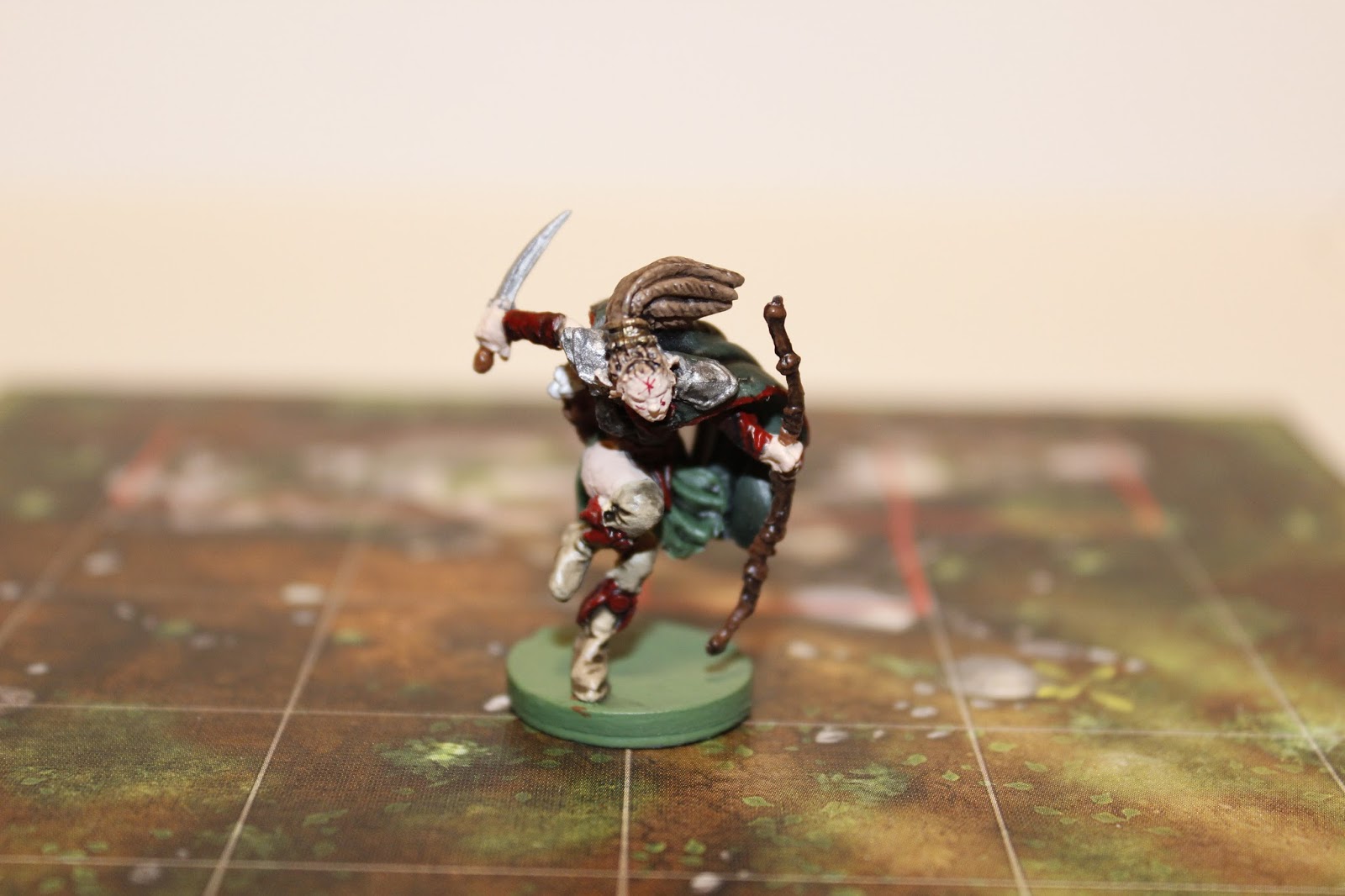 Laurel of Bloodwood (Elf Scout)
 Shiver (Elf Mage)
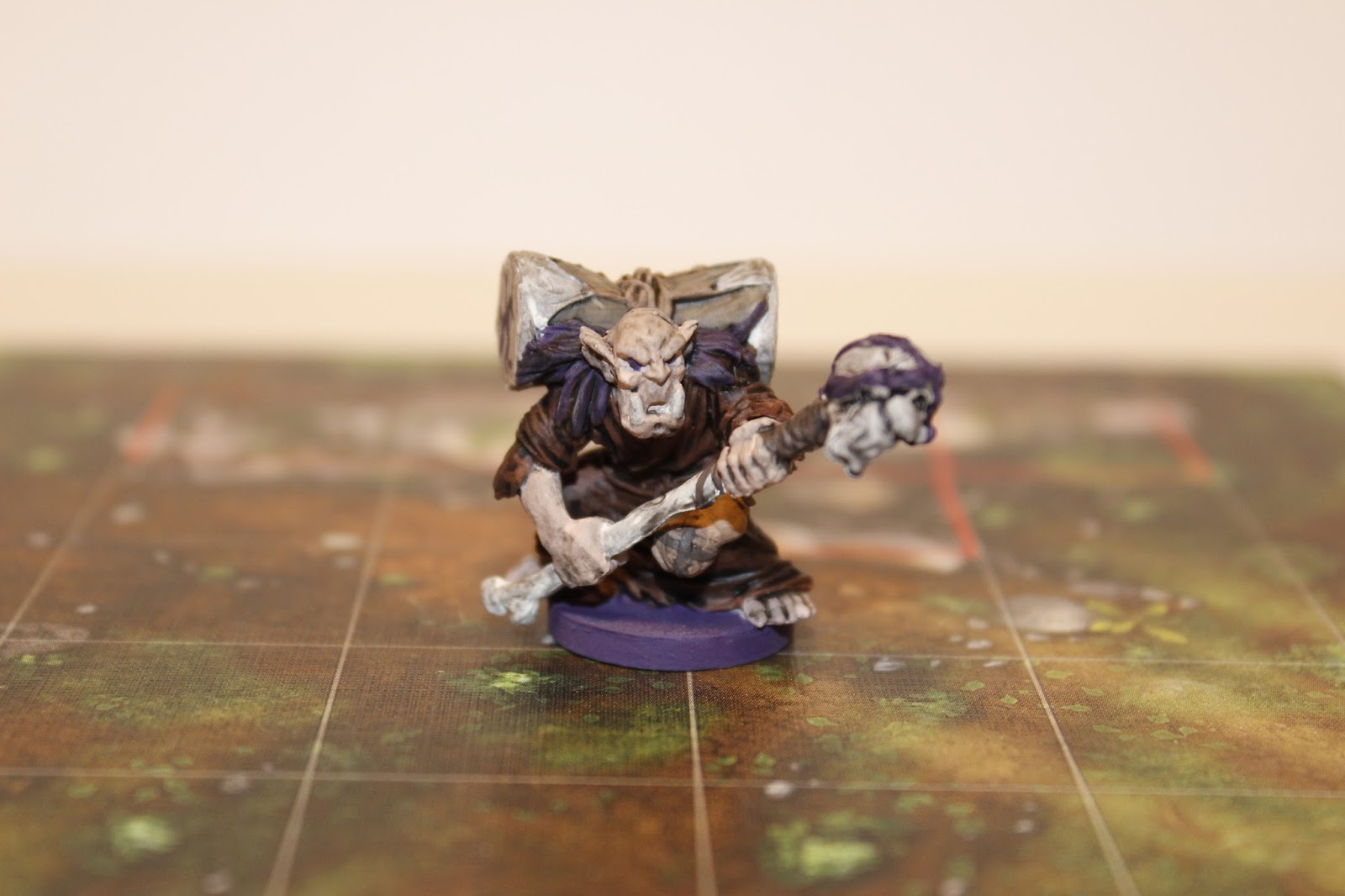 Elder Mok (Orc Healer)MONSTERS
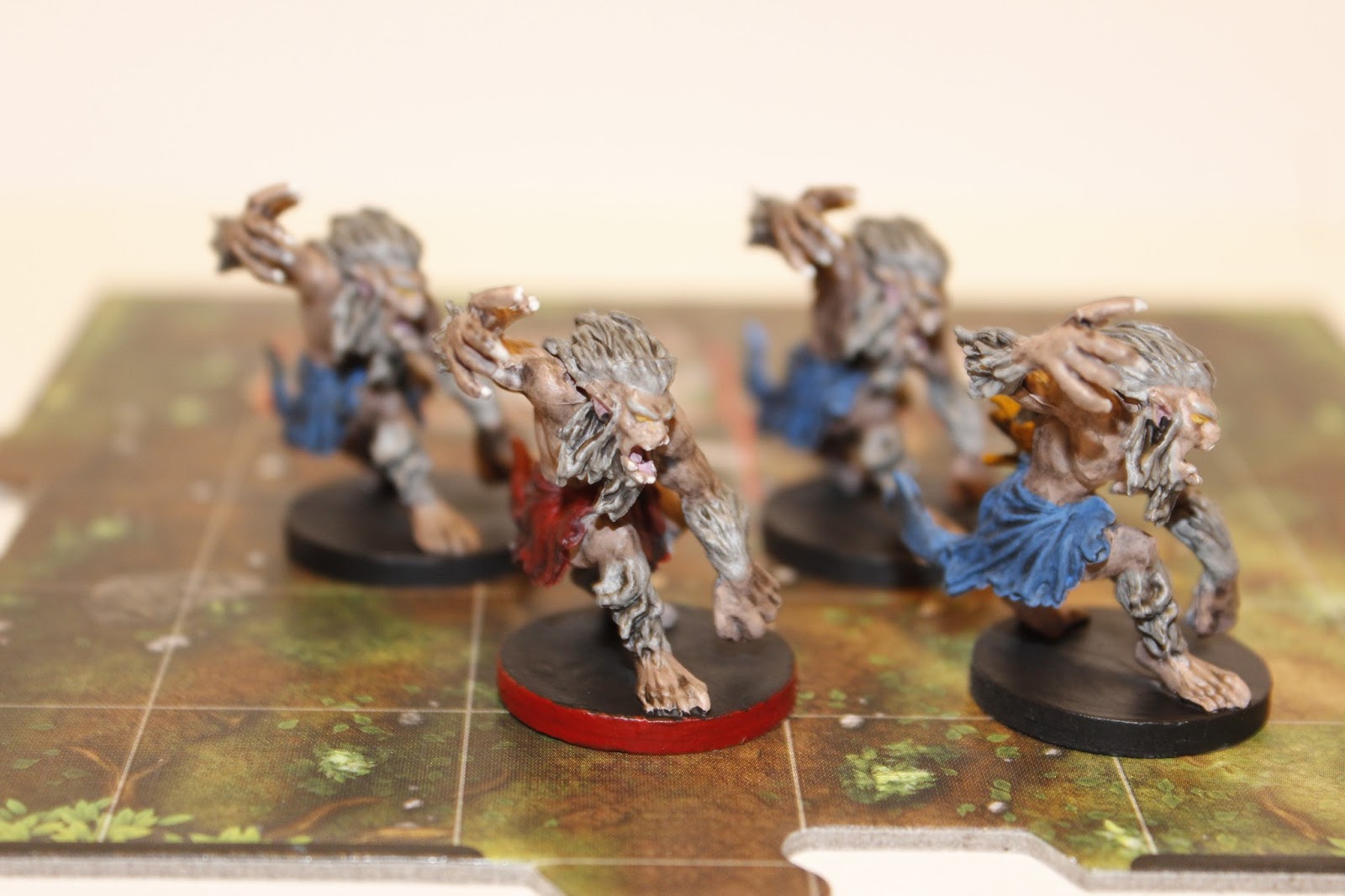 Beastmen
 Bane spiders
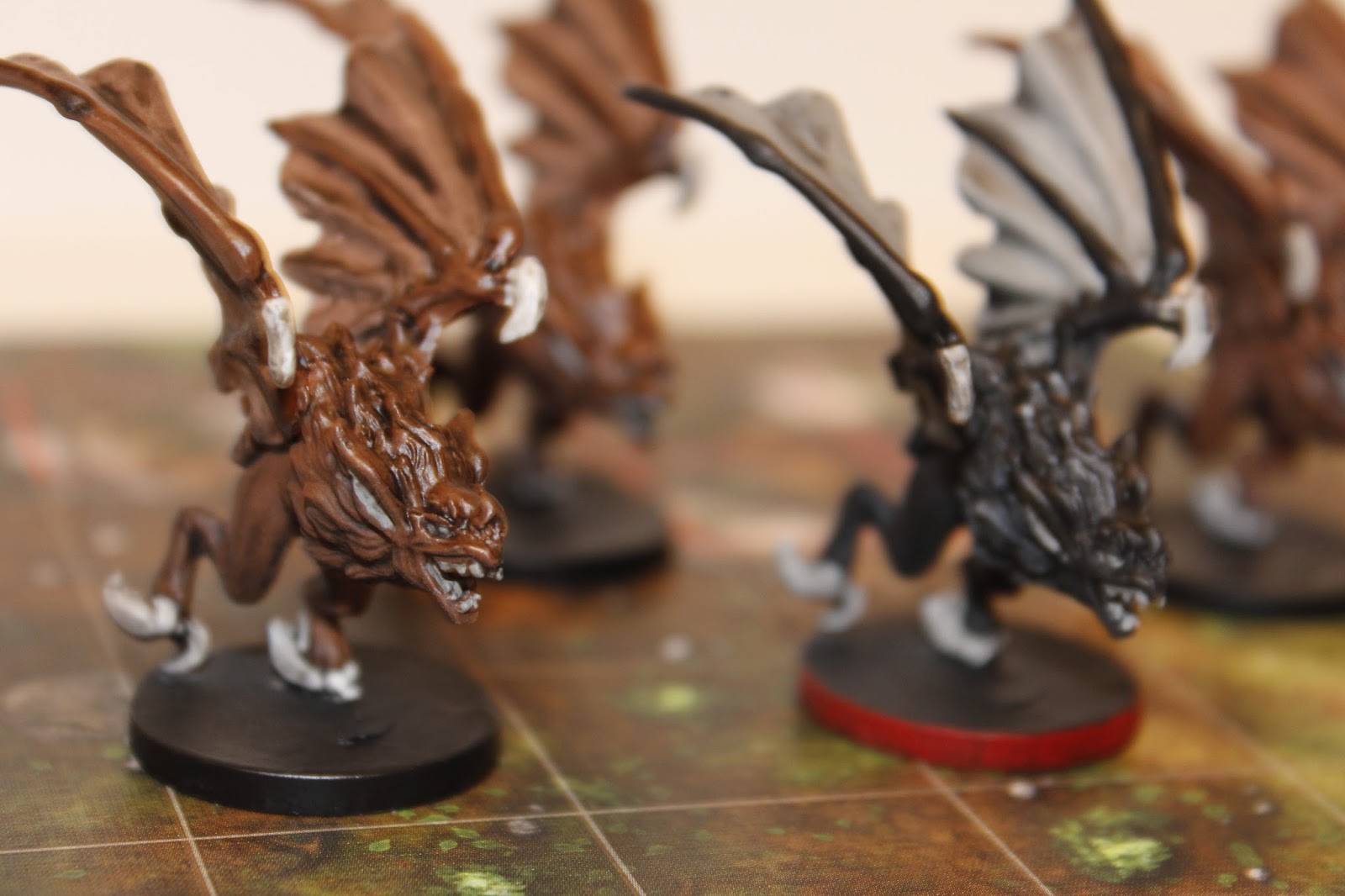 Razorwings
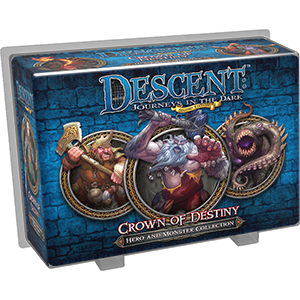 HEROES
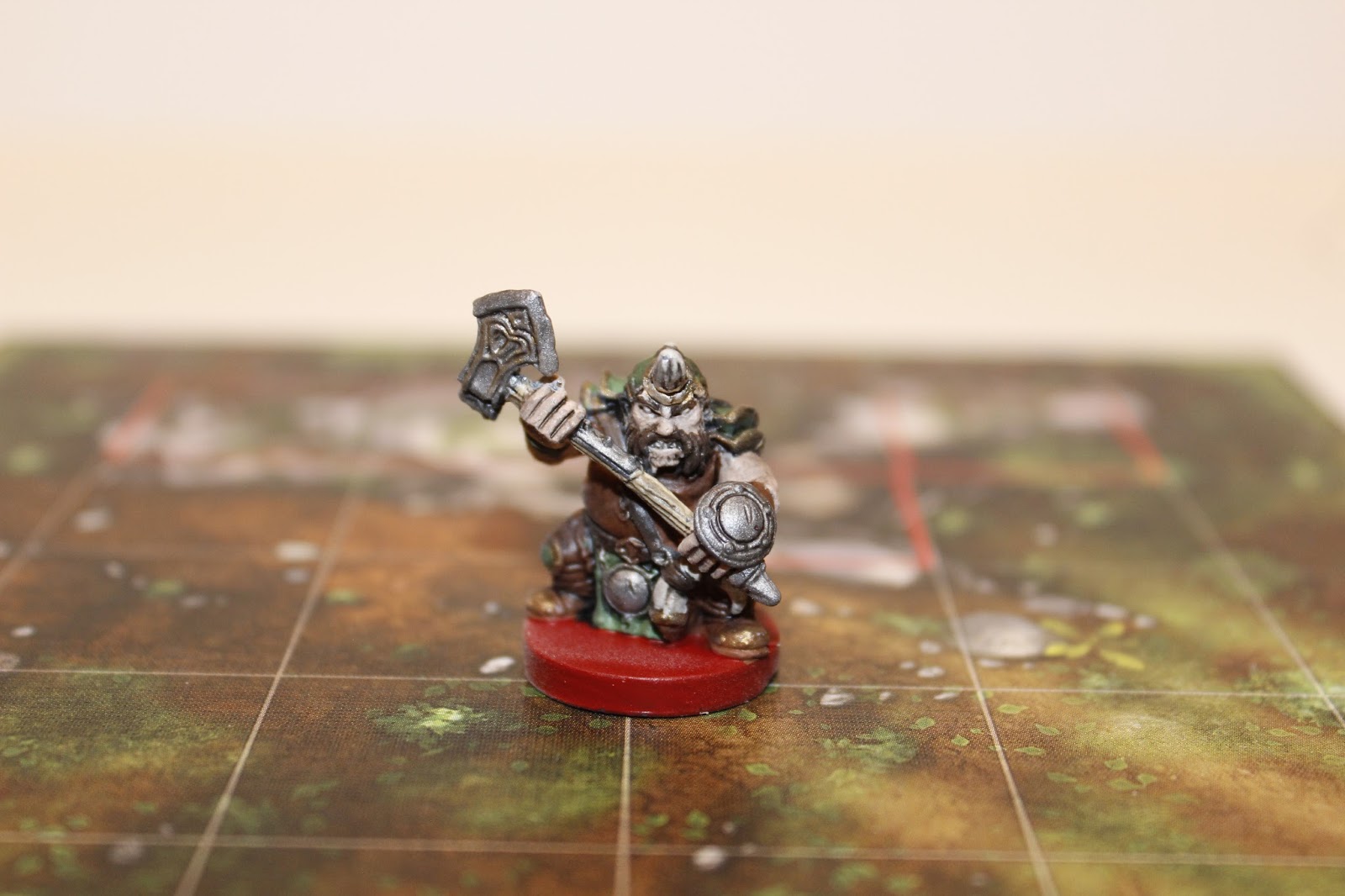 Corbin (Dwarf Warrior)
 Lindel (Elf Scout)
 Jaes the Exile (Elf Mage)
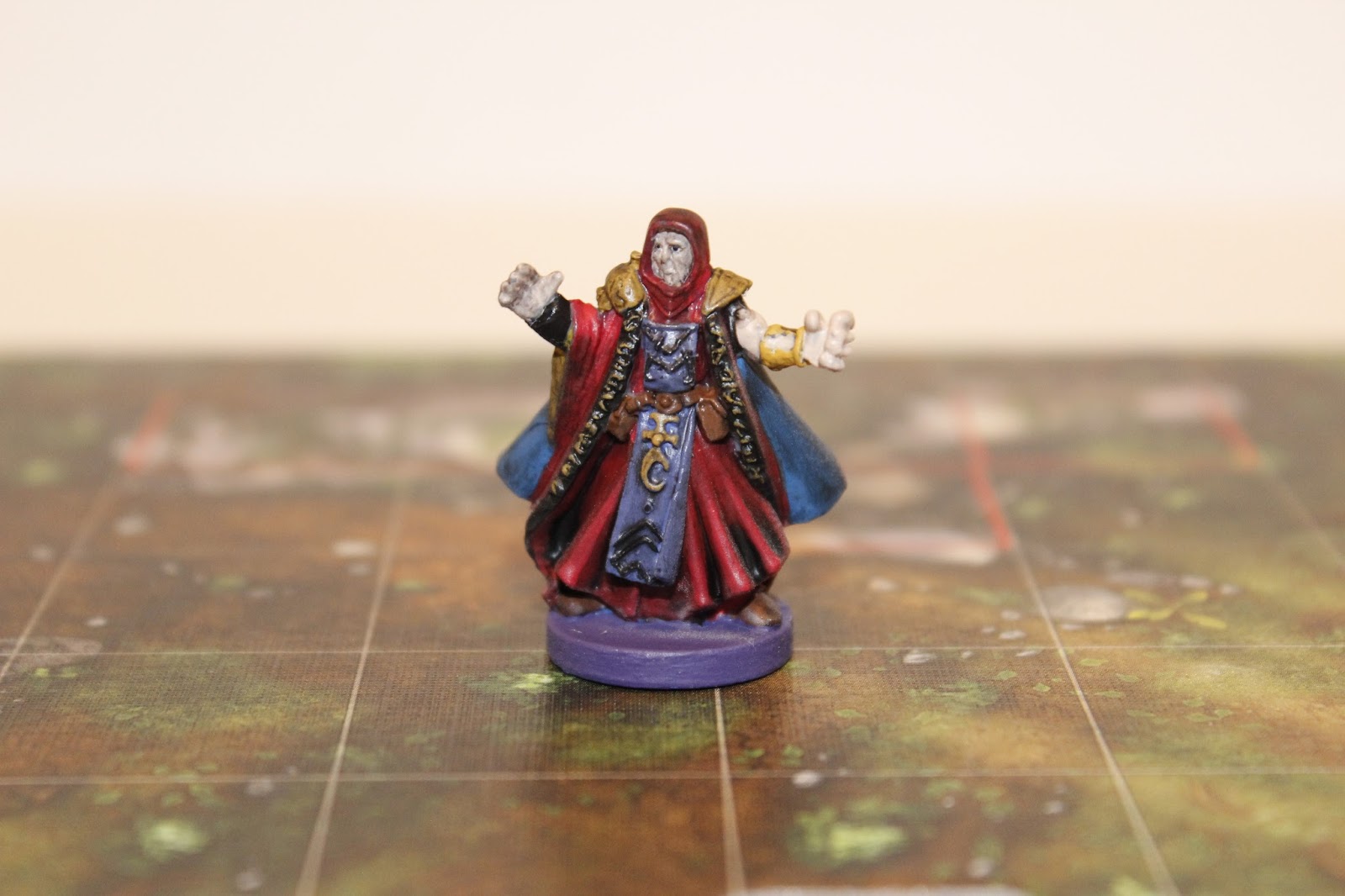 Brother Gherinn (Human Healer)
MONSTERS
 Giants
 Chaos beasts
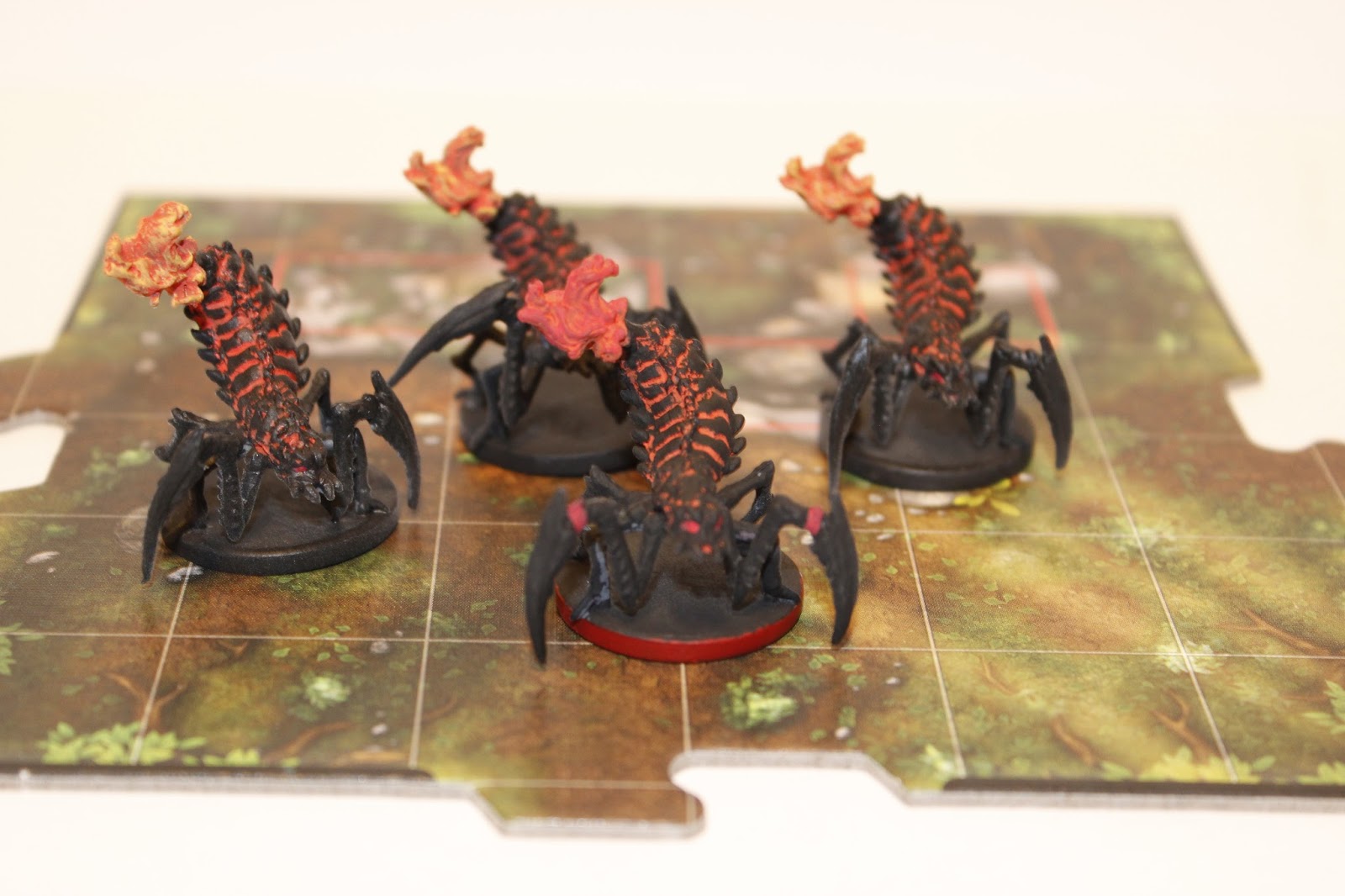 Lava beetles
 HEROES
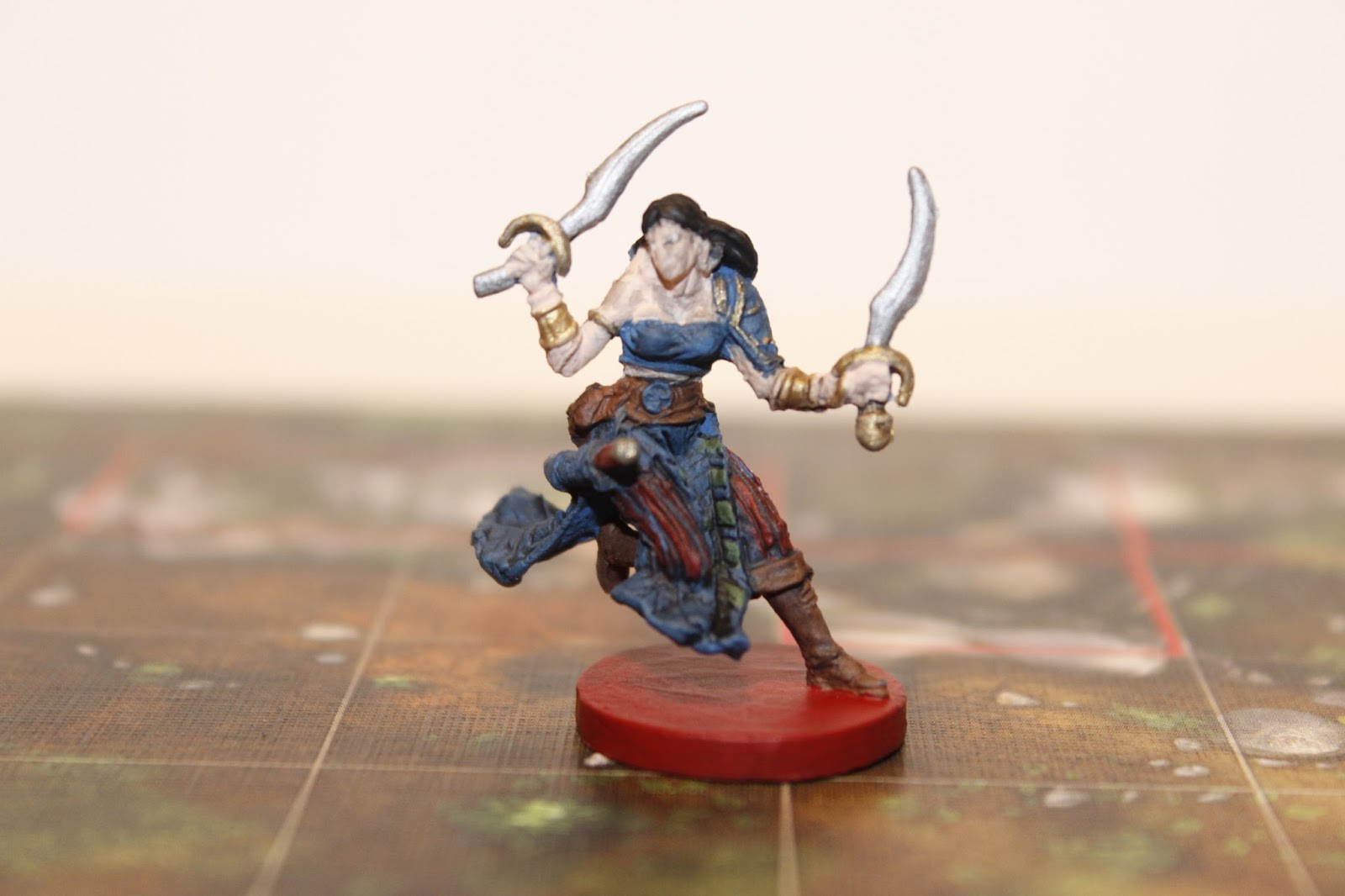 Tahlia (Human Warrior)
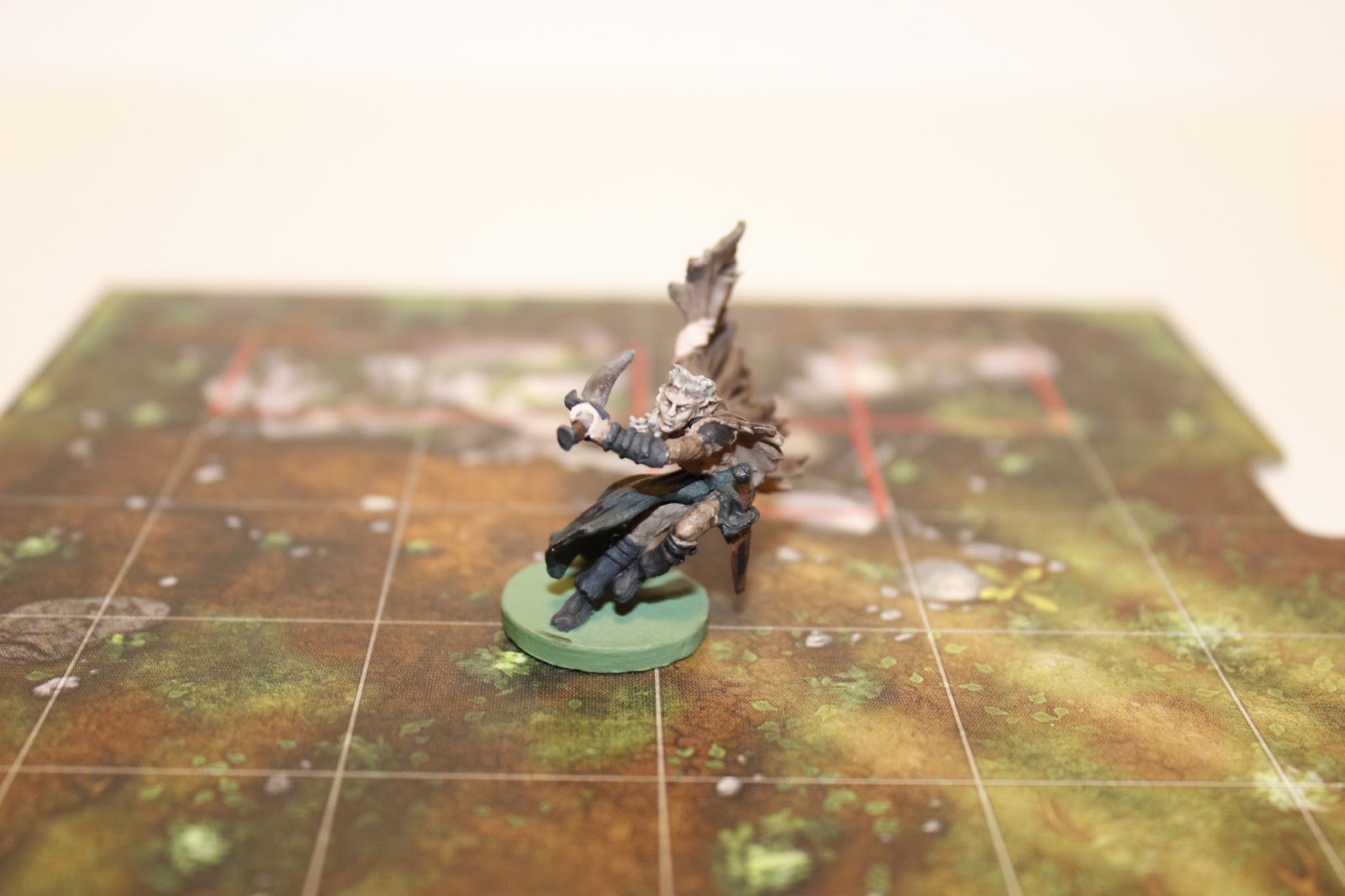 Tetherys (Elf Scout)
 Astarra (Human Mage)
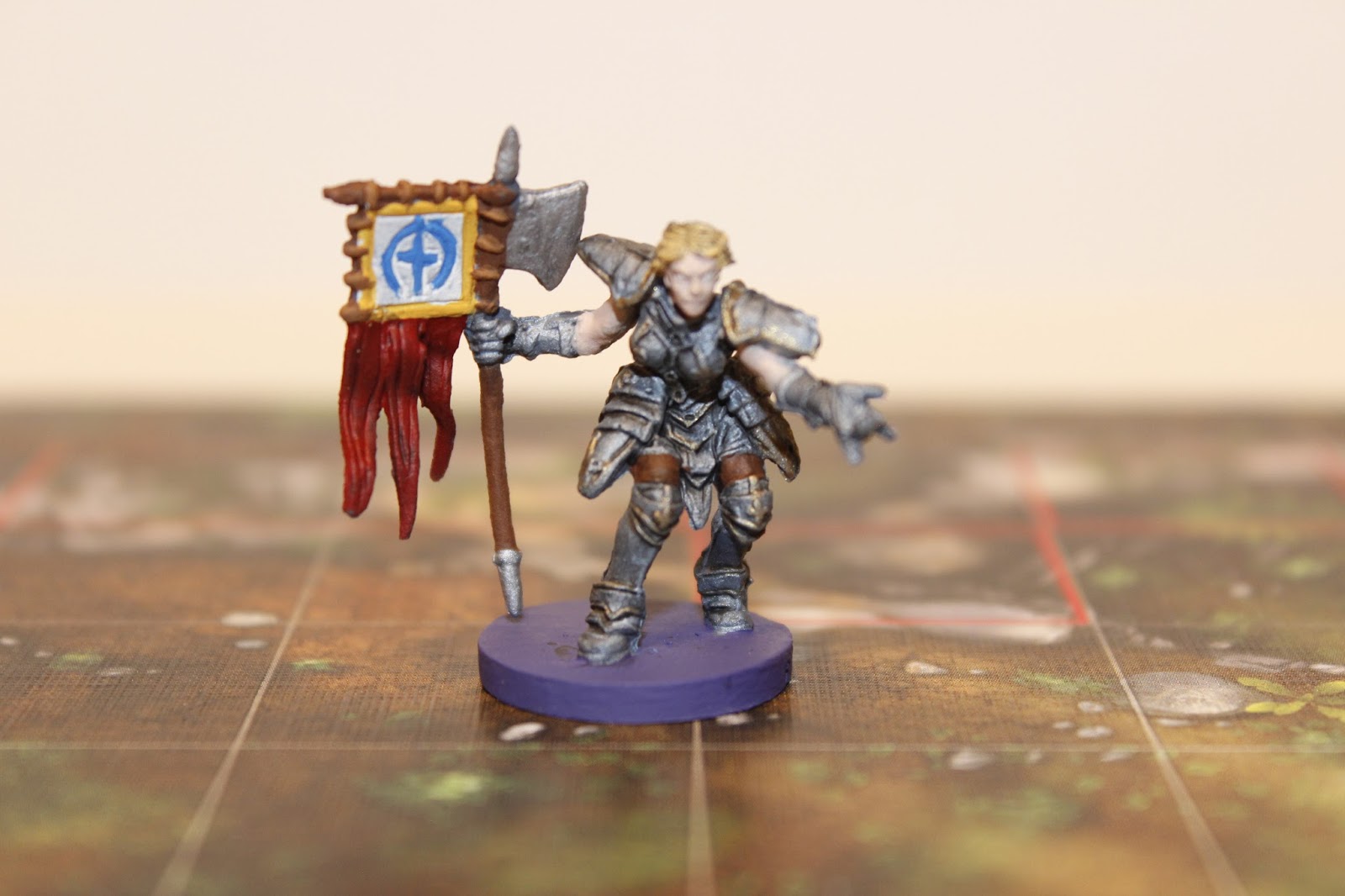 Andira Runehand (Human Healer)MONSTERS
 Golems
 Medusae
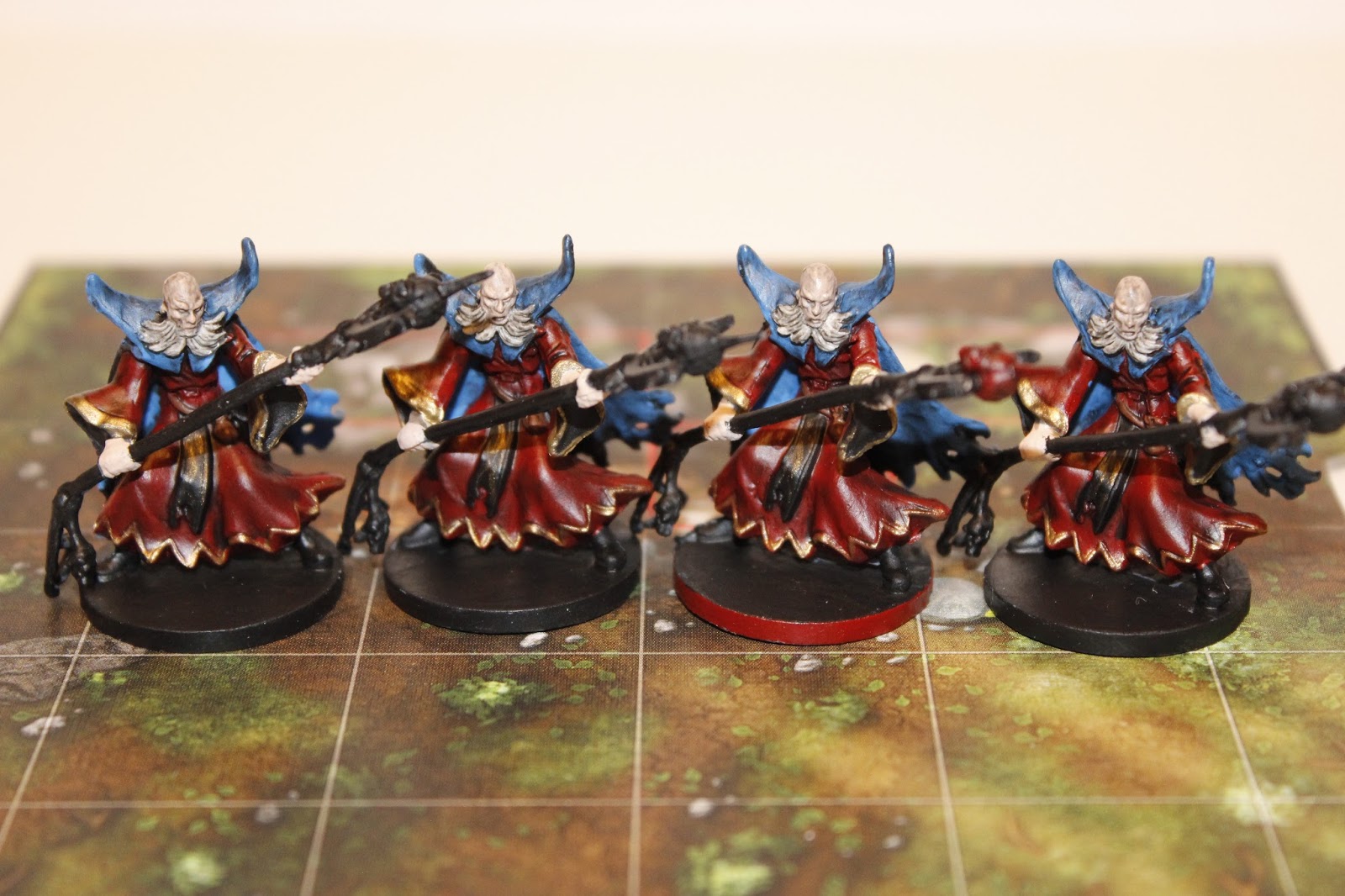 Sorcerers
Andrew Bud Adams's Blog

- Andrew Bud Adams's profile
- 4 followers

