
Andrew Bud Adams's Blog, page 2
July 30, 2015
"Scarecrow" Cover Reveal

Behold the official cover of Scarecrow, a speculative fiction anthology that includes my short story, "The Straw Samurai." The anthology is edited by Rhonda Parrish and published by World Weaver Press. The official reveal can be found here along with a Goodreads giveaway, but I thought I'd share portions of the press release below.
Cover Copy:
Hay-men, mommets, tattie bogles, kakashi, tao-tao—whether formed of straw or other materials, the tradition of scarecrows is pervasive in farming cultures around the world. The scarecrow serves as decoy, proxy, and effigy—human but not human. We create them in our image and ask them to protect our crops and by extension our very survival, but we refrain from giving them the things a creation might crave—souls, brains, free-will, love. In Scarecrow, fifteen authors of speculative fiction explore what such creatures might do to gain the things they need or, more dangerously, think they want.
Within these pages, ancient enemies join together to destroy a mad mommet, a scarecrow who is a crow protects solar fields and stores long-lost family secrets, a woman falls in love with a scarecrow, and another becomes one. Encounter scarecrows made of straw, imagination, memory, and robotics while being spirited to Oz, mythological Japan, other planets, and a neighbor’s back garden. After experiencing this book, you’ll never look at a hay-man the same.
Featuring all new work by Jane Yolen, Andrew Bud Adams, Laura Blackwood, Amanda Block, Scott Burtness, Virginia Carraway Stark, Amanda C. Davis, Megan Fennell, Kim Goldberg, Katherine Marzinsky, Craig Pay, Sara Puls, Holly Schofield, Laura VanArendonk Baugh, and Kristina Wojtaszek.List price:
Ebook: $5.99
Trade Paperback: $12.95
Official page:
https://www.worldweaverpress.com/scarecrow.html
Goodreads:
https://www.goodreads.com/book/show/25360944-scarecrow
The official release day is August 4th, when I plan to post more about my story "The Straw Samurai." Stay tuned!


July 14, 2015
Descent 2nd Edition Painted Miniatures, Part 3
In this third post showing my painted Descent: Second Edition miniatures, I'll focus on both big box expansion: Labyrinth of Ruin and Shadow of Nerekhall. Each contains four new heroes and classes, four new monster groups, several new lieutenants, new quests playable alone or in a full campaign, and new game mechanics. As mentioned in Part 1 and Part 2, the paint jobs and pics were done by my brother, whose Etsy store of various geek-related crafts can be found here.
 Labyrinth of Ruin
HEROES
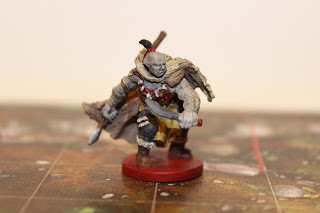 Pathfinder Durik (Orc Warrior)
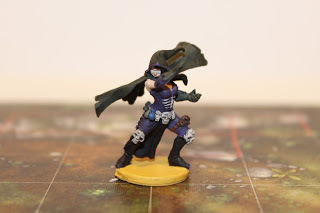 Dezra the Vile (Human Mage)
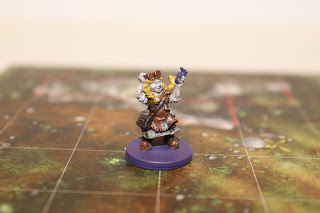 Ulma Grimstone (Dwarf Healer)
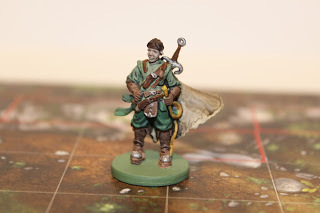 Logan Lashley (Human Scout)MONSTERS
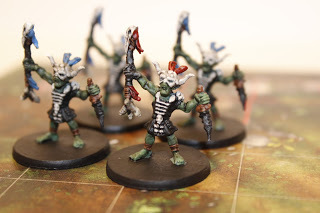 Goblin witchers
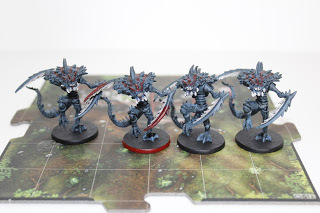 Volucrix reavers
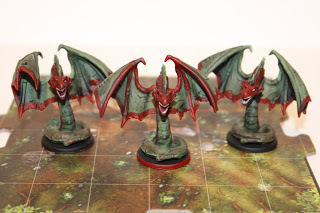 Carrion drakes
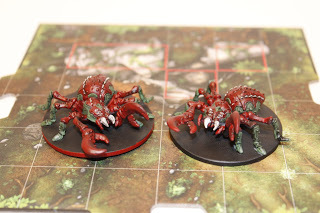 Arachyura
LIEUTENANTS / ALLIES
One of the new mechanics introduced in this campaign is the use of allies. Depending on which path the heroes choose, they will receive assistance from either a healer or a scout, with an opportunity to switch later on. Whichever is spurned then falls under the overlord's sway and becomes an evil lieutenant. As with the lieutenants in other expansions, these are represented by picture tokens unless you buy the Lieutenant Packs, which in this case include both versions of the character. The ally version includes a hero sheet, making them playable as heroes in any but this campaign. Both are pictured below, along with the transformed version of Ariad (I don't have the other).
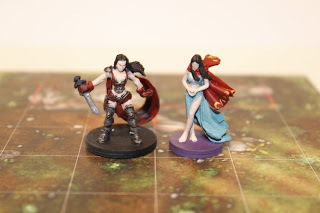 Serena (Human Healer)
(Left: lieutenant; right: ally/hero.)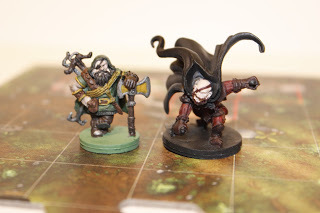 Raythen (Dwarf Scout)
(Left: ally/hero; right: lieutenant.)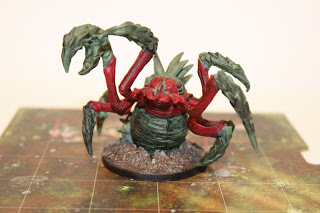 Queen Ariad
(spider form of the campaign's big baddy)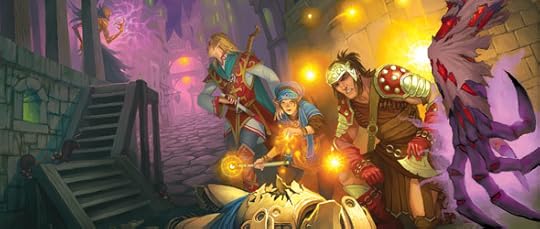 Shadow of Nerekhall
HEROES
Shadow of Nerekhall
HEROES
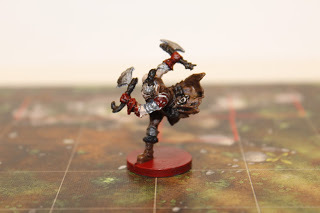 Orkell the Swift (Human Warrior)
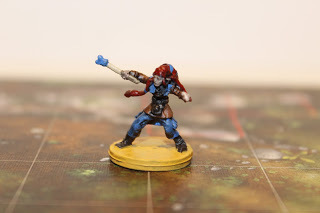 Ravaella Lightfoot (Gnome Mage)
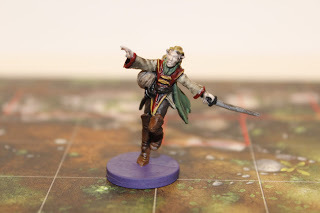 Rendiel (Elf Healer)
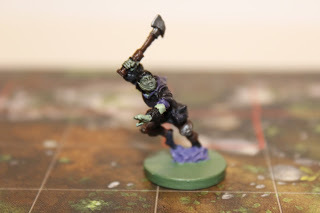 Tinashi the Wanderer (Orc Scout)
MONSTERS
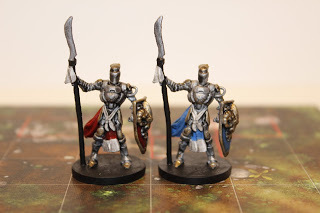 Ironbound
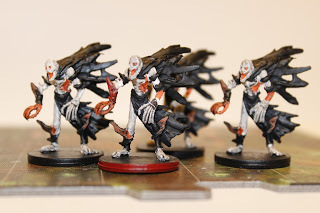 Changelings
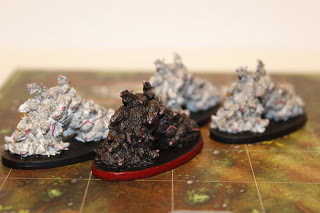 Rat swarms
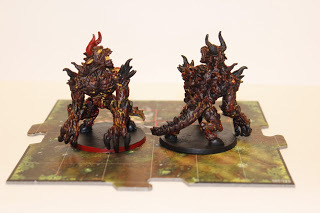 Ynfernael hulks"Shadow of Nerekhall" is my newest campaign so I don't have any of its Lieutenant Packs yet. Out of the four, two are larger and probably more fun to paint, but used very little. The other two are required more often, but smaller and less interesting. Decisions, decisions...
 Labyrinth of Ruin
HEROES
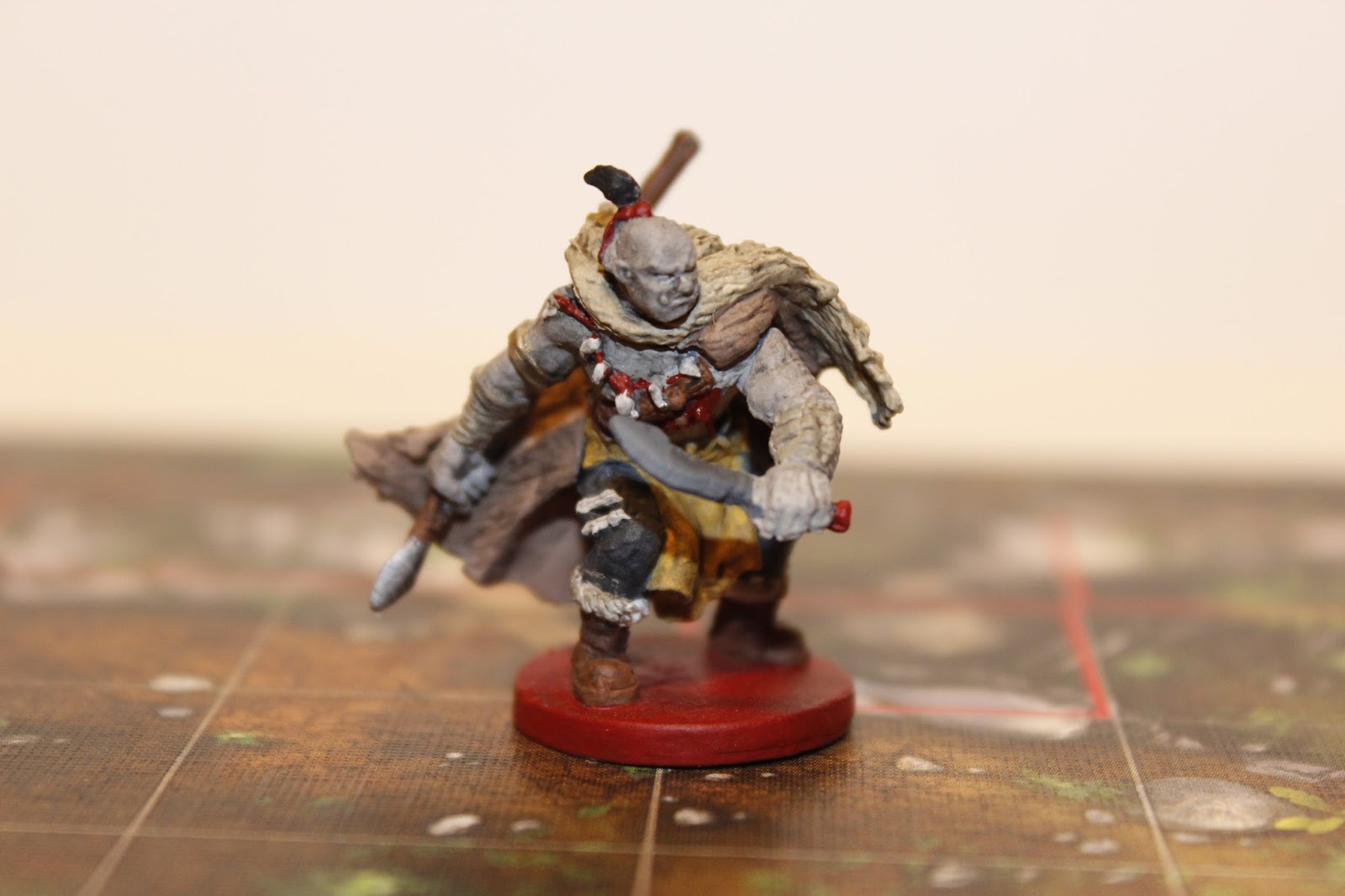 Pathfinder Durik (Orc Warrior)
 Dezra the Vile (Human Mage)
 Ulma Grimstone (Dwarf Healer)
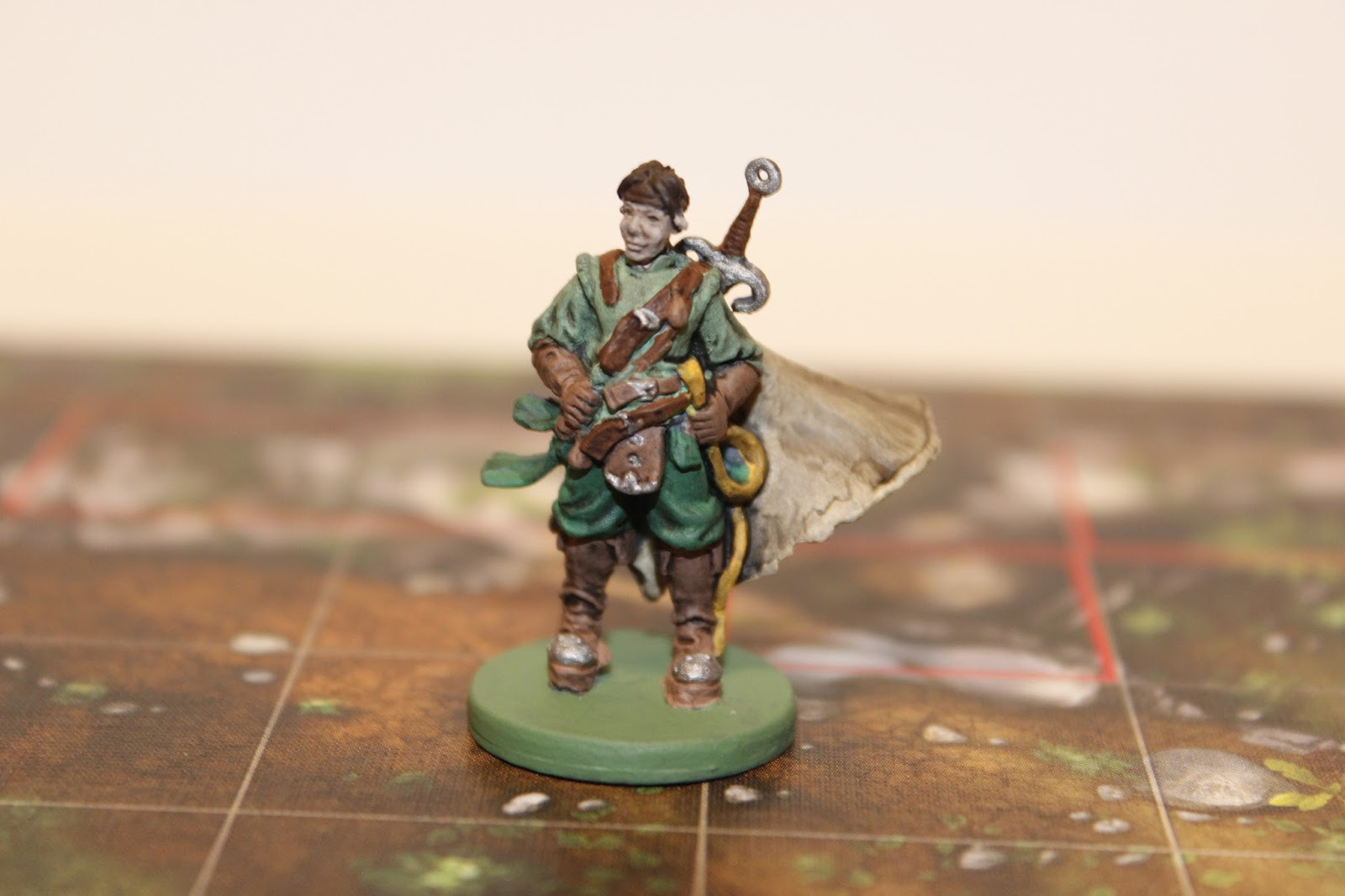 Logan Lashley (Human Scout)MONSTERS
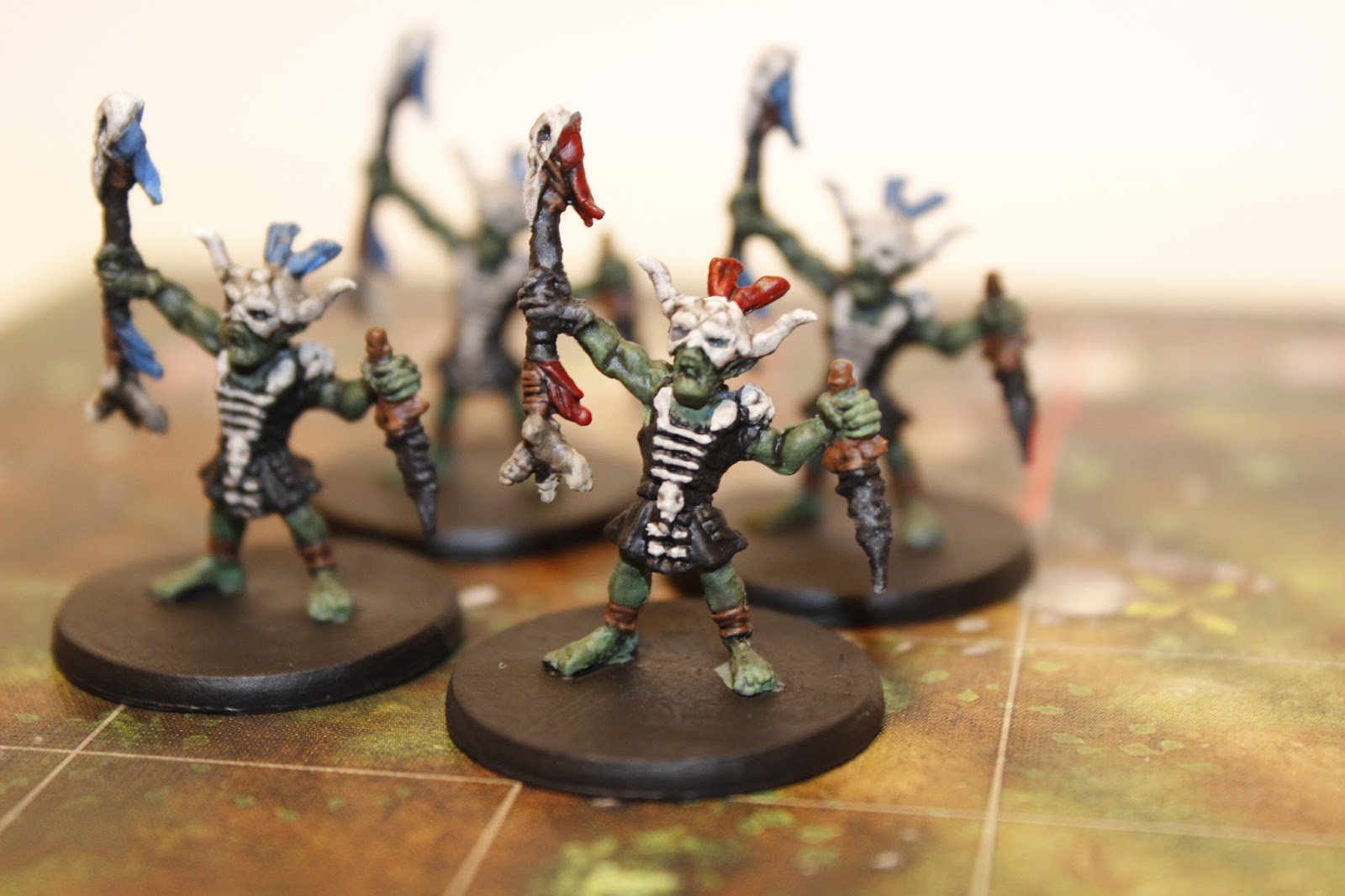 Goblin witchers
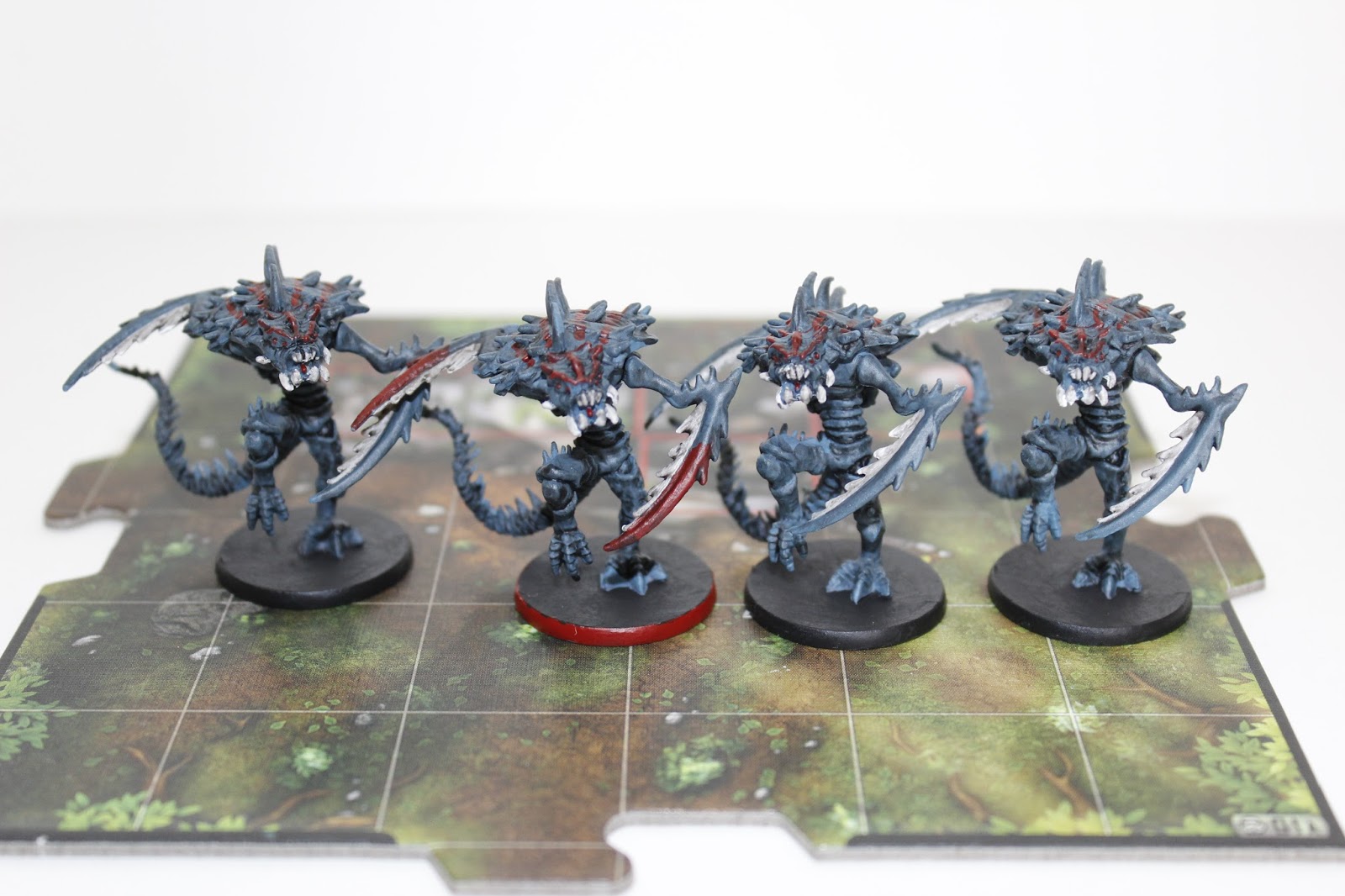 Volucrix reavers
 Carrion drakes
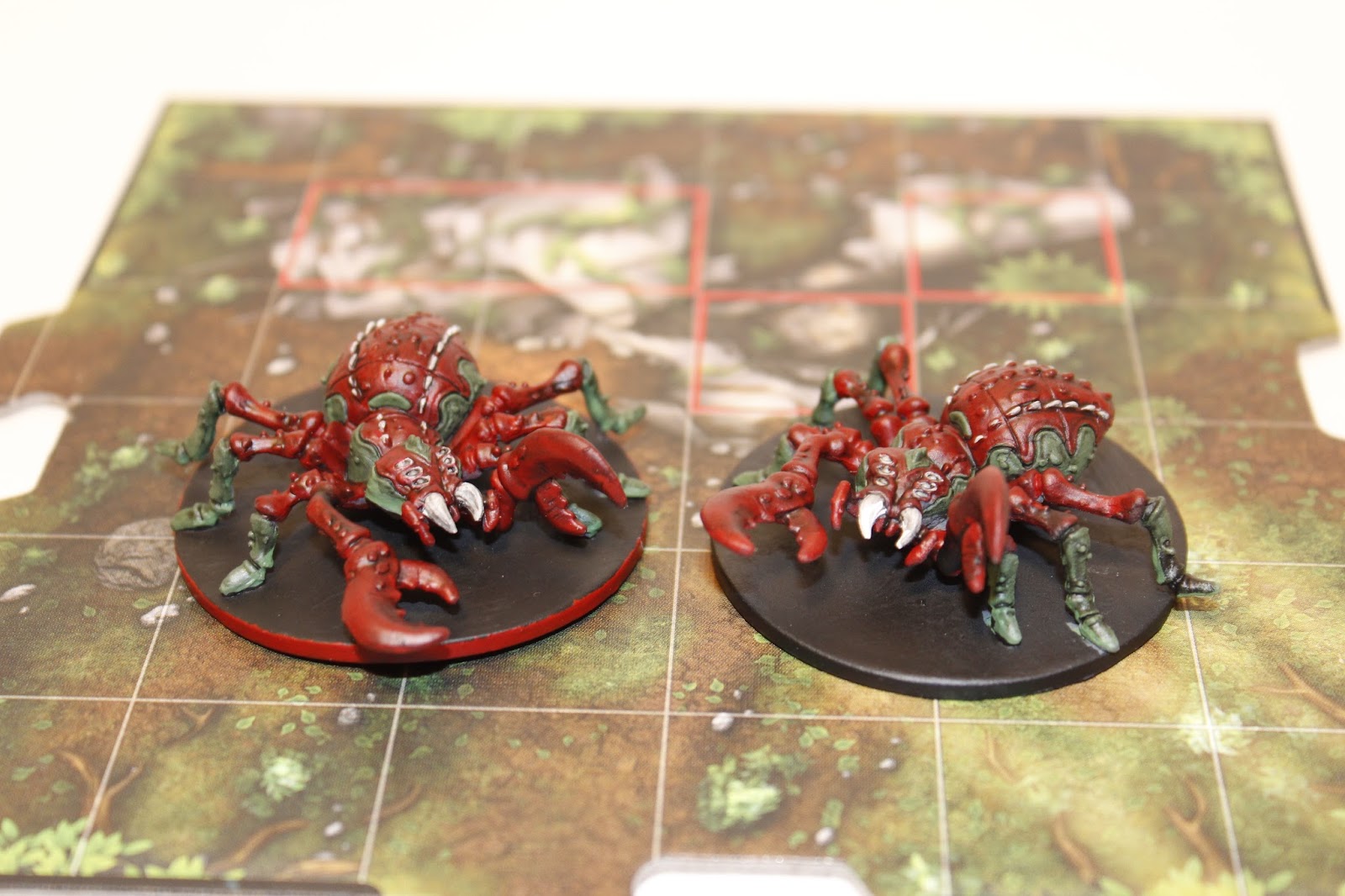 Arachyura
LIEUTENANTS / ALLIES
One of the new mechanics introduced in this campaign is the use of allies. Depending on which path the heroes choose, they will receive assistance from either a healer or a scout, with an opportunity to switch later on. Whichever is spurned then falls under the overlord's sway and becomes an evil lieutenant. As with the lieutenants in other expansions, these are represented by picture tokens unless you buy the Lieutenant Packs, which in this case include both versions of the character. The ally version includes a hero sheet, making them playable as heroes in any but this campaign. Both are pictured below, along with the transformed version of Ariad (I don't have the other).
 Serena (Human Healer)
(Left: lieutenant; right: ally/hero.)
 Raythen (Dwarf Scout)
(Left: ally/hero; right: lieutenant.)
 Queen Ariad
(spider form of the campaign's big baddy)
 Shadow of Nerekhall
HEROES
Shadow of Nerekhall
HEROES
 Orkell the Swift (Human Warrior)
 Ravaella Lightfoot (Gnome Mage)
 Rendiel (Elf Healer)
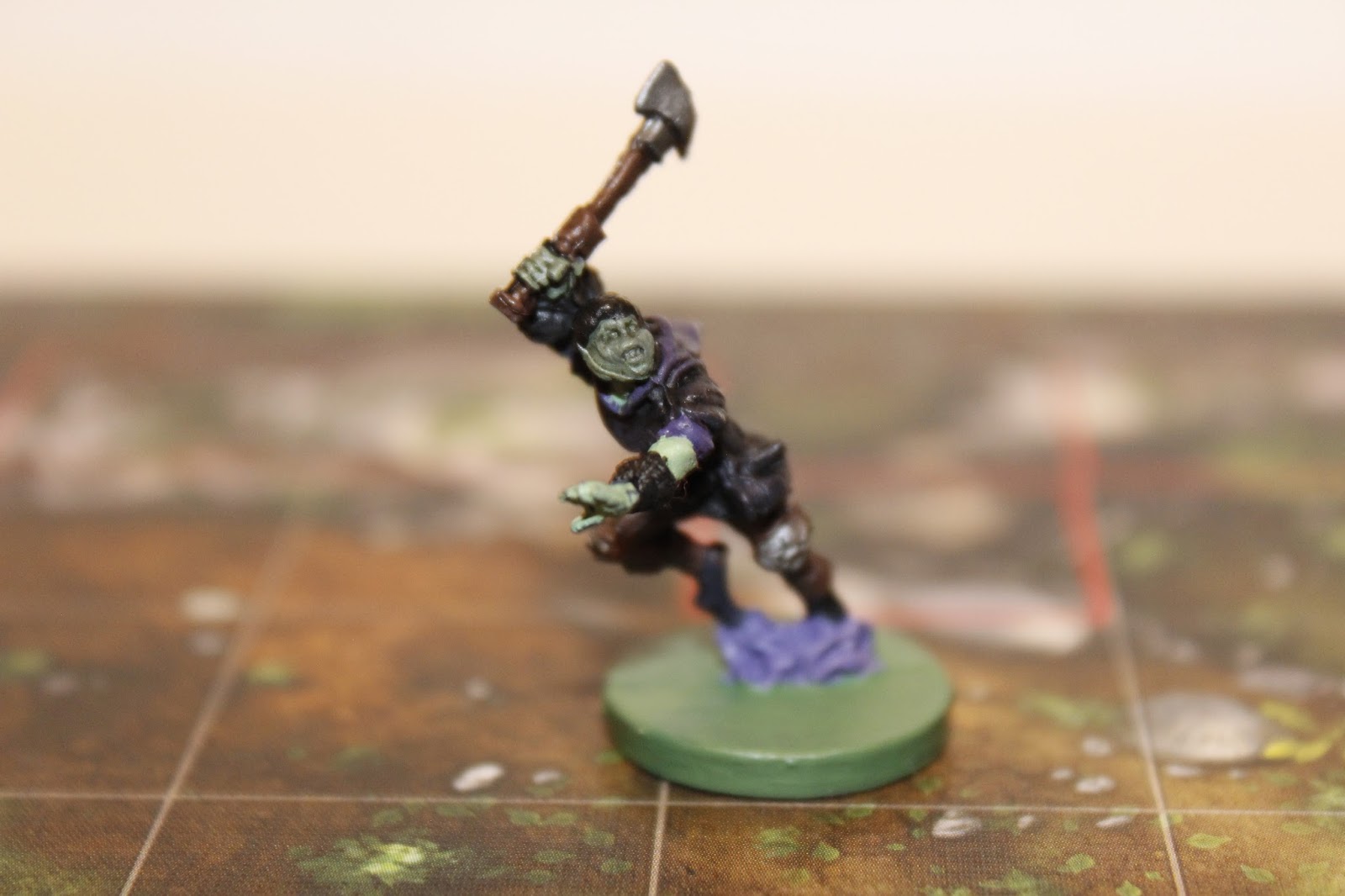 Tinashi the Wanderer (Orc Scout)
MONSTERS
 Ironbound
 Changelings
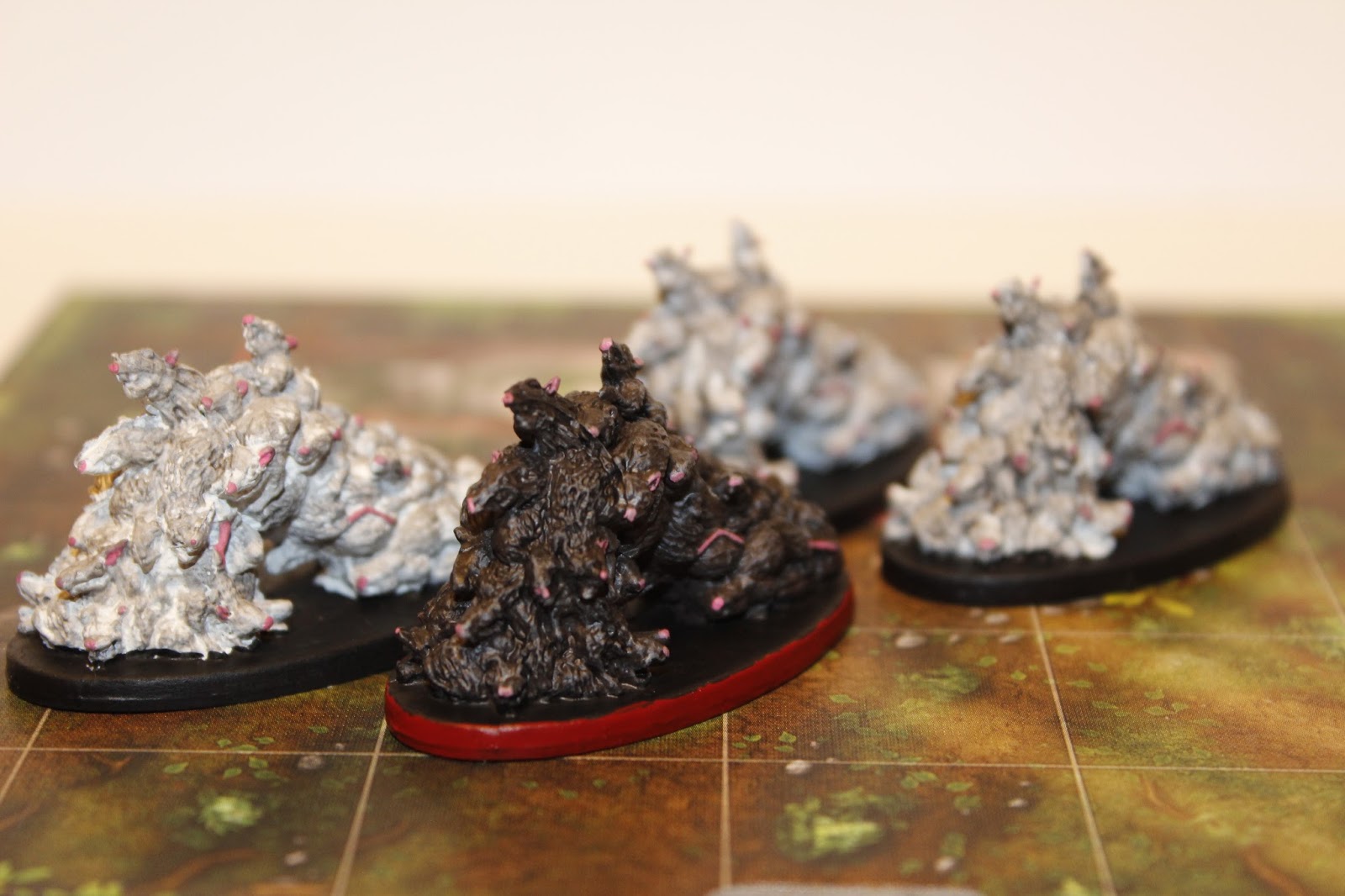 Rat swarms
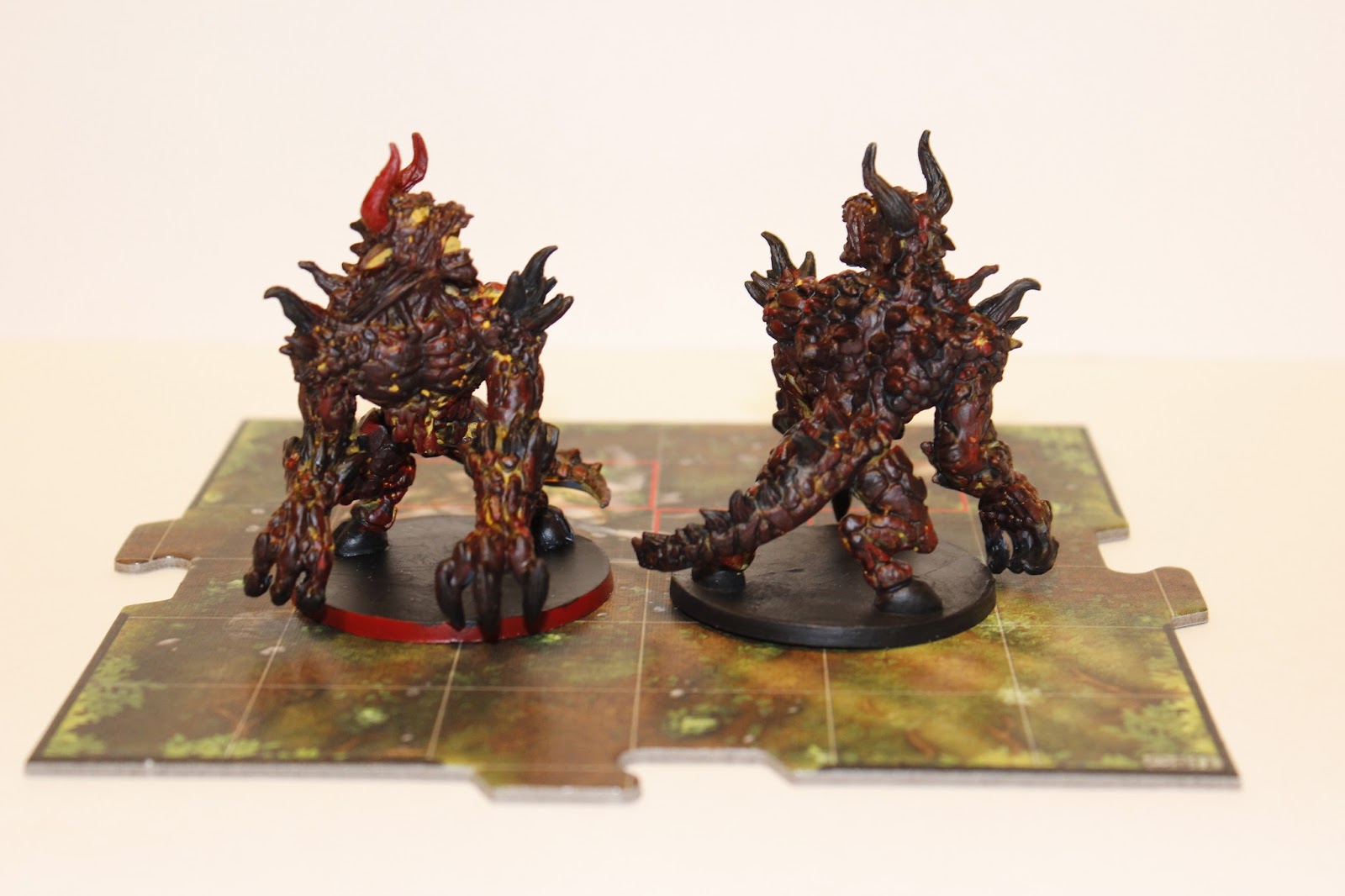 Ynfernael hulks"Shadow of Nerekhall" is my newest campaign so I don't have any of its Lieutenant Packs yet. Out of the four, two are larger and probably more fun to paint, but used very little. The other two are required more often, but smaller and less interesting. Decisions, decisions...
July 4, 2015
Descent 2nd Edition Painted Miniatures, Part 2
Continuing the series of posts showcasing my painted Descent: Second Edition miniatures, here are the heroes and monsters from two of the three available small-box expansions. Half the size of full-box expansions, each contains two new heroes and classes, two new monster groups, one new lieutenant, new quests playable alone or as a mini-campaign, and new game mechanics. I don't have the third, Manor of Ravens, but here's Lair of the Wyrm and The Trollfens. As mentioned in Part 1, the paint jobs and pics were done by my brother, except for three that I took with my camera (the three with too much flash).
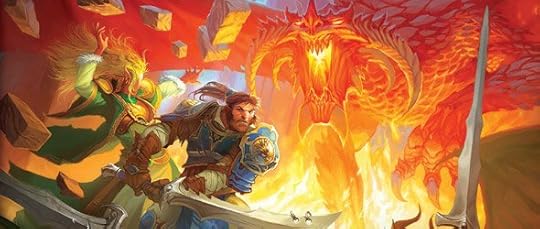 Lair of the Wyrm
HEROES
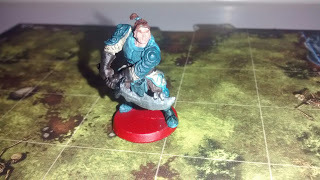 Reynhart the Worthy (Human Warrior)
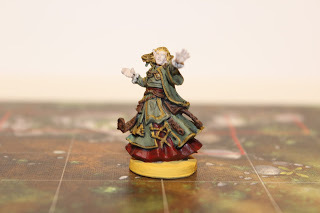 High Mage Quellen (Elf Mage)MONSTERS
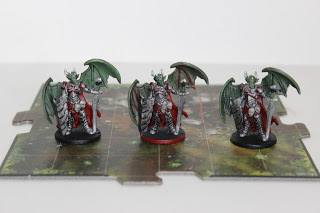 Hybrid sentinels
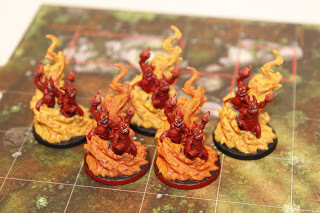 Fire impsLIEUTENANT
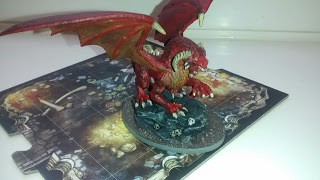 Valyndra
 The Trollfens
HEROES
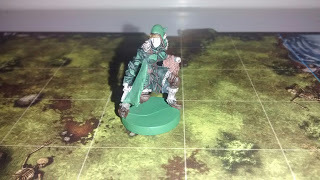 Roganna the Shade (Elf Scout)
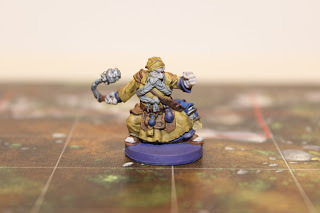 Augur Grisom (Dwarf Healer)MONSTERS
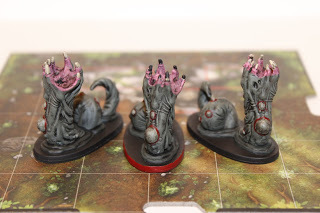 Plague worms
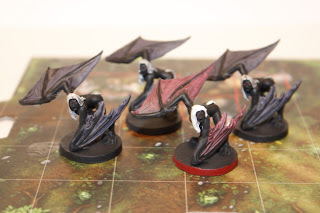 HarpiesLIEUTENANT
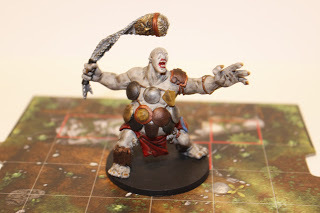 Bol'GorethIn Part 3 I'll showcase one or both big-box expansions.
 Lair of the Wyrm
HEROES
 Reynhart the Worthy (Human Warrior)
 High Mage Quellen (Elf Mage)MONSTERS
 Hybrid sentinels
 Fire impsLIEUTENANT
 Valyndra
 The Trollfens
HEROES
 Roganna the Shade (Elf Scout)
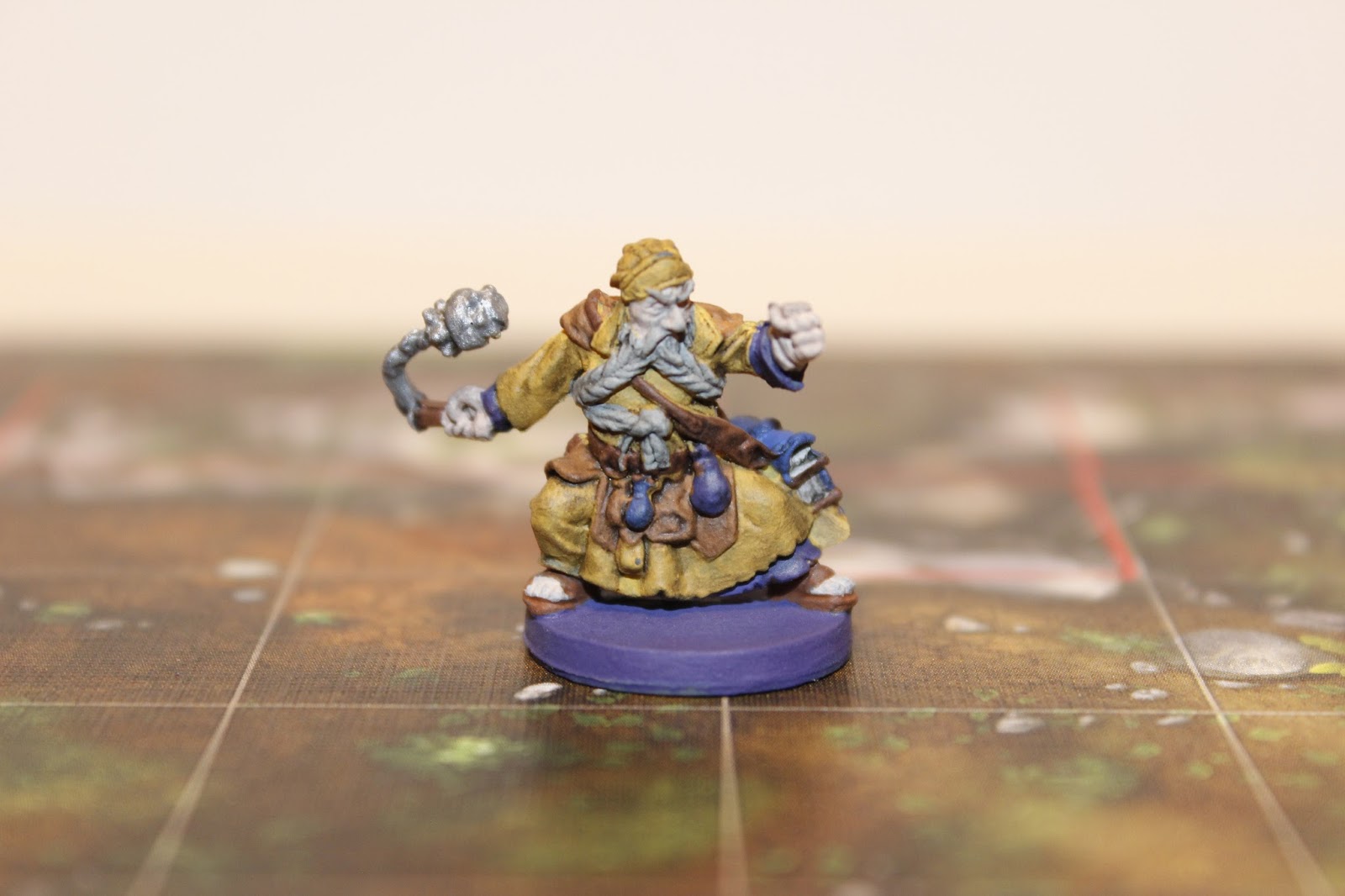 Augur Grisom (Dwarf Healer)MONSTERS
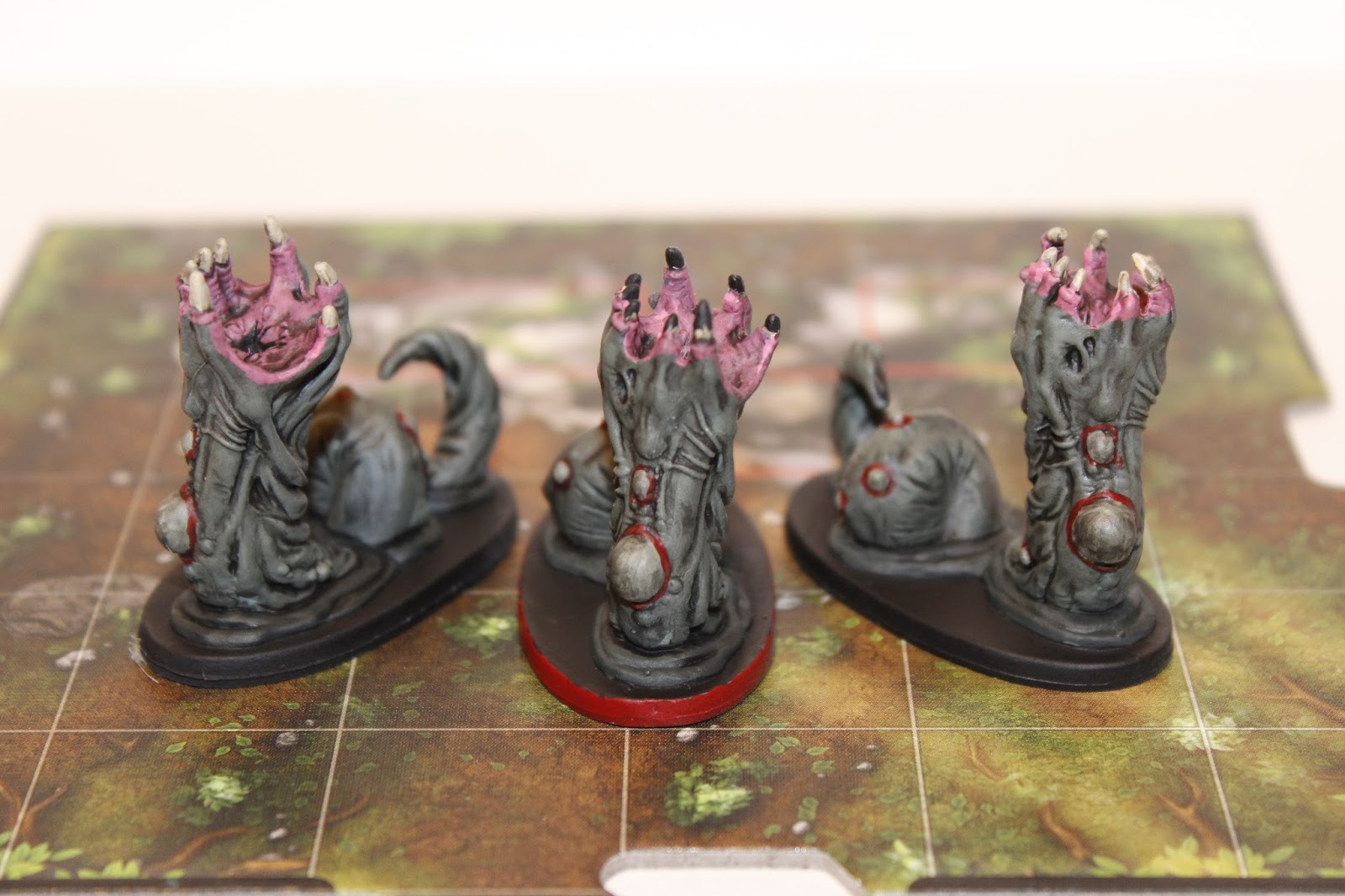 Plague worms
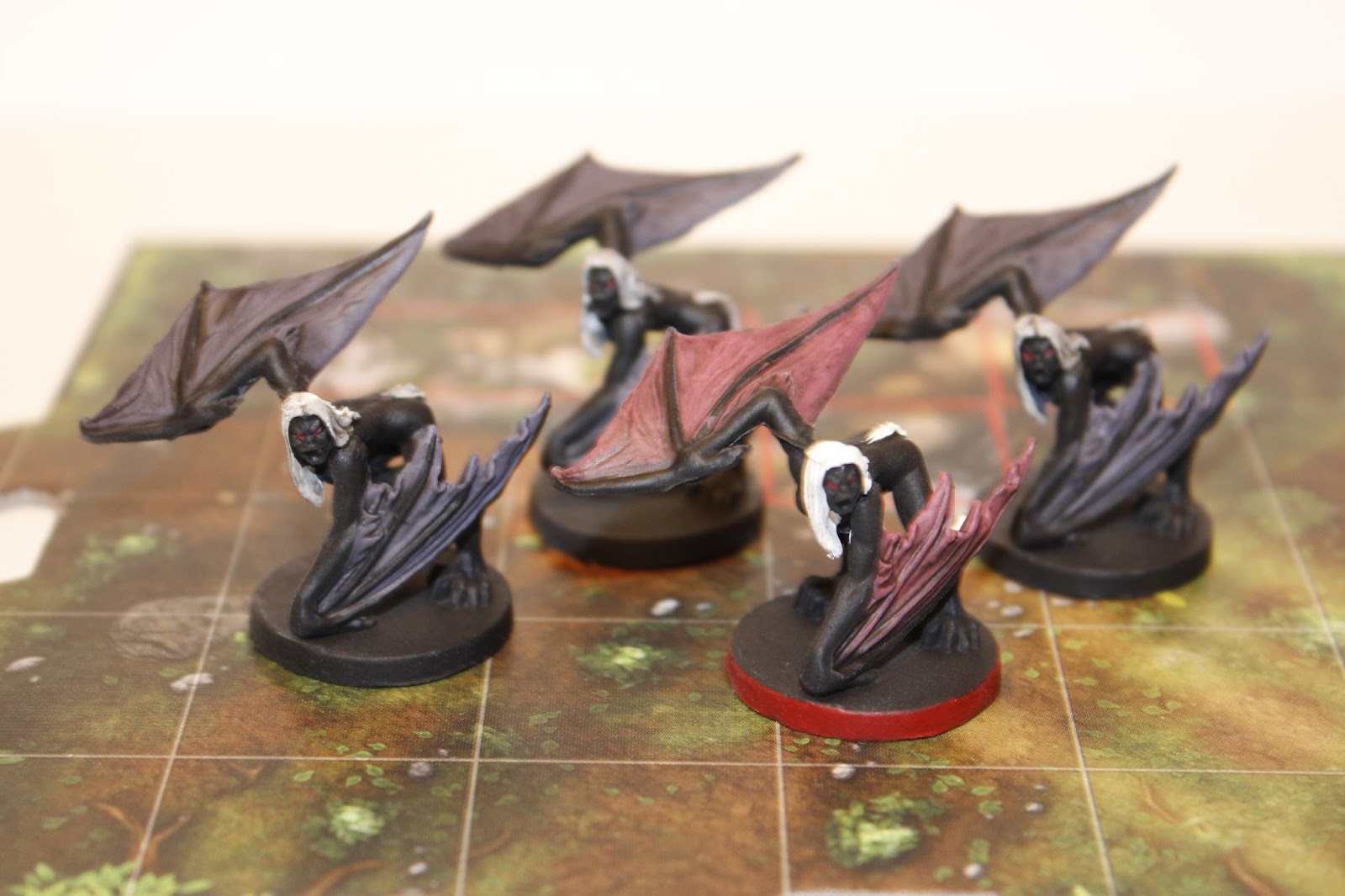 HarpiesLIEUTENANT
 Bol'GorethIn Part 3 I'll showcase one or both big-box expansions.
June 19, 2015
Descent 2nd Edition Painted Miniatures, Part 1

For a long time I looked for a dungeon-delving board game the likes of Milton Bradley's HeroQuest, which I had largely ignored as a teenager in favor of more complex RPGs like Dungeons and Dragons. As an adult and father, I wanted something easier to teach my kids and to play in a single sitting, with more emphasis on miniatures than role-playing. Unfortunately, HeroQuest is outdated, and maybe slightly too simplistic. After checking out some of D&D's own beginner games and others like it, I decided Descent: Journeys in the Dark Second Edition was the best combination of quality, quantity, and compelling rules. Though not perfect and certainly a bit more complicated than advertised, it has been an extremely enjoyable hobby. I've been playing for a few years now, primarily with a group of friends in a monthly game night, but also with my wife and kids.
One thing I knew I'd never do, though, is paint the little plastic miniatures, which is otherwise a time-honored tradition in this arena. I just wasn't committed enough and doubted my artistic ability. Then my brother Michael - one of the regular players in my monthly group - acquired Imperial Assault, a Star Wars-themed version of Descent made by the same company (Fantasy Flight Games). He quickly painted his miniatures, and realizing he had a knack for it, offered to paint some of mine, too. Since I own the base game of Descent and most of the expansions, I doubted he'd be able to paint very many of them. Instead, he has now nearly finished my current collection, and the results have been phenomenal!
I never could have guessed how much it adds to the experience to play with painted figures. Some might wish they came painted already, but I've thoroughly enjoyed waiting to see my brother's latest work. Though I've been a bit stingy about sticking to the artwork, he has added just enough creative touches and stylistic choices for these to bear his signature, which is way more meaningful to me than figures painted in a factory. So naturally, I have to show them off! I can't do it all in one post, so to start out, here are the figures from the base game campaign, "The Shadow Rune." Michael took the pictures, too, but stood them on Imperial Assault map tiles because he didn't have access to mine (they look identical from a distance).HEROES
Pictured first are the hero figures. The base game comes with eight, a male and female character representing each archetype (Warrior, Mage, Healer, and Scout). Archetypes determine which classes are available for you to choose. The base game comes with eight classes, two for each archetype. Though each of these heroes was designed as a match for one of those classes, the rules allow you to choose. For example, Syndrael makes a better Knight thematically, and Grisban is clearly a Berserker; however, since both are Warriors, you could choose either class for either hero. (The class options open up even further with additional expansions.) My brother painted the heroes' bases the color of their archetype, which I think adds nice continuity between the figure and the class cards (which are similarly colored). Unlike RPGs and other similar fantasy games, the characters' races are purely thematic and have no bearing on gameplay, but I noted them anyway.
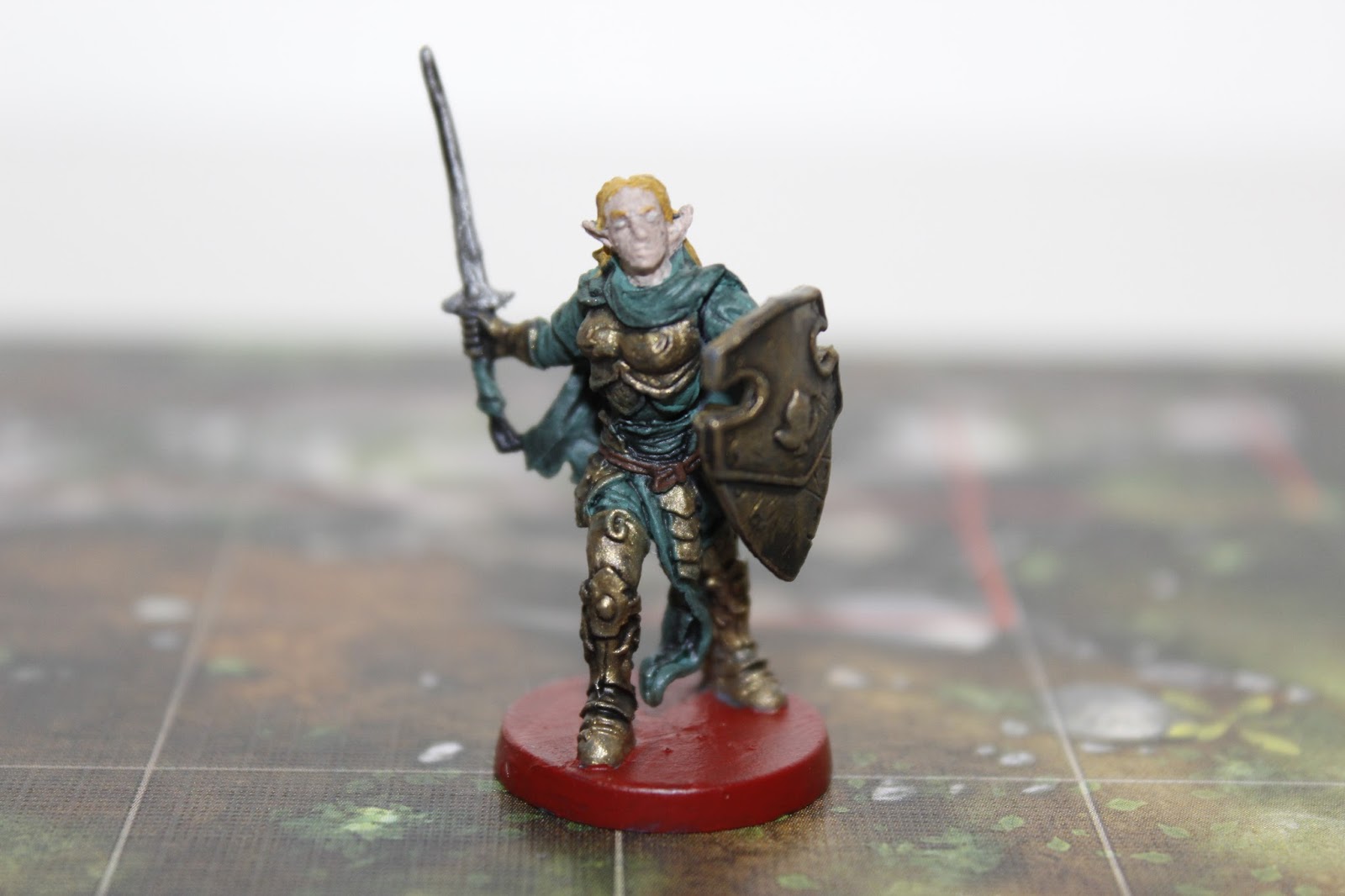 Syndrael (Elf Warrior)
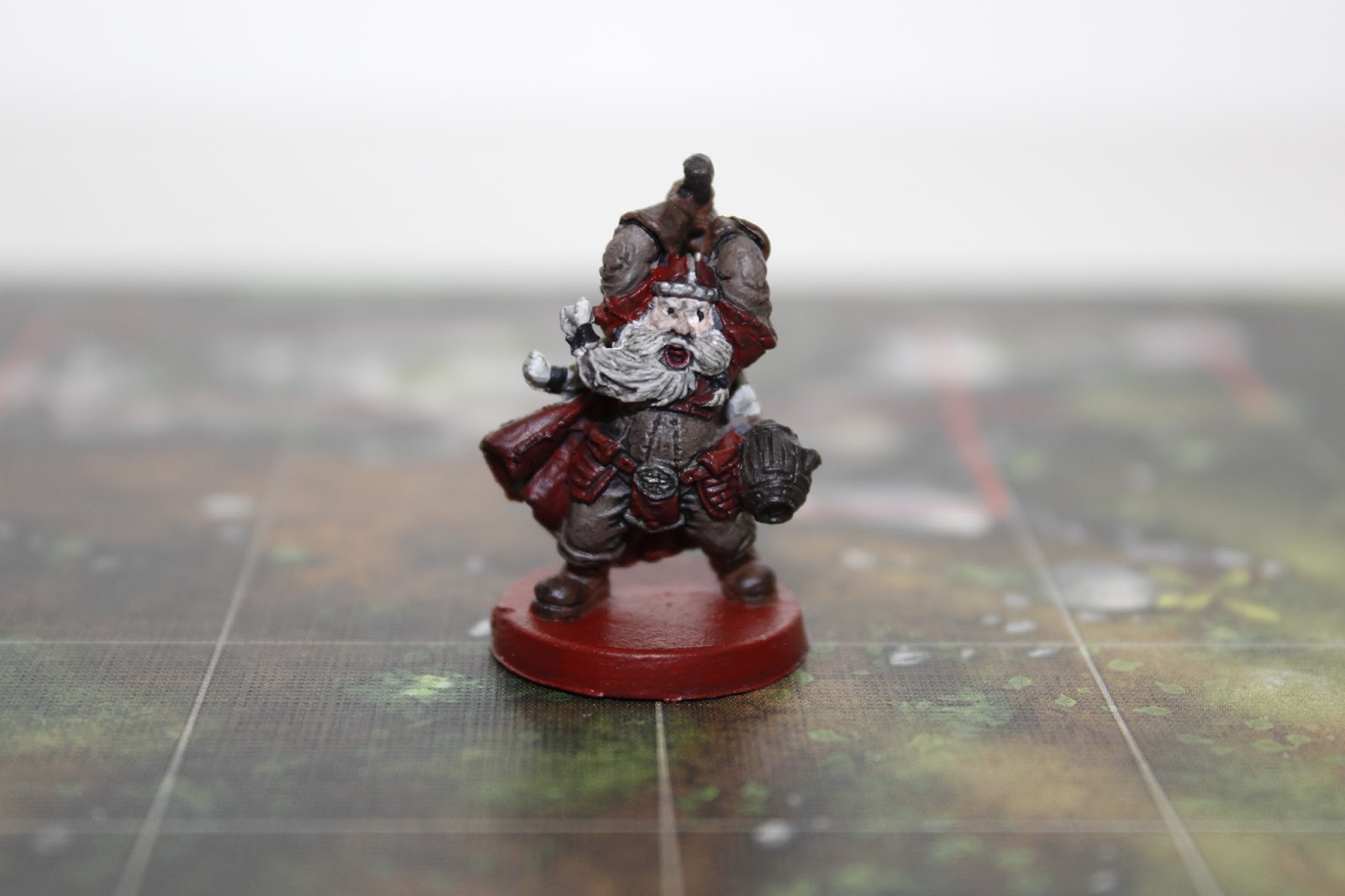 Grisban the Thirsty (Dwarf Warrior)
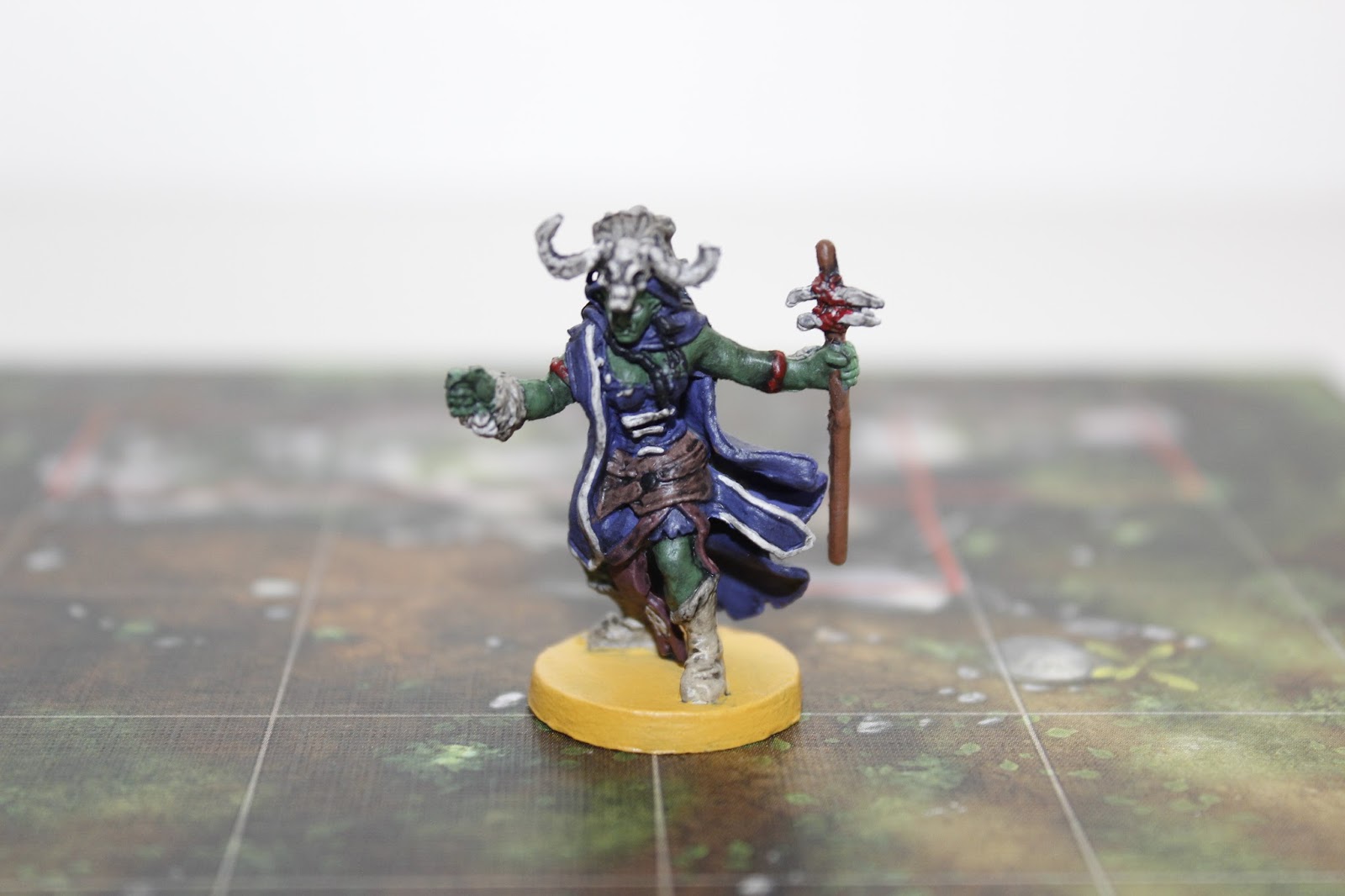 Widow Tarha (Orc Mage)
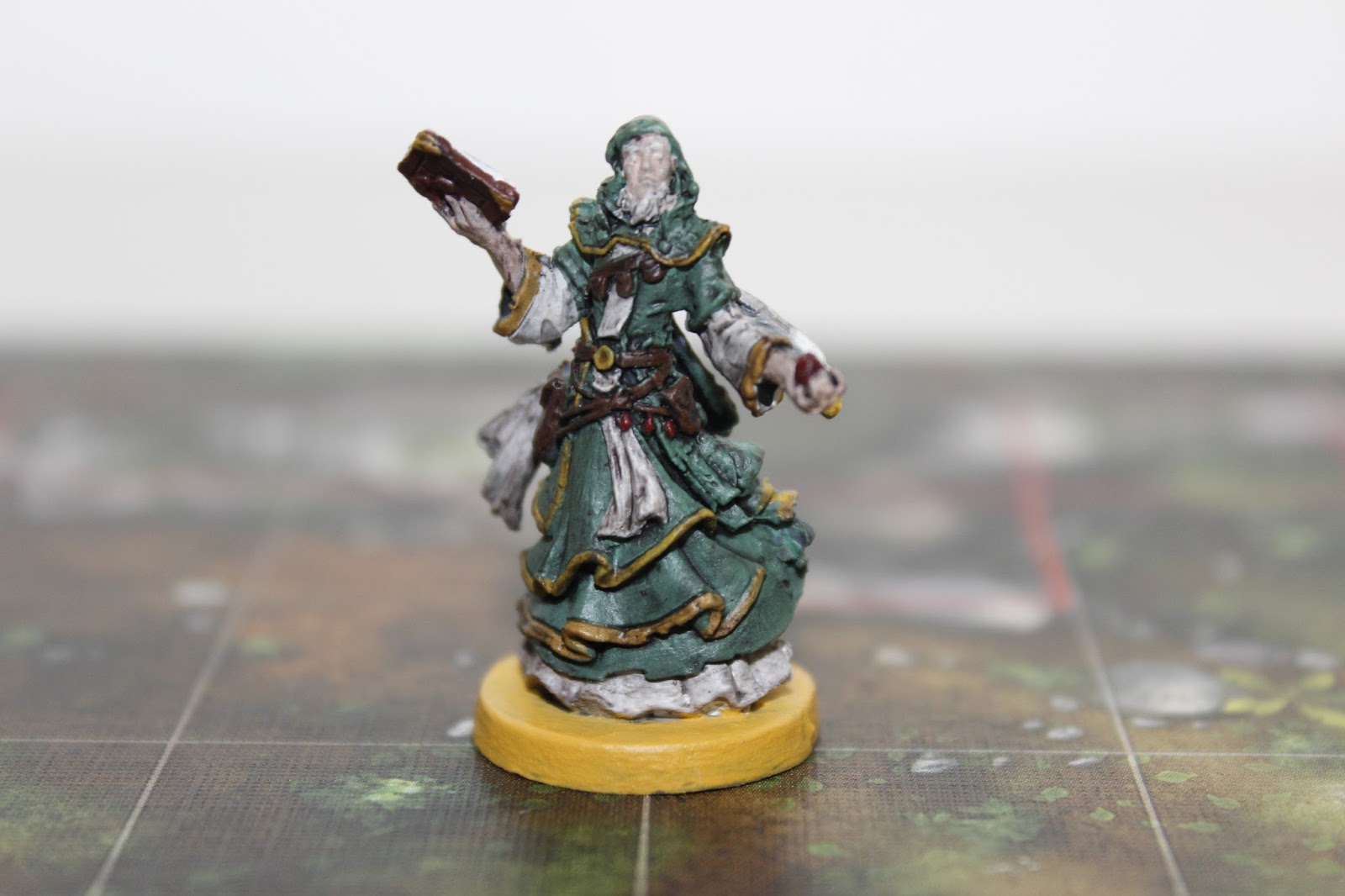 Leoric of the Book (Human Mage)
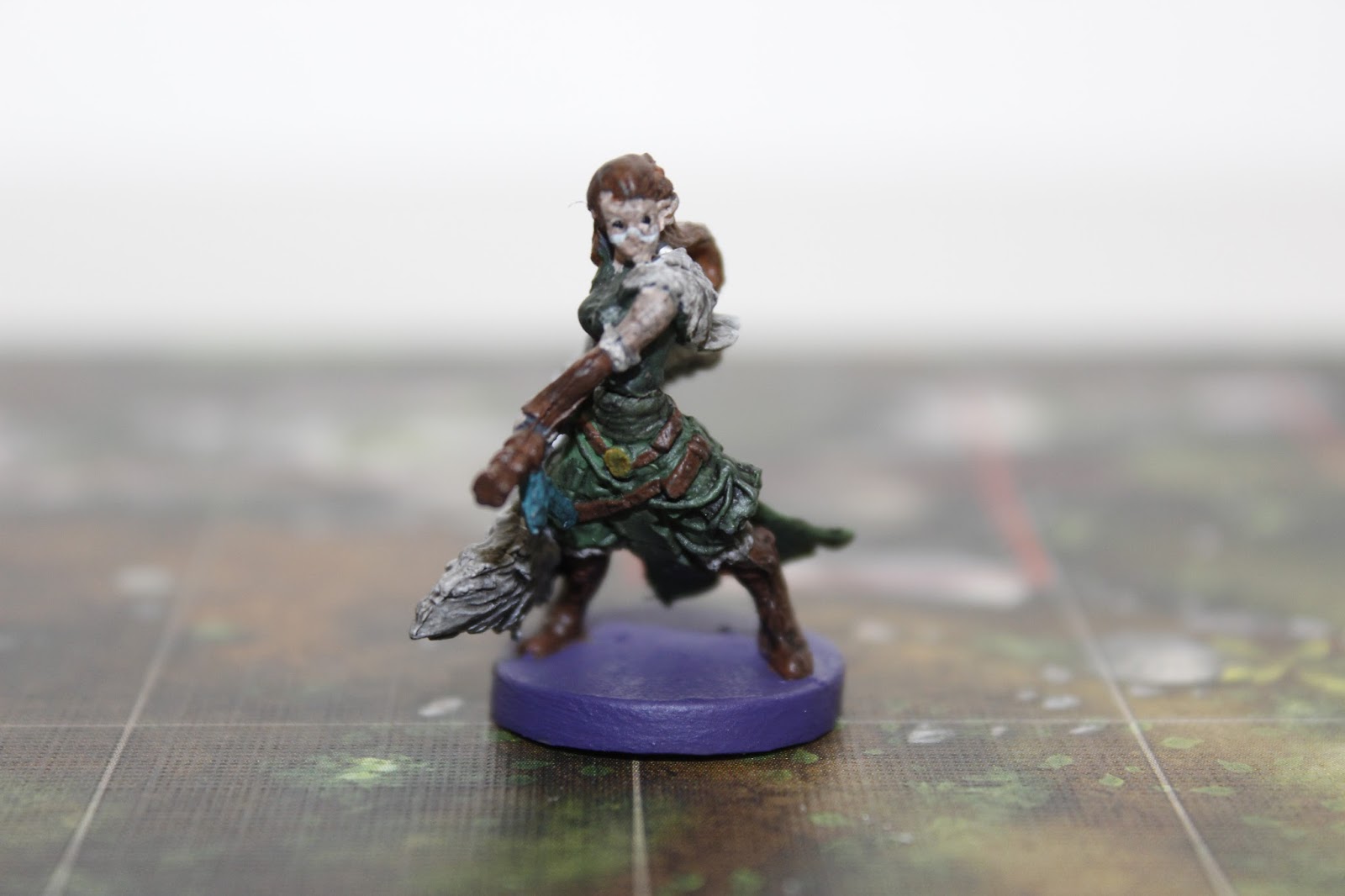 Ashrian (Elf Healer)
 Avric Albright (Human Healer)
 Jain Fairwood (Human Scout)
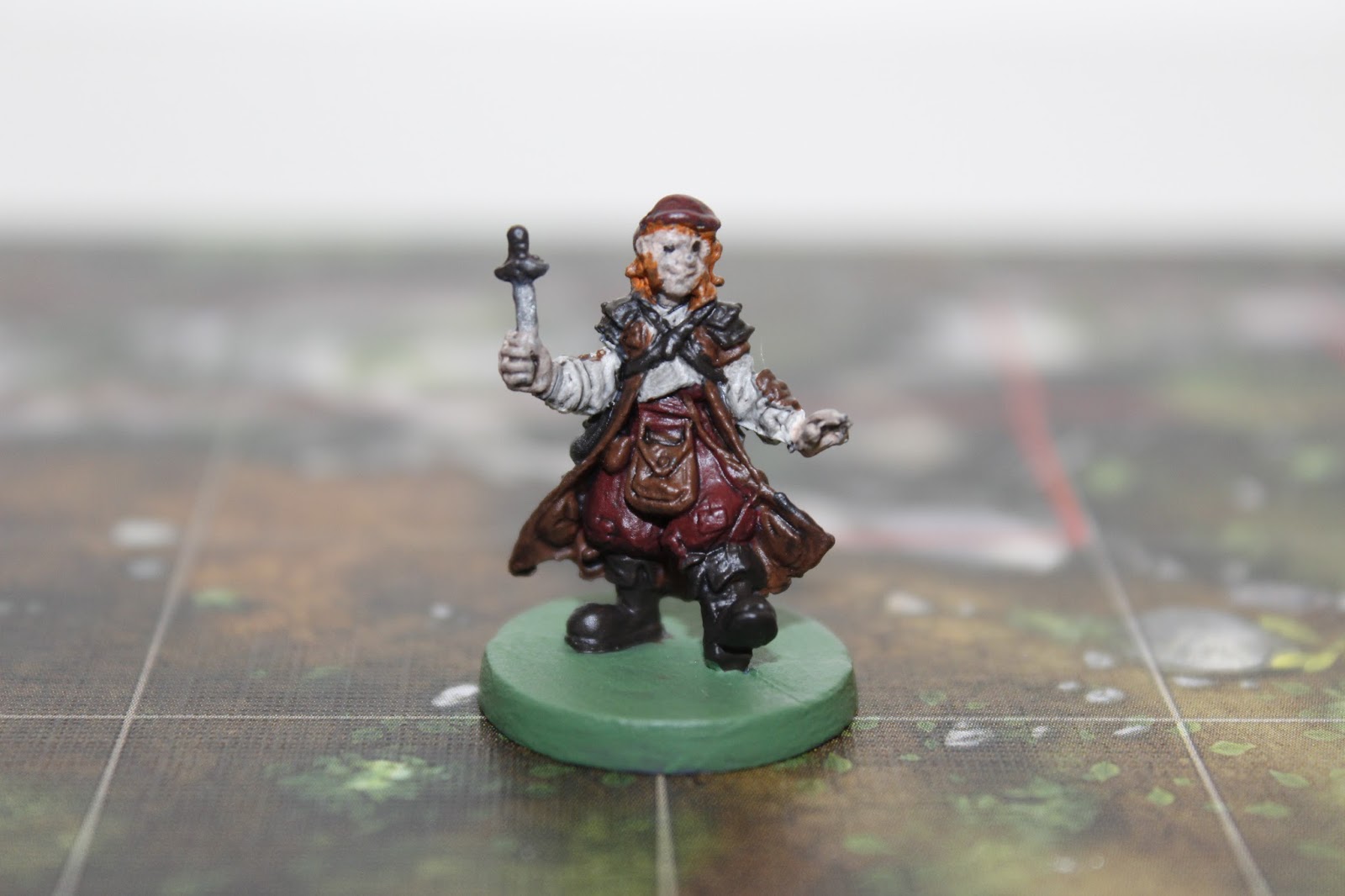 Tomble Burrowell (Gnome Scout)MONSTERS
In Descent, one player is called the Overlord and controls all the villains. Unlike the GM in an RPG, this player is actively trying to win the game. Each quest gives him options for which monsters to choose, all of which have their own strengths and weaknesses. Monsters of the same type are called a group, and the number of figures you're allowed to deploy from one group scales according to the number of heroes in play (2-4). One or two monsters from a group, called "masters," are stronger than the others and come as red miniatures; the others, "minions," come white. To reflect this, it's common to paint the masters' bases red, but Michael also added slight thematic differences where possible.
 Cave spiders
 Barghests
(We call them zombie dogs.)
 Zombies
 Goblin archers
 Flesh moulders
(We call them Flesh Mulders and Scullys.)
 Ettins
 Merriods
(We call them sharktopuses. I took this pic with my phone so it's not as good.)
 Elementals
 Shadow dragons
LIEUTENANTS
In Descent, lieutenants are bosses, and a campaign's story revolves around them and their nefarious undertakings. In terms of attributes and toughness, they have more in common with heroes than regular monsters. New ones appear in every expansion, but unfortunately, cardboard tokens with their pictures on them are provided instead of miniatures. This gives incentive to buy the Lieutenant Packs: miniatures sold separately. They do come with additional rules and components that allow you to add a single lieutenant into a campaign as an "agent," but I haven't been won over by those rules and so usually only buy the packs for the figures. As such, I don't have all of them yet, but here are three out of the six lieutenants belonging to the "Shadow Rune" campaign:
 Splig, aka the Fat Goblin
 Belthir
 Baron Zachareth
(Main boss of "The Shadow Rune" campaign.)I'll post the painted miniatures from other expansions soon. In the meantime, if you like Michael's work and are interested in other kinds of crafts he's made, be sure to visit his Etsy store LumberYarn.
June 13, 2015
"Jurassic World" Review

I thought Jurassic Park: The Game by Telltale Games (2011) was a worthy sequel to the first film, whether or not it's considered canon. (Does it really matter in this series?) Not only did it feature all the same dinosaurs and settings, but also puzzle-solving game-play clearly inspired by all the technological challenges in the movie - even an explanation why "Push to Close" is the button for restoring electrical power. It fleshed out the character Harding (albeit a younger version), whose story deviated from his role in the book but explained what he was doing during the events of the movie following his brief appearance with the sick triceratops. Setting it during and immediately following the movie was a great way to capitalize on its urgency and the audience's nostalgia. What's more, it beat the new movie Jurassic World to introducing a Mosasaurus threat and the first on-screen death of a female character (by the mosasaur in both cases, oddly enough).


Despite all that, the game was criticized for being more a movie than a game, and not many are likely to "see" it as a result of that hybrid nature. Fortunately, Jurassic World is a nostalgic sequel in its own right, featuring a more impressive hybrid in the Indominus rex. (See what I did there?)
I loved the first movie and went on to read the book much younger than I probably should have. My copy is so used it fits my hands like a well worn baseball mitt. I must have reread Dennis Nedry's death scene the most, since that page is so exhausted it's falling out. Prior and after this, I was known for an obsession with dinosaurs and often bragged that one of the first words I could spell was "paleontologist." My point is, I went to Jurassic World fully expecting a nostalgic experience, but I also walked out wondering where the line is between "nostalgic" and "predictable."
I wrote my own sequel to Jurassic Park when I was eleven or twelve. Like Crichton's actual sequel, Lewis Dodgson was the villain, but I also contrived a way to get the entire original (surviving) cast back on the exact same island for pretty much the exact same tour. The kids ended up stranded with Grant again, and when he played another playful prank on them (as in the movie), Tim said, "That was another good one!" Fan fiction at its least creative.
Jurassic World does a much better job than me or either of the other movie sequels at recreating the original. (Spoilers follow.)
Humor is present, too, sometimes at the expense of the genre, the movie industry, and commercialism in general. (Though it was a missed opportunity to let Verizon sponsor the Indominus rex. An I-rex clearly belongs to Apple.) The humor is never quite as cheesy as certain moments in the other films. The final fight against the Indominus is an obvious exception, but I can forgive that knowing the alternative was to allow the T-rex to defeat an enemy we already know to be stronger, faster, and deadlier. Most of my family was disappointed there was no fist bump or mutual nod after the fact.
I was probably overly pleased that 1) BD Wong returns as Dr. Wu, who dies in the book but not in the original movie; 2) he gives a speech acknowledging how different their dinosaurs are from the prehistoric ones, hopefully silencing the common complaint that the raptors should be smaller and have feathers; and 3) that he quietly survives yet again, hinting at the possibility of yet another installment. Dino-riders at last? Who knows!
Aside from dinosaurs eating people, one of the most consistent ingredients in this series is the inclusion of children whose parents are or soon will be divorced. I have no idea why that is, but it's interesting to note. It only gets a brief mention in the first movie, but the book confirms that Lex and Tim's parents are divorced. It's played for greater pathos in the second movie, when Malcolm's daughter Kelly uses his guilty parent syndrome as an excuse to stow away; then even more so in the third, when two divorced parents pretend to be together in order to trick Grant into helping them rescue their son. The experience brings them closer together, which might also be said of Zach and Gray's parents in Jurassic World, though that's left unclear. Even Harding's daughter Jess constantly uses his divorce against him in the aforementioned video game. I guess one of the ongoing themes in this franchise is that, on the subject of failed attempts to resuscitate something dead, divorce doesn't look so bad next to dinosaurs. (Okay...)
But about predictability. That's a fitting topic, given Malcolm's speeches about chaos in the original. He might say the only thing predictable here is the inevitability of chaos, and that's both true and false. Everyone knows going into this what they're going to get, but the hope is that it will still surprise and impress them. The Indominus rex is the movie's best achievement in this regard, and its faked escape from its cage is the one plot point the film trailers probably helped disguise instead of ruin. Most everything else is pretty easy to see coming a long way off, including the fact that the Indominus is mixed with raptor DNA. It's disappointing and puzzling to find out this was meant to be a secret.
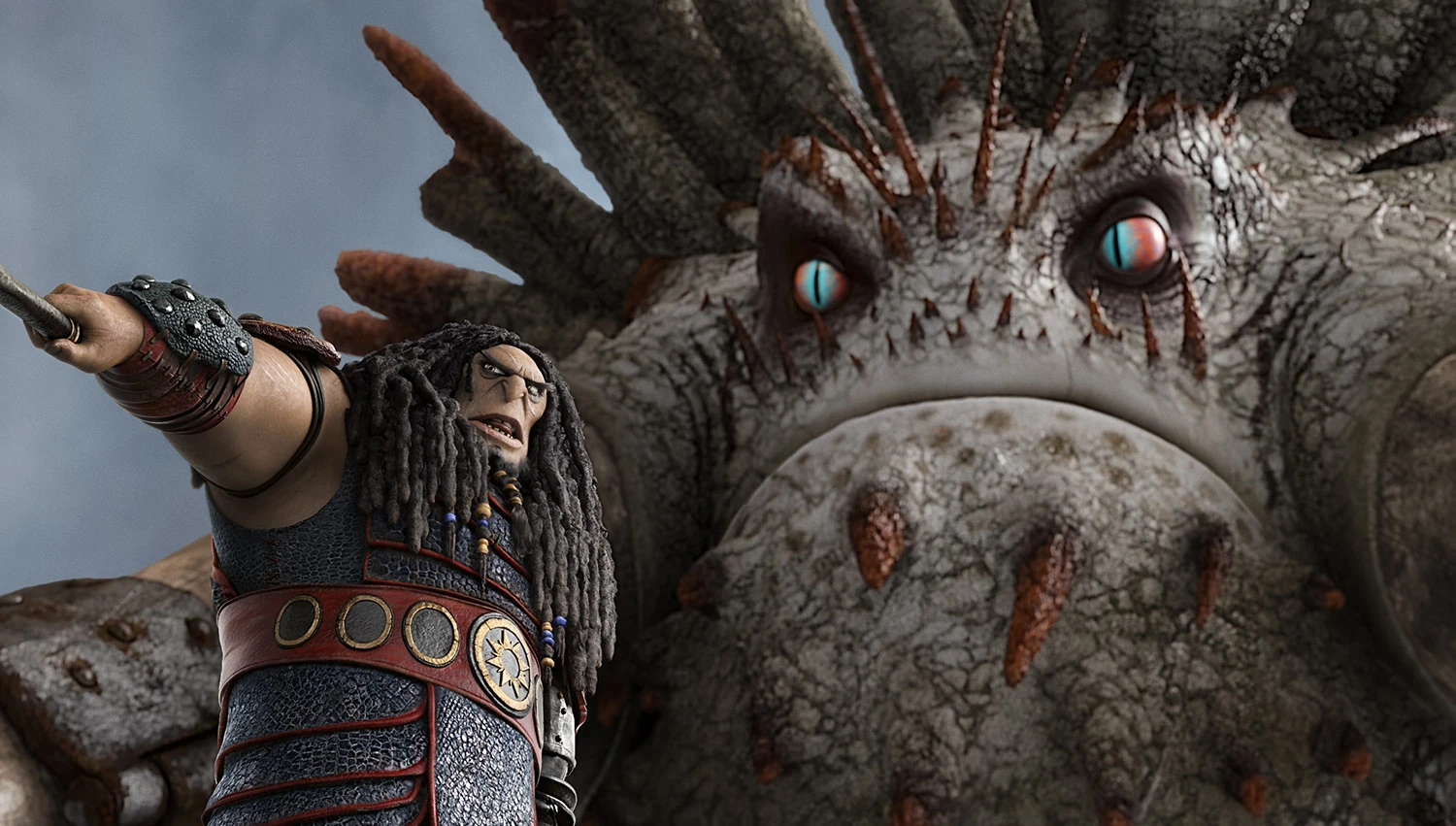
That predictable development relates to another, bigger one, which is the Indominus's ability to "dominate" the raptors. It's in the name, first of all, and second of all, that scene was teased in at least one of the trailers. Owen's ability to communicate with the raptors already reminded some people of How to Train Your Dragon, but I thought of its sequel, where Hiccup's trained dragon Toothless is turned against him by a more powerful alpha (an albino one at that). This may be another reason why that over-the-top ending isn't quite as satisfying as it was probably meant to be: We already saw a dragon/dinosaur resist the alpha and save his human friend once before.

So in toying with the difference between nostalgia and predictability, retellings and rip-offs, one of my favorite quotes comes to mind. It has been attributed to several people, including authors Leo Tolstoy and John Gardner: "There are only two plots: A stranger rides into town, and A man goes on a journey." I also like this slightly different version from Raymond Queneau: "Every story is either the Iliad or the Odyssey." This means that all stories can be (supposedly) boiled down to one of two archetypal patterns, or even the single hero's journey described by Joseph Campbell (advertised on the right-hand menu of this blog). Recognizing those repeat patterns can be surprisingly familiar, like running into an old friend, or pleasantly consistent, like eating at your favorite restaurant. The trouble comes when you realize you and that friend no longer have anything in common, or when you've tried everything at that restaurant and it loses its novelty. The first of the above links contains an excerpt from writer David Long, who says "[T]here's no such thing as a new plot, and I don't expect to find one.... But I do crave an original telling - one of our shared stories done again, ablaze with new detail."
As the fourth installment in a franchise that is, itself, a retelling of classic science fiction - and that, on its own, asks how to make the old new again - is Jurassic World an original telling? To summarize this review, it's a hybrid of "Yes" and "No." Which dominates which is probably a matter of personal taste.
May 18, 2015
Angles on Ultron

It has been over two weeks since I saw Avengers: Age of Ultron with my brother and two sons. We made a celebration of it, as it was also Free Comic Book Day. (You can still see the pictures I tweeted on the right.) By now it's a bit late for a review. I've read a number of other people's, though, and here are some of my favorite angles. Beware major spoilers.
Where it Fits in the MCU
Emily Asher-Perrin (Tor.com) reviews the movie "as a piece of the Marvel Cinematic Universe jigsaw puzzle" because it's more successful that way. That's how I've invested since the post-credits scene of Iron Man, which I saw late, after Iron Man 2 was on its way to officially, maybe awkwardly announce the MCU. The first one I saw in the theater was Avengers because the individual characters' stories hadn't won me over yet. (With the exception of Iron Man 3, I've attended every Phase Two theatrical release.) For me, the serial continuity is what's fun, so all the Easter Eggs and fan service are easy bait.
Like Asher-Perrin, I'm hopeful that we might actually get an extended cut of AoU to redeem those moments that feel tacked on. The Maximoff twins are force-fit and Quicksilver's death completely hollow. (And unnecessary? I need to see it again, but couldn't he have just rushed Hawkeye and the kid out of harm's way instead of intercepting the bullets? I guess he was fridged for Wanda's development, which at least flips the common trope.) Thor's subplot is even less coherent, and I understand that Joss Whedon was forced by Marvel to include it. Again, I like when one MCU film sets up future ones, but hopefully not by sacrificing itself. I find AoU more guilty of that than IM2. Even the closing shots of the New Avengers (Falcon, War Machine, Scarlet Witch, Vision) struck me as cheesier than I would have hoped. Was Wanda flying, though?
I didn't see this development coming, although I did think Clint's lines about not having a girlfriend, then later being on the phone with his girlfriend, were odd. Turns out they were laying a foundation (as lines like that so often are). I'm with Jim Bennett of Deseret News in loving this plot twist. Hawkeye instantly goes from the vague, underused, most expendable Avenger to the one I can relate to the most. The Incredibles comes to mind. Even though AoU doesn't have the cartoony freedom to make Hawkeye's family members costumed heroes, it honors them more subtly, showing that Clint's wife and kids are central to his and maybe even Natasha's roles in S.H.I.E.L.D. and the Avengers team. From what I understand, Whedon had to fight to retain the farmhouse in the story, and I give him a lot of credit for that. It's one of the few places where this and Winter Soldier feel like creative siblings, showing that the more human these superhumans behave, the more super they become.
Speaking of which, it was a nice touch to see that loyal S.H.I.E.L.D. agent from WS as part of the Helicarrier crew in AoU. Not that that has anything to do with Hawkeye.
Black Widow
Black Widow has been getting a lot of negative attention lately. First it was Chris Evans's and Jeremy Renner's poor jokes in a pre-release interview, and now there's her strange absence from movie merchandise. There was also backlash against Joss Whedon for making her a damsel-in-distress who calls herself a "monster" for choosing to sterilize herself when she was an assassin-in-training. Some have said this backlash is what caused Whedon to quit Twitter, though he has denied that. It does seem unlikely, given his status as a feminist who has been known to chastise other feminists - Geek web site The Mary Sue, for instance, whose Sam Maggs ended up giving AoU a positive review regardless. Like her, I didn't read Black Widow's regret as an attack on anyone who can't or chooses not to have children. I like the definition of a "strong female character" as one who makes choices that matter to the plot, both good and bad. "Strong female character" isn't the same thing as "flawless female character." As for Widow's capture, this isn't even her fault, and she facilitates her own escape...even if it's unclear how she ends up there in the first place, or why Ultron chooses to keep her alive. I may have missed something there.
And her relationship with Bruce? I like both characters so I wasn't disappointed to see them come together, though it did seem unnecessary and slightly out of the blue. That she is Hulk's leash is a nice callback to events in the first Avengers, but her going from "Love is for children" in that film to "I adore you" in this one is somewhat jarring. In the Tor.com article mentioned earlier, Asher-Perrin observes that Black Widow "is the only person who feels comfortable in removing" Bruce's choice to change into the Hulk and that "the Hulk is the one who shuts Natasha out when she asks him to pilot the stealth ship back to the hellicarrier [sic], not Bruce." Apparently, even the Hulk recognizes that Natasha might be coming on too strong for puny Bruce Banner.
Consequences
The Natasha/Bruce plot is one of the few that seems to have lasting consequences in the movie. Others, like the Maximoff's vendetta against Tony Stark, are really just running on the fumes of Phase One. I have to agree with Robert Reineke of Modern Myth Media that the film's ending commits similar errors as Man of Steel - maybe even worse. The destruction in AoU is too easily swept aside with single lines of dialogue about Stark's first response team. The Hulkbuster vs. Hulk battle, while absolutely satisfying (and obligatory!) hero vs. hero combat, features a moment when an entire building comes straight down, and the aftermath is as uncomfortable a reminder of 9/11 as similar moments in MoS. Like Reineke, I'm a bit more inclined to forgive the latter film, in which that destruction is perpetuated by actual terrorists rather than one super-buddy trying to curb another super-buddy's temper tantrum. I know the Hulk was set off by Scarlet Witch, but speaking of which, isn't that too reminiscent of what Loki did in the first film? I guess, unless he evolves into a better amalgam of Banner and Hulk, there are only so many uses for the Big Guy; this movie sort of reinforces - for audiences and, apparently, for the Hulk himself - why he may have a limited use in future installments. Have you watched The Incredible Hulk lately? Its pointlessness in the MCU is embarrassingly obvious. At least General Ross is showing up in Captain America: Civil War.
All that said, I like that Ultron's homemade meteor plan is foreshadowed throughout the movie by his archaic references (dinosaurs, Noah), and that it creates a truly unique setting for the final battle.
One-Armed Men
Speaking of consequences, Marvel Studios President Kevin Feige confirmed to Cinema Blend that every installment in Phase Two of the MCU includes someone getting their arm cut off as a tribute to Star Wars (presumably Empire Strikes Back in particular, which contains the most famous example). I learned this after seeing AoU and must admit that it made Ultron's dismembering of Ulysses Klaue a little more interesting. They weren't just shoehorning Andy Serkis in there to set him up as a villain in Black Panther, but also to satisfy a delightfully dorky "Once per Episode" trope ala the Star Wars universe itself. (Wilhelm Scream, anyone?) Even the TV spin-off Agents of S.H.I.E.L.D. honored this in the recent season two finale. (That poor Agent Coulson...) This summer's Ant-Man is the final chapter of Phase Two, so I wonder who will lose their arm.
Horror Film Homage
Some have commented on the Frankenstein parallels in Ultron and Vision. Ultron's creation scene, when he comes staggering out like a zombie, is creepy and unnerving. Vision is basically the synthesis of Iron Man (J.A.R.V.I.S.), Captain America (vibranium), and Thor (lightning + cute cape tribute), and his creation is undoubtedly meant to recall said horror story. Whedon even said in an interview that Ultron is "living in a Universal horror film." In retrospect, though, the parallels don't end there. This is going to sound strange, but AoU actually has a lot in common with an actual Universal horror film, itself a horror film homage: none other than the loud, stunt-filled, over-the-top Van Helsing (2004). And yes, I'm a little embarrassed for knowing the latter film well enough to draw that comparison. But here it is:
Eastern European castle? Check.Angry mobs of villagers? Check.Dr. Jekyll/Mr. Hyde? Check. (Banner/Hulk. Obviously.)A flying, immortal villain who wants to reproduce? Check.Who is assisted by powerful women? Check.A fight over the Frankenstein monster in transit? Check.Brother/sister relationship that ends in tragedy? Check.Werewolves? Well no...though Ulysses Klaue is pretty hairy....and of course, a monster brought to life by lightning. Check.Weird, huh? Of course, Joss Whedon did create Buffy the Vampire Slayer....
Now Whedon is done and the Winter Soldier team is bringing us Civil War next year. Yes, it's looking crowded...but Spider-Man's in that crowd! These are the same guys who deliberately tried to make Winter Soldier "Honest Trailer proof," - and did a fine job at it, too. (Even Honest Trailers thought so!) Even if it ends up with similar problems as AoU, it, too, is bound to be lots of fun - from a variety of angles.
April 18, 2015
Dungeon Roll Review
 Credit: playtmg.comName: Dungeon Roll (I often call it "Dungeon Dice" by accident...because, you know, alliteration.)
Developer: Tasty Minstrel Games
# of Players: 1-4 (but see below)
Time: 15-30 minutes (but see below)
Ages: 8+ (My 7-year-old has played just fine.)
I became interested in this game after viewing the Watch It Played YouTube video (which is also very helpful for understanding the rules). My kids saw it, too, and said "We have got to get that game!" To us, the appeal was a dungeon-delving experience distilled to a simple custom-sided dice game playable in less than an hour.
We enjoyed our first play-through quite a bit, but it's usually not our first choice for family game night. It works great for 1-2 players because it moves quickly and there's always something to do. After that, there will always be one or more players doing nothing but waiting for someone's dungeon delve to finish - which can take 10-15 minutes if they're slow deciding how to spend their die rolls.
As others have noted, the game is a bit light on theme, being that it's not at all story-based. If you do think about it too hard, you have to wonder why the player's chosen hero (pictured on a Hero Card) gets to level-up when he/she is mostly sacrificing real adventurers (Champions, Fighters, Clerics, Mages, and Thieves, represented by white Party dice) to defeat the monsters and gather treasure. "Commander" or "Tyrant" might be more appropriate than "Hero"! Of course, the Hero Card does list two types of special abilities, so thematically speaking, the "Commander" does show up once and a while to help.
What might be a unique bit of praise is how diverse those Hero Cards are. This base set comes with eight (you can buy others through booster packs), and of those eight, three are female characters and another is a person of color. That may not seem all that impressive, but in the medieval fantasy genre, where made-up races like elves, dwarves, and orcs often stand-in for genuine diversity, it's refreshing to see a cast not composed entirely of stereotypes. Also, the character showing the most skin is a guy.

The quality components, quick playtime, and fairly straightforward rules make this preferable over, say, your average phone app for passing the time, and can be just as addicting when it comes to breaking your own record.
February 6, 2015
"Seventh Son": Book vs. Movie
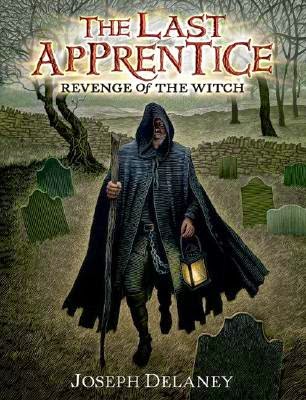
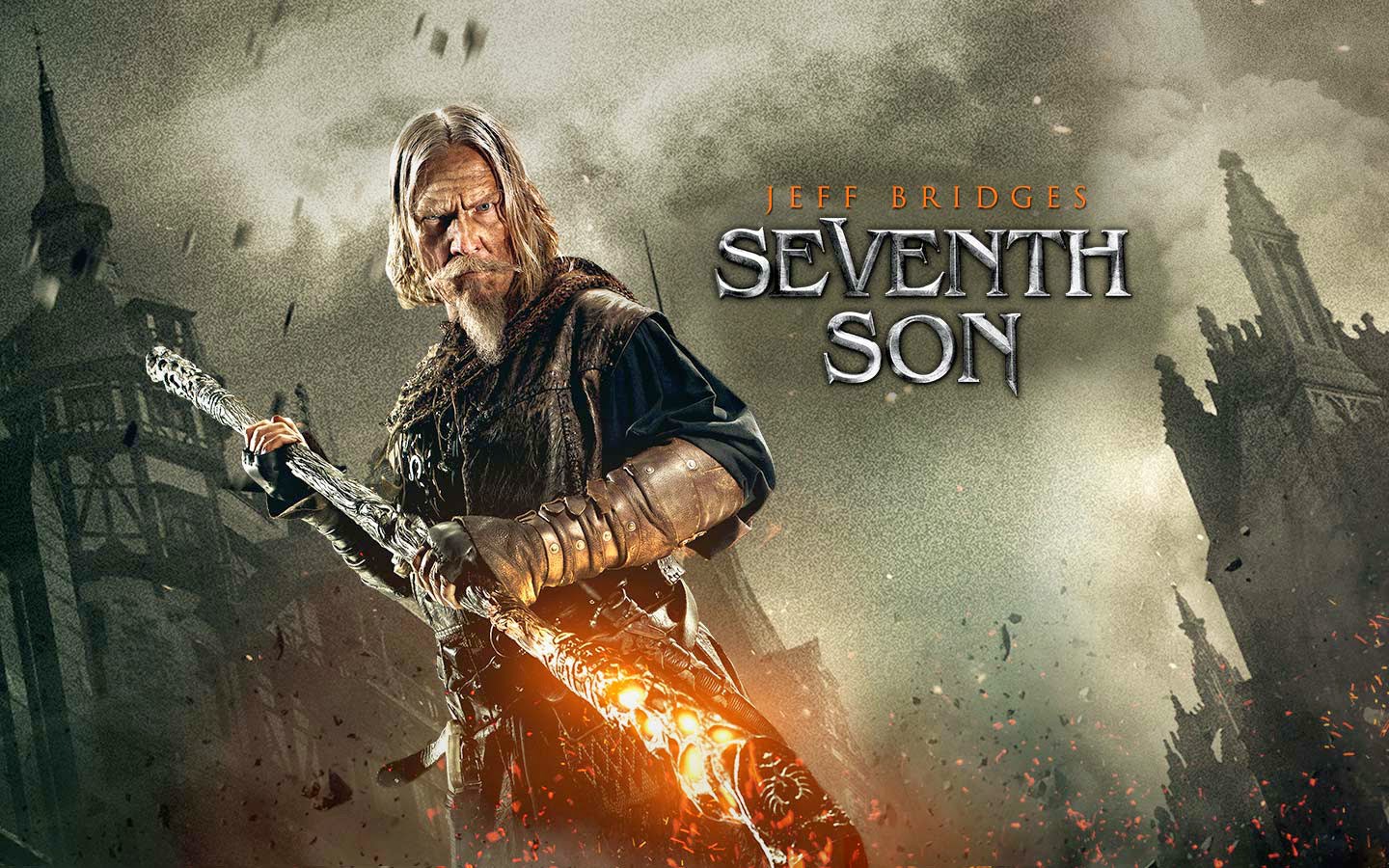 Legendary PicturesBack in early December, my family was standing in line at the movie theaters when a trailer for Seventh Son played on the lobby big screen. Intrigued, my son wanted to know more about it. I knew only a little, having noticed a while back that its release date was rescheduled several times. That night I looked it up, found out it was based on a book (naturally), and downloaded a sample for my Kindle. It hooked me right away. I purchased the full book, pictured below, and finished it that night.
 The movie arrived in theaters today, but the critic consensus is not good: an embarrassing 11% on Rotten Tomatoes. (This weekend's other epic genre film, Jupiter Ascending, has a 22%. Both are far outdone by - wait for it - The SpongeBob Movie, at 74%.) Between the terrifying book it's based on, the amazing cast, and the exciting trailer, one might wonder how the film could be that bad...release date warning signs notwithstanding.
This isn't a review of the film, as I haven't seen it yet. The thing is, as soon as I compared The Last Apprentice: Revenge of the Witch (otherwise known as The Spook's Apprentice) with the trailer that exposed me to it, I knew the filmmakers had taken huge liberties. Granted, I have yet to read the other twelve books in Joseph Delaney's YA dark fantasy series, so I wouldn't know if the movie draws on them, too. While it stands to reason that an adaptation will make the story and characters its own - and watering down a book for movie audiences is practically axiomatic today - it's concerning if it repels people from the source material instead of attracting them to it. The trailer worked on me and my son, but maybe the full movie would have the opposite effect. While not meant to discourage anyone from seeing the movie (which, again, I haven't), here are three important differences hopefully proving the book is worth your time:
1. The Hero

Book: Tom Ward is the 12-year-old narrator of the book, described as small for his age despite growing up on a farm. As the seventh son of a seventh son, he can see things other people can't and therefore has the potential of becoming a spook (more on that below). He never once picks up a sword and undergoes zero combat training.
Movie: The "white male hero" tradition is intact, of course, and any originality is streamlined even further, as you can see in this pic of actor Ben Barnes: aged to enable romance, sword in hand, combat ready.
2. The Mentor
Book: Master Gregory is a spook, which is like a sheriff of the supernatural. There's only one spook per county, and the impression is that he is no more or less unusual than other specialized trades of the time. He's even paid for it. "[I]t was a scary job. I was going to learn how to protect farms and villages from things that go bump in the night. Dealing with ghouls, boggarts, and all manner of wicked beasties would be all in a day's work." Maybe most importantly, Master Gregory teaches Tom not to destroy those "beasties," but how to ward off and/or capture them. Otherwise, "we're no better than the witch we kill."
Movie: Jeff Bridges seems like a good cast to me, though in the trailer, he describes spooks as "knights" and there's a lot of emphasis on fighting. He explicitly says (with a mouth full of marbles), "If you see a witch, kill it." That aside, the "aged mentor" trope is played pretty straight in both cases.
3. The Villains
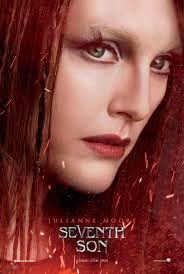 Book: Though Tom first undergoes a terrifying initiation by spending the night alone in a haunted house, this ultimately proves that most supernatural creatures are more misunderstood than harmful. The real conflict begins later, when he is tricked into releasing Mother Malkin from the pit where the Spook kept her. She's like a mature Samara from The Ring, with a particular appetite for children's blood. Her allies include her granddaughter Bony Lizzie, Lizzie's niece Alice, and Tusk, a mindless ogre-type. Tom finds an instructional tome called Dragons and Wormes in the Spook's library, but no big scaly creatures appear.
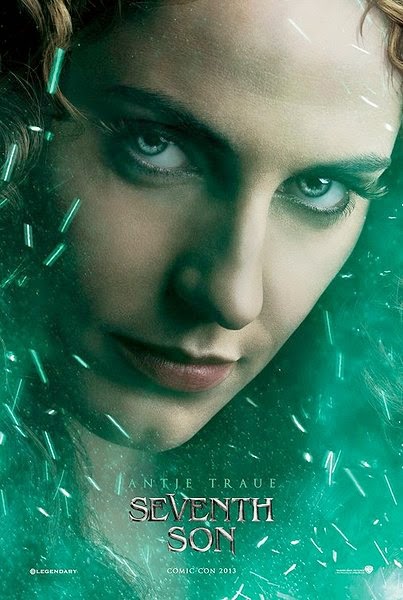 Movie: Though the names are the same, the actors playing them are, like Ben Barnes, sexier and equipped for big screen action sequences. Also, several new ones have been added, making the movie less whitewashed, but by way of the problematic idea that African and Asian cultures are stand-ins for "evil" in medieval Europe.
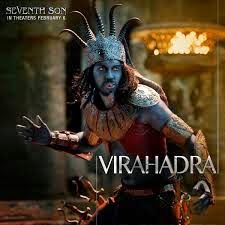
Also, several of these characters seem to possess the power to transform into dragons, as heavily showcased in the trailers.
As is probably evident by this point, the difference between the book and the movie is a matter of genre. While the former is called a "dark fantasy" and reads like a much scarier version of an early Harry Potter book, the latter is more epic in scope. The stakes in the book are the the lives of Tom, his family members, and the local county; the stakes in the film are, no doubt, the entire world. This isn't to say one is better than the other, but it's definitely true that they're different, and should be judged separately. So whether or not you buy a ticket to Seventh Son, I highly recommend The Last Apprentice, for being an interesting, atmospheric, often frightening, and overall quick read.
December 21, 2014
Final "Hobbit" Review: "The Battle of the Five Armies"
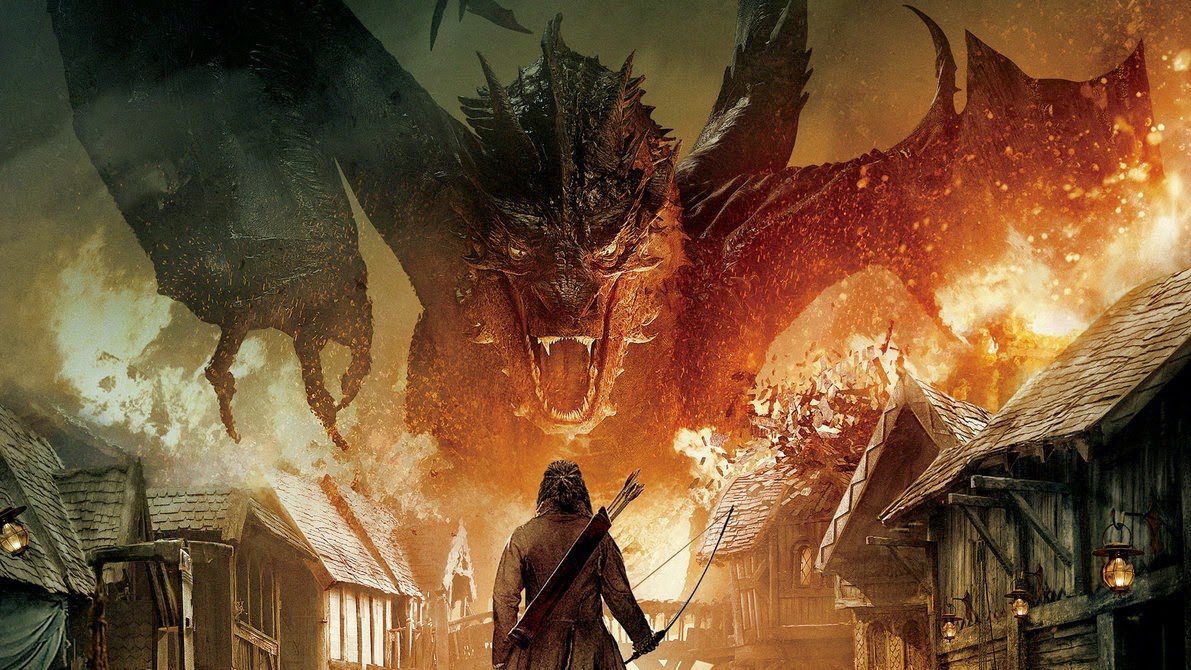
Tradition! For the past two years I've watched and reviewed The Hobbit movie installments as part of my holiday break, so I knew I had to finish with the third and final part, The Battle of Five Armies.
My Unexpected Journey review (which I now realize was actually written on Facebook, not here) was a summary of my thoughts while watching the film. My Desolation of Smaug review was the same, plus a transcript of my second son's enthusiastic commentary. (You can read both here.) This year I convinced my elder son to join us by suggesting he bring a blanket to hide under, which is what he normally does at home. (For him, a security blanket isn't so much a specific baby relic as it is any random screen against scary things on TV. For the record, he's a bigger fan of The Hobbit and The Lord of the Rings than my other son.) At the last minute my daughter begged to come, too, effectively making it a whole family affair - not to mention earning us a few looks and comments for bringing such young children to this movie. Don't tell anyone we did a LotR marathon last New Year's.
As expected, our daughter wasn't scared, but bored, and proved something of a distraction - mostly because of how much I worried she was being a distraction. I may have missed a few things as a result. Also, aside from a few enraged outbursts from my son about neglecting to warn him who would die (I did, by the way; we read the book this year), I was the one providing most of the spoken commentary. I'm sure this was mildly irritating for my brother, but sitting next to him in the theater was another requisite of this three-year limited tradition.
So, on to the summary! It probably goes without saying, but beware of spoilers.
Why are those kids behind us talking like this is their first time seeing the Star Wars Episode VII trailer? Haven't they watched it over and over online, like me? I'll mouth that to my wife. Wait, she's mouthing something already: What...geeks.And let the improbability commence! Bard can't just shoot the black arrow at Smaug; he has to shoot it with a broken bow, steadying the shot on his own son's shoulder. Am I wrong, or shouldn't that result in a pretty bad neck injury?We all knew Peter Jackson was going to inflate this movie a bit, and I honestly thought it would start by prolonging Smaug's death. Guess not! So long Cumberbatch. See you in a few.And there you are! Well, sort of. The Necromancer vs. Galadriel. I guess I was wrong to expect a full-scale siege of Dol Guldur. This is more like a mini trailer for Fellowship of the Ring, complete with Scary Blue Baritone Galadriel. Don't mess with her, man. She does evil better than you do evil.This "Gathering of the Clouds," bloodless siege portion seems surprisingly loyal to the book, right down to the raven messengers (speechless, of course).If you need to travel quickly in Middle-earth, the solution is surprisingly futuristic: wormholes!All right, here we go. The actual battle!I'm laughing more than I expected. But then, the Hobbit movies' fight scenes usually are played more for comedy than drama. Also, when did Peter Jackson become the Queen of Hearts? I can just picture him sitting there with the script and a red pen, scribbling, "Off with his head!" all over it. I bet there are more beheadings in this single movie than the entire LotR trilogy. Those things roll off like they weren't attached to begin with! Thranduil and his moose-elk win for most decapitations at once. I thought Storm Troopers won the award for most useless heavily-armored soldiers, but Orcs are giving them a run for their money. Oh well, can't wait for Beorn to arrive and toss them around!Is it just me, or does feckless, neckless Alfrid actually look better in drag?Yay, Thorin's company charges! It'll be like the battle at the gates of Mordor, but better! Only wait...Thorin and Kili and Fili are leaving? But...we know what's supposed to happen to them. How can it happen away from the battle? I guess they're just prolonging it. No worries. Jackson wouldn't deny us the memorable scene where brothers Kili and Fili die side-by-side defending their wounded king in the midst of the actual battle.He did.And despite adding Tauriel for more female presence in the films, she has wound up another damsel in distress. And...she lives? Gotta admit, I felt pretty confident she'd die with Kili, considering she's a made-up character with no mention in the LotR. Was that solely to subvert our expectations? Do she and Legolas even say goodbye?And Beorn gets three measly seconds?! Why even include him in these movies then?! He was supposed to retrieve Thorin and defeat Bolg, but Legolas completely stole his thunder...and everyone else's, for that matter!Also, for a sword-throw done right, see Azeem in Robin Hood: Prince of Thieves.The camera never even cuts back to the battle! What about the other members of Thorin's company? What about the wolf riders? What about the detailed tactics outlined in the book? If you're going to expand that scene into a full movie, why not, you know, use it?It appears that, in an attempt to avoid the prolonged multiple endings of Return of the King, Jackson has over-corrected; this movie's ending is so abrupt, we don't even hear what happens to all these characters we've been following for three years. At least we get the auction at Bilbo's house.Not even Billy Boyd's end credits song "The Last Goodbye" can mollify me now. I miss "The Edge of Night" that was used in the trailer.What a disappointment.... I can't wait to buy the Extended Edition on Blu-ray!And that's a wrap! It has been fun, Shire folk. Now that The Hobbit is over, bring on Star Wars Episode VII!
August 26, 2014
So I Finally Saw "The Amazing Spider-Man 2"
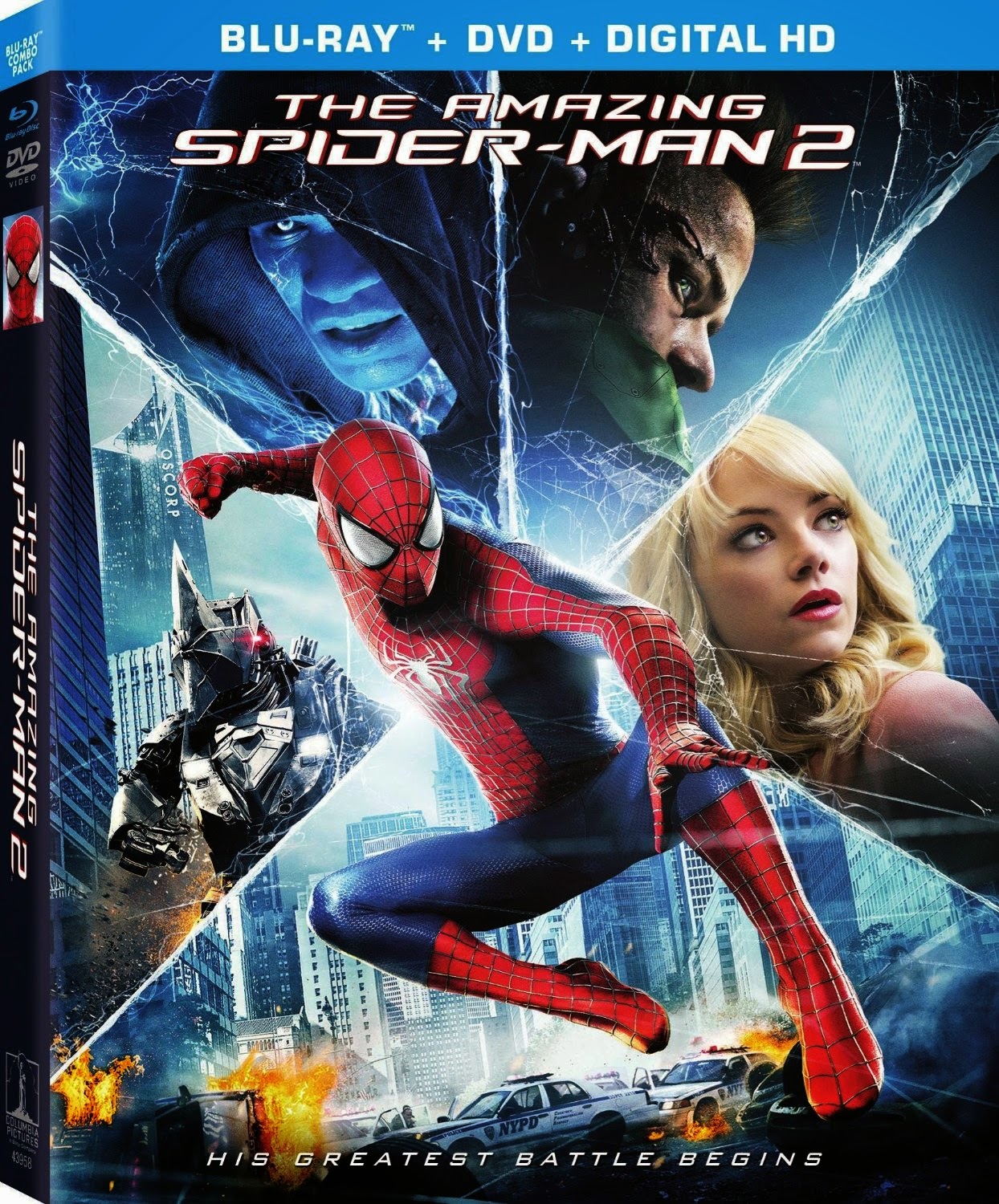
I never made it to see this in theaters, but instead chose blockbusters with higher ratings from critics. It's too bad. While I was repeatedly disappointed by those movies, this one actually exceeded my expectations. I guess that goes to show I should stop paying attention to the critics.
I agree it has it's problems, but I still had a hard time finding things not to like about this movie. A second viewing might reveal more, but for now I can number them with the fingers on one hand - mainly just a few silly plot points. Narrative and tone took a lot of hits from critics, but I found the movie very well balanced. Sure, there are several plot threads to follow, but haven't we come to expect that from this genre? Isn't it one thing we like about this genre? What's more, they develop alongside each other, so that no character arc or subplot feels too sudden or convenient. We know where it's going and just get to sit back and enjoy the ride.
Or dread it, knowing the tragic fate beforehand.
Like the first time around, Andrew Garfield and Emma Stone have perfect chemistry and are so much more fun to watch than Tobey Maguire and Kirsten Dunst. Many seem to agree on that point, but maintain that Spider-Man 2 is the superior movie (and has long been considered one of the best superhero movies ever, only finally dethroned by The Dark Knight and The Avengers). It's the only entry in that original trilogy that I can stand, and that's owing entirely to Alfred Molina's Doc Ock. I'll admit that The Amazing Spider-Man 2's villains aren't quite as fun, but the "create your own villain" trope is consistent with the first movie (not to mention superhero movies in general). Jamie Foxx's Electro, despite being very reminiscent of the Riddler in Batman Forever, works just fine. Electro was never my favorite villain, but this version at least has an underlying motive (attention starved) that makes him more responsible for his "from nobody to nightmare" development than Spider-Man. However, he also provides one of those few moments of irritation: How is he able to turn both his physical body and the leather suit he's wearing into pure electricity and back again? Is that a nod to Hydro-Man and Sandman, who can both simulate clothing?
Conversely, Dane DeHaan's Harry Osborn/Green Goblin really impressed me. Like Electro, his path through the movie is very linear and transparent, but I found myself appreciating that. This movie does a good job showing characters' relationships in single scenes, like Peter and Aunt May (I loved that she resented his obsession with his parents), Peter and Harry, and Harry and his dad. His daddy issues are more straight-up contempt than love/hate and end with the early death of Norman, replaced by self-preservation. Therein is another quibble, or maybe just misunderstanding on my part: If his genetic disease is beginning and progressing the way Norman's did, why does it start to affect him so quickly? The movie mentions several times that OsCorp was forced to terminate their human/animal hybrid projects because of Connors/the Lizard, so maybe the implication is that Harry's disease will progress faster than Norman's did owing to the lack of treatment. In any case, the way Harry represents a consolidation of the OsCorp/Peter's parents mysteries makes me like the first film more.
A theory I developed to explain the movie's critical failure is that the ending is too upsetting. On the subject of tropes, we're dealing with "women in fridges" here, who, despite being stiffed (horrible pun), are missed only by other characters and not the audience. Rachel's death in The Dark Knight is surprising, dramatic, and important to the plot, but I doubt if anyone really missed the actual character (played by two separate actresses in the franchise). Gwen Stacy's death, on the other hand, is a deeper felt loss. While even more dramatic, it is less important to the plot and even less surprising, obediently adhering to the comics - notwithstanding an initial fake-out (Spider-Man saves her successfully once, then fails the second time). There's therefore a lot of tense foreshadowing leading up to it, and even those who knew it was coming probably hoped the writers would subvert it the way they did with Mary Jane in Spider-Man.
In other words, she didn't have to die to move the story forward, like the creation of Two-Face in TDK. But we see (and hear!) her die, with no getting around the fact, confirming the movie's status as a tragedy. I imagine that was bittersweet for Spidey fans, and I personally wish there were some way to resurrect her as Spider-Woman, given Gwen will fill that role in the upcoming alternate Spider-Verse. Still, I feel the denouement, bookended with the beginning, is the perfect conclusion to the theme of letting go and moving on. Given Captain Stacy's death in the first film, I think it's a fair argument that killing Gwen this soon after, or at all, was too much...though again, the return of Spider-Man in the end, in spite of all this loss and guilt that keeps piling on, makes for an inspiring finish. And so I'd argue that she's not a fridged character at all, except in the most basic sense (a love interest who dies). It's her life and not her death that motivates Peter to keep going in the end, and that's after two movies full of strong, voluntary assertions of her independence and capability.
I've made a lot of comparisons with Batman movies, but I haven't mentioned the only one that occurred to me while actually watching this, which was The Dark Knight Rises. Basically, I kept thinking how The Amazing Spider-Man 2 pulled off certain ideas that the other didn't, making it, in my mind, the superior film. I'll demonstrate:
IdeaTDKRTASM2Large theatrical message on a bridgeBatman's flaming Bat-signal, I guess meant to scare the bad guys and encourage the good, makes no sense at all. How in the world did he rig it?Spider-Man spells out "I Love You" in webbing for Gwen. This serves a stronger, simpler purpose and is entirely plausible. Also, it recalls Venom's taunting of Spider-Man (over Gwen Stacy, no less) in the same way in The Spectacular Spider-Man animated series.Secret identityBat-fans like to think Gordon knows Bruce Wayne is Batman, given he's a great detective and all, and just doesn't say anything. Here, Gordon has to ask him outright, and is truly surprised. Blake does figure it out, but his explanation how makes no sense.It's implied throughout that Aunt May suspects Peter is Spider-Man and allows him his privacy. Bonus: Gwen has known since early in the first movie.Smart heroBatman - a ninja, by the way, who usually beats his enemies with strategy - loses to Bane in a straight-up fight. When he returns to Gotham for a rematch, his new plan is to...face Bane in a straight-up fight. His success this time seems almost lucky, as if the shot to Bane's mask is coincidental.When Electro fries Spider-Man's web shooter, Peter spends a lot of time trying to figure out how to prevent that happening again, and finally reaches a solution with Gwen's help.Anyone can be me!Batman calls this "the point," and although he complained in the previous movie that literal Batman copies wasn't what he meant by inspiring people, he secretly leads Blake toward becoming Batman (sans training or personal guidance). Overall it's a muddled, inconsistent message.The Spider-Kid in the ending, while literally dressed as Spider-Man, is a simpler, more successful rhetorical point in that he can't literally do what Spider-Man does, but stands up to evil anyway.Homage to the larger universeThis final installment left me unsatisfied for not taking the opportunity to give subtle nods to other Bat-villains left unexplored, like Penguin, Riddler, etc. For example, why not make the guard pushing people out onto the ice a bald guy named Victor?Rhino's brief role at beginning and end is exactly what I mean. Perfect! The entire Sinister Six is set up for future installments, and the mere implication would make this movie a satisfying conclusion to the series (even though it's not).
Obviously these superhero movies, especially when too loyal to classic (outdated?) stories, tend to hit a lot of the same notes. That's the Hero's Journey for you. But that's just a formula, and while The Amazing Spider-Man 2 follows that formula, it does an admirable job making it work for its characters and universe, rather than the other way around. That some people have trouble seeing past that formula is maybe the sadder ending here.
Andrew Bud Adams's Blog

- Andrew Bud Adams's profile
- 4 followers
Andrew Bud Adams isn't a Goodreads Author
(yet),
but they
do have a blog,
so here are some recent posts imported from
their feed.

