Rachel Maddow's Blog, page 3370
July 17, 2013
Cuccinelli keeps his focus on Virginia's anti-sodomy law
Associated Press
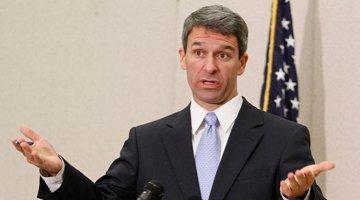
Virginia Attorney General Ken Cuccinelli (R), his party's gubernatorial hopeful this year, has been keenly interested in the commonwealth's anti-sodomy statute for many years, and for whatever reason, he just can't seem to let it go.
As we discussed in the spring, the 4th Circuit Court of Appeals recently rejected Virginia's anti-sodomy law as unconstitutional, prompting Cuccinelli to keep appealing, hoping to preserve the law. His efforts failed miserably.
But in a curious twist, Cuccinelli, suddenly caught up in the Star Scientific/Jonnie Williams mess, has re-embraced the issue all over again.
When Virginia Attorney General Ken Cuccinelli II challenged a federal appeals court ruling that deemed the state's anti-sodomy law unconstitutional, Democrats pounced, accusing the Republican of pursuing an anti-gay agenda.
Now Cuccinelli's campaign for governor is looking to turn the tables on opponent Terry McAuliffe, casting it as an issue of protecting children from predators and pushing the Democratic gubernatorial nominee to take a side.
For months, the right-wing state A.G. has gone out of his way to focus voters' attention away from his culture-war agenda and towards his views on the economy. But as the polls turn against him, Cuccinelli has apparently decided being the champion of an anti-sodomy law is the new key to electoral success.
As for the substance, the Republican is relying on a cheap ploy -- to question the anti-sodomy law, the argument goes, is to be indifferent towards children targeted by predators. Of course, as Ed Kilgore explained, "Opponents of the sodomy law have been quick to make the obvious point that it's not that hard to craft and enforce anti-predators laws that don't criminalize behavior between consenting adults. So I don't know what Cooch's strategy is here, unless it's to start shouting about sexual predators every time the subject comes up and then pivot to his plans to make Virginia a job-creators paradise."
Rachel will have more on developments in Virginia on tonight's show.


Fearing primary challenges that probably won't come

Associated Press
Third Way, a group of centrist Democrats in the tradition of the DLC, made a curious suggestion this week on how best to deal with immigration reform in Congress: wait until mid-March 2014 to hold the vote in the House. And why then? Because, as Third Way sees it, House Republicans might be more reasonable after the filing deadlines for primary challenges has come and gone.
I'm not sold on the thesis, but I can appreciate the underlying point. There are very likely some House Republicans who would vote for a bipartisan reform bill, but they're terrified of a backlash from the far-right, anti-immigrant wing of their party. GOP lawmakers can recite from memory the names of Republicans driven from office (or from the party) -- Lugar, Specter, Bennett, Inglis, et al -- for showing insufficient fealty to the right-wing cause, and they don't want their names to end up on the list.
But is this a credible fear? Or more to the point, should House Republicans assume that a vote for a popular immigration bill will necessarily prompt a GOP primary challenge they're likely to lose? John Stanton took a closer look and busts the myth.
Conservatives in Congress have been actively opposing immigration reform in recent months, citing a fear that well-funded primary challengers will take them on if they compromise on the issue -- a line of reasoning that has crystalized into conventional wisdom in Washington.
But interviews with operatives, campaign aides, and activists from groups like the Club for Growth and Heritage Action, as well as a review of recent election data, suggests the likelihood of Republicans facing serious primary challenges is not only overstated but probably won't have much of anything to do with immigration.
"We don't care about immigration reform," said Club for Growth spokesman Barney Keller with a chuckle, explaining his organization remains solely focused on "economic issues ... [and] pro-growth policies."
It's an important point. There are conservatives who hate immigration reform and would be furious with any congressional Republican who backs a bipartisan solution. There are also conservatives who are actively involved in organizing and financing primary campaigns against incumbent Republicans who occasionally fail to toe the line for the far-right movement.
But Stanton's point seems to be that in this Venn diagram, we're talking about two circles that do not overlap.
Of course, if House Republicans oppose immigration reform because they're right-wing ideologues, and couldn't care less about the prospect of a primary, it's a moot point. But the message for House GOP lawmakers who are worried about the point at which an immigration vote and an intra-party primary challenge intersect, the point is obvious: this isn't much of an excuse.
Political metaphor waits to happen: Rhythmic gymnastics judging scandal
The New York Times reports today on a scandal in the Olympic sport of rhythmic gymnastics. Dozens of would-be judges have been implicated in widespread cheating on their qualifying exams. The cheating, as described by the Times, is the stuff of middle school, with test-takers scrawling notes on their palms and copying everything from each other's papers, including mistakes.
Think the risk of getting caught would not be worth the reward of winning a rhythmic gymnastics judgeship? From the NYT:
A job judging at the Olympics and other elite competitions is a coveted perch. As the rhythmic gymnasts compete to see who can twist their limbs into the most elaborate pretzel -- while climbing through a hoop -- so too do the judges contort in their own ways.
"If their eyes were guns, they'd kill each other," said Mr. Moers. . . .
I don't know what you'll see in this story about judges cheating on rhythmic gymnastics exams, but it seems to me that this sporting scandal ought to be a metaphor for a political scandal. The question for you is which one. Be creative. Hit the comments, please.
PPP pushback falls short again
In Virginia, Public Policy Polling found state Attorney General Ken Cuccinelli (R) trailing Terry McAuliffe (D) by 4 points in results released yesterday. The Republican gubernatorial campaign didn't take the news well:
"According to the latest RRR Poll, Ken Cuccinelli leads his opponent Terry McAuliffe by 13.3 points, up from 12 points from RRR's inaugural Poll released May 30th.... There is no margin of error, since RRR only produces error free surveys -- and unlike PPP or DDD -- we poll those actually voting (as we think that's important)."
This is, of course, an attempt at humor. There is no "RRR Poll"; it's something Cuccinelli made up in the hopes of mocking PPP and dismissing the legitimacy of the results.
Public Policy Polling can certainly defend itself however it sees fit, but I'm curious how long Republicans intend to keep this up. In Kentucky, PPP told Republicans what they didn't want to hear, so the party said the results didn't count. In Arizona, it happened again.
There may have been a point at which Republicans could try to cast doubts on PPP, but that point came and went last year -- in 2012, Public Policy Polling had the best year of any pollster in the country. Literally, the very best.
So maybe it's time to retire this talking point?
Besides, while PPP shows Cuccinelli trailing by four, the Republican-friendly Rasmussen offers completely different results: Cuccinelli trails by three. If the Virginia GOP wants to argue that there's plenty of time for the polls to change, fine. If Republicans want to argue that the public isn't fully engaged in the race yet, no problem.
But as I recall, those who cried "the polls are skewed!" the last time around were pretty disappointed on Election Night.
'We were wrong'
Associated Press
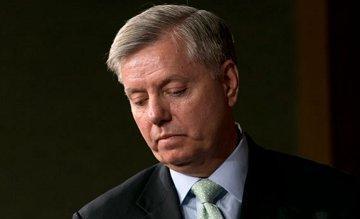
It took over 700 days, a recess appointment, and a nuclear-option showdown, but a prominent Republican senator yesterday took stock of his party's efforts to reject Richard Cordray and nullify the Consumer Financial Protection Bureau. He reached an interesting conclusion.
"Cordray was being filibustered because we don't like the law" that created the consumer agency, said Senator Lindsey Graham, Republican of South Carolina. "That's not a reason to deny someone their appointment. We were wrong."
That's not a phrase we often hear from politicians, especially congressional Republicans, and it's a welcome concession. Indeed, since I made the same argument on Monday, I'm delighted by Graham's candor.
Perhaps, if Senate Republicans had come to this realization just a little sooner, Elizabeth Warren would be at the CFPB right now and Scott Brown would still be making Wall Street happy as a senator.
Regardless, the question many Senate Democrats are asking right now is whether yesterday's breakthrough -- which overwhelmingly tilted in their favor -- can help lay the foundation for broader progress, at least in the upper chamber. Greg Sargent reported this morning:
Democrats plan to seize on yesterday's events to exacerbate what they hope is a developing schism between the GOP leadership/hard right alliance and a bloc of GOP Senators who (Dems are betting) are genuinely fed up with that alliance's continued flouting of basic governing norms. They hope to renew the push for a return to budget negotiations, with an eye towards replacing the sequester."
Greg added that Sen. Patty Murray (D-Wash.), the chair of the Banking Committee and an influential member of the Democratic leadership, is set to deliver a pointed message on the floor this afternoon: "There is a group of Republicans -- led by Senator McCain -- who are very interested in ending the gridlock and working together to solve problems.... I am really hopeful that the bipartisanship we've seen this week will carry over into the budget debate, and that rather than listening to the Tea Party, Republican leaders will listen to the Republican members who prefer common-sense bipartisanship over chaos and brinkmanship."
There are obviously a whole lot of hurdles between the painful status quo and competent governing, and even if there's a Senate GOP contingent prepared to be responsible the odds in the House are far worse, but between low expectations and the events of recent years, "we were wrong" is a step in the right direction.
The biggest obstacle to a stronger economic recovery
Associated Press
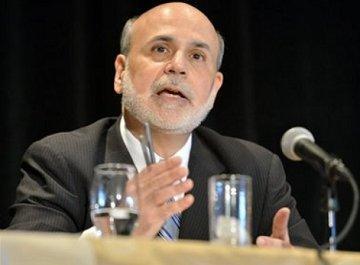
Sometimes, a simple, eight-word headline can say quite a bit: "Fed Chief Calls Congress Biggest Obstacle to Growth."
The Federal Reserve's chairman, Ben S. Bernanke, said Wednesday that Congress is the largest obstacle to faster economic growth, and he warned that upcoming decisions about fiscal policy could once again undermine the nation's recovery.
"The economic recovery has continued at a moderate pace in recent quarters despite the strong headwinds created by federal fiscal policy," Mr. Bernanke said in the opening line of his prepared remarks to a Congressional committee.
Moreover, he said, Congress could make things worse later this year. "The risks remain that tight federal fiscal policy will restrain economic growth over the next few quarters by more than we currently expect, or that the debate concerning other fiscal policy issues, such as the status of the debt ceiling, will evolve in a way that could hamper the recovery," he said.
I'll confess I've been obsessed with this issue for quite a while, but I continue to believe it's important.
For a variety of reasons, Fed chairs tend to be hyper-cautious when speaking about the state of the economy in public, and they avoid assigning blame unless the evidence is painfully obvious. Bernanke, a conservative Republican originally appointed to his position by the Bush/Cheney administration, has a deserved reputation for being judicious and circumspect.
But when Bernanke talks to Congress, he's less cautious and more direct. "The economic recovery has continued at a moderate pace in recent quarters despite the strong headwinds created by federal fiscal policy" is an exceedingly polite way for the Fed chair to say, "The economic recovery would be more robust if you clowns stopped cutting spending so much. Oh, and if Republicans screw around wit the debt ceiling again, too, you'll make things even worse."
As we discussed in May, this isn't the first time the Fed chairman has pleaded with Congress to get smarter about economic policy, and I'll confess, it amazes me every time.
Bernanke has, over the last few years, occasionally abandoned subtlety and explicitly pleaded with Congress to consider fiscal stimulus -- or at least less fiscal austerity -- but Republicans have always refused. (Indeed, GOP lawmakers haven't just been content to ignore the need for fiscal remedies, they've also demanded that Bernanke stop trying to improve the economy through monetary measures.)
Bernanke wants Congress to act as a partner, working alongside the Fed to strengthen the economy. Instead, Congress has acted as an opponent, pushing in the opposite direction.
And why is this important? Because Americans, who overwhelmingly consider the economy the nation's most pressing issue, have elected federal lawmakers in the hopes they'll make things better. And yet the fact remains they're making things worse.
'The old-new McCain is back again'
After yesterday's Senate deal came together on confirmation votes, Senate Majority Leader Harry Reid (D-Nev.) grew emotional extending praise to the one man he credits for bringing the agreement together: Sen. John McCain (R-Ariz.).
A month ago, McCain was reportedly annoyed that when it came to immigration reform, he wasn't getting nearly as much attention as Sen. Marco Rubio (R-Fla.). A month later, the attention imbalance no longer seems to be a problem -- the Washington Post reported today that McCain's efforts yesterday "cemented the return of the self-proclaimed 'Maverick McCain.'"
Even Jon Chait is welcoming the shift from the Arizona Republican.
The deal was brokered by John McCain, who undercut McConnell and is fully emerging, yet again, as his old centrist self. Exactly what happened to flip the switch in McCain's brain from "Obama Hater" back to "McConnell Hater," it is hard to say. Whatever it is, the old-new McCain is back again, which seems to be a significant development, given Obama's inability to find any Republicans who aren't terrified of working with him.
This may be true, and there's credible evidence that McCain is stepping up in welcome and unexpected ways. In fact, I don't doubt he'll appear on several dozen Sunday shows in the very near future to explore this in more depth. But in the meantime, I'm not sure the moderate McCain circa 2001 -- the guy who voted against the Bush/Cheney tax cuts because they were too tilted to the rich -- is actually back.
To be sure, it's been heartening to see the Arizonan play a constructive role in the Senate again. He made yesterday's deal possible; he showed leadership on immigration reform; and he's denounced his own party's antics in refusing to compromise on the budget. As recently as two years ago, McCain probably wouldn't have been inclined to do any of this.
But at this point, it's not yet clear which version of McCain we're watching. Yes, I'll gladly give him credit for doing the right thing on several recent occasions, but the Republican senator also routinely condemns President Obama for not having started more wars in the Middle East, imagines insistently that there was a "cover-up" surrounding the attack on the U.S. outpost in Benghazi, and earlier this year, McCain lost his cool on the air and lashed out at David Gregory, accusing him of being indifferent to the deaths of Americans.
We've been here before. The Beltway media's affection for McCain is the stuff of legend, and every few years, we're greeted with a fresh round of "Maybe the Maverick is back!" headlines. Usually, those stories are based more on hope than fact, and the cantankerous partisan reemerges.
I recommend caution.
July 16, 2013
Decryptomaddowlogical #75
While the Supreme Court's ruling in Roe v. Wade secured an American woman's right to an abortion, Republicans are pursuing a strategy to undermine that right by burdening women's health clinics that offer abortion services with restrictive regulations to the point where many can no longer remain open and a woman's right to choose is limited by her means of finding services. It might be said that Republicans are employing
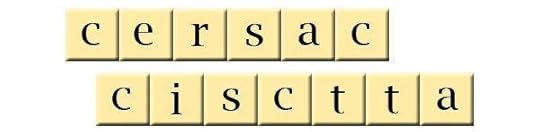
Need help? Need to shout out the answer without spoiling anyone else's game?
*Remember to mention the number of the puzzle you're talking about.
Links for the 7/17 TRMS
Citations for Tuesday's show are listed after the jump.
George Zimmerman verdict protest: Sit-in staged at office of Florida Governor Rick Scott
Groups flood Rick Scott's office demanding a special session in the wake of the Zimmerman verdict
Lt. Gov. Jennifer Carroll resigns amid state, federal probe of non-profit veterans group
Florida's Stand Your Ground panel: Keep self-defense law intact
Trayvon Martin March Downtown Gainesville
Florida lawmakers urge Gov. Scott to address tension after verdict
Attorney General Eric Holder denounces 'stand your ground' laws
'These laws try to fix something that was never broken'
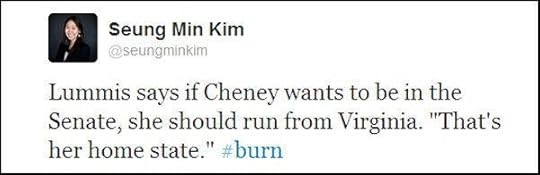
Lawsuit challenges Cheney's Wyoming residency
Cheney residency suit is headed to top court
Liz Cheney - A Strong Voice for Wyoming
EDITORIAL: Cheney challenge fraught with trouble
Those who admire 'incredible DNA'
'Whitey' Bulger, Kevin Weeks swap vulgarities in court
Martorano: We were 'up to our necks in murder'
Witnesses, jurors shed tears as 'Whitey' Bulger trial focuses on killings
Police probe possible link between Marathon bomber and unsolved triple homicide in Waltham
Boston Bombings Prompt Fresh Look At Unsolved Murders
Deadly End to F.B.I. Queries on Tsarnaev and a Triple Killing
The F.B.I. Deemed Agents Faultless in 150 Shootings
Statement Regarding Shooting Incident in Orlando, Florida
Lawmakers say FBI thwarts inquiry
Potential witness must be jailed until leaving US
In 2011 Murder Inquiry, Hints of Missed Chance to Avert Boston Bombing
Obama Set to Make Public Case Amid Immigration Opposition
For the Hispanic media, it's all about John Boehner
Why Boehner should care about Jorge Ramos
Ugly Opposition to Immigration Reform Comes Back to Capitol Hill
Rebel Yell - Rand Paul aide has history of neo-Confederate sympathies, inflammatory statements
Ahead on the 7/16 Maddow show
Tonight's guests:
Sam Bagenstos, served as Principal Deputy Assistant Attorney General for Civil Rights from 2009 to 2011, currently a law professor at University of Michigan
Susan Zalkind, freelance journalist and close friend of Waltham murder victim Erik Weissman
And here is executive producer Bill Wolff, who has a home town in common with Nelly, with a preview of tonight's stories: