
Veronica Roth's Blog, page 4
August 5, 2022
Poster Girl Tour!
I’m very pleased to announce that I will be going on book tour for the release of Poster Girl (out October 18th)! My last book tour, for Chosen Ones, would have been the very first week of lockdown in the early days of the pandemic, so…yeah, we had to cancel it, obviously. I am beyond happy to be going out to talk to readers in person after a few years of only communicating through screens, so if you can make it out to one of these events, I’ll be very pleased to meet you (or see you again, as the case may be).
If you have questions— such as whether you can bring outside books to be signed, or get more than one book signed, etc.— please first consult each store’s event page for more information, and if they don’t answer your question, contact them to ask it, because I defer to each individual store’s policies, given that they’re being kind enough to host us.
I look forward to seeing you all! <3
The rundown:
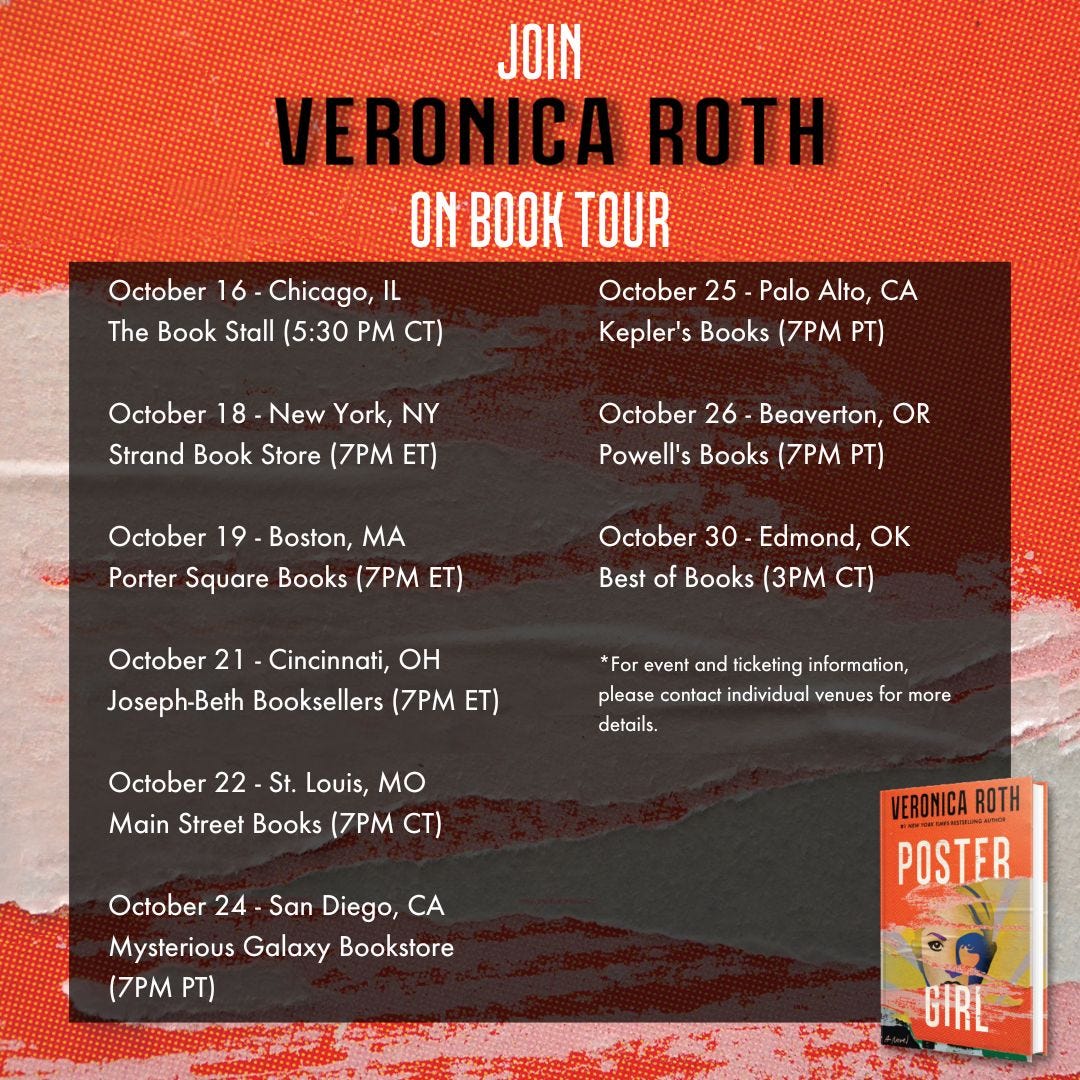
The details:
October 16Chicago, IL
5:30pm CT
The Book Stall: 811 Elm Street, Winnetka, IL 60093
Click Here to Get Tickets/Pre-order a Personalized Copy
October 18New York, NY
7:00pm ET
Strand Book Store: 828 Broadway, 3rd Floor, Rare Book Room, New York, NY 10003
Click Here to Pre-order a Personalized Copy
October 19Boston, MA
7:00pm ET
Porter Square Books: Boston Location: 50 Liberty Dr, Boston, MA02215
Click Here to Pre-order a Personalized Copy
October 21Cincinnati, OH
7:00pm ET
Joseph-Beth Booksellers: 2692 Madison Road, Cincinnati, OH 45208
Click Here to Get Tickets/Pre-order a Personalized Copy
October 22St. Louis, MO
7:00pm CT
Main Street Books: 307 S. Main Street St. Charles, MO 63301
Click Here to Pre-order a Personalized Copy
October 24San Diego, CA
7:00pm PT
Mysterious Galaxy Bookstore: 3555 Rosecrans St #107 San Diego, CA 92110
Click Here to Get Tickets/Pre-order a Personalized Copy
October 25Palo Alto, CA
7:00pm PT
Kepler's Books: 1010 El Camino Real, #100, Menlo Park, CA 94025
Click Here to Get Tickets/Pre-order a Personalized Copy
October 26Beaverton, OR
7:00pm PT
Powell's Books: 3415 SW Cedar Hills Blvd, Beaverton, OR 97005
Click Here for Event Information
*This event is not ticketed.
*Please note that readers will be able to preorder a signed copy, but not a personalized copy. Event guests will be able to have their book personalized live.
October 30Edmond, OK
3:00pm CT
Best of Books: UCO Liberal Arts Lecture Hall
Click Here to Pre-order a Personalized Copy
!!!
V


June 8, 2022
A Brainstorming Exercise Involving MASH
I gave a talk at a high school a few weeks ago, my first one in a long time. When I do school visits these days, my talk is usually about brainstorming. The reason for this is that where do you get your ideas? is one of the first questions young writers ask me. Or they tell me I like to write, but I don’t know what to write about. Or they tell me, I have an idea for a scene or a piece of a story, but I don’t know how to figure out the rest. All of these questions and concerns can be addressed with brainstorming.
“Brainstorming” is one of those practices that we think we know how to do, but actually we have a narrow understanding of how it can work. Before I became a full-time writer, I thought of brainstorming as me at a desk with a blank piece of paper, waiting for an idea to come along.
And if that’s how you think about it, no wonder it sounds intimidating to young writers. You and the blankness and the pressure to fill it with genius.
Hmm. No thank you.
I have a lot of different brainstorming strategies, and today I’m going to outline one for you. If you’re a writer, or really any kind of creative person, this could be helpful to you. As with any writing advice, this is just one of many things you can try if you’re stuck. Use it if it works; discard it if it doesn’t. If you’re not a creative person, well, then you’re about to get some insights into my process, so sit back and enjoy this little jaunt through my brain.
This exercise is inspired by M.A.S.H. The game, not the show.
Remember MASH? MASH is a fortune-telling game I used to play as a kid. You basically fill out a little sheet like this:

Some options for every category, and then you pick a random number (there are some methods for how this occurs; let’s not get into that) and go through the entire list, crossing off the item every time you hit your number until you have only one option left in each category. For the record, with this MASH card I will be living with a Man-Sized Pigeon in an apartment in California, driving a Tesla, and producing 75 pigeon-human hybrid offspring.
Great.
In the brainstorming game version of this, you make lists of your recent favorites in slightly different categories. The four categories are:
SETTING
MAIN CHARACTER
WANTS
OBSTACLES

Setting and main character are obvious here: write down four places you’d like to set a story sometime. They can be specific or broad. Mine are “faraway planet,” “post-apocalyptic Los Angeles,” “fantasy realm,” and “spaceship.” List as many as you’d like, as long as you are sincerely interested in living there in your mind for the duration of a story.
For your main characters, list characters you have recently liked and found interesting. Their gender and context doesn’t matter—those things can be changed. All you need are four characters you like. Mine are “Anthony Bridgerton” (the show version), “Whit” (from Brazen and the Beast by Sarah MacLean), “Lady Jessica” (Dune), and “Yennefer” (The Witcher, the game version).
WANTS and OBSTACLES are a little more complicated. These categories are based on my extremely basic breakdown of what a story is. Essentially, every single story is:
A character wants something
Something gets in their way before they can get it.
Here, you boil down what each main character you listed wants in as basic a way as possible. It doesn’t need to be perfectly accurate to the entire story, just something they want at some point or in some way. So for “Anthony Bridgerton,” I wrote “to fulfill their duty to family.” For “Whit,” I wrote “to protect what they’ve built.” Lady Jessica: “To attain greatness.” (I mean. She tries to produce the Kwisatz Haderach.) Yennefer: “To save a child.” You can also just list a bunch of things that characters generally want: to go on an adventure, to escape a bad situation, to go hunting for treasure, to seek revenge.
For “obstacles,” you basically do the same thing. What’s the thing that gets in your character’s way? Mine are “PSTD” (let’s face it, Anthony’s getting in his own damn way), “an old enemy surfaces to threaten them,” “a political conspiracy,” and “monsters.” Other ideas: a curse, a horrible family member, a lack of funds, a world-ending comet, surprise vampires.
Now go here and generate a random number for yourself. And start crossing things off, buddy.
If this seems silly: good! It should. This is a playful exercise. It’s meant to fill a blank page with something, and I promise you it can lead you to a more serious place. Let me show you.
Here are my results:
In Post-Apocalyptic Los Angeles, Lady Jessica wants to attain greatness. Unfortunately, though, PTSD gets in the way.
All right. Let me break down Lady Jessica for you. Lady Jessica is one of my favorite characters in Dune, by Frank Herbert. She’s a space witch who is a concubine in an important man’s house— she loves him, but she can’t marry him because he has to be free to enter a politically advantageous marriage. She disobeys the instructions of her order of space witches in an attempt to produce a child of destiny. She is a certified badass, but she’s manipulative and strategic, too. If you strip away the context of her behavior, what you’re left with is a woman lonely in her own power, operating under severe constraints, who breaks those constraints for the purpose of achieving greatness (through her son, of course) and bringing about a better world. These are qualities that can easily transfer to another context. She won’t look like Lady Jessica anymore, but the inspiration is there.
“Attaining greatness” is vague and has transferred over from Lady Jessica’s original context, so I’ll skip it for now and move to the obstacles. PTSD. Whew. This is a tough one, actually, but let’s go for it. In order to have PTSD getting in a character’s way, you need a traumatic incident to occur in their past that continues to haunt them. In a post apocalyptic landscape, the first thing that occurs to me is: maybe she’s got PTSD from witnessing the apocalypse. Which means, of course, that it had to be a destructive event that could be witnessed yet survived. What if she is immune to a plague and watches everyone around her die? What if, thanks to some privileged background, she gets ferried away to a nuclear shelter before a bomb hits? What if she’s still a witch, and the aliens taking over her planet spare her because of her unique gifts? You get the idea.
Let’s go with that last one, for fun. In this scenario, our Lady Jessica finds favor with alien overlords because she is capable of doing magic. Maybe magic on Earth was rare and hidden before the alien takeover, and it was what drew the aliens here to destroy us and make use of our magical resources. Lady Jessica is now a prisoner in alien custody, and in order to escape and become great by freeing what’s left of the planet, she has to make use of her magic. But there’s one problem: her magic is buried somewhere within her, inaccessible, because of trauma. Who can help her process this trauma? One of the aliens? A fellow magic-user? Someone in the city outside? If it’s the latter, how does she find them? How does she keep getting to them without her jailers noticing?
I don’t know if you’ve noticed, but what we have here…is a story. Not all of it is figured out, but it’s begun to take shape.
Ideas can feel like the hardest part of writing when you’re stuck. But ideas, as they say, are cheap. (Execution is what’s expensive.) Your brain is actually bursting with them. Some of them are good; some of them are not. But when you’re stuck, your only task is to try to unlock them.
Godspeed!
P.S. If you actually do this exercise, tag me on Instagram (if you’re there)! I want to see your results.
May 5, 2022
Poster Girl Cover Reveal + Excerpt
Hey!
Yesterday the cover for my next book, Poster Girl, was finally released! Please check out the interview I did at Today.com, and read an excerpt from the book, too.
Here’s a little more about the story, from that article:
"'Poster Girl' is about what happens after a dystopian regime falls," Roth told TODAY in an email interview.
Instead of watching civil liberties get chipped away, "Poster Girl" charts the process of a society healing — and Sonya Kantor, the book's main character, is the kind of person who stands in the way of that healing. Her face is an uncomfortable reminder of the Delegation, the surveillance state that had once ruled over the Seattle-Portland area: Sonya was literally a poster girl for the regime's propaganda posters. The Delegation monitored its citizens through the use of Insight, an ocular implant that tracked a user's words (think a portable and inescapable Big Brother).
The story starts when an old enemy offers Sonya a deal: If she can find a missing child, she can earn her freedom from the prison she's lived in for years. In doing so, Sonya learns more about her family and the extent to which both she and they were complicit in the old regime. Roth said that the novel sees Sonya "wake up again."
And of course, the cover:
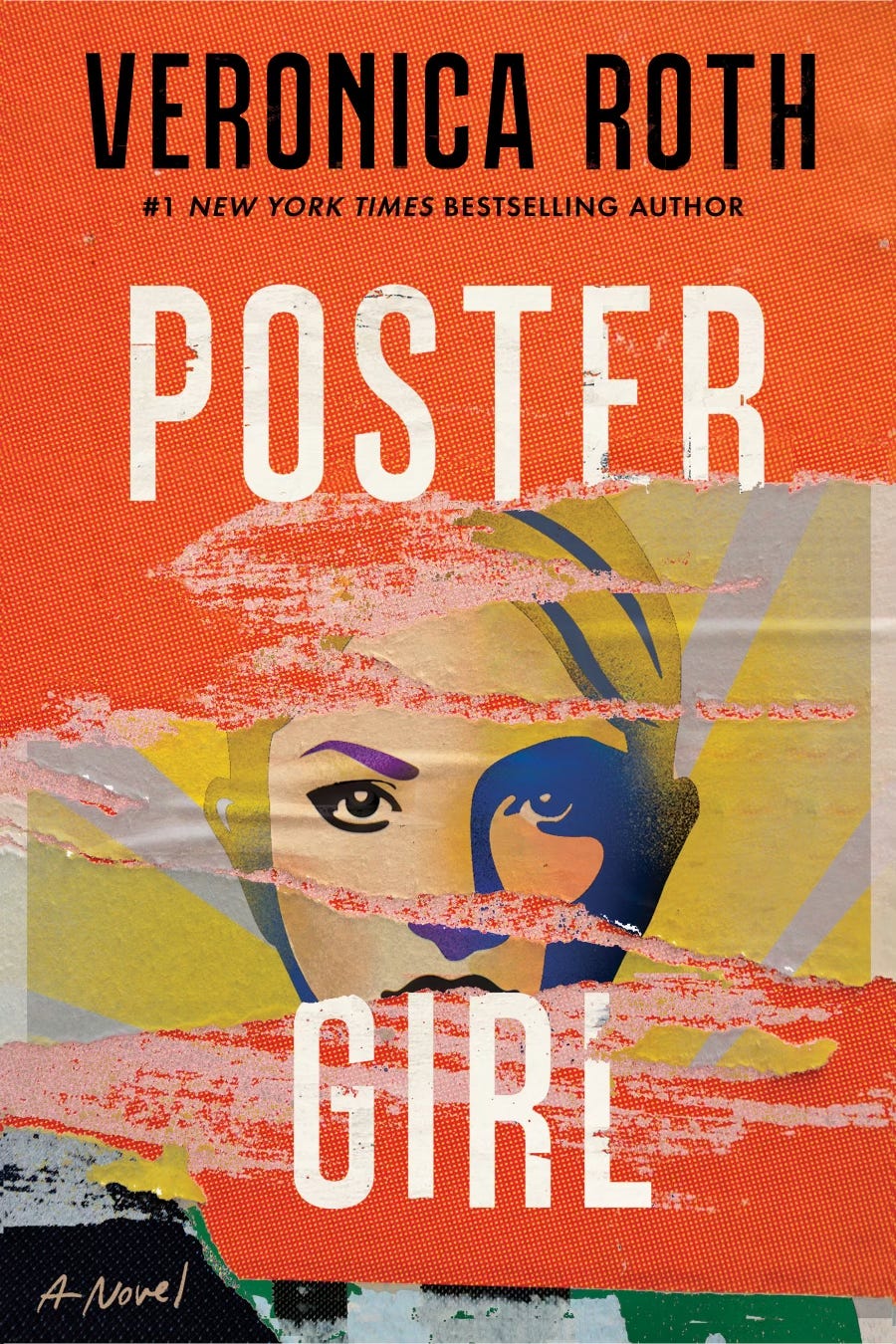
The art comes to us courtesy of Jaya Miceli, who did a lovely job with this cover. Last year I sent my publisher a big document full of cover ideas, and in it was a pile of old propaganda posters, just to give them an idea of the range of art styles that were used. Here’s a selection of them, to show you what I mean:
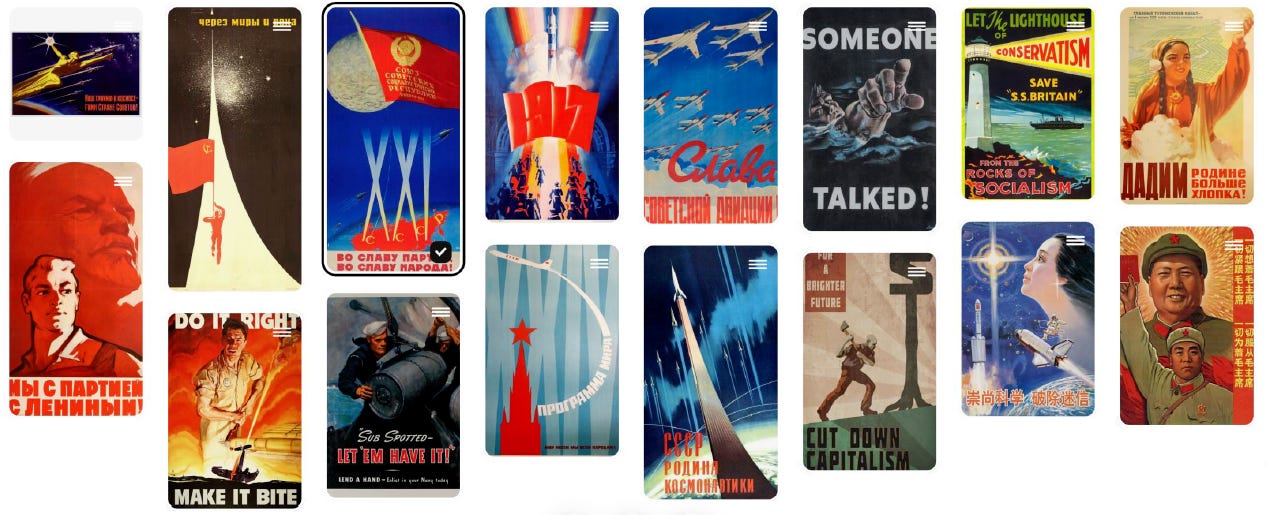
This cover is such a striking interpretation of that idea. I feel like Sonya is straight up judging me, which is perfect, because at the point in her life that she posed for this poster, she probably was. I can’t wait to see it on the hardcover.
Writing this book was slow, steady, and careful. I learned new ways to be patient. I’ve never written a book quite like it. It comes out October 18th. More info about where to find it here.
<3,
V
December 31, 2021
Stop Dreaming So Much
Oh, I’d watched it here and there, before. I knew five tennis players: Roger Federer, Rafael Nadal, Novak Djokovic, Serena Williams, and Naomi Osaka. I watched the finals of the biggest tournaments, always at my husband’s prompting. But something changed during the 2020 US Open, on the men’s side—Nadal and Federer weren’t playing, and Djokovic got defaulted for that line judge thing. Suddenly, the field was wide open, and we would have a new Grand Slam champion outside the “Big 3” for the first time in a number of years, and one of the younger guys, almost certainly…so the energy was suddenly frantic. Shapovalov almost vibrated out of his skin in the quarterfinals, he was bouncing up and down like a rubber ball. Sucked in by the drama, I started watching it by myself, no husband to be found. I collected a whole array of favorites, and I knew all their head-to-heads, all their r/tennis memes, all of it.
In that time, I started watching Daniil Medvedev, who the year before had famously trolled his way to the final (where he lost) and somehow managed to turn the unruly New York crowd that had been booing him earlier in the week into his biggest fans. Medvedev is 6’6”, and his game is weird. There’s really nothing beautiful about it. When he hits a forehand, his racquet ends up wrapped around his neck. When he hits a backhand, he sometimes folds in on himself like one of those plastic donkey toys held up by elastic bands that collapses when you push the button underneath it. His fellow players call him “octopus” and “spider”; Twitter calls him Squidward; I call him Wacky Waving Inflatable Arm Flailing Tube Man. His game is absurd nonsense that commentators often seem to despise because it wouldn’t work for anyone on the planet except him. At his best, he is a wall, a confounding force of nature that renders his opponents frustrated and confused. Peak Meddy is inevitable as the tide.
Naturally, he is my favorite player.
This year he won the US Open against world #1 and arguably the best player of all time, Novak Djokovic, causing me to very nearly burst into tears and also to hurl a pillow across the room in a fit of joy. My dog was not amused.
After this victory, I read an old interview with his coach, Gilles Cervara, which said this:
Cervara explains that Medvedev does have ambitions to reach the top of the rankings. But it’s not that the 25-year-old is making that a particular goal; it’s simply that his results are naturally taking him in that direction.
“When we worked together, we were both unsure if he could get to this level,” Cervara reflected. “He’s not saying, ‘I want to win this tournament and be at this level.’ He’s saying, ‘I want to be the best I can be,’ whether it’s in the next practice session or on the next point. These are the small details that bring results.”
This struck me hard. It’s how I think of my career, too. I am not someone who defines “achievement” goals. There’s an obvious reason for this: Divergent catapulted me through a lot of career milestones very quickly, God bless it, when I was too young to have even articulated to myself what I wanted beyond “book on shelf in bookstore, please.” What that means is that I know what it feels like to reach a lot of very specific external goals—and I know that the feeling, for me, was a confusing mess of joy and profound fear, and I know that reaching them didn’t fix all the things in me that I was struggling with, didn’t correct low self regard or heal anxiety or solve self doubt. So while I appreciate the many good things that have come my way, and I wouldn’t trade them…they have limits. And I have felt the very edges of them.
The sudden absence of goals was jarring for me, at first, like stepping into an anechoic chamber only to discover that in that profound silence you are the only thing that makes noise. Your heartbeat. Your lungs. Your gurgling stomach—
your hunger.
I am no longer interested in goals, if I here define “goals” as the clear articulation of a theoretically achievable aim. Hunger, though—that interests me.
The Cervara quote tells us that Daniil Medvedev, world #2, Fifa-playing skinny nerd man, first of his generation to beat one of the Big 3 in a Grand Slam final, focuses not on achievements but on improvement. If you improve, the logic goes, the achievements will come—not always in the scoreline, but in the moment. A point, a game. One match, and then the next one. It’s not quite a “goal” because it’s not something he can ever reach. Instead, it’s a commitment to constant striving.
If you’ve ever watched Medvedev, you know he barely celebrates on court. He won the ATP Finals tournament last year and greeted his victory with a shrug. Even his US Open win involved a seemingly calculated “dead fish” maneuver (something from Fifa, I don’t know) rather than a sincere outpouring of relief and joy. And in interviews, he and Gilles are both very nonchalant about things. “Does this US Open win change things for you?” No. “Did you approach the match with Djokovic differently than other matches?” No. “Do you feel pressure now that you’ve won a Grand Slam?” No. Both men are always focused on the same thing today as they were yesterday as they were years ago, when neither of them was sure how good Medvedev could even get at tennis: growth. Striving. Hunger.
At the start of this year I saved a quote from Nietzsche in my phone. Not because I was like, reading Nietzsche—but because I was reading GRIT by Angela Duckworth, and she quoted Nietzsche. Here, just read it:
“Do not talk about giftedness, inborn talents! One can name great men of all kinds who were very little gifted....They all possessed that seriousness of the efficient workman which first learns to construct the parts properly before it ventures to fashion a great whole; they allowed themselves time for it...because they took more pleasure in making the little, secondary things well than in the effect of a dazzling whole.”
There’s a lot to unpack there, but damn, the end of it: they took more pleasure in making the little, secondary things well than in the effect of a dazzling whole.
If you ask Meddy about his game, he’ll probably tell you his main goal at any given time is to get the ball in the court. I’ve heard him say it several times. Which sounds like a joke, maybe, but it’s also, somehow, brilliant. And you can see it in his game—at any given time, he just does his best to get the ball in the court, sometimes twisting his entire body into knots, sometimes sliding farther than you’d think a giant man could slide without breaking in half. He does it one moment, and then the next. Doing the little things well, and not fixating on the dazzling whole.
Writing books is not about the dazzling whole. It’s about letting go of the dazzling whole, over and over again. Your idea of the book before you started writing—it’s not worth much to you once you get going. It’ll hang over you as you work, taunting you, because nothing you’re making will measure up to what you might have made. Or it’ll make you incapable of seeing the strongest parts of your work, the inspired parts that came out of nowhere, the unintentional, accidental, instinctual parts that are worth saving.
The business of writing books isn’t about the dazzling whole, either. Bestseller lists and TV appearances and movie adaptations and starred reviews and awards—they aren’t things you can control. They rely on two things: a complex system of publisher support and bookseller support that primes your book for success, and timing. You can influence those things, but you can’t control them. And even if they come to you once, they may never come again. They’re wonderful, but ephemeral. Dazzling but insubstantial. They won’t sustain you in the long term.
So shed them like old skin. Let something new emerge. Former Cubs manager Joe Maddon used to say “be present, not perfect.” He’s right. Writing books happens line by line, a career is built book by book, so be in the midst of both.
Hot take: stop dreaming so much. Emphasis on the “so much.” Dreams are wonderful and they can guide you and make you believe…but God, let them go when they’re no longer useful. Stop dreaming, and hunger instead. Find the goal that can never be reached; find the craving that drives you. Be there in your writing, in your life; be honest with yourself about what you have, about what you ought to make of it instead of the perfect thing it can never be. If you do that, you will get somewhere you never thought of. You’ll get somewhere that your work led you without you even knowing it. “It’s simply that his results are naturally taking him in this direction.”
“Work, work, it takes work. Work, work, tons of work,” is currently my favorite quote, spoken by Stefanos Tsitsipas, men’s tennis world #4, in a low moment, to motivate himself to perform better. I say it to myself almost daily. I say it when things don’t go my way and I get morose about the future. Work, work, lots of work—work happens right now, in the moment, in this sentence, and god, God, I love to do it, I really fucking do. If I do it now, if I do it over and over again, I’ll grow, like a house plant stretching toward a window, so slowly the naked eye can’t see it until the vine is clinging to the glass.

November 20, 2021
New Book(s) Alert! 📚
 TWO OF THEM.
Earlier this week I announced two new projects coming out:
A NOVEL: called Poster Girl, "a dystopian mystery about the search for a missing girl and the ill effects of mass surveillance on society." Out in FALL 2022 from William Morrow Books.
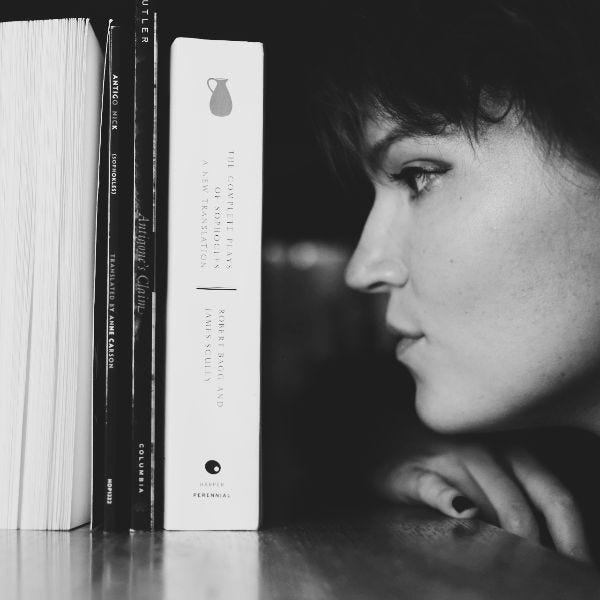
A NOVELLA: called Arch-Conspirator, which is a science fiction retelling of Antigone. Out in WINTER 2023 from Tor. (Which means early 2023.)
Find out more about the latter in the announcement post, here. Find out more about the former...later. I promise I'll give more details eventually. But the important thing is: NEW BOOKS! I am currently polishing them both, and very excited for you to read them.
If you're thinking to yourself "Fall 2022? That's so far off, though, V," I have good news for you:
A couple months ago I had a short story published by Catapult that is a letter from a mother to her unborn child...with a sci-fi twist: Become of Me.
This year I was the guest editor of the Best American Science Fiction and Fantasy anthology, a selection of the best short stories published last year in science fiction and fantasy. I had to whittle down a list of 80 stories to a mere 20, and it was quite a task. If you're interested in exploring short fiction (I recommend it) or want a sampling of some of the best SFF has to offer right now, you should give it a read.
I also did a podcast conversation with John Joseph Adams, the series editor of the Best American SFF anthologies, and Yohanca Delgado, one of the authors included (twice, in this case!) in the anthology, hosted by science fiction author David Barr Kirtley, on Geek's Guide to the Galaxy. We had a great time. I described one of the stories' world-building as "repulsive...but I loved it," AND I MEANT IT. Listen here.
I hope you're all well and enjoying the slow descent into winter. (I actually am-- the article that helped me shift my attitude toward Chicago winters is here, if you're interested.)
-V
August 28, 2021
Answer the Right Questions
Most writers—and I count myself among them—agree that the best way to learn about writing is by reading…not just the kind of reading that involves passive absorption (though you can also learn a lot that way), but by active analysis of books. Yes. Affirmative. That is mostly how I’ve learned how to write.
But! I often learn about writing through other means. By watching television and movies; by studying science and psychology; in conversation with friends; in hearing about the challenges of other kinds of work; by looking at art and listening to music—all sorts of places have taught me meaningful lessons about what I am doing and how I might do it better.
In an effort to share this learning with you, I want to start doing case studies: a more detailed analysis of a particular thing, be it a television show or a movie or a song, and what it taught me about writing. This will be my first attempt, but hopefully there will be more.
The topic of this case study is ANSWERING THE RIGHT QUESTIONS. What the heck do I mean by that? Well, in order to answer that, I want to tell you about two very different TV shows. The first is one that I don’t love, but that I think succeeds on a very important level. The second is one that I do love, but that does not succeed on the same level.
Enough suspense. Here we go!
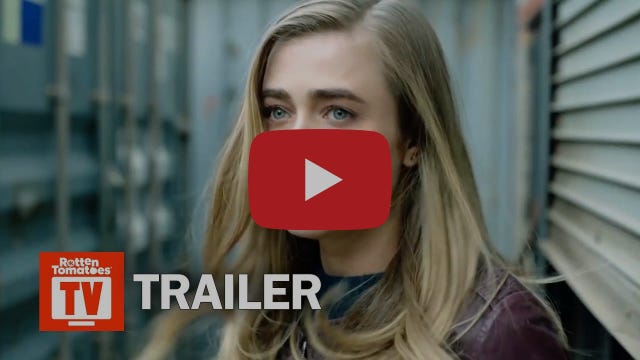
Manifest is an NBC show that originally aired in 2018. It has three seasons, and I have watched one and a half of them. (I stopped when the characters were using the word “calling” so much that I started to develop a drinking game in my head instead of paying attention.) The basic premise of the show is that a plane full of people took off and experienced some turbulence…and when they landed, it was five years later. OoOoOoOoOo.
BUT HOW? AND WHY?
This show is super fun and sucked me in immediately. I powered through the first season in a few days. But it’s one of those shows that’s sort of hard to recommend unless the person you’re recommending it to is A. highly tolerant of network TV dialogue where everyone says EXACTLY what they mean at all times and B. very much in the mood for some fun escapism. When I watched it, I was both A and B when I started, and then as I worked my way into the second season I became less and less A, alas and RIP to me. But before I got Dialogue Fatigue, I noticed something interesting:
Where the show succeeds most is in answering the most important questions that its premise raises. What I mean is, this is a concept-based show—you don’t need to tell someone about the plot or the characters in order for them to get an idea of whether they want to watch it or not. (As you can tell from my summary above.) But it also does an excellent idea of first identifying the questions that the viewer most wants answered and then constructing the plot (both the greater arc and the smaller arcs of the episodes) to answer those questions.
In the first episode, we basically want to know what the setup is. What did the flight feel like to the people on it, and how does that differ from what their families and friends back at home experienced? And then we want to know: what happened while these people were gone? If you disappeared for five years and were presumed dead, would your spouse remarry? Would people have died in your absence? Would your siblings have aged past you? Would there be a job waiting for you when you got back? Would they have developed better treatments for your chronic illness? Etc. That’s basically what episodes 1-6 explore.
This is what I call the “backward” plot of the show—the exploration of the past. There’s also a “forward” plot that involves the passengers of the plane hearing mysterious voices telling them to do things—the “callings” I mentioned earlier—but I’m going to breeze past that part of the show, as it’s not really relevant here.
The plot of the first season takes us down a few avenues. We find out how the government reacts to the mysterious return of the passengers (sketchily). We get to see the reaction of the public to this “miracle” in two ways—through the formation of a cult that worships “the returned” as saints, basically, and also through a group of extremists who thinks “the returned” are subhuman, with each group serving as the end of a spectrum of reactions. There are spouses who move on, and spouses who don’t. There’s a pair of twin siblings who are now five years apart in age, and the weirdness that creates. There are people who died in the interim, people who went back to work and people who didn’t. Basically, every question that I found myself asking about how a gap like this would be handled was addressed in some way, even if it wasn’t “answered” completely. (I still remember when I found myself asking “wait, what about the pilot of the plane?” and was then immediately rewarded by an episode focused on…the pilot of the plane.) It was very satisfying.
You would think this is something that all TV shows, movies, and books do reasonably well, but it isn’t. All too often the creator of a thing doesn’t really understand what the most pertinent questions their premise raises are, or they prioritize them in a strange way. It always strikes me as the creator of a thing not understanding just what is interesting about that thing. (I probably am guilty of this myself, in my own writing, on some level!)
For example: the Star Wars prequels offered us an explanation for why some people are stronger in the Force than others: a high level of midichlorians in the blood. The thing is, though, that I never actually wondered about that. It’s a normal part of life that some people have talents that others don’t have, so the movies went to some lengths to answer a question I never asked. I also didn’t really care about the origin of the clone army, to be honest. It’s a clone army, George. It doesn’t have to be a subplot.
The answers I DID want—what led Anakin Skywalker to become Darth Vader, what happened to Padme—were not answered in a very…satisfying way. (Padme dies of…grief? Anakin is so in love with Padme that he…murders a bunch of children? What?) The focus of the movies felt wrong. It’s like George Lucas was taking a family portrait and focused his lens on a tree in the background, leaving the family blurry in the foreground. See what I mean? The movies are not preoccupied with the same questions that the viewer is preoccupied with. We are misaligned.
My second case study is actually an example of where this doesn’t quite come together, too. So let’s move on to…
That trailer? Not even half as funny as the actual show.
The premise is basically that a regular gal, Jessie, goes to a New Years bash and ends up having a one night stand with a guy, Tom, who she doesn’t realize is a famous movie star. For some reason (psst: the reason is that she is a DELIGHT), he seems to actually like her and wants to see her again. BAM. Hijinks ensue.
When I finished it—and I watched the entire show in one day—I had one criticism, and it was that I never got to actually see my biggest questions played out on screen. I wanted to know things like: what would happen if the media found out? How would she react to suddenly being thrust in the spotlight like that? How would his celeb BFFs react to her? How would she react to them? What would happen if he took her to a movie premiere? If his management tried to interfere in their relationship? Etc.
I would argue these are some of the most central questions that the premise naturally provokes. But the show kind of steers around them. At one point, Jessie is almost caught by the media, and manages to pass herself off as household staff—a funny moment, but I kept waiting for her second attempt at this to fail, and it just…never became an issue. She does encounter one of Tom’s co-stars…but the co-star never finds out that she dated him, so that’s also left unexplored. Tom does spend time in Jessie’s world, but we never see her in his, and that was the part of the premise that I was most interested in. We know what “normal” is like. We don’t know what it would be like to, as a “normal” person, find yourself in “celeb land.”
The show I got instead of that, though, was a delightful series of episodes where, for various reasons, these two people keep missing each other—they can’t quite get the seasons of their lives to line up. And I was interested in watching that show, because of the chemistry between the characters, the dialogue, the charm—they all more than carried it. But if you removed the celebrity element entirely, you could still have basically the same show.
And therein lies the issue with not answering the biggest questions your premise raises—you render it inessential.
Imagine, for example, if the show Manifest never explored what happened in the five years that the passengers were disappeared, if they just made the whole show about the mysterious “callings” and about the forward motion of the plot. Would you still have a show? Sure! But there would be no reason for them to be missing for five years instead of, say, five weeks, or five days, or even one day. It’s not that there’s nothing interesting left when you take away part of the premise, but what’s there changes.
In your own writing, well, it’s all your show—you can make your story’s premise everything you want it to be, and nothing you don’t want it to be. You just have to know what those things are. And you have to be willing to let go of the things that aren’t naturally integrating into your plot.
The two steps here, as I see them, are: 1. Figure out the most important questions that your premise raises and 2. Shape your plot so that you can at least give those questions a poke. You don’t have to answer everything or explain everything…but if you find that you aren’t really interested in exploring the biggest questions that your premise raises, you should maybe reconsider what your story is really about. This is about making sure that what’s interesting to you, the writer, and what’s interesting to the reader, are also complementary to each other, even if they aren’t perfectly aligned. (And when are they?)
One way to do this, by the way? Write up your premise, a paragraph summarizing your story, and give it to a friend who likes the kind of thing you’re writing. (As in: maybe don’t give your sci fi premise to your friend who only likes contemporary stories.) Ask your friend what they expect the story to explore, what answers they want most, what scenes they imagine seeing. See if the things that interest them align with your plans for your story. Doing that can be pretty illuminating.
And please, give Starstruck a watch. 😊
<4,
V
December 16, 2020
Make A Big Mess
There is a period of time before I start each rough draft where I believe that somehow I have ascended to a new level of writing skill and this time, this time, I did all the outlining right, I thought everything through, and now I’m just going to slide from beginning to end like an Olympic bobsledding team.
It lasts about 20,000 words.
And then, inevitably, there’s this little voice that pipes up out of nowhere and says, okay, but what about this? You know what “this” is. It’s that Jenga piece that looks wobbly enough to pull loose but turns out to be essential to the structure of the whole tower. Wham.
Here’s the stupid, frustrating truth: in order to write a good book, you must make a big damn mess. I’m usually wary of making those kinds of generalizations, but I feel pretty confident about this one. Good stories are complex, entertaining, and nuanced, and if you want all three of those things, you’re going to have to completely wreck everything at some point. If you’re me, it happens once in the outlining stage, once in the rough draft stage, and once in the revision stage. At least.
But as I was angstily throwing things at my draft to see what stuck last weekend, I realized something else: so much of being a writer is just relentless problem-solving. And your ability to make progress as a writer will in large part depend on how pouty you are about constant failure. If you can learn to just sigh heavily and start putting the stupid Jenga tower back together again, you will be just fine. If you cry when the Jenga tower falls down, rend your garments, and refuse to play Jenga ever again, I have concerns about your suitability for this work. That doesn’t mean you can’t be frustrated. It just means that you gotta be willing to come up with half a dozen solutions to any given problem, some better than others, and consider that your draft might look different than you thought it would. Consider that your entire book is actually about something other than you thought. Consider that you are starting in the wrong place, writing from the wrong POV, ending the wrong way, and that your book is the wrong genre. (Or all of those at once—I don’t know your life.) Consider it, and be willing to change everything because of it. I can assure you that I have, at one time, realized every single one of those things about a draft. Each one straight up ruined my life for awhile. The books are better for it.
(One time I had to change TENSES, guys. It was. So goddamn annoying.)
So this is my writing advice to close out 2020: don’t panic when you make a big, horrible mess. The mess means something is working.
Not sure I can say the same for 2020-- this year was a big bag of crap for most people, and I don’t like pretending there’s something inherently redemptive about struggle. Life isn’t an after school special; there’s not always a lesson at the end of a given challenge. Sometimes it was just hard and then one day, it stops being as hard. I do hope you found growth in all the difficulty. But if you didn’t, and it was just bad, I hope it gets less bad for you in 2021.
If you’re looking for things to do during the holidays, might I recommend listening to the Divergent movie commentary track? If you want to listen along with the movie, just start the movie at the same time Margot Wood and I say to in the recording. There’s a big BEEP, you can’t miss it. Recording it was such a fun walk down memory lane.
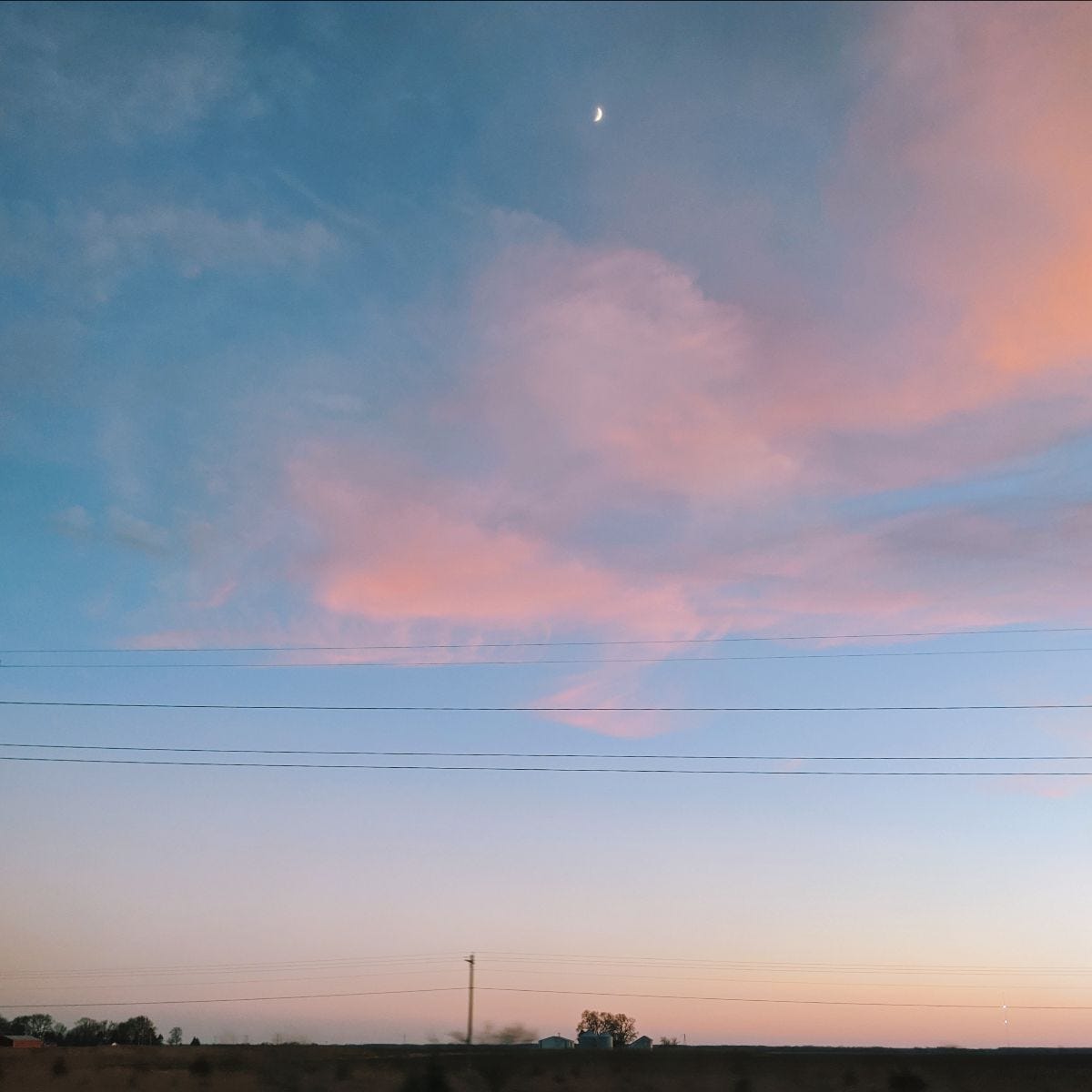
How 2020 Began
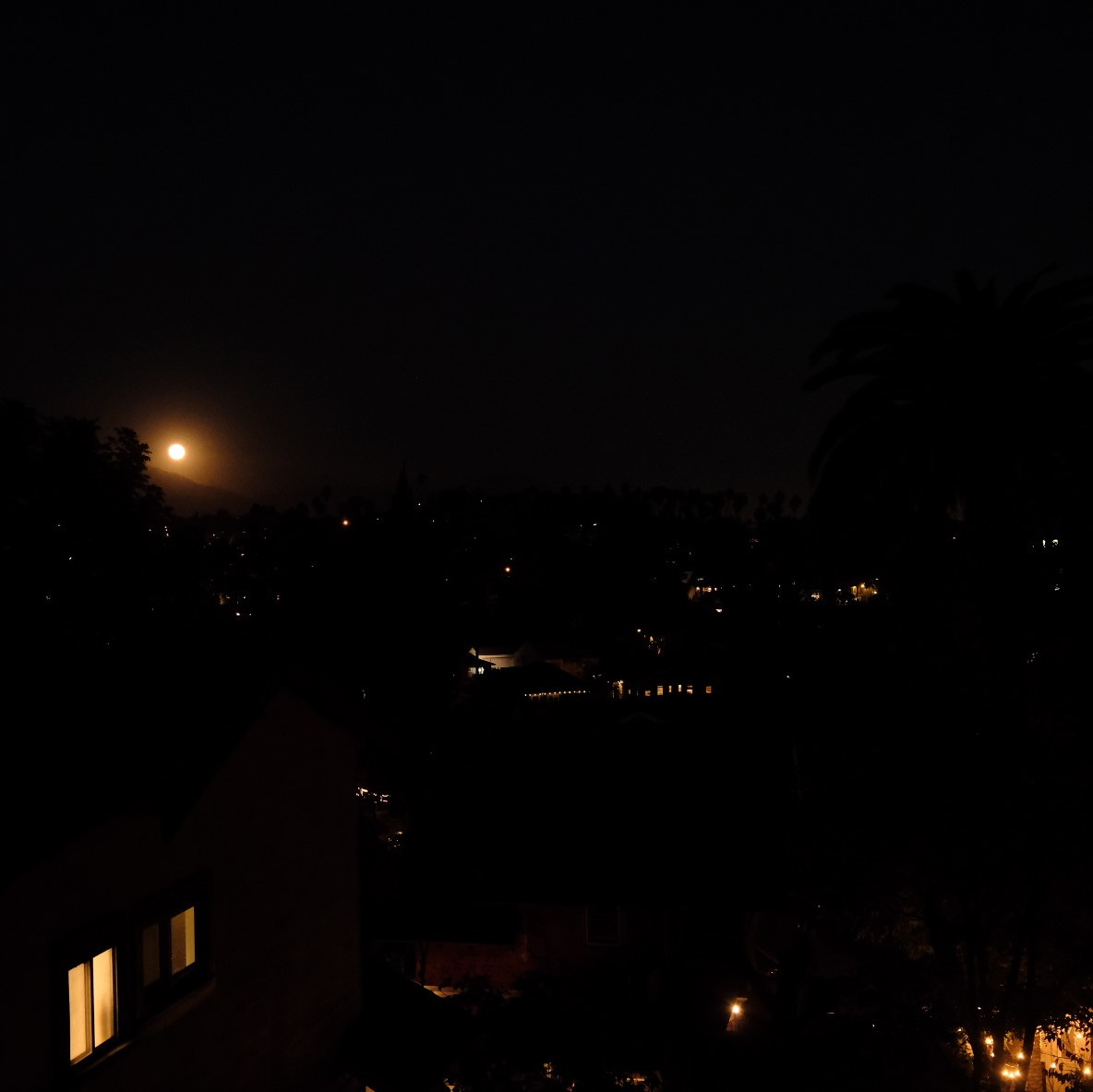
How 2020 Ended
Also, here are some groups of five things I liked this year:
BooksFirst of all, did I mention that my newest book, CHOSEN ONES, came out this year? It’s about what happens ten years after you save the world from a being of incredible evil and become one of the most famous people in the history of time. It’s good, and you will like it. I feel pretty confident about that generalization, too. But here are some others:
Court of Lions by Somaiya Daud
Blue Ticket by Sophie Mackintosh
Never Let Me Go by Kazuo Ishiguro
Harrow the Ninth by Tamsyn Muir
The Left-Handed Booksellers of London by Garth Nix
PODSFirst Draft by Sarah Enni – this year, Sarah did a special series called Track Changes where she talked to a wide array of people about the business of publishing books. It’s a great resource if you want to understand the publishing industry on a practical, realistic level. I’m so glad it exists!
Comedy Bang Bang - just listen to all the Andy Daly episodes if you need a place to start
Limetown - I know, I’m late
You’re Wrong About - the episodes about famously maligned women are so great
TV/MOVIESListen, this year I was like a delicate little flower that needed to be gently cradled by television and movies, so I didn’t watch…most of the stuff that came out. But I did occasionally take a break from endlessly looping Bob’s Burgers (which is also great).
The Vast of Night (movie)
Elementary (the TV show) – if you like a light-hearted but not empty-headed procedural, which I do, this one is great. I never watched it when it was on, but I am enjoying the binge watch.
Babysitter’s Club - I used to think I was a Mary Anne, but actually I am a Kristy.
Only Lovers Left Alive (movie)
The Old Guard (movie) – god this movie was fun
SONGSI’m on Spotify, and I put my book playlists up there if you want to give them a listen! Right now there’s one for Chosen Ones, The End and Other Beginnings, both Cyra and Akos from Carve the Mark, and one specifically for Inertia (a short story in The End and Other Beginnings).
See you in 2021!
V
October 22, 2020
An October Q&A
I write to you from sunny Los Angeles, where I have finally arrived after quarantine-RVing across the country so that my husband and I can live with some family for a couple months for a nice change of pace. I am here to answer some of the questions you submitted via this form, as I will do semi-regularly in this newsletter. Thank you to those who asked questions! Even if I didn’t answer yours here, I did keep the questions so that I might be able to answer them later. Please keep ‘em coming! And I hope you are all well and reading good books.
And now, to the Q&A!
Jeremy: Height-wise, did Theo and Jai Courtney measure up to each other?
First, I appreciate that this question appeals to my knowing-heights obsession, which has recently transferred to tennis players. (Rafa Nadal, recent French Open champion, is 6’1”. His opponent, Novak Djokovic, is 6’2”. The more you know dot gif.) Anyway, to answer your question, yes, Theo James and Jai Courtney are roughly the same height.
Ashlynne: Where did you get inspiration for both Four and Tris?
When I was writing the rough draft of Divergent, I’d just had a significant writing revelation, courtesy of one of my professors. She had circled a particularly crisp, simple passage in one of my assignments and said, “this is the best writing in this piece.” I had previously been struggling to write in more florid, poetic prose—and the results were not great. That was not my natural voice at all. So Divergent was a bit of an experiment with what felt more natural. The character of Tris came from (among other places) that straightforward, no-frills, crisp voice. An assertive, bold person trapped in a life she needed to escape.
Four, on the other hand, I came up with a few years earlier. I had written an extremely early draft of what would later become Divergent—just a couple scenes, no real world-building except the vague idea of factions. The character first appeared much the same way Tris does in the book: he was getting his hair cut. But there was this tension in him as he sat for it, this interesting restraint—he didn’t want anything about the life he was in, but he knew better than to let it show. I obviously didn’t use that draft in the final book, but I included the character anyway.
Evelyn: I enjoyed the Divergent Commentary so much. So cool that Neil decided to pitch it as “16 candles but in the future.” From your experience on the set of Divergent, was Neil very hands on with every aspect of the film, as far as lighting, costumes, etc. or was he primarily focused on the actors? As someone who's pursuing a career in the film industry, its interesting to see and know about the director’s approach. I am grateful that you let us in on his secrets to such an amazing adaptation.
My impression of Neil Burger was that he was hands-on with every aspect of the film, yes. I mean, one time he called me to ask me how important it is that the aptitude test involve cheese. (He wanted to use meat, which is what’s in the film. This change was perfectly fine with me.) On my first day on set, he came over to talk to me about the Dauntless fighting stance (which I teased with great affection in the commentary) with the stunt coordinator. I could tell you a dozen stories like those—moments when he communicated extraordinary thoughtfulness to me. I’m a fan.
Diego: Hey Veronica! My name is Diego, I’m a huge fan of all of your books (I’ve just picked up “Chosen Ones”, and I can’t wait to dig into it!). I’ve been admitted to and will be attending your alma mater, Northwestern University, as a part of the Class of 2024. My primary major is theatre; however, given the huge impact that reading/writing has had on my life, I’m considering taking a couple of creative writing courses and potentially double majoring. My question is the following: is there any piece of advice you could give me in regards to creative writing at NU, any tips an incoming freshman, such as myself, should know before starting? Thank you so much for your time, and I can’t wait to read about your next projects!
Hey, congratulations! I’ll try not to make this answer too insider-y—but you can definitely double major, most of the other creative writing majors in my year were double majoring, since the creative writing major is somewhat smaller than others, credit-wise. The good thing about the writing program at NU is that you have to take a few introductory writing courses before you can submit an application, and you’ll therefore get a sense of whether you enjoy it or not before you apply. Best of luck!
My advice for anyone in college is to find out, to the best of your ability, which professors are amazing—and take their classes whether the subject matter interests you or not. A good teacher can make anything rewarding and interesting. Also, take classes just because you want to. Know that a good writer is a curious, creative person—that knowing more about the world will help you more with your work than a writing class (though I certainly benefited a lot from my writing classes!). And please, for the love of God, have some fun. 😊
Elisa: I wanted to ask that, do you ever have writer's block? If yes, how do you cope up with it?
Every writer does! But there are different kinds. The first is fatigue-based—you’ve worked yourself too hard and you need a break. Bet you can’t guess how I address that one.
The other is that you’ve hit a sticking point in your draft. Whatever you just wrote, it’s not right, it’s not working for you in some deeper way. OR maybe it’s not that—maybe you’re teetering on the edge of a decision that you’re not sure about. Maybe you don’t know where you’re going. The trick with writer’s block is to recognize where you are and what you’re up against. Then you have to problem solve. I can’t give advice here because every story and every problem is different. Only you can find the solution. But it’s helpful to identify the exact, specific problem you’re having. Ask yourself: what did I just do? Is it right for the story? Or: what am I about to do? Do I know what my options are? Have I picked one, or am I avoiding making a decision at all? Remember: you can always try something out to see if it works. You can always go back to an earlier draft.
Tori: Did you enjoy being in the movie? Also I really appreciate you making the books it helped me through really hard times.
To address the second part of your question: I’m so glad the books were helpful to you. I hope times are a little less hard now (though I guess during this pandemic, we’re all having a bit of a hard time!).
As for the movie: yes and no. Yes, I was so thrilled to have the experience of getting made up and costumed and being on the set in that capacity. It was a once-in-a-lifetime thing and I wouldn’t trade it for anything. But on the set that day, the crew kept joking around that I would get the acting bug, and my answer to that was an emphatic NO. No, I will not. I am not a performer. I am not an actor. I do not enjoy it. I was stressed out of my damn mind for the two hours I spent as an extra. I prefer to be, not just BEHIND the camera, but AWAY from the camera entirely, preferably at a laptop with a word document open.
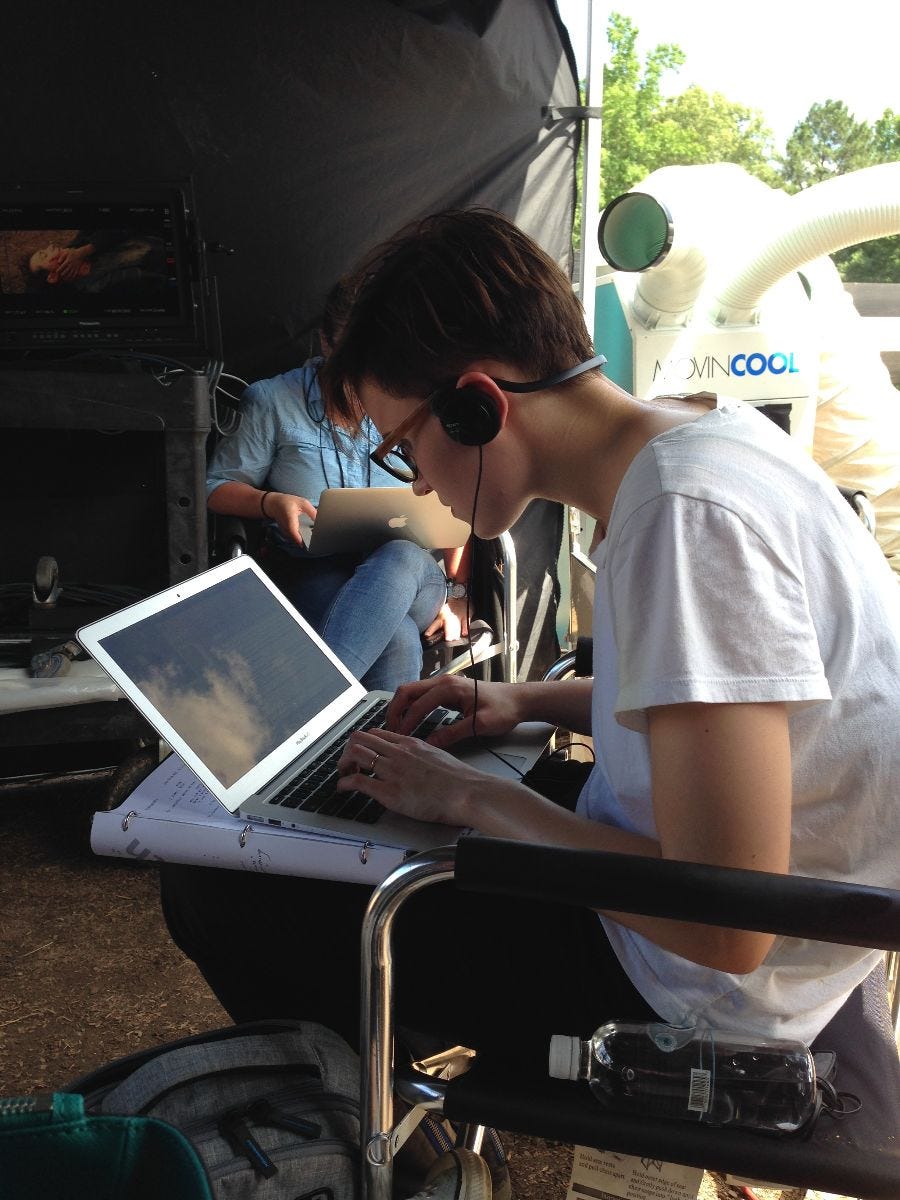
Me on set (with appallingly bad posture)!
Take care everyone,
V
August 26, 2020
August 5, 2020
Watch Divergent with me!
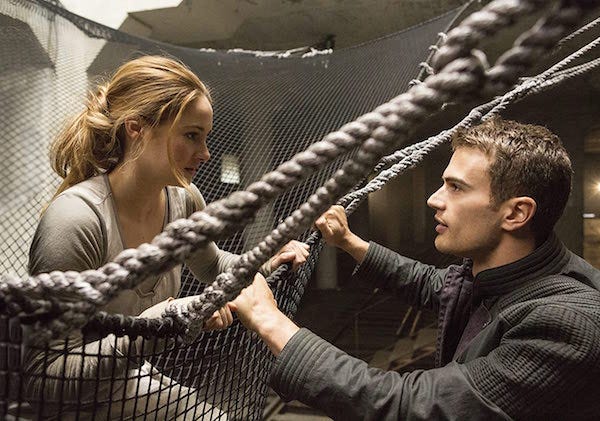 image credit: Summit Entertainment
Earlier this month, I announced that I would be recording a Divergent movie commentary track with Margot Wood, writer and publishing professional formerly of Epic Reads (you might remember her from Tea Time). She and I have known each other since Insurgent came out, so almost ten years, and we have had a LOT of fun together throughout the years. Margot also visited the Insurgent movie set and attended the Chicago Divergent movie premiere, so together we have a bunch of behind-the-scenes knowledge that we discussed on the commentary track, as well as voicing our special appreciation for the set design and LIGHTING! (That almost sounds like a joke, but guys, the lighting in that movie is GOOD.)
So how is this supposed to work? Well, here’s the idea:
Open the commentary track (you can find it here) and cue up the Divergent movie wherever you want to watch it.
Start playing the commentary track—there are a couple minutes of intro before we start the movie. Listen for the CHIME, which will signal that it’s time for you to press play. It will be very obvious. (The movie begins playing just before the Lionsgate logo appears, in case your version of it is slightly different from mine.)
Watch the movie with us!
You can also listen to the track separately, if you feel like you remember the movie really well—Margot and I had plenty to talk about, so there isn’t too much silence!
If you want to talk about this experience on social media, may I recommend that you tag me on IG at @vrothbooks (and Margot at @margotmwood), and/or use the hashtag #DivergentCommentary.
If you end up with questions (such as: just how tall ARE all the actors, Veronica, Captain of the Celebrity Heights Committee?), you can submit them at THIS FORM. (It will ask you for your contact info, but that’s just for accountability reasons—I won’t share your email address with anyone.)
Actually, you can submit any of your questions about any of my books and/or writing at that form—I’m going to keep it open from here on out so that I can answer your questions more regularly in THIS VERY NEWSLETTER. So keep your eyes peeled for that.
I hope you enjoy the movie commentary track as much as we enjoyed recording it!
<4,
V


