
Marsha Canham's Blog, page 7
May 17, 2012
While I’m in the mood to vent…
I refuse to pay over $30 for a hardcover book. If I had an elaborate library, all wood panelling and oak flooring, thick Persian carpets and mood lighting, floor to ceiling shelves that vanished up into a dome-shaped gothic-type cathedral ceiling with gilt and frescos…then maybe. Maybe then I could afford the luxury. But I have three bookcases that hold, at the most, a few hundred books. One of those bookcases is dedicated to research books and another divided between photo albums and the collection of cow knick knacks my cousin has bought for me over the years. (She gives me cow stuff for Christmas, I give her pig stuff) The other bookcase holds my “keepers” most of which have been hardcovers collected over the years. I have most of Wilbur Smith’s books in hardcover, and most of Michael Connelly’s. I have my original edition of Patrick Denis’s Auntie Mame which was, if memory serves, the first hardcover book I bought when I was back in high school. I have some collector editions on Marilyn Monroe, Errol Flynn, and James Stewart. A few others that I was given and read and enjoyed enough to keep.
The last Michael Connelly book on Amazon.ca was $29.99…a nosehair under the $30 high tide mark, but I thought that was cheating, so I bought it as an ebook instead. On Amazon.com it was only $27.99 when it first came out, and I guess if I had waited almost a year to buy it, I could have ordered it for the current $15.98. The .ca version is down to $18.88, but again that’s after almost a year. He should be coming out with a new one fairly soon and my eyeballs will roll to the back of my head again.
The price, to me, is outrageous anyway. It’s fiction. It’s a book. Most people read it once, shelf it, and run a duster over it once in a while. Diehard collectors will likely grit their teeth and buy a favorite author…or at least they have in the past, like me…but with the economy in flux, bookstores whining, lawsuits popping up against price fixing, and a Kindle or iPad reader in every purse or briefcase…I’m willing to bet a good number of those diehard collectors are going to start thinking the way I’m thinking…it’s just not worth it anymore.
Plus…and here’s the real reason for my gripe. Twenty years ago both the U.S. and Canada went through a terrible recession. There were all kinds of circumstances that caused our dollar to drop like a rock and for a while, the exchange rate was atrocious. It cost us $1.46 to buy $1.00 US if we were travelling into the States. Conversely, US visitors only paid the equivalent of $.60 for something that would cost them $1.00 at home. Tourism boomed up here, and Hollywood North was born as moviemakers shifted a lot of productions above the 49th parallel. It didn’t take publishers long to realize they were losing .40 on the dollar with every book they shipped and sold up here and thus the dual pricing on books, paperbacks and hardcovers, was born. Up to then there was one price printed on the spines of books, and I’ll use my own first edition of The Pride of Lions as an example. $4.95 for the paperback. One price both countries.
Through A Dark Mist, which was released in 1991, had the first dual pricing on the cover. $4.99 US, $5.99 CAN. There was grumbling, but with the exchange rate varying by as much as .05-.10 every month, the higher price was justifiable, because, after all, everything was printed in the States and shipped north, so it stood to reason the publishing houses were losing money. Zoom forward to 1997. The exchange rate was still high, but nowhere near the .46 it was at the beginning of the decade. That was the year The Pride of Lions was reissued by Dell in paperback. The US price was $6.99, the CAN price was $10.99. Four bucks difference. Zoom forward to present day, the paperback is $7.99 at Amazon.com (Kindle edition $10.19!!!!!), and $10.99 (reduced to $9.89) at Amazon.ca (where there is no Kindle edition available so we have to order ebooks from .com, which makes NO sense whatsoever but that’s fodder for another vent)
The last half decade at least, the Canadian dollar has hovered around par with the US dollar. Not long ago, we were worth more. Point being, the recession that justified the four dollar difference in price has long gone but the prices have remained as if there was still a .46 difference in our dollars. I would be curious to see, if and when Amazon.ca starts selling ebooks, if the price for a cyber file will be significantly higher up here than down there. I suppose publishers have to make their shylock money somewhere, and ebooks are the new golden egg…ergo the price fixing shemozzle they are currently embroiled in.
But back to hardcovers. James Patterson. Here’s what his new one is going for at Amazon.ca
Formats
Amazon Price
New from
Used from
Hardcover
CDN $15.00
CDN $15.00
CDN $21.88
Paperback
CDN $28.25
CDN $13.04
–
Audio, CD, Abridged, Audiobook
CDN $17.54
CDN $11.42
CDN $14.80
and from Amazon. com
Formats
Amazon Price
New from
Used from
Expand
Kindle Edition
–
$0.00
–
Expand
Hardcover
$16.76
$10.79
$13.59
Paperback
–
$14.12
$15.36
Expand
Audio, CD, Abridged, Audiobook
$16.49
$15.99
$11.95
Expand
Audible Audio Edition, Unabridged
$21.95
or Free with Audible 30-day free trial
Note the hardcover price is *reduced* from $27.99 US. and $29.99 CAN. And those are Amazon prices. Walk into a bookstore and you’re likely paying the full price on both sides of the border. The price that jumps out at me here is the $28.25 CAN for the PAPERBACK. Hello????? Does that come WITH the Koolaid????? Patterson doesn’t even write the damn books himself anymore, he has a team doing it for him. That, combined with the ludicrous pricing, is sheer hubris on the part of the author and the publisher.
Publishing houses want to stay in business? They’re sure going about it the wrong way. They’re pissing off authors left and right with their price fixing, their unfair accounting practices, their contracts that have the nerve, in some cases, to lock up rights for “any form of distribution that may be thought of in the future” and yes, that’s an actual clause in an actual contract. One company created a subsidiary of itself so it could sell books to the subsidiary, call it a foreign sale, and thereby justify reducing the author’s royalty percentage from 50% to 3%. They expect us to trust their numbers when they give us no recourse, no way to audit or check them, no access to their accounting systems.
Amazon, a huge company by any man’s measure, manages to update sales hourly, specific to each damn book. And they pay monthly from all of their subsidiaries in France, Germany, Italy, Spain, and Britain.
Computers, folks.
Instant information.
Publishers have it at their fingertips, but they’ve been so accustomed to getting their own way for so long, they’ve become archaic and obsolete and if they don’t shape up soon and change with the times, their worst fears will come to pass.








May 14, 2012
Time to vent on Agents.
There have been a lot of blogs lately about the letter the Association of Authors Representatives (AAR) sent to the Department of Justice regarding their recent ruling against price fixing on ebooks. Several publishing houses along with Apple, got their wrists slapped hard for colluding and setting higher than reasonable prices on ebooks. The ruling is good for readers and authors alike. Lower prices usually mean more sales, for one. For another, this whole business has brought to light the archaic accounting systems and practices the publishers have been getting away with for decades. Hopefully, if the DOJ gets into those accounting files and audits their books they’ll be as outraged as authors have been for years.
The fact that agents have actually supported the publishing houses and protested to the DOJ, has left me shaking my head like a bobble-head dog again.
I’m not going to reprint the letter here, but if you want a detailed analysis, check out Joe Konrath’s blog http://jakonrath.blogspot.ca/2012/05/aar-fail.html where he not only reprints the letter, but tears it apart in a great analysis paragraph by paragraph. Another informative blog to read is The Passive Voice, where Passive Guy has blogged lately about agents too http://www.thepassivevoice.com/05/2012/bizarre-misunderstanding-of-e-book-business/. They’ve done a great job chopping the actual letter, as well as the idiot who wrote it, off at the knees, so I won’t repeat much of it here, just the stuff that makes my eye twitch and my fangs grow.
Agents are supposed to work FOR authors. They’re supposed to look out for OUR best interests, to negotiate contracts in OUR favor and by getting US the best deal possible, they naturally improve their own finances since they get 15% of what we make. So why would they protest a settlement that goes against price fixing? Why would they claim to represent thousands of authors who want to see ebooks remain for sale at a higher price than their print versions?
Are they stuck in stupid or just stuck so far up the publisher’s asses they can’t see daylight?
There was a time when agents did what they were supposed to do. They fought for their authors, negotiated strong contracts, got better advances, better terms, boldly stroked out immoral and disgusting clauses like basket accounting. Some of the top agents were revered and respected and could make editors and publishers tremble at the sound of their voices on the other end of the phone.
Those days slipped away with the first big recession. Suddenly editors, VP’s, and presidents of publishing houses found themselves out of work. Publishing houses merged or were bought out by larger conglomerates. Smaller imprints vanished along with the scores of authors who wrote specifically for those lines. Big Name authors still expected their Big Author Advances, so publishers had to scramble to find the money, and their midlist authors took the hit. Those who weren’t cut completely were offered smaller advances and were told they were lucky to still get a contract. Ever wonder why so many authors who were popular in the 80′s and 90′s suddenly vanished?
Agents no longer made the walls tremble. They took the paltry offers to their authors and passed along the same message: that we were lucky to get a contract at all. Those revered and respected agents started turning into slick-haired used car salesmen…smiling and nodding and saying what a great deal we were getting despite the fact the car had no tires and the engine had a clunking sound.
In all my years of writing, (over 30…augh!) I’ve never once heard of an agent who publicly questioned the archaic accounting practices of publishing houses. Oh, they sympathized with us in private and shook their heads and muttered a bit, but none of the hundreds of agents out there, those who boldly called themselves Authors Representatives…none of them ever banded together to get rid of the outdated and underhanded accounting practices of publishing houses. None of them ever sought to start some sort of protest against the twice yearly paycheques…I mean, after all, if we authors were only paid twice a year, so were they. And by necessity, in order for them to make a living off our meager 15%, that meant they had to have hundreds of authors in their “stable” (and yes, that’s what it is called, pun probably intended) in order for THEM to make a living.
None of them rocked the boat. To my way of thinking, none of them really stood up for authors rights or the system would have been overhauled a decade or two ago. But after the major bloodletting that came with the recession, it seems to me as though if they still had one Big Name Author as the cash cow, the agents had no reason to upset the dingy. Certainly no reason to anger publishers who could cut them out of the picture as easily and swiftly as they cut all those authors. You wanted to negotiate tougher terms? Piss off and find another publisher. Supply and demand. There were suddenly hundreds of midlist authors scrambling to find new publishers, and the power was all with the publishers. They didn’t have to chase after authors or lure them with bigger, better perks. The authors, via their agents, were chasing after them and willing to settle for almost any terms.
Along came Amazon. Along came the Kindle reader. Along came Apple’s iPad and Sony and Kobo and Barnes and Noble with their Nook ereaders and suddenly authors had another outlet. We had another option. We didn’t have to follow the rules anymore because…hell, there were no rules. Amazon pays monthly. Amazon gives daily accounting of the numbers of books sold. Amazon gives authors the lion’s share of the royalties because…well…geez, guys, because WE write the damn books! WE do the majority of the work. WE produce the stories that have kept the publishing houses in business all these years. Without us, there would BE no publishers, there would be no agents, there would be nothing to read. Period.
So now, suddenly, publishers are falling on their swords and blaming Big Bad Amazon. They ARE stuck in stupid and not seeing that Amazon is only doing what Publishers should have been doing for the past few decades: they pay us fairly for our work and they pay us on time. Publishers still think of us as slave labor, peasants who should be grateful for the crumbs tossed our way every six months. And agents? They’re in a panic too because they’ve seen the writing on the wall. Authors who self publish don’t need them. And authors who still publish in print are eventually going to get smarter, wiser, and hopefully grow some balls now that they know they DO have options. They don’t HAVE to settle anymore. They don’t HAVE to sign on that dotted line.
The argument comes flying back that not all self published authors are going to sell enough on their own to make a living. Well, neither are all authors who sign with publishing houses. Not the way the royalty schedules and payment terms exist up to now. Not with the creative accounting the traditional publishers practice. Not when publishing houses don’t have to account for what they sell and when they sell it. Not when they can use basket accounting and get away with it. Not when they can use “reserves against returns” as a catch phrase to delay paying out monies earned. Not when there is no way short of a full forensic audit to know exactly how many books they sell.
I said in a previous blog that I would be interested to read my royalty statements for the three Scotland books. They arrived the other day and according to Dell’s accounting department, my three best selling books have sold a total of 3000 ebooks over the past six months. That’s combined. Total. Seriously. My big paycheque for the six months, should I have been waiting patiently to pay my mortgage and pay down some of my post-divorce debts…was a staggering $3,600.00. Woo farking hoo. (And just to drive a point home, those same 3000 books, sold for an average of $10.99 by the publisher through Amazon, earned THEM $22,890.00)
Do I believe the numbers they sent me? Not for one effing minute. Could I possibly survive, keep my house, put food on the table, buy clothes, feed my dog, keep a car, even put gas in the lawnmower for the staggering sum of $3,600.00 every six months?????? Could you? Could any one of those hundreds of Author Representives who protested the DOJ’s ruling against the publishing houses price fixing?
Faugh.
Let them walk a mile in my shoes. That way I can run faster and farther barefoot when they chase after me wailing and whining that they can’t do it.







May 10, 2012
I swore I wouldn’t talk numbers again, but here I go…
I wonder if readers wonder as often as authors wonder what the F**k is going on out there these days? More and more stories and posts come out that make me shake my head so much that some days I feel like one of those bobble-head dogs that used to sit on the dashboard of a car. Just yesterday I read an email from a well known author who said she received a royalty check for $.34 . It would have been $.40 but her agent took his .06 commission. I won’t mention which publishing house that was because I gave it enough free publicity on Monday *snort*
Another author had steam coming out of her ears because she was informed by Avon that they were going to be reissuing her 8 backlist books that had been out of print for a few years. Now, normally, this would be cause for opening a bottle of wine and celebrating. However. The generous announcement came a few short weeks after her agent sent them a letter asking for the rights to those long out of print books, none of which were earning enough royalties to fulfill any part of the contract terms. Her intent, of course, was to self publish them as so many of us have done since Amazon, Smashwords, and Barnes and Noble opened up their doors to us.
I was lucky enough to get those rights reversion letters in to my former publishers before the ebook wave really started to build. At the time…only a mere year ago…publishers didn’t know what was happening and certainly couldn’t see what was coming, so they granted those reversions to most of the authors who asked. About six months ago they started putting on the brakes and saying whoa….what’s going on here? A few million Kindles iPads, Nooks, and eReaders under the Christmas tree and stuffed in birthday bags? People reading books on their phones? Who was Amanda Hocking and how did she sell a million self-pubbed books on Amazon?
The brakes went on and the reversion letters stopped. Publishers started taking a second look at ebooks and suddenly novels that had never been digitized before were being reissued as ebooks, and those that were already in ebook form magically saw the price boosted by a few bucks. I can use the example of my own three Scotland books, the rights for which I applied after the brakes went on, to my lasting regret. To this day I don’t know why I didn’t include them in the letter with all the other books I was asking for and got back. A senior moment. A brain fart. Anyway…I’ve watched the pricing on those ebook versions jump from 4.99-5.99 to 10.99-11.99. Pure gravy for the publisher. I’ve seen posts where they’ve tried to defend themselves saying it costs as much to prepare and present an ebook as it does a print book but not even my deaf dumb and blind Aunt Farklefanny would buy into that.
On a reissue, the publisher already has the file, but for the sake of argument, we’ll say its a new file. Okay, you hire a copy editor to go through the book and catch errors…say $1/page on a 400 page book=$400.00 (now that’s the kind of math I like where I don’t need fingers or toes to count)(I must write a blog one day about my highschool years, most notably the 11th grade math teacher who told me he would give me a passing grade if I promised never to take math again)(I mean really, who uses logarithms these days, and why did *I* have to know how they worked????)(and don’t even mention the word calculus)
Get back on track, Canham. Okay. So we have an initial expenditure of $400 for the copyeditor. We’ll be REAL generous and allow $500. for cover art, although that’s ten times more than what I charge and I think the covers I’ve made for myself and others are pretty darn good. Cost for formatting=$100.00 Cost for shipping=$.00. Cost for distribution=$.00. Cost for printing and warehousing=$.00. I’m sure I’m missing something so we’ll toss in another $1000.00 just for the hell of it, so at the end it might come out around the $2000. mark per book. Okay, so suppose Bonzai Publishing has an ebook they’ve spent the $2K on…oh hell, we’ll be REAL generous and pay a portion of the President and VP’s vacation in the Caribbean and say $3K. So they upload the file…and really, there is no vast geek mystery to doing that. You open an account at Amazon, or wherever, click “upload new book” and you upload it. Done. The book goes on sale for, say, the super bargain price (for a traditional publisher) of $7.99. Amazon takes 30%,($2.37) the publisher gets the rest (oh maaaaan, math again *sigh*) which works out to a cool $5.53. Supposing the book sells modestly well, say…10,000 copies…that’s $55,300. Deduct the $3000 we allowed for producing the ebook and the cream floating to the top comes to $52,300. And that’s on a modestly priced book. Take the $10.99 they’re charging for most ebooks and…you do the math, I’m exhausted.
What does the author get out of that, you ask? Well…remember that these are backlist books, so the author probably has an old contract that, in some cases, gives the same royalty rate for ebooks (which were just a glimmer on the horizon ten years ago, and twenty years ago not even a glimmer) as for print books, which would be between 6-8% of the *net* price. For the sake of my sanity I’m not going to distinguish between net and retail because that’s just too damned hard. All I know is net is lower than retail, sometimes by as much as half, though on ebooks I really don’t see where any discounting from the distributor would come into play. A file is a file is a file whereas a print book is discounted to bookstores and distributors because of the labor involved, profits for the store, and all that jazz. But a file is a file is a file. MIND YOU….that does NOT stop the publisher from playing with the percentages and *saying* there is a net price for ebooks. Has anyone ever challenged that? Contracts these days specify 25% royalties on ebooks, but somehow that gets finostigated down to 12.5% by way of a bunch of mumbo jumbo, and it just seems to be accepted without questioning it. Ebooks, people. Computers do all the work. No hands ever touch the file after it’s been uploaded. There shouldn’t be a *net* price for a cyberfile.
But I digress again. NOT counting any net mumbo jumbo, we now have $52,300 for those books. Out of that, the author *should* get 25% which would work out to $13,075. But using Publisher Math, they only get $6537. And if the contract is older, and we’re working off the 8% royalties…that number zooms down to $4184, which, using Publisher Math, can become finostigated down to around $2K. Even if it’s left at the 8%, the publisher still gets the lion’s share of $48,116. And if it’s left at 25%, they keep $39,225.
$39,225 for the publisher, $13,075 for the author, and that’s using rose colored glasses for the 25% royalty rate on 10,000 downloads of a $7.99 ebook without any finostigating. Take off the glasses, use the 8% and the numbers change to $48,116 for the publisher and $4184. for the author.
IF the author had the rights back, their cut becomes 70%=$55,300 and Amazon takes the lesser 30%
Can you can see where an author might get a little distraught over not getting their rights back?
Now most of us who have pubbed our backlist don’t charge anywhere near the $7.99 mark. Most cruise in between $2.99 and $4.99. At that price point, the reader is happy to be getting a bargain and the author is overjoyed with the 70%. Keep in mind the Publishing Houses only pay the authors twice a year, and because of creative finostigating, the author never actually knows how many books she has sold or how much she has earned or what magical formula was used to arrive at the number printed on the check. A lot of rumbling is starting to go around about those numbers and just how accurate they are. Again, using my own Scotland books as an example, I was just sent a *generous* royalty check for $3k and change which supposedly covered 6 months worth of downloads for The Pride of Lions, The Blood of Roses, and Midnight Honor. 3 books selling at $10.99 each for six months….do I believe those numbers? Not for one farking eyeball-spinning moment. I’m still waiting for the paper statements to arrive in my mailbox and when they do, I shall be studying them with great interest.
Publishers need to wake up. They’ve had their archaic system in place for so long it’s like that old taped up chair Frasier’s dad had in the sitcom. They’re keeping it because it’s comfortable…for them. Its an eyesore and an insult to authors, but as long as no one says anything or heaves the damned thing out in the garbage, the chair, like the accounting system will stay in place.
I’ve said this before and I’ll say it a thousand times more, I’m sure, but what other business on this planet pays their employees twice a year? What other company/business is allowed to use creative accounting to delay some of those payments for 2 and 3 years? What other company has their headquarters in huge gleaming glass buildings in New York while the people who provide the basis for their business work for pennies on the dollar? Hmmm. Why did I just get an image of a Chinese sweatshop?
Authors work damn hard. I have apologized to my son too many times to count for all those years when he was growing up and I was locked away in my office hammering away at the typewriter. Dinners were missed, baseball games were missed, simple family outings were missed because I was trying to build a career doing something I loved to do. Seventeen hour days were not unusual. Spending a week writing one page over and over until it said what I wanted it to say, was not unusual. Spending hours in the library reading dry research material…no internet back then…compiling files thicker than the finished manuscript of events, costumes, lifestyles, habits. It took me, on average, a year to write one book, and sometimes longer. And yes, I put up with the twice yearly paychecks, the creative accounting, all the bullshit, stress, and broken promises…because I wanted to be a writer. I wanted to hold a book in my hand that had my name on it.
I still do. I hoard my print books like a miser and I wish there was some way I could justify putting any new books I write in print, but the simple fact is: I can’t. I’m single now, I have no other income, no husband’s salary to rely on, no huge retirement fund to fall back on. I have a mortgage I have to pay every month and I can’t afford to go six months without a paycheck. I can’t afford to roll my eyes at the creative accounting or listen to bullshit explanations why I’m only getting 3K for books that have sold in the thousands. I can’t afford the luxury of being an author and having my books published by a traditional publishing house… and I’m sure I’m not the only one.
How sad is that. Really. It’s even sadder when an author who trusts her career and livelihood to a “reputable” publisher waits six months to receive a check for $.34.







May 8, 2012
Twenty years later, there’s an echo.
Ever stand on the side of a mountain and yodel like a fool then wait, grinning, for the echo to come back? That’s sort of how I feel today, though it’s taken over twenty years for the echo to come back to me.
I refer to a post today on Joe Konrath’s blog http://jakonrath.blogspot.ca/2012/05/harlequin-fail.html wherein a Harlequin author, Ann Voss Peterson takes the big H to task for lousy royalty rates, lousy payments, ugly contract practices etc etc etc.
I basically wrote that same article, decrying the same immoral practices by the same company twenty years ago. I wrote it for the RWA magazine back when I thought that shedding light on a company’s shady practices might stir up a little outrage in the writing community. After all, the big H was the BIG H back then, with hundreds if not thousands of authors dutifully writing two and three books a year for them, taking 4 or 5K advances and quietly accepting what they thought was going to be 6% royalties, but in fact turned out to be less than 2% and in some cases, less than 1%. The exact numbers by example are laid out on the Konrath blog but in case you don’t want to flick back and forth, I’ll repeat them here, direct quote:
“Let me share with you the numbers of a book I wrote that was first published in January, 2002, still one of my favorites. My life-to-date statement says this book has sold 179,057 copies so far, and it has earned $20,375.22. (bold text by Joe) That means the average I’ve earned is a whopping 11 cents per copy. If you use the cover price to calculate (the number used in the contract), which was $4.50 at the time of release, I’ve earned an AVERAGE of 2.4 % per copy.
Why is this?
First, while most of my books are sold in the US, many are sold under lower royalty rates in other countries. In this particular contract, some foreign rights and -ALL ebook royalties- are figured in a way that artificially reduces net by licensing the book to a “related licensee,” in other words, a company owned by Harlequin itself.
Harlequin uses the Wholesale Model (not the Agency Model) with retailers, including Amazon. So the money Harlequin receives is determined by the list price, and retailers can set any price for the consumer that they want. This is how the numbers break down when Retailer X lists the ebook for $4.00 (doesn’t matter what they sell it for).
Retailer – $2.00 (any discounts are taken from this amount)
Harlequin’s related licensee – $1.88
Harlequin – $.06
Author – $.06
So Harlequin makes a total of 1.94, and I make .06.
Six cents is 1.5% of the list price of $4.00. “
Those numbers are cut almost in half when the sale is to a “foreign” country like, say, Canada, where I happen to live and where the big H has headquarters. I think at the time, if the memory of a dinosaur serves, I worked it out to .68% royalites on a book I might buy at my corner store.
To really smear icing on the cake, they also had (and likely still have) a contract the likes of which I had never seen before, with a bazillion clauses, each with a bazillion subsections and sub sub sections, literally causing your eyes to spin around hard enough to pop out of your head if you tried to read it in one sitting. At the time, I had no agent so I had to read through it with great care. Nothing…and I do mean nothing…was negotiable. I was told that flat out before I even saw the contract…which would almost make a contract a moot point, would it not? It was more a bill of sale because as soon as you signed it, they owned you. Or tried to. They certainly made it quite clear that they wanted to own my name for that and any future contemporaries I might write. Who the hell signs their name away? I saw that clause and refused to sign it. The editor was a close friend and we had a few discussions about what the big H could do to my then-budding career. It could get my name out there. (yeah, but its MY name and I want to keep it) It could broaden the distribution, sending books into Europe and England and Australia and remote little African villages. It could increase readership, name recognition etc etc, and yes, everyone has to admit that the big H knows how to distribute, how to market, how to sell 100,000 books for a relatively unknown author. Me. But…what about the $5.12 royalty cheque for those 100K books? Well, of course you have to keep writing more and more and more books and your name will build and fans will flock to you for more and even more books! And over time, that $5.12 will grow into $10.24!!!!!! and after that…the sky is the limit! Or at least a good meal at MacDonalds!
Ballocks.
I learned my lesson, had the stars scrubbed out of my eyes. I tried to pass along my razor-sharp insights to the flocks of writers at RWA who were eager and willing to sign away everything, even their firstborns, for a contract with a “real” publisher. For my troubles, I got slammed in print, got called a liar, was pontificated to by “older and wiser” authors who extolled the virtues of writing for a company that was willing to take new writers and open the world of publishing to them. Yeah. As long as they didn’t get too greedy and actually want to make a living as a writer.
A lot of people these days are calling Amazon the big bad monster who wants to devour the little publishing houses. Hmmm. Okay, the big H isn’t so little, but lemme think about that for a minute. If I sell 100K books at the big H, and end up with an average 2% royalty on a $4.00 book…that would give me …(trog math here, I have to stop typing and use my fingers and toes to count) $8000! Woo Hoo! Hot tub for the back yard! Amazon, selling the same book at the same price, gives me 70% royalties, which works out to….$280,000. Woo farking Hoo….a house to put the hot tub behind!!!!!!!
I say sharpen your teeth Amazon and have at them!
And all of you Harlequin authors out there…I hope you listen to the shouting this time around and it doesn’t take another 20 years for the echo to be heard.
Man, am I going to be unpopular…again *chuckling as I hit “publish”*




April 20, 2012
Packing up is hard to do
I hate snow. I’ve hated it since I was a kid, and as an adult, I’ve had the same pair of winter boots for 25 years. They go in style, out of style, in style. Not sure what they are now, but that shows you how often I go outside in the white stuff. My goal, for most of my adult life was to become a Snowbird…someone who spends the summer months at home in beautiful Toronto, and the icky snowy sleet-filled, frosty, nose-hair-crackling months in a warmer climate. I finally succeeded in that goal about four years ago, but getting a little place, renovating, furnishing etc etc has been a project in itself, so this year was the first time I could actually take full advantage. I managed to vamoose from the frozen north just after Christmas and *almost* managed to get away without seeing any of the white stuff at all. It snowed the night before departure (and if you’ve followed my blogs you read all about the Great Septic Event that delayed that departure by a day).
The past four months have been glorious as far as weather goes. Florida has had an unseasonably warm winter (yay) with only a few nights when it was cold enough to need extra blankets and only a couple of chilly weeks when the pool was unapproachable even for Tundra folk. (I’m hearing the collective awwwwwwwwwww *snort*) But on the whole it’s been warm/hot and wonderful. My house-sitter tells me the weather back home has been pretty terrific too, with hardly any white stuff to speak of. He’s actually managed to keep all my plants alive and my birds happy and chirping.
It was fun packing to come south. It’s a chore packing to schlep north. I’ll miss my little home away from home. The neighbors are great, we’ve had a lot of laughs, played a lot of cards. The Canuck Contingent claimed the deep end of the pool just about every day since February 1st and I won’t begin to tell anyone how much food and wine has been consumed over much laughter and good times…the size of my hips should be evidence enough.

Somewhere in all the frivolity I did manage to get a lot of work done…ie, finished the last few chapters of The Following Sea, had it proofed and edited and uploaded. I thought it would be easy writing with the sound of palm trees swaying outside the windows, but most days there were accompanying shouts of “why aren’t you at the pool!” Ergo the note to myself to have Jonas’s story closer to being finished before I come down next year.
Even Suzie the dawg had buddies down here. She’s enjoyed our long walks and as valiantly as she’s tried, she has yet to catch a gecko or nail the two squirrels who sit in the palm tree out front and chitter and breakdance in the branches to torment her. She’ll miss Misty (middle) and Kaylee (right) and even the yappy little furred thing next door, Princess.

I took a little side trip this week to visit my very good friend, Virginia Henley. We’ve known each other since our first books were published together at Avon of Canada. She moved out of the Tundra completely quite a few years ago and I’ve managed to see her just about every year that we’ve come down to vacation at St Petes Beach. Now I’m an hour and a half away, but we got together for a 24 hr gab-fest and I took her to my favorite restaurant in Seminole…Cafe Cajun by the Bayou. AUGH! Best crab cakes in the world. Best Jambalaya. Best whiskey bread pudding. Crawfish are in season and patrons were snuffling into huge platters of the critters, which I would have dug into too if I had more than a day on that coast, but I was there for the crab cakes. Next year I’ll have to arrange an outing for the H&F ladies. Yes, it’s worth the trip.
Over the past two weeks most of the Canuck Contingent has packed up and skulked off in the early morning hours. Only two of us are left and we’re leaving the same day next week. Between then and now there’s a sh*tload of packing up and cleaning and putting stuff away to do. Thank goodness for those suck-things-up vacuum bags that might make it possible to get everything into my one lone suitcase, although last year I had them stacked like pancakes in the trunk of the car. My brother in law is flying down again to help with the drive back, so a chunk of the trunk has to be reserved for his golf clubs…same as last year. I kept that in the back of my mind as I went starry-eyed shopping for bargoons, so the acquisitions haven’t been quite as extensive as they could have been *snort*. Still pretty impressive, however, to judge by the pile I’ve started making, but then he’s a pretty good car-packer. I didn’t think we’d manage to cram it all in last year, but we did. It helped that my son and his family came down during March Break and took a big box home with them. Might have been a bit tricky otherwise LOL.
I keep looking at the fridge every time I walk past the kitchen. That’s going to be the Big Job, cuz even though I haven’t bought any manner of foodstuffs for the past two weeks, it’s still full. Rumor has it that Sunday might be lousy weather, so that will probably be Fridge Day. ugh. There should be a button you push that makes everything vanish and the shelves sparkle. As it is, there are going to be some pretty creative meals over the next week or so, I hope Hork comes down with his usual appetite. Last year I assumed “gumbo” meant “whatever is left in the freezer that can fit into one pot”. Should be a tasty concoction this time around.
I do love it here. Thank you Florida for being so hospitable. Thank you to the ladies of the Hand and Foot Cult for making the afternoons and evenings enjoyable and to the Entertainment Committee for those impromptu shopping trips. Five minutes was all it took to have someone waiting at the bottom of the driveway, purse in hand, to go shopping. I still have Bealls Bucks to spend next week if Hork has a day when he’s not golfing.
Unless a frothy reason to vent comes along, I expect this to be my last post from south of the 49th parallel, so….see you all on the other side *s*.
Oh. And I can’t leave without a last minute self-promo tidbit. China Rose will be free over the weekend, starting midnight tonight Pacific time. I have a soft spot in my heart for that book since it was my first, and it truly was like giving birth. I remember standing in a book store and staring wide-eyed at it the first time it appeared on the shelves. The poor woman who was next to me probably remembers it as well, but more like “the incident where the crazy woman hooted and jumped up and down and blubbered like an incoherent fool”. Hmmm. I’ve come a long way since then. I think. I only blubber over excellent crab cakes now. LOL







April 6, 2012
I hope Jodi Picoult likes worms.
I hope she likes worms, because she’s opened a whole can of them. During a recent interview ( http://www.huffingt onpost.co. uk/2012/04/ 04/jodi-picoult- lone-wolf- interview_ n_1403190. html) she was asked:
“Q: What do you say to people who want to emulate your success and want to be writers themselves?
A: My current advice is to not self-publish. It’s still too hard for people to separate the wheat from the chaff, and what you miss out on is the marketability that is afforded to you by a brick and mortar publisher. There’s a lot of crap out there, and one day we may find a way to segregate well written self published fiction from that stuff which anyone can throw on Amazon, but I just don’t think we’re there yet. Let me put it to you this way. The anomalies of self published fiction, the Amanda Hockings of this world – what did they do with their next book? Do they self publish it? No – they make sure they get a publisher.”
My my. I wonder if that makes me chaff? I’ve been chuffed before, but never chaffed. Oddly enough in an interview *I* just did for Book Lovin Babes (http://bookluvinbabes.wordpress.com/) one of the questions was concerning backlash from publishers, and if I had gotten any. My answer there was no, not from publishers, but surprisingly enough (and I quoted Ms Picoult’s answer there too) most of the flak has come from authors. Actually, all of the flak has come from authors.
I was partly guilty myself, two years ago, of thinking that self publishing was just another form of vanity press. After all, we dinosaurs who have been in print for over 25 years were conditioned to believe that to be acknowledged as a good writer, one had to be in print. Publishing Houses live by that mantra, that’s how they survive. Some readers refuse to look at Kindles or iPads or Nooks for the same reason, they believe an author is not an author unless one can pick up a book, crack the spine, and flip the pages.
Well. I’m here as living proof that things and people and attitudes can most definitely change. I was prompted to test the ebook market with my first three out of print backlist books and I haven’t looked back since. My most recent book has gone straight to digital, bypassing print altogether and I’m happy as a little pig in….a pen. I’ve encouraged other authors to test the waters as well… Virginia Henley, Jill Metcalf still wear my bootprint on their butts.
In my case, I was able to write and publish a book (The Following Sea) that was rejected by a traditional publishing house. I was told pirate books were no longer in fashion, that readers did not want books in that genre anymore. Virginia had a plantation book (Master of Paradise) that she had been told the same thing. Jill Metcalf writes sweet, sexy homespuns but she’s been away from writing longer my own eight year hiatus and Berkley dropped her line of books.
I have no doubt Ms Picoult was directing her comments to brand new never been published authors… and she specifically mentions Amanda Hocking going from self publishing to print publishing, suggesting she did so to become validated as an author. To that I send a huge wet raspberry. Amanda was a blazing success on her own with no help from traditional publishers and certainly did not need to go into print to feel validated. It was her choice to sign with a traditional house. It was my choice to self publish The Following Sea. It is the reader’s choice to pick up a print book or to download an ebook, and the reader’s freedom to choose whether she wants to try an Indie author or an established author.
Ms Picoult implies…well, actually she states quite plainly that “there is a lot of crap out there” and while it’s true there may be some brand new authors who haven’t done all their homework as far as editing and revising and hiring professionals to copyedit and do covers etc…they’ll find out quickly enough that they DO have to do all their homework or they simply won’t sell. There is also a whole great whack of damn good authors who, in a perfect world, would have no trouble getting published by a traditional publishing house. But as in every other aspect of life these days, there have been drastic cutbacks and some of the Big Six have gone from publishing 300 books a month to 30. Some have dropped their programs altogether for buying and nurturing new authors. Some have their slots filled and have no room for the quirky, interesting, new writings from untried authors. Some have spent so much luring in the Big Name authors like Ms Picoult with bazillion dollar advances, that they simply have nothing left in the budget for new authors. It’s a pretty grim Catch 22 situation: they need the Big Names to guarantee sales, to keep their printing presses running, but it costs so much to snag those Big Names, they have to cut back on midlist and new talent.
But where are those stranded authors supposed to go? Does Ms Picoult imply they should simply shelve their manuscripts and wait for the industry to change back to the old system? Won’t happen. Won’t ever happen. The change has happened already and if the electronic marketplace seems to be flooded with us chaffy people, its because we’re all breathing a huge sigh of relief that those manuscripts can come off the shelves.
It’s not up to the authors or the publishing houses to decide what the readers want anymore. It’s up to the readers to choose what they want to read and there’s a whole new world of ebooks and authors out there waiting to be discovered.
Some of my early books made the rounds of every publishing house I could think of back when I was first starting out, but back then there was no other alternative to print publishing. You either got accepted or you stuffed another rejection letter into the folder.
Authors have a choice now. They can send out that manuscript and risk getting rejected for reasons that might have nothing whatsoever to do with the quality of their writing… or they can publish the book themselves and try to carve out a little niche for themselves. Not every self pubbed author is an Amanda Hocking, nor will they see that kind of success, but frankly, I’m shocked at the arrogance of someone who would cavalierly make a blanket statement telling people to not even try. Especially since not every print author is a Jodi Picoult and won’t see her level of success either.







I hope Jodi Piccoult likes worms.
I hope she likes worms, because she's opened a whole can of them. During a recent interview ( http://www.huffingt onpost.co. uk/2012/04/ 04/jodi-picoult- lone-wolf- interview_ n_1403190. html) she was asked:
"Q: What do you say to people who want to emulate your success and want to be writers themselves?
A: My current advice is to not self-publish. It's still too hard for people to separate the wheat from the chaff, and what you miss out on is the marketability that is afforded to you by a brick and mortar publisher. There's a lot of crap out there, and one day we may find a way to segregate well written self published fiction from that stuff which anyone can throw on Amazon, but I just don't think we're there yet. Let me put it to you this way. The anomalies of self published fiction, the Amanda Hockings of this world – what did they do with their next book? Do they self publish it? No – they make sure they get a publisher."
My my. I wonder if that makes me chaff? I've been chuffed before, but never chaffed. Oddly enough in an interview *I* just did for Book Lovin Babes (http://bookluvinbabes.wordpress.com/) one of the questions was concerning backlash from publishers, and if I had gotten any. My answer there was no, not from publishers, but surprisingly enough (and I quoted Ms Piccoult's answer there too) most of the flak has come from authors. Actually, all of the flak has come from authors.
I was partly guilty myself, two years ago, of thinking that self publishing was just another form of vanity press. After all, we dinosaurs who have been in print for over 25 years were conditioned to believe that to be acknowledged as a good writer, one had to be in print. Publishing Houses live by that mantra, that's how they survive. Some readers refuse to look at Kindles or iPads or Nooks for the same reason, they believe an author is not an author unless one can pick up a book, crack the spine, and flip the pages.
Well. I'm here as living proof that things and people and attitudes can most definitely change. I was prompted to test the ebook market with my first three out of print backlist books and I haven't looked back since. My most recent book has gone straight to digital, bypassing print altogether and I'm happy as a little pig in….a pen. I've encouraged other authors to test the waters as well… Virginia Henley, Jill Metcalf still wear my bootprint on their butts.
In my case, I was able to write and publish a book (The Following Sea) that was rejected by a traditional publishing house. I was told pirate books were no longer in fashion, that readers did not want books in that genre anymore. Virginia had a plantation book (Master of Paradise) that she had been told the same thing. Jill Metcalf writes sweet, sexy homespuns but she's been away from writing longer my own eight year hiatus and Berkley dropped her line of books.
I have no doubt Ms Piccoult was directing her comments to brand new never been published authors… and she specifically mentions Amanda Hocking going from self publishing to print publishing, suggesting she did so to become validated as an author. To that I send a huge wet raspberry. Amanda was a blazing success on her own with no help from traditional publishers and certainly did not need to go into print to feel validated. It was her choice to sign with a traditional house. It was my choice to self publish The Following Sea. It is the reader's choice to pick up a print book or to download an ebook, and the reader's freedom to choose whether she wants to try an Indie author or an established author.
Ms Piccoult implies…well, actually she states quite plainly that "there is a lot of crap out there" and while it's true there may be some brand new authors who haven't done all their homework as far as editing and revising and hiring professionals to copyedit and do covers etc…they'll find out quickly enough that they DO have to do all their homework or they simply won't sell. There is also a whole great whack of damn good authors who, in a perfect world, would have no trouble getting published by a traditional publishing house. But as in every other aspect of life these days, there have been drastic cutbacks and some of the Big Six have gone from publishing 300 books a month to 30. Some have dropped their programs altogether for buying and nurturing new authors. Some have their slots filled and have no room for the quirky, interesting, new writings from untried authors. Some have spent so much luring in the Big Name authors like Ms Piccoult with bazillion dollar advances, that they simply have nothing left in the budget for new authors. It's a pretty grim Catch 22 situation: they need the Big Names to guarantee sales, to keep their printing presses running, but it costs so much to snag those Big Names, they have to cut back on midlist and new talent.
But where are those stranded authors supposed to go? Does Ms Piccoult imply they should simply shelve their manuscripts and wait for the industry to change back to the old system? Won't happen. Won't ever happen. The change has happened already and if the electronic marketplace seems to be flooded with us chaffy people, its because we're all breathing a huge sigh of relief that those manuscripts can come off the shelves.
It's not up to the authors or the publishing houses to decide what the readers want anymore. It's up to the readers to choose what they want to read and there's a whole new world of ebooks and authors out there waiting to be discovered.
Some of my early books made the rounds of every publishing house I could think of back when I was first starting out, but back then there was no other alternative to print publishing. You either got accepted or you stuffed another rejection letter into the folder.
Authors have a choice now. They can send out that manuscript and risk getting rejected for reasons that might have nothing whatsoever to do with the quality of their writing… or they can publish the book themselves and try to carve out a little niche for themselves. Not every self pubbed author is an Amanda Hocking, nor will they see that kind of success, but frankly, I'm shocked at the arrogance of someone who would cavalierly make a blanket statement telling people to not even try. Especially since not every print author is a Jodi Piccoult and won't see her level of success either.
March 31, 2012
Shameless promo and another vent. Or two.
Now that The Following Sea is finished and uploaded and available almost everywhere, I can get back into the saddle and do a bit of venting.
You'll notice I said "almost" available everywhere? To 'splain that I need to do a bit of backstory here. I'm a Canuck, as most of you know, and for some unknown reason, Canucks cannot publish directly to Pubit, which is the ebook arm of Barnes and Noble. I had to wait until I came down to Florida for my annual snowbird get-the-hell-out-of-the-snow migration before I could begin the process of publishing directly to Pubit. They require a US address, which I most happily have, and a US bank, which I also have. So. A week ago last Wednesday, roughly 10 days ago, knowing I was within a nosehair of uploading The Following Sea, I thought I would get the process started to establish the Pubit account in order to publish directly to Barnes and Noble. Had all the requirements. Put up three of my books to open the account, then had to wait for them to get accepted before adding more. Sounds easy, yes?
Now, when an author publishes directly with Amazon, it usually takes between 12 and 24 hours for the book to go live. They convert the Word.doc, set up the page etc etc and voila. The book is there, sales begin. When I uploaded the files to Pubit, I was told basically the same thing, that it would take 48-72 hours to go live.
By Saturday night, Pubit was still telling me the account was "pending approval". I sent them a little note asking if there was a problem and got the standard reply back that they would direct my concerns to the appropriate department. After another two days when I heard nothing back I sent them a rather snarky note saying if they couldn't give me a reasonable answer, or if there was a problem they weren't telling me about, I would simply pull the books, close the account, and keep my business at Amazon.
That must have reached someone's desk a little more promptly than the first polite inquiry because within a few hours I received a notice that the account had been *manually reviewed and approved* and would be live soon.
That was three days ago. As of this morning, right now, 9:48am, my account still says "processing"
Hmmm.
So now for the vent. I hear a lot these days about the big bad Amazon trying to steal the publishing market, trying to establish a monopoly, treading all over poor Barnes and Noble and anyone else who gets in their way. Look what happened to Borders! *gasp gasp* The same thing could happen now to Barnes and Noble! *gasp gasp, wave signs, pickett, boycott, whatever*
*SNORT*
In my humble opinion, if Barnes and Noble wants to stay in the game, they better start learning how to play. 12 hours versus 10 days to upload a file, process it, and put it on a page for sale? Really? And they expect us to shy away from the big bad giant?
Which brings me to vent #2, and here I really start shaking my head. For some unknown, unfathomable reason (note how I got a sea-faring term in there…did I mention The Following Sea is available now?) some of the Big Six Publishing Houses, who have also been whining about the evils of Big Bad Amazon, have suddenly decided to price their ebook version of print books HIGHER than the print copy. I'll use my own Scotland Trilogy as an example. When the self-pubbing wave swept through the publishing world last year, the Big Six thought it wise to lower their ebook prices to compete with the $2.99-$4.99 the Indies were pricing their ebooks at, moi included. Most of my backlist books are priced between $2.99 and $3.99, which I think is more than fair for me as well as for the readers. It's electronic, people. There are no stores, no shelves, no trucks, no storage facilities, no printing presses, no big offices, no overhead. It's an electronic blip that travels through the air and magically ends up in an ereader. Sure, we still have costs for covers and copyeditors and advertising, but we accept that when we decide to handle our own careers independant of some 20 yr old editor in New York telling us we *must* write a Regency Vampire Romance with elements of the paranormal.
But it's still an electronic file. Zap! One main file sent out a million times electronically.
So why, in their wisdom, have some of the Big Six decided to RAISE the price of their electronic versions HIGHER than the print prices of the same book. What am I missing here? Why did my Scotland trilogy, which, unfortunately are the only three of my backlist books still controlled by Random House…oops, did I mention their name? tsk tsk….why were they suddenly raised to $10 and $11 for the Kindle version when the print copies are only $7.99???
Can't blame Big Bad Amazon for that.
There is a marvellous sort of irony here. If my three Scotland books don't sell well at those extortionate prices, they will fail to make the quota of sales required for RH to keep the rights. The rights will then revert to me and I'll be able to give them spiffy new covers, and reissue them with a much lower price tag.
Did I mention that The Following Sea took two days from the time I got the green light from my copyeditors to go from my puter to your ereader, as opposed to the 11 months it would take a publishing house to read it (usually takes two months just for that) do the cover, slot it into a sale month, print it, ship it, etc? Did I mention it's an original, new book, not a backlist but it's still priced reasonably low at $3.99?
Happy Saturday everyone. I'm off shortly to have lunch with Julia London, one of the Loopies, who happens to be here in Orlando at a booksigning. There may be margaritas involved *grin*







March 29, 2012
The Following Sea…
I know I've been silent for a while. Okay, for quite a while. But I've been working diligently, despite palm trees and sunny swimming pools and lobster specials…
But it's done. Finished. Its ready to rock and roll. The Following Sea was uploaded today to Amazon and Smashwords. So far only Smashwords has its act in gear. After waiting multiple hours, Amazon sent me notification that TFS was published and congratulations and here's the link…except the link didn't work and I couldn't find it doing a simple search. So hopefully at some point today they will clear up the problem and the book will be available there too.
In the meantime, yes, the third book in the Pirate Wolf series is finished. My first foray back into disciplined writing after an eight year hiatus. I did dabble a bit and excercise my brain-box with What the Heart Sees, the short story that appeared in Masters of Seduction, and that made me realize how truly hard this business is. Sounds easy. Pick up a pen and start writing, or, for non-troglodytes, crank up the puter or iPad and start typing. Yeah, right. I am reminded once again of Val on Knots Landing (told you I was old) who decided to write a book, sat down at her neat little desk in her ultra neat little living room, with her makeup on, her hair fixed, and wearing a neat velour jump suit. She took a clean sheet of paper, got a thoughtful look on her face…and typed: Chapter One. Within three episodes they were booking her for author signings and she had a bestseller on her hands.
We all wish it was that easy.
Unfortunately most writing involves solitary confinement in some form or another. Personally, I have to lock myself away in absolute silence, with no distractions and a whole whack of research books scattered around me. I sort of knew I was in trouble when I wasn't finished The Following Sea by Christmas, as I had hoped. But surgery, a family crisis, and an ex husband who doesn't know when to quit kept getting in the way, so I had to pack everything up…notes, books, research…and schlep it all down to Florida with me. Distractions everywhere. Noise all around me. But thanks to some great support from some great friends down here, we all managed to get it done. By "we" I mean the two ladies…ex schoolteachers…who volunteered (sorta) to be readers for me, and to catch those silly mistakes the fingers make when they're typing slower than I'm thinking and strange words show up where they shouldn't. So big thanks to Gaile Rowlandson and Marlyn Podd…and really, to the rest of the ladies who eased the stress by having card games every few days. I might have been seeing Aces in my hand, but I was thinking about pirates and sunken treasure and lost galleons. Always thinking about plots and characters and how write them out of a corner….which is another curse of a writer. That, and staying up until 3am to write because that's when it's quiet and there are no distractions *s*
For those who may not be familiar with the Dante family, the story starts with Across A Moonlit Sea, when the Pirate Wolf, Simon Dante, wields a mighty cutlass and sails with Sir Francis Drake to burn the Spanish port of Cadiz. Along the way he meets his match in the Black Swan, aka Isabeau Spence, who navigates her way into his stony heart. The second book is The Iron Rose and the story is about Juliet Dante, daughter of the Pirate Wolf, who captains her own ship and rescues a velvet-clad nobleman from certain doom when his ship comes under attack. Together they foil a nefarious plan by Spain to launch a second armada against England. The third book is The Following Sea, and is Gabriel Dante's story. A bit of swashing, a bit a buckling, some sea-battles and land battles and a sunken treasure ship lost for twenty years bring Gabriel and Evangeline together, another unlikely couple who eventually find out they like each other very much. Hey, it's a romance.
My thanks to all the readers who have been so patient waiting for this story. You have no idea how much more pressure that adds…but seriously, it's a great kind of pressure and I wouldn't trade my little job for any other. I mean really, where else can you go to work every day in a different country, a different century, wearing great costumes, and risking life and limb in deliciously perilous situations? All that and do whatever you want with the hunkiest man your imagination can put together. Would I trade that to be a lawyer?
Newp.
Available now.
I hope you enjoy.
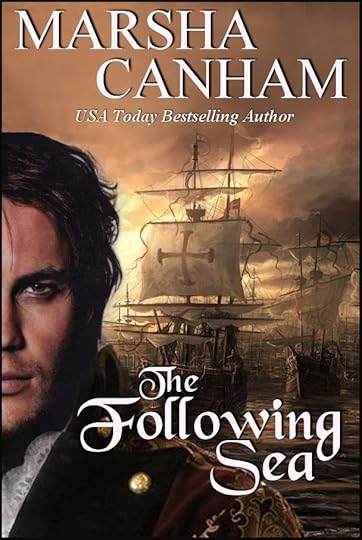
PS. As soon as Amazon figures out where they've put it, I'll post that link as well *g*







March 3, 2012
Read an Ebook Week
It's officially Read an Ebook Week and an amazing number of authors are offering deals and freebies at Smashwords this entire week. I'm right in there like a dirty sock offering up three of my books.
First up is Swept Away, my Regency that isn't really a Regency, though it was supposed to be a Regency and I faked the editor into thinking I was doing what she asked me to do by writing a Regency. It has a naked hunk on the beach, a wild carriage chase through the streets, spies and intrigues, murder and mayhem, and a face to face with Napoleon Bonaparte. What's not Regency about that?
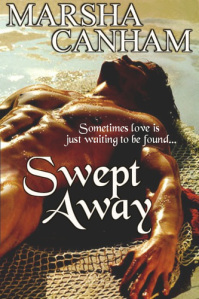
To get a copy at half price, click on the cover, zoom to Smashwords, and use the coupon code: REW50
Next up is one of my favorite books, Pale Moon Rider, written because I loved the poem The Highwayman. My literary homage to Zorro and The Scarlet Pimpernel, two movies I loved when I was growing up. I even used Tyrone Power's first name for the hero! Oddly enough, no one ever made that connection, or if they did, they never wrote to me to ask about it *s*. There is something about a man in a black cloak and mask riding across the moors under the moonlight to save his lady love….
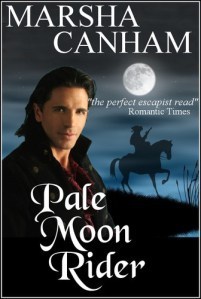
To get your copy of Pale Moon Rider at half price, click on the cover, zoom to Smashwords, and use the coupon: REW50
Last but not least is my one and only short story, What the Heart Sees. Originally written for the Loopie anthology, Masters of Seduction, it let me revisit the greenwood of Medieval England. Castles and longbows, evil villains and brave knights, tossed in with a lady archer and a blind jeweler who throws a little magic into the mix. I never knew how hard it was to write a short story until I did this. I usually take 50 pages or so just to introduce the characters and get the plot underway. Here I had to introduce, develop, toss in conflicts and battles and magic and of course, lovvvvvvvve *s* all in under 50 pages. whew.

To get a copy of What the Heart Sees FREE, click on the cover, zoom to Smashwords, and use the coupon: RE100
Happy reading.








