
Marsha Canham's Blog, page 5
September 2, 2012
Sunday’s Sneak Peek with Fran Baker

I’m a little late getting off the block today. The adopted son in law and daughter in law both moved on the same day to new houses, which caused a wee bit of chaos. Son in law had no bed so he crashed here for two nights which meant me getting up and *gasp* making breakfasts…which, for anyone who knows me…is NOT a frequent occurrence. In fact…thinking hard…I *think* the last time I made anyone breakfast was……
Anyway. *ahem*. Today’s wonderful guest is Fran Baker. Enjoy.
First, a little about me. I’m the bestselling author of nine contemporary romances and six historical romances. (Which makes me something of a genre jumper, but that’s a subject for another day.) All but four of my novels have been translated into 21 languages, the most recent being Portuguese, and it’s so much fun seeing the foreign editions on my bookshelf. Though I’ve traveled the world, I live and write just 15 miles from where I was born and less than that from where I’ll be buried.
The book I’ve chosen for today’s Sneak Peek is Miss Antiqua’s Adventure, the fourth title in my Regency-set Misses series. I had a lot of fun with this book. And I really loved that I could include a sword fight – my first but, I hope, not my last.
Briefly, Antiqua Greybill doesn’t care that the handsome stranger thinks her a lightskirt so long as he takes her with him back to England. She has a dangerous mission to complete, and nothing less than the escape of Napoleon Bonaparte depends upon the delivery of the secret papers hidden in her muff. More dangerous yet, however, are the stranger’s skillful kisses and the discovery that he is the notorious Jack Vincent – the very man she is fleeing!
The book opens in Amiens, France, where Jack Vincent has shot a man in a duel. But did he shoot the dying man whose urgent mission Antiqua Greybill has just agreed to complete? And how will she get back to her beloved England if she doesn’t go with this libertine?
Enjoy this excerpt from Miss Antiqua’s Adventure:
A door opened behind her. She spun guiltily about. Across the narrow width of the corridor stood a man wearing a many-caped greatcoat and black pantaloons. The faint light of the hall lantern haloed him like some dark angel.
Eyes bluer than the Thames in June burned from a face that might have been carved from stone. His hair was more black than brown, his brows equally dark, and his nose was high-bridged above a mouth that promised either cruelty or intense sexuality. Or both. That thought made her throat go dry.
Folding his arms over his chest, the stranger leaned his shoulder against the door frame, apparently disposed to remain staring at this unexpected petite vision with the shapely figure curving only where it ought. Antiqua read the insult in the gaze arrogantly raking over her, and a fierce flush spread across her cheeks. Still, she stood her ground, enduring his stare and trying to face him down, despite the certain knowledge that she was doomed to failure.
His bold scrutiny made her acutely and uncomfortably aware of the way in which waves of thick chestnut hair framed her face in abandoned dishevelment. She knew a wish that she had had time to dress properly and could only hope he had not noted the state of disarray of her attire. That hope died as a wickedly suggestive smile touched his lips.
“It appears monsieur le tuteur has spent a more pleasant evening than I,” he observed in flawless French.
The nature of his comment passed unnoticed for Antiqua’s gaze had traveled to the huge servant standing behind the presumptuous man. Her eyes widened as she saw he carried a pair of portmanteaux in each hand. This man was leaving the hotel! Even should he be traveling on to Paris, it would be better, far better, than to remain in Amiens. She realized instantly that this was a gift from Providence, and she did not intend to let it slip past her.
Her attention returned to the dark-clad man. “Oh, please, monsieur, are you leaving Amiens?” she asked in passable French.
Monsieur saw a pair of enormous velvet brown eyes turned upward in mute appeal. Ignoring the urgent plea in those lovely eyes, he lowered his gaze to her full red lips, lips which bespoke a passionate promise, then lower still to the gentle swell beneath the crumpled gown. She stirred nervously under his study, and he caught the wisp of honeysuckle scent.
“Ah . . . oui, mademoiselle,” he replied with a slight quirk of those sensuous lips. “May I perhaps be of some service?”
The tone was insolent. His eyes were those of a predator as they fixed upon the unbuttoned neck of her gown. She felt branded where his cool gaze raked across the creamy hint of her breasts. Blushing more keenly still, Antiqua forced herself to remain calm. Clearly, his behavior was an insult. Under ordinary circumstances she would have taken offense. But circumstances were far from ordinary. This was a matter of life and death. The information which had cost Thomas Allen his life made it imperative that she leave Amiens without delay. She could not afford to spurn such an opportunity.
With a halting effort, she answered, “Yes. That is, I should like to go with you.”
“Should you indeed?” A tiny ripple of sarcasm ran through his question.
“Sir, I do not think—” began the manservant, to be silenced with a quelling look.
“I—I would gladly pay for the journey, monsieur,” she stammered. “I’ve not much money, but—”
“Ma chérie, there is no need. I should be delighted to take you up,” he drawled.
He straightened and extended a hand. Antiqua stared at it in horror. Undoubtedly, Monsieur meant far more than a mere insult. She opened her mouth to put him firmly in his place when he added in a drowsy voice, “We are bound for Calais, but it shall be my pleasure to convey you wherever you wish to go.”
At the magic mention of Calais, all thought of informing Monsieur soundly that she would rather walk than accept such an offer evaporated. To be taken as far as Calais! Nothing could be more perfect. If the security of England, not to mention the whole of Europe, rested upon her having to masquerade briefly as a member of the muslin set, then Antiqua Greybill was prepared to make the sacrifice.
“Merci, Monsieur. Calais is precisely where I wish to go. It will take me but a moment to collect my things.” She turned toward the stair.
The gentleman’s hand remained outstretched. “Come. My man will see to your things.”
“But—but I need my cloak—”
“You shall have mine, ma chérie.” So saying, he removed his coat and threw it over her shoulders, ignoring the reproachful glare of his servant as he wrapped her in its heavy warmth.
Antiqua had no choice. To demur further could only annoy him and if he chose not to take her with him, she had no idea what she could do. The way to Paris had been paid by her Tante Yvonne and Antiqua knew the meager sum reposing in her reticule would not get her beyond the first post-stop. She therefore surrendered her hand into Monsieur’s keeping.
His touch, like his manner, was cool. She could not understand the surge of warmth which coursed through her. She stared at her hand within his, as if it might explain her odd reaction.
Outside the brisk night air rushed at her and the bright full moon cast spectral shadows in unearthly array. Antiqua pushed her hair back out of her eyes with her free hand as she hurried to keep pace with her—what, benefactor or captor? Not for the first time, she wondered if she were not actually still lying upon her poster bed and this was some hideous dream from which she could not awaken.
She surreptitiously examined the profile just above her head. It was an aristocratic profile, and like his clothes, his stance, his very air, it proclaimed wealth and breeding and the arrogance that came with same. Though his clasp was light, a virile strength lay beneath his fingertips and she unreasonably wished she could let this man go on to Calais without her.
Two large traveling carriages stood waiting, along with what seemed to her to be a small army of servants. If any of these were surprised that Monsieur had appeared with a young lady, they were too well-trained to show it. Nonetheless, Antiqua felt grateful for the loan of Monsieur’s coat, and sank her head as deeply into the folds of the capes as possible as she was guided toward the first of the luxurious coaches. She hoped the valet would not be long in following with Lucy, for she was decidedly uncomfortable alone with the aloof, yet somehow arousing, gentleman. He handed her up into the carriage, then climbed in lithely behind her. The door closed and instantly the vehicle lurched forward, causing his cloak to slip from her shoulders.
“Monsieur!” Antiqua cried in alarm. “We cannot leave! My—my clothes—my maid—”
“You must learn, my dear, to have more faith in Fawkes,” he said as he calmly repossessed himself of her hand in a grip hard as iron, but much more pleasant. “He shall attend to it, I assure you.”
He had spoken in English even more impeccable than his perfect French. Antiqua turned her wide brown eyes directly upon him. “But you’re not French” she accused.
“Ah . . . no,” he admitted. “I am English. I did not think I could bear your—forgive me, dear heart—your wretched attempts at French any longer.”
“I have been told, sir, that my French is very creditable,” she said coldly.
“Whoever told you so, sweeting, was being kind. Monsieur le tuteur, perhaps?”
The shadows hid his expression, but the husky depth of this last remark brought Antiqua to a renewed realization of the danger of her situation. Her stomach began to churn with a sinking dread. She tried to regain her hand.
She was unsuccessful. With a mocking smile, he brought her unwilling hand to his lips. He lightly stroked her fingertips, sending curious tingles up her arm, then turned her hand and touched the center of her palm with his lips.
Her body quivered. The intimacy was oddly thrilling. Fighting this, she focused her mind on business. “Do you intend to travel on to England, sir?”
“You are shivering, my little one. I think perhaps you need warming.” He moved closer.
Her dress rustled furtively as she tried to scoot away from him without any overt fleeing gestures. “But—but England? Are you going there?”
“And if I am?” he asked in a low voice that seemed to resonate deep inside her.
Her heart thudded erratically as she watched his well-toned muscles ripple beneath the tight pantaloons when he moved closer still. “C-could I—I go with you?”
“Ah . . . now that would, of course, depend.”
“On w-what?”
“On tonight, velvet-eyes . . .”



August 29, 2012
My two cents on paid reviews
For what it’s worth. There’s a lot of buzzing going on these days after the article in NY Times came out about Todd Rutherford (a.k.a. “The Publishing Guru”) and the way he captitalized on authors willing to pay to have their books reviewed. It was implied that most of those authors were indies, self-published. The biggest gasp that sucked all the oxygen out of the indie world was John Locke admitting he paid for more than 300 reviews.
I don’t think I have 300 reviews, total, for all my books spanning back over 30 years *snort*
When he got started, Rutherford was working for a vanity press so he knew how valuable reviews are to unknown authors. Even popular authors need to get attention for their books. So he started a business to sell them what they were looking for and he brags openly that within a short time he was pulling in $28,000/month and even had to hire people to churn out the cookie-cutter 5 star reviews that got pasted all over Amazon and other sites. Amazon has since caught on and deleted most of his reviews, but the taint remains. It’s right up there with the little groups of authors who write reviews for each other whether they’ve read the books or not, but hey, it looks good and the more reviews a book gets–especially the five star ones–the higher up the algorithm ladder the books climb. Some advertising sites, for instance, will not accept books that have fewer than 10 five star reviews.
It isn’t just Rutherford capitalizing on this either. Kirkus Reviews…claiming to be one of the most prestigious mags for book reviews–now offers to review an indie book for the sweet sum of nearly $500, more if the author wants it fast-tracked. They promise honest reviews and if the author doesn’t like what s/he gets back, s/he has the option of burying it under the rug.
So what’s wrong with this picture? Well…for one thing, if it’s a paid review through services like Rutherford offers, chances are, for your $99, you’re likely to see a glowing, enthusiastic five star review for a book that some unsuspecting readers are going to shell out good money for hoping to find a new author, and in this brave new world of ebooks, finding new good authors is a treat. I won’t ramble on here about the thousands of good books that were rejected by anal editors who thought they didn’t fit the required genres that were in fashion at the time. Or that one of the grandest bonuses of being able to self publish is that all of those thousands of really good books can now find their way into reader’s hands. Nope, won’t ramble about that. But I will reiterate that competition is fierce to get those thousands of good books noticed, and most of them get poured into the same rushing headwaters as the thousands of not-so-good books that spill over the waterfall every month. Reviews help readers wade through those waters and if the reviews are tainted or skewed, then the reader skims through a dozen pages into it and thinks: WTF? and tosses it back into the swirling waters vowing never to read that author again.
Authors rely on reviews, but they also rely on word of mouth, and if a reader is pissed off by a poorly written book, that word spreads just as far and wide as word of a great book. So suddenly that $99 review isn’t looking like such a great idea.
One of the counter-arguments I’ve heard is that publishers have always paid for reviews. Hmmm. Not so. They used to send out ARC’s…Advance Reading Copies…freebies that went to reviewers and book distributors and it was up to them if they wrote a good or bad review, or if they reviewed it at all. When I was in print and working for three of the biggest of the Big Six, I used to wait on pins and needles for the reviews to come out on a new book. For romance, the main reviews came from Romantic Times and Affaire de Coeur. Publisher’s Weekly was never big on romance in the early days, so if you got a good review from them you could sing it from the rooftops. I still flog the review I got from them for The Iron Rose and the fact it was voted by their reviewers as one of the seven best mass market fiction books of the year. That’s what you call good mileage.
There were a few online sites as well, run by readers who went out and bought the books, read them, and reviewed them honestly. You never knew if you were going to bash yourself over the head with a brick when you read one of those reviews, or pop open a bottle of bubbly to celebrate. Mrs Giggles, for one, still wields a large, sharp carving knife when she writes a review, but frankly, I would rather get an honest opinion from her, than a phony one bought and paid for by someone who skims the back blurb or the synopsis and proclaims my brilliance whilst spelling the names of the hero and heroine wrong.
The same holds true with “beta readers” another catch phrase that gets tossed out there as if the books were being tested for levels of radiation. These are readers who offer to read the first draft of a book, or the second or third, and give the author feedback on what could be improved, what makes sense, what makes them yawn. A good “beta” reader gives an honest opinion regardless if it sends the author into the bathroom to toss her cookies. I had a great “sounding board” when I first started out. She was harsh when she needed to be harsh and never told me what I wanted to hear, only what I needed to hear. She was directly responsible for making me throw out the first version of The Pride of Lions and do a complete rewrite that resulted in not just a better book, but a bigger book that had to be divided into two, then three. Thus the Scotland trilogy of The Pride of Lions, The Blood of Roses, and Midnight Honor were born. If she had just told me oh yeah, the book is fine (which, in fact, she did say…but then added: it’s good enough but kind of predictable and ordinary and could have been written by anyone. I had no problem putting it down for a couple of a days and coming back to it. Augh! Predictable? Ordinary? KISS OF DEATH!!!!) I probably would have sent it in and it would have been…just fine. Ordinary. Predictable. But fine.
I pay VERY close attention to any reviews that show up on Amazon or elsewhere, and yes, I get one star reviews and I get five star reviews. I can’t say I love the one star reviews, but hey…every reader has an opinion and their opinion matters just as much as those who write a five star review. Hell, I don’t like every book that my friends rave about and thrust into my hands to read. Everyone’s taste is different and not everyone likes the kind of book I write. Would I pay someone to write a bunch of five star reviews just so that I sounded more popular than I am? Noooooooooo. I yam what I yam and I write what I write and if readers like what I write and they give me a good review, it puts a huge smile on my face and makes me feel all warm and fuzzy inside. If they don’t like it and give me one star, then I take a deep breath, try to see some value in the criticism and think of ways of possibly winning them over with the next book. Can you imagine how boring the world would be if there was only one type of book out there, one genre, one style of writing, one plot, one size fits all?
Of course, I’m snickering here as I write that, because that’s exactly why I went on an eight year hiatus from writing…because that’s what the publishers were trying to do: dictate what to write and how to write it. Let’s try not to spoil this new-found freedom by taking away the value of an honest review.


August 26, 2012
Sneak a peek at Leighton Gage

A bloggy Sunday welcome to Leighton Gage, one of many new to even me authors I’ve met over the past year and a half since leaving my hiatus days behind me. I hope you all enjoy these weekly peeks into other genres. Sit back, pour a fresh cuppa and read on.
A few words from Leighton:
I was born in the United States, and my family has roots there that go back for almost four centuries, but I’ve been spent most of my life outside of the country. These days, I live in a little town in Brazil, which is where all of my books, save one, are set. They’re police procedurals.
One of the major trade publications called my protagonist, Chief Inspector Mario Silva, South America’s Wallender. That was flattering, but I actually think my work is closer to that of the 87th Precinct Novels of Ed McBain.The current book, A Vine in the Blood, is available in hard cover, audio and digital versions, with a paperback scheduled for early next year.
The next one, Perfect Hatred will release in North America in February of 2013.
What follows is an excerpt from Blood of the Wicked, the first in the series, mentioned favorably in the New York Times. On the fourth of September, it will be re-issued as a low-priced trade paperback.
An Excerpt from Blood of the Wicked:
Something took the helicopter and shook it like a jackal worrying a carcass. The bishop gripped the aluminum supports on either side of his seat and hung on for dear life.
“Clear air turbulence,” the pilot observed laconically, and resumed chewing his gum.
“Merda!” the bishop muttered. He regretted the vulgarity as soon as he’d said it.
“What’s that, your Excellency?”
The bishop’s eyes darted to his right. In his fear and discomfort, he’d forgotten the microphones, forgotten the headphones, forgotten that the man could hear every word he said.
And what if he had? Was it not true? Was the helicopter not a merda, a great stinking, steaming merda? And who was the pilot, anyway? What had he ever done in his blessed life other than to learn how to fly the merda? How dare he criticize a man who might, God willing, be a future prince of the Church?
The pilot, whose name was Julio, and who wasn’t criticizing anyone, had been distracted by a flock of vultures wheeling in graceful curves over the approaching river. He honestly hadn’t heard what the bishop had said. He opened his mouth to repeat the question, then shut it again when he saw the cleric’s mouth set into a thin line.
Julio had a paunch, sweat stains under the arms of his khaki shirt and a habit of chewing gum with his mouth open — all of which Dom Felipe Antunes, the Bishop of Presidente Vargas, found distasteful. But it was nothing in comparison to Dom Felipe’s distaste for the helicopter.
The bishop glanced at his watch, wiped his sweaty palms on his silk cassock and resumed a death grip on the aluminum supports.
Forty-seven blessed minutes in the air. Forty-seven minutes.
“It won’t be long now, Your Excellency.”
Was that amusement in the man’s voice? Was he enjoying himself? Did he think fear was funny?
On the floor beneath Dom Felipe’s feet there was a thin (he was sure it was thin) window of Plexiglas. He tried to avoid looking down, but some perverse instinct kept drawing his eyes back to that dreadful hole in the floor. They were over the river now, sand bars protruding through chocolate colored foam. The sand looked as hard as the rock-strewn banks.
Did helicopters float?
A rowboat drifted in mid-river, two fishermen aboard, a huge net piled high between them. They looked up at him, shielding their eyes against the morning sun. One waved.
Reflexively, Dom Felipe waved back. Then a flash, like the strobe on a camera, caused him to snap his head upward and seek the source of the light.
Far ahead of him, beyond the bug-flecked windshield, the flash came again. He squinted and…yes, there it was. Sunlight of an almost blinding intensity reflected off an expanse of glass. It couldn’t be anything other than the Great Window. And that meant that the brand-new church of Nossa Senhora dos Milagres was in sight.
The window was almost five meters in diameter and had come all the way from the Venetian island of Murano at a cost of almost two hundred thousand Reais, not including the shipping, which, together with the insurance, had amounted to thirty thousand more. When the sun hit it just right — as it was doing now — the Window would cast rays of glorious blue light all along the nave of the new church.
Dom Felipe made a conscious effort to hold that image, focusing on the blue light, as if it were a meditation. But then the pitch of the engine changed, dragging him back into his dreadful reality.
The Lord is my shepherd…
A landing spot had been marked out: A Christian cross in stones the size of golf balls, and just as white. A rectangle of sere grass surrounded it, hemmed by dusty palm trees. Yellow plastic tape ran from tree to tree, holding back the crowd. Men in the gray uniforms of the State Police were stationed at intervals along the length of the tape, their backs to the cross, keeping the landing area clear.
The crowd started moving like a living thing. Signs of welcome were raised. Others, already aloft, were turned to face the approaching helicopter. White and brown faces looked upward. And there were banners, too.
Dom Felipe bit his lip in vexation. The banners were red, blood red, the unmistakable standards of the Landless Worker’s League. The League seldom missed an opportunity — no matter how inappropriate — to turn a gathering into a political event. The bishop knew that. Still, he’d been hopeful that, in this case, the consecration of the new church….
There was the slightest of jolts as the helicopter’s skids met the grass.
It’s over! Hail Mary, full of grace… Never again.
Julio pulled a lever and threw a switch. The engine died.
Above the swish of air from the still-spinning rotor blades Dom Felipe could hear, for the first time, the cheers of the crowd. He took off his headset, handed it to the pilot and raised his right hand in benediction.
Insolently, the red banners waved back at him.
Dom Felipe suppressed an uncharitable thought and bent over to retrieve his miter, untangling the lappets before placing it on his head. Then he composed his features into a beatific smile and waited for the pilot to open his door.
Julio, unaccustomed to ferrying bishops, finally seemed to realize what was expected of him. He removed his headset, skirted the nose of the aircraft and reached Dom Felipe’s side just as the bishop opened the door himself.
Dom Felipe waved off the pilot’s offered hand, put his feet on solid ground and started searching the crowd for the face of his secretary, Father Francisco, the man who’d hatched the helicopter plot.
If Francisco thinks I’m going back to Presidente Vargas the same way he got me here, he’s got another think coming. I’ll return by car, he’ll have to find one, and it had better be one with air conditioning.
Francisco was nowhere in sight, but Gaspar Farias was. Dom Felipe could clearly see his corpulent body, wrapped in a black cassock, standing in the shadow of the vestibule. Involuntarily, the bishop scowled.
A choir of adolescents dressed in identical cotton robes was standing against the tape, a rectangle of blue in the multicolored collage that made up the crowd. The children were close enough to read the bishop’s scowl and seemed to be puzzled by it.
With the skill born of practice, Dom Felipe forced a smile onto his lips. The youngsters’ puzzlement vanished, replaced by beams of welcome. A woman in an identical robe, her back to the bishop, her face toward her charges, started to wave her arms and the children broke into song, their young voices murdering the English words, “Why do the nations…”
Handel? A Protestant? Who in the world chose that?
Dom Felipe raised his hand in another benediction and silently mouthed words of thanks, conserving his voice for the sermon and for the all-important interviews that were sure to follow.
It was the dry season and, to make it worse, a great deal of construction was going on. From the air, the city of Cascatas do Pontal had seemed to be covered by a dome of red dust. He could feel some of that dust right now, abrading his neck where it met his collar, coating his lips, working its way into his throat. He’d need a carafe of water on the pulpit. Francisco could take care of that. Not Gaspar. Dom Felipe didn’t want anything from Gaspar, didn’t even want to talk to him.
The bishop shifted his body to face another sector of the crowd and raised his arm. His silk sleeve slid downward, just enough to expose his watch. A practiced flick of his eyes confirmed that he wasn’t early. He was a stylish seven minutes late.
So where is the blessed reception committee?
He didn’t want to stand there looking like a fool, so he folded his hands under his chin, bowed his head and offered a prayer.
In recognizance of the solemn moment, the singing faded, and then stopped. The cheering abated. Dom Felipe kept his head down, and his eyes closed, until he heard the rustle of people working their way through the crowd. Then he lifted his head and unclasped his hands. Immediately the cheers erupted anew, and the singing started all over again, right from the beginning of the piece.
One of the policemen grasped a segment of the yellow crowd tape and held it shoulder high. One by one, the members of the reception party slipped under it, seven men in all, and started crossing the empty space toward him.
Cascatas do Pontal was an agricultural town, an informal place. The jackets and ties the men were wearing all looked new. Despite the welcoming smiles they’d plastered on their faces, the local dignitaries looked uncomfortable. All seven of them were red-faced and sweating in the heat.
The bishop took an impulsive step toward them, and then stopped.
They’ll think it more dignified if I let them come to me.
It was the last decision of Dom Felipe’s life.
***
Walter Abendthaler snapped off another shot with the Pentax, advanced the film and reached for the motor-driven Nikon. Some of his contemporaries liked the digital gear, and all of the kids used it, but not Walter. Walter preferred film. He was an old-fashioned kind of guy.
Maybe too old-fashioned, at least that’s what the agency art directors were telling him these days. A few lines on your face, a little gray in your hair, and they all thought you were over the hill.
Scheisse! Why didn’t they concentrate on his portfolio instead? His pictures clearly demonstrated that he had a better eye for angles than most of the young punks now getting into the business. But did they appreciate that? No, they didn’t. Instead of focusing on his pictures, art directors had a tendency to focus on his gray hair.
Walter would have been willing to bet good money — something he happened to be short of at the moment, or he wouldn’t have been in Cascatas at all — that not one of those overestimated punk kids, not even that Scheisskerl Chico Ramos, would have had the foresight to do what he’d done.
He was on the church steps, almost in the vestibule, just below Gaspar Farias, the crow that ran the parish. (The black soutanes priests wore always reminded Walter of crows so that’s what he called them.) That put Walter seventy-five meters from the helicopter, maybe even a little more, but that was the beauty of it, the action of a man who knew his business. The punk kids always tried to get in close, instead of letting the lens do it for them. And now, while they were all down there in the crush elbowing each other out of the way, Walter had a spot all to himself, high above the heads of the crowd. There was nothing, nothing at all, between him and the Chief Crow. He had an unimpeded view.
Walter’s medium-length telephoto, the 300mm, was — exactly as he’d foreseen — the perfect lens for the job. His frame ran from slightly below the knees to the tip of the bishop’s miter.
Walter hit and released the shutter button. The Nikon clicked and whirred.
Ha! Gotcha sneaking a peek at your watch.
He’d save that one, maybe blow it up and put it in his portfolio. They’d never print it. Then it got boring: His Crowness bowed his head, concealing his face under his funny hat, and stood there for a long time doing absolutely nothing.
Walter didn’t bother to waste any film.
At last the head came up and the kids started singing again, their high voices carrying well over the murmur of the crowd.
Walter knew the music, a passage from the Messiah, and he hummed along, pleased with himself.
The bishop took a few steps forward and stopped.
Just to the cleric’s left, Walter had the logotype, the whole logotype, solidly in the shot. The telephoto altered the perspective, brought the background closer, made the logo look even bigger than it was. The client would love it.
Love it, because Walter’s assignment wasn’t to register the arrival of the bishop. It was to register the link between the Church and Fertilbras, Brazil’s largest manufacturer of fertilizer.
Providing this day’s transportation was a public-relations ploy for the company. Running the chopper cost them eighteen-hundred Reais an hour, and they intended to get their money’s worth by making sure that Walter’s photos, the ultimate selection of which would be made by Fertilbras’s chairman himself, appeared in every newspaper in the state of São Paulo. Or at least in those newspapers where Fertilbras’s advertising budget gave them leverage with the editorial staff.
In one of his sarcastic moments, of which there were many, Walter, no Catholic, had commented to his wife, Magda, that there was a similarity between what the Catholic Church and his client offered to the public. Magda hadn’t laughed, so he’d had to explain: “The Church peddles bullshit, another form of fertilizer. Get it?” She still hadn’t laughed. Magda was from Zurich and had the same sense of humor as her parents: none at all.
The Chief Crow had turned out to be as handsome in the flesh as he was in the photos Walter had seen. Dom Felipe was still young, well under sixty, but his abundant, carefully coifed hair was already a snowy white.
Colored, for sure. His eyebrows are still dark.
Unfortunately, the 300mm didn’t bring Dom Felipe close enough to display the blue eyes that women were prone to gush about. Walter hoped for better luck when the bishop got his act together and moved toward him.
The guy’s got charisma, I’ll give him that. Looks like he has a poker up his ass. Stands more like a soldier than a priest.
Walter momentarily took the viewfinder away from his eye and glanced at the film counter.
Six. Thirty shots left on the roll.
He switched off the automatic focus and made a minor adjustment.
Uh oh.
A cloud slipped between Walter’s subjects and the sun. He had to open up. One, no, two stops. Two whole stops! Scheisse! It was playing hell with his depth of field. If the bishop moved any further away from the background, Walter was going to have to choose between staying sharp on either the man or the logotype. And that was, as the English put it, Hobson’s choice: no goddamned choice at all. Unless the sun came back from behind that fucking cloud, the link he was supposed to capture would be gone, and he’d have one unhappy client.
Walter saw blurry movement on the bottom left of his frame. He lowered the camera to check it out, and then clapped the viewfinder back to his eye.
The reception committee.
He left the focus where it was. The group was getting sharper and sharper as it approached the bishop. Then one of them stopped right between Walter and the logotype.
In a spasm of anger, Walter pressed the shutter.
A fraction of a second later, a hole appeared in the front of Dom Felipe’s cassock.
The shutter stayed open long enough to register both the entry wound and the red mist that spurted into the air behind the bishop’s back.
A less-experienced man, one of those young punks, might have started looking around to see where the shot had come from but not Walter Abendthaler.
Walter, old pro that he was, kept his finger on the shutter button. The motor drive kept advancing. The shutter opened and closed, opened and closed, capturing shot after shot.
In successive frames, the bishop took a step backward, looked down at his chest, sunk to his knees, and pitched forward onto the ground. And then, in the very last exposure before the film ran out, the top of his head seemed to explode.
The crowd was horrified.
Walter Abendthaler was ecstatic. He was damned near positive he’d captured the very moment of the bullet’s impact.

Check out Leighton’s website at: http://www.leightongage.com


August 19, 2012
Today’s Sneak Peek is from Karen McCullough

Ah, ’tis a bright brisk Sunday morning. Temps are down, needed a sweater to take the dog out…first time since May…and my grandson was up bright and early for an 8:00 baseball game down in the city. Fingers crossed for a win. I’d be there cheering him on, but…it’s an 8:00 game down in the city…so I’m cheering him on from afar while I have a coffee and rescue Jonas Dante from the sea.
Easing me…and you…into working-brain-mode is Karen McCullough, so pour a coffee, sit back and enjoy *g*.
From Karen:
A Question of Fire was the second complete novel I wrote, way back in the early 1980s. It had a lot of problems, but after getting feedback from my critique group, I rewrote and began submitting it. The response was encouraging—sort of. Several editors loved it but told me they weren’t buying romantic suspense at that time. I put it away and wrote other books. Eventually I sold a book, the sixth complete novel I’d written. I didn’t give up on this story, however. I rewrote it a couple of times, started submitting again, and this time it did find a publisher. It had a checkered history in print, including a very brief initial appearance and killing a small press publisher that re-released it later. When Amazon and Barnes & Noble provided an opportunity for authors to self-publish their own books, this is the one that I knew I wanted to make available again. I debated updating it. Because it was written before cell phones and the Internet changed a lot of things, some of it sounds dated. I settled for doing some minimal updating, but for the most part leaving it as it was.
Excerpt from A Question of Fire:
Saturday morning dawned bright, cheerful, and clear, an ironic day for a funeral. Cathy found the church easily. She took a seat near the back of the simple, unadorned, brick building and watched the others filter in. She recognized no one until Bobby’s family entered.
Danny had gotten a haircut and some sleep, but it would take more than that to remove the gauntness. The suit he wore had probably fit him a year or two ago.
A small, pregnant girl in a dark blue maternity dress came into the church and sat directly behind the family. Only Danny turned to greet her. She leaned forward to say something to him before settling uncomfortably on the bench.
Cathy had wondered if Bobby’s father would be able to attend, but only the three sat in the front row. They probably weren’t sorry. Right before the service began, Peter Lowell entered and, much to her surprise, sat next to her in the back of the church.
She wished he hadn’t; she tended to cry at funerals and preferred not to have witnesses to her loss of control.
The service was simple and affecting, though the minister clearly hadn’t known Bobby at all. Predictably, she found herself reaching for a tissue before the preacher had finished his talk on the value of all living things in the sight of God. She regained her composure by the time the graveside ceremonies concluded.
She was turning to leave when Lowell called after her. She stopped and waited for him.
He looked subdued and serious. “Are you working today?” he asked.
“This afternoon.”
“Do you have time for lunch first?”
Surprise silenced her for a moment. She didn’t really want to spoil her meal by fencing with Peter Lowell, but he must have something important on his mind if he was willing to spend an hour or more with someone he disliked so much. “I think I can find the time,” she answered.
“Good. Would you wait for me?” He walked away, and she watched him cross the grass to where Danny stood with his mother. He said something to each of them briefly, then returned to her. “You have your car here?”
“Yes. Shall I follow you?”
He nodded. They walked silently to the parking area. Cathy got in her Honda and backed it out into the lane. Lowell drove an old, beautifully-preserved Datsun 280Z. It wasn’t what she expected him to own; a BMW seemed more his style. She followed the Datsun and parked beside it when he pulled into the lot next to a Chinese restaurant. She was familiar with the place: moderately expensive, but the food was worth it.
Lowell got out of his car, locked it, and held the door to hers while she unfastened her seat belt. “I neglected to ask if you like Chinese. There’s an Italian place up the road if you prefer.”
“I like Chinese.”
The restaurant was cool and dim, with low, pop-Chinese music playing softly. Lowell said nothing until they’d both ordered the lunch special: wonton soup, eggroll, moo goo gai pan, rice, and shrimp chow-mein. The waiter poured hot green tea for them both, then left.
Lowell cradled his cup for a moment. “You talked to Mrs. Stark yesterday.”
Cathy looked up at him, measuring his purpose.
“I read the newspaper,” he said by way of explaining. “What did you think of her?”
“There’s not much of her left,” Cathy answered, trying to be fair. “She’s had a hard life; I felt sorry for her. Her sister, however—”
Lowell nodded. “I thought Mary Sue would be there. Never a good word for anybody.”
“She allowed as how Bobby might actually have made something of himself.”
“Now that he’s dead.” Lowell sipped cautiously at his tea. “She never said anything good when he was alive.”
“She wasn’t complimentary about Danny.”
“I’d bet not.” He sighed and studied the ripples in his cup for a few silent minutes. When he looked up, the lines in his face relaxed fractionally. “I know you’re wondering what this is all about.” His bright, sharp green eyes searched her face. “I talked to the police yesterday. A thorough search of Bobby’s apartment turned up nothing but a stash of crack.” He weighed her reaction. “You already knew.”
“About the crack? Yes. I talk to the police, too. I figure it must have been planted,” Cathy added. “But the police have decided they were right all along, and Bobby was up to his old tricks. They discount the likelihood he was telling the truth about finding evidence Danny was framed.”
Lowell nodded unhappily. “They certainly haven’t been able to find anything that looks like his evidence, and from what I can tell, they’ve been pretty damn thorough.”
“Do you believe it exists?” she asked him.
He was silent until the waiter had deposited steaming bowls of soup in front of each of them. “I’m pretty sure Bobby knew or found something, but I wonder if it would really prove as conclusive as he thought.” Lowell’s eyebrows, a few shades darker than his hair, drew together in a brief frown. “Still, as you pointed out, I can’t afford to overlook anything where my client is concerned. And there are a few aspects of this thing that bother me. Somebody went to a lot of trouble to kill Bobby, and there are only two explanations that make any sense: either Bobby really did have evidence that threatened someone else; or he’d gotten too deeply involved with his old cronies again. Patty swears Bobby hasn’t been using anything or dealing, and I believe her. I met with Bobby twice in the last month, and I never saw anything to make me think he was backsliding. I know he talked with some of his old contacts to get information, but that he was involved in any other way I don’t believe.”
Cathy considered his words for a minute. “Is it possible he accidentally tripped over something he shouldn’t have while he was digging for information? Something unrelated but potentially dangerous for him?”
“Possible, yes,” Lowell conceded. “But I don’t think it likely. Bobby knew the turf; knew what he wanted to know, and what he definitely didn’t need to know.”
“Which leaves you with your first possibility: Bobby really did have something.”
“Yes,” he agreed. He spooned a dollop of soup, but stopped before it reached his mouth and looked at her again. “The night Bobby died, somebody broke into the apartment he shared with Patty. Actually, it was early morning, probably between three and four. Patty was asleep at the time and wisely decided to remain ‘asleep’. The intruders were searching for something. She finally rolled over, made noise or something, and scared them off; but she thinks they planted the drugs at that time. She’s sure the bag wasn’t there before. The police arrived shortly after she got up the next morning to tell her Bobby was dead. Later, they made their own search and found nothing but the crack. She packed her things and moved back to her parents’ house.”
A waiter appeared to clear away the used dishes and deliver the rest of their lunch. Cathy picked up an eggroll and tried to absorb the implications while she nibbled.
“Whoever killed Bobby, or had him killed,” she speculated, “knew exactly what he’d found, knew it was dangerous, and knew it was still around. So they planted the drugs to discredit him and give themselves time to search. Whatever it was, Bobby hid it well. ‘In the air?’ There’s a funny kind of irony about that.”
Peter Lowell watched her in a way that suggested he was actually seeing her as a person and not just as a newspaper reporter. “So there is a logical brain in there,” he said. “I suspected there was, but began to doubt it after you told Danny you believed him on the basis of nothing more than his flimsy story.”
“Suspect logic yourself, Lowell. I believed Danny before I ever heard his story. I believed Bobby when he told me Danny was framed. A man doesn’t lie when he knows he’s dying.”
The tightening of Lowell’s facial muscles suggested he hadn’t come to terms with Bobby’s death yet. His voice remained even, however, when he pointed out, “He can be deceived.”
“Bobby knew his brother better than anyone else,” she reminded him. “He was so convinced by what he found or learned that he took a huge risk to see it delivered as quickly as possible I think he knew he was holding the tiger’s tail.”
“Conceded.” Lowell had the grace to smile slightly and her estimation of him rose a notch.
“In any case,” she continued, “I’m not sure his story’s unlikely any more. Something sure as hell is going on, and a lot of people are eager to get their hands on whatever he hid. A man named Ed Hammond, a private investigator, came around to talk to me on Thursday. He claims Bobby was working for him as well as trying to clear Danny. Hammond can’t or won’t say for whom he’s working, but he dropped hints that it had to do with some big-time narcotics operation. Apparently, he convinced Bobby that helping him might benefit his brother as well. Seems like maybe it did, too.”
“It didn’t do Bobby any good,” Lowell answered bitterly. “Did this Hammond say what it was he had Bobby working on?”
“He says he can’t tell.”
“How far do you trust him?”
Cathy wished she had a good answer to that question. “I don’t know. He knows something about this whole mess and he seemed upset by Bobby’s death. He wants to find the evidence pretty badly, too.”
“Hammond might bear some investigating himself,” Lowell speculated. “Do you know how to get in touch with him?”
“I’ve got a telephone number.”
“Would you let him know I’d like to meet with him?”
“Sure, but I don’t think you’ll find him helpful.”
The lawyer shrugged. “Probably not if you couldn’t charm it out of him.”
“Damn it, Lowell—” She broke off, counted to three, and started again. “Now that you’ve brought the discussion down to a personal level, I’ve got a question.”
His face shut down into blank impassivity. “You can ask, but I don’t promise to answer.”
“Fair enough. The night Bobby was killed, you disliked me before we’d even met. When Dr. Carrington introduced us, you looked at me as if I were something that had crawled out of a hole. What did I do to earn that?”
His face hardened; his eyes looked like chips of green ice. “Three things,” he answered. “You’re a woman, a flirt, and a newspaper reporter.”
She all but choked in astonishment. He didn’t pull any punches. “I can’t deny the first and the third,” she said, when she found her voice. “But you’ve got to be kidding about the second. Besides, you were angry before you knew I was a reporter.”
“True. The first two were enough. The third filled the straight.”
“I don’t believe this,” she said. “I’m a flirt? You’re out of your mind.”
“When I first saw you, you were doing something that looked very much like flirting with Gary Terril. He’s a married man.”
“I’m aware of that—”
“His wife is my cousin.”
“I see. You saw me laughing with Gary Terril and pegged me for ‘other woman’ status.”
“Every attractive woman Gary meets falls into that category. Women are drawn to him like iron shavings to a magnet, and Gary’s powers of resistance don’t exist.”
“You sound jealous.”
“God help me,” Lowell answered coldly. “It infuriates me that Lydia is constantly having to chase around after him to be sure he doesn’t make a fool of himself.”
“And you blame the women, of course. That’s rather a chauvinistic attitude, don’t you think?”
His fingers tightened around the teacup he held. “They get fifty percent of the blame. How much equality do you want?”
“So I’m fifty percent to blame for Gary’s charm?”
“For not resisting Gary’s married charm.”
“Consider this then, Mr. Lowell. When I met Gary at that party, I’d never seen him before, and he doesn’t wear a ring, so I had no way of knowing he was married. Plus he’d just rescued me from a terribly embarrassing situation. At the risk of incriminating myself, I admit I found him attractive and enjoyed talking with him, but I didn’t flirt with him or any other man there. I was at the party on business—newspaper business—which I admit I bungled badly. But I plead innocent to charges of flirting. I don’t think I know how.”
“Every woman knows how. It’s part of the genetic information. You expect me to believe you weren’t giving Gary encouragement?” he accused.
“Of course I was; he’s pleasant and attractive and I didn’t know he was already claimed. I felt pretty foolish and humiliated when I found out, too,” she admitted, while staring at her fork. She didn’t look up at him until the silence had stretched into discomfort.
“I’m sorry,” Lowell said, sounding surprisingly as though he meant it. A slight wash of pink stained his face under the light tan. “All right, Miss Bennett, I plead guilty to jumping to hasty, and perhaps unwarranted, conclusions. I apologize.”
A grudging apology beat none any day. It was all she was likely get and more than she’d expected. “Good, that’s one down,” she said.
“I beg your pardon?”
“We’ve disposed of my being a flirt. I’m afraid the charges of being a woman and a newspaper reporter are harder to deal with. May I point out on the first count that I bear no responsibility for the fact I’m female? I was born that way. We’re not all alike, you know, any more than men are the same, and I resent being classified as beneath contempt because some woman treated you badly.”
His eyes narrowed. “What do you know about it? Have you been digging around in my personal life?”
“Jumping to conclusions again, Lowell. I don’t know anything about you, except what I figure out for myself. It sticks out a country mile, you know.”
“It does? How long is a country mile?”
“What? I don’t—” It took a few seconds to absorb his question. It took even longer to absorb the fact that he’d asked it. She hadn’t suspected him of possessing a sense of humor. “I haven’t any idea,” she answered.
The ice chips in his eyes started to melt. “All right, I find myself in the awkward position of having to apologize again. If this keeps up, I’ll be down on hands and knees groveling before I’ve finished the moo goo gai pan. I concede the point and we’ll dismiss the first as an improper charge.”
“Well! Two down. For the third… I’m afraid I have to plead guilty and ask why it’s a crime.”
“I’ve had a couple clients who weren’t helped by being tried and convicted in the press before they ever got to court.”
“I see. So it’s guilt by association and not much I can do but plead no contest. Let me see if I can think of some mitigating circumstances… I like to eat, and bills for rent and electricity keep showing up in my mailbox? Or, with my training and background, nobody else would hire me? Pretty weak, I admit. So what’s the sentence?”
He smiled and the effect nearly unbalanced her. Not just that he could smile, but to see how the lines of his face relaxed into astonishing charm and the warmth glowed in his green eyes. “Help me clear Danny, and I’ll dismiss any and all charges,” he offered.
“You really want my help finding what Bobby knew?”
“You have a good mind and access to resources that might be useful. You believe in his proof and want to find it as badly as I do. And since you’re determined to pursue this… You still intend to? It would be wiser and safer for you to get out of it completely, you know.”
Cathy drained her tea and he poured more for her. “Yes, I’m going to pursue it,” she stated. “I know it’s dangerous, believe me, I know. I hope by now they’re convinced I don’t represent any threat to them. But even if…” She considered how to put her feelings into words without getting mawkish. “Oh, hell, this is going to sound sloppy and ridiculous, but it’s the truth. I can’t help thinking about Bobby and how he died. It haunts me. I’ve got to try to accomplish what he wanted, to get Danny off the hook. And find out who killed him. I can’t not pursue it.”
“I see,” Lowell said. “In that case, I think I’d rather be working with you than tripping over you all the time.”
“And I thought lawyers were supposed to be tactful.”
“This is Saturday. I’m off duty. And speaking of tact, are you going to tell me what happened at that party?”
“What do you mean?”
“You said Gary rescued you from an embarrassing situation.”
“Oh, that.” Cathy felt herself blushing at the memory. “Not on your life.” She finished the last of the food on her plate. “So, where do we begin?”
The gleam in his eye suggested he hadn’t given up, but he went along with the change of subject.

Buy A Question of Fire from:
Don’t forget to check out Karen’s
Website: http://www.kmccullough.com
Blog: http://www.kmccullough.com/kblog
Twitter: https://twitter.com/kgmccullough


August 16, 2012
Scratching my head Fifty Times
So I was checking out of Costco yesterday and happened to glance over…okay, snoop over…at the contents of the shopping carts on either side of me. On one side was five HUGE cardboard containers of cooking oil which, from past experience of hauling the same thing, indicates the shopper runs a snack bar of some kind. On the other side, lying on top of the usual flotsam of cheese and towels and bags of chips, were two paperbacks: Fifty Shades of Gray and Fifty Shades Darker. The woman pushing the cart was at least as old as me.. *cough* fifty something *cough*…and I was genuinely tempted to ask if she was buying the books because of all the hype or because she genuinely enjoyed reading books about rich men who get their kicks from smacking women around and calling it love.
I have nothing against the books or the author. Hell, the writing world is full of erotica, soft and hardcore. I’m not about to criticize the author either, she wrote a book, it caught the public eye, she struck gold and more power to her. JK Rowling did the same thing with the Harry Potter books. What does make me scratch my head is the fact that a large majority of the 40 million people who have bought the books are the same ones who have, for years, panned romance novels in general as being “soft core porn trash*. They are the same ones who wouldn’t be caught dead with a romance novel on their coffee table or in their laps while riding a subway train. Yet there they are, in Costco, proudly displaying two books about bondage and discipline, sadism and masochism.
Really? Romances are unrealistic and demean women, but a book about a handsome rich guy who gets his jollies abusing women is okay?
Are these the same people who listen to rap music about a guy beating up his girlfriend, scarring her, then saying it was just a mistake and he’s sorry and it won’t happen again? DUH???? I caught my granddaughter listing to that crap…not just listening, but singing along and knowing all the damn words. That’s music? That’s our culture?
Another close friend vented this week on the same subjects and, with her permission, I’ll quote a little of it here:
>>>>This whole 50 shades really aggravates me. It just really bugs me when huge amounts of attention are given to things that really should fade away. Like Snooki and her Jersey cohorts. And the Kardashians. And stupid poorly written books about abusing women but the abuse is okay because the “hero” is gorgeous and wealthy and just needs to be sexually healed because his mommy mistreated him when he was a kid. Yeah, well, I’m gonna go out on a limb here and say that a large percent of abusers suffered abuse as a kid. But hey, Christian Grey is BEAUTIFUL and SEXY and RICH! So it’s okay! Let’s make a clothing line!<<<
Yes, dear readers, there will soon be a whole line of clothing, from panties and bras to Tshirts and jammies:
Forget carrying it in your purse — now you can keep “Fifty Shades of Grey” where it matters most … near your special lady place … because TMZ has learned, the people behind the book just inked a massive women’s underwear deal.A rep for CopCorp Licensing tells TMZ, three apparel companies have just locked down the FIRST EVER licensing deals with author E.L. James to distribute “Fifty Shades”-themed clothes … from t-shirts and hoodies … to ladies’ pantyhose, underwear, and pajamas.
Seriously? Next to your “special lady place”? And they pan romance writers for “purple prose”???? But I digress, and the quoted rant from my friend continues….
>>>I find it really disturbing that so many women think this is okay and have elevated this to such an exalted level. It makes me embarrassed to be a woman. And I’m really disgusted about the popular symbols of our country—look at who is “representing” us—the Kardashians and the Jersey Shore and Justin Bieber. Versus England—they have the glorious, classy, fabulous Duchess Kate and Prince William. Even Prince Harry manages to keep naughtiness adorable and classy. Instead we seem to be descending into a nation of hoochie-mamas and shallow Housewives and rap singers who beat up on girls—and the girls as well as the rest of the nation apparently thinking that’s okay (yeah, let’s give a few more Grammy awards to Chris Brown!). Did I tell you about the story I read about when Justin Bieber met the President Obama? This is how (according to the story) he greeted our president: “What up, dude?” Are you KIDDING ME??? But worse, according to the story, our president, the most powerful man in the free world, answered, “What up, Biebs?” Insert face plant here. Where is the respect? And why the hell didn’t the president stare down that disrespectful little brat and say, “That is NOT how you greet the President of the United States.” Can you imagine someone greeting the Queen like that?? NO.<<<<
As I said at the outset, I have no comment about the books, I haven’t read them and don’t intend to. I glanced at a few sample pages and that was enough. Anyone remember pet rocks? They were a world-wide phenomenon back in the 70′s. People paid upwards of $5 and $10 for stones with faces painted on them. Not that I’m comparing books to rocks to faddish clothing lines, but I would hazard to guess in ten years they will all have ended up in the same place.
Just my opinion, of course. I’ve never understood the hype around the Kardashians either. What, exactly, do they do? And why does anyone care????
*snort*


August 12, 2012
Sunday Sneak Peek

Today we get to peek into the Nanny and the Professor by Donna Fasano. First a little bio information while the coffee is brewing…
From Donna: Growing up the third child of five—yes, smack dab in the middle and the only girl to boot—I had no idea I would one day become a published author. My story-telling talents came to light when I conjured lively and elaborate tales of pure blarney (yes, I have a bit of Irish in my blood) for, first, my youngest brother, and years later, my children.
I sold my first manuscript in 1989, and since then have become a bestselling, award-winning author of over thirty novels and four audio books. I am known for my “smooth, polished” writing style and for creating “strong, complex” characters. Reviewers have used words like ”poignant,” “richly textured,” “enticing,” and “absorbing.” The writing process can be extremely engrossing, so much so that I’ve missed appointments with dentists and doctors, lunches with friends and family. Luckily, the people in my life forgive me for this quirk.
Still happily married to my high school sweetheart, I am the mother of two grown sons who have flown the coop. My husband and I share our home with Roo, a spotted red and cream Australian cattle dog that looks (and acts) like a wild dingo. My spare time is spent reading, walking the countryside and beach, biking (that’s Schwinn, not Harley), or trying out new recipes from one of the many cookbooks I have collected over the years. Oh, and one night a week hubby and I nab some alone time from our busy schedules, enjoying a nice glass of wine and a movie—preferably a romantic comedy.
An excerpt from Nanny and the Professor
Cassie looked down at Joshua who was standing in the shallow end of the pool. This afternoon when she’d first thought of the idea to flaunt her swimming abilities, she’d enjoyed the prospect of making him look the fool. She’d actually thought he deserved it. But now she was rethinking the idea. He’d kept her on in the job, he’d admitted he’d been wrong about the list of restrictions, and he’d just shown her his distinctly compassionate side. Maybe it was silly of her, but she didn’t want to do anything that might damage this new and delicate understanding.
Granted, he intimidated her, and she had to admit she was a little afraid of him– well, afraid probably wasn’t the right word to use to describe her feelings. But she was fearful of his finding out her secret. However, they had actually exchanged a few words of civil conversation over dinner. She’d even sensed more than a modicum of respect in the words he’d directed at her. To jeopardize that by humiliating him would not be a good idea at this point.
“Cassie?”
She blinked at him. “Uh, Joshua, I really don’t need a swimming lesson. There’s something I need to show you.”
Curiosity etched tiny indentations on his brow, but he remained silent as she walked toward the other side of the pool.
The textured diving board felt rough under her feet when she stepped onto it. After walking the length of the board, she curled her toes over the end, bounced once, twice, bent her knees and lunged high into the air. It was a simple dive, but it was near perfect– her body entering the water with hardly a splash.
When she surfaced, she used a strong overhand stroke to swim the length of the pool. Nearing the far wall of the shallow end, she submerged herself and surfaced with her face tipped upward so her hair slicked back out of her eyes.
She wiped at the rivulets of water running down her face and gazed toward him for his reaction, her nerves taut as guitar strings.
When he didn’t speak right away, she explained, “When I told you that I was Red Cross certified in first aid, I should have gone on to tell you that they also certified me in swimming and water safety. In fact, I had a part-time job as a lifeguard for two summers right after I–” She stopped suddenly and blanched. She’d almost said, right after I quit high school. Thank heavens she’d caught herself just in time. She’d never made that mistake before. Ever. Those were words that remained locked up, vault tight, whenever she was around anyone who didn’t know. Joshua Kingston somehow had her feeling awfully loose-lipped. She continued, “Right after I turned sixteen.”
He stared at her a moment before quietly asking, “Why didn’t you just tell me?”
“I tried to. But you kept cutting me off.” She shrugged one shoulder and screwed up her face. “You were really angry with me when you arrived home.”
“But you were lying face-down in the water,” he said, his tone conveying his continuing confusion. “The boys were shouting that you were dead. You looked unconscious… in trouble…”
“They weren’t shouting that I was dead,” she told him with a tiny shake of her head. “I was showing Andy the dead man’s float.”
“Dead man,” he repeated slowly, contemplatively. “That’s what the boys were yelling.”
Cassie nodded. She could tell from the look on his face that he was going over the scene in his head.
“Dead man, dead man,” he repeated softly, almost to himself. Then Joshua looked at her and a small, sexy chuckle escaped from deep in his throat. “I didn’t take time to think about it. I only saw you there in the pool. But Andrew looked so scared.”
“That’s because he knew he wasn’t supposed to be in the pool.”
Now he laughed heartily.
Relief washed over her at the wonderful sound. She smiled, then she found herself laughing right along with him.
“I can’t believe this,” he said. “I ruined a perfectly good suit. Not to mention my shoes.”
She grimaced. “I know.”
He laughed again. “So… you can swim.”
She nodded.
“And there’s no need for a lesson,” he said.
She shook her head apologetically.
He heaved a sigh and it was clearly obvious he was helpless against the grin that continued to tug and tease the corners of his mouth. Finally he turned his gaze fully on her, his eyes flitting over her face– from eyes, to forehead, to cheeks, to lips, to chin, then back to her eyes.
“Oh, Cassie,” he said, his voice hardly a whisper. “We need to work on communicating, you and I.”
All she was able to do was nod slowly in agreement.
He looked off toward the horizon and then chuckled softly again, this time almost to himself. Then he turned to her. “There’s still plenty of light left,” he said. “Would you like to take a swim?”
She smiled, and with no hesitation, said, “I’d like that.”
They swam several leisurely laps back and forth across the length of the pool. Midway through the fourth, Cassie easily glided into a one-hundred-eighty-degree roll and began a graceful backstroke.
Swimming on her back afforded her the opportunity to watch Joshua in the water. He had good form. Strong arms. Wide, powerful shoulders. The clear, cool water sluiced over his muscled back as he effortlessly ploughed across the pool. He was into his fifth lap and he didn’t seem the least bit winded. She was impressed.
He touched the wall of the pool and stopped long enough to say, “Race you up and back.”
“You’re on!”
But before the words were even out of her mouth, she saw him swimming hell-bent for leather. Gulping in a lungful of air, Cassie pushed off from the wall with all her might. She skimmed underwater as far as she could before she surfaced and began pumping her arms. The exertion felt good, her strokes, strong and efficient, and she wasn’t surprised when she gained on him, then caught up to him.
She could hear his full inhalation when he turned his head and lifted his face from the water. A tremor of excitement coursed through her and she kicked her legs even harder. Inching past him, she reached the far wall scant seconds before he did. She curled into a ball, rolled over under water and pushed off for the return trip.
Cassie cut through the water, paddling hard. She knew victory was just a quarter lap away.
But when she lifted her head to inhale, she felt his fingers encircle her ankle. “Hey!” But her complaint was lost in her surprised laughter.
His mighty tug hadn’t brought her to a complete stop, but it slowed her to a crawl. Her momentum was gone. Joshua continued past her, popping up out of the water with his fingers clasping the wall.
“I won!” he shouted, jubilation evident in his tone.
In an effort to be a good sport, she finished the race. But as soon as she’d scrubbed the water from her face, she calmly informed him, “You cheated.”
“I cheated? What about you pushing off the wall?”
Her chin tipped up defiantly. “You didn’t stipulate that pushing off the wall was against the rules. Besides,” she added with a murmur, “the underdog must take every advantage.”
Immediately she realized her mistake.
All her life she’d seen herself as just that: the underdog. With no education to speak of, she’d had to use creative thinking to seek out new and better ways of getting the job done. She invariably felt inferior to the co-workers around her, but that didn’t mean she couldn’t do just as good or better a job than they. Her pride had always depended on it.
But now that she’d made the hasty statement, she hoped Joshua didn’t pick up on it and decide to question her.
“That is true,” he agreed with a great deal of pomp. “And you are the underdog. Seeing as how my biceps and back muscles are double the size of yours. I may have taken unfair advantage.”
The devilish gleam in his eye almost made her burst out laughing.
“Are you insinuating that just because you’re a man, you’re naturally the better, faster swimmer?” she asked. Then she boasted, “If you hadn’t cheated, I would have beaten you by a mile.”
His chuckle was deep and rumbly. “I know,” he told her. “Why do you think I had to resort to blatant cheating?”
Humor got the better of her, pinching one cheek into a grin. Finally, she just stopped fighting it and laughed outright.
“You are so bad. You know that, don’t you?” she asked.
“Mmm-hmm .” His eyes glinted wickedly.
Both of them stood in chest-deep water, balancing on the narrow ledge that circumvented the deep end of the pool. Cassie stretched out her foot and traced her toe as far as she could reach down the slope that led to the very bottom of the eight-foot depth. She clung to the side for support as she fought to control her wildly thumping heart. The man was too hot for words!
He waded closer and she felt the distinct urge to back up, but she held her ground.
“Cassie, Cassie, Cassie,” he whispered, and he reached out with a fingertip to capture a droplet of water clinging to her cheek.
His touch was electric, and a pleasant bewilderment saturated her as she tried to figure out this new and extremely intimate change in his mood.
He was damned intriguing. He had her feeling so many different emotions, and constantly kept her just a little off kilter. It was scary, yet at the same time exhilarating.
Now, as the warm tips of his fingers lingered on her cheek, a delicious warmth curled low in her abdomen. His touch was as velvety as the sun-warmed water that lapped at her breasts, that swelled slowly up and down her forearms.
“You have dominated my thoughts ever since you’ve come into my home.”
His quiet words were so astonishing that Cassie spoke without taking the time to think. “I have?” she asked.
“Mmm-hmm,” he murmured.
He moved so close his warm breath brushed across her wet skin.
“Joshua,” she said, her voice sounded very faint even to her own ears. “I don’t think this is a good idea.”
“What?”
She blinked away the pool water that had gathered on her eyelashes. “You know.” And when the words to describe what was going on escaped her, she added, “This.”
He moved closer even though she hadn’t thought it was possible.
“This?”
“Yes!” she whispered.
“What is this, Cassie?”
She could see his pulse throbbing just beneath the skin at the base of his throat. “I don’t know.”
“If you don’t know what it is,” he whispered, giving her a gentle smile, “how can you be sure it isn’t a good idea?”
Cassie knew there had to be at least half a dozen answers to that question, but for the life of her she couldn’t think of any of them. Her mind went completely blank.
“It just isn’t,” she said, her innate protective instinct refusing to allow her to totally surrender to the sensual mood encompassing them, no matter how loudly her body screamed at her to.
He’d been on her mind too; there was no denying it. Hadn’t she felt the urge to take a tiny tour of his bedroom? Hadn’t she had to literally shut out temptation by closing the door of his room? Hadn’t she thought and wondered and imagined? Yes, she’d spent too much time thinking about him.
He traced a finger along her cheekbone and then his delicate touch tickled the outer rim of her ear. Instinctively, she closed her eyes as a shiver of delight shimmied through her.
“I can’t explain it,” he said silkily. “But I am so attracted to you. I know what I’m feeling isn’t logical, but I simply can’t help myself.” He gently caught her earlobe between his index finger and thumb. “I’ve never wanted a woman the way I want you.”
Something about his confession didn’t seem right, but enveloped as she was in this luscious haze of sensuality he conjured, she couldn’t quite come up with a reason why.
“At first,” he continued, “I thought what I was feeling was purely physical. That age-old, man-woman sex appeal. I was quite certain that if I could only get the chance to kiss you senseless, then I’d exorcize you from my system.”
Bending his head toward hers, he planted the barest of kisses on the corner of her mouth. A liquid heat eddied inside her, languidly filling her to the brim with… something… something she didn’t dare put a name to.
“But as the weekend progressed,” he said huskily, “I realized that my thoughts of you were based on more than just the physical.”
She wanted to speak, but then he kissed her again, his lips scarcely touching the opposite corner of her mouth. The question she’d wanted to ask was gone, splintered into a dozen broken fragments in her passion-fogged brain.
He ran his fingers along her jaw and tipped up her chin so he could gaze into her face. His dark eyes were heavy-lidded now, and Cassie felt mesmerized by them and the intimate aura he conjured.
“Would you mind if I conducted a little experiment?” he murmured.
“An experiment?” Her voice seemed thin and far off.
“Mmm-hmm. You see, I came up with a hypothesis.” One cheek muscle twitched with an appealing smile. “The one I told you about just now, that kissing you would expel you from my mind.” He chuckled with a throaty rumble. “I don’t believe it will work,” he admitted, “but I am a scientist. And proving and disproving theories is my life.”
She closed her eyes when his palm cupped her jaw.
“So, what do you say?” he whispered. “May I kiss you?”
She answered him with an almost imperceptible nod of her head. Then she softly added, “Please.”
His lips pressed to hers, velvety warm and moist. The firm, gentle pressure of his mouth sent currents jolting through her. She felt his tongue play lightly across her lips, not intruding or demanding, but testing, tasting.
Her muscles seemed to melt yet tense at the same time and she relaxed against his hard chest. His soft, springy hair brushed against the flesh left bare by her bathing suit. It tickled in a way she found delightful.
When his arms encircled her, she felt his palms slide across her still-damp back. She wanted to sigh contentedly, but her breathlessness made that impossible– the electric charge shooting through her did too. Once again Joshua was causing her emotions to go to war inside her.
He smelled of chlorine and the dark, musky aroma that was his cologne. She relaxed enough to inhale deeply and she reveled in his scent.
His lips and tongue became more ardent and she realized that he wanted more. She gladly parted her lips and her tongue met his in a slow, tentative dance of welcome.
Far in the back of her brain, she heard tiny whispers of objection echoing, prodding for her attention. But she shut them out; she completely ignored them. She wanted this kiss, this closeness, like she’d never wanted anything before.
But this man is your employer! This time the voice was louder, most insistent, forcing its way to the forefront of her brain.
She pulled back, ending the kiss abruptly. Staring at him wide-eyed, she made a halfhearted attempt to pull herself from his embrace.
“Joshua,” she protested.
“I knew it,” he said in a hoarse whisper, his gaze heavy and filled with desire. “My analysis of the data disproves the hypothesis.”
“It does?” Cassie couldn’t keep the question from slipping past her lips. The look in his eyes made her heart begin to race.
“Mmm-hmm. I’ve kissed you, yet you’re still up here.” He tapped his temple. “My thoughts are burning for you.” Then he added wryly, “As are other various parts of me.”
The unabashed insinuation shocked her and caused her sanity to snap into place like a rubber band, sharp and stinging. “Joshua,” she repeated, keeping her tone as level as possible. “I really think–”
He cut off her words by pressing two fingers against her lips. “Before you speak,” he said, “let me examine the data and form a conclusion. My thoughts of you this weekend had me feeling like a teenager. I wanted you and thought that a kiss would be sufficient. But now that I’ve completed the experiment, I’m left wanting more. Much more.”
She watched him rub at his chin and gaze off over her shoulder as he summed up their kiss. He really was analyzing the evidence. The romantic haze she’d been engulfed in cleared all of a sudden. She’d thought this “experiment” of his was quite intimate, but now she was left feeling like a lifeless utensil– a beaker or a petri dish. And she didn’t like it at all.
“Hey,” she called to him. And when she had his attention, she continued testily, “when you equated our kiss to an experiment, I thought you were being… romantic. But now I can see that you were serious, and I don’t mind telling you that this isn’t right. I’m not some laboratory specimen to be–”
“Oh, Cassie,” he interrupted. “I’m sorry I offended you. I didn’t mean to.”
The honest contrition exposed on his face and in his voice helped her to relax a little, but the insult she felt was evident in the firm line of her lips.
“I wanted to kiss you,” he said, “and disprove my hypothesis because I knew it was wrong. I knew what I felt for you was more than mere physiology.”
His last few words made her eyes go wide.
“I knew,” he went on, seeming not to notice her reaction, “because, I could see you were beautiful…”
He called you beautiful. The realization sank in immediately. The thought alone would have sent her heart reeling, but he’d actually said the words. Right to her face.
“And I had this tremendous urge to kiss you,” he continued. “Touch your skin… and smell your hair…. but I also wanted other things.”
He hesitated, and Cassie thought she’d die in the silence of the few seconds before he explained what he meant by other things.
“I wanted to know things,” he finally clarified. “Where you were born. Your favorite food. What your hobbies are.”
A delightful, numbing haze slowly fogged her brain, and she felt the overwhelming impulse to tell him anything and everything he wanted to know.
But this man is your employer! This time the silent voice of dissent was as loud as a blaring horn. She needed to put some space between herself and Joshua. She needed time to think. She barely knew the man. Yes, she needed precious time.
“Joshua, wait just a minute.” She moved backward a foot. “Now, I will admit that there’s some kind of… spark or something between us,” she said. “But common sense will tell you that it’s nothing more than physical attraction– an attraction that we really, really need to deny–”
“Oh, no,” he said, emphatically shaking his head. “Haven’t you heard what I’ve been saying? If it was a simple case of physical attraction alone, I wouldn’t feel this desire to know your favorite color, your favorite season. Or your shoe size, or what you like to read, or where you went to college, or if you like to walk in the woods or… or… how you met Aunt Mary.”
Her blood froze solid when he mentioned that dreaded ‘c’ word. College. A silent expletive shot through her thoughts. If this kept up, he’d find out the truth!
“Look,” she said, working hard to remain calm. “I work for you. You pay me money to care for your son. You weren’t even certain that you wanted me for the position. Don’t you remember? It is not– I repeat, not– a good idea for us to become involved in any kind of relationship except that between an employer and an employee.” As she spoke the two nouns, she pointed at him and then touched her own collarbone, as if he needed help figuring out who was who.
He scowled. “But you can’t stand there and deny the fact that we–”
“That’s exactly what I intend to do.” Cassie turned and swam away from him toward the steps that led out of the pool.
“But, Cassie,” he called.
When she reached the stairway, she turned back to face him. “I don’t mean to hurt your feelings. But I need this job.”
With that she climbed from the pool, snatched up her robe from where she’d tossed it on the chair and headed for the house on shaky legs.
Joshua watched Cassie stalk across the lawn and he scowled. She might deny what was between them–
The thought stopped short and he rubbed his fingers over his chin. She hadn’t really denied anything, he realized. In fact, she’d admitted what she felt– the physical attraction. He couldn’t help but grin, thinking that Cassie found him attractive. The mere thought of her saying so was a sensuous stroke to his ego.
No, she hadn’t denied what was between them. She had renounced it. Well, to hell with that. He wanted so badly to explore the charisma… or allure… or whatever it was that so strongly drew them together!
But Cassie clearly felt that because she worked for him, they couldn’t become personally involved. He did have to admit that it was an extremely logical notion on her part. A more personal relationship between them would have the potential of raising some problems for everyone concerned. He understood that, yet his brain continued to refuse to acknowledge it. Swiping his hand in a large arc under the cool water, he couldn’t quite figure out why his thinking process where Cassie was concerned continued to be confused and irrational.
He pushed the thought aside and directed his attention to more important matters–investigating the potent feelings he was experiencing.
As a scientist, he prided himself on being a linear-thinking man who devoted his life to identifying and solving mysteries with the use of scientific equations and systematic experiments. If given the time, he was confident he could figure out just how to categorize these emotions that were plaguing him.
Joshua swam slowly toward shallower water and realized there was another factor to be considered in this paradox– Cassie’s emotions. She’d admitted feeling something for him… a spark of physical attraction is what she’d called it.
His foot grazed the pool bottom and he stood. Shielding his eyes from the glare of the setting sun, he remembered the flash of fear in Cassie’s gaze just before she’d made her escape. Of course, she didn’t want anything to ruin this job and that was clearly understandable.
The best thing for everyone concerned would be to follow Cassie’s lead and deny his every desire where she was concerned.
He got out of the pool and picked up his towel, one final question echoing across his thoughts. Did he truly believe it was possible for him to live in the same house with Cassie and not surrender to the urges she provoked in him?
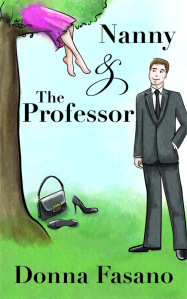
Check out Donna’s links:
Blog: http://www.DonnaFasano.com
Facebook: http://www.Facebook.com/DonnaFasanoAuthor
Twitter: http://twitter.com/DonnaFaz


August 5, 2012
This Sunday’s Sneak Peek is with Shelly Thacker

Thanks for the chance to visit today, Marsha! After a few years away from the publishing industry (I took the mother of all maternity leaves, LOL) I’m excited to be celebrating a new chapter in my career. I’ve joined the indie revolution and I’ll be e-publishing my entire backlist this year, starting with my Stolen Brides series of medieval romances.
In FOREVER HIS (Stolen Brides Book 1), Sir Gaston de Varennes wants a docile bride who will fit into his plans for vengeance and justice, but a trick of time finds him married to a thoroughly modern American lady who turns his castle, his life, and his heart upside down. Will her desperate secret tear them apart after only a few bittersweet weeks of stolen passion—or will they conquer mistrust, treachery, and time itself to discover a love that spans the centuries?
The Detroit Free Press called this book “one of the best romances of the year”and the All About Romance website named it one of their “Desert Isle Keepers.” Here’s a sample.
An excerpt from FOREVER HIS by Shelly Thacker
Before she could gather up the scattered confetti of her senses, she felt herself slipping deeper into the kiss. Into him. Into this stranger in the darkness who teased her and laughed with her, touched her, awakened her, electrified her in a way no man ever had.
Before she could stop herself, her arms slid around his back and she was holding on to him as much as he was holding her.
His kiss became bolder, more intense. The first touch of his tongue against hers dragged a soft moan from her lips. She felt his arms tremble, as if he were fighting for control. His tongue flicked against hers, retreated, then returned, sliding, seeking. She tasted him, breathed him, felt hot needles of unfamiliar hunger. His bristly five-o’clock shadow rubbed roughly against her chin and jaw.
If ever she had had cause for nervousness, uncertainty, fear, it was now—but that was not what she felt.
She felt longing, she felt tenderness, she felt … right. She wanted this. As if she had been waiting her whole life.
And in her heart, she knew that she had.
She felt alive. More alive and whole than she had for as many months as she could remember. She nearly sobbed with the joy of it. She must have made some sound, because he broke the kiss and lifted his head.
He didn’t say anything for a moment. Neither of them did. They just stood there, clinging to one another in the dark, breathing hard. The heat between them was so tangible it felt as if the furnace had been turned on, full blast.
After a second, the sensual fog that he had spun around her cleared a bit. “Wait,” she whispered. “I-I can’t … I mean, I don’t—I’m not—”
“Nay, do not pull away.” He lowered his head, nibbled at her lower lip, then nudged at her chin, urging her to tilt her head back. “You are all I could wish, little flower. You are fire and softness and you taste of a sweetness beyond any I have known. Stay with me,” he asked. “Touch me. Let me touch you.”
“Please, I-I think I should tell you … I mean, no matter what my sister told you, I’m not what she … I’m not …”
“Not what?” he urged.
“I’m not …”
“Not this?” He kissed her again, more powerfully this time.
A moan escaped from Celine’s throat at the feel of that hot, deep joining of his mouth and hers, the rough stubble of his beard abrading her sensitive skin. The feelings radiating from deep within her, the pent-up yearnings, the wild fever, all constricted into an ache, focused in the center of her body. Her hands grasped his rock-hard arms and she grasped wildly for reason as she felt herself tumbling over the edge. I can’t do this! It’s insane! I don’t know this man! I can’t even see him!
But when he finally raised his head and ended the sweet torment he was lavishing on her, she slumped against him. He held her easily, gently.
“My God,” she whispered.
“Heaven,” he promised.
“But … I don’t even know your name.”
“Gaston.” His mouth claimed hers again, demanding her response with a kiss that sent the last shreds of sanity whirling away. His name barely registered, except for a brief, fleeting thought that it was old-fashioned. Uncommon. A name not heard much anymore.
His hand stroked upward, his fingers tracing over her back, her shoulders, and the silk and lace and spaghetti straps of her teddy. “Saints’ breath, but ‘tis strange, this garment,” he murmured against her mouth. “This land of yours, this ‘Chicago,’ must be a far place to have such wonders as this that I have never seen. You must tell me of your home.” He kissed her again, laughing. “Later. For now, let us greet the new year properly.”
Celine was surprised that he had never seen a teddy before. She also meant to ask how it could be that he had never heard of Chicago, but instead found herself sighing in agreement. “The New Year.”
He nipped a hot rain of little kisses down her neck. “I can think of no better way to celebrate the dawn of the first day of a new century.”
Celine’s mind was spinning, but not so much that she missed what he had said. “New century?”
“Aye, the first day of the year of our Lord 1300.”
Celine stiffened.
Her heart pounded so hard she couldn’t breathe.
The darkness, the cold, the strange furnishings, the straw on the floor, his unusual speech, his old-fashioned name—
“What did you say?” she sputtered, pulling out of his arms.
“Chérie, mayhap it is you who drank overmuch last night, if you have forgotten already the reason for the feast. This day is the first of January, 1300.”
Celine stumbled away from him, barely aware of the pain in her ankle, gasping for breath as she felt her way to the far wall, over to the left, to the window.
Or where the window was supposed to be.
She found a pair of wooden shutters.
“Are you unwell, chérie?” Gaston asked, a hint of irritation creeping into his voice.
Celine tore open the shutters. The stained glass was there. She yanked it inward on its hinges and a blast of cold air poured into the room, along with a spill of silver light. The moon above looked normal, clear, full—
But the city was missing.
Celine stared, opened her mouth, couldn’t utter a sound. Cold dread knotted her stomach. The town of St. Pol had vanished! Where there had been buildings, paved streets, people, motor scooters, neon, noise—there was now only silent forest.
Her gaze fell on the courtyard below. The Lamborghinis and Mercedes and Aston Martins were gone. The neatly plowed circular drive was gone. The guest villas. The tennis courts. The swimming pool. One entire wing of the chateau was missing!
There was only the stone keep. A smooth blanket of new-fallen snow. The moat. The wall—which didn’t look crumbling and ancient, but solid and new.
The first day of January, 1300.
This couldn’t be happening! It was a dream! A nightmare!
“Chérie?”
Celine turned at the soft query.
It wasn’t a dream. And the man coming toward her out of the shadows was certainly no nightmare.
As he stepped into the shaft of moonlight that framed her from behind, she saw him from the ground up: first his feet, then a pair of strong, lean legs sprinkled with dark hair, then heavily muscled thighs, then …
God!
Cheeks scalding, she immediately lifted her gaze to a broad, deep chest, matted with that same dark hair, impossibly wide shoulders … and she felt smaller and more fragile than she ever had in her life as he came completely into the light, the moon illuminating a full six sinewy feet of bronzed, taut, hard male.
His face was every bit as powerful and chiseled as the rest of him. Handsome in a rough way, with that bristly five-o’clock shadow, a mane of tousled hair as dark as his voice, and eyes that … She had never thought of anyone having potent eyes before, but that’s what they were. Potent. Made for sending seductive glances across crowded, smoky rooms. He stopped just inside the edge of the light, smiling at her, a dazzling smile that crinkled the corners of those thickly lashed, hypnotic, coffee-hot eyes.
“Demoiselle, if you keep running out of my arms that way, you are going to greatly damage my confidence as a lover.”
Celine swayed dizzily. “Did you say you were … but you couldn’t be … not that Gaston!”
“Sir Gaston de Varennes,” he confirmed, a note of pride in his voice. His smile widened. “Did you not realize that you were about to make love to the lord of the chateau?”
Amazon link for FOREVER HIS: http://www.amazon.com/dp/B006NG0GXQ
Website http://www.shellythacker.com/
Facebook http://www.facebook.com/AuthorShellyThacker
Twitter https://twitter.com/shellythacker
Pinterest http://pinterest.com/shellythacker/
Blog http://shellythacker.blogspot.com/


July 29, 2012
Sneak Peek Sunday, today’s guest blogger is Vonna Harper

Settle back with that coffee, today’s peek is into something a little different. I usually feature other romance authors and Vonna/Vella is indeed a romance author, but she’s…well…I’ll let her explain in her own words *s*
Grandfather Lost
Biography and death investigation
I never knew my grandfather because he died at thirty-six when my mother was just five. So why my longtime fascination about him and why have I written a recently-published biography called Grandfather Lost?
The answer is multi-faceted but comes down to two key elements. I’m a writer: www.VellaMunn.com and www.VonnaHarper.com and so was Grandpa. www.HomerEonFlint.com. I’m convinced we share the same writing genes.
Reason #2 is I now caretake all of his writing material. That includes published stories, unpublished manuscripts, personal letters to and from his wife, professional correspondence, AND the newspaper articles about the investigation into his violent death. I believed he was murdered by a would-be thief.
Musa Publishing is bringing out all of his work for which I’m grateful and excited but Grandfather Lost holds my heart.
Excerpt:
The Letters
A stack of letters sat on a closet shelf in Nana’s Nevada City house, wrapped in brown paper and held together with string. Only a handful of them were from Grandpa, and—though I thanked Mother when she first handed them to me after Nana’s death—I didn’t grasp their full meaning. Tucked in the stack were also two clippings from the Nevada City newspapers. The first, dated March 29, 1924, was titled, “Homer Flindt, Mystery Man, Known Here. Wife Was Mabel Williams, Who Is Now Teaching at Washington, Nevada County.” The article began by reporting that Nevada City friends were shocked to hear of Homer’s death.
The headline of the second article was, “Mystery of Homer Flindt’s Death Remains Unsolved; Bandit Theory Is Fading.”
Fast forward to 2000. Uncle Max and his wife, both collectors and in ill health, were living in Palo Alto, not far from where Grandpa had lived and died and was buried. Uncle Max’s daughter had gone there to help her parents plan for the future. In a shed on their land, she found gold: dozens of letters between our grandparents. Mother had often spoken of more correspondence than what was in Nana’s house.
My cousin took them to her aunt, my mother. Not long after, my sister Judee saw them. Mother placed the collection in two stacks, both wrapped in paper. One was labeled: “Daddy’s letters to Mother…Aug 31, 1923 to Dec 20.” The other stack contained Nana’s original letters to Grandpa from Oct 1, 1923 to March 1924.
My sister emailed me and said: “THE LETTERS are in my possession! I talked Mother into letting me copy them on my copier. So I made 4 copies of Homer’s letters: for you, me, Lisa [Judee's daughter] and Robin [Aunt Vella's oldest child]. Then I ran out of ink. So tomorrow we’re going to Auburn for more ink and to mail your letters to you. Then I’ll copy Nana’s letters and send them as soon as possible. I’ve been reading bits and pieces of letters as I copy them and they brought tears to my eyes many times. I scanned the last page of Homer’s last letter (written 3 days before he died) and attached it to this email. I hope you can read it. There is absolutely no doubt that his sole intention was to be with his family. Especially the part where he says, ‘I’ll tell the world that nothing is going to tempt me to spoil the prospects one little bit. You can count on me absolutely.’”
“So,” Judee continued, “I believe whatever happened to him was out of his control. God, what a loss! How I wish we could have known him. What a horrible time that must have been for Nana. No wonder she never re-married; the love of her life could never be replaced.”
A few days later I sat in a recliner in my office with the first package from my sister on my lap. (Because of the number of letters and need to make copies, she sent them in several separate packages). Taking out one letter at a time, I held it up to the light coming from the window behind me and started reading. I was immediately transported into the past. My grandparents’ activities became mine. I shared their days and emotions.
Grandpa, when I read what you’d written your wife, I lost myself in you. There you were! Alive again. That first letter written August 30, 1923 came from the heart of a man who’d just said good-bye to his wife and children and didn’t know when he’d see them again.
Dear, dear Dears Four, Well, I’ve missed you all a lot more than you might think. If I hadn’t bought something to read on the train, (after seeing them off) I’d have been pretty blue. But I was glad to know that you were all being well cared for, and that Mommie was getting a good rest. I suppose that by now you are within a few yards of the old home—Gee—wish I was there too. I wasn’t able to do anything about the packing today—too much work, including some left over from yesterday. I expect to put in all of tomorrow at it, and should finish. Sorry you won’t have the use of the pans and dishes until Monday, but it can’t be helped. Anyway, you may decide to stay over in Nevada City (where Nana’s mother lived); hence I am writing this in duplicate and sending a copy to both places. Scuse blunders—lots of work—big hurry. Will send important cases by parcels post tomorrow. A lot I’d like to say, but there’s no time. Hope everything went as it should, and that the trip wasn’t hard on anyone. My love to little grandma (his mother-in-law) and heaps and heaps to all of you, with hugs and kisses all around, big ones, including a rough-house for Max, a tickling for Bonnie, a neck-blowing for Baboo Fint, and a special-extra kiss for Mommie. Must go now. Bye-bye. Will write again soon. Hope I hear from you before very long. Lovingly, Daddy Fint. XXXXXXXX
Thank you Vella, the book sounds intriguing. I would have loved to have had letters…or anything, really, from my grandparents, or even my parents for that matter. Or even pictures. My father was a great camera buff. I remember when he got the very first 8mm “movie” camera that came out from Kodak and I had to skate back and forth on the sidewalk (it was iced over) so he could film it. That camera went everywhere with him, as did his not so little 35mm, which also came out and flashed at us at every opportunity. He had literally thousands upon thousands of pictures of us growing up, pics of him in his army days and when he was in an orchestra with his brother. He had slides of all our trips…
When he passed away, my mother took it in in her head that if she didn’t have anything that reminded her of him around, she would be able to get over her grief faster. That included pictures. So she lit a fire in a big barrel and burned every single picture he had ever taken, whether he was in them or not. All of it, gone. Thankfully I had a lot of the 8mm film at my house, heaven only knows why, and I had a few pics of him when he was younger and in the army, but only a handful. I had their wedding picture too because the year he passed, it was their 50th anniversary and he had wanted me to get the photo restored and framed as a surprise for her.
I have pictures everywhere. Pictures of Jefferson growing up…albums FULL of them. And pics of the munchkins. I have CD’s loaded with bazillions of digital pics which I’m hoping don’t degrade over the years or get corrupted somehow. I don’t trust them entirely, however, so when I take pics I like, I print them out just in case.
Before I go on any trip, I write a letter to my son cuz…you just never know, right? He was helping to clean and pack up the house the past few weeks and I showed him where I keep all the important papers just in case. I told him about the letters too, because sometimes it’s easier to write down the stuff you want to say but can’t say out loud without getting all gushy and teary-eyed. I say that stuff to him anyway, but I figure words fade into the ether after a while, but if they’re written down, he can read them and know how much he was loved, how proud I am of everything he’s overcome, everything he’s accomplished. I need to start doing that for the grandkids too, all three of them, because I can’t imagine what my life would be like without them.
Aww man, now I’m all sentimental and stuff. Thanks Vella! LOL


July 25, 2012
The Dragon Tree
So I’m flashing back eight years and looking at myself through a dark mist (plug, plug, shameless plug) and seeing myself staring at the wall, depressed, confused, pissed off beyond measure. I was about 3/4 of the way through my second book for one of the Big Six and had just been told they didn’t like my title, it didn’t sound romantic enough. They hadn’t liked the proposal from the outset, telling me they thought medievals were a dying breed. They had wanted me to write something “light and fun and not too complex” because, as anyone who has ever read any of my books knows, I do “light and fun and not too complex” so very well. *SNORT*
I think I started out pissed off, when they rejected my initial proposal for the sequel to The Iron Rose, which came out to great reviews, sold modestly well, and had a great tie-in with the first Pirates of the Caribbean movie that was just coming out. I was told no, they didn’t want another pirate book. Pirate books were a dying breed. No one read them anymore. No one was buying them anymore. The hot trend was vampires and paranormals and yes, still Regencies…but light and fun and not too complex Regencies, preferably under 400 print pages, with no blood and guts, and nothing that might make a delicate reader cringe.
Guess that ruled out another torture chamber scene with entrails dripping from hooks on the ceiling. Drat.
I don’t read vampire books, so not likely I would write one. I read one of Stephen Kings back about 30 years ago and I’m still scarred from the experience. I hear a scratch on the window screen and the sphincter instantly tightens. I won’t go into the basement after dark, and I carry a baseball bat with me when I let the dog out at night in case one of those special bats flies past. So yeah, I’m right there. Gonna write a vampire book and scare the shit out of myself all over again. NOT.
That naturally ruled out paranormals as well. I mean I’ve lived through some ghostly experiences. Had a ghost living in the house with us, in fact, but he wasn’t very scary…was a comfort actually when the Ex used to go away on business. Reggie would always knock on the wall if someone was coming up the driveway, which scared the dog but not me. He also enjoyed turning the washing machine on at 3am, but was always polite enough to turn the dial to cold water first. And then there were all the “coincidences” that happened while I was writing the Scotland trilogy. Some of those things were downright spooky, but again, did I want to write about that stuff? Nooooooooooo. I got the “put it down in writing and see what happens” out of my system with Through A Dark Mist. The prologue to that book was a recurring dream I’d had since I was in my teens. Every six months or so I had it. It always started the same, progressed the same, ended at the exact same moment when the arrow when through her hand. After I handed in The Wind and the Sea, I was having lunch with my editor and told her about the dream cuz I had just had it again the night before, and she said, why not write it down and see what happens. So I did. And once I wrote it out, I never had the dream again, but that became the prologue for Through A Dark Mist, which of course led to the whole trilogy and, years later, prompted me to suggest another medieval to the folks who didn’t like pirate books and wanted something light and fun from me.
Actually, I didn’t suggest it. I said outright that was the only thing I would consider and if they didn’t want the medieval, then I’d friggin well retire and they wouldn’t get anything out of me.
Thus, My Forever Love started out on the wrong foot from the outset. I was angry and objected to the whole process of quashing an author’s creative juices. It wasn’t just happening at the house I happened to write for, it was happening everywhere. The recession was causing cutbacks in print runs, advances, the number of authors a publishing house could promote with anything remotely beneficial to their career. Most sank like stones. We were told to limit the number of pages, limit the content, write according to the current trend–which NY, not the readers decided was safe and saleable.
I also tend to glom onto a spark that causes the whole writing process to fan into a flame. With The Wind and the Sea, it was the title. I read those words in a magazine one day and saw the whole book unfolding in my head…ships, battles, cannonfire, treachery, warships…. all in five little words. While I was muttering and kicking things and walking around trying to get inspired to write something “light and fun and not too complex” I visited Casa Loma here in Toronto. A huge medieval castle in the middle of the city, built back in the 20′s, I think, but someone who loved English castles and thought we needed one on this side of the pond. And there in the garden was an iron tree with little dragon heads twisting out at the ends of the branches. The Dragon Tree. BOING. I had a title. I saw castles and knights, armor and swords hacking and slashing, a young woman running, being chased by a knight bent on killing her…
Piss on light and fun.
So I started writing The Dragon Tree. I don’t do outlines, never have, never will, and, in the good old days never had to write one because the good editors I had knew if I said I was going to write a book about medieval knights, I would hand in a book about medieval knights. Again, I refer back to a story in the archives about an editor who *demanded* the outline of a book from me. She got feisty and I got feisty, and in the end I slapped a paperback down on a sheet of paper, traced around it and wrote The Last Arrow on the “cover” and sent it in as the *outline of the book*. Luckily she had a sense of humor and accepted it as *the outline*
I think I was discouraged and disenchanted from the outset when I started The Dragon Tree. I’d had enough of the bull, the constant promises that were broken, the orders on what to write and how to write it. And it came through in the actual writing of the book. I can almost pinpoint the exact spot in the story where I decided enough was enough and I knew at the end I was going to take a break from writing. The final straw for The Dragon Tree came when the editor told me the title was not going to fly. They thought it sounded too much like a fantasy or a paranormal (uhhh…okay, swing that Irony Axe). THEY renamed it My Forever Love and by then I knew I was outta there so I just said yeah, whatever. I slid into my hiatus and enjoyed the hell out of having my grandchildren around all the time, having no stress, having no deadlines, having nothing at all to do with publishing.
That break lasted almost eight years, until Kindle and Apple and Nook changed the face of publishing.
When I got my rights back to most of my backlist books, I started out with the earlier ones and knew the writing needed some updating, some freshening up, but it was a case of removing adjective overkill and making the characters less weepy, whiny and blushing. China Rose blushed so much I wanted to smack her upside the head by the second page she appeared. Bound by the Heart had gone to print in a day when Rosemary Rogers-type ravishings and rapes were popular and while I didn’t necessarily enjoy writing a scene like that, I was new and followed the sheep over the cliff. Reissuing it gave me an opportunity to elevate Morgan Wade above a neanderthal and I removed, happily, the rape scene and reworked it. Some readers think I was influenced by political correctness….not so. The rape scene in The Wind and the Sea stayed put because it was logical and suited the characters in that moment.
When it came time to go through My Forever Love, I actually winced. On every other page. I studied the reviews and realized that all the faults the readers spotted were justified. The heroine was sappy, some of the situations were forced and illogical, and frankly the writing was…mechanical. With the other books I had gently revised, I often found myself thinking: damn, I wrote that, it’s pretty good. I even got caught up in a few twists and surprised myself (the memory is the first thing to go when you reach troglodyte status). But with My Forever Love…nah. It needed more than just gentle revision. It needed a whole new rewrite. And that’s what it got. Hopefully I’ve removed some of the blah-ness and made the characters more sympathetic. Tamberlane is a tortured hero who has never known love, his family has shunned him, the Templars have excommunicated him, he’s been branded a traitor and a coward. Amaranth is a battered wife who finally finds the nerve to bash the bastard over the head and escape. When she finds out she didn’t kill him, as she originally thought, she knows he will hunt her to the ends of the earth to make her pay for it. Toss these two together then add in a plot to assassinate King Richard, a brief cameo appearance by the Black Wolf, and I’m much happier with the end result.
And I have my title back. The Dragon Tree. I hope the readers agree with the improvements. It’s available now at Amazon and Smashwords, and soon to Barnes and Noble. Apple might take a week or so longer, but it’s coming *g*



July 22, 2012
So…the Evil Empire is finally coming under heavy scrutiny
In case it hasn’t become general knowledge yet the Evil Empire, is being sued. It’s a class action suit spearheaded by three incredibly brave, intelligent authors who, after years of having to put up with creative accounting, did some snooping and found out that H’s practices weren’t just creative, they were downright dirty and quite possibly illegal.
You can read the entire suit here: http://business.financialpost.com/2012/07/19/romance-authors-sue-harlequin-over-unpaid-e-book-royalties/ and if that link from the Financial Post dies over time, you can find it here: http://www.harlequinlawsuit.com/Home_Page.php The dispute has to do with ebook royalties, something that, up until 2 years ago or so, was treated like just another option clause in a contract. Two years ago, iPads and Kindles exploded and so did self publishing on Amazon, Barnes and Noble, Smashwords, Apple, and now Kobo. Authors fell off their chairs realizing how much they could earn by publishing themselves and, more importantly, they could see the numbers each month, they could do the math, and they could see how truly creative some publishing houses were being. The Evil Empire already had a lousy reputation for paying out foreign royalties on print books, but some yayhoo in the company, who is no doubt a bazillionaire now for his brilliant idea, came up with a clause further cutting royalties on books that were sold through a subsidiary rights company in foreign lands.
To ‘splain it better, Lucy, I’m lifting this quote from The Passive Voice, –a great blog by the way, and one that every author or would-be, could-be, should-be, wanna-be author should read. It wouldn’t hurt readers to read it too so you have a better grasp of what goes on in our world.
This lawsuit results from Defendant Harlequin Enterprises Limited, the world’s leading publisher of romance fiction, depriving Plaintiffs and the other authors in the class, of e-book royalties due to them under publishing agreements entered into between 1990 and 2004. Harlequin required the authors to enter into those agreements with a Swiss entity that it created for tax purposes, and that it dominates and controls. However, Harlequin, before and after the signing of these agreements, performed all the publishing functions related to the agreements, including exercising, selling, licensing, or sublicensing the e-book rights granted by the authors. Instead of paying the authors a royalty of 50% of its net receipts as required by the agreements, an intercompany license was created by Harlequin with its Swiss entity resulting in authors receiving 3% to 4% of the e-books’ cover price as their 50% share instead of 50% of Harlequin Enterprises’ receipts.
What this means to the authors can be illustrated by an e-book with a hypothetical cover price of $8.00. The “net receipts” made by Harlequin Enterprises Limited from the exercise, sale or license of e-book rights would be at least $4.00, of which authors would be entitled to $2.00 based on their 50% royalty. Computing the “net receipts” based on the “license” between Harlequin’s Swiss entity and Harlequin Enterprises, Plaintiffs’ 50% royalty amounts to only 24 to 32 cents.
In other words, the crafty bastards funnelled their own books through their own subsidiary company and called it a foreign sale.
I have to say I’m chuffed. It’s about damn time. I had shit fits back in 1992 (no, it doesn’t affect me because my book was out of print before they sent out addendums for authors to sign dealing with the ebook royalties) when I saw my first royalty statement for the print book. They somehow managed to wangle an 8% royalty rate down to .6% on sales right here in Canada, where their headquarters were and are located. That was the first time I was told, that although I lived about 5 miles from the Harlequin buildings, I was in a foreign country, and so was my editor, who only lived three blocks from the buildings. Yeah. Creative.
Anyway, at the time my protests fell on deaf ears. Writers could still make good money writing for the Evil Empire…that’s where Nora Roberts got her start, among a gazillion other authors. The books had terrific, worldwide distribution. They were a household name and their authors were happy and prolific and became household names as well. Free copies came in boxes of Tide Detergent, for pity sakes, and for the readers who enjoyed straight, poignant, uncomplicated romances with no serial killers, no tangled plots to unwind, no scenes that made them cringe or faint or bleed from the ears…the Evil Empire had the market cornered.
Greed, however, is a nasty, insidious thing that creeps in wherever profits are to be made. When ebooks initially came into being, addendums by quite a few publishers (just so you don’t think I’m picking solely on the Evil Empire) were quickly dispatched to cover the *possibility* of that format actually earning a few bucks. I confess my own stupidity in signing one for the books I had at Random House, but at the time, even my agent said “eh, what’s the harm, nothing will ever come of electronic rights and if they sell a few copies, it’s a bonus for you.”(because they were offering 25% rather than the 8-10% for print rights).
Duh.
Fast forward to 2010 when Amazon rose up like a giant tsunami and crashed over all the dozing publishing houses. Kindles were relatively inexpensive (roughly the cost of four hardcover novels), reliable, and could hold 1500 books. They removed the need for extra shelving in the house, an extra big backpack to carry stuff home from bookstores which, co-incidentally, were just as stunned by the same tsunami.
Flump forward another two years, to the present day, when ebooks are creeping up on the 50% market share of books, if they don’t have it already. Borders ignored the writing on the wall and is gone. Barnes and Noble stumbled a little but luckily had the Nook to cushion the fall. Apple keeps adding stunning features to its iPad, and face it folks, as much I love reading print books, I enjoy the ability to carry War and Peace around on my iPod, tucked in the back pocket of my shorts.
Adding to this is the option authors now have…which they in no way had before…to choose either a traditional publishing house or to self publish. Again, I won’t repeat past posts about numbers and pros and cons, but simply point out that a shocking number of authors have either left the big six completely, or they’ve removed electronic rights from their publishing contracts and elected to self publish their books in digital form. Why? Because they get a pay cheque every month. Because they don’t have to guess at their sales and hold their breath for six, twelve, eighteen months before they see a penny of their earnings. Because they don’t have to wait a year to see their book for sale. Because they don’t have to have Forty F**king Flowers on the cover of a blood and guts Western (cleverly disguised plug for Under The Desert Moon).
So what do the publishers do? They’ve got the damned print rights locked up. There is print on demand available to indie authors, but sales are minimal and the marketing is a nightmare. But publishers publish print books. They market, distribute, advertise, yada yada…that’s what they DO. It’s what they’ve done for the past 500 years!
Hello? Welcome to the 21′st century. Those tablets we saw in Star Trek, Next Generation are here. We’re reading off them, we’re writing specifically FOR them…but are publishers doing anything to keep their authors happy or make it worthwhile for them to stay in house rather than go independent and self publish?
Noooooooooooooo. Instead, they find ways, like the Evil Empire, to keep the majority of the massive profits for themselves. They write a token clause into their contract that makes it look like wow, they’re stepping up here, offering 50% of the royalties!!!! Wow!!! Yeah!!!! Sign, Lucy, sign!!!!! But then they funnel and *cough* creatively cut that percentage down to the same, tired, tried and true 6%, and even less.
Seriously? Do they think we’re stupid? Do they think we’re so desperate to claim status as a “imprint published author” that we’ll keep taking crumbs over the ability to pay our mortgages on time?
Do they think authors won’t notice the disparity in royalty rates from 12.5% and 70%?
And do all the big six think authors aren’t going to notice when the ebook sales reported on their semi-annual statements don’t even come CLOSE to ebook sales numbers they see every month on Amazon? Or worse, if they do come close, or even surpass, do they think authors won’t be bristling like porcupines when they see what they’ve earned at 12.5% vs what they could be earning at 70%? Do they think, now that the floodgates are opening, that authors won’t start demanding audits of those ebook sales?
I was a midlist author in print, and I consider myself a midlist author in the ebook world. I don’t make gazillions, not even close. I earn enough to let me breathe a little easier when the bills roll in at the end of the month and to justify picking up a pen and writing new books rather than flipping burgers at the nearby greasy spoon. I kvetch now about some of the *creative* practices of publishing houses, but I can’t even imagine how little hair I would have left if I was a NYTimes bestseller and did the math.
It’s time for ALL publishers to realize that we’re wearing big-girl panties now. We’re on several eloops that have 2000 members apiece and we all talk amongst ourselves, we compare notes, we know what’s happening out there, we’re peering behind those closed doors, and we’re not afraid to crush a few egg shells underfoot.
We will all be watching this lawsuit VERY closely. If three authors can make ripples throughout the Evil Empire… *insert maniacal laugh here*


