Marsha Canham's Blog, page 11
September 13, 2011
I think Julia Roberts should make her next movie for free.
Seriously. I think she should show up to the set every morning for seven o'clock (after staying up till 3 learning her lines), sit in hair and makeup for two hours, wait around the set all day to do take after take after take of her being mugged and terrorized by some thug who tries to drown her in the scene, which would require her to dry off after every take, get hair and makeup done again etc etc. And if she doesn't get it right the first day, do it all over again the second day and the third day until the director is satisfied that she truly sounds like she's being choked and drowned. After all, her audience expects a certain high standard of quality to her work. She's won an Oscar and a People's Choice and probably a bunch of other awards over her career that probably look good on her mantle but don't really guarantee continuing success unless she's willing to work twice as hard to meet the higher standard movie goers expect of an award-winner. She's worked hard to get where she is, doing movies that maybe weren't A list and maybe weren't worthy of being mentioned in her resume all the time. But she was learning her craft, so those movies, bad as we might think they are, meant something to her, taught her more about acting and editing and sound and directing.
But hey. She's famous now. She should make her next movie for nothing. Or at least insist the producers make it free for her fans. After all, they've been loyal supporters all these years.
Writing is a lot like acting. We all have to pay our dues, starting out with books that are sometimes lacking in style, voice, content. We've all written some duds, but we all learn something from those duds, and we learn something from every book we write. We learn about characterization, about writing tighter dialogue, adding more plot twists, putting in more humor or more horror. We learn how to make a reader laugh or cry. For some of us that takes years and there are no short cuts. We sometimes have to write a scene over and over, trying it this way or that way until we get it right. We're up at dawn and work until dark. Some of us even have jobs that take us away from writing for eight hours so that it has to be squeezed in between the day job, running the household, taking care of the family. Those are the writers who stay up until three in the morning and make the boss wonder why they're so tired or crabby at work the next day. After all, our readers expect a certain high standard of quality in our work. They expect to be entertained, amused, driven to tears. Some of us have worked our butts off and won awards that look good on the wall, but don't really have any cash return.
Does that mean we should make our next book free? After all, they've been loyal fans.
I received an email last night from a reader demanding…yes, demanding…to know why I hadn't made one of my books free. Seems she's downloaded the other three I've put free during brief promotions and she thinks I should make The Iron Rose free so she can read that one too.
It took me a year to write The Iron Rose. Hours of research, hours of plotting, days, weeks, months of being locked away in a little room with only a pen and paper for company. For all that it had a brief shelf life and slipped off to obscurity until recently when I was able to get the rights back and reissue it as an ebook.
Now this reader expects it for free….because? Because it's a reissue? Because it's an ebook? Because the $3.99 price is too much to bear while she's sitting there sipping her $4.95 latte?
Wanna know my reaction to that? It made me realize that I have given away over 200K books in free downloads over the past year. Swept Away has been free, Bound by the Heart has been free, and most recently, Through A Dark Mist has been free. I'll spell that out in case it didn't make enough impact. Two hundred thousand copies. That's more than all three books combined sold in print.
And for that, I get emails demanding I make more of my books free? Does this reader work for free? Does she show up at her job, smile at her boss, and say: I think I'll work for free for the next year.
Yes, I'm crusty today, and I apologize to the other 99.99999999% of the readers who understand that we all have to struggle to make a living these days.
To the "avid" reader who wrote me, I'll say this: Give up a latte. Buy a book. Because I, for one, won't be making any more of mine free.









September 12, 2011
Readalong Monday, Chapter Nine
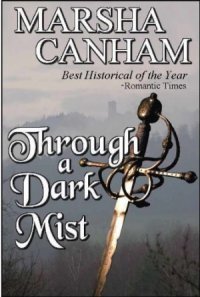
Thanks to my brilliant SIL, I think I have most of the kinks worked out of my puter. Still grumbling over which version of Paint Shop Pro I had/have, and how to get things back to normal, but…I've done two new covers for other authors and everything seems to have worked, so I guess I'll muddle through LOL
Just a reminder too, that Pale Moon Rider is currently on sale at Smashwords for .99 I thought it could use a little loving. I, for one, like dark, sexy highwaymen, and the Scarlet Pimpernel was always one of my fav movies.
I hope you're enjoying the readalong of Through A Dark Mist. On to…
CHAPTER NINE , Copyright 2011 © Marsha Canham
"Brother?"
"Bastard born, but nonetheless of the same blood."
Servanne stared. She had expected almost anything but this, and yet … the fact that they were brothers would explain a great deal. It would also present looming gaps in reason and understanding.
"Why?" she whispered. "How …?"
"I told you one of the kidnappers was very cooperative? When pressed into revealing where they were to take the children inEngland, he indicated a castle inLincolnshire—a castle on a cliff with a golden-haired dragon as master."
"Bloodmoor," she gasped.
"Until that moment, I had no idea Etienne was still alive." The Wolf paused and plucked a leaf from a nearby vine, then started to tear it into tiny shreds as he continued. "I have not set foot in England for nearly half a lifetime because so far as I knew, the De Gournay titles and estates had been stripped away years ago and dispersed against a charge of high treason."
"Treason!"
"A charge as false as my brother's heart," he said savagely. "But one that went uncontested while my father was deliberately starved to death in a traitor's cell. I had heard Etienne had died as well, a result of his conniving and greed, and had no reason to question his demise. I welcomed it, in fact, for it freed me to forget who I was and make a new life elsewhere. As it was, I was laid up some twenty months at a stinking desert oasis while these wounds you so expertly assessed healed. Another three years and more were spent gaining back memories the sun and fever had scorched from my brain. By the time I rejoined the living,Normandyhad become my home and I was quite content to keep it that way. I sold my services to the kings and queens ofEurope. I fought their wars, led their armies into battle, and won a reputation for myself as"—he stopped, seeming to reshape the words in midair before they tripped off his tongue—"as a rogue knight who would sell his sword to anyone with enough gold to pay."
A mercenary, Servanne thought. Yes. It fit. That much of it, at any rate, for there was no doubt he was a dangerous man, adept at living on cunning and nerve. He was clever, daring, unprincipled. And far too close.
She took what she hoped was an unobtrusive step back. "You called him Etienne?"
"It is his God-given name: Etienne FitzRobert, born to my father's mistress some three months after my own appearance in the world. It was said we were so alike in size, colouring, and temperament in those early years, we might well have sprung from the same womb. Even later, there could be no mistake we were of the same mould; his hair was lighter, his eyes darker, but all small things. Nothing that could not be altered or overlooked temporarily if one wanted to substitute for the other for a time. Moreover, we were both away five years under the desert sun. So much time spent in the heat, squalor, and stench of blood will alter any man's appearance, as well as dull the perceptions of those who welcome him home."
Servanne strained the limits of her powers of recall, trying in vain to conjure a clear picture of the golden-haired knight to whom she had been betrothed. Whether it was a trick of the mind, or simply the influence of the brooding figure in front of her, she could manage to do no more than replace the Wolf's darker locks with those of honey-gold, his coarsely stubbled, blue-black jaw with that of a clean-shaven mirror image.
Impossible! The whole story was impossible and implausible. How could one man take the place of another for nigh on twelve years without someone uncovering the ruse? What about friends and family? What about the servant who used to carry ale to the table and serve it to Lucien Wardieu? Surely someone would have noticed a change in his appearance?
The Wolf laughed softly, reading her thoughts as clearly as if they had been spelled out letter by letter across her face.
"My mother died within a few hours of my birth. Etienne's dam went mad and threw herself from a castle tower, screaming—so they say—that the Devil had cursed her. As to the rest—aunts, uncles, cousins—there were none. Or at least none who were close enough or cared enough to visit overlong at Bloodmoor Keep. Surely, as its intended chatelaine, you must have been forewarned of the horrors and spectres who roam the corridors and passageways? The walls that sweat blood? The footsteps in empty rooms? Stories all very carefully nurtured to keep the curious away."
Servanne studied him for another full minute without so much as a hair moving against the mist. "Why did he want to kill you?"
"Greed, among other things. Had I died a natural death, Etienne would have inherited some of the estates, to be sure, but not Bloodmoor, and never the title of Baron de Gournay. Those would have gone to a distant cousin—another clumsy fellow whose 'accidental' death occurred within a few months of the baron's heroic return from the Crusades."
"He could not have managed such an elaborate scheme alone," she said slowly.
"No," he agreed quietly. "He could not. He would have needed someone's help to arrange the warrants for Robert Wardieu's arrest; he would have needed guarantees those charges could be rescinded again at the appropriate time."
"Prince John?" she gasped. "Are you suggesting Prince John was involved?"
"He shares a similar hunger for power and wealth, not to mention an ambitious jealousy for his brother's possessions. No doubt he demanded and received a huge payment for his services and seal, but I imagine Etienne thought the loss of a few properties a small price to pay. Especially since he has managed, by one means or another, to gain most of them back." The Wolf's eyes narrowed. "The acreage around Lincolnwoods is the last demesne of any importance to be reclaimed."
Servanne stiffened at this. The Lincolnwoods acreage was part of her dower lands, to be deeded to her new husband upon their marriage.
"Are you … do you dare to imply that Sir Hubert was a part of it?"
The Wolf regarded her with a calmness that did not reveal whether or not he had noticed she had moved a healthy pace away from him. "Sir Hubert acquired the estates innocently enough, in lieu of a debt owed him by the regent."
Servanne released her pent-up breath, but her head was spinning. It was too much to absorb, and there were too many twists and turns to try to unravel.
"Why should I believe you?" she asked, her fingers trembling visibly where they clutched the folds of her cloak. "Why, indeed, should I believe anything you tell me?"
"It is your prerogative, madam, to believe me or not. You wanted answers to your questions: I gave them."
"I wanted the truth."
"You wanted proof of the truth," he corrected her gently. "And that I cannot give you until I am inside the walls of Bloodmoor Keep."
Servanne's teeth bit sharply into the flesh of her lower lip. "If … if what you say is true, why do you not just step forward and declare yourself to be the real Lucien Wardieu? For that matter, who do you declare yourself to be? Surely Queen Eleanor would not employ among her retainers a rogue known only as the Black Wolf!"
A grim smile touched the saturnine features. "Actually, the queen did have a hand in coining the name."
"She believes your claim?"
The Wolf plucked another leaf and began destroying it in a similar fashion to the first. "In truth, I … thought it best not to burden her with all the sordid details of my past. Not just yet. She needed someone who knew the area—"
"She sanctioned a troop of her own men to sneak about the forests, thieving and murdering in the name of justice?"
The Wolf stared long and hard. He was not a man to tolerate continued skepticism, especially from a woman who was obviously accustomed to wielding her disdain like a sword to cut lesser beings to their knees before her. Moreover, he had already revealed far too much. Any further "truths" would be far too dangerous for her to know in the harsher light of day.
"The queen's methods and justifications are her own," he said coldly. "Suffice it to say she could not very well send an army intoEngland."
"So she sent you? A man with blood on his hands and death in his eyes? A man who kills without thought or remorse; who takes women as hostages to act out his petty games of revenge! Truth?" She spat the word at him in a blaze of fury. "You would not recognize the word if it lay prostrate on the ground in front of you!"
He had had enough. Despite the two broad paces that now separated them, he was by her side before she could react to avoid him. A brutal and crushing grip on her wrists forced her even closer as he twisted both arms around to the small of her back.
"I gave you fair warning, madam," he snarled. "Yet still you seem bent on testing just how long it will be before you are the one prostrate on the ground."
"Was that not to be part of your revenge all along," she said bitterly, the anger crowding the fear in her eyes. "Was that not what you intended all along?"
"Madam," he said carefully, "had it been my intention all along, I would have had you on your back this morning, or last night, or, by Christ, in the glade when you first defied me to behave at my worst!"
"Should I feel gratitude then, that you have spared me this long?" she cried, her body beginning to tremble so badly, she would have crumpled to her knees if not for the support of his arms … arms that tightened further, forcing her to rise up on tiptoes and bring her face within a scant few inches of his.
"You should feel gratitude that I am not my brother," he said thickly. "Were our positions reversed, I have no doubt he would have had you chafed raw by now, merely for the pleasure of knowing he had been there before me."
Tears that had been collecting in shiny crescents along her lower lashes, splashed free on a horrified gasp and streaked wetly down her cheeks. Her chin quivered and her limbs shook like young saplings. The shock of contact was sending her senses reeling farther and farther from the bounds of reason and logic. She no longer cared who he was by name, she only knew …
"You are the Devil! Let me go!"
"The Devil?" he rasped, taken aback enough to grin sardonically. "So now you think I am the Devil?" "Yes!" she cried. "Yes! Yes!"
For the longest moment, the ardent desire to shake her into oblivion was foremost in his mind, but then he saw the wide, wet path of her tears, and felt the fear, as vibrant within her as the trembling of a lamb being led to slaughter. The anger began to drain out of his hands, and the vengeance to fade out of his eyes, and he recalled the look on her face when she had seen his scarred body that morning.
"The Devil," he mused. "Deformed and maimed, capable of conjuring ghouls and grotesques … even elfin demons at the snap of a finger. Yes … I suppose the comparison is a fair one."
Servanne could not answer. She could not think for the scalding ribbons of fear, apprehension, and … anticipation that began to twist through her belly, circling, swirling, rushing to tauten the skin everywhere on her body until her flesh was so rigid, she feared the slightest movement would shatter her like glass.
"Look at me," he commanded softly.
Servanne opened her eyes, unaware she had sealed them tight against unwanted intrusion. The vast, dark breastplate of his chest filled her view; the heat of intimacy was like a flame, scorching and searing her through the layers of her clothing.
"Look at me, damn you."
She shook her head, and kept shaking it until he caught her face between his hands and forced it to tilt upward. Her eyes were slower to obey, climbing by halting fractions from the broad, strong column of his neck, to the angular savagery of the uncompromising jaw. Driven by dread from the blatantly sensual mouth, she found herself drawn into the deep, merciless centres of his eyes, and a smothered gasp sent her fingers clawing into the thick fur pelt of his vest. A surge of wildness rose within her—a wildness that changed, between one heartbeat and the next, from an all-consuming terror, to a sudden, terrifying desire.
"I am only a man," he insisted quietly, his words passing over her skin like velvet gloves. "I feel pain and I bleed like any other mortal man. I have scars, yes, and deformities hideous enough to be an offense to eyes as … innocent, and … as lovely … as yours. Yet you have seen them and survived. If you touched them, you would not burst into flame or see the bones turned to ash on a devil's curse. Here. You say you seek the truth—"
He released one cloudy fistful of her hair and pushed aside the shoulder of his vest and shirt. He took her hand and pressed the ice-cold fingers over the healed ridges of scar tissue that serrated his flesh, and, while he would not have admitted it, nor expected it, the shock of contact was no longer hers alone.
Servanne stared at her hand where it lay against his flesh, then at the strong, lean fingers that remained curled around her wrist. She was melting. She was on fire. But the heat came from within, not without, and the flames were spilling down, pooling heavily in her loins, causing her to suffer stark, bold images of two naked bodies fused together, gleaming as they writhed under the mist and moonlight.
His hand moved again, traveling the miles from her wrist to her chin, drawing her so close her neck was arched and her hair dragged almost to her knees. His mouth was but a breath away, then it too conquered the seemingly interminable distance, claiming hers with a gentle pressure, shaping her lips to his, challenging her to seek what further proof she needed.
Proof? It was there—as she should have known it would be—in the unholy thrills that assailed her with the deliberateness of the caress. It was there when his tongue probed for resistance, found none, and effortlessly breached her lips to demand and win full possession of her mouth. And it was there, flaring hotter and brighter, when she heard herself moaning softly, helplessly in wondrous submission.
His assault became bolder and she could feel herself dissolving, liquefying everywhere—breasts, belly, thighs. Unthinkable urges and desires began to flood her senses, defying her not to respond as her mouth was plundered, held captive with a ruthless tenderness her young body was not prepared to defend against, nor any too eager to repel.
She was powerless beneath that mouth, surrendering everything he asked—and more. When his hand dared to skim under the woolen edge of her cloak, it was all she could do to curl her arms more desperately around his shoulders, all she could ask for to cling to the drugging surety of his embrace. His hand moulded purposefully around the aching tautness of her breast, and she could have screamed from the pleasure. Yet it was the Wolf who made an indistinguishable sound deep in his throat.
He found the nipple a proud, hard bead, surrounded by flesh that was warm, supple, and lush with promise … and for the first time in too long to remember, he wanted to know where that promise led.
The questing fingers, not surprisingly, took her ragged little cries to mean she shared his awakening appreciation, and they traced a route of quivering invitations downward to the silky V at the juncture of her thighs. For all of two … three disbelieving gasps, Servanne welcomed the exquisite pressure of his hand, even shivering her limbs apart so that he might find some way to ease the incredible throbbing ache that was blinding her.
But somewhere in the growing shame of her need and his impatience, the spell was broken. Their mouths were pulled apart by feverish necessity and she saw him reaching for the clasp that held her cloak fastened around her shoulders. The ingrained response to such a liberty was to strike out … and she did. Her hand flew up and the palm caught him fully on the bronzed plane of his cheek, the crack of flesh on flesh sounding like the breaking of a quarterstaff.
The slap had no less a devastating effect on the tension strung between them. The Wolf jerked back, too stunned to do more than repress the trained response to return the blow. Servanne stumbled back as well, still shaken by the emotions he had unleashed within her, still burning, trembling, aching with the need for assurances she knew were beyond his ability—or desire—to offer. Her lips felt bruised, her body violated. She wiped the back of her hand across her mouth as if she could remove the taste and feel he had left branded upon them, but her hands were themselves victims of his overpowering maleness and could not be trusted.
"I should kill you for that," he said hoarsely, his face still turned away, his fists still clenched against the need for violence. "I may not be the demon you would take me to be, but in all good sense, madam, I would tell you to go. Now. Run back to the warmth and the light before I forget who I am and become what you would make me."
Servanne's eyes were two shimmering discs of moonlit tears as she whirled and ran along the broken path, her cloak belling out behind her, her haste startling small corkscrews of mist to whorl together in her wake.
Sparrow, stopped on the path by the sound of voices ahead, was nearly bowled top over toe by the sobbing figure who ran past. He had barely finished setting himself aright when an explosive curse, followed instantly by the fractious meeting of a fist against a hapless tangle of ancient grape vines, sent the wary fellow inching cautiously forward again.
"Is it a man or a wild boar loose in these gardens?" he queried hesitantly.
The Black Wolf wheeled around, the expression on his face rivaling the blackness of the night. His one hand was clasped about the wrist of the other, and, as he recognized Sparrow's diminutive form, he released the wrist with a savage oath and shook the spasms of pain out of the scraped fingers.
"I trust it is not a sudden dislike of grapes that makes you want to deny them further longevity," Sparrow remarked, wafting out of the fog like a faerie gnome.
"It is not the grapes I would deny longevity," snapped his glowering companion after a moment.
"Ahh." Sparrow puckered his lips thoughtfully. "Such pretty pieces usually do end up being more troublesome than appearances would imply."
"Troublesome?" The word was raked past gritted teeth. "You do the word an injustice. Vipers are troublesome. She-cats are troublesome. That one … !"
"Tut tut. You like vipers and she-cats well enough when your thoughts are not occupied elsewhere."
"Well then, thank the good Christ they are occupied. Saints assoil us—!"
"Here, give it to me, you great heaving lummox," Sparrow said, reaching up to catch the flexing hand. His stubby fingers prodded and probed the thicker, more heavily calloused ones and decided nothing was crushed or bent out of shape. "You might at least have put a foot to a rock instead of a hand through a wall of vines. Better still, a fist to the jaw that caused such an outbreak of distemper. A fair beating would have tamed her to your purposes soon enough, I warrant."
The Wolf reclaimed his hand with a scowl and sucked on a bleeding knuckle. "It would take more than a beating to tame that one, and a bigger fool than me to want to try."
Sparrow sighed expansively. "You have been lurching about the forest like a pissed newt since she first crossed your path. If the wench is proving to be so resistant to your overwhelming charm, why not just toss her on her backside and have done with it? It will not be the first time you have persuaded a reluctant pair of thighs to spread, nor the first time you have won a reluctant pair of lips over to singing sweet and long after a night in your bed."
"I doubt if rape would win her as a friend to our cause," came the dry response.
"You do not have to win her. Only unbalance her so that there is room for doubt. She could prove a useful ally, not to mention a useful pair of eyes and ears to have inside the Dragon's lair."
"You place too much store in my abilities between the bed sheets."
"Not so much so as I have not seen you send a filly from your thighs as bright-eyed and addled as a drunken maybug. What is more: A woman who fights the hardest also falls the farthest. To my mind, our quivering little peahen appears more than ripe and ready for a steep tumble … and if not by you, then surely by her lusty bridegroom. I warrant he'll have no reservations about taming her."
Sparrow saw, by the Wolf's grimace, that his bolt had struck home, and did not know whether to be pleased or worried. Their leader bore heavy burdens on his shoulders, that much was indisputable, but would a dalliance with Servanne de Briscourt remove some of the pressure, or add to it? As it was, it had taken the strength and sheer brute force of a dozen stout men to keep the Wolf from going berserk when he had first learned his brother was alive and well and living in secluded luxury at Bloodmoor Keep.
Hearing of the impending wedding might have been the final straw—indeed, everyone in camp had braced themselves for an eruption of monumental proportions, for it did not take a scholar's wit to trace the blame for the Wolf's indifference to women, other than whores, to an event in his mysterious past. But to their surprise, he had taken the news calmly and coolly. He had even devised this clever plan to unsettle the Dragon and possibly open a breach in the impenetrable defenses surrounding Bloodmoor Keep.
Who would have thought a chick-pea with yellow hair and frosty blue eyes could have turned the tables and penetrated the armour around the Wolf's heart instead?
"Bed her," Sparrow advised sagely. "By rape or by charm, it makes no matter, for 'tis a certainty the Dragon will expect it. Would he do otherwise in your place?"
"I am not my brother," the Wolf growled, pricked by the need to defend himself a second time that night.
"No, but you have aspired to put his bowels in a pinch. What better way than to molest, ravage, or even marry his bride from under him if it should suit your mood or purpose?"
"What if choking her suits my mood and my purpose?"
"Then I would hold her ankles for you while you did so," the little man said with a shrug. "Bedding her would bring more pleasure to you, however."
"I am not come in search of pleasure."
"Revenge, then."
"I have it already, whether she leaves here bruised or not."
"You mean … he will not believe her to be untouched, whether she is or not?"
"Would you?"
Sparrow pondered it a moment. "No. But would you condemn her to all the pain and none of the enjoyment?"
"She takes the greater enjoyment in her own chastity and purity. If anything, I should endeavour to give her a deal more over the next few days. As much as she can bear in maintaining those lofty heights of unblemished virtue. Yes," he said slowly. "Yes, I should send her away from here believing she is a far better person for having frustrated me at my lusts and perversions."
"And when the Dragon affixes hot irons to her toes to crimp the truth from her?"
"A few heartfelt screams should convince him of her righteousness," he said evenly. "It will also convince her of my purity and my selfless sacrifice for her honour. Furthermore, he will not be alive long enough to crimp anyone's toes. Nor would he attempt such a thing until the nuptials have been witnessed and blessed, and the deeds to the dower estates locked in his strongbox. She should be safe enough behind her protestations until then."
Sparrow sighed. "It would be easier just to rape her. And far less of a strain on your own state of health."
"My health is fine," said the Wolf gruffly. "I would hasten to say yours might be in some jeopardy, but my own is fine, thank you very much. And now, if you have no more dilemmas to solve, or wisdoms to dole out, I suggest you fly on up to your nest and put your nose to sleep for the night to save it being wedged beneath someone's boot."
Sparrow scrambled prudently aside as the Wolf strode past him on his way back to the pilgrims' hall. His feathers ruffled, he muttered to himself as he followed a discreet distance behind, wondering why there was so little appreciation in the world for people who saw other people's problems so clearly, and could have resolved them so easily if allowed.
"Fine," he grumbled to the darkness. "Your shoulders are overburdened? Fine. Let her go to the Dragon with her fear of you still wet on her lashes. Let him warm her thighs with sympathy and compassion and see how long it takes her to decide that he is the real Lucien Wardieu, and you are the impostor! Paugh! Great heaving lummox," he finished querulously.
He emerged from the arbor of tangled weed and clinging vines and stopped dead in his tracks. Only his head and shoulders rose above the thickest layer of mist, making him look like just another of the stumps dotting the edge of the garden.
For a full minute … three … five … he remained utterly motionless, and was on the verge of cursing the fog for having raised the hackles on his neck, when he saw another flicker of movement out of the corner of his eye.
Someone else had been waiting, frozen against the shadows, questioning his instincts. It was not the Wolf, who, despite his size could slip about with enough stealth to cause bulk in a man's drawers over the suddenness of his appearance. It was someone who did not want to be observed, however, but because his patience had run out a split second before Sparrow's, was seen clearly as he melted from tree to tree and eventually ducked furtively through the gap in the outer stone wall.
"Hello?" Sparrow murmured under his breath. "Who are you and where might you be sneaking off to this time of the night?"
Nowhere necessary, he decided, since the privies and the stream were both on the other side of the grounds.
Sparrow debated sounding the alarm, but dismissed the idea as swiftly as it had formed. An alarm would send the men out into the woods, but he had seen nothing more than a blurred outline, thus the quarry could easily blend in with the searchers and return to Thornfeld, his secret intact.
What secret?
The sentries were not due to be changed for several hours yet. There were no villages close by, no whores with open thighs to lure a man and his coin into breaking trust with the camp—certainly not this way. Besides, the men had, for the most part, been together for several years; their needs and appetites were well known and always taken care of. Only Gil Golden and Robert the Welshman were recent recruits, but both had proven themselves above reproach.
Or had they?
Heedless of the Wolf's warning to guard his nose, Sparrow checked to see his bow was slung securely over his shoulder, and his quiver was full of arrows. He wasted no more time on his conscience, but moved quickly toward the same dark opening through which his quarry had disappeared.
Whoever he was following was very good; there was no telltale crackling of twigs, or crunching of leaves to betray the path he had taken. Then again, he was not as good as Sparrow, who climbed hand over foot into the nearest tree and took his first marker from the disgruntled hoot of an unsettled owl.
It did not take him long to identify the prey he stalked, nor, after two hours of carefully trailing the Judas, was there any doubt the path they were taking led directly to the Dragon's camp at Alford.







September 11, 2011
Where were you?
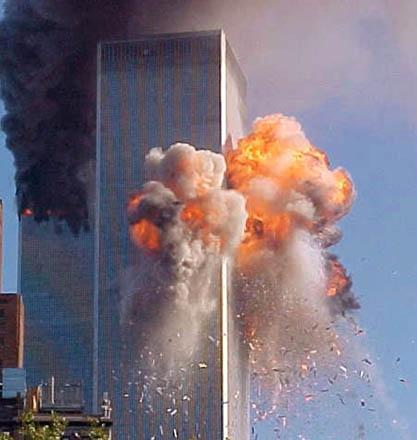
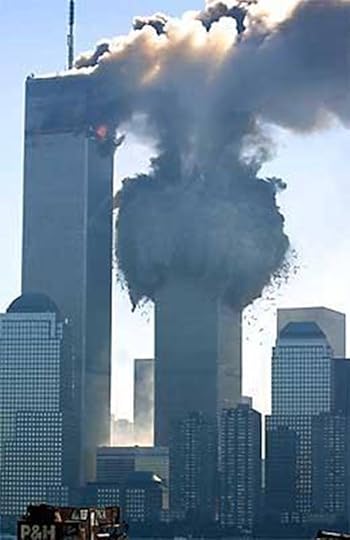
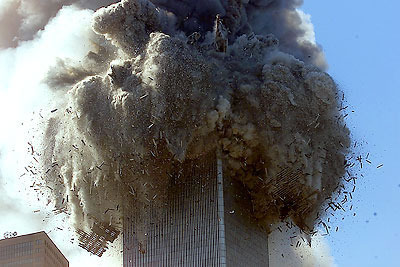
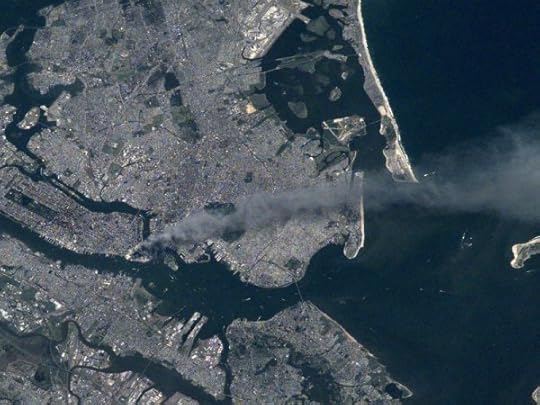
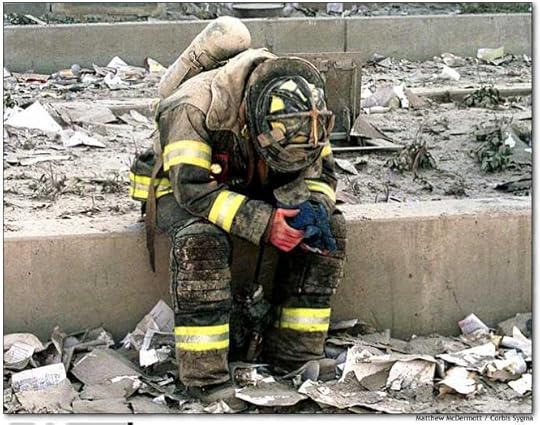
When I was filling in guest posts for the Sample Sundays I deliberately left this Sunday free. This same day ten years ago I was working on a book so I was deep into my routine, locked in my office from 8am embroiled in a sea battle, plotting out maneuvers between the Iron Rose and half the ships of the Spanish Main. My husband knew I worked in total silence, no radio, no TV, no distractions so when the phone rang and it was him, I knew it had to be something important otherwise he'd just send an email and I'd find it through the day. All he said was: Go turn on the TV, there's been an explosion in one of the Towers. He didn't know what had happened, no one knew at that point the attack was deliberate, the news was just saying a small aircraft had struck the side of one tower. I watched, took the opportunity to have a bowl of cereal and by the time I had filled the bowl and carried it into the family room, the second plane had struck and the whole world knew. I sat there, cereal untouched, and watched as those two magnificent, indestructable towers came crashing down. I called him back and said: You're not going to believe this…
I didn't move off the couch all that day or that night, or all the next day. It was the sheer scope of the horror that kept me watching. I had been in New York late that summer, a month or so before it happened and I was actually inside one of the towers. Someone from Anchorage or Warsaw or Edinburgh who had never been to New York, never walked along the street beside those towers probably would never be able to imagine the size. Standing at the base and looking up, it was like they never ended, they rose up and touched the clouds. They aren't called skyscrapers for no reason. The fact that both of those enormous buildings became heaps of twisted girders and piles of vaporized dust in a matter of minutes…still shocks and astounds me to this day. Where did all that concrete and steel go? I would have expected, at the least, a huge mountain of rubble several stories high, still dwarfing the buildings around them, but no. They were just …gone.
So today, just some memories and thoughts for all those people who believed, as most of the world did, that those towers would stand forever.










September 8, 2011
Dancing with the Fireflies
I was going through email this morning and, after hitting delete a lot, tickled the keys and answered the few that caught my eye. One came from another author who mentioned she was thrilled about the ebook revolution because it gave her the freedom to write at her own speed, with no ugly deadlines looming overhead like a thundercloud.
I had to agree wholeheartedly. That was always the worst part, to me anyway, about writing. Once the thrill of signing that first contract fades, and the utter and complete breathless joy of walking into a bookstore and seeing your first book on the shelf passes…what comes next in rather rapid succession is the realization that you have to keep writing at a pace that puts at least one book a year in front of the readers. The lucky ones can sit their bums down the day after they send a manuscript off and instantly start another book. The really lucky ones have two, even three books on the go at the same time and simply switch gears to another storyline.
Me? I was always a one book a year…if I was lucky. I'm the first to admit my writing habits are horrible. I learned way back that I couldn't force myself to write if the mood wasn't right. When I did that, I usually scribbled garbage that just got scrapped somewhere down the line anyway. I also don't work from an outline, which makes it difficult to know ahead of time where your story is going and what your characters are doing. Plus, I like to toss in the odd twist and turn so the story doesn't always go where the reader expects it to go. The drawback there is, when I kill off a character who has been the likely suspect through half of the book, I have to come up with a new villain who logically fits the bill. Sometimes that requires going back and redoing bits in the half of the book that is written already, so its like taking one step forward and scrambling two back.
Plus, I'm never happy with what I've written. I've been known to take two weeks over a single short scene, writing it twenty different ways until the right words *ping* in my head. I swear there is an actual *ping* sound, and the fingers tingle, and I can draw a full deep breath again. I vividly recall the angst I suffered over writing a death scene in The Blood of Roses. It *had* to be just right. Had to. The victim was a character I had lived with for over three years, writing him as a major personality who was funny and sensitive and loving and gentle and loyal and heroic. His death was intended to more or less encapsulate the horror and tragedy of the war as I had discovered it through my research, and to shock the reader into seeing that through my eyes. I lost count of how many different ways I wrote that pivotal scene. The nights I lay awake staring at the ceiling, picturing it as a movie and what if I did this, or what if I did that… I moved on and wrote around it, because I had other brave, heroic characters to kill off too (it was a major battle, after all) but I kept going back, kept that one scene in my mind knowing I had to do it eventually…and I did. I think the words didn't come for so long because I just didn't want him to die. He, like all of the characters I write and invest so much time and emotion in, had become a major part of my life, so it was like watching a close, dear friend die. Augh. And choosing the method of his death.
So it comes as no surprise that I can honestly say I have never met a publisher's deadline. Being one or two months overdue was normal for me and luckily I had reasonably understanding editors. Hard to argue with: I haven't figured out how to end it yet. My longest misfire was eleven months, and that was, oddly enough, for The Pride of Lions which was the first book of the Scotland trilogy. The story had been originally conceived to fit into one book…hero and heroine on opposite sides of a war…meeting, clashing, falling in love despite their differences etc etc etc. I had just finished The Wind and the Sea, which had a cast of a bazillion characters and at some point or other just about every one of them had been the suspected villain, so I had spent a good many brain cells trying to lead the reader down all kinds of twisty turning paths. I just wanted to write a straightforward romance with none of the 17 hour days of writing.
Uh huh. First mistake was basing the book in Scotland. I totally blame my neighbour at the time, Jeannie, who was a fiery little Scottish gnome who loved to get drunk as a fart and bellow out songs in the backyard at 3am. She stood about 4ft 6 and had a set of lungs on her that had windows slamming all around the townhouse complex. You could set your watch by how long it took for the cop cruiser to show up, and after five minutes with Jeannie, the cops were laughing so hard, they had tears in their eyes. And she would usually sing them on their way back to their cruisers.
So it was Jeannie's fault, because her favorite song was Lock Lomand "You take the high road and I'll take the low road…" And of course the one killer line that always made my fingers tingle to grab a pen… "But me and my true love will never meet again…" How deliciously tragic, perfect for a romance novel especially since, by Jeannie's telling of it, the author of the poem was a soldier in the rebellion, anonymous, and the words were found on his body, scribbled on a piece of paper in his pocket.
If you search Wikipedia, you find this:
There are many theories about the meaning of the song. One interpretation is that it is attributed to a Jacobite Highlander who was captured after the 1745 rising. The English played games with the Jacobites, and said that one of them could live and one would die. This is sung by the one who was sentenced to die, the low road referred to being the passage to the underworld. Some believe that this version is written to a lover who lived near the loch.
Another interpretation is that the song is sung by the lover of a captured rebel set to be executed in London following a show trial. The heads of the executed rebels were then set upon pikes and exhibited in all of the towns between London and Glasgow in a procession along the "high road" (the most important road), while the relatives of the rebels walked back along the "low road" (the ordinary road travelled by peasants and commoners).
So Jeannie wasn't far off and I was hooked, so I had the little firefly of an idea buzzing around in my head. Unfortunately, you don't just sit down and write a story based in Scotland the way you would sit down and write a story based in, say Peoria. The simple act of choosing a name for my hero and a location for his clan took weeks of research because heaven forbid I put a Cameron on Argyll land. Then came the politics. And religion. And even after I had finished The Pride of Lions for the second time and gave it to a Scottish friend of mine to read over, she said yes, story is great, but you've got all the Highlanders speaking with a Lowland dialect. AUGH.
Notice I said there, finished it for the second time?
I tried. I really tried to write a straightforward romance based in Scotland, using the rebellion as the backdrop for the angst between the two main characters. But when I got to the end, totally unhappy with what I had, I gave it to my (now known as beta readers) close friend and extremely harsh, honest critic, who gave it back and said the fateful words: It's okay, but pretty ordinary.
Oh. My. God.
I sat on it for days. I had already missed the deadline and the editor was getting antsy, it was already slotted into the publishing schedule for the following spring…
But my neighbour had only confirmed what I knew myself. All through the book I had wanted to expand on things I had found in my research. I wanted to make it longer, bigger, grander. I wanted to do the rebellion justice and make it a huge part of the story, not just a bit of tattered plaid in the back ground. I wanted to dance with a whole flock of fireflies, not just one or two. So what did I do? Called the editor, told her the book was finished but it was crap and I was tossing it out and starting all over again.
In the silence that followed, I could hear her blinking.
So I explained what I had, what I had tried to do, what was bothering me about what I had done, and what I really truly wanted to do. She listened without interrupting and when I was finished sketching out what would eventually become the two books, The Pride of Lions and The Blood of Roses, she said three little words. Go for it.
The point of this ramble (and you can see now how my mind wanders off the beaten path and follows its own) is that we…the authors who dream up the stories, or feel that tingle, or hear that *ping*, no longer have to worry about rushing through a book to meet a deadline. I read emails from friends all the time who say, omg, I can't even come up for air, I have a deadline, I can't eat or sleep until I finish this…yada yada…
Pffffffft.
Perhaps taking advice from someone who never met a deadline is a little sketchy, but hey, you rush it, the book suffers. You take short cuts, the book suffers. You don't write it the way you want to write it, the book suffers. Prime example is my own book, My Forever Love. You notice it hasn't joined the other backlist books I've reissued? That's because I read it through and was mortified. I could see exactly where the pressure of disinterested editors, rules and regulations about length and content, deadlines, the pointlessness of writing something that would get little or no distribution or marketting….all came crashing down on me. I knew halfway through that book that it wasn't fun anymore and I had always said that when writing stopped being fun, I would stop writing.
Well. Hello ebook revolution. Hello all you wonderful readers who have remembered me through 7 years of silence. Hello all of you new readers who never had a chance to read my books because they were taken off the shelves and relegated to obscurity. And hello all of you readers who enjoy the excitement, the intrigue, the adventure of having the history be a secondary character and not just a colourful backdrop to the story.
Hello all you readers who enjoy dancing with the fireflies. I'm back, I'm happy, and the fingers are tingling again.







September 4, 2011
Readalong Monday…Chapter Eight
It's Monday again, so another stirring, rousing, exciting chapter of Through A Dark Mist. I hope everyone is enjoying the adventure so far.
I must apologize again for the goofy way this chapter has copied and pasted. I still can't figure out how to fix the settings on my farking Office Word to get rid of the little square dufus things that mark the corners of each page, and if anyone out there DOES know how to fix it or even what it's called, please email me. The text looks fine in the original file, but when I copy and paste it here, the formatting is all screwy. I've tried clearing the formatting, setting the margins to zero. AUGH just AUGH. Why is it cutting sentences in half????? Why is it chopping the first line of each paragraph off after three words???? Any ideas?
Through A Dark Mist Copyright © Marsha Canham
Chapter Eight
Servanne slept
twelve hours without so much as rolling from one hip to the other. She would
have slept even longer if not for the loud blowing of a ram's horn from
somewhere beyond the refectory walls, calling the outlaws to their evening
meal. She awoke with a groggy, thick sensation stalling her eyelids, and would
have gladly lowered her head to the furs again had she not caught a fleeting
glimpse of the nerve-shattering glare Biddy launched at her from across the
room.
"Biddy? What is
the time? How long have I been sleeping?"
"I am not
familiar with the hours these wolverines keep," Biddy replied archly, her back
as stiff as a swaddling board. "There are no bells to toll Vespers; thus I have
been praying quite fervently on my own for some time now."
"Praying? For
what?" Servanne yawned.
"For salvation,"
Biddy declared. "For redemption in the eyes of God and man—assuming it is not
too late to plead for forgiveness before either!"
"Oh Biddy—"
Servanne frowned and stretched cozily within the warm cocoon of furs. "What are
you talking about? What has happened now that requires forgiveness?"
"What has
happened?" she demanded shrilly. "You can lie there and ask me what has
happened? Better it is I who should be asking you—as if mine own eyes have not
already given me the answers. Sweet Mary Mother in Heaven, I should have known
it would come to this. I should have known it was his intent from the outset.
And you! I blame only myself for what has become of you. Too innocent, you
were. Too much talk, too great the temptation. Oh yes, I could see the
temptation; who could not? Who could not?"
The older woman
blew her nose savagely into a sodden scrap of linen and cursed as she was
forced to wipe her fingers on the hem of her tunic. In the next wailing breath,
she resumed her self-condemnation before an utterly confused and bewildered
Servanne de Briscourt.
"In all of my
eighteen years as your nurse and companion, I never dreamed I would bear
witness to such wanton behaviour. From other women—plain women, common women,
trulls and whores, oh yes, I should have expected it and known how to deal with
their urges. For women such as those, taking a lusty man to their beds is as
commonplace as lifting a leg to piss."
"Biddy!"
Servanne gasped, jolted wide awake.
"But you! I
thank the Lord your sweet, saintly mother did not live to see such a thing. And
with such a one as him! Sweet Jesu, had I but suspected such a need in you, I
would rather have seen you serviced by one of the guardsmen along the way—"
"Biddy!"
"—than by that
great, lustful brute! At least it could have been arranged with some
discretion! Not like this! Not … not brazenly walking through the hall, with
him naked as a bull and you"—Biddy waved a hand in unfathomable distress—"you
hanging off his neck, looking as if you could scarce wait to have a bed beneath
you!"
Servanne made a
strangled sound in her throat and sat bolt upright. "Biddy! What are you
saying? What are you accusing me of doing?"
"Do you deny you
were hanging off his neck when he carried you in here?" Biddy demanded with
narrowed eyes.
"I was not
hanging off his neck!. I was in a faint!"
"So would any
normal woman be to see the size of him," came the scandalized retort. "Curse me
if I did not think he had grown a third arm to support you!"
Servanne
flushed. "Biddy! He was naked because he was bathing in the pond. I fainted
because I was … I was exhausted—you, of all people should know why! And he must
have carried me back here because I could not walk the distance on my own."
Biddy stopped
fussing with the bit of linen long enough to arch a brow sardonically. "And I
suppose he helped you out of your clothing because he was concerned they might
choke you in your sleep? I suppose he remained with you in here for nigh unto
an hour because he was worried you might not be able to fall asleep on your
own?"
Servanne
clutched the layer of furs to her naked breasts. "He … unclothed me?"
"He did indeed.
And he enjoyed the view for considerably longer than it should have taken to
fold the garments and lay them neatly aside—had he troubled himself to do so,
that is."
Servanne
followed an accusing finger and felt her mouth go dry at the sight of her gown
and under-garments strewn across the earthen floor. She swallowed hard and
pressed a trembling hand to her temple.
"I do not
remember," she whispered. "I do not remember anything after I fainted."
Yet that was not
exactly the truth either and she did not have to hear Biddy's snort of disdain
to feel the heat creeping upward in her cheeks. She did remember something—a
feeling, or a sensation of intense warmth and pleasure. But … it was not
possible for him to have lain with her and not left something of his presence
behind.
Servanne flung
the pelts aside and examined herself critically, searching for bruises or faded
blotches that would either condemn or vindicate her in Biddy's eyes. There was
nothing, however. No marks on the ivory smoothness of her body, no scent of
human contact, no telltale tenderness between her thighs. Surely a man of his
size, his weight, his temperament would have left a mark of some kind, either
branded onto her body or seared into her mind.
Lacking proof
one way or the other, she drew upon her anger. "Where were you all this time?
How do you know he was alone with me for an hour? Why were you not here by my
side to defend and protect me?"
A new flood of
tears sprang from the matron's hazel eyes. "I tried, my lady! Oh how I tried to
run to your side! It was that wretched Woodcock who held me back. Firstly, he
led me on a merry chase around the forest. Then, when he finally returned to
the abbey—just in time to see the outlaw leader bringing you in here—the rogue
drew his knife and bade me sit in company with several other ruffian misfits
while his lord 'attended his private affairs privately.' To have moved or cried
out would have earned a blade thrust into my breast, and I did not see how I,
dead upon the ground of a pierced breast, could have been of any further use to
you."
"What use are
you to me now," Servanne snapped, trembling with anger, "when you refuse to
believe me when I say I have no memory of what happened, and no cause to feel
shame or guilt over my behaviour!"
A second
anguished wail from Biddy's throat sent Servanne's eyes rolling skyward and her
hands crushing against her temples. A further distraction—the swirl of her
uncombed, unfettered hair around her shoulders—sent her anger boiling in
another direction.
"Where is he?
Where is the rogue: I shall have the truth from him myself!"
"Oh! Oh, my
lady, no. No!"
"My clothes,"
Servanne commanded. "My combs, my wimple—where are they?"
"Not within my
grasp, my lady," Biddy replied, sniffling wetly. "What trunks were fetched with
us in the ambuscade have not appeared since. Where they are or what has become
of the contents, I cannot say."
"Never mind,
then. Just help me dress."
Biddy hastened
to collect up the scattered garments. The gown was slightly more crumpled and
stained from its stay on the floor, as were the knee garters and short silken
hose. The samite surcoat was nowhere to be seen, but Biddy removed her own
plain gray mantle and wrapped it securely about her charge's shoulders for
warmth. She was about to part and plait the tousled skeins of hair into more
modest and manageable braids, but Servanne pushed the fussing hands away and
swept out into the corridor.
After a moment's
pause to gain her bearings, she followed the dank stone hall to the right. It
emerged at the top of a shallow flight of steps overlooking the pilgrims' hall
at a point midway between two of the roofless stone arches. The scene before
her appeared much as it had the previous evening, with fires crackling in the
roasting pit, and torches burning smokily from their wall sconces. Cauldrons
bubbled steamy clouds of aromatic mist into the cooler air, adding to the dull
sheen of moisture that clung to the charred walls and broken ribs of the abbey.
Trestle tables
had once again been set in an open-sided square under the sheltered portion of
the roof. He was sitting there on the dais, the vest of black wolf pelts
reflecting glints of fire and torchlight. He was engrossed in a conversation
with Gil Golden, but when the latter's eyes flicked to the far wall, the Black
Wolf stopped and followed his stare.
Servanne had no
notion of the image she presented, nor would she have cared a potter's damn if
she had. The dark woolen cloak she wore completely encased her slender body
from shoulders to toes, leaving only the wild, voluminous cascade of
silver-blonde hair to outline an ethereal image against the shadows. The
ghostlike apparition startled several of the outlaws, even those who were open
in their scorn for the legends and superstitions surrounding Thornfeld Abbey.
Many went so far as to reach instinctively for their weapons before recognizing
the figure as being of this mortal earth.
The Wolf rose
and walked slowly around the end of the table and down the hall. If not for the
fickle light that kept his features veiled in shadow, she might have noticed
the strange gleam that mellowed the gray of his eyes, softened them, even, to a
shade verging on pale blue.
"I trust you are
feeling better for your rest?" he asked.
Servanne said
nothing until he had come to a full halt before her. When she did speak, it was
in a voice so low he almost had to bend forward to hear.
"I trust you
enjoyed the liberties you took while I was resting?"
"Liberties, my
lady?"
"How dare you
touch me," she snapped, "let alone remove so much as a slipper from my foot!"
"Ahh," he said,
and straightened. "Those liberties. You would have preferred to sleep in cold,
wet clothes?"
"My clothing was
not wet," she objected. "I was no nearer the edge of the water than I am to you
now."
His grin
broadened. "You were very nearly headfirst into the mud and weeds had I not
caught you in time. Furthermore …" His gaze raked appreciatively down the
shapeless form of the cloak and left no doubt as to what he recalled seeing
beneath. "I did what any chivalrous fellow would do to save his lady the
possible discomfort of fever or flux."
Servanne
clenched her small hands into fists. "I am not your lady. And if you were so
concerned over my health, why did you not call my waiting-woman to attend me?"
"I could have,"
he agreed blithely, "but I thought it a convenient opportunity to assess the
precise value of the goods I am holding to ransom. Had I done so earlier, I
heartily believe I would have put a much higher price on returning them
undamaged."
"Then … you did
not—" Servanne bit her lip, resenting the flow of ruddy colour that made his
smile widen further.
"I am crushed,
indeed, my lady, that you should have to ask."
"Biddy believes
you did more than see to my comfort. She does not believe I have no
recollection of what happened after I fainted beside the pool."
"My reputation
as a lecher will be in shreds," he murmured.
"Did you or did
you not take ill advantage, sirrah?" she demanded, giving her foot a little stamp
of annoyance.
"If I did?"
"If you did"—she
searched his face in vain for a trace of humanity—"then you are a lower, viler
creature than ever I could have imagined."
The Wolf
laughed. "I was under the impression your estimation of my character could sink
no lower than it was already."
"I have erred
before in crediting a man with too much character," she retorted. "For that
matter, most men in general tend to show a glaring lack of consistency when
their true faces come into the light."
"Spoken like a
woman who is tired of being sold into marriages with one stranger after
another."
"Nay, wolf's
head. I am simply tired of men who continually deign to know what is best for
me and who then proceed to rearrange my life to suit their needs."
"And what needs,
might I inquire, would you prefer to have tended?"
Servanne flushed
again. "Mon Dieu, but you are an exasperating cur! Will you or will you not
answer my question truthfully?"
"Truthfully—" He
said the word in such a way as to raise a spray of gooseflesh along her arms.
"Had I seen to my own comforts as well as yours, you would not now have the
shield of a blank memory to hide behind. Nor would there be a need to ask what
manner of liberties I had taken, for your body would still be singing their
effects loudly and clearly."
Servanne's jaw
dropped inelegantly. She took a small, stumbling step back, and then another,
but before she could turn and run from the mocking gray glint of his eyes, a
sharp fff-bungg! split the air and left an ashwood arrow quivering in the
wooden arch beside her. A shriek sent her jumping forward and the Wolf suddenly
found himself standing with an armful of trembling, soft femininity.
"Runner coming
in, my lord!" someone called.
"Who?" the Wolf
asked, not troubling himself to turn around.
"Sigurd's
handiwork," said Gil Golden, noting the arrow's fletching with a wry grimace.
"No one else wastes so much quill."
None of the
other outlaws contributed comments. None even appeared to have heard Gil's, or
so it seemed to Servanne. Everyone—the men at the tables, the men not yet in
their seats, even the two women who bent over the cooking fires—all of them
stood frozen in place, like statues turned to stone. Apart from the hiss and
crackle of the fires, there was only silence. A silence so acute that when a
second arrow streaked through the darkness to strike the same archway, one
could almost swear to have heard the resonant twang of the bowstring.
Like magic, the
tableau dissolved. The men and women resumed their conversations and their
tasks at hand. Servanne, having once again buried her face in the protective
thickness of the wolf pelts, felt a pair of gentle hands pry her loose.
"We use the
double signal to ensure the men coming in are our own," the Wolf explained.
"Even those who possess limitless courage have been known to give away the
deepest of secrets under expert torture, and, since it is not inconceivable to
assume the sheriff has sent his pack of hounds out after us, we have arranged
different signals for each day."
"Bah! Old Noddypeak
should have chased his tail into a fine tangle by now," Sparrow chuckled,
materializing out of nowhere. "Especially since he was sent chasing it in ten
different directions."
"I should think
Sigurd will be bringing news of a new hound in the forest," the Wolf mused
thoughtfully. "One whose nose is tuned to a sweeter scent."
Wardieu,
Servanne realized, the excitement flaring within her like a sudden flame. Lord
Lucien Wardieu was in the forest, come to rescue her from this … this …
With a start,
she became aware of how close she was standing to her tormentor. Her fingers
were curled around shanks of gleaming black fur; his hands were still resting
on her shoulders, the intimacy of the contact hidden from view by the flowing
mass of her hair, but one that was felt most disconcertingly throughout every
inch of her trembling flesh.
His potent
maleness was unsettling; more so when a vivid picture of him flashed into her
mind and remained there—a picture of him standing naked in the knee-deep water
of the Silent Pool, his flesh steaming, his muscles rippling beneath the sheath
of taut skin.
Conscious of the
fact that he seemed to have little difficulty in reading her thoughts, Servanne
quickly lowered her lashes and extricated herself from his embrace. As before,
she missed the flicker of colour that came and went in his eyes, nor did she
see the way his fingers curled and hoarded the distinct, tingling memory of her
warmth.
"I would like to
return to my chamber now," she said.
"Whereas I would
enjoy your company beside me at the table again."
"I am not
hungry."
"I am. And
unless you would care to see my appetite roused for more than food, you would
be wise not to attempt to defy me in this."
Servanne looked
up. The promise was there for a blind man to see, as was the disturbing
realization it had only been by the slenderest thread of chance she had
awakened alone in her bed.
"I … should at
least like to make myself more presentable," she said tremulously, reaching up
with an unsteady hand to smooth the flown wisps of her hair.
"You are more
than presentable just the way you are," he insisted, extending an arm in a
mockingly gallant gesture.
Servanne doubted
she could touch him again and come away unscathed. She gathered the folds of
her skirt and cloak in her hands to lift them clear of the fouled rushes on the
floor, and, with as much indifference as she could put into the tilt of her
chin, preceded him to the raised dais.
The meal
progressed as it had the previous evening, the exception being that Servanne
shared her settings with the outlaw leader rather than with Sparrow. The
latter, happily taking on a joint of mutton almost as large as he was, kept the
conversation light and easy, but though he tried his valiant best, failed to
win a smile from their silvery-haired hostage. He assumed it was because she
had overheard Sigurd's report, delivered halfway through the meal, that there
was indeed a new player in the game of hide and seek. While he was not far
wrong in his guess, he was not exactly right, either. For every one thought
Servanne had concerning the whereabouts of the Baron de Gournay, she had three
for the man who sat on her right-hand side—the man who met her gaze each time
without a hint of shame, or guilt, or regret; just the infuriatingly smug
self-assurance of someone who believes his way is the only way.
"Who are you?"
she asked quietly. "Why have you come toLincoln?"
"I have already
told you who I am."
"You have not
told me why I should believe you."
He seemed to
want to smile at that. "Have I ever lied to you?"
He was looking
at her, into her, through her, and Servanne felt the flesh across her breasts
and belly tighten, as if left on a tanner's rack too long. "As far as I know,
you have lied to me about everything."
"Everything?" he
asked, his thigh brushing not-so-accidentally against hers.
Servanne shifted
on her stool and laced her fingers tightly together on her lap. "You have lied
about who you are, and what you are," she insisted softly. "You hide behind the
lincoln-green badge of an outlaw, yet your motives for being here in these
woods have nothing to do with bettering the conditions of the poor, or righting
injustices committed in the king's name, or fighting against oppression—real or
imagined. You have gathered about you a few local villagers to give some
credence to the charade, but you are not from these parts. I doubt you have
been in England as long as it took to grow the hair past your collar—or long
enough to know there have been no black wolves in Britain since King Henry laid
a high bounty on their pelts. Certainly not enough to fashion so fine a mantle,
or be willing to throw so casually on a bed."
The Wolf was
mildly taken aback; moderately impressed. After some consideration for the
surprised silence that had fallen over the other outlaws seated on the dais, he
carefully wiped the blade of his eating knife clean, sheathed it, and stood up,
indicating the door with a tilt of his head. "Come. Walk with me. There is but
a half moon tonight, perhaps enough to hint at what the gardens may once have
held."
"Absolutely
not!" she gasped, horrified at the suggestion.
The Wolf gave
her a moment to reconsider of her own accord, then leaned over close enough
that his words went no further than her pink-tipped ears. "You can either walk
with me now, or lie with me later; the choice is yours where we take a few
words of private conversation."
The mist was
more pervasive out-of-doors. Thick, opalescent sheets of it swirled at knee
level over the slick cobbles, masking the weed and rot, the neglect, and the
decay. There were no torches lit outside the hall, but as Servanne's eyes
adjusted to the faint light of the crescent moon, she could see the vague
outlines of the other ruined buildings, the stone cistern in the centre of the
court, the vine-covered arches that formed a narrow walkway leading toward the
chapel. She was thankful for Biddy's warm woolen cloak, and drew it close about
her shoulders. Tiny droplets of mist clung to her face and throat, and coated
her hair like a fine-spun silver web.
"The gardens are
this way," said the Black Wolf, walking toward the arches. "If you look closely
enough, you can still find the odd wild rosebush growing amongst the bracken."
How vitally
important to know, Servanne thought angrily, stepping around a jagged gap in
the stone cobbles. She stretched her arm out for balance, startled slightly
when she felt his huge, warm hand take hold of hers. Rather than jerk it away
and appear twice the fool, she permitted the infringement until the footing was
once again solid beneath her. A short distance into the steeped silence of the
ancient gardens, she balked completely, refusing to go another step in the
company of a man whom she had every reason to believe would kill her without
hesitation if the situation arose.
"Who are you?"
she asked again. "And why have you come toLincoln?"
He stopped on
the path just ahead of her and slowly turned around. "My name is Lucien
Wardieu," he said quietly. "And I have come home."
"You say you are
Lucien Wardieu, but if you are, why do you hide here in the forest like a
common outlaw? Who is the man who is now residing in Bloodmoor Keep? Why has he
taken your name if it does not belong to him? And how has he managed to keep it
all these years without anyone challenging his identity before now?"
The Wolf crossed
his arms over his massive chest and leaned back against one of the arches.
"A great many
questions, my lady. Are you sincere in wanting to know the answers?"
"I want to know
the truth," she said evenly.
"The truth
should not require proof, and a man should not have to prove who he is if he
swears to that truth upon his honour. I know who I am. So does the impostor
residing at Bloodmoor Keep."
"That …
impostor, as you call him … has ridden to war with Richard the Lionheart."
"I do not doubt
he has."
"Prince John
trusts and confides in him."
"You would use
such a recommendation to vouchsafe a man's character?" he scoffed.
"It has even
been whispered that if John ascends to the throne, he will be sufficiently
indebted to the Baron de Gournay to appoint him chancellor, or marshal!"
"John Lackland
does not bear up well under debts; he prefers to hire assassins to repay them.
As for his ascending the throne—how do these whisperers of yours say he will
overcome the annoying matter of Prince Arthur ofBrittany?"
Servanne bit her
lips, sensing yet another verbal trap looming before her like a snake pit. Of
King Henry's five sons, only Richard—the eldest—and John, the youngest, were
still alive. Geoffrey, next to youngest, had died several years ago, but had
left as his heirs, a son and a daughter. Since he would have been in line to
the throne after Richard, the right of succession would naturally pass to his
son Arthur upon the king's death, and after him, his sister, Princess Eleanor.
The snakes in
the pit writhed a little closer as Servanne offered lamely, "But Arthur is only
a child. Prince John would never—" She stopped again, catching the treasonous
thought before it took on substance.
The Wolf held no
such reservations.
"John would
never kill his own nephew? My dear deluded lady: Prince John of the Soft Sword
would kill his mother, his wife, his own children if he thought their removal
would win him the crown of England.
How long do you suppose Richard would have survived poison in his cup if he
were not already hell-bent on killing himself on the end of some infidel's
sword?"
"I do not
believe you," she said without much conviction. "Not about Prince Arthur, at
any rate. And besides, he is quite safe with his grandmother, Eleanor of Aquitaine,
in Brittany. She would never allow any harm to befall him, most decidedly not
at the hand of her own son!"
The Wolf looked
away, looked up at the slivered moon for a long moment, then looked back at
Servanne. "What if I were to tell you an attempt has already been made on the
prince's life? What if I told you he and his sister were kidnapped from the
dowager queen's castle at Mirebeau four months ago?"
"Kidnapped?"
"Stolen away in
the middle of the night under the eyes and ears of a thousand of Eleanor's most
trusted guards. It took a full week just to discover how the kidnapping was
done—a rather cleverly executed gambit, I might add. Two men shinnied up the
small tower that carries the castle wastes down into the moat. Someone should
have smelled the pair about their task if nothing else, but alas, no one did,
and the children were smuggled out the same way.
"Luckily," he
continued with a sigh, "their escape from Brittany was not
so well planned or executed, and Arthur was safely retrieved before he could be
put on board a ship for England. One of the men involved in the kidnapping was taken alive and
revealed quite an interesting tale to his, ah, inquisitor. The more questions
that were asked, the more answers were received, and in the end, most of the
pieces of the puzzle made sense once they were fit into place."
"No! It makes no
sense at all!" she cried. "Why would anyone want to kidnap the prince? He is
but a child."
"A child first
in line to the throne," the Wolf reminded her. "Keeping him prisoner, or better
yet, bending his mind enough to eventually have him judged insane, or
incompetent to rule … John would be the natural choice to assume the throne in
his stead."
"You are
forgetting the Princess Eleanor."
"The sister of a
mad prince? Hardly a likely candidate."
"So you think
John was behind it?"
"No one else
would have half so much to gain."
Thrust and
counterthrust. Talking to him was like taking a lesson in swordplay.
"Has the queen
challenged John with the accusation?" she asked.
"Challenge a
ferret to explain the feathers stuck to his mouth? What good would come of it,
especially when the chick came to no harm?"
Servanne's brows
drew together in a frown. "You speak with a great deal of liberty and
familiarity. I hope … I trust you are not daring to imply that you hold the
queen's confidence?"
"Me, my lady? By
your own words a rogue and wolf's head?"
"A rogue most
certainly," she said carefully. "But as I said before, no more born to the
forest than I was. I may not know who you are, sirrah, but I do know what you
are, and have known from the instant you stood your challenge to us on the
road."
"Have you now,"
he mused, his eyes catching an eerie reflection from the moon. "Suppose you
tell me what you know … or think you know."
"Will you tell
me if I am right?"
"That depends on
how right you are."
Parry, and
thrust. Servanne accepted the challenge, however, knowing this was as close as
she was likely to come to a confession, or an admission.
Mimicking his
arrogant stance, she crossed her arms over her chest and slowly walked a
half-circle around him, inspecting the powerful body with a detachment better
suited to choosing livestock at a fair.
"Throughout most
of my life I have watched knights training and fighting," she began. "I know
the musculature of a well-practiced sword arm, and the look of limbs that are
more accustomed to feeling horseflesh between them than soft deerhide. Your
arms and shoulders have been thickened against the constant chafing of heavy
chain-mail armour, and the scars I saw on your body this morning were not
earned in a forest or on a farm, but on a battlefield, and in the tournament
lists."
He said nothing
to either confirm or deny her observations, and Servanne continued even more
boldly.
"You carry your
years well," she said, glancing speculatively up at the shadowed face. "But
there are more behind you, methinks, than ahead. Five and thirty, I should
guess."
"Too close by
three to the grave," he chided dryly, "But commendable."
"Take away at
least twenty of those years for the time it took you to earn your spurs, and
that leaves … mmm … twelve full of mysteries to solve. Too many, I think, for
one quick judgment, but shall I pick one or two for consideration?"
"I confess, I am
intrigued, madam. Pray go on."
"Will you acknowledge
your knighthood?"
"Will it change
your opinion of me if I do?"
"Not one wit."
"Then I
acknowledge it," he grinned, bowing to her cleverness.
"And yet," she
murmured, almost to herself, "You are well schooled in the use of a bow—not a
common weapon for a knight. In fact, I rather thought nobles disdained any
knowledge of archery beyond the value of entertainment."
"The result of a
physic's wisdom," he conceded, shrugging his broad shoulders. "He had some idea
the drawing of a bowstring would quicker restore the strength to my arms while
I recovered from my wounds."
Servanne spared
a thought for the incredible corded tautness of his muscles and applauded the
physician's judgment.
"And your men?
Were they all recovering from wounds as well?"
"Wounded vanity,
perhaps. They are a competitive lot and would not see their captain with a
skill better than they possessed."
"Captain?" she
asked, pouncing on the slip. "Past rank, or present?"
The Wolf took
too long to answer, which was all the answer Servanne required to feel a surge
of triumph.
"That you have
been on Crusade is scarcely worth the breath to debate, but I would hesitate to
put forth the suggestion that any infidel could have wrought such damage as in
the scars I saw today."
"You question
their skill as worthy opponents?"
"Oh, I have no
doubt they are most worthy; both savage and dangerous, as well as fearsomely
skilled fighters, else King Richard would have laid their army to dust years
ago. But to fight you, my lord wolf's head, they would have to have the added
skill and knowledge of how to attack a man who favours the left hand. Most
soldiers never encounter a left-handed opponent in a lifetime of battle and
thus are rarely able to defend an attack, let alone overcome an enemy with your
skill and strength. No. Whoever left his mark upon you knew exactly what he was
doing. He knew where your weakest, most vulnerable points lay, and he struck at
them with relentless accuracy. Moreover, he would have had to have been almost
your equal in size and skill to have done as much damage as he did and live to
walk away."
The Wolf frowned
with genuine curiosity. "What the devil leads you to suppose he lived?"
"When you were
bathing, you were very meticulous about touching upon each scar—a ritual of
some sort, I imagine. Men do not continually refresh the memory of wounds
delivered by dead men, only those delivered by enemies upon whom they might
still seek revenge."
The Wolf fell
silent. And waited.
"Therefore," she
concluded, "we now have a man who was—or is—of the order; a man who makes vague
claims to be engaged in the honourable service of Eleanor of Aquitaine, yet who
definitely took a dishonourable foray into kidnapping so that he might … what?
Revenge himself upon an old enemy? An enemy he claims has stolen his name and
birthright?" Servanne stopped and glanced up in the darkness. "You call this
supposed usurper by the none-too-amiable appelation of Dragon. What was he once
called … friend?"
The Wolf shook
his head slowly, too far into the battle to sound a retreat.
"Worse than
that, my lady," he said with frightening intensity. "He was once called
brother."
**************
If you're enjoying Through A Dark Mist, I might remind you there are two other books in the trilogy: In The Shadow of Midnight and The Last Arrow. And if you want all three volumes in one book, check out The Robin Hood Trilogy
And while you're out and about, check out my website at www.marshacanham.com Thanks to Nancy Davis over at www.RomanceReaderatHeart.com I was finally able to take down the out of date pages and put up the new ones. I never said I was a techie *sigh*




September 3, 2011
Sunday Sample…Jill Gregory

My guest blogger today is one of the Loopies, Jill Gregory. Way back when books were chiselled out of stone tablets, Jill and I were part of the Four of Hearts promotion at Dell, and a few books later, the Four of Hearts Reunited. As I recall, we met at a Romantic Times Conference, at a dinner hosted by Dell, and we just happened to be seated next to each other and both of us said: oh, so you're one of the other Hearts! Jill is also a nighthawk, like myself, (and like the other Jill, Ms Metcalf) so I can usually count on an answer from one Jill or the other coming back to an email I send out at 1 in the morning *g* Jill has also recently joined the ebook revolution, and I was pleased and flattered when she asked me to do the covers for the first three reissues, so I hope you all give her a little extra love LOL.
Please welcome…Jill Gregory
Hi everyone! I'd like to thank Marsha for inviting me to chat with you all today. I'm Jill Gregory and I've written more than thirty historical and contemporary romances, as well as romantic suspense and thrillers. I started out writing historical romances many moons ago — in fact, my first book was published the same month my daughter was born. My husband brought me my very first letter from a reader while I was in the hospital after giving birth! I'll never forget what a thrill that was. And to this day, I love hearing from my readers. I'm always striving to give them the best, most riveting and exciting reading experience I can create. This is probably because I am an avid reader myself and have treasured so many books over the years.
I learned my love of books from my mom — we used to meet downstairs in the kitchen in the middle of the night — have a snack, of course — and read our respective books in companionable silence into the wee hours before finally tearing ourselves away from the pages to return to sleep. I still love when a book keeps me up reading all night! Who needs sleep when one can get lost in the magic of a story?
I hope you'll enjoy this excerpt from one of my early adventure-filled western romances. — WHEN THE HEART BECKONS. In this scene, Annabel Brannigan, a private investigator for a detective agency similar to the Pinkerton Agency, is searching for her childhood friend, Brett McCallum, who has disappeared in the Arizona Territory and is in some kind of trouble. Discovering that a dangerous gunfighter, Roy Steele, is also hunting for Brett, Annabel decides to follow Steele, spy on him, and use whatever he discovers about Brett's whereabouts to find Brett first. Unfortunately, all does not go as smoothly as she plans….
A brief excerpt from When The Heart Beckons (which just HAPPENS to be on sale this week for .99… I mean, what a DEAL!)
Annabel waited, pressing back against the stall. She heard the blacksmith return to work, swearing under his breath, and then she eased her way to the rear door and out once more into the quickly falling dusk.
But as she rounded the corner of the building, heading back toward the hotel, she suddenly collided with a rock-hard wall of sheer male muscle looming directly before her.
"Ma'am." The harshness of Roy Steele's voice raised gooseflesh on her arms. She tried to answer in kind.
"Mr. Steele."
"You know my name."
For the second time since she'd met him, Annabel felt the hot blush warming her cheeks, but she recovered smoothly. "Why, yes, the clerk at the hotel mentioned it. May I pass, please?"
"Uh-uh."
Mr. Steele …"
"You're not going anywhere until you answer a question. Why are you following me?"
"Following you? Mr. Steele, you obviously have an exaggerated sense of your power over women. I assure you I am not …"
"You are."
She shook her head and let a light laugh trill from her lips. "Well. If you aren't the vainest man I've ever met. Merely because I happen to find myself in the same vicinity as you twice in one day—to my own regret, I assure you …"
Icy fury clamped down over his implacable features. "Stop prattling. Answer my question or I'll …"
"You'll what? Shoot me? Oh, heavens, I am quite shaking in my boots!"
Annabel was amazed at her own audacity. Truth be told, she was shaking in her boots; her knees rattled quite humiliatingly beneath her serviceable traveling skirt. But she kept her face schooled into an expression of outraged scorn. If there was one thing she hated, it was a bully, and Roy Steele was nothing but a bully, she assured herself.
A bully who looked as if he would like to wring her neck. He reached out one hand and for an agonizing second Annabel thought he was really going to choke her, but he only gripped her by the shoulder. "If you weren't following me, lady, what the hell are you doing in this alley? A little while ago, I saw you behind me on Main Street , pretending to look in a shop window."
"You're quite mad, Mr. Steele. Quite mad. And if you don't let me go this very instant …"
"Steele! Freeze!"
A voice like hell's own thunder roared through the alley. Annabel and Steele both spun toward it.
Annabel's eyes widened at the sight before her. Good God, not one, but two vicious-looking gunmen glared at them from less than twenty feet away.
They must be outlaws—or gunfighters, Annabel guessed, fighting back a rush of faintness. Her heart was banging against the wall of her chest like an Indian war drum. She'd never seen such dirty, unkempt, savage-looking men.
Unshaven, their faces pockmarked and tough as buffalo hide beneath their stringy brown hair, they looked like the type of men who would as soon wring a cat's neck as pet it. They both wore long greasy yellow dusters over dirt-stained pants and cracked boots that were torn and splattered with mud. One man was taller than the other, with even tinier, beadier eyes. Annabel noted in alarm that his gun was drawn and pointed straight at Roy Steele. The other man had a long mustache and a scar looping from his cheek down across his pointed chin. They bore a startling resemblance to each other: the same long gangly build, the same flat, squashed noses, the same aura of evil radiating from them, right down to the expression of leering hatred on their faces.
"Who are they?" she whispered to Steele, swallowing past the lump of fear in her throat.
"The Hart brothers. Outlaws. Reckon they mean to kill me."
"In that case, I think I'll be going," she murmured, but as she took one tentative step away from him, the taller gunman fired off a shot that scattered pebbles near her feet.
"Don't neither of you move none!" he ordered. His brother spat into the dirt and grinned at Steele.
"Steele, you son of a bitch, I'm gonna blow your damned head off."
"Or else I will!" his brother vowed.
The gunfighter answered with a cool laugh. "You reckon so, Les?"
Annabel could scarcely believe her ears. There was no mistaking the icy nonchalance in Steele's voice. Peeking over at him, she saw that there was no fear on his face. Not a trace of it. Only a sneer of contempt. She drew in a deep breath though her lungs were tight with fear. Glancing at the other two men, her heart sank. The hatred on their faces had hardened with his cool words and arrogant demeanor. Steele, she thought and it was almost a prayer breathed in the late afternoon stillness, you'd better be good. Damned good.
"You kin wipe that smug look off your face, Steele, 'cause we got you now, and you know it," Mustache crowed with glee. "You knew we'd get you for killing Jesse. Wal, your time has come. You're going to hell where you belong."
Steele kept his gaze riveted on the men, but spoke to Annabel in a calm, offhand tone. "I'd get out of here if I were you."
"H-how do you suggest I do that?"
"Run."
Run. Run away and leave him there to face these cutthroats alone. Well, why not? He certainly seemed able to take care of himself, and he was hardly her concern. Yet Annabel hated the idea of dashing away like a scared rabbit before these two ugly lumps of vermin. "I never run, Mr. Steele," she murmured, her gaze fixed warily on the Hart brothers all the while. "It's so undignified …"
"You little fool. This isn't a parlor game. Run."
Les waved his gun. "What're you talkin' to your lady friend fer? Pay attention, you low-down bastard—you're about to die!"
Steele let out another low, cold laugh. The sound of it chilled Annabel's blood. "Does this female look like any lady friend of mine, Les? Hell, I don't even know this woman. And I don't want to. Get her out of here so the three of us can settle this."
"Mebbe she'd like to watch. How 'bout it, little lady? You want to watch this hombre die?"
"I'd much rather have a cup of tea at the hotel," she confessed, trying to smile though her lips felt like cardboard. "And I'd like to ask your permission to go there right now and do just that—but first I feel I must point out to you that two against one is hardly fair odds, gentlemen. And you might not realize this, Mr., er, Les, but you already have your gun drawn! That's not a typical gun duel, not at all, from everything I've seen and read. Why, you'll go to jail."
Mustache shoved his hat back on his head. "Not if there ain't no witnesses."
The implication of this remark made Annabel swallow hard. "I admire you for thinking ahead," she managed faintly, "but perhaps you gentlemen could just discuss this first …"
"No more talk." Les Hart suddenly went tense with readiness, his eyes razoring in on Steele once more. "Steele, you never shoulda killed our brother."
"We've been waiting a long time to git you, and we're not goin' to wait a minute more," Mustache growled. "I jest wanted to see the look on your face and now …"
"Watch out! Behind you!" Annabel shouted, her arm lifting to point and instinctively the two men jerked around.
At the same moment Roy Steele knocked her to the ground.
Then the street exploded in a thunderous, violent blur.
Gunshots rent the air, dust and smoke billowed, blood erupted. Annabel, face down in the dust, heard herself screaming.
She stopped at last, jamming a dirty fist into her mouth and lifting her head to stare in disbelief at the bloody tableau.
The Hart brothers sprawled dead in the alley. At least one was dead, she amended, gulping down the sick nausea that rose in her throat. The other still twitched in a grotesquely horrible little dance. After what seemed like endless seconds, his elbows and knees went still and the gurgling in his throat stopped.
Roy Steele stood calmly, feet planted apart, surveying the scene. He looked as cool and remote as a glacier. His gaze flickered to her, his black eyes gleaming above the wisp of blue smoke that curled upward from his Colt .45.
"I told you to run."

 Visit Jill's website at: www.jillgregory.net







September 2, 2011
Here I thought I was so tough.
It's not often I get teary-eyed watching a news show. Frankly, it's not often I watch a news show, since I usually PVR all my favorite programs so I can zoom through the commercials and watch the shows uninterrupted by scrubbing bubbles, tampons, or ads for burgers that make me head straight to the fridge.
Last night, however, I PVR'd two shows and both had me wiping my eyes. Lloyd Robertson has been a staple on TV for over 40 years, most of them spent as an anchor on the national news. Back in the 60′s and 70′s, everything in the house came to standstill when the news came on and most of the time, my parents sat there and listened to Lloyd and nodded and agreed and nodded more, then quoted whatever he reported as if it had come straight off stone tablets. He had the kind of voice that was at once authoritative, genuine, honest, and sometimes downright warm and funny. I saw outtakes last night of him and Harvey Kirk, with whom he co-anchored for 7 1/2 years, and laughed out loud.
Just a down to earth, great news anchor.
Lloyd did his last newscast last night. He had announced his intention to retire several months ago, but last night was THE night. The regular half hour news followed an hour long look-back at his long career, and there I was watching, remembering some of the highlighted events and thinking: yep, I watched Lloyd report all of those things because really, Lloyd was the news. When I did watch events live, it was always via Lloyd because…Lloyd was just always there. I can't count the number of times I've used his sign-off line: And that's the kind of day it's been. It will feel very different not to see him on TV, and I can only hope he isn't retiring completely, but will come back to do special events, like elections or Olympics.
So…a big thank you to Lloyd Roberston for being an anchor on so much more than the news. I'm even dabbing my eyes typing this *s*.
To read more, check out this link
That's the kind of day it's been.







August 29, 2011
Readalong Monday. Chapter Seven
I hope you're enjoying the readalong. Through A Dark Mist is, of course, Book One of my Robin Hood Trilogy. Book Two is In the Shadow of Midnight and Book Three is The Last Arrow. You might notice the format is a bit different this week. That's because my poor puter had to be wiped clean and restored to it's original virgin state, so all my formatting went out the door for Word, and I haven't had a chance to tinker with it yet. My Paint Shop Pro 7 vanished too, and I'm most comfortable with that program, but think I can find it anywhere? Augh. Anyway, while you read, I'll keep searching for *stuff* that didn't quite make it to the backup. augh.
Through A Dark Mist © Marsha Canham
Chapter Seven
CHAPTER SEVEN
Onfroi de la Haye was a spike-thin,
ferret-faced man cursed with a propensity for breaking into clammy, prolonged
sweats when subjected to any kind of stress. He suffered nervous ticks in his
high, gaunt cheekbones which set his brows and eyelids twitching in alternating
spasms. Perpetually dry lips—even though the rest of his body might be
drowning— continually brought his tongue flicking forth like a snake to chase
the dried flakes to a crusted scum at both corners. His eyes were set too close
together to allow for normal vision, with the result that when he was not twitching,
he was squinting myopically to see objects only a few paces away. His nose was
long and hooked, his chin pointed, his skin— beneath the few scrawny hairs he
was able to cultivate into a beard—was a pitted and pocked testament to a
sickly childhood.
Sweating torrents, twitching spasmodically,
and picking morosely at a favorite weal on his cheek, Onfroi paced before the
smoking ashes of the campfire, tracing and retracing a worn path in the
flattened grass. By his calculations it had been nearly eighteen hours since he
had bolstered his courage enough to dispatch his messenger to Bloodmoor Keep.
Given the time required to ride from Alford to the castle and back …
The sheriff came to the end of his measured
track: halted, swivelled abruptly on his heel, and paced back.
… it would be well nigh onto midnightbefore a missive could return along the same
route.
Onfroi paused long enough to squint out
across the common on which his men had pitched camp. The abbey was nestled in a
shallow valley, the monastery and its surrounding fruit orchards separated from
the wide meadow by a sparkling ribbon of water. An orderly compound of
buildings made of quarried stone and pitched slate roofs, the abbey was
tranquil and rose-tinted in the dusk light, the air singing occasionally with
the lowing of a lamb or a tinkling of a goat's bell. The small bronze bell in
the priory had rung at dawn to call the holy brothers to mass, then had
vibrated the stillness again at three-hour intervals until the
last—Vespers—nearly an hour ago. It had allowed for plenty of time to go over
every detail of the ambush again, to anticipate every question and demand that
would come his way.
Onfroi swabbed his brow with the fold of his
velvet sleeve. He could not even begin to imagine what form Wardieu's anger
would take. Having witnessed all extremes in his ten years as sheriff of
Lincoln, he was not certain which to dread the most: the cold, icy calm that
caused an offender's bowels to turn to jelly; or the hot, rampaging fury that
resulted in flesh and tissue being splattered in all directions. The man was a
spawn of the Devil, no doubt about it. Unreadable. Unpredictable. Unfriendly.
And unflinchingly possessive of his property. How should he be expected to
react to the kidnapping of his bride?
Halt. Swivel. Pace.
There had to be a reasonable explanation of
how thirty armed guards could allow themselves to be taken by surprise,
stripped of everything of value, and herded out of the woods like guinea fowls,
dressed only in shirts and chausses … but what was it? By what possible reasonable logic could he, Onfroi de la
Haye, hope to explain how an outlaw had managed to dig himself a forest lair
that had defied discovery for nigh on two months now? How could he begin to
explain the existence of a spectre in black wolf pelts who struck and vanished,
struck and vanished and never left so much as a turd behind to show he had ever
been there? Men could not track him. Hounds could not track him. Armour —no
matter how thickly forged—could not deflect his bowmen's arrows, nor could the
swiftest of horses outmaneuver the silent death that stalked them from the
greenwood.
Halt. Swivel. Pace.
Reasonable? The very word mocked him. Why, by
the Devil's loins, could he—Onfroi de la Haye—have not contented himself with
the two small estates his father had bequeathed him? Why, by the fruit of those
same viperous loins, had he allowed Nicolaa to push and prod and manipulate him
into seeking the appointment as reeve ofLincoln?
Nicolaa! Bah! A beauty to look at, but long
ago corrupted by greed, ambition, and a lust for immortality. She was a clever
bitch. Cold and conniving. And so in love with herself it was no surprise she
had little room for anything else in that frigid heart of hearts. Onfroi knew
he was a laughingstock because of Nicolaa's excesses. Truth be known, it was
just as well she sought her perverted pleasures in every other bed but his own;
truth be told, he was more than a little afraid of where those perversions
might lead someday. Blood and pain delighted her; torture was viewed as an
evening's entertainment; a victim's disembowelment was a prelude to a hearty
feast.
A bitch, a reclusive warmonger, and a
vengeful wolf's head. Was it any wonder his blood had turned sour and his belly
ran liquid from morning till night?
Halt. Swivel …
Freeze!
Onfroi stood stock-still, his eyes briefly
startled wide enough to show the red-veined whites. A low and distant rumble
was drifting toward them from the east, carried on a breeze that smelled of
sweat and anger.
Christ Almighty! Could it be Wardieu already?
If so, he must have ridden out of Bloodmoor in the dust of the messenger, and
by the sound of it, brought his entire castle guard!
A panicked glance around the campsite caused
the veins in Onfroi's neck to swell and pulsate. Half of his guards were
lounging about in blank-eyed boredom, the others were gathered about a tapped
keg of ale.
"Insolent oafs!" he screamed, kicking
viciously at two men who were stretched out, fast asleep. "Up! Get up, damn
you!"
He ran across the grass, boots and fists
launching out at anyone foolish enough to remain in his path. "Lazy, insolent
oafs! I'll see how easily you sleep with hot irons poking out of your skulls!
Arrest those men!" he shouted, pointing at the two unfortunates. "Get them out
of my sight before I take a knife to them here and now!"
"God curse me for a fool," he continued,
ranting to himself, searching for more flesh to abuse in the scattering troops.
"It is no wonder that damned wolf's head has no fear of the forest. He could be
a dozen paces away … pissing into the
soup pot! … and not one of these oafs would notice!"
Onfroi ran out of obscenities just as the
thunder of hooves rounded the sweeping mouth of the valley. Wardieu's destrier
commanded the lead; a huge white beast, a trained ram-pager hewn from solid
muscle, with the blazing red eyes and flared nostrils of a demon bred in hell.
His master was hardly less fearsome. Riding tall in the saddle, his blue mantle
rippling out from broad, armour-clad shoulders, Lucien Wardieu wore an
expression of cold, grim fury. Directly behind were his squires, their mounts
less formidable but still throwing back clods of torn earth on every galloped
pace. In heir ominous wake, two score of armoured knights
appeared, each wearing surcoats embroidered with the Wardieu dragon, but
carrying kite-shaped shields emblazoned with their own distinctive crests and
arms.
"God in heaven," Onfroi muttered, and fought
to suppress the urge to cross himself. It was worse than he thought: Among the warlike
faces of Wardieu's vaunted army of mercenaries, was the one countenance in
particular that caused his sphincter muscle to lose control.
D'Aeth. A huge, brooding bulk of a man whose
face was so hideously scarred it went beyond the normal bounds of ugly. As bald
as an egg, as broad as a beast, he was Wardieu's subjugator, and there,
dangling from his saddle like a tinker's wares were the dreaded tools of his
profession —iron pincers for the crushing of bones and testicles, leather
straps and studded whips, a long thin prod with a wickedly barbed five-pointed
tip (the purpose of which did not bear thinking). Who was Wardieu planning to
have tortured?
De la Haye willed away a wave of nausea as
the baron's warhorse pounded to a halt in a swirl of grass and flayed earth.
Wardieu sat a long moment, glaring around the makeshift camp, then swung a leg
over the saddle and vaulted to the ground.
"M-my lord Lucien," Onfroi stammered, rushing
over at once. "I did not anticipate your arrival so soon."
The piercing blue eyes came to rest on the
sheriff's sweating face. "Obviously there were a great many things you did not
anticipate these past two days, De la Haye."
Onfroi repressed a shudder. The baron's voice
was calm enough, but then so was the wind in the eye of a hurricane.
"You have prisoners?"
"P-prisoners? No, my lord. Unfortunately no,
the outlaws moved too swiftly. By the time the survivors had reached us at the
fens, the men who had perpetrated the ambush were scattered in a hundred
different directions. That is their habit. To strike with the speed of vipers
and vanish in the undergrowth as if they had never been."
Wardieu's face was as blank as a stone. "You
know them well enough to have established their habits? Then this is not the
first time this particular band of vermin has appeared in these woods?"
A violent tic in Onfroi's cheek closed his
left eye completely. "Th-there have been rumours, my lord, nothing more.
Rumours of a man who dresses in wolf's pelts and plagues the merchant caravans
traveling to and from Lincoln Town. But they are only
rumours. You yourself are aware of how these local peasants exaggerate the
smallest incident into an adventure of epic proportions, especially when the
outlaws perpetrate their crimes in the name of Saxon justice."
"The Bishop of Sleaford will be pleased to
hear you refer to his mishap last month as a 'small incident,'" Lucien remarked
coldly. "As will the Lady Servanne."
Onfroi's tongue slid across his lips. "There
is no proof the two crimes can be attributed to the same villains, my lord."
"Oh? Then you would have me believe there are
two packs of wolves hiding out in these woods? Two separate packs who have
managed to elude your patrols for … how long? A month? Two months?"
"We have searched, Lord Lucien," Onfroi
whined. "The patrols have been doubled and their frequency increased. Hounds
have been put to the scent every day. Foresters have been brought from the
villages to aid the search. No one sees anything. No one hears anything. Spies
do not return, and, if their bodies are found, they have had their throats slit
and their tongues pulled through the gap. The Saxon rabble do nothing to help.
Why, only last week we burned an entire village to the ground and hung the
peasants one by one, but none would betray the outlaws. Not a single man,
woman, or child would speak to save his own life."
Wardieu's lips compressed around a grimace.
"Your methods are as crude as your abilities, De la Haye. Did it not occur to
you that slaughtering an entire village would only provoke this Black Wolf—if
he is one of them—to retaliate twofold? Did it never occur to you to warn me
that guests traveling to my demesne might have some reason to fear for their
safety?"
"The men ambushed this time were your own!"
Onfroi blurted unthinkingly. "Christ above! Who would have thought for an instant that Bayard of
Northumbria could not outwit a band of half-starved woodcutters and thieves! He was well aware of the threat, if you
were not. He at least ventured out of
the castle now and then to listen to tavern gossip!"
Wardieu halted in the act of removing his
leather gauntlets. The look he gave De la Haye brought forth an immediate,
gasped apology.
"God spare me, what I meant to say … I mean,
what I did not mean to imply, er, to
say … that is, what I meant was …"
Wardieu turned his back and signaled to one
of his mercenaries. "Cull a dozen of your best men and go to where the ambush
occurred. Search the area thoroughly. A man on his own can seem to disappear
easily enough, but not a score or more, and not if they took women and
packhorses. I want to know exactly
how many are in this wolf's pack, and in which likely direction they headed.
And I want results, Aubrey de Vere, not excuses."
"You shall have them, my lord," declared De
Vere and wheeled his big horse around.
While the selections were being made, one of
the knights who had gathered with the other silent onlookers from the sheriff's
camp, limped forward, his gait favouring a wounded, bandaged thigh. He was
neither tall nor especially pleasant-featured, but he was obviously a seasoned
veteran of many battles, and when he spoke, it was with a voice that sounded
like two slabs of rock grinding together.
"Sir Roger de Chesnai," he said in answer to
the question in Wardieu's eyes. "I am captain of Sir Hubert de Briscourt's
guard, and was part of the escort sent to protect Lady Servanne."
"I should not brag about a job ill done,"
Wardieu said, removing his steel helm and pushing his mail hood back off the
sweat-dampened locks of tawny gold hair.
De Chesnai blinked, whether to clear his eyes
of the fever-induced moisture that slicked his brow, or to absorb the insult to
his honour, it was not revealed by his expression.
"Command fell to me when Northumbriawas slain," he
said, staring intently at the Dragon's face. "I would ask for the opportunity
to return to the site of the ambuscade with your men, if you will permit it."
Wardieu glanced down at the blood-soaked
bandaging. "Bayard was a good man. Before I would consider your request, I
would know what happened."
De Chesnai flushed and balled his fists.
"They dropped on us out of nowhere, my lord. Northumbria had taken the
precaution of sending men on ahead to ensure the way was clear, but they must
have died between one blink and the next, with nary a cry or shout to mark
their passing. We found the bodies later, all four of them pierced clean
through the heart; a dozen more were lost the same way when the main party was
ambushed. They just came upon us out of nowhere. No sound. No sight of them,
not even after they had made good their first kills."
Lucien waited until the wounded knight paused
to grit his teeth through another fevered chill before he queried part of the
story. "You said … their arrows pierced through armour?"
"Aye, lord. Some of the rogues use longbows,
with arrows tipped in steel, not iron."
"Steel?" Wardieu repeated,
his brow folding with scepticism. "Woodcutters and thieves"—he spared a
particularly venomous glance toward Onfroi de la Haye—"using steel-tipped
arrows?"
De Chesnai met the blue eyes unwaveringly.
"Yes, my lord. And while none were wasted, none were retrieved either, as if
they were in plentiful supply."
Wardieu recognized the importance of such
flamboyance and rubbed a thoughtful finger along the squared line of his jaw. That
the weapon of choice was the bow and arrow was not as much of a surprise as the
fact that these outlaws used precious—and vastly expensive—steel in place of
the softer, more readily available iron arrowheads. Iron had difficulty
penetrating the bullhide jerkins worn as armour by common men-at-arms; they
deflected harmlessly off chain mail worn by knights. Steel, on the other hand,
tempered and hardened a hundredfold over crude bog iron, could slice through
bull-hide like a knife paring cheese, and sever the links of chain mail with
hardly more effort.
"Go on. What happened then?"
"The leader revealed himself, exchanged a few
words with Northumbria, then slew him. Not
without provocation, to be sure, for it was Bayard who loosed the first arrow,
but I have it in my mind the outlaw would have slain him anyway. Something"—he
looked steadily into Wardieu's face—"in the eyes spelled death."
"You said they exchanged a few words … what
was said?"
"I was not close enough to hear, nor did they
speak as if they desired an audience. But again, something in the outlaw's
manner made me believe he knew the captain, and that Northumbria was startled into a
similar recognition."
De Chesnai turned away for a moment, as if
some part of his recollections had left a more disturbing impression.
"What is it? What are you remembering?"
Bayard of Northumbria had possessed the
courage and fighting experience of ten men; who was he, Roger de Chesnai, to
even suggest …
"He looked more than surprised, my lord. He
looked shaken. As if he was seeing something that should not be there. In any
case, he was certainly angered beyond reason, for he took up his crossbow and
attempted to shoot the outlaw where he stood."
"And the outlaw?"
"He managed to aim and strike dead centre of
the eye before the captain had even released the trigger."
"A fair bowman, then, you would say?" Wardieu
questioned dryly.
"The best I have ever seen, my lord."
Wardieu studied the knight's haggard face a
moment then stared out across the gold and pink avalanche of clouds rolling
toward the setting sun. "Describe him to me. As clearly as you remember."
"I did not have a clear view, my lord, and
the shadows were thick, but I could see he was very tall. Equal unto yourself,
I should say."
"Hair? Beard?"
"Brown hair, my lord. Very dark. And uncut as
the Saxons prefer it, although I would give pause to say the rogue was of that
breed."
"Why say you that?" Wardieu broke in quickly.
De Chesnai answered with a shrug and a frown.
"A feeling, my lord. A sense that all was not as it was meant to appear to be.
Also, he wore a sword, and had the stance of a man who knew well how to use
it."
Wardieu nodded, absorbing yet another bit of
information. Common woodcutters and thieves would scarce be able to afford the
steel to own a sword, much less possess the knowledge of how to use one to any
effect.
"His face was coarsely shaven and well
weathered. His eyes were of no special colour. Gray, perhaps … or dull blue."
"Devil's eyes, they was," muttered one of the
servants who had survived the ambush. "Not natural, they wasn't. Gave a man a
chill just ter look into them—as if Satan hisself were inside the body gawpin'
out."
"How would ye be knowin' that, Thomas Crab?"
demanded a second voice, owned by a man who had the sense to keep his head
lowered and his eyes downcast to avoid notice. "Ye had yer head tucked 'atween
yer legs the minute ye saw that great bluidy bow o' his."
"Aye, an rightly so," the first man
countered. "Cursed be the fool who watches the flight of a left-thrown arrow!
Satan's own hand pulls the string, so it does."
Wardieu had only been half attentive to the
outburst, but at this last righteous declaration, he again held up a hand to
interrupt De Chesnai and stared at the servant.
"What was that about a left-thrown arrow?"
Before Thomas Crab could persuade his
trembling legs to carry him forward to reply to the question, the pain pounding
in De Chesnai's temples relented enough to smooth the frown from his forehead.
"By God, the fool is right, my lord," the
captain growled. "The outlaw did favour the left hand. Why … there could not be
five archers in all of England with his skill.
Discover the name of the one who shoots with the Devil at his elbow and we will
have the true identity of the rogue who dares to commit his crimes in your
name!"
It was Lucien Wardieu's turn to feel his
composure shaken. "He … used my name?"
De Chesnai stiffened slightly, his dark eyes
flicking to the sheriff, but Onfroi was still too engrossed questioning his own
sanity at offering insult to the Baron de Gournay to worry that he had
neglected to include this rather astounding claim on the outlaw's part.
Foremost in his mind, even as he sweated and twitched, oblivious to the
conversation between the two men, was the expectant grin on D'Aeth's face. The
watery piglet eyes were glazed with thoughts of bloodletting, and De la Haye
treasured every drop that flowed through his veins.
"Was there … anything else in his appearance
that you recall?" Wardieu asked, his voice sounding forced and ragged. "Anything
unusual? Any … scarring, or … obvious disfigurements?"
"No, my lord. He was in full possession of
all his limbs and appendages. There were no scars or brands that I could see.
He was a big brute, to be sure, but it was possible he was made to look more so
by the vest of wolf pelts he wore."
Wardieu forced himself to take a slow,
steadying breath. For a moment there, he had almost thought the impossible. He
had almost thought … but no. Despite the nightmares and the premonitions, the
dead remained dead.
To cover his brief lapse he asked, almost as
an afterthought: "The Lady Servanne … she endured the ordeal well?"
"As well as could be expected, my lord," De
Chesnai answered, his loyalty for his mistress fairly bristling across his
skin. "She was frightened, to be sure, but very brave and courageous. I thought
she was wont to scratch the outlaw's face to ribbands when he dared use your
name, but she was taken away unharmed, by God's grace."
Wardieu accepted this avowal of his
betrothed's courage with a pang of guilt. If his life was dependent upon an
answer, he could not have described in detail any given feature belonging to
Servanne de Briscourt. The best of his recollections, as he had admitted to
Nicolaa, presented her only as a pale shadow he had once glimpsed standing
alongside the frail old warhorse, Hubert de Briscourt. It was the land he
wanted, not the thrall of a bride. Prince John had already demanded and
received an outlandish price for arranging his brother's seal on the marriage
petition, and now, ten thousand marks was a great deal to pay for something he
did not want. Unfortunately, there were too many equally rich and powerful men
who knew of his hunger for the De Briscourt estates, and he could not afford to
trust either Prince John's greed or an outlaw's promise to gain control of the
lands.
"Unharmed," he murmured. "Then this"—he held
up the blood-stained canvas sack—"does not belong to the Lady Servanne?"
"No, my lord. The wolf's head took it from
one of the dead guards. All he added—and then only after a lengthy debate—was
the ring."
"The ring?" Wardieu loosened the thong and
emptied the contents of the sack onto his hand. The finger tumbled out freely
enough and was tossed aside into the grass with no further thought. But an
object caught up on some of the unravelled threads of jute, needed to be
forcibly pulled away from the cloth.
It was a gold ring, and, even before Wardieu
had wiped away the clinging bits of dried flesh and blood, he could feel an
iron fist close around his heart and begin to squeeze.
The face of the ring was carved in the image
of a dragon rampant, the band moulded to resemble scaled claws. A single blood-red
ruby marked the eye, and, as it trapped the fading rays of the sun, it seemed
to catch fire and reflect shafts of burning flame.
Wardieu's fingers curled slowly inward. His
hand began to tremble and a fine white rim of fury etched itself deeply into
the bitter set of his mouth.
"My lord—?"
The stark blue eyes seared through De Chesnai
without seeing him. The grizzled knight took an involuntary step back, shocked
by the depth of the rage and hatred that was transforming Lord Lucien's face
into a terrible and terrifying mask.
"My lord … your hand!"
Lucien looked down. Forcing his fingers to
open, he saw that he had squeezed the carved fangs of the golden dragon into
the hollow of his palm, cutting the flesh and causing blood to flow between the
clenched fingers. Blood slicked the dragon's body and shone wetly off the
faceted surface of the ruby eye. The sight brought another image crushing into
Wardieu's brain, stretching and swelling the bounds of reason until it verged
on madness itself.
The image was of death. Death on the hot
desert sands of Palestine. The face of death
had dark chestnut hair and piercing gray eyes; it spoke with a curse and a vow
to return one day and avenge himself upon the world.
That day was finally here.
Death had come back toEngland.
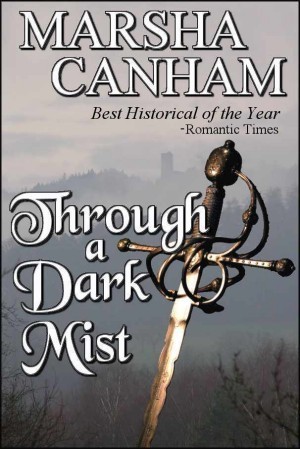







August 27, 2011
Sample Sunday

Another member of the BacklistEBook group, please welcome Kelly McClymer as the guest poster today.
Many thanks to Marsha for giving me a spot on Sample Sunday!Hi, I'm Kelly McClymer and I wear two writer hats (so far). One is a
bit feathery and Victorian, for my historical romance writing. The
other is young and in your face, for my YA writing. I don't, however,
wear two names, so life gets a bit confusing when I'm not sure which
hat to put on. Today I'm putting on the feathery creation, to get in
the mood to share a little sample of The Next Best Bride,
book 5 in the Once Upon a Wedding historical romance series.
This series began with The Fairy Tale Bride
which was first published in 2000. It has been out of print for over
seven years now, and I've been fortunate to recently get the
opportunity to release the ebook version of the first five books in
the season (which have been updated and revised a little, too, as a
bonus). The stories revolve around the seven Fenster siblings (six
sisters and a brother). The Next Best Bride features Helena, a quiet
artist who lives in the shadow of her independent-minded twin
Rosaline. When Ros decides to take off for America and jilt her
fiance, Rand Mallon, the earl of Dalby, she proposes that her sister
take her place at the altar. Both are dubious about the switch. Rand
had specifically chosen Ros to be his bride because she didn't really
want a husband and was happy to give him his much needed heir, and
leave him to his drinking, gambling and rakish ways as long as he
didn't interfere with her desire to dress up in disguise and do the
same. But he is desperate for an heir, and so he agrees when Helena
consents to a loveless match. Both are shocked and dismayed when it
becomes clear that a loveless match is simply not in the cards.
There are two things to know about Rand when you read this scene: he
likes to wager on almost anything, including that his wife will give
him a son within 10 months of their marriage; and he tends to fall
asleep after a bout of lovemaking. Enjoy!
********
He managed to find excuses to put off an investigation of the dower
house for nearly a week. He showed her the gardens, the stables, a
fishing stream, rode out with her to the nearby village. He pointed
out a dozen scenes worth capture by her talented eye. And always she
watched him, as if she wondered why he could show her the world
outside the house and not the few rooms within.
But, at last, he could put it off no longer. As they took a light
breakfast in the parlor, she said, "I have asked Mrs. Robson to take
me through every room in the house, since you find the chore too
unpleasant to manage."
"The house is small enough." He sighed. "Have you not seen it all by now?"
She stared at him, implacably. He knew her well enough to know she
would not be put off any longer.
He thought of what Mrs. Robson could tell her, and sat back, glancing
around the parlor, remembering. "My parents moved here after their
marriage."
"Just as we have done," she remarked encouragingly.
He shuddered, hoping they were not doomed to the same fate as his
father and mother. "They quickly added me to the family."
"Within ten months?" She smiled.
"Eight, actually." He thought of his parents for the first time as a
young, eager and passionate couple. It was truly disconcerting. "That
is my mother." He pointed to the portrait above the mantel behind him.
"And that is my father." He pointed to the portrait that hung over the
matching fireplace at the other end of the room.
He didn't care for the discerning gaze trained on him. "What a tragedy
that they died so young."
"Yes." A tragedy he did not want to revisit. But it was impossible to
avoid it here. He had shared these quarters with his parents in his
earliest years.
While Helena studied the portrait of his mother as if she might pull
the secrets of his past from the image, he thought of the evenings
Nanny Bea would bring him down fresh from his bath for a visit with
his parents — when they were not traveling. He had tried to be the
very best boy he could, so that his mother's eyes would shine with
love and his father would pat his head proudly.
His mother would hug him, give him a peppermint and he would go away
happily to bed, the scent of verbena and lemon still with him. That
had all ended when his parents had been killed and he and Nanny Bea
had gone to the big house to live with his grandfather.
Rand rose, restless. He would give her a short tour and a heavily
edited story of his childhood. Every room had memories he could not
escape. Even the entry hall, with the chipped marble tile. He had done
that himself in a childish fit of curiosity.
"However did you make such a gouge?" Helena murmured.
He could not help the grin that spread across his face. "With my
mother's favorite diamond ring. In order to test my father's assertion
that diamonds are precious because they are the hardest substance in
the world."
"Whatever did she do to you?"
"She kissed me and said I was not to indulge my curiosity with her
valuables again." Restless at the memory, he moved up the stairs,
Helena trailing behind. "And then she showed me how the diamond would
carve my initials in the mirror above her dressing table."
"Do you suppose your initials are still there?"
"I don't know."
Nothing would do but that they check. The delicate engraving, hidden
by a bottle of scent, brought back a flood of memories he struggled to
suppress as his finger pressed against the flourish that finished the
R.
"R P M." Helena bent, to peer closely at faint but distinct initials.
"Randolph Philip Mallon." She traced the letters. "She must have loved
you very much."
She said it as if to love him was a good thing. He could not bear to
disabuse her of the notion. Tracing the delicate bones exposed by the
arch of her neck, he said, "Enough of this room. Come into the
master's bedroom and I will give you an intimate tour, beginning with
the bed itself."
She shook her head and escaped out into the hallway. "We should save
that room for last, my lord. I have a feeling that any time spent
there will leave you wishing for a nap."
Recognizing that he would be better off indulging her, he followed
with a laugh and briefly recited the purpose of each room as they
climbed up all the way into the attics where he had ruled as a boy.
Feeling that his indulgence should be rewarded, Rand captured her in
the dark and dust of the attic and, amidst the discarded furnishings
of decades past, drew her to him. "Now, I think it is time for us to
return to a close and thorough inspection of the bedroom where the
lord and master rests."
"As you wish," she said meekly.
Feeling jubilant that the reward for his patience was at last at hand,
he led her swiftly down the stairs. But then, just as he thought he
had eluded the worst of his fears, Helena asked, "Is there a nursery,
or a place for children, if and when we have them?"
He said curtly, "Yes."
He would have continued to his room, his bed, his well deserved
reward. But she resisted the pull of his hand, stubbornly and silently
questioning his swift change of mood. He kissed her, hoping that she
would forget her question.
She sighed. "The nursery first, my lord." So he took her down the
small, easily overlooked hallway that he had hoped she would assume
was a little used closet and into the three rooms in which he had
spent his first five years.
He steeled himself for a view worsened by neglect and the passage of
time. The blow was greater, he found, when he saw that time had not
touched the room. Everything remained unchanged — no, worse —
everything in the nursery, from the oak cradle to the Birchwood horse
and carriage had been refurbished, polished, and left like new.
The nursery was exactly as it had been the day he left this house.
Rand struggled to maintain his calm as Helena moved freely about the
rooms, exclaiming in delight over each new discovery. He would not
have her know his distress. She would only ask why, and he could never
tell her. Never.
She returned to him after what seemed like hours but could only have
been minutes. She smiled up at him, oblivious to the blind panic that
surged inside him. "Our children will be happy here."
"No doubt." He took her hand and moved toward the door. Toward escape.
He hoped to get a child quickly. He could not spend much more time
here.
Helena paused before they reached the doorway, ignoring Rand's
impatient pull. "Why were you so reluctant to show me these rooms? I
confess I thought I would find a nursery so dank and dark I would need
to arrange other quarters. But these rooms are perfect."
His smile tightened. "I'd rather think about what is required to make
a child than what must be done to raise it."
"It?" She frowned at him. She was not insensitive to Rand's distress,
but she could not understand the reason behind it. After all, having a
child was the very reason they were married. A nursery was not a
torture chamber.
"Him, then." He smiled more naturally, and dropped a kiss on the top
of her head. "Our son. The child that we must still make, may I remind
you, before you have need of these rooms."
"True enough," she conceded. She took one more look at the rooms her
children, if she were fortunate, might one day romp in. "Though it is
a comfort to know the rooms are ready for our child, whether son or
daughter. The only change I can see making is to remove those heavy
drapes. Natural light is best for a growing child."
If there was a child, she cautioned herself. Wagers and open
speculation made her wary to assume that Rand's plans would go as
sunnily as forecast. She smiled at him, and squeezed his hand as she
rocked the oak cradle gently.
Even if he were the kind of man to prefer his children bathed and
brought down only for a kiss at night, an empty nursery should not
make him weak in the knees. She wanted to share her own delight in
planning for a coming child. Wanted to know that the child was more
than a means to an end for him.
How awful for a child to be nothing more to his father than a pawn.
"Perhaps I should finish my sketch of the dower house. We could hang
it on one of these walls for our children."
To her surprise, he showed the first sign of true delight she had seen
in him since she had asked him to show her the house and the nursery.
His grin was pure wickedness when he said, "Excellent idea. I will
have Dibby run up to the main house and beg provisions for a picnic
from the cook."
"Sometimes you surprise me," was all she could manage to say. The
transformation in his demeanor was truly startling. She had a strong
suspicion he had more than a picnic lunch in mind.

–
Visit Kelly's Website: http://kellymcclymer.com
Twitter: kellymcclymer
FaceBook: http://facebook.com/kellymcclymerbooks.com
LinkedIn: http://linkd.in/jRqm8P







August 22, 2011
Mickey VS Alvin
I live out in the boonies, on a quiet cul de sac with a forest behind me. Not surprising, I've had mice in the house before, usually in the winter when they're looking for somewhere to keep warm, and even more often when they had easy access through a dryer vent that wasn't properly sealed. As soon as that little oversite was fixed, I've been relatively mouse-free.
So I'm standing in my kitchen the other day.. Thursday to be precise…and a little movement out of the corner of my eye caught my attention. I looked at the coffee table in the family room, and two little beady eyes looked back at me. It wasn't a Mickey, it was an Alvin…or to be more precise, it was Enzo.
I've developed a fond relationship with Enzo the chipmunk over the summer months. I had a bag of hazelnuts going dry and stale, and Enzo had moved his family out of the garage for the hot summer months and was enjoying the cottage life under my back deck, surrounded by flowers and lil shrubs and trees. Every morning I'd leave a couple of nuts on the small end table and Enzo would scurry up and collect them in his cheeks. I sat there once for over an hour holding a few in my hand, which he eventually came and got, so I figure we sort of bonded a little. If I forgot to put the nuts out, he would sit on the step in front of the kitchen door and give me the Evil Eye. Or if I really forgot and wasn't home all day, a little head would pop up at the screen door to the family room and he'd give me a couple of clucks to tell me off. Yes, chipmunks cluck. First time I heard the sound I thought it was a kid making a popping sound with his finger in his cheek, but no…it was a pissed off Enzo telling me he didn't appreciate being forgotten.
So last week I had a lot going on. The Clone was buying a new car and panicking that it would be ready in time for him and the grandson to drive to Florida Thursday morning, so he was packing up their other car in anticipation and the DIL was having to take the clunker to work and fretting about how she and the granddiva would get to Buffalo to make their flight on Sunday (the granddiva had to stay in town over the weekend for her big soccer tournament so they couldn't leave until Sunday). Toss in the cleaning gnomes, two very excellent but very short ladies who blitz my house and come through the door chattering , and who chatter all the time they're here, and who are still chattering when they leave 7 hrs later…add in an appt to get my dawg groomed, an appt for my back to get pummelled…and really, the last thing I needed was a pissed off Enzo sitting on my coffee table in the family room.
We just stared at each other for a good half minute before I came out with a four letter word that startled the little beggar and sent him dashing under the couch. The dawg, who is totally vigilant when a leaf blows by on the street four doors away and yaps her head off, merely saunters past the couch and the table and hops up onto her chair. I've seen her sitting out on the deck when Enzo comes to get his daily rasher of nuts, so I'm guessing they're good buddies now, so no big deal that Enzo is INSIDE the screen instead of OUTSIDE the screen.
So I get the broom out and open the screen, then make banging noises on the couch and the wall to chase the little rugrat out. He darts out, but ignores the open door and heads for the kitchen. Great. Broom in hand, I give chase, but he vanishes behind the stove, where I can see him after a minute, peeking out with one eye like Inspector Clouseau before making a mad dash for the fridge. He's a pretty beefy little guy, having dined well on hazelnuts and almonds for the past three months, so I'm pretty sure he can't squish himself down like Flat Stanley and squeeze into tiny places or slide under closed doors. So I close the nearby door to the laundry room, and get the trusty broom banging again, this time hoping to chase him out the open kitchen screen door.
Again he darts, like a mini Flash Gordon, so fast the eye can't follow so I'm not sure where he went, but the door was open, he was there, and I'm hoping he took the hint and ran out. I wait and watch. No movement under tables, under couches. I think it worked. I hear a car in the driveway and the Clone pulls up in his spiffy new vehicle, all loaded up for the drive to Florida. He drops the granddiva off and he and Austin are on their merry way.
Payton and I go back inside and I'm in the middle of telling her how clever I was to get Enzo out, when I see the little pecker go zooming across the floor…laughing, I'm sure. Payton and I do another round of broom-banging and door closing but he's well hidden this time and we're not sure if he's in the dining room or back behind the stove. Like Big Game Hunters, we decide to make a trap. I find an old shoe box and we slather a cracker with peanut butter (crunchy to add more temptation) then carefully balance the box open with a pencil planted in the pb, so that at the first nibble, the pencil slips, the cracker slides and WHAP, he's in the box. HAH.
We hunker down to watch, play a few games of Dominos, watch a really REALLY stupid movie starring actors who should know better, but nothing. No movement from Enzo, no peeking, no patter of little hairy feet on the hardwood. Six o'clock rolls around and the DIL comes to pick up the granddiva. She looks at our spiffy trap and oddly enough says nothing, as if it's perfectly normal to come into a house and see shoeboxes propped up with peanutbutter crackers and pencils. We do eventually tell her about Enzo, thinking he might come out and take a bow, but no such luck. They drive off and I return to the family room to tidy up.
And there he is. Calmly snacking on the bird seeds that litter the floor beneath the cages. He looks at me with a smirk. I swear. He dashes off under another couch. Out comes the broom again and this time he knows I'm serious cuz he flies across the room and streaks across the hall into the dining room, which is the only door open to him now. I'm wise to him now and build a barricade to the family room, using a room screen. I put chairs on their side to block off any attempt to dash for the front of the house and the living room or, god forbid, the stairs going up or down. Broom in hand and the screen open to the deck…I start banging and whacking the floor and walls in the dining room, rattle the wall unit, peer behind the cabinets and ….there he goes….a mad dash for the only open door in the room! He streaks out to the kitchen, pauses to look….only one clear path open not blocked by chairs, TV trays, room screen…and he dashes for the open screen and freedom.
I'm right behind with my broom and slam the screen shut, which causes him to leap about two feet straight up in the air before he reaches the end of the deck and dives off into the shrubs.
Victory.
Is.
Mine.
Less than an hour later, after all the furniture and barricades have been put back where they belong, I even discover how the little pecker got in. The screen door in the family room has a loose rubber seal along the side and a gap at the bottom that would have drawn the curiosity of any small creature looking for his nuts. A nudge would have pushed the rubber aside, allowing him to squeeze in. And just as I'm slapping on duct tape, a movement out of the corner of my eye catches my attention and there, on the deck, not two feet away, is Enzo sitting on the table calmly munching away on his hazelnuts and watching me.
I swear, he was smirking.