
Nancy Wilson's Blog, page 4
January 28, 2016
Haters
The exhortation to love one another is the most basic Christian doctrine there is, and we are to be known for our love for one another. But some see us as haters. In fact, not long ago a woman came up to my husband and me while we were out to dinner, and she called him a hater. At the time I chimed in and contradicted her. He most certainly is not a hater in the way she claimed.
But as I thought about it later, I realized that actually he is a hater. And so am I. And so are you. And so is that woman. We all hate something. She apparently hates haters. But being a hater is not a bad thing in itself. It all depends on what it is we are hating.
God Himself hates lots of things. He hates sin. If He did not hate sin, Christ would not have gone to the cross to redeem us from it. God is the ultimate hater because He hates sin more than any of us do, and we would do well to hate what He hates more than we do. Consider these seven things that God hates:
A proud look.
A lying tongue
Hands that shed innocent blood
A heart that devises wicked plans
Feet that are swift in running to evil
A false witness who speaks lies
One who sows discord among brethren (Proverbs 6:16-19)
Do you hate these things? Then I guess you are a hater too. And we are all in good company because our Maker loves the world so much, He hates sin so much, that He sent His only begotten Son into this world.
“But God demonstrates His own love toward us, in that while we were still sinners, Christ died for us.” (Rom. 5:8)
If you love the right things, you will necessarily hate those things that threaten it. Do you love your liberty? Then you hate tyranny. Do you love the baby in the womb? Then you hate abortion. Do you love marriage? Then you hate adultery, fornication, and sodomy. Do you love the truth? Then you hate falsehood.
In this momentarily upside-down world, if you hate what God hates, you are called a hater. It reminds me of the man who was simultaneously screaming at my husband and flipping him off with one hand, while holding a large sign with the other that said, “No hate here!”
Woe to those who call evil good, and good evil; Who put darkness for light, and light for darkness; Who put bitter for sweet, and sweet for bitter! (Isaiah 5:20)
If you are called a hater, be sure it is for the same things that God hates. Just as we love imperfectly, so we hate imperfectly. But nevertheless, we are called to do both, and all to the glory of God.


December 11, 2015
Catching the Joy

The other day I posted the following on my Facebook page and it got quite a response. (This photo was taken while I was nursing Moses on the stairs and realizing that I very much needed this message to myself.)
“I can’t imagine that in 20 years when my kids get together they will look back in joy on the year Mom finally figured out a way to keep the snow clothes tidy. A bunch of adults sitting around, “Remember that year when everything was clean before Christmas? That was the best! I hope we can do that for our kids this year!” Somehow doesn’t ring true, does it?
It is as though when I become stressed about the home, my kids don’t become stressed about the home- they become stressed about me, and any joy a clean home would have given gets swallowed up in that. But when I lay that all aside and rejoice in the mess, in the kids, in the crazy boxes that don’t stop coming from Amazon- my kids rejoice in all that their hearts want to naturally, and in me too.
The kids will remember the diving into new Lego sets and not the little plastic baggie carnage and the random tiny ninja swords that show up everywhere.They will remember eating candy canes without a care and not the tiny shards of stickiness after. They will remember a home full of excitement, and joy, and anticipation over the birth of our Savior. And I hope they remember their mother, in the middle of it all laughing. With a mad baby in the Ergo, trying to pick up laundry with her toes and wrap gifts with her teeth. I hope they remember a Merry Christmas! All of it!”
By the response this got, I am led me to believe that I am not the only one dealing with these particular challenges. Lego ninja swords may in fact be a major resource in the sanctification of mothers all across the land – and whoever designed them probably didn’t even imagine what good would come of them!
But there was a sentiment in this post that I wanted to expand a little more on. Joy is a contagious thing. It is fun to be around, it is fun to witness, it is a true blessing. But the amazing thing about joy is that because it has an object, it makes us look at the object of someone else’s joy with a new appreciation. When we are joyful, our children look to our sources. Joy is like a beautiful magnifying glass. Our enjoyment of a thing makes that thing easier to see – bigger to everyone around us. One of the ways I see this in my children is in their excited appreciation of views – of changing light, of amazing clouds, of sunsetting, of color in the fields. They know that these things have always given me joy, and it has become that for them too. “Look at those clouds, Mom! They are so pretty!” What they have known as a source of joy for me has become a source of joy for them and they want to share it. What I love, they want to love. What I rejoice in, they want to rejoice in.

(photo taken while out driving with my kids being excited about the frosty sunshine)
This is simply not the case for the things that cause me to get wound up. If I am feeling especially put upon by the cast off goods in the front hall and I get into a bad state of heart about it, this sinful attitude will undoubtedly flow out of my stupid heart and onto the hall floor as well. So say I give the kids a little word about. Feeling testy, and that this ought to be the last time ever that I need to tell people to not throw things on the floor (never mind that some are too short to hang things up), I magnify some words. I exaggerate a bit. I want them all to look through the magnifying glass with me at the mess on the floor and sympathize with all my annoyance over it. I want them to feel my feelings on this point.
The remarkable thing is that this is completely dysfunctional. Instead of looking through the glass from my side and seeing the things of mess on the floor – this kind of sinful attitude turns their attention to me. I become the object of anxiety. I have not shared my anxiety with them in order to make them more responsible home entry personnel. I have made them feel like they aren’t sure where they stand with me. Like I can be easily derailed from the joy of the Lord by an open folder, a sprawling coat, a trail of wet leaves, a granola bar wrapper, and a sideways boot.
Now thank the Lord that there really is another option. When we rejoice in the mess, we aren’t asking the mess to come settle in forever. Those sticky shards I spoke of are not in themselves objects of joy. But the work that they mean should be. The work of teaching people joyfully how to joyfully lay down their lives while they wipe of a table can be joyful. It can be funny. Being a mother who can laugh at the endless work while living in the joy of the Lord does not draw our children’s attention to us and our work so much as it draws their attention to the source of our joy. Sometimes, when I am faced by one of these little petty annoying messes, I find that I need the spiritual exercise of lifting my head. Stop looking at the petty things, and laugh. Wipe the table off and say, “my life for theirs.” Teach the kids to clean up after themselves while saying, “my life for theirs.” Greet your morning full of sticky floors with an attitude of “my life for theirs.”
This is Gospel work. Because every time we look through ourselves, past ourselves, to the source of our joy, to God, we are asking our children to look too. Enjoy Him with me. Enjoy Him in the little tasks of normal faithfulness. Enjoy Him as we show kids how to line up boots, as we ask them to come pick up the folder, as we remind them not to eat a candy cane like they are a wood chipper. And while this is especially appropriate this time of year – as we look forward to celebrating the incarnation with all the trappings of Amazon boxes and hot chocolate rings on the table, it is always the truth.
Jesus Christ came to this world – this one. The one that annoys us and tests us and challenges us. And what did he do with us and all of our messes? He took us on with joy, for joy. For the joy that was set before Him.
So this Christmas season, let us imitate Him. Let us look with Christ at the joy that was set before Him, as we celebrate Him. Let us be His children, learning from His joy.
 (Moses Henry – loving his first wild Jank Christmas!)
November 24, 2015
Women Freed
Some courageous women from Christ Church have started their own blog called Women Freed where they tell their stories of past abuse and the road to healing.
October 26, 2015
Nothing Lost
 Thomas Watson, said “A holy heart knows there is nothing lost by obedience” (Religion Our True Interest). He gives this example: “A heathen exercising much cruelty to a Christian, asked him in scorn, what great miracle his master Christ ever did? The Christian replied, ‘This miracle, that though you use me thus cruelly, I can forgive you.'”
October 19, 2015
A Few Favorites
I have sent so many people to Dr. Grant Horner’s Bible reading program, that I thought I should just put up the link here for you all. If you’re looking for a good daily reading program, this is my favorite. I know there are dozens of good Bible-reading systems, and really, as long as we are in the Word, that’s the real point. But the thing I like about this one is it has me reading ten chapters a day in ten different books, so I am all over the Bible all the time. Don’t be daunted by the ten chapters a day. You will be surprised how quickly you can do this once you get started.
The next favorite is Handbook to Prayer, Praying Scripture Back to God by Kenneth Boa. This little book has three months of prayers, one per day. It covers adoration, confession, renewal, petition, intercession, affirmation, thanksgiving, and a closing prayer each day. Each section is filled with Scriptures as well as different suggested subjects listed for petitions and intercessions. I have really benefited from using this daily prayer book.
My favorite devotional reading is The Loveliness of Christ by Samuel Rutherford. But I have lifted many favorite quotations out of books by Thomas Watson as well. And John Bunyan. And Matthew Henry. And Jeremiah Burroughs. And Charles Spurgeon. These old preachers knew what they were talking about, and I commend them all to you. Here are a few favorite quotes from each:
Rutherford: “Of all created comforts God is the lender. You are the borrower, not an owner.”
“The spouse of Jesus will ever be in the fire; but I trust my God she shall not consume, because of the good-will of him who dwelleth in the bush, for he dwelleth in it with good-will.”
“If the work be of God, He can make a stepping stone of the devil himself for setting forward the work.”
Watson: “God is more willing to pardon than to punish. Mercy does more multiply in Him than sin in us. Mercy is His nature.”
“There is more in the promises to comfort than in the world to perplex.”
Bunyan: “If I were fruitless, it mattered not who commended me, but if I were fruitful, I cared not who condemned.”
Henry: “But while you are governing others, learn to govern yourselves, and do not disorder your own souls under the pretense of keeping order in your families.”
“And therefore Christians, whatever you have of the world in your hands, be it more or less, as you value the peace as well as the purity of your souls, keep it out of your hearts.”
Burroughs: “Christian contentment is that sweet, inward, quiet, gracious frame of spirit, which freely submits to and delights in God.”
Spurgeon: I have heard of some good old woman in a cottage, who had nothing but a piece of bread and a little water. Lifting up her hands, she said as a blessing, “What! All this and Christ too?”
“Somewhere or other in the worst flood of trouble there always is a dry spot for contentment to get its foot on. If there were not, it would learn to swim.”
Finally, moving from spiritual food to feeding the troops, my favorite help in the kitchen is this cookbook by Pam Anderson, Perfect Recipes for Having People Over. This has become my most used cookbook next to Hot Providence (our church cookbook that is sadly out of print). She includes lists of ways to vary each recipe, what to serve with it, and how to use the leftovers. I recently bought another cookbook she wrote called Perfect One-Dish Dishes. So far, so good. Her tamale pie was a hit with the grandkids.
October 16, 2015
Large Doses of Blessing
 One of the things we regularly hear is how wonderful our Christian community is here in our little town. And it really is. We have many faithful churches, a Christian college downtown, Logos School, home-school groups, Canon Press, and many flourishing businesses owned and operated by Christian people. We have many opportunities to celebrate together at weddings, showers, potlucks, prayer groups, book groups, Bible studies, psalm sings, and women’s fellowship gatherings. And when a need arises through illness or loss, meals are made and varieties of help are sent. And I only know the half of it. Most of this happens from the ground up. It is not always “organized” by the church proper, but rather the saints are simply active, engaged, and hungry to give and serve one another. It is such an outpouring, it is hard to believe unless you have seen it with your own eyes. God has clearly blessed our community in a remarkable way.
Not only has God blessed us with rich fellowship, but He also blesses us with an occasional outburst of slander against our church. Back in the 1980’s, it was confined to the front page of our daily small-town paper and the letters-to-the-editor section. (Nothing like slander to sell papers when there’s not much else happening.) Then as the years went by, the internet provided an easy way to sponsor a slanderous outburst (no editors to deal with, so everyone can participate in spreading lies and venting bitterness, even with bad spelling).And so it goes.
I haven’t kept track, but it seems to erupt every few years. In fact, this is the second time I have had a beautiful grandchild born in the midst of “public calumny” against my husband. (I couldn’t keep the news out of this post that Moses Henry Jankovic was born two days ago!) I have come to believe that this strange phenomenon is a significant part of the reason for the rich blessings of our community life that I described above. Here’s why I believe this: Jesus said so.
“Blessed are you when they revile and persecute you, and say all kinds of evil against you falsely for My sake. Rejoice and be exceedingly glad, for great is your reward in heaven, for so they persecuted the prophets who were before you” (Matthew 5:11).
In other words, when our church and pastor are lied about, we are blessed. And so our church community benefits from these large doses of slander every so often because they are actually large doses of blessing. Our job is to rejoice and be extra glad during these times because a reward for us is accumulating in heaven. I believe this absolutely, and this is why I am planning to throw an extra wonderful Sabbath feast tomorrow, so we can rejoice all together around the table at the Lord’s great kindness toward us.
Now I haven’t always thought about it this way. When the first round of lies about us made it to our local paper back in the 80’s, I confess that I was very surprised. I had expected that resistance and persecution would always be phrased as “because you love Jesus.” But that’s because I hadn’t been paying attention to my Bible reading. I remember voicing my astonishment to my husband: “But they are lies! How can they tell lies about you like that?” And he reminded me that lies are the only weapon that the enemy has. Think about that. Satan is the father of all lies (John 8:44). He is the accuser of the brethren (Rev. 12:10) “who accused them before our God day and night.” Lies is his native tongue.
One striking similarity these rounds of slander always share is the accusative spirit that fills each one. That mark is what makes me know without a doubt that the accusations are of Satan, even though I know the testing is from God. And this encourages me very much.
I know that God uses these times in wonderful ways for us, for our family, for our Christian community, and for our church. I know and believe that no matter who it is that brings the slander, it is my loving and faithful God who sent it. And He means it absolutely for our good. I have seen this over and over.
The Holy Spirit is the Comforter, and He is active in these times. His word is easily distinguished from the satanic, accusative words. He gives us a lively faith, He gives us courage to believe His promises, and He comforts and strengthens us when the slander gets to be a hot mess.
Slander is a slippery business, and it is entirely out of our hands. It is an evil work and God will judge it. The Lord never blesses those who spread falsehood, slander, and lies. “Whoever spreads slander is a fool” (Prov. 10:18b). It is far better to be wronged than to do wrong. I far prefer being lied about than being one who is spreading lies. Here is a small sampling of what God thinks of falsehood:
“Behold the wicked brings forth iniquity; yes, he conceives trouble and brings forth falsehood. He made a pit and dug it out, and has fallen into the ditch which he made. His trouble shall return upon his own head, and his violent dealing shall come down on his own crown” (Psalm 7:14-16).
“You shall destroy those who speak falsehood; the Lord abhors the bloodthirsty and deceitful man” (Psalm 5:6).
“An evildoer gives heed to false lips; a liar listens eagerly to a spiteful tongue” (Prov. 17:4).
“A false witness will not go unpunished, and he who speaks lies will not escape” (Prov. 19:5).
“These six things the Lord hates, yes, seven are an abomination to Him: …a lying tongue….a false witness who speaks lies, and one who sows discord among brethren” (Prov. 6:16-19).
Providing a complete contrast to falsehood, Jesus is the truth (John 14:6). We are told to “stand therefore, having girded your waist with truth” when we put on the armor of God (Eph. 6:14) so we “may be able to stand against the wiles of the devil” (Eph. 6:11). Many of those “wiles” are in the form of lies, slander, and falsehood. The truth is a strong defensive weapon, and so we put on Christ and stand.
Adversity and conflict are very good for us if we think about them rightly (biblically). They sharpen our faith. They provide opportunity to apply what God has taught us in His Word. We are tested, and we can, by God’s grace, pass the test. Jesus was lied about, and we are in good company when they lie about us. We have a good Savior who came out of the grave so He could walk with us through times like this. Without Him, we would have nothing to rejoice about when they lie about us. But with and in Christ, we have all we need and more.
September 29, 2015
Tater Tot Feminism

Jory Micah had another response to my last blog post, and once again she proved herself able to handle a disagreement in a mature fashion. Kudos on going to an exegetical argument – that’s the place where this discussion can actually get some traction.
One possible confusion, however, is that I think Jory may be interacting with what she thinks is my view on gender roles, but which I myself would never claim. She seems to think that the fact that I disagree with feminism tells her all she needs to know about my position. But I grew up in Moscow, and Doug Wilson is my dad, and to be honest that’s like saying I grew up in Sherwood Forest. Lines are drawn a bit differently here and we don’t fit neatly into categories. People can shout all they want about Doug the Great Misogynist Oppressor, but he started the schools which his daughters attended, and he made sure that we had years of Latin and years of Greek and Physics and Logic and Classical History and Classical Lit and Church History and Philosophy and Apologetics and Doctrine and Rhetoric and Poetry. He raised his girls (who are now raising his grand-daughters) to argue and scrap and think for themselves and study and own businesses and write books and, yes, submit to their own husbands as to the Lord. But he also made dang sure that those husbands were worth submitting to. (I can hear the internet yelling already! Aagh! Courtship model! The injustice! Where are my smelling salts!?!)
But as far as Jory’s article goes, one contradiction jumped out at me right at the beginning – possibly because she put both statements in bold. The first was, “What I did not enjoy was your assumption that my feelings control how I interpret the Bible.” But a scarce three paragraphs later she said, “As much as you and I both don’t want to admit it, our feelings and experiences … will always creep into our interpretations of the Bible.” I’m not sure which one of these actually represents Jory’s view, so I’m not sure which to interact with. But it seems like what she’s trying to say is that we are all impeded by the fact that we see the Scriptures through the lens of our own finitude, and it’s only through careful study that we can transcend our subjective assumptions and move into a place where we are no longer hampered by feelings. Perhaps? I’m going to assume that’s where she’s coming from.
She goes on to say that she does understand that on the surface, Scripture appears to be teaching one thing about gender roles, and it’s only after “years of research” that we can let go of our pre-conceived notions and see the Scriptures for what they really are. In order to do this, she tells us, we need to put ourselves in the apostle Paul’s shoes and understand the context in which he he was writing. I somewhat agree. I teach Classical Lit and Classical History, and I’m constantly amazed by how relevant those subjects are in bringing more light to both the Old and the New Testaments. Nevertheless, the idea that Scripture is impenetrable – or worse, misleading – unless one has devoted years to academic study is a very dangerous idea. One of the great blessings of the Reformation was abolishing the separation of the common man from the Word of God. The Reformers heavily emphasized the perspicuity of Scripture – the understanding that “not only the learned, but the unlearned, in a due use of the ordinary means, may attain unto a sufficient understanding.” It would be tragic, in my opinion, to regress back into the pre-Reformational notion that only trained professionals should be trusted with the Word of God. And to replace the church hierarchy with the Academy doesn’t make it any better. Claiming that your average Christian is unable to correctly understand God’s Word is – well – medieval. It is vital, in my view, that any Christian woman, in any century, in any part of the world, should be able to open her Bible and find in it clear teaching on how she should live without having to be a PhD candidate.
Jory also asks how I reconcile 1 Timothy 2:12, “I do not permit a woman to teach or have authority over a man,” with the fact that I teach high school boys. This, I think, diverts us into a different discussion which is more one of ecclesiology. I have no problem with teaching Anglo Saxon poetry to high school boys, and yes, I have students who are over 18. And that troubles me not one bit. Worse, I recently got up and spoke to the student body of New St. Andrews on the subject of women in education – and the audience contained not only all the male college students, but also all of the male faculty (including my father and my husband). So why do I draw the distinction between that and preaching? Because I don’t believe, as Jory appears to, that the office of preacher is a “human made idea” or that a sermon is just one person hogging the conversation. When the pastor steps into the pulpit (or cultural equivalent) during corporate worship, something very different is going on than the other interactions of believers throughout the week. The Sunday morning preaching – speaking as the oracles of God – is a far cry from, “Everyone take out your paper because we’re going to practice writing iambic pentameter,” or even – to my senior Apologetics class, “Open to Proverbs 26:4 and we’re going to discuss how this applies to Presuppositional Apologetics.” Obviously this brings with it a host of questions about application which would take far longer to thrash out – how about Wednesday Bible studies etc., but that’s a big subject for another time.
Jory then goes on to cite the various women in Scripture who did impressive things – and she seems to think that these women are a problem for my position. She even goes so far as to say, “The truth is that you don’t have the answers to these questions because no complementarian does.” I’m sorry, but that’s just silly. Let’s cruise the list and see if there are any answers.
Why did the apostle Paul praise Junia as outstanding along with many other female leaders in the New Testament?
Well first, because they were praiseworthy. And they did good work. For the gospel. And they should have done those things. Good job Junia! But I also think that Jory might have just done a bit of sleight of hand there with the “other female leaders.” That seems to assume what it needs to prove – and perhaps we’re speculating a bit much with no textual evidence if we’re trying to pretend that Junia and the other women were elders and preachers.
Why did he call women his co-workers in Philippians 4:3?
I’m sorry. Is this a trick question? Because they labored with him for the gospel. But it’s a bit naive to think everyone on a team plays the same position. Is the fact that they were co-laborers supposed to be proof that these women were elders and ministers? Is every soldier in an army a general? Is every player on a team the first baseman? Is every part of the body the eye? That just seems weird.
What about all the sociological / historical evidence that women hosted and led house churches in the first and second centuries?
That sounds interesting. What’s the sociological evidence? But further – how would we make the leap from “they did it in the early church” to “and they ought to have done that”? I mean, I can make a very strong case that those early churches whiffed it on a whole number of fronts. (Drunkenness at the Lord’s Supper, incest, etc.) Why do we think that Paul had to write those instructions to Timothy in the first place? Presumably because it was a live issue that the early church needed sorted. Show me a woman preaching in the second century and I’ll show you a woman who shouldn’t have been.
Jory also makes the claim that the Greek word kephale (head) does not actually imply “authority” in other ancient texts. She has clearly done a lot of work on this question, and I have a feeling that I should read her thesis on it before trying to interact with that precise question since it’s obviously a much bigger discussion. But I can tell her how I personally think the word should be translated and what it should imply. Let’s just pretend the word used in Ephesians 5 for “head” was a hapax legomenon . . . a one-off. Let’s pretend that we don’t know what it means, we have no other usages of it in the ancient world whatsoever, and the only thing the lexicons can do is point us back to this particular usage. I would argue that the context itself gives us a very clear understanding of what that word entails. Let’s just substitute “x” for “head” and see if we can figure out what it means.
“Wives, submit to your own husbands as to the Lord. For the husband is the “x” of the wife, just as Christ is the “x” of the church.”
Hmm. Does “x” imply authority? Well, what is the text saying? Does Christ have authority over the church? Is the church supposed to submit to Christ? Is the wife supposed to submit to her husband? Is that kind of the point of the whole verse? Is this a complicated question? Do I need years of study and a lexicon to figure out what I’m supposed to do here?
Lastly, Jory claims that it’s quite audacious for me to “limit half the church.” But first, I’m not the one doing it – this was God’s idea not mine. And secondly, acting as if this is a limitation is just funny. It’s like just deciding in advance to be surly at the universe and look at everything in the grumpiest way possible. It’s like saying that sunflowers are being unfairly put upon because they can’t grow in window boxes. Or birds are being robbed of their opportunities because they can’t swim. Or men are being cruelly limited in their options because they can’t get pregnant.
There are loads of things I can’t do, and I can’t do them because God just didn’t make me that way. It’s a creational impossibility for me to be a contortionist, for instance, because my joints just don’t work that way. I couldn’t be an astro-physicist even if I wanted to because I flat don’t have the brains. There is no chance that I could be an opera singer because God didn’t give me that voice. And I can’t be a preacher because I’m not a man. But why on earth would I look at all the things I can’t do because of the way God made me (without even consulting me first of all the audacity!) and kick up a fuss about being limited? I’m not limited. There’s SO much in front of me, so much good work for me to do, and life’s too short for me to fit it all in. I can’t possibly get it all done. I could spend my time wishing that God had made me very tiny so that I could have been a gymnast and fussing about how limiting I find it that he instead made me 5’9”, and I could spend my time wishing that God had made me a man and feeling cruelly oppressed and resentful. I could devote my life to insisting that I be allowed to preach on Sundays . . . but all of these are ways that I could just take myself out of the game so that I can sit on the bench and feel sorry for myself and not actually contribute to the mission God gave us. But what I would prefer to do is to actually look at the work he has put in front of me, look at the tools he has handed me, tackle it, and try to make the most of what I’ve been given. The feminist agenda is just a total and complete failure of imagination, and a fussy one at that. There are cultures to build women! Get out there and do it!
Indulge me with one more metaphor. God has enrolled you in Le Cordon Bleu and bought you a ticket to Paris. But you’re sulking about it because you’ve seen people who cook tater tot casserole and that doesn’t seem fun to you. In fact, you find tater tots insulting. You have met patriarchy nerds who refused to let their wives cook anything else. You view tin foil pans and frozen tots with disdain. You don’t see why God would insist that you have to cook tater tot casserole for the rest of your life . . . so you do word studies to prove that you shouldn’t be required to attend Le Cordon Bleu, and you staunchly refuse to go. You have kicked up a mutiny and are devoting your life to debunking the tater tot, and finding other women who will stand bravely by your side in this fight for freedom.
But who is limiting whose options here? Whose imagination is it that can’t transcend tater tots? Well there are two groups actually, who can’t get beyond the tots. First, the mysoginists – who insist that’s all that women can be trusted with – and the feminists, who fight valiantly against Le Cordon Bleu’s despotic tater tot policies. But I guarantee you that if you would just get on that plane, tater tots would be the last thing you would find.
There’s a world to conquer ladies. There is a culture to build. The men can’t do it alone – just think of the mess they’d make of it. So step into your place in the shield wall and pick up the weapons God has given you. No, they’re not the same as the men’s . . . but as long as you’re fussing about that you’re going to be incredibly ineffective in this battle. Pick up your own weapons, and then don’t leave this life without leaving a mark.
But if you decide to sit this one out, if you decide that you’re not interested in taking dominion the way God has told you to, if you’re going to retreat from your place in the battle, then at least don’t pretend like you’re the one on the front lines.
September 26, 2015
I’ll take whiskey

There was a lot of outcry over my last blog post, and much of it was not really “interact-able” if you will. (Shrieks and howls aren’t terribly well-reasoned, and thus are hard to answer in any meaningful way.) One notable exception, however, was from Jory Micah – who wrote a response which was both sane and charitable. I’d like to walk through her post, but before I get to that I want to just make a general observation.
I wrote that last post entirely pointed at a particular form of “patriarchy” (or “complementarianism” if your prefer) which I have seen with my own two eyes, and to which I object on every level. That was the point of the post. Yes, I made it clear that I don’t believe feminism is the answer to the problem . . . but the point of the post was to emphasize that I actually understand the feminists’ antagonism to certain kinds of patriarchy.
And yet, it is noticeable that not a single squawk did I hear from any misogynists, telling me to not be so rude to them. On the other hand, many feminists are currently still rolling on the ground, clutching their skinned knees and shouting about their hurt feelings or my terrible manners, busily being deeply wounded on behalf of abused women everywhere, or just calling me names. That tells me something about their general thin-ness of skin, and also about their ability to read carefully and follow an argument.
But like I said, Jory’s post was not like that. [image error]One thing I particularly appreciated was that she was actually able to see that I was cracking myself up as I wrote . . . not, as certain people assumed, typing on the brink of an especially judgey, rage-induced, apoplectic fit. What this tells me is that she is actually able to read, and this gives me much more confidence that we could have a sensible exchange.
She opens by observing that had I been born into her home I probably would have been a feminist too . . . and I’m pretty sure she’s right. In fact, once again, that was one of the points of my previous post. Just as far as my personality goes, I could easily have ended up there.
She then goes on to say that as a feminist she embraces a life of contrasts – tough and tender at the same time, high heels and boots, wine and beer. I would simply answer that you don’t have to be a feminist to do that . . . I’m all over that! I love a black tie dinner and I’m also very fond of my red bandana. I like my stilettos and I like my Chuck Taylors. I have nothing against contrasts – that’s the stuff of life after all. But I do try to draw that line at contradictions. High heels can live in the same closet as boots and there’s no problem there. But there would be a good deal of mental confusion involved if I liked to attend vegan, animal rights marches on Fridays and then go elk hunting on Saturdays. A lady confidently told my sister one time . . . “I’m a Calvinist AND an Arminian!” . . . and that’s the kind of embracing of contrasts that I would object to – on the grounds that it makes no sense.
I happen to think that much of the current evangelical feminist rhetoric falls into that contradictory category – but it should be noted that I would not have the same objection when confronted by the radical feminists, say, of the ‘60s. The second wave feminists at least had the virtue of maintaining their aggressive rhetoric across the board. The reason I said that “evangelical feminism” is an oxymoron is because ladies in this camp want to have it both ways. They want the shock value, the punch, and the follow-through that attends actual aggressive radical feminism, but they also want to be able to retreat into a place where no one is allowed to say anything unkind or hurtful, where everyone is loved and affirmed, where a wounded feeling is the ultimate trump card, and where we see micro-aggressions everywhere. I have a hard time envisioning Gloria Steinem insisting there be a giant trigger alert on the cover of the famous 1976 MS issue on battered wives. I would take issue with the whole project of the radical feminist movement, but I do at least respect them enough to think that those ladies could take it as well as dish it out. But, as witness the sheer number of wounded sensibilities caused by my last blog post which wasn’t even aimed at them, evangelical feminists do not appear to have that same ability.
In the next section, Jory asks me how I would feel if someone told me it was against God’s will for me to create a line of children’s clothes or be a high school teacher. And again I would refer her back to my post. I have actually had patriarchy super-fans tell me those very things – so I can answer the question by drawing on auto-biographical information. When I was 17, and someone said that kind of thing to me, I was tempted to feel excessively irritated. My contrarian streak would generally fire up on all cylinders, I would mentally say something like, “Yeah? Well watch this you little fathead!” But because of the splendid father God gave me and the time he put into teaching me to think in a straight line rather than ricocheting all over the place like a reactionary pin-ball, I don’t actually respond that way anymore. These days my response is a bit bland I’m afraid. I, in fact, don’t care what they think. You can’t fathom the depths of my indifference to the opinions of little bossy-boots, for whom what I do with my life is none of their business.
But I can’t let this pass without taking a moment to also point out that “how I feel about it” when someone is a pain in the neck to me has absolutely no bearing on on whether or not their opinion is true. How I felt about it when I was 17 was different than how I feel about it now, and that doesn’t make the slightest difference to the truth of their claim, nor would the truth be affected if I suddenly felt differently. If I want to know whether it’s against God’s will for me to do something, there’s a very straightforward way for me to check. I search the Scriptures and see what God actually said. I do not answer the question by taking the temperature of my feelings. No sensible epistemology was ever derived from emotion. “How I feel” is utterly and completely irrelevant to truth claims . . . and this is something which our latest wave of crusading feminists would do well to stop and ponder.
Jory then goes on to say that it’s quite rude of everyone to say that the women who feel (there’s that word again!) that they have been called to the ministry are mis-hearing Jesus. But here’s the thing. There’s a pretty simple and straightforward way to determine whether or not you’re mis-hearing Jesus. Let’s look at what God says, and let’s remember that He doesn’t contradict himself. He was helpful enough to give us a book. What does he say there? Note that this is a very distinct question from “What do I feel like in my heart?” I have no idea what you may be sensing in your heart . . . but again, feelings have no part in a discussion of truth claims. A statement is either true or it isn’t – and it remains true whether I am alive or dead, victim or perpetrator, cranky or excited, wounded or happy, have a headache, or am feeling hormonal. It remains true regardless of how many people wish it wasn’t.
So if we want to talk about women’s roles, that’s great. I think there’s a stupendous, fulfilling, brilliant answer in the Scriptures which far exceeds the extremely low bar which the feminists have set for their aspirations, and which far exceeds the “let’s smother the women” approach of weak, threatened men. On the other hand, if we would prefer to talk about our feelings, let’s make sure we notice that’s a separate discussion. The difference between subjective and objective is not a a small quibble. They’re related of course, but it’s a bit of a one way street. Objective truth does and ought to have direct implications on my subjective feelings, but my subjective feelings have not the slightest impact on objective truth. So if we want to talk about God’s will, we need to look at what He said, not at the state of our own emotions.
I totally see that this kind of thing can sound a bit brutal – a sort of, “your feelings don’t matter and no one cares if you’re hurting” approach. But in truth it’s actually nothing of the kind. It’s ridiculously freeing. Why? Because emotions are ruthless little tyrants when given too much authority and they will happily enslave you. If I allowed myself to be driven by an emotional reaction to feminism and started wearing only bonnets and calico dresses, the only person who would suffer would be myself. In the same way, if I had allowed myself to be driven by an emotional reaction to the little patriarchy nerds and refused to ever have children, I would have lost out on more than I care to think about. Being able to say, “Take that patriarchy nerds!” would be a shockingly poor trade. By refusing to let my emotions sit in the driver’s seat, I’m actually freed from being dominated by other people’s sins.
Jory concludes with the hope that one day I will be converted to feminism. But I’m afraid I’m not willing to settle for the anemic vision of women’s roles offered to me by feminism. I believe the Scriptures offer us something far more glorious than “equality of authority” which sounds pretty boring and tedious after all. The feminists seem to have set their sights on the dream that one day we women will be allowed to drink light beer – when actually God is offering to pour us some whiskey.
September 24, 2015
My Brush with Feminism
 I have, now and again, had occasion to pop off on the subject of feminists who can’t decide if they’re trying to channel a swaggering machismo persona – or delicate, hyperventilating, victimhood. And the thing is, the whole situation is funny. It really is. One minute these ladies are rough, tough, and hard to bluff . . . and the next minute they’re pasting trigger alerts on all the sharp corners of everyone’s lives like those dreadfully inelegant foam protectors for the edges of coffee tables. You’ve seen those moments of high heels gone wrong in which the poor girl staggers violently in every possible direction before actually falling down? That’s what the evangelical feminists remind me of. There’s no clear trajectory. One minute they’re galloping nor’-nor’-east, and then suddenly they’re staggering to the sou’-sou’-west. On the one hand, they want to be hard edged modern women, all pant suits and nun chucks, but then again, what they really want to be is tender and empathetic, cherishing and tenderly petting the hurt feelings of everyone everywhere.
Like I said, I find that whole thing funny. But actually, in a surprise move, I wanted to actually take a moment to explain in what way I totally sympathize with them. I don’t agree with the nonsensical road they’ve taken, mind you, but I can at least understand how they came to be in this ridiculous place.
Men. Men who are chumps. Let us be frank – that’s the real problem here. If we want to dig in and get down to first causes, this is where the problem lies. There are lots of chumpish men of course, and each is chumpish in his own way . . . but there’s one particular breed I wanted to look at for a minute.
The thing that makes the evangelical feminists (which is a bit of an oxymoron really) as mad as fire is that Great Nemesis of the Western World – Patriarchy, and anything that reminds them of patriarchy, or alliterates with patriarchy. (Like “Paul” for instance.) So let’s take a moment to peer into the bushes that the feminists are setting up a squawk about. What men do we find in that camp? Well, if we let the feminists define the boundaries of who is in “That Camp” then we find a whole smorgasbord of men because it turns out that feminists aren’t terribly good at defining their terms. We find little tin-pot dictators who advocate for old school patriarchy and who rule their sparsely populated and badly educated red-neck demesne with a rod of iron. But we also find timid little would-be-hipster-city-dwellers who are trying to hide behind the label “Complementarian” and hoping that will fool the feminists and make them go away.
Interspersed in there we find a whole number of strong, faithful, masculine men who assume a godly authority in the home . . . but, and let’s be real here, we also find plenty of men who are chumps. By the grace of God, I have lived my entire life surrounded by the first kind . . . but I have actually been around the block a time or two, and I’ve seen plenty of the second kind as well. And it’s those men – the chumpish ones – who provide much of the ammo which the feminists are flinging at the faithful men. So I would like to humbly offer the suggestion to the menfolk – if you don’t like the feminists, then for heaven’s sakes stop making their point for them!
I’ve had men (in the name of headship and submission) tell me I ought not to be educated.
I’ve had men (in the name of headship and submission) tell me I ought not be wearing anything but dresses.
I’ve had men (in the name of headship and submission) tell me I ought not to disagree with them . . . because I was a female and they were male.
I’ve had men (in the name of headship and submission) tell me that any woman who disagrees with a man doesn’t have a gentle and quiet spirit.
I’ve had men (in the name of headship and submission) tell me that women don’t need an education, because they only need to know how to have babies and cook.
And I’ll be straight-up honest with you. I didn’t handle those men in a very saintly way. I called them names and made rude remarks. I danced around in a tight little circle and lit my hair on fire. And without fail, after about ten minutes of conversation with these pills I was ready to wear nothing but pants for the rest of my life, go to law school, run for president, and become a rugby player.
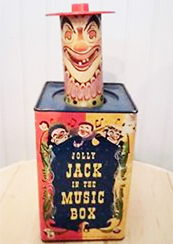
I remember sitting at dinner one time when I was probably 19, and I was venting to my dad about the twerp who had told me I needed to wear only dresses. (And no, he was not an NSA student, so don’t go running away with the idea that this is the kind of thing NSA breeds.) Anyway, I was vowing by all that was holy to never wear a dress ever again as long as I lived – because I didn’t want that guy to think that he had convinced me. To me, at that moment, the ultimate ninth layer of hell would have been for that guy to see me wearing a dress and say, “nice dress.” I would die first, yea verily, I would DIE before I let that happen. (Basically, what I’m telling you is that I would have made an awesome Rachel Held Evans. I, too, can rocket up like an indignant jack-in-the-box suffering an emotional spasm.) But Dad said something at dinner that night which was phenomenally important for me to understand. He said something like, “Look. You don’t want that guy to be able to dictate your clothing choices to you, right? Well, if you swear off of dresses – you will have allowed that guy to dictate your clothing choices. You will have allowed his opinion to sway what you pull out of the closet and put on in the mornings. So keep wearing what you want to wear, and don’t give that guy a second thought.” Holy cow, that was huge. And freeing. And phenomenal. Basically, Dad was telling me to be above that guy, not descend to his level . . . which is exactly what I had been doing, even though I was violently disagreeing with him. In the name of not letting him boss me around . . . I was actually letting him boss me around.
I also remember my dad pulling that same guy aside at one point or another, and saying basically this. “You are supposedly the champion of headship and submission. But if you had even the vaguest understanding of what headship and submission actually means, you would realize that you are not Bekah’s head. I am. What she wears is absolutely none of your business, and by trying to dictate to her you are demonstrating that you actually have no idea what any of this is about.” That one made me happy. It did.
But here’s the thing. In the same way that I was ready to violently disagree with some guys in a way that actually was letting them lead me . . . there are many (many) men who, in the name of violent disagreement with feminism, are letting the feminists lead them. Which is ironic if you think about it. For these guys, the ultimate “weak man” is one who is led by women . . . and yet they are letting a bunch of fussy and self-serious women dictate their theology, their family arrangement, their life choices. Their guiding principle is that if it makes the feminists mad then it must be right . . . which means they set their course based on what the feminists are doing. The feminists are the wind beneath their wings. They’re being led around by the nose by a bunch of shrill and intolerably bumptious, insecure women – and, what’s even sadder, they’re congratulating themselves the whole time about how strong and masculine they are. The irony of course, is that the feminists are doing the same thing. Being led around by the nose by a bunch of blustering, self-important mushrooms – and congratulating themselves all the while about how they’ve thrown off the old shackles of submission. The whole sad situation is like one of those caterpillar trains that has accidentally gotten itself into a circle but everyone still thinks they’re making great progress.
I think there are plenty of men who are attracted to the biblical idea of covenant headship in the home . . . because they don’t understand it whatsoever. They think it gives them the right to camp out on their testosterone and boss everyone around. To be honest I think this is because they are weak-sauce little putzes who are unlikely to get any respect on their own, so they like to cluster around a strong man or strong teaching, hoping that they’ll get a little “trickle down” masculinity and moral authority by virtue of proximity. So they find some alpha male to stand next to and they puff out their chests and put their thumbs in their suspenders and talk in their deep voice and smoke cigars and drink scotch and have faux-intellectual discussions and think that is suitable behavior for the Head of the House (all rise). These are guys who set an incredibly low bar for themselves (facial hair is the basic requirement), which is why they are threatened by any woman with brains or abilities. Maintaining their authority depends upon keeping the women around them uneducated enough to be suitably impressed by their cheap swagger, cigar collection, and leather armchair. Or their cheap swagger, their can of chew, their camo jacket and their hunting rifle. Or their cheap swagger and their Bud Light and their man cave. Whatever it may be, they put on the accouterments of what they think is “manly” and then hope everyone will read that as godly masculinity.
Thankfully, I didn’t grow up with that as a father. God was gracious to me, and gave me a father who trained me to be unthreatened by that kind of little man syndrome. If I functioned purely on the basis of my instincts, all my hackles go up when I’m confronted by men like that. But I had a strong father who taught me that being irritated and reactionary is weakness not strength, and he taught me to be strong enough not to be swayed by weak men. It took a lot of practice and a lot of dinner conversations, but I got to where I can snicker when I see that kind of guy rather than let it actually affect my behavior. I don’t need to let that kind of weak man change what I think, or how I behave . . . not in any direction. My father also taught me to have an extremely high bar when it came to the kind of man I would willingly submit to – and I love it that my husband is now instilling the same instincts in my three (strong) daughters.
You can’t choose your father but you can (thank the Lord!) choose your husband . . . and I would encourage all the single ladies out there to make sure you understand the difference between counterfeit masculinity and the real thing. Don’t be fooled by bluster. Don’t be fooled into thinking that’s what leadership ought to look like. But also don’t let yourself be steered into reacting against that kind of man and veering into the other ditch. Don’t fall for a weak man dressed up as a strong one . . . but also don’t think that a weak man acting like a weak man will make you happy. You don’t want a husband who’s a dictator, but neither do you want a husband who will be your girlfriend . . . and to be honest I’m not sure which one of those options would be more hellish.
Which is all to say, I sympathize with the feminists’ assessment of a particular kind of man. But I would argue that the feminists have shown a shocking lack of insight into what the actual problem is, and they have taken the weak road out.
September 2, 2015
Contentment 101
The go-to verses regarding contentment are found in Paul’s letter to the Philippians: “Not that I speak in regard to need, for I have learned in whatever state I am, to be content. I know how to be abased, and I know how to abound. Everywhere and in all things I have learned both to be full and to be hungry, both to abound and to suffer need. I can do all things through Christ who strengthens me” (4:11-13).
Here are a few observations about this text.
Paul had to learn contentment. It is not natural for us to be contented. We are sometimes hard to please! So we ought to determine to be learners alongside the apostle Paul. We are in good company.
Paul learned in “whatever state” he was in. So this means every situation is a learning opportunity. We don’t have to enroll in a special contentment class. We’re already in it! The contentment lesson is always on the blackboard, and we are always invited to learn it.
Contentment is needed in basically two areas: things we have and don’t want, and things we want and don’t have. That about sums it up. You might make a list of things that fall in these two categories, and see how your contentment is faring.
Who teaches us the contentment lesson? Christ does. He not only teaches, but also strengthens His students. And why do we need strength? Because contentment is not an easy lesson to learn. Like so many things in the Christian life, contentment is simple, but it is not easy.
Now let’s look at another passage that mentions contentment. Hebrews 13:5: “Let your conduct be without covetousness; be content with such things as you have. For He Himself has said, ‘I will never leave you nor forsake you.’”
What is our ultimate reason for contentment? He will never leave us. He will never forsake us. He is committed to His people and He keeps His word.
Contentment is the perspective we bring to the way we read our own story. We read our lives by faith, trusting that God is teaching us to trust Him. Contentment is a deep satisfaction with the will of God in our lives.
Discontent is an alternative way of reading our story. This requires no learning, for we are born knowing how to grumble, murmur, and complain.
Is it hard to be content? Yes. In fact it’s impossible. But you can do all things through Christ who strengthens you.
Nancy Wilson's Blog

- Nancy Wilson's profile
- 292 followers


