Jamie Chambers's Blog, page 5
December 10, 2020
Dear Cherokee County Schools: Let’s Talk About Masks. Again.
Back in July I wrote an open letter expressing my outrage at the shameful lack of safety and health measures in our school as it reopened during the global pandemic. Since then I’ve devoted some of my time to following up on the promise of holding the superintendent accountable for their decisions.
Recently, a math teacher from my daughter’s old middle school was hospitalized for Covid-19. It was a reminder of how dangerous this virus can be even as the CCSD board of education continually refuses to bring up a possible mask mandate in our schools for a vote. I decided to speak up once again in hopes that others will join me in pressuring our school system to revisit their misguided reopening plan.

“Cover Letter” Email
If you’d like to view the PDF version of the letter, click here. I have reproduced its contents below:
Open Letter to Cherokee County School District
Thursday, December 10, 2020
Dr. Brian V. Hightower
Superintendent of Schools, Cherokee County
1205 Bluffs Parkway
Canton, GA 30114
Dear Dr. Hightower and Cherokee County Board of Education,
In July I sent you all a letter detailing my opinion—shared by many parents in our district and more than a few of your own employees—that your plan for reopening Cherokee County schools was completely insufficient in attempts to mitigate the spread of the coronavirus. In the six months that have passed I’ve watched in horror and shame as you continue to mismanage this situation to the detriment of your own teachers and the families in our community. You ignored the death of a CCSD employee from Covid-19 over the summer just as you publicly ignored the middle school teacher who was recently hospitalized with the disease. You’ve had to close schools multiple times due to an overwhelming number of cases and our district experiences hundreds or more quarantines a week despite your best efforts to isolate as few people as possible.
The CCSD Connections December newsletter was happy to report the “good news” of the CDC updated guidelines shortening the time needed for quarantines—only days after the announcement. The reason I’m puzzled that you are acting so quickly to implement CDC guidance is that you seem to have missed many of the agency’s other changes over the last six months, along with other public health agencies charged with protecting our communities. After November’s board meeting there was a lot of excitement that the board might vote on whether or not to implement a district-wide mask mandate in our schools, but recently re-elected Kelly Poole has informed more than one of my contacts that there is not enough support among board members for it to even come up for a vote. (It’s frankly embarrassing that our elected board members don’t even have the courage to put such a vote on the record.) The newsletter states that chair Kyla Cromer plans “to bring up for discussion ideas as to how to further encourage students to wear masks,” even though it’s fairly clear that mask usage has only gone down even as the seriousness of the pandemic has gone up.
The CCSD Reopening plan states that it was created with a consensus of guidance from the Centers for Disease Control and Prevention (CDC), the Georgia Department of Public Health (DPH), and the American Academy of Pediatrics (AAP), though my July letter pointed many ways in which you ignored agency guidance. Since you seem to be paying attention to health agencies again, I’ll point out what you may have missed.
Importance of Face-to-Face Learning
I don’t know anyone, myself included, who doesn’t want to see our kids in school getting direct instruction from teachers. The disagreement we have is about how best to create a safe environment for learning during a global pandemic. To bolster its case for in-person instruction, the CCSD reopening plan quotes the American Academy of Pediatrics, stating “all policy considerations for the coming school year should start with a goal of having students physically present in the school.” The CDC statement “The Importance of Reopening America’s Schools this Fall” has also been cited as why we should keep schools open even as cases surge in our community. What you seem to have missed is that those agencies have changed their tune in the past six months.
A month ago the CDC quietly removed the apparently politically-motivated guidance that was contrary to the science then and now. The document can no longer be found on the CDC website and links to it simply revert to the main page for school guidance. The agency now lists in-person learning as “high-risk.” (It’s worth noting that if you compare Cherokee County school policies with CDC’s “Continuum of risk” model, we come up somewhere in between Higher Risk and Highest Risk for our version of face-to-face learning.)
Around the same time, a new report was released from the AAP showing that infections among children are higher now than at any time during the pandemic—with over a million children having been infected and accounting for 11.5% of all cases in states that report by age. AAP President Dr. Sally Goza stated the following: “This pandemic is taking a heavy toll on children, families & communities, as well as on physicians & other front-line medical teams. We need a new, nation-wide strategy, & that should include implementing proven public health measures like mask wearing & physical distancing.”
The DPH focuses its efforts on practices and procedures on how to keep schools safe, and in their document “Considerations for Partial and Total Closures” it indicates the metrics for when classrooms or even entire schools might be shut down. Strangely you choose to close elementary school classrooms far more than the middle- and high-schools, despite the evidence that older children and teenagers are far more likely to spread the virus than younger children.
Face Coverings (Masks)
Dr. Athony Fauci—our country’s leading expert on infectious diseases—has made recent statements in favor of keeping schools open, and many in support of that position are eager to quote him: “To the best of your capability,” he said, “try to keep the kids in school.” However, Dr. Fauci and other experts are very clear on the best mitigation strategy for our schools (and everywhere else): masks. “I think that there should be universal wearing of masks,” he stated to the New York Times.
The evidence for face coverings as the most important tool for slowing the spread of the virus was strong in the summer but has only grown over time. The three health agencies that Cherokee County says it pays attention to have fairly clear statements on the matter.
Georgia DPH: “Face coverings should be worn by staff and students (particularly older students) if feasible and are most essential in times when physical distancing is difficult.”
CDC: “CDC suggests that all school reopening plans address adherence to behaviors that prevent the spread of COVID-19. When used consistently and correctly, along with important mitigation strategies, masks are important to help slow the spread of COVID-19 … Masks are recommended as a simple barrier to help prevent respiratory droplets from traveling into the air and onto other people when the person wearing the mask coughs, sneezes, talks, or raises their voice. Masks are an example of source control.”
AAP: “The American Academy of Pediatrics (AAP) strongly endorses the use of safe and effective infection control procedures to protect children. For coronavirus disease 2019 (COVID-19), effective infection control and prevention requires the use of a cloth face covering.”
Only if masks are consistently worn by almost everyone in our schools will the disruptive cycle of infections and quarantines subside. And despite investigating how to “encourage” kids to wear masks, we all know that it will only be widely adopted if it’s made into a rule. I’m not aware of any other safety measure for our schools that are subject to debate or opinion. In my lifetime the concerns over school shootings have dramatically increased and there are a number of policies and procedures in place to protect our students, teachers, and staff that were not subject to public opinion. Neither were rules related to fire, tornadoes, bomb threats, etc. If there is a lice outbreak at an elementary school there isn’t a lot of discussion over what is to be done about it.
Leadership
The officials at higher levels have failed us. I know some of you would prefer it if there were statewide orders and you were simply forced to comply, as that would make it much easier to face the loud Covid-deniers and anti-mask parents in our area. (Some sit on the board of education and have openly downplayed the virus or said it would disappear after last month’s election.) I also completely understand that you are getting a shameful lack of support from our federal and state government. I’m sorry to report that the buck has been passed down to you.
It’s past time for you to make hard decisions. Cases have been rising in our area. There have been more infections in our schools. It’s becoming more difficult to find coverage for all the teachers who become sick or are quarantined.
The middle school teacher recently hospitalized should be a wake-up call that the coronavirus is quite dangerous for many of your employees and family members of anyone who steps foot in our schools. My family suffered a loss due to this disease a few months ago, and I will do what I can to prevent tragedies for others.
Please step up. Show us that your priority truly is to educate our children in a safe environment. Show us that you care about your own employees and the community in which you play such a vital part.
Don’t be led. Lead.
Sincerely,
Jamie Chambers
Citations
I have hyperlinked my information sources in the letter above, but for easy reference I am including them below.
CCSD Reopening of School Plan SY2020-21
https://www.cherokeek12.net/userfiles/5/my%20files/board%20meetings/ccsd%20reopening%20of%20school%20plan%20sy2020-21.pdf
CCSD Reopening of School FAQs 2020-21
https://www.cherokeek12.net/Content2/7498
The Hill: “CDC quietly removes guidance pushing for school reopenings”
https://thehill.com/policy/healthcare/526370-cdc-quietly-removes-guidance-pushing-for-school-reopenings
CommonWealth Magazine: In-person learning now considered ‘high risk’ by CDC
https://commonwealthmagazine.org/education/in-person-learning-now-considered-high-risk-by-cdc/
USA Today: Over 1 million children have been infected with COVID-19 since the start of the pandemic, report says
https://www.usatoday.com/story/news/nation/2020/11/17/covid-19-over-1-million-kids-infected-study/6324129002/
Twitter: Sara “Sally” H. Goza, M.D., FAAP (@AAPPres)
https://twitter.com/AAPPres/status/1328412292644548615
Twitter: American Academy of Pediatrics (@AmerAcadPeds)
https://twitter.com/AmerAcadPeds/status/1328408784423837696
American Academy of Pediatrics: Children and COVID-19: State-Level Data Report
https://services.aap.org/en/pages/2019-novel-coronavirus-covid-19-infections/children-and-covid-19-state-level-data-report/
American Academy of Pediatrics: AAP urges universal cloth face coverings for those ages 2 and up, with ‘rare exception’
https://www.aappublications.org/news/2020/08/13/covid19facecoverings081320
Centers for Disease Control and Prevention: Guidance for K-12 School Administrators on the Use of Masks in Schools
https://www.cdc.gov/coronavirus/2019-ncov/community/schools-childcare/cloth-face-cover.html
Yahoo! News: ‘Close the bars’ and open schools, Fauci says
https://news.yahoo.com/close-the-bars-and-open-schools-dr-fauci-says-203451597.html
New York Times: When Will We Throw Our Masks Away? I Asked Dr. Fauci
https://www.nytimes.com/2020/11/19/opinion/sunday/anthony-fauci-covid-interview.html
CDC: Operating schools during COVID-19: CDC’s Considerations
https://www.cdc.gov/coronavirus/2019-ncov/community/schools-childcare/schools.html
CDC: Guidance for K-12 School Administrators on the Use of Masks in Schools
https://www.cdc.gov/coronavirus/2019-ncov/community/schools-childcare/cloth-face-cover.html
Credit: Pixabay/CC0 Public Domain
The post Dear Cherokee County Schools: Let’s Talk About Masks. Again. appeared first on Jamie Chambers.


August 3, 2020
Threats & Coercion

This is what it’s come down to, folks: After my original open letter I had a long conversation with the beautiful mother of my children, Nikki, once I started getting confidential information and encouragement from teachers to keep up the pressure on the Cherokee County School District. She warned me that if I piss off enough people they will come after me, they will come after her, and possibly even our children. And then she gave me her blessing to push forward anyway, because neither one of us is afraid of a fight.
It was actually the last one that came first. Over on the Cherokee County School District Unofficial Facebook group a woman named Erica decided to drop my daughter’s name, school, and grade in the middle of a very heated online debate when a bunch of people are unhappy with me—purely to punish me for my opinions and my actions.
Tonight I got a friend request and private message from Julie Hedden Truan, someone I do not know outside of the above-mentioned Facebook group. I’ve attached her screenshots. She — and apparently others who have decided I’m an enemy to be taken down — are threatening to expose my darkest secrets.

A nice friendly chat.
Welcome to north Georgia, friends. If you’re the nail that sticks up, you will get hammered down.
So let’s do this. I’m not going to change what I’m doing for the love of our school teachers, students, staff, and our entire community because someone wants to dig up old business to embarrass my family.
In May of 2015 I made a horrible mistake. A family member carrying my sleeping daughter pulled behind me when I parked my old Jeep Grand Cherokee. I took my little girl inside and put her on the couch for a nap and got distracted by a phone call. It was only when I reached down to pet my dog in his usual spot next to my desk that I realized to my horror that I hadn’t seen him for some time. He had been napping in the back of the car and I had lost track of him.
I rushed out to my vehicle and found him in the driver’s seat, where he must have gone to look for me. We rushed him inside. Nikki attempted CPR—mouth to nose—as we bathed him in cool water. My boys were so upset and scared they called 911. Animal Rescue was dispatched along with local police, who charged me with misdemeanor Animal Cruelty, and offered me the opportunity to turn myself in on Monday morning rather than go immediately to jail.

My day in County before the charges were quickly dropped was the least interesting and least upsetting part of this story. What agonized me was how I managed to screw up so bad that my furry best friend paid the price. Seeing my children cry over losing their dog and knowing that was on me … that’s what haunts me. For far too long, I had flashbacks to Clark in the bathtub as Nikki frantically tried to bring him back to us or I would wake up at night with the overwhelming urge to go searching for my dog.

I am completely responsible for what happened to Clark. If you wish to judge me harshly for it, I don’t blame you. I’ve judged myself pretty harshly as well.
All I can say is PLEASE check your car before walking away. It’s a much easier mistake to make than you might believe. One reason I think my charges were dropped so quickly is that within a two-week span of when my dog died, two separate K9 Unit police officers in the southeast left their service dogs in their vehicles, with the same results.

ADDENDUM: After the original version of this article was published and shared on social media, the prosecutor who dropped my case very kindly took the time to comment, and I could not be more grateful.

In June 2018, Nikki and I had an awful fight. The worst we’ve ever had by far. We are two hot-headed people and I had absolutely earned the anger coming my way. But my daughter was frightened by what she heard and called the police. Predictably, one of us left in handcuffs. Though no one was injured and I had zero interest in pressing charges, Nikki spent the weekend in jail and I was listed as a “victim” against my will. That’s why my own family posted her bail and I immediately set about trying to make things right with her—as I completely disagreed with her arrest in the first place.
Nikki and I have had our ups and downs, as we have struggled with our individual issues and as a couple. Between us we’ve had anger management, individual counseling, couples therapy. Nothing is perfect and never is, but we stand together ready to defend each other and our family.
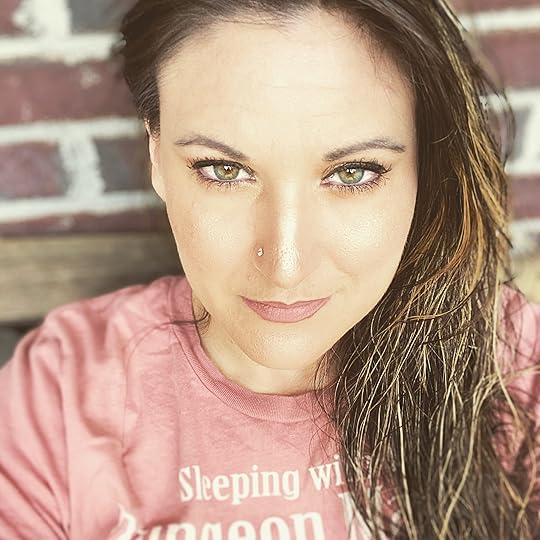
I am proud to love this woman.
We will not be bullied. We will not be coerced.
We believe that the schools of Cherokee County should be made safer for our teachers, students, staff — and ultimately all of us who live in the district. We believe that teachers deserve more protection and consideration than they are given by the superintendent and board of education.
We do not believe that our past mistakes deprive us of our rights to express ourselves.
You may judge our characters — and those who are threatening us — however you see fit.
Jamie Chambers
Canton, Georgia
Monday, August 3, 2020
The post Threats & Coercion appeared first on Jamie Chambers.
July 28, 2020
Dirty Deeds Done Dirt Cheap: Cleaning Up Cherokee County Schools

TL;DR Version: Despite detailed written procedures for enhanced cleaning and sanitation in their reopening plan, Cherokee County schools have not been properly cleaned in four months and the custodial service they use appears short-staffed.
I missed most of my ninth grade year after I nearly died of pneumonia, so I didn’t spend much time at Etowah High School in Woodstock, Georgia in 1989. But I still have memories. It was overcrowded and half of my classrooms were in trailers scattered around the campus. There were chainlink fences around the perimeter that gave it the vibe of a state prison. And most of the time the place was filthy. Like most students, I attempted to time my bowel movements so there were no number-twos during my school day—especially because their bathrooms rivaled the one from the movie Trainspotting. (Do not look up that scene unless you have a strong stomach!) There was even colorful graffiti with plenty of marker-drawn penises in the stalls. But later in my high school career things got (mostly) cleaner after I transferred to Sequoyah High School. And after what feels like a million years later—when I first returned to Cherokee County, Georgia in 2009 after a decade in the Midwest—during all my visits to local schools they seemed reasonably clean, including the bathrooms.
Sadly, however, it seems we took one step forward and then two steps back.

Inside a CCSD school as of 7/27/2020
Budget Cuts & Cutting Corners
Back in my day, not only did I walk barefoot uphill (both ways) in five feet of snow, our schools had janitors who were employees of the school system. This meant they answered directly to school and district administration just like other employees, with commensurate benefits. But budget cuts from the state of Georgia led to some tough decisions, and in 2013 then-superintendent Dr. Frank Petruzielo made the decision to outsource janitorial services to an outside company named Aramark. But after several years and a change in leadership, current superintendent Dr. Brian Hightower and the school board decided to make a change and contract with multinational corporation ABM Industries to clean every school—collectively occupied five days a week by thousands of teachers and tens of thousands of students.
ABM took over in early 2019, with Dr. Hightower offering immediate praise: “Their willingness to go the extra mile while also taking care of the day-to-day custodial needs will positively contribute to ensuring our facilities are top-rated learning environments.” But I’m afraid to report that despite the superintendent’s enthusiasm, I heard stories from my three boys—seniors at Creekview High School at the time—that soap and toilet paper were rarely to be found in the bathrooms, and that the place was noticeably dirtier than it had been the previous year.
But don’t take my word for it. Tiffany Robbins is President of the Cherokee Educators Association (a local affiliate of the Georgia Association of Educators) and had this to say at the CCSD board meeting held on July 9, 2020: “We know and want and desire hand sanitizer in our classrooms—and soap in the bathrooms. In reality we know that sometimes it takes twenty-four hours to get soap in the bathrooms. We know that sometimes we have to bring our own toilet paper from home for the teachers’ bathrooms. In reality, how safe are those classrooms gonna be?” (You can view the video of the meeting by visiting this page; Ms. Robbins’ remarks occur about 1:20 into the video.) Other teachers and students I’ve spoken with have echoed her remarks.

I’m not a professional custodian, but this does not look clean.
A Clean Slate?
As the coronavirus ravaged other parts of the country there was nationwide movement to “flatten the curve,” prompting superintendent Hightower to close the schools for two weeks—which was superseded by Governor Brian Kemp’s statewide order that ultimately confined instruction to Digital Learning Days for the rest of the school year. CCSD formed a committee to draft a plan for the (hypothetically) safe reopening of schools, that was unanimously approved by the board after only being available to the public for one day. My criticism of the reopening plan is well-known at this point, so there’s no need to re-hash it here. So just like I focused on student transportation last week, let’s see what the reopening plan (revised 7/24/2020) has to say about cleaning and sanitation during the worst public health crisis since the 1918 Spanish Flu pandemic.
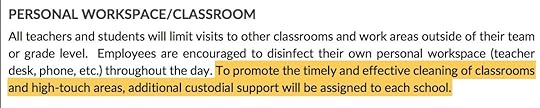

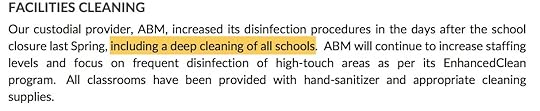
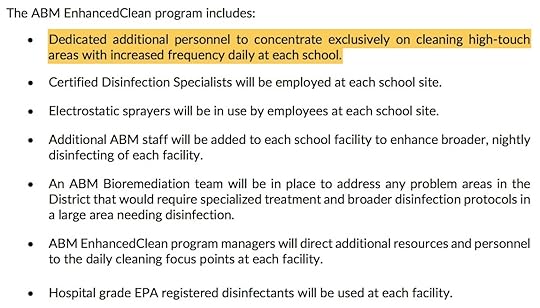
So there we go. It would appear that despite any other criticism, CCSD is dedicated to cleaning up their act—putting their intention in writing to ensure schools are cleaned and sanitized like never before to help prevent the spread of infectious disease. Even as a self-confessed critic of our school system, I can’t fault the sanitation plans as laid out above.
Unfortunately as of this writing, pre-planning has begun and students return to the building in less than a week. New students are already coming in for walkthroughs and meet-and-greets. And it would appear that Cherokee County has fallen flat on its face.

Outside Creekview High School 7/28/2020 – No masks, no distance.
Grime & Punishment
Over the last few weeks I’ve built up a network of teachers who have trusted me with their observations and personal feelings about the reopening of our local schools. Today I put out a call for them to tell me the good, the bad, and the ugly of the first day of their only week of pre-planning. What I got back was a lot. I’ll hold back a lot of this feedback for another day, but below are a few quotes from my confidential sources. To be fair I’ll start with the only one that was positive about the state of the classroom:
My classroom looked to have been cleaned thoroughly over the summer, with surfaces clean, floors waxed, and desks put in neat rows for me. The custodian even stopped by my room (and several others on my hall) to ask if we needed anything and to check that everything was in proper order. He even gave me tips on sanitizing surfaces, reminding me that disinfecting sprays need to sit for about 90 seconds to be effective. I heard from colleagues though that this wasn’t consistent with their rooms, but my experience in this regard was very good.
#
We haven’t received our cleaning supplies, but we were told that we’ll be getting them this week.
#
ABM continues to be a disaster.
#
At the elementary school the floor was cleaned but everything else was covered in dust and dirt. We received a bottle of cleaning spray. We were told when we run out they send it back to the county to be refilled. I haven’t received the hand sanitizer yet. The [staff] bathrooms are disgusting.


#
I feel like nothing is really being done. None of our custodians were even wearing masks.
#
Don’t clean the sinks but leave used items in them!

#
The building is filthy.
#
A custodian indicated he didn’t have time to properly clean an area that had been dirty for months. He only gave it a once-over.
And lastly, the picture below speaks for itself. It’s nice to know we can still count on teenagers to draw penises, even if we can’t count on ABM janitorial services to wipe them up.

The Fast and the Dirtiest
Last week I submitted an Open Records request with the district office to ask several important questions. The most relevant here: “I’ve been informed of staffing shortages in multiple schools for custodians working for ABM Janitorial Services, and that despite the schools being empty of students since March many have still not been thoroughly cleaned. Please confirm how many custodians are supposed to be assigned to each school and how many are actually working at each one at this time.” CCSD Chief Communications Officer Barbara Jacoby responded:
“In regard to custodial services, the ABM custodial contract is attached, and it is fully staffed. An addendum for additional cleaning services also is attached; this expense was approved at the July 16 School Board meeting as part of the annual budget, and hiring is underway for these additional positions; should any of these new positions be unfilled when school begins, the work will be covered by current ABM staff through overtime until the additional staff is hired. The main administration building and auditorium are not staffed by ABM custodians; two CCSD facility support staff workers provide custodial services among their duties, as outlined in the attached job description.” (Emphasis added by me.)
So let’s unpack that. The district says they have a contract and that they are “fully staffed,” but at the same time “hiring is underway for these additional positions” and they also anticipate the need for possible overtime. If the custodians are supposed to be engaged in “frequent disinfection of high-touch areas” throughout the day, how can that be accomplished with overtime of existing staff? Doesn’t frequent cleaning during the school day require enough bodies working simultaneously to get the job done?
The CCSD position seems to be that because they have contracts in place (which you can view here and here) their responsibility ends with the paperwork. But it’s up to the county administrators to enforce that contract and ultimately the buck stops at Dr. Hightower’s desk when it comes to making sure the schools are properly maintained.
I reached out to ABM to get official word on why their staff does not wear masks when working inside the schools, but could not get anyone on the phone. My assumption is that requiring masks is outside the scope of the contracts, so at most it can be “strongly encouraged” but not mandated. Sound familiar?
One last thing worth noting: The district offices—which were immaculate on my recent visit and could have passed any white-glove test—are not cleaned by the company under contract to handle our schools. They are done by the school district’s own paid employees, just like the schools once were prior to 2013. One can only speculate why the administrators don’t want ABM to be responsible for cleaning their workspace.
Despite the official answers, we can take note of the fact that many teachers report their schools haven’t been properly cleaned despite a four-month window of opportunity and regardless that the reopening plan states that CCSD has “increased its disinfection procedures in the days after the school closure last Spring, including a deep cleaning of all schools.” Many also report seeing fewer custodians on-site instead of “dedicated additional personnel to concentrate exclusively on cleaning high-touch areas.” ABM has been putting out the call to hire custodians to serve in our schools, but seems to be falling short on the staffing goals—perhaps because their starting pay is only $9-10 per hour. Hiring notices can be seen all over the area and online.

Terrible Work, Worse Pay!
If the Cherokee County School District and ABM cannot successfully clean the schools inside a four-month window, seem understaffed and unable to keep up with demand, do we really have faith that they will be ready with all the “focus on frequent disinfection of high-touch areas as per [AMB’s] EnhancedClean” program?
Like my old high school bathrooms of yesteryear, the whole thing stinks.
Jamie Chambers
Canton, Georgia
Tuesday, July 28, 2020
The post Dirty Deeds Done Dirt Cheap: Cleaning Up Cherokee County Schools appeared first on Jamie Chambers.
July 21, 2020
The Buses of Cherokee County
TL;DR Version: In the middle of a global pandemic, the Cherokee County School District in Georgia is pleased to announce they have cut 24 bus drivers and will be packing kids in tighter than ever—masks optional.
Some of you might have seen my recent open letter to the superintendent’s office and school board in my home of Cherokee County, Georgia. Since then I’ve joined a growing protest movement in the area (that even earned a moment on National Public Radio!) that has received serious pushback. Aside from angry Facebook rants from people convinced we’re trying to close the schools, CCSD put out a tone-deaf piece of public relations attempting to rebut some of our allegations, and there have been continued claims from the administration and board about “misinformation” and “misunderstandings.” Dr. Hightower and the board seem unable or unwilling to accept that we know exactly what’s going on—especially after privately hearing the concerns of many local teachers—but simply believe our district’s plan is ill-informed and entirely reckless. As of this morning, Cherokee County is the only “big five” district left in the metro Atlanta area that will start the year with in-person classes—all while not requiring masks, enforcing distance between students, or other safety measures recommended by public health guidelines.
But today I want to zoom in on just one issue: Transportation.
There were plenty of concerns about school buses prior to the pandemic. Most are without air conditioning and get dangerously hot on summer afternoons. Kids are not in seat belts. And you might have to ride home with a defeated and broken high school principal after he failed to catch Ferris Bueller.

Want a gummy bear?
But right now there is one overriding concern dominating every single conversation: Coronavirus.
Let’s pretend for a moment that we live in an imaginary world where the CCSD implemented textbook-perfect safety measures inside the schools. (Spoiler Alert: They have absolutely not done any such thing.) But that will only help so much if there aren’t health measures in place for the ride to and from school. Nationally, over half of K-12 students were riding the bus in previous years according to the Amalgamated Transit Union, while CCSD Fleet Maintenance reports transporting 54,000 students for morning and afternoon rides last year in Cherokee County.
Health Agency Guidance
The CCSD Reopening Plan claims “the primary guidelines referenced in our plan are based on guidance from the Georgia Department of Education (GaDOE) and Department of Public Health (DPH). Staff also considered many additional resources including guidance from Centers for Disease Control and Prevention (CDC), as well as recommendations made by health agencies at the federal, state and local level.” In other parts of the plan they reference the American Academy of Pediatrics (AAP), and are in fact happy to quote: “All policy considerations for the coming school year should start with a goal of having students physically present in the school.” But as we’ll see below, CCSD tends to think Less Is More when it comes to incorporating health agency guidelines.
The Centers for Disease Control and Prevention have some specific recommendations for school buses, including …
“…drivers should practice all safety actions and protocols as indicated for other staff (e.g., hand hygiene, cloth face coverings).”
“Create distance between children on school buses (g., seat children one child per row, skip rows) when possible.”
The Georgia Department of Public Health has guidance as well…
Under “Enhanced Mitigation Measures”
Provide hand sanitizer for students and bus drivers
Provide face masks for bus drivers; allow students to wear face masks/coverings
Screen students and bus drivers for symptoms of illness and utilize spaced seating (to the extent practicable)
Establish protocols for bus stops, loading/unloading students to minimize congregation of children from different households
Establish a protocol for student pick/drop up: staggered entry and release (by grade, class, or bus numbers), marked spacing for pickup
And according to the American Academy of Pediatrics:
Encourage alternative modes of transportation for students who have other options.
Ideally, for students riding the bus, symptom screening would be performed prior to being dropped off at the bus. Having bus drivers or monitors perform these screenings is problematic, as they may face a situation in which a student screens positive yet the parent has left, and the driver would be faced with leaving the student alone or allowing the student on the bus.
Assigned seating; if possible, assign seats by cohort (same students sit together each day).
Tape marks showing students where to sit.
When a 6-foot distance cannot be maintained between students, face coverings should be worn.
Drivers should be a minimum of 6 feet from students; driver must wear face covering; consider physical barrier for driver (eg, plexiglass).
Minimize number of people on the bus at one time within reason.
Adults who do not need to be on the bus should not be on the bus.
Have windows open if weather allows.
Now let’s compare the above recommendations to what was actually included in the CCSD Reopening Plan for bussing students to and from school during the worst health emergency in our lifetimes:
Bus drivers and/or transportation staff will clean and disinfect the buses after each route.
Transportation staff, including bus drivers, will be required to wear mask/protective shields. Bus drivers will also have hand sanitizer available.
• Bus drivers will wipe high touch areas between tiered routes.
• Bus drivers will spray all seats and high touch areas after the AM and PM routes.
• Transportation staff will fog buses with disinfectant weekly.
• Bus drivers will assign seating to students to improve loading and unloading efficiencies.
That’s it. No physical distancing between children. No health screening of children. No reducing the student population per bus. To me it sounds like “Clean the bus really thoroughly and do your best. Good luck, and may God have mercy on your soul.” (Yes, I’m throwing in some gallows humor, but in dark times that’s the only kind of humor we get.) CCSD has ignored more guidelines than it follows.
But Wait … There’s More
Actually there’s less. Specifically, fewer buses. At a recent meeting of the school board to discuss and vote on the budget for the new fiscal year, Chief Financial Officer Kenneth Owen explained that CCSD had its funding reduced by the state of Georgia and had to make tough decisions in order to cut $20 million. And a small piece of the puzzle was found in bussing:
http://www.signalfirestudios.com/jamie/wp-content/uploads/2020/07/bus-savings.mp3
“Bus drivers. We rolled back 24 driver allotments this year. That’s gonna save us about a million dollars—we rolled that back through attrition. So [no one had to be?] let go, but we’re gonna save about a million dollars. We’re making our routes more efficient as a result, and hopefully we’ll save even more money as we move forward.”
Compared to other budgetary items, the school bus situation barely got a mention. I confess I had a hard time listening to the next few minutes of the meeting because that word — “efficient” — was rolling around in my mind. Efficient means getting maximum results for minimum effort. And in terms of school transportation, that means getting as many children onto a bus as possible in a single route.
In the middle of the worst global pandemic in living memory, when all of the other metro Atlanta school systems have decided to start the year with digital learning only, Cherokee County is treating children like sardines in an orange can—offering little guidance to the drivers other than assigning seats and cleaning their vehicles a lot.
I’m a professional nerd—I’m no health expert. But those health agencies listed above do know what they are talking about. And here in Cherokee County, those agencies are being ignored—to save a million dollars at a time when administrators making six figure salaries still get a raise. They are transporting more children per vehicle than ever, breathing the same air with masks optional.
In my opinion the Cherokee County School District has made the school buses for the coming year as dangerous as possible shy of souping them up for street racing. Make the best decisions you can for your family and stay safe!
Jamie Chambers
Canton, Georgia
Tuesday, July 21, 2020
The post The Buses of Cherokee County appeared first on Jamie Chambers.
July 15, 2020
Open Letter to Cherokee County, Georgia School District
This is a local issue for my local school system in Cherokee County, Georgia in the United States — though unfortunately similar dramas are playing out all over the country. My anger and concern over the proposed school reopening plan and the rushed (and somewhat shady) method by which the measure was passed, I was compelled to speak out.

“Cover Letter” Email
If you’d like to view the PDF version of the letter, click here. I have reproduced its contents below:
Open Letter to Cherokee County School District
Monday, July 13, 2020
Dr. Brian V. Hightower
Superintendent of Schools, Cherokee County
1205 Bluffs Parkway
Canton, GA 30114
Dear Dr. Hightower and Cherokee County Board of Education,
My name is Jamie Chambers. I’m a writer and tabletop game designer who grew up in Woodstock and currently lives in Canton. My sisters and I are Sequoyah High School graduates, and including stepchildren I’ve had six kids in Cherokee County schools, with my youngest currently registered to begin Pre-K. This is my community and these are my people. It is because of my love and concern for the students, teachers, and other staff in our school system that I believe you have betrayed the trust that has been placed in you, and why I am compelled to speak out.
I was appalled at the rushed re-opening and the lack of proper safety and mitigation measures in your “CCSD Reopening School Plan” document, but you truly showed your hand with the public board meeting to vote on the measure. With only one day’s notice, you called for the meeting and “due to social-distancing requirements, in-person attendance will be limited to 80 people” while also stating that public participation “will be in-person only.” This means you rushed the meeting so there wasn’t much time to digest the 77-page document, limited the number of people allowed to object on the record, while simultaneously making sure the board meeting had more health and safety considerations than the schools will have starting August 3rd. This is ugly politics and hypocrisy of the highest order. For this alone you should be ashamed. Then I watched you ignore passionate and fact-based concerns raised by both parents and teachers so that you could unanimously vote to approve the measures, showing the whole exercise was simply a formality. I can’t help but notice that the video record of the livestream seems to have vanished from your Facebook page.
In brief, your plan ignores the guidelines of federal and state health agencies, ignores the reality of our current situation, and ignores real-world examples of how this will likely play out when you foolishly fling the doors open in a few weeks. It is my intention to document the consequences of your reckless plan and hold you responsible.
According to the COVID Tracking Project, we had 834 individuals hospitalized with the virus on
June 9, 2020. As of this writing on July 11th the count was up 2,443 hospitalizations—almost triple the numbers from a month ago, the curve sweeping steeply upward. (Note this isn’t simply positive cases, these numbers are people sick enough to be hospitalized.) This information alone should give anyone pause. As of July 10th, 82% of critical care beds in Georgia hospitals were already filled, and the governor announced that the emergency temporary hospital at the World Congress Center is being reactivated to prepare for the rapidly rising number of serious cases. The mayor of Atlanta has re-instated shelter-in-place orders. And when you observe how bad things are in other states such as Arizona, Florida, and Texas, it’s a glimpse into our future.
I understand the pressure from the state and federal governments to reopen our schools, along with working families for whom staying home with their kids isn’t an easy option. I understand the desire to provide our children the best possible education, and a chance for socialization and normalcy. I was fully expecting a plan to open our local schools in some form or fashion. So when I sat down to review your draft version of the CCSD Reopening School Plan, I was anticipating something that fully addressed the deadly seriousness of our current health crisis while putting our kids back in classrooms as safely as possible. What I read was incredibly disappointing, and from my interpretation seems geared to avoid backlash by providing “choice” for parents who might object to stringent requirements designed to protect students from infection. I believe that a plan that puts any concerns higher than the overall safety of our children, teachers, and greater community is a moral failing.
Your document begins by stating the current plan was put into place using guidance from the Georgia Department of Public Health and the Centers of Disease Control and Prevention based here in our state’s capital. (It’s worth noting that most of the DPH’s Covid-19 materials are actually documents created by the CDC.) Despite that, I see little evidence that guidelines from either agency was a guiding factor in creating these policies. In fact, your plan seems to repeatedly soften or ignore their recommendations altogether while seeming to envision a “best case scenario” when it comes to young people complying with these changing rules and the teachers’ ability to monitor and enforce them. I’ll address just a few of these areas below—not nearly a complete list of concerns but some of the most obvious.
Guiding Principles
The CDC’s “Considerations for Schools” document lists guiding principles with three categories of risk for school settings—lowest, more, and highest. Looking at what they call “more risk,” your plan compares in the following ways:
“Small, in-person classes, activities, and events.” – The CCSD plan places no limits on classroom size.
“Groups of students stay together and with the same teacher throughout/across school days and groups do not mix.” – Your plan has students changing classes as usual, only “staggering bell schedules to limit traffic congestion in hallways” and altering lunch schedules, along with a vague plan to avoid “large gatherings and discouraging congregating of students and staff.”
“Students remain at least 6 feet apart and do not share objects.” – Despite some variation of the word “distance” appearing in your document 42 separate times, not once is there a specific rule to space students from each other outside of the cafeteria. Instead of making sure students don’t share objects, you state the cleaning supplies will be on-hand for everyone to disinfect all the shared surfaces. (It’s worth noting that a teacher who addressed the board during your meeting stated that Cherokee County schools have a bad track record of even refilling toilet paper and soap dispensers, so there is limited confidence in your ability to create a sanitized environment for students, teachers, and staff.)
Face Coverings — AKA Masks
Again looking at the CDC’s guidelines for schools, they state “face coverings should be worn by staff and students (particularly older students) as feasible, and are most essential in times when physical distancing is difficult.” Currently the WHO, CDC, and Georgia Department of Health all recommend masks for everyone possible in mixed or public settings. Governor Kemp stated “wearing a mask helps prevent you or me from spreading the virus if we happen to have it, especially if you’re asymptomatic. So, if you’re wearing a mask, you’re protecting other people.” Even President Trump stated: “I love masks in the appropriate locations.”
Your plan mandates the use of masks for employees, but makes them optional for students. As governor Kemp stated, paper and cloth masks do not protect the wearer—they protect everyone else in case the wearer is unknowingly contagious. They are only truly effective in slowing the spread if the majority of people in any group wears them. By making them optional, it’s likely that many students won’t wear them at all. As those who wear masks are more likely to be careful in their hygiene and conduct, it means the responsible people will be protecting the irresponsible. As it is, optional mask wearing will do nothing to slow the spread of disease inside our schools.
Some claim that they or their children cannot wear masks for reasons of personal health. If someone has breathing-related health issues they should stay home in any case, as the virus would be a particular danger to that individual.
Meals
The safest options for food service, according to the CDC guidelines, is to “have children bring their own meals as feasible, or serve individually plated meals in classrooms instead of in a communal dining hall or cafeteria.” Again, the point is preventing different populations of students mixing and remixing throughout the day—it’s a recipe for disaster. And while it’s good to see some mitigation measures in place such as protective barriers and sneeze guards and restricted seating, the plan still keeps the lunchroom open and filled with children breathing the same air.
Transportation
The CDC school guidance states that it’s important to modify the seating on a school bus, to “create distance between children on school buses (g., seat children one child per row, skip rows) when possible“—as well as regular cleaning and sanitizing. To no surprise at this point, you have nothing in your plan to keep students physically separated on their ride to and from school. You simply establish cleaning protocols, mandate PPE for the drivers, and say that hand sanitizer “will be made available.”
Attendance, Absence, and Isolation
While the CCSD plan has short bullet-points on Employee and Student Health Protocols, it emphasizes individual cases and seriously downplays the amount of contact that students, teachers, and staff will inevitably have with each other with schools open under this plan. It references isolating the students and working with the Georgia Department of Public Health for contact-tracing. (Imagine a middle-school student who rides the bus and has at least five classes per day is infected and the number of people potentially exposed by that single child.) A positive case will inevitably cause a chain-reaction inside a school with so few mitigation measures in place.
Meanwhile, there are no standards or metrics in the plan to determine what officially counts as “exposure” to a sick individual, at what point a class needs to be shut down, or when a school should be closed entirely. You avoid all responsibility by repeatedly deferring to the “guidance” of the DPH. What concerns me is that the plan often ignores health agency guidelines, but we are supposed to trust that you will follow their recommendations when it comes to school closure? Like the rest of this plan, it allows you to play both sides—saying that proper steps are being taken without listing specifics and foisting responsibility onto another agency that you’ve already ignored when convenient.
Bafflingly you chose not to change the attendance policy and barely mention it in the document. The FAQ states “The attendance policy will remain unchanged” while noting that testing positive for Covid-19 or exposure will grant an excused absence without discussing the documentation or circumstantial requirements to grant that excuse. The draconian attendance policies of recent years have incentivized children going to school when they only have mild symptoms of an illness—something that could have deadly consequences in our current situation.
It’s also worth noting this another area where you treat your employees shamefully. Under the current plan if a teacher or staff member is forced to quarantine due to illness or exposure you have forced on them, “Employees can utilize available accrued leave time.” It adds insult to injury to require them to work under dangerous conditions without adequate protection or hazard pay and then force them to burn through their available paid time off when circumstances beyond anyone’s control requires them to stay home for weeks at a time.
An Irresponsible Plan
I’m well aware that the decision to close schools is not one to be taken lightly, as it has ripple effects on the larger community and consequences on the educational goals for our children. I appreciate the option for Digital Learning for parents, like me, that have vulnerable family members at home (though I question the predetermined arbitrary time limits). According to the National Center for Biotechnology Information, school closures can play an important role in preventing community spread of a virus—according to a study conducted after the H1N1 “Swine Flu” pandemic of 2009. But I realize that the majority of parents in our county agree with the president and governor that kids should be back in school. It was your job to create a plan that put safety and the well-being of your students, teachers, and support staff as the highest priority. In that you have failed with a rushed plan filled with half-measures emphasizing “choice” over human lives.
By ignoring health agency guidance and making things such as masks optional, you are removing choice from those who’d like their students to attend in-person classes in a safe environment. You are, in particular, providing an agonizing “choice” to the parents of special needs children who truly depend on the specialized instruction and therapy they receive through the school system. You are also asking more than ever from your underpaid employees, who are assuming a much higher level of personal risk for themselves and their families without even the courtesy of hazard pay.
Some people believe that because children tend to have milder cases of Covid-19 than adults, that means they are immune to the virus and cannot transmit it to others. That is demonstrably incorrect and dangerous thinking, as more than 11,000 children have tested positive in the state of Florida alone, and 17 of them have died.
There are easily-found examples of what happens in school-style settings during a global pandemic. Here are just a few:
Childcare Facilities. On July 6, CNN reported that there have been 1,335 people who have tested positive from childcare facilities in Texas—441 of them being children. Those numbers rose significantly in the course of three weeks.
Summer Camps. When I first sat down to write this letter, an article appeared on Fox Business titled “Coronavirus forces summer camps across America to close,” citing cases across the country where Covid-19 outbreaks have forced many summer camps to shut down—including 85 people confirmed infected (and likely much higher) at a YMCA-run camp at nearby Lake Burton. The piece focuses on unhappy campers and the impact to the businesses involved. But when I see headlines like these, I’m always thinking about the hidden tragedies most of us will never know. Of the dozens of confirmed cases, most will ultimately infect family and loved ones—some of whom will be vulnerable or just unlucky. They will be hospitalized alone and not even allowed to receive visitors. Some will end up requiring breathing assistance. And, of course, some will die.
Summer Schools. A truly startling example comes from Arizona. A summer school program was taught virtually in the Hayden-Winkelman Unified School District, meaning there were no students, just three teachers who shared the same space. They were health-conscious that thought they were doing all the right things in terms of distance and sanitation. All three became infected. One of them died on June 26th. From an article published in AZ Central, “Jeff Gregorich, the district’s superintendent, said he does not believe schools can bring students back safely as cases rise. ‘We’re going to lose a lot of teachers if they bring the kids back again,’ he said.”
Consequences
Your body voted unanimously to approve the plan that both references and links to health agencies while being extremely selective as to which guidelines should be followed or ignored entirely. The “choices” of digital learning, optional mask-wearing, and vague/minimal safety measures seem geared to appease those who would complain the loudest while granting you cover from future criticism. But I am not appeased, I am very loud, and I have no intention of shielding you from the consequences of your reckless decisions.
Dr. Hightower and the entire board should spend frequent time inside the schools, breathing the same air as the students and teachers. You and your families should share in the same risks created by your plan as everyone else. But based on the cowardly and hypocritical structure of the recent board meeting, I doubt many of you will be riding a school bus, sitting in a classroom, or eating in a crowded cafeteria anytime soon.
Many people will become ill due to your reckless policies, and some might very well die. If you believe these are necessary sacrifices for the greater good, it’s my intention to make you very aware of the victims of your indifference. I am coordinating a group of local volunteers to help me document as many students, teachers, staff, and their families who are hospitalized and/or die from Covid-19 after Cherokee County Schools open. With the permission of and respect for the people involved, we will collect and publish their names and pictures—sending copies to the superintendent and every member of the board. If you’re not willing to look at their faces and say their names out loud, you have no business making these kinds of decisions.
If the reopening of schools goes as badly as many of us predict, we will publicly campaign for the removal of Dr. Hightower from his position as well as supporting opposing candidates in future elections of the school board.
Conclusion
There is no version of your reopening plan that would please everyone. People have politicized the pandemic, have taken sides, and get angry about almost every issue. But ultimately you have a responsibility as educators to protect the lives in your trust. I think on the many changes our school system has made in past years to protect against the relatively-rare event of a school shooting, or the times our schools are closed because of predicted inclement weather that never comes. But in this one instance, when facing a global threat that has killed more than 130,000 Americans, with cases currently on the rise in our area, you chose to institute half-measures and roll the dice with the health of children and your own employees.
You made the wrong call. You wrote a bad plan.
My opinion may be in the minority at this time, but opinions tend to shift when bad things hit close to home. You will be held to account.
Sincerely,
Jamie Chambers
(enclosure)
Citations
I have hyperlinked my information sources in the letter above, but for easy reference I am including them below.
CCSD Reopening of School Plan SY2020-21 – https://www.cherokeek12.net/userfiles/5/my%20files/board%20meetings/ccsd%20reopening%20of%20school%20plan%20sy2020-21.pdf
CCSD Reopening of School FAQs 2020-21 – https://www.cherokeek12.net/Content2/7498
COVID Tracking Project – https://covidtracking.com/
Georgia sees dramatic rise in COVID-19 patients in hospitals – https://www.fox5atlanta.com/news/georgia-sees-dramatic-rise-in-covid-19-patients-in-hospitals
Georgia to reactivate makeshift hospital at Atlanta convention center – https://www.ajc.com/blog/politics/georgia-reactive-makeshift-hospital-atlanta-convention-center/0mQrnN9qhxmOEfIwVK0CzO/
City of Atlanta returns to Phase I COVID-19 status – https://www.11alive.com/article/news/health/coronavirus/city-of-atlanta-returns-to-phase-i-covid-19-condition/85-e418b7af-b07d-4f41-b14d-2bd286ebf811
Interim Guidance for Administrators of US K-12 Schools and Child Care Programs –
https://www.cdc.gov/coronavirus/2019-ncov/community/schools-childcare/guidance-for-schools.html
CDC: Considerations for Schools – https://www.cdc.gov/coronavirus/2019-ncov/community/schools-childcare/schools.html
WHO: Coronavirus disease (COVID-19) advice for the public – https://www.who.int/emergencies/diseases/novel-coronavirus-2019/advice-for-public
CDC: Use of Cloth Face Coverings to Help Slow the Spread of COVID-19 – https://www.cdc.gov/coronavirus/2019-ncov/prevent-getting-sick/diy-cloth-face-coverings.html
Georgia DPH: COVID-19: Individuals and Families – https://dph.georgia.gov/covid-19-individuals-and-families
11 Alive News: Gov. Kemp weighs in on mask debate: ‘You’re protecting other people’ – https://www.11alive.com/article/news/health/coronavirus/governor-kemp-wearing-masks/85-b1835d12-5bdf-49ac-a8b8-6a421ce2a14e
NPR: Trump Wears Mask In Public For First Time During Walter Reed Visit – https://www.npr.org/sections/coronavirus-live-updates/2020/07/11/889810926/trump-wears-mask-in-public-for-first-time-during-walter-reed-visit
CDC: People of Any Age with Underlying Medical Conditions – https://www.cdc.gov/coronavirus/2019-ncov/need-extra-precautions/people-with-medical-conditions.html
NCBI: Closure of schools during an influenza pandemic – https://www.ncbi.nlm.nih.gov/pmc/articles/PMC7106429/
WAAY 31 ABC: PARENTS OF CHILDREN WITH SPECIAL NEEDS HAVE CONCERNS ABOUT SCHOOL THIS FALL – https://www.waaytv.com/content/news/Parents-of-children-with-special-needs-have-concerns-about-school-this-Fall-571730191.html
New York Times: ‘I Don’t Want to Go Back’: Many Teachers Are Fearful and Angry Over Pressure to Return – https://www.nytimes.com/2020/07/11/us/virus-teachers-classrooms.html
WTXL 27 ABC: More than 11,000 children test positive for coronavirus in Florida – https://www.wtxl.com/news/coronavirus/more-than-11-000-children-test-positive-for-coronavirus-in-florida
CNN Health: Texas coronavirus cases top 1,300 from child care facilities alone –
https://www.cnn.com/2020/07/06/health/texas-coronavirus-cases-child-care-facilities/index.html
Fox Business: Coronavirus forces summer camps across America to close –https://www.foxbusiness.com/lifestyle/summer-camps-nationwide-shut-down-by-coronavirus
The Macon Telegraph: 85 kids, counselors infected with coronavirus in YMCA camp outbreak, GA officials say – https://www.macon.com/news/coronavirus/article244158667.html
AZ Central: 3 educators battled COVID-19 after teaching in the same room. 1 died. Now, they have a warning – https://www.azcentral.com/story/news/local/arizona-education/2020/07/09/after-arizona-teacher-kim-byrd-dies-covid-questions-raised-over-school-reopening/5405651002/

A nice stock photo!
The post Open Letter to Cherokee County, Georgia School District appeared first on Jamie Chambers.
June 23, 2020
Unf*ck the Police – Part One: My Story
I have very strong opinions about the history, role, and future of law enforcement in the United States—formed over the last 33 years of my life. I want to explain my often-unpopular opinions and make my case during this time when our country seems most ready to hear criticism of policing in America.
Disclaimer
The following is an article that begins with a personal experience that has led me to a lifelong distrust of law enforcement and of authority figures in general. It’s why I’ve been speaking out against police brutality and abuse of power for much of my life. I’m not going to ignore issues of race, but you might note I don’t emphasize it as much as others, and that’s for a simple reason: I’m white–I can’t exactly talk about my personal experience regarding racism and the police. That said, I want to make my position perfectly clear. I believe that white supremacy is unfortunately stitched into the fabric of American society and we have a lot of work to do in order to fix things. And the numbers are quite clear that it’s statistically far more dangerous for a person of color to encounter the police than for white people. I will do my best to amplify black voices; I will offer my support to address racial justice without trying to speak for communities I can only try to understand from the outside.
In other words, just because I’m sticking to my lane isn’t me ignoring or side-stepping the problem of racism related to law enforcement. Black lives matter.
“There are fundamentally two ways you can experience the police in America: as the people you call when there’s a problem, the nice man in uniform who pats a toddler’s head and has an easy smile for the old lady as she buys her coffee. For others, the police are the people who are called on them. They are the ominous knock on the door, the sudden flashlight in the face, the barked orders. Depending on who you are, the sight of an officer can produce either a warm sense of safety and contentment or a plummeting feeling of terror.”
– Christopher L. Hayes, A Colony in a Nation
It was Saturday, the first day of August, 1987 that my way of looking at the world and trusting people entrusted with power changed forever. I was twelve years old and absolutely thrilled that my annoying little sister was taking a trip out of state to stay with friends for a week. Our family headed for Hartsfield International Airport in Atlanta to put her on a plane. We were stuck in traffic near the drop-off point for ticketing, and after several minutes of going absolutely nowhere—while a traffic cop angrily blew his whistle and waved at cars—my mother decided she and my sister would exit the car to check my sister’s suitcase. The ladies got out and I stayed with my Dad to find a parking space.
Crossing the street from the parking deck only a few minutes later, I felt my father’s thick-fingered hand squeezing my arm. Something was wrong. My eight-year-old sister was screaming and crying and I saw a stranger holding her. There was a crowd and a lot of shouting. I was confused, and then I saw my mother—blood on her face, her arms behind her back. A man was roughly holding her from behind. Everyone was yelling, my father’s grip on my arm was painfully tight, and as I looked up at his face I saw his mouth go flat with steel resolve. He let go of me and started walking forward. My mother screamed.
“Jimmie!! We can’t both go to jail!” Blood trickled down her cheek from the scrape under her eye.
Only then did I realize that the man holding my mother captive was the same police officer who was whistling at traffic only minutes before.
Rather than give you Mom’s version of the story, which I was not present for, I’ll paraphrase what the officer later claimed in court:
He stated that after exiting the car, my mother approached him and asked him out on a date (my little sister at her side, apparently). And when he told my mother he wasn’t interested in her, she followed him around and called him an ass and demanded to know his name and badge number. He pulled out a citation he’d written when we were stuck in traffic—since my mother and sister exited the vehicle when it wasn’t parked—and handed it to her so she could identify him. And then, according to the officer, she unleashed a string of loud and angry profanity at him and got up in his face. At that point he had no choice but to arrest her, and while he was attempting to detain her she tripped and hit her face on the sidewalk—also injuring her neck, shoulder, and arm.
(Allow me to go on the record saying I do not believe the officer’s version of events.)
A witness at the time claimed he first noticed what was going on when the officer screamed “That’s it — you’re going to jail!” as he tackled my mother from behind and smashed her face into the pavement and violently jerked her arm up behind her back before putting her in handcuffs. The witness also stated the officer attempted to drag my mother away from my little sister, who was understandably hysterical and terrified—seeking comfort in the arms of a stranger. It took the intervention of the crowd to prevent my mother from being separated from my sister before my father and I arrived back on the scene.
I later learned that my mother committed what in America is an extremely dangerous crime: She disrespected a police officer.
My mother was charged with resisting arrest, disorderly conduct, and violating the city of Atlanta’s profanity code. (She used the word “ass,” you guys—in the 1980s!) She went to jail but begged us to put my sister on the plane for her trip, which we did. Then Dad and I spent the rest of the day bailing my mother out of jail.
I’ll spare you a lot of details, but this event wrecked my family and changed things forever. The bullshit charges against my mother were completely dropped and the officer who attacked her was fired. A win, right?
Over the course of the next year the officer who beat my mother up in front of a crowd—a man who had previously assaulted multiple women while in uniform—was restored to his position with full back pay. My mother’s lawsuit against the city of Atlanta was defeated in court. Her injuries healed, but her neck and shoulder have been a problem ever since.
Before my fourteenth birthday I learned that the police are not always the good guys and that if you’re looking for justice it’s not likely to be found inside a courthouse.
In the years since, I’ve been first- and secondhand-witness to cops lying, falsifying reports, and bragging about abusing prisoners. I’ve watched the police become increasingly militarized, buying up stockpiles of equipment with the idea that it would be used to fight terrorists—only to be used against the citizens they are sworn to serve and protect. I’ve come to understand why many communities would prefer to protect themselves rather than rely on the authorities.
Pop culture depictions of police have shifted dramatically over the years. Back in the old days, cops were never the heroes. In fact, the “Keystone Cops” were best known as bumbling comic relief more than anything else.
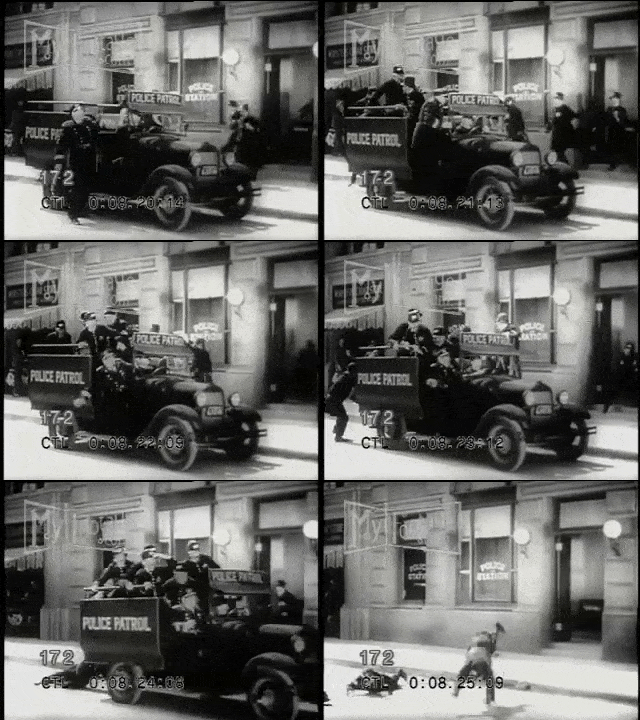
Keystone Cops
Crime fiction generally relied on a non-police protagonist—such as the private detective or an Everyman drawn into dark events. But as Hollywood and the Los Angeles police department developed a symbiotic relationship things changed with shows like Dragnet. Jack Webb created a show to depict law enforcement in a more positive light, with Sgt. Joe Friday working each case with diligence and fairness. (“Just the facts.”)
American televisions enjoyed a kind and fair sheriff with the Andy Griffith Show, depicting the county officers as pillars of the southern community and everyone’s friends. And while police procedural shows and cop movies have morphed with the times, the loose cannon bad-boy cop has become a stereotype we love in America. From Dirty Harry to Martin Riggs, we love a cop who doesn’t play by the rules but always gets the job done. These movies are fun—I enjoy them myself—but make no mistake: In the real world it’s never a good thing when cops break the rules and the law.
A lawyer friend of mine once told me that there is only one circumstance in which you call the cops: When you want someone arrested.
That’s it. You don’t call them to help a fighting couple to cool off. You don’t call them to rescue a kitten out of a tree. You only call the police if a crime has been committed and you want someone leaving in handcuffs. (And that’s the best case scenario, as we know sometimes the cops get rough.)
Ask yourself the following question and try to be really honest: If the police arrive when you didn’t ask for them, are you actually glad to see them?
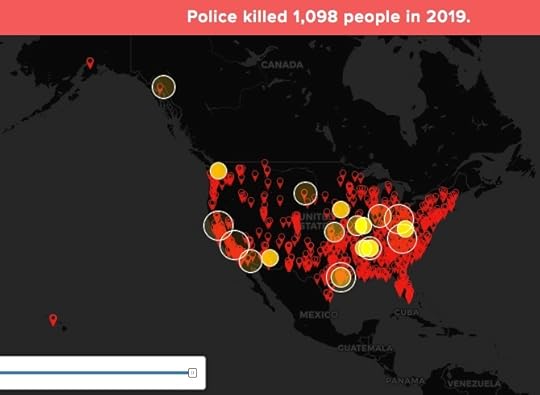
Source: Mapping Police Violence
Back in my 20s I knew a guy who always wanted to wear a badge—we’ll call him Jerry. He was on the short side, from a dirt-poor Alabama family, and was bullied as a kid. People knew him as the class clown, always able to make people laugh or turn any argument into a joke. Jerry was the guy you always wanted at your house party or backyard barbecue.
Then he got the job as a local sheriff’s deputy.
It was a sad transformation. Jerry went from being a guy I loved hanging out with to someone I couldn’t fucking stand. His “jokes” started to be telling stories of bullying and terrorizing prisoners in the county jail—where all first-year deputies work while they go through continuous training and certification. He bragged about breaking the rules to punish prisoners who pissed him off. He would say, “I love it when they give me an excuse” so he could beat on someone with his police-issue club. Jerry was a professional bully. I haven’t really spoken to him in decades, and I’m happy to say he didn’t last long in law enforcement.
Did the job change Jerry, or was this awful person always lurking under the surface?
Obviously I can’t tell you what’s in someone else’s heart, but my best guess it’s a bit of both. People aren’t just randomly drawn to careers; there are reasons. And besides excellent pay and potential early retirement, there is power and community respect in police work. Bullies are drawn to the job, as are some people who’ve always felt powerless. And of course, there are deep-rooted cultural problems inside of policing in America that make things worse—along with a code of silence that means even the “good cops” keep their mouths shut when a fellow officer breaks the law.
A Good Cop and a Dead Dog
A few years ago I had an encounter with a member of my local city’s police department. He was young, in his mid-20s I believe, and showed up after a neighbor called about loose dogs. A household down the street breeds and sells Cane Corsos, though they apparently did a terrible job socializing the breeding pair. A mother dog and a 12-week puppy began roaming through yards, the female growling and snapping at anyone who came close and was incredibly defensive of her pup.
I’m no Dog Whisperer, but I’ve been raising and dealing with dogs most of my life. I could see the female was nervous, not aggressive, so I slowly got the dogs to back up close to their own yard but couldn’t get them to return. Instead we opened the gate of their next door neighbor’s backyard so the dogs could be contained until someone could safely remove them. We walked back to the street to wait on the law.
He showed up minutes later, looking every inch the stereotype of a young southern cop—military-style haircut, aviator sunglasses. He was very friendly and quite courteous, but he also had a hero complex.
Animal Control was on the way, he said. But rather than wait the officer decided he could wrangle the animals himself. He told us to wait and he would come back for our full statements.
I turned to my neighbor and said, “I have a bad feeling about this.”
About three minutes later we heard the gunshot and one piercing yelp.
When we talked to him later he told us he had attempted to grab the mother dog’s collar and she turned and bit him. He immediately pulled his service weapon and shot the dog in the side. Animal Control rushed the dog to emergency surgery, but my understanding is she did not survive.
He had tears in his eyes when he told us what happened. He was a southern boy who loves dogs. But he was also a cop who was convinced he was the right man for the job even though his only tool was a lethal weapon.
It was incredibly frustrating to know that the Animal Control people, a team with training and equipment to safely handle dangerous animals, was only a few minutes away. The dogs were contained and posed no immediate danger.
On one hand, it was a justified shooting—the dog bit him. (I saw the superficial wound myself.) But on the other hand, the cop created the situation in which the gun came into play.
If you’ve followed the news at all in the past forever this scenario will sound familiar. Except instead of dogs, it’s human beings who are getting killed by police.
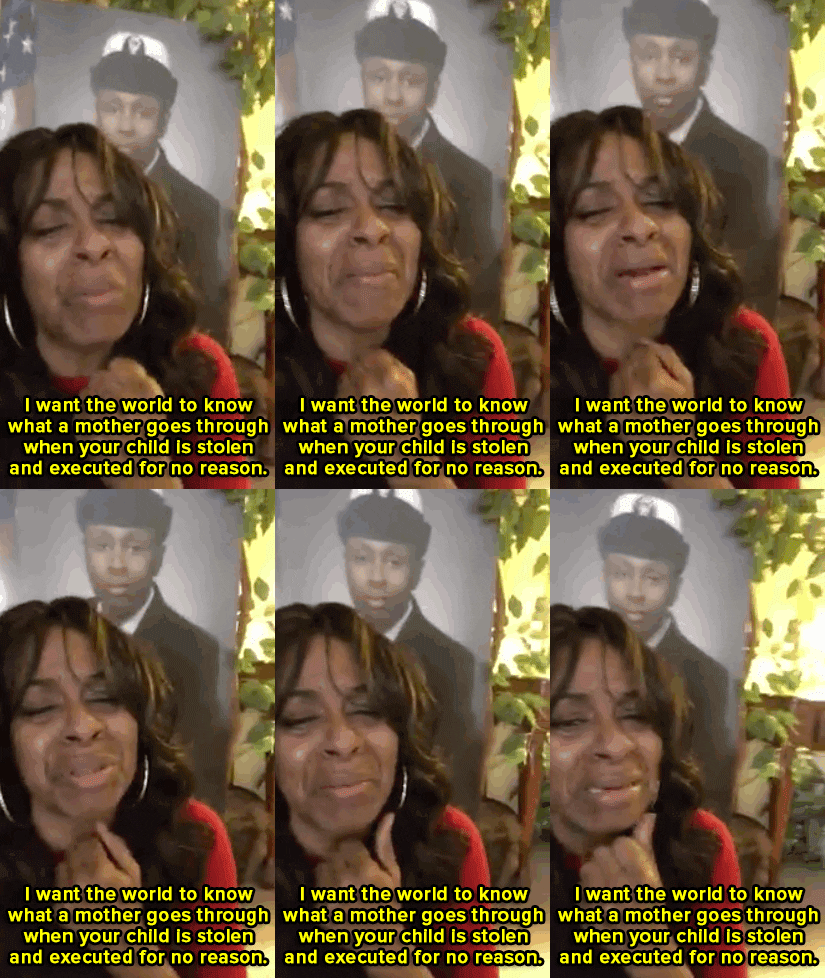
I have a lot more to say, but I’m going to tackle different slices of why police—as they currently exist—are broken beyond repair and need to be replaced with a different way of protecting our communities and enforcing our laws. I don’t want to write an endless article about my personal feelings and experience with police, because all of my stories are indirect. I’ve had cops yell at me but I’ve never been directly threatened or physically abused. (Then again, I’m a tall white guy who is very careful to always maintain eye contact, keep my hands visible, make no sudden moves, and answer questions directly and with clear signals of respect. Cops love to feel respected.) But I know lots of people who’ve truly suffered under people protected by the badge.
I know many women who’ve been harassed by male cops. I know more than one who was raped. (No, none of these men faced consequences for their crimes.) I know people who’ve been beaten and threatened by the police, and others who’ve been falsely accused of crimes or had evidence planted to justify an arrest. I’ve witnessed a cop lie under oath more than once.
And since the protests against police brutality and systemic racism broke out across the world, like so many others I’ve watched hundreds of instances of police attacking unarmed protesters with tear gas, pepper spray, and “less lethal” munitions have that permanently maimed people. I’ve seen clearly identified members of the press attacked as if they were the enemy. People who are shocked and horrified keep asking why the police are being so aggressive? The answer is simple, the protesters are committing the most dangerous crime of all:
The protesters are disrespecting the police.
And you know what? So am I.
Jamie Chambers
Canton, Georgia
June 19, 2020
The post Unf*ck the Police – Part One: My Story appeared first on Jamie Chambers.
March 26, 2020
Keep The Beaches Open!

Last year the love of my life treated me to an incredible date night. We saw Jaws—one of my favorite films—with the accompanying music performed live by the Atlanta Symphony Orchestra. John Williams’s amazing score was more effective than ever with the magic and power of live musicians, and the movie holds up 45 years later, fake shark and all. And while I’m not the first to make this observation, about either a foreign leader or my country’s own, I was struck by a thought: The people who want everyone to go back to work during the global Covid-19 pandemic sure do sound like the mayor from Jaws.
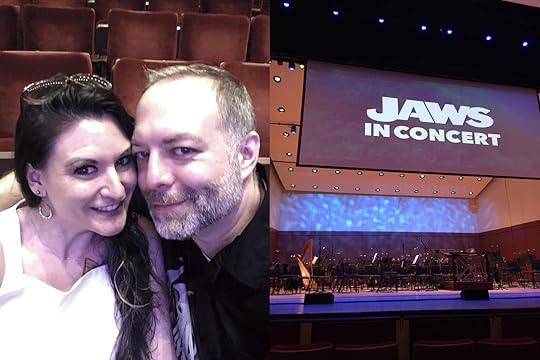
For my dear friend who confessed this morning that she’s never seen Jaws, allow me to spoil the basic plot. Amity Island is a New England beach community with an economy entirely dependent on summer tourism. When a shark kills a skinny-dipping woman only a few dozen yards from the soon-to-be-crowded beaches, chief of police Brody uses his authority to close the beaches to the public. Amity’s mayor, under intense pressure from the local business owners, convinces the coroner to revise his findings to declare the young lady was killed in a boating accident instead of a shark.
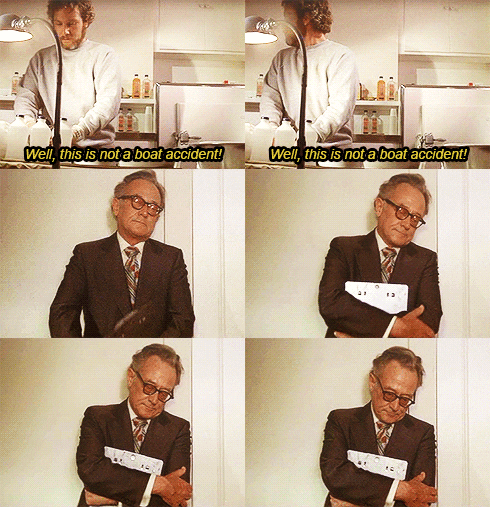
Another death leads the local government to place a bounty on the shark, even as a shark-expert scientist arrives and confirms that the original woman was most definitely killed by a large and particularly dangerous great white shark. When local fishermen kill a tiger shark victory is declared and the beaches open for business for the Fourth of July weekend, the biggest dollar-earning period for the hotels and restaurants and shops on the island. A simple autopsy on the dead tiger shark confirms no human remains inside, meaning the truly dangerous animal is still engaging in territorial hunting where the tourists will soon be swimming. Predictably, despite all efforts to keep things safe, someone else dies when the shark gets hungry once again. Finally, the shocked mayor is convinced to hire an effective but psychotic fisherman to hunt the shark by boat—taking along the chief of police and a marine biologist. After a struggle that sinks the boat and kills one of the three men (and nearly another), the shark is killed and the beaches are once again made safe.
Right now the world is dealing with a public health crisis the like of which haven’t been seen in generations, the novel coronavirus that causes the disease known as Covid-19. From the first reporting of “mystery pneumonia” in Wuhan, China on January 3rd to the present day, there have been 529,093 confirmed cases worldwide 23,956 deaths as of this writing. Countries all over the world and state and local governments here in the United States have taken various measures to slow the spread of the pandemic, from “shelter in place” orders to full-on lockdown. The global economy has taken a massive hit, the US stock market has tanked, and people everywhere are losing their incomes. While the virus is more lethally dangerous to certain groups (the immunocompromised, the elderly, and people with certain pre-existing health conditions), the virus is coming for us all. As of this writing we’ve had celebrities, senators, writers, and princes confirm as infected, joining the hundreds of thousands of anonymous citizens of the world who have become sick. In most of the world the infection curve is pointed straight up with no signs of slowing down—especially here in the United States, where we now have more confirmed infections than any other nation on Earth. It’s been my assumption that social restrictions will only increase, businesses will be forced to shut down, and the government will need to step in and help everyone last through the crisis until it’s safe to get back to work.
But you know what they say about assumptions. Yesterday I was stunned to hear the Lt. Governor of Texas make an impassioned plea to patriotism, saying that older and vulnerable people like himself are ready to sacrifice their lives for the legacy of the American dream. Then the president of the United States made repeated statements that “our country wasn’t built to be shut down.” The message is unambiguous: Get everyone back to work and the dollars flowing once more. The stimulus package coming from Congress includes one-time payments to Americans, clearly with the assumption that things will be back to normal soon enough since no provisions for repeating the payments were included.
In other words: “Amity is a summer town. We need summer dollars!“
Low-Lethality Shark
What the hell was everyone so scared of during the events of Jaws? Yes, the shark can and did eat people but there were hundreds of people on the beaches of Amity island. The odds are really strong that if you were one of the people splashing around in the water you would be fine. Even a big great white shark only has so much room in its stomach, after all. In fact, we see hundreds of people over the course of the movie and only five—plus one poor dog, RIP Pippet—are killed by the shark. Individually, the danger for a single person is low during the course of the movie. We only wish we had those kinds of favorable odds at the blackjack table.
Sound familiar? The nasty pathogen that’s shut down half the world is not nearly as individually lethal as other scares. While it’ll probably be a few years before we have truly accurate numbers on recovery vs. fatality with Covid-19, the media and internet has been awash with people downplaying the danger.
But when things get personal it’s hard for those numbers to be quite so encouraging. The first death of beautiful Chrissie Watkins in the film can only be blamed on the shark. But when a little boy named Alex Kintner is made a meal by the shark, his mother’s grief is tempered by rage when she learns that it was known that a shark had attacked someone only days earlier.
Even after the little boy is chomped in half, the local businesses on the island put extreme pressure on Mayor Vaughn. Everyone knows that there is only one way to stay completely safe from the shark, and that’s for everyone to stay out of the water. But since closed beaches mean no tourism and accompanying dollars, the mayor is determined to try every available tactic except shutting it down. They post a bounty on the shark for local fishermen, they post shark-spotters on the beaches, they have a helicopter doing recon fly-overs. There is a brief moment of hope when a shark is killed, but evidence mounts that is was not in fact the source of the danger. But still, the P.R. spin of one dead shark is enough to keep the beaches open for the financially critical Fourth of July holiday.
Predictably, when served with a buffet, the shark takes another meal in the form of a human life.
Chum in the Water
I mentioned the Lt. Governor of Texas, Mr. Patrick, up top. “No one reached out to me and said, ‘As a senior citizen, are you willing to take a chance on your survival in exchange for keeping the America that all America loves for your children and grandchildren?'” But … “If that is the exchange, I’m all in,” Patrick said on an appearance on Tucker Carlson’s show on Fox News. The full exchange is really worth a listen.
My interpretation? The elderly are willing to be chopped up for use as shark food. To offer themselves up for human sacrifice on the altar of capitalism. Boomers are, according to Patrick, happy to oil the gears of commerce with their own blood.
As this “save the economy by Easter!” message has become the go-to talking-point in conservative media the past few days, there is no evidence that the various measures taken by state and local governments have done much to slow down the spread of infection here in the United States. In fact, simple charts based on confirmed and recent data are both sobering and chilling. Based on my ability to interpret the direction of a line on a graph, the United States will far exceed the number of infected in China—a country whose population outnumbers ours by 1.1 billion (with a B) people.

In my area they are only just now starting to ramp up emergency policies and a Shelter In Place order was put into effect last night as of this writing—really more of a politely-worded request to citizens rather than anything that could or will be enforced. But we live north of a town that has no such restrictions in place, and in my local shopping centers I see half the shops are still open. I openly hear people grumble about how “stupid” and “overblown” this whole situation is. Meanwhile the numbers keep climbing all around us.
Mr. Patrick seems to think we can simply choose who we put at risk and those we protect while most of the country goes back to business-as-usual. That is naive and lazy thinking. The virus is coming for us all, and even though the numbers are scarier for older people and those with pre-existing health conditions, lots of people who were previously young and healthy have died fighting Covid-19. It’s easy to talk of sacrifice and small percentages for the greater good when they are abstract, faceless meeples. But are you willing to offer up your own family, your own loved ones? Even if you don’t care about yourself, few of us can bear the thought of losing those dearest to us—especially if it was a preventable death.
The news of our national and global economy has been very bleak recently. The markets plunged. Jobs are being slashed all over the place. Social distancing orders are forcing businesses to close entirely. In my own industry, comics and games distribution is shutting down for now. There is talk of a recession, or even a true depression. None of us want this. We would all love to be back at work and our normal lives. It would be really great if this shark would just go away.
But the shark isn’t going anywhere until people stop swimming, until we stop feeding it. We need massive, strict social distancing across the board to slow this thing down to the point where the healthcare system can handle the number of critical patients and to give researchers crucial time to develop medications for treatment and a vaccine for prevention. The economy isn’t going to magically bounce back if everyone goes back to work, because there will be fear and illness and death—things that historically are bad for markets and discretionary spending.
If you believe that we need to re-open the beaches for the Fourth of July (i.e. make sure Americans are back to work by Easter) are you ready to send your family into the water when you can see the shark fin from the shore?
Are you willing to be Mrs. Kintner?
The post Keep The Beaches Open! appeared first on Jamie Chambers.
March 21, 2020
Boast or Fib: Free Party Game For Social Distancing
Hello from the Chambers family anti-virus bunker! Spring has come to the northern hemisphere just as a global pandemic has shut down much of the world and kept many of us at home. I have written about how and why we should show empathy during this crisis, but today I’m offering a way to kill time. Friend, writer, and fellow game designer Scott Hungerford created Boast or Fib — a fun little party game that my family produced a few years ago as part of a fundraiser during my daughter’s cancer treatments. The print version fits on a business card.
Click here or on the image below to grab the rules of the game, absolutely free. The only thing you’ll need is a 20-sided gaming die, same as used in games like Dungeons & Dragons. If you don’t have one on-hand, try one of many online dice-rolling tools! You can either play this game with your family or online using any number of communications tools.
If you’d like to order a physical copy of the game that includes a d20, just click here. Or here if you’d like to say thank-you with a one-time tip. Enjoy, stay safe, have fun, and game on!
The post Boast or Fib: Free Party Game For Social Distancing appeared first on Jamie Chambers.
March 14, 2020
Pandempathy
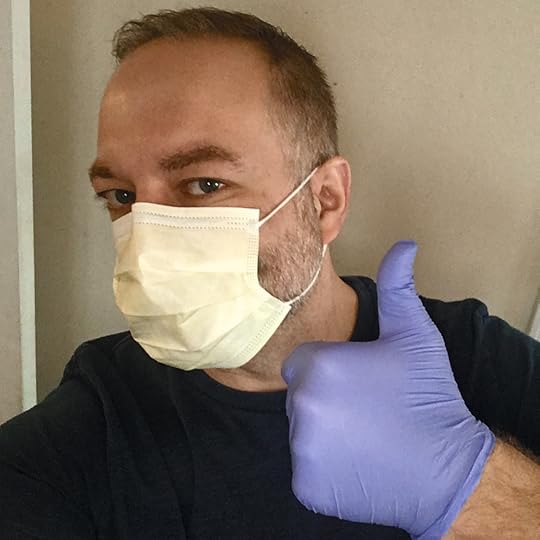
In mid-2009 the news cycle was much-abuzz about the spread of a virus known as H1N1, aka “Swine Flu.” It wasn’t the first health scare in my adult life, nor the last. (An ebola panic was only five years away.) Lots of people got sick, and plenty of people died, but as the flu is known to do it mostly killed the weak and vulnerable among us. I contracted the disease at Comic-Con in San Diego and was horribly sick, having my case confirmed when my doctor sent a sample down to the CDC for testing. For me it’s just a story of coming down with a nasty flu and eventually getting better, but out of 61 million people infected in the United States, 12,469 people died. (That number is likely much higher if you count studies that link the illness as a contributing factor to other kinds of deaths.) One of the things I can never know, but have to wonder about, is how long I was contagious before I experienced my first symptom. I was stuck in incredibly large crowds, shaking hands, handling money and credit cards, hugging people, and breathing all over the people inside my crowded booth. In my small way, I spread the pork chop plague around southern California and around the world. If I had a crystal ball or a magic spell, I wonder: How many links did I contribute to those chains of infection that killed people?
It’s true. I fully believe that I accidentally, unintentionally, and indirectly killed people that year.
That’s just how it works. I had a dangerous germ that I didn’t even know about and was spreading it around thousands of people who took it back home and spread it around even more. It’s entirely possible that if I could send my mind back in time and decide to bail on the event that year, some people might be alive today that are instead dead for a decade.
Here in 2020 I am way more conscious about germs and disease than I once was. Four years of caring for an immunocompromised cancer patient has radically changed our whole family’s thinking about how pathogens spread and what can be done to protect people. And now we’re in the middle of a global pandemic that is objectively far more dangerous than H1N1. Not only are the numbers far more sobering even in these early months, it’s already caused serious disruptions in our lives. Travel is restricted, trade is impacted, markets are crashing, schools are closing, public events are postponing or shutting down, and an entire country has gone on lockdown. And from everyone who should know what they are talking about, this is going to get much worse before it will get better.
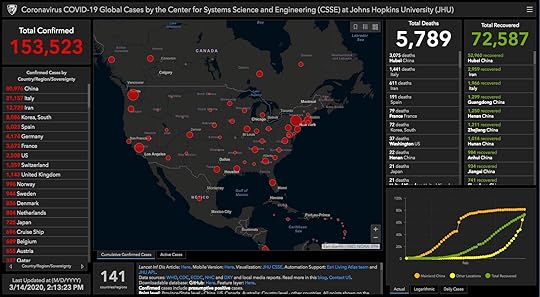
Coronavirus COVID-19 Global Cases by the Center for Systems Science and Engineering (CSSE) at Johns Hopkins University (JHU)
Governments and corporations are making big decisions that impact us all, trying to decide how to protect lives while minimizing the impact on the bottom line. The question for us as individuals is what temporary changes we make, and why?
The Hit 2020 Film Released in 2011
The other night I first watched the movie Contagion. Very clearly written as a reaction to H1N1 virus mentioned above, director Steven Soderbergh presents a film about a serious global pandemic—not world-ending but definitely far worse than anything that has happened thus far in my lifetime. Spoiler alert for the plot details in the rest of this section if you really want to watch the movie for yourself.
Rather than being a hero-driven film like Outbreak, this is an ensemble piece that is more an examination of how society and governments and some individuals might behave in a crisis of this level. Smart people work hard to solve the problem while regular people try to survive as things get increasingly tense and society starts to break down before a vaccine is developed and things slowly start to get back to normal. The beginning of the movie is eerie in how it mirrors things we’ve witnessed in the past month.
//www.youtube.com/watch?v=VrATMF_FB9M
In the above clip, Kate Winslet’s character explains the concept of R0—the number of people typically infected by a contagious person. As a point of comparison, “standard” flu is 1, meaning one infected person typically spreads the disease to one other person. The H1N1 virus I was carrying around in 2009 was half-again that contagious, with an R0 of about 1.5. Now as the novel coronavirus known as Covid-19 is still new and being studied we only have early numbers subject to change with more data and analysis, but as far as we can tell the number is somewhere around 3—twice as contagious as the Swine Flu. That means a typical infected person will give the disease to three other people, who give it to three more people each, etc.
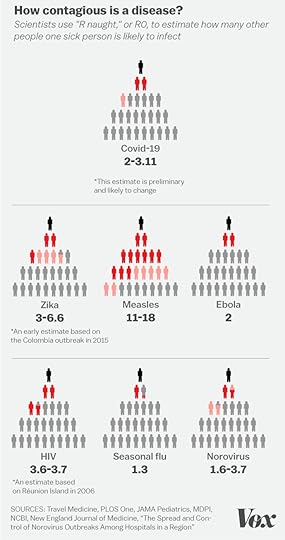
While there are plenty of significant differences between the fictional MEV-1 virus in Contagion versus the Covid-19 coronavirus, the most basic steps to prevent the spread are the same: social distancing. Limit contact, touch as little as possible, don’t touch your face, keep your hands clean. In one scene the CDC is still trying to contain the virus before it spreads out of control, but it just as clearly demonstrates how difficult it is to prevent microscopic germs from getting onto surfaces that are later touched by unknowing people.
//www.youtube.com/watch?v=GibtO8lMTnU
Contagion follows the story of the disease in America and those trying to save lives. It gets scary, as it goes from currently-familiar scenes (schools and events closing, frantic people buying everything off the shelves at markets, and shady online personalities trying to profit from the outbreak). But it’s also comforting, as it shows very smart people working hard to fight the problem with the available tools—from the science of vaccine development to instituting temporary changes to contain a massive outbreak. It shows society start to break down in big cities as things get particularly nasty, but also how everything recovers.
I don’t expect that Covid-19 will become nearly as destructive as the movie-virus, but it doesn’t have to be in order to be the worst pandemic in my lifetime.
A History Snippet
I keep seeing comparisons to the Spanish Flu pandemic of 1918 (also an H1N1 virus, but of avian origin instead of swine) that killed at least 25 million people worldwide. But in doing my homework, I’ve found a much stronger comparison to an event that took place in my parents’ lifetime: the Asian Flu pandemic of 1957.
The H2N2 virus—which sounds like a bad sequel from a Hollywood film franchise—rampaged through the world over two years and killed over a million people, over a hundred thousand here in the United States. And that was back when our population was much smaller than it right now, and over 100,000 dead in two years from one disease would still be highly alarming. As a point of comparison, global mortality was about 10 times greater than the swine flu pandemic I survived in 2009. I won’t get too into the weeds here but it’s worth looking at because there are enough surface similarities to make it a good point of comparison. And there is both good and bad news to be found.
The good news is that modern medicine can handle the kind of respiratory problems that can be the most severe consequences of a virus like H2N2 or Covid-19. With the right treatment, even a vulnerable person has a better shot at surviving and recovering from a serious respiratory complication than they did 62 years ago.
The bad news? There are more of us and we are more tightly packed and we travel around a lot more than we did six decades ago. This means the disease will spread farther and faster than the Asian Flu did in the mid-20th century. And while back then most first-world citizens got their news in the form of the morning paper, we now have thousands of information sources shotgunning into our brains with every biased perspective and persuasion imaginable. There is not a unified message, but rather us cherry-picking who to believe based on our biases and ability to separate the wheat from the chaff.
“Stop Being Scared—Live Your Life!”
I will state right at the top that I understand my bias. Two people under my roof—my daughter and my boy—having exacerbating health conditions that make them far more likely to die of a Covid-19 infection than the average person. My kids’ grandparents have conditions that include high blood pressure, diabetes, and simply being old. Oh, and my lungs were torn up in 1989 when I nearly died of double pneumonia, so I’m a bit more at risk my own self. So I get that I have way more to be concerned about than most when it comes to the direct consequences of the pandemic hitting my household. But I like to think that I would still be acting with empathy and social responsibility even if we were all healthy as proverbial horses.
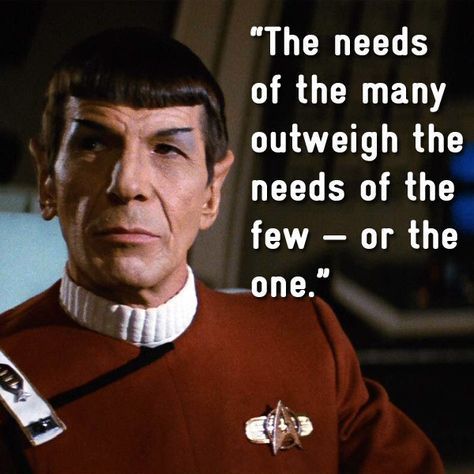
Warning : I get political in this section and am critical of the United States government. RIP my comments and mentions for those of you who believe the president and his team are above criticism.
The 21st century world has too many “facts” and opinions blasted into our eyes and ears every waking minute. It really feels like we’re all living in different worlds and become frustrated when other people don’t see what we do. That’s because we don’t! All of our experiences are increasingly curated and designed to reinforce what we already believe—the proverbial “bubble” that prevents us from truly walking in another’s moccasins.
Some of the early messaging regarding Covid-19 was of the “you don’t have to worry about it” variety, and as an American it didn’t just come from the internet or the news media, but the highest halls of power.
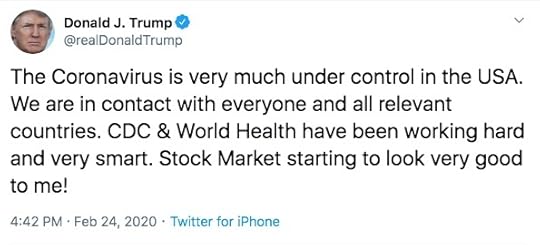
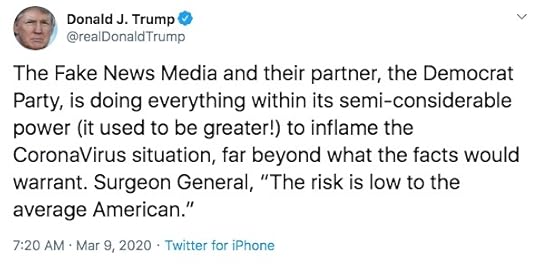
The motivation looks to be to keep people living business-as-usual for as long as possible so as to not trouble the stock market. (This did not work, because as of this writing the markets have been in freefall and there is talk of massive financial bailouts to prop up industries already suffering.) But the potential fallout is extremely serious. It’s about understanding the relationships between lifestyle and the transmission of disease and the capacity of our healthcare system here in the United States.
Remember what I said above about how modern medicine is more equipped to handle a disease like Covid-19 than the Asian Flu pandemic of 1957? That holds true until the number of serious cases push past the limits of the American healthcare system and people who could have been saved die from lack of available care. “There are about 46,500 medical ICU beds in the United States and perhaps an equal number of other ICU beds that could be used in a crisis,” according to two authors of a study from Johns Hopkins. There are less than a million hospital beds overall in the entire country. There has been a roughly 30% daily growth rate of the disease since it began to spread in the United States, meaning it’s quite easy to imagine a scenario in which hospitals become overwhelmed with seriously ill patients, with not enough ICU beds and ventilators for those in critical condition.
Sadly we only need look to Italy to see how this could play out, where medical staff is overwhelmed, doctors are not getting rest, and they are forced to make difficult decisions under impossible circumstances. As of this writing over 1,200 people have died in Italy and the numbers are only going to keep climbing all over the world.
Pandempathy
My oh-so-clever portmanteau is pretty straightforward. I’m calling on you to show empathy during the pandemic. That means not just thinking about yourself, not just thinking about your loved ones, but to be community-minded. Think of it as enlightened self-interest.
As said above, the worry isn’t just about the amount of total infections and serious cases over the course of the pandemic, but how many happen simultaneously. The phrase “Flatten the Curve” has been bouncing around social media recently, and it shows in simple terms why we want to take extraordinary measures to slow the spread of the virus. If we can keep the number of sick people below the capacity of our healthcare system, it won’t become a crisis that causes many unnecessary deaths.
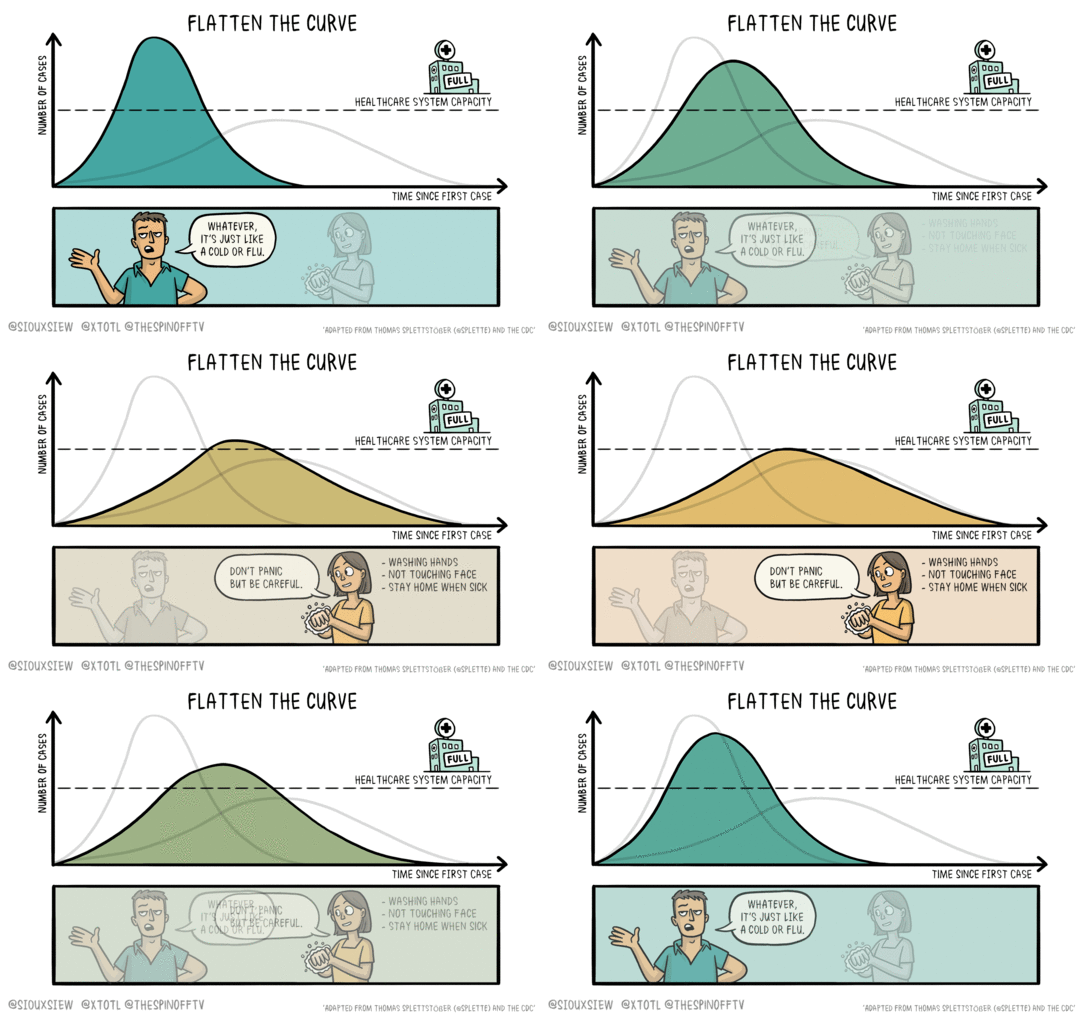 This means we need to suck it up and make some temporary sacrifices and lifestyle changes. Already governments, companies, and churches have cancelled large public events, closed schools, and transitioned people to working from home wherever possible. We need to do our part individually. This means staying home and avoiding crowds and public places whenever possible, and being careful when we do have to venture out. Wash your hands frequently, especially when you’ve left your home. (Hand sanitizer is good in a pinch but no substitute for frequent, thorough hand washing.) Do not touch your face until you have made sure your hands are completely clean. If you cough or sneeze, bury your face into the crook of your elbow. Human hands are the greatest culprit when it comes to spreading germs around, so try to be aware of what you are touching.
Embrace the age of the internet, and use the tools we have at our disposal for virtual socializing. Video chat with friends, play online games, or watch movies “together” even if you’re miles apart.
Remember that each infection is part of a chain, and you can either be a part of that chain and know that others down the line might die, or you can break the chain. Take one for the team and protect lives. Washing your hands and staying home may not sound particularly brave, but you’re a damn hero in my book. Stay safe and practice your Pandetiquette!
Jamie Chambers
Canton, Georgia
Saturday, Marcy 14, 2020
Note: Covid-19 is a global pandemic, a serious problem affecting lives all over the world. People in other nations are currently experiencing a more serious situation. This article is opinion expressed from my specific viewpoint as an American living the southeastern United States.
The post Pandempathy appeared first on Jamie Chambers.
March 8, 2020
Unintentionally Broken
Preface: I’ve attempted, in recent years, to adopt a policy of non-vaguery. In other words: no talking about something online unless I’m willing to be specific. This post breaks that guideline, only because it’s not fair for my habit of over-sharing to hurt other people or expose things they’d prefer to keep private. Also? I hate it when people figure something out and suddenly decide they are a guru here to give advice to others. (“Here is how you begin living with intention!”) Everything I say here applies only to me. If reading this gives you pause for thought and makes you think how some of these concepts apply to your own life, that’s awesome. But in case you haven’t been paying attention, I have no idea what I’m doing. In others words: Don’t stroll through a trainwreck to ask for travel advice.
(Seriously, I am not a mental health professional nor qualified to give any kind of life advice. If you are struggling with depression or another problem, please seek help from someone qualified.)
I am so sorry… It’s not fair, you know? I think I’m just now starting to figure out how to live my life. I always loved you.
Once upon a time there was a little boy named Jamie. He had lots of potential and dreamed big. He could also be selfish, self-centered, entitled, judgmental, and wrong. Now he’s 45 years old with a list of triumphs, failures, pride, and shame, on the verge of yet another huge life change—only just now beginning to understand himself. Only just beginning to heal from self-inflicted wounds.
One phrase that I’ve seen a lot in recent years is Intentional Living. I’m one hundred percent certain I’ve rolled my eyes dozens of times when I saw or heard it. I mean, we’re all just doing our best, right? We make our plans and then adjust them as they make contact with reality. We control things we can and try to manage the stuff we can’t. But that thinking includes a few false assumptions.
In recent years I’ve become increasingly fascinated with the inner workings of the human mind. It started as research related to much-delayed writing projects. (And yes, all of my writing projects are delayed. That’s been a recurring problem. See below.) I became fascinated that one person can look at a picture of a dress and see colors completely different than another. Memory is unreliable, can be reframed and even rewritten. But probably the most crazy idea of all:
You’re not the one making your own decisions.
That sounds wild, and definitely needs clarifying. But on a basic level, we understand some version of this idea. Ever had a bad habit you couldn’t easily break? Ever said or done something and then later asked yourself, “Why the hell did I do that?” Of course, these are universal human experiences. But it gets weirder the deeper you go.
While we are still in the Stone Age when it comes to understanding the workings of the human brain, neuroscience is presenting a lot of evidence that we are completely unaware of the parts of our mind that actually make decisions and drive us into action. And from a biological point of view that idea makes sense. “Don’t think, just act” is advice given in any emergency or time-sensitive situation. If you had to consciously think about every little breath and motion you’d be paralyzed just trying to walk across the room. But beyond those split-second and automatic moments, it’s probably true that everything you do is driven by a part of your mind you have no access to whatsoever.
The conscious part of your brain is the narrator. It comes up with a story to justify the action the silent part of your mind made an instant earlier. And sometimes the story you tell yourself has very little to do with what’s really going on under the hood. Studies suggest that the intention to act happens before you are even aware of what you are about to do.
The brain “ramps up” before an action is taken.
I’ve found all of the above completely fascinating from an intellectual level and then happily did not think about how this knowledge might apply to my own life. Jamie Chambers, totally smart guy who always knows what he’s doing, didn’t stop to actually reconcile what he wants vs. what he’s doing.
Pick some of your most important personal goals and then look at how you’re spending the most irreplaceable, precious resource you have: time. Ask how you spent yesterday and find those things that are completely contrary to what you say you want. Because that pesky quiet part of your brain might be screwing you over and then the chatty part of your brain lies to you in order to justify it.
Let’s say three of your goals are lose weight, write a novel, get married. These things are genuinely important to you. But then you get that carb-heavy extra helping and maybe treat yourself with a little dessert, you decide today’s not a good day to write because the kid is home and there are too many distractions, and you pay more attention to someone outside of your relationship than the person you want to spend your life with.
Silent-Brain doesn’t really work in the realm of long-term goals. Silent-Brain lives in the moment, in a world of stimulus and reward in the short-term. Silent-Brain can be a real asshole.
Chatty-Brain helps out its bestie. Tells you that you’ve “been good” all day so it’s okay to indulge with that big meal and extra large glass of wine—you deserve it! Chatty-Brain reminds you of all the other stuff on your to-do list that is way more immediately important than that far-off novel that will take forever to finish anyway, best to wait until you’ve caught up on busywork and have a better environment in which to write. Chatty-Brain reminds you of that unkind thing your partner said recently and tells you that your deep and meaningful friendship with someone who’s telling you how great you are and how shitty your partner is will help you really figure things out in your life. Chatty-Brain is a filthy liar running cover for Silent.
If you learn to strip away the stimulus, the habitual responses, the short-term rewards, and really look at things you’re in for a sobering realization: You might be your own worst enemy.
Eating the cake didn’t help me reach my health goals. Reaching a self-imposed deadline with little to show for it doesn’t help my career or self-esteem. Neglecting my relationship will not end well. And yet here I am, just another hairless ape following my impulses and lying to myself as to why.
Unresolved Trauma
The above quote isn’t from a best-selling advice columnist or psychologist, but from a friend I’ve known most of my life. Growing up, I could throw a rock from my back door and hit her house. She’s also a registered nurse who—by one of those amazing coincidences or blessings—was working in the long-term ICU when my daughter Elizabeth was horribly sick and we didn’t know yet what was wrong. Kim pulled me to the side and prepared me to hear the words “cancer” and “leukemia.” She isn’t a doctor and couldn’t officially diagnose Liz, but she’s also good at her job and she knew what those symptoms probably meant. I cannot express how grateful I am that my friend prepared me for what was to come.
I haven’t stayed in close touch with Kim over the years, just casually and mostly through social media. But I know that she’s gone through her own life’s journey of ups and downs, and it seems like she slowed down enough to start looking inward and figuring herself out.
Me? I royally screwed things up a few years ago to the point I finally decided to take the idea of personal understanding and growth seriously. I started reading about developing a healthier body, mind, and spirit. Some of it had obvious benefits, as I figured out how my body works and I lost about 70 pounds over the course of a year. But the body is child’s play compared to the rest.
I started personal therapy a few years back. And while I instantly liked my counselor and appreciated “vent sessions” as they basically were in the beginning, I didn’t think it would ever be of any benefit other than getting frustrations off my chest. And boy was I wrong.
My counselor has sharp observations for me, sometimes, but her specialty is really giving me a structure to talk through the workings of my own mind. Most of my “oh wow” moments came after a session, as patterns became obvious or bad decisions suddenly made sense in a terrible way. Combined with personal reflection and introspection—along with a night that I can neither confirm nor deny involved psychedelic drugs—I have begun to figure out, in my mid-40s, how to see what’s going on under the hood.
And shit. I am damaged. I ignored the damage, made excuses for the damage. And in this Jamie-is-a-vehicle metaphor I’ve dropped my loved ones off in pretty awful places all while getting as far as I can from the things I say I want.
And even while I smile on the outside, my head has been filled with negative thoughts and self-hatred. I didn’t understand until somewhat recently that I’ve been depressed for over a decade.
Everyone’s been through something bad, whether it’s abuse, the loss of loved ones, a huge change in circumstances, crushing rejection, or something else on a nearly endless list. And we carry this emotional baggage with us, often unintentionally burdening the people we love.
Silent But Deadly
Remember our friend Quiet-Brain from above? Inside my skull, he’s hard at work trying to make me feel better in the moment. Quiet wants gratification to be instant, validation received with minimal effort. His best friend Chatty is on-hand to explain away any contradictions and brush aside the shame with a list of handy excuses. Unfortunately Quiet doesn’t give a damn about the things my conscious brain declares I want. It wants quick and easy results that can be enjoyed in the short-term.
Examples? Sure, let’s look at what I do versus those goals I mentioned earlier:
Putting off exercise because my back is still a little sore when I threw it out over the weekend, then eating and drinking things that will make me pack on weight.
Big writing projects are started and then abandoned in favor of scoring Likes & Shares on social media posts.
My relationship issues are neglected and get worse while I receive attention from people who don’t really know me all that well.
Obviously those aren’t the thoughts going through my head while I’m doing Quiet’s bidding. And Chatty is really good at his job, telling me…
That I don’t want to re-injure myself so I should just take it easy another day so I can really get back to it.
That I should follow those election results on Twitter and make some strong points to random people online when they disagree, oh and I should take a quote from the preface of this article and post it on Facebook real quick.
Oops.
That I should complain about some minor incident to an online friend instead of talking through it with my partner, knowing I’ll be told what a great guy I really am and how lucky she is to have me.
These two have done a really great job screwing up my life. (And let’s be clear, it’s all me. I am the one screwing up my life. This isn’t about dodging personal responsibility, but the opposite.) But I’m not helpless. If those two were the only factors, I wouldn’t be able to work on this self-indulgent article at all, I’d be too busy petting the dog who is currently desperate for my attention or eating a piece of leftover birthday cake for lunch.
I can’t get rid of Quiet & Chatty, but I can put them in their place. Understanding what’s going on is a key first step to taking back some control.
The Dangling Carrot
Pretty much every human behavior can be classified in one of two ways—attraction or aversion, risk vs. reward. We want Good things while avoiding the Bad stuff. And this basic way of categorizing the world is great for most of the simpler situations our foraging ancestors found themselves in.
Berries? Good, let’s eat! Bears? They’re terrifying, run away!
Hmm … a beehive. The honey is delicious but getting stung is the worst, gotta figure out how to deal with the bees if want the sweet, sweet treat.
Fast forward a hundred thousand years and we are still the same, biologically speaking, but we’ve created a much more complicated world to go with the mechanisms evolved to keep us safe and fed in a world of bears and bees.
My college Biology professor would gladly tell you that I’m an idiot — true story, that’s how he constantly referenced me when my ex took his class — but I’ve learned a couple of things. Dopamine is a neurotransmitter, a chemical that helps spread messages in your nervous system. According to cancer-obsessed WebMD, “Dopamine plays a role in how we feel pleasure. It’s a big part of our unique human ability to think and plan. It helps us strive, focus, and find things interesting.” In addition to its other chemical functions, it’s like this tiny hit of a free feel-good drug that kicks in to pat us on the head and say “Good Job!” whenever we receive a reward.
Eat that piece of chocolate? Enjoy a little dopamine. Finally finish level 372 of Candy Crush? Dopamine! Get a hug? Well, oxytocin — but also dopamine! Obviously, it’s more complicated than that, but realize that you’re getting a little chemical boost associated with almost any reward.
In The Power of Habit, author Charles Duhigg explores some cutting-edge science into how the human brain works when it comes to behavior. It explains just why it’s so tough to quit smoking or start an exercise routine. But more than that, it reveals how habits work even when memory does not, shows how a football team transformed their entire program by focusing on split-second habits instead of complicated plays, and how successful people transformed their lives and the entire world. Ultimately the book makes a case that the human brain is entirely hackable! We have thousands of habits (in other words, things we do almost automatically) that function as a part of our everyday lives. The only problem is there are plenty of habits that actually work against our greater interest or long-term goals, thanks to the impulses driven by Mr. Quiet.
A habit is broken down into a trigger, an action, and a reward. For example, finishing a meal might be a trigger. The action is lighting up a cigarette. And the reward would be the nicotine (and dopamine!) that floods your brain. It’s basically the same idea if a habit is bad or good. The other side of the coin would be the trigger of putting on your running shoes, the act of jogging, and the reward is the “exercise high” caused by endorphins (and dopamine!).
It only takes a few weeks to establish a habit, something I learned a few years ago when I lost the weight. I fundamentally changed the way I started each day—including hydrating with salt-lemon water first thing each morning, eating eggs for breakfast if not fasting, and drinking black coffee and water only before lunch. At first these changes took real conscious effort, but it’s been a good 24 months since I began and now I absently fumble with a water bottle, brew coffee, and make an omelet most mornings without even really thinking about it. It’s just what I do, like brushing my teeth, or washing my hands after using the restroom.
Unfortunately I have a laundry list of bad habits. But let’s take the totally random and completely hypothetical examples again:
Exercise. I never truly started the habit in the first place and Mr. Chatty is happy to remind me that I have a huge family and an endless list of work on my plate, so I should work on that some other time.
Social Media. Trigger: Opening my web browser. Action: Typing out pithy phrases or sharing a funny meme. Reward: Likes, Shares, Comments (and dopamine!).
Extra-Relationship Validation. Trigger: Sometimes it’s a message from a friend, other times a quiet moment when I’m not feeling so great about myself. Action: Sending a text, typing in a chat window, etc. Reward: Getting agreement or sympathy or validation (and dopamine!).
Simply knowing that something is bad for you doesn’t make it easy to change things—just ask any pack-a-day smoker. The longer you’ve had a habit going, the deeper those grooves and the harder it is to get un-stuck. And some of my mess goes back decades.
Many people—myself included—can live big chunks of their lives on Habit Autopilot. Once you’ve reached a certain age you’ve got situational scripts that handle most things without you having to really think about what you’re doing, and more importantly, why you are doing it. You are simply reacting to the world and other people while not making measured decisions.
In other words, you are living an unintentional life. I sure have been, and for far too long.
Sticks & Self-Deception
As mentioned above, we all love stuff that makes us feel good. But there is also an understandable urge to avoid things that are frightening, painful, or otherwise unpleasant. Good survival strategy for a hunter-gatherer, but in real life it can make us avoid the less-than-fun parts of our lives. For example …
You’re short this month and aren’t sure how you’re gonna pay the bills, so why bother opening the mail at all?
The symptoms are there, but if you go to the doctor you’re paying someone just to give you bad news, so you put it off until things are critical.
You’ve been unhappy in your relationship but you don’t want an argument, so you just don’t say anything at all.
It’s your Quiet, unintentional brain running the show here. Dealing with these unpleasant tasks will ultimately make your life better, but that’s long-term thinking. Quiet only cares about the next couple of minutes. And wants those minutes to be as low-stress as possible.
As a subcategory of my bad habits, there is plenty of avoidance in there. And there is plenty of cross-over. Writing is hard work and the payoff may be something that’s ignored or a pile of rejection letters, so one way not to fail is to never try in the first place. This, of course, is the domain of cowards everywhere. (I’m talking about me. I’m cowards.)
Don’t worry, because Chatty has you covered with excuses. Excuses so damn logical and convincing that they aren’t just for other people. This is bullshit you tell to yourself and you eat it off the spoon like it’s peanut butter straight from the jar. Self-deception comes naturally to many of us, and I had no idea until far too recently just how spectacularly good at lying to myself I can be. So you kick the can down the road and tell yourself some comforting lies so you feel like a little less of a failure.
Over time those repeated excuses become a cage you’ve trapped yourself inside but you call it home. Welcome to cognitive dissonance, my friend. You tell yourself one thing even though it’s an easily disproven lie. Your personal identity is on the line and there is way less effort in making excuses than in changing your situation. YouTuber Ian Martin explores a narrow aspect of being a creator who doesn’t create while making excuses in a video called “The Toolbox Fallacy,” that I especially recommend for creatives who are stuck.
But these self-deceptions exist everywhere, even if we creative people are especially good at lying to ourselves.
“I’m a positive person, full of love and light,” you declare, while most of what you put out into the world is negative and critical of others.
“I put family first,” you say while routinely neglecting your children for your career or social life.
“I believe in true love and soulmates,” you believe, abandoning relationships once they become challenging.
At one time I was the undefeated world heavyweight champion of self-deception. And the only reason I say “at one time” is because self-awareness and personal honesty are things I work at every single day under the advice of a mental health professional. Learning the smell of your own bullshit is a vital skill, because you can’t fix problems that you’ve literally hidden from yourself under a pile of excuses.
The Victim Trap
Validation is another one of those words that can feel over-used, but it’s something we all desperately crave as the social apes that we are. We all want to feel valued, appreciated, approved of, and at its core validation is quite healthy. Positive attention is nice, and being validated by others is a dopamine-generating method for healthy self-esteem.
For example, as a kid I started writing stories and running games of Dungeons & Dragons for my friends. And from 1983 until now, I still get a warm feeling of pride when someone offers positive feedback on my writing or when my group is having a great time at the game table. That’s the good form of validation.
But remember, that Quiet part of your brain wants things quick and easy. Writing and running six-hour long game sessions is, you know, work.
Let me get nakedly honest here. I’ve been through some rough times, been burned by my own bad decisions more than once (sometimes bouncing off someone else’s bad decisions, which makes it easier to ignore because you can downplay your own mess and focus on someone else). The first major leg of my career ended badly and I had to move back to Georgia after burying my father only to later get a divorce. Fast forward a few years after I started making a few strides in the right direction and then my daughter nearly died of acute leukemia.
Our family had a very real struggle on our hands, one that is only (knock on wood!) just easing up after four years. I had to figure out how to take care of my cancer-patient daughter full-time while keeping things going on the home front, supporting my partner, and making enough money to keep us going until I could catch back up on my business.
The outpouring of love and support from our circles of friends, gamers online, and total strangers was and is incredible. I could never repay the hundreds of gifts and favors, large and small, that helped us during a horrible and scary time in our lives.
But damn was I getting constant validation. “You are such a great father, Jamie” I was told—over and over again. We needed help, so I posted what was going on and what we needed and the support came flowing in along with the praise for my efforts. And that became a problem.
Some of you may have watched the show The Act, based on the true crime story of Gypsy Rose Blanchard. It’s about a young woman who was victimized by her mother for the majority of her young life, a mother who seems to have suffered from Munchausen syndrome by proxy—in which a parent intentionally causes health problems in a child. Dee Dee Blanchard lied about her daughter’s medical history and problems and forced her into unnecessary surgeries, medications, and severe lifestyle limitations—including making her daughter use a wheelchair even though she had no difficulty walking. Eventually Gypsy decided the only way she could be free of her life of torture was to convince a secret boyfriend to murder her mother Dee Dee. Like the rest of the audience I was horrified, but I also understood Dee Dee’s basic motivation. There are few forms of validation more gratifying than being told you’re a good parent, and if someone has felt worthless their entire life and is mentally unstable, I could see how it would be a recipe for a story like the Blanchards. And it’s highly unsettling to feel even one tiny thread of connection to something so awful.
Habit: Trigger → Action → Reward. As validation is the thing I practically live on, the necessary steps I took in the short-term in the wake of my daughter’s illness became about me instead of my daughter or my family. I never lied or misrepresented anything going on, please understand, but at the same time posting my daughter’s cancer news and promoting an item for sale or hosting a fundraiser became standard operating procedure. I started looking for health news to talk about and pictures to take of my bald kid. I became a full-time victim.
Let that sink in. I was the victim, not my daughter fighting for her life against blood cancer. She is a private person who doesn’t like a lot of attention and doesn’t like feeling obligated to strangers. But over time her illness and treatment became this strange show that I was hosting. We had an audience, I had stuff to talk about, and then I got told how amazing a parent I am even as my daughter would sometimes get upset with me for sharing something against her wishes.
I feel gross having written the previous paragraph, but that is me being candid about things I’ve come to realize through self-honesty.
It was a perfect recipe for creating a Victim Trap. I was in a bad situation (my kid has cancer) and I was given a ridiculous amount of positive attention without having to work for it like I did back in other situations. Time went by and I had an increasingly difficult time working on my writing and game projects. I lied to myself about what the real problems were because I had a box of handy excuses that most reasonable people would easily accept.
Like so many other parts of my life, I was simply reacting to outside stimulus and my own impulses and running on autopilot. I wasn’t living with intention.
Karen Alloy, a YouTuber formerly known as Spricket24, produced a video last year in which she discussed Victim Mentality and her own struggles.
One key idea for fixing things is a shift in focus. Rather than dwelling on the past or focusing on others, you look at the present moment and figure out what things—even the tiniest changes—you can implement to make sure you are really the one in charge. Not Quiet, Not Chatty. You, the one with ideas and plans and dreams. She says, “I can, right now, take control of my life and change my circumstances. I can, right now, pay attention to the thoughts in my head and help myself with better coping skills … and I can take responsibility for how I walk my walk in this world and what my story is.”
So here I am, a guy who got caught up in unhealthy habits and sought cheap forms of attention. All of the problems I had were real, but I just reacted to them when I should have been making intentional decisions and taking decided action. I leaned too hard into sympathy and praise, looking for shallow validation. Am I all bad, an unredeemable piece of shit? I hope not—depends on who you ask—but I can’t fix a problem I refuse to acknowledge.
So here are some confessions, without getting too detailed or personal because I’m not here to name people or tell anyone else’s story:
I ruined one of the most important relationships in my life, with my mentor who was like family, through a series of bad decisions and avoidance.
I hurt my children by forcing a cross-country move because I couldn’t get my act together back home.
My first marriage ended more painfully than necessary, in part because I couldn’t take responsibility for my own actions instead of owning up to my failings.
I have not taken good care of the beautiful home I’m lucky enough to live in.
My carelessness led to the death of an animal I loved.
I have neglected my relationship with my beautiful partner, looking for attention elsewhere instead of fixing things at home, being passive aggressive and hypocritically judgmental about her own coping mechanisms.
I have hurt friends who began getting much less from me than I wanted from them, and some are lost forever.
My large, extended family has suffered while my life was out of balance. They deserved far more consistency and security than they have received from me in recent years.
While it’s not easy putting this out for others to read, it was not hard to write because I already did the work here. Self-honesty is the first step. Ownership of one’s shit. Sweeping the mess under the rug just leaves you with a lumpy rug full of dirt.
I have delivered in-person and written apologies to some of the closest in my life who have suffered through years of me not properly dealing with my problems. And if I have hurt you, please know that I never meant to cause harm and I am truly working on the issues that led me to neglect the needs of the people in my life.
Forgiveness
You aren’t always going to get forgiveness from others, even if you want it desperately. Or you’ll get the words but those people can’t bring themselves to ever look at you the same way again. And that’s okay, because forgiveness is a personal choice. Also, as my mother has said many times, “Forgiveness is a gift that you give yourself.” This phrase means, if you can manage it, that you are making your own life better if you can offer forgiveness sincerely.
In the video above, Karen Alloy says “Forgiving someone doesn’t mean that what you did to me was okay … it means I have neither the want, need, or desire to hold onto this anymore. I’m letting it go.” When you actively hold onto a grudge you are giving power to someone who isn’t even in the room, allowing them into your thoughts. The forgiveness has nothing to do with being cool with whatever happened, but saying that it’s being left in the past where it belongs. It doesn’t mean you have to accept someone into your life or even speak to them again. Silent forgiveness is completely fine.
I’ll also note that forgiveness can be really hard, and I’m not judging you if you’ve dealt with something you can’t let go. I know a couple of people who likely will never forgive me for some of my mistakes. I hate it, I wish that I could make things better, but I understand. Only you can decide where your personal lines are drawn, but if you can bring yourself to err on the side of forgiveness it’s probably the best path toward personal peace.
One more word from Karen Alloy, who poses a thought exercise. If you knew you were going to die in 24 hours, would you finally be willing to forgive yourself for whatever mistakes and character flaws that you silently beat yourself up over?
It can feel like the negative inner voice is there to keep you on track, remind you of screw-ups so you won’t make those same mistakes. But in my experience what that actually does is keep you stuck in the past. Stuck thinking that you don’t deserve love, success, happiness. That you deserved to be punished. Welcome to self-sabotage!
Another nasty part about self-hatred is that when someone else reminds you of you—those traits or mistakes you flagellate yourself over—don’t be surprised if you find yourself irrationally and hypocritically angry. German novelist Hermann Hesse made this observation: “If you hate a person, you hate something in him that is part of yourself. What isn’t part of ourselves doesn’t disturb us.”
If someone triggers a negative strong reaction, it’s worth looking inward to see if we can figure out just where that emotion is coming from. We might realize it’s finding something within ourselves that we don’t like seeing out in daylight. It’s the same reason that outspoken homophobes are deeply in the closet and reacting out of unnecessary personal shame.
Last October I walked back home on a chilly evening from walking my dogs. Messages of self-forgiveness from Karen Alloy’s video and other sources must have been bouncing around my head. I was highly, um, “medicated” so I barely remember, but the next morning I looked in my journal and saw I had written a note to myself.

I read the note that I may or may not have written high as balls and I began to cry. Every couple of weeks I re-read it to reinforce the message. And it worked, mostly. While the note itself is more focused on my work and creative life, the sentiment has bled into everything else.
Nothing magic or instantaneous, but it does feel like I’ve turned a corner. By not being so negative with myself I’ve noticed it’s a lot easier to be positive when dealing with others. It’s a journey and I have a ways to go in this department, but it’s already so much better than it was. It’s very freeing, a step I highly recommend if you can get yourself there.
Let’s Get Meta: Mindfulness & Intention
“Mindfulness!” you exclaim. “I just won Hipster Bullshit Bingo!”
Yeah, I know it’s another one of those words you see on magazine covers at the supermarket, but it’s another of those simple ideas. You train yourself to become aware of the thoughts in your head, understand your frame of reference and state of mind. You take stock of what’s going on. Just practicing this in your own head can make a big difference, but you might also benefit from long-form journaling or a mood-tracking app.
You can’t make changes if you aren’t aware of what’s going on. If your focus is completely external you might just let your brain get away from you, letting Quiet & Chatty run amok.
By building a habit of taking stock of your thoughts and feelings it can help you decide if your brain is taking you in a direction you want to be going.
Intention is the action side. It’s where you take stock of your beliefs and goals and try to make choices that support them. In other words, live the life you want and make sure you are walking the walk and not just talking the talk. (You know, the thing I’ve been historically bad at!)
You will not be perfect, and that’s okay. But the more you turn your life, your effort, and your brain toward the things you want, the closer you’ll get to them. Practice makes perfect, initial success motivates you to keep going—lather, rinse, repeat. It’s work, but it gets easier and the rewards will reveal themselves over time.
Live Your Best Life
“Living my best life” has become a joke on social media—usually accompanied by an extreme indulgence that makes us laugh at the sheer cringe on display. But I admit I’ve come to like the phrase when used in its most sincere form.

You know, “Best Life.”
We’ve got at best about a hundred years on this wet rock in a 13.7 billion year old universe. Our lives are an infinitesimal blip on the scale of cosmic time, our size inconsequential in the unimaginably huge scale of the universe. You can choose whether to be comforted or upset that we will eventually be completely forgotten and any direct impact we had on the world will fade to nothing. To me that means that this moment is the one that matters. Each day is a chance to hit the reset button, to choose the person we want to be, to try again.
Space … it’s big.
Living my best life to me means achieving happiness through being kind to myself and to others, to finding meaning in relationships and journeys, to loving and forgiving, creating and appreciating. It means letting go of the past and not agonizing about the future, but rather picking my direction and focusing on each step.
So what do I want? Oh, that’s easy. I mentioned them above:
I want to be physically healthier.
I want to write a novel.
I want to marry the love of my life.
I could write a whole ‘nother article about how to turn vague goals (like being physically healthier) into something concrete and actionable (“I want to lose 20 pounds”) or how to make huge goals manageable by breaking them down into smaller steps, but we’ll save those discussions for another time. And of course, I can’t make choices for other people so that last one isn’t necessarily up to me.
But you know what I can do? I can keep eating right and start building a proper exercise habit. I can make sure I write at least a thousand words a day and get that book done. And I can try to be a person someone would want to marry by taking responsibility for my mistakes, taking stock of necessary changes, and then trying to be the kind of man that an amazing woman would want to marry.
I’ve talked the talk. Time for me to walk my walk.
But I’m not alone, and neither are you. We are all in this together.
Jamie Chambers
Canton, Georgia
Thursday, March 5, 2020
Images, video clips, and sounds in this article are believed to be used under ‘fair use’ as provided for in section 107 of the US Copyright Law, and will be removed at the request of the copyright holder. This article is intended for educational purposes.
The post Unintentionally Broken appeared first on Jamie Chambers.