
Heidi Anne Heiner's Blog, page 127
January 29, 2013
Bargain Ebook: Breadcrumbs by Anne Ursu


Breadcrumbs
by Anne Ursu has temporarily dropped to $1.99 for ebook format. This book was on a lot of "best of" lists for the year it was released.Book description:
A stunning modern-day fairy tale from acclaimed author Anne Ursu
Once upon a time, Hazel and Jack were best friends. But that was before he stopped talking to her and disappeared into a forest with a mysterious woman made of ice. Now it's up to Hazel to go in after him. Inspired by Hans Christian Andersen's "The Snow Queen," Breadcrumbs is a story of the struggle to hold on, and the things we leave behind.


New Book: The Goldilocks Variations: A Pop-up Book by Allan Ahlberg
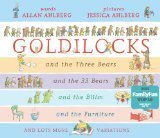

The Goldilocks Variations: A Pop-up Book
by Allan Ahlberg was released late last year when I was in the throes of other things. So this one has been sitting on my list for a while, unexplored and unknown. Then I started looking at it to share with you. Then I stopped everything and put it in my shopping basket and bought it immediately. I hope my copy is here by Thursday because I am quite eager to play with it. Anything that makes Goldilocks fresh and fun is an immediate success with me!
Book description:
A classic fairy tale is wittily retold by the celebrated Allan Ahlberg, with charming illustrations by his daughter, Jessica Ahlberg.
Everyone knows what happened when Goldilocks met the three bears. But when she encounters a whopping thirty-three bears, the strange-talking Bliim, or even three little pigs, the stories end a bit differently. Lift the flaps and pull the tabs to join Goldilocks in a hilarious series of adventures, as award-winning storyteller Allan Ahlberg and his daughter, Jessica, put their own stamp on the timeless tale.
Now really, in order to get the full effect of this book, it must be seen in person. Flat photos don't do it justice. But the next best thing is video! And, lucky us, there is one: (Beware, you will want to own it, too!)
New Book: Twisted Fairy Tales by Maura McHugh
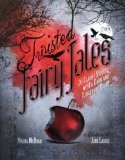

Twisted Fairy Tales
by Maura McHugh is shipping now although its official release date is February 1st. Haven't seen this one in person, but I'm sure it will appeal to many readers here.Book description:
Twisted Fairy Tales is a brand-new anthology of very old tales—but tales with gothic twists of plot guaranteed to astound and terrify even the most fearless readers. These re-told stories include—
Snow White
Rapunzel
Little Red Hood
The Cinder Wench
Beauty and the Beast
Pinocchio
The Goose Girl
The Pied Piper of Hamelin
and twelve more
Well-known tales get gruesome revisions—in many cases bringing them closer to the dark, sinister ways they were told eons ago. Several tales in this book are based on chilling versions collected by the brothers Grimm in the nineteenth century. For example, this new collection presents a Cinderella who, like the heroine in the brothers Grimm story, is known as the Cinder Wench. In this version, readers will discover a young lady tormented by a stepmother who is far more wicked and frightening than the villain we find in most of today’s watered-down renditions. All who relish the macabre atmosphere that dominates the Cinder Wench’s tale will want to acquaint themselves with all stories in this scary collection. They’ll find—
20 sinister legends that linger on the mysterious and macabre
Brooding illustrations on every page that heighten the gothic mood
Tales that anticipate new television shows, as well as new movies scheduled for release in the coming year Twisted Fairy Tales is an anthology of black magic legends that only the bravest young readers will dare to delve into before bedtime. But once they open this unusual volume, they won’t put it down until they’ve reached the very last page. (Ages 11 and older)
Here are images of the Table of Contents:
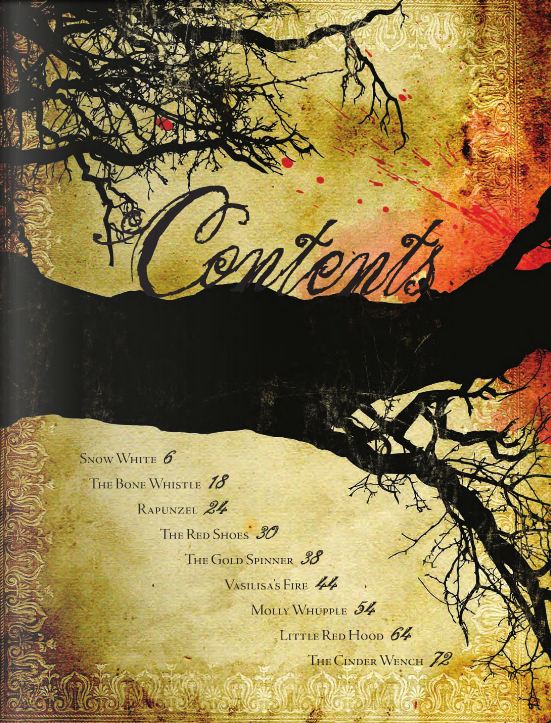

You can peek inside the book at the publisher's site, too.
Cinderella, Perrault, Glass Slippers, Carriages, Etc.


It's time! I'm done with early Cinderellas! Time for a little more discussion of Perrault so we can somewhat forget about him again for a while. Because after this--and perhaps a quick side trip to the Grimms--we can start discussing the quirky, strange, unusual, sad and entertaining Cinderellas. If I can remember them all....
From my book, Cinderella Tales From Around the World
:Charles Perrault’s influence over the popularity of Cinderella cannot be overstated. His “Cendrillon; ou, La petite pantfoufle de verre,” commonly known as Cinderella in English, is the most recognized version of Cinderella in the modern world. His fairy godmother, pumpkin carriage, and glass slippers have inspired countless renditions of the tale in print, theatre, music, and art since its publication. His version of ATU 510B Donkeyskin is not as well known but it, too, is one of the dominant versions of that tale type and remains popular in France today although its incest theme has caused it to be often suppressed in other countries.
While we can only conjecture about which oral and literary versions of Cinderella inspired Perrault, there is no doubt he left his literary stamp on the tale when he published it for the first time in Histoires ou contes du temps passé in 1697. Perrault, influenced by the French salons and the fairy tale writers of the late seventeenth century, added descriptive flourishes, romance, and humor to the story.
While the events in his tale are not unique, Perrault most likely invented the glass slipper—there is no trace of it before his version—perhaps as an ironic device since it is a fragile thing and perhaps as simply genius creative license for it has become the iconic symbol of the fairy tale, even surpassing Perrault’s transformed pumpkin carriage as shorthand for the story. The glass slipper has been the cause of much speculation and debate over the years, including a prevalent, albeit erroneous theory, that the glass was a mistake, a confusion between the French verre (glass) and vair (squirrel fur), since fur slippers are not as fantastical, but altogether realistic. In 1841, Honoré de Balzac popularized, perhaps even created the theory, and it has remained popular ever since despite many inherent issues within it, such as its dismissal of Perrault’s own adept literacy. The theory also negates Perrault’s interest in the fantastic and magical, discounting his brilliant creativity. Although the translation error theory has been dismissed by scholars since the 19th century, it continues to appear in popular media all too often today.
Perhaps the most regrettable element of Perrault’s Cinderella is her level of passivity. The known Cinderellas that preceded her were less passive, as are most of the lesser known variants from all around Europe which postdate her. His Cinderella is rewarded for practicing goodness, obedience, and patience by primarily waiting to be rescued, often in tears. She does little else to help herself. Her character has served as a rallying point for modern audiences who want to label fairy tales as anti-feminist or teaching outdated values for women. And yet the majority rules, so Cinderella, in this iteration, remains the most popular when there are literally hundreds of others to choose instead.
Perrault’s fairy godmother is also his own interpretation of the magic helper, not a unique invention, but another element dosed with his storytelling flair, one certainly rounded out by the French literary salons he frequented, especially that of his niece Marie-Jeanne L’Héritier de Villandon and her friends, including Marie Catherine d’Aulnoy. Both of these women wrote tales with Cinderella motifs, “The Discreet Princess; or the Adventures of Finette” and “Finette Cendron.” Since it diverges further from Cinderella traditions and is overlong, L’Héritier’s story is not included in this collection, but d’Aulnoy’s Finette Cendron is. Both tales can also be found in Beauties, Beasts and Enchantments edited by Jack Zipes (1989). All of these tales were originally published within a few years of each other, but their exact timelines and the extent of the collaborations between the authors are unknown. However, their existence illustrates the popularity of the Cinderella motifs during this period in history.
And really, it is quite simply stunning how much Perrault's version has defined Cinderella in popular culture for decades, if not centuries. His usages are iconic in our culture. Really have to credit him for capturing the imagination of countless people across generations and cultures, don't we?
January 28, 2013
2013 William C. Morris Award: Seraphina by Rachel Hartman
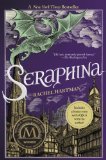

Today is ALA Awards Day! And they just announced the William C. Morris award for first time YA author Rachel Hartman for her book, Seraphina
. Congrats! And obviously a highly recommended book that many readers here will enjoy if they haven't already.Book description:
In her New York Times bestselling debut, Rachel Hartman introduces mathematical dragons in an alternative-medieval world to fantasy and science-fiction readers of all ages. Eragon-author Christopher Paolini calls them, "Some of the most interesting dragons I've read in fantasy."
Four decades of peace have done little to ease the mistrust between humans and dragons in the kingdom of Goredd. Folding themselves into human shape, dragons attend court as ambassadors, and lend their rational, mathematical minds to universities as scholars and teachers. As the treaty's anniversary draws near, however, tensions are high.
Seraphina Dombegh has reason to fear both sides. An unusually gifted musician, she joins the court just as a member of the royal family is murdered—in suspiciously draconian fashion. Seraphina is drawn into the investigation, partnering with the captain of the Queen's Guard, the dangerously perceptive Prince Lucian Kiggs. While they begin to uncover hints of a sinister plot to destroy the peace, Seraphina struggles to protect her own secret, the secret behind her musical gift, one so terrible that its discovery could mean her very life.
Early Cinderellas: King Leir and Cordelia
From my book, Cinderella Tales From Around the World
:The story of King Leir and his daughter Cordelia found in Geoffrey of Monmouth's Historia Regum Britanniae (History of the Kings of Britain), circa 1136, is one of the earliest recorded versions of a Cinderella variant in the British Isles. A translation of Monmouth is available in this collection.That date, if you accept Cordelia as a Cinderella, makes the tale one of the earliest European versions, predating the ones I have discussed over the last several days from other countries. It is interesting to me just how popular the 510B Cinderellas are in the U.K. with many variants recorded during the 19th century. From 1136 to 1606 to the 19th century, that is a long-lived tale. Yes, Shakespeare helped it along, but it appears to have had a pretty good life of its own through the many variants although we can only speculate.
The story served as inspiration for William Shakespeare’s play, King Lear, written around 1603-1606. The story is an ATU 510B and ATU 923 Love Like Salt variant. Although Shakespeare’s play is not included in this anthology, prose retellings of the play are offered instead.
Perhaps thanks to the antiquity of the King Lear story and the Shakespearean influence, the tales of Cap o’ Rushes and Catskin, both ATU 510B, are popular tales in the British Isles with numerous variants recorded.
And while we are here today with early English Cinderellas, I can also highly recommend The Adventure of English
 on DVD. I watched the first few episodes of this one night, begging my family's indulgence, while I was working on Cinderella, coincidentally while I was working on the English versions of the tale. Geoffrey of Monmouth appears in the history and it was fascinating to watch along with everything else. There isn't a folklore slant to the series, but it fits so well with much of my reading and research that my brain went several directions. Language, particularly English, is just so fascinating and this well done series sells it as such. And my family, groaning when we started it, was all still awake a few hours later and we had a lively discussion of what we had seen. I took courses on the topic in college but this was an interesting refresher with new material well presented to me, too. Loved it actually! I had purchased it on whim during a sale and don't regret the purchase at all.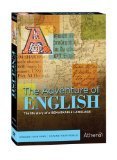
January 27, 2013
Early Cinderellas: Martin Montanus
From my book, Cinderella Tales From Around the World
:One of the earliest known Cinderellas in Germany appears as “Ein schöne history von einer frawen mitt zweyen kindlin” in Gartengesellschaft by Martin Montanus in 1560. Gartengesellschaft is a collection of tales, many very bawdy, which has not been translated fully into English. Unfortunately, a translation of the tale was not available for this collection. The tale is typed as ATU 511.
And that's still just about all I know about this tale. I didn't readily find a usable edition of it--my German is not that reliable for something this old with its particular vernacular either. I'm a Romance languages gal despite the German name bestowed by my heritage. (Someday ask me about my aborted attempt at taking German during my last semester as an undergrad. The short version is that dropping German started a chain of events that found me married to John. Since I am celebrating 16 years with him this month, I can't regret the German class too much! And my marriage to him is one reason why SurLaLune Fairy Tales exists, too, so neither can you, dear readers.)
I admit, I am still curious about this tale, mostly because of what I did read in English translation about Montanus, especially in this article, Martin Montanus as Entertainer and Social Critic by Albrecht Classen, available online. One tale in particular--not a Cinderella!--in the article is fascinating, to me at least, but be warned it may be offensive to some readers. And if it is, do not read the full article about Montanus, for this tale is only scatological, not sexual, like many of his others. But here's some unusual reading for you:
In another story Montanus combines the epistemological with the scatological, which results in rather grotesque laughter, but this in turn reveals a fundamental truth about human language. In "Ein fraw fragt ihren man, wie lieb er sie hett" (no. 54) the wife of a nobleman tortures him day and night with the question how much he is in love with her. Finally, when he has gotten tired of her incessant badgering, he replies that he loves her as much as a "guot oder haimlich scheyssen" ["a good or secret emptying of the bowels"] (304). For her, of course, entirely baffled by this strange comment, this amounts to a severe insult, and she feels deeply saddened and also angry with him. One day, however, while they are spending time together exchanging tenderness despite her feeling of rejection, she needs to go to the bathroom, which he tries to prevent. He holds her back for such a long time that she finally protests and breaks out in anger: "Ey lieber, lasst mich doch gehn! Ich muoss (mit gunst zuomelden) scheyssen" ["Now, my dear, let me go, I have (with your permission) to shit"] (304).20 This is exactly the situation that he had been looking for in order to explain to her what he meant by his original comment. He points out to her that the use of the bathroom is an existential need of all people. In analogy, and this must have been the moment when the audience broke out in laughter, he cannot live without her just like he cannot live without emptying his bowels -- both fundamental conditions for him, hence also for her: "als lieb dir solches ist, als lieb hab ich dich" ["as much as you love it, so much do I love you"] (304). In the epimythion we are then told that this simile opened her eyes, and from then on she loved him as much as he loved her.
The humor is obviously based on some scatological elements, but the difference from Till Eulenspiegel with its extraordinary focus on feces in a plethora of ever-changing contexts and situations cannot be overlooked. In contrast, Montanus refers to the basic needs in human life without exploiting the possibility of transgressing social and ethical norms by way of scatology. However, insofar as the audience would have immediately understood what imagery he has the husband play on in order to explain his mysterious statement, they can all join in the laughter because it goes hand in hand with an epistemological illumination: "Da erkant die fraw erst..." ["Only then did the woman realize..."] (304). The narrative does not imply any clear strategy to satirize or to ridicule the woman because of her gender. On the contrary, the couple enjoys a happy, love-filled marriage in which both respect and cherish each other, except that she is excessively concerned with getting explicit confirmation of his love for her, perhaps because of her own insecurity, but certainly because she does not understand how to trust his words.
Although he finally describes his love for her in scatological terms, he truly loves her, as she grasps only at the end, which specifically points us into the direction of language in its problematic nature, so easily subject to misunderstanding. The minor marital conflict finds its lasting solution at the end once both have discovered ways to communicate with each other in a more complex manner, no longer needing to explain every little detail or aspect of their emotions. The laughter supports, of course, the witty husband and his sophisticated though somewhat scatological language, but the wife is not necessarily a victim; instead the laughter also evokes sympathy and support for a good marriage where the mutual understanding is so strong that further inquiries are no longer necessary.
And doesn't that make you curious about his Cinderella? The above described tale even has a whiff of Love Like Salt Cinderellas, but it isn't a Cinderella tale, obviously. Can't you just imagine such a Cinderella tale though? "Father, I need your love like I need to poo." He is offended--that makes more sense to be offended by than a salt reference. She is banished and finds her prince to marry. Then they fail to have port-a-potties around when he attends her wedding after adding some laxatives especially to his food. A lesson never to be forgotten, to be sure!
Have Iamused you enough? Are these Cinderella blog posts still boring you?
Anyway, I'm sure I (or we) can learn more about Montanus from several of the wonderful German fairy tale scholars out there, but when the Cinderella book was already overfull, I decided to put this tale on the backburner and let it simmer. Until today! Even if my brain was obviously creating lively scenarios late at night when I was punchy and reading this stuff.
And in the end, Montanus's Cinderella is probably the most boring tale in his collection. But I don't know--yet!
January 26, 2013
The Book Rat's Video Review of The Princess Curse by Merrie Haskell
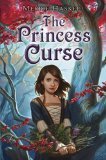

Misty at The Book Rat has an enthusiastic video book review of The Princess Curse
by Merrie Haskell for her #FridayReads this week. If you haven't read this one yet, she'll probably convince you to pick it up. And then you'll want to watch for her review of Caroline Turgeon's Godmother: The Secret Cinderella Story which she says is coming soon.
Bargain Ebook: Tigerheart by Peter David
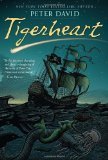

Tigerheart
by Peter David is a today only price drop to $2.99. This should appeal to many readers here so I thought I'd share.For all readers who have ever lent an enthusiastic ear to a wonderfully well told tale, or tumbled gladly into pages that could transport them anywhere, now comes novelist Peter David’s enchanting new work of fantasy. Action-packed and suspenseful, heart-tugging and wise, it weaves a spell both hauntingly familiar and utterly irresistible for those who have ever surrendered themselves to flights of fancy, and have whispered in their hearts, “I believe.”
Paul Dear is a good and clever boy, doted on by a father who fills his son’s head with tall tales, thrilling legends, and talk of fairy-folk, and by a mother who indulges these fantastic stories and tempers them with common sense. But Paul is special in ways that even his adoring parents could never have imagined. For by day, in London’s Kensington Gardens, he walks and talks with the pixies and sprites and other magical creatures that dwell among the living–but are unseen by most. And at night in his room, a boy much like himself, yet not, beckons to Paul from the mirror to come adventuring. It’s a happy life for Paul, made all the more so by the birth of his baby sister.
But everything changes when tragedy strikes, and Paul concludes that there’s only one course of action he can take to dispel the darkness and make things right again. And like countless heroes before him, he knows that he must risk everything to save the day.
Thus begins a quest that will lead Paul down the city’s bustling streets, to a curio shop where a magical ally awaits him, and launches him into the starry skies, bound for a realm where anything is possible. Far from home, he will run with fierce Indian warriors, cross swords with fearsome pirates, befriend a magnificent white tiger, and soar beside an extraordinary, ageless boy who reigns in a boundless world of imagination.
Brimming with the sly humor and breathless excitement of a traditional Victorian bedtime story, deftly embroidered with its own unique wisdom and wonder, Tigerheart is a hymn to childhood’s happiness and heartbreak, a meditation on the love, courage, sacrifice, and faith that shape us and define our lives, and a splendidly rendered modern fable–for readers of any age–that brilliantly proves itself a worthy brother to the timeless classic that serve as its inspiration.
Bargain Ebook: My Very UnFairy Tale Life by Anna Staniszewski
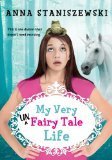


My Very UnFairy Tale Life
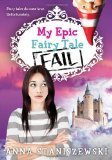
by Anna Staniszewski is temporarily down to $1.99 in ebook format, usually closer to the paperback price of $6.99. It's been on my alert list, so I snatched it up. And, yes, the price drop is in anticipation of the sequel's release, My Epic Fairy Tale Fail (My Very UnFairy Tale Life), in March.Book description:
"You know all those stories that claim fairies cry sparkle tears and elves travel by rainbow? They're lies. All lies." Twelve-year-old Jenny has spent the last two years as an adventurer helping magical kingdoms around the universe. But it's a thankless job, leaving her no time for school or friends. She'd almost rather take a math test than rescue yet another magical creature! When Jenny is sent on yet another mission, she has a tough choice to make: quit and have her normal life back, or fulfill her promise and go into a battle she doesn't think she can win.
And some quotes from review sources (this isn't self-published):
"Staniszewski's debut is a speedy and amusing ride that displays a confident, on-the-mark brand of humor, mostly through Jenny's wisecracking narration...the inventive and lighthearted premise will keep readers entertained."-Publisher's Weekly
"A light comic romp...Staniszewski pitches her writing to a middle-school audience in her debut, emphasizing comedy along with non-threatening suspense, and keeps the tone chatty and frothy...[Audiences will] easily will identify with Jenny. Charming."-Kirkus
Amazon.com Widgets
Heidi Anne Heiner's Blog

- Heidi Anne Heiner's profile
- 44 followers
Heidi Anne Heiner isn't a Goodreads Author
(yet),
but they
do have a blog,
so here are some recent posts imported from
their feed.

