
Heidi Anne Heiner's Blog, page 130
January 15, 2013
Not Really a Cinderella Type: ATU 480 The Kind and the Unkind Girls
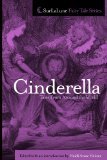

Okay, so I had to devote a little time to a non-Cinderella tale in Cinderella Tales From Around the World
. The type is ATU 480 The Kind and the Unkind Girls.From my introduction to the book:
ATU 480 The Kind and the Unkind Girls
Finally, it is important to briefly discuss another tale type, ATU 480 The Kind and the Unkind Girls, which is not generally considered a Cinderella tale but is often designated as one in popular publications, especially children’s picture books. This tale type has numerous variants—-it may even rival Cinderella in number—-although the range in motifs is narrower than in the Cinderella Cycle. Only one extensive study of the tale type has been published, The Tale of the Kind and Unkind Girls by Warren E. Roberts, in 1958. The type has a persecuted heroine and a royal marriage, but it does not usually include disguises, an identifying object, or even a magical helper in the style of Cinderella tales. Once again, one of the best known versions of the tale can be found in Perrault’s work, this time a tale called The Fées (The Fairies) but more commonly known as Diamonds and Toads in English translations. Another popular version is the Grimms’s Frau Holle (Mother Holly). One of the earliest recorded versions appears in Giambattista Basile’s Il Pentamerone circa 1630 as The Two Cakes, but elements of it appear even earlier in The Old Wives’ Tale by George Peele in 1595.
A young woman is persecuted by her mother and sister and given the menial labor of the house. When she is sent on an errand away from home, she encounters opportunities to serve others, which she cheerfully does without complaint. A fairy or other magical being rewards her generosity and goodness with the blessing that jewels and gold will fall from her mouth whenever she speaks, combs her hair, etc. Upon returning home, her mother witnesses the good fortune and decides to send the favored daughter on the same path so that she will receive the same blessings by doing the same work. However, the ill-natured daughter complains and either performs the tasks terribly or not at all. The fairy then punishes her so that snakes and lizards will fall from her mouth whenever she speaks. A prince meets the good daughter and decides that her ability to produce riches merely through speech is a more than adequate dowry, so he marries her. The unkind daughter eventually dies, either bitten by one of the snakes, living as a societal outcast, or killed in some other way for her nastiness.
These ATU 480 tales directly compare the two opposite sisters and have them receive rewards based upon their behaviors, a much less subtle and more didactic message of goodness rewarded. The meeting with the prince is usually a minor part of the story and only a final reward for her goodness, not a major plot device. However, similar story elements often appear in both these tales and Cinderella tales, thus blurring the lines between the tale types.
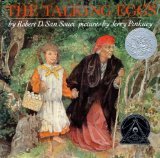

That about covers it without belaboring the point. For example, The Talking Eggs
by Robert D. San Souci and Jerry Pinkney, a picture book, is often offered in curriculm and discussions a Cinderella tale. Technically no. And I put the tale it was derived from, also The Talkings Eggs, in Cinderella Tales From Around the World to make that point. I love the book. I love the tale. It can make an interesting classroom discussion and I am not fighting it for classroom use. I want it there! But it's not a true Cinderella.If I keep my health and my years-long plan--there's a spreadsheet!--I will do a Kind and Unkind Girls book collection and perhaps three people will buy it. It will easily be a 828 page book, too. There are hundreds of this ATU 480 tale type. And they are much more similar to each other than the Cinderella tales which are really quite dissimilar as you've seen from this multi-day discussion.
But to be sure, some of the Cinderellas share many elements with Diamonds and Toads and its variants so the confusion is understandable. A few rare tales could be typed as both, but not often.
And an assumed Cinderella tale markets so much better to a general book-buying audience than "It's a Kind and Unkind Girl tale!" That practically begs for low sales numbers, doesn't it? And adults grow bored with this tale and its didacticism. But young kids love it because it's just so very FAIR. How often is life really fair after all? Even in fair-y tales?
Tomorrow: No more tale types discussion and on to some Cinderella history. Earliest Cinderellas, anyone?


January 14, 2013
Step Into Our Fairytale...at Weather.com

If you haven't checked Weather.com today--I don't most days, but hey freezing rain! and I'm ready for either snow or sun or both!--you may go and see photos of Most Beautiful Snow-Covered Castles. Their promo, not mine. But they are beautiful.
New Book: Jewish Fairy Tale Feasts: A Literary Cookbook
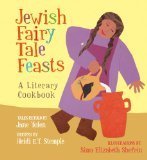

Be quick! Jewish Fairy Tale Feasts: A Literary Cookbook
retold by Jane Yolen; recipes by Heidi E.Y. Stemple; illustrations by Sima Elizabeth Shefrin is back in stock at Amazon. It has been mostly out of stock since its release date a week ago so I haven't talked about it yet here. I was also looking for a table of contents and didn't find it. It has to be somewhere--I just haven't found it with an easy search, all I have time for these days. Anyway, I'm not Jewish but I enjoy Jewish folklore and realize that a goodly portion of my larger folklore purchases the past year have been Jewish folklore related. I'll need to write more posts on The Heart Is a Mirror: The Sephardic Folktale (Raphael Patai Series in Jewish Folklore and Anthropology)
 and the three volume set starting with Folktales of the Jews, Vol. 1: Tales from the Sephardic Dispersion
 . So much so that I have been acquiring the three volumes, still need the first one because I always seem to work in reverse. I started with the third volume thanks to Cinderella and other research. All are wonderful books, some of the best I've used when it comes to Jewish folklore. When I get a chance to splurge again, I'll acquire it.
But this is about much lighter and edible reading. So onto the book description:
Master storyteller Jane Yolen and her daughter Heidi Stemple have teamed up to bring the magic of their acclaimed Fairy Tale Feasts to the time-honored and delicious traditions of Jewish storytelling and cuisine. Here you’ll find Yolen’s dynamic, enchanting retellings of Jewish tales from around the world paired with Stemple’s recipes—for everything from challah to matzo brei to pomegranate couscous, tzimmes chicken, and rugelah, in creative versions of classic dishes that any family will delight in cooking together. And Jewish Fairy Tale Feasts is more than collection of stories and recipes: Yolen and Stemple imagine their readers as co-conspirators. Throughout they share fun facts and anecdotes about the creation of the stories and the history of the dishes, designed to encourage future cooks and storytellers to make up their own versions. Readers of all ages will learn about Jewish folktales, culture, and cooking, all the while captivated by the humor and wisdom of these enduring stories (and ready to eat!).
All the stories have been retold by the amazingly prolific Jane Yolen, who has been called “America’s Hans Christian Andersen.” She is the distinguished author of over 200 books, including Fairy Tale Feasts, Owl Moon and Devil’s Arithmetic. Born and raised in New York City, Jane Yolen now lives in Hatfield, Massachusetts. She attended Smith College and received her master's degree in education from the University of Massachusetts. Jane Yolen is a person of many talents. When she is not writing, Yolen composes songs, is a professional storyteller on the stage, and is the busy wife of a university professor, the mother of three grown children, and a grandmother. Active in several organizations, Yolen has been on the Board of Directors of the Society of Children's Book Writers and Illustrators, was president of the Science Fiction Writers of America from 1986 to 1988, is on the editorial board of several magazines, and was a founding member of the Western New England Storytellers Guild, the Western Massachusetts Illustrators Guild, and the Bay State Writers Guild. For twenty years, she ran a monthly writer's workshop for new children's book authors. In 1980, when Yolen was awarded an honorary Doctor of Law degree by Our Lady of the Elms College in Chicopee, Massachusetts, the citation recognized that “throughout her writing career she has remained true to her primary source of inspiration--folk culture.” Folklore is the “perfect second skin,” writes Yolen. “From under its hide, we can see all the shimmering, shadowy uncertainties of the world.” Folklore, she believes, is the universal human language, a language that children instinctively feel in their hearts. All of Yolen's stories and poems are somehow rooted in her sense of family and self. The Emperor and the Kite, which was a Caldecott Honor Book in 1983 for its intricate papercut illustrations by Ed Young, was based on Yolen's relationship with her late father, who was an international kite-flying champion. Owl Moon, winner of the 1988 Caldecott Medal for John Schoenherr's exquisite watercolors, was inspired by her husband's interest in birding. Yolen's graceful rhythms and outrageous rhymes have been gathered in numerous collections. She has earned many awards over the years: the Regina Medal, the Kerlan Award, the World Fantasy Award, the Society of Children's Book Writers Award, the Mythopoetic Society's Aslan Award, the Christopher Medal, the Boy's Club Jr. Book Award, the Garden State Children's Book Award, the Daedalus Award, a number of Parents' Choice Magazine Awards, and many more. Her books and stories have been translated into Japanese, French, Spanish, Chinese, German, Swedish, Norwegian, Danish, Afrikaans, !Xhosa, Portuguese, and Braille. With a versatility that has led her to be called "America's Hans Christian Andersen," Yolen, the child of two writers, is a gifted and natural storyteller. Perhaps the best explanation for her outstanding accomplishments comes from Jane Yolen herself: “I don't care whether the story is real or fantastical. I tell the story that needs to be told.”
Cinderella Type: ATU 510B and 923 Love Like Salt
The fifth (and final!) Cinderella tale type in Cinderella Tales From Around the World
is ATU 510B and 923 Love Like Salt.ATU 510B and 923 Love Like Salt
Love Like Salt, while deceptively simple, can be more complicated in its classification under the ATU system with many tales often classified as both ATU 510B and ATU 923 depending on the events in the often short tale. Some of the earliest documented appearances of this tale include Geoffrey of Monmouth’s Historia Regum Britanniae from the 12th century and Shakespeare’s King Lear circa 1608.
A wealthy man, usually a king, asks his three daughters how much they love him. The two eldest answer with over effusive descriptions, comparing their love to precious items which also reveals their greedy natures. The third daughter states that she loves him as much as she loves salt. The other daughters are richly rewarded for their flatteries. Offended by the comparison to a common item, he banishes the youngest daughter from his kingdom or even orders her put to death, but she escapes. She finds work as a servant in another realm. Through various events similar to those in other ATU 510B variants, the prince falls in love with her and marries her. The father is invited to the wedding feast where his meal is specially prepared without any salt. He soon realizes the importance and preciousness of salt and bemoans the loss of his daughter. She is revealed to him and all is forgiven. When a magic helper as well as an identifying object appear in the tale, it is classified as ATU 510B. A lack of those elements usually makes it a straightforward ATU 923 tale.
This is the most confusing of the tale types. Not about it being a Cinderella variant but that there are two ATU numbers for this type of tale and delineating between them ended up being more than I wanted to do so I included both ATU 510B and 923 tales. This type of tale tends to be short. Unless you're Shakespeare and have written an entire play based on the plot devices....
Lord Buchan and Stormy Times
 The Old Book by William Merritt Chase
I take it to be a great advantage, that one can amuse one’s self with an old idle story in these stormy times.--Lord Buchan
Lord Buchan was an early folklorist, who gathered tales in Scotland primarily around the 1830s. Some of the tales he collected, as well as this quote, can be found in his Ancient Scottish Tales, available for reading online. You can read more about his contributions at Peter Buchan, and other papers on Scottish and English ballads and songs (1915).
Anyway, I enjoyed reading that Buchan found joy in folklore as a balm to his own modern times almost 200 years ago. Another reminder, as folklore is itself, that the human condition has always been a challenge.
January 13, 2013
Cinderella Type: ATU 511 One-Eye, Two-Eyes, Three-Eyes
The fourth Cinderella tale type in Cinderella Tales From Around the World
is ATU 511 One-Eye, Two-Eyes, Three-Eyes. To me, this is the weirdest one, folks. From my intro:
ATU 511 One-Eye, Two-Eyes, Three-Eyes
This is a less common Cinderella, although much more common than The Princess in the Chest. One of the best known versions of this tale is the Grimms’ Einäuglein, Zweiäuglein und Dreiäuglein, usually translated as One-Eye, Two-Eyes, Three-Eyes. One of the earliest appearances of this tale can be found in Germany in Das Ander Theyl der Gartengesellschaft by Martin Montanus circa 1560, but this version is not included in this collection. Although male Cinderellas are not discussed in this volume due to space constraints, most male Cinderellas, or Cinderlads, fall into this tale type classification.
A girl with a stepmother and three stepsisters is made to watch the family’s cattle and spin flax. She survives on a bare subsistence of food provided by her family. She shares her sorrows with one of the cows (or a bull or a goat) who gives her food, provided by pulling it out of its ears, and helps her with her work. The stepmother, suspicious of the girl’s improving health, sends each of her daughters—one has one eye, the next has two eyes and the last has three eyes—to spy upon the girl. The girl lulls the first two sisters to sleep but forgets about the last sister’s third eye which observes the cow’s assistance and reports to the stepmother. The stepmother has the cow slaughtered and the girl, upon the cow’s last instructions, refuses to eat the meat and buries the bones. A tree grows from the bones and continues to assist her, bringing her to the notice of a prince who marries her. In some versions the girl flees with the cow before it can be slaughtered and passes through forests of brass, silver, and gold. The cow dies in the final forest and instructs the burial of its bones which help the girl eventually marry a prince.
For example: Me, personally, I don't care to eat anything I pull out of a cow/bull's ear. Or any ear. I'm not even big on ears of corn due to digestion issues. But she's hungry. We'll eat strange things if we are hungry enough, won't we?
And the whole cow/mother substitute is fascinating. Especially when it's a bull instead.
But I also like it because in part it reminds me of The Twelve Dancing Princesses with its forests of different precious metals.
This Cinderella also tends to be a little more saved than self-saving with the animal helpers. She's still not nearly as passive as our well-known Perrault version but there's a lot of tears that may annoy some readers. (My thoughts on tears in fairy tales, however, have expanded a lot since the paper last February at Harvard, “Empowered by Tears: Weeping in Grimm’s Fairy Tales” by Ariane Mandell. That was an excellent paper! Not that I've ever been anti-tears, for tears are present in many of the most important events of our lives, but Mandell was eloquent about their power and reminded me of my own feelings about them outside fairy tales. And reminded me to apply the same philosophy to fairy tales.)
January 12, 2013
Cinderella Type: ATU 510B* The Princess in the Chest
The third Cinderella tale type in Cinderella Tales From Around the World
is ATU 510B* The Princess in the Chest. This is by far the smallest subset but still stands out enough to earn its own tale type. The tale is closely related to 510B since many of those have the heroine hiding in a wooden dress à la Donkeyskin to escape her father's marital machinations, especially many Italian variants. Uusally the big difference between this version with the chest and the wooden dresses is that the father disposes of the chest himself, selling it when he cannot find his daughter, usually on their planned wedding day. The dress, however, becomes a disguise.Hiding in chests is fairly common in fairy tales--this device is also used in some Bluebeard variants, for example, to escape the murderous husband.
From my intro to the book:
ATU 510B* The Princess in the Chest
This tale in the Cinderella Cycle is the least common but still bears enough differences to receive its own classification. One of the earliest and best known versions can be found in Straparola’s Piacevoli notti (The Facetious Nights) circa 1550 and is commonly known as Doralice.
A king decides to marry his daughter and she requests a chest as one of her conditions for marrying him. She hides in the chest, virtually disappearing on her wedding day. Her father sells the chest and a prince from another realm acquires it. The prince stores the chest in his room where the princess emerges secretly to eat his food and perform other tasks while he is away. He discovers her and falls in love with her, keeping her presence a secret until his family finds her and sends her away. He falls sick upon her absence and receives food prepared by her hand with one of his rings hidden inside. He finds her by indentifying the ring—or other object—and marries her.
The present book’s organization does not break out this small subset of ATU 510B* The Princess in the Chest into its own section, but includes the few tales of this type in the larger ATU 510B section.
January 11, 2013
UK Bargain Ebook: The Woodcutter

I've posted The Woodcutter
as a bargain in the US--it's back up to $3.99 now, but it is currently $1.59 / £0.99 UK, by Kate Danley, as the Kindle Deal of the day for those in the UK. Unless it has already changed. Time changes and region blocks make it almost impossible for me to check.
Arnold Schwarzenegger and Grimms

TABS? Oh, boy, do I have tabs. I will do a clearing out my tabs post soon, but some of these I did want to give a full post. I'll be catching up over the next few days.
This was originally pointed out on Maria Tatar's blog, for those who read there, too, but deserved it's own shout out on SurLaLune:
From Arnold Schwarzenegger: By the Book:
What were your favorite books as a child? Did you have a favorite character or hero?
When I was young, we were constantly exposed to the works of Peter Rosegger, who was a hero in Styria, my home state. He wrote incredible stories with a focus on our region, so he was one of the favorites.
We also constantly read these terribly violent stories by the Grimm Brothers. I mean, the cleaned-up versions of these are nowhere near the horror stories we used to read. It’s no wonder my brother was a total scaredy-cat and afraid to walk home alone after you realize he had been exposed to the tales of the Grimm Brothers.
Cinderella Type: ATU 510B Peau d’Ane
The second Cinderella tale type in Cinderella Tales From Around the World
is ATU 510B Peau d’Ane.This is the tale type that shocks and awes, really. At first glance, it doesn't seem like a Cinderella tale at all. But it is! The elements are all there. And, when you start reading dozens and dozens of these, the elements cross contaminate between this tale type and ATU 510A to the point where it is hard at times to designate a tale as one or the other. This is true of all the Cinderella tale types, actually.
From the introduction:
ATU 510B Peau d’AneSo this tale involves incest and abuse and occasionally dealings with the devil. Uusally Donkeyskin escapes before the wedding to her father (or brother!), but on rare occasion, she doesn't. She wears smelly clothes made of skins, from cats to mice to louse to donkeys. She is abused by her future husband, too.
(The Dress of Gold, of Silver, and of Stars [Cap o’ Rushes])
Again, perhaps the best known version of this tale comes from Perrault, Peau d'Ane (Donkeyskin), published around the same time as his Cinderella. However, the English Catskin and the German Allerleirauh (All-Kinds-Of-Fur) are nearly as well known. The tale used to more widely known but has been ignored or rewritten in recent times to suppress the incest themes.
A father, usually a king, promises his dying wife to marry only someone as beautiful as her or someone who can wear her ring. The father searches everywhere and discovers his daughter is the only one who fulfills the stipulation. He declares he will marry her. Upon the advice of a helper, she demands impossible items before she will marry him, hoping to delay or prevent the wedding. The first is a dress like the sun (gold), the second a dress like the moon (silver), and the third a dress like the stars (diamonds). Finally she demands a cloak made of the king’s prize donkey which defecates gold or a similar outfit of animal skin which will provide a disgusting disguise for her escape and concealment. Once all of these are provided, she runs away with all of the garments and seeks employment as a servant in another kingdom while wearing the cloak of skins. The girl is considered one of the lowliest servants and is abused by the prince as she performs tasks for him. She secretly attends feasts or church wearing her beautiful dresses, causing the prince to fall in love with her. When asked from whence she comes, she gives mysterious answers that reference the abuse he dealt her, such as “Comb-throw.” He gives her a ring or other token and she disappears. When the prince grows inconsolably sick with love, the woman prepares him food with the token hidden within. He recognizes the token, reveals her true identity, and then they are married.
An important point here is that this Cinderella isn't passive. She seeks advice and takes it, but she isn't rescued. She makes hard, moral decisions, suffers the bad choices of others, although it's hard to think of her as a victim, and eventually triumphs. Triumphs with achieving a royal marriage, that is, even if her future husband likes to throw things at her. So you decide if that is a happy ending... Although, to be fair, there is the sense that she won't suffer that treatment once her royal status is revealed. Or so we hope.
These are not comfortable tales and it is not surprising that they have lesser visibility in modern times. But the tale has a rich, long history, and used to be better known in popular culture. Chapbook versions abound, for example. And in France, where Perrault's tales are all golden, the tale has not been suppressed as it has been since the Victorian age in English speaking countries. One of the cult classic films in France is a retelling of the tale. And so French children are more familiar with the tale, with toys, picture books and even jewelry to be found with the theme.
And Cinderella Tales From Around the World
offers over 110 variants of the tale. I'll be sharing some of my favorites in the coming days.
Heidi Anne Heiner's Blog

- Heidi Anne Heiner's profile
- 44 followers
Heidi Anne Heiner isn't a Goodreads Author
(yet),
but they
do have a blog,
so here are some recent posts imported from
their feed.

