
Heidi Anne Heiner's Blog, page 128
January 25, 2013
Early Cinderella: Basile's Il Pentamerone
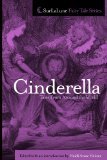


From my book, Cinderella Tales From Around the World
:Lo cunto de li cunti, overo Lo trattenemiento de ‘peccerille (The Tale of Tales, or Entertainment for Little Ones), also familiarly known as Il Pentamerone, by Giambattista Basile was first published posthumously in 1634-6. The book is a collection of fifty tales told within a framework story. Many of the tales are early literary versions of popular fairy tales, two of which are part of the Cinderella Cycle, namely The Cat Cinderella (Day 1, Tale 6) and The She Bear (Day 2, Tale 6). The first is ATU 510A and the second is ATU 510B. Basile’s entire work has been rarely translated into English, but early translations of both tales are included in this collection. The Cat Cinderella is notable for its murderous, conniving Cinderella, a far cry from the virtuous innocent we know so well. For further reading and perhaps the most authoritative English translations, consult Nancy Canepa’s Giambattista Basile's “The Tale of Tales, or Entertainment for Little Ones” (2007). Despite the title’s implications, the book was not intended for a child audience but rather conveyed the “low class” or folkloric entertainment the tales emulated. While not as ribald as Straparola, much of the content would not be considered suitable for a modern children’s audience.
Yes, these tales are on the web--I was among the first people to put them there. They are on SurLaLune, and they are fascinating. And I highly recommend Canepa's translation with her notes and current scholarship.
Here we have Cinderella the Murderess. A naive one, but a murderess all the same. It's hard to be as sympathetic with her when she is the author of her own misery.
From Cenerentota or The Cat Cinderella:
"Well then," answered the governess, "open your ears and listen, and you will get bread as white as the flowers. When your father goes out, ask your stepmother to give you one of the old dresses that are in the large chest in the closet, in order to save the one you have on. Then she, who would like of all things to see you go in rags and tatters, will open the chest, and say, 'Hold up the lid !' and whilst you are holding it up, and she is rummaging about inside, let it fall with a bang, so as to break her neck. When this is done, as you know well enough that your father would even coin false money to please you, do you entreat him when he is caressing you to take me to wife; for then, bless your stars--you shall be the mistress of my life."
Then Zezolla heard this, every hour seemed to her a thousand years until she had done all that her governess had advised; and as soon as the mourning for the stepmother's death was ended, she began to feel her father's pulse, and to entreat him to marry the governess. At first the prince took it as a joke, but Zezolla went on shooting so long past the mark, that at length she hit it, and he gave way to her entreaties. So he took Carmosina (that was the name of the governess) to wife, and gave a great feast at the wedding.


January 24, 2013
Bargain Ebook: Reckless (Mirrorworld) by Cornelia Funke


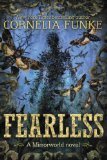

Reckless (Mirrorworld)
by Cornelia Funke is temporarily bargain priced at $2.99 in ebook format. This is in anticipation of its upcoming sequel, Fearless (Mirrorworld), due out in April.And for those of you who prefer hardcover, that is currently discounted to $8.00, too.
Book description:
Ever since Jacob Reckless was a child, he has been escaping to a hidden world through a portal in his father's abandoned study. Over the years, he has made a name for himself as a finder of enchanted items and buried secrets. He's also made many enemies and allies--most important, Fox, a beautiful shape-shifting vixen whom Jacob cares for more than he lets on.
But life in this other world is about to change. Tragedy strikes when Jacob's younger brother, Will, follows him through the portal. Brutally attacked, Will is infected with a curse that is quickly transforming him into a Goyl--a ruthless killing machine, with skin made of stone.
Jacob is prepared to fight to save his brother, but in a land built on trickery and lies, Jacob will need all the wit, courage, and reckless spirit he can summon to reverse the dark spell--before it's too late.
Or as School Library says, "Funke takes readers on a new adventure into a magical place where the dark side of fairy tales holds sway."
Amazon.com Widgets
New in the SurLaLune CafePress Store

So a few weeks ago hubby John was down sick with a bad cold and very bored but inspired. So I got these! New designs for the SurLaLune CafePress store. I am slowly adding them to the shop and editing and sizing the items that didn't auto populate well. But there are many items now great as they are. And if there is something you really like but that isn't formatted well yet, let me know and I will fix it sooner rather than later, no obligation.

I am calling this the "Fairy Tales Since Series." Yes, dates can be debated depending on which version you want, but I went with the dates of the best known versions of the tales. And I think they are fun!
Which is your favorite? I like them all, but the Rumpelstiltskin design is probably my favorite.
And which fairy tale would you like to see receive a treatment like this?









Available on Amazon: Marvelous Transformations: An Anthology of Fairy Tales and Contemporary Critical Perspectives
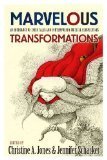

Marvelous Transformations: An Anthology of Fairy Tales and Contemporary Critical Perspectives
by Christine A. Jones (Editor)and Jennifer Schacker (Editor) is available on Amazon! This great book has been through some distribution issues--my original order was canceled and I had to order it direct from the publisher. Also, right now on Amazon it is part of the "Buy $25 or more in Textbooks, get a $5 Amazon MP3 Credit" deal, details are on the book page.So for those who like the convenience of bookstore shopping, it's on Amazon now despite worries it would not be there. I didn't know this until it appeared as a recommendation for another book I was browsing. I like being able to buy through online bookstores where I control my book budget with gift certificate buying, especially ebooks and easily track my purchasing. And my nearest bookstore is 15 miles away and not likely to have 98% of what I want these days anyway. For decades, I NEVER walked out of a bookstore empty handed. Now I rarely visit them and usually have nothing in hand. My last trip to Barnes and Noble in December resulted in a toy purchase for John, not a book at all.
Also, the book has a Facebook page you can visit.
You may also preview the introduction and Table of Contents in a PDF here.
Book description:
Marvelous Transformations is an innovative anthology of fairy tales and related criticism that reflects current, interdisciplinary scholarship on oral traditions and the cultural history of the fairy tale. In addition to the tales, original critical essays, newly written for this volume, introduce students to differing perspectives on key ideas in the field.
Bargain Ebook: My Unfair Godmother by Janette Rallison
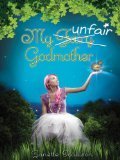



My Unfair Godmother
by Janette Rallison is on sale today only for $1.99 in ebook format. This is the first time this one has been discounted to my knowledge. It is the sequel to My Fair Godmother which has been discounted previously.Book description:
After her parents' divorce Tansy never really felt like her life got back to normal. And now that her too-busy parents and their respective new spouses don't seem to have time for her, Tansy has been sent to live with her semi-neurotic grandmother. After one incident involving a bad date, a can of spray paint, and the police, Tansy fears she is doomed for life. Enter Chrissy Everstar, Tansy's fairy in shining er... high heels. With three wishes to help set her life right, Tansy is taken along for a ride that includes Robin Hood and his Merry Men, who turn out to be trouble when they steal from the rich in her town. When the police chief's son, Hudson, sees Tansy hanging out with these fairy tale criminals, she'll have some serious explaining to do. That's if Tansy can find a way to stop spinning gold and undo the "help" that Chrissy has bestowed.
Amazon.com Widgets
Early Cinderella: Doralice in Italy
More of you weren't excited about Pernette yesterday? Oh well. I entertained John with her story as my enthusiasm for her was reawakened at least. Love that tale. But time for another one today...
From my book, Cinderella Tales From Around the World
:Le piacevoli notti, most often translated as The Facetious Nights or The Pleasant Nights, by Giovanni Francesco Straparola, was first published in two parts in 1550 and 1553. Little is known about Straparola—most likely not his real surname—but he is often called the “father (or godfather) of the literary fairy tale” since his Le piacevoli notti contains several tales that are precursors to later literary fairy tales. This is open to debate but nevertheless his work is an important click on any timeline of fairy tale history, for whoever the author and whatever his sources and methods, Le piacevoli notti gathers tales presented under the conceit that they were shared at a thirteen day festival in Venice, similar to the framing conceit of many collections around this era from The Decameron to The Canterbury Tales. They range widely in subject and style with many ribald and extremely violent elements. It has rarely been translated into English with one of the earliest English translators, W. G. Waters, translating some parts into French instead of English to protect the sensibilities of his readers.
The fourth tale of the first night is not titled, none of the tales are, but is familiarly known as either “Doralice,” “Tebaldo,” or “Doralice and Tebaldo.” Doralice, the heroine, has an incestuous father and the tale is considered an ATU 510B tale. It can also be further categorized as the less common ATU 510B* The Princess in the Chest. Waters’ translation of the tale appears in this collection under the title of Doralice and was fortunately considered tame enough to be rendered completely into English. Another excellent translation, “Doralice and Her Incestuous Father, Tebaldo,” with extensive commentary and resources can be found in The Pleasant Nights, Volume 1 by Giovan Francesco Straparola edited by Donald Beecher (2012). Beecher includes an overview of the possible inspirations for Doralice, as well as the tales that followed it, many of which are included in the present collection.
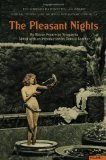



While we're here, I can rave about the Don Beecher volumes mentioned above: The Pleasant Nights: Volume 1 (Lorenzo Da Ponte Italian Library - The Pleasant Nights)
and The Pleasant Nights: Volume 2 (Lorenzo Da Ponte Italian Library - The Pleasant Nights). They were my SurLaLune splurge last year and I don't regret the purchase at all. (They're academically priced, alas!)The translation in these is based upon Waters (which you can find on SurLaLune) but updated and corrected. And the notes! Lovely, lovely notes and commentary on the tales. Worth the price of admission. I am consulting this regularly during my research. I only wish I had had these years ago.
January 23, 2013
Early Cinderellas: Of a Young Girl Nicknamed Peau d’Asne and How She Was Married With the Help of Small Ants
Okay, folks. This is one of my favorites! Even if you're bored with some of these--I promise I am going to focus on the strange and quirky and weird Cinderellas in the near future--this one should not be missed.
From my book, Cinderella Tales From Around the World
:One of the earliest known Cinderella variants recorded in Europe is “Of a Young Girl Nicknamed Peau d’Asne and How She Was Married With the Help of Small Ants” (D’une jeune fille sunommée Peau d’Asne, et comment elle fut mariée par le moyen que luy donnerant les petits formiz). It is often attributed to Bonaventure des Périers and was first published in 1568 in an expanded edition of his Nouvelles Récréations et Joyeux Devis, itself originally published in 1558. While its authorship is debated—the tale was likely not written by Des Périers—its first appearance in print is certain. The tale does not have every element to firmly classify it as an ATU 510B, but the persecuted heroine with her skin cloak, grain sorting task, and animal helpers is certainly recognizable. A new translation of the tale is included in this collection.
This is a little gem of a story and I had fun translating it for the collection. It is a mash-up of some ATU 510B Donkeyskin and ATU 510A Cinderella elements but still a unique version unto itself. Really. I know of no other one quite like this. Essentially, Pernette, a merchant's daughter, falls in love with a neighbor boy, a gentleman's son, and he with her. There's even mention of them talking and exploring their relationship, however brief.
When the son tries to arrange a betrothal, her whole family turns against her. Her mother hates her, "regrets ever carrying her in her womb," and her sisters are jealous of her. Her father is easily persuaded by them all and puts horrible stipulations on the marriage contract, hoping to discourage it.
Among the stipulations, the girl is forced to go naked except for wearing a donkeyskin in hopes she will be demoralized and that her lover will take disgust of her, too. On top of all that, the mother insists that Pernette pick up "from the earth, with her tongue, grain by grain, a full bushel of barley that would be spread for that purpose." Only then will the wedding be allowed.
Does this stop Pernette? Oh no, it doesn't!
Hearing these words, Pernette went to her father and asked him when he wanted her to begin the task. Her father, unable to honorably break his promise, fixed upon the day. She did not fail to arrive. While she gathered the grains of barley, her father and mother watched carefully to see if she’d pick up more than one at a time and thus release them from their promise. But as constancy has its rewards, along came a number of ants, crawling to where the barley was, that diligently helped Pernette (without being seen) until the place was soon empty.
By these means, Pernette was married to her beloved, who caressed and cherished her as she well deserved. It is true, that for as long as she lived, the nickname Peau d’Asne stayed with her.
I love it! That's a spunky Cinderella for you! From 1568! She earned her happily ever after and escaped a horrible family to a marriage where she appears to be valued for herself. That's something a girl in 2013 can appreciate, isn't it?
This is one I hope some artists rediscover and illustrate. It wouldn't make a very great picture book--but then again, I would adore it--with the horrible family scenarios, but it is charming.
January 22, 2013
New Book: Transgressive Tales: Queering the Grimms (Fairy-Tale Studies)
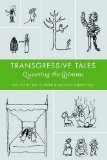

Transgressive Tales: Queering the Grimms (Fairy-Tale Studies)
edited by Kay Turner and Pauline Greenhill was released late last year but got lost in my shuffle. I usually receive review copies from Wayne State, but this one didn't arrive in my mailbox and I let it sit on my list while I waited to see at least a table of contents. Still haven't found one to share here, but I need to get the book off my list!Book description:
The stories in the Grimm brothers’ Kinder- und Hausmärchen (Children’s and Household Tales), first published in 1812 and 1815, have come to define academic and popular understandings of the fairy tale genre. Yet over a period of forty years, the brothers, especially Wilhelm, revised, edited, sanitized, and bowdlerized the tales, publishing the seventh and final edition in 1857 with many of the sexual implications removed. However, the contributors in Transgressive Tales: Queering the Grimms demonstrate that the Grimms and other collectors paid less attention to ridding the tales of non-heterosexual implications and that, in fact, the Grimms’ tales are rich with queer possibilities.
Editors Kay Turner and Pauline Greenhill introduce the volume with an overview of the tales’ literary and interpretive history, surveying their queerness in terms of not just sex, gender and sexuality, but also issues of marginalization, oddity, and not fitting into society. In three thematic sections, contributors then consider a range of tales and their queer themes. In Faux Femininities, essays explore female characters, and their relationships and feminine representation in the tales. Contributors to Revising Rewritings consider queer elements in rewritings of the Grimms’ tales, including Angela Carter’s The Bloody Chamber, Jeanette Winterson’s Twelve Dancing Princesses, and contemporary reinterpretations of both “Snow White” and “Snow White and Rose Red.” Contributors in the final section, Queering the Tales, consider queer elements in some of the Grimms’ original tales and explore intriguing issues of gender, biology, patriarchy, and transgression.
With the variety of unique perspectives in Transgressive Tales, readers will find new appreciation for the lasting power of the fairy-tale genre. Scholars of fairy-tale studies and gender and sexuality studies will enjoy this thought-provoking volume.
Contributors: Emilie Anderson-Grégoire, Cristina Bacchilega, Anita Best, Joy Brooke Fairfield, Andrew J. Friedenthal, Kevin Goldstein, Pauline Greenhill, Bettina Hutschek, Jeana Jorgensen, Kimberly J. Lau, Elliot Gordon Mercer, Margaret A. Mills, Jennifer Orme, Catherine Tosenberger, Kay Turner, Margaret R. Yocom
Early Cinderella: Helena of Constantinople
From my book, Cinderella Tales From Around the World
:Histoire de la Belle Hélène de Constantinople is an epic verse romance—prose editions also exist—from northern France in the 15th century or even earlier. It is a romantic fiction based on a real person who has been sainted in Orthodox and Roman Catholic traditions as Saint Helena. Since it was too long to include in this collection, two summaries of the story are offered instead which highlight the Cinderella motifs. The tale is also closely related to ATU 706 The Maiden Without Hands, another tale type with a father incest motif.
As with so many historical figures who become legends, many of the stories surrounding Helena of Constantinople are fiction, especially this story. You can read about Helena and follow more links about her at Wikipedia, of course. Besides being long, the original is antiquated French, not easy reading for those fluent in French.
Also, Helena's story falls more into the ATU 510B Donkeyskin classification than ATU 510A. She escapes an unwanted marriage and proceeds from there. Well, I can share the text from Cox's preface to Cinderella that details the story:
Still more intricate are the events related in the French version (alluded to above), published in quarto, at Paris, without date, under the title: Histoire de la belle Heleine de Constantinople, mere de St. Martin de Tours en Touraine et de St. Brice son frere. Heleine is the daughter of Antoine, king of Constantinople, who married the sister of Pope Clement IX. Heleine's mother dies when she is fifteen years old, and, after remaining a widower for a time, the king asks his brother-in-law for permission to marry Heleine, for there is none as lovely as she. This the Pope, at first, refuses, though he had undertaken to grant any request Antonius might make, in return for his help in repulsing the Saracens; but soon after he consents, in accordance with divine command, which an angel brings. But this authority avails him nothing, for when Antoine reveals his intentions to his daughter, she throws herself at his feet weeping, and protesting that she would rather out off her hands and feet than suffer it. Then follow the flight and various adventures. Counselled by a nun, Heleine escapes in a Flemish ship to Sluis (Port de l'Ecluse), where she enters a convent. Antonius, in his rage, takes ship after her, and sails through every sea of Europe in vain quest. She lives for many a year in her retreat, till Cantebron, King of Sluis, who has become enamoured of her, directs his body guard of Saracens to storm the convent and carry her to his seraglio. Heleine flees in a Spanish ship sailing to Catalonia. But the ship is wrecked, and all save Heleine perish, she being cast ashore on the English coast. King Henry of England, taking his pleasure on the sea, is astounded at her beauty and the richness of her attire, and he rescues her. His offer of marriage she accepts, though she declines to reveal her descent, and will only say that she is "la plus noble Damoiselle de la Chrétienté". The marriage takes place against the wish of Henry's mother. Once more the Saracens threaten Rome, and Pope Clement seeks the aid of the King of Great Britain. He gives it in person, leaving the Duke of Gloucester as regent, and confiding Heleine to his care. Then follows the birth of the children, which the mother, who waylays the messenger at Dover, pretends are dogs, and the fraudulent letters. The Duke of Gloucester cannot make up his mind to burn Heleine, as the false letter directs, so, after cutting off one of her arms, for some unexplained purpose, he puts her to sea. A niece of the duke's, named Marie, offers herself to be burned with two straw dolls in the place of the queen and her sons. The hand of the queen, which had been cut off, is put in a box, and hung round the neck of one of the children. The boat lands them in Brittany. Whilst Heleine sleeps, a lion and a wolf from the forest make away with her children. She seeks them in vain, wandering at length to the neighbourhood of Nantes, where she takes refuge in a deserted hut, and lives on the alms of the passers-by. A hermit saves the children, and calls one Lion and the other Arm (Bras). Meanwhile, King Henry has slain the Saracens, freed Pope Clement, and returned to London, to learn the sorrowful fate of his wife and children. He is still bewailing his misfortunes, when Antonius, King of Constantinople, who has never ceased seeking his daughter, arrives on the scene. The two kings sympathise with each other, and discover that they grieve for the same person. The Duke of Gloucester reveals the truth, and, convinced of the guilt of the queen-mother, the king orders her banishment. London being hateful to him, Henry joins the Kings of Scotland and Constantinople in the war against the heathen of Europe. They first vanquish Clovis, King of Bordeaux, who allows himself to be baptised, and then joins in the crusade. The hermit, meanwhile, has brought up the children, and when they are sixteen years of age he sends them forth to discover, if possible, their parentage. They come to Tours, where the archbishop himself receives them, and changes the name of Lion into Martin, and of Arm into Brice. Heleine, too, comes to Tours, and receives rich alms from Martin, who does not know her. And the four kings come to Tours, where the two promising youths are presented to them. When the King of England opens Brice's box and sees the hand, he is convinced that he has found his two sons. Martin seeks the poor, one-handed woman whom he supposes to be his mother; but, on the arrival of the kings, she had fled in alarm over the Alps to Rome. Here she is supported by the Pope, her unknown uncle. Brice is taken to London, there to make manifest the innocence of his mother, and then goes with the four kings to Palestine to fight against the Saracens, whilst Martin remains at Tours with the archbishop. When the Saracens are subdued the conquerors journey to Rome, whereupon Heleine flees to Tours, revealing in a letter to the Pope that she is his niece. The King of England learns through this letter that his wife is still living, and is at length reunited to her. The archbishop of Tours permits Martin to place his mother's severed hand on the stump, and the two are united by a miracle. Antonius, with Brice and his wife Ludiene, goes back to Constantinople, Henry and Heleine live with Clement in Rome, and Martin remains in Tours, where he becomes archbishop.
Cox's preface discusses several contenders for medieval Cinderellas actually. I won't be blogging about them individually and overall did not discuss them in my book. The connections can be tenuous and the texts are long. Helena is one of the stronger candidates so I did highlight her. But in my research, Cox still provides one of the best overviews of medieval materials in connection to a Cinderella discussion.
January 21, 2013
Early Cinderella: The Lay of the Ash Tree
From my book, Cinderella Tales From Around the World
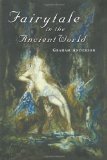
:Marie de France first wrote “The Lay of the Ash Tree” in the late 12th century. To read more about the story, also known as “Le Fresne,” and its relation to Cinderella, consult Graham Anderson’s Fairytale in the Ancient World (2000). In his book, Anderson points out several similarities between this tale and traditional Cinderella stories, including (1) a persecuted heroine in humble circumstances, (2) supernatural help, (3) meeting the hero at church, (4) ring and brocade tokens, and (5) token recognition and subsequent marriage to hero.It is rather surprising that this tale is discussed in Anderson's book since it is later than the "ancient world" but it makes for a compelling Cinderella argument.
The lays are lengthy but Wikipedia provides a sufficient plot summary:
Le Fresne begins with two wedded knights. The wife of one knight gives birth to twins, and upon hearing a message to that effect, the other wife declares that in order to have two children at one time, a woman must have slept with two men. Many consider this comment to be slanderous, and the husband of the woman who gave birth to twins shuts her away. Appropriately, the wife who made the comment about twins being a mark of adultery gives birth, in turn, to twin daughters.
More willing to make amends with God than shame herself, the wife plans to secretly kill the extra child and deny its existence. A handmaiden offers to hide it instead. After an ornate brocade is tied to the baby's arm signifying its noble birth, the handmaiden leaves it under an ash tree outside of an abbey. A porter finds the girl and names her Le Fresne (modern French frêne, "ash tree"), and gives her to a gentle abbess to raise.
Le Fresne grows into an exceedingly beautiful woman, and a respected lord named Gurun becomes enamored with her. Gurun makes a great donation to the abbey as an excuse for his constant visits, and secretly gains the love of Le Fresne. Fearing the wrath of the abbess if Le Fresne became pregnant in her house, Gurun convinces her to run away with him, making her his concubine.
Gurun's knights become concerned that if he does not marry a noblewoman for the sake of a legitimate heir, his lands and lineage will be lost upon his death. They find a noble and beautiful woman named La Codre (modern French coudrier, "hazel tree"). Gurun's knights convince him that for the sake of carrying on his noble lineage, he should marry La Codre instead of Le Fresne, creating a metaphor of the fertile hazel tree and the barren ash. The marriage is planned. While La Codre's mother originally plans to move Le Fresne as far away from Gurun as possible, she discovers upon meeting her that Le Fresne is very kind and then wishes her no harm. The night of the wedding, Le Fresne helps to prepare the wedding bed, for she knows how Gurun likes things. Not finding it sufficiently beautiful, she adds her brocade to the wedding bed. This is discovered by the mother of La Codre, who recognizes that the brocade is her own, and that Le Fresne is the twin sister of La Codre whom they had abandoned at birth. The family welcomes Le Fresne. Though the marriage of La Codre and Gurun is finished, it was annulled the next day. Le Fresne and Gurun marry, a husband is found for La Codre, and all characters end up happy.
Now, once again, there is plenty of wiggle room on whether this can be considered a Cinderella tale, but Anderson was not the first or only scholar to consider it as such. Many of Marie de France's lays offer fodder as early fairy tale relations.
And, yes, soon I will be sharing tales that are much more easily recognized as Cinderella tales. But the early history is fascinating as limited records make us ponder the true age of any fairy tale.
Heidi Anne Heiner's Blog

- Heidi Anne Heiner's profile
- 44 followers
Heidi Anne Heiner isn't a Goodreads Author
(yet),
but they
do have a blog,
so here are some recent posts imported from
their feed.

