
Heidi Anne Heiner's Blog, page 125
February 15, 2013
Interview Link: My Epic Fairy Tale Fail (My Very UnFairy Tale Life) by Anna Staniszewski
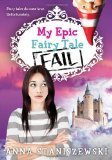

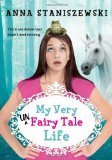

My Epic Fairy Tale Fail (My Very UnFairy Tale Life)
by Anna Staniszewski will be released on March 1, so interviews and such are popping up around the the internet. And, yes, this is the sequel to My Very UnFairy Tale Life.Book description:
Jenny has finally accepted her life of magic and mayhem as savior of fairy tale kingdoms, but that doesn't mean the job's any easier. Her new mission is to travel to the Land of Tales to defeat an evil witch and complete three Impossible Tasks. Throw in some school friends, a bumbling knight, a rhyming troll, and a giant bird, and happily ever after starts looking far far away. But with her parents' fate on the line, this is one happy ending Jenny is determined to deliver.
And from Staniszewski's interview over at The Enchanted Inkpot:
In an age of teen angst and dark tales, your characters are light and fresh and funny. How did you come up with hilarious characters such as Anthony the Gnome and Sir Knight?
From the start, the UnFairy Tale series was meant to be playful and funny. In My Epic Fairy Tale Fail, Jenny visits the Land of Tales which is the place where all fairy tales originated. I really wanted to play with the expectations we have of fairy tales. For example, a fairy tale land must have a brave knight: thus, the overly-heroic Sir Knight was born. I exaggerated his need to rescue damsels in distress until it became completely ridiculous (picture him saving fair maidens from swooping pigeons). I had a lot of fun weaving in fairy tale elements and then twisting them until they were wacky and over-the-top.
I'm all for wacky and over-the-top and this book delivers! I am also a huge fan of fairy tales and mythology and the Land of Tales is where, in your world, it all began. It's true that many cultures share remarkably similar stories, which fairy tale is your cross-cultural favorite?
A fairy tale that I only discovered as an adult was "East of the Sun, West of the Moon." It's a beautiful tale that's reminiscent of Beauty and the Beast, but in it, the heroine must go on a quest to rescue the prince (instead of the other way around). I think this tale was in my brain when I began working on the first book in the My Very UnFairy Tale series. I really wanted the main character, Jenny, to be the kind of girl who wouldn't hesitate to go rescue the prince.
Anyone surprised that her favorite fairy tale is East of the Sun, West of the Moon? Of course not! It's a very popular favorite around here.


February 14, 2013
Portugal's Horse-Skin: Cannibalistic Cinderella?
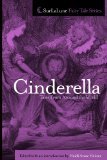


"Horse-Skin" from Tales of Old Lusitania: From the Folk-Lore of Portugal by F. Adolpho Coelho and translated by Henriqueta Monteiro, offers us a Cinderella with a vague cannibalistic story. The wonder of stories across cultures? That while the sisters in the Greek tale are the cannibalistic villains, these are the self-sacrificing victims along with Cinderella.
Bonus: We get a full explanation of how Cinderella's persecution comes about, father's actions included. Although some variants offer some explanation for the father's absence (if he is alive), this one makes him fully culpable.
From my book, Cinderella Tales From Around the World
:THIS is the story of a wicked king, who was a widower and had three daughters.
Many years had elapsed since his queen died, and he began to feel lonely without a partner in life, and one who could occupy the vacant seat beside him on the throne, so he resolved to visit a certain Court where a princess lived, whom he admired, and to make an offer of marriage to her. The princess, who was selfish and only cared for her own comfort, asked the king before accepting his offer, what he intended to do with his daughters, as she did not want them about her in the palace. “If my daughters,” replied the king, “are a hindrance to our union, I can soon dispose of them, and send them where you will never see them or hear of them.”
On his return to the palace he said to his daughters, “Get ready at once to go with me to the Tower of Moncorvo, where I will show you what you have never seen before in your life.” The daughters, full of confidence in their father, and not suspecting any treachery, readily prepared to accompany him, and after travelling many leagues arrived at the celebrated tower. When the king had them safe in the castle, he said to his daughters, “Remain here, whilst I pay a short visit to a friend and worthy subject, who lives in this neighbourhood. On my return I will take you back to the palace.” The wicked king, who only made up this excuse to blind his daughters to his real intentions, fastened the great gates of the Tower as he went out, so that his daughters could not possibly escape. He supplied them with food every day until his marriage day, but after that he never concerned himself about them any more, but left them to their fate.
Hours passed, and days came and went, and still no succour arrived, and they began to be in a dreadful state, without a morsel of food or water to refresh them. And so it happened that one day, when they had given up all hopes of being relieved, and were nearly dead from starvation, the eldest of the princesses said to her sisters, “Why should we all starve? The best thing you two can do is to kill me and feed upon me as long as I afford you sustenance.” She had hardly said these words when she dropped down dead from want.
A few days after this sad event the surviving princesses were again short of food, and nothing was left them but to die. Then the second sister, remembering what the first one had so generously done, followed her example, and suggested that her younger sister should kill her for food: and when she had finished uttering the last words of her advice she also dropped down and died.
The poor young girl, now left alone in the large dreary castle, felt very disconsolate, and rent the air with her lamentations. But after a while, being of a courageous mind, she thought to herself that weeping was no remedy for her woes, and that she must devise some means of escape from her prison before she became faint again with want.
The story goes on to be a more traditional Cinderella tale at this point, predominantly an ATU 510B although the beginning is a blend of 510A and B with the wicked stepmother and an interesting twist on the exile.
And the big question for the reader to decide? Did she or didn't she partake? The text implies yes more than no but to preserve the moral judgment of the reader, it is left to you to decide.
And while we're here, I must wave at Valerie and Brian for helping me procure this book so I didn't have to translate the tale myself! I wanted to include it rather desperately and they made it happen.
Population structure and cultural geography of a folktale in Europe
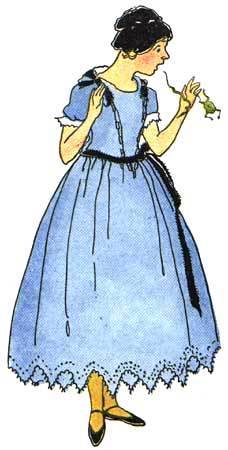
From Humans Swap DNA More Readily Than They Swap Stories: A new study looks at how changes in a widespread folktale moved around Europe by Jane J. Lee:
Once upon a time, someone in 14th-century Europe told a tale of two girls—a kind one who was rewarded for her manners and willingness to work hard, and an unkind girl who was punished for her greed and selfishness.
This version was part of a long line of variations that eventually spread throughout Europe, finding their way into the Brothers Grimm fairytales as Frau Holle, and even into Shakespeare's The Merchant of Venice.
In a new study, evolutionary psychologist Quentin Atkinson is using the popular tale of the kind and unkind girls to study how human culture differs within and between groups, and how easily the story moved from one group to another.
Atkinson, of the University of Auckland in New Zealand, and his co-authors employed tools normally used to study genetic variation within a species, such as people, to look at variations in this folktale throughout Europe.
The researchers found that there were significant differences in the folktale between ethnolinguistic groups—or groups bound together by language and ethnicity. From this, the scientists concluded that it's much harder for cultural information to move between groups than it is for genes.
The study, published February 5 in Proceedings of the Royal Society B, found that about 9 percent of the variation in the tale of the two girls occurred between ethnolinguistic groups. Previous studies looking at the genetic diversity across groups in Europe found levels of variation less than one percent.
For example, there's a part of the story in which the girls meet a witch who asks them to perform some chores. In different renditions of the tale, the meeting took place by a river, at the bottom of a well, or in a cave. Other versions had the girls meeting with three old men or the Virgin Mary, said Atkinson.
Oh me oh my! And here I keep debating between Diamonds and Toads and the Six Swans and sometimes Swan Maidens for the next SurLaLune collection. It seems the universe keeps voting for Diamonds and Toads which is how I usually reference Kind and Unkind Girls in conversation (but not in my head interestingly enough) since that is a mouthful. And Diamonds and Toads sticks in people's brains better, too. Something about the image of vomiting snakes and such is compelling!
I can't wait to read the study and am fascinated by the tale because there is such an abundance of versions--I've lost count on how many I have collected myself. I have at least half a book already without any effort.
Here's the paper's abstract while we're here too:
Despite a burgeoning science of cultural evolution, relatively little work has focused on the population structure of human cultural variation. By contrast, studies in human population genetics use a suite of tools to quantify and analyse spatial and temporal patterns of genetic variation within and between populations. Human genetic diversity can be explained largely as a result of migration and drift giving rise to gradual genetic clines, together with some discontinuities arising from geographical and cultural barriers to gene flow. Here, we adapt theory and methods from population genetics to quantify the influence of geography and ethnolinguistic boundaries on the distribution of 700 variants of a folktale in 31 European ethnolinguistic populations. We find that geographical distance and ethnolinguistic affiliation exert significant independent effects on folktale diversity and that variation between populations supports a clustering concordant with European geography. This pattern of geographical clines and clusters parallels the pattern of human genetic diversity in Europe, although the effects of geographical distance and ethnolinguistic boundaries are stronger for folktales than genes. Our findings highlight the importance of geography and population boundaries in models of human cultural variation and point to key similarities and differences between evolutionary processes operating on human genes and culture.
Bargain Book: Dewitched: The Untold Story of the Evil Queen by E. L. Sarnoff
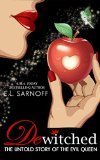

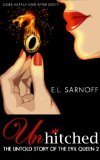

Dewitched: The Untold Story of the Evil Queen
by E. L. Sarnoff has been dropped to $.99 through today only. The sequel, UNHITCHED: The Untold Story of the Evil Queen 2 (DEWITCHED), is $2.99.Book description:
After serving time for Snow White’s attempted murder, the Evil Queen is about to get a makeover. Just not the kind she expected. Thinking she’s being sent to a luxurious spa that will enable her to restore her beauty and recapture her title, Fairest of All, Jane Yvel instead finds herself at Faraway, a rehab center that caters to Fairytalelanders addicted to evil.
Upon confronting her love-hate relationship with her magic mirror and the demons of her past, she is sent back to the world of happily-ever-after. Her goal: to discover the true meaning of beauty. Her assignment: to work for Marcella, a demanding Princess-In-Waiting. Jane finds herself irresistibly drawn to Marcella's dashing fiancé, Prince Gallant, and his exquisite seven-year old daughter, Calla Rose. Will the Evil Queen who had no heart end up with a heart that’s broken?
Wickedly funny, darkly shocking, and deeply moving, DEWITCHED unravels the Snow White story as we know it and will make you see the evil legend in a new light as she rewrites her life.
Two Bargain Romance Novels: Eloisa James's Fairy Tales
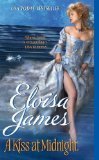


A Kiss at Midnight
by Eloisa James is $.99 for ebook format. A Cinderella inspired romance novel, the one that started the series for James.Book description:
Miss Kate Daltry doesn’t believe in fairy tales . . .or happily ever after.
Forced by her stepmother to attend a ball, Kate meets a prince . . . and decides he’s anything but charming. A clash of wits and wills ensues, but they both know their irresistible attraction will lead nowhere. For Gabriel is promised to another woman—a princess whose hand in marriage will fulfill his ruthless ambitions.
Gabriel likes his fiancée, which is a welcome turn of events, but he doesn’t love her. Obviously, he should be wooing his bride-to-be, not the witty, impoverished beauty who refuses to fawn over him.
Godmothers and glass slippers notwithstanding, this is one fairy tale in which destiny conspires to destroy any chance that Kate and Gabriel might have a happily ever after.
Unless a prince throws away everything that makes him noble . . .
Unless a dowry of an unruly heart trumps a fortune . . .
Unless one kiss at the stroke of midnight changes everything.
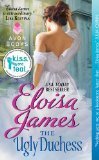
The Ugly Duchess (Happily Ever After...)
, another James novel is discounted to $2.99. This one is inspired by The Ugly Duckling.Book description:
How can she dare to imagine he loves her . . . when all London calls her The Ugly Duchess?
Theodora Saxby is the last woman anyone expects the gorgeous James Ryburn, heir to the Duchy of Ashbrook, to marry. But after a romantic proposal before the prince himself, even practical Theo finds herself convinced of her soon-to-be duke's passion.
Still, the tabloids give the marriage six months.
Theo would have given it a lifetime . . . until she discovers that James desired not her heart, and certainly not her countenance, but her dowry.
Society was shocked by their wedding . . . and is scandalized by their separation.
Now James faces the battle of his life, convincing Theo that he loves the duckling who blossomed into the swan.
And Theo will quickly find that, for a man with the soul of a pirate, All's Fair in Love—and War.
February 13, 2013
Today's Bargain Ebooks: Faerie and Mermaids
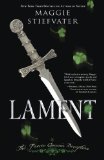

Lament: The Faerie Queen's Deception (Gathering of Faerie)
by Maggie Stiefvater is $1.99 TODAY ONLY in ebook format. I bought it at $2.99 a while back so you get to save an extra dollar.*Starred Review* from Booklist:
Sixteen-year-old Deirdre Monaghan, a gifted harpist who regularly plays for weddings and other events, has the kind of stage fright that makes her physically ill before a performance, which is an inauspicious way to start a romance; but while vomiting before a competition she meets a gorgeous boy who comes into the restroom to hold her hair. He is Luke Dillon, a flautist who proceeds to accompany her in a truly stellar performance. As four-leaf clovers start appearing everywhere, Deirdre develops telekinetic powers and encounters strange, unworldly people who seem to bear her ill will. Her best friend, James, also a talented musician; her beloved grandmother; and her mother all are in danger, as Deirdre is targeted by the queen of Faerie. Deirdre eventually discovers that she is a cloverhand, a person who can see the denizens of faerie, and Luke, not the only immortal who has her in his sights, is a gallowglass, an assassin assigned by the queen of Faerie to kill Deirdre but who falls in love with her instead. This beautiful and out-of-the-ordinary debut novel, with its authentic depiction of Celtic Faerie lore and dangerous forbidden love in a contemporary American setting, will appeal to readers of Nancy Werlin’s Impossible (2008) and Stephenie Meyer’s Twilight series. Illustrations by Jeffrey are fitting. Grades 9-12. --Diana Tixier Herald
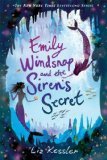

Emily Windsnap and the Siren's Secret
by Liz Kessler is also $1.99 today only, part of the Emily Windsnap mermaid series for younger readers.Book description:
Emily Windsnap is finally enjoying a swimmingly peaceful life on Allpoints Island, hanging out with her mermaid bff, Shona, and her new friend Aaron (half-merperson like herself). But their idyll is cut short when Emily learns that the Windsnaps and friends must return to their old home in Brightport, where construction projects are threatening a secret mermaid community under the sea. Neptune’s mandate? No less than an interspecies intervention to bring merpeople and humans together, a task the imperious god feels the mixed Windsnap family is well suited for. There are just a few snags for Emily, however, like dealing with old nemeses Mandy and Mr. Beeson, figuring out her feelings toward Aaron—and untangling a high-suspense mystery related to a group of legendary lost sirens. Everyone’s favorite half-mermaid is back with a splash in a sparkling new adventure her fans will be eager to get their fins on.
New Yorker Cartoon: Cinderella and Cop by Michael Maslin

"Would you mind stepping out of the pumpkin, please?"Art.com has a new series of New Yorker cartoons with fairy tale inspirations available for order. I thought I would share a few over the next few days. This one is by Michael Maslin. Published October 18, 1999. A traffic cop with a flashlight has pulled over Cinderella's coach after it turns back into a pumpkin.
I think some of these also appear in Mother Goose on the Loose
 , which is out of print, but I haven't had the inclination to check. They are available individually from Art.com.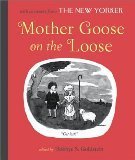
February 12, 2013
Bargain Ebook: Princess Academy: Palace of Stone by Shannon Hale
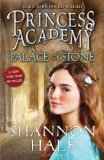

Princess Academy: Palace of Stone
by Shannon Hale is $2.99 TODAY ONLY in ebook format on Amazon. This book was released last August and so this is pretty early for this deep of a discount--it's not even in paperback yet! And, yes, it's the sequel to the Newbery Honor book. I gave the hardcover to a niece for Christmas.Book description:
Coming down from the mountain to a new life in the city seems a thrill beyond imagining. When Miri and her friends from Mount Eskel set off to help the future princess Britta prepare for her royal wedding, she is happy about her chance to attend school in the capital city. There, Miri befriends students who seem so sophisticated and exciting . . . until she learns that they have some frightening plans. They think that Miri will help them, that she should help them. Soon Miri finds herself torn between loyalty to the princess and her new friends' ideas, between an old love and a new crush, and between her small mountain home and the bustling city.
Picking up where Princess Academy left off, this incredible stand-alone story celebrates the joys of friendship, the delight of romance, and the fate of a beloved fairy tale kingdom.
Greek Cinderella and Her Cannibal Sisters
Ready for some more Cinderellas? How about some Cinderellas with a hefty dose of cannabalism? I mentioned earlier that Cinderella is guilty of many vices in her many variants, but cannibalism, not. Although even that is up for debate and personal choice as I will show with another tale tomorrow--stay tuned!
But these tales do not spread beyond Greece and Cyprus in this form although many variants have been found in Greece itself. They greatly resemble other 510A tales, as well as ATU 511 One Eye, Two Eyes, Three Eyes in which an animal magical helper is cooked by the (step)mother and the Cinderella character refuses to partake of the meat, often honoring the bones of the beloved animal. These Greek tales, however, skip the animal helper--who is usually interpreted as the mother's spirit or mother reincarnated--but sticks with the mother herself. How about psycho-analyzing this tale to your heart's content? Some great papers here...
Another interesting twist in these tales is that the sisters are the villains here. The majority of Cinderellas in 510A and 511 have a mother or stepmother as the primary villain while the sisters are merely her lackeys. Here they are the villains, front and center.
From "The Three Sisters" (from Cassabi, Greece) in my book, Cinderella Tales From Around the World
:THERE were three girls sitting spinning with their mother, and they agreed that whosesoever thread broke first they should kill and eat. Their mother's thread broke, but they said, “Let us spare her for having carried us in her womb,” and went on spinning.
When the mother's thread broke a second time, they said, “Let us spare her for having suckled us from her breast.” But when the mother's thread broke a third time, she had to be killed. The two eldest killed her, cut her up, cooked her, and eat well of the flesh, but the youngest would not join them, and when they had finished she collected the bones and put them in a large earthenware jar. Every day for forty days she incensed them.
And from "Little Saddleslut" (from Epeiros, Greece):
THERE were once three sisters spinning flax, and they said, “Whosever spindle falls, let us kill her and eat her.”
The mother’s spindle fell, and they left her alone.
Again they sat down to spin, and again the mother’s spindle fell, and again and yet again.
“Ah, well!” said they, “let us eat her now!”
“No!” said the youngest, “do not eat her; eat me, if flesh you will have.”
But they would not; and two of them killed their mother and cooked her for eating.
When they had sat down to make a meal of her, they said to the youngest, “Come and eat too!”
But she refused, and sat down on a saddle which the fowls were covering with filth, and wept, and upbraided them.
Many a time they said to her, “Come and eat!” but she would not; and when they had done eating, they all went away.
And from "Saddleslut" (from Zagora, Greece):
THERE was once a mother with three daughters, and they went to spin on the terrace, and the mother’s spindle fell twice, and they said, “We will excuse her.” It fell again, and they made a cow of her and slew her. And when they were killing her, she said to Kálo, the youngest, “Don’t you eat, but bury my bones in the barn, and burn incense over them every evening; and at Easter uncover them.”
The other two, Stamáto and Máro, put her under the packsaddle, and called her “Saddleslut.” When Easter came round, the two went to church, and Saddleslut unburied the bones and found a thousand and two treasures. Then she also adorned herself and went to church, and threw down coins, and fled, and went and sat on the packsaddle. The others came home, and said to her, “A lady came and scattered gold, and you, to your loss, were not there.”
And finally, "The Story of Cinderella" from (from Cyprus):
ONCE upon a time, my lady, there was an old woman who had three daughters. Well [the two eldest], because the mother loved the youngest best, were jealous, and sought some pretext for killing their mother. They agreed to go up on a high terrace with their mother, and take their spindles, and that whoever should first let her thread break they would eat. Of course the mother being old and feeble, her thread would be sure to break. So they took their spindles and went up to the terrace. The poor old woman, her hands were weak, and she broke her thread once.
“Ah, dear mother mine,” said they, “we will eat thee!”
Then says she to them, “Ai, my daughters, forgive me this time, and if it breaks again, eat me.”
Then they began again, and let down their spindles, and again her thread broke.
“Ah, dear mother mine,” they cry, “we will eat thee!”
“Ai, my daughters, forgive me also this time, and if it breaks a third time, then eat me!”
So they began again, and let down their spindles, and again hers broke.
“Ai, we can’t let you off again, we shall eat you!” And they took their poor mother and began to make ready to kill her. When she saw that they were really going to kill her, she called her youngest daughter, and said to her, “Come, my daughter, and let me counsel thee! Take my blessing,” she said, “for they are about to kill and eat me; all the bones that fall do thou gather and put them in a jar, and keep them with care. Watch them and smoke them [with incense] for forty days and nights and go not forth from the chamber where they are; and on the fortieth day,” she said, “open it [the jar], and see what they have become.”
“Gladly,” she replied, and began to weep for her mother.
“Don’t weep, my daughter,” said she, “for what can you do now that your sisters are determined?”
They seized and slew their mother, and set to and cooked her, and began to eat.
“Come, girl, and eat thou too; thou wilt see what good food it is—our mother.”
“No, my girl, God does not permit me to eat of my mother!” and she gathered up the bones wherever she found them, and placed them in a jar without being observed. When they had finished eating and were satisfied, they rose. What did she do now? She took and lighted a great fire and sat day and night to watch them, and smoked them day and night.
I think I can guarantee that this Greek Cinderella will never, ever, ever be interpreted into a picture book for children!
And who thought Cinderella was boring?
New Yorker Cartoon: Cinderella Makeover by Sam Gross

"I'll call you back. I'm in the middle of a make-over."
Art.com has a new series of New Yorker cartoons with fairy tale inspirations available for order. I thought I would share a few over the next few days. This one is by Sam Gross. Published March 19, 2001
I think some of these also appear in Mother Goose on the Loose
, which is out of print, but I haven't had the inclination to check. They are available individually from Art.com.
Heidi Anne Heiner's Blog

- Heidi Anne Heiner's profile
- 44 followers
Heidi Anne Heiner isn't a Goodreads Author
(yet),
but they
do have a blog,
so here are some recent posts imported from
their feed.

